Landed Estates’ “must-have” accessory – Clinton has in abundance and free!

This is a catch-up story on the state of progress on re-wilding of Beavers in England.

The must-have accessory for every English country estate was once a gothic folly, a ha-ha or a croquet lawn. Now it is a pair of beavers.

Landowners and large estates are racing to acquire licences to reintroduce the water-loving rodents, which were hunted to extinction in Britain 400 years ago.

Natural England has issued 13 beaver licences since 2017, and beavers are breeding and roaming as wild as they can in large fenced “trial” enclosures in North Yorkshire, Cornwall, Essex, Devon, Somerset and Gloucestershire. This year, beaver pairs will be returned to Cumbria, Norfolk, West Sussex and Dorset. Here, on the Otter, they roam free.

A couple of weeks ago, a pair of beavers were released onto pools above an old watermill on the 12,500 acre Holnicote estate on Exmoor, the first National Trust property to take them. Approval has just been granted for beavers to be added to the Knepp estate in West Sussex, the former dairy farm that has been rewilded by Charlie Burrell and Isabella Tree.

But beaver-loving landowners face delays with a waiting list to acquire the herbivorous animals, which are now sourced from the wild population in Scotland, where the beaver was officially recognised as a native species once again in 2016.

A YouGov poll at the beginning of February found overwhelming public support for reintroducing beavers into Britain, with 76% of people supporting the idea, by far the most popular mammal for reintroductions ahead of the wild cat, wolf and lynx.

One ecologist described showing a group of wealthy landowners around one new beaver project. He said: “They were a shooting and fishing fraternity, made their money out of banking. By the end of the day, they all wanted beavers.”

The beaver has yet to be officially recognised – and given legal protection – as a native species in England, but new research revealing the beneficial impact of their dam-building is currently being considered by the Department for the Environment, Farming and Rural Affairs (Defra).

While licenses only permit beavers to be placed in large “trial” enclosures, escapees from privately owned collections have created a burgeoning population of truly wild beavers on the River Otter in East Devon. There may be other secretive populations of free-living beavers on rivers in Kent, north Somerset, Gloucestershire, west Devon and Wales.

Beaver ecologist Derek Gow, who has overseen many of the licensed reintroductions, said escapes occurred because beavers’ strong teeth were like bolt-cutters.

Hailing beavers as “ecosystem engineers”, Gow said: “They turn landscapes that are largely dead into environments that wildlife can recolonise.”

The five-year government study of both fenced and wild beavers will show how their dams can prevent flooding by drastically slowing the flow of streams, purify water polluted by nitrates and phosphates, store carbon and create an explosion in other wildlife.

“All of these benefits could accrue in every single headwater stream or catchment in England,” said Prof Richard Brazier of the University of Exeter, who led the study. Brazier’s modelling – currently being examined by Defra – identifies suitable habitat where beavers could improve river catchments in virtually every part of England, Scotland and Wales.

During five years monitoring a two-hectare study enclosure in west Devon, Brazier and colleagues found that frogspawn increased from 10 clumps to 650 clumps last summer, with amphibian life attracting predators such as herons and egrets. Dragonflies, butterflies, aquatic plants, flowers and trees have benefited from new pools created by the beavers. “Bringing that type of biodiversity back is something that you couldn’t engineer,” said Brazier.

In Cornwall, Somerset and the Forest of Dean, new beaver enclosures are expected to reduce flash-flooding in villages downstream.

The beaver has friends in high places: both the environment minister Zac Goldsmith and former environment secretary Michael Gove have become beaver converts, and the prime minister, Boris Johnson, has spoken in favour of the animals.

Some landowners are won over by potential economic benefits such as ecotourism. Beavers can be secretive and nocturnal but they are also placid, slow-moving animals, which can be watched swimming with their kits in summertime.

But not everyone loves the beaver. While beavers will not dam large rivers because the waters are already deep enough for them to feel secure, their dam-building can cause flooding on flood-plains in lowland areas. In Scotland, farmers have shot beavers blamed for flooding farmland.

The government is expected to announce later this year that the free-living River Otter beavers will be allowed to stay permanently, paving the way for official, licensed releases of free-living beavers beyond enclosures. [Owl thinks the strength of local support for Beavers in the Otter means that the government saying “no” is not an option].

Gow said: “We need to move beyond just keeping them in pens. In Britain, species recovery has always been about wee spiders or dormice – things that don’t change landscapes. We have to learn to tolerate animals that change things for the better.”

A Defra spokesperson said: “We are committed to reintroducing formerly native species, such as beavers, where there are clear environmental and socio-economic benefits.

“Beavers have a special place in English heritage and can play a role in creating new havens for wildlife and boosting our natural biodiversity. We welcome applications for trial reintroductions of beavers, where these benefits are clear.”

Text drawn from;

https://www.theguardian.com/environment/2020/feb/01/beavers-uk-estate-owners-reintroduction-conservation-flooding

Flybe low on cash as Government loan decision looms.

Experts have raised questions over the airline’s long-term viability as the Government mulls a lifesaving loan.

 
Flybe only has enough cash to get through to the end of the month, as the troubled airline scrambles to secure a £100m lifeline from taxpayers.

As delicate negotiations between airline executives and Whitehall officials continued this weekend, The Sunday Telegraph has learnt that Flybe’s shareholders have signalled they are prepared to fund the business if it fails to secure a Government loan before it runs out of cash.

Accountancy firm EY has been lined up as administrator, having prepared plans to minimise disruption caused by a potential failure of the Exeter-based carrier, industry sources said.

The fate of Europe’s biggest regional airline will now hinge on Thursday’s Cabinet reshuffle, with senior ministers needing to decide whether Flybe should be handed a crucial government bridging loan – a move that threatens to enrage many Tory MPs.

The airline’s finances have been hit as credit card providers withhold customer payments while uncertainty over its future persists.

Flybe dismissed industry speculation that a solution would need to be found by mid-February so that a decision can be made on whether month-end payroll payments could be met.
A spokesman said: “We are managing our cash position carefully and currently can make all our February payments.”

Crisis consultancy Alvarez & Marsal, hired by the Government, is believed to have delivered preliminary findings to Whitehall officials last week.

Sources said its analysis had raised questions over the long-term financial viability of Flybe.

Hopes of agreeing a rescue on “commercial terms” have been complicated after, as The Telegraph revealed, aircraft, engines and buildings have already been mortgaged, leaving the taxpayer little or no security as would be standard practice when agreeing loan.

Flybe has gained the support of a number of suppliers in recent weeks, allowing it to limp on since it was plunged into crisis last month.

The airline has returned to the brink for the second time in a year over a multimillion-pound tax bill for unpaid air passenger duty.

Airports and baggage handling firms, also understood to be millions of pounds out of pocket, fear that demanding immediate payment could push Flybe over the edge.

Many depend on the airline, and its collapse could threaten their financial future.

Sources said that the Department for Transport and the Civil Aviation Authority are worried that handing a Government loan could set a dangerous precedent for a sector renowned for wafer-thin profit margins.

But the Business Department and No 10 are understood to be desperate to find a way to support the airline, which serves many regional constituencies that switched from Labour to Conservative in December’s general election.

A Flybe spokesman said: “Flybe and its shareholders continue to have productive and positive discussions with the Government regarding support to enable us to deliver our long-term strategic plan.

“We are very grateful and encouraged by the continued support of our partners and customers that has led to our bookings rapidly returning to normal levels.

Last week we delivered the best operational performance we have seen in three years, demonstrating that our turnaround plans are working.” The Government declined to comment.

Oliver Gill, Telegraph

https://www.telegraph.co.uk/business/2020/02/08/flybe-low-cash-government-loan-decision-looms/

Boris Johnson to launch NHS power grab

From today’s Times:

Boris Johnson will use a new law to clip the wings of the NHS chief executive as he attempts to exert more control over the health service.

No 10 is concerned that Sir Simon Stevens, the head of NHS England, has too much power.

Dominic Cummings, the prime minister’s chief aide, believes that at present the law gives Sir Simon excessive freedom, making it hard for Downing Street to impose its will. There is also frustration in government about the slow pace at which the health service responds to demands from Whitehall. Legislation to be introduced this year will include powers for ministers to give orders to Sir Simon, who is meant to be operationally independent.

The government has begun monthly meetings with him and is demanding tangible reductions in waiting times after one of the worst winters on record for hospitals last year.
Mr Johnson is concerned that after winning an election by promising to support the health service, the government has limited control over it and needs “more levers to pull”.

The change will form part of a wider overhaul of NHS structures in which hospitals and GPs are subsumed into legally independent local care groups.

The plans have alarmed health chiefs, who fear the distraction of a reorganisation when they are struggling to stop waiting times lengthening.

Officials insist that despite tensions over control of the health service, Mr Johnson is not trying to start a war with Sir Simon, with whom he has been friendly since they studied together at Oxford University.

The Times understands that soon after the election Downing Street told the Department of Health to be “more assertive” with NHS England, a body set up under controversial 2012 reforms to take charge of the day-to-day running of the health service. The most contentious part of those reforms, designed by Andrew Lansley, who was then the health secretary, was the introduction of internal competition.

Sir Simon is trying to unwind this and has asked ministers to change the law requiring care to be put out to competitive tender.

Mr Johnson’s 80-seat majority has given ministers the confidence to go further and the Queen’s Speech promised “legislation that will accelerate the long-term plan”. In a government briefing seen by The Times, Matt Hancock, the health secretary, is told: “The proposals NHS England brought forward were designed in a different parliament than the one we have now, with an underlying principle to avoid an extensive reorganisation. As a result, while they would entail a shift away from the market model enshrined by the 2012 Act towards a much more managed system, they do not deliver the fundamental reform of the 2012 Act that we and the system believe will be needed.”

By next year Sir Simon wants all areas of the country to be part of an “integrated care system” that plans collectively, and the laws would make these voluntary forums legal bodies with budgetary powers.

Ministers plan to use the legislation to give themselves greater power to tell Sir Simon what to do. The briefing talks about “creating a power of direction for the secretary of state over NHS England”, telling Mr Hancock that it would ensure that the organisation was “appropriately accountable to the secretary of state for health and social care and parliament for all aspects of NHS performance, finance and care transformation and that you have sufficient levers to direct and influence [it]”.

Sir Simon recognises that with Mr Johnson so dominant there is little point in protesting. Despite an insistence that the relationship with No 10 is good, there is nervousness within the health service about what the changes will mean in practice.

Integrated care is widely supported by health experts, who believe that linking hospital, GP and social care is crucial to dealing with an ageing population. However, Chris Hopson, chief executive of NHS Providers, which represents health service trusts, said: “A key current principle is that trust boards are responsible for the care delivered by the trust. We blur that clarity at our peril . . . Given the complexity and risk involved in the delivery of frontline healthcare services, it’s vital that lines of accountability are clear.”

Downing Street and NHS England refused to comment.

Analysis

Internal NHS politics are about to collide with the Tory party (Chris Smyth writes).

The last time this happened was under Andrew Lansley’s 2012 reforms, which damaged the Tories’ credibility and were diluted at once.

Most in the NHS support Sir Simon Stevens’ vision for hospitals, GPs and others to work together, but the structures created by Lansley have made it harder to keep the elderly out of hospital.
In his ten-year plan, Sir Simon proposed changes to join up care. The Tory election win gives ministers the chance to go further and undo much more of the Lansley act.

Yet one key element of the Lansley act survives: NHS England, which made day-to-day running of the NHS the responsibility of an independent organisation at arms’ length from ministers. Sir Simon is too smooth a political operator for this to have led to many public stand-offs, but it makes No 10 unhappy that the most politically important public service does not obey its beck and call.

Boris Johnson knows that his long-term political survival depends on improving the health service. Yet NHS performance has been getting worse and while ministers take the blame, they can do little about it.

For Downing Street, taking advantage of an NHS bill to give themselves greater control is only logical.

Less clear is what the government wants to do differently. If Sir Simon cannot stop waiting lists getting longer, is Dominic Cummings likely to do any better?

New system highlights pressure on GP surgeries in Devon

A new GP practice reporting system is being launched in Devon.

A new reporting system is being rolled out in Devon to highlight the pressure on local GP surgeries.

Devon Local Medical Committee (LMC), has launched a new ‘alert status’ so practices can flag how much pressure they are under and when they have reached unsustainable and unsafe workload levels.

Devon LMC believes the system is the first of its kind in the country.

Dr Bruce Hughes, chair of the LMC, said the system would help GPs lobby for more resources.

Dr Hughes said: “The pressure acute hospitals are under is well publicised and is captured by the OPEL Framework. General practice has had no equivalent and so the Government, healthcare providers, commissioners and patients can sometimes assume that things are not so bad for local GP practices.

“The alert status will help us strengthen our case as we continue to lobby for more resources and less bureaucracy to ensure local general practice is sustainable in the future so patients receive appropriate treatment, care and support for their clinical needs.”

Under the reporting scheme, GP surgeries are encouraged to complete a weekly report and grade themselves Green, Amber, Red or Black.

A ‘green’ status means the practice is running normally, with acceptable waiting times, while ‘black’ means the practice is unsafe to continue without intervention from stakeholders.

Practices send their anonymous report to the LMC – if they self-assess as ‘black’ status they can identify themselves and request support from the local health system.

The Devon-wide alert status this week is ‘amber’, meaning there is a staff or resource shortage which is sustainable in the medium term.

The status is shared with local health partners, including NHS Devon, NHS England and NHS Improvement, as well as local hospitals, councils and the ambulance service.
Dr Hughes, a GP partner at Fremington Medical Centre, added: “This is a ground-breaking move for general practice.

“Devon is believed to be the first area in the country to roll out a GP alert status – our innovative scheme has attracted interest from several other LMCs who look set to follow suit.”

https://www.northdevongazette.co.uk/news/new-reporting-system-for-devon-gp-practices-1-6503709

Will they, won’t they – Devon Councils divided, EDDC yet to declare

Councils in Devon are divided as to whether they will follow an order to fly the Union flag on the Duke of York’s 60th birthday (February 19).

The Union Jack will be flown outside Exeter and Torbay’s civic buildings, but spokesman for those two councils said this was because it is flown permanently.

Torridge and Mid Devon councils have confirmed they will be flying the flag, but North Devon have said that they won’t be.

South Hams District Council and West Devon Borough Council said they had not been given any directive to fly the flag.

A North Devon Council spokesman said: “We have now been advised that, because Prince Andrew is no longer a working member of the Royal Family, we are not being asked to fly the flag on his birthday. As such, we won’t be.”

A spokesperson for Torbay Council said: “The Union Flag is flown all year round on Torquay Town Hall, so it will be flying on Wednesday 19 February.”

An Exeter City Council spokesman said: “The Union Flag is permanently flown from outside the Civic Centre and the Guildhall.”

A spokesman for South Hams and West Devon council’s said: “Having chatted to a number of colleagues, no one has been given a directive to do this.”

A spokesman for Mid Devon District Council said: “Our Member Services team have confirmed that we intend to fly the Union Jack on February 19 as per the edict from the Ministry of Housing, Communities and Local Government, and our normal protocol for senior members of the royal family.”

A spokesman for Torridge District Council said that they would be auctioning the request.

Teignbridge District Council and Devon County Council did not reply to the request for comment, while East Devon District Council initially said that they hadn’t been asked to fly the flag, then said new information had been received, but did not reply any further.

“I understand DCMS and the royal household considering how the policy applies to members of the royal family who have stepped back from public duties.”

https://www.devonlive.com/news/devon-news/devon-councils-fly-union-jack-3822361

Owl says: come on EDDC time to make your mind up!

Business as usual at EDDC?

A correspondent writes:

RUBBER STAMP WIELDING AT THE CONTINUITY COUNCIL – HEALTH AND EDUCATION UP FOR GRABS

And so East Devon’s endorsement of the nebulous Heart of The South West Local Enterprise Partnership goes on. A Cabinet exhausted by a long meeting on Wednesday night rubber stamped new terms of reference for the Joint Committee which runs it. Usual suspects, “Independents” Ian Thomas, Ben Ingham and Kevin Blakey thought it better in than out, and if the financial cost to EDDC was under £3,000 per annum it was worth it for “a seat at the table”.

EDA Leader, Paul Arnott, pointed out that they were also about to rubber stamp a significant change to the Joint Committee’s terms of reference. CEO Mark Williams’ report, which he had placed almost last on the agenda, was asking that the cabinet “approves the amendments to the Heart of the South West Joint Committee’s list of functions in the Arrangements document (highlighted in red italics Appendix A attached)”. To be fair to Williams, he had used red ink.

These amendments were highly significant. One was to “continue discussions /negotiations with the Government and Government agencies to achieve direct intervention, support, funding and powers to the benefit of the HotSW”

And what might these interventions be?

Well for starters they want to ” Design and deliver public sector reform where this will deliver improved productivity to the HotSW, eg health, education.”

Health and Education!

Yes, there it is, at the back of a report, unheralded by Mr Williams. The unaccountable HOSW now has Health and Education in its sandpit too. Despite a good effort from Councillor Jess Bailey to ask Williams to address Councillor Arnott’s point, the CEO as ever yawned, pulled a face as if this was all beneath him, and swerved all mention of this significant change.

Soon the HOSW will be buzzing with advocates for private medicine and for further private stakes in state education. They will be able to sit alongside all the developers and their chums who have been at its heart from the beginning.

Business as usual at EDDC.

Is Ingham’s regime floundering in the Exmouth surf?

Is Exmouth girding its loins to fight reckless panic decisions taken about Queens Drive? EDDC cabinet have now considered a proposition for yet another marketing scheme – see below. Driven by the alleged £3m Philip Skinner has wasted on this site already, Owl’s informants suggest the Hemingway soft marketing exercise revealed six bids for Harbour View site and none for a hotel. In order to try to justify this £3M, Ingham and co have now decided to offer hotel and Harbour View as one site in the hopes that one of these bids might want Harbour View so desperately that they will offer to build the hotel!

If no hotelier wants this site, there is must be a good reason for it. How would a bunch of amateurs know better? Is there a secret plan B for the Council to take all the building risk with our money and then find a hotel operator to lease it? This would be beyond madness. Bit like a slow motion action replay of the ill-fated Bowling Alley Iconic Regeneration plan for Exmouth that started more than fifteen years ago (now Ocean run by LED, subsidised by the ratepayer).

https://www.exmouthjournal.co.uk/news/approval-hotel-and-restaurant-seafront-plans-1-6501744

Daniel Clark Exmouth Journal:

At its meeting on Wednesday (February 5), East Devon District Council’s cabinet voted by five votes to three to launch a formal marketing exercise to identify a developer/operator for the site.

The plot represents the third phase of the seafront regeneration project, following the completion of the road and car park realignment in phase one and the imminent construction of a watersports centre.

Suggested uses for the site include a new two storey café/restaurant on the existing Harbour View café site, a mix of play and open public space, and a 60-80 room 3-4 star hotel.

A marketing exercise will now take place to see if there is any commercial interest in the proposals.

Bids will be received and reviewed by May, and then a report is set to go the cabinet with a recommendation on the preferred developer/operator in July 2020.

The temporary attractions, including the Queen’s Drive Space, will continue on the site for this summer.

Cllr Nick Hookway though said that he had some major concerns, saying the council is held in low regard by Exmouth residents where there is a deep mistrust over the proposals.

But Cllr Bruce de Saram backed the proposals and said: “People will have fun and we want them to come to Exmouth and have fun, so I am 100 per cent behind this report and getting the project completed within the timescale.”

Cllr Geoff Jung said that the cabinet appeared to be damned whatever they chose to do as the decision to realign Queen’s Drive and the car park has cost the council around £3m and they have to find a way of paying for it.

A cabinet report recommended that the Queen’s Drive Delivery Group continue to meet in private however, the cabinet overturned the recommendation.

They agreed that from March 1, 2020, the Queen’s Drive Delivery Group should sit in public that an Exmouth councillor should be part of the panel who agree the selection criteria for the commercial development.

Owl thinks transparency is long overdue and doubts that any of the profligate £3M will ever be repaid.

Will they, won’t they? – Now no place for EDDC to hide!

The UK Government will tell councils they are no longer required to fly flags to mark Prince Andrew’s 60th birthday after he stepped back from public duties over his friendship with convicted sex offender Jeffrey Epstein.

The policy of flying Union flags on royal birthdays was being re-examined after councils were initially ordered to do so for Andrew, as is the custom.

Downing Street said the matter was being looked into after critics branded the celebration “crass and offensive”.

A UK government spokesman said: “The Department of Culture, Media and Sport will be advising councils that there is no requirement to fly flags on February 19 following the decision by the Duke of York to step back from public duties for the foreseeable future.”

EDDC cannot now hide behind an instruction and will have to make its own mind up on whether or not to fly the flag.

Owl will simply watch what happens. (Even if the flag is flown in HQ Honiton will anyone notice?)

https://www.independent.ie/world-news/europe/britain/uk-councils-no-longer-required-to-raise-flags-for-prince-andrews-birthday-38934200.html

Councils in crisis with more tax rises and service cuts due revised 9 Feb

Report reveals English local authorities’ financial despair after decade of austerity.

https://www.theguardian.com/society/2020/feb/05/councils-in-crisis-with-more-tax-rises-and-service-cuts-due?CMP=Share_iOSApp_Other

Council tax payers in England face near universal rises on top of increased fees and charges to pay for what in many cases will be reduced levels of local services, according to a survey of local authorities.

It reveals that 97% of local authorities will put council tax up again in April to cope with a growing financial crisis, and the same proportion will raise charges for services such as parking, garden waste disposal and aspects of social care.

The latest State of Local Government analysis reveals widespread despair among councils over their financial health after a decade of austerity policies in which spending has been cut in half and the gap between demand and resources has grown.

More than a fifth of councils said the cuts to frontline services that they would be forced to make in 2020-21 were of a scale and impact that would be noticeable to the general public. One in 10 said shrinking resources meant they were in danger of being unable to meet their legal obligation to deliver statutory services.

Asked which services would have increased fees and charges, councils most commonly mentioned green waste, planning permissions, car parking, leisure and arts centre memberships, burials and cremations and pest control. One replied: “All we can get away with.”

Three-quarters of councils had no confidence that local government finance arrangements were sustainable, while only 3% were confident that the government would act to halt the council funding crisis, despite increasing pressures on child protection, adult social care and homelessness services.

Jonathan Carr-West, the chief executive of the Local Government Information Unit, a thinktank that carried out the annual survey, said: “The state of local government finances is dire. Eight years later and the message continues to be the same, a broken record. It is simply unacceptable that the government has let things get to this point.”

He added: “This isn’t local government asking for more money. This is about a fundamentally flawed system that has been broken for years and the government continually refusing to acknowledge or engage in a proper solution.

“Sticking plasters will not solve these critical issues. Our social care system is no longer on the edge, it’s fallen off the cliff. Our children’s services aren’t at breaking point, they’re broken. These issues cannot wait another year to be solved.”

Andrew Gwynne, the shadow communities secretary, said the survey should be a wake-up call for ministers. “The fact is that years of neglect have created this crisis. We need to see urgent action,” he said.

In the last few years there have been widespread cuts in some high-profile areas of local government such as Sure Start centres, youth clubs, special educational needs and libraries, as well as in less prominent areas such as planning, family support services and environmental health.

Scepticism that the government will pump more money into local government – or even publish its social care funding green paper, delayed since summer 2017 – has led many councils to consider alternative income streams, with 75% of surveyed councils reporting that they have borrowed to invest in commercial property schemes.

Two-thirds of councils said the current 3% cap on council tax increases – which councils can breach only if they get residents to agree to the rise via a local referendum – should be be scrapped to enable them to raise more cash from residents to fund local services.

A spokesperson for the Ministry of Housing, Communities and Local Government said: “Next year, councils in England will have access to £49.1bn – the biggest annual real-terms increase in spending power in a decade – including an extra £1.5bn for social care. The funding plans provide certainty for councils who are responsible for delivering the services their communities need.

Update: The LGiU (The Local Government information Unit) and MJ (Municipal Journal) have collaborated on the State of Local Government Finance Report every January since 2012 to coincide with English councils setting their annual budgets. The results of their annual survey give a snapshot of the key pressures facing councils and the impact of ongoing financial uncertainty on their communities.

More detailed summary of statistics 2020 report here:

https://www.localgovernmentlawyer.co.uk/governance/396-governance-news/42693-one-in-seven-councils-predict-rise-in-judicial-challenges-over-service-provision-report

Full report here:

Click to access LGIU-State-of-local-government-finance-2020.pdf

Repair bill jeopardises Tory NHS pledges

The National Audit Office (NAO) has just published its eighth report on the financial sustainability of the NHS. The NAO has expanded on this report by publishing a companion report to set out the facts on capital investment in the NHS.

NHS financial management and sustainability

Review of capital expenditure in the NHS

The chaos is well summarised by Chris Smyth Whitehall Editor, The Times:

Boris Johnson’s NHS promises may not be met because of financial chaos and a mounting repair backlog in the health service, the spending watchdog has suggested.

Health chiefs have taken £4.3 billion out of the buildings budgets to bail out day-to-day overspends, and hospitals are having to sell land to get by, the National Audit Office has found.

Mr Johnson wants to build 40 hospitals, but a report to be published today states that long-term buildings and infrastructure planning has been delayed by “political events” and the NHS was struggling to come up with a capital spending strategy. A maintenance backlog has risen to £6.5 billion, some of it posing urgent risks to patient care. One in seven health service buildings predates the NHS’s founding in 1948.

The NAO also found that parts of the NHS had become “serious financially unstable”.

Gareth Davies, head of the NAO, said: “The short-term fixes that were introduced to manage the NHS’s finances are not sustainable. The Department of Health and Social Care continues to provide some trusts with short- term loans just to meet their day-to-day costs with little hope they will be repaid. This is not a sustainable way to run public bodies.

“To bring about lasting stability, the Department and NHS England and NHS Improvement need to move away from short-term financial fixes and provide longer-term solutions.”

Sally Gainsbury, of the Nuffield Trust think tank, said: “The government will shortly enshrine in law cash increases for the NHS England budget every year until 2024. But today’s report raises serious questions about whether this new money will make a difference.”

EDDC – will they, won’t they fly the flag.

Town halls across the UK have been officially reminded they must fly the Union Jack flag on 19 February, to celebrate Prince Andrew’s 60th birthday.

The order to fly the flag — emailed out by civil servant Matt Stevenson — has drawn heavy criticism in some quarters.

https://www.independent.co.uk/news/uk/home-news/prince-andrew-birthday-union-jack-flags-town-hall-viriginia-roberts-a9320941.html

Owl will watch what happens.

Royal carpet maker Axminster to appoint administrators

Truly shocking breaking news.

A company which supplies carpets to the Royal Family says it intends to appoint administrators to try to protect the business.

Devon-based Axminster Carpets said it was focused on “securing a sustainable future” for those who believe in “quality craftsmanship”.

Carpet making in the town dates back to 1755, with the current iteration of the company being established in 1937.

As many as 90 jobs could be at risk if the company goes into administration.


https://www.bbc.co.uk/news/uk-england-devon-51393160?intlink_from_url=https://www.bbc.co.uk/news/england/devon&link_location=live-reporting-story

Save Clyst St Mary – draft comments on Winslade Park

Following interest in the earlier post giving dates of the Public Consultation on Winslade Park, Owl will now post the draft comments from Gaeron Kayley, Chairman Save Clyst St Mary Residents’ Association for general interest.

As a group, we (Save Clyst St Mary) are not anti-development. We endeavour to transparently communicate with everyone in all parts of our village (together with the wider community) on major developmental proposals in this area, to enable them to make informed choices. We represent over 300 members of the community and our numbers continue to grow. We have successfully campaigned against inappropriate, unsustainable development in this area since 2013.

Comments on Winslade Park Development in Clyst St Mary 

 The major hurdle to overcome for any sizeable developmental proposals in this area is increased traffic. There is apprehension from local residents and the wider community that potential future traffic from this development will completely consume and overwhelm the capacity of the local highway network at peak times. To ensure future development does not detrimentally impact on universal accessibility to employment, retail and leisure for existing communities, visitors and commuters, guarantees to provide vital, substantial improvements to out-dated road networks and essential infrastructure must be established before or during the implementation of these major radical plans.

 At present, a reduction in car-based transport in this area is restricted. There is inadequate access to bus services and no safe cycling routes via the A376 Exmouth road. The Digby and Topsham train services and the Sowton Park and Ride are also not easily accessible sustainably from the village. Therefore, it is highly likely that this proposed development will generate major increased use of cars and other vehicles. Reference to published 2011 National Statistics (the next Census figures should be published in 2021) show how people in Clyst Valley ward accessed employment; 74% drove with 5% travelling as passengers (so a total of 79% used cars or vans), only 4% used road based public transport (buses), 2% used rail, 4% cycled (2% used powered cycles) and 9% walked. Even with access to sustainable transport alternatives, it remains a fact that many people prefer the convenience of cars as a means of transport to access employment, retail and leisure. Unfortunately, public transport services can be expensive and frequently do not go where people want at the time they wish to travel.

 Realistically, since these 2011 statistics, traffic has significantly increased in and around Clyst St Mary as a result of the cumulative impact of the expansion of commercial/employment (e.g. around Skypark, Hill Barton and Greendale) and new residential development. This is already having extensive, adverse effects, with traffic gridlock at peak times in Clyst St Mary on the A3052 and the A376 around the Clyst St Mary roundabout and Junction 30 of the M5 motorway.

 This has lead to unacceptable and dangerous “vehicle rat-running” through existing residential areas in Clyst St Mary to avoid the congestion – so, obviously, increased vehicle use from this new major development will potentially intensify these problems.

 It is questionable whether these proposals provide adequate on-site parking. Developers are only required to provide minimum car parking in their proposals to try to encourage non-car based transport. In practice this has lead to inconsiderate parking in nearby residential areas (exacerbated by commuter, rugby and holiday parking), causing many residents distress and creating dangerous highway safety issues throughout many village areas. In an effort to alleviate the serious traffic and parking issues in Clyst St Mary, the Parish Council has compiled a comprehensive traffic report for presentation to Devon County Highways.

 From published evidence, (Hydrock’s Traffic Consultants’ Report in Application 16/2460/MOUT – page 2 para.1.2.3. – Document 2480191 dated 17/11/2016 on EDDC’s Planning website), it is stated that in recent years a total of 800 staff worked at Friends Provident and DEFRA and historically peak staffing figures for the entire site were around 1,500 staff. Consequently, the existing authorisation for traffic generation from 1,500 staff at Winslade Park cannot now act as permission for traffic generation from a potentially much larger workforce. In addition, there will be substantial traffic from the residential numbers, plus visitors, delivery vehicles etc to also be considered. A new rigorous traffic assessment and plan is vital to prove that the highway network can cope with such significant traffic increases.

 Sustainable brownfield development and regeneration is supported. Theoretically, the concept of a ‘Wellness Community’ flourishing with living, employment and leisure provision in a stunning rural parkland environment is very appealing. However, these sizeable development proposals do seem disproportionate in a rural village location, making scaled-down proposals more appropriate for greater sustainability.

 In planning terms sustainability is where economic, environmental and social aspects must be equally balanced to avoid one destroying the others. Focussing too heavily on economic growth, pressurising existing infrastructure (e.g. highways) and oversubscribed essential services (e.g. medical, health, educational and transport) can detrimentally impact on the wellbeing of existing smaller communities harming their social, cultural and environmental characteristics.

 Government Planning Policy cautions against major new development in areas which are affected by flooding which could give rise to an increased flooding risk. However, these proposals have included commercial development (Zone B) beside the entrance drive and parking (Zone J) in two high risk flood zone areas. The Local Authority and the Environment Agency must ensure that future development will not increase the risk of flooding and a worsening of air and water quality and in an already fragile area.

 Existing ground gradients, at present, cause problems with drainage flows and frequent gully overflowing, with recurring flooding at the bottom of Winslade Park Avenue and lower village areas, especially when the flood plains are at capacity. Development on the elevated green fields increases the overall flood risk to lower areas and results in impermeable surfaces escalating that threat. It is considered that the existing drainage systems in this area are inadequate and any sizeable, additional surface and foul drainage connections are likely to cause significant problems without major improvements to the existing drainage infrastructure.

 The amalgamation of two strikingly different categories of land (namely previously developed brownfield sites and agricultural green fields) on very diverse locations in this village being merged into just one planning application will be a contentious issue. Local people may welcome the sustainable re-generation of the Winslade Park office complex brownfield site but will strongly oppose residential development on the green fields in Zone A (known locally as the Plymouth Brethren site) and there will only be one planning decision by EDDC of either approval or refusal for both brownfield and green-field areas.

 Unquestionably, in planning terms the weight against the green-field proposals is very significant. Strategy 7 (Development in the Countryside) of the East Devon Local Development Plan 2013-2031 applies to these green fields. It states that the countryside is defined as all those parts of the plan area that are outside the Built-up Area Boundaries and outside of site specific allocations. Development in the countryside will only be permitted where it is in accordance with a specific Local or Neighbourhood Plan policy that explicitly permits such development and where it would not harm the distinctive landscape, amenity and environmental qualities within which it is located.

 The green field areas of Zone A are not included in the current East Devon Local Development Plan to 2031 which was fully adopted on 28th January 2016 or the locally-prepared Made Bishops Clyst Neighbourhood Plan which was adopted in March 2017 and finally, this land has not been included within the up-to-date Built-Up Area Boundary (BUAB) for development in Clyst St Mary within the new Villages Plan (which forms part of the Local Development Plan to 2031) and was only adopted as recently as 26th July 2018.

 The public perception is that planning policies contained in such labour-intensive, costly, legal planning documents continue to be relevant and remain workable in the relatively short term since their adoption to achieve best value. Communities presume that major planning policies adopted quite recently will not now be waived, altered or amended to favour sizeable development on green-field sites, especially when protection was specifically focused on the Plymouth Brethren green field (Zone A) by its deletion from the Local Development Plan to 2031. It is high-grade agricultural land, comprising primarily a Grade 3a best and most versatile agricultural classification. As long as records have existed, the green field areas in these proposals have been farmed by locals over many generations.

 This Parish’s preference in the current, locally-prepared Neighbourhood Plan was to direct development in Clyst St Mary to the vacated Winslade Park office complex brownfield site. Although an allocation for up to 150 homes currently exists in East Devon’s Local Development Plan for the previously developed brownfield areas of this office complex, this 2016 allocation does not give carte blanche to divert major residential development to green fields – brown and green field sites are at opposite ends of the planning spectrum.

 Re-use of the Winslade Park employment floor-space on the brownfield site, with refurbishment of the much-valued indoor sports and leisure facilities including fitness studios, swimming pool, the introduction of cafes, bars and a range of retail outlets and services, whilst protecting the stunning green parkland, outdoor sports pitches and tennis courts is supportable in principle. However, such sizeable employment proposals, plus the 67 new homes in Zones A and D, are not sustainable. Residential development being redirected to green fields is a price too high for many residents. National and Local Planning Policy states that protection should be afforded to green fields to preserve the landscape amenities and environmental qualities of the countryside. Clyst St Mary is NOT an urban environment. The emerging Agriculture Bill 2019-2020 is a radical re-think for land management to ensure protection of healthy soil, clean air and water, green infrastructure and wildlife whilst defending against flooding to deliver quality of life and environmental benefits for communities.

 The green field proposals for residential development will have an overbearing impact on many existing properties in Winslade Park Avenue and Clyst Valley Road, creating overlooking, overshadowing and increased noise and disturbance, which represents an un-neighbourly form of development, detrimentally affecting the existing residents’ rights to the enjoyment of their dwellings and gardens. This green space creates a buffer between the existing built-up areas and the open countryside.

 There will be widespread encroachment on the rural landscape amenity of the area, particularly with the highly elevated site being clearly visible from many local viewpoints. The loss of green fields, clean air, water, green infrastructure and wildlife is insupportable by many people in this rural community. Planning policies seek to protect and enhance the quality, character and amenity value of the countryside. A high level of protection should be given to valued landscapes, wildlife habitats and natural resources. These residential proposals are out of character with the existing green, open rural area.

 East Devon’s adopted Local Plan to 2031 sets out a strategic approach ‘to protect and maintain the local amenity quality and character of local environments, to conserve and promote wise use of land and protect and enhance the landscape character of East Devon including the protection, enhancement and management of networks of biodiversity and green infrastructure’.

Gaeron Kayley – Chairman Save Clyst St Mary Residents’ Association


Quite the Action Man – Simon Jupp MP

I decided to stand to be a member of the Transport Select Committee and was successfully elected on February 4. I plan to use this new platform to scrutinise the government’s transport plans and highlight the need for investment in the South West. I can’t back HS2 when the main and branch railway lines in Devon simply are not fit for purpose. (Simon Jupp)

https://www.devonlive.com/news/news-opinion/cant-back-hs2-main-branch-3812988

BS Shandford care home, Jupp calls public meeting 3pm this Friday at Shandford

Owl has been informed that so many members of the public have written to Simon Jupp MP that he is holding a public meeting at Shandford at 3pm this Friday (7 Feb).

The BBC Spotlight article yesterday highlighted the concern and incredulity inmates and their relatives have over the proposed closure. It finished with a statement from Abbeyfield that closure would continue on the basis that local professionals had concluded it was unviable, as reported by Owl yesterday.

Local owlets have pointed Owl to the following quotes from County Cllr Christine Channon to the BS Town Council (Cllr Channon is also Simon Jupp’s Agent):

Minutes 23 Sept 2019:

She [Cllr Channon] too was very concerned to learn about the proposed closure of Shandford. She understood that twenty-two Abbeyfield homes were to be closed across the country and four “super homes” were to be built. She said he had contacted Devon County Council (DCC) Adult Services to see if they had been informed of the decision; they had not. She explained that Shandford was well run, financially viable, with all rooms being occupied plus a number of names on the waiting list — she felt the decision was just greed! Five of the residents were aged over 100 years and any move could seriously affect their health. She felt the community needed to get together and support the residents and staff as much as possible. She concluded by advising that HRH The Prince of Wales was Patron of Abbeyfield Society and everyone should write to him with their concerns.

And Minutes 28 Oct 2019

County Cllr Mrs C Channon reported:
Things were moving in a helpful direction regarding Shandford. She was impressed by how the residents of the town had been both concerned and supportive in attempts to keep the home open. She had taken legal advice at Devon County Council (DCC) and it seemed that if the premises were sold, Abbeyfield would be unable to take the asset without providing similar alternative accommodation. She understood there was a view the home could be managed as is and she and others were working to see if it was possible to move forward. She had arranged a meeting with the Chief Executive of Abbeyfield and would report to the Town Council in due course.

By all accounts then, this is not a run-down or derelict place. It has had investment and is of similar size to many local care homes. It has good reviews from the CQC.
https://www.cqc.org.uk/location/1-434970224

Owl can only hope that Simon Jupp’s meeting is not just a PR exercise and that he can knock heads together and look for other options. Closure could have tragic consequences on the old and vulnerable who react badly to being moved from what they regard as their home.

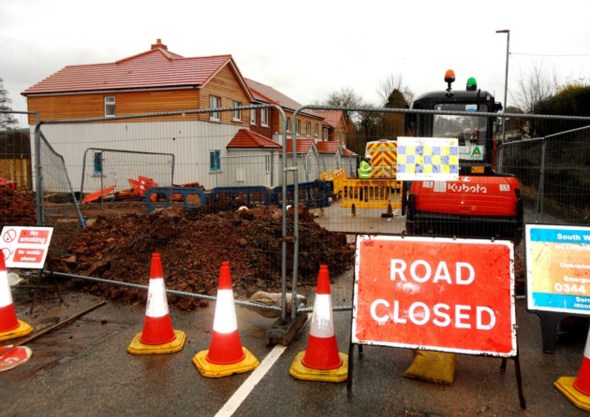
Road Closed until end of the month

How come a road through Colyton can be closed with little or no warning for a month?

This picture says it all.


Photo: Chris Carson Midweek Herald

Owl has learned that Colyton Parish Council has launched, literally over the weekend, an emergency free bus service for residents while Coly Road is closed.

The town’s most direct route to Seaton and Axminster (Coly Road is the main southern access to Colyton) was shut to traffic on Monday (February 3) when contractors moved in to lay pipes for the development of a new housing estate.

Due to the road closure, which is expected to last until the end of the month, the regular 885 bus service is unable to run through Colyton Market Square.

As a result the parish council has organised an emergency minibus service to be run by local company, Stamps Coaches. The service will provide three journeys to Axminster a day and three to Seaton, from Monday to Friday, until the roadworks are competed.

The times are: To Axminster Station: Return buses will leave Colyton Market Square at 9am; 11am and 1.30pm. To Seaton, via Colyford: Return buses will leave Colyton Market Square at 10am; 12pm and 2.30pm.

https://www.midweekherald.co.uk/news/free-bus-trips-to-axminster-and-seaton-available-1-6497945


Winslade Park Development Clyst St Mary Public Consultation

Owl has just been sent this update from Gaeron Kayley – Chairman Save Clyst St Mary Residents’ Association to residents of Clyst St Mary – (some of the consultation dates referred to have now passed).

Dear Resident,

Having viewed the Burrington Estates’ development proposals at the first drop-in session of the Public Consultation at the Village Hall on Monday 3rd February 2020, we have produced some comments for your information that we intend forwarding to the Developers at hello@winsladepark.com and these are attached below (not included in this post).

If you also wish to make comments about these substantial development proposals, we hope these particulars may assist in guiding you. The purpose of a Public Consultation is to give the public an opportunity to make comments to the Developers which may influence their subsequent planning application to East Devon District Council for this future development, so it is your opportunity to express your views.

The link below is accessed via http://www.winsladepark.com and includes the Public Consultation Presentation Boards which show the extent of the development on both the Winslade Park site and the Plymouth Brethren field

Click to access Winslade-Park-Consultation-Presentation-Boards-web-smaller.pdf

There are two further drop-in sessions (Thursday 6th February from 1pm to 5pm and Saturday 8th February from 9am to 12pm) at the Village Hall.

Furthermore, a Planning Director from Avalon Planning and Heritage will be presenting these major development proposals for the former Aviva Winslade Park site and the Plymouth Brethren field at 7.00 p.m. on Monday 10th February 2020 in the Clyst St Mary Primary School Hall, before the commencement of the next Parish Council meeting. Members of the public are welcome to attend this meeting.

Regards

Closure of Care Home in Budleigh Salterton

East Devon MP Simon Jupp has questioned the ‘hugely regrettable’ decision to close a Budleigh Salterton care home.

https://www.exmouthjournal.co.uk/news/simon-jupp-questions-budleigh-care-home-closure-1-6495643

He has written to [Abbeyfield] care home bosses questioning them over the decision to close Shandford, in Station Road.

The Abbeyfield Society last week announced the care home will be closing at the end of March.

The society said keeping the home open was no longer viable due to ‘the systematic recruitment challenges’ and ‘significant’ renovation work needed.

In a letter to Abbeyfield chief executive David McCullough, seen by the Journal, Mr Jupp has asked for the financial assessment of the works to be published and queried whether money from wills of former residents could be used to fund repairs.

He also asked if staff have been asked to sign non-disclosure agreements – sometimes known as gagging orders.

Mr Jupp questioned when Abbeyfield will know to which care homes residents will be transferred and what steps will be taken to guarantee their safety and security.

In response, the Abbeyfield Society said no staff have been asked to sign a gagging order and more than £1.7 million – including legacies from wills – has been spent on renovations over the last eight years.

The society also said it will provide residential care or housing and financial help towards the elderly in Budleigh and the surrounding villages.

Mr Jupp said: “It’s hugely regrettable that Abbeyfield Shandford is closing and I want to find out more details.

“What we have got is the issue of people being moved when it is extremely stressful and affects their health.

“It’s less about the building and more about the people.

“Elderly people moving care homes can be extremely damaging to their mental health.”

A spokesman for the Abbeyfield Society said: “We welcome Mr Jupp’s offer to meet with The Abbeyfield Society to discuss his concerns and are in the process of reaching out to his office to set up a meeting”.

Last week (Jan 29) the Journal ran an article in which Abbeyfield were quoted as saying that money raised from the potential sale of the site would be used “for the benefit of older people in Budleigh Salterton”. The society has been working with a local volunteer group to return the home to trustee management. The article also quoted an Abbeyfield spokesman as saying: “A group of local people, made up of former professional in areas including care home management, finance, property and law, undertook a detailed review of the infrastructure, building condition and financial performance of the home. Unfortunately they also concluded that keeping the care home was not a viable option”.

Owl’s local sources are saying that considerable sums from Budleigh Salterton and lower Otter Valley residents have been given to this charity since it started in the 1950s (merged with Abbeyfield 2012). They complain that there has been a lack of transparency over who has actually been running it for the past few months and why there was no public meeting called to consider other options to closure in March.

BBC Spotlight were seen on site yesterday and may feature an article on the situation tonight.

Owl believes that lack of transparency in dealing with money donated by the public is fundamentally wrong and does nothing but breed suspicion. Owl hopes that there has been no conflict of interest in those involved in the review and their possible role in any potential recipient organisation of funds released.

EDDC to hold master class on Jointery — Wednesday 5 February, 5.30pm

On Wednesday 5 February EDDC is going to hold a masterclass on Jointery (noun – the art of weaving liaison/co-ordination/steering committees/groups into such a complex web no-one knows who’s really in charge and no-one has time to do anything anyway).

https://democracy.eastdevon.gov.uk//documents/g233/Public%20reports%20pack%2005th-Feb-2020%2017.30%20Cabinet.pdf?T=10

Buried deep – see agenda Item 20, page 114 of the Cabinet Papers, subject: Heart of the South West Joint Committee Governance Arrangements.

Step back with Owl to 2014 when the Heart of the South West Local Enterprise Partnership (LEP), covering Devon and Cornwall was first formed. The government’s idea was that this should be business chaired and business led. Consequently, of the 20 board members only six were elected representatives of the 19 local/unitary authorities covered.

In 2017 Mary Ney published a critical review of the unacceptably poor governance arrangements in most LEPs. Following this the Joint Committee referred to in the EDDC cabinet paper was set up in March 2018. A single representative from each local authority formed the membership plus co-opted members from HotSW, transport and health bodies. One might have thought that this was to provide some sort of accountable oversight of the LEP. But the EDDC cabinet papers say that the Joint Committee acts as a single voice to Government on socio-economic and environmental issues and makes the case for additional powers and funding to be transferred to its individual members for the benefit of the people of Devon and Somerset. Accountability seems to have been relgated to the Joint Scrutiny Committee which can barely scrape a quorum together.

Where does this leave HotSW, until now our formal devolution link with government?

Perhaps some clues can be found in para 4 of the cabinet paper which explains why a review (and more funding in cash and officer effort) is needed.

Changes in Government policy away from large devolution ‘deals’ to a more targeted dialogue on key themes of relevance to the local authorities and partners, e.g housing. The Joint Committee’s influencing role has become increasingly important as recognised by Ministers, local MPs and Government officials. The ambition remains to draw down additional functions, powers and funding from Government.

The evolution of the Joint Committee’s role from agreeing policy (the HotSW Productivity Strategy) to overseeing delivery of the Strategy alongside the LEP.

The developing relationships with other key local partnerships to ensure that there are appropriate reporting lines, ie, HotSW LEP Joint Scrutiny Committee, Peninsula Transport Board, HotSW Local Transport Board, and Great South West.

No! Great South West is not another rail franchise as the name suggests, it is, in fact, another example of Jointery which has crept out of the woodwork.

Steve Hindley, Chairman of Midas Group, stepped down as Chair of HotSW in 2019 and has now popped up in 2020 as Chair of this Great South West (GSW).

The Great South West prospectus sets out how the area spanning Cornwall and the Isles of Scilly, the Heart of the South West (Devon, Plymouth, Somerset and Torbay) and Dorset aims to become the latest growth alliance to rebalance the UK economy, alongside the Midlands Engine and Northern Powerhouse.

On Wednesday, January 22, a delegation comprising business leaders, Local Enterprise Partnerships (LEPs), MPs and local authorities (Including DCC Leader John Hart) presented Minister for Local Growth, Rt Hon Jake Berry MP, with the GSW growth prospectus and briefed him on ambitions to deliver £45 billion of economic benefit and 190,000 new jobs over the next 15 years.

It seeks support for an enhanced export and investment hub; recognition of a Great South West Tourism Zone and an agreement to create a rural productivity deal.

At HotSW, Hindley oversaw an unrealistic and undeliverable strategy for regional growth aimed at doubling the local economy in 20 years, way ahead of any national performance forecasts, with no clear strategy or feedback mechanism to measure success.

The GSW proposal is more modest. It considers three scenarios: continue growth at 2017 levels; increase to 90% of UK average; matching UK average — nothing about doubling the economy in 20 years. Owl wonders if everyone is singing from the same Hymn sheet.

Owl also wonders why Devon, Cornwall, Somerset and Dorset couldn’t have agreed on forming a single LEP based on the GSW area in the first place, a much more logical arrangement to make the case for infrastructure investment on transport etc .

GSW Prospectus here:

Click to access GSW%20Prospectus%20published%20final%20version%20100120.pdf

NHS leaders urge Government to build 100 new hospitals plus an extra £7Bn/year

https://www.theguardian.com/politics/2020/feb/03/pm-urged-to-give-nhs-100-new-hospitals-plus-an-extra-7bn-a-year?CMP=Share_iOSApp_Other

NHS leaders have urged Boris Johnson’s government to build 100 new hospitals and give the service an extra £7bn a year for new facilities and equipment.

They want the prime minister to commit to far more than the 40 new hospitals over the next decade that the Conservatives pledged during the general election.

So many hospitals, clinics and mental health units are dilapidated after years of underinvestment in the NHS’s capital budget that a spending splurge on new buildings is needed, bosses say. Too many facilities are cramped and growing numbers are unsafe for patients and staff, they claim.

Johnson has promised £2.7bn to rebuild six existing hospitals and pledged to build 40 in total and upgrade 20 others, although has been criticised for a lack of detail on the latter two pledges.

The call has come from NHS Providers, which represents the bosses of the 240 NHS trusts in England that provide acute, mental health, ambulance and community-based services.

The government needs to match the scale and ambition of the more than 100 new hospitals built between 1997 and 2015 under the controversial private finance initiative, and the 95 created in the first three years of the ”hospital plan” construction programme in the 1960s, they say.

They argue Johnson’s pledges, while welcome, “fall well short of what is needed” across the NHS, and that his planned 40 hospitals represent “a much more modest ambition than what was achieved under those previous initiatives”.