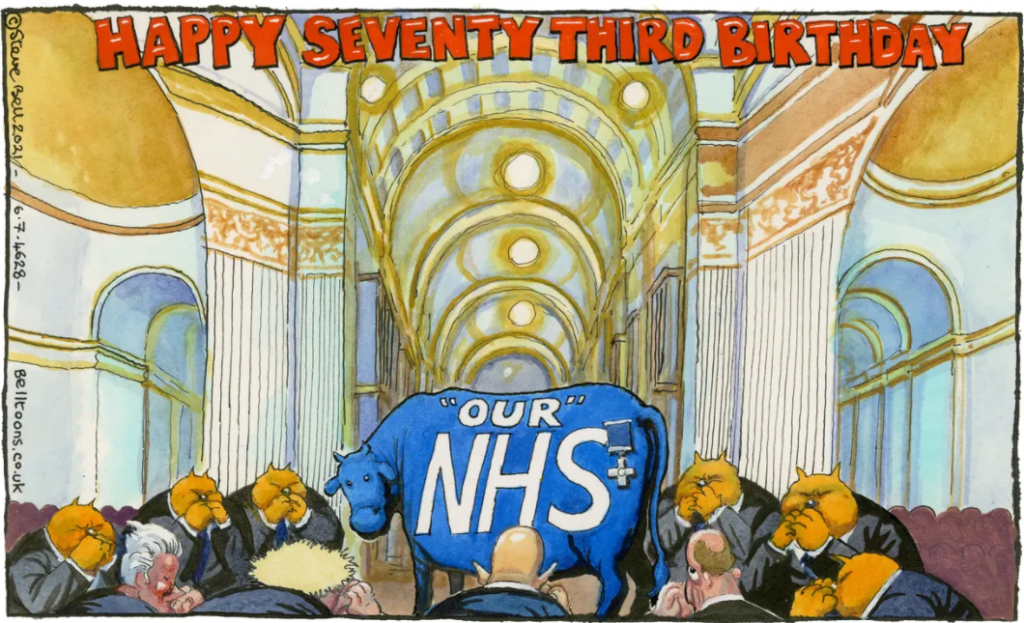
RD&E on highest possible alert

The Royal Devon & Exeter Hospital (RD&E) has gone into OPEL 4 status – its highest alert level – due to high demand and staff shortages.

Howard Lloyd www.devonlive.com

The NHS Foundation Trust revealed today that it was ‘experiencing severe pressure’ across a range of services and both its acute and community hospitals.

Patients are being urged to phone 111 if they need urgent care instead of coming to the emergency department for treatment.

The hospital added that it was not the only one in Devon experiencing extreme pressures.

Phil Luke, director of operations, said: “The RD&E – and the wider NHS across Devon – is extremely busy today.

“As always, our top priority is to continue delivering safe, quality care. To help us ensure this, I am asking people who do not need emergency care to phone NHS 111 in the first instance. This will help to ease the burden on our overstretched services at this time. It is important to stress, though, that if you do need emergency care, please phone 999 or attend our emergency department.”

“In addition, if people have a loved one who is medically well and able to leave hospital please support us to ensure that they can do so safely.”

The Trust continues to operate its maternity services as normal.

A statement on the RD&E website added: The Trust is currently at OPEL 4 status – the highest alert level – due to:

  • A large number of people continuing to visit our Emergency Department
  • Delays with discharging patients who have no onward care arrangements in place
  • A high level of staff absence due to COVID-19 self-isolation
  • Caring for a small number of patients with COVID-19 and the impact this has on our other service
  • Pressures across our paediatric services

Several other NHS organisations across Devon are also experiencing severe pressures. The RD&E is working with these organisations to reduce pressures, focusing on ensuring people are cared for in the most appropriate setting.

  • Our Emergency Department, which is for urgent and immediately life-threatening cases only, is extremely busy today with longer waits than usual.
  • If people need urgent care, before coming to our Emergency Department, we ask that they call 111 or visit 111 online first. Through 111, they’ll be able to speak to a clinician, who will advise where to go to get the right treatment more quickly.
  • It’s really important that people continue to attend appointments and seek medical attention if they need it.
  • If a friend, family member, or loved one is medically fit and able to leave hospital sooner, we ask that people get in touch with our Family Liaison Service to help us make discharge arrangements. The service is open 7 days a week, 9am-5pm, and can be reached on T: 01392 402093 (weekdays only) or E: rde-tr.pals@nhs.net (7 days a week). If you cannot get through on phone please email and we will ensure this is picked up.
  • The free paediatric HANDiApp provides expert advice for common childhood illnesses.

Ministers overruled Sage and ditched masks after being told the economy would lose billions

Ministers decided to ditch mandatory face masks after being warned the UK economy would lose billions of pounds if people were made to wear them after 19 July.

By Jane Merrick, Richard Vaughan inews.co.uk 

Modelling from reviews of social distancing and mass gatherings revealed public dislike for wearing face coverings at sporting, music and arts events.

Keeping compulsory face masks could cost the events and hospitality industries more than £4bn in lost revenues, the analysis suggested.

A Whitehall source told i that the research was compelling and the driving force behind the decision to scrap mandatory face masks when all restrictions are lifted in England.

This was despite warnings by scientists from The Scientific Advisory Group for Emergencies (Sage) that the Government should keep “baseline measures” in place.

It suggests that ministers are now “following the economy” rather than the science as the country grapples with an exit wave from the pandemic.

The public dislike for face masks in recreational settings such as football matches and live concerts is in contrast to broad support for coverings on public transport, which is regarded as a necessary inconvenience, sources said.

But at a meeting in April, Sage recommended that face masks and other baseline measures such as working from home should be kept in place even after all other restrictions were lifted at the end of the roadmap.

The minutes, published on Monday, said: “Ongoing baseline measures and sustained long-term behavioural change will be required to control a resurgence in infections. Lifting restrictions may recreate conditions for super spreader events.”

The public health chief of one of the areas worst-hit by the Delta variant has added his voice to the widespread calls from scientists and medical experts to keep face masks in enclosed public spaces after 19 July.

Professor Dominic Harrison, director of public health for Blackburn-with-Darwen in Lancashire which bore the brunt of rising Delta cases in May and June, also called for a decision to be made as soon as possible on vaccinating 12 to 17-year-olds to limit transmission in secondary schools once the new term starts in September.

The independent vaccines committee the JCVI is still debating whether to extend jabs to 12-17-year-olds.

Prof Harrison told i: “I generally share the view of some colleagues that it is time for us to open up as much as possible – but the three things we need to make this safer are; to get on with vaccination for those aged 12-plus as soon as possible, increase ventilation measures in schools and other public indoor space and retain mask wearing (as now) in enclosed public space.

“With these mitigations we should be able to have maximum freedoms and minimal risk – but we need to be really clear – we will still not be completely risk free.”

Professor Chris Whitty, England’s chief medical officer, and the Government’s chief scientific adviser Sir Patrick Vallance effectively backed Boris Johnson’s decision to scrap face masks by appearing alongside the Prime Minister in Monday’s press conference.

But both scientists wanted to make it clear they would continue to wear coverings in enclosed or crowded public places, reflecting concerns on Sage that people should be mindful of the infection risk.

Professor Calum Semple, a member of Sage, said this was the right approach from the Government’s top scientists.

He told Times Radio Breakfast: “The emphasis from the chief medical officer and the Government chief scientific adviser was to assess your environment.

“They both said they’re going to be wearing masks in many circumstances, as will I.”

England’s ‘freedom day’ to be day of fear for elderly people, charities warn

Boris Johnson’s “freedom day” will be a day of fear for elderly and vulnerable people and those with compromised or suppressed immune systems, for whom the efficacy of vaccines is much reduced, charities have warned.

Amelia Hill www.theguardian.com

Citing the statement by the new health secretary, Sajid Javid, that Covid infections could surge to a record 100,000 a day in a few weeks after all social distancing and mask-wearing regulations are removed in England, Blood Cancer UK has said that 19 July “will be the day that it feels like freedoms are being taken away from” many people.

“People with blood cancer are unlikely to have got as much protection from the vaccines as people without cancer,” the charity said in a tweet. “Lots of you have also told us it’s been great to start getting back to normal over the last couple of months.

“The reason many of you have felt able to do this is that the people around you have been keeping their distance and wearing masks. We’re appealing to the public to continue to be considerate because there’s no way of knowing if the person next to you is immunocompromised.”

Jan Shortt, the general secretary of the National Pensioners’ Convention, said that the 50 deaths a day being projected by many health experts as a direct result of the ending of restrictions were likely to be among the UK’s oldest and most vulnerable.

“The ‘free-for-all’ depicted in the information from government sources is making older people (and potentially others in society) anxious about going out into crowds and being targeted because they are either wearing a mask or not,” she said.

But it is not only older people who are scared and angry. Eve, who is 34 and unable to work because of disabilities, said the relaxation of the rules will “mean I’m rendered housebound by those who choose not to wear masks”.

“The so-called freedom day is, for us, the exact opposite,” she said. “Shame on those who made this decision and those who choose, going forward, not to wear a mask. You are part of why I will not be able to go outside, just as I was starting to enjoy a bit of actual freedom again – which, for me, has been that I now sometimes go into a shop. That’s all I’ve had. And now it is being taken away. I feel hopeless.”

Cathy Bass, a 39-year-old office worker in Lincolnshire, said the younger generation felt they had been sold out by the government’s decision.

“As a younger person who’s only recently had a first dose of the vaccine, I feel a bit betrayed by the decision,” she said. “We’ve sacrificed so much during the pandemic mostly for the sake of protecting the older population, yet apparently we can’t keep the small step of wearing a mask in certain places for just three more months while we wait for all of the adult population to have had the chance to be fully vaccinated and to be as safe as it’s possible to be from coronavirus, including the effects of Long Covid.

“Not to mention keeping unvaccinated under-18s safe – and helping stop the development of new variants,” she added.

Ellie from Leigh in Greater Manchester is 38 and lives with her partner, both of whom are classed as clinically extremely vulnerable.

“My partner and I have had our lives on hold for the past 18 months,” she said. “We’re just at the point where we can start to get out a little more and start mixing with friends and family. The idea that masks will no longer be mandatory terrifies me. I feel that as a disabled and vulnerable woman I’ll be excluded more and more from being able to participate in normal life.

“If people will not be wearing masks then I don’t want to return to supermarket shopping with my carer, to going out for lunch with my mum or attending events where lots of people will be present,” she added.

Jacquie Rogers, a 64-year-old author from Malvern said the relaxation in the rules will “condemn” her to having to avoid all places where others congregate.

The author, who is immunosuppressed and has been shielding since the start of the pandemic, said she “relies on others to protect me”.

Emerging data from John Hopkins and other research centres suggest the efficacy of the vaccine is very low for people like me compared with others of my age,” she said. “I suspect my options outdoors will contract, too, with restrictions lifting, meaning even fewer opportunity for me to socialise or even shop.”

Liberalise planning rules to tackle a housing crisis – sounds logical, but it won’t work

The chief obstacle, which is also widely acknowledged in policy circles, is that there is no real desire for property prices to fall as housing investment has a direct bearing on GDP, economic growth and confidence in the economy. The paradox is that millions of individuals and families under the age of 45 may be excluded from the housing market, but millions of older voters inclined to vote Conservative stand to gain from an ever-appreciating asset.

Anna Minton www.theguardian.com

If the price of food had increased at the same rate as house prices in the UK over the past 50 years, then today a chicken would cost just under £70. As average house prices in London are more than twice as high as the rest of the country, in the capital that chicken would cost almost £140.

The government response to soaring inflation is to promise to build more homes at speed by loosening the planning system. It is a “supply side” solution, which sounds logical: rapidly increase the number of homes being built and prices will inevitably come down. It is a highly contentious approach, which cost the Conservatives the Chesham and Amersham byelection, but it sounds as if it should work.

The problem is that the housing market does not function like a pure market, and while the UK does have some of the highest prices in the world the affordability crisis is not a peculiarly British issue; it’s a global problem, with an index by the property consultants Knight Frank revealing that global residential prices have risen by more than 60% in the past 10 years.

Cities around the world, from Auckland to Vancouver, are facing an affordability crisis, with huge price rises and extreme gentrification in cities linked to global capital flows and foreign investment rather than local circumstances. This ensures that increased supply will not bring prices down; the new luxury apartment complexes that now characterise British cities such as London, Manchester, Bristol and York, to name but a few, remain out of reach for the majority of house buyers. Many are sold “off plan”, straight to foreign investors, before they have even been built.

The flood of global capital into cities followed the financial crisis and has been driven by low or negative interest rates, the growing dominance of global private equity in real estate and quantitative easing, the policy of creating trillions of pounds of electronic money pursued by the Bank of England, the Federal Reserve and the European Central Bank. In the UK £445bn was created between 2009 and 2016, which went disproportionately into the hands of the richest, who ploughed it disproportionately into property. Between March and November 2020, a further £450bn was funnelled into the economy, which is predicted to have a similarly distorting effect on the housing market.

The irony is that while house prices have soared around the world, they are generally left out of central banks’ calculations on inflation. In the UK, food, clothes, furniture, cars and holidays are all included in the government’s preferred inflation index, the consumer price index (CPI), but house prices are not. The European Central Bank is looking at measuring the role of housing in the rising cost of living in a forthcoming strategic policy review, but there is little likelihood of the UK doing the same.

This is the global context for our extreme housing crisis, which is further fuelled by local circumstances. Chief among these are a private sector lacking incentives to produce more housing, and a social housing sector that builds very limited amounts of social and affordable housing. Margaret Thatcher’s defining policy of “right to buy”, under which more than 2m council homes were sold, continues to decimate the dwindling amount of affordable housing in England, although Scotland and Wales have halted the policy. In 1978, the year before Thatcher came to power, the government built 100,000 council homes, the private sector built 150,000 and there was no shortage of housing. Since then, private sector housebuilding figures have failed to make up the shortfall despite repeated policy incentives, such as starter homes, which have contributed to a limited rise in building but added further inflationary pressures by increasing mortgage credit.

Housebuilders are businesses accountable to their shareholders, and it is well documented that it is not in their interests to flood the market with homes, as it would damage their profits. Instead they control the rate of production and trickle out limited numbers of homes from large developments to keep prices high. As a result, repeated government reviews and politicians from both parties have consistently identified “land banking” rather than a restrictive planning system as the key barrier to supply-side solutions. There is also little incentive to build high-quality, larger homes, leaving the UK with some of the smallest homes in Europe, with the most attractive sites for developers in city centres suited to small luxury apartment developments that generate high income.

If there is widespread recognition that the planning system is not the main barrier, why are the government’s reforms so focused on loosening restrictions? This is partly because it’s a voter friendly idea outside of the Tory shires and popular with free-market Conservatives, while the interventionist policies required to genuinely affect house price inflation are seen as ideologically unpalatable.

Canada and New Zealand, which have witnessed some of the fastest house price rises in the world, have introduced policies to dampen demand from foreign investors. Canada has proposed a new tax on foreign investors and restrictions on mortgage credit, while New Zealand has instructed its Reserve Bank to consider house prices in making monetary policy decisions. Solutions involving the public sector are equally hard to envisage, such as a public housing programme or large-scale new housing developments enabled by the municipal purchase of land, which underpinned the creation of the postwar new towns and remains the European model for development.

The chief obstacle, which is also widely acknowledged in policy circles, is that there is no real desire for property prices to fall as housing investment has a direct bearing on GDP, economic growth and confidence in the economy. The paradox is that millions of individuals and families under the age of 45 may be excluded from the housing market, but millions of older voters inclined to vote Conservative stand to gain from an ever-appreciating asset.

The growing consensus is that the planning bill is unlikely to survive in its current form as it is so unpopular with swathes of Conservative MPs in vulnerable shire constituencies. The result is planning reforms that were unlikely to make a substantive difference in the first place are likely to be significantly watered down. In this way, a government claiming to liberalise the planning system can appeal to its free-market wing, while also appeasing the no-development lobby in the shires. It may be clever politics, which produces a lot of noise about the need to build, but it obscures the causes of the housing crisis instead of addressing them.

  • Anna Minton is the author of Big Capital: Who is London For? and reader in architecture at the University of East London

Controversial access road through park rejected

Putting a road through “would’ve ruined it”.

Some councillors in favour of the road worry about the district falling behind its targets to build new homes and the threat of the government stepping in to force planning decisions on the council.

Joe Ives, local democracy reporter www.radioexe.co.uk 

Plans to build an access road across a popular park have been rejected by North Devon District Council.

The council had been considering selling Westacott Park to a developer with a view to building a secondary access road for a new housing development.

The council’s strategy and resources committee voted six to three against controversial proposals put forward by developer Progress Land Ltd. 

The park had been earmarked by the council as a potential access road to a development of more than 130 new homes.

Councillor David Knight, who voted against the plans, said:  “It’s a contentious decision but personally I’m not happy with selling a park to put a road in the middle of it.”

“It’s an intimate space which people use and frankly putting a road through it would have ruined it.”

Progress Land intended to acquire the park from the council for an undisclosed fee. If their plans were accepted, they promised to build a new park and improve what remains of the current Westacott Park by furnishing it with new equipment.

The road, which would have covered more than 10 per cent of the park, has divided local opinion.

Some councillors in favour of the road worry about the district falling behind its targets to build new homes and the threat of the government stepping in to force planning decisions on the council.

One of those to vote in favour of the plans was Councillor John Patrinos (Independent, Lynton and Lynmouth) who warned: “We can’t afford to stop these houses being built.

“If we do then, according to the rules laid down by government, we’re not going to have a five-year land supply for our local plan.” 

Councillors from both sides agree that alternative plans for the access road need to be more developed and put forward to the council.

Julie Hunt (Lib Dem, Barnstaple with Westacott) welcomed the result whilst recognising the need for an alternative.

Councillor Hunt also warned that the road, unpopular with many residents, might not be off the table for good:  “It can always come back. There’s nothing set in stone.” 

“I’ll be very surprised if we’ve heard the last of it.”

5,000 homes and new schools vision for Marsh Barton

In a parallel universe might some of these have been dumped on greenfield sites in East Devon? – Owl

Daniel Clark www.devonlive.com 

Councillors are being asked to back plans for work on assessing the feasibility of plans for around 5,000 homes to be provided in Marsh Barton.

As part of the Liveable Exeter programme, Exeter City Council are aiming to deliver up to 12,000 new homes in inclusive and sustainable communities in order to meet the forecast housing need of the city into the future.

As part of the Liveable Exeter vision, Marsh Barton offers the largest opportunity within the Liveable Exeter programme to deliver a significant number of new homes as part of a mixed use community.

It has the potential to become more than just a dormitory suburb and become a new town within the city, building on Garden Community principles with scope to deliver up to 5,000 new homes as part of a mixed use community.

Grant funding totalling £625,000 has recently been secured to progress work related to the Liveable Exeter programme and fund the Liveable Exeter programme team, and Exeter City Council’s executive, when they meet next Tuesday, are recommended to approve the budget to progress work related to the Liveable Exeter programme, and for the creation of two new, fixed-term posts as part of the team.

The work will consider how to unlock the redevelopment of this part of the city to deliver a new mixed-use city quarter.

As part of the vision for the scheme, ‘mobility hubs, linear parks and digital connectivity will all take the place of expanding car parks and roads and offer the opportunity to create a ground-breaking development anchored around a comprehensive and sustainable urban mobility network’.

The future Marsh Barton will connect with Water Lane and the City Centre, to become a super-connected place which builds on existing under-utilised and redundant infrastructure to deliver world-class sustainable and active travel opportunities.

The plans could see around 5,000 homes built, mainly in flats, remain an important employment and retail area, but with the integration of living and working where uses are compatible, to make better use of riverside location, as well as new work space, and community space and school sites.

Richard Marsh, Liveable Exeter programme director and interim city development lead, in his report to the executive, said: “The Liveable Exeter programme is the council’s transformational housing delivery programme. It seeks to deliver up to 12,000 new homes in a series of new inclusive and sustainable communities, focused on major brownfield development sites within the city.

“This way of working marks a distinct change to previous growth strategies which sought to meet housing growth demands within the Greater Exeter area through greenfield development and is consistent with the council’s focus on achieving the net-zero targets and delivering on the Exeter 2040 Vision.”

He added: “Having a good understanding of the opportunities and challenges associated with the long-term redevelopment of the Marsh Barton area will also mean that the city council, and its partners’, are in a good position to be able to develop and evidence bids and business cases to support applications for government grant funding and infrastructure investment – likely to be required in order to unlock a strategic project of this scale, complexity and nature.

“It also allows the city council and its partners to act in a coordinated and strategic manner in order to realise shared objectives. An important element of the work will also involve considering how public sector land ownerships within the vicinity of Marsh Barton can be consolidated, rationalised or relocated in order to accelerate the timely release of public sector land assets within the area – in line with the Liveable Exeter Vision.”

The executive is recommended to note and then for the full council to approve the successful application for, and receipt of, Garden Communities capacity funding to support the Liveable Exeter programme and approves a budget of up to £475,000, to be funded by an earmarked reserve, to progress work related to the Liveable Exeter programme.

They are also recommended to note the successful application for, and grant of, One Public Estate funding to support the progression of feasibility and technical work on Marsh Barton in line with the Liveable Exeter vision and approves a budget of up to £150,000, to be funded by claims to Devon County Council as lead partner , in order to progress the work, and the creation of two new, fixed-term posts within the Liveable Exeter team to be funded utilising a proportion of the Garden Communities capacity funding.

Eight sites across Exeter are mentioned as part of the Liveable Exeter vision, including the Marsh Barton plans.

They are:

1: Red Cow Village (St David’s) – 664 homes in a new neighbourhood based around the historic Red Cow Village near Exeter St David’s railway station. It will provide a strong sense of arrival benefits Exeter’s identity, status and culture, a new neighbourhood, including new work space, and use of under-utilised station buildings, as well as space for shops and leisure, work space, and a new Exeter St David’s station building and the refurbishment of Great Western Hotel

2: Water Lane – The Water Lane project can deliver a new community at the scale of a new town close to the city centre, as the riverside site has the potential to become home to around 14,000 people. The vision for Water Lane is as an enterprising, self-sustaining community, a place to work as well as to live close to the city’s best loved assets. This will be a walkable place where day to day needs can be met without the use of a car. The plans could see 1,567 homes, a space for expanding leisure attractions near the quay, with low traffic or car-free development with attractive cycle and walking connections, shops and leisure, work space, as well as other community space and a primary school,

3: Marsh Barton – Marsh Barton offers the largest opportunity within the Liveable Exeter programme to deliver a significant number of new homes as part of a mixed use community, with the potential to become more

than just a dormitory suburb and become a new town within the city, building on Garden Community principles with scope to deliver up to 5,000 new homes as part of a mixed use community.

Mobility hubs, linear parks and digital connectivity will all take the place of expanding car parks and roads and offer the opportunity to create a ground-breaking development anchored around a comprehensive and sustainable urban mobility network, and the future Marsh Barton will connect with Water Lane and the City Centre, to become a super-connected place which builds on existing under-utilised and redundant infrastructure to deliver world-class sustainable and active travel opportunities.

The plans will see 5,544 homes, remain an important employment and retail area, but with the integration of living and working where uses are compatible, to make better use of riverside location, as well as new work space, and community space and school sites.

4: East Gate – The plans for East Gate would provide Exeter with an enhanced approach to the City Centre from the east, reducing traffic on the Heavitree Road and allowing for improved public transport and walking and cycling routes, the East Gate development is an exciting opportunity for communities in St Leonards and Newtown.

It would include 962 new homes, shops and leisure units, including the new St Sidwell’s Point leisure centre, work space, including a relocated Civic Centre, and community space.

5: West Gate – The plans for West Gate would open up access to the river and canal from the city centre and will provide Exeter with a new cultural destination on the river. It will expand and connect the park at the heart of the city around the historic bridge and promote active travel across the river with an iconic and Green Bridge over the River Exe at Exe Bridges.

It would include 617 new homes, shops and leisure units, work space, a cultural venue on the river, and a new St Thomas railway station entrance.

6: South Gate – The South Gate site will establish an improved link between the city centre and the historic quayside, giving greater emphasis to the Roman wall, city gates and Southernhay, linking from Southernhay to the quay. This development will provide Exeter with a new arrival to the city centre from Topsham Road.

The plans include 300 new homes, a greater emphasis on the wall, city gates and Southernhay, retail and leisure units, work space, and retained car parking at Cathedral and Quay

7: North Gate – Uncovering the medieval city wall between Friernhay and Northernhay Gardens, the North Gate site will provide a new approach to the city from Saint David’s along with new residential space in the heart of the city.

It includes 308 new homes, a new living opportunity at density in the heart of the city, retail and leisure space, and car parking retained at Mary Arches, with the scheme assumes ground floor commercial with residential above

8: Sandy Gate – The plans would see 1,050 new homes in a new sustainable and well connected mixed-use neighbourhood, bridging the city and the new and existing neighbourhoods to the east, providing recreational, cultural and entertainment space where Exeter meets the newly formed Clyst Valley Park.

As well as homes, would include shops, leisure, work space, and space for sports and education provision.

‘No record’ of Matt Hancock meeting Tory donor who owns stake in £346m COVID contract

The British government has “no record” of how a meeting was set up between former health secretary Matt Hancock and a firm that has donated more than £1m to the Conservatives.

Martin Williams www.opendemocracy.net 

The company, Bridgemere Group, holds a significant stake in a private health firm that was later awarded a multimillion-pound COVID contract.

The Department of Health has been accused of “very serious” transparency failures after openDemocracy learned that another healthcare investor was also present at the same meeting, but not named in official records.

In January 2020, Hancock met Bridgemere chairman Steve Morgan to discuss “NHS use of private sector capacity”. The company owns a “significant stake” in one of the UK’s largest private health companies, Circle Health, which was later awarded a £346.6m contract to provide hospital beds during the COVID emergency.

Also present at the meeting was Martin Hughes, the CEO of Toscafund, which is the majority shareholder in Circle Health via its associated companies.

But neither Hughes nor Toscafund was named in official government transparency data.

Two special advisers working for the Department of Health, Allan Nixon and Emma Dean, also did not declare their attendance – despite disclosing meetings with other companies around the same time.

The revelations come amid growing concerns over government transparency. Ministers have admitted using private email addresses to conduct government business, and Hancock and other ministers have been accused of not declaring meetings with firms that later won COVID contracts.

The Department of Health told openDemocracy that it was “unable to establish who may have arranged this meeting”. A spokesperson did not comment on the failure to disclose the fact that Toscafund and two special advisers were also present.

The minutes and agenda from the meeting are also not held by the department.

Secretaries of state should not be having shady meetings with major Tory party donors

“These are deeply troubling revelations. No ifs, no buts – secretaries of state should not be having shady meetings with major Tory party donors,” Labour MP Margaret Hodge, the former chair of the Public Accounts Committee, told openDemocracy

“Why are there no proper records of the meeting? Where is the chain of accountability? Was the government trying to sell off more of our vital NHS on the eve of the pandemic?

“This whole thing absolutely stinks of another abuse of power by Matt Hancock,” she added.

Since Hancock resigned last month after breaching COVID rules by kissing a colleague in his ministerial office, it has emerged that he and other health ministers used private emails to discuss COVID contracts with business leaders.

The Sunday Times also reported that Gina Coladangelo – the adviser whom Hancock was pictured embracing – conducted government business on her private Oliver Bonas email address, the retailer set up by her husband.

According to its accounts, Bridgemere is owned via a holding company based in a tax haven. One of its subsidiary firms planned to continue claiming furlough support from the government.

Bridgemere donated £1m to the Conservative Party ahead of the 2019 election – a few months before the January 2020 meeting with Hancock. The firm has continued to donate a further £250,000 since the start of the pandemic.

Transparency failure

Revelations about Hancock’s meeting with Bridgemere have also exposed failings in the government’s handling of Freedom of Information requests.

Two separate requests about the meeting were submitted independently; one by openDemocracy, and the other by a freelance journalist. But despite asking the same questions, they received different responses.

openDemocracy was told that “no record” was held of who attended the meeting. But a freelance journalist – who shared the response with openDemocracy – was provided with the names of four people, including Toscafund’s Martin Hughes and Bridgemere’s Steve Morgan. Bridgemere and Toscafund are major financial backers of Circle Health.

It also reveals that a document discussing Circle Health was circulated in relation to the January 2020 meeting. The document says: “More use should be made of the independent sector to speed up patients’ access to care”.

It adds: “Overall independent sector has c8,500 beds, with similar spare capacity.”

Reports say the government paid around £200m a month for 8,000 private sector hospital beds when the COVID emergency hit.

Previously, the only public acknowledgement of the meeting was a reference in Hancock’s list of appointments. This list fails to mention Toscafund’s presence.

It also claims that “Circle Group” attended the meeting – in an apparent misnaming of Circle Heath. However, Circle Health categorically denies going to the meeting and none of its staff are listed as being present.

Sue Hawley, senior director at Spotlight on Corruption, said the failure to keep records of Hancock’s meeting was a “very serious breach of transparency requirements”.

“There is no excuse whatsoever for these kinds of meetings with party donors, which raise potentially very egregious conflicts of interest not to be recorded and declared,” she said. “This requires proper investigation and those responsible for this lapse need to face real consequences.”

The Labour Party has called for an independent investigation into the use of private emails by ministers during the pandemic. The party’s deputy leader, Angela Rayner, has now told openDemocracy that this should also investigate undeclared meetings.

“Matt Hancock’s first priority was always enriching his mates, not protecting the public,” she said. “This racket must end.”

This government seems intent on avoiding scrutiny… We should all be asking: what have they got to hide?

The SNP’s health spokesperson, Dr Philippa Whitford, also condemned the failure to keep records of the meeting. She said it was “utterly inappropriate… regardless of whether there’s no record because they used private emails, or no record because no record was kept”.

“If negotiations were carried out through private emails – which are not recorded and not documented – that’s just unacceptable.”

Emails released by the Good Law Project yesterday show that companies trying to win COVID contracts were directed to a Gmail account to be fast-tracked if they had connections to ministers.

A so-called “VIP lane” was already known to exist for companies offering to provide PPE during the start of the pandemic. But a second VIP lane for Test and Trace contracts has now also been revealed.

Gemma Abbott, legal director of the Good Law Project said: “This government seems intent on avoiding scrutiny, so it comes as no surprise to hear there’s no record of how a meeting with a Conservative Party donor came to pass.

“Politicians and officials relying on private communication channels to govern the country flies in the face of transparency and accountability. We should all be asking: what have they got to hide?”

Boris Johnson ends Covid as a ‘me problem’ and makes it a ‘you problem’

The prime minister’s overriding imperative – you could tell by the very many times he said it – is to “move from universal government diktat to relying on people’s personal responsibility”. He’s basically had enough of making all the decisions, and wants someone else to have a go. Absent an obvious single candidate, he’s throwing it on to all of us.

Zoe Williams www.theguardian.com (extract)

In one way, it’s a relief, since his diktats were always so hit and miss; and yet it was a little unsettling to hear his rationale. “We must be honest: if we can’t reopen society in the next few weeks, we must ask ourselves, when will we be able to return to normal?” At least technically, it’s the middle of summer. We’re outdoors, schools will have their holiday “firebreak”, winter is when the virus is at its most powerful, so if not now, when? He sounds much more like a guy in B&Q, who’s just lost patience with looking for the right shade of white – what do you want him to do, go to Homebase? – than he does like a man carefully weighing up the intricate and often incomparable risks and benefits as have been produced for him by the nation’s finest minds. Chris Whitty and Patrick Vallance, two of those very minds, flanked him with almost palpable reluctance.

Planning applications validated by EDDC for week beginning 21 June

Johnson to announce controversial plans for greater NHS control

Boris Johnson is set to spark a political row this week by announcing plans to seize greater control of the NHS, despite warnings that the “power grab” will see ministers blamed for delays in treatment and closure of local hospital units.

Denis Campbell www.theguardian.com

The prime minister has told the new health secretary, Sajid Javid, to put the long-awaited health and care bill before parliament despite Javid’s own misgivings and concerns among hospital bosses and doctors’ leaders.

Conservative MPs are becoming increasingly anxious that the bill, which involves the biggest shake-up of the NHS in England in a decade, could become a damaging political drama, make people question Tory handling of the NHS and prove a gift to Labour, which last week called for the bill to be scrapped.

Javid is expected to lay the bill before parliament on Tuesday after the prime minister overruled his plea to delay its introduction until the autumn. Johnson has told Matt Hancock’s successor to press ahead with the legislation despite Javid’s concern that it will prove “controversial” and involves “significant areas of contention” which have yet to be resolved.

The health secretary’s new powers would enable him to abolish NHS arm’s-length bodies and intervene much earlier in deciding if an A&E or maternity unit deemed unsafe, over staffing problems for example, had to shut.

Hospital bosses have voiced serious concern to the Guardian about the government’s plan to hand Javid such big new “powers of direction”. The NHS Confederation and NHS Providers, the two groups which represent health service trusts, both warned that this could allow ministers to wield undue influence over the NHS and reduce its independence.

Matthew Taylor, the confederation’s chief executive, said health service chiefs were broadly supportive of the bill, which seeks to undo some of the most damaging effects of the last Tory overhaul of the NHS – then health secretary Andrew Lansley’s Health and Social Care Act 2012.

But, Taylor added: “They remain concerned that some of the proposals could lead to heavy handed ministerial involvement in day-to-day matters affecting the NHS, such as the closing or opening of new services for patients, which could go against the advice and expertise of local leaders who know what is best for their communities.

“We can’t risk playing political football with the NHS given the challenges it faces.”

NHS Providers cautioned that the heath secretary’s beefed-up powers could lead to service chiefs nationally and locally coming “under political pressure or interference”.

Saffron Cordery, its deputy chief executive, said: “There is no suggestion here that a publicly-funded service like the NHS should not be held to account. Rather, that the strategic direction is the domain of politicians, who should then allow the people involved in operational and clinical roles – with day-to-day responsibility for supporting patient care – the space to deliver those strategic objectives without undue political pressure or interference.”

The bill will replace the clinical commissioning groups Lansley’s reforms created with new bodies known as integrated care systems – regional groupings of providers of different sorts of healthcare working with their counterparts in social care.

Ben Howlett, a former Tory MP who is now the managing director of the Public Policy Projects thinktank, warned Johnson that the move could backfire.

“As a result of the new Health and Care Act, ministers will no longer need to horsetrade with NHS bosses to set priorities, as the secretary of state makes himself directly accountable for the provision of services,” Howlett said.

“MPs will for the first time in over a decade find constituents asking why there are long waiting lists and poor cancer outcomes without being able to write to [NHS England chief executive] Simon Stevens for answers. My advice to the new secretary of state – beware the law of unintended consequences.”

One health policy expert, who asked not to be named, said: “Politically this bill is a tricky sell, even though the government has an 80-seat majority. The penny is dropping among MPs that there’s more in the bill than just boring, technocratic NHS issues.

“How does this bill help tackle key NHS challenges like waiting times and chronic understaffing? It doesn’t. That may become a problem.”

The bill, which only relates to the NHS in England, does include plans to reduce some privatisation by removing the duty on the NHS to put care contracts out to tender. However, the British Medical Association, the doctors’ union, warned that it could lead to the new integrated care systems (ICSes) offering large contracts to private firms without any tendering process, in a repeat of the “Tory cronies” scandal, involving billions of pounds of deals for personal protective equipment (PPE) for NHS staff, seen during the Covid pandemic.

Dr David Wrigley, the BMA’s deputy chair of council, said: “We are concerned that private health providers like Virgin Care could be given seats on the boards of ICSes and therefore potentially be involved in deciding who gets what contracts. And we are very concerned that the bill could means that contracts are just handed out to the private sector, without a tendering process.”

The bill is the first of a series of important decisions that Javid, who is barely a week into his new role as the boss of the Department of Health and Social Care, will have to take in the next fortnight.

He and the board of NHS England are close to deciding who will succeed Stevens, who is stepping down this month after more than seven years in the job. Ministers want his replacement to have a much lower profile and not cause trouble by regularly lobbying in public for the NHS to be given more money and the government to radically reform social care, as Stevens has done.

The new NHS boss, whoever it is, will have significantly less power than that wielded by Stevens, as a result of the legislation.

Reports on Sunday said that Javid had ruled out Dido Harding, the Tory peer who runs the government’s heavily criticised test and trace programme. NHS bosses hope that will help clear the way for Amanda Pritchard, Stevens’ deputy, who is widely admired in the service after her stint running Guy’s and St Thomas’ hospital trust in London. Sir James Mackey, the chief executive of the Northumbria Healthcare trust, is also seen as a strong contender.

Javid, Johnson and the chancellor, Rishi Sunak, also have to decide imminently whether to increase the government’s 1% pay offer to NHS staff, which health unions have described as “pathetic” and “an insult”. The Royal College of Nursing is gearing up to hold its first-ever ballot of its 450,000-strong membership for possible strike action.

The NHS pay review body submitted its recommendations to Javid last week. It is thought to have advised that staff deserve more like a 2% increase, especially after their widely praised efforts during the Covid pandemic. However, the RCN is demanding 12.5%.

Teignbridge to act on empty homes

Teignbridge councillors have backed plans to tackle the number of empty homes in the area and bring them back into use.

Ollie Heptinstall, local democracy reporter www.radioexe.co.uk

Members of the ruling executive heard on Monday that, despite the total number more than halving since 2008, 345 homes in the district are still empty – 131 of which have been unoccupied for two years or more and are classified as ‘truly empty’.

The overall figure increased last year by 22: blamed on the impact of the pandemic and the temporary slowdown of the housing market during stricter lockdowns.

Councillors approved a policy to try to reduce the number of long-term empty homes, which includes possible enforcement action, compulsory purchase orders and enforced sales if owners fail to co-operate.

Presenting the empty homes policy document, Councillor Martin Wrigley (Lib Dem, Dawlish North East), portfolio holder for communities, housing and IT said: “We all know an empty home on the street can be not only problematic but a real source of problems.

“To get a better gauge we need to look at empty homes in two ways. Firstly, homes that are between occupants, waiting to obtain probate or undergoing renovation or a myriad of other specific reasons. Secondly, homes that are, as we might say, genuinely empty.

“Genuinely empty homes, or more precisely ones that have been empty for two or more years, and so start to attract increased council tax, can be a blight on their neighbours and the source of real issues in the street. This is a much lower number. This is about 131 in the district, of which under half have been empty for five years or more.”

Properties that do not classify for exemptions pay double council tax after being empty for two years: three times the rate after five years and four times after 10 years or more.

Cllr Wrigley also revealed that in the last two years the council had taken formal action on 59 properties.

The empty homes policy document states: “Bringing long term empty homes back into use helps the council address the needs of the district as well as attracting grant funding from central government – New Homes Bonus (NHB). In Teignbridge £27.6 million NHB has been raised over a 12 year period.”

“Targeting those properties which have been empty between six months and  two years is more likely to have an impact on NHB and increase income for Teignbridge District Council, whilst properties which have been empty for two years or more are more likely to have a detrimental impact on neighbours and their surrounding area.”

It says the council will work: “directly and assertively with owners of unfurnished properties empty between six months and two years by encouraging them and providing tools and mechanisms to bring their property back into use”.

The document adds: “Where owners do not respond to attempts to communicate with them and there is no evidence that they are taking action to bring about reoccupation, or where the property has been identified as ‘high risk’ using the empty property risk assessment, a zero tolerance approach will be adopted and the most appropriate enforcement action considered to bring the property back into use.”

Discussing the proposals, Councillor Stephen Purser (Con, Teign Valley), asked if councillors could be told confidentially which properties are empty in their wards.

“Obviously being a rural patch, I suspect there are some little lane places that have been overgrown for years and possibly nobody knows about them,” Cllr Purser said.

In response, Councillor Alan Connett (Lib Dem, Kenton & Starcross and leader of the council), said GDPR rules would likely not allow the council to tell a councillor which homes were empty in their wards. “In my case for example it’s usually the neighbours who tell me. I can think of several in my ward that have been reported to me by concerned residents,” Cllr Connett said.

Cllr Wrigley added: “Certainly in my patch I’m told frequently about when there is an empty home. There was one in Dawlish in a particular street that was causing real problems for the neighbours. Working with the team, we’ve now got that one being restored and I think someone’s moving into it relatively soon.”

The council said that due to limited resources, it will prioritise Newton Abbot (including Kingskerswell and Kingsteignton), Dawlish and Teignmouth due to the “high housing need” in these areas.

BUDGET SURPLUS

It came as the executive also heard that the authority is currently operating at a budget surplus of £86,570 for the current financial year, as of the end of May 2021.

Corporate services are forecast to be just over £200,000 under budget, but leisure/green space service income has been hit hard by the pandemic and general rental income has been reduced.

Housebuilder Taylor Wimpey opposed plans to cut new home emissions

Taylor Wimpey, one of the UK’s biggest housebuilders, opposed government plans to slash carbon dioxide emissions from new homes by at least three-quarters and argued against heat pumps, which are proposed as a replacement for gas boilers, one of the UK’s biggest causes of greenhouse gases.

Robert Booth www.theguardian.com 

The company, which typically builds about 15,000 new homes a year, told a consultation that a target of cutting CO2 emissions from new homes by 75% to 80% from 2025 was “too high” and argued that heat pumps would be too expensive and would disappoint customers with their performance.

Its position was revealed through a freedom of information request by Unearthed, the investigations arm of the environmental charity Greenpeace. Housing accounts for 15% of UK greenhouse gas emissions, and that does not include electricity produced in power stations. Natural gas burned for heating and cooking is the main contributor.

It placed Taylor Wimpey in a small minority of only 2% of such responses to the government consultation into its future homes standard. The majority said the target was not ambitious enough.

Barratt, Berkeley and Thakeham homes all supported the target, as did the Home Builders Federation, which represents housebuilders, according to the response released under environmental transparency laws.

Greenpeace claimed it showed the housebuilder tried to derail an important climate policy, but Taylor Wimpey strongly denied this and said it was identifying challenges about the practical implementation of the cuts.

Housing emissions remain stubbornly high with only 1m tonnes equivalent CO2 cut from 2018 to 2019 compared with cuts of 8.5m tonnes from energy supply, 2.2m for transport and 2.5m by businesses, official figures show. Advocates for greener housing hoped the government would bring forward stricter limits on CO2 emissions for new homes to 2023, but they announced in February it would happen two years later.

Ministers are shortly due to publish a new heat and buildings strategy, which could set an end date for the use of household gas heating and plans for accelerating the installation of heat pumps, which are currently two to three times more expensive than combi boilers.

Taylor Wimpey told the government in the consultation, which ended in February 2020: “There is a lack of evidence to support the viable delivery of the future homes standard of 75-80% less CO2 emissions within the proposed timescale with existing skills training and supply chain availability.”

It said heat pumps would be less efficient, more expensive by up to £200 a year on a three-bedroom home and less reliable in colder weather.

Asked about its view last week, Wimpey said it recognised the need for urgency to mitigate the climate crisis and that its consultation response was intended to identify “challenges relating to the practical implementation of the proposals”, which “led to concerns that the delivery of viable and much-needed new housing could be prejudiced”.

It said it “remains fully supportive of the UK government’s target to achieve net zero emissions by 2050. We also embrace the future homes standard with its ambition to reduce carbon emissions from homes in use by 75-80% by 2025.” It added that it had cut carbon emissions from its building sites, offices and vehicles by 39% over the last eight years.

The government has pressed ahead with the policy to significantly cut carbon dioxide emissions from new homes compared with current building regulations on thermal performance, which are set to be changed next summer.

Greenpeace UK’s head of climate, Kate Blagojevic, said: “We urgently need government policies that force housebuilders to start building homes fit for a zero-carbon future because it’s clear the industry won’t do it by themselves. Not only will this slash emissions but it will also make people’s homes warmer, cheaper to run and, with the right incentives, create a domestic heat pump and green homes industry that would deliver new jobs and boost the economy.”

Politics trumps Covid science in Javid’s push to ‘live with the virus’

To most scientists, living with the virus means doing everything you can to reduce the risks, before taking the brakes off. It doesn’t mean taking the brakes off and just seeing what happens.

Linda Geddes www.theguardian.com 

For months, the prime minister has repeated the mantra that further easing of Covid-19 restrictions would be about “data and not dates”. Yet, as coronavirus cases in the UK continue to surge, and scientists warn that fully reopening society risks building “variant factories” in our own back yard, the government appears poised to put one date – 19 July – ahead of everything else. Once again, politics has trumped science.

Since Sajid Javid’s appointment as health secretary on 26 June, the UK has confirmed a further 188,538 coronavirus cases, with approximately 25,000 extra people testing positive each day. On Sunday, Javid said that the best way to protect the nation’s health was by lifting the main Covid-19 restrictions, even though this would result in a further significant increase in cases. “We are going to have to learn to accept the existence of Covid and find ways to cope with it – just as we already do with flu,” he said.

Another mantra beloved both of politicians and scientists is that we’ll need to “learn to live with the virus”, though they often disagree on the timing of when this recalibration should take place. Until now, the government has also avoided specifying the meaning of this slippery phrase. Now that it is poised to set a date, we are about to learn what the health secretary’s vision of “living with the virus” actually means.

For Javid, a thriving economy is at odds with continuing Covid-19 restrictions. There’s no doubt that measures such as shutting down businesses and events, or instructing individuals and entire school bubbles to self-isolate if they come into contact with an infected person, are economically damaging and may be harmful to people’s mental, or even physical health. Other measures, however, such as the wearing of masks, are a mere inconvenience for most people, but they do reduce transmission – particularly indoors, when coronavirus cases are high. Doing away with them has nothing to do with the economy or people’s mental health; it is motivated by ideology.

No scientist is arguing that Covid restrictions should remain in place forever. “The frustrating thing is that we know double-vaccines work: they protect the vast majority of people, even from variants, even from Delta, so there is an endpoint to this,” said Stephen Griffin, professor of virology at the University of Leeds.

“The real worry is that that they’re basically saying it’s not going to be so bad, and we’ve got most people vaccinated so let’s just carry on. If you want to actually stop new outbreaks, and the tremendous damage done by this variant, you need to build your vaccine coverage up, to include, in my view, children aged 12 years and above, because that’s where many of the infections are at the moment, but also because there’s lots of socialising going on – and it is about to increase.

“Yes, we may eventually have to live with outbreaks and with some infections, but we’re nowhere near a herd immunity threshold, and it’s not a magic barrier that you go through – it is literally the more the merrier. You need to build that wall of double-vaccinated people, and if you do that you might not need boosters, because if everyone has that level of immunity then there will be no cases.”

Another frustration, among the government’s own advisers, is that ministers have repeatedly ignored their calls to make public spaces safer by improving ventilation.

“It is no good telling people to open windows if windows don’t open, as is the case in many public and private buildings – hence the need for ventilation grants for existing properties and ventilation standards for new builds,” wrote Prof Stephen Reicher and Prof Susan Michie – two members of the Sage subcommittee advising on behavioural science – in a recent blog for the British Medical Journal. Neither is it any good telling people to avoid stuffy spaces if they don’t know which ones are well-aired, they wrote, or telling the owners of public and private buildings to improve ventilation without regular inspections and enforcement.

To most scientists, living with the virus means doing everything you can to reduce the risks, before taking the brakes off. It doesn’t mean taking the brakes off and just seeing what happens.

Man quoted £71k for week’s holiday in Cornwall

So the pressure will be on to build more second/holiday homes, caravan/chalet  sites and “pop up” glamping sites – Owl

Molly Dowrick www.cornwalllive.com

A councillor from up North has been left gobsmacked after being quoted £71,000 for a one-week holiday in Cornwall.

Far from a luxurious holiday abroad, or even a posh five-star hotel in the UK, Conservative councillor from East Riding in Yorkshire, Paul Nickerson was taken aback when he was quoted £10,232 per night to rent a “modest” three-bedroom house in St Ives this August – £71,624 for the week.

Mr Nickerson had hoped to bring his three young sons aged five and under to St Ives for a lovely staycation at the popular beauty spot, but after being quoted such an overwhelming sum, he has decided to change the family break to a week’s holiday at Bridlington on the Yorkshire coast.

Cllr Nickerson told HullLive: “Everything I have seen is about 50 per cent more than their normal price. We have a young family so we normally do have a UK staycation as it’s easier.

“”But it’s normally affordable for a family, but this was shocking.

“I thought it must have been a mistake, but having checked other properties, it is clear it isn’t, as they’re all far more.”

Mr Nickerson said holiday home owners and holiday companies are “exploiting” the lack of available properties and that fewer people will be going on holiday abroad this year, due to Covid-19 rules and the financial impact of the pandemic on families.

It’s a supply and demand issue and they’re exploiting it,” he said. “A lot of people in the UK need and want a holiday, but many will not be able to afford them.

“I don’t know anyone who can afford £71,000 for a week’s holiday.”

The holiday firm labels the property a “wonderful, contemporary, waterside house” and says it sleeps six across three bedrooms and has two bathrooms with two “full baths”.

The average price to rent the house is £10,000 per night and Councillor Nickerson was quoted £10,232 per night for a one-week stay from August 14, 2021.

This equates to a total of £71,624 – even if the house was fully-occupied with six adults, it would still cost each person an eye-watering £11,937 for a week.

The property’s description reads: “This is a contemporary, reverse level property ideal for families.

“It is furnished to an exceptional standard and is 200m for the train to St Ives and 10 minutes to a wonderful largely deserted beach.

“The spacious garden is ideal for children and BBQs. There is parking for up to five cars.”

This isn’t the first time a holiday company has been criticised for charging thousands of pounds for a short holiday in Cornwall.

In May, one night in a two-bedroom villa at the Carbis Bay Hotel – which hosted the G7 Summit – cost £3,500. But the stay did include free WIFI and a “very good breakfast,” so I guess that’s ok!

Plus, a former council house turned holiday let in St Ives was charging £7,000 for a one-week stay.

The former run-down detached three-bedroom cliff side property on Porthmeor Hill was owned by Devon and Cornwall Housing (DCH) – now called LiveWest. It sold for £1.4 million at an auction in London in 2017, and DCH said proceeds of the sale would fund at least ten affordable homes in Cornwall.

The new owners, Mr and Mrs Harris, demolished the property in 2019, to build a luxury house and increase the number of parking spaces to two.

It has been transformed into what has been described as a modern day beach house with ‘understated luxury’.

Bookings are now being taken for 2021 and 2022. However, the cost of staying there – which varies from between £3,149 to £7,395 for a week stay, and £2,624 for a two-night break between November to March – has been criticised by locals, along with the fact it is a holiday let.

One person said on the Cornish Gems Facebook page: “The prices are obscene. Pure greed.”

£18,000 and the Cabinet Minister is all yours…

Roll up, roll up. Get your Cabinet Minister here. It’s that time of year when politicians are put out to market.

Anna Mikhailova www.dailymail.co.uk

For the princely sum of £18,000, a big beast can be lured to attend an event at the Tory party conference in October. And there’s no need to be part of the chumocracy that has sold PPE to the NHS.

Lobbyists and businesses have been sent the ‘price list’ ahead of the Manchester shindig, which will be a ‘hybrid’ gathering – combining actual stalls and virtual tours.

Anyone feeling more generous can spend £24,000 to go to a special breakfast with party co-chairmen Amanda Milling

The £18,000 allows firms to host a ‘themed event on a specific of their choice’, make a speech and host a discussion all in the presence of a Cabinet Minister.

Tory chiefs even offer to work with the business to ‘generate awareness’ of the topic they are most ‘passionate’ about.

Anyone feeling more generous can spend £24,000 to go to a special breakfast with party co-chairmen Amanda Milling and Ben Elliot.

All exhibitors are entitled not only to visits from ‘senior members of the Cabinet’ and access to something called a ‘business card fishbowl’. Another Tory money-raising wheeze is for people to pay £19,800 to have their business logo printed on a conference bag. My mole says: ‘For that, I assume they are woven by Boris himself from Welsh gold.’

Either that or he is already recycling his wife’s £840-a-roll gold wallpaper…

Public reject plans for access road to bulldoze part of play park – Barnstaple

“If a secondary access is not provided, the outline consent will not be implementable until such time as the wider allocation is developed, simply because there will be no access. That will have an impact on the council’s ability to re-establish a five year housing land supply.”

Daniel Clark www.devonlive.com 

Only one of the near-600 people who responded to a consultation over plans that could see part of a play park in Barnstaple used to provide a second access road to a new housing development were in favour of such a move.

North Devon Council own the freehold of the land at Westacott, but developers Progress Land had approached the council for permission to purchase some of the land to access their site of an approved in outline urban extension of 149 homes at Westacott, with a price agreed.

A small section of the park would be used to put in a new access road, which would take away just over 10 per cent of the existing area of the park, and then would be replaced with a bigger play area including a brand new multi-use games area, upgraded play equipment and an improved playing pitch.

Councillors had previously agreed to consult the public over the scheme, and North Devon Council’s strategy and resources committee, when they meet next Monday, will be asked to make a decision over whether or not to proceed with the disposal of the land.

But the report to the meeting outlines that of the 579 responses that the council had, 578 of them were opposed to the move, with only one in favour.

Although 84 per cent of the responses were responses to a standardised community survey created by a local councillor, the report says that ‘there is clearly significant opposition to a disposal’, although reminds members they should however consider the reasons for opposition put forward and not simply consider the overall numbers.

The report of Jon Triggs, head of resources, adds: “The reasons for objection include but not limited to overlooking the park, creating a rat run, pollution, contradiction to the council’s environmental policy, detrimental to property sale values, danger to children walking to school, noise of traffic, loss of green space, air pollution and destruction of wildlife habitat.

“There was one email of support stating the existing park is tired and limited, and that gaining an improved area, MUGA and large space overall is a major positive.

“Many of the issues raised by the responses are issues that were taken into account both as part of the process for allocating the site and identifying this route as a potential secondary access, and also dealt with as part of the decision to grant outline consent with a secondary route through the open space.

“There is clearly significant opposition to a disposal, but members should however consider the reasons for opposition put forward and not simply consider the overall numbers.”

The developer submitted their reserved matters application for the scheme, which would see 134 homes built on the adjacent site, but the report says that if the secondary access across the park is not allowed, then it would almost result in the scheme not coming forward until Barwood Land’s masterplan to transform a nearby 59-hectare site into a ‘new gateway to Barnstaple’, with around 800 new homes, was developed.

Mr Triggs added: “The policies in the Local Plan envisaged that there might be other options for provision for secondary access and the developers have looked to see if they could secure an alternative access to their site by utilising the adjacent industrial estate at Castle Park Road, however this has proved to be unsuccessful to date.

“This alternative access involves private land owners also has other constraints, not least the fact that it would pass through a flood zone and therefore subject to a sequential test and would also be using roads that are unsuitable.”

The Local Plan states that the purpose of the secondary access is to improve links between Whiddon Valley and the Link Road and alleviate congestion at the Rose Lane roundabout, and Mr Triggs added: “When taking the decision, members must therefore consider the impact on the development and on the wider strategic extension, in particular on the sustainability of that development if the links to the town centre cannot be created and on the delivery of the council’s own adopted strategic policies.

“If a secondary access is not provided, the outline consent will not be implementable until such time as the wider allocation is developed, simply because there will be no access. That will have an impact on the council’s ability to re-establish a five year housing land supply.”

When the consultation was launched, deader of North Devon Council, Cllr David Worden, said: “We know the issue is controversial but we need to make sure that everyone understands fully what is being proposed and lets us know what they think before we make any decisions.”

A decision will be made at the strategy and resources committee meeting on Monday, July 5, with no recommendation made by the officers as to whether to proceed with the proposed disposal of the land.

Those opposed to the scheme made their feelings known at a gathering at the park on Wednesday, June 30 when Devon Live and the BBC spoke to anxious residents.

Among them were Marcella Priest, who says this plan is not the first time the park has come under threat.

“Our message to councillors is that we do not want a road through this park,” she said.

“It’s the heart of the community and everybody uses it from foster carers, parents, babies, joggers and children playing football. Children at Orchard Vale Primary School use this park, factory workers use it to take a break during the daytime.”

She explained that they enjoyed a ‘good size’ football pitch and to move the goalposts and downsize it would be ‘a disgrace’.

She continued: “Why should we have to cross another road or have it on a hill?

“There are also people on mobility scooters and elderly people as well. They don’t want to have to walk up a hill either. Why should we have to walk further to get to another park?.

“I’ve been here 33 years, I’ve had four and I’m a foster carer; this park means a lot to me.”

She said that the council had previously promised not to sell the land and now North Devon had ‘picked on the wrong community.’

“The proposal to sell the land is back on the table and we’re cheesed off with it. It has been going on for many years, and we just want some peace.

“We’re not putting up with it anymore. They have got an offer of money on their table, but we’ve got love of our community on our table. Hopefully, they will show us that they are not all about money and greed.”

Another resident, Hillary Brooke added: “One of the problems we have is North Devon Council are not a highways authority, and in fact, Devon County Council’s highways authority have come up with alternate routes other than a road through the park.

“The district is still sticking to their totally flawed plans.

“If approved it is going to create pollution, which is excessive to say the least. It will particularly affect children and in effect, poison them.”

Marie Moore, a former Landkey councillor said to ‘trash’ the park with a road would not honour those who fought for a recreational ground to be located at Westacott in the first place.

“Many years ago, before the park was even a park and was just grassland, a councillor and former teacher, Dave Butt, who’s no longer with us and sadly passed away two years ago helped me as a Landkey councillor get what we’ve got today,” she said.

“Trashing his memory is not on the books. I think it’s a shame that they want to do this and put a road through. I think it’s just diabolical.”

She said that her children and grandchildren treasured the facility.

“My kids rode their bikes around here and played on the equipment, so to do what they want to do by putting the road through makes me very angry.

“This is a hub. It’s the only green space we’ve got. Working at school we bring our children here. We do a toddle and sports days here and picnics in the sunshine.

“These little ones aren’t going to be able to walk all the way over to where they want to put a new park. To make children do that isn’t appropriate when we’ve got a perfectly good space already.”

North Devon and County Council members representing Barnstaple who do not sit on the Strategy and Resources Committee, also attended to show their support.

Caroline Leaver, a district council member and Devon County Council representative said that during the election campaign in May it became ‘hugely clear’ that the community needed somebody to stand up for them.

“As a county councillor, I’m in a very good position to do that,” she said.

“I think that there is concern that on the one hand, we’ve got a Local Plan which was approved back in 2018. We have an outline planning application and we have to asses every application on its merits, but at the same time, we have huge public feeling against this.

“Some of the reasons for the allocation of this land has been to do with highways. I have been in touch with the highways authority officers who tell me that it’s not necessary to have a road through here.

“I think on North Devon Council, there is a feeling that it is difficult that after years of funding cuts from central government, we are in a really difficult financial place. For some, I think money on the table will matter more. For me, nothing is more important than the communities we serve.

“It is a difficult decision that the council has got ahead of it, but there’s no doubt in my mind that there has never been more clear results from a community consultation than this one.

“If approved, it will send a message that money counts more than people. That would be an absolute travesty for people who have been fighting for this for years.

“It would also send a message that the government needs to really wake up and understand that community matters and the way in which they underfund, particularly rural councils, puts a lot of pressure onto local authorities.”

Councillor Nichola Topham added: “The mood against these plans is overwhelming.

“The vast majority of people here today and the amount of respondents to the public survey and the separate survey that was done have spoken. They have voiced the fact that they don’t want to sell the park and have a road through it.

“I think as elected members, we need to remember the reason why we’ve been elected.

“It’s not our ward, but the ethos is still the same. We’re we’ve been elected by the people of North Devon to represent their views.”

Keep ‘sensible’ Covid rules after 19 July, say doctors

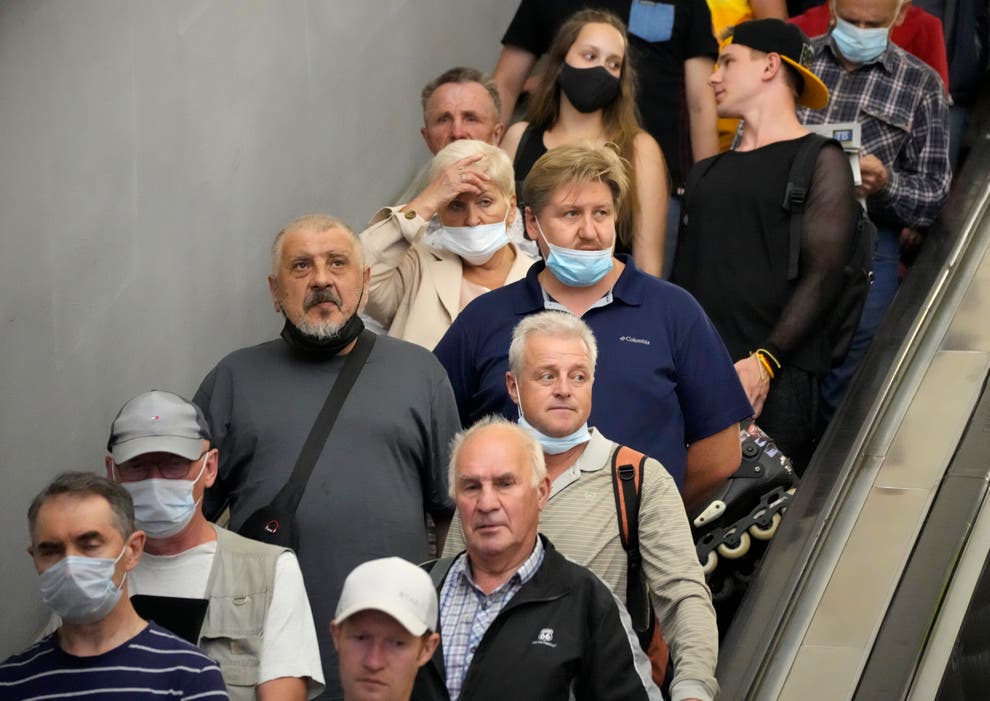
Here, on one escalator, “Watchers” can see every variation of mask being used in a crowded space.

Leading doctors from the British Medical Association (BMA) are urging the government to keep some measures in place after 19 July in England to restrict the spread of coronavirus amid an “alarming” rise in cases.

http://www.independent.co.uk

The association warned that maintaining some protective measures was “crucial” to halt the spread of the coronavirus delta variant, which accounts for approximately 95 per cent of confirmed cases across the UK.

The latest figures from the Office for National Statistics (ONS) show that about one in 260 people in private households in England had Covid-19 in the week to 26 June – up from one in 440 in the previous week and the highest level since the week to 27 February.

The prime minister, Boris Johnson, is confident he can go ahead with the final phase of his plans to end England’s lockdown on 19 July to “get back to life as close to it was before Covid”.

Earlier this week, the new health secretary, Sajid Javid, also confirmed his intention to go ahead with Step 4 of the road map but didn’t explain to MPs what that would entail.

Dr Chaand Nagpaul, BMA council chair, said easing restrictions was not an “all or nothing” decision and that “sensible, cautious” measures will be vital to minimise the impact of further waves, new variants and lockdowns.

The measures would include the continued use of wearing masks indoors and on public transport and “significantly improved” public messaging stressing social distancing and meeting outdoors or in well-ventilated spaces.

Dr Nagpaul welcomed the government’s decision to push back on the lockdown easing last month based on data. Still, he warned that the ministers must not simply disregard the most recent, damning numbers by rushing into meeting their new 19 July deadline.

“We have made excellent progress with both the vaccination campaign and individual action from people across the country over the last 18 months, and the government must absolutely not throw this away at this critical juncture.”

Despite an uptick in Covid infections, Dr Nagapul said that the hospitalisations remained low and stressed that the BMA was not asking for a “full delay” of 19 July but a series of “targeted measures” to help prevent transmission of the virus.

Public Health England figures show a total of 161,981 confirmed and probable cases of the Delta variant, up by 46 per cent on the previous week.

With house prices through the roof, young buyers’ hopes go out the window

All the arguments why it’s not in the government’s interest to let prices fall and especially not crash. – Owl

There is also only a slender link between more homes being built and prices falling. As long as property is viewed as an investment, the demand is there.

Phillip Inman www.theguardian.com

House prices are soaring and gazumping has returned in property hotspots. The average cost of a home jumped by 13.4% in June from the same month last year, according to Nationwide building society.

This is more than four times the 3% annual rate of growth in wages during April and more than six times the 2.1% increase in consumer price inflation (CPI) registered in May. According to upmarket estate agent Knight Frank, figures out next month are likely to show sales across Britain hitting an all-time record.

Despite all the turmoil sparked by the pandemic, some things have remained the same, and one of them is the British obsession with property. While the order for millions of workers to stay at home looks set to alter their view of how and when to work, and a desire to be green will temper their consumption habits and holiday destinations, the love of bricks and mortar remains supreme.

Lots of people – and not just the wheeler-dealers who clutter the Sunday Times rich list – have become very wealthy from residential property. Shares in housebuilders have soared since 2012 when then chancellor George Osborne propped up the market for newly built homes with his help-to-buy scheme. Persimmon, the UK’s second-largest housebuilder, has seen its shares increase sixfold in the past 10 years, from £5 to £30. The shares are currently worth double their pre-financial-crisis peak of £15.

Pension funds have profited from owning these shares and done little to stop the builders’ top bosses from being awarded bulging bags of cash. In 2017, former Persimmon chief executive Jeff Fairburn was awarded £110m, which he said he would share with a new charitable trust. In February this year the Guardian revealed he had to that point kept it all to himself.

Studies confirm that all the taxpayer subsidies have done is line the pockets of the industry, but it doesn’t seem to matter. As long ago as 2017, investment bank Morgan Stanley calculated that £10bn of help-to-buy subsidy had done nothing to make homes more affordable for first-time buyers, which was the intention, but had instead disappeared into the bank accounts of the industry’s dominant businesses.

There is also only a slender link between more homes being built and prices falling. As long as property is viewed as an investment, the demand is there.

Osborne is one of those to have gained from our buoyant property market. He bought a home in 2006 in London’s Notting Hill for £1.85m and sold it earlier this year for £3.95m.

At 50, Osborne is at the bottom end of the age range for people who have played and won on the property wheel of fortune, not least because the older generation has the resources to put down deposits on second, third and fourth homes. The Intergenerational Foundation has shown that the proportion of over-65s who own their home has risen this century, while it has fallen in all other age groups.

Economists worry about the inequality created by rising property prices, though their main focus is on the instability this creates and the potential for disastrous – and costly – recessions.

The Geneva-based Bank for International Settlements (BIS), which advises the world’s central banks, said in a report last week that all major economies needed to be mindful of rising property prices becoming detached from wages. It warned that when ordinary homes were out of reach of people on average wages, it caused a bubble that might one day burst.

This we know from bitter experience. What we also know is that the central banks of all the major economies have pledged to do whatever it takes to prevent a property slump. A dip is OK, but a major correction would be too damaging. The last one is fast disappearing in the rear view mirror. It was in 1989-90.

Threadneedle Street is concerned at the sheer weight of spending connected to property, from furnishings to new patios. Outside the humming property market, a good chunk of the economy is moribund.

There is support from ministers concerned that older, property-owning voters will turn against them if prices are allowed to dive. From the ministers’ perspective, it helps that interest rates are almost zero, and have been since the crash of 2008.

The BIS wants central banks to plan for interest-rate increases some time over the next five years to choke off the current boom.

Maybe rates will rise slightly over that time, but not by enough to trigger a housing crash. That cannot be allowed to happen: the economy and Tory politics say so.

“Slinking” between the lines

Diane Abbott posted this tweet after the Hancock revelations but before Sajid Javid was announced as his successor…

So did she get an inferred answer by reading between the lines of the articles and posts Sarah Vine wrote ostensibly about the Hancock affair during last week?

www.theguardian.com (Extract)

[Sarah] Vine, who is godmother to one of David and Samantha Cameron’s children, raised eyebrows last week when she wrote about how Matt Hancock’s resignation as health secretary after having an affair with his adviser – and breaking Covid rules with someone outside his household or bubble before it was allowed – showed that Westminster life could drive a wedge between partners.

She praised the Camerons’ commitment to one another, saying that “every time he seemed in danger of drifting away on a cloud of self-importance (usually after a few glasses of wine), she would bring him back down to earth”.

“Westminster is a place of myriad distractions for the politician seeking refuge from his or her home life,” Vine continued, adding that because power is an “aphrodisiac”, it was possible to understand “how you can go from being happily married to the kind of person who gets caught so unfortunately on CCTV”.

She added: “The problem with the wife who has known you since way before you were king of the world is that she sees through your facade” and that there were some politicians who could walk away from power and others “who will compromise everything for the sake of it”.

Westminster changes people, Vine said, commenting on how wives of senior politicians “are still more or less the same person they were when they got married” but their husbands sometimes were not.

“Climbing that far up Westminster’s greasy pole changes a person,” she wrote. “And when someone changes, they require something new from a partner. Namely, someone who is as much a courtesan as a companion, one who understands their brilliance and, crucially, is personally invested in it.

“Not someone who thinks it’s all a monumental nuisance and wishes they would get a proper job that doesn’t involve people poking cameras in your face and commenting on your poor choice of footwear.” The insight caused a stir among some commentators.

Labour are calling for “clarification” of the Gove “household” arrangements; but friends of Michael Gove insist no-one else is involved

Labour calls for Michael Gove to ‘tell us who you were living with’ dismissed as smear

www.telegraph.co.uk (Extract)

Friends of Michael Gove insisted on Saturday night that he had been living at his family home throughout the pandemic, as they accused Labour of “shameful” smear tactics for suggesting otherwise.

The comments came after the shadow home secretary said Mr Gove must “clarify” his “household” arrangements, following the announcement on Friday that he and his wife Sarah Vine are divorcing after 20 years of marriage.Nick Thomas-Symonds said although the Cabinet Office minister, 53, was entitled to a private life, he should “clarify” whether social distancing guidelines had been breached, because he had been key to drawing up government rules on how people behaved during the pandemic.

If you are minded to see conspiracy and cover-up everywhere, you will get an eye full here:

What a Vine time to ask for privacy! Gove and Vine get silence and secrecy because they’re ‘made’ in the media.]