Twelve thousand people expected on single Cornwall beach this afternoon

With the promise of the last bit of sunny weather for a few days, one of Cornwall’s most popular beaches is already heaving – and it’s likely to get busier by the end of the day.

Lee Trewhela www.devonlive.com

The RNLI has verified that Perranporth beach is already very busy with approximately 9,000 people finding their own little patch of sand.

All the car parks in the town were reported to have been full by 10.30am and the Perran lifeguard team say that the beach will get even busier today with the good weather and are expecting it to reach around 12,000 people later in the day, which is almost four times the population of the town.

RNLI lifeguard Rory Tellam, who is working at Perranporth today, said: “The surf today is still relatively small but is set to build towards the end of the week. With good weather and increasing surf we urge anyone planning to visit the coast to choose a lifeguarded beach.

“If you are heading in the water always swim between the red and yellow flags.”

“Be aware of your footing and don’t do out of your depth, keep an eye on the flags and make sure to stay between them where the lifeguards can see you.”

Cornwall’s beaches are expected to be even busier than normal this month as more people holiday in the Duchy due to the pandemic curbing overseas travel.

Council’s launch bid for more powers

“Team Devon” is the new catch phrase apparently. – Owl

Ollie Heptinstall, local democracy reporter www.radioexe.co.uk 

Councils across Devon are to launch a bid for more devolved powers from Westminster.

The move comes after the government announced it was looking at reviewing its current arrangements with the counties and local authorities.

In a speech on ‘levelling up’ the country last month, prime minister Boris Johnson talked about the “need to rewrite the rulebook with new deals for the counties” and the possibility of directly elected mayors.

Devon’s councils plan to build on what they say are close working relationships developed during the pandemic when they formed ‘Team Devon’ to respond to the challenges of covid. The group, which does not include unitary authorities  Plymouth and Torbay, has the backing of business groups, public sector organisations and the county’s MPs.

Devon County Council leader John Hart, who chairs Team Devon, said: “I believe we have delivered for Devon during the pandemic and used the additional money that was available effectively and efficiently on behalf of our residents.

“Our regular meetings of council leaders and chief executives from the county and all the districts – along with town and parish representatives – brought us closer together and the trust we built up meant that we could act swiftly and decisively. We want to build on that cooperation and trust in a deal for Devon.

“It would require the government to support us to do the very best we can for Devon and its residents and businesses as we drive the recovery, tackle climate change, boost skills, improve our infrastructure and connectivity and confront the very real problems we have to face such as the shortage of affordable housing.

“We believe Team Devon is ideally placed to negotiate a deal for Devon with the government. So we’ve asked our officers to start preparing proposals that we can discuss with ministers and Whitehall over the summer so that we can be at the head of the queue when the levelling-up white paper is published.”

Teignbridge District Council leader Alan Connett broadly welcomes the joint statement from Team Devon: “If it’s possible to bring more powers down from government to our area, which helps us serve our communities better then we should be looking at that,” he said.

“The public have elected us, and elected their local representatives, but I think sometimes government tend to hold a lot of power which could be passed down locally.”

However, while Cllr Connett backed councils working closer together in some areas, he rejected the idea of a unitary authority for Devon like the one recently given the go-ahead in Somerset, saying it would be “an enormous cost, an enormous waste of time”.

“Our whole focus at the moment should be on the recovery from covid, on creating and protecting jobs, on booming our economy, on supporting our communities.

“From what I’ve seen in the past, when people start talking about local government reorganisation, it hasn’t done a jot for the public while all that’s been happening. A lot of money gets spent on it and now is not the time in my view.”

Devon County Council is now working with district authorities on developing proposals for more devolved powers for Devon. The bid will be sent to ministers later in the year.

Why is living on the coast linked to poor health?

“Living in an economy dominated by lower paid jobs, young people from seaside towns are less likely than their wealthier urban peers to have the personal connections that facilitate highly rated work experience.” 

www.independent.co.uk 

The precarious economies of many traditional seaside towns have declined still further in the decades since the 1970s, when an explosion of cheap holiday flights and package tours to the Mediterranean took away swathes of their summer trade. “Turkey and Tinsel” weekends still draw the odd coach, but cannot keep a town afloat. Although British seaside resorts are having a booking spike this year because of the pandemic, a boost to the economy over a single summer will not make a major difference to their health or their economies in the long term.

Their residents’ worsening health and well-being – and lack of health provision – is gradually becoming visible to government and the media, thanks in large part to England’s chief medical officer Chris Whitty. His Chief Medical Officer Report for 2021: Health in Coastal Communities sets out a stark picture of poor health and low life expectancy for those who live in many English coastal towns.

Economy and poor health linked

Public Health England data confirms the wide range of health indicators that are systematically worse in seaside towns. These include coronary heart disease, stroke, chronic pulmonary (lung) disease, diabetes and mental health conditions. Breastfeeding rates are lower, and more pregnant women smoke. This is not surprising. High-quality jobs are a key route to improving mental and physical health, giving up smoking, and accessing lifestyles that build in healthier patterns of leisure activities, nutrition and transport.

Economic and structural drivers of health are key to explaining low life expectancy and high rates of chronic illness. A 2019 report by a House of Lords select committee set out the economic, educational and connectivity disadvantages faced by seaside towns, emphasising the need to build careers for young people. The inequalities think-tank, the Resolution Foundation, evidenced a longstanding and growing earnings deficit which worsened further between 2017 and 2019, before being hit particularly hard by Covid-19.

Seaside towns’ excess of accommodation makes them attractive to distant councils and central government as cheap places to relocate vulnerable city dwellers and international migrants. Many looked-after-children are placed in Kent, far from their boroughs of origin, mostly in London. The share of the population over 65 years is higher in coastal towns than in other areas.

So how can young people (and older people) in coastal areas access higher quality jobs? And what can be done about the severe and longstanding NHS workforce shortages in most coastal areas? After all, educational outcomes are worse in seaside towns compared to urban settings.

Few jobs in seaside towns require graduate-level skills – take a look at the Nomis website, which shows employment opportunities by area. However, universities in the larger seaside towns and cities do train a range of healthcare professionals, from nurses to paramedics to doctors.

But not all seaside towns are the same. Brighton, once dilapidated and forlorn, built a digital and creative economy drawing on the ready supply of skilled labour from its two universities. This is not the kind of community the CMO Report is talking about – it’s not an option for Clacton, Hastings, Blackpool or Thanet.

Higher education in Britain is built predominantly on relocating young adults away from family and support networks to a distant metropolis. Universities are nearly all located in large cities. So an academically oriented seaside teenager like my former self quickly learns that “doing well” means leaving their family and community behind for good. For many this is a real personal loss. The higher wages paid for graduate-level skills are unlikely to be available locally.

What could change?

Health professions, and teaching, are an exception – these professions are needed everywhere. So why do seaside towns with high unemployment have NHS staff shortages? Swale and Thanet, in north Kent, not far from London, have the lowest ratios of GPs to population in England. Why don’t their children train as health care professionals?

Children from small seaside towns do meet GPs and other community health professionals – many live near a district general hospital. But the full range of healthcare jobs is much less visible than in a city with large tertiary care services, where NHS work is concentrated. Access to these professions is a challenge.

Living in an economy dominated by lower paid jobs, young people from seaside towns are less likely than their wealthier urban peers to have the personal connections that facilitate highly rated work experience. Public transport and road connections to places with more highly paid jobs are often limited, time consuming and expensive. And their parents often earn less.

Entry to health professional courses is competitive. Any child at a seaside school with weak exam results is at a serious disadvantage. So seaside children are less likely to get into those courses, even if committed to one in a locality close to family and social networks. This vicious cycle will continue unless we can find a way to support young people into local health jobs. If we can work out a way to do this at scale it could go some way to addressing the health and economic disadvantages in coastal communities.

Jackie Cassell is a professor of primary care epidemiology, and an honorary consultant in Public Health at Brighton and Sussex Medical School. This article first appeared on The Conversation.

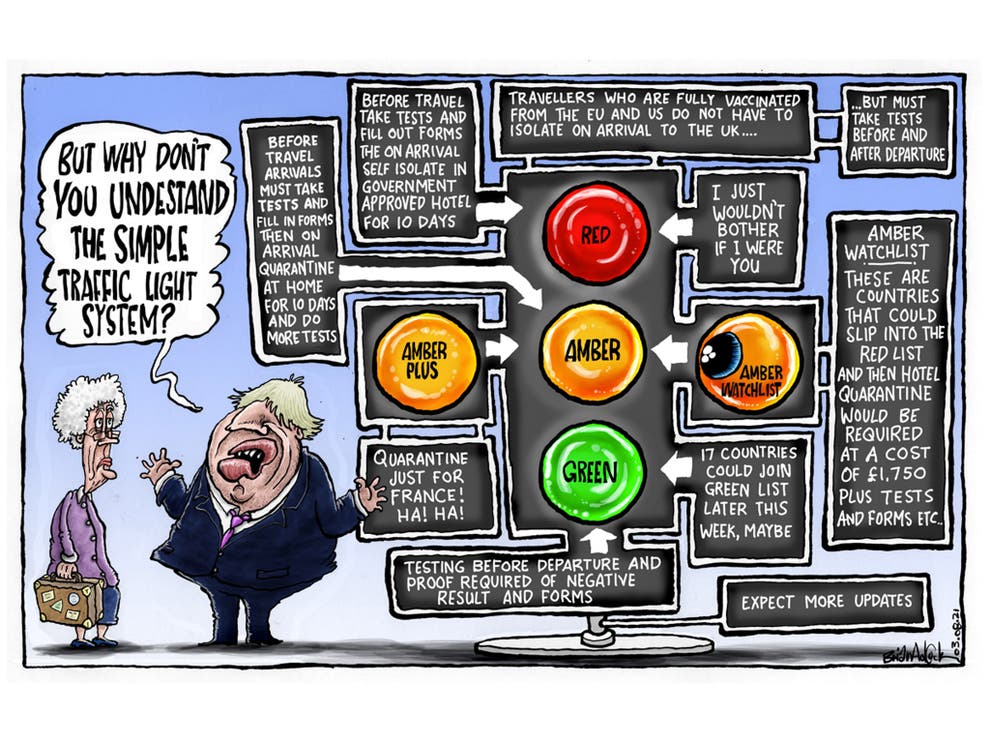
Boris Johnson is about to find out what happens when a party turns on its leader

Has the magic sauce begun to curdle?- Owl

Editorial www.independent.co.uk

Could it be that blatant rank hypocrisy is Boris Johnson’s kryptonite? His superhuman political performances have certainly defied belief for most of the two years he has occupied No 10. Yet the recent controversy about his attempting to dodge self-isolation via some suspiciously convenient “pilot scheme” seems to have been something of a final straw, and he finds his poll ratings sliding, along with his authority in his own party.

Disappointing by-election performances in Chesham and in Batley suggest he is no longer such a winner. Politics, arguably, is returning to a more normal pattern, the vaccine bounce has faded and the instinct to rally behind the leader in a crisis is evaporating.

It is quite the switchback. This most unlikely of premiers has carried all before him. Mr Johnson managed to unseat the previous incumbent, albeit Theresa May did herself no favours; win the party leadership against some credible, if more conventional, contenders by a comfortable margin; win a near-landslide general election victory; get some of the formalities of Brexit done; survive Covid, personally and politically; lose his closest adviser; and get married to Carrie Symonds and start another family, with a baby on the way. If nothing else, he has confounded his critics and proved himself unusually resilient.

All of a sudden, however, just as people are daring to hope for a return to normality after the pandemic, the prime minister finds his personal ratings tumbling. His ratings among Conservative Party members, where he has long been popular, if not always spectacularly so, have collapsed, and he is barely in positive approval territory. Much the same goes for the view the public takes of him. They regard him as dishonest and disorganised.

His MPs, many of whom owe their parliamentary seats to his campaigning, are dissatisfied. Their grievances are disparate – some fear the effects of ending the £20-a-week top-up to universal credit, many dislike the talk of vaccine passports, others in the home counties feel neglected over housing and planning, those in the “red wall” wonder, with good reason, if there is anything more to “levelling up” and “build back better” than slogans.

Parliamentary revolts will be attempted and the party conference (with or without a requirement for a vaccine passport) might be an awkward affair. An especially weak and wobbling prime ministerial speech on “levelling up” his economic vision for the nation unnerved many hoping for a glimpse of substance. And the brief attempt to evade the Covid isolation rules that govern the rest of the nation made the prime minister look both hypocritical and, when rapidly reversed, weak. The very worst of all worlds.

It all seems bleak for the Conservatives, and it could easily get worse. The end of furlough, the comprehensive spending review, hints of higher interest rates, the lingering drag of Brexit – all will hit jobs, wages and living standards. Post-Covid, there is little money left to indulge Mr Johnson in his free-spending habits and to bribe voters in marginal seats with their own money. Absurdities such as the tunnel to the Isle of Man and the new royal yacht will have to be abandoned. His ministers, especially chancellor Rishi Sunak, will have to become more assertive and insist on a more traditional, collegiate style of government, though they will probably fail to restrain him.

Under Mr Johnson, life for the Conservatives will become increasingly difficult as the voters discover that there is even less to the prime minister than meets the eye. For them, in the Brexit era, he was the right man for the job. In the Covid crisis he was the only leader they had, and they had to make the best of it. Now, though, the political climate has changed again, and radically. Like Ms May and David Cameron before him (who he did so much to undermine), Mr Johnson could soon find out what happens when he no longer looks like an electoral asset.

Is President Emmanuel Macron a secret follower of Owl?

Was it a bird, a subliminal message or a secret sign? Or was it just a logo of an owl on a T-shirt?

(East Devon Watch has a small regular following in France so Owl believes the answer is obvious. Bonjour Monsieur le Président.)

Owl play: Macron’s T-shirt logo inspires conspiracy theories

Kim Willsher www.theguardian.com

Hours after Emmanuel Macron’s attempt to persuade French youngsters to get vaccinated on Monday, the buzz across the country was less of Covid shots and more of mysterious clothing symbols.

The president had swapped his trademark grey suit, white shirt and tie, for the more trendy look of a black, short-sleeved T-shirt for his question-and-answer TikTok appearance.

Unfortunately, the subsequent flurry of speculation and conspiracy theories suggested some gave more of a hoot about the white owl logo on the T-shirt than about Macron’s message.

What did the owl logo made up of geometric shapes mean? Was there a subliminal message to the choice of apparel? Was the Elysée public relations team conveying a secret message to the sharp-eyed? Was the president part of a secret cabal?

An initial theory suggested it was the logo of the Bohemian Club, a political group created in California in 1872 and named after what Americans saw as the belle époque European bohemian movement, a counterculture to the bourgeoisie. Today it is an exclusively male club made up of businessmen and politicians from the US, Europe and Asia. But while the Bohemian Club has an owl logo, it is not the same as that on the president’s T-shirt and is accompanied by the red letters BC.

To add to the conspiracy confusion, there are two words in French translated as “owl” in English: hibou (meaning an owl with feathered ear tufts) and chouette (an owl without tufts). The hibou is a sign of bad luck or, for the Romans, death’s messenger, representing black magic at worst and a symbol of sadness, loneliness and melancholy at best. The chouette, by contrast, is a servant of the Greek goddess Athena, a spiritual guide in Celtic culture, and also a term in French meaning “super”.

Le Figaro said the president’s look was “sober, direct, relaxed and above all social friendly”, reminding readers of his YouTube challenge with popular French stars Mcfly and Carlito back in May.

There has been no official response from the Elysée to questions about the T-shirt.

However, as capitalism, like conspiracies, abhors a vacuum, a similar T-shirt was being sold online as “the Macron Tik-Tok T-shirt” for €19.99.