Why is living on the coast linked to poor health?

“Living in an economy dominated by lower paid jobs, young people from seaside towns are less likely than their wealthier urban peers to have the personal connections that facilitate highly rated work experience.” 

www.independent.co.uk 

The precarious economies of many traditional seaside towns have declined still further in the decades since the 1970s, when an explosion of cheap holiday flights and package tours to the Mediterranean took away swathes of their summer trade. “Turkey and Tinsel” weekends still draw the odd coach, but cannot keep a town afloat. Although British seaside resorts are having a booking spike this year because of the pandemic, a boost to the economy over a single summer will not make a major difference to their health or their economies in the long term.

Their residents’ worsening health and well-being – and lack of health provision – is gradually becoming visible to government and the media, thanks in large part to England’s chief medical officer Chris Whitty. His Chief Medical Officer Report for 2021: Health in Coastal Communities sets out a stark picture of poor health and low life expectancy for those who live in many English coastal towns.

Economy and poor health linked

Public Health England data confirms the wide range of health indicators that are systematically worse in seaside towns. These include coronary heart disease, stroke, chronic pulmonary (lung) disease, diabetes and mental health conditions. Breastfeeding rates are lower, and more pregnant women smoke. This is not surprising. High-quality jobs are a key route to improving mental and physical health, giving up smoking, and accessing lifestyles that build in healthier patterns of leisure activities, nutrition and transport.

Economic and structural drivers of health are key to explaining low life expectancy and high rates of chronic illness. A 2019 report by a House of Lords select committee set out the economic, educational and connectivity disadvantages faced by seaside towns, emphasising the need to build careers for young people. The inequalities think-tank, the Resolution Foundation, evidenced a longstanding and growing earnings deficit which worsened further between 2017 and 2019, before being hit particularly hard by Covid-19.

Seaside towns’ excess of accommodation makes them attractive to distant councils and central government as cheap places to relocate vulnerable city dwellers and international migrants. Many looked-after-children are placed in Kent, far from their boroughs of origin, mostly in London. The share of the population over 65 years is higher in coastal towns than in other areas.

So how can young people (and older people) in coastal areas access higher quality jobs? And what can be done about the severe and longstanding NHS workforce shortages in most coastal areas? After all, educational outcomes are worse in seaside towns compared to urban settings.

Few jobs in seaside towns require graduate-level skills – take a look at the Nomis website, which shows employment opportunities by area. However, universities in the larger seaside towns and cities do train a range of healthcare professionals, from nurses to paramedics to doctors.

But not all seaside towns are the same. Brighton, once dilapidated and forlorn, built a digital and creative economy drawing on the ready supply of skilled labour from its two universities. This is not the kind of community the CMO Report is talking about – it’s not an option for Clacton, Hastings, Blackpool or Thanet.

Higher education in Britain is built predominantly on relocating young adults away from family and support networks to a distant metropolis. Universities are nearly all located in large cities. So an academically oriented seaside teenager like my former self quickly learns that “doing well” means leaving their family and community behind for good. For many this is a real personal loss. The higher wages paid for graduate-level skills are unlikely to be available locally.

What could change?

Health professions, and teaching, are an exception – these professions are needed everywhere. So why do seaside towns with high unemployment have NHS staff shortages? Swale and Thanet, in north Kent, not far from London, have the lowest ratios of GPs to population in England. Why don’t their children train as health care professionals?

Children from small seaside towns do meet GPs and other community health professionals – many live near a district general hospital. But the full range of healthcare jobs is much less visible than in a city with large tertiary care services, where NHS work is concentrated. Access to these professions is a challenge.

Living in an economy dominated by lower paid jobs, young people from seaside towns are less likely than their wealthier urban peers to have the personal connections that facilitate highly rated work experience. Public transport and road connections to places with more highly paid jobs are often limited, time consuming and expensive. And their parents often earn less.

Entry to health professional courses is competitive. Any child at a seaside school with weak exam results is at a serious disadvantage. So seaside children are less likely to get into those courses, even if committed to one in a locality close to family and social networks. This vicious cycle will continue unless we can find a way to support young people into local health jobs. If we can work out a way to do this at scale it could go some way to addressing the health and economic disadvantages in coastal communities.

Jackie Cassell is a professor of primary care epidemiology, and an honorary consultant in Public Health at Brighton and Sussex Medical School. This article first appeared on The Conversation.
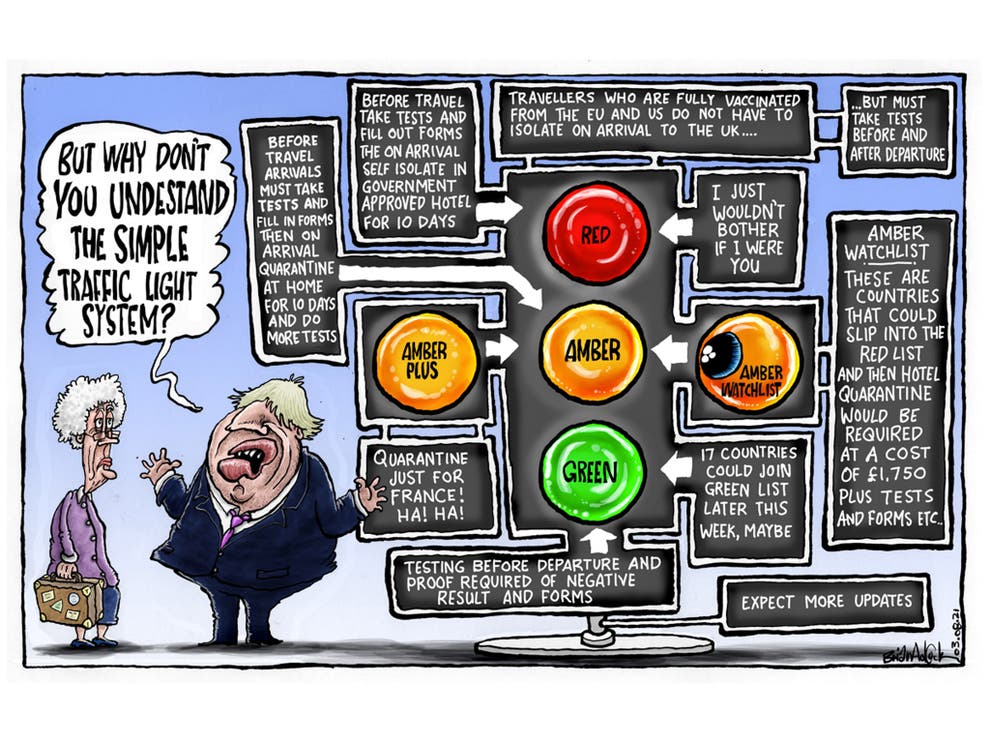
Boris Johnson is about to find out what happens when a party turns on its leader

Has the magic sauce begun to curdle?- Owl

Editorial www.independent.co.uk

Could it be that blatant rank hypocrisy is Boris Johnson’s kryptonite? His superhuman political performances have certainly defied belief for most of the two years he has occupied No 10. Yet the recent controversy about his attempting to dodge self-isolation via some suspiciously convenient “pilot scheme” seems to have been something of a final straw, and he finds his poll ratings sliding, along with his authority in his own party.

Disappointing by-election performances in Chesham and in Batley suggest he is no longer such a winner. Politics, arguably, is returning to a more normal pattern, the vaccine bounce has faded and the instinct to rally behind the leader in a crisis is evaporating.

It is quite the switchback. This most unlikely of premiers has carried all before him. Mr Johnson managed to unseat the previous incumbent, albeit Theresa May did herself no favours; win the party leadership against some credible, if more conventional, contenders by a comfortable margin; win a near-landslide general election victory; get some of the formalities of Brexit done; survive Covid, personally and politically; lose his closest adviser; and get married to Carrie Symonds and start another family, with a baby on the way. If nothing else, he has confounded his critics and proved himself unusually resilient.

All of a sudden, however, just as people are daring to hope for a return to normality after the pandemic, the prime minister finds his personal ratings tumbling. His ratings among Conservative Party members, where he has long been popular, if not always spectacularly so, have collapsed, and he is barely in positive approval territory. Much the same goes for the view the public takes of him. They regard him as dishonest and disorganised.

His MPs, many of whom owe their parliamentary seats to his campaigning, are dissatisfied. Their grievances are disparate – some fear the effects of ending the £20-a-week top-up to universal credit, many dislike the talk of vaccine passports, others in the home counties feel neglected over housing and planning, those in the “red wall” wonder, with good reason, if there is anything more to “levelling up” and “build back better” than slogans.

Parliamentary revolts will be attempted and the party conference (with or without a requirement for a vaccine passport) might be an awkward affair. An especially weak and wobbling prime ministerial speech on “levelling up” his economic vision for the nation unnerved many hoping for a glimpse of substance. And the brief attempt to evade the Covid isolation rules that govern the rest of the nation made the prime minister look both hypocritical and, when rapidly reversed, weak. The very worst of all worlds.

It all seems bleak for the Conservatives, and it could easily get worse. The end of furlough, the comprehensive spending review, hints of higher interest rates, the lingering drag of Brexit – all will hit jobs, wages and living standards. Post-Covid, there is little money left to indulge Mr Johnson in his free-spending habits and to bribe voters in marginal seats with their own money. Absurdities such as the tunnel to the Isle of Man and the new royal yacht will have to be abandoned. His ministers, especially chancellor Rishi Sunak, will have to become more assertive and insist on a more traditional, collegiate style of government, though they will probably fail to restrain him.

Under Mr Johnson, life for the Conservatives will become increasingly difficult as the voters discover that there is even less to the prime minister than meets the eye. For them, in the Brexit era, he was the right man for the job. In the Covid crisis he was the only leader they had, and they had to make the best of it. Now, though, the political climate has changed again, and radically. Like Ms May and David Cameron before him (who he did so much to undermine), Mr Johnson could soon find out what happens when he no longer looks like an electoral asset.

Is President Emmanuel Macron a secret follower of Owl?

Was it a bird, a subliminal message or a secret sign? Or was it just a logo of an owl on a T-shirt?

(East Devon Watch has a small regular following in France so Owl believes the answer is obvious. Bonjour Monsieur le Président.)

Owl play: Macron’s T-shirt logo inspires conspiracy theories

Kim Willsher www.theguardian.com

Hours after Emmanuel Macron’s attempt to persuade French youngsters to get vaccinated on Monday, the buzz across the country was less of Covid shots and more of mysterious clothing symbols.

The president had swapped his trademark grey suit, white shirt and tie, for the more trendy look of a black, short-sleeved T-shirt for his question-and-answer TikTok appearance.

Unfortunately, the subsequent flurry of speculation and conspiracy theories suggested some gave more of a hoot about the white owl logo on the T-shirt than about Macron’s message.

What did the owl logo made up of geometric shapes mean? Was there a subliminal message to the choice of apparel? Was the Elysée public relations team conveying a secret message to the sharp-eyed? Was the president part of a secret cabal?

An initial theory suggested it was the logo of the Bohemian Club, a political group created in California in 1872 and named after what Americans saw as the belle époque European bohemian movement, a counterculture to the bourgeoisie. Today it is an exclusively male club made up of businessmen and politicians from the US, Europe and Asia. But while the Bohemian Club has an owl logo, it is not the same as that on the president’s T-shirt and is accompanied by the red letters BC.

To add to the conspiracy confusion, there are two words in French translated as “owl” in English: hibou (meaning an owl with feathered ear tufts) and chouette (an owl without tufts). The hibou is a sign of bad luck or, for the Romans, death’s messenger, representing black magic at worst and a symbol of sadness, loneliness and melancholy at best. The chouette, by contrast, is a servant of the Greek goddess Athena, a spiritual guide in Celtic culture, and also a term in French meaning “super”.

Le Figaro said the president’s look was “sober, direct, relaxed and above all social friendly”, reminding readers of his YouTube challenge with popular French stars Mcfly and Carlito back in May.

There has been no official response from the Elysée to questions about the T-shirt.

However, as capitalism, like conspiracies, abhors a vacuum, a similar T-shirt was being sold online as “the Macron Tik-Tok T-shirt” for €19.99.

Food poverty areas have Conservative MPs

Jacob Rees-Mogg is one of 50 Tory MPs representing areas where people suffer from the worst food poverty in Britain.

George Greenwood, Ryan Watts http://www.thetimes.co.uk

The Commons leader holds the seat of North East Somerset, which sits in a council area where 7 per cent of households experience hunger. He and 49 other Conservatives have seats that overlap with the top 10 per cent of local authorities for food poverty. Those areas include Salisbury, Rugby and Ashford in Kent.

Rishi Sunak, the chancellor, is planning to cut universal credit by £20 a week by ending a temporary uplift introduced during the pandemic. Last month six former Tory work and pensions secretaries wrote to him demanding an extension.

There are about five million universal credit claimants, twice as many as before the pandemic, and more than a third are in work. A permanent uplift would cost about £6 billion a year.

In January academics at Sheffield University mapped the local authorities with the worst hunger. Of the 100 councils with the worst rates, wards within them are represented by 122 Conservative MPs compared with 76 Labour MPs, The Times found.

Hunger is defined as having skipped food for a whole day or longer in the previous month or someone indicating that they had not eaten because they could not access food.

Wycombe has the highest proportion of households experiencing this, at 14 per cent. Twenty-nine per cent have struggled for food, meaning they skipped meals or ate less, or found help from services such as food banks.

Steve Baker, a leading Conservative backbencher and MP for Wycombe, told ministers that his constituents’ finances had been “tipped over the edge” by the pandemic.

“This alarming report is a wake-up call for ministers,” he told The Guardian. “I have told colleagues time and again during my time in parliament that poverty extends into my constituency in south Buckinghamshire.”

A government spokesman said: “Universal credit has provided a vital safety net for six million people during the pandemic, and we announced the temporary uplift as part of a £400 billion package of measures put in place that will last well beyond the end of the road map. Our focus now is on our multibillion-pound Plan for Jobs.”

The usual suspects wring their hands over the A303 “Unlawful” decision

Earlier Owl reported yesterday’s Western Morning News report on the A 303 decision.

In today’s WMN Tim Jones, chairman of the South West Business Council (SWBC) and David Ralph, chief executive of Heart of the South West LEP join Peninsula Transport Group chair Councillor Andrea Davis in lamentation.

Too many groups of questionable accountability and effectiveness? – Owl

Extract from Today’s WMN:

Mr Justice Holgate, adjudicating on a challenge by Save Stonehenge World Heritage Site campaigners, ruled the minister’s decision was unlawful due to a lack of evidence regarding the impact on the historic site and a failure to consider alternatives. It means the future of the transport scheme is now unknown and the South West could miss out on what business groups were predicting as an investment bonanza.

Tim Jones, chairman of the South West Business Council (SWBC), said the Government’s own figures had predicted it leading to a £40 billion boost for the region over a 20-year period. “So the cost of this decision for the South West will be about £2 billion a year – negative,” he said. 

“That’s scary numbers. It’s a complete body blow.” The SWBC had predicted that just by completing the A303 Amesbury to Berwick Down scheme, including the tunnel, the Westcountry would gain a £4 billion boost. 

Further improvements to the A303, particularly by dualling the road between Honiton and the M3, would escalate this to £40 billion as it would ease access to Southampton and other south-coast destinations, and London and the South East.

Mr Jones said that is now all in jeopardy and added: “We thought a positive decision had been made and this would kickstart a new series of investments. That’s now put in doubt. There is no certainty that it will be possible to reverse this decision.”

The Heart of the South West Local Enterprise Partnership (LEP) called the High Court decision “a huge disappointment” and said it would be writing to the Government to find out how it plans to improve transport into the region.

David Ralph, chief executive of Heart of the South West LEP, said: “This is a huge disappointment for many South West businesses and constitutes yet again a failure of Government to deliver on its promises to address the inadequate infrastructure getting into and out of the South West and specifically the A303 over the last two decades.

“We will be writing to the Department of Transport and Highways England directly to clarify how they propose to move forward and deliver the connectivity that is so badly overdue and talk directly with our MPs to seek reassurances that progress can be made as soon as practically possible,” he added.

New role for NHS Nightingale, Exeter

The NHS Nightingale Hospital Exeter is getting a new role with two new operating theatres and outpatient services.

Owl is losing track of all this repurposing. Just over a year ago, on July 1, 2020 Owl posted “Now for Plan C – Devon’s Nightingale hospital will not treat Coronavirus patients”. It started taking cancer patients on July 7. Then on 26 November Owl reported it was starting to treat Covid patients. So are we now on Plan E?

Radio Exe News www.radioexe.co.uk 

NHS Nightingale Exeter before taking covid patients

The service, at a former DIY shop on Sowton Industrial Estate, is going to provide a range of services from this autumn to help tackle waiting lists across Devon and the wider south west.

It was built to cope with an expected influx of covid patients at a time when the country was preparing for the worst. In the end, it treated 250 patients from three counties.

After being decommissioned as a covid hospital earlier this year, the Nightingale was bought by NHS organisations across the region and used to provide diagnostic scans to local people, host a covid vaccine trial and train overseas nurses.

Local health bosses say plans are well underway to extend services to include planned orthopaedic surgery, ophthalmology and rheumatology services, as well as increasing the range of diagnostic services such as MRI scans.   

It’s already been announced that Exeter’s Nightingale would receive funding from the National Accelerator Systems Programme to increase capacity so that waiting times for certain operations are cut.

From the autumn, the former covid inpatient hospital will provide:

  • two operating theatres for day case/ short stay elective (planned) orthopaedic procedures
  • high volume cataract and diagnostic hub for glaucoma and medical retina
  • a community diagnostic hub to include CT and MRI
  • an outpatient rheumatology and infusions centre

Dr Elizabeth Wilkinson, consultant medical ophthalmologist at Northern Devon Healthcare NHS Trust (NDHT) and clinical lead for ophthalmology at NHS Devon Clinical Commissioning Group said: “During the pandemic, many NHS organisations across the country had to postpone planned procedures so that we could care for patients with covid-19 and continue to treat those with urgent care needs.

“Ophthalmology, orthopaedic, rheumatology and diagnostic testing services have been particularly affected across Devon, and so despite our best efforts, our waiting lists have grown. This means that many of our patients are waiting longer for treatment now than before the pandemic.

“We know how difficult postponing or cancelling surgery can be for our patients and their loved ones, so developing new innovative services in the Nightingale will help us to better prioritise the most urgent patients and those who have been waiting the longest.”

Chris Tidman, deputy chief executive of the Royal Devon & Exeter NHS Foundation Trust (RD&E) and NDHT said: “As well as caring for nearly 250 patients with COVID-19 from across three counties in the height of the pandemic, the NHS Nightingale Hospital Exeter has also provided over 6,000 important diagnostic scans to local people, supported the delivery of two covid vaccine studies and hosted overseas nurse training for three local NHS Trusts. 

“Our staff and volunteers created an exceptional facility that was much needed to  manage COVID-19 demand, and we are delighted that the Nightingale’s legacy of outstanding care will now continue, helping us to find new ways of working to further reduce waiting times for patients across the south west.

“To support this work, we will be recruiting additional medical, nursing, AHP and support staff over the coming months to work across orthopaedics, ophthalmology and imaging, with opportunities across both the Nightingale and our main hospital sites.” 

Petition: ‘Give councils the authority to discipline disruptive members’, says Jackie Weaver

Jackie Weaver became a viral internet sensation when she removed the unruly chair of Handforth Parish Council in Cheshire from a virtual meeting back in December – along with two councillors who supported him.

Philippa Davies sidmouth.nub.news 

Jackie Weaver, who shot to fame for removing the chair of Handford Parish Council and two councillors from a meeting because of their disruptive behaviour.

Now, in her capacity as a local government adviser, she is urging people to sign a national petition pressing the government to amend legislation to enable councillors to be disqualified or suspended for breaching relevant codes of conduct.

So far around 6,100 signatures have been collected for the petition, but it needs 10,000 to trigger a response from the Government, and 100,000 for the issue to be considered for a parliamentary debate.

Jackie, who helped launch the petition and is Chief Officer of the Cheshire Association of Local Councils (ChALC), says it’s vital to the future of local councils if we are to continue attracting people to serve their community.

‘We are trying to promote diversity and equality’

She told Nub News exclusively: “The kind of sanctions we are looking at aren’t public flogging. It’s looking at the potential of mandatory training or being removed from office for a period of time.

“It’s important that we show the powers that be that we care about politics from the grass-roots level. It’s been like pulling teeth so far. There is a general apathy and lack of understanding of just what a difference this can make. We all need to do a little.

“We are trying very hard to promote diversity and equality in local councils and we have to be able to say to people that they will be safe in that environment.

“The least we can do is reassure them that they won’t have to deal with internal conflict. We are failing some councils who work extremely hard at representing their communities, yet councillors have to deal with a disruptive element.

“I cannot understand why people wouldn’t want to sign this petition which is designed to support local government and make sure fellow councillors and members of the public are protected from unacceptable behaviour within the operations of the council.”

A ‘significant minority’ of councillors behave unacceptably

The petition states: “Some councillors behave unacceptably, yet currently sanctions do not enable councillors to be disqualified or suspended for breaches of a Code of Conduct.

“Most councillors maintain high standards of conduct, but a significant minority engage in unacceptable behaviour, such as harassment and bullying including racist, sexist, ableist abuse.

“This activity would be grounds for dismissal in an employment setting, and equivalent sanctions should exist for councillors.”

The petition can be found here.

Court Rules A303 scheme unlawful

In 1971, the Conservative Environment SecretaryPeter Walker announced the entire length of the A303 would be upgraded as part of a new roads programme that would deliver 1,000 new miles of motorway by 1980!

Owl remembers that the 1980’s was when Margaret Thatcher insisted that the Ilminster by-pass should be limited to three lanes on cost grounds, despite safety and future-proofing concerns.

Theresa May, in January 2017 said that her government was “committed to creating a dual carriageway on the A303 from the M3 to the M5”.

Now the Tories are in trouble again with the £1.7bn Stonehenge “improvements” programme being declared unlawful. Clearly a number of major issues have been ducked and, once again, we are the victims of bad decision making.

Surely the Government should have regard to ensuring that its proposals didn’t cause permanent harm to the World Heritage Site? We have just lost Liverpool, will Stonehenge be next, and, closer to home, is the Ladram bay section of the Jurassic Coast safe in Carter hands?

Owl posted “Why you won’t be seeing an improved A 303 any time soon” in April last year!

Court Rules A303 scheme unlawful

Local opinion as reported in yesterday’s Western Morning News:

Councillors in the far South West have voiced their dismay after the High Court ruled plans to build an eight-mile road improvement scheme to ease the bottleneck at Stonehenge were unlawful.

As reported in Saturday’s Western Morning News, campaigners on Friday won a High Court battle over Transport Secretary Grant Shapps’ decision to approve a controversial road project which includes a tunnel near Stonehenge.

Save Stonehenge World Heritage Site (SSWHS) challenged his decision to back the £1.7 billion scheme to overhaul eight miles of the A303, including the two-mile tunnel.

But the Peninsula Transport Group, created to transform transport and boost economic growth in the South West, has said it is disappointed at the news and will back the Department of Transport if it challenges the ruling.

The group, which represents local authorities responsible for highways in Somerset, Devon and Cornwall, had supported the plans as a way to improve journeys to and from the Westcountry.

Peninsula Transport chair Councillor Andrea Davis said: “Peninsula Transport remains firmly of the view that the A303 Stonehenge scheme is essential to delivering much needed improvements to the A303/A358/A30 corridor. The investment for this scheme is essential to the economic performance of the South West peninsula.

“We will be closely examining the judicial review report, and urging the government to ensure that any lessons that can be learnt will be done so quickly, as well as aiming to minimise the effect the results may have on other schemes in the region.

“Whilst the result of the judicial review is a disappointment, we will continue to support the Department for Transport and Highways England to ensure that they can deliver end-to-end improvement along this essential travel corridor.”

The go-ahead for the scheme was given in November last year, despite advice from Planning Inspectorate officials that it would cause “permanent, irreversible harm” to the Unesco World Heritage Site in Wiltshire.

In his ruling on Friday, Mr Justice Holgate found the decision was “unlawful” on two grounds.

He concluded that there was a “material error of law” in the decision-making process because there was no evidence of the impact on each individual asset at the historic site.

He also found that Mr Shapps failed to consider alternative schemes, in accordance with the World Heritage Convention and common law.

The judge said: “The relevant circumstances of the present case are wholly exceptional.

“In this case the relative merits of the alternative tunnel options compared to the western cutting and portals were an obviously material consideration which the (Transport Secretary) was required to assess.

“It was irrational not to do so. This was not merely a relevant consideration which the (Transport Secretary) could choose whether or not to take into account.

“I reach this conclusion for a number of reasons, the cumulative effect of which I judge to be overwhelming.”

John Adams, SSWHS director and acting chairman of the Stonehenge Alliance, said: “We could not be more pleased about the outcome of the legal challenge.

“The Stonehenge Alliance has campaigned from the start for a longer tunnel if a tunnel should be considered necessary.

“Ideally, such a tunnel would begin and end outside the WHS. But now that we are facing a climate emergency, it is all the more important that this ruling should be a wake-up call for the Government.

“It should look again at its roads programme and take action to reduce road traffic and eliminate any need to build new and wider roads that threaten the environment as well as our cultural heritage.”

Solicitor Rowan Smith, for the campaigners, said: “This is a huge victory, which means, for now, Stonehenge is safe. The judgment is a clear vindication of our client’s tremendous efforts in campaigning to protect the World Heritage Site.” She said ministers would have to go back to the drawing board.

The Great Co-ordination

Owl has received, from crime novelist Graham Hurley, this comparison of the Johnson regime to dark events in history:

The Great Co-ordination

Gleichshaltung is one of history’s most sinister euphemisms.  The word is German and it means ‘co-ordination’.  Hitler and other architects of the Third Reich used it to build a totalitarian state that purged Germany of all opposition.  From 1933 onwards, Das Volk, the people, were urged to march in perfect formation towards a future that would owe its very existence to a single leader, Der Fuhrer. You either co-ordinated, or you were lost.

Something similar, beneath the surface of our torpid democracy, is happening here and now.  The Johnson regime, moving cautiously step by step, is denying every opportunity for individuals to raise a voice, to question a fact, or to point out the plainest lies.

It began with the August 2019 bid to prorogue parliament in the interests of a quieter life in Downing Street.  Thanks to the Supreme Court, our new Prime Minister was put back in his constitutional box but our current regime has a long memory, and an equally long list of public enemies, hence the current moves to restrict judicial review, thus leaving care and control of the country in the laps of those who know best. 

The law, of course, has also been the friend and ally of individuals seeking redress, but thanks to the steady and deliberate withdrawl of funding for legal aid only those with the deepest pockets are any longer able to press their case.  The government argues that subsidising justice is a luxury the country can no longer afford.  Better that kids still have shoes on their feet than m’learned friends get yet another bung from the public purse.  On the surface this act of triage sounds both responsible and  – in some weird way – compassionate.  Joseph Goebbels would be the first to applaud.

It took Hitler and his tribal barons a matter of months to throttle opposition in the press and on the airwaves, leaving Germany at the mercy of a vigorous and on-message media brilliantly choreographed by that same Minister for Propaganda.  Here and now, Johnson has a steeper hill to climb but once you suss the endgame it doesn’t take long to spot his route to Gleichschaltung. 

Moves within the Department for Digital, Culture, Media and Sport to approve every senior appointment within the BBC.  Threats to privatise Channel Four and thus set the storm troopers of uber-capitalism on those uppity journos at Channel Four News.  Dark mutterings about The Guardian needing to watch its step.  As for the rest of the print media – with the lone exception of the Daily Mirror – Johnson isn’t much bothered.  The Murdoch press and the Daily Mail have long understood the public’s indifference to anything demanding a moment’s serious thought, while the Daily Telegraph – think Volkischer Beobachter, mainstay of the Nazi presshas become an arm of Johnson’s purged Whitehall.   

The Civil Service was once a bulwark against ministerial caprice but senior civil servants like Sir Alex Allen, the Prime Minister’s adviser on Ministerial Standards, have quickly realised the folly of trying to stand in the way of the Johnson coup.  Priti Patel may well have broken the Ministerial Code of Conduct but Johnson quickly ordered his supplicant Ministers ‘to form a square around the Pritser’, and that was that.  This diktat was both a dare and a warning.  If anyone – anyone – dares to argue the toss with Number Ten, their career is toast.  Sir Alex, by resigning, even spared Johnson the chore of having him sacked.

In one sense, the current bid to grab every particle of usable power is a coup by stealth.  In another, it’s anything but.  When a careless government neglects to read the small print on an international treaty, you might assume they’d do their diplomatic best to make amends, but Johnson and his hapless speak-my-weight Cabinet colleagues have never had much use for diplomacy. Au contraire, they prefer confrontation to the hard and sweaty hours around the negotiating table, thus playing to the groundlings’ fondness for a good ruck. 

The crudeness of this calculation says a great deal about the contemporary culture, openly nurtured by the current administration.  Where are the votes in decency?  In respect for our international neighbours?  In keeping your pledged word when everyone can see that sausages are having a hard time making it to Northern Ireland?  Hitler did something similar when he abruptly left the League of Nations in October 1933 after a rigged referendum, and bathed in carefully orchestrated Volk-applause thereafter.  That paved the way to open re-armament, and – within a handful of years – to another world war.

As the sweaty weeks go by, the scale and sheer ambition of the Johnson coup slips ever more into focus.  Critics dismiss him as a clown and a narcissist.  They believe he lucked into Downing Street and hangs on there by his fingertips.  In this, they appear to have the support of Dominic Cummings, his ex-bag man and eminence grise, who was there to see it all happening, but an overlooked element in Cummings’ testimony are the three ‘C’s that have so far sustained this grab-everything government and may well take us somewhere deeply troubling:  cunning, calculation, and sheer chutzpah. 

The woeful array of talent around the Cabinet table is no accident.  These hapless lackeys owe their good luck and their careers to their blustering PM and they know it.  Likewise, the shire Tories who put him there are still bewitched by his magical ability to win elections and stay ahead in the opinion polls, regardless of personal scandals, billions of mis-spent public funds, and administrative incompetance at a truly breathtaking level.  Covid and Downing Street threaten to beggar a once-decent country but – to the government’s great satisfaction – no one appears to be taking much notice.

Thanks to Cummings, we know that Johnson is lazy, self-obsessed, and temperamentally incapable of sticking to any decision.  He craves the applause of a grateful nation, fancies himself as a latter-day Churchill, and is ruthless with those who call him out.  Hitler, for the record, rarely emerged before mid-morning, idolised Frederick the Great, and consigned his enemies – both actual or imagined – to outer darkness.  Some of them survived.  Most of them didn’t.

As a crime novelist, I embarked on a new series of historical WW2 thrillers in a spirit of genuine enquiry.  In the rubble of five long years, I discovered the crime scene of my dreams but little did I ever anticipate the current echoes of a Fuhrer and a Reich that we ignore at our peril.  Hitler had been Chancellor for a couple of years before it dawned on the bankers, and the industrialists, and the bien pensants that it might be harder than they thought to put the Austrian upstart back in his box.  Johnson makes much of his knowledge of history and I suspect that he, too, has carefully plotted his undisguised dismantling of the checks and balances on which any healthy democracy must rely. 

The darkest acts sometimes take place in the brightest sunshine.  Another line from the Goebbels’ playbook.


Planning applications validated by EDDC for week beginning 19 July

Our seaside towns are worth saving

Letters to the Guardian www.theguardian.com 

Will Hutton is right to deplore the decline of coastal communities (“There is a way to save our coastal resorts… welcome to Zoomtown-on -Sea”, Comment).

Yes, our buildings are in dire need of renovation, but more crucially we need to retain skilled workers to ensure future prosperity. More equitable school funding might compensate for the years that the lion’s share has been gobbled up by inner cities. Well-resourced schools would attract and retain parents whose skills could increase local wealth and ensure students have the same career and educational prospects as in the suburbs.

The second-home market has been parasitical, creating silent communities for much of the year. Priced out of properties, condemned to extortionate rents, local workers have to make their living elsewhere. Our communities need affordable homes, not more executive homes to swell the profits of construction companies.

Yvonne Williams

Ryde, Isle of Wight

Will Hutton shines an overdue light on the desperate trouble our coastal towns are in. However, I’m not sure championing the exodus from metropolitan areas to the coast is the panacea for this.

The acceleration of this trend, partly fuelled by Covid, has become pronounced in the last six months. One damaging consequence is the rapid rise in rents and prices. The larger salaries and capital of incomers mean the housing crisis has worsened. The gap between average incomes and housing costs is growing rapidly and young people can no longer afford to live in the places they grew up in.

The crisis facing coastal towns requires the building of more affordable housing and a significant expansion in social housing. Addressing the appallingly low level of local wages must also be a priority. Unless this kind of overarching approach is taken, Zoomtown for some will mean Doomtown for others.

Roy Tomlinson

Velator, Braunton, Devon

Resorts can be sad, diminished towns, lacking their past coastal glories, but on a walk down our spacious and pleasant seafront, all I saw were happy families enjoying their staycations and queuing for a turn on our very own Great Yarmouth wheel. So, yes, there are inherent problems but, no, we will not let our truly golden sands disappear from under our feet for lack of striving for sustainable progress.

Judith A Daniels

Cobholm, Great Yarmouth, Norfolk

Cornwall is no longer top choice for Brits’ summer hols

It turns out people would rather be exploring North Wales and Cumbria than sunning it up by the sea in Cornwall this summer.

Taking the pressure off might be welcomed by some! – Owl

Lisa Letcher www.cornwalllive.com

That’s according to new research which says that says Cornwall is no longer Brits’ top choices for UK holidays this summer – along with Devon.

Sykes Holiday Cottages ‘ annual Staycation Index has unveiled the top 10 most popular UK regions for summer, and for the first time ever, neither of the South West hotspots have claimed the winning spot.

Instead, it’s North Wales and Cumbria that have become hits with Brits looking for a staycation, with countryside breaks seemingly reigning supreme over seaside escapes, reports the Mirror.

Of course that’s not to say Cornwall and Devon aren’t popular at all as they’re still firmly in the top 10 rankings taking the third and fourth places respectively.

Other popular staycation choices include the Peak District, Yorkshire Dales and Dorset (you can see the full list below).

The Peak District was actually unveiled as one of the destinations seeing the biggest increase in popularity, followed by Somerset and East Anglia.

With ongoing uncertainty around travelling abroad due to countries’ individual restrictions, it’s not surprising that Brits are opting to stay in the UK for the summer.

It looks like families are willing to splurge too, with the research unveiling that people are willing to splash out an average of £940 for a summer holiday, which includes their accommodation, travel, food and drink.

As for holiday types? Glamping, pet-friendly holidays and hot tub holidays have been some of the most popular choices from those looking to enjoy a memorable break.

Undoubtedly when international travel becomes easier there will be people flocking back to sunnier shores for summer holidays, but Sykes’ research found that the pandemic has changed the way people look at holidays at home. In fact, 46% of those surveyed said they would are now more likely to consider a staycation than prior to the pandemic.

Graham Donoghue, CEO of Sykes Holiday Cottages, said: “More Brits than ever are getting to experience everything the UK has to offer – whether that’s beach breaks along the South coast or exploring the picture-perfect Peak District.

“The pandemic will have a lasting impact on us all, and this is especially true for how people holiday. We expect the shift towards holidays at home to stick and hope to continue to see staycation destinations outside of the usual honeypot locations grow in popularity in the years to come.”

Top 10 most popular UK regions for summer 2021

  1. North Wales
  2. Cumbria
  3. Cornwall
  4. Devon
  5. North Yorkshire
  6. Yorkshire Dales
  7. Peak District
  8. South Wales
  9. East Anglia
  10. Dorset

Lifeline for rural areas facing crippling broadband connection bills

When Richard Bunning needs to file reports on his cattle online, or do any of the other various bureaucratic tasks for his Devon farm, he uploads the information on to a hard drive and drives to the nearest town. From there he finds an open wifi hotspot and sends it via a tablet.

Shane Hickey www.theguardian.com 

The laborious effort is necessary because there is no broadband on his farm, and when he asked BT how much it would cost to connect him, he was quoted £70,000.

Now thousands of people like Bunning, who live in broadband black holes around the country, have been given a ray of hope when it comes to being able to get fully online without racking up crippling bills.

Last year the government launched the universal service obligation (USO), which gives households with poor internet access the right to demand “affordable” connectivity. But instead many were given high quotes, of up to £100,000, to get a minimum 10Mbps speed to their homes.

After an investigation by Ofcom, those bills should be cut substantially, and people like Bunning could end up getting connected for free.

At the centre of the problem was how BT administered the quote. Until recently, if someone applied for connection, they would be quoted the full amount, even if other houses stood to benefit from the same connection.

But Ofcom says BT is obliged to calculate how many eligible homes and companies could benefit from an installation, and divide the total cost accordingly before providing a quote to an applicant.

Tom Paton, of advice website Broadband Savvy, points out that BT and Ofcom had been operating on different wavelengths. He explains: “On the main USO website, operated by Ofcom, it says costs will be shared where possible. But when people contact BT to get a quote, it often tells them it’s an individual scheme, which has caused massive amounts of confusion for consumers.”

BT had insisted that shared costs were not permissible under USO rules, since only individual households can apply. Last October, Ofcom launched an investigation to consider whether BT was complying with its obligations. A recent update from the regulator says BT “will take steps to mitigate the consumer harm we have identified”.

“Ofcom’s recent finding is essentially it reminding BT of its obligations. Assuming BT keeps to its word and acts in good faith, it will now be possible for entire villages to get connected for a single price, which can be allocated to multiple households,” says Paton.

The news will be a boost to local communities which have been unable to get decent connectivity and whose economic productivity has lagged behind the national average as a result.

Installations that cost £3,400 or less are paid for by BT. In the case of a cluster of 10 houses, where the bill will be £10,000 to connect, previously the first person to ask to be connected would be given the bill.

Now BT will have to assume that 70% of the houses will request a connection, making the bill £1,430 each – which would be covered by BT as it would be under the £3,400 threshold.

Bunning says he thought at the time that it was very strange that it could cost more than £70,000. “I am waiting for BT to come back to me and make me a fair quote along with all the other people in my village who can’t get decent broadband,” he says.

BT has agreed to refund affected customers and reissue quotes it has previously provided.

Ofcom says: “As a result of our investigation, a number of people will receive lower quotes from BT in the future, and the company is refunding affected customers. However, some properties in very remote locations will always be expensive to connect.”

It is estimated that 190,000 premises still do not have access to decent broadband in the UK. But not all will benefit from the changes. Under proposed new rules from Ofcom, if the cost of connecting a property is less than £5,000 above the £3,400 threshold, once one customer pays, BT will start work. But if it is more than £5,000 per household over the threshold, the first customer must pay the full amount before BT starts work – meaning one customer could face one high overall bill before anyone gets connected.

BT says the company gives communities options to fund local infrastructure by sharing costs. “We’re committed to delivering connectivity to even more properties and welcome the recent constructive conversations with Ofcom, including their proposals to suspend their investigation while they seek to amend the scheme.

“Connecting homes in the most remote locations under the terms of the USO remains highly complex and extremely costly, and for these premises a different solution will be required.”

Paton says he expects BT’s phone to be ringing off the hook once people become aware of the changes. “It will soon become clear how BT plans to quote individual streets or villages,” he said.

“Faster broadband can increase the value of your home, so people are prepared to pay for an upgrade, as long as the quote is fair.”

Tory anger as second homes in holiday locations force out key workers

The pressure to “do something” about second homes continues to rise as the Sunday Times carries another article (split in the print edition into a shorter version and longer analysis) and an editorial on the subject.

Widespread ownership of second homes leaves Owl wondering if there will be anyone sufficiently lacking personal interest to devise a solution. An interesting example of conflict between local and Westminster agendas. – Owl

Helen Davies, Carol Lewis www.thetimes.co.uk 

MPs in some of Britain’s most popular holiday locations are calling on the government to act urgently as they grapple with an unprecedented housing crisis.

Locals have been left homeless by soaring property prices and the staycation boom as landlords evict tenants to put the property on Airbnb and capitalise on the tourism boom.

In South Hams, an area of outstanding natural beauty in Devon with more than 5,000 second homes, Anthony Mangnall, the Conservative MP for Totnes, is preparing to declare a housing emergency by the autumn.

“There are just 19 properties you can rent long-term in the whole of South Hams on Rightmove, yet there are 300 advertised on Airbnb in Salcombe, another 300 in Kingsbridge, a similar number in Totnes. Yet we have hospital staff who can’t find anywhere to live, RNLI crew that can’t live in the town they serve. This is starting to become dangerous.”

Mangnall is one of several MPs including Steve Double and Derek Thomas also in the southwest, and Duncan Baker in North Norfolk, to call on the housing secretary, Robert Jenrick, to introduce a range of measures to ease the housing crisis in key holiday spots from Cornwall to Cumbria. The Welsh government has also launched a consultation to address the issue of concerns over the number of second homes and holiday homes.

All say the pandemic has accelerated a problem which has been brewing for years fuelled by low interest rates, cheap mortgages, a stamp duty tax cut that is pushing their communities to breaking point.

Plans include regulation of Airbnb-style rentals; incentives for landlords to rent to local people; the building of more affordable homes; restrictions on the number of holiday and second homes; and the ability to impose council tax surcharges on second homes.

Tim Farron, the Liberal Democrat MP for Westmorland and Lonsdale in the Lake District launched a petition last Tuesday calling for planning law to be changed to stop family housing being turned into second homes and holiday lets.

“Homes now cost 11 times the average local income and I am now hearing stories of tenants being turfed out. It is awful. I’m calling it the Lakeland clearances. The market is utterly broken and if we don’t step in we will see entire populations move out,” he said.

In the first six months this year, 14,660 second homes were bought in Britain according to statistics from Countrywide, the largest estate agency chain in the UK, which is the highest number since 2009 when they began collecting data. In some areas of the Lake District, north Norfolk, Devon and Cornwall, up to 80 per cent of houses are thought to be holiday lets or second homes.

Cornwall looks beautiful with its spectacular sandy beaches, rugged coastal coves and rolling countryside dotted with villages. However, glance beyond the postcard-perfect views and there is a growing tide of discontent, despair and destitution.

Of the eight UK postcodes where house prices have risen by more than £100,000 in the past year alone, three are in Cornwall. Last week there was one available rental property in St Ives to be found on Rightmove but more than 300 homes in the seaside town were listed on Airbnb.

Houses are selling for millions of pounds — often double what they were two years ago despite a county average of £236,000, according to the Office for National Statistics — to buyers with seemingly limitless budgets. Estate agents are driving new Teslas, but key workers from cleaners to doctors are struggling to find somewhere to live. Some locals are camping just to get a roof over their head.

“The housing situation in Cornwall is the worst I have ever seen,” said Monique Collins, 55, who has worked with homeless people for more than 20 years. “The crisis is off the scale. We are seeing families facing absolute disaster. We’ve had people suddenly finding themselves evicted because their landlords want to put the property on Airbnb or they want to cash in on the crazy prices and sell. So many people are living in tents or vans — there is nowhere for them to go.”

Collins, who runs the Drop In and Share Centre, a charity in Newquay, said: “I took a call today from a woman who has two children. Her landlord has told her she has three months to leave because he wants to start Airbnb-ing the property. There are always people who are long-term homeless for many reasons. But what I’ve seen this year are working people, families, children, being made homeless on a daily basis.”

The issue is now so acute that the Bishop of Truro, the Right Rev Philip Mounstephen, spoke out last month on the “devastating” effect second homes are having on communities in Cornwall. Double, the Conservative MP for St Austell and Newquay, is calling on the government to introduce an emergency amendment to the planning bill, due to come before parliament in the autumn, to help councils to control the number of second homes in their areas.

There are now an estimated 10,000 Airbnbs in Cornwall. “It has been a growing problem for some time but in the last 18 months has escalated so that it is now a crisis,” Double said. “Landlords who have been letting property for £800-£900 a month have now realised they can make £1,500 a week. If you can’t supply homes for residents then the system is failing. We have a real staff shortage this summer. I heard about a hotel in Newquay that struggled to find chefs. It hired two from London, but they had to withdraw after they couldn’t find places to live.”

About 30 miles along the Atlantic coast, Thomas, MP for St Ives, West Cornwall and the Isles of Scilly, is also campaigning to charge “twice or treble council tax and ring-fence that to subsidise local services.”

“The lack of availability of affordable secure homes is holding back Cornwall’s economy as people cannot take up the employment opportunities due to a lack of available housing. This problem also restricts our ability to attract public sector workers including dentists and planning officers, which seems ironic,” he said.

Doctors in Cornwall are struggling. Henry Coates, 26, is only a few days into his new posting as a junior doctor at the Royal Cornwall Hospital in Truro. He has spent the past month looking for a rental property, but a search radius of up to 30 miles has proved fruitless.

Across the UK, the number of new properties being listed for letting is down 14 per cent in 2021 compared with the 2017-19 average, according to analysis by the property portal Zoopla. In Cornwall, it is down 44 per cent.

Coates says almost all the new junior doctors joining the hospital this summer are facing a similar problem. “There is just nothing available to rent on a long-term basis. I think about 80 per cent of the new junior doctors who are starting work here this summer are in temporary accommodation. I didn’t think it would be as bad as it is. The greatest frustration is that there are actually enough houses down to support the population, but the problem is that the people who own them are not based here.”

Meanwhile, property prices soar with homes selling without even being seen. The tales of gazumping that were the talk of supper parties and ice-cream queues last year have been replaced with stories of evictions.

“Housing is all anyone talks about,” said Jessica Cecil-Wright, an artist, who was born and brought up in Cornwall “running wild and free on a farm with my sister where there were no rules”. Today she and her sister are back living at that farm, near Wadebridge in north Cornwall. Her sister is in a barn, and Cecil-Wright and her three children — Dora, 9, Zach, 8 and Ted, 6 — temporarily share the main house with her mother. “Prices for a three or four-bedroom house in the area were about £300,000 a year ago, now they are £450,000. Rentals are now £200-£300 more a month. I honestly don’t really know what I am going to do.”

A housebuilder, who did not want to be named, admits that property developers like himself are partly responsible for fuelling runaway prices but even he is a victim of it. Living in rented accommodation, he now can’t afford to buy. “We sold our house with the intention that we would rent until we found the ‘ideal’ property, not realising that the market was going to explode the way it has. I now find myself building really nice houses for other people that I can’t afford to buy myself.”

Despite saving for a deposit for more than a decade, Imogen Weatherly, 29, has given up hope. “All I want to do is build my life and be settled in the area that I grew up in,” said Weatherly, who works for Creative Kernow, running a project bringing cinema screenings to village halls. She has been looking in Camborne, one of the poorest towns in England. “Even here the houses I’ve been looking at are now £20,000-£40,000 more than they were six months ago. I can’t save any faster, nor can I suddenly double what I earn. Buying a house feels impossible now.”

Last year Princess Anne acknowledged there was a shortage of affordable houses in most rural areas when she guest edited Country Life magazine. She wrote: “One of my pleas … is for housing for local families that are priced out of the market; for young, single people who would like to stay and work in their home village or area; young families; and retired people who were born in the village and would like to return home.”

Cornwall council has announced plans to build hundreds of “pop-up” homes for those without a permanent home, including single cabins and static caravan-type homes that can house a family so people are not placed in hotels or B&Bs where they can be evicted at any moment.

“The council is very aware of the crisis,” said Olly Monk, Cornwall council’s portfolio holder for housing and planning, who said the changes in the housing market in the county this year had been “seismic”. In the longer term, he said, the council was talking to housing developers about buying as many new properties as they could.

“There’s a perfect storm at the moment in terms of supply and demand for housing and it’s a worrying time for lots of people,” he said.

The Ministry of Housing, Communities and Local Government said: “We have introduced a series of measures to help mitigate the adverse effect large numbers of second homes can have on some areas, including higher rates of stamp duty for buyers of second homes.

“We’ve delivered more than 542,000 affordable homes since 2010 and are investing more than £12 billion in affordable housing over the next five years.”

David Cameron met vaccines minister before firm he advises won health contracts

David Cameron met with the UK’s vaccine minister less than two months before a private health firm, which pays him for his advice, won £870,000-worth of public contracts.

Martin Williams www.opendemocracy.net 

The UK arm of Illumina Inc. was awarded two contracts relating to genome sequencing by Public Health England in late April.

But openDemocracy can reveal that Cameron discussed “UK genomics sequencing” with vaccines minister Nadhim Zahawi on 1 March. Official disclosures also make it clear that Illumina was being represented at the meeting.

Cameron has previously claimed that his role at the company is simply to promote the benefits of genome sequencing, and that he does not lobby the government for contracts on Illumina’s behalf.

But questions have been raised previously about his role at the company. In 2019, Illumina secured a £123m contract the week after Cameron appeared at a genomics conference with the then health secretary Matt Hancock.

Cameron set up Genomics England, which is wholly owned by the department of health, during his time as prime minister. A £78m deal between Genomics England and Illumina was later announced.

Cameron visited Illumina’s headquarters in the US, shortly after resigning as prime minister in 2016, and “shared optimism for the opportunity for Illumina’s technology”. He was signed up as an adviser to the company in 2018, while also becoming chair of its international advisory board.

“David Cameron’s behaviour is evidence that the rules that are supposed to regulate lobbying are completely unfit for purpose and need a radical and urgent overhaul,” Angela Rayner, Labour’s deputy leader, told openDemocracy.

“There appears to be nobody in government who the former prime minister has not lobbied in an effort to enrich himself and his clients during this pandemic.”

David Cameron’s behaviour is evidence that the rules that are supposed to regulate lobbying are completely unfit for purpose

When he was appointed to Illumina, Cameron said he “would not play any role in contract negotiations between Genomics England (or DH) and Illumina”.

He confirmed that the role “might involve some very limited contact with UK ministers from time to time”, but said he would not lobby ministers on behalf of the company.

Rose Whiffen, research officer at Transparency International UK, said: “It will make troubling reading for many that a former prime minister can meet with his past colleagues in government on behalf of a paying client, yet there are no enforceable rules to prevent this from happening.”

Whiffen added: “Given what we know now about his lobbying for Greensill, the appearance of David Cameron elsewhere in official transparency disclosures suggests that was not an isolated attempt by him to exert influence in Whitehall after leaving office.”

‘Reputation in tatters’ after Greensill

This month an official parliamentary inquiry accused Cameron of a “significant lack of judgment” after his intensive efforts to lobby for Greensill Capital were revealed.

Between March and June last year, the ex-PM sent at least 62 emails, texts and WhatsApp messages to former government colleagues, desperately trying to get them to help the supply chain finance company, in which Cameron held a “very significant personal economic interest”.

When Boris Johnson was self-isolating with COVID symptoms before being admitted to intensive care, Cameron messaged cabinet minister Michael Gove saying: “I know you are manically busy – and doing a great job, by the way … But do you have a moment for a word? I am on this number and v free.”

And in a text to the chancellor, Rishi Sunak, he said: “I can’t see the case against helping to fund supply chains and SMEs in this way […] Could you try and give it another nudge over the finish line.”

Appearing in front of a parliamentary committee in May, Cameron was told he had left his “reputation in tatters” and had drawn the position of prime minister into “disrepute”.

The committee’s report, published this month, said Cameron had not breached lobbying rules, but argued that this “reflects on the insufficient strength of the rules”.

Kirsten Oswald, the SNP’s Westminster deputy leader, told openDemocracy that the government “can no longer continue to dodge accountability and scrutiny”.

“At a time when the government’s focus should be on protecting lives, the Tories have instead been driven by self-interest – with friends, contacts and party donors rewarded with lucrative COVID contracts.”

She added: “The prime minister must now act upon his words and immediately commence the COVID-19 public inquiry.”

A spokesperson for Illumina told The Independent: “Illumina always follows the correct and necessary process in its negotiations with customers.

“We have worked with Genomics England since 2013, when we won a competitive tender process for the £78m contract for the 100,000 Genomes Project. Our ISO-accredited facilities in Cambridge were chosen by Genomics England as being the most appropriate in the UK in terms of being able to deliver this advanced genomics programme.

“The vast majority of David Cameron’s work with Illumina is outside the UK, representing the best practices of the UK in genomics to other countries.”

Cameron did not respond to a request for comment.

Boris Johnson’s support is slipping away in true blue territory

Boris Johnson’s support has collapsed in Conservative heartlands in the southeast and east of England, according to a poll that suggests the party could lose 17 seats.

Eleni Courea, Steven Swinford www.thetimes.co.uk 

The Tories’ rating is down by eight points from the 2019 general election levels in so-called blue wall areas, a YouGov survey for The Times has found.

The findings are based on 53 Tory-held seats that voted to stay in the European Union in the 2016 referendum and had a higher than average share of university degree holders.

They have similar voting profiles to Chesham & Amersham, where the Conservatives suffered a surprise by-election defeat to the Liberal Democrats last month. The electorate rejected the Conservatives for the first time, by 8,000 votes.

The polling suggested that the Conservatives would lose 12 seats if an election took place now.

They would lose constituencies that have returned Tory MPs since their inception, such as Chingford & Woodford Green, which is represented by the former Tory leader Sir Iain Duncan Smith; Chipping Barnet, held by the former cabinet minister Theresa Villiers, and Wycombe, held by the former Brexit minister Steve Baker.

Nine of the 12 seats would go to Labour, which was up by four points in the blue wall areas surveyed, and three to the Liberal Democrats.

A further five seats were on a knife edge, including Esher & Walton, held by Dominic Raab, the foreign secretary.

Patrick English, a research manager for YouGov, said: “The results of the blue wall poll highlight just how difficult a job Boris Johnson has in balancing his new voter coalition.

“The exact sorts of policies and priorities on issues such as Brexit and investment which are winning him support in the north and Midlands are quite clearly costing him and his party in the south and east.

“This divergence and the political realignment which follows has only been growing stronger in recent years, as the Conservative’s contrasting fortunes in the Hartlepool and Chesham & Amersham by-elections this year show.”

In May the Tories took Hartlepool, which had not returned a Conservative MP since 1959, from Labour.

English added: “Unless the prime minister can find some way to appeal to both houses, the closer we move to the next general election the larger the cracks in the foundation of Conservative support will grow.”

While Johnson enjoys a national ten-point lead on the question of who would make the best prime minister, in the blue wall areas surveyed he was barely ahead of Sir Keir Starmer, the Labour leader.

Just 35 per cent of blue wall voters said they thought Johnson was the best person for the job, while 31 per cent backed Starmer. Only two thirds of blue wall voters who backed the Tories in 2019 said they believed that Johnson would make the best prime minister now.

Support for the Conservatives in those areas was at 44 per cent, down from 52 per cent in 2019.

Labour’s support was 24 per cent, up from 20 per cent. The Liberal Democrats dropped from 24 per cent to 18 per cent. Support for the Green Party rose by seven points during that period from 2 per cent to 9 per cent.

A majority of blue wall voters — 54 per cent — said they thought the government was not listening to their concerns, compared with 27 per cent who thought it was.

Some 47 per cent said they thought the government was taking the country in the right direction, compared with 32 per cent who thought it was going in the wrong one.

The blue wall voters surveyed were sceptical about Brexit, with 52 per cent saying the UK had been wrong to leave the EU compared with 40 per cent who thought it was the right decision.

They expressed particular concern about plans to build more housing in their areas, which is thought to have been a key reason behind the Tories’ defeat in Chesham & Amersham.

Forty-three per cent of those surveyed said they would support new housing in their local area, compared with 52 per cent who were opposed. By comparison, 37 per cent of people nationally are opposed to more housing being built in their area.

The construction of HS2 also emerged as a significant issue, with 46 per cent of blue wall voters saying they were opposed to it compared with 24 per cent who supported it.

Is this peak Boris?

Boris Johnson is in trouble. Public support for his government is tanking. His approval ratings have slumped. His own voters are fed up. His MPs are livid. His former advisors have declared war. The Great Reopening is rapidly making way for what some are calling his “Summer of Discontent”.

Matthew Goodwin is professor of politics at the University of Kent. He is the co-author of National Populism: The Revolt Against Liberal Democracy (Penguin) unherd.com July 30, 2021

“The Tories are blundering and the vaccine bounce is wearing off amid rows over pay rises for nurses and police officers,” writes The Mirror, “as well as cuts to foreign aid and the planned undoing of the pensions triple lock”. Speaking for many, Robert Shrimsley at the Financial Times similarly asks: “Is it possible that the UK will look back on the last few months as the moment we reached Peak Johnson?”

There is no doubt that dark clouds are hovering above No 10. There is the infighting in Downing Street. The U-turn on self-isolation. The Pingdemic. The unpopularity of vaccine passports on the right-wing flank. The failure to define “levelling-up”. Two by-election defeats. And then the former consiglieri who is repeatedly undermining the credibility and authority of his former Capo.

But are things really that bad for Johnson? I’m not convinced. In the polls, the Conservatives have certainly taken a knock. In the last two weeks alone, their lead is down by 9 points with both YouGov and Survation and 5 points with Redfield & Wilton. Across all polls, at the start of July the average Conservative lead was 8 points. In the very latest polls, it has fallen below 5 points.

In fact, they have led in every single one of the last 130 polls. When it comes to Conservatives only Theresa May and Margaret Thatcher know what this feels like and neither of them had to deal with a global pandemic.

Johnson has already achieved a level of stability and support in the polls that neither David Cameron nor John Major ever achieved. He has only fallen below 40% on 16 occasions this year. Labour has not held a lead outside of the margin of error since January. If I were Johnson’s strategist and woke up to find this as my bad day, then I’d grab it with both hands.

Look under the bonnet and you will see why. There are certainly some things for Team Johnson to worry about. Public approval of the performance of the Government and Johnson himself are both down by 10 points. Only this week, pollsters Redfield and Wilton put Johnson’s net approval rating at minus 15, his lowest since they began asking the question in March 2020.

But compare and contrast. Keir Starmer is also at minus 15 and trails Johnson on the most important indicators of leadership. Who can build a strong economy? Johnson leads by 15. Who would stand up best for the UK? Johnson leads by 8. Who knows how to get things done? Johnson leads by 10. Who is a strong leader? Johnson leads by 9. Leadership is one of the most reliable predictors of election victories and this one really is not close at all.

More to the point, the people who are questioning the direction of travel are not switching to Labour. It is a negative reaction against the Government not a positive endorsement of the opposition. Starmer has not won them over because most people have no idea who Starmer is or what Starmer believes.

The blunt reality is that the Labour brand remains deeply problematic. So much so that its supporters should probably look away now. What follows are numbers that have simply never been held by a party on the way to power.

Only 20% of Britain think that Labour is trustworthy while more than twice that number say that the party is untrustworthy. Only 15% of people think that Labour is competent while half of them say it is incompetent. Only 7% think that Labour is strong while 64 per cent say that it is weak. Only 6% think that Labour is united while close to 60% say that it is divided. Only 15% think that Labour is in touch while 56% think that it is out of touch. And only 15% think that Labour has a clear sense of purpose while over 60% say it is unclear what it stands for.

Labour’s weakness is compounded by longer-term problems that have still not been resolved. Even if these numbers were stronger, the electorate of the Left and the liberal Left remains deeply fragmented. Close to two-thirds of Britain’s Leavers are lining up behind the Conservatives but less than half of Remainers are lined up behind Labour. Close to one in five progressives are still breaking off to the Liberal Democrats and the Greens, which is making it harder for Labour to concentrate and mobilise support under a first-past-the-post system.

One of the main reasons why Johnson and the Conservatives are wobbling in the polls is not because their supporters are switching to Labour, but because a larger number of their supporters are taking a time out.

The challenge to Johnson would be much more serious if his voters were instrumentally endorsing an opposition leader who had a compelling message. But that is not what is happening right now.

What is happening is that a larger number of people who voted Conservative in 2019 now say that they no longer know who to vote for or will not vote at all at the next election; it has jumped from 16 to 24%. Only about three-fifths of the people who backed Boris Johnson two years ago now say that they would do so again were an election held tomorrow.

It is worth remembering that two months before Johnson won power in 2019, about the same proportion of people said the same thing before drifting back to the Conservatives to keep Labour out of power.

But while I do think that Johnson’s critics are exaggerating the case against him, there are two red flags that he would be well advised to watch closely.

Between now and the next election, Johnson needs to shore up his support among two groups in particular. The first are Conservatives on the libertarian wing who he has alienated throughout the pandemic. Even today, a rather large 40% of Conservative voters think that his government is still managing the pandemic badly. Depending on how you ask the question, between 16 and 32% also appear strongly opposed to anything that looks like a Covid-19 “vaccine passport”, which could be another problem.

The other group are cultural conservatives who are starting to take notice of something that the whole Brexit saga was supposed to solve and which Boris Johnson struggles to relate to: immigration. Only this week, Conservatives put immigration alongside the economy as the most important issue facing Britain.

With the salience of immigration beginning to rise as the media and Nigel Farage focus on illegal migrants crossing into Britain, this has the potential to cause a major problem for a Conservative Party that now relies on a far more culturally conservative electorate. Throw in a surge of net migration after the pandemic is resolved and it is not hard to see how this problem escalates into a far more serious one, much as it did through the 2010s.

The key question is have Team Johnson learned that lesson? Keeping their electorate culturally aligned and leaning into the realignment of British politics is ultimately the only thing that will keep them in No 10.

Documents we can now disclose

Good Law Project had a court hearing last week in connection with our challenge to the award of a lucrative public contract to associates of Michael Gove and Dominic Cummings at Hanbury without competition.

Documents we can now disclose show that Hanbury, under the instruction of the Cabinet Office, was given taxpayers’ money to conduct ‘political polling’ on key opposition figures, including Keir Starmer and Mayor of London, Sadiq Khan.

The decision to spend public money polling on opposition politicians left civil servants deeply, and rightly, uncomfortable. One said on email: ‘hanbury measure attitude towards political figures, which they shouldn’t do using government money, but they have been asked to and it’s a battle that i think is hard to fight.’

Documents unearthed in the course of our hearing also include this March 2020 email from Dominic Cummings to civil servants demanding approval is given ‘immediately’ for Hanbury to commence polling work, adding ‘Anybody in CABOFF whines tell them i ordered it from PM.’

News of Hanbury’s involvement was not well-received. One civil servant wrote: ‘this all makes me really uncomfortable. ben warner wants us to spend £110k of public money per month with the agency who were behind vote leave who have no mainstream polling experience.’

The evidence also shows Dominic Cummings’ close ally and former No.10 advisor Ben Warner (another Vote Leave veteran) was directing civil servants to his private WhatsApp rather than his official email address. In one email to civil servants, he claims: ‘often its easier to catch me over WhatsApp than email’. Needless to say, Government hasn’t disclosed any of Mr Warner’s WhatsApp messages.

This money doesn’t belong to the Tories. They shouldn’t be spending it working out how to win elections. It’s public money – from taxes we all work hard to pay. And it’s a kind of theft for them to misuse it for the purposes of the Conservative Party.

Thank you,

Jo Maugham – Good Law Project

Should Devon have just one big council?

Cornwall already has. Somerset’s going that way.

Circa 2010, EDDC , led by Sarah Randall Johnson, spent more than £250,000 to persuade us – and the Government – that they should NOT be forced to amalgamate into, basically, a “Greater Exeter” OR a unitary authority.

Under the government guidelines for unitary authorities Devon would be too big and therefore likely to be split into smaller units.

However, DCC leader John Hart has gone on record in2018 as saying two unitary councils for two different parts of Devon can never happen, since however you split the county there would always be a poorer authority and a richer one.

Could he be the dynamic personality to lead us to the promised land? – Owl

Joe Ives, local democracy reporter www.radioexe.co.uk

Earlier in July, it was announced by the government that five councils in Somerset are to be replaced by a single unitary authority.  If matters progress as expected, the county and four district councils will cease to exist on 1 April 2023.

A similar slimming down for Devon’s local government has been discussed for years,  often meeting with fierce debate.

Between 2007 and 2010, significant energy was put behind attempts to reorganise Devon’s two-tier structure.

The two options on the table included a unitary authority for the whole of Devon. The other would have promoted Exeter to its own unitary authority. 

The Exeter option was given the green light by the Labour government only to be scrapped when the Conservative-Lib Dem coalition came to power.

But the issue is still bubbling away. Speaking this week, several Devon’s MPs declined to dismiss the idea outright, citing the potential efficiencies and cost-savings of streamlined local government services.

Simon Jupp, Conservative MP for East Devon, said; “I believe we need a conversation as a county about the future of local government and value for money for the taxpayer. 

“I don’t think a single council covering the whole county would be advised by government due to the significant size of our population.

“However, our neighbouring counties have all now decided to reduce the number of councils to help neighbouring communities work stronger together, build better services and squeeze every taxpayers’ penny.”

Kevin Foster, Conservative MP for Torbay, said: “Over the next two years it is right councils across Devon focus on the recovery from the coronavirus, rather than their own structures, yet in the longer term a discussion about a unitary system of local government for Devon is inevitable as the two-tier structure disappears across England, having already been abolished in Wales and Scotland. 

“Unitary structures work well across the south west and few in Cornwall would now argue for a return to the previous two-tier structure abolished in 2009.

“Torbay should be a pro-active part of any discussion about how a unitary system would work across Devon and the potential boundaries of new councils created to cover the current two-tier area, for example, Torbay becoming part of a wider South Devon Unitary.

“A core part of any move to unitary status would also be deciding how communities across Devon could still shape and influence items which related to their own community.”

Meanwhile, Selaine Saxby, Conservative MP for North Devon said: “Devon is a very big county so would one unitary work here? I think there are benefits of having local councils.

“The joy of North Devon council is that it’s here in North Devon and therefore it properly understands the people of North Devon and the local area, whereas when a lot of issues arise I know our county council is a very long way away from us.

“But similarly I do think there are benefits from a unitary and I think talking and working in the pandemic with different authorities and knowing what’s gone on in Cornwall I think there are some advantages of having a bigger authority managing everything in one place. 

“To bring planning and infrastructure and schools all into one body so they’re not separated I can see some advantages to this. 

“So I think it’s something we should probably look to in case there are advantages that we can benefit from moving forward.”

Councillor Philip Bialyk (Labour), leader of Exeter City Council said that, having spoken to council leaders across the county, that a unitary authority “is not the direction we would want to go.”

“However, we do feel there are a number of areas we can work together in the interests of Devon and we will hopefully be bringing a county proposal to government for a county deal which clearly will be lead by the county with all the district councils participating.”

“We think this is the best way to have a collective forum in which we can do the best things for Devon.”

Cllr Bialyk said discussions for this proposal were in an early stage at the moment  and included Devon County Council and other district councils and said that he hopes it would “bring forward a good deal for Devon.”

Asked what areas he would like to see these councils collaborate on he said that was all part of the discussion, adding: “We are diverse county. Rural meets urban. We’ve got to make sure we get the right mix.

“We’ve got to try to make sure that we get an attractive proposition to government which reflects the needs of our residents.

“We know what we want in Devon. We’ve got to get around the table. We’ve got to get our heads together and that’s exactly what we all want to do.

“We want to work together with the county council and we feel we can get a good deal which represents everybody.”

Explaining his thoughts of a unitary authority for Exeter, like that which almost came to pass early in the 2010s, he said: “That’s not on the agenda.

“I’m not giving that any thought because that’s not a possibility. We are a strong sovereign district council, we want to remain as that.”

Speaking to the Local Democracy Reporting Service in July last year about the potential to unify Devon councils, leader of Devon County Council John Hart (Conservative) said: “I have no wish to open up a guerrilla war and start something and get us into a position that might not be resolved in the short term and argue with the districts for years on end and ruin the current good relationship.”

Councillor Rob Hannaford, leader of the Labour group, added: “There is clearly no appetite in Devon for another costly and disruptive reorganisation of our local government. 

“To blow everything up now would be an act of political vandalism to our local communities, and a terrible barrier to making the progress that we need to make across the whole county.”

In his ‘Levelling Up’ speech on 15 July, the prime minister set out a new County Deals system that would look to devolve more power to local communities. More details will be announced in the Levelling Up white paper, due later this year.

Commenting on the potential for unitarisation in Devon, a spokesperson for the Ministry of Housing, Communities and Local Government (MHCLG) said:

“We’re open to discussion with councils about unitarisation where there is a good deal of local support.

“We are clear that any reform of an area’s local government is most effectively achieved through locally-led proposals put forward by those who best know the area, the very essence of localism to which the Government remains committed.”

The MHCLG said it was conscious that councils are more focused on service delivery than any structural changes in the wake of the pandemic.

They said they want to see the Levelling Up White Paper before developing proposals for local government reform or county deals, as they did not wish to see councils spending money on developing new proposals at this time.

The department said that there will be no requirement to unitarise for the forthcoming county deals.