Conservatives: Who funds them, and what’s in it for them?

Welcome to the One Million Pound Club.

By Chris Mason Political correspondent, BBC News www.bbc.co.uk 

To make the top ten donors to the Conservative Party since Boris Johnson became prime minister, you need to have stumped up a seven figure sum.

At the top of the chart, by a considerable margin, the providers of one of the most memorable political images of the last few years.

Boris Johnson at the wheel of a JCB, a polystyrene wall smashed, his ‘Get Brexit Done’ slogan in the mechanical shovel.

JC Bamford Excavators Limited has given just over £2.5m in the last two years. Lord Bamford, the chairman of the family owned company, has personally given £100,000 since 2010, when the Conservatives returned to government. He became a Conservative peer in 2013.

I’ve been trying to find out what motivates people to give money to the Conservative Party, how do they choose how much to give and how do they measure if it is worth it?

Incidentally, I put all these questions to JCB, but Lord Bamford didn’t want to talk to me. That, of course, is his prerogative – what he chooses to do with his own money is his own business.

But collectively, these are important questions to explore – for they offer an insight into how our governing party is bankrolled, and by whom.

It is also a window into the world of the super-rich, what motivates them to donate, and the context of some stark and big numbers you might occasionally read about.

So who is willing to talk publicly?

Access

“It is a perfectly reasonable thing to ask about.”

Meet Alasdair Locke, a veteran of the shipping and oil and gas industries, and a multimillionaire.

“They will put you in everything you want,” he says, when I ask what he gets in return.

Mr Locke has agreed to talk to me on the record, where others said they would speak to me, but only if I protect their identity.

He has donated £280,000 to the Conservative Party since Boris Johnson became prime minister.

Electoral Commission rules mean any donation over £7,500 to a party has to be reported by that party, and the figure and the donor will be published.

“I can get access via the Leaders Group. It is usually senior ministers and 15 or 20 people. Sometimes in person. Sometimes on Zoom. The last thing I attended was a lunch with Michael Gove in July. It was all donors who were there.”

To become a member of the Leaders Group, you have to have donated £50,000 in the last year.

Two to three lunches a week are arranged, to which around a dozen donors are invited.

Groups don’t tend to be bigger than this, to ensure all those who turn up get a chance to feel part of something that isn’t impersonal.

Some donors are very regular attendees, others don’t come to any.

Does this amount to buying access, and influence?

“It is interesting, but I’m not sure we are that influential. Politicking doesn’t really interest or excite me. I would reckon I do get heard, but I don’t expect it to be acted upon,” Mr Locke says.

“Politicians are always cautious, in any case. At the lunch with Michael Gove, I asked about trade relations with the US. There was no attempt by any of us to influence policy.”

Mr Locke was drawn into political donations by a “strong conviction” for keeping Scotland in the United Kingdom.

“I started off with the Conservatives when they were facing oblivion in Scotland. I am an old fashioned One Nation Tory, there wouldn’t be much between me and centrists in the Labour Party.

“I wanted to support the centre right unionist party. I wanted to move the Scottish Conservatives away from the patrician tweedy layered image, to involve people who people would vote for,” he tells me.

He is a big fan of the Scottish Conservative Leader Douglas Ross, and Baroness Davidson, a predecessor.

It is not just the Leaders Group that donors can be a member of.

There is the Treasurers Group, for those who have given £25,000, although I am told plenty of prospective members can be tempted to upgrade to the Leaders Group, as those with a spare 25 grand rattling around can often afford to double it.

There is then the Advisory Board, for those who have given £250,000 or more in the last year.

Transparency

But how transparent is this?

The short answer: not very.

Yes, there is the legal obligation for donors’ names and how much they have given to be published.

But what they actually get for that money is much, much less clear, and less clear than it used to be.

Back in 2012, there was a big row about the then Conservative co-treasurer, Peter Cruddas.

He resigned as party co-treasurer after The Sunday Times suggested he was offering access to then Prime Minister David Cameron for a donation of £250,000 a year.

But the following year he won £180,000 in damages in a libel victory against the newspaper.

The newspaper’s appeal succeeded in part and the damages were later reduced to £50,000.

Peter Cruddas is sixth in the league table of Conservative donors since Boris Johnson became prime minister, having given £1.1m.

In December last year, Mr Johnson nominated him for a peerage, against the advice of The Lords Appointments Commission, describing the earlier allegations as “historic and untrue”.

After the row in 2012, David Cameron decided greater transparency was the answer, even if some internally felt donors were already being told they would be named by the Electoral Commission and a further step was unnecessary.

But Mr Cameron pressed ahead, and the Tories began to publish a public register of donors who attended private dinners with the then-PM.

But then, in 2018, they stopped. And there has been nothing since.

The former housing secretary Robert Jenrick got caught up in one of the most awkward of political binds possible with a donor last year.

He found himself sitting next to businessman Richard Desmond at a Conservative fundraiser.

Mr Jenrick said he regretted the contact and Downing Street supported him, at the time.

He was sacked from the cabinet this month; one minister telling me his dismissal was far too late – he should have been shown the door a year earlier.

A Conservative spokesperson didn’t address the question of the register straight on, but they did say: “Donations and donors to the party are declared to and published by the Electoral Commission as required by the law and this is freely and openly available on the Electoral Commission’s website.”

So what do donors get for their money?

“It does give me the chance to speak to some people,” a very significant donor tells me privately.

This includes chances to speak to the prime minister and chancellor, as the Financial Times reported over the summer.

But, when I ask if this represents value for money, I’m told: “I’m not sure how you measure it, to tell you the truth. It doesn’t amount to being involved in making policy.”

This is where we get into a fascinating subtlety about very rich people and what they do with their money.

This same donor offers an insight that all of my conversations tacked back to: he said his – by any conventional metric – vast donations to the Conservative Party, amounted to “barely a flicker” compared to the sums involved in the charitable work he does.

This single example of giving is matched by the picture more broadly. The Conservative Party generates around £25m a year. Charities, collectively in the UK, are a multi billion pound sector, with around 50 generating more than £100m a year.

Motives

Some inside the party ponder how giving money to any political party could be perceived to be more noble, as a contribution to public life, rather than so often raising awkward and, usually, unanswered questions.

Should party political donations be treated like donations to charity, which are subject to tax relief, called Gift Aid?

Maybe, argue some, while acknowledging it would look self serving and so politically awkward.

But let’s get back to what motivates people to give money.

Beyond access to ministers, and, for some, eventually, maybe a knighthood or a seat in the House of Lords (although their other work, in industry or for charity, might qualify them for this anyway), there is an X factor available here too.

Auctioning off a weekend for two at a plush hotel in the Lake District doesn’t tick any boxes for a donor who may just own that hotel anyway.

But offer them a dinner at which the prime minister is speaking and there is, perhaps, a near equivalent in terms of social cachet to said donor having spent vast sums having a stratospherically famous rock star play privately at their 60th birthday party.

Or there might be an auction lot for something with next to no monetary value, but which offers a rich anecdote.

I’m told of one such auction, where a speech the prime minister was yet to even give was to be sold off and might fetch around £1,500.

Think this through: it’s a pile of A4 paper with words printed on it, which, by the time you receive it, is already in the public domain, and has been merely garnished with a prime ministerial scrawl, his signature.

It might even turn out to be a speech which you barely agree with a word of. Or a complete dud.

But, to those for whom material purchases have little added value, because they have all they could ever want, something that can hang on the back of a toilet door and comes with a story, and a smiley picture of you and the prime minister, might just be tempting.

An alternative?

Questions will forever swirl about political parties and how they are funded.

Where does the money comes from, who is giving it, how much, and to whom? Who are the donors? Why are they doing it, what are they getting out of it?

The alternative, many people I spoke to said, was state funding of political parties: asking the taxpayer to pick up the tab for politics.

In the grand scheme of public spending, the cost of this would be minimal, but most political parties would probably think twice, or more than twice, before attempting to sell the merits of a potential voter picking up their tab.

As one donor said: “It doesn’t always look good. It really doesn’t. But, intellectually, it is the least bad way of funding political parties.”

And a Conservative spokesperson points out that the party is funded by membership, fundraising and donation, which are properly and transparently declared to the Electoral Commission, published, and comply with the law.

“Fundraising is a legitimate part of the democratic process. The alternative is more taxpayer-funding of political campaigning, which would mean less money for frontline services like schools, police and hospitals.”

Top ten donors

70 per cent drop in Devon rental properties is ‘terrifying’

Leading Devon councillors say it is ‘terrifying’ that almost three-quarters of privately owned properties that were rented out just two years ago in the county are no longer available for tenants. 

www.northdevongazette.co.uk 

An open meeting of the Team Devon local outbreak engagement board has heard that around 70 per cent of private rental properties have left the market in the two years up to July 2021. The figures exclude Torbay and Plymouth, which are outside the Devon County Council administrative area. 

Keri Denton, the county council’s head of economy, enterprise and skills, told members reductions are more prevalent in parts of the county such as North Devon, Torridge and West Devon where there are higher levels of second-home ownership, she said: “A number of private rentals are turning up as Airbnbs and that’s obviously a decision for the homeowner, but it is placing pressure on our ability to attracting a workforce and offering housing to support those key sectors that we’re short in to support our economic recovery.” 

Councillor Alistair Dewhirst (Liberal Democrat, Ipplepen), deputy leader of Teignbridge District Council, expressed his shock at the figure, adding: “It’s just such a staggering figure that I was just really taken aback.” 

Councillor John Hart (Conservative, Bickleigh & Wembury), leader of Devon County Council, responded: “It is quite terrifying, and Airbnb’s got a lot to answer for, I keep saying that, without the controls that they ought to have.” 

After the meeting, cllr Hart said in a statement: “Having a buoyant private rental market is important to the Devon economy as it provides much needed accommodation for workers, so to hear that the private rental market has shrunk by around 70 per cent compared to pre-pandemic levels, is quite terrifying. 

“And if teachers, nurses and young professionals were turning down opportunities to work here because there’s no accommodation to rent, that’s got to change. 

“We know that with the current popularity of the staycation, a lot of private landlords have shifted their properties to become short term holiday rentals. Whether that shift is long term, or opportunistic for as long as holidaying at home is popular, is yet to be seen. 

“Granted, tourism to the county brings in a lot of income to our retail, leisure and hospitality sectors, but we need to find the right balance. One that makes sure that good housing is available for rent by workers and their families in the county; while also providing attractive holiday accommodation to keep tourists coming back.” 

Speaking after the meeting, cllr Dewhirst said: “I am shocked. I think we are all shocked. Everybody I understand in the trade is amazed at what has happened in the housing market. I understand that estate agents are experiencing levels of business they’ve never known before, many have beaten all their targets for this year already.” 

Cllr Dewhirst admitted he doesn’t know why private rentals had fallen so substantially across Devon, but said: “I’d like to hope that this isn’t down to people like Airbnb as it were gobbling up the market.” 

He pointed to measures in Teignbridge to help address the shortfall, which include the building of new council homes and a major regeneration project in Newton Abbot that was approved last week. 

Oliver Williams, director of Exeter-based Robert Williams Estate Agents, said he was “very surprised” by the figure based on the company’s own portfolio, which hasn’t seen large amounts of landlords selling their rental properties. 

“What we have seen is a massive increase in demand, which has definitely led to a shortage of properties and lots of tenants being unable to find new properties.” 

Asked whether landlords had shifted rented homes over to Airbnb, Mr Williams said: “It is something we’ve seen to a certain extent. We actually also have a business that manages Airbnb properties and have had a few of our landlord clients move their properties over to that model. 

“I wouldn’t say it’s an excessive amount because it’s dependent on the particular type of property for that market, but potentially over the county maybe there is a shift in that direction.” 

He added the lack of supply had ‘definitely forced rental prices up’, and questioned how many new homes being built were then being made available as rental stock. 

The Office for National Statistics this week announced the average cost of rent in the south west increased by 2.6 per cent in the year to August, more than double the 1.2 per cent increase for the whole of the UK, while the fall in supply was most widespread in the south west, east and west Midlands. 

The figures also revealed that eight per cent of properties in the South Hams [1 in 12] are now second homes, with the number four per cent in North Devon and East Devon [1 in 25]. 

Airbnb were approached for a comment but had not issued a response at the time of publication. 

Public consultation events for Horton solar farm near Whimple

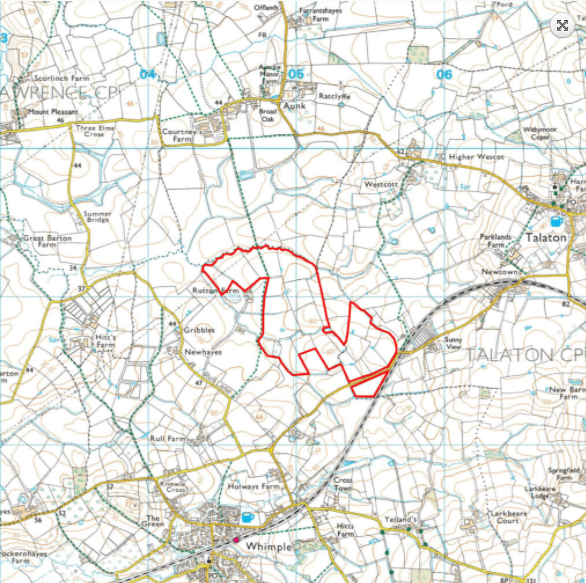
Local residents, councillors and other members of the community have been invited to a public consultation for a solar farm north of Whimple in East Devon.

So far Owl has been unable to find the acreage involved or the quality of agricultural land involved. The outline on the map gives a perspective, looks as big as Whimple.

www.theexeterdaily.co.uk 

The proposed development by Aura Power is for a subsidy-free solar farm of up to 49.9 MW capacity that would generate enough renewable electricity to supply the equivalent of over 12,000 typical homes or to power 18,000 electric vehicles annually. It would save an estimated 11,500 tonnes of CO2 per year, making a substantial contribution to local and national net zero targets.

East Devon Council has declared a Climate Emergency and has a target to become carbon neutral by 2040. Solar is ideally suited to the area which is one of the sunniest parts of the UK.

Aura Power is holding two public consultation events about its plans: a virtual consultation online, using the Zoom webinar platform, on Tuesday 12th October 2021 at 6pm, followed by a drop-in face-to-face event and public exhibition on Wednesday 20th October 5.30 – 8.30pm at Whimple Victory Hall, EX5 2TS.

Both events will provide an opportunity for local people to view the proposals, ask questions and provide feedback to the Aura project team, which Aura will take into account before submitting its planning application. 

Those interested in attending the webinar will need to register in advance, via the following link on the Aura Power website: www.aurapower.co.uk/horton-solar-farm

Chris Featonby, UK Development Manager, Aura Power, said: “The recent rise in fossil-fuel energy prices has underlined the importance of increasing the amount of renewable energy we generate in the UK. With its sunny climate, Devon is ideal for producing solar power which is one of the lowest costs forms of new energy generation, helping bring down costs for everyone.

“The site we are proposing for Horton solar farm is well suited for this type of development with limited visual impact on nearby homes. We will also be providing a community benefit fund with a total value over £700,000 for the solar farm’s life and are keen to learn more about local priorities and projects that might benefit from the funding. By offering a choice of virtual and physical consultation events, we hope that as many local residents as possible will be able to see our plans and provide their feedback.”

The site is well screened with existing hedgerows. A range of ecological measures are also proposed, including species-rich wildflower meadows around the panels, and additional native tree planting and hedgerow enhancement both for improved screening and to boost biodiversity.

Aura is also planning to set up a Community Benefit Fund of £17,500 a year, index-linked (based on £350 per MW capacity), for the 40-year life of the solar farm. A proportion of this would be set aside for yearly educational sessions with local schools and site visits to the solar farm.

Around 1,000 invitations have been sent out by post to local people living near the proposed site.

Stop making councils plead for ‘levelling up’ cash, ministers urged

Separate beauty competitions for multiple ring-fenced pots of gold judged on the quality of the images in glossy brochures; presentation over substance – what not to like?

No mention of the surely now “dead duck” LEPs. – Owl

Josh Halliday www.theguardian.com 

Ministers must stop making council leaders “plead on bended knee” for vital funds if “levelling up” is to work, the government’s infrastructure adviser has said.

Sir John Armitt, the chair of the UK’s National Infrastructure Commission, said town halls in England should be given £30bn to spend on transport projects over the next five years.

In what will be read as a message to Michael Gove, the new secretary of state for levelling up, he called for a radical change to the “inefficient and ineffective” system of councils bidding for multiple pots of ringfenced money from Whitehall.

He said: “It will be quite a radical change, I accept that. But we’ve had a secretary of state just moving into MHCLG [the now-rebranded Department of Levelling Up, Housing and Communities] who is known for having radical thoughts and challenging the status quo, so hopefully this won’t land on deaf ears.”

Armitt, who previously ran the body that delivered the London Olympic Games, said the government should axe the 15 different funding streams for local transport and instead hand more spending and powers to England’s 74 county and unitary authorities.

In what would be the biggest change to local government funding in decades, he suggested giving each council mayoral powers over transport and overall funding of £6bn a year to develop long-term transport plans over the next five years.

This would equate to a 40% increase in the budget for England’s buses and trains outside London.

Neil O’Brien, the MP who is writing a white paper on levelling up to be published within weeks, became a minister at the DLUHC along with Gove during the reshuffle.

Levelling up is the cornerstone of Boris Johnson’s domestic policy but the announcements so far have failed to match the rhetoric.

The appointments of Gove and O’Brien – as well as that of Nadhim Zahawi as education secretary – have given local leaders hope that the prime minister will soon announce bold policies to help close the gap between London and the rest of the UK, rather than the piecemeal funds and woolly speeches that have typified the programme so far.

Johnson has hinted vaguely at elected mayors, such as those who represent big urban areas such as the West Midlands and Greater Manchester, being extended to counties and towns but only in areas deemed pro-business.

Armitt said suburban areas and towns, home to 31 million people in England, were being held back because Whitehall controls the purse strings. “Local leaders have got to go and plead on bended knee with London to get the money to be able to deliver what they promised at a local level,” he said.

“The devolution on a regular basis of funds to the regions and local authorities just seems to be the obvious way to go.”

The National Infrastructure Commission is the government’s adviser on large-scale projects and is an executive arm of the Treasury.

In a report published last week, which was commissioned by the government in March, the body said ministers “need to pivot away from a reliance on centrally controlled pots of money for which councils must compete”.

Armitt said the “prize” for Johnson’s government was to be able to show at the next election that it was committed to improving life chances by devolving powers and money to the local level.

“I don’t think anybody’s in disagreement here. It’s one of those questions of, is the spirit willing and the flesh weak? Well, in this case we want the flesh to be strong and not weak,” he added.