As the Pandora papers show, access to the Tory party is being bought by a new class of tycoon funders 

One big theme has dominated Tory party conference at Manchester this week: levelling up. Boris Johnson, we are being told, is on a mission to rescue British working people who have been forgotten and left behind in today’s UK.

Peter Oborne www.theguardian.com 

According to this powerful narrative Keir Starmer’s Labour party is a manifestation of a “woke” metropolitan elite utterly alien to the “red wall” voters who flocked to the Tories at the last election.

The Pandora papers revelations undermine that Tory story. Yes, there are struggling people who have been forgotten by the system. Yes it’s a worthy cause to give them a much bigger say in public life. But no, the Tories don’t generally represent such people.

Johnson’s Conservative party essentially belongs to the super-rich. The billionaires. Those with privileged access to the prime minister and the chancellor of the exchequer. To the large and in many cases insalubrious cast of men and women with walk-on appearances in the Pandora papers scandal.

This class of Conservatives does not seem to see the British state – as Tories have historically claimed to do – as something to which you dedicate a life of service. They seem to see it rather differently: as something to be plundered and used for self-enrichment.

Take the honours system. Traditionally honours have been used to reward people who have contributed to the good of the nation. In recent history honours have become a commodity that may be bought and sold. Take public contracts. Traditionally they are won in open public competition. Not any more.

Oscar Wilde defined a cynic as someone who knows the price of everything and the value of nothing. Welcome to the world of Johnson and his squalid associates. It doesn’t appear to matter how Tory donors made their money, where they paid their taxes, or which corners they cut. What matters is the size of the donation.

CertainlyJohnson supports levelling up. He wants to level up the billionaires. They’ve grown richer than ever before under his premiership. This may help explain why Tory donors are so much more likely to win Covid contracts than others. Access, it seems, helps win contracts, and access can come in return for a fat donation.

This is why it is impossible to overestimate the importance of this week’s Pandora revelations. They make a textbook study of how the super-rich have bought politics. In some countries this phenomenon is out there and in the open.

Let’s take an example of another country suffering from fuel queues: Lebanon. It’s no surprise at all to find newly appointed prime minister Najib Mikati and central bank governor Riad Salameh among several Lebanese political and financial officials named in the Pandora papers as having wealth hidden in offshore tax havens – at a time when ordinary Lebanese are having their savings wiped out. Lebanon has long been run as a private fiefdom for the super-rich.

The Pandora papers show that Britain is heading the same way. Access to British politics – and in particular the Johnson Tories – has been bought wholesale by a new class of tycoon funders. They may be British citizens but in many cases they pay very little tax in this country, and are in many cases essentially based offshore.

Their existence has been an open secret for years but not publicly understood, perhaps in part because some of Britain’s wealthy newspaper owners themselves have a notorious reluctance to pay taxes.

It’s important to understand that this new system has only sprung up recently. Go back only a few decades and the Tory party could count on a mass membership for the bulk of its funds in the shape of small donations. In recent years membership has gone into freefall, and the donors have largely taken over.

Tony Blair (little surprise to see his appearance in Pandora) helped create this model during his famous period in opposition before 1997. Eager to sideline the unions, the ambitious young Labour leader and his aide Jonathan Powell encouraged fundraising from wealthy donors.

The Tories followed suit. They may have felt they had little choice. Money was hard to come by and the membership was dying. Suddenly party donors became important figures, men and women of note.

But it is Johnson who has been the most shameless by far about this arrangement. On becoming Tory leader he appointed Ben Elliot, whose former business clients include Mohamed Amersi, who looms large in the Pandora papers) as Tory co-chair. This appointment changed the structure of the British Tory party. And it is no surprise to learn, courtesy of the Pandora papers, that Elliot jointly owned a secret offshore film financing business.

At first sight Eton-educated Elliot looks like a copper-bottomed establishment Conservative. A nephew of the Duchess of Cornwall, Prince Charles’s wife, he’s the son of Simon Elliot, a Dorset landowner.

If you look more closely the appointment seems odder and odder. Tory chairs are normally powerful politicians in their own right – think Theresa May, David Davies or further back Norman Tebbit, William Whitelaw or Peter Carrington. Significant figures by any standards. The role of Conservative party chairs, from Carrington to May, was to represent the views of the Tory grassroots and explain the actions of their leadership.

I have never found serious evidence that Elliot does much of this important but gruelling political work, if any. Take the Hartlepool and Batley and Spen byelections. A traditional chair would have been a prominent figure organising the campaign and explaining the results on television. Elliot kept a very low profile.

Elliot is not even an MP and I can discover no significant record in British politics until he became treasurer for Zac Goldsmith’s campaign for the London mayoralty in 2016. Yet he’s at the heart of Johnson’s Tory establishment. He’s not there to talk to the grassroots. He’s there to manage the donors. The people who matter.

Traditionally that’s been the role of the party treasurer, a relatively lowly party official. In the modern Tory party the job has become so important that the treasurer has been promoted to party chair and effectively become the boss.

The Elliot model for the Tory party is based on his business, Quintessentially. It is a concierge service for rich people who want introductions and invitations at the top level of society. Amersi has deliciously called the system “access capitalism”, a term that deserves to find its way into a dictionary of quotations. You buy your way in.

Elliot will be remembered for turning politics into a financial commodity. Now he needs to come out in public and answer urgent questions: who investigates Tory donors? Does it matter if they don’t pay tax? Do you care if they have a murky past? Where do you stand on tax havens?

It’s not just Elliot who needs to break the habit of a lifetime and answer questions. Now that Pandora’s box has been well and truly opened. Johnson, the big winner from this rotten financial system, needs to explain to British voters why the Tory party appears to be funded by a new class of super-rich tax avoiders.

And tell us what they get in return.

Gove tells Conservative conference the north needs more homes

Mr Gove appeared at a planning inquiry into CALA Homes’ proposals to build on land known as Chapel Lane Meadow in Bagshot, which residents say threaten local wildlife and the character of the village.  Surrey Heath Borough Council, which recently lost its 5-year housing land supply, dropped opposition to the proposals last month, after concluding that the identified harms as a result of the proposal would not significantly and demonstrably outweigh the benefits.(2019/2020)

Michael Gove is MP for Surrey Heath – Owl

George Grylls www.thetimes.co.uk

Michael Gove has suggested that the government will move away from concentrating housebuilding in the southeast of England to encourage more development in the north and midlands.

The new housing secretary promised to invest in the regeneration of inner city areas and said that he wanted to build more homes on “neglected brownfield sites”.

He attempted at the Conservative Party conference yesterday to define the levelling-up agenda only weeks after being put in charge of the prime minister’s flagship policy. He said that levelling up meant devolving more power to local leaders, raising living standards, improving services and restoring a sense of pride in communities.

At a fringe event hosted by the Policy Exchange think tank he also suggested that the focus on building homes in the southeast was misplaced and that people in “generation rent” were suffering more in the north and northeast.

“There are a variety of reasons for that that I need to look more closely at. But actually it shows that if you really, really want to help those who are currently in rented accommodation and want to own their own homes, then the focus shouldn’t necessarily be geographically where it has been beforehand,” he added.

Last year, Conservative backbenchers rebelled against a “mutant algorithm” designed to drive down house prices in the southeast by building more homes in and around London. After outcry from Tory MPs, the algorithm was amended to encourage more development in northern and Midlands cities.

Gove suggested yesterday that the targets could be tweaked further, saying that the government’s levelling-up agenda meant building more homes in regenerated city centres. “In my department, that will mean investing in urban regeneration with new homes on neglected brownfield sites,” he said. “It also means empowering local government to make a bigger difference for good, allowing communities and councillors to take back control of our future and making greener, and more beautiful places for everyone to live.”

Gove also said that the government would like to create new higher education institutions parts of the country such as Doncaster, Grimsby and Thanet. He said that there was a need for new technical colleges because students at traditional universities spent too much time discussing “the hermeneutics of Spiderman”.

Torbay hit by Universal Credit uplift

Council leader writes to MP.

local democracy reporter, Joe Ives www.radioexe.co.uk

More than 13,500 people in Torbay are set to be hit by the end of the £20 Universal Credit uplift this week, with the leader of the council warning “there could never be a worse time” to make the move.

As covid hit in March 2020, the government launched a one-year temporary £20 increase in Universal Credit payments, and further extended the rise for another six months this March. Now that extension is set to expire, the uplift is due to end on Wednesday 6 October.

According to the Department of Work and Pensions, over 13,500 people were on Universal Credit in the Bay at the end of August.

Last week, Steve Darling (Barton with Watcombe) leader of the ruling Lib Dem-Independent coalition that runs Torbay Council penned a letter with deputy leader and cabinet member for finance Darren Cowell (Independent Group, Shiphay), urging Torbay’s Conservative MP Kevin Foster to lobby the government to reconsider its decision. Mr Foster is on the government payroll, as a parliamentary under-secretary at the home office.

The imminent cancellation of the Universal Credit uplift has been widely criticised, even by many of the Conservative MPs who are holding their annual conference this week in Manchester.

Critics argue the £20 reduction will force more pressure on the 5.8 million people on Universal Credit in the UK already affected by rising fuel and energy prices, the end of the furlough scheme last week and the economic consequences of covid. Homelessness charity Crisis warns the move could put 100,000 private renters at risk of homelessness.

In their letter, Cllr Darling and Cowell wrote: “Over the pandemic, the Universal Credit increase has been a lifeline. Both those in work and out of work have found this money invaluable in light of inflationary increases in living and rents rocketing in Torbay. 

“With the uncertainty around fuel costs in recent days, it could never be a worse time to withdraw this support to those most in need in our communities.

“Making the increase permanent is a quick and targeted way to direct support at local communities as we recover from the pandemic.”

Cllr Daring and Cowell argued that given 40 per cent of people on Universal Credit are already employed, ending the uplift would equate to a £1,000 pay cut for many of the lowest paid workers in Torbay and effectively withdraw £10 million from the Bay’s economy.

According to the Institute for Fiscal Studies, a think tank, making the uplift permanent would cost taxpayers around £6 billion a year.

Speaking last month, transport secretary Grant Shapps defended the move, saying: “I think most people recognise that if it’s brought in for the pandemic, it’s going to end as we move back to people going back to work and more normal times.”

Appearing on the Andrew Marr on Sunday, prime minister Boris Johnson said it was ‘inappropriate’ to reverse his government’s decision. 

We contacted Torbay MP Kevin Foster for a response to the councillors’ letter, but he hasn’t yet replied.

Otter valley residents urged to back beavers 

Devon Wildlife Trust is advising East Devon residents on how they can have a say on the future of beavers in our countryside.

The government has launched a public consultation on the future of beaver introductions in England.

male beaver on River Otter by David White 

The way the consultation is designed means the most likely responses will be from stakeholders who have a particular interest in how the presence of beavers in our rivers could affect them directly – anglers and farmers, for example.

But every resident of villages and towns along the River Otter and its tributaries also deserves a voice in this consultation on the future of beavers. Local people have been living alongside beavers for around a decade now.

The science and evidence gained from the 5-year River Otter Beaver Trial demonstrated the benefits beavers have brought to the River Otter. Beaver activity has helped reduce flood risk in villages downstream of their dams, has increased diversity and abundance of other wildlife and has also improved water quality, thanks to beaver dams trapping sediment washed into watercourses.

Where beaver dams have caused localised problems for landowners, DWT has demonstrated practical solutions to reducing water levels so the landscape can continue to be shared by beavers and people without conflict.

Beaver-watching near Otterton has become an annual summer activity, with locals and visitors enjoying the experience of being among the first people to see beavers in an English river for hundreds of years. Many such visitors also spend money with local businesses on food, drinks and accommodation.

It is important that all these aspects of local people’s experience of living alongside beavers is featured in responses to the government’s consultation.

But as the online consultation is not especially easy to navigate, Devon Wildlife Trust has produced the following guidance on submitting a response, so the government hears the voices of East Devon residents who have lived alongside beavers for years.

DWT’s Director of Nature Recovery Pete Burgess said: “It is vitally important that we reintroduce beavers in a planned, responsible way, and that we have a toolkit of management techniques available, so we know exactly how to deal with issues if they arise. To maximise the benefits beavers can bring, we need to continue to provide advice and support for farmers and landowners and provide grants for those who allow more space for water on their land. The launch of the public consultation is the start of a vitally important conversation about the future of these once widespread animals, and we would urge everyone to share their views about the future of beavers in the English landscape.”

DWT is asking everyone to respond to the consultation around four key asks which we believe are necessary for the safe return of beavers in the wild.

  • To formally recognise beavers as a resident native species in England, as has already been done in Scotland.
  • To ensure beaver populations thrive in the wild by supporting carefully targeted reintroduction projects, bolstering populations where necessary to ensure their long-term health.
  • To help landowners to make space for watercourses and wetlands created by beavers by providing appropriate schemes and funding programmes.
  • To support local beaver management groups who can provide advice, support and practical solutions to ensure beavers and people can share our landscape once again.

The government consultation runs until 17 November and is online at Consultation on approach to beaver reintroduction and management in England

For more information on beavers in Devon and on the government’s consultation see Beavers or contact DWT on beavers@devonwildlifetrust.org

Michael Gove on the sauce again, overdosing on the “catchup ketchup”

Michael Gove has just shown that ‘levelling up’ is still no more than a slogan

Vicky-spratt  inews.co.uk 

The substance of Michael Gove’s first Conservative Party Conference speech as the Secretary of State for Levelling Up, Housing and Communities was conspicuous by its absence. He repeated the “levelling up” slogan religiously but offered very little to back it up.

“Life expectancy for men in Glasgow is years lower than in Surrey,” Gove said. “That’s wrong.” Nobody would argue with this statement, reflective as it is of Britain’s geographic socioeconomic inequality. But after hearing his speech they might ask what, exactly, Gove plans to do about it?

Like his newly rebranded department for “Levelling Up”, it seems that Gove is a minister with an agenda in search of policies.

Boris Johnson has decided that “levelling up” is the standard by which he wants his government to be judged but offered no detail on how it will work in practice. In Manchester, Gove shed no further light beyond saying, rather vaguely, that “Levelling Up” means strengthening local leadership, raising living standards, improving public services and enhancing people’s pride in the place they live.

Perhaps the lack of clarity should not come as a surprise. Despite indicators that Britain faces a tough winter – pig farmers protesting because a combination of Brexit and Covid-19 means they cannot have their livestock slaughtered and processed properly, benefit cuts, tax hikes, energy price hikes and a petrol shortage – no big policy announcements are expected at this conference. Meanwhile, the “Levelling Up” white paper is expected by the end of the year.

But even if we put that aside, there were glaring gaps in Gove’s speech. He has taken over the housing brief at a time when thousands of worried homeowners are stuck in unsafe and unsellable homes because of the building safety crisis that has unravelled since the Grenfell Tower Fire. He did not address those impacted directly but, instead, said: “our mission will also mean…making everyone’s home safer and greener….and sharing the cost of that work more fairly.”

Could this signal a change in approach? Will the state take more responsibility for building safety remediation costs? We cannot know because Gove did not expand.

Beyond that, the housing crisis was not mentioned once nor was planning reform. Instead, Gove briefly mentioned his intention to build “new homes on neglected brownfield sites,” and ensure “a better deal for those in social housing”. How will he do this? Your guess is as good as mine.

Gove reiterated Johnson’s perennial commitment to increasing homeownership. “Making opportunity more equal is what Margaret Thatcher did when she allowed working people to buy their own homes,” Gove said, alluding to her flagship Right to Buy policy which is now widely thought to be responsible for this country’s social housing shortage. Gove’s modern plan for increasing homeownership today? He did not say.

The Conservative “levelling up” mission, according to Gove, is that everyone should have “the chance to choose their own future… own their OWN home…and live their BEST life”. It sounds like a motivational Instagram aphorism: you want to like it, but you’re not sure what it means.

Since 2016, the government department Gove now heads up has had four different secretaries of state and undergone two name changes. But one thing remains the same: Britain still has a housing emergency.

Exeter’s future thrown in the spotlight

Consultation on a huge new dossier that will shape Exeter’s future has begun – and people are being urged to have their say.

Daniel Clark www.devonlive.com

Exeter City Council has launched the first round of public consultation on a new Local Plan for the city which sets out to provide a vision for the city’s future up to 2040.

The Local Plan will need to address a raft of important planning issues including how the city responds to the climate emergency, where new homes are built and how new jobs are provided.

The Plan will also look at how to protect and enhance the city’s historic and natural environments, how high streets and communities can continue to thrive and how everyone gets about the city.

Cllr Emma Morse, Lead Councillor for City Development, said: “I’m excited to see launch of the consultation. The Local Plan lies at the heart of the planning system and will guide the development of housing, the economy, community facilities, and infrastructure in Exeter for the next twenty years.

“It will also set out clear messages for how we combat climate change and improve our environment. It’s vital that local people, businesses, community groups and stakeholders have their say in shaping the Local Plan and Statement of Community Involvement, so that the documents reflect what you want our city to look like and how you want to engage with the planning process in order to achieve that.”

Each council is required to have an up to date Local Plan to guide development so that it meets the needs of the community and the local area.

Exeter’s current plans (the Core Strategy and Local Plan First Review) are becoming older and as along with neighbouring partners, they are no longer progressing the Greater Exeter Strategic Plan, the city needs a new Local Plan.

The new Local Plan will eventually replace the existing plans and will cover the years between 2020 and 2040, and will allow the council, the community and other organisations to make the most of the opportunities in Exeter, tackle our key issues and help ensure a thriving city going forward.

The first stage of the Local Plan review on the issues – with a second stage around site options for development and specific policies– to follow in the future.

Climate emergency

Exeter City Council have declared a Climate Emergency and pledged to work towards creating a carbon neutral city by 2030. They have adopted the Net Zero Exeter 2030 Plan which sets out what Exeter will need to put in place in order to be net zero carbon by 2030.

The new Local Plan will include policies and proposals that contribute to meeting this challenging ambition and to make the most of the opportunities of a net zero carbon city.

Health and wellbeing

Generally, Exeter is a healthy city with high levels of walking and cycling, large areas of green space and access to a range of health facilities. However, people living in its more disadvantaged areas can have comparatively poor health, lower literacy and may experience frailty earlier. Traffic has led to increases in air pollution and noise in some areas. Crime and anti-social behaviour can be a concern. Housing quality can also significantly affect health.

The new Local Plan will play a part in improving health and wellbeing by supporting ambitions to achieve increases in physical activity to get 50 per cent of people walking or cycling to work, improving air quality and providing quality housing.

Homes

The Government requires around 630 new homes in Exeter each year and Covid-19 has underlined just how much good quality housing is needed

The new Local Plan will need to help address the shortage of affordable homes in the city and consider how best to provide the good quality accommodation we all need. Young adults, families, older people, those with disabilities, students and gypsies and travellers all have specific housing needs.

Economy and jobs

The city is at the heart of the Greater Exeter area and has one of the fastest growing economies in the UK. Whilst Exeter has like all cites been significantly impacted by Covid-19, predictions are that it will be one of the quickest to bounce back. There is a strong ambition to grow the economy with a focus on innovative business sectors, making the most of a skilled workforce.

The new Local Plan needs to support the economy and green growth by identifying the employment sites and infrastructure needed. This will help to increase prosperity and wellbeing.

The future of high streets

A vibrant and prosperous city centre with complementary bustling neighbourhood shopping areas is central to the success of the city. However, traditional high streets are under pressure through the growth of online shopping, a trend accelerated by Covid-19, and so we need to re-think how they function.

Leisure, cultural attractions and the night-time economy are likely to play an increasingly important role in attracting people to our high streets and will help support our offer for tourists.

The new Local Plan will support the high street as it evolves and continues to play a central part in our lives.

High quality places and design

The quality of the places in which we live and work is fundamental for so many reasons, including to support our health and well-being, attract investment and generate pride in our city. Development offers opportunities to create high quality places that respond to Exeter’s distinct characteristics, reflect local culture and integrate with existing communities, promoting social cohesion and healthy lifestyles.

The Local Plan must ensure that development is located in the right place and provides well-designed buildings and spaces.

Historic environment and culture

Exeter’s rich historic environment is part of what makes the city unique and special and helps to shape the city’s culture today. It improves our communities’ quality of life and pride in the city and helps to support our economic prosperity.

New development inevitably raises challenges for the historic environment, but the new Local Plan provides an opportunity for us to protect and enhance our historic assets whilst celebrating and exploring the culture of the city and our communities as they evolve.

Natural environment

The city enjoys a high quality natural environment, with valley and city parks, public rights of way and the Exe Estuary. The hills to the north and north-west of the city give Exeter a distinctive character while the city also contains a rich variety of wildlife habitats.

The new Local Plan will need to manage development pressures on our local environment to provide benefits for landscape character, wildlife, flood risk and air quality and to help us to combat climate change.

Sustainable transport and communication

The way people travel will be vital to the success of Exeter. It will be central to achieving net zero carbon, growing prosperity, healthy lifestyles and improvements to our environment. In future, travel won’t just be about whether we walk or drive – digital communications will also be key.

The new Local Plan will need to ensure that Exeter is resilient to changes in travel, supporting innovative development in the right places show-casing real options and fresh approaches to transport.

Infrastructure and community facilities

Communities rely on local infrastructure to function and prosper; transport infrastructure helps us to get around, doctors surgeries provide our health care, schools educate our young people, digital infrastructure helps us to communicate and greenspace and leisure facilities provide us with the opportunity to relax.

The new Local Plan will be vital to identify the infrastructure which we need, ensuring it is provided in the right way, at the right time and in the right place.

The pattern and quality of future development in Exeter

A key role for the new Local Plan will be to set out a sustainable pattern of development for Exeter which will help to deal with the issues we have identified and achieve the vision for the city.

Planning for development proactively will mean we can steer it to appropriate locations where impacts can be managed and where it will have the most significant benefit.

The current planning documents include a strategy for meeting our development needs in terms of housing, jobs, shopping, community facilities and infrastructure, but this is being reviewed to make sure the approach will be appropriate for the future.

The key strands of the current approach to meeting the city’s development needs are:

· Focus on the city centre, existing centres and previously developed land, including the regeneration of the Grecian Quarter (around Sidwell Street and the bus station) and the Water Lane area (around the canal in the Haven Banks area)

· Provide for additional development in sustainable urban extensions on the edges of the city

· Steer development away from the hills to the north and north west – the important landscape areas for the city

Some of this development strategy will need to be looked at again to reflect that times have changed, as there are more limited opportunities for large scale urban extensions now given that the developments at Newcourt and Monkerton are nearly complete.

The council is also now looking at the key regeneration benefits which development on brownfield sites can provide. This evolving situation has led the Council to start a housing delivery programme called Liveable Exeter, which will create new homes for the city through a series of eight, high quality development sites.

On the back of this work, Exeter has been recognised as a ‘Garden Community’ which brings support from Government to make sure that the city grows in a sustainable way with a real focus on high quality development working well for local communities.

This approach will play a key part in steering the pattern and quality of development for the city in future.

Some potential ideas which could be used to shape a future development strategy for Exeter are:

· Redevelopment of brownfield land in the city

· Higher density development in the city centre and close by

· Smaller developments on the edge of the city

· Steering development away from sensitive environmental areas such as the Exe Estuary and hills to the north and north west of the city

· Locating development to maximise walking and cycling and to make use of public transport

· Build distinctive development with local identity n Ensure well-designed, vibrant places with a mixture of uses

· Support healthy lifestyles n Provide a variety of high quality and flexible homes

· Deliver appropriately designed infrastructure when it’s needed

· Provide developments for local employment, education and skills

· Enhance the natural and historic environment

· Provide green infrastructure such parks and open space

· Ensure that development will produce ‘net zero’ carbon emissions

· Deliver high quality active travel and low carbon transport

· Make sure that development is resilient to future change

The vision

Exeter has a vision for growth as a connected city region consisting of thriving linked communities set within an exceptional environmental setting. This clear vision represents a commitment to strengthen neighbourhoods; create new communities; invest in sustainable transport; and deliver the infrastructure needed to attract investment and improve quality of life.

Exeter aims to be recognised as a leading sustainable city and global leader in addressing the social, economic and environmental challenges of climate change and urbanisation. The plan strives to make Exeter the most active and accessible city in England.

The vision has seven key elements:

· An innovative and analytical city

· A healthy and inclusive city

· The most active city in the UK

· Accessible world class education

· A liveable and connected city

· A leading sustainable city

· Culture

What happens next?

The issues consultation is the first step in preparing the new Local Plan. The council will then use the responses to the consultation alongside evidence on a range of topics to shape a draft of the new Local Plan which will be consulted on in 2022.

After that, a final draft document will be published for comment before it is submitted to the Planning Inspectorate for Examination. A Planning Inspector will use a series of Examination discussions to decide whether the plan needs any changes and then if it can be adopted by the Council

To get involved in the consultations, local residents, businesses, community groups and statutory consultees are encouraged to:

  • Visit https://exeter.gov.uk/localplan/ and https://exeter.gov.uk/sci/ where the Local Plan Issues Consultation Document and draft Statement of Community Involvement can be viewed and responded to online;
  • Find out more information by attending public exhibitions to be held on: Thursday 30 September from 1pm to 7pm at Exeter Central Library, Rougemont Room, Castle Street, Exeter, EX4 3PQ; and Wednesday 13 October from 1pm to 7pm at the Guildhall, 203 High Street, Exeter, EX4 3EB.

The consultation documents can also be viewed during opening hours at Exeter City Council’s Customer Service Centre in the Civic Centre (Paris Street, Exeter, EX1 1JN) and Exeter Central Library (Castle Street, Exeter, EX4 3PQ).

For more information, or to respond to the consultations in a different way from online, please email planning.policy@exeter.gov.uk or telephone 01392 265080. Please also use these contacts to be kept informed of progress on the new Local Plan without responding to the current consultations.

The consultations run until November 15. Further rounds of public consultation on the new Local Plan are planned for 2022 and 2023, before it is submitted to the Planning Inspectorate for Examination.

The Pandora Papers for Dummies (only 12 million documents)

Pandora Papers: A simple guide to the Pandora Papers leak

The Pandora Papers is a leak of almost 12 million documents that reveals hidden wealth, tax avoidance and, in some cases, money laundering by some of the world’s rich and powerful.

Owl summarises official reaction so far: “Move along please. Nothing to see here!”

By Pandora Papers reporting team www.bbc.co.uk

More than 600 journalists in 117 countries have been trawling through the files from 14 sources for months, finding stories that are being published this week.

The data was obtained by the International Consortium of Investigative Journalists (ICIJ) in Washington DC, which has been working with more than 140 media organisations on its biggest ever global investigation.

BBC Panorama and the Guardian have led the investigation in the UK.

What has been uncovered?

The Pandora Papers leak includes 6.4 million documents, almost three million images, more than a million emails and almost half-a-million spreadsheets.

Stories revealed so far include:

The files expose how some of the most powerful people in the world – including more than 330 politicians from 90 countries – use secret offshore companies to hide their wealth.

Lakshmi Kumar from US think-tank Global Financial Integrity explained that these people “are able to funnel and siphon money away and hide it,” often through the use of anonymous companies.

How big is the Pandora Papers leak graphic

What do we mean by ‘offshore’?

The Pandora Papers reveal complex networks of companies that are set up across borders, often resulting in hidden ownership of money and assets.

For example, someone may have a property in the UK, but own it via a chain of companies based in other countries, or “offshore”.

These offshore countries or territories are where:

  • it’s easy to set up companies
  • there are laws that make it difficult to identify owners of companies
  • there is low or no corporation tax

The destinations are often called tax havens or secrecy jurisdictions. There is no definitive list of tax havens, but the most well known destinations include British Overseas Territories such as the Cayman Islands and the British Virgin Islands, as well as countries such as Switzerland and Singapore.

Is it illegal to use a tax haven?

Loopholes in the law allow people to legally avoid paying some taxes by moving their money or setting up companies in tax havens, but it is often seen as unethical. The UK government says tax avoidance “involves operating within the letter, but not the spirit, of the law”.

There are also a number of legitimate reasons people may want to hold money and assets in different countries, such as protection from criminal attacks or guarding against unstable governments.

Although having secretive offshore assets is not illegal, using a complex network of secret companies to move around money and assets is the perfect way to hide the proceeds of criminality.

There have been repeated calls for politicians to make it harder to avoid tax or hide assets, particularly following previous leaks such as the Panama Papers.

But Mr Ryle said the Pandora Papers show that “the people that could end the secrecy offshore… are themselves benefiting from it. So there’s no incentive for them to end it”.

How easy is it to hide money offshore?

All you need to do is set up a shell company in one of the countries or jurisdictions with high levels of secrecy. This is a company that exists in name only, with no staff or office.

It costs money though. Specialist firms are paid to set up and run shell companies on your behalf. These firms can provide an address and names of paid directors, therefore leaving no trail of who is ultimately behind the business.

How much money is hidden offshore?

It is impossible to say for sure, but estimates have ranged from $5.6 trillion to $32 trillion, according to the ICIJ. The International Monetary Fund has said the use of tax havens costs governments worldwide up to $600bn in lost taxes each year.

Ms Kumar said it is detrimental to the rest of society: “The ability to hide money has a direct impact on your life… it affects your child’s access to education, access to health, access to a home.”

What is the UK doing about it?

The UK has been criticised for allowing property to be owned by anonymous companies overseas.

The government published draft legislation in 2018 that would require the ultimate owners of UK properties to be declared. But it is still waiting to be presented to MPs.

A 2019 parliamentary report said the UK system attracts people “such as money launderers, who may wish to use property to conceal illicit funds”.

It said criminal investigations are often “hindered” because police cannot see who ultimately owns properties.

The government recently raised the risk of money laundering through property from “medium” to “high”.

It says it’s cracking down on money laundering with tougher laws and enforcement, and that it will introduce a register of offshore companies owning UK property when parliamentary time allows.

Pandora Papers banner

The Pandora Papers is a leak of almost 12 million documents and files exposing the secret wealth and dealings of world leaders, politicians and billionaires. The data was obtained by the International Consortium of Investigative Journalists in Washington DC and has led to one of the biggest ever global investigations. More than 600 journalists from 117 countries have looked at the hidden fortunes of some of the most powerful people on the planet. BBC Panorama and the Guardian have led the investigation in the UK.

Planning applications validated by EDDC for week beginning 20 September

A303 Sparkford and Ilchester improvements

Work started on October 1 to create three miles of dual carriageway to by-pass the single lane bottleneck winding up Camel Hill on the A303 between Sparkford and Ilchester. That still leaves over 35 miles of the A303 to Exeter with only a single lane carriageway.

“Not only will it enhance capacity, cut journey times and improve road safety, but as we continue to build back better from the pandemic this project will provide a real boost to the local economy in Somerset and the surrounding region – creating jobs, improving access to housing and opening the region up to the rest of the country.” Roads Minister Baroness Vere.

“Getting on with the job”. At this rate how long will it take to finish the remaining 35 miles? – Owl

Tim Dixon www.midweekherald.co.uk

Work is now under way to improve a major route from London and the South East into East Devon.

The £135 million road scheme will upgrade the A303 between Sparkford and Ilchester, providing a major boost to the South West’s economy, improving local journeys and making roads safer.

A ceremony on October 1 marked the start of the works, which will create a high quality, dual carriageway on this congested stretch of the A303.

This multi-million-pound major project is managed by National Highways and funded entirely by the Department for Transport as part of the Road Investment Strategy.

Roads Minister Baroness Vere said: “We’ve provided £135 million to make this scheme a reality, and this is a fantastic moment for the South West as works get under way.

“Not only will it enhance capacity, cut journey times and improve road safety, but as we continue to build back better from the pandemic this project will provide a real boost to the local economy in Somerset and the surrounding region – creating jobs, improving access to housing and opening the region up to the rest of the country.”

Hannah Sanderson, Programme Manager for National Highways, said: “We are really pleased that we are now starting this long-awaited project in earnest.

“The scheme is incredibly important for Somerset’s future, vital to the A303 / A358 corridor and it’s exciting that work is finally under way.

“The three new miles of dual carriageway will support economic growth and facilitate a growth in jobs and housing by creating a free-flowing and reliable connection between the South East and South West.

“It will also tackle a long-standing bottleneck, reduce journey times to the South West and improve traffic flows in that area at peak times and during peak seasons.”

Somerset County Council’s Cabinet Member for Economic Development Cllr David Hall added: “It’s really satisfying to see work commence on this vital scheme, which is so important for Somerset’s economy and future growth.

“We’ve worked really had to promote the need for this investment and we’re delighted to be supporting National Highways as they deliver these much-needed improvements.”

On an average day, the A303 between Sparkford and Ilchester carries 23,500 vehicles, but numbers increase significantly in the summer, particularly at weekends, making journeys unreliable and unpredictable. 

With construction now officially under way, the upgrade is scheduled to be open to traffic in spring 2024 and you can find out more about the scheme and the construction process on our virtual exhibition which you can access via our webpage – https://highwaysengland.co.uk/our-work/south-west/a303-sparkford-to-ilchester/

The upgrade aims to:

improve the capacity of the road to reduce delays and queues that occur during peak hours and at key times of the year i.e. the height of summer

support economic growth, facilitating growth in jobs and housing by providing a free-flowing and reliable connection between the South East and the South West

make the road safer, by providing additional capacity and reducing driver stress. We’ll make routes safer for pedestrians, cyclists, horse riders in the area

protect the environment and look for opportunities to improve it, minimising any unnecessary impact of the scheme on the surrounding natural and historic environment and landscape

work with local communities to reduce the impact of the road and look for ways to improve local peoples’ quality of life

make journey times more reliable and resilient; by providing more capacity it will become easier to manage traffic when incidents occur

Current work is all about preparing the ground for construction, with traffic management not planned until early next year and minimal disruption to 2021 holiday traffic, especially around Christmas.

Main construction work will get under way in 2022, with closures kept to a minimum throughout the scheme. For those wishing to remain informed, a text alert system will be launching next year.

Further along the A303 / A358 corridor, a consultation will be launching on the A358 on the 12 October, with National Highways welcoming your views on the new designs.

Boris Johnson condemned for saying ‘never mind’ about cancer outcomes

Boris Johnson has sparked outrage on the eve of the Conservative Party conference after saying “never mind” about cancer death rates and the recent fall in life expectancy.

www.independent.co.uk

Grilled about his plans for Britain’s recovery from the Covid crisis, the prime minister chose to emphasise economic growth over health measures.

Pointing to the recent growth in wages, Mr Johnson told the BBC: “I’ve given you the most important metric – never mind life expectancy, never mind cancer outcomes – look at wage growth.”

Opposition parties pounced on the prime minister’s remarks, with Labour accusing him of showing an “outrageous” disregard for the health of British citizens.

Shadow health secretary Jonathan Ashworth told The Independent: “Boris Johnson starts his conference with the most chilling words ever spoken from a prime minister dismissing the importance of cancer outcomes.”

The Labour MP added: “If cancer incidence and survival rates across the poorest matched the wealthier there would be 19,000 fewer deaths per year. Life expectancy has stalled for those in the poorest areas.

“There is no levelling up without levelling up health. It’s now clearer than ever that all Boris Johnson offers is just glib words and no action.”

The SNP’s Ian Blackford also shared the clip of Mr Johnson’s comments in an interview with BBC Northern Ireland. “Every citizen should see this insight into the thinking of our PM,” said the party’s Westminster leader.

Mr Blackford claimed the prime minister was “literally prepared to sacrifice our health”.

Dr Clive Peedle, a consultant clinical oncologist and NHS campaigner, said: “As a cancer doctor in the North East of England, I find Boris Johnson’s comments abhorrent.”

The NHS cancer specialist added: “Wage growth is only beneficial if wealth inequality is addressed, but his government has no intention of tackling this.”

Macmillan Cancer Support also responded to Mr Johnson’s remarks. “People facing the fear and trauma caused by disruption to their cancer treatment and care need to know that they are at the top of the government’s priority list and cannot be forgotten,” said Steven McIntosh, an executive director at the charity.

He added: “Any measure of ‘levelling up’ for our country must focus on urgent progress for people facing delayed cancer care, poorer cancer experience or outcomes.”

Among the many Labour MPs sharing the clip of Mr Johnson’s BBC interview, left-wing stalwart Ian Lavery tweeted: “Ghastly appalling disregard for our people.”

Labour frontbencher Wes Streeting – the shadow secretary for child poverty – said millions of people do mind about cancer outcomes. “This is stomach-turning, insightful and outrageous,” he tweeted on Mr Johnson’s remarks.

Life expectancy for men has fallen for the first time since records began, government figures revealed in September – as the higher-than-usual deaths caused by the pandemic begin to make an impact.

More than half a million cancer patients are missing out on vital healthcare support due to severe staff shortages across the NHS, new research from Macmillan Cancer Support revealed last month.

One in four people who were diagnosed with cancer in the last two years have gone without proper support from a specialist nurse during that time, equating to roughly 630,000 patients, the charity said.

The row over health measures comes as Mr Johnson drafts in a former senior military commander to carry out a far-ranging overhaul of leadership in the NHS and social care sector.

The government said General Sir Gordon Messenger, an ex-vice chief of the defence staff, would conduct the most far-reaching review the sector in England has seen in 40 years.

Elsewhere in his interview with BBC Northern Ireland, Mr Johnson said the Northern Ireland Protocol “could in principle work” but it will be a case of “fixing it or ditching it”.

The prime minister did not rule out triggering Article 16 to suspend the crucial part of his Brexit deal with the EU. Asked if he planned to trigger Article 16 during the Conservative Party conference next week, Mr Johnson replied: “That depends on the response from the EU.”

Swelling the Tory coffers: Russian connections  and cosy dinner access 

As Tories head to Conference the Mirror breaks these two stories

Quarter of Johnson Cabinet took Russia-linked cash as Tories head to Conference

Donors offered cosy dinner with ministers for £4,000 a table at Tory Conference

In plain sight, Boris Johnson is rigging the system to stay in power

“There is a pattern here, if we’re only willing to see it. A populist government hobbling those bodies that exist to keep it in check, trampling on democratic conventions and long-held rights, all to tighten its own grip on power. We need to recognise it, even when it wears a smile and tousled hair, and speaks in the soothing cadences of Eton College.”

Jonathan Freedland www.theguardian.com 

If this wasn’t us, how would we describe it? If this was Viktor Orbán’s Hungary, or Poland, what language might we use? Would an announcer on the BBC World Service declare: “Amid fuel and food shortages, the government has moved to cement its grip on power. It’s taking action against the courts, shrinking their ability to hold the ruling party to account, curbing citizens’ right to protest and imposing new rules that would gag whistleblowers and sharply restrict freedom of the press. It’s also moving against election monitors while changing voting rules, which observers say will hurt beleaguered opposition groups … ”

It doesn’t sound like us. We like to tell ourselves that we live in a mature democracy, our institutions deep rooted. Political competition is brisk, never more so than at this time of year, as one party conference ends and another begins. This is not a one-party state. All it would require is Labour to get its act together – to which end it made a decent start this week – and, with a fair wind, the Conservatives would be out.

It’s a consoling thought, but not a reliable one. Almost unnoticed, perhaps because it’s done with an English rather than a Hungarian accent, our populist, nationalist prime minister is steadily setting out to weaken the institutions that define a liberal democracy: the ones that might act as checks and balances on him. And he’s moving, Orbán style, to make it ever harder for his government to lose power.

Start with the courts. After all, that’s what Boris Johnson did. It seems petty to suggest that he is out for revenge after the supreme court delivered an 11-0 humiliation over his unlawful suspension of parliament in 2019, but Johnson is acting like a man determined to settle a score.

He set his sights early on a bill to reform judicial review, the process by which courts can overturn unlawful decisions by the government and others. The language is less overt than it was, but that bill stays true to its initial aim of declaring entire categories of government action off limits to judges – and it explicitly bans a particular, 11th-hour form of judicial review often used in immigration cases. No wonder the Law Society has been sounding the alarm, warning of a threat to essential curbs on “the might of the state”.

If that enrages you, think twice before taking to the streets. Under the new police bill, ministers will have the power to suppress pretty well any protest they don’t like. It makes it a crime, punishable by up to 10 years in jail, merely to cause “serious annoyance” to the public. The police will be able to clamp down on a demonstration, or ban it altogether, on the flimsiest basis. If they deem a demo sufficiently loud to cause someone in the vicinity “serious unease”, that would be enough.

Of course, no one goes on a march unless they know about whatever outrage the government or others has committed. That can take a whistleblower or journalist or both, and Johnson is moving against them too. He wants to widen the scope of the Official Secrets Act, applying it to more areas of government activity and increasing the punishment for breaking it. Crucially, he refuses to add any kind of public interest defence for journalists or their sources. Even the Sun calls the move a “licence for cover-up”, adding that a society where journalists and whistleblowers face jail even over leaks that are clearly in the public interest is “in the grip of oppression”.

But Johnson is bent not only on preventing his government from being held to account. More sinister, he is taking steps to ensure it can’t easily be replaced. He wants to tilt the playing field of electoral competition permanently in the government’s favour, and his first target is the referee.

The Conservatives’ elections bill hands ministers powers over what has, until now, been an independent Electoral Commission. Suddenly, ministers will be able to deploy the commission as they see fit, using it to define what counts as election campaigning. A minister could order the commission to impose a criminal penalty on a group that had been campaigning for, say, higher NHS pay, six months before an election was called, by retroactively defining that effort as election spending. It’s not hard to imagine ministers using that power selectively to hurt their opponents. Little wonder that an alliance of charities and trade unions, convened by the Best for Britain group, has called the change “an attack on the UK’s proud democratic tradition and some of our most fundamental rights”.

The same bill would require voters to show photo ID before being handed a ballot, a remedy for the nonexistent problem of voter fraud – and a practice known to exclude poorer voters less likely to back the Conservatives. Meanwhile, note who got the money from a £1bn fund set aside by the government for struggling towns: in a remarkable coincidence, 39 of the 45 towns chosen are in constituencies with a Conservative MP, even when that meant cash going to a Tory-held seat rather than the poorer place next door. That looks a lot like using public money as an electoral war chest to keep Tory seats Tory.

And let’s not forget a trick straight out of the Orbán or Donald Trump playbook. Ofcom, like the Electoral Commission, is meant to be independent. But Johnson persists in his determination to install in the chair an ideological ally: the former Daily Mail editor Paul Dacre.

There is a pattern here, if we’re only willing to see it. A populist government hobbling those bodies that exist to keep it in check, trampling on democratic conventions and long-held rights, all to tighten its own grip on power. We need to recognise it, even when it wears a smile and tousled hair, and speaks in the soothing cadences of Eton College.

Devon pub owner rants about Brexit, fuel and housing crisis

A room cancellation due to the fuel crisis was the last straw for pub owners in Devon who said they have been affected by the consequences of Brexit, the pingdemic and house prices every day.

“Build back better – Getting on with the job”. This year’s slogans at the Tory Party Conference – Owl

Charlotte Becquart www.devonlive.com

The owners of the Bull Inn in Totnes decided to post a rant on their pub’s social media after the fuel shortage England has been experiencing because of people panic buying prevented guests from enjoying a weekend stay in the Devon pub.

They said it’s another blow for the pub which has been hit by alcohol and staff shortage for a while due to a range of issues currently affecting the country.

They wrote: “We have a cancellation! Due to fuel! – See RANT below – Can you ruddy believe! Anyway Room 4, a gorgeous super king room, with a bath, is now free for this weekend, until Monday. If it sells via Insta I’ll give the booker/bookee/bookster (I think they are actually called a guest!) a complimentary meal for two, which I reckon is what it would cost for fuel from here to London/midlands/ maybe even Manchester! And if you come on the train I’ll add a bottle of fizz.

“Now the rant. This post is in part an opportunity to dig at the government and the media for creating chaos through a) the shortage of workers and b) stirring up bloody hysteria. I mean seriously, this is one tiny inconsequential impact, rooms chop and change all the time but when all the impacts on our business seem to have be created or mismanaged into existence and exasperated by the bunch of donkeys we’ve got governing us it becomes infuriating and depressing.

“Every day of the week we are dealing with something directly connected to this sh*t show, whether it’s booze not turning up (no drivers/deliveries slowed at border) staff off ad infinitum (pingdemic/baffling ever changing guidelines = endless risk assessments/rota changes) to staff shortages (Brexit/ house or rental prices meaning you can’t afford to live where they bloody live!). Oh, I could go on, but I won’t, not now but me and Geetie are determined to start being more vocal about all the things that matter to us, as we all should. “

Pubs and the hospitality industry have been hit hard since the start of the coronavirus pandemic.

They had to deal with successive lockdowns and restrictions, the pingdemic which saw staff having to self-isolate countless times, and supply issues due to slower border controls and a shortage of drivers linked to Brexit.

Now pubs are also impacted by the fuel crisis. From Monday, military drivers will be deployed to deliver fuel to forecourts as the crisis at the pumps continues.

Almost 200 military personnel – including 100 drivers – have been undertaking training at haulier sites and will start deliveries to help relieve the situation at petrol stations, which ministers insist is stabilising, PA reports.

The Government also announced that a temporary visa scheme for nearly 5,000 foreign food haulage drivers that was due to expire on December 24 will now be extended to the end of February.

The Petrol Retailers Association (PRA) – representing independent filling stations – warned queues at forecourts were set to continue unless fuel supplies increased, and said the independents had been particularly hard hit.

Conservatives: Who funds them, and what’s in it for them?

Welcome to the One Million Pound Club.

By Chris Mason Political correspondent, BBC News www.bbc.co.uk 

To make the top ten donors to the Conservative Party since Boris Johnson became prime minister, you need to have stumped up a seven figure sum.

At the top of the chart, by a considerable margin, the providers of one of the most memorable political images of the last few years.

Boris Johnson at the wheel of a JCB, a polystyrene wall smashed, his ‘Get Brexit Done’ slogan in the mechanical shovel.

JC Bamford Excavators Limited has given just over £2.5m in the last two years. Lord Bamford, the chairman of the family owned company, has personally given £100,000 since 2010, when the Conservatives returned to government. He became a Conservative peer in 2013.

I’ve been trying to find out what motivates people to give money to the Conservative Party, how do they choose how much to give and how do they measure if it is worth it?

Incidentally, I put all these questions to JCB, but Lord Bamford didn’t want to talk to me. That, of course, is his prerogative – what he chooses to do with his own money is his own business.

But collectively, these are important questions to explore – for they offer an insight into how our governing party is bankrolled, and by whom.

It is also a window into the world of the super-rich, what motivates them to donate, and the context of some stark and big numbers you might occasionally read about.

So who is willing to talk publicly?

Access

“It is a perfectly reasonable thing to ask about.”

Meet Alasdair Locke, a veteran of the shipping and oil and gas industries, and a multimillionaire.

“They will put you in everything you want,” he says, when I ask what he gets in return.

Mr Locke has agreed to talk to me on the record, where others said they would speak to me, but only if I protect their identity.

He has donated £280,000 to the Conservative Party since Boris Johnson became prime minister.

Electoral Commission rules mean any donation over £7,500 to a party has to be reported by that party, and the figure and the donor will be published.

“I can get access via the Leaders Group. It is usually senior ministers and 15 or 20 people. Sometimes in person. Sometimes on Zoom. The last thing I attended was a lunch with Michael Gove in July. It was all donors who were there.”

To become a member of the Leaders Group, you have to have donated £50,000 in the last year.

Two to three lunches a week are arranged, to which around a dozen donors are invited.

Groups don’t tend to be bigger than this, to ensure all those who turn up get a chance to feel part of something that isn’t impersonal.

Some donors are very regular attendees, others don’t come to any.

Does this amount to buying access, and influence?

“It is interesting, but I’m not sure we are that influential. Politicking doesn’t really interest or excite me. I would reckon I do get heard, but I don’t expect it to be acted upon,” Mr Locke says.

“Politicians are always cautious, in any case. At the lunch with Michael Gove, I asked about trade relations with the US. There was no attempt by any of us to influence policy.”

Mr Locke was drawn into political donations by a “strong conviction” for keeping Scotland in the United Kingdom.

“I started off with the Conservatives when they were facing oblivion in Scotland. I am an old fashioned One Nation Tory, there wouldn’t be much between me and centrists in the Labour Party.

“I wanted to support the centre right unionist party. I wanted to move the Scottish Conservatives away from the patrician tweedy layered image, to involve people who people would vote for,” he tells me.

He is a big fan of the Scottish Conservative Leader Douglas Ross, and Baroness Davidson, a predecessor.

It is not just the Leaders Group that donors can be a member of.

There is the Treasurers Group, for those who have given £25,000, although I am told plenty of prospective members can be tempted to upgrade to the Leaders Group, as those with a spare 25 grand rattling around can often afford to double it.

There is then the Advisory Board, for those who have given £250,000 or more in the last year.

Transparency

But how transparent is this?

The short answer: not very.

Yes, there is the legal obligation for donors’ names and how much they have given to be published.

But what they actually get for that money is much, much less clear, and less clear than it used to be.

Back in 2012, there was a big row about the then Conservative co-treasurer, Peter Cruddas.

He resigned as party co-treasurer after The Sunday Times suggested he was offering access to then Prime Minister David Cameron for a donation of £250,000 a year.

But the following year he won £180,000 in damages in a libel victory against the newspaper.

The newspaper’s appeal succeeded in part and the damages were later reduced to £50,000.

Peter Cruddas is sixth in the league table of Conservative donors since Boris Johnson became prime minister, having given £1.1m.

In December last year, Mr Johnson nominated him for a peerage, against the advice of The Lords Appointments Commission, describing the earlier allegations as “historic and untrue”.

After the row in 2012, David Cameron decided greater transparency was the answer, even if some internally felt donors were already being told they would be named by the Electoral Commission and a further step was unnecessary.

But Mr Cameron pressed ahead, and the Tories began to publish a public register of donors who attended private dinners with the then-PM.

But then, in 2018, they stopped. And there has been nothing since.

The former housing secretary Robert Jenrick got caught up in one of the most awkward of political binds possible with a donor last year.

He found himself sitting next to businessman Richard Desmond at a Conservative fundraiser.

Mr Jenrick said he regretted the contact and Downing Street supported him, at the time.

He was sacked from the cabinet this month; one minister telling me his dismissal was far too late – he should have been shown the door a year earlier.

A Conservative spokesperson didn’t address the question of the register straight on, but they did say: “Donations and donors to the party are declared to and published by the Electoral Commission as required by the law and this is freely and openly available on the Electoral Commission’s website.”

So what do donors get for their money?

“It does give me the chance to speak to some people,” a very significant donor tells me privately.

This includes chances to speak to the prime minister and chancellor, as the Financial Times reported over the summer.

But, when I ask if this represents value for money, I’m told: “I’m not sure how you measure it, to tell you the truth. It doesn’t amount to being involved in making policy.”

This is where we get into a fascinating subtlety about very rich people and what they do with their money.

This same donor offers an insight that all of my conversations tacked back to: he said his – by any conventional metric – vast donations to the Conservative Party, amounted to “barely a flicker” compared to the sums involved in the charitable work he does.

This single example of giving is matched by the picture more broadly. The Conservative Party generates around £25m a year. Charities, collectively in the UK, are a multi billion pound sector, with around 50 generating more than £100m a year.

Motives

Some inside the party ponder how giving money to any political party could be perceived to be more noble, as a contribution to public life, rather than so often raising awkward and, usually, unanswered questions.

Should party political donations be treated like donations to charity, which are subject to tax relief, called Gift Aid?

Maybe, argue some, while acknowledging it would look self serving and so politically awkward.

But let’s get back to what motivates people to give money.

Beyond access to ministers, and, for some, eventually, maybe a knighthood or a seat in the House of Lords (although their other work, in industry or for charity, might qualify them for this anyway), there is an X factor available here too.

Auctioning off a weekend for two at a plush hotel in the Lake District doesn’t tick any boxes for a donor who may just own that hotel anyway.

But offer them a dinner at which the prime minister is speaking and there is, perhaps, a near equivalent in terms of social cachet to said donor having spent vast sums having a stratospherically famous rock star play privately at their 60th birthday party.

Or there might be an auction lot for something with next to no monetary value, but which offers a rich anecdote.

I’m told of one such auction, where a speech the prime minister was yet to even give was to be sold off and might fetch around £1,500.

Think this through: it’s a pile of A4 paper with words printed on it, which, by the time you receive it, is already in the public domain, and has been merely garnished with a prime ministerial scrawl, his signature.

It might even turn out to be a speech which you barely agree with a word of. Or a complete dud.

But, to those for whom material purchases have little added value, because they have all they could ever want, something that can hang on the back of a toilet door and comes with a story, and a smiley picture of you and the prime minister, might just be tempting.

An alternative?

Questions will forever swirl about political parties and how they are funded.

Where does the money comes from, who is giving it, how much, and to whom? Who are the donors? Why are they doing it, what are they getting out of it?

The alternative, many people I spoke to said, was state funding of political parties: asking the taxpayer to pick up the tab for politics.

In the grand scheme of public spending, the cost of this would be minimal, but most political parties would probably think twice, or more than twice, before attempting to sell the merits of a potential voter picking up their tab.

As one donor said: “It doesn’t always look good. It really doesn’t. But, intellectually, it is the least bad way of funding political parties.”

And a Conservative spokesperson points out that the party is funded by membership, fundraising and donation, which are properly and transparently declared to the Electoral Commission, published, and comply with the law.

“Fundraising is a legitimate part of the democratic process. The alternative is more taxpayer-funding of political campaigning, which would mean less money for frontline services like schools, police and hospitals.”

Top ten donors

70 per cent drop in Devon rental properties is ‘terrifying’

Leading Devon councillors say it is ‘terrifying’ that almost three-quarters of privately owned properties that were rented out just two years ago in the county are no longer available for tenants. 

www.northdevongazette.co.uk 

An open meeting of the Team Devon local outbreak engagement board has heard that around 70 per cent of private rental properties have left the market in the two years up to July 2021. The figures exclude Torbay and Plymouth, which are outside the Devon County Council administrative area. 

Keri Denton, the county council’s head of economy, enterprise and skills, told members reductions are more prevalent in parts of the county such as North Devon, Torridge and West Devon where there are higher levels of second-home ownership, she said: “A number of private rentals are turning up as Airbnbs and that’s obviously a decision for the homeowner, but it is placing pressure on our ability to attracting a workforce and offering housing to support those key sectors that we’re short in to support our economic recovery.” 

Councillor Alistair Dewhirst (Liberal Democrat, Ipplepen), deputy leader of Teignbridge District Council, expressed his shock at the figure, adding: “It’s just such a staggering figure that I was just really taken aback.” 

Councillor John Hart (Conservative, Bickleigh & Wembury), leader of Devon County Council, responded: “It is quite terrifying, and Airbnb’s got a lot to answer for, I keep saying that, without the controls that they ought to have.” 

After the meeting, cllr Hart said in a statement: “Having a buoyant private rental market is important to the Devon economy as it provides much needed accommodation for workers, so to hear that the private rental market has shrunk by around 70 per cent compared to pre-pandemic levels, is quite terrifying. 

“And if teachers, nurses and young professionals were turning down opportunities to work here because there’s no accommodation to rent, that’s got to change. 

“We know that with the current popularity of the staycation, a lot of private landlords have shifted their properties to become short term holiday rentals. Whether that shift is long term, or opportunistic for as long as holidaying at home is popular, is yet to be seen. 

“Granted, tourism to the county brings in a lot of income to our retail, leisure and hospitality sectors, but we need to find the right balance. One that makes sure that good housing is available for rent by workers and their families in the county; while also providing attractive holiday accommodation to keep tourists coming back.” 

Speaking after the meeting, cllr Dewhirst said: “I am shocked. I think we are all shocked. Everybody I understand in the trade is amazed at what has happened in the housing market. I understand that estate agents are experiencing levels of business they’ve never known before, many have beaten all their targets for this year already.” 

Cllr Dewhirst admitted he doesn’t know why private rentals had fallen so substantially across Devon, but said: “I’d like to hope that this isn’t down to people like Airbnb as it were gobbling up the market.” 

He pointed to measures in Teignbridge to help address the shortfall, which include the building of new council homes and a major regeneration project in Newton Abbot that was approved last week. 

Oliver Williams, director of Exeter-based Robert Williams Estate Agents, said he was “very surprised” by the figure based on the company’s own portfolio, which hasn’t seen large amounts of landlords selling their rental properties. 

“What we have seen is a massive increase in demand, which has definitely led to a shortage of properties and lots of tenants being unable to find new properties.” 

Asked whether landlords had shifted rented homes over to Airbnb, Mr Williams said: “It is something we’ve seen to a certain extent. We actually also have a business that manages Airbnb properties and have had a few of our landlord clients move their properties over to that model. 

“I wouldn’t say it’s an excessive amount because it’s dependent on the particular type of property for that market, but potentially over the county maybe there is a shift in that direction.” 

He added the lack of supply had ‘definitely forced rental prices up’, and questioned how many new homes being built were then being made available as rental stock. 

The Office for National Statistics this week announced the average cost of rent in the south west increased by 2.6 per cent in the year to August, more than double the 1.2 per cent increase for the whole of the UK, while the fall in supply was most widespread in the south west, east and west Midlands. 

The figures also revealed that eight per cent of properties in the South Hams [1 in 12] are now second homes, with the number four per cent in North Devon and East Devon [1 in 25]. 

Airbnb were approached for a comment but had not issued a response at the time of publication. 

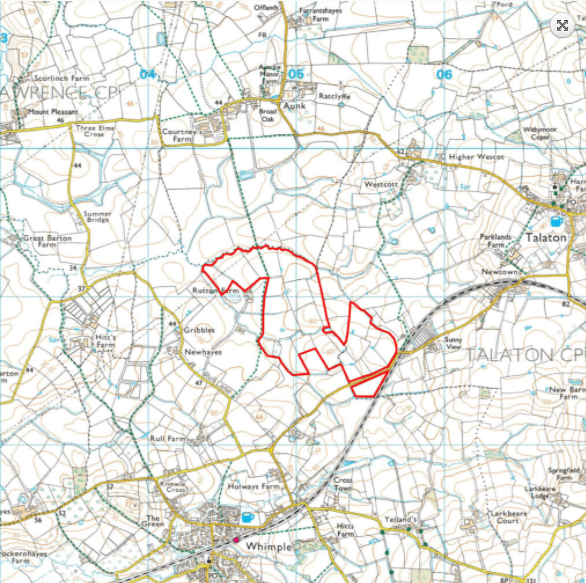
Public consultation events for Horton solar farm near Whimple

Local residents, councillors and other members of the community have been invited to a public consultation for a solar farm north of Whimple in East Devon.

So far Owl has been unable to find the acreage involved or the quality of agricultural land involved. The outline on the map gives a perspective, looks as big as Whimple.

www.theexeterdaily.co.uk 

The proposed development by Aura Power is for a subsidy-free solar farm of up to 49.9 MW capacity that would generate enough renewable electricity to supply the equivalent of over 12,000 typical homes or to power 18,000 electric vehicles annually. It would save an estimated 11,500 tonnes of CO2 per year, making a substantial contribution to local and national net zero targets.

East Devon Council has declared a Climate Emergency and has a target to become carbon neutral by 2040. Solar is ideally suited to the area which is one of the sunniest parts of the UK.

Aura Power is holding two public consultation events about its plans: a virtual consultation online, using the Zoom webinar platform, on Tuesday 12th October 2021 at 6pm, followed by a drop-in face-to-face event and public exhibition on Wednesday 20th October 5.30 – 8.30pm at Whimple Victory Hall, EX5 2TS.

Both events will provide an opportunity for local people to view the proposals, ask questions and provide feedback to the Aura project team, which Aura will take into account before submitting its planning application. 

Those interested in attending the webinar will need to register in advance, via the following link on the Aura Power website: www.aurapower.co.uk/horton-solar-farm

Chris Featonby, UK Development Manager, Aura Power, said: “The recent rise in fossil-fuel energy prices has underlined the importance of increasing the amount of renewable energy we generate in the UK. With its sunny climate, Devon is ideal for producing solar power which is one of the lowest costs forms of new energy generation, helping bring down costs for everyone.

“The site we are proposing for Horton solar farm is well suited for this type of development with limited visual impact on nearby homes. We will also be providing a community benefit fund with a total value over £700,000 for the solar farm’s life and are keen to learn more about local priorities and projects that might benefit from the funding. By offering a choice of virtual and physical consultation events, we hope that as many local residents as possible will be able to see our plans and provide their feedback.”

The site is well screened with existing hedgerows. A range of ecological measures are also proposed, including species-rich wildflower meadows around the panels, and additional native tree planting and hedgerow enhancement both for improved screening and to boost biodiversity.

Aura is also planning to set up a Community Benefit Fund of £17,500 a year, index-linked (based on £350 per MW capacity), for the 40-year life of the solar farm. A proportion of this would be set aside for yearly educational sessions with local schools and site visits to the solar farm.

Around 1,000 invitations have been sent out by post to local people living near the proposed site.

Stop making councils plead for ‘levelling up’ cash, ministers urged

Separate beauty competitions for multiple ring-fenced pots of gold judged on the quality of the images in glossy brochures; presentation over substance – what not to like?

No mention of the surely now “dead duck” LEPs. – Owl

Josh Halliday www.theguardian.com 

Ministers must stop making council leaders “plead on bended knee” for vital funds if “levelling up” is to work, the government’s infrastructure adviser has said.

Sir John Armitt, the chair of the UK’s National Infrastructure Commission, said town halls in England should be given £30bn to spend on transport projects over the next five years.

In what will be read as a message to Michael Gove, the new secretary of state for levelling up, he called for a radical change to the “inefficient and ineffective” system of councils bidding for multiple pots of ringfenced money from Whitehall.

He said: “It will be quite a radical change, I accept that. But we’ve had a secretary of state just moving into MHCLG [the now-rebranded Department of Levelling Up, Housing and Communities] who is known for having radical thoughts and challenging the status quo, so hopefully this won’t land on deaf ears.”

Armitt, who previously ran the body that delivered the London Olympic Games, said the government should axe the 15 different funding streams for local transport and instead hand more spending and powers to England’s 74 county and unitary authorities.

In what would be the biggest change to local government funding in decades, he suggested giving each council mayoral powers over transport and overall funding of £6bn a year to develop long-term transport plans over the next five years.

This would equate to a 40% increase in the budget for England’s buses and trains outside London.

Neil O’Brien, the MP who is writing a white paper on levelling up to be published within weeks, became a minister at the DLUHC along with Gove during the reshuffle.

Levelling up is the cornerstone of Boris Johnson’s domestic policy but the announcements so far have failed to match the rhetoric.

The appointments of Gove and O’Brien – as well as that of Nadhim Zahawi as education secretary – have given local leaders hope that the prime minister will soon announce bold policies to help close the gap between London and the rest of the UK, rather than the piecemeal funds and woolly speeches that have typified the programme so far.

Johnson has hinted vaguely at elected mayors, such as those who represent big urban areas such as the West Midlands and Greater Manchester, being extended to counties and towns but only in areas deemed pro-business.

Armitt said suburban areas and towns, home to 31 million people in England, were being held back because Whitehall controls the purse strings. “Local leaders have got to go and plead on bended knee with London to get the money to be able to deliver what they promised at a local level,” he said.

“The devolution on a regular basis of funds to the regions and local authorities just seems to be the obvious way to go.”

The National Infrastructure Commission is the government’s adviser on large-scale projects and is an executive arm of the Treasury.

In a report published last week, which was commissioned by the government in March, the body said ministers “need to pivot away from a reliance on centrally controlled pots of money for which councils must compete”.

Armitt said the “prize” for Johnson’s government was to be able to show at the next election that it was committed to improving life chances by devolving powers and money to the local level.

“I don’t think anybody’s in disagreement here. It’s one of those questions of, is the spirit willing and the flesh weak? Well, in this case we want the flesh to be strong and not weak,” he added.

Plans approved for glamping pods at holiday park

Planning permission has been granted for 12 new gleaming [glamping?] pods and three new holiday lodges in the Otter Valley in East Devon.

Against the local plan and within the Blackdown Hills AONB. When are we going to focus on building a sustainable economy supporting high paid jobs? Because tourism doesn’t do it. – Owl

Joe Ives www.devonlive.com

The new facilities will expand Otter Falls, a holiday park in that already offers cottages and luxury lodges.

The accommodation will be built along with parking – including two electric vehicle charging points- landscaping, access and drainage improvements.

The development technically goes against the local plan as it is within the Blackdown Hills Area of Outstanding Natural Beauty (AONB) which prohibits new developments there.

However, East Devon District councillors argued that any downsides of the new pods and lodges could be mitigated.

An artist impression of how the glamping pods will look

An artist impression of how the glamping pods will look (Image: : Living Outside LTD)

They granted planning permission on the condition that no light pollution arises and that the new pods and lodges will be be short enough to be mostly hidden by surrounding trees,

Cllr Philip Skinner said: “Although it looks like it could fly in the face of some of our policies, in actual fact when you look at it in the grand scale of things it really doesn’t.”

“What we’re trying to create in the AONB is an environment people can enjoy.”

Cllr David Key added that some local residents were concerned by the new holiday accommodation but said he did not think the area would be too affected by the extra traffic.

The planning committee, like all EDDC meetings, was held online as a ‘consultative’ meeting.

As the law allowing councils to meet virtually ended on 7 May, official decisions now can’t be made virtually, but once an ‘indicative’ decision is made by the council on Zoom, it passes to the chief executive or senior officers to make the final decision, although they are assumed to back whatever the committee decides.