“Er you’ve got to make sure, er, that, er, you, um, for instance, er, do not, um, er…”


New suit. New hair. Same lies. Well, not the same ones actually. There were new lies too. There always are. Whatever the subject, whatever the question, the prime minister will find a way to lie about it.
www.msn.com Tom Peck
At this point it would be apposite simply to rename the weekly House of Commons sessions “Prime Minister’s Lies”, if only for the acronym. What did you do this week? PMSL at PMLs. It is the only psychological coping strategy.
Angela Rayner had to stand in for Keir Starmer, who – 24 hours after his most recent relaunch –has tested positive for Covid and has had to self-isolate for what is understood to be the eighty eighth time.
Starmer rules the Labour Party in much the same fashion as King John VI of Portugal, when the royal court was formally transferred to Rio de Janeiro; the only difference being Starmer’s Rio de Janeiro is his upstairs back bedroom.
Anyway, back to the lies. Angela Rayner had the temerity to tell the prime minister he had claimed, in October, that fears about inflation were “unfounded.” “I said no such thing,” he replied.
The world moves pretty fast, these days. So naturally, by the time he had sat down, the clip of him saying this exact thing, in a television interview on Sky News, had resurfaced. “People have been worried about inflation for a very long time, and those fears have been unfounded,” Johnson said then.
So, you know, just another one to add to the ledger there. Another blatant lie, breezily told at the despatch box of the House of Commons.
Not that long ago, the Labour MP Dawn Butler got into a tremendous amount of bother for calling Boris Johnson a liar in the House of Commons and refusing to withdraw the remark, arguing that to withdraw it would be to tell a lie herself. Everything, in the end, must be degraded to Johnson’s level.
Rayner also asked him about rising energy bills, and specifically his promise, made in the EU referendum campaign, that “energy bills will be lower.” He said this in a column in The Sun newspaper, featuring not only his byline but also a little graphic of him dressed up as a musketeer.
This was also raised at the Downing Street press conference on Tuesday night. Johnson’s answer, frankly, a lie for the ages. Not a blatant lie, but a misrepresentation so ridiculous as to be far worse.
The promise, made in 2016, that energy bills would be lower was, of course, itself a lie, in the sense that it was a promise that could never, ever be kept. But underlying it was a vague truth – that the EU does not allow member states to charge less than 5 per cent VAT on fuel bills, and outside the EU the government could scrap this charge.
Leave won that vote, you may recall, and five years later, the man who wrote, very clearly, that “energy bills will be lower” is now the prime minister; there’s an unprecedented energy crisis and he’s not done the thing he said he would do.
Having been so hopelessly exposed, Johnson’s only response is to blame remainers. He claimed on Tuesday night that it is “paradoxical” for anyone who voted to remain to expect Johnson to keep the promises he made. He told Rayner the same. That expecting him to do what he said he would do and cut VAT on fuel, was “effrontery”, it was “bare-faced cheek.”
He made a promise on Brexit. He won. He’s now the prime minister. He’s broken it and, in his golden-wallpapered world of lies and absolutely nowhere else, this is, apparently, evidence that “Labour can’t be trusted on Brexit.”
And this, yet again, is the remarkable thing. Why isn’t he any better at this lying business? Having told as many as he has, for as long as he has, can he not see that he really can’t get away with claiming that his own lies are proof that someone else can’t be trusted?
And the answer is no. He can’t. And it’s why his party, and his country, have very clearly seen through him, as everybody who’s ever known him does in the end. The precise circumstances and the intricate details might not be clear just yet, but the outcome will be the same. It will end as it has done every other time before – with Johnson kicked out of the house.
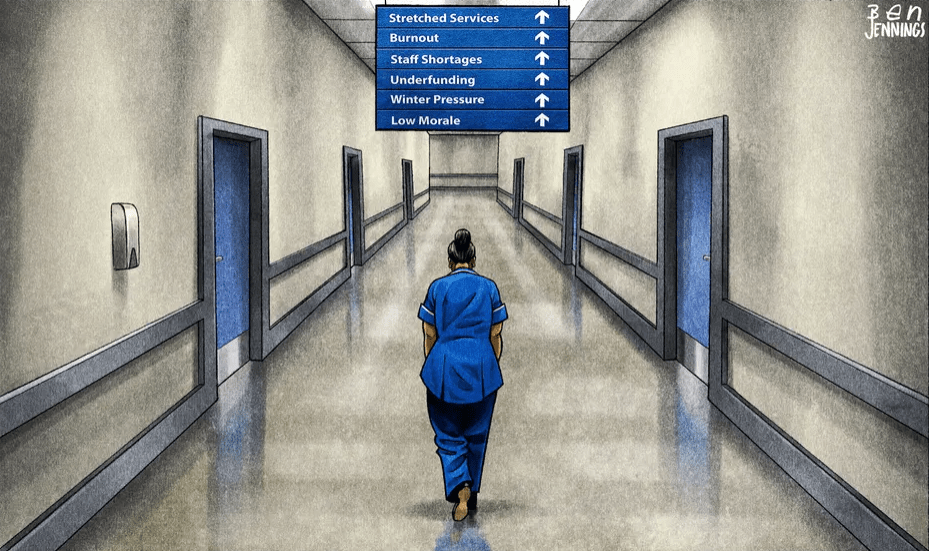
Millions of patients will suffer worsening quality of care unless ministers take immediate action to alleviate the staffing crisis engulfing the NHS, health chiefs have warned.
Andrew Gregory www.theguardian.com
The NHS Confederation, which represents the whole healthcare system, is tonight calling for a range of new measures to be implemented in the NHS in England to help overstretched hospitals and struggling ambulance, mental health, community, GP and social care services cope with “widespread” shortages of medics and health workers.
Tens of thousands of medical students should be deployed on to wards and other healthcare settings, NHS and social care staff must be granted priority access to lateral flow and PCR tests, and the self-isolation period should be reviewed to see if it can be slashed from 10 days to five, as has happened in the US and France, it said.
The call came as growing numbers of operations are being cancelled, with more than 20 NHS trusts declaring an “internal critical incident” in recent days as they struggle to cope with the intense Covid pressure. It emerged on Wednesday that at least four more NHS trusts have taken that step, the highest form of alert any hospital can issue, as had the entire NHS in Norfolk.
NHS staff absences have now spiralled to double what they normally would be at this time of year, and 17,276 people are in hospital in the UK with Covid – up 58% in a week – as Omicron continues to put “enormous strain” on every part of the health service, the NHS Confederation added.
The absence of tens of thousands of staff is already having a “detrimental” impact on the ability of the NHS to provide healthcare, it warned, and said that, without further measures, the staffing crisis “threatens the quality of patient care”.
Given the worsening situation, there should also be “explicit acknowledgment” from the national regulators that clinical tasks “might need to be allocated in ways which would not normally be recognised as best practice”, the NHS Confederation said.
Matthew Taylor, its chief executive, told the Guardian that in the last 24 hours hospital bosses had become “extremely concerned” about the widening ratio of staff to patients.
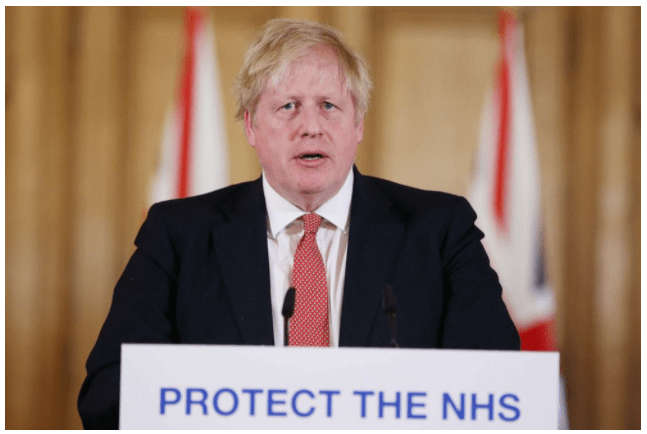
Boris Johnson insisted on Wednesday he was right not to take any further action.
The prime minister told MPs the cabinet had agreed to keep the existing plan B restrictions and ease travel testing rules. He also confirmed plans being implemented across the UK to end the requirement for confirmatory PCR tests for asymptomatic people who test positive using a lateral flow device (LFD).
An estimated 3.7 million people in the UK had Covid in the week ending 31 December, the highest number since comparable figures began in autumn 2020, the Office for National Statistics (ONS) said. In England one in 15 people in private households had Covid-19, according to ONS estimates. The level is one in 10 in London.
A further 194,747 lab-confirmed Covid-19 cases were recorded in the UK as of 9am on Wednesday, while 334 more deaths were recorded – although this figure includes a backlog of hospital data from England since 1 January.
“It’s clear that we are facing a staffing crisis in the NHS, with a number of hospitals telling us they have around 10% of their staff in self-isolation or on sick leave for other reasons,” Taylor told the Guardian. “This is pushing up the ratio of staff to patients to levels hospitals are extremely concerned about.
“The prime minister’s attempts to reassure the public that the NHS is not being overwhelmed will not chime with the experience of staff working in some parts of the NHS. The government now needs to do all it can to mobilise more staff and other resources for the NHS to get through this extremely challenging period.”
While he welcomed Johnson’s announcement that 100,000 critical workers will get direct access to testing from next week, the move “does not go far enough”, Taylor said, and NHS, social care and other key workers should also have “priority access” to tests.
He said there was “merit” in reviewing the self-isolation period “to see if the evidence supports a halving of the period to five days”. “We also need other short-term measures, including deploying medical students on wards and taking other steps to cover rota gaps,” he added.
All of Greater Manchester’s 17 hospitals have postponed non-urgent surgery. Its healthcare system will not necessarily be able to “ride out” the wave of Omicron infections, the mayor, Andy Burnham, said, with the number of Covid patients in the region’s hospitals almost tripling in the past two weeks, from 346 people to 1,020.
Cara Charles-Banks, the chief executive of the Royal United Hospitals Bath trust, one of those to declare an internal critical incident, said it had done so on New Year’s Eve “due to ongoing pressures caused by both Covid and non-Covid patients, sickness among our staff and availability of beds.”
University Hospitals Dorset, which runs acute hospitals in Bournemouth and Poole, is preparing to cancel some routine operations after also declaring a critical incident. On Wednesday Poole hospital had only four free beds while Bournemouth had 25.
The same level of sickness absence prompted West Suffolk hospital to join the lengthening list of trusts declaring an incident. Both the acute trusts which provide care to people in Bristol, North Somerset and South Gloucestershire also declared an internal critical incident over the bank holiday weekend.
The chief executive of one trust in the north of England said it has had to scale back non-urgent surgery after the number of Covid inpatients it is treating soared by 80% since Christmas Eve.
“We are doing priority one and priority two surgical cases, with others having to be cancelled,” the chief executive told the Guardian. Their trust is also redeploying staff because 10% of frontline personnel are off sick.
“The NHS runs hot all of the time so it doesn’t have the reserve for extraordinary events. Something has to give and, as in previous waves, it will be the care that can be delayed and it will be the goodwill and potentially the wellbeing of staff.”
Another broken promise
Nearly a million pounds is to be spent to try to slow the cliffs at Seaton in East Devon which have been falling into the sea.
Radio Exe News www.radioexe.co.uk

The beach and cliffs at Seaton (Sarah Charleworth/WikiCommons)
Like much of the western part of the Jurassic Coast, the area is subject to occasional cliff-falls, and cliff erosion seems to have been speeding p.
Now East Devon District Council has solved a funding gap to allow a £900,000 scheme to get cracking, with construction of the main elememt probably starting in the autumn of 2023.
The Seaton Hole Beach Management Plan has been rubber stamped by the Environment Agency and should improve protection of 41 homes above the cliffs, by upgrading and extending the existing rock structures on the beach.
This should reduce the rate of erosion to the base of the cliff, as the toe will be better protected from storms thanks to the additional rock placed on the existing rock, which will offer more protection to the toe of the cliffs from storms.
Due to the worsening condition of the concrete covered rock section to the west of the beach, works are due to start this year, ahead of the main scheme. Other works require more detailed planning and consultation.
The scheme had a funding gap of just over £400k in 2019, but changes in central government funding rules and other local funding has been found.
The next step is to begin detailed design and further consultation to allow the project to go out to tender.
Councillor Jack Rowland, who represents the Seaton ward and is EDDC’s portfolio holder for finance, said: “It’s great news that the funding is now in place to enable works to proceed to provide more protection for Seaton beach at the western end beyond West Walk that is even more essential in the light of climate change and the associated risks to our coastline.”
Cllr Geoff Jung, EDDC’s portfolio holder coast, country and environment, added: “Our officers and staff are working on various schemes with agencies and other authorities to protect our vulnerable areas of coast line, which due to climate change estimations will result in sea-level rise and increased storm events effecting our coast and low laying areas.
“This scheme is just one of many which will provide the required protection for these predicted changes.
“Therefore, it’s fantastic news we are able to move forward in the knowledge we have the required funding in place.”
 East Devon Watch