Police Commissioner photographed with new Tory candidate – raises questions

Tim comments:

“A Tory councillor in Neil Parish’s old patch has published via Facebook, a set of pictures celebrating the appointment of the Tory candidate for the by-election. In two of the three pictures she is with the Police Commissioner at a police station. The Commissioner is giving her usual smile at the photographer, who is the councillor who then went on to publish the pictures with congratulatory comments.

Whilst Hernandez is not quoted it seems entirely reasonable to interpret the images as a formal approval of the candidate. Is it wise for a Police Commissioner, herself a well-known Tory, to link herself with the congratulations surrounding the selection, especially using a police station in the shot? What explanations could there be for this apparent party political behaviour?

To be fair, I have asked a few questions via an FOI so as to ascertain the fuller facts. I will not use the photos as I would neither wish to condone such use, nor aid the Commissioner in her passion for selfies”.

The relevant facebook link can be found here.

And the FOI here

Two women candidates join battle for Porn MP seat

Labour and Tories announce their candidates.

Helen Hurford for the Tories and Liz Pole for Labour join the battle to seize the seat vacated by shamed MP Neil Parish – who watched pornography in the House of Commons.

Lewis Clarke www.devonlive.com

The Labour Party and Conservatives have announced their candidates for the Tiverton & Honiton By Election. Helen Hurford has been selected as the Conservative candidate, while Liz Pole, who fought the 2019 election and came second, is in for Labour. The election takes place on June 23 and was called after Neil Parish quit after being caught watching pornography in the House of Commons.

Helen, a former head teacher who is currently deputy mayor in Honiton, was selected by Conservative members in the constituency on Sunday, May 22. She was selected from a shortlist of three other female candidates.

She says her campaign will focus on delivering on people’s priorities for the area including improving transport links, supporting farmers and businesses. “As someone who was born and bred here, I am thrilled to be selected as the Conservative candidate for Tiverton and Honiton,” Helen said. “I understand what it is like to live and work here and the issues people want addressing across the constituency.

“But most of all, people here want an MP to get on with the job and deliver on their priorities. And like them, I want this constituency to thrive and take all the opportunities we have here. I believe I have unrivalled experience and knowledge of the local communities, education, hospital and health services, transport, and tourism industry – this is my patch. Leading up to Thursday, June 23, I want to show I am the best candidate to represent Tiverton and Honiton and how I will improve lives for families here,” she added.

Liz is a business leader and was Labour’s parliamentary candidate for the constituency in 2019. Liz is a campaigner on rural affairs and has been a Labour Party member since she was 15.

Liz Pole will deliver for all areas of the constituency of Tiverton and Honiton and be a champion for the local community. She said: “It is an honour to be the Labour candidate for Tiverton and Honiton. Times are much tougher than they should be for hardworking people across our constituency.

“We are in a cost-of-living crisis, and in Tiverton and Honiton, real wages will fall by £1,100 this year on average because of spiralling inflation. It’s time we sent a clear message to Boris Johnson that enough is enough, because Tiverton and Honiton, and the country deserve so much better.”

The other candidates who have announced are Richard Foord for the Liberal Democrats and Andy Foan for Reform UK.

PM told by Commons committee to issue 11 corrections to false claims

Boris Johnson has been urged by a Commons committee to issue 11 corrections relating to occasions when he falsely claimed employment is higher now than it was before the pandemic.

The chair of the Commons liaison committee, Sir Bernard Jenkin, issued the effective rebuke to the prime minister after a session in March when Johnson wrongly claimed that he had already corrected the record.

The number of people in payroll employment – working for a company – is higher now than it was before the pandemic. But total employment is lower, because there has been a large fall in the number of people are who self-employed. But this has not stopped Johnson repeatedly telling MPs that overall employment is higher – despite this error being pointed out to him more than once by statistic experts.

In evidence to the committee in March, when asked about this, Johnson said that he thought No 10 had already corrected the record.

In a letter released today, responding to a letter from Johnson following up on points raised during the hearing, Jenkin says Johnson has still not said what he has done to correct the record on this point. He identifies 11 references in Hansard to Johnson telling MPs employment is higher now than before the pandemic. Jenkin goes on:

I would be grateful if you could send the committee a copy of these corrections, once they have been made.

The liaison committee is often seen as the most senior of the Commons committee because its membership comprises the chairs of all select committees. (Guardian Live).

Loss of BPS will cost South West economy £883m, report finds

The rural economy in the South West of England is set to lose hundreds of millions of pounds over the next five years due to the withdrawal of direct support payments for farmers, a new study has concluded.

Latest example of “levelling up” – Owl

Philip Case , Farmers Weekly www.fwi.co.uk 

Research published by the Countryside and Community Research Institute (CCRI) predicts that £883m will be lost from the rural economy up to 2027 across Cornwall, Devon, Dorset, the Isles of Scilly and Somerset.

The introduction of the post-Brexit Environmental Land Management (ELM) schemes will coincide with the phased removal of the Basic Payment Scheme (BPS), which provided millions of pounds in direct support to farmers and landowners while the UK was a member of the EU.

Defra is introducing the first component of ELM this year, the Sustainable Farming Incentive (SFI), but the support package is expected to be much smaller overall. With other ELM schemes’ funding still in development, the wider impact on the rural economy remains uncertain.

Family farms

The South West’s rural economy, which is dependent on small, family-run farms, is particularly vulnerable to the financial impact of the transition.

With farming being a significant driver for the region’s economy, the predicted impact on the sector’s supply chains, producers, suppliers, business owners and workers is widespread.

The report, Assessing the Impact of Agricultural Transition (PDF), was funded by the Cornwall & Isles of Scilly Local Enterprise Partnership (LEP), Dorset LEP, the NFU and the Heart of the South West LEP, to shed light on the impact new payment schemes will have on farming and rural communities across the South West.

Currently, between a quarter and half of BPS money is spent on businesses supporting the farming sector, the report states.

But it warns of a significant knock-on effect for jobs in the local economy over the next five years due to a reduction of between £220m and £440m for feed merchants, machinery retailers, contractors, vets, solicitors and many others. In turn, this will reduce their own spending power in the rural economy.

Melanie Squires, NFU South West regional director, said: “The scale of reductions in available funds to businesses laid bare by this report is considerable and can’t be ignored,”

Defra’s response

Commenting on the report, Defra farm minister Victoria Prentis said: “Our new schemes are supporting the choices that individuals take for their own farms, and helping to boost their productivity and profitability. We have recently almost trebled our new Farming Equipment and Technology Fund to over £48m to support more farmers with their investment plans.

“In 2017, £1.775bn of payments were made across 85,000 farms and 10% of claimants received half of this total – 33% of farms received less than £5,000 each.

“This isn’t right and we are repurposing this money to pay farmers for the work that they do, rather than the amount of land they own. In the South West, more than 5,000 farmers are already in our Environmental Land Management schemes.”

Planning applications validated by EDDC for week beginning 9 May

Sizewell C ‘may cost double government estimates and take five years longer to build’

The proposed Sizewell C nuclear power station could cost UK taxpayers more than double government estimates and take an extra five years to build, according to research.

Alex Lawson www.theguardian.com 

Ministers will decide in July whether to approve the development of the Suffolk power station proposed by the French developer EDF. The business department has estimated that the government-backed scheme will add an extra £1 a month to household bills to aid construction costs.

But research by the University of Greenwich Business School seen by the Guardian shows the average monthly cost could reach £2.12, or £25.40 a year. At its costliest point, the build could cost taxpayers nearly £4 a month. That represents the study’s gloomiest forecast, which predicts construction would take 17 years and cost £43.8bn.

The project had been expected to cost £20bn and take 10-12 years to build. Stephen Thomas, a professor at Greenwich Business School, said the average forecast put the cost at £35bn over 15 years, or £2.3bn a year.

The figures could further inflame the debate over the cost and time of building power stations after Boris Johnson last month set a target of building a new nuclear station every year.

EDF admitted last week that Hinkley Point C, the power station it is developing in Somerset, would cost an extra £3bn, taking it to up to £26bn. The already delayed project will take an extra year, and is expected to begin generating electricity in June 2027. EDF had originally planned for it be operational by Christmas 2017.

The French firm said consumers would not be hit by the extra costs at Hinkley Point C, which will be taken on by EDF and China’s CGN, its junior partner in the project.

However, at Sizewell C the government has already committed £100m to the project and plans to use a regulated asset base (RAB) funding model.

RAB funding gives investors a set return during the construction phase of a project, reducing their risk and making an asset more attractive to outside investors. However, it shifts the risk of delays and extra costs on to taxpayers.

The government argues that the RAB model could reduce the project cost of a nuclear power station by more than £30bn over its 60-year lifespan. The model was used in the construction of Heathrow Terminal 5 and the Thames Tideway super-sewer.

A final decision on plans for Sizewell C was recently pushed back from 25 May to 8 July. The site is located north of EDF’s existing Sizewell B plant.

Campaigners argue that the development would be costly and threatens the local environment.

The prospect of extra costs comes as consumers face soaring bills amid the energy crisis. The government has been urged to intervene with annual bills forecast to balloon to nearly £3,000 from October.

Johnson has thrown his weight behind nuclear power as a green option to boost Britain’s energy security in the wake of Russia’s invasion of Ukraine and as he targets net zero emissions by 2050.

Thomas said: “It may not seem a huge amount extra on bills but several of these projects will overlap, meaning consumers paying even more for a long time. If costs are even higher than expected, it could become a real burden.”

A spokesperson for Sizewell C said: “The RAB model is a tried and tested financing arrangement, which has already been used to raise funds for more than £160bn of UK infrastructure. Applied to Sizewell C, it will bring the cost of finance down and deliver significant savings to consumers.”

A government spokesperson said: “We firmly stand by our assessment that a large-scale project funded under our Nuclear Act would add at most a few pounds a year to typical household energy bills during the early stages of construction, and on average about £1 a month during the full construction phase of the project.”

All-female Tory shortlist for Tiverton and Honiton by-election after porn scandal

The Conservatives have produced an all-female shortlist for next month’s Tiverton and Honiton by-election in the wake of scandals involving several male MPs.

www.telegraph.co.uk (Extract)

Party members in the Devon constituency will on Sunday be presented with three candidates from which they will be asked to select a prospective MP to stand in the by-election on June 23.

The Telegraph understands all three of the candidates are women from the area………

Head of the civil service to go under the Boris Bus?

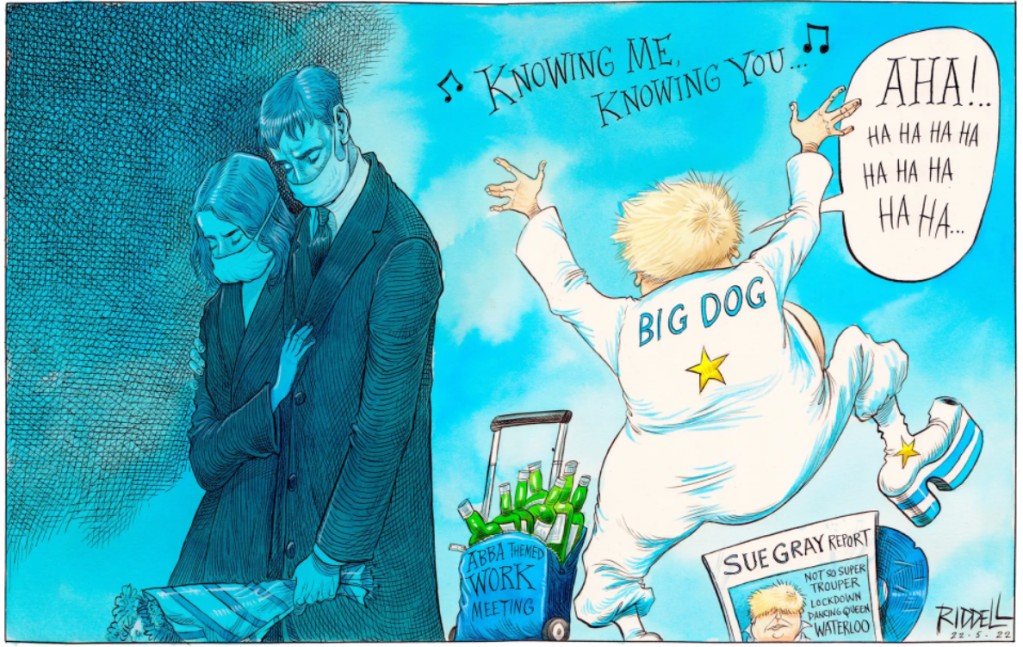
Boris Johnson is expected to scapegoat the head of the civil service Simon Case this week in a desperate effort to save his own job, as both men face stinging criticism in a report into lockdown-breaking parties in Downing Street.

Boris Johnson to sacrifice top official over Partygate to save himself

Toby Helm www.theguardian.com 

The long-awaited findings of the senior mandarin Sue Gray will, according to several sources, lay particular blame on Case, the UK’s most senior civil servant, for allowing a drinking culture to develop in which rule-breaking parties became commonplace during lockdowns.

One senior Whitehall figure who has seen sections of the report said it could also prove more damaging for Johnson than the fine he was given in April for attending his own birthday party, because it will make clear the PM’s involvement in several other events which may have breached rules, but for which he was not fined.

“From my expectation of what I know it will be the real deal. There will be detail. There will be evidence. She is going to say this is under your watch, this is your house, all that kind of stuff,” the source said.

Senior officials are braced for Case to be so heavily criticised that he will have to offer his resignation, or be sacked by Johnson, in order for Johnson to be able to say he has acted decisively and learned lessons.

“That is probably why he [Case] is still there [and not moved from his post already],” said one source. “Because Johnson needs a body.” If Case were to be lose his job, however, it would mean that a civil servant who has not been fined would have lost his job, while the prime minister, who has been fined, keeps his.

A friend of Gray who has worked at a high level with her in the civil service said the report would make “gruesome” reading for both the prime minister and his most senior civil servants and that Gray was in no mood to be forced into watering down her findings.

Sections of the report may prove more damaging for the PM than the fine he was given for attending his own birthday party, according to a senior Whitehall figure. Photograph: Andrew Parsons/10 Downing Street/AFP/Getty Images

The friend said that before the Johnson era, the only party that was ever held among staff in Downing Street was the annual Christmas one. “We didn’t have karaoke machines and suitcases to bring in drink in those days. I think it will be very difficult for Simon Case.”

Gray was appointed to take over the investigation into parties last December from Case himself, after he was revealed to have hosted an event in his own office on 17 December 2020, for which invitations were sent out saying “Christmas Party!” A government spokesman said at the time that officials in Case’s office took part in a “virtual quiz”.

It is expected that Johnson and Case, along with about a dozen other officials, will be named by Gray.

While it is not expected that she will reveal a new “smoking gun” detail or photograph that will on its own inflict terminal damage on the PM, the overall impression of those with knowledge of the report is that its criticism of leadership failings at the very top will be hard to survive without someone senior falling on their sword.

Another source with knowledge of Gray’s thinking said: “Sue is in a very good place to give judgments. She has worked at the heart of government for a very long time. I think there is a genuine question.

“What the hell was it about this time and this place that all this was allowed to go on? She has worked with any number of prime ministers so I think it will be an element of ‘What was that? Was it a broader culture?’”

He added: “What has been said to me is no one is going to come out of this looking good. So there will be damage for Johnson. In many ways it could be more damaging for him than the fine because the fine was for a relatively minor thing [his birthday party] that people were surprised he got fined for. So he was able to excuse himself.

“Whereas what is actually going to come out in Sue’s report is detail of some of the other incidents which perhaps are more difficult for him to explain. So even though he wasn’t fined for them the detail that comes out won’t look good.”

Gray has contacted about two dozen people who she intends to identify, either directly or indirectly, over their involvement in events at Downing Street. They have until the end of Sunday to respond, and many are said to be fighting to maintain their anonymity. “There is a huge issue around publicity and anonymity,” said one insider.

When Gray has considered these late representations she will take them into account before submitting her report to Downing Street. Johnson has promised to publish it in full and without delay. Publication is now expected this week, along with a statement to the Commons by Johnson.

The prime minister was under pressure on Saturday to explain a recent meeting he held with Gray. It has led to claims that No 10 had tried to interfere and water down her findings.

It is understood Gray and Johnson met earlier this month, although a Whitehall source said the report’s contents were not discussed at any point. Downing Street said that the meeting had taken place at Gray’s request, although accounts differed yesterday.

Angela Rayner, Labour’s deputy leader, called on the PM to “urgently explain” why the “secret meeting” had taken place. She said public confidence in the process had already been damaged.

“Boris Johnson must urgently explain why he held a secret meeting with Sue Gray to discuss her report despite claiming her investigation was completely independent,” she said. “Public confidence in the process is already depleted, and people deserve to know the truth.

“This is a prime minister incapable of taking responsibility for the rotten culture he has created in Downing Street or of doing the decent thing. The Sue Gray report must be published in full and with all accompanying evidence.”

Liberal Democrat MP Christine Jardine also called on the PM to throw light on the meeting. “Any whiff of a stitch-up would make an absolute mockery of the report,” she said.

East Devon offers housing for around 300 Ukrainians

Nearly 100 East Devon households have come forward to offer homes to Ukrainian refugees, potentially enough to accommodate up to 300 people.

Joe Ives, local democracy reporter www.radioexe.co.uk 

Speaking at East Devon District Council’s (EDDC) annual meeting, chair of the council Cllr Ian Thomas (Independent, Trinity) announced that approximately 95 households have now offered homes as part of the government’s ‘Homes for Ukraine’ scheme.

EDDC, which is responsible for assessing the suitability of the accommodation, has completed 56 property inspections and has a further 29 scheduled.

Twenty-two families in East Devon have applied for a government support payment of £350 per month to help pay for the costs of hosting.

The council will work with the Citizen’s Advice Bureau to support the refugees. It is also in talks with Devon County Council to formulate a policy for finding new hosts for refugees should a housing sponsorship arrangement break down.

Cllr Thomas said: “We recognise the need to do everything we can to prevent homelessness.”

Almost 13 million people are believed to have fled their homes in Ukraine since Russia’s invasion began in April, according to the United Nations (UN).

More than six million have left for neighbouring countries and at least another 6.5 million people are thought to be displaced inside Ukraine itself.

New Council Cabinet is elected for East Devon District Council

Council Chair, Ian Thomas was re-elected and Council Leader, Paul Arnott, was re-elected for new terms at East Devon District Councils Annual meeting yesterday (Thursday, 19 May). In the coming year fresh impetus would be given to address the shortage in the supply of homes, deliver an improved service for housing tenants and encourage new projects to build attainable homes.

Julie Green www.eastdevon.radio

Council Chair, Ian Thomas, re-elected for new year

“Last year I was honoured to be elected the first non-aligned Independent Chair.  

To be unanimously re-elected at Annual Council, with support from Conservative, Labour, Lib Dem, Green and Independent colleagues is a humbling experience I will never take for granted.  

I recognise this unique trust brings with it additional responsibilities and will continue to perform all my duties to the best of my ability, with an even hand and open mind.”

Council Leader, Paul Arnott, re-elected for new term

Councillor Paul Arnott was re-elected at the Annual Council meeting yesterday (Thursday, 19 May) for his third consecutive year. In his acceptance speech Councillor Arnott highlighted some of the achievements of his administration which included securing the finances to enable the completion of Cranbrook’s Town Centre, the great collaboration work that has taken place in the Enterprise Zone, and the analytical work that has been carried out in Tourism, Cultural and Leisure by the council to help create growth in these important sectors.

In the coming year fresh impetus would be given to address the shortage in the supply of homes, deliver an improved service for housing tenants and encourage new projects to build attainable homes. There will also be an increased focus on climate change with joined up policy making and engagement on this important topic.

New Council Cabinet

Cabinet 2022/23:

LeaderPaul Arnott
Deputy LeaderPaul Hayward
Climate ActionMarianne Rixson
APHDenise Bickley
Coast Country and EnvironmentGeoff Jung
APHEleanor Rylance
Council and Corporate Co-ordinationJohn Loudoun
APHEileen Wragg
Democracy, Transparency and Communications Sarah Jackson
Economy and AssetsPaul Hayward
FinanceJack Rowland
Sustainable Homes and CommunitiesDan Ledger
APHSarah Chamberlain
Strategic PlanningPaul Arnott
Tourism, Culture, Leisure and SportNick Hookway


Owl’s advice to the Tory by-election selection panel

Nomination papers must be delivered to the Acting Returning Officer, Phoenix House, Phoenix Lane, Tiverton, Devon, EX16 6PP on any day after the date of this notice between the hours of 10am and 4pm but no later than 4pm on Wednesday 25 May 2022.

Might be worth name checking candidates against Sasha Swire’s ‘Diary of an MP’s wife’ (aka ‘The secret diaries’). Her waspish insider account of the Tory ruling clique included descriptions of several East Devon activists. Her memorable epithets included describing those who kept popping up and down at meetings as “toilet seats”.

On the other hand, do you want to select a complete unknown?

Even if Sue Gray exonerates Johnson over Partygate, public opinion won’t

Having been delayed and delayed for so many months, will the “full” Sue Gray report into widespread lawbreaking in Downing Street be worth the wait? In other words, will it exonerate the prime minister? Or will it confirm, not only that he broke the law, but that he also encouraged others to do so?

Sean O’Grady www.independent.co.uk 

The spin is that the report will make for very uncomfortable reading for Boris Johnson, whatever the Metropolitan Police made of his witness statement. Unless that spin is misguided, or the product of some attempt to massage expectations, and the reality will merely be gruesome rather than appalling, it seems reasonable to assume that the conclusions Ms Gray reaches will turn out to be just as damaging as any number of fixed penalty notices.

From what is known so far about the parties – and other unnecessary, unlawful social gatherings – including the details conveyed in Ms Gray’s interim report, it’s reasonable to assume that the prime minister knew about many of these events, even if he did not attend all of them. Most importantly, he created an accommodating atmosphere in which they could take place.

This is consistent with the sense that even if he didn’t directly encourage people to break the rules, his was an indulgent attitude that allowed those around him to “let off steam” and relax after a tough day. Hence customs such as “wine Fridays”, and the notorious wheelie case ferrying booze from the Co-op. Though he dare not admit it, the PM obviously thought it acceptable that he and his colleagues decide for themselves the risks to their health against their need for a glass of wine and some agreeable company. But that allowance was not extended to the rest of the population, for whom such personal discretion was banned.

No matter how it is dressed up, this attitude is tantamount to collaboration in lawbreaking, and treating with contempt the very laws that the government was imposing on others. It was as if those in No 10 did not believe in all the carefully defined rules about social distancing and indoor gatherings, and thought them only for the little people outside.

It is remarkable that they could do so even as Professor Chris Whitty and Sir Patrick Vallance regularly attended with solemn updates about “excess” deaths and variants of concern. But it seems they did, and the chief culprit in these episodes of screaming hypocrisy was none other than the prime minister himself. It is even odder that Mr Johnson could treat Covid with such insouciance after his own dose of it amounted to a brush with death.

The charge against Mr Johnson – and against very senior officials such as the cabinet secretary, Simon Case – is not so much that they busted the public health laws, but rather that they were massive hypocrites. They did things, said things, tolerated things and failed to stop things happening in Downing Street that the public were banned from doing.

Even the Queen was visibly obeying the rules (and even when Downing Street offered exemptions for the funeral of Prince Philip). The fact is that Mr Johnson was at many of these gatherings, and even if his presence wasn’t strictly unlawful, it was wrong. Ms Gray’s report will, at last, confirm what has been assumed since Partygate broke last December: that those in Downing Street partied while others died and grieved, and Mr Johnson was responsible for allowing them to do so. In the court of public opinion, he was convicted long ago.

Six things the Government is not doing to help Brits with cost of living crisis

Richard Murphy is Professor of Accounting Practice, Sheffield University Management School, a chartered accountant and economic justice campaigner. He blogs at Ways to tackle inflation – all that needs to be said in a couple of minutes and tweets @RichardJMurphy .

Professor Richard Murphy says politicians are doing almost nothing to help people who are struggling because they believe the market can solve a problem better than anything the government can do www.mirror.co.uk

High inflation, record energy prices, and a shortage of workers. We are facing an economic crisis.

Andrew Bailey, the Governor of the Bank of England, said this week it has several causes – War, Brexit, Covid, all one-off shocks. But what Bailey did not say is the government is making things very much worse with their Tory beliefs driving their response to this crisis.

They are sitting back and doing almost nothing because they believe the market can solve a problem better than anything the government can do.

They’re wrong, of course. We need strong government right now. Their inaction is costing us all, dearly.

Here’s where they are getting it wrong:

1) They’ve got the cause of inflation wrong

Inflation is a general increase in the level of prices. Electricity, gas, diesel and petrol, food and other basics are all going up in price. The government thinks that we have 1970s type inflation. However, that inflation was fuelled by pay rises bigger than growth in the economy so people had too much to spend. We have the exact opposite now though. People haven’t got the money to pay for the basics needed to live.

Despite this, the Bank of England is raising interest rates to try to push net wages down – because that’s what Tory ideology tells them they must do. And the Bank follows the government line on this – because if they don’t the Chancellor has the power to overrule them.

Interest rate rises make life for many much harder. That’s what happens when you put up the price of money. We need interest rate cuts instead, now.

2) They won’t spend to help out

The government could help by increasing benefits and pensions. They could also increase the pay of their own lowest paid employees. And they need not wait. They could do this now. But they won’t. They’re ideologically opposed to benefits, including pensions. Cutting government spending is all they believe in.

And how could they pay for this? Actually, this policy would pretty much pay for itself because every penny spent on these extra benefits and pay would go straight back into the economy as those receiving them spend all the money they get to survive. That would support businesses, jobs and taxes paid. But this might also create government short-term government debt and they’d rather those with low incomes suffer than ever take the risk of creating a penny more of government debt. They don’t care if a pensioner freezes or starves if government spending is saved as a result. We need those increases and that logic out of politics for good.

3) They won’t tackle price increases

The government could tackle some of the big price rises we’re facing right now if it wanted to stop inflation. 20p or more out of every £1 spent on gas, electricity, diesel and petrol goes to the government. As their prices have risen so has the amount the government gets from them in tax, so they’re profiting as people struggle to pay their bills. If the government simply fixed the actual amount they get from each unit of energy sold at their 2020 rate by cutting VAT and duties they could cut prices right now.

But they won’t because they want to pay off the government’s debts and pass the burden on to the public. People are losing so the government can balance its books. That’s the price of ideology. We need them to cut fuel and energy prices now.

4) They won’t help people back to work after Covid

According to the government we have had a labour crisis in the UK since the end of the Covid epidemic. That’s because the number of people working since Covid began is down 482,000 whilst vacancies have increased by 427,000. The Bank of England say we need interest rate rises to tackle this to force wages down. I say we need decent ventilation, workplace protection and support for older people to get them back into the workforce after Covid. But the government says that Covid is over, and this is more important than helping real people get jobs. We need those Covid protections now.

5) They aren’t helping people get pay rises

The real problem we have is that millions of people in the UK don’t have enough to live on. The so-called national living wage is useful, but it’s not enough to really live on and it’s become a base level pay rate that far too many employers now choose to pay. The government ideologically wants to keep it that way because this maximises employer’s profits. But what the government should be doing is pushing up wages.

Until the 1990s there were pay boards in the UK that set the wage rates for about 20 industries from construction, to agriculture, to hairdressing. Their job was to make sure that when unions could not protect people’s pay they still got a fair deal. We need those boards back, now. We’d have more, better paid jobs – and less zero hour, gig economy jobs – as a result and what is more, employers would have to train their staff to get value for money from them, which would be a real bonus. But the government hates such interventions, thinking them left-wing. Their ideology is costing the country fair pay that we need now.

6) They won’t impose windfall taxes

It goes without saying that if people are paying more for the electricity, gas, diesel, petrol, food and other things they’re buying and those things cost no more to make (and so far, they, by and large, don’t) then someone, somewhere is making a lot more profit as a result. The oil companies are. So too are the banks because of interest rate rises. But the government is objecting to taxing them more because their ideology is that all profit is good, even if it comes from forcing people into poverty. They even voted against a Labour plan for windfall taxes, but we need them now.

Michael Gove’s new restrictive powers over councils risks harming the levelling up agenda

New powers for the Secretary of State for Levelling Up, Housing and Communities over local government finances, announced in the Levelling Up and Regeneration Bill, is of significant concern for local authorities.

Paul Dennett, Labour Mayor of the City of Salford. www.politicshome.com 

These new powers appear to allow for the Secretary to cap borrowing and force any council to “divest itself of a specified asset” – powers which have traditionally been reserved for local authorities placed in special measures.

Britain is already considered to be amongst the most centralised of any state structure in the world – with vanishingly few powers for local authorities to raise or levy local taxes, to determine the areas priorities for expenditure or effectively plan for growth and development. All of these are increasingly determined by one-size-fits-all national frameworks, ring-fenced funding (often top-sliced from other pots with fewer restrictions on its usage) and an un-hypothecated formula for their distribution.

On top of this, 12 years of austerity have seen core Revenue Support Grant funding for local authorities cut by over 50 per cent – putting many areas onto the breadline.

In this situation, many councils (including my own) have made ambitious steps to become more fiscally independent – primarily through borrowing, the creation of revenue streams through the commercialisation of services, capital investments and rental services.

Salford’s capital programme is substantial and has been used in part to finance the creation of MediaCity, a huge asset for our city and country as well as a great source of employment growth and business rates, driving population growth and increased council tax. MediaCity is the largest hub for digital and tech businesses in the UK outside of London – a prime example of a project helping to level-up a post-industrial city, attract international investment in R&D and develop the industries of the future.

Wise investments are a key component in shielding local services from the impact of austerity, increasing fiscal self-reliance and fuelling growth.

The Secretary’s new powers seem to provide no distinction between good and bad council borrowing or investments. And we know that the Treasury and central government has a rigid and fiscally conservative approach to book-keeping, with a hugely constrained vision for local authorities still educated by the outdated “new public management” mantra – expected simply to preside over an ever-diminishing list of services, making cost savings by selling off those services and assets to bargain-basement private providers.

Local authorities have huge potential in the levelling up agenda, possessing a wealth of intricate and detailed knowledge of their local areas often overlooked by top-down Whitehall mandarins, in addition to a wealth of expertise in the delivery of services which is near universally overlooked and undervalued within our Westminster-centric politics.

The logic of this position appears to be formally accepted in the corridors of power – with a welcome focus on devolution being a central part of the levelling up conversation. Yet time and time again, when new policy announcements are brought forward, the same instinctive drive towards relentlessly restricting local government’s powers and reducing discretion over its spending continues to cut the rug from under our feet.

If more central funding is not an option for councils, then borrowing and growing asset bases must be an essential component of successful local government policy moving forward. Without it, we will see the condemnation of local authorities to a future of decline.

East Devon: two year house search for couple with £500k budget

A couple who have lived in Devon for 60 years say they are at the end of their tether because of the housing shortage. Even though they have £500,000 plus to spend they say they may be forced out of the area they know and love after a nightmare two years of searching for a home.

Colleen Smith www.devonlive.com

The couple who have been tenant farmers have saved all their lives for a retirement home but now find the property shortage in East Devon means they may end up having to move to Wales or Scotland.

The couple are in their 60s and were looking for a property in East Devon so that they could be close to work and carry on farming. They have told of being gazumped, viewings being cancelled at the last minute and finding estate agents refusing to let them even view.

“At this rate we could end up in a tent in a field,” the wife said. “The last straw was today when we had a viewing cancelled. The agent said the executors had taken an offer. How do they know we weren’t going to make a higher offer? I thought this morning ‘It’s a good job I’m not the suicidal type because I’m at the end of my tether and that cancellation would have finished me off’.

“I have phoned about houses in Sidmouth and been told ‘Sorry we’ve got 20 viewings and we’re not taking any more’. Other times you book an appointment and at the last minute they cancel it.

“My husband has lived here for nearly 60 years and farmed in East Devon all his life. We lived in the farmhouse and now we need to find a home for our retirement and we’ve not got a chance of finding a house here,” she said. “I’ve heard of gazumping happening where people accept an offer and then somebody else ups the offer by £25,000 to £30,000. It’s laughable.

“We looked at a house in Newton Poppleford that was £650,000 and found out that it had huge cracks and subsidence and needed gutting.”

Estate agents in East Devon said demand was 100 times higher than the number of houses available. At Stags in Honiton, partner Kevin Clarke confirmed the shortage: “I really do feel for this couple. There’s a lot of stressed buyers out there. We try and make a point of honouring all the viewings that are booked in because we know people are quite stressed. Our job is to achieve the best price for our client and to do that we need to market a house for a while. It’s easy to sell quickly but we need to sell it for the best price.

“There just aren’t that many properties available to buy at the moment, although this is improving now at the time of the year. The number of buyers is very high. We live in a beautiful part of the country and lots of people want to live here.”

At Wilkinson Grant in Topsham, Jenny Pickford said: “I have absolutely nothing to offer in that price range. Most of what we are dealing with is in the £700,000 plus price range. The demand is 100 times higher than it was and there just isn’t the housing stock available for people to buy.

“Prices do vary depending on where you are. In Exmouth you could get a lovely detached family home for £700k. In Topsham for the same price it would be more like a terrace with no parking in the part of the town with all the character properties.

“The market is still very good for sellers. High prices are being achieved and selling in excess of the guide prices. The good news is that we are seeing more new instructions coming in.”

She explained that vendors are often overwhelmed by the demand: “Some get 20 viewings booked in and they don’t want that amount of traffic through their house. It’s a really stressful experience having to sell your home. “

Hinkley Point C nuclear power station delayed again as cost goes up by £3bn

Good news for the region? More cash being poured into our “Golden Opportunity” for longer.

How many more of these is Boris building? – Owl

Alan Jones www.independent.co.uk

The new nuclear power station being built at Hinkley Point will start operating a year later than planned and will cost an extra £3 billion, it has been announced.

French energy giant EDF published the findings of a review into the cost and schedule of the power station taking account of the continuing impact of the Covid-19 pandemic.

The revised operating date is June 2027 and the budget has increased by £3 billion.

EDF said this will have no cost impact on British consumers or taxpayers.

The delay means the first reactor unit will start operating in June 2027, a year later than planned and costs are now estimated in the range of £25bn to £26bn.

A reduction in workers allowed on the site in Somerset due to pandemic safety measures resulted in the loss of more than half a million days of critical work in 2020 and 2021, said EDF.

Stuart Crooks, managing director of Hinkley Point C said in a message on Thursday evening: “You will all have experienced the severe impact of Covid-19 on the project over the last two years. You will remember how we suddenly had to cut numbers on site from more than 5,000 to around 1,500.

“For many months after that, we remained far below our plan for site numbers as our ability to fully ramp up activity was thwarted by the need for measures to prevent infection.

“Keeping workers safe with social distancing in canteens, buses and at work meant we had no choice but to become less efficient.

“In civil construction alone, having fewer people than planned means we lost in excess of half a million individual days of critical work in 2020 and 2021.

“Our supply chain was also hit hard and is still impacted now. In April 2020, 180 suppliers were fully shut down, but even as late as February this year, more than 60 suppliers were operating with reduced productivity due to Covid.”

Mr Crooks said that in January 2021, EDF estimated a six-month Covid impact, assuming an imminent return to normal conditions, but the second second wave of Covid-19 stopped that happening.

“In total, the start date for Unit 1 has gone back 18 months since construction started in 2016. In such a complex project, it wouldn’t be credible to say we can measure exactly how much of this is due to Covid-19 impact, but it is clearly in excess of 12 months.

“Other factors have affected the schedule and costs.

“Marine works have also cost more, although they are now in a good position – with legal hurdles finally cleared to allow the team to get on with the job.

“Running the site for longer and less efficiently during the pandemic also adds cost. We are facing the same issues as other major projects with UK-wide supply and labour shortages and inflation.”

Ex-Army Major to run in by-election sparked by ‘porn gate’

Lib Dems announce former Army Major for Tiverton and Honiton by-election

Lewis Clarke http://www.devonlive.com

Ed Davey declares by-election a two-horse race between “Boris Johnson’s Conservative party and hard-working local champion”

Richard Foord will be Lib Dem candidate for the upcoming Tiverton & Honiton by-election

The Liberal Democrats have announced that Richard Foord will be their candidate for the upcoming Tiverton & Honiton by-election sparked by Neil Parish’s resignation in the wake of the ‘porn gate’ scandal.

Richard lives in Uffculme with his wife and family. He grew up in the West Country and served for ten years in the army after graduating from Sandhurst, reaching the rank of Major and receiving three campaign medals for service in Iraq and the Balkans.

Living locally, Richard is active across the community. He volunteers at two scout groups in the area and has raised thousands of pounds for charities, including running the London Marathon for the Royal British Legion.

Richard has pledged to be a strong local voice for Devon if elected, by fighting for urgent action on the cost of living, cutting ambulance and GP waiting times, and getting a fairer deal for Devon farmers.

In April, the Liberal Democrats won the Cullompton South by-election against the Conservatives. They have also been winning across the UK, gaining neighbouring Somerset Council at the local elections and winning two successful parliamentary by-elections against the Conservatives, including the rural constituency of North Shropshire.

Announcing his candidacy, Richard said: “Boris Johnson’s Conservatives are taking rural communities in Devon for granted. Towns and villages across the constituency are being hit hard by unfair tax hikes and receiving no help with spiralling energy bills and rising prices at the fuel pump.

“This Conservative Government has run our local health services into the ground. Ambulance waiting times across Devon are soaring, and thousands are left waiting for weeks in pain, for a GP or dentist appointment.

“I was proud to serve my country in the Armed Forces for ten years and now want to serve my community in Westminster. We need politicians who listen to the needs of local people and work tirelessly to deliver for our area.

“This by-election is a chance to send a message that it’s time for a change. Towns and villages in our areas have been ignored for far too long. If elected, I pledge to take no-one for granted and stand up for our local communities in Parliament.”

Liberal Democrat Leader Ed Davey said: “Richard is an incredible candidate, whose dedication to others has shone not only through his career, but also in his voluntary roles in the community.

“This by-election will be a two-horse race between Boris Johnson’s Conservatives and hard-working Liberal Democrat local champion, Richard Foord. This Conservative government has taken Devon for granted with local health services being neglected and botched and with trade deals undercutting farmers at every turn.

“The Liberal Democrats are the clear challengers to the Conservatives in Tiverton & Honiton. On June 23, you can elect a strong local champion who will stand up for our communities and help kick Boris Johnson out of Number 10.”

Fury among Downing Street staff as Johnson escapes further Partygate fines

“It’s a joke,” one No 10 source told The Independent. “He told people to ‘let their hair down’ and enjoy their drinks which they’d earned for ‘beating back the virus’.”

Anna Isaac www.independent.co.uk 

Downing Street staff who received fines for attending the same lockdown parties as Boris Johnson have reacted with fury after the prime minister escaped further sanctions on Thursday.

There was anger inside No 10 as the Metropolitan Police concluded its Partygate investigation, leaving the prime minister with just one fixed penalty notice (FPN) compared to some junior staff who amassed as many as five – despite insider accounts that they had attended the same events.

The full findings of Sue Gray, the senior civil servant carrying out a wider report into the scandal, are now expected as soon as next week.

Police said a total of 126 fines were issued to 83 people over events spanning eight dates between May 2020 and April 2021.

Mr Johnson’s wife, Carrie, also received just one penalty linked to her husband’s birthday party on 19 June 2020.

“It’s a joke,” one No 10 source told The Independent. “He told people to ‘let their hair down’ and enjoy their drinks which they’d earned for ‘beating back the virus’.”

They said the prime minister had participated in socialising with officials and advisers in a manner that had been regarded as an endorsement of partying after work.

“He’s a man of little or no integrity,” they added, referring to his handling of the Partygate affair.

A former No 10 official who worked there during the pandemic said that the moment an official line was issued denying parties, “I gasped at the audacity of the lie”.

A spokesperson for No 10 declined to comment.

Legal experts have suggested that Mr Johnson may have escaped fines for attending lockdown-busting parties as his workplace and home are combined within the Downing Street complex.

Covid-19 legislation, which changed numerous times during the period when the parties took place, means that Mr Johnson may have had a “reasonable excuse” in law that prevented him from being fined.

However, the police may have taken a more lenient approach in the Partygate probe, compared to other examples of enforcement.

Kirsty Brimelow QC, a human rights barrister who has represented people fighting Covid fines, told The Independent: “What I saw in cases up and down that country is that the ‘reasonable excuse’ part was never applied – police would only look at exemptions around the gathering itself.”

She added that the police’s approach in the No 10 investigation, of only issuing fines when confident of defending them in court, was different too: “FPNs would be issued if there was a reasonable belief of a breach, rather than having all the evidence shipshape if it went to court.

“The Met has applied the regulations, but applied it in a way which is setting the police a higher bar before issuing an FPN,” Ms Brimelow said.

One Whitehall source said the investigation might have been “legally correct” but it was “morally ridiculous” as given the long hours many officials worked during the height of the pandemic, “we were all living at the office”.

The sense that the investigation had revealed one rule for bosses and another for workers was shared in 70 Whitehall Place, where a fine was issued for an event on 17 December, which cabinet secretary Simon Case was aware of, sources claimed.

Mr Case, the most senior civil servant in the UK, had not suggested the event was inappropriate and chatted to attendees, they said.

The Cabinet Office did not respond to a request for comment.

There was bewilderment among Westminster critics of the PM that he had escaped with only one fine when so many No 10 staff were more harshly punished.

“Some of us don’t understand the police logic on the fines,” said one Conservative MP who has already sent a letter of no confidence in Mr Johnson. “Avoiding fines for events where staff have been fined seems extraordinary.”

Rebels were hopeful that the publication of Ms Gray’s report, expected next week, will trigger a fresh slew of letters to the chair of the backbench 1922 Committee, Sir Graham Brady, who must call a vote on Mr Johnson’s future if requested by 54 Tory MPs.

“Sue Gray might be a flashpoint next week,” one told The Independent. “It’s still a big moment. The fact that he hasn’t been fined again doesn’t necessarily change public anger.

“There are people who are unhappy with him over Partygate who haven’t put letters in. They’ve said they are waiting for Sue Gray. So the time is now.”

But there was a sense among some of Johnson’s critics that the absence of further fines has taken a lot of the momentum out of the drive to oust him.

They urged colleagues who have so far held back from calling for Johnson’s removal to do so if he is admonished by Ms Gray.

Still, one senior Tory MP opposed to Mr Johnson’s leadership was downbeat on the chances of her report triggering a leadership contest, arguing that the biggest point of danger will come in the autumn if Tory poll numbers haven’t improved.

“I don’t think Sue Gray is the be-all and end-all,” said the backbencher. “It’s not a judgement about parties any more – the judgement among colleagues will come in the months ahead on whether he is an election winner or loser.”

Sir Charles Walker, who previously suggested that Mr Johnson should consider his position, said on Thursday he had been “wrong” to think the PM would have to go over Partygate.

“Love him or loathe him Boris Johnson is an extraordinary politician,” the former vice chair of the 1922 Committee told the BBC’s Newsnight.

“Four months ago, people thought he was down and out. I was one of those people. And he just rewrote the script. The prime minister is going to continue at No 10.”

Close Johnson ally Conor Burns appeared to suggest that the Gray report could result in further sanctions for No 10 officials rather than Mr Johnson.

“I think when the Sue Gray report comes there will be questions to be answered in terms of accountability for others, other than the prime minister, for some of the things that happened in No 10,” said the Northern Ireland minister.

Home Office minister Kit Malthouse said it was now time to “move on” from Partygate. “I’m pleased that it’s done … I hope now we can now move on to the really pressing issues,” the policing minister told the BBC’s World at One.

Sir Iain Duncan Smith said the Partygate affair had undoubtedly been “damaging” for Mr Johnson and the No 10 operation.

“It was wrong, he has apologised a lot for it – and so he should – because they lost control of what was happening in Downing Street,” said the former Tory leader.

Boris Johnson and Partygate: how did PM get only one fine?

With the dust settling on the Metropolitan police’s long investigation into Covid breaches inside Downing Street, one big question remains: how did Boris Johnson escape with just one fine?

Peter Walker www.theguardian.com 

Legal experts say it defies logic – and to many voters, it defies common sense too.

This is, however, a mystery that appears unlikely to be solved any time soon.

It’s not that the PM and his wife got off scot-free. Johnson and Carrie did break Covid laws.

Last month, they received fixed-penalty notices (FPNs) for attending the prime minister’s birthday celebration in June 2020, as did Rishi Sunak, the chancellor, who reportedly made just a fleeting appearance.

But while Johnson is known to have been at up to five other events for which FPNs have been issued, and reportedly poured drinks at one of them, he has escaped further punishment.

What appeared most anomalous, according to Adam Wagner, the Doughty Street Chambers barrister who is an expert on Covid rules, is how Johnson attended gatherings deemed to have breached the rules without himself being fined.

“We still don’t know very much about how the regulations work, because the higher courts haven’t looked at this,” Wagner said. “But generally, the decision is difficult to understand. The way the regulations are drafted is that the gathering itself has to be reasonably necessary, and the reason why somebody participates is not really relevant.”

To escape a fine, Wagner added, Johnson would have needed to provide a reasonable excuse: “But I don’t understand how you could ever reasonably attend an illegal gathering, unless you attended by accident, realised and left very quickly. I don’t see why, if the prime minister had a reasonable excuse for attending, the other people attending wouldn’t.”

One possible escape would be if the police viewed events as more than one gathering – for example as reasonably necessary for work when Johnson was there, but descending into socialising after he left. However, Wagner noted, this would appear to be contradicted by reports such as Johnson pouring drinks.

Another get-out raised by Johnson allies is the fact that Downing Street is both his workplace and home.

However, a change to Covid regulation at the end of May 2020 specifically ended being in your own home as a potential loophole.

Ultimately, without knowing what evidence the police received, it is impossible to be certain why Johnson was fined for the one event and not others.

And given the nature of the Met’s inquiry, this evidence will not be aired in public, beyond whatever necessarily anonymised summary appears in the report of the senior official, Sue Gray, next week.

It is one of the several curiosities of Partygate that it involved huge stakes, not least the political survival of a prime minister, while simultaneously being centred on what are, in strictly legal terms, relatively low-level offences.

“Yes, this was people breaking rules they had made themselves, which is important,” one criminal lawyer noted, speaking anonymously. “But at that the same time, you can very easily be fined more for parking on a double yellow line.”

The nature of the offences meant they fell into the system of FPNs, which are investigated and levied entirely by the police, with courts only becoming involved if the fine is challenged.

Having been forced into an inquiry it had not wanted to undertake by the sheer volume of material gathered by Gray, the Met’s infrequent updates were parsimonious, even opaque, even by the standards of police investigations.

While the force was at times criticised for its approach to openness, there is no obligation for someone to declare an FPN; and if they do not challenge it in court, there is no public record of one being received.

The Met did have a significant amount of evidence to go through: the team of 12 detectives had access to 345 documents, among them witness statements, emails and door logs for one of the UK’s most secure addresses, as well as more than 500 photographs and CCTV images.

However, no one suspected of wrongdoing was formally interviewed. Instead, police received 204 questionnaires filled out by people identified as connected to the gatherings.

This was another complicating factor – some people would have been notably more open and voluble with their answers than others.

“If someone was sent one of those questionnaires and they went to me, I’d say: don’t answer it,” the criminal lawyer said. “You’ve got no obligation to fill it in. You’re not under arrest. You’ve not even been cautioned. If you tell the truth, you might be fined, and if you lie, you’re potentially committing another offence. So why risk it?”

Overall, Wagner said, the lack of transparency from a police-only investigation was “unsatisfactory”.

“The reality of it is that the Metropolitan police have decided there were at least eight illegal gatherings over the course of a year,” he said. “And the prime minister appears to have attended six of them. You think about how careful other workplaces were being, and the actual people who were writing the rules were treating them with a wanton disregard.”

A more legally comprehensible outcome, he said, would have been if police had fined Johnson just for the birthday party while decreeing that the only other illegal gatherings were three others he did not attend – a Christmas party in December 2020 and the two events on the same night in April last year, the night before Prince Philip’s funeral.

“It’s right that they take a cautious approach. And if they had said the other gatherings were on the borderline, so we’re not going to act, I would have thought that was quite liberal of them, but it would have an internal logic,” Wagner said.

“But they have given people criminal penalties for a series of illegal gatherings, just not the prime minister. I think he’s lucky to have got away with it.”