Ministers to make it easier for foreign nurses and dentists to work in NHS

Ministers will introduce legislation as soon as parliament returns on Monday to tackle the NHS’s worsening staffing crisis by making it easier for overseas nurses and dentists to work in the UK.

Denis Campbell www.theguardian.com

The move is part of a drive by the health secretary, Steve Barclay, to increase overseas recruitment to help plug workforce gaps in health and social care.

Barclay believes thousands of extra health professionals will come as a result of new rules making it easier for medical regulators to register those who have qualified abroad. If the change proves successful it will help pave the way for more nurses and dentists coming to work in Britain from countries such as India, Sri Lanka, Kenya, the Philippines and Malaysia.

However, critics claim the policy is a stop-gap that is no substitute for ramping up the supply of homegrown staff and risks worsening the lack of health workers in other countries that are struggling with shortages of their own.

The initiative comes days after new figures showed that the number of unfilled posts in the NHS in England jumped by more than 25,000 in three months earlier this year to a record 132,139 – one in 10 of the entire workforce. That included 46,828 vacancies for nurses alone – 11.8% of the total.

Brexit has significantly reduced the number of nurses coming to work in Britain from the EU.

Barclay, NHS England and organisations representing health service personnel are worried that acute shortages of staff are contributing to patients’ now routine long waits for care and increasing the risk that some services will fall over this winter.

A Department of Health and Social Care (DHSC) memo seen by the Guardian shows that it will lay a statutory instrument in the House of Commons on Monday intended to enable the bodies that regulate nurses and dentists to approve the arrival of more foreign-trained staff.

The secondary legislation, which does not need a full parliamentary process to pass it, will be called the Dentists, Dental Care Professionals, Nurses, Nursing Associates and Midwives (International Registrations) Order 2022.

It makes clear that the DHSC intends to simplify what it regards as unnecessarily cumbersome procedures that restrict overseas staff coming to work in the NHS.

It says that “aspects of the current legislative requirements for registering international dentists make it difficult and time-consuming for the General Dental Council (GDC) to make changes to its registration.

“Similarly, excessive detail on the process that the Nursing and Midwifery Council (NMC) must follow to assess international applicants makes it difficult for the regulator to explore alternative registration routes to its test of competence.”

The memo adds that the order “would provide the GDC with greater flexibility to make changes to its Overseas Registration Exam (ORE) process and to explore other registration routes for international applicants, for example, recognition of programmes of education delivered outside the UK on a unilateral basis.”

It will also remove “prescriptive detail on the process that the NMC must follow in relation to qualification comparability and the assessment of international applicants, providing the NMC with greater flexibility to change these processes in future.”

The number of doctors and nurses from outside the EU working in the NHS in England has soared since Britain voted in 2016 to leave the bloc.

A DHSC source said: “These legal changes will free up the regulators to carry out thousands more checks each year on dentists and nurses from overseas, giving the NHS much-needed capacity. The NHS has always called on overseas staff when in need.

The changes would not lead to a glut of less-qualified staff arriving, the source said. “We’re making sure we recruit ethically and without weakening standards, and these extra checks will help deliver that. Patients should be reassured that we will bring in extra staff able to deliver care to the same high standards as the staff we have already.”

However, the overseas recruitment push has generated controversy about the ethics involved, such as the decision to recruit 100 nurses from Nepal over 15 months to work in hospitals in Hampshire. The Health Service Journal reported last week that NHS and nursing bosses are concerned at what they see as the over-reliance on luring staff from abroad.

The Royal College of Nursing has warned that “our health system is already over-reliant on international nursing staff and we must ensure recruitment is ethical”.

James Buchan, a senior fellow at the Health Foundation thinktank, said the acute shortage of nurses is likely to see already historically high levels of international recruitment of members of the profession go up further.

“While international recruitment [of nurses] can plug the gap short-term, it should not distract from the need to train and retain more nurses in the UK. In order to attract more homegrown people to the profession nursing must be made an attractive career choice and that means improving pay, terms and conditions.”

The British Dental Association said government action to enable a bigger supply of dental staff from overseas was welcome but the new push would not end the growing shortage of NHS dentists, which has left millions of patients facing serious difficulty accessing care.

“Action here is long overdue, but will not address the scale of the crisis facing this service,” said Eddie Crouch, the BDA’s chair.

“NHS dentistry is haemorrhaging talent by the day because of the dysfunctional system it’s built on. Ministers need to do more than try to fill a leaky bucket. They need to actually fix it.”

Revealed: levelling up fund allocated south-east twice as much as north-east

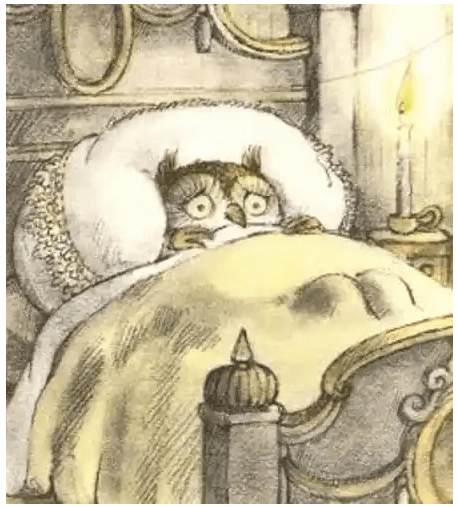
Who gets the Magic Sauce? – Owl

The south-east of England, the most affluent region in Britain outside London, last year received almost twice as much money as the north-east from the government’s levelling up fund aimed at boosting deprived areas.

Jon Ungoed-Thomas www.theguardian.com 

Projects in the south-east benefited from £9.2m from the fund in the year to 31 March 2022. By comparison, the north-east only received £4.9m, despite being the poorest region in Britain by disposable household income.

The £4.8bn fund is under scrutiny over its failure to date to deliver to some of the poorest areas of the country. There are also questions over the criteria for allocating money after the former chancellor, Rishi Sunak, told an audience that he changed funding formulas to divert money from “deprived urban areas”.

Ministers want the multi-billion pound fund to provide a cash boost to some of the poorest areas of the UK, but the new figures obtained under freedom of information laws reveal that just £107.4m of funds were delivered in the year to 31 March 2022.

Jack Shaw, a researcher into local government who obtained the new figures, said: “With less than 3% of the levelling up fund having been spent in its first year, the rhetoric of levelling up hasn’t matched the reality.

“The government needs to be clear about why that is the case and why [the north-east] despite the focus on correcting regional imbalances, has received less than 5% of the fund’s spending to date.”

Initially, it was hoped that £600m would be delivered in 2021/22 by the fund. The figure was revised downwards to £200m, but not even that target has been hit.

The new figures reveal the West Midlands received the most money in 2021/22, with projects receiving £16.3m of funds. Northern Ireland received the smallest amount, with projects receiving just over £1m of cash, equivalent to 57p per head of population.

While the north-east received less funds than the south-east in 2021/22, it did receive more per head of population: £1.83 per capita, compared to the £1 per head of population received in the south-east.

Officials say they allocated £1.7bn in the first round of funding in which the successful bidders were announced in October last year. Bids for the second round closed last month.

In the 2020 spending review, Sunak announced the launch of the levelling up fund to support towns and communities with regeneration schemes. It will run over four years from 2021/22 to 2024/25.

The methodology for allocating awards has faced criticism for not using deprivation levels to rank areas for priority funding.

Lisa Nandy, the shadow levelling up secretary, called for an inquiry into why some of the poorest communities have so far missed out in levelling up awards.

A spokesperson for the Department for Levelling Up, Housing and Communities said: “This is a selective use of figures and does not accurately represent allocations from the first round of the Levelling Up Fund, where the North and Yorkshire are receiving £519m, more than the south-east and London combined.

“We are working closely with all levels of government to relentlessly drive forward our shared ambition to fuel regeneration and growth in areas which have been overlooked and undervalued for far too long.”

Sewage warning at three Devon beaches where it’s unsafe to swim 4 September

Warnings to sea swimmers have been issued by the government after sewage was discharged into the sea. Warnings across Devon at three beaches state that the water is unsafe to swim in.

Edward Church www.devonlive.com

At these three beaches the Department for Environment, Farming and Rural Affairs (Defra) has said, the water has been polluted and people should avoid taking a dip. Such warnings have been issued multiple times since mid-August when the heat wave first gave way to heavy rain.

Heavy rain, like we had over the last few days, can overwhelm our sewage system and lead to outflow pipes by beaches being used. As a result, we get sewage at our beaches and in the water.

For some, this is a real blow as they use their local beach for swimming. But the government advice is clear on the beaches affected: do not swim.

These beaches are not safe to swim in:

  • Ladram Bay, Otterton – Pollution risk warning
  • Dawlish Town, Dawlish – Pollution risk warning
  • Paignton Preston Sands, Paignton – Pollution risk warning

As well as the warnings from Defra, south west-based Surfers Against Sewage (SAS) has issued warnings on a total of 12 Cornish beaches. SAS indicates which beaches have had a sewage discharge near a beach in the last 48 hours.

These beaches have had pollution warnings from Surfers Against Sewage:

  • Combe Martin, north Devon
  • Paignton Preston Sands, Paignton
  • Dawlish Town, Dawlish
  • Ladram Bay, Otterton
  • Shoalstone Beach (maintenance ongoing)

The White Witch of Narnia

Behold the favourite for the Conservative leadership as she surveys her icy realm.

Ms Truss has promised to deliver around £30bn in tax cuts in an emergency Budget later this month if she wins, including a reversal of April’s rise to National Insurance.

Pressed on whether richer people would benefit more from the cut, she said: “The people at the top of the income distribution pay more tax – so inevitably, when you cut taxes you tend to benefit people who are more likely to pay tax.”

But she added: “To look at everything through the lens of redistribution I believe is wrong. Because what I’m about is growing the economy – and growing the economy benefits everybody.

“The economic debate for the past 20 years has been dominated by discussions about distribution. And what’s happened is we’ve had relatively low growth”. From the Laura Kuenssberg interview Sunday www.bbc.co.uk

Psst: Increasing productivity is the key to growth. Owl believes that we need to change fundamentally our short-term business and financing culture. Not until companies and financiers stop looking for quick gains but take the long term view, ploughing profits back into investment in the “tools of the trade”: plant, machinery, training and human capital, will we start to improve.

In crude terms: stop asset stripping, seeking to make a quick buck and paying directors obscene multiples of the average wage.

Increasing productivity means getting more output for each hour worked. A happy and motivated staff are key.

It’s not going to happen is it? 

Exeter to Salisbury hourly train service halved from today 5 September

[And take longer.]

The extremely hot and dry weather experienced recently has caused the clay embankments to dry out and shrink – leaving the track on top uneven and trains unable to travel at full speed.

South Western Railway says the changes will enable a ‘resilient service’ to operate.

Once again transport to the South West is being shown to be inadequate. – Owl

South Western Railway issues reduced timetable on West of England Line

Jamie Jones www.chardandilminsternews.co.uk 

Commuters are facing a reduced timetable on the railways as a new week gets underway due to issues caused by the August heatwave.

On Monday (September 5) the West of England Line, which runs from Basingstoke, Hampshire, to Exeter in Devon, will be operating the revised itinerary and customers are being urged to check their journey before travelling.

South Western Railway says the changes will enable a ‘resilient service’ to operate after an Emergency Speed Restriction was put in place between Gillingham in Dorset and Tisbury in Wiltshire by Network Rail engineers.

The extremely hot and dry weather experienced recently has caused the clay embankments to dry out and shrink – leaving the track on top uneven and trains unable to travel at full speed.

Train services have had to be amended as the line is single track – meaning trains can’t pass each other outside of passing loops – and trains are taking approximately twice the normal length of time to run between Gillingham and Tisbury.

SWR managing director, Claire Mann, said: “After two weeks of delays and short-notice changes to our services, this decision to introduce a revised timetable will allow us to run a resilient service and at least provide certainty to our customers in the West of England.

“I am sorry to all those whose journeys will be affected as we wait for weather conditions to improve so Network Rail can safely remove the speed restriction.”

The following changes have been put in place:

  • Services will generally run hourly between Waterloo & Yeovil Junction
  • Services will generally run every two hours between Waterloo & Exeter St Davids
  • Journey times will be amended and/or extended across most services on the route

West of England Line reduced timetable – when will it end?

It is likely that the timetable will remain in operation until at least October, as engineers must wait for the soil to stop shrinking and regain some of its moisture before repairs can be made and the speed restriction lifted.

Network Rail’s Wessex route director, Mark Killick, added: “We’re sorry for the disruption that our customers are seeing between Salisbury and Yeovil Junction, which is a direct result of the hot and dry conditions.

“We hope the amended timetable can give our customers confidence, but we do recognise that the reduced number of services and longer journey times will be disruptive.

“As soon as it is safe to remove the speed restriction, we will do so, but this may not be until October when we hope conditions will improve.”

For more information, visit the South Western Railway website.

Farmers in England to be allowed to use ‘lethal force’ on beavers

Farmers in England will be allowed to shoot beavers if they threaten their crops, the government has revealed.

Could only happen under a “Conservative” government – Owl

Helena Horton www.theguardian.com 

Conservationists have opposed the move, saying the animals are an “ally to farmers”, helping conserve water in times of drought, and are an endangered species that should be treasured. The rodents became extinct in the UK 400 years ago after they were hunted for their pelts, but in recent years they have been reintroduced to England and Scotland.

After the wetland-creating creatures were found on the River Otter in Devon in 2013, the government allowed them to stay to test their impact on fish stocks and local landowners.

A study in 2019 found the beavers had enhanced biodiversity in the area and increased fish stocks. Since then, the wheels have been set in motion for beavers to be recognised as a native English species and so be protected from harm. From 1 October, beavers in England will enjoy enhanced protection, paving the way for their repopulation of the country’s waterways.

However, until now it was unknown whether farmers and landowners would be allowed to kill, rather than simply remove, beavers that may chop down trees or flood farmland. Government guidance released this weekend said that, as a last resort, “lethal control” may be used.

Some farmers have criticised plans to enshrine protections for beavers without consultation on their control.

Minette Batters, chair of the NFU, said recently: “With the clear impact beavers can have on agricultural land, a clear management plan after consultation with farmers was the least the government should have created before introducing this legislation.”

Farmer Derek Gow, who breeds beavers for reintroduction projects at his farm in Devon, said he disagreed with the new guidance.

He told the Observer: “It is completely and utterly wrong to kill them. Beavers change landscapes for the better. They assist in times of drought and with slowing flow in times of flood. We should treasure beavers for all they offer and move them carefully where they will assist the land. We should not kill a single beaver.”

He added that in most cases, farmers’ concerns about beavers are unwarranted. “Beavers can only be an issue in very intensively-used drained wetlands with complex systems that have very limited fall with regards to water being drained away. We have farmed for too long next to water – the greatest pollutant of all is agriculture; pesticides, bacteria and chemicals move straight into water, causing immense damage. Beavers, which filter this sort of pollutant, are actually an aid to farming.”

James Wallace, former CEO of the Beaver Trust who now works at waterway charity River Action, said the animals should be seen as a help rather than a hindrance to agriculture.

He said: “Farmers should be offered support to live alongside beavers including a hierarchy of management starting with education, then practical solutions like protecting trees or crops or dam removal, then translocation if issues persist in areas of high risk to infrastructure such as levees, and finally lethal control if all else fails.

“Killing beavers should be the last thing in our minds as we encourage people to welcome them back, but if it is necessary then it should done by a licensed professional and only after evidence demonstrates the need. As we have been reminded by months of drought and devastating pollution from farming and sewage, we need help from nature for humans to thrive.

“Beavers can help breathe life back into our degraded and polluted land, without reducing food production. In fact, beavers and other natural solutions like paying farmers for river buffers are essential to sustainable future harvests and saving Britain’s rivers.”

An NFU spokesperson said: “Despite the government publishing more information on the management and licensing of beavers in England, the NFU is disappointed this has been done without wider consultation with farmers and landowners.

“We would like to see government further engage with farmers and landowners before it finalises the national approach to the wild release of beavers.

“Farmers are continuing to work around the clock to produce the nation’s food and will be rightly asking government for adequate tools and support to manage a species that could impact their business and on food production.”

More than half of voters expect Liz Truss to be poor or terrible PM, poll finds

More than half (52 per cent) of British voters think Liz Truss will be a poor or terrible prime minister, with little more than one in 10 (12 per cent) expecting her to be good or great, according to a new poll.

Andrew Woodcock www.independent.co.uk 

And a clear majority believe the Tory leadership frontrunner will be worse than every other prime minister since Margaret Thatcher, with the exception of Boris Johnson.

The findings, in a YouGov poll, indicate that Ms Truss can expect little or no “honeymoon period” if she is confirmed as Mr Johnson’s successor as expected on Monday.

And she may struggle to drum up the enthusiasm of her own party’s supporters, with Conservative voters regarding her as a downgrade from Johnson, with 43 per cent saying she will be worse and just 20 per cent better than the outgoing PM.

If she wins, she will face the unique position for an incoming prime minister of having neither a mandate from a general election nor the support of a majority of her MPs in a leadership vote, having relied for her victory on the ballot of about 160,000 grassroots Tory members.

Just 2 per cent of those questioned said they expected Ms Truss to be a “great” prime minister, against 10 per cent who said she would be “good”, 20 per cent “average”, 17 per cent “poor” and 35 per cent “terrible”.

Her ratings were comparable with those of Mr Johnson, who is being forced out of office after a revolt by his own MPs: 5 per cent of voters thought he had been a “great” occupant of 10 Downing Street, 17 per cent “good”, 19 per cent “average”, 16 per cent “poor” and 39 per cent “terrible”.

In a head-to-head, voters were evenly split over whether they preferred Truss to Johnson, with each favoured by 24 per cent and 37 per cent saying they were about the same.

But Ms Truss rated poorly compared to any other PM of the past 40 years.

Forty-five per cent expected her to be worse than Mrs Thatcher, against 9 per cent who said she would be better. Compared with John Major, Truss was seen as worse by 36-14 per cent, and she trailed Tony Blair by 42-20, Gordon Brown by 38-21, David Cameron by 38-15 and Theresa May by 34-19.

Meanwhile, her proposals for tax cuts in response to the energy crisis were regarded less favourably by voters than Keir Starmer’s plan for a price freeze and Rishi Sunak’s promise of direct payments and a VAT holiday.

Presented with the plans without the politicians advocating them being identified, just 47 per cent said Truss’s scheme was a good idea, against 69 per cent for the Labour leader and 62 per cent for the former chancellor.

Just 13 per cent said they had faith in Ms Truss to deal with the cost of living crisis, well behind the 31 per cent who trusted Starmer and 21 per cent Sunak on the issue.

The cost of living was the top issue that voters felt the new PM should be focusing on, with three-quarters (74 per cent) naming it in their top three, followed by the economy (47 per cent) and climate change (28 per cent).

And 77 per cent said the government was not doing enough to support people faced with rocketing bills for essentials such as heating, food and fuel.

On a raft of issues ranging from the Ukraine war to Brexit, the NHS and managing the economy, large majorities said they did not trust Ms Truss to make the right decisions for the country. Even on her best subject of defence, those distrusting her outnumber those with faith by a margin of 53 to 24 per cent.

YouGov’s findings were based on two surveys, of 1,708 adults in the UK on 24-25 August and of another 1,651 on 29-30 August.

Tories planning to lose next general election, Labour’s Wes Streeting says

Labour’s shadow health secretary, Wes Streeting, has accused the Conservatives of planning to lose the next general election.

Gemma McSherry www.theguardian.com 

Streeting said he was confident Labour would win when the country next goes to the polls.

Speaking before the new Conservative leader and prime minister is announced on Monday, Streeting told the Daily Telegraph: “I think the Conservatives are planning to lose the next general election.”

The current government’s plans to cap the number of medical students, Streeting believes, is evidence that the Conservatives have “concluded there’s no point recruiting medicine trainees because they’re not going to come into work until there’s a Labour government in place. I think that’s recklessly shortsighted”.

Streeting went on to say that the UK government should be “developing our homegrown talent for the NHS”, adding that it was turning away “bright young people from university places they desperately want to take up. That is threatening the future pipeline.”

In August, the education secretary, James Cleverly, said the NHS was increasing recruitment, despite the government’s refusal to lift the cap on medical student admissions this year.

Streeting went on to voice doubt on Tory plans for the NHS, suggesting that extra funding for the health service would have to come with some kind of reform.

“There’s no doubt in my mind – and this is why Liz Truss is being dishonest with the public – that there isn’t a fix to the NHS crisis that doesn’t involve more investment,” he told the Telegraph.

Streeting said that he could not foresee a fix for the NHS in the long term that “can involve huge amounts of extra money every year. Because at that point, the NHS begins to look unsustainable. We can’t just keep on pouring in more money.”

After his own successful treatment for kidney cancer, Streeting said he was keen to ensure that the NHS is fit for purpose in the 21st century. He said: “We can’t let our reverence [for the NHS] prevent us from making the changes that are needed.”

“There will always be people in the system who say, ‘But that’s not how we do things’. I want to work with the system rather than to fight the system. But, ultimately I’ll always do what’s in the best interest of patients.”

His comments came as the Labour leader, Keir Starmer, said he was ready to deliver his plans to tackle the challenges facing the country.

Starmer, who turned 60 on Friday, told the Daily Mirror: “I am going to set out in my conference speech our roadmap, our plan for Britain and how Labour will give Britain the fresh start it needs.”

The party’s plans to help with fuel bills include freezing the energy price cap until April.

He also vowed to address longer-term challenges such as the climate crisis and rebuilding the economy.

“Sad sight” at Derriford Hospital says Labour frontbencher

Wes Streeting praises staff; condems government

Waiting times at Derriford Hospital have have been slammed by the shadow health secretary after he saw the challenges first hand. 

Philip Churm, local democracy reporter www.radioexe.co.uk 

Wes Streeting met patients and staff at the hospital alongside Labour’s parliamentary candidate for Plymouth Moor View Gareth Derrick. 

It comes as figures show over 46,000 people waiting for treatment at University Hospitals Plymouth NHS Trust, with 41 percent of them on the list for more than 18 weeks.  

Ambulance waiting times were also criticised as official figures show patients using South Western Ambulances face among the longest delays in the country. 

Response times for category 2 patients, including heart attacks and strokes,  typically take more than an hour, compared to target times of just 18 minutes. 

Wes Streeting said: “Despite the huge efforts of the dedicated staff and management at Derriford Hospital, I saw first-hand the patients waiting in ambulances, the queues outside A&E and the desperately sad sight of patients on trolleys in a corridor. 

“This isn’t unique to Derriford; we’re seeing this right across the country as a direct result of Conservative mismanagement of the NHS.”

Gareth Derrick added: “We met the chief executive and senior clinical staff at Derriford and can only be impressed by their spirit and determination to improve the care they provide to patients. 

“But the improvements needed can only come from political commitment and that is sorely lacking under the Conservative government.”

However, Tories have pledged to increase the NHS budget by £34 billion by 2023-24 which they say is the biggest cash boost in its history.

The money includes providing £850 million for 20 hospital upgrades and £2.7 billion for six new hospitals. 

But the favourite to win the Tory leadership competition, Liz Truss, was  criticised recently for pledging to divert billions of pounds earmarked for the NHS into social care. 

In 2009, Ms Truss co-authored a report calling for patients to be charged for GP appointments and doctors’ pay to be cut by 10 per cent.  Truss’s leadership campaign team insisted “co-authoring a document does not mean that someone supports every proposal put forward.” 

Last month Labour MP for Plymouth Sutton and Devonport, Luke Pollard visited Derriford Hospital with shadow minister for mental health and Labour MP for Tooting, Rosena Allin-Khan. 

Mr Pollard spoke of the need for “bigger thinking” by the government to address pressures on the NHS and to find an alternative to current GP-led system of healthcare.

Commissioner reveals choice of new chief constable

“Candidates were questioned by various stakeholders with a final interview panel made up of senior leaders from across Devon and Cornwall.”

Anyone able to shed any light on this process of selection in “smoke filled rooms”? – Owl

Philip Churm, www.midweekherald.co.uk 

The preferred candidate to become chief constable of Devon and Cornwall Police has been named as Will Kerr OBE, a deputy chief constable in Scotland. 

In selecting DCC Kerr, police and crime commissioner Alison Hernandez described him as “an exceptional strategic leader” and said his “passion for the job and the high standards he holds himself and others to shone through” in the recruitment process. 

The post of chief constable became vacant following the retirement of Shaun Sawyer last month. 

Mr Sawyer had been in the role for more than a decade. 

DCC Kerr spent over 27 years in the Police Service of Northern Ireland and joined the National Crime Agency (NCA) on secondment in 2017. He was awarded an OBE in 2015 and joined Police Scotland in 2018.

As the NCA’s director of vulnerabilities, he was national lead for co-ordinating the UK’s domestic and international response to child sexual abuse and exploitation, modern slavery, human trafficking and organised immigration crime.

But there has been controversy in Scotland over the closure of 140 police stations and office since 2013, although most occurred before DCC Kerr was appointed. 

Commissioner Hernandez said: “In Will we were presented with someone who was not only an exceptional strategic leader, but someone who was able to clearly articulate how he would use this leadership to develop a police force that worked hand in glove with our residents and partners to tackle crime and protect the most vulnerable in society.”

The recruitment process was supported by the College of Policing, and candidates were questioned by various stakeholders with a final interview panel made up of senior leaders from across Devon and Cornwall.

The commissioner’s decision will now be scrutinised at a hearing of the Devon and Cornwall Police and Crime Panel held in Plymouth on Friday 16 September.


The Truss Manifesto – Part 2 Health, Levelling up, Work and pensions

The result of the Conservative contest for PM won’t be known for sure until September 5, but with Foreign Secretary Truss the runaway favorite, POLITICO compiled every policy commitment Liz Truss has made during over 40 hours of hustings, as well as countless interviews and articles on the campaign trail. It is in effect the 149 separate policy pledges that make up the Truss manifesto.

To give you a flavour of what to expect from a Truss PM, Owl is posting “at a glance” summaries of some of these, about a third, in two parts:

Part One – The Economy

Part Two – Health and Social Care; Leveling up, housing and communities; Work and pensions 

For other policy areas such as the Environment, Energy, Home Office and Transport please see www.politico.eu

Every pledge or promise made by the UK’s likely next prime minister during the leadership campaign.

Compiled by Noah Keate www.politico.eu

Health and social care 

POLICY: Reduce layers of NHS management

DATE & PLATFORM: July 26, leadership debate

SHE SAID WHAT?

What I want to see is fewer layers of management in the National Health Service and less central direction. TalkTV

POLICY: Commit to 40 new hospitals

DATE & PLATFORM: July 26, leadership debate

SHE SAID WHAT?

I’m committed to the 40 new hospitals that we have agreed to build. TalkTV

POLICY: Support extra social care funding

DATE & PLATFORM: July 29, interview

SHE SAID WHAT?

I support the extra money that we’re putting into social care. ConservativeHome

POLICY: Oppose under-18s making medical gender transition

DATE & PLATFORM: July 28, leadership hustings in Leeds

SHE SAID WHAT?

I do not believe that under-18s should be able to make irreversible decisions about their own bodies that they might come to regret later. Leadership hustings, Leeds

POLICY: Review pensions of doctors

DATE & PLATFORM: August 4, leadership debate

SHE SAID WHAT?

I’ve met a lot of doctors who’ve gone into retirement because of their pensions, I need to sort that out. Sky News

POLICY: Bring doctors out of retirement

DATE & PLATFORM: August 4, leadership debate

SHE SAID WHAT?

There are many doctors who very kindly came out of retirement to help during COVID … what I’d like to do is see what we can do to encourage those people to come back into the profession. Sky News

POLICY: Rule out another pandemic lockdown

DATE & PLATFORM: August 5, leadership hustings in Eastbourne

POLICY: Ensure NHS budget rises in real terms

DATE & PLATFORM: August 9, leadership hustings in Darlington

POLICY: Deliver extra NHS funding through general taxation

DATE & PLATFORM: August 10, people’s forum

SHE SAID WHAT?

I’m committed to the extra funding, but I wouldn’t get that out of a National Insurance rise, I would get that out of general taxation.GB News

POLICY: Maintain abortion access across the United Kingdom

DATE & PLATFORM: August 17, leadership hustings in Belfast

POLICY: No tax relief for patients who opt for private health care

DATE & PLATFORM: August 19, leadership hustings

SHE SAID WHAT?

I wouldn’t introduce tax relief, I don’t believe that is the answer. GB News

POLICY: Ensure there is a mental health nurse in GP surgeries

DATE & PLATFORM: August 19, leadership hustings

SHE SAID WHAT?

I support having a mental nurse in GP surgeries to make sure people are supported. GB News

POLICY: Ensure relevant hospital wards are single sex

DATE & PLATFORM: August 23, leadership hustings in Birmingham

POLICY: No new mask mandates

DATE & PLATFORM: August 25, leadership hustings in Norwich

Leveling up, housing and communities 

POLICY: Change how mortgages are assessed

DATE & PLATFORM: July 29, press release

SHE SAID WHAT?

Truss would support more first-time buyers into homeownership by allowing rent payments to be used as part of the affordability assessment for a mortgage.

This would be done through the upcoming mortgage review.Liz 4 Leader

POLICY: Abolish top-down housing targets

DATE & PLATFORM: August 1, press release (letter to Conservative members)

SHE SAID WHAT?

I will abolish Soviet top-down housing targets. Liz 4 Leader

POLICY: Create a “leveling up” funding formula to support struggling areas

DATE & PLATFORM: August 18, press release

SHE SAID WHAT?

Truss will “equalise and level up government spending across the UK, to ensure areas which have been left behind get the funding they need.” Liz 4 Leader

POLICY: Deliver West Midlands RailHub and Battery Gigafactory in Coventry

DATE & PLATFORM:  August 22, press release

SHE SAID WHAT?

Truss’ “government will deliver the Midlands Rail Hub and put its weight behind the battery gigafactory in Coventry.” Liz 4 Leader

POLICY: Expand urban density by building higher-rise accommodation

DATE & PLATFORM: July 15, leadership debate

SHE SAID WHAT?

In our cities, I think we should be building up more … we should make more of the space we have. ConservativeHome

POLICY: Ensure incremental housing development in the countryside

DATE & PLATFORM: July 15, leadership debate

SHE SAID WHAT?

In our countryside and rural areas, I’m a supporter of allowing incremental expansion of villages rather than these massive targets that land on the back of local councils. ConservativeHome

POLICY: Devolve more power to metro mayors (such as Andy Street of the West Midlands)

DATE & PLATFORM: August 22, article

SHE SAID WHAT?

I want to empower Andy further, giving him and the West Midlands Combined Authority the powers they need to drive growth across the West Midlands. Express and Star

Work and pensions 

POLICY:  Reform welfare

DATE & PLATFORM: July 16, interview

SHE SAID WHAT?

We’ve got 5 million people economically inactive — we need to get those people into work. We need to reform welfare. The Spectator

POLICY: Examine incentives in benefits system

DATE & PLATFORM: August 5, leadership hustings in Eastbourne

SHE SAID WHAT?

It’s a combination of incentives within the benefit system as well as actively providing people with the skills and training they need to do those jobs. Leadership hustings, Eastbourne

POLICY: No further help for WASPI women

DATE & PLATFORM: August 10, people’s forum

SHE SAID WHAT?

On the specific case of the WASPI women, I don’t think it was handled very well at the time … but I think where we are now, it will be very difficult to go back. GB News

POLICY: Review war widow inequality

DATE & PLATFORM: August 10, people’s forum

SHE SAID WHAT?

It is very, very unfair that war widows, who then remarry, are essentially penalized. GB News

POLICY: Fully committed to triple lock pensions

DATE & PLATFORM: August 16, leadership hustings in Perth

The Liz Truss Manifesto – Part 1 The Economy

The result of the Conservative contest for PM won’t be known for sure until September 5, but with Foreign Secretary Truss the runaway favorite, POLITICO compiled every policy commitment Liz Truss has made during over 40 hours of hustings, as well as countless interviews and articles on the campaign trail. It is in effect the 149 separate policy pledges that make up the Truss manifesto.

To give you a flavour of what to expect from a Truss PM, Owl is posting “at a glance” summaries of some of these, about a third, in two parts:

Part One – The Economy

Part Two – Health and Social Care; Leveling up, housing and communities; Work and pensions 

For other policy areas such as the Environment, Energy, Home Office and Transport please see www.politico.eu

Every pledge or promise made by the UK’s likely next prime minister during the leadership campaign.

Compiled by Noah Keate www.politico.eu

The Economy 

POLICY: Deliver an emergency budget

DATE & PLATFORM:August 6, article

SHE SAID WHAT?

I would hit the ground running by bringing in an emergency budget, charting a firm course to get our economy growing in order to help fund our public services and NHS.The Daily Telegraph

POLICY: Scrap April’s National Insurance rise

DATE & PLATFORM:July 10, press release

SHE SAID WHAT?

Liz will reverse the 1.25 percent rise in National Insurance, which was introduced by leadership rival Rishi Sunak in April to help pay for health and social care. Liz 4 Leader

POLICY: Scrap corporation tax rise

DATE & PLATFORM: July 15, online Q&A

SHE SAID WHAT?

I would not do the corporation tax hikes because I think it’s vitally important that we’re attracting investment into our country.ConservativeHome

POLICY: Commits to introducing no new taxes

DATE & PLATFORM: August 31, leadership hustings in London

POLICY: Remove green energy levies from energy bills

DATE & PLATFORM: July 14, leadership debate

SHE SAID WHAT?

We do need to remove the green energy levy and find a better way of delivering our net zero targets because we’re hammering consumers but we’re also hammering businesses.Channel 4

POLICY: Provide support for cost of energy bills

DATE & PLATFORM: August 25, article

SHE SAID WHAT?

To those of you feeling the squeeze, my message is clear: I will ensure support is on its way and we get through these tough times.Daily Mail

POLICY: Oppose freeze in energy price cap 

DATE & PLATFORM: August 20, interview

SHE SAID WHAT?

But she dismissed Sir Keir Starmer’s call for a freeze on the energy price cap — dubbing it a “sticking plaster that will cost money, but isn’t actually addressing the root cause” of the problem.The Sun

POLICY: Oppose any further windfall tax on energy firms

DATE & PLATFORM: July 28, leadership hustings in Leeds

POLICY: Distances herself from spending cuts

DATE & PLATFORM: July 22, press briefing, Peterborough

SHE SAID WHAT?

I’m certainly not talking about public spending cuts.Press briefing

POLICY: A 10-year plan for the economy

DATE & PLATFORM: July 29, interview

SHE SAID WHAT?

What I will do is lay out a 10-year plan for public service reform, and a 10-year plan to change Britain’s economic growth rate. We should be growing on average at 2.5 percent.ConservativeHome

POLICY: Pay off COVID debt over longer period

DATE & PLATFORM: July 14, leadership campaign launch

SHE SAID WHAT?

The way I see the COVID debt is it’s a one-off event … We should pay that debt off over a longer period of time.Campaign launch

POLICY: Only start paying off debt in 2025 

DATE & PLATFORM: July 25, leadership debate

SHE SAID WHAT?

Under my plans, we would start paying down the debt in three years’ time.BBC

POLICY: Maintain Bank of England’s independence, but reassess its mandate

DATE & PLATFORM: July 17, leadership debate

SHE SAID WHAT?

I completely support the Bank of England’s independence … the last time the mandate was set was in 1997, in completely different times.ITV

POLICY: Review taxation of families and carers

DATE & PLATFORM: July 14, leadership campaign launch

SHE SAID WHAT?

We will review the taxation of families to ensure that people aren’t penalized for taking time out to care for children or elderly relatives.Campaign launch

POLICY: Review business rates

DATE & PLATFORM: August 23, leadership hustings in Birmingham

POLICY: Review inheritance tax

DATE & PLATFORM: July 28, leadership hustings in Leeds

POLICY: Review taxes for the self-employed

DATE & PLATFORM: August 20, interview

SHE SAID WHAT?

If you’re self-employed, you don’t get the same benefits as being in a big company. You don’t get paid holidays, you didn’t get those benefits. So the tax system should reflect that more.The Sun

POLICY: Invest in struggling areas

DATE & PLATFORM: August 23, leadership hustings in Birmingham

SHE SAID WHAT?

What I would also do is change the Treasury rules about investment, so we’re putting more investment into the areas that don’t have it already, not the areas that do have it already.Leadership hustings, Birmingham

POLICY: Scrap all EU-derived regulation by the end of 2023

DATE & PLATFORM: July 22, press release

SHE SAID WHAT?

Liz Truss sets out her credentials as the “Brexit delivery” Prime Minister with a pledge to set a “sunset” deadline for every piece of EU-derived regulation, making sure all EU law is off the statute books by the end of 2023.Liz 4 Leader

POLICY: Deregulate insurance industry

DATE & PLATFORM: July 22, press release

SHE SAID WHAT?

New regulation will be introduced to preserve the original goal of Solvency II – the protection of people’s investments – while unleashing billions of investment capital.Liz 4 Leader

POLICY: Deregulate the City

DATE & PLATFORM: August 5, interview

SHE SAID WHAT?

But Truss does have the zeal of the convert when it comes to Brexit, talking about seizing the “opportunities” of Britain’s departure from the EU, including in deregulating the City.Financial Times

POLICY: Create new “Investment Zones” and liberalize freeports for growth

DATE & PLATFORM: July 24, press release

SHE SAID WHAT?

Truss’ government will work with local communities to identify sites ripe for redevelopment, with a preference for brownfield sites, and transform them into Investment Zones – or what have been coined “full fat freeports.Liz 4 Leader

POLICY: Encourage workers back into offices

DATE & PLATFORM: August 5, leadership hustings in Eastbourne

SHE SAID WHAT?

I do think it is important that we get more people back into offices, because we need to make sure our town centers and city centers thrive.Leadership hustings, Eastbourne

POLICY: Resist a cashless society

DATE & PLATFORM: August 17, leadership hustings in Belfast

Fixing the NHS – a near impossible job for new PM?

Alarm bells are ringing loud and clear in the NHS – what will the new PM do to fix it?

On Monday we will find out who will be the new prime minister. But as summer makes way for autumn, the alarm bells are ringing loud and clear in the NHS.

Nick Triggle Health correspondent www.bbc.co.uk

And while the cost of living crisis has dominated the attention during the leadership contest, talk to anyone in the NHS and they will tell you they are worried what the coming months will bring.

Put simply, this summer has been worse than any winter this century. Dr Adrian Boyle, of the Royal College of Emergency Medicine, says the demise has been so sharp that the service is “struggling to perform even its central function – to deliver care safely and effectively”.

It is easy to see why he and others are worried. Wherever you look, the system is on its knees. The waiting list for non-urgent treatment has ballooned, with nearly one in eight people in England currently waiting for care.

And those who are seriously ill are facing dangerously long waits. It is taking three times as long as it should for ambulance crews to reach heart attack and stroke victims.

Chart showing ambulance response times

Meanwhile, those who have suffered a cardiac arrest are waiting more than two minutes longer than they should – every minute’s delay reduces the chances of survival by 10%.

But it is not only the ambulance service which is struggling. When patients come to A&E, long waits for a bed are becoming increasingly common, with those of 12 hours at a record level.

Put this all together, experts warn, and patients are at risk. The Association of Ambulance Chief Executives warned that in July alone, nearly 40,000 patients may have come to harm.

Problems years in the making

So what can be done about it? There is no simple solution. The problems being seen have been years in the making – they are not just pandemic-related.

Firstly, the NHS is drastically short of staff – one in 10 posts is currently vacant, the highest it has been since records began five years ago – and this limits the ability of the health service to expand services.

Many countries face shortages, but per head of population the UK has fewer doctors and nurses than many other Western European nations.

Chart showing nurse and doctor numbers

It takes time to train more and while the numbers entering training are now increasing, the NHS has certainly been hampered by decisions made in the mid-2010s when bursaries were taken away from nurses and there was limited action by ministers to boost the workforce.

Jeremy Hunt, who was health secretary during that period, is on record as saying it was probably his biggest single mistake of his stewardship of the NHS.

Does the NHS need more money? Many argue it does.

A decade of austerity saw the health service awarded much smaller rises than it has historically received, although the government has gone some way to rectifying that now.

Health spending since 1950s

But in thinking about the budget, it is also worth considering just how much of day-to-day public spending is now diverted to the NHS.

At the turn of the century, the health service took just over a quarter. Now it is fast approaching a half.

‘It is time to rethink approach to NHS’

There is clearly a limit to how much the budget can keep going up – resources are not infinite. It is a point made in a new book by former British Medical Association president Prof Sir David Haslam, chairman of the National Institute of Health and Care Excellence, the body which decides what treatments should be made available on the NHS.

In the book, Side Effects, in which he recounts his experience of being treated for cancer as well as his thoughts on the health service, he makes the case for continuing with a universal system that means no matter how rich or poor you are, you are entitled to the same treatment.

But he also says the time has come to rethink the NHS’s purpose.

He points out that if the budget had been rising as quickly as it did in the 2000s, it would have been consuming close to 100% of gross domestic product by the mid-2070s.

Chart showing spending on health

The book goes on to lament the medicalisation of everyday life and our increasing anxiety about our health despite, in general, being healthier than ever.

And Sir David rebukes his fellow doctors for overtreating patients because of a risk-averse culture, which means it is easier to do something for patients than not, even if that means using ineffective medicines.

And, in particular, he is critical of the trend in medical science to pour more and more money into aggressively treating seriously ill patients who are close to death with ever more expensive treatments.

It is time, he says, to work out what the boundaries of the health system should be.

Social care more in need than NHS?

Indeed, some argue that instead of focusing on the NHS, the service may be most helped by increasing the funding given to another service.

One of the main reasons the emergency system is struggling is that hospitals are struggling to discharge patients who are medically fit to leave, but cannot because there is no support available in the community. Much of that is provided by the social care system which is run by councils.

Data from the early summer shows that more than half of patients ready to leave could not.

Chart showing delayed discharges

Unlike the NHS, social care has not been getting more money over the past decade. Once inflation is taken into account, spending has dropped.

The government is planning to introduce a cap on care costs, but that is about protecting people assets rather than getting more money into the system.

The challenge facing the new PM is huge. And it is not just about the winter, it’s about the entire future of the NHS.


Greenpeace places boulders on seabed to protect most heavily fished “Marine Protected Area” 

Action has support of Celebrities Hugh Fearnley Whittingstall, Simon Pegg, Stephen Fry, and Daniel Lismore are supporting the action, alongside Conservative politicians Henry Smith MP, Sir Peter Bottomley MP and Theresa May’s former Downing Street environment advisor Lord Randall, as well as the Green Party’s Caroline Lucas MP. Their names were stencilled onto the boulders before being dropped into the ocean.

From today’s Western Morning News

Greenpeace UK has placed 18 limestone boulders on the seabed in the South West Deeps (East) Marine Protected Area to block what it claims is “destructive industrial fishing.”

On Thursday, campaigners and crew on board Greenpeace ship Arctic Sunrise sailed to the western English Channel to make a portion of the South West Deeps off-limits to bottom-trawling.

But the move has been criticised by the fishing industry and the Marine Management Organisation, (MMO) who say they are already accelerating plans to extend protection for the UK’s Marine Protected Areas.

And, they warn, dumping boulders into the sea in this way potentially puts fishermen’s lives at risk.

The Fishing Daily reports that after an earlier boulder drop at Dogger Bank, the MMO took Greenpeace to court for environmental breaches, but the case was dropped in February this year after a judge at Newcastle Crown Court invited the MMO to reconsider, saying prosecution was not in the public interest.

The MMO told the fishing publication that Greenpeace was aware it was delivering accelerated protection measures within Marine Protected Areas. “As such, we are surprised and disappointed by the announcement made by Greenpeace of their intention to undertake further unlawful activity within this specific MPA at South West Deeps (East),” the MMO said.

Greenpeace say the latest boulder action off the South West coast took place days after UK leaders failed to help secure a Global Ocean Treaty at IGC5 in New York. That failure threatens the Government’s aim to achieve at least 30% ocean protection by 2030 the environmental organisation claims.

Greenpeace alleges: “Across the entirety of the South West Deeps (East) – more than 4,600 km2 – there is not one metre of protection from destructive industrial fishing. It is one of the most heavily fished so-called Marine Protected Areas in the UK. In the last 18 months, the South West Deeps experienced almost 19,000 hours of industrial fishing, 3,370 hours of which was bottom-trawling. The majority of industrial fishing vessels in the area were from France (53%) followed by Spain (30%) and Great Britain (9%).

Celebrities Hugh Fearnley Whittingstall, Simon Pegg, Stephen Fry, and Daniel Lismore are supporting the action, alongside Conservative politicians Henry Smith MP, Sir Peter Bottomley MP and Theresa May’s former Downing Street environment advisor Lord Randall, as well as the Green Party’s Caroline Lucas MP. Their names were stencilled onto the boulders before being dropped into the ocean.

The 18 boulders are Portland limestone, and each weighs between 500kg and 1,400kg. They make it impossible for bottom-towed fishing gear to be dragged along the seabed.One boulder has giant ammonite sculpture carved into it. 

British rural voters ‘ignored’ by Liz Truss and Rishi Sunak

Neither of the candidates for leadership of the Conservative party has made a convincing pitch to rural voters, despite that demographic being one of the biggest sources of Tory power, the head of the UK’s biggest rural business organisation said.

Fiona Harvey www.theguardian.com 

Mark Tufnell, president of the Country Land and Business Association (CLA), which represents about 30,000 landowners and rural businesses, said Liz Truss and Rishi Sunak had done too little to show how they would boost the countryside economy and deal with pressing concerns such as planning, rural broadband, and farm support.

“I don’t think either candidate really understands what is happening in the countryside, and what the real issues are,” Tufnell said. “Both of them have said nice things about farms. But there is no understanding of what is actually happening in the countryside. They have not said much about it.”

He warned that the failure could cost the party at the next general election. “They assume that we [in the countryside] vote Conservative, and that they don’t really need to worry about us. But they should,” he said.

At the 2019 election 46% of voters in rural counties voted Conservative and only 29% voted for Labour. But polling conducted by the CLA before Boris Johnson’s resignation found a sizeable swing of about 7.5% from the Tories to Labour, putting the two main parties neck and neck in some rural areas.

The Liberal Democrats are also making inroads, with strong local election showings and the capture of the formerly safe blue seat of Tiverton and Honiton in the June by-election.

“[The Tories] have taken countryside voters for granted,” said Tufnell. “They’ve shown a lack of interest.”

While Truss and Sunak have sought to reassure farmers during their campaigns, Tufnell pointed out that the bulk of countryside voters and businesses were not farmers.

Farming accounts for only about 4% of the rural economy, and 7% of rural jobs are farming related. About 85% of rural businesses are not related to farming or forestry, and while 12 million people of voting age live in rural areas of the UK there are only about 100,000 farmers.

For rural businesses outside farming key issues include connectivity, since rural broadband and mobile phone access lags far behind that available in urban areas, and planning regulations, as many businesses chafe against some planning rules. The CLA has also said that a lack of affordable rural housing is stifling growth.

Both Truss and Sunak have promised to retain or tighten planning laws. Sunak promised no building on green belt land and Truss vowed to drop house-building targets. Each would restrict the building of solar farms and onshore wind farms.

Tufnell is also concerned that the new Tory leader could bow to pressure from some on the right wing of the party and dismantle reforms to farm support payments, which are being gradually introduced.

Unlike the EU system of payment for the amount of land farmed, under environmental land management contracts (ELMs) farmers will be paid “public money for providing public goods”. In return for the subsidies they will be asked to nurture soils, plant trees, improve water management, protect wildlife, and take other measures that help to clean the air and water, and safeguard nature.

The National Farmers’ Union has spoken out against the reforms, arguing that at a time of rising food prices the focus should switch to supporting farmers to grow more food. Tufnell, whose 28,000 members own about half the land in England and Wales, urged Sunak and Truss to stay with existing policy and give farmers stability.

Tufnell, who owns and manages a mostly arable farm in the Cotswolds, and is a Conservative party member, said: “It’s a false argument, that you need to stop ELMs to grow more food, you can do both. Without clean air and water and nurtured soils you can’t produce food anyway. And if you’re taking money from the public purse you should show a benefit to the public.

“ELMs are world beating, they are very forward thinking. They are the way the rest of the world will go eventually, but at a slower pace.”

Both candidates represented rural constituencies, Tufnell noted, Truss in east Anglia and Sunak in Yorkshire, but he said their policy ideas had focused on towns and cities. “The main focus still remains on the metropolitan and urban areas. There is a lack of focus on the countryside.”

Even the drought, which has scorched pasture and left crops dying in the fields to the despair of farmers across the Midlands, and south and east of England in particular, had failed to elicit much response, he added. “I’m not sure how much notice either of them has taken of the drought – they have just been running round the country.”

Tufnell called for the winner of the leadership election to install a “proper rural champion” in Downing Street who would advocate for policies reflecting the needs of rural Britain.

The CLA has estimated that investing in the countryside to bring the key infrastructure in rural areas – such as housing, transport, communications and technology – into line with that in towns and cities would improve the UK’s economic productivity by £43bn.

“There is a lack of infrastructure that is holding the countryside back,” said Tufnell. “There is enormous potential, but it needs political focus.”

Tory-run Thurrock council faces inquiry over ‘exceptional’ debt levels

The council has faced persistent allegations in the past two years that it had kept councillors and the public in the dark about its investments, with opposition members claiming they have been “fobbed off and misled” over the deals.

Patrick Butler www.theguardian.com 

The government has launched an urgent investigation into the finances of a Tory-run council amid “grave concerns” that local services are at risk from the authority’s exposure to more than a billion pounds in loans it took out to fund a series of commercial investments.

The communities secretary, Greg Clark, said government-appointed commissioners would take full control of Thurrock’s finances because of fears over “the exceptional level of financial risk and debt incurred by the council”.

Thurrock, in the ceremonial county of Essex, has become one of the most indebted and highly leveraged of all English local authorities after borrowing £1.5bn in recent years, including more than £900m in short-terms loans from other councils, to enable investments in a string of solar farm businesses.

Clark bypassed normal protocols on Friday when he rushed to appoint external commissioners to run the council’s finances, citing the “pressing case for urgent government action to protect the interests of residents and taxpayers of Thurrock”.

“Given the serious financial situation at Thurrock council and its potential impact on local services, I believe it is necessary for government to intervene,” he said.

An explanatory memorandum published by the Department for Levelling Up said: “The scale and nature of the issues is emerging very quickly, and the secretary of state is concerned that further evidence of failure could come to light very quickly and require prompt action.”

Although the government revealed little precise detail about its concerns, there are understood to be fears over the ability of Thurrock to repay its borrowing should the investments turn sour, as well as doubts over the ability of the council to cope with potential losses estimated by some at £200m.

A recent investigation by the Bureau of Investigative Journalism found that hundreds of millions borrowed by Thurrock had been effectively lent to companies owned by the multimillionaire businessman Liam Kavanagh to invest in 53 solar farms.

The council has faced persistent allegations in the past two years that it had kept councillors and the public in the dark about its investments, with opposition members claiming they have been “fobbed off and misled” over the deals.

Thurrock council’s leader, Rob Gledhill, resigned on Friday after the government announcement, saying: “It has become clear over the past few months that the situation regarding council investments, and subsequently its finances, has not been as reported. As leader of the council the political buck stops with me.”

John Kent, the leader of Thurrock council’s Labour group, said the group had been repeatedly “stonewalled, ignored, falsely reassured, lied to, fobbed off and misled” by officials and cabinet members when it tried to get information about the council’s borrowing and investments strategy.

“For a long time now, we have had no confidence in the honesty or integrity of Cllr Gledhill’s leadership or that of his cabinet colleagues. It’s right for Gledhill to have finally done the right thing and resign. But there are others, who have been in Gledhill’s cabinet throughout his disastrous leadership, who share collective responsibility and are equally responsible – they must also consider their positions”.

He added: “It’s now time for openness and honesty, the people of Thurrock have a right to know what has been going on and where their missing millions are.”

Thurrock is the latest council to have run into financial difficulties after borrowing huge amounts in the hope of generating income to offset huge budget gaps created by government cuts. Croydon and Slough councils have both declared effective bankruptcy, in part due to problems caused by extravagant borrowing.

The National Audit Office warned two years ago that many English councils were financially badly exposed after embarking on a £6.6m borrowing spree to invest mainly in commercial property. Ministers have become increasingly nervous about the massive scale of loans taken out by a number of councils.

Neighbouring Essex county council has been appointed by Clark to take full control of Thurrock’s finances. It will also carry out a review of Thurrock’s governance, audit and scrutiny functions, and prepare an improvement plan.

In a statement Thurrock council said: “[We are] treating this situation extremely seriously and has been working with the government in recent weeks, as well as independent financial and legal experts to fully understand how the situation has arisen and establish a comprehensive resolution plan to safeguard the council’s financial position.”

Boris Johnson trying to ‘bully’ Partygate inquiry, says Commons standards chief

Boris Johnson has been accused of trying to “intimidate and bully” an inquiry into claims he misled MPs over Downing Street parties, after No 10 took the highly unusual step of commissioning a senior QC to scrutinise the legal basis for the process at a public cost of almost £130,000.

Peter Walker www.theguardian.com 

The crossbench peer David Pannick had argued that the Commons committee on privileges and standards was “proposing to adopt an unfair procedure” in examining allegations that Johnson falsely told the Commons he knew nothing about lockdown-breaking gatherings.

Pannick said Johnson should be permitted a lawyer and any sanction on him for inadvertently misleading MPs “would be likely to have a chilling effect on ministerial comments in the house”.

But the 22-page document prompted puzzlement from legal and constitutional experts, who said Pannick was assessing a parliamentary process as if it was a judicial one. Downing Street has declined to release the “instructions to counsel”, which set out the basis for a barrister’s opinion.

While ministers routinely seek legal advice, Johnson will face any consequences from the inquiry as a backbench MP. His successor as prime minister, expected to be Liz Truss, will take over on Tuesday, with voting in the Tory leadership campaign having ended on Friday afternoon.

However, Downing Street argues that the inquiry relates to his conduct as prime minister and thus has wider consequences for government.

Government sources confirmed the contract to Pannick, via a firm of solicitors, is one totalling £129,700 for four months of “legal services” beginning in August, published on Friday.

In a highly choreographed process seemingly intended to discredit the inquiry before it begins in the coming weeks, Pannick’s findings were briefed to a handful of friendly newspapers on Thursday night, which ran stories describing the opinion as “devastating”.

Chris Bryant, the Labour MP who stepped back from leading the investigation over previous criticism of Johnson, said it appeared to be “an attempt to intimidate and bully the committee”.

Pannick, Bryant added, “does not acknowledge that the motion from the House of Commons setting up the inquiry does not refer to ‘knowingly misleading the house’ at all. It simply says, ‘misleading the house’. Second, he doesn’t seem to understand that lots of standards processes have changed over the last 20 years.

“We now have a process for ministers to formally correct the record when they have made an inadvertent error. Boris Johnson has not done that in relation to this. But ministers used this process 200 times this year.

“So the question of how culpable Boris Johnson is depends on several things, one of which might be whether he knowingly lied. One might be whether he was really careless about the truth. One might be whether he ever bothered to correct the record properly. All of those are in the mix.”

Pannick declined to comment.

Mark Elliott, a professor of public law at the University of Cambridge, described Pannick’s opinion as “very odd”, adding: “Much of it is concerned with the fact that the committee’s process may not adhere to legal standards that are wholly inapplicable to a political, parliamentary process.”

Thangam Debbonaire, Labour’s shadow Commons leader, condemned what she called “yet another example of the Tories playing fast and loose with rules and standards in public life”.

She said: “This investigation does not undermine democracy; it does the exact opposite. It is vital that these well-respected committee members, a majority of whom are Tory MPs, are allowed to properly investigate whether the prime minister is in contempt of parliament.”

Christine Jardine, the Liberal Democrats’ Cabinet Office spokesperson, had called on Downing Street to reveal the cost of the advice, adding: “People are tired of these expensive attempts by this government to manufacture ways for Boris Johnson to wriggle out of any consequences of his actions.”

The committee, now chaired by Harriet Harman, is set to look into whether the prime minister misled the Commons when he claimed “all guidance was followed in No 10” and there was “no party” breaking lockdown rules.

Johnson, who in recent days has refused to rule out a political comeback, could be suspended or even kicked out of the Commons after a recall petition if he is found to be in contempt of parliament.

NHS vacancies in England at ‘staggering’ new high as almost 10% of posts empty

The number of posts lying vacant across the NHS in England has reached a “staggering” record high of 132,139 – almost 10% of its planned workforce.

Denis Campbell www.theguardian.com 

The number at the end of June was up sharply from three months earlier when there were 105,855 vacancies, quarterly personnel figures show.

NHS leaders said the huge number of empty posts showed why the health service is in a state of deepening crisis, with patients facing long waits for almost every type of care.

The previous highest number of vacancies for full-time-equivalent staff was 111,864, recorded at the end of June 2019.

The new number represents 9.7% of the NHS’s planned staffing levels – a new high. As recently as March 2021 there were 76,082 vacancies.

“Today’s vacancy figures are staggering and further proof that the NHS simply doesn’t have enough staff to deliver everything being asked of it”, said Saffron Cordery, the interim chief executive of NHS Providers, which represents all health service trusts in England. “With nearly one in 10 posts in trusts in England now vacant, and tens of thousands more right across the health and care system, many staff face unsustainable workloads and burnout.”

Danny Mortimer, the chief executive of NHS Employers, said: “These figures paint a bleak picture. A jump in nearly 30,000 staff vacancies – equivalent to the entire staffing of a large NHS hospital – show an alarming trend across the NHS of rising levels of vacancies.”

The headline total of 132,139 included vacancies for 46,828 nurses – the highest number on record, and a big increase on the 38,972 empty posts at the end of March. It represents a vacancy rate of 11.8%, the highest since the 12.1% seen in September 2019.

Pat Cullen, the acting general secretary of the Royal College of Nursing, said: “Two weeks before we open our strike ballot, these stark figures reveal what is happening in England’s NHS – record numbers of unfilled nurse jobs, and rising fast too. Ten of thousands of experienced nurses left last year at the very moment we cannot afford to lose a single professional, and patients pay a heavy price.”

There were also 10,582 vacancies for doctors at the end of June – a 7.3% vacancy rate.

London had 30,506 vacancies across the acute, ambulance, community, mental health and specialist care sectors – another record. That equates to 12.5% of the capital’s planned NHS workforce.

The capital had more vacancies in acute hospitals than any other region – more than 20,000. There were 7,745 vacancies in mental health services in the city, meaning almost one in six posts (16%) were unfilled.

Cordery and Cullen identified pay levels as a key reason the NHS was being confronted with such a rapidly escalating number of vacant positions.

“The government’s failure to fully fund this year’s below-inflation pay awards, alongside ongoing concerns over punitive pension taxation for senior staff, will make it even harder to recruit and keep the health workers we so desperately need, which in turn will hugely impact on patients,” Cordery said.

A spokesperson for the Department of Health and Social Care said: “We are boosting NHS recruitment with almost 4,100 more doctors and over 9,600 more nurses working across the NHS compared to last year. However, the overall number of posts is increasing as we expand services to bust the Covid backlogs and provide the best possible care to patients.

“Since September 2019 we have recruited an additional 29,000 nurses and are on track to meet our target of recruiting 50,000 more nurses by 2024. We have also commissioned NHS England to develop a long-term workforce plan to recruit and retain more NHS staff and have launched a taskforce to drive up the recruitment of international staff into critical roles across the system this winter.”

Plans submitted for demolition of timeshare resort to make way for new hotel and residential apartments – Exmouth

A landmark Exmouth timeshare resort could be demolished to make way for new residential apartments and a new hotel, if planning approval is granted. 

Dan Wilkins www.exmouthjournal.co.uk

Plans have been lodged with East Devon District Council for the demolition of the Devoncourt Resort and the construction of 77 new residential apartments – of which 25 per cent would be affordable – and a 62-bed hotel. 

Devoncourt, in Douglas Avenue, has been a family-owned building and for 30 years has functioned as a timeshare, offering large apartments on a timeshare basis. 

In the planning documents, the architects ARA Architecture said the proposals are in response to the decline in the timeshare business and follows a process of trying to offer its timeshare and holiday apartments on the open market without success. 

The design and access statement said: “The timeshare business within the UK, which was booming in the late 80’s and 90’s, has now ceased to exist.  

“The Devoncourt was set up as a profitable timeshare complex, with leases of 25 years on each of the apartments.  

“The existing leaseholders have been offered new contracts for the continuation of the timeshare; however, not one of the current residents has taken this up.  

“The units have been actively advertised…again over a long period of time, not one enquiry has led to the resigning of agreements to renew the timeshare facilities.” 

At the end of 2014, the existing timeshare leases had expired and leaseholders were informed in March 2011 but no expressions of interest were received about renewing the leases. 

The design and access statement said: “Since the end of 2014, all timeshare contracts ceased and since then the clients have let the apartments as nightly accommodation. The above factors combined mean that the Devoncourt cannot survive as a viable business in the current form.” 

The existing resort is a four-storey structure which has been added to in a ‘piecemeal fashion’ over the years.  

According to the architects the existing building is not suited to be renovated economically. 

The deadline for comments on the application is September 30. East Devon District Council will make the final decision. 

To view the proposals, go to https://planning.eastdevon.gov.uk/online-applications/applicationDetails.do?activeTab=dates&keyVal=RH8CKNGHHWY00