Following its claim to be able to double the size of our economy in eighteen years from 2018, the Heart of the South West (HotSW) Local Enterprise Partnership (LEP)seems to have been keeping a low profile, eclipsed by another unelected, unaccountable, pressure group calling itself “The Great South West”.
Remember. the power behind the GSW economic strategy is none other than Pennon, the South West’s biggest employer and parent company of South West Water. So profit before investment – just what we need in the region! – Owl
The Heart of the South West Local Enterprise Partnership (LEP) has welcomed two new board members for 2023.
The latest people to join the board are Helen Higgs, Head of Construction Workforce Capability at EDF Energy, and Mark Bolton, Principal and CEO at Yeovil College.
The Heart of the South West LEP’s Board works to improve economic development and prosperity in Devon.
The Board also oversees the LEP’s delivery of infrastructure, business support and skills projects, worth three-quarters of a billion pounds, being delivered by 2025.
Karl Tucker, Chair of the Heart of the South West LEP, said: “I’m delighted to welcome Helen and Mark to the Board, bringing with them a wealth of experience across education, clean energy, and skills.
“We look forward to working with our Board members this year as we continue to navigate the region’s challenges, and work with Government and local businesses to realise our area’s unique opportunities.”
Helen said: “I’m extremely pleased to have been invited to join the LEP Board. This is a great opportunity to support the collaborative skills initiatives that will face the future clean energy agenda for the region.
“I believe that there is great strength in the South West in this sector, which will deliver future employment pathways and be a natural legacy segway from my area of nuclear new build at Hinkley Point C.”
Mark said: “My colleague John Laramy from Exeter College held this position for the previous three years as the Further Education and Skills voice for the Heart of South West LEP, and I am delighted to represent the college, wider education and skills perspectives for the next term of office.
“It is a unique opportunity to ensure that the voice to inform future workforce needs is present in discussions which shape our future in the Heart of the South West.
“What our capable workforce can do has such a profound impact on the success and prosperity of our community, and it is a privilege to be in a position to make that contribution to inform the plan for our place.”
Mid Devon’s Liberal Democrats have attacked the “infighting” which has left the district council in a “shambolic situation” without a functioning cabinet.
Four Conservative councillors left their cabinet posts last week in a row over the council’s controversial property development company 3 Rivers. They supported a new business plan for the company but Mid Devon’s leader, Independent councillor Bob Deed, does not.
A scrutiny meeting on Monday [13 February] heard Cllr Deed say he had “fired” the quartet. However, Tory group leader Clive Eginton, who had been council deputy leader, claims they resigned.
It means the decision-making cabinet does not currently have enough members to legally function. A special meeting of the committee due to take place on Tuesday [14 February] was cancelled as a result.
Cllr Deed says he will look to appoint replacement cabinet members in the coming days, but Cllr Eginton has submitted a motion to next week’s full council meeting calling for his removal as council leader with “immediate effect.”
The opposition Lib Dem group, which also had councillors serve in the cabinet alongside Cllr Deed until he sacked them over a separate issue in 2020, say they are “concerned that local residents are being forgotten” over the dispute.
Cllr Luke Taylor (Lib Dem, Bradninch) said: “This infighting between local Conservative councillors and council leader Deed is taking us further away from finding solutions to the real problems for the council of the questionable 3Rivers Development experiment.
“Conservative councillors seem hell bent on investing more taxpayers’ money on this vanity project. The Liberal Democrats believe external expertise needs to be brought in to review the company and to find a solution that does not leave the local council taxpayers ‘picking up the tab’.
“At the same time as the Conservatives are trying to sink more money into this property company, the council is announcing absurd increases in parking charges, some over 100 per cent, that will cripple our High Streets. It’s simply not good enough.
“Drastic change is urgently needed within Mid Devon District Council. Local residents need to be the priority, they cannot be the ones to suffer from this shambolic situation.”
A full council meeting is expected to consider the 3 Rivers business plan again next week after the scrutiny committee voted not to support it in its current form.
Mid Devon is under no overall control with no party having enough seats to command a majority. Elections will be held in May.
Cllr Eginton has been approached for comment but had not responded at the time of publication.
At a planning meeting at East Devon District Council on Janaury 31, officers met to discuss the planning application. The plans were refused contrary to ‘officer recommendation’.
The Sideshore development phase two involves a new small-scale flexible office/community hub and public toilets on a curtilage of the existing development.
The meeting also heard objections from members of the public and councillors, who expressed concerns about the maintenance and cleaning of the toilets and how the new building might spoil the view of Exmouth seafront.
Ian Cann from The Exmouth Civic Society said: “We object to this application on the grounds that only recently the application for the development of this site was agreed as a whole package and built as such.
“What we now see is creepage for more development on the site which regretfully in our view has only resulted in a development of small shops and a high class restaurant.
“We wonder what ever happened to ‘The Splash’ which we envisaged as fun space for children with water based activities on land. Now we are to have more development adding not a jot to its attraction as a tourist draw.”
Councillor Pauline Stott said: “I do believe that a toilet for the disabled should have the same amenities as the ones by changing places as the instigator of the Beach Disabled Wheelchairs.
“I feel that this would help a lot more disabled people enjoy our beach. Where they could go into a toilet that had a hoist a bed etc. as you have left so much space on the grass area not being used. So please can you consider this for all the disabled people that can now enjoy our beach.”
The planning statement said: “The proposed location for the new Hub will also provide an important, distinctive landmark building, announcing the western gateway to Sideshore when approached from the west.
“The Hub would also be within a small cluster of existing kiosks and other seafront buildings and would therefore sit comfortably within its context.”
Members considered that the proposal by virtue of its inappropriate design and siting on an open space would detract from the character of the area and would be detrimental to the openness and landscape of the seafront.
These were amongst the views put forward during an East Devon District Council strategic planning meeting on Tuesday [14 February].
In proposed changes to the national planning policy framework (NPPF), local authorities will no longer have to provide evidence of a five-year land supply.
Instead, if the change goes through, they will need to evidence that they have four years’ worth of development land, and it needs to be shown for two years after the new policy framework is published.
Cllr Eleanor Rylance (Liberal Democrat, Broadclyst) feels that affordable housing in the district is still beyond many people’s means.
“I’m not really assured by anything in our responses that we’re actually showing properly on the very real requirement for truly affordable housing,” she said. “And I’m just wondering whether, given the relatively low average income in East Devon, whether we shouldn’t put that forward as a reason for requesting truly affordable housing.
“The so-called affordable housing that’s being delivered at present is not affordable for too many people, so in my view, we need to be addressing some of our social housing shortage. And we know how many people are sitting on our social housing waiting list. The reason they are sitting there is because they cannot afford any other tenure.”
Cllr Richard Lawrence (Conservative, Whimple and Rockbeare) suggested the council should prioritise affordable housing when considering new developments.
“I wonder sometimes whether we’re being forceable enough when developments come forward to actually say ‘no, we want affordable housing’,” he said. “And proper affordable housing, stuff that people can afford.
“I don’t really think that we put enough emphasis when developers come to us with a planning application to say ‘no, this is what you’ve got to provide. This is what we need in the district, and you’ve got to find a way around it. It just seems a little bit odd that we let them [developers] get away with what I consider to be murder at the end of the day.”
Cllr Jess Bailey (Independent, West Hill and Aylesbeare) wants to see the authority make more effort to avoid building on greenfield sites.
“I still am dissatisfied with the efforts that this council has made to try and focus development in the existing towns,” she said. “And not in green fields, and not around our villages and subsuming some of our villages. So, I’m not satisfied at all that we’ve tried as hard as we possible could.”
Cllr Mike Howe (Conservative, Clyst Valley) added: “I want to agree with what Cllr Bailey in particular with what she said, particularly about brownfield sites.”
East Devon council will not allocate any sites for development until the new NPPF is completed by central government.
South West Water loses 127 million litres a day through leakage. It has proved difficult to relate this figure to the water customers draw from their taps (see Owl’s previous discussion on this). At best it is 27%, at worst 37%. Either figure is way too high.
Following the driest summer in nearly 30 years, experts are warning that another hot dry spell could see drought conditions return this year, despite winter rainfall replenishing most water levels across the country. Devon is still in drought due the lack of rainfall so far this year.
In a meeting held on February 10, The Environment Agency (EA) and National Drought Group (NDG) members discussed how risks to water resources remain, despite the significant improvements following five consecutive months of above average rainfall. Two of the Environment Agency’s areas that remain in ‘drought’ status include East Anglia and Devon, the Isles of Scilly and Cornwall.
Although the areas flagged are ‘recovering’, experts say there has only been seven percent rainfall this month. They said that water is ‘precious’ and are asking people not to ‘waste it’. It’s also reported that members are preparing for the ‘worst case scenario’ of another hot and dry summer which could lead to temporary use bans and taking additional water from the environment.
As of the beginning of February, total reservoir capacity across the country is at 88 percent. This compares with 49 percent at the end of September 2022, when reservoirs were at their lowest following the drought through summer.
The NDG, made up of senior decision-makers from the Environment Agency, government, the Met Office, water companies and key farming and environmental groups, said that despite taking winter readiness actions, increasing output and undertaking network improvements over winter, further steady rainfall will be needed to ensure the nation’s water reservoirs are in a good position ahead of the warmer, drier, summer months.
Members are planning for the worst case scenario of another hot, dry spell this summer and are managing water resources to reduce the risk of drought measures – such as temporary use bans and taking additional water from the environment – being required again this year.
The natural environment continues to take time to recuperate from the impacts of last summer and the Environment Agency is also focusing ongoing efforts on monitoring how well fish and invertebrates are recovering from drought.
The EA South West said on Twitter on February 14: “#Devon, #Cornwall and the #IslesofScilly are still in drought. The recent dry spell means that so far this month, rainfall is only 7% of long term average. Water is a precious resource – please don’t waste it.”
John Leyland, the EA Executive Director and NDG chair, said the low rainfall in recent weeks highlights the “importance of remaining vigilant” despite water levels returning to normal across parts of the country.
He said: “While most water levels have returned to normal across much of the country, low rainfall in recent weeks highlights the importance of remaining vigilant.
“We cannot rely on the weather alone, which is why the Environment Agency, water companies and our partners are taking action to ensure water resources are in the best possible position both for the summer and for future droughts”.
He added: “As ever, it is important that we all continue to use water carefully to protect not just our water resources; but our precious environment and the wildlife that depends on it”.
Members of the NDG heard that:
Water companies, retailers and regulators must learn from the response to the 2022 drought and take forward improvements for managing and responding to future droughts.
Water companies have continued to maximise opportunities to improve their water supplies over winter; identifying new sources of water; ensuring sources are operating as they should be and reducing leakage. The Environment Agency have determined additional drought permits to help refill reservoirs and improve water supplies ahead of spring.
The farming sector is working to improve drought resilience, to ensure water availability for the short and long term, helping overall food security. The Environment Agency is working closely with the Rural Payments Agency to ensure abstraction licences associated with reservoir grant applications are determined on time.
All sectors are now undertaking precautionary planning in the event that hot, dry weather returns in the summer, and continue to work closely together to support water supplies across the country.
England is experiencing more extreme weather more often. Over the last month, the EA has also been responding to flooding in parts of the country, following heavy rainfall over December and January. The EA is clear that planning for increasingly extreme weather is essential in order for everyone to be prepared for the impacts these events cause – both drought and flooding.
Failure to reduce sewage discharge into rivers and onto bathing beaches is now becoming an important issue with the electorate. The South West has a large number of potential Lib Dem/Conservative swing seats with rivers and bathing beaches.
Simon Jupp is not getting much support from the government on this. – Owl
Campaigners are to make a high court challenge to the government’s plan to reduce raw sewage discharges into rivers and seas in England, arguing it does not go far enough.
The case, to be taken by the Good Law Project, will put the storm overflow scheme under detailed scrutiny. It will argue that the plan will lead to raw sewage being discharged into waterways for decades to come and does not protect the majority of coastal areas designated as ecologically sensitive.
After growing pressure from the Guardian and other media, campaigners and some politicians, the government produced the storm overflow plan to force water companies to invest in stopping raw sewage discharges.
The push has been led by the charity Wildfish, which has also been granted permission to seek judicial review.
The scheme gives water companies a deadline of 2035 to reduce the amount of sewage flowing into bathing water and areas of ecological importance, and until 2050 to stop dumping sewage elsewhere. After it was heavily criticised as too weak, the scheme will be challenged in court after the campaigners were granted permission to seek a judicial review.
England has about 14,500 storm overflows, which are supposed to be used in exceptionally heavy rain to stop the sewage system backing up into people’s homes. But evidence found by the Guardian, and evidence to MPs, has shown water companies are routinely dumping raw sewage into rivers and seas even in periods of dry weather.
The legal case is being taken by Good Law Project on behalf of the Marine Conservation Society, an oyster farmer, Tom Haward, and a surfer and ocean activist, Hugo Tagholm.
Jo Maugham, director of Good Law Project, said: “This could be the most consequential environmental law case in recent history. We contend – and the high court now agrees the point is arguable – that the English common law contains a principle that the natural environment must be protected, must be held in trust, for future generations.”
Tagholm said the blue spaces so important for wildlife, people and communities should not be treated as dumping grounds. “We should be free to swim, surf and enjoy our rivers and coastline without fear of sewage pollution,” he said.
A spokesperson for the Department for Environment, Food and Rural Affairs said: “We’ve put the strictest targets ever on water companies to clean up our water, plus requirements to deliver the largest infrastructure programme in their history to tackle sewage spills.
“Record fines of more than £102m were handed out in 2021 following successful prosecutions. We are making it easier for regulators to enforce fines and hold water companies to account – a consultation will launch this spring.
“We will continue to look at ways to go further and faster and we are determined to hold water companies to account for poor performance.”
The new Conservative Party Chairman, Greg Hands, helped Luxe Lifestyle Ltd, a company closely associated with the then Chair of his local constituency party, Mark Higton, land a £25m ‘VIP’ PPE deal. This is despite the company having no experience in providing protective equipment.
The contract was awarded without any formal competition and £20m worth of PPE supplied via the deal remains unused.
Emails obtained by Good Law Project reveal Greg Hands was approached on his personal email account by Mark Higton – the then chairman of the Hammersmith Conservatives – on 7 April 2020. Three days later, Mr Hands passed the offer onto officials, and Luxe Lifestyle were subsequently awarded a £25m contract to supply gowns and masks during the same month.
Furthermore, multiple DHSC internal documents repeatedly used the reference ‘Minister Hands / Luxe Lifestyles’ when referring to the name of the PPE supplier. Even more remarkably, Mark Higton was frequently described as the ‘Main Supplier Contact’.
When the DHSC initially published the names of the ‘VIP’ suppliers in November 2021 it listed ‘Minster Hands’ [sic] as the winner of the PPE deal. The Tory Chairman’s name was subsequently removed – but not before being captured by the Wayback Machine, which archives historical webpages.
Luxe Lifestyle was incorporated in 2018 by the American Karen Brost. Prior to the pandemic, the firm had zero employees and was £9000 in debt. We don’t know how much profit Luxe – or whoever was really behind the firm – made from the £25m deal. The firm is a year late in publishing its annual accounts and has now applied to Companies House to be struck off the register.
However, following an FOI from Spotlight on Corruption, we do know that Luxe Lifestyle supplied almost 10m items of PPE valued at £20m, which remains unused by the NHS.
When we first approached Mark Higton, he claimed he had ‘never solicited Greg Hands in regards to PPE on behalf of others.’ The emails we have seen record Higton directly approaching Hands on behalf of a third party selling PPE and Ventilators.
Higton was also a director of Covid testing company, ‘Luxe Life Care Ltd’, before it dissolved in December 2022. Three months after incorporation, the box-fresh firm was awarded a place on the Government’s mammoth £15bn ‘diagnostic testing services’ framework.
A Government spokesperson said:
“Ministers had no involvement in any procurement decisions. During the pandemic, potential suppliers often passed on offers of PPE to MPs, civil servants and ministers. These offers for support were passed to procurement teams for assessment.”
We will continue to investigate and uncover more and more of the PPE scandal. We can only do this with your support. If you would like to make a donation, you can do so here.
Still heading towards the cliff edge with a bit of “creative accounting”?
Since 2020, councils across the country have been told by the government to put their SEND overspends into separate ring-fenced accounts while it develops a new funding model – an arrangement recently extended to 2026. It means Devon’s total running SEND overspend – effectively debt – is projected to be £127 million next month, rising to £153 million by March 2024.
Also £26.4 million of savings in adult social care have been identified. In an age of austerity? – Owl
Devon County Council taxpayers face a five per cent rise in their bills from April. The increase of 4.99 per cent will mean the yearly council tax bill for an average Band D property will rise by £77.67 to £1,634.13. This excludes planned increases to other parts of the tax that fund district councils, police and the fire service.
Devon’s ruling Conservative cabinet approved its budget plans at a meeting on Friday [10 February], which will see total spending increase from £629 million to £696 million next year – a rise of 10.5 per cent. It will now be presented to full council on Thursday [16 February] to be ratified.
The money will mostly go towards spending increases of 18.4 and 8.8 per cent on children’s and adult services respectively, while corporate services will get a 6.5 per cent increase. Elsewhere, public health, communities and prosperity gets 5.4 per cent extra, and climate change, environment and transport will be given 3.5 per cent more cash.
However, cabinet member for finance Phil Twiss (Conservative, Feniton) warned the council’s income, including central funding from government, is “not enough” for it to set a balanced budget without making savings and efficiencies elsewhere. As a result, savings, alternative funding and additional income of £47.5 million have been identified in the 177-page budget book, including £26.4 million of savings in adult social care.
“There has been more intense challenge and scrutiny of these savings proposals than ever before,” Cllr Twiss said, which would ensure they are “as robust as can be.” He added that since the target budget was set last month, the council has allocated an extra £2 million to tackle the increase in potholes caused by this winter’s icy spells and torrential rainfall. “Despite the massive challenges, this is an excellent budget,” Cllr Twiss claimed.
On the council tax rise, leader John Hart (Conservative, Bickleigh & Wembury) said in a statement: “We fully recognise the strain that household budgets are under with soaring inflation and big rises in the cost of living. But we must look after the young, the old and the vulnerable and they account for some 79 per cent of this budget.
Opposition leader Julian Brazil (Lib Dems, Kingsbridge) said the main debate would be saved until next week’s meeting, but questioned the county council’s financial security due to a large ongoing overspend on supporting children with special educational needs and disabilities (SEND)
Since 2020, councils across the country have been told by the government to put their SEND overspends into separate ring-fenced accounts while it develops a new funding model – an arrangement recently extended to 2026. It means Devon’s total running SEND overspend – effectively debt – is projected to be £127 million next month, rising to £153 million by March 2024.
This would be in excess of the council’s projected combined working balance and earmarked reserves, leading Cllr Brazil to ask: “Technically, does that mean we’re insolvent?” He was told that wasn’t the case. Cllr Brazil also disagreed that it was a “balanced budget,” because the council is predicting to add £26 million to its SEND overspend next year. “That doesn’t make it balanced. It just means it’s just being hidden away.”
An officer said the total was being held “off balance sheet, so effectively a negative reserve which is part of government guidance and advice to do so.” The budget document explains that Devon has “submitted proposals” to the Department for Education for an intervention to support it in bringing SEND spending “back to within available resources.”
“At the time of writing no decision from the government has been notified to the authority, despite attempts to bring this matter to a conclusion,” it said. Labour leader Carol Whitton (St David’s and Haven Banks) said she “appreciates that this has not been an easy budget to put together,” adding: “I’m sure we will have a good deal to say about [Cllr Twiss’] assessment that this is a good budget for our population, and we will challenge that on Thursday.”
Meanwhile, Cllr Jacqui Hodgson (Green, Totnes & Dartington) said her party was “happy” to support the proposed increase in council tax “as I believe that we need to ensure continual funding for our public services.” She also welcomed the increases in adults and children’s services but questioned the “piecemeal funding” for some elements of the council’s services and believes more money should be switched from roads to active travel.
Members will discuss and vote on the budget at a meeting of the full council next Thursday.
Mid Devon District Council has no cabinet, after the Conservative group resigned their positions, despite being told they would have been sacked anyway.
Speaking at Mid Devon’s scrutiny committee on Monday, February 13, leader of Mid Devon District Council, Councillor Bob Deed (Cadbury, Independent Group), confirmed that Conservative members Cllr Clive Eginton (Taw Vale, Conservative), Cllr Richard Chesterton (Lower Culm, Conservative), Cllr Colin Slade (Lowman, Conservative) and Cllr Stuart Penny (Yeo, Conservative) were no longer members of the cabinet.
Councillor Chris Daw (Cranmore, Independent Group) has quit as a Conservative party member and remains in her cabinet post as an independent member.
The move follows a disagreement between the Conservative former members of cabinet and the leader in backing Mid Devon’s Three Rivers Developments Ltd, with the Conservatives backing a proposal to continue their support for the company at a meeting on January 31.
Speaking at scrutiny Councillor Bob Deed said: “I have fired four members of the Conservative cabinet. At the moment the cabinet is not quorate, therefore until I appoint further members to the cabinet, there cannot be a cabinet meeting.
“In terms of ambiguity, they were fired, although at a meeting last week, one member did say they had resigned. I leave that thought with you. In terms of transparency, I do not see why we cannot tell the public what is going on.”
Cllr Clive Eginton, leader of the Conservative group responded: “Thank you for allowing me to correct the comments that Cllr Deed has just made. He tried to sack the four members of cabinet, and was unsuccessful because he sent an email via a third party, ie, via Councillor Chris Daw, which was inadmissible. Therefore, the four Conservative cabinet members resigned. End of story.”
Cllr Colin Slade added: “Some of us are a bit bemused about why he did, what he did. We in good faith believed that in his absence, that we were pursuing his policy. Then we find he’s decided to sack four Conservative members, one of whom wasn’t even at the cabinet and did not vote, so why was he sacked. We were told it was because we voted on party lines which we didn’t, because another member of the cabinet, Councillor Dennis Knowles, a member of Cllr Deed’s own group, voted with the Conservatives.
“How can Cllr Deed justify sacking members of the cabinet on the grounds they voted when they didn’t and keeping in a member of the cabinet who voted against his wishes.”
The chair of the committee Councillor Simon Clist (Upper Culm, Liberal Democrats) said he would allow no more discussion on the cabinet due to not being part of the agenda of the meeting.
This is the second time Cllr Deed has sacked large numbers of his cabinet as four Lib Dems were sacked from their positions in August 2020. It followed a full council meeting where the Liberal Democrats put forward a rival amendment to one that Cllr Deed had outlined over the Greater Exeter Strategic Plan, a strategy involving Exeter, East Devon, Mid Devon and Teignbridge.
Mid Devon District Council was due to hold a special cabinet meeting at 10am on Tuesday morning to discuss 3 Rivers Developments Limited and its Business Plan. That meeting now does not look likely to go ahead.
Prior to the DCC Cabinet meeting 10 February 2023, councillors are allowed to ask written questions. They receive answers but may ask supplementary questions at the meeting itself.
At the Cabinet meeting she asked supplementary questions on two of them, addressed to Councillor Leadbetter.
Regarding her second question she expressed dissatisfaction with the evasive, carefully crafted, nature of the answer and asked: if officers raised no specific concerns, were any general ones raised?
The reply she got from Councillor Leadbetter was: “I think you should leave this subject alone. You keep asking questions.”.
She also attempted further clarification regarding the omission of a third 2016 meeting from the review and was told to refer to the written answer which does not deny such a meeting occurred.
Openness and transparency for all to see Tory style. Anyone detect a hint of intimidation?
You really have to listen to DCC leader John Hart and Cllr Leadbetter (link at bottom of post) to hear the tetchy way they try to close Jess down. It lasts less than a minute right at the start of the meeting. Shocking! – Owl
1. QUESTION FROM COUNCILLOR BAILEY Re: Independent review of DCC’s LADO safeguarding actions relating to John Humphreys and publication of Report. Please could you explain why did DCC hold up the publication of the report? It was completed in September 2022 but only published some 4 months later following my question to cabinet on 11th January 2023.
REPLY BY COUNCILLOR LEADBETTER The delay between the initial report being submitted in draft form to the Council and the final version being published was due to officers rightly clarifying certain points contained within the report and agreeing the final content with the report’s author. I should also add that, in that time frame, very senior and significant appointment changes occurred, namely the departure of the Director of Children and Young People’s Futures and the arrival of the permanent Director for Legal and Democratic Services. I felt it was important that both the new Director for Legal services and the Interim Director of Children and Young People’s Futures had the opportunity to consider the contents of the report before publication, as the responsible officers.
2. QUESTION FROM COUNCILLOR BAILEY Re: Independent review of DCC’s LADO safeguarding actions relating to John Humphreys and views of Senior Officers. Have any senior officers expressed any concern or reservations about any aspects of the report since it was completed in September 2022?
REPLY BY COUNCILLOR LEADBETTER There were no specific concerns raised directly relating to the report.
3. QUESTION FROM COUNCILLOR BAILEY Re: Independent review of DCC’s LADO safeguarding actions relating to John Humphreys and multi agency safeguarding meetings In my written question 1.c at the DCC Cabinet Meeting on 13th July 2022, I referred to three multi agency safeguarding meetings which took place in March April and November 2016. Please clarify why details of the November 2016 meeting was omitted from the report. Please provide full details of matters discussed at the November 2016 meeting and outcomes from it. Page 1 Agenda Item 6
REPLY BY COUNCILLOR LEADBETTER I note your comment about the November 2016 meeting. It would not be appropriate to share the confidential detail of any the multi-agency meetings held. As I have said previously, I am happy to meet Cllr Bailey separately to discuss any aspects of the report that can be shared. The investigator was supplied with all the evidence in relation to all of the meetings.
[For supplementary questions and (non) answers see the video feed of the meeting at 1min 20 sec. At the time of going to press this was still available on the Media Webcast. It should also appear on the DCC Youtube page.]
Proposed side and rear extension Fairacre Lower Broad Oak Road West Hill Devon EX11 1XQRef. No: 23/0234/FUL | Validated: Wed 01 Feb 2023 | Status: Awaiting decision
Proposed agricultural building Land At Halls Farm Higher Metcombe Ottery St Mary EX11 1SSRef. No: 23/0199/FUL | Validated: Wed 01 Feb 2023 | Status: Awaiting decision
A prominent former Honiton Town councillor and ex town mayor has been cleared of wrong-doing and breaches of the council’s code of conduct after an investigation that has cost East Devon council tax payers almost £80,000.
The monitoring officer had responded to internal complaints against the former mayor and chair of Honiton Town Council. East Devon Council has published that decision and it can be read via this link.
At the time, Cllr Zarczynski disputed both the allegations and the apology and said he would seek further redress and he would not be apologising.
In the meantime, the wheels were rolling in a fully independent investigation into the conduct of Cllr Zarczynski following complaints which were the culmination of a series of events going back almost six years.
They resulted in 16 allegations made against then Cllr Zarczynski – which included accusations of bullying, abusive and misogynistic behaviour, breaches of confidentiality and other breaches of the council’s code of conduct.
East Devon Council, which has a statutory responsibility to investigate such allegations, commissioned an independent solicitor to investigate them all.
That investigation has now concluded and a judgement has been delivered to East Devon Council, which has declined to disclose the outcome, despite having the findings in its possession since June last year.
It is a decision in contrast to that to publish the findings of its own monitoring officer against Mr Zarczynski.
However, Honiton Nub News is aware of the solicitor’s findings – detailed in a comprehensive 173-page report.
Many parts of the report make deeply unpleasant reading and it appears inescapable that there was frequently a caustic, combative, abrasive and oppressive atmosphere within the council domain. Frequent clashes have been reported by various people between Cllr Zarczynski and council officials, particularly former clerk Mark Tredwin.
Mr Tredwin was clerk to the council between December 2017 and September 2020. In June 2020 Mr Tredwin submitted a series of complaints to the Monitoring Officer of East Devon District Council.
He complained that Cllr Zarczynski had: (a) failed to treat him and others with respect; (b) failed to have regard to advice when making decisions; (c) bullied and intimidated him and others; (d) breached the Equality Enactments; (e) attempted to compromise the impartiality of himself and others; (f) disclosed confidential information; (g) failed to uphold Council policies; and (h) brought his office or the Council into disrepute.
The report includes the outcome of each individual allegation as investigated by the council’s appointed solicitor and contains many statements from those who were involved in incidents that provoked the complaints.
Those statements record, in detail and often with lengthy quotes, a number of people’s recollections of events and written correspondence between protagonists. They include allegations of foul language and threatening and misogynistic behaviour.
None of the allegations have been upheld and the report’s conclusion states there is ‘insufficient evidence’ of any malpractice or misconduct by Mr Zarczynski and that he is not guilty of was guilty of any breach of the Code of Conduct.
However, in its concluding remarks, the report states that while his conduct may not have reached the threshold to breach the Council’s Code of Conduct, his behaviour was not conducive to ‘good working relationships.’
Below is a selection of the report’s findings
With regard to failing to treat staff with respect and dignity, the report stated: “We do not consider Councillor Zarczynski’s conduct towards the staff to be bullying, as no evidence was provided which indicated that Councillor Zarczynski was offensive, intimidating, malicious, insulting and humiliated any individual.
“Therefore we have concluded that Councillor Zarczynski’s conduct did not breach the part of the Code relating to bullying.”
Similarly, with regard to the accusation that Councillor Zarczynski attempted to put pressure on or coerce Mr Tredwin, the report said: “There is insufficient evidence to support a finding that Councillor Zarczynski attempted to put pressure on or coerce Mr Tredwin or any other employee to carry out the duties in a biased or partisan way.”
In regards to disclosing confidential information, the report stated: “Mr Tredwin made a broad allegation that sensitive Council business was discussed in public. No details were provided about what the information was, the confidential nature of the information, how Councillor Zarczynski obtained the information or who it was disclosed to.
“On that basis it is not possible to determine that Councillor Zarczynski breached the Code of Conduct by disclosing confidential information. Councillor Zarczynski did not bring his office or the Council into disrepute.”
An incident took place 12 August 2019 that was indicative of the poor relationship between Mr Zarczynski and Mr Tredwin. Mr Zarczynski was accused of swearing at Mr Tredwin and pointing his finger at him in an aggressive way. Mr Zarczynski denies this.
The investigation found that both men were raising their voices at each other ‘equally robustly’ and that: “After considering Councillor Zarczynski’s comments [his response to the accusations] on the Draft Report it would appear that both parties to the incident became frustrated with the others’ stance on a matter.
“Whilst that does not detract from the seriousness of the incident that took place, it is necessary to consider the conduct of both parties. Witnesses also told us the raised voices were of both parties to the conversation and equally robust.
“Whilst it is evident that the relationship between Mr Tredwin and Councillor Zarczynski had deteriorated by this time, both parties were engaged in behaviour that was not appropriate for their positions.
“However, having regard to the evidence provided and the circumstances set out by both parties we do not consider Councillor Zarczynski’s conduct to be such that it breached the parts of the Code dealing with respect, bullying or impartiality.”
The report said the relationship between Mr Tredwin and some of the other councillors, including Mr Zarczynski, had ‘broken down’ by 2019 and concluded: “Although Councillor Zarczynski’s conduct, for example ignoring staff, seeking an investigation against the TDM (Town Development Manager) due to his dual role and the tone of some emails may not have reached the threshold for the various paragraphs of the Council’s Code of Conduct, we nonetheless express concern that such behaviour is not conducive to a good working relationship between members and officers.”
East Devon Council has declined to comment on the findings of the investigation, saying: “Under the council’s standards process, the report is confidential” but it did confirm: “The investigation incurred a cost of £79,140 across three financial years – 2020 – 21, 2021 – 2022 and 2022 – 2023.”
Honiton Nub News understands that several other councillors, whose names have not been put in the public domain, have also been investigated in similar fashion by East Devon Council after it received complaints and they have also been cleared of breaching the council’s code.
Insolvencies rose from 280 in 2021 to 512 last year, accountancy group UHY Hacker Young said, as a survey found nearly one-quarter of pub firms could be forced out of business after just three bad months.
After years of intermittent Covid lockdowns and social restrictions, many pub and bar companies have very little savings or the capacity to borrow more. The economic downturn has been the final push into insolvency for some, the accountancy group said.
Peter Kubik of UHY Hacker Young said: “It’s deeply concerning that so many pubs and bars are closing their doors. In addition to the financial consequences for owners and employees, the loss of a pub can be felt quite keenly by the community.
“This is a particularly difficult period for pub and bar owners, who find they need to spend more and more while earning less and less.”
He added: “Perhaps the government should consider what it can do to alleviate pressures, for instance, by extending the energy bill relief scheme for the hospitality sector.”
Even with the relief scheme, this winter has seen pubs and restaurants have been cutting opening hours to save on bills at quiet times, industry bodies report.
The Treasury announced last month that support for businesses will be drastically cut back from the end of March as the global gas price crisis recedes.
Despite falling bills, pubs are still likely to struggle as the new scheme is set to pay out only around 6 per cent of the current monthly maximum of £3,100.
Trade representatives, UKHospitality, Hospitality Ulster, British Beer and Pub Association and the British Institute of Innkeeping, this week called for further support in a joint letter to Grant Shapps, who has taken the helm of the government’s new Department for Energy Security.
Pubs will be heading into spring with bills of at least three and a half times that of the same time last year, they said.
A joint survey of members found one in three pub businesses is at risk of failure in the next year, with one in six trying to weather the economic storm with no cash reserves.
Some 23 per cent of members said they had fewer than three months of reserves left.
Some positive figures have emerged from industry monitor CGA’s latest sales survey, which showed pubs sold more drinks every week in January relative to the same time last year.
However, the CGA noted that the UK was not entirely free of Covid restrictions in early 2022, and despite higher sales, flatlining weekend figures suggest punters are avoiding high-spending nights out.
Thérèse Coffey is backtracking on plans for penalties having already extended clean up deadlines to 2035. The Times launches a Clean It Up campaign. – Owl
Water companies are set to avoid big fines for spilling sewage into rivers and seas as ministers fear the multimillion pound penalties could backfire.
Thérèse Coffey, the environment secretary, is understood to believe fines of up to £250 million for polluters are “disproportionate” and is backing away from the plans.
A consultation due to open soon is expected to provide an opportunity to water down the planned increase in fines as regulators argue against “crazy” high penalties.
The Times today launches Clean It Up, a campaign to push the government and polluters to clean up the country’s rivers, lakes and beaches.
It calls for a beefed-up Environment Agency, jail sentences and fines for water bosses responsible for repeated and serious pollution incidents, help for farmers to curb their impact on the environment, and more designated bathing waters.
In an article for The Times, the water quality activist Feargal Sharkey backs the campaign, saying: “I hope our politicians start holding the likes of the Environment Agency and economic regulator Ofwat to account.”
Ministers last year promised a thousand-fold increase in the maximum fines for water pollution following persistent sewage spills into rivers and seas.
Ranil Jayawardena, Coffey’s predecessor, said such high levels of pollution were “not on” and set out plans to increase fines from £250,000 to £250 million after dressing down water company bosses.
However, Coffey is said to have resisted the measure while she was deputy prime minister under Liz Truss and has refused to commit to higher fines.
Allies say that as part of the consultation process she wants to “make sure that fines are proportionate and easy to enforce”, saying she will “look at the evidence with a fresh pair of eyes and do what is most effective”.
There are also concerns that threatening companies with vast fines could scare off investors from lending money needed to fund £56 billion in waterway infrastructure upgrades demanded by ministers. However, Defra insists that the biggest penalties are “still on the table”. Those close to Coffey insist that she believes levels of pollution are “unacceptable” and that companies should pay for breaking the law. They argue that her priority is an effective deterrent rather than eye-catching numbers, saying she wants to bring “an open mind” to the best way to tackle sewage spills.
Others who have worked with Coffey in the job have concluded she is “super focused” on finding better environmental protections, saying they were pleasantly surprised she had not turned out to be “a Trussite who doesn’t care about the environment”.
Environment campaigners and opposition politicians, however, said that rowing back on the plan for higher fines sent the wrong signal.
Ashley Smith of the Windrush Against Sewage Pollution group, based in Oxfordshire, said: “The upper limit of £250 million does not prevent the penalty being applied at a lower level, so it is very hard to see why the secretary of state is wasting more time and taxpayers’ money on doing something that can only bring a smile to the faces of water industry shareholders and senior executives.
“It could be seen as a notional victory for them and reassurance that the big investment funds still hold more weight than the public and environment in government circles.”
Jim McMahon, the shadow environment secretary, said: “I think the danger the Tories have is they’re reneging on their already quite weak position on the £250 million cap. But more than that, it’s the message it sends out, which is business as usual.”
The Environment Agency has never used its civil powers, granted in 2010, to fine companies and Coffey wants to look at how they can be reformed to deter pollution more effectively.
Alan Lovell, chairman of the Environment Agency, is already pressing ministers to drop the proposed £250 million penalties. In a speech last month he described the plans as “crazy”, “massive” and “way in excess of what’s needed”.
He accepted that the maximum fines needed to rise from £250,000, which he said was “unfortunately not enough to make a difference to a water company’s behaviour”, but stressed the need to speed up the penalty process.
There is an existing mechanism for the EA to impose civil sanctions — the variable monetary penalties regime. However, secondary legislation would be required after the consultation to change the cap, so water companies can be fined more than £250,000 for serious pollution incidents.
A Defra source insisted that £250 million fines were “definitely still on the table”. The source added: “The environment secretary is very clear that she wants to consult on that proposal, along with other options. Ultimately we have to make sure that regulators have the powers they need to hold water companies to account.”
Who are the water company bosses and how much do they earn?
Top, from left: Susan Davy, Sarah Bentley, Liv Garfield, Steve Mogford Bottom: Lawrence Gosden, Heidi Mottram, Peter Simpson, Colin Skellet
Anglian Water Peter Simpson
Pay £1.3 million
Number of storm overflow spills (2021) 21,351
Simpson has been chief executive since 2013 and is co-chairman of the Prince of Wales’s corporate green leaders group at the University of Cambridge.
In his own words “While implementing bans should always be a last resort, we also believe the time has come to enforce a complete ban on the sale of wet wipes that do not adhere to Fine to Flush standards.”
Northumbrian Water Heidi Mottram
Pay £648,000
Spills 36,483
Chief executive since 2010, Mottram last year joined the board of the Great British Railways Transition Team.
In her own words “Northumbrian Water has always been an incredibly environmentally conscious business.”
Severn Trent Water Liv Garfield
Pay £3.9 million
Spills 59,684
The water industry’s best-paid chief executive, Garfield is thought by some politicians to have one of the sector’s more progressive approaches to water pollution. A former chief executive at BT broadband division Openreach, she was recently tipped to lead Vodafone.
In her own words “We spend our money on the activities that customers desire . . . Even two years ago, it [water pollution] wasn’t on the priority list.”
South West Water (Pennon) Susan Davy
Pay £1.6 million
Spills 42,484
Chief executive since 2020, Davy has blamed South West Water’s poor record on sewage spills on “population growth, tourism and lockdowns”, but says pollution levels are lower than a decade ago.
In her own words “The [environmental performance] rating for South West Water will be one star for 2021 and I want to acknowledge this is not where we need to be, and it is deeply disappointing.”
Southern Water Lawrence Gosden
Pay Unpublished
Spills 19,077
Gosden was appointed in July to lead Southern Water, which was fined a record £90 million for water pollution in 2021. His predecessor, Ian McAulay, was paid £1.4 million a year.
Thames Water Sarah Bentley
Pay £2 million
Spills 14,713
Bentley has headed up the UK’s biggest water company since 2020, when she joined it from Severn Trent. The company recently published a live map showing sewage spills.
In her own words “Like many of you, I care passionately about the health of rivers. As well as providing a wonderful home for so many species, they provide an escape from the intensity of everyday life.”
United Utilities Steve Mogford
Pay £3.2 million
Spills 81,588
Mogford is due to step down as CEO early this year, after leading the company since 2011. He is the second-highest paid water boss.
In his own words “I think [there’s] a lot to do, to work with the EA [Environment Agency] and Ofwat through their investigations [into sewage pollution by United Utilities] and we’ll see where that goes. But I think at this point, we’ll work with the agencies. We feel we’re very transparent.”
Wessex Water Colin Skellett
Pay £975,000
Spills 23,524
An industry veteran, Skellett has led Wessex Water since privatisation in 1989 and has been described by friends as having a “very humble beginning” on a Nottingham council estate.
In his own words “[I welcome the] spotlight now being thrown on river water quality.”
Yorkshire Water Nicola Shaw
Pay Unpublished
Spills 70,062
A former executive officer at National Grid, Shaw was appointed to head Yorkshire Water in May. She took over from Liz Barber, who was paid £1.4 million.
The Times is demanding faster action to improve the country’s waterways. Find out more about the Clean It Up campaign.
Cuts to post-Brexit farming payments mean farms risk “going out of business” as new figures reveal only a tiny fraction of slashed EU subsidies went to agriculture businesses last year.
The government is replacing the EU’s Common Agricultural Policy (CAP), which paid subsidies to farmers to keep them in business, with “payments for public goods”, meaning land managers get paid for improving nature.
Each year, ministers are cutting how much farmers get paid under the old scheme while they introduce new ones, which last year commenced with the launch of the sustainable farming incentive (SFI). This paid farmers for looking after their soil.
While subsidies were cut by an average of 22% for farmers last year, only 0.44% of the promised budget was spent on SFI, leaving farmers asking where the money is going. This year, the cuts are set to be even more stark, with the government planning to slash payments by 36%.
Data revealed to the Observer under the Freedom of Information Act from the Rural Payments Agency shows that a total of £10,692,415 was paid out under the sustainable farming incentive scheme in the 2022 calendar year. This is out of a budget of £2.4bn, meaning only 0.44% was spent on the new schemes.
Farmers have said they are noticing an underspend, with money missing from the rural community. Jake Fiennes, a conservationist who manages a large farm on the Holkham Estate, Norfolk, saw the farm’s subsidies cut by about 45% last year.
“In the last financial year, there was an underspend of about £100m. It looks like this is to be the case again. Our direct support has been reduced and we want to know where that money is going,” he said.
Dither and delay over introducing the new payment programme, including threats from the Liz Truss government that they would scrap it altogether, meant that many farmers have not signed up.
“These figures show that the Conservatives have broken their promise to farmers to keep farm funding at CAP levels,” said Tim Farron, the Liberal Democrat environment spokesperson. “They have rushed to cut basic payments and failed to deliver the new schemes on time.
“This will lead to farmers going out of business, which means that we will fail to deliver vital environmental goals.”
He added: “It’s hard to know if this is incompetence or deliberate betrayal of our rural communities, but they amount to the same thing.”
A Defra spokesperson said: “As direct payments are phased out, we are reinvesting the full £2.4bn into the farming sector each year throughout this parliament, through SFI, our other environmental land management schemes, and one-off grants. A small degree of underspend in 2021/22 has been made available for schemes in 2022/23.
“We are now accelerating and expanding our payment offer so that there’s something on offer for every farmer. We launched the Sustainable Farming Incentive in 2022 – more than 2,000 farmers are already part of the scheme and we expect this number to continue to rise over the coming months.”
Richard Sharp’s hopes of surviving the scandal appeared doomed after a Commons committee branded him guilty of “significant errors of judgement” by failing to declare his role in facilitating an £800,000 loan for Boris Johnson. The report stopped short of asking him to resign.
But its humiliating verdict that he should “consider the impact of his omissions” on trust in the BBC, and his own appointment, is likely to make it impossible for him to continue, effectively finding the BBC chair guilty of serious misjudgement.
MPs said the actions of Mr Sharp, a former Goldman Sachs investment banker and significant Conservative Party donor, constituted “a breach of the standards expected of individuals” applying for prominent public appointments.
The MPs added that Mr Johnson, the then-prime minister, was “fully aware” of a potential conflict after his government backed the man who helped arrange his loan as the chair of the BBC.
They say that future governments must ensure appointments to prestigious positions are not “clouded” in the same way again.
And they warn: “The public appointments process can only work effectively if all those involved are open and transparent.”
Labour claimed that “Conservatives’ cronyism is dragging down the BBC”, while the Lib Dems called for an independent inquiry into Mr Johnson’s actions, calling for the ex-PM to “face the music”.
The report piled further pressure on Mr Johnson after it was revealed the Met Police has been asked to reopen its Partygate investigation.
The deputy chair of the London Assembly’s Police and Crime Committee has written to the Met commissioner, Mark Rowley, asking if he was “taking new information into account when making a decision regarding the reopening of the investigation”, The Guardian reports.
New details were released by an ITV podcast claiming Downing Street staff corroborated before filling out questionnaires and No 10 officials destroyed evidence before the Sue Gray inquiry could investigate.
Mr Johnson is set to appear before parliament’s privileges committee next month and whistleblowers are said to be hesitant about being part of the investigation after being told they should not expect anonymity.
Mr Sharp’s failure to tell the Digital, Culture, Media and Sport Committee (DCMS) about his meeting with Mr Johnson and Sam Blyth, who backed the line of credit for Mr Johnson, meant that MPs were “left without the full facts” and unable to properly scrutinise his suitability for the role, the report said.
Mr Sharp admitted to the Cabinet Office that he set up a meeting between Mr Johnson and Mr Blyth but denied giving any financial advice.
Damian Green, the Conservative MP and acting chair of the DCMS committee, said: “The public appointments process can only work effectively if everyone is open and transparent, yet Richard Sharp chose not to tell either the appointment panel or our committee about his involvement in the facilitation of a loan to Boris Johnson.
“Such a significant error of judgement meant we were not in the full possession of the facts when we were required to rule on his suitability for the role of BBC chair.”
Mr Sharp was named as the government’s preferred candidate for the BBC in January 2021 and he had the backing of the DCMS committee, which at that point was not aware of his meeting with Mr Johnson and Mr Blyth.
The MPs said there was an “unresolved issue” as to why Simon Case, the cabinet secretary, believed Mr Sharp had himself been giving financial advice to Mr Johnson. They called on the Cabinet Office to “clear up the confusion”.
Mr Sharp was called back to the committee on 7 February this year following The Sunday Times’s revelations about his role in facilitating the loan for Mr Johnson.
He said that Mr Blyth’s offer of help for the then-prime minister was made in September 2020 and he had stressed the need for things to be done “by the book”.
Following the launch of the recruitment process for the BBC chair role, Mr Blyth contacted Mr Sharp to request an introduction to the cabinet secretary to ensure due process was followed.
Mr Sharp told the MPs that he met Mr Johnson before going to see Mr Case and informed him that he would be telling the cabinet secretary about Mr Blyth’s offer of financial assistance.
Mr Sharp met Mr Case in December 2020, at which point he “agreed no further participation” in relation to the financial support, in order to avoid any conflict of interest or perception of conflict given his application, the report said.
Mr Sharp told the MPs that as far as he was concerned, that meant “the matter had been resolved”.
In their new report, the MPs said: “Mr Sharp recognised the need to be open and transparent over facilitating an introduction of the then-prime minister to Mr Blyth regarding the £800,000 loan guarantee and brought this to the attention of the cabinet secretary.
“However, he failed to apply the same standards of openness and candour in his decision not to divulge this information during the interview process or to this committee during the pre-appointment hearing.”
A spokesperson for Mr Sharp said the BBC chair “appreciates that there was information that the committee felt that it should have been made aware of in his pre-appointment hearing”.
“He regrets this and apologises,” the spokesperson said.
The spokesperson said Mr Sharp was never involved in the arrangement of a loan between Mr Blyth and Mr Johnson and had not offered financial advice to the then-prime minister.
Sidmouth is well-known for its coastline, vast green spaces, friendly locals, seaside town charm…and some rather dramatic cliff falls. The town’s East Beach cliff is gradually falling away into the sea, taking the gardens of the homes on Cliff Road with it.
In the meantime, the residents of Cliff Road are losing chunks of their gardens to the elements. Paul Griew lost an entire summerhouse back in 2017 and it was caught on video tumbling into the sea.
“My gardener used to have his bonfire there and he had one there half an hour before [the summerhouse] went,” said Paul. “The first thing I did was go and make sure his car had gone and he hadn’t actually been standing there.
“When I bought the house, I looked at records of rate of erosion and it appeared that there was between 300 and 1,000 years before it reached the house so it seemed perfectly acceptable.
“It’s increased ten times so possibly 30 years left rather than 300.”
Paul is in charge of the Cliff Road Action Group which campaigns for robust protection against increasing erosion. He says that, although it has taken some time, people are reassured by the council’s decision to fund sea defences.
He said: “It consists of most of the people along here and we put in for a planning application to put a whole load of rocks at the base in 2011. The council, instead of doing that, set up a committee to look into how to protect this and promised something would be done within five years. It’s now 11 years but they have just last week agreed that they would fund to put a groyne out there and five metres of shingle at the base which is what we lost.”
Despite the news of huge cliff falls over the years, Paul says buyers still have a keen interest in the area due to spectacular views of the sea and easy access to the beach and town. One property is even let out as a holiday home.
Paul said: “That’s the best thing to do because you don’t get the problem of the cliff going because it’s not your house but you get the view for two or three weeks.”
Peter Sinton moved into his home on Cliff Road in September 2022 as his wife had persuaded him that Sidmouth was not the “downmarket” place he had previously thought of it as. He said he quickly fell in love with the property and was unfazed by the stories of previous cliff falls.
Peter said: “When I saw the house, I said ‘that’s the only house I’ve seen that I feel I’d like to live in’. All the stories of the cliff falls didn’t put me off at all. It affected the price considerably so we got what I consider a fantastic bargain.”
He explains that the sloping nature of the road means that his property is “probably safer” than others further up the road, adding that he probably won’t live long enough for the erosion to reach the house anyway.
He said: “I’m 80 this month and the chances of it coming down in my lifetime is pretty remote.
“The chances of it being eroded significantly in the next 100 years, I think is absolute rubbish. That’s not just overconfidence, I did study geology at university.”
Whilst he isn’t “in the slightest bit bothered” about the receding cliffs, Peter still treats gardening like an extreme sport, tying a rope around himself as he works within a few feet of the edge.
He said: “I’ve been working down at the end [of my garden], clearing brambles and I’ve been working within four or five feet of the edge and I put a rope round me just in case.”
Further up the road, Denise Larkin bought her home in December but is yet to fully move in due to a broken boiler. Nonetheless, while staying with her daughter in Sidmouth, she is paying regular visits to the house and is hoping to move in next week.
She says Sidmouth is a “lovely place to live” and, like some of her neighbours, doubts the erosion will reach the house in her lifetime.
When asked if the coastal view was an attractive feature when moving from her previous home in Dorset, Denise said: “Yes, it sort of mitigates the fact that it’s falling into the sea.
“I’ve got a long garden, it will see me out. You trade one thing for another. At my sort of age, you trade it for the view and the enjoyment of life that you have. It’s a lovely place to live.
“I do hope that one day they’ll do something about it. It’s a concern but not one that worries me, it doesn’t keep me awake at night. My granddaughter worked it out and, with the amount that’s already gone, it’ll not only see me out, it’ll see her out as well.”
When Denise properly moves in, she’ll be bringing her dog with her. To protect him, she says she’s had the fence at the end of the garden rebuilt, which she joked that she’ll “keep moving” as the cliff erodes.
She said: “He’s quite likely to decide that he’s going to take a shortcut to the sea. He’s only little but he makes up for it in character.”
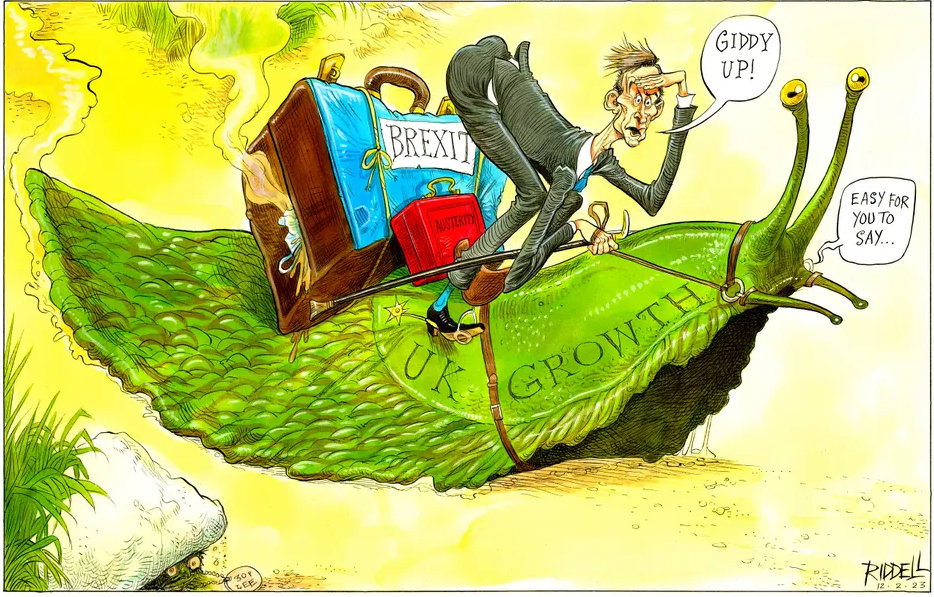
An extraordinary cross-party summit bringing together leading leavers and remainers – including Michael Gove and senior members of Keir Starmer’s shadow cabinet – has been held in high secrecy to address the failings of Brexit and how to remedy them in the national interest, the Observer can reveal.
The two-day gathering of some of the country’s most senior Labour and Tory politicians from both sides of the Brexit debate, together with diplomats, defence experts and the heads of some of the biggest businesses and banks, was held at the historic Ditchley Park retreat in Oxfordshire on Thursday afternoon and evening, and on Friday.
Documents from the meeting, obtained by the Observer, describe it as a “private discussion” under the title: “How can we make Brexit work better with our neighbours in Europe?”
Those in attendance from the pro-Brexit side included the former Tory party leader Michael Howard, former Tory chancellor Norman Lamont and former Labour Europe minister Gisela Stuart, one of the leading figures of the leave campaign.
Among the prominent remainer politicians present were shadow foreign secretary David Lammy, shadow defence secretary John Healey and the former European commissioner and Labour cabinet minister Peter Mandelson, who acted as chairman. From the Tory remainer camp, the ex-cabinet minister and long-serving minister for Europe, David Lidington, attended.
Non-political attendees included John Symonds, chair of the pharmaceutical company GlaxoSmithKline; Oliver Robbins, Goldman Sachs managing director and former chief Brexit negotiator for the government from 2017 to 2019; Tom Scholar, the former Treasury permanent secretary; and Angus Lapsley, Nato assistant secretary general for defence policy and planning.
A confidential introductory statement for those at the meeting acknowledged that there was now a view among “some at least, that so far the UK has not yet found its way forward outside the EU” with Brexit “acting as a drag on our growth and inhibiting the UK’s potential”.
A source who was there said it was a “constructive meeting” that addressed the problems and opportunities of Brexit but which dwelt heavily on the economic downside to the UK economy at a time of global instability and rising energy prices.
“The main thrust of it was that Britain is losing out, that Brexit it not delivering, our economy is in a weak position,” said the source. “It was about moving on from leave and remain, and what are the issues we now have to face, and how can we get into the best position in order to have a conversation with the EU about changes to the UK-EU trade and cooperation agreement when that happens?”
Gove, who co-led the Vote Leave campaign in 2016 with Boris Johnson and Stuart, is understood to have made regular contributions including opening an informal conversation on Thursday night, with a source saying he was very “honest” about the shortcomings of Brexit, while still believing it would prove the right decision in the long run.
In terms that will anger ardent Tory Brexiters, the summit documents said that while on the European side there was “little interest in further wrangling over Brexit and little time being devoted to the relationship with the UK … there is also clear European as well as British strategic interest in a productive and closer relationship.”
Stating that “rejoining the EU will not be on the agenda”, the summit papers nonetheless stressed that the EU and UK “have shared interests on containing Russian aggression, developing new sources of energy and building major technology companies with their capital base on our side of the Atlantic, rather than just the US”, as well as common defence interests.
It also raised questions about forging closer links with the EU on tackling organised crime, illegal immigration and defence, and raised the possibility of a joint EU-UK policy towards China, asking: “What are the prospects for a fully coordinated policy on dealing with China?”
The unresolved matter of the Northern Ireland protocol, which is the main UK-related subject currently occupying EU officials in Brussels, was also central to the talks.
The highly unusual cross-party nature of the gathering of Brexit opponents – and the seniority of those who agreed to attend – reflects a growing acceptance among politicians in the two main parties, as well as business leaders and civil servants, that Brexit in its current form is damaging the UK economy and reducing its strategic influence in the world.
Concern is growing at the top of the Labour party that it poses a real threat to the success of any future Labour government unless problems such as increased trade friction can be addressed.
In effect calling for a cross-party consensus on Brexit, the summit papers referred to the need to move on from “the current mix of antagonism and nostalgia to excitement about what the future could bring for the UK and for Europe”. They also said that finding solutions was all the more urgent because of “global unrest, supply chain fragility and inflation”.
For those such as Gove who campaigned to leave the EU, there is also a clear interest in ensuring Brexit is not viewed as a failure over the long term, even if this means conceding that there will need to be closer engagement with the EU.
Much of the focus of the meeting was on how a Labour or Tory government would use a scheduled review of the Brexit trade and cooperation agreement “to reduce the some the current frictions” that have seriously damaged UK exports to the EU in particular.
Labour, which has said it will not take the UK back into the EU, the single market or customs union, has, however, already committed to using the 2025 review of the TCA to try to reduce barriers to trade.
According to the timetable of the meeting, the opening session was headed: “How might the trade and cooperation agreement be optimised now and amended later? How might trade and services between the UK and Europe be better managed?
“Pennon, the South West’s biggest employer and parent company of South West Water, has written a report on behalf of the Great South West calling for the region not to be overlooked in the Government’s plans to level up the country. The report demands a “green jobs boom” to stop the brain drain of talented young people leaving the region.”
In this report, Susan Davy, CEO of Pennon, said, without a hint of irony:
“South West Water is making its own contribution to this with its Green Recovery Initiative, supporting the creation of up to 500 additional jobs over the next four years and taking extra action on the most pressing environmental issues that our customers tell us they care about most .We need to encourage more private investment into the region and we can do that by working closely with Government on a levelling up plan for the whole of the South West.”
To ask the Secretary of State for Environment, Food and Rural Affairs, with reference to the report by Ofwat entitled Water Company Performance Report 2021-22, published in December 2022, whether her Department plans to take steps to ensure that underspend is invested by water companies into reducing sewage discharges.
Ofwat’s findings that water companies are not spending investment assigned to make service improvements is completely unacceptable. Overall, water companies have only spent 61% of their forecasted wastewater enhancement cost allowance during 2020-22, which has resulted in delaying crucial wastewater infrastructure to improve water resilience and the environment.
Yorkshire Water and South West Water have only spent 20% and 39% of their allowance, respectively. The SoS and I met with the CEOs of these two companies in December to discuss their performance.
I am aware that the COVID pandemic and the conflict in Ukraine have impacted on supply chains, but other water companies are exceeding their spend and I expect all water companies to urgently get their spending back on track and implement the upgrades to water and wastewater infrastructure they have been funded to deliver and that customers rightly expect. I will continue to meet with the CEOs of underperforming companies to monitor their progress.
Ofwat, as the economic regulator for the water industry, has been clear that where these expectations are not met and companies are failing to comply with their obligations, they will take action, including enforcement action where warranted.
To ask the Secretary of State for Environment, Food and Rural Affairs, with reference to her Department’s policy paper entitled Storm Overflows Discharge Reduction Plan, published on 26 August 2022, what steps her Department is taking to help reduce combined sewer overflow discharges in (a) inland and (b) coastal waters.
The Storm Overflows Discharge Reduction plan will require water companies to deliver the largest infrastructure programme in water company history – £56 billion capital investment over 25 years – to significantly reduce sewage discharges.
Our plan prioritises areas at risk of the greatest ecological harm first, to ensure we have the biggest impact, as quickly as possible. Our targets will ensure that no water body in England should fail to achieve good ecological status due to storm overflow discharges. We have prioritised action for storm overflows discharging near or into inland and coastal bathing waters. By 2035, water companies must significantly reduce harmful pathogens from storm overflows discharging into and near designated inland and coastal bathing waters.
To ask the Secretary of State for Environment, Food and Rural Affairs, what recent estimate her Department has made of the number of sustainable urban drainage schemes that are (a) in full operation and (b) under construction in England.

 33 Higher Woolbrook Park Sidmouth Devon EX10 9EDRef. No: 23/0251/FUL | Validated: Fri 03 Feb 2023 | Status: Awaiting decision




 East Devon Watch