Fifty-seven swimmers fall sick and get diarrhoea at world triathlon championship in Sunderland

At least 57 people fell ill with sickness and diarrhoea after competing in sea swimming events at the World Triathlon Championship Series in Sunderland, health officials confirmed this weekend.

Jon Ungoed-Thomas www.theguardian.com 

About 2,000 people participated in the events last weekend, which included a swim off Sunderland’s blue flag Roker beach. The UK Health Security Agency (UKHSA) said it would be testing samples from those who were ill to establish the cause of the illness and any common pathogens.

An Environment Agency sampling at Roker beach on Wednesday 26 July, three days before the event, showed 3,900 E Coli colonies per 100ml, more than 39 times higher than typical readings the previous month. E coli is a bacterial infection which can cause stomach pain and bloody diarrhoea,

But British Triathlon, the governing body for triathlons in Great Britain, said the agency’s sampling results were not published until after the weekend’s events and were outside the body of the water where its competitions took place. It said its own testing results passed the required standards for the event.

The event was on a stretch of coastline that has been at the centre of a long-running battle over sewage discharges between campaigners and the government concerning regulatory failures.

Northumbrian Water insisted it was not to blame for the illnesses and that it had not recorded any discharges that might have affected the water quality at Roker beach since October 2021.

Jacob Birtwhistle, 28, an Australian triathlete, posted the Environment Agency’s results on Instagram and said he had felt unwell after the event. He wrote: “Have been feeling pretty rubbish since the race, but I guess that’s what happens when you swim in shit. The swim should have been cancelled.”

One athlete responded: “At least I know what got me and a bunch of other athletes who raced sick and ill.” Another wrote: “That now explains why I spent Monday night with my head in the toilet after racing Sunday morning!”

Ailith Eve Harley-Roberts, 51, from Leeds, who competed in the standard category with a 1,500-metre sea swim, said she had not fallen ill but fellow competitors suffered stomach upsets. She said: “I like to swim outdoors but don’t have any confidence in the cleanliness of seas, rivers, lakes etc because of the dumping of sewage or other effluents.”

Eva Perrin, science and research officer at campaign group Surfers Against Sewage, said: “The sample taken on 26 July showed unprecedented levels of E coli well over what is natural for this water body or safe for human recreational use, and urgently needs to be investigated.”

Bob Latimer, 79, a campaigner, pursued legal action for several years against the government over sewage discharges off Whitburn, which is north of Roker beach. A pre-action letter was sent on his behalf by the Environmental Law Foundation to the Department for Environment, Food and Rural Affairs (Defra) and the regulator Ofwat in June for a proposed judicial review, alleging there were 122 discharges in 2021 alone from the Whitburn sea outfall, totalling 821,088 tonnes of sewage and storm water.

Latimer says the sewage discharges from the Whitburn outfall increased between 2017 and 2021, and there has been a failure by the government to comply with waste water regulations. He said: “There is still too much sewage being discharged into the sea.”

Data published by the charity the Rivers Trust based on returns from water firms shows a sewer storm overflow discharged into the Wear Estuary, near the triathlon event, 28 times in 2022 for a total of 370 hours. Northumbrian Water said these sewage discharges would not affect Roker beach because they were “intercepted” and discharged by a long-sea outfall.

The triathlon event at Sunderland was the British leg of the World Triathlon Championship Series, and took place within the qualification window for the Paris 2024 Olympic games. There were also participation races in a variety of distances, including a family event. It was the first time Sunderland had hosted the UK leg of the series.

British Triathlon said it was working closely with Sunderland city council and the UKHSA to establish the cause of the illnesses. Environment Agency officials say its sampling on 26 July was not published until 31 July because it required a laboratory analysis.

The UKHSA said: “UKHSA is working with British Triathlon to encourage anyone who participated and has or had symptoms after the event to contact the organisers who will then pass details onto the UKHSA North East Protection team. The team will undertake an investigation of cases.”

There are various factors that can affect water quality, including the use of sewage overflows operated by water firms, as well as run-off from roads and fields. Northumbrian Water said it did not consider any of its infrastructure was involved in any pollution incidents that could have affected the triathlon events.

A spokesperson for Northumbrian Water said: “We have had no discharges from any of our assets that might negatively impact water quality at either Roker or the neighbouring Whitburn North bathing water since October 2021.

“Both bathing waters were designated as ‘Excellent’ in the latest Defra classifications, and sampling to date in the current season indicate this high quality is being maintained.”


UK almost ‘flying blind’ on Covid this autumn, experts say

The UK is nearly “flying blind” when it comes to Covid this autumn, experts have said, amid an increase in cases.

Why waste money on public health? – Owl

Nicola Davis www.theguardian.com 

While the UK Health Security Agency (UKHSA) continues to track some metrics of Covid, including hospitalisation numbers, many of the community surveillance studies tracking infection levels have finished.

Now experts have said the situation is leaving the country in the dark about how Covid may play out in the months ahead.

Christina Pagel, a professor of operational research at University College London, said a new wave of Covid appeared to be under way – possibly driven by waning immunity, new variants of Omicron, and factors including poor weather keeping people inside.

With the autumn coming on and people returning to school and work, Covid pressures may increase, Pagel added.

“We might see the wave continue to grow, and grow faster, in September,” she said.

As well as public health measures including reintroducing high-quality masks within healthcare settings, Pagel said she would support bringing back the nationwide infection survey published by the Office for National Statistics for autumn and winter, as well as expanding it to cover flu and RSV.

Failing that, she said, wastewater monitoring should be reinstated across the UK as a cheaper alternative that is used in many countries to track Covid prevalence and variants. Such schemes have recently been cut in England and Wales.

“What worries me most is if we get a repeat of the last winter NHS crisis this winter again, with Covid, flu and RSV all hitting around the same time,” said Pagel. “We are definitely flying near blind.”

Prof Rowland Kao, an epidemiologist at the University of Edinburgh, also highlighted the decline in surveillance.

“With seasonal flu, we have of course a certain amount of predictability with the many years of data. However, with Covid, now that we don’t have those multiple data streams to rely on, it’s harder to say what is happening [in the general population],” he said.

Kao added that the variant emergence patterns for Covid were largely unknown and Covid was not simply following seasonal patterns.

Experts have also raised concerns about the UK’s vaccination programme as the autumn approaches.

Prof Danny Altmann, an immunologist at Imperial College London, said while Covid was on the rise, it had started from quite a low level and the “mildness” of Covid now was largely because most people were still within a year or so of having had three vaccine doses.

“The immune-evasion mutations continue to emerge and cross-protection is looking ever more precarious. Meanwhile, immunity beyond one year wanes appreciably,” Altmann said, adding it was important to plan for another round of boosters and consider which specific vaccine it should involve.

Prof Adam Kucharski, of the London School of Hygiene & Tropical Medicine, said exposure to Covid would also affect the level of population immunity. But he agreed there were uncertainties about how Covid may play out, including whether there will be multiple waves of Covid a year.

“I think we don’t really have enough data points to say confidently what normal looks like for Covid, other than the fact that normal is probably going to be significantly higher infection and disease burden layered on top of all the other things that are already causing us problems every year,” he said.

However Kucharski noted the UK is no longer in the phase of pandemic where rapid actions are being taken – a period when very detailed surveillance was crucial – adding surveillance now is more about understanding vaccine effectiveness, waning immunity, and pressures that drive waves of infection.

“If we go into winter, and it isn’t an [unusual] variant and it isn’t an unusually large wave, then probably some of the surveillance we have will give us the sort of indications we need for a lot of that kind of management,” he said.

“We’re still in that kind of period of uncertainty where we might want the ability to deploy something that can give us more insight in future,” said Kucharski.

Another vaccination campaign, with eligibility based on health conditions or age, is expected to be launched later this year, according to UKHSA. The agency says it understands conversations about scaling up testing are continuing.

Prof Steven Riley, the director general of data, analytics and surveillance at the UKHSA, said protecting the public from Covid-19 remained one of the agency’s top priorities.

“We continue to monitor the threat posed by Covid-19 through our range of surveillance systems and genomics capabilities, which report on infection rates, hospitalisations and the risks posed by new variants.”

Something to look forward to during the dark months ahead….

Could Liz Truss star in this year’s I’m A Celebrity? Now ITV bosses are ‘bidding to sign up former PM’ after Matt Hancock’s controversial run on reality TV show www.dailymail.co.uk 

This comes after various reports that Boris Johnson has been in talks with ITV but is likely to turn down an offer (too busy on he lucrative speaking tour) www.independent.co.uk

Faulty monitors leave sewage spilling into bathing water – South West Water the worst

Analysis of Environment Agency data by the Liberal Democrats revealed that South West Water was the worst water company in absolute terms, responsible for 31 of the total 112 faulty monitors on storm overflows at bathing waters.

Simon Jupp spins like a top as he plays catch up with public opinion

In October 2021 Johnson’s Conservative government, with the votes of Simon Jupp and Neil Parish, succeeded in voting down a Lords amendment designed to stop private water companies from dumping raw sewage into the UK’s waterways. The amendment would have placed a legal duty on companies “to make improvements to their sewerage systems and demonstrate progressive reductions in the harm caused by discharges of untreated sewage.

In January 2023 Simon Jupp started spinning his voting record when he said, rather archly, that he “would never vote to pollute our water”. 

In March 2023 Simon Jupp, chairing a Westminster Hall debate on the performance of South West Water, said: …Of course, in a perfect world, we would stop sewage spills completely and immediately. Sadly, that is virtually impossible in the short term; because of the pressure on our water infrastructure, we would risk the collapse of the entire water network, and the eye-watering costs involved mean we would need not just a magic money tree, but a whole forest.

By June 2023 Simon Jupp had obviously changed his mind when he said he wanted to see action.

In July Simon Jupp said: “I’m working with Ofwat & @EnvAgency to get South West Water to clean up their act & our water

Later in July Simon Jupp met with South West Water’s Chief Executive, Susan Davy, in Sidmouth urging South West Water to move swiftly on their £30 million investment plans for water infrastructure in Sidmouth & Tipton St John.

Little wonder South West Water seem to take no notice of him – Owl

Faulty monitors leave sewage spilling into bathing water

Adam Vaughan www.thetimes.co.uk

More than a hundred monitors tracking sewage spills at bathing waters around England were faulty last year, meaning people may have been unwittingly swimming in polluted seas.

Analysis of Environment Agency data by the Liberal Democrats revealed that South West Water was the worst water company in absolute terms, responsible for 31 of the total 112 faulty monitors on storm overflows at bathing waters. United Utilities, which serves the northwest of England, was second on 21, and Northumbrian Water was third at 21.

A monitor is considered faulty if it works less than 90 per cent of the time.

Northumbrian Water was the worst offender in relative terms, with more than 20 per cent of its monitors not functioning last year. It was followed by Anglian Water on 14.6 per cent and South West Water on 11.9 per cent.

The government has pushed to have monitoring increased on storm overflows.

The pipes are designed as emergency relief valves in the sewer network to spill raw sewage into rivers and seas at times of heavy rainfall to stop it backing up into homes and businesses.

Despite the government drive, the number of faulty monitors at designated bathing waters was up 27 per cent last year on the 88 in 2021.

The analysis shows that in some places monitors remained broken for a protracted period of time. A total of 52 at swimming spots were faulty in both 2021 and 2022, which the Lib Dems said showed “water firms’ negligence in their infrastructure”.

At Seaford in East Sussex, where beaches were hit by raw sewage spills during last August’s summer holidays , sewage monitors run by Southern Water were broken for the whole of 2021.

At neighbouring Newhaven Beach, they have been faulty for two years.

“This is a national scandal. These profiteering firms have been too busy stuffing their pockets instead of fixing basic infrastructure.

“With all these broken monitors, we have no idea just how much sewage people are swimming in. As millions of people flock to the beach this month, we need these monitors fixed immediately,” Tim Farron, the Lib Dem environment spokesman, said.

Water companies have a legal obligation to ensure all of the almost 15,000 storm overflows across England have monitoring in place by the end of the year. In March the Times revealed that monitoring was still not in place at more than 600 sites , though that figure will have now fallen dramatically.

The Times’ Clean It Up campaign has been calling for stronger regulation and faster investment by water companies to improve the nation’s rivers and seas. Only 14 per cent of rivers in England are considered by the Environment Agency to meet good ecological status.

Dozens of beaches around the UK have a sewage spill alert in place following heavy rainfall. The warnings on the Surfers Against Sewage map range from Summerleaze beach at Bude in Cornwall to Hunstanton beach in Norfolk.

The vast majority of bathing waters at English beaches meet minimum water quality standards , with 302 rated excellent last year, 87 good and 18 sufficient. Just 12 were considered poor. However, there are concerns that some sites could be downgraded. Local officials in Portsmouth recently warned that Southsea East beach could become considered unsuitable for swimming, partly over concerns about seagull droppings .

A spokesperson for the trade body Water UK said: “[The economic regulator] Ofwat has confirmed that 92 per cent of monitors worked correctly last year; however, given the speed of installation, 8 per cent of monitors did not report reliably.

“This particularly occurred where mobile phone reception, which is needed to transmit results, proved patchy. Companies have been working to fix this, and the regulator has taken new powers to levy steep financial penalties if reliability does not improve.”

A South West Water spokesperson said: “With one-third of the UK’s bathing waters, we have focused on achieving 100 per cent monitoring across all of our storm overflows, and achieved that last year, ahead of plan.”

A government spokesperson said: “Where faulty or inactive monitors are identified by the Environment Agency, they are then investigated further, and we will hold water companies to account to deliver that.”

Exmouth and Sidmouth preparing for Storm Antoni this weekend

The floodgates at some East Devon towns will be closed this weekend, as a yellow weather warning has been issued for East Devon. 

Adam Manning www.sidmouthherald.co.uk

The floodgates will be closed at Mamhead Slipway (Exmouth) from 5pm on Friday, (August 4) until Sunday morning. Sidmouth’s floodgates will be closed from Saturday, (August 5), morning until Sunday morning.

STORM Antoni is set to bring strong winds to Devon tomorrow (Saturday, August 5), according to the latest Met Office forecast.

A weather warning for strong wind was already in place, but an updated one now, in place from 8am to 8pm, said: “Storm Antoni will bring unseasonably windy weather to southern parts of the UK.”

This weekend you can expect

  • Injuries and danger to life from flying debris are possible
  • Some damage to buildings, such as tiles blown from roofs, could happen
  • Road, rail, air, and ferry services may be affected, with longer journey times and cancellations possible
  • Some roads and bridges may close
  • Power cuts may occur, with the potential to affect other services, such as mobile phone coverage
  • Injuries and danger to life could occur from large waves and beach material being thrown onto sea fronts, coastal roads, and properties

‘To control inflation, people have to be poor’: Tory fears mount over rising interest rates

Multiple Tory MPs admitted they were increasingly concerned about the impact of high interest rates and inflation on the party at the ballot box, and suggested the public needed to accept they were worse off in the interim.

Eleanor Langford, Chloe Chaplain, Poppy Wood inews.co.uk (Extract)

“The reality is to get inflation under control, people do have to be poor,” one backbench Tory MP told i. “You have to have less money. But that is not a particularly politically sellable strapline.”

They added that the party was “struggling to come up with something that would ease the burden but still have the right effect on inflation”.

This was echoed by a former minister, who said that reducing inflation “almost inevitably means a drop in people’s living standards for a period of time”. “It is a really difficult sell to the public. No-one likes to admit it,” they added….

…It comes after Rishi Sunak faced criticism on Wednesday for telling a man facing a £1,300 increase in mortgage payments due to high interest rates that the average increase was only £200.

He also suggested he could extend his mortgage by a further “five or 10 years” and that it would “save you hundreds of pounds”.

Get on your delivery bike if you need to work, minister tells over-50s

As the bank rate goes up again there is new ministerial advice to “get on your bike”.

Where has Owl heard that advice before?

Ah yes 1981, when interest rates were 14%.

Those were the Tory “Glory Days”! – Owl

The over-50s should consider delivering takeaways and other flexible jobs traditionally targeted at young people if they want to maintain their lifestyle into old age, a cabinet minister has said.

Geraldine Scott www.thetimes.co.uk

In an interview with The Times, Mel Stride, the work and pensions secretary, said older people needed to be thinking about jobs they “might not have otherwise thought of” if their finances were stretched.

Stride urged employers to give older workers greater flexibility, to attract them back to the workplace. He also suggested that companies should avoid getting dragged into political debates, to make older workers feel at home.

About 8.6 million people, equivalent to one in five working adults, are classed as economically inactive, according to the Office for National Statistics. More than 3.4 million of them are over 50 but under the retirement age.

The figures are of acute concern because of the strain they have already placed on a labour market where many employers are struggling to recruit. The Bank of England has warned that the situation will make high inflation persist.

Analysis from the Institute for Fiscal Studies think tank has found that nearly half of older people who dropped out of the workforce at the start of the pandemic are struggling financially.

Stride said he did not want to imply there was anything wrong with retiring early, but that it was his “mission” to “try and open people’s eyes to what their current situation is and what the opportunities are”.

The minister was speaking on a visit to the food delivery firm Deliveroo’s headquarters in London. The company has recorded a 62 per cent increase in riders aged over 50 since 2021.

Asked if the over-50s should apply for jobs traditionally seen as being for younger people, Stride replied: “There are loads of great opportunities out there for people and it’s of course good for people to consider options they might not have otherwise thought of.”

He said of firms such as Deliveroo: “What we’re seeing here is the ability to log on and off anytime you like, no requirement to have to do a certain number of hours over a certain period of time, which is driving huge opportunities . . . From an employer’s point of view in a tight labour market, it’s absolutely essential if you want to access all the available talent that you provide as flexible an offer as you can.”

The government has introduced digital “midlife MoTs” that allow people to take a realistic look at not only their health but their finances. Stride said: “You really do need to sensibly stop, take where you are in life, and assess whether for example you’ve got enough money to get you through with the kind of lifestyle and living standards that you’re expecting.

“We tend to think everything is going to continue roughly as it is and you’ll always be able to find a job later on in life. I think it’s always valuable just to take stock every now and again and have a look at that.”

Although some have opted for early retirement, a record 2.5 million people are not working because of long-term sickness. Stride said he was keen to see companies implement occupational health schemes to keep people in work.

He said he “found myself identifying” with Abdul Javaid, 51, a Deliveroo rider who had lost 10kg since taking up the job. Javaid, a grandfather based in Kingston upon Thames in southwest London, said: “It can help with fitness, it can help with flexibility, it can help with fitting into a part of their life where it serves a useful purpose, amongst other things, and not every kind of job offers that.”

Stride said it was also down to employers to make older staff feel welcome, urging them to ensure that their workplace culture or stance on social issues did not alienate the over-50s.

“I think most people find it deeply unattractive to go and work for an employer that’s all about politics and all of that kind of stuff,” he said. “It has to be a sensible balance, and I think older people have generally had enough life experience to roll with those kinds of things anyway.”

For his part, Stride, 61, said he had no intention of retiring early and was planning to stand at the next election. “I’m very happy doing what I’m doing at the moment,” he said. “Of course, as we know in politics, nothing is certain, so who knows where I’ll be in many years’ time — but I very much hope and aspire to be continuing to do this job, because it’s the greatest job in the world.”

PM blames overworked nurses and doctors for long NHS waiting lists

He said the government was making progress on reducing waiting lists but then strikes happened across the health service.

Nurses in England voted to end strike action by accepting a 5% pay rise earlier this year, but this now transpires to be the smallest rise across the public sector.

by Matt Bodell nursingnotes.co.uk

Speaking on LBC yesterday morning, Mr Sunak said: “If you look at what happened, we were actually making progress – we eliminated the number of two-year waiters, people waiting a very long time, we practically eliminated the number of people waiting one and a half years.

“And we were making progress on bringing the overall numbers down – what happened? We had industrial action and we got strikes.”

He added that “unfortunately” doctors were still on strike – “that is the reason waiting lists are going up, it’s as simple as that”.

Nurses in England voted to end strike action by accepting a 5% pay rise earlier this year, but this now transpires to be the smallest rise across the public sector.

According to the Department of Health and Social Care (DHSC), junior doctors have already received an average of an 8.8% pay uplift but they continue to fight for pay restoration.

A low blow.

Unions have dubbed Mr Sunak’s comments as “a low blow” as staff were striking over deteriorating care standards alongside pay and working conditions.

Responding to the Prime Minister’s comments, Royal College of Nursing Director for England, Patricia Marquis said: “This comment adds insult to injury. Blaming nurses for the state of the NHS is a low blow. Nursing staff voted to strike last year out of concern at deteriorating care standards and spiralling waiting times.

“Waiting lists were growing long before the pandemic and strike action – and the prime minister should take responsibility for the knife-edge position of the NHS and not point the finger.

“Nursing staff are doing everything they can but simply don’t have enough people to give patients the care they need. And the distress that this causes affects staff’s health, eventually leading to complete demoralisation and to nurses leaving the NHS.

“One way the government can address the crisis in the health service, and help ensure patients get the care they need, is by valuing the nursing profession properly and paying nurses fairly – otherwise we’ll see nurses continue to leave in their droves.”

“Talk to your bank”

Rishi Sunak’s advice to “jack” who, during the PM’s interview on LBC, said he faced increases in mortgage payments from £1,500 to £2,800 when his two-year fixed rate comes to an end this month.

When was the last time anyone passed a bank, let alone tried to actually speak to someone? – Owl

Report finds the impact of a new development proposed for an East Devon village ‘so harmful’ it would ‘significantly’ outweigh its benefits

Background

The 2013 Tory administration set East Devon an eighteen year target to build a minimum of 950 houses/year (17,100 in total by 2031).

This binding target (Poisoned Chalice) is what the Lib Dem, Independent and Green Coalition inherited, and they are lumbered with it. Worse, under government rules, they have to ensure a five year rolling plan to supply these houses.

Because of the impact of Covid on house building, EDDC currently can only demonstrate that it can bring forward development sites to provide 4.68  years worth (including a 5% buffer) of development. 

Under government rules, which keep changing, unless a local authority can show a 5 year supply, a presumption of development will apply to all development irrespective of neighbourhood plans, built-up area boundaries, green fields etc. – Owl

The impact of a new development proposed for East Devon has been deemed ‘so harmful’ to the area it would ‘significantly’ outweigh its benefits, a new report has found.  

Local Democracy Reporter eastdevonnews.co.uk

Plans to build houses on a field just outside a village near Ottery St Mary received just one letter of support – and that turned out to be a sarcastic note of ‘approval’ from an objector, writes local democracy reporter Guy Henderson.

Now East Devon District Council (EDDC) has underlined its opposition to the plan and has called for an inquiry into the scheme to be held in public.

Members of the council’s planning committee met last Friday (July 28) to consider the proposal for 23 homes off Oak Road at West Hill. They heard that because the council had not ruled on the application by a legal deadline, it would have to be decided by a planning inspector at an appeal.

However, they decided to send a clear message to the inspector that the Morrish Homes scheme should not be allowed, and that any inquiry should be heard in public rather than being decided in private by the inspector reading written submissions.

Planning officers said any future residents wouldn’t find it easy to access local facilities and services, meaning the development would be ‘car-dependent’. A number of ‘significant protected trees’ would also be at risk.

The applicants say that because the site will be expensive to develop, the amount of affordable housing they could provide would be diminished. Officers disagreed.

Their report summed up: “Taking all of the evidence into account, the adverse impacts of the proposed development are so harmful as to significantly and demonstrably outweigh its benefits.”

But members were warned that because the district can’t meet its government targets for a five-year supply of land for housing, it is vulnerable on housing developments.

Neighbours Richard Green and Peter Shrubsole spoke against the proposal, with Mr Shrubsole saying: “Not a single supportive submission has been made, with the exception of one very sarcastic one which was, in fact, an objection.”

Villager Robert George said the development was not sustainable, and Alan Cook described it as ‘dense and unsympathetic’.

West Hill Parish Council chair Alison Carr said local schools and GP surgeries were already over-stretched, and Cllr Jessica Bailey (Independent, West Hill and Aylesbeare) said there were ‘very compelling grounds’ to throw out the plans.

Cllr Brian Bailey (Con, Exmouth Littleham) told the committee: “There are so many things that this scheme goes against, and there is no provision for affordable homes.

“As far as I am concerned it is not going to fly at all.”

The committee agreed unanimously to tell the secretary of state that the council would have refused the application, and to urge the planning inspector to decide the issue at an informal hearing rather than through written submissions.

Summer crackdown on anti-social behaviour

Police are cracking down on anti-social behaviour and other offences in East and Mid Devon.

It’s part of what they call Operation Loki, which a number of councils across the county have lauded as a positive step to make their areas safer or more attractive to residents and visitors.

Radio Exe News www.radioexe.co.uk

The latest campaign started last week in Seaton, Sidmouth, Honiton and Axminster. It will continue in Tiverton, Cullompton, Crediton and Exmouth later this month.

People will see officers on foot patrols, as well as in marked police vehicles during the period of intensification. They will focus on locations where ASB is a problem or issues have been reported to them.

Inspector Phil Gray, inspector for rural East Devon, said: “Over the course of the last few days we were joined by officers from the Devon & Cornwall Police Professional Development Unit, members of the Special Constabulary, colleagues from Roads Policing and the Prevent and Detect Team. We also worked with Youth Intervention Officers, homeless outreach staff and some members of the council who form part of the Community Safety Partnership.

“We work with partners to make sure that we reach those people in vulnerable groups who may need extra support. We like to engage with as many people as possible of all ages and get feedback on how we can help with any local concerns or priorities. We want to keep our communities safe, disrupt incidents of Anti Social Behaviour and make arrests where appropriate. If you see the officers out and about please come and say hello and let us know how we can help you.”

In Seaton, several vehicles were checked with the help of automatic number plate recognition systems and three people were also stopped and dealt with for drugs possession. 

On Friday, police were joined by representatives from Sidmouth Town Council, Gateway Homelessness Action Group, East Devon District Council Community Safety Partnership and other departments including roads policing.

Two vehicles were seized for having no tax, seven motorists were reported for vehicle and document defects and there were several stops for suspected driving whilst under the influence of alcohol or drugs resulting in two arrests. Foot patrols took place in areas of anti-social behaviour and at least 30 motorists were detected for speeding through Sidford.

In Honiton, a specialist undercover team arrested someone for driving whilst being unfit through drugs, having no insurance and being in possession of a class B drug. Enquiries found they were also a disqualified driver.

The local neighbourhood police team stopped a motorist for having no insurance and no driving licence and another vehicle was seized as that motorist also had no driving licence. Two people were searched under the Misuse of Drugs Act and a vulnerable person was located and escorted home with the appropriate referrals to support agencies being made.

Police in Axminster searched a motorist and their vehicle which led to cocaine, cannabis, money and phones being seized. An arrest was made for drug driving, possession with intent and possession of an offensive weapon. The car was seized. A separate vehicle was seized after it was discovered the driver had an expired driving licence.

Teetotal PM heckled as he pulls a pint

How desperate to win votes do you have to be to be seen pulling a pint when you don’t even drink the stuff?

Will he be vaping next?

And as the heckler points out, forget the spin behind this stunt, overall alcohol duties are going UP – Owl

Why are Rishi’s trousers so short?

Is he trying to be trendy, albeit 20 years too late?

Is it, as some have suggested, an attempt by a diminutive man to create an illusion of height on the world stage? 

Or is the wealthiest UK prime minister in history wearing children’s sizes to avoid paying VAT?

Just asking. – Owl

[Sunak comes up short as he tries to stay on-trend www.thetimes.co.uk]

Councillors miffed as police scrap training

No resources for councillors’ police training

Despite Alison Hernandez’s bumper 6% hike in the police slice of your council tax. – Owl

Torridge councillors have got the hump with the police over their refusal to give them training sessions to help tackle crime.

Alison Stephenson, local democracy reporter www.radioexe.co.uk

Members of the council’s external overview and scrutiny committee said police are always asking for their support, but not willing to give them bite-sized training sessions  – a move which has left them feeling miffed.

Meeting chair Cheryl Cottle-Hunkin (Lib Dem, Shebbear and Langtree) said when she was a new councillor four years ago she went on a police workshop which was available to all councillors and gave them a snap shot of how police build intelligence, such recognising the signs of ‘county lines’ drugs operations.

“They are saying now they don’t have the resources to put together a programme,” she said. “They want our support but when we request it of them, they say they don’t have the capacity to provide it.

“The police talk about connecting communities and say all the right things but if there is nothing in place to coordinate it’s not going to work.”

Vice chair Cllr Annie Brenton (Lab, Bideford West) said at the first meeting of the new council following the elections, a police officer assured councillors that police wanted to support them and encourage them to get involved.

“It’s a two-way street actually. If they want us to support them and encourage our community to support them then they have to support us,” said Cllr Brenton.

She said the programme was already available, and it was a poor excuse not to be able to provide it to the rest of the council.

“To not let us sit in on this scheme and get this bite-sized information is ludicrous,” she said: “Our community is concerned about policing in our area. We need to go back to the police on this.”

Pressure will be put on police officers at the community safety partnership meeting in the autumn.

Untreated sewage spilled into protected areas for 300,000 hours

Untreated sewage was discharged from storm overflow pipes into protected areas across England and Wales for more than 300,000 hours last year, research has found.

Kieran Gair www.thetimes.co.uk

Untreated wastewater was released within 50 metres of a protected nature site more than 1,000 times, according to data obtained by Greenpeace.

The worst-affected areas included the Solent and Dorset coast, a large special protected area (SPA) spanning the West Sussex, Isle of Wight and Dorset coasts, with 14,174 hours of sewage spills last year. Bognor Regis, a coastal town popular during the holiday season, falls within a special area of conservation (SAC) and was given a “poor” bathing status this year. Human waste was identified as the main cause of pollution.

The River Derwent and Bassenthwaite Lake, a conservation area encompassing parts of the Lake District, was one of the worst-hit areas, receiving more than 6,600 hours of sewage. It is the constituency of the Tory MP Trudy Harrison, the minister for natural environment and land use.

Pembrokeshire Marine SAC, one of the largest marine conservation areas in the UK, suffered 6,997 hours of sewage spills last year. Waste spilled into the River Avon SAC, which runs from Bristol to Bath, for 6,960 hours last year. People have reported getting seriously ill from swimming in the River Avon.

Plymouth Sounds and Estuary SAC, which straddles the borders of Devon and Cornwall, is another popular holiday destination that was heavily hit with sewage discharges, receiving 11,436 hours last year. This year, the utility company South West Water was fined £2.1 million for incidents dating back to 2016, including one discharge from Torpoint sewage treatment works into Plymouth Sounds.

The data found that rivers, lakes and marine areas “already in danger” received more than 200,000 hours of sewage.

A separate analysis of Environment Agency data by the Liberal Democrats found that there were 1,504 sewage dumps last year on “blue flag” beaches — which are meant to have the highest water quality — lasting 8,497 hours.

Much of Britain’s sewer network built before 1960 is designed to handle surface water from rainfall and sewage together, meaning that systems can be overwhelmed during downpours and are prone to overflowing.

The industry estimates that to fix the problem will require £56 billion of investment. Under present plans, sewage releases will be ended by 2050. McMahon has introduced a private member’s bill to bring this forward to 2030, introducing legally binding targets for water firms.

The water sector recently apologised for sewage spills from storm overflows and promised to spend £10 billion this decade to tackle them.

The Times Clean it Up campaign has urged regulators to take stronger action against polluters, and to consider the idea floated by Emma Howard Boyd, a former Environment Agency chairwoman, of jail sentences for water company chiefs behind the worst incidents.

Man bought private jet with borrowed council money

Plus a Bugatti and yacht. www.bbc.co.uk

So the Tories abolished the Audit Commission in 2015 – more importantly WHY? 

Turned out well hasn’t it… how many Tory councils are now effectively bankrupt having treated ratepayers money like a spin of the roulette wheel with hugely speculative investments. – Owl

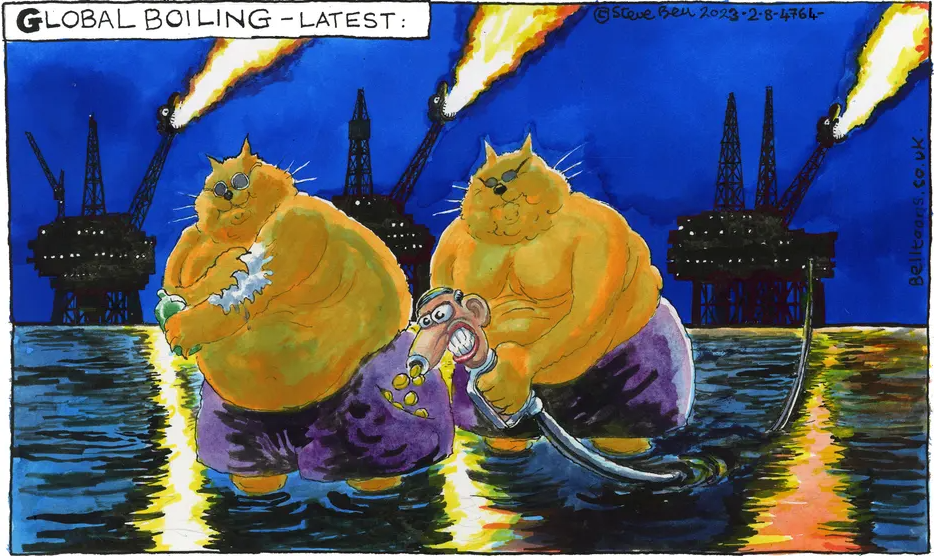
Sunak on ‘Wrong Side Of History’

Former Tory Minister Savages PM over North Sea Oil Plan. He added:

also on “wrong side of a future economy” based on renewables;

and on “wrong side of modern voters, who will vote with their feet at the next general election for parties that protect, and not threaten, our environment”.

Three strikes and you’re out? – Owl

Kevin Schofield www.huffingtonpost.co.uk 

A former Tory minister has condemned Rishi Sunak’s decision to give the green light to more oil and gas drilling in the North Sea.

Chris Skidmore, who used to be the government’s net zero tsar, said issuing hundreds of new exploration licences was “the wrong decision at precisely the wrong time”.

Sunak has insisted that new oil and gas extraction from the North Sea is compatible with the UK’s goal of achieving net zero by 2050.

He said it would also make Britain less reliant on having to import energy from abroad.

But in a blistering statement, Skidmore – who served in Boris Johnson’s cabinet as energy minister – said it was a disastrous move for the country as well as the Conservatives.

He said: “It is on the wrong side of a future economy that will be founded on renewable and clean industries and not fossil fuels.

“It is on the wrong side of modern voters, who will vote with their feet at the next general election for parties that protect, and not threaten, our environment.

″And it is on the wrong side of history, that will not look favourably on the decision taken today.”

Skidmore, who is standing down at the next election, also said it was wrong that the announcement was made whole parliament is in recess, denying MPs the chance to scrutinise it in the Commons.

Speaking in Aberdeenshire, where he also announced plans for a new carbon capture scheme, Sunak defended the move despite the mounting criticism from environmental campaigners.

He said: “It’s really important for everybody to recognise that even in 2050 when we are at net zero, it is forecast that around a quarter of our energy needs will still come from oil and gas.

“What is important is that we get that oil and gas in the best possible way and that means getting it from here at home – better for our energy security, better for jobs but also better for the climate because if we’re going to need it, it’s far better to have it here at home rather than from halfway round the world.”