I swear by Almighty God…
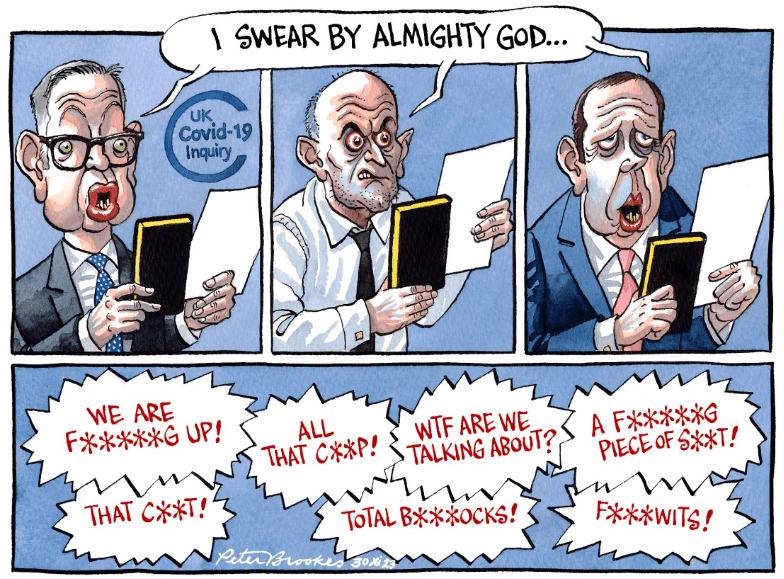

I swear by Almighty God…
Exeter City Council has voted against selling off two multimillion-pound sites for student housing.
A report for the council had recommended selling the old Clifton Hill leisure centre site and the Mary Arches multi-storey car park site with unrestricted use – going against council policy.
The report said the city council needed to make the maximum amount of money from the sales so it could pay off a debt of about £9m as a result of the failure of its housing development company, Exeter City Living.
On Tuesday, the council’s executive voted unanimously not to allow purpose-built student accommodation on either site.
Council leader Phil Bialyk, Labour and Cooperative, said: “We will continue to work to get the right homes built in the right place, for the right people.
“We will do this even when it is the option that doesn’t give the highest financial return.
“By choosing to invest in the future development of our city in this way we will ensure that our shared vision continues to be delivered.”
Mr Bialyk said figures for the valuation of the sites were confidential but he was confident the sales of both sites would “satisfy the situation of our outstanding debt”.
Diana Moore, Green Party leader on Exeter City Council, said the Labour-led council had “turned council assets into complete liabilities”.
She said: “They are now selling off important sites which should be decent homes, affordable homes for our communities.”
Exeter City Living was set up as an arms-length company by the council to provide social and affordable housing and bring in extra revenue.
Exeter City Council said the project failed due to a series of issues such as Brexit, Covid-19, the invasion of Ukraine, high inflation rates and repeated interest rate rises.
Michael Mitchell, Liberal Democrat group leader, said there was “about a £9m shortfall” that would need to be found from the sale of the two sites.
He said: “We don’t know what the market value of these two sites are, particularly with the restricted use on them.”
Mr Mitchell believed the council would still have to find more money to cover its debt.
Anne Jobson, Conservative group leader on Exeter City Council, said council debt was a growing problem.
She said: “There clearly will be a financial implication on a council who has already, I would say, by its own financial poor decision making, in approximately £163m worth of debt.”
The matter will now go to full council for a final decision.
Rishi Sunak pushed “very hard” for a lifting of all lockdown restrictions during a meeting in July 2021 where Boris Johnson referred to people as “malingering” and “workshy”, the Covid inquiry has heard.
Ben Quinn www.theguardian.com
The then chancellor and prime minister were pitted against the “more cautious” approach of Michael Gove and Sajid Javid during the meeting, which took place when Covid-19 cases and hospital admissions were rising, according to a diary entry by the then chief scientific adviser Sir Patrick Vallance.
“PM looks downbeat and talks of grim predictions,” the entry read. “[Javid] says ‘we are going to have to learn to live with it’, ‘and die with it’, PM says.”
Javid, who was the health secretary from June 2021 to July 2022, told the inquiry on Wednesday it was “possible” that Johnson had said the words attributed to him.
“The prime minister in these meetings often said things that were hard to determine what he actually thought versus a joke,” he said. “Even when you were discussing something as important as this.”
The same entry recorded: “[Sunak] pushes very hard for faster opening up and fuller opening up. Getting rid of all restrictions. Repeats his mantra ‘we either believe in the Vx [vaccine] or we don’t’. I pointed out we would be facing a lockdown now if it was not for the Vx.”
Referring to Johnson, it added: “He says he wants everyone back at work ‘we can’t have the bollocks of consulting with employees and trade unions. They need to come back to work. All the malingering workshy people.’”
Vallance concluded in the entry that the whole meeting was “political posturing” and that civil service officials were worried. He said he and the chief medical officer for England, Sir Chris Whitty, had made the risks “very clear”.
However, a claim by Javid that Johnson was not in charge of the government during the pandemic and that his chief adviser, Dominic Cummings, was “prime minister in all but name” was later contradicted when Dominic Raab gave evidence.
“I just don’t accept the characterisation that there was some sort of puppet regime,” the former foreign secretary told the inquiry.
Raab, who resigned this year after a report on alleged bullying behaviour towards civil servants, mounted a defence of Cummings, who has been accused of contributing to a toxic environment at No 10.
Cummings was there to “galvanise the direction of travel” and act as “some grit in the oyster”, Raab told the inquiry.
In tetchy exchanges, he accused the counsel for the inquiry Andrew O’Connor KC of being “dismissive” when O’Connor suggested Raab was resorting to “managing speak” as Raab told the inquiry about his theory of taking what he called a “perpetual beta” approach to decision-making in crises.
“In any crisis it’s not going to be a manicured response and there will certainly be people who feel bruised by the pressure. Sometimes that will be because someone has behaved inappropriately. I get it,” Raab said, adding that there was a broader problem of delivery in Whitehall.
Raab defended his going on a series of overseas government trips and on a family skiing holiday as the pandemic loomed and as initial cases were appearing in Britain, insisting he very rarely went on holiday in what was a “gruelling” role and that he would have been umbilically linked to chains of communication no matter what.
The former minister also told of how he was given “five minutes’ notice” in April 2020 that he was to deputise for the prime minister, who had been hospitalised with the virus. Planning before it had been “pretty sparse”, he said, but there had been an understanding when he was first appointed as deputy prime minister by Johnson, who he said had told him: “You’ve got my back.”
Raabs said one of his first acts was to “get the team together” and convene a cabinet meeting, and he insisted he was aware of how the moment was perceived.
He said: “I didn’t want anyone saying that Dom Raab’s enjoying this a bit too much, because I wasn’t, and I was there to do a job.”
Nottingham city council has issued a section 114 notice, in effect declaring itself bankrupt, as experts warn an increasing number of councils are “reaching breaking point”.
Jessica Murray www.theguardian.com
In an announcement on Wednesday, the local authority said it had a significant gap in its budget and the council’s chief financial officer had decided it was not able to produce a balanced budget for this year.
The Labour-run council attributed its financial problems to issues affecting councils across the country, including an increased demand for children and adults’ social care, rising homelessness presentations and the impact of inflation.
It also acknowledged previous issues relating to financial governance and an overspend in the past financial year had played a part but said it still had sufficient financial resources to meet all of its current obligations.
Robert Jenrick, the Conservative MP for Newark in Nottinghamshire, said the council had displayed “breathtaking waste and incompetence” and called for the secretary of state to appoint commissioners to “restore order”.
A section 114 notice means all spending, apart from on protecting vulnerable people and providing statutory services, will be suspended.
Birmingham city council issued a section 114 notice in September because of financial problems compounded by a £760m equal pay bill and failed IT implementation costing £100m.
Sir Stephen Houghton, the chair of the Special Interest Group of Municipal Authorities (Sigoma), said the government risked “seeing an epidemic of S114 notices” as Nottingham council’s crisis showed “the funding model is completely broken”.
“There are fundamental systemic issues with the local government finance system that have resulted in an increasing number of councils reaching breaking point,” he said.
“The chancellor in his recent autumn statement had the perfect opportunity to help address some of the well-publicised pressures in local government and the wider public sector but failed to do so.”
Accounts showed Nottingham city council was headed for a £23m overspend in the 2023-24 financial year, and government commissioners could be brought in to take charge.
The local authority has been beset by financial difficulties for years. The collapse of a council-run Robin Hood energy scheme in 2020 led to the loss of millions and a government-appointed board being brought in to monitor the council.
It was also revealed that more than £40m of ringfenced cash from the council’s housing revenue account was unlawfully spent as general funds, with the cost of repayment estimated to be £49m-£51m.
However, the council leader, David Mellen, has previously said the council’s financial “mistakes” were small in comparison with the year-on-year reduction of funding from central government, which was estimated to be a loss of £100m over the past decade.
Sigoma said Nottingham city council’s spending power was 28% lower in real terms compared with 2010-11, and the council was spending 31% of its budget on children’s services, up from 19% a decade ago.
Jonathan Carr-West, the chief executive of the Local Government Information Unit, said the news from Nottingham was unsurprising.
“Nottingham isn’t the first to issue a section 114 and certainly won’t be the last. More and more well-run and effective councils are saying that they could be next,” he added. “Government is quick to point the finger at ‘failing councils’ but the truth is we have a broken system.”
A spokesperson for the Department for Levelling Up, Housing and Communities said: “We used our statutory powers to intervene at Nottingham city council last year over serious governance and financial issues and have been clear that improvements must be made.
“We have expressed concern over the lack of urgency demonstrated by the council in addressing these challenges. We are assessing the situation and will consider whether further action is necessary.”
Tory commitments to the British countryside are equivocal, particularly amongst local Tories.
History of broken promises
In 2018 Michael Gove, then Secretary of State for Environment, Food and Rural Affairs, commissioned Julian Glover to undertake a review of National Parks (NPs) and Areas of Outstanding Natural Beauty (AONBs). Glover was given an extensive brief to review the areas’ statutory purposes and their alignment with the government’s 25 Year Environment Plan.
In July 2019 Glover published his interim findings, which included:
“… The message from all this work has been vigorous and clear. We should not be satisfied with what we have at the moment. It falls short of what can be achieved, what the people of our country want and what the government says it expects in the 25-year plan for the environment.
Some of this failure comes from the fact that our protected landscapes have
not been given the tools, the funding and the direction to do the job we should now expect of them.”
In November 2021 Owl reported that Natural England had been tasked by the government to assess the creation of a new National Park based on combining the East Devon and Dorset AONBs. This was in line with the “Ten Point” plan for a green revolution published a year earlier. [The proposal originally submitted to Natural England in 2013 covered the Dorset AONB and East Devon AONB]
Note East Devon “Build, build, build” Tories have consistently refused to countenance or engage with this proposal to combine the two AONBs into a National Park for fear of losing control over planning. As a result of this petty intransigence the proposal is generally described as “the Dorset National Park” and led from Dorset. For similar reasons East Devon lost the lead to Dorset on the Jurassic Coast with consequences for tourism.
In October 2023 Owl reported that the Government was blowing cold on the idea and were set to break their manifesto pledge to do so.
This was followed a few days ago by an email circulating introducing a “rebranding” of the East Devon AONB.
Owl is always deeply suspicious of the opportunity this gives to water down commitments.
“Today marks the start of a new chapter in the story of designated Areas of Outstanding Natural Beauty (AONBs) in England and Wales.”
It will now be called East Devon National Landscape.
“The new name reflects our national importance: the vital contribution we make to protect the nation from the threats of climate change, nature depletion and the wellbeing crisis, whilst also creating greater understanding and awareness for the work of the whole National Landscapes family.
This is a significant milestone for the UK and the next step in fully realising our vision to be leading examples of how thriving, diverse communities can work with and for nature in the UK: restoring ecosystems, providing food, storing carbon to mitigate the effects of climate change, safeguarding against drought and flooding, whilst also nurturing people’s health and wellbeing.”
Is this a fudge to blur the distinction between AONBs and National Parks reducing all to the lowest common denominator?
Last minute volte face?
Following the sacking of Thérèse Coffey we now hear the proposal to create more National Parks might all be on again, though the number has been reduced to just one.
There is no official shortlist of locations and the decision process could take some time. But three areas have emerged as early favourites after a government-commissioned landscape review called for three new national parks to be created, in the Chilterns, the Cotswolds and Dorset and East Devon.
Labour’s 2019 manifesto called for 10 new designations of “National Nature Parks”.
Search to begin for a new national park in England amid criticism of ‘true state’ of UK’s landscapes
Report by news.sky.com
The search for a new national park for England has been announced as part of a plan for nature set out by Rishi Sunak.
Critics have said the environmental package – which includes woodlands and food production covering 200,000 hectares of land – will be unable to hide the “true state” of the UK’s natural landscapes.
The scheme has received a lukewarm response because government funding for nationals parks has fallen by 40% in real terms in just the last decade, reported the Campaign For National Parks.
Critics also pointed to the state of the UK’s waterways, rivers and coastlines with increasing levels of sewage dumping, which the government has admitted is “unacceptable”.
Earlier this year, England’s environmental watchdog, the Office For Environmental Protection, strongly condemned the government’s record on climate and nature – finding the Tories were not “demonstrably” on track to meet a single target.
As part of the new project, an allocation of £15m will be shared by England’s 10 existing national parks and 34 National Landscapes.
Natural England will assess a list of possible national park sites, while there are plans to create two community forests in Derbyshire and the Tees Valley.
Prime Minister Rishi Sunak unveiled the efforts “to protect these much-loved spaces” ahead of Thursday’s COP28 climate summit in Dubai.
But shadow environment secretary Steve Reed said the Tories had been overseeing the “destruction” of the British countryside.
He added: “Under their watch, the UK is one of the most nature-depleted countries in the world, and waterways face the highest levels of illegal sewage discharges in our history.”
Mike Clancy, the general secretary of the Prospect trade union, which represents a range of professions including engineers and scientists, also highlighted the conditions of the UK’s waterways – and Tory funding cuts to the Department For Environment, Food And Rural Affairs.
“Bold-sounding initiatives can’t hide the true state of our rivers, shorelines and natural landscapes,” he said.
“Without adequate funding for the guardians of our natural environment, there is little chance the government’s rhetoric will be able to meet its stated ambition.”
In August, environmentalist and author Guy Shrubsole, who lives near Dartmoor National Park, told Sky News “we need a balance of areas” to allow habitats to thrive.
He said: “Our national parks are in a pretty shocking state for nature… they’ve actually found that on average, they’re in a worse condition than nature is, outside our national parks.”
We know that Simon Jupp, fearing a wipe out at the general election, puts a lot of thought and effort in upping his profile locally.
So was it our Parliamentary Private Secretary who advised Mark Harper to introduce a new livery for “Team Transport”?
Please alert Owl to any sightings of Simon sporting his PPS coat (or is it only for ministers?)

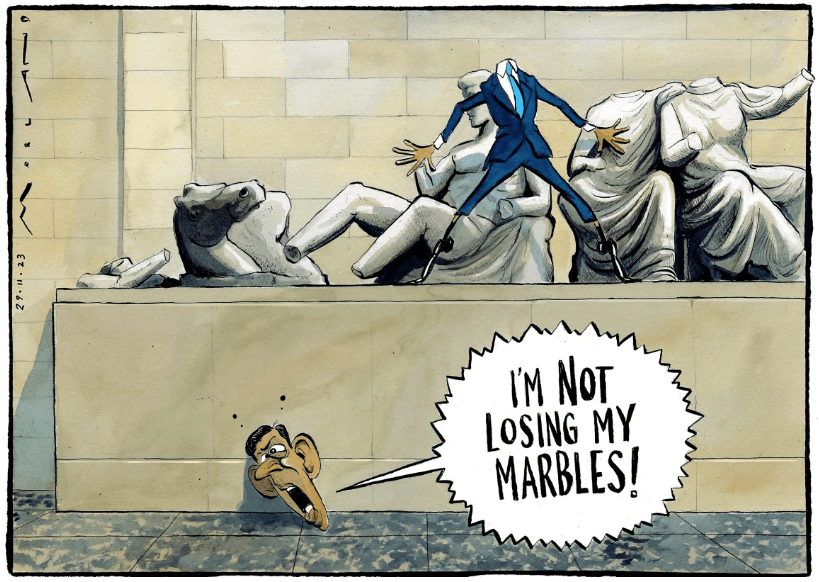
“After March of 2025 the Government doesn’t have any spending plans.” [aka a scorched earth policy – Owl]
No 10 on collision course with Bank of England and OBR over economy
The Government is on a collision course with the Bank of England and Britain’s budget watchdog as they clash over whether or not the UK economy is on the up.
Hugo Gye, Callum Mason inews.co.uk
The Governor of the Bank warned that the UK was facing years of low growth while the Office for Budget Responsibility (OBR) said the Chancellor’s “vague” plans to cut spending put the public finances at risk.
But No 10 hit back at the warnings, pointing out that previous OBR forecasts have been too pessimistic and insisting that business views of the British economy are “very positive”.
Bank chief Andrew Bailey said this week: “If you look at what I call the potential growth rates of the economy, there’s no doubt it’s lower than it has been in much of my working life.” He suggested interest rates would stay high for an extended period of time to deal with stubborn inflation.
Speaking to MPs, the head of the OBR Richard Hughes said: “It is very difficult to assess the credibility of the Government’s spending plans, because after March of 2025 the Government doesn’t have any spending plans.” Jeremy Hunt has promised to limit growth in state spending after 2025 but has not explained how this will affect individual Whitehall departments.
Mr Hughes added: “In effect because he hasn’t provided any detail about the choices involved in delivering those numbers, we don’t know if they’re plausible or not… I think they are a very big fiscal risk, partly because they are so uncertain.”
In response to the warnings from the two institutions, a spokesman for Rishi Sunak said: “We’ve listened very carefully to the OBR and the Bank of England, but we are firmly of the view that the economy has turned the corner. We have halved inflation, and it is forecast to fall below 3 per cent next year.
“You’ll remember the OBR said a year ago, in the first part of this year the economy would shrink by 1 per cent, and obviously it has grown.
“The revisions we’ve seen mean the UK is now growing faster than France, Germany, Italy and Japan. We’ve recovered faster from the pandemic than France, Germany and Japan. The IMF predicts UK will grow faster than Germany, France, Italy, Japan.”
A No 10 source pointed to the promise by companies to invest an extra £30bn in Britain made at a summit this week, saying: “The Global Investment Summit showed what investors think of UK – the mood music was very positive.”
City Minister Bim Afolami urged regulators to be more pro-growth, telling a gathering of bankers on Tuesday: “If you’re regulating a market, in any area, there’s no point having the safest graveyard. Animal spirits need to be there, we need to innovate, we need to drive growth and initiative.”
Transport Secretary Mark Harper added: “The forecast that we had last year said we were going to have a recession this year and actually the British economy turned out to be much stronger than that.”
A Treasury source insisted there was no split between the Government and the Bank of England on the need to tackle inflation despite the growing divide in rhetoric, saying: “We are more aligned in policy terms than we have been previously in the efforts to bring down inflation.”
Charles Goodhart, a former rate-setter at the Bank, said that Mr Bailey was right to warn markets of the risk that interest rates would have to stay at their current high level for at least another year.
He told i: “There is great uncertainty about events, particularly political events, in the next year. We do not know how the two major conflicts will develop. Moreover, the greater reliance on fixed mortgage deals means that the effect of tightening monetary policy now involves greater lags.
“So, there is considerable uncertainty about the likely rate of growth of demand and output. What Andrew Bailey is trying to prevent is markets coming to the conclusion now that rates will come down at some stage in 2024, because that would ease monetary policy unduly at this stage.”
Austerity forcing short term decisions with long term negative consequences? – Owl
A council is considering breaching its own policies by selling off two multi-million pound landmark sites for student housing.
Miles Davis Politics Reporter BBC Devon
A report has recommended Exeter City Council should sell the former leisure centre site at Clifton Hill and the Mary Arches multi-storey car park without restrictions on use.
Councillors are considering the sales despite a council policy not to sell off land for student accommodation.
Exeter City Council needs to raise millions of pounds to pay off debts from its failed housing development housing company, Exeter City Living.
The report going before the executive of Exeter City Council on Tuesday evening shows the council is likely to be left with an outstanding loan of about £9m as a result of the winding down of Exeter City Living.
The report states: “The council’s current corporate policy is not to dispose of any of its land for Purpose Built Student Accommodation (PBSA) in the city centre.”
Valuations carried out for the sale of the two sites have not been made public but it said if the council stuck to that policy it could lose out by “something in the region of 70% of the site’s potential value”.
When the council announced the demolition of Mary Arches car park in December 2022 the council leader, Phil Bialyk, said: “I can be clear, if it is the city council’s land, there will be no purpose-built student accommodation.”
On Tuesday, Mr Bialyk, Labour and Cooperative Party, said: “The officers have a duty to advise me and the executive as to the potential value of all the sites for whatever purpose.
“We have to cover the original debt that we now have to deal with going forward.”
According to the council’s report specialist student accommodation is “failing to meet rising demand” with about 29,000 full time students at the University of Exeter, and numbers expected to increase to about 36,500 by 2026.
The Clifton Hill leisure centre closed in 2018 and was demolished in 2022.
Michael Mitchell, Liberal Democrat councillor and Progressive Group co-leader, said: “The community surrounding the Clifton Hill site are rather concerned about the possibility of student accommodation being built on the old Clifton hill leisure centre site.
“A commitment was made by this council not to allow PBSA on this site and I hope they will not renege on this decision as a result of the failure of Exeter City Living.”
Anne Jobson, leader of the Conservatives on the council, said she was “dismayed” to read the report.
She said: “I would have thought that within Exeter there would be a developer for residential housing or for a housing association or for affordable/social housing which is what we need in Exeter.
“What we are looking for is housing that will accommodate people that work in Exeter – care workers, teachers and nurses who find it hard to get into the rental sector and don’t qualify for social housing.”
Diana Moore, Green Party councillor and Progressive Group co-leader, said: “There has simply been a failure by the executive to provide proper oversight of Exeter City Living and it has turned council assets into liabilities.”

A new banking hub has opened in Axminster, a year after the town lost its last remaining bank branch.
The hub, based in the former Lloyds Bank building, was officially opened by local MP Richard Foord on Friday, November 24.
Philippa Davies www.midweekherald.co.uk
It is a shared banking space, offering face-to-face service for customers of all major banks and building societies and access a full range of banking services.
The Community Bankers will work on rotation, with a different bank available on each day of the week. The hub will be open Monday to Friday from 9am until 5pm.
The banking hub is the second to open in Devon, and was established by Cash Access UK, an organisation set up to protect nationwide access to cash. It will be operated by the Post Office.
Mr Foord joined local community leaders and the Mayor of Axminster to cut the ribbon and formally open the site on Friday.
He said: “This new banking hub will make a huge difference. It will enable local people to access a full range of banking services in their own community and will help resuscitate the high street.
“Rural areas have lost so many bank branches in recent years. Many towns have seen every branch close; that is what happened in Axminster.
“This new hub shows that when we apply pressure to Government and to big business, we can protect vital services like face-to-face banking, which are essential to small businesses and older residents in particular.
“I will continue to advocate for more action by the Government to speed up the delivery of banking hubs across our corner of Devon, so as to protect people’s access to cash close to where they live.
“In particular, I will be pressing for similar progress with a proposed banking hub in Sidmouth – which has been roundly endorsed by the local Chamber of Commerce there.”
Tory candidate for the new Tiverton & Minehead constituency, currently member for Bridgwater and West Somerset, Ian Richard Peregrine Liddell-Grainger, sounds off again. [Use EDW search box to find past harrumphs].
Owl doesn’t think the creation of a Somerset unitary authority, by merging Districts, is entirely relevant to the hoops Devon is trying to jump through to unlock devolution cash.
Beware of who you vote for in Tiverton. – Owl
Lewis Clarke www.devonlive.com
Parliamentary candidate Ian Liddell-Grainger has warned Devon councils not to rush into a merger they might later regret. He says plans to link Devon County Council and Torbay Council and devolve some Government functions could end up saddling taxpayers with unforeseen costs.
Under Government proposals the authorities would merge to become a single, Level 2 non- mayoral council.
Spokesmen for the councils have welcomed the deal, saying it will benefit residents and businesses and give the area a stronger voice in influencing national policies.
But Mr Liddell-Grainger, who intends to stand for the Conservatives in the new seat of Tiverton and Minehead said every caution should be exercised.
“Mergers between local authorities are always talked up as opening the door to a prosperous new world but they don’t always turn out so successful,” he said.
“Take a look at what happened in Somerset where the former county council leader David Fothergill sold the idea of merging all five local authorities with the carrot of £18 million savings.
“Two years later Somerset council is on the dung heap: on the point of bankruptcy with unmanageable debts.
“Somerset’s case should serve as a terrible warning as to how taxpayers can be dragged into chaos as a result of uncontrolled enthusiasm for change.”
New homes for farmland on the edge of an East Devon village have been given the go-ahead amid concerns raised over the impact the development could have on drainage.
Local Democracy Reporter eastdevonnews.co.uk
Plans to build up to 70 homes on farmland on the southern edge of Woodbury in East Devon have been approved, writes local democracy reporter Will Goddard.
Since the application was outline only, more concrete plans including exactly how many new houses there would be, and what they would look like, must be put forward later.
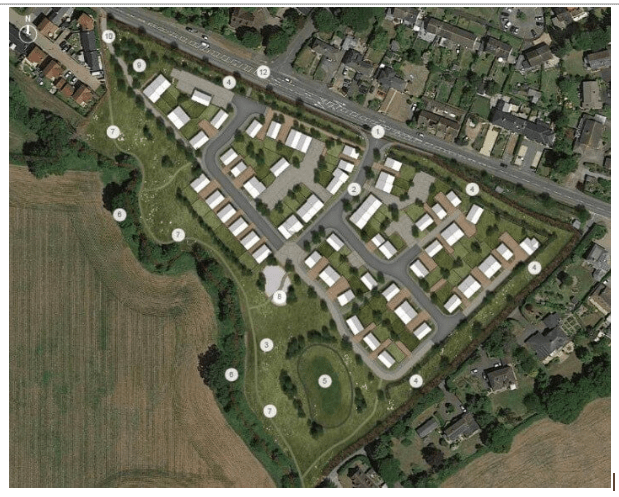
A computer generated image taken from the planning documents, shows the proposed layout of the new homes. Image: LHC Design.
Fears about the development’s impact on the sewage system, and therefore a potential increase in raw sewage discharges, led Councillors to put the plans on hold last month to ask the Environment Agency (EA) and South West Water (SWW) again whether they had any pollution-related objections.
Having received no reply, and with the EA saying it would not change its position that it doesn’t object, council officers suggested imposing a condition on the developer to draw up a sewage management scheme before putting forward further plans “to ensure that the network as a whole is not overloaded as a result of the development.”
East Devon District Council principal planning officer Gavin Spiller explained how this method could help the council get more information and evidence than further consultations would.
Satisfied, Councillors granted permission with this condition and several others, including having a pedestrian crossing and two bus stops.
Speaking about SWW’s failure to respond, Cllr Eileen Wragg (Lib Dem, Exmouth Town) said: “It is disappointing that this council did not have a reply from South West Water, but again, are we surprised? No, we’re not. I think it’s deplorable, frankly.”
Cllr Mike Howe (Independent, Clyst Valley) expressed his dismay at raw sewage discharges.
He said: “It is unacceptable for raw sewage in this day and age to be regularly flooding footpaths, footways and anything else in our communities. Full stop.
“We cannot allow development to happen where we are going back to the 1800s, where you just throw it out in the street.”
Members of the public and Woodbury Parish Council also objected, expressing concerns about road safety and infrastructure.
According to the latest financial analysis only if the government offers NatWest shares at a loss to the taxpayer of £28bn.
But this government might be tempted to try anything to stay in power, or is Owl being too cynical?
NatWest sale ‘could cost taxpayers £28bn’
George Grylls, Ben Martin www.thetimes.co.uk
The government may end up losing £28 billion from selling its shares in NatWest, a financial analysis has shown.
Jeremy Hunt announced last week that the government would explore options to sell its remaining 38.6 per cent stake in the bank, potentially offering the public the opportunity to buy shares. The chancellor said it was “time to get Sid investing again”, a reference to the 1980s advertising campaign during the privatisation of state-owned assets such as British Gas.
The government bailed out the Royal Bank of Scotland, which subsequently rebranded as the NatWest Group, purchasing an 84.4 per cent stake for £45.5 billion between 2008 and 2009 during the financial crisis.
Ministers have been reducing the government’s stake in the bank since 2015, but all of these sales have been at a loss. Financial analysts have questioned the decision to examine ways to expedite the sale of the remaining stake at a time when NatWest is struggling.
The bank has lost a quarter of its value this year after the former chief executive, Dame Alison Rose, was forced to resign over the debanking scandal involving Nigel Farage, the former Ukip leader, and Coutts, the private bank owned by NatWest.
Analysis by Hargreaves Lansdown, the investment firm, has shown that selling the government’s remaining stake at the bank’s current share price of 206p would lead to a total cost of £28 billion to the taxpayer.
The government has benefited from some returns on its NatWest shares when dividend payments were resumed in 2018 after a ten-year pause. NatWest figures suggest that the government has been paid £4.4 billion since 2018 in dividends. The bank has paid out a total of 70.8p per share in ordinary and special dividends, amounting to only 14.2 per cent of the buy-in price, according to Hargreaves Lansdown.
Derren Nathan, head of equity at the investment group, said that despite those modest returns the taxpayer was still facing an “eye-watering loss”.
“It needs to be said that gain on investment wasn’t the main motivation for the initial bailout, as this was seen as essential for the nation’s financial stability,” he said. “But given where we are in the cycle the timing of a disposal may be somewhat questionable. Based on forward earnings the valuation is close to a ten-year low.
“There are of course still potential economic tripwires ahead, but so far a much-anticipated recession has been avoided and there’s still a chance the landing in the UK will be on the softer side. Meanwhile NatWest is poised to benefit from some of the structural tailwinds that should lift sector earnings over the medium term.”
The Treasury said the government planned to sell its final shares by 2025-26 “subject to market conditions and value for money”. It said: “As part of the plan to return [NatWest Group] to the private sector, the government will also explore options to launch a share sale to retail investors in the next 12 months, subject to supportive market conditions and achieving value for money.”
NatWest Group said: “Any decisions around share sales are a matter for the government. We welcome the government’s continued commitment to returning NatWest Group to private ownership and believe this is in the best interests of the bank and our shareholders.”
The UK Covid-19 inquiry is set to come to Exeter on Monday, with residents invited to share their pandemic experiences in person.
The Every Story Matters programme was designed to remove the formality of giving evidence or attending a public hearing, organisers said.
Drop-in sessions are being held at Exeter Community Centre, or people can book 30-minute slots online.
Hearings for the national inquiry are expected to conclude in 2026.
People who visit the community centre will be able to speak to the inquiry staff.
Inquiry secretary Ben Connah said: “Each of us has a story to tell about the pandemic.
“Sadly, hundreds of thousands of people lost loved ones, and many more became ill or suffered hardship or isolation. We really want to hear what you have to say.”
Speaking on BBC Radio Devon, he added that the session was helping to ensure the “human impact of the pandemic is at the centre of this inquiry.
The inquiry was established to “examine the preparedness for, the response to, and the impact of the pandemic and to learn lessons for the future”.
Baroness Heather Hallett opened the national inquiry in June 2022.
It has since opened seven investigations, with more expected.
UK Covid-19 Inquiry – Every Story Matters Drop in Event
Come and meet our team in Exeter at the Exeter Phoenix, and help us to understand how the pandemic affected you and your community.
The pandemic affected every single person in the UK and, in many cases, continues to have a lasting impact on lives. This is your opportunity to share the impact it had on you, and your life, to shape the Inquiry’s investigations and help lessons to be learned.The pandemic affected every single person in the UK and, in many cases, continues to have a lasting impact on lives.
Every Story Matters, the Inquiry’s UK-wide listening exercise, is the public’s opportunity to share the personal impacts of the pandemic with the Inquiry, without the formality of giving evidence or attending a public hearing. It will support the UK Covid-19 Inquiry’s investigations by providing evidence about the human impact of the pandemic on the UK population.
The Drop In session at Phoenix Exeter on Tuesday 28th November 2023. It starts at 10am and ends at 12.30pm.
You can just turn up on the day but if you need support, you can also book in for a private 1-2-1 session..
The Drop In session is in Studio 1, 1st floor and for the Private 1-2-1, go ot the Meeting Room, 1st Floor.
The event has been specially created to explain how you can share the impact it had on you, and your life, to shape the Inquiry’s investigations and help lessons to be learned.
 Merrywood Blackpool Corner Axminster EX13 5UHRef. No: 23/2471/FUL | Validated: Fri 17 Nov 2023 | Status: Awaiting decision21 Silver Street Honiton EX14 1QJRef. No: 23/2473/TCA | Validated: Fri 17 Nov 2023 | Status: Awaiting decision1 Cowley Barton Cottages Cowley Exeter EX5 5ELRef. No: 23/2476/DOC | Validated: Fri 17 Nov 2023 | Status: Awaiting decisionStables Field West Of Gosford Road Ottery St Mary EX14 3AZRef. No: 23/2460/PDR | Validated: Thu 16 Nov 2023 | Status: Awaiting decision27 Primley Road Sidmouth Devon EX10 9LDRef. No: 23/2461/VAR | Validated: Thu 16 Nov 2023 | Status: Awaiting decisionCourt Place Farm Wilmington Honiton EX14 9LARef. No: 23/2462/AGR | Validated: Thu 16 Nov 2023 | Status: Awaiting decision9 Blackthorn Close Sidmouth Devon EX10 9XRRef. No: 23/2452/FUL | Validated: Wed 15 Nov 2023 | Status: Awaiting decisionMeadow Brook House Broadway Woodbury Devon EX5 1NYRef. No: 23/2438/TCA | Validated: Tue 14 Nov 2023 | Status: Awaiting decisionAppletree Cottage Hand And Pen Lane Whimple EX5 2PXRef. No: 23/2443/FUL | Validated: Tue 14 Nov 2023 | Status: Awaiting decisionLand Set Aside For Finnimore Industrial EstateRef. No: 23/2448/TRE | Validated: Wed 15 Nov 2023 | Status: Awaiting decisionSite Of Cranbrook New Community London Road BroadclystRef. No: 23/2437/V106 | Validated: Tue 14 Nov 2023 | Status: Awaiting decision7 Cliff Terrace Budleigh Salterton EX9 6JYRef. No: 23/2423/TCA | Validated: Mon 13 Nov 2023 | Status: Awaiting decisionGaveney House 5 Salterton Road Exmouth EX8 2BWRef. No: 23/2426/LCPL | Validated: Tue 14 Nov 2023 | Status: Awaiting decisionBrookside Cottage Station Road Newton Poppleford Devon EX10 0ERRef. No: 23/2429/FUL | Validated: Mon 13 Nov 2023 | Status: Awaiting decision20 Eastfield West Hill Devon EX11 1XNRef. No: 23/2431/TRE | Validated: Tue 14 Nov 2023 | Status: Awaiting decisionEndellion Axminster Road Musbury EX13 8AZRef. No: 23/2434/TRE | Validated: Tue 14 Nov 2023 | Status: Awaiting decisionHigh Trees Manor Road Sidmouth EX10 8RRRef. No: 23/2424/TRE | Validated: Mon 13 Nov 2023 | Status: Awaiting decisionLaneside Drakes Avenue Sidford Devon EX10 9QYRef. No: 23/2432/FUL | Validated: Wed 15 Nov 2023 | Status: Awaiting decisionFlat 1 14 Seafield Road Seaton EX12 2QSRef. No: 23/2413/FUL | Validated: Thu 16 Nov 2023 | Status: Awaiting decisionWoodbury C Of E Primary School Castle Lane Woodbury EX5 1EARef. No: 23/2409/FUL | Validated: Fri 17 Nov 2023 | Status: Awaiting decisionThe Robins Luppitt Honiton EX14 4TRRef. No: 23/2414/FUL | Validated: Tue 14 Nov 2023 | Status: Awaiting decisionSite Of Penny Park Kersbrook Lane Kersbrook EX9 7ADRef. No: 23/2406/FUL | Validated: Fri 17 Nov 2023 | Status: Awaiting decisionValley Farm Sheldon Honiton EX14 4QXRef. No: 23/2393/FUL | Validated: Tue 14 Nov 2023 | Status: Awaiting decisionLand Adjacent Sunnyside BirchillRef. No: 23/2381/FUL | Validated: Tue 14 Nov 2023 | Status: Awaiting decisionMeadowhayes Harcombe Road Axminster Devon EX13 5TBRef. No: 23/2383/FUL | Validated: Mon 13 Nov 2023 | Status: Awaiting decisionCopplestones Ridgeway Sidbury Devon EX10 0SFRef. No: 23/2375/FUL | Validated: Wed 15 Nov 2023 | Status: Awaiting decisionCopplestones Ridgeway Sidbury Devon EX10 0SFRef. No: 23/2376/LBC | Validated: Wed 15 Nov 2023 | Status: Awaiting decisionDrakes Gardens Drakes Avenue Exmouth EX8 4ADRef. No: 23/2358/TRE | Validated: Wed 15 Nov 2023 | Status: Awaiting decision13 Parkside Crescent Exeter EX1 3TWRef. No: 23/2343/FUL | Validated: Mon 13 Nov 2023 | Status: Awaiting decisionLower Stone Cottage Blackhorse Devon EX5 2APRef. No: 23/2349/FUL | Validated: Mon 13 Nov 2023 | Status: Awaiting decision3 Elizabeth Road Exmouth Devon EX8 4NTRef. No: 23/2342/FUL | Validated: Mon 13 Nov 2023 | Status: Awaiting decision3A Ashley Brake West Hill Ottery St Mary EX11 1TWRef. No: 23/2336/TRE | Validated: Thu 16 Nov 2023 | Status: Awaiting decision4 Shelly Reach Exmouth Devon EX8 1XTRef. No: 23/2310/FUL | Validated: Mon 13 Nov 2023 | Status: Awaiting decisionWymcot Church Road Whimple Devon EX5 2TARef. No: 23/2306/FUL | Validated: Mon 13 Nov 2023 | Status: Awaiting decisionLand Opposite Greendale Business Park Woodbury Salterton EX5 1EWRef. No: 23/2300/MFUL | Validated: Fri 17 Nov 2023 | Status: Awaiting decisionPitney Water Storage Tank Broadhembury EX14 3LERef. No: 23/2294/FUL | Validated: Mon 13 Nov 2023 | Status: Awaiting decisionLand Adjacent To Last Resort Green Lane ExtonRef. No: 23/2292/FUL | Validated: Tue 14 Nov 2023 | Status: Awaiting decision20A Portland Avenue Exmouth EX8 2BSRef. No: 23/2255/FUL | Validated: Mon 13 Nov 2023 | Status: Awaiting decisionForest Edge Campsite Putts Corner Sidbury Sidmouth EX10 0QQRef. No: 23/2230/FUL | Validated: Mon 13 Nov 2023 | Status: Awaiting decisionCombe Wood House Salcombe Regis EX10 0JNRef. No: 23/2210/FUL | Validated: Fri 17 Nov 2023 | Status: Awaiting decision42 Honey Park Road Budleigh Salterton EX9 6EGRef. No: 23/2087/FUL | Validated: Wed 15 Nov 2023 | Status: Awaiting decisionWeycroft Manor Weycroft Axminster EX13 7LLRef. No: 23/2049/LBC | Validated: Tue 14 Nov 2023 | Status: Awaiting decisionLand To The West Of Carpenters Yarcombe EX14 9BDRef. No: 23/1996/FUL | Validated: Tue 14 Nov 2023 | Status: Awaiting decisionCuthayes Farm Axminster EX13 5SERef. No: 23/1907/LBC | Validated: Mon 13 Nov 2023 | Status: Awaiting decision
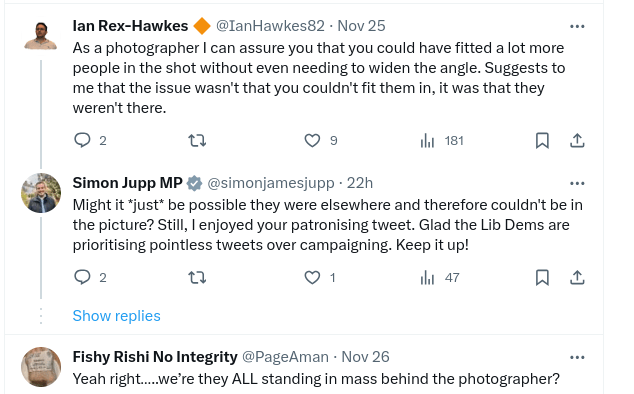
Well, maybe if it’s a Tory camera.
The photos recording David Reed’s selection as Tory candidate for Exmouth in July were found by observant readers to be a “stitch up” with some people appearing twice!
Now Simon Jupp is “padding out” supporter numbers by claiming that he can’t get them all in the picture (when he clearly can, as pointed out by Ian Rex-Hawkes).
Anyone remember the school photo with little Simon sitting cross legged in the front?

Has he pushed Devon County over the brink? – Owl
Jeremy Hunt has been warned he will trigger a fire sale of public assets, reduce councils to an emergency service and put the vulnerable at greater risk after an autumn statement pointing to a new wave of austerity.
Michael Savage www.theguardian.com
There will be a significant increase in the number of councils in effect “returning the town hall keys” to government because they are no longer sustainable, according to council leaders. In a furious response to the autumn statement, they said several “flagship blue counties” could go bankrupt just as next year’s election is called.
The backlash comes after economists concluded that the chancellor’s tax cuts last week in effect came at the expense of future public spending. Once settlements for Scotland, Wales and Northern Ireland are taken into account, non-protected government departments in England face an annual cut of 3.4% for five years.
The state of prisons, backlogs in the legal system and pressure on further education have caused most immediate alarm. Sir Bob Neill, the Tory MP who chairs the Commons justice select committee, said that there was a case for “revisiting which departments should be given protection” from spending cuts.
Traditionally, ministers have chosen to prioritise the NHS and schools.
However, local government sources said that after austerity since 2010, there was now an “existential threat” to local services – while big council tax increases could be on the cards.
“Things are starting to fall apart at the seams,” said one despairing leader. Another warned: “We need to have a recognition that if we aren’t properly funded the rest of the country will fall over.” A third said: “The system is totally and utterly broken.”
One senior Tory said: “The Treasury is fully aware that some flagship blue counties are right on the edge: falling over just before the election won’t look good.”
Mel Lock, director of adult services for Somerset, warned of a real human cost. “No doubt about it, it’s going to be older and disabled people not getting timely support,” she said.
“Some will end up in hospitals, or will be delayed leaving. That means lives will be restricted and foreshortened. That’s the bottom line to it.”
Shaun Davies, leader of Telford and Wrekin council and chair of the Local Government Association, said there would be a big increase in the number of councils in financial distress. “Any suggestion of any further cuts on top of the current deficit we face and we’ll see the number of councils set to go bankrupt rise from one in 10 to a significantly higher number.
“They’ve done the restructures. They’ve done the asset sales, they’ve done the staff reduction, they’ve done the service redesign and they’ve done the transformation. They’ve used the reserves already. Once those things are gone, they’re gone. My concern is that there is a wave of councils that will effectively return the town hall keys back to the government because there is just no way out of this.”
Councils that in effect fall into bankruptcy can issue a section 114 notice, signalling that they cannot balance their budgets. Jonathan Carr-West, chief executive of the Local Government Information Unit which has just surveyed the opinions of council leaders, said he was “starting to talk about this as a sort of existential threat to local government”.
“What has surprised me in the last couple of days is just how angry leaders are,” Carr-West said. “It’s big Labour cities like Bradford, but it’s also Kent and Hampshire – big Conservative councils.
“I don’t believe that there is a conspiracy to destroy local government. But I think we are sleepwalking towards a position where councils just won’t be viable.”
He said that while assets could be sold off in the short term, it would lead to a big transfer of wealth of public assets into private hands.
Elsewhere, there are concerns over the condition of the prison estate and a lack of experienced officers. Charlie Taylor, the chief inspector of prisons, saidthe situation was “very fragile” and his biggest worry was the lack of activity for prisoners and the impact on their rehabilitation.
“Out of 37 prisons we inspected in our last annual reporting area, only one of them was good or reasonably good for purposeful activity,” Taylor said. “The risk is that the revolving door of people committing crime going back into prison, costing the taxpayer a huge amount of money, simply continues.”
There are also concerns about further education funding over the next five years. Louis Hodge, an associate director at the Education Policy Institute, said: “Cuts in funding for further education have been around twice the rate experienced in schools and over a quarter of children now live in relative poverty, based on data that does not yet fully reflect the effects of rapidly rising prices over the last year.”
He added: “Whatever the outcome of the next election, it is clear there is much to do to get education back on track following a hugely disruptive pandemic and a decade dominated by funding cuts.”
A protest has taken place on Portreath Beach in Cornwall as locals say there have been sewage alerts for 26 consecutive days.
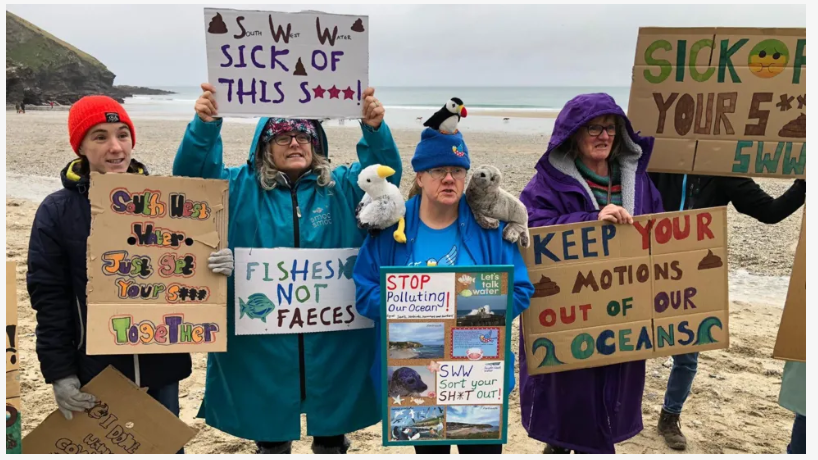
Swimmers said they had not been able to enter the water there, and that South West Water (SWW) had not given them any explanation.
Campaigning charity Surfers Against Sewage (SAS) said multiple sewage alerts had also been flagged at Porthtowan, St Agnes, Godrevy and Gwithian recently.
SWW declined to comment.
He said: “That should only happen in exceptional circumstances when the rain is such and [sewage systems] cannot handle it.
“But, quite clearly, the system cannot handle it day-by-day right now.”
Tina Dennett, from Portreath & Porthtowan Bluetits swimming group, said if it was “something really simple, like a stuck valve, then they need to take action”.
He said: “If it is something more serious and we have had 26 days continuously of overspill here, then something drastic needs to be done about it.
“It’s shameful – shame on you South West Water.”
Sea swimmer Alison King said people and animals should not be swimming in sewage.
She said: “We want to come to a local beach and be able to swim at a local beach.
“I love animals as well and birds, and I don’t think they should be swimming in all our all our rubbish.”
Car park price hikes across East Devon boosted council coffers by more than £1million a new report has shown.
Local Democracy Reporter eastdevonnews.co.uk
Car park fee hikes have brought in an extra £1 million for East Devon District Council (EDDC) from April to October each year, according to a cabinet report, writes local democracy reporter Will Goddard.
Parking charges in the area went up for the first time in 10 years in April 2022. Some tariffs doubled from £1 to £2 per hour in short-stay car parks.
In 2021, gross council car park revenue from its summer season between April and October was just under £2.5 million.
In 2022 and 2023, it rose to over £3.5 million each year.
Summer ticket sales have gone down year on year, but revenue has grown.
This year saw a “very small” rise of £2,600 overall compared to last year. Takings dropped in July and August , possibly because of poor weather, but the normally quieter months before and after increased.
There has also been a shift in the type of car park people use.
More motorists are reportedly paying for longer stays in EDDC long-stay car parks and staying for shorter amounts of time in short-stay car parks.
The council claims this is not a problem, as long-stay car parks are larger and so are “well suited to this type of use.”
People are buying more monthly permits too. East Devon residents can also buy £120 annual permits for parking in one town, which increases by £24 for each additional town up to a total of five locations.
A monthly payment option, introduced last year, is available for this permit type.
This helps split the upfront cost across the year or allows residents to only buy permits for the months they need.
Sales of monthly permits have more than doubled since they were brought in, which the report suggests could be down to the cost-of-living crisis, tariff rises or the introduction of residents’ parking zones in Exmouth.
East Devon District Council is to produce a parking strategy next year, which will set out how car parks “will be holistically used and managed in the coming years”, including pricing and special offers.
The report recommends Councillors keep car park charges in East Devon the same next year and make any future changes in line with this new strategy.
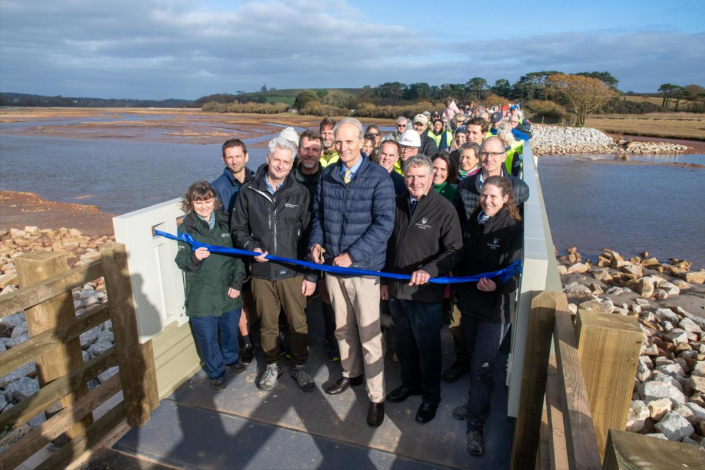
The Lower Otter Restoration Project is finished -15 years after the idea was first put forward.
Philippa Davies www.exmouthjournal.co.uk
The 70-metre footbridge was the final construction stage of the major environmental scheme at Budleigh Salterton.
The project is creating 55 hectares of mud flat and saltmarsh by allowing the tide to flow freely in and out of a new inter-tidal area.
It is reversing the work done 200 years ago when an embankment was created to hold back the sea, creating more farmland. In recent years, the embankment had started to fail, putting recreational facilities, footpaths, a municipal tip and other infrastructure at risk from serious flooding.
To prevent this, Clinton Devon Estates and the Environment Agency devised an ambitious plan to re-connect the River Otter and estuary to its former floodplain, providing space for floodwater and creating habitats for invertebrates, fish, waders and wildfowl.
On Friday, November 25, the Elizabeth Bridge was officially opened, spanning the breach made in the 200-year-old embankment. The breach reconnects the sea and the river to its original floodplain.
Clinton Devon Estates said the Lower Otter Restoration Project (LORP) is central to its 2030 Strategy on land use, with two of its ambitions being adaptation to a changing climate and the restoration of the ecological health of its land holdings.
Chief executive John Varley said: “Everything we do is with tomorrow in mind. There was a danger that without the Lower Otter Restoration Project there would have been no ‘tomorrow’ for parts of the Estate or for our tenants and neighbours.”
Dr Sam Bridgewater, Clinton Devon Estates’ Director of Environment Strategy and Evidence, and the Estates’ lead on the project, said one of the biggest challenges was having to restructure the Estate landholdings to accommodate the project. For example, working with tenant farmers to adapt their business models to an uncomfortable climate change reality and finding a large, flat piece of ground to relocate the often-flood hit local cricket pitch.
He said: “LORP has been a great partnership project and with the Environment Agency we found a partner whose vision and ambition matched our own.”
The Environment Agency managed the development of the scheme, appointing engineering consultant Jacobs to lead the design of the project, contractor Kier to carry out the construction work and Hi-line to provide specialist ecological support..
Project managers say significant positive changes have already been recorded, both for the benefit of local people, visitors, and wildlife. South Farm Road, which in the past has been impassable due to flooding, has been moved and raised by the project. Budleigh Salterton Cricket Club has now moved to a flood-free pitch, with improved facilities enabling it to develop youth, women’s and disability cricket with a stunning new pavilion. New signage, interpretation and parking is also in place to help visitors understand and enjoy the site and identify its wildlife.
Animal and plant species already resident in the area, including beavers, bats and rare birds such as the Cetti’s warbler and little ringed plovers, continue to thrive in the valley. The evolution of habitat from agricultural land to wetland habitat has only just begun, but already rare bird species including lesser yellowlegs, white egrets, avocets, glossy ibis, spoon bills and at least two ospreys, have been seen.
Ecologist Mark Wills, an ornithologist with Hi-Line, worked on the project for more than two years. He said: “We have had two different ospreys call in on migration. Normally they just stop over for a day or two – this time they remained on site for nearly two weeks, which is amazing. We’ve got a bigger body of water, and the ospreys seem to have felt better able to feed.”
Although construction is now complete, monitoring work will continue at the Lower Otter, which it’s hoped will become an extension of the East Devon Pebblebed Heaths National Nature Reserve (NNR).
 East Devon Watch