I pray you, remember the porter!

Tory MP calls out Keir Starmer’s ‘lack of manners’ after he ‘fails to say thank you’

Express headlines!

Is this really him? – Owl

Richard Ashmore www.express.co.uk (Extract)

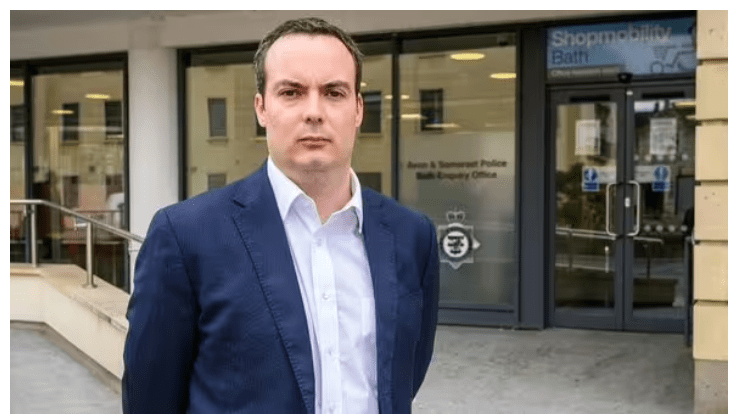
A Conservative MP has claimed Sir Keir Starmer just gives him a “glare, stare, or blank expression” whenever he holds a door open for the Labour leader in Westminster.

Simon Jupp, who represents East Devon, made the bad manners accusation on X, formerly known as Twitter, and said “most people signal their thanks” but “never Sir Keir”.

An indignant Mr Jupp tagged Sir Keir in his post and wrote: “On several occasions, I have held the door open on the Parliamentary estate for Sir Keir Starmer and did so moments ago, as I try to do for everyone.

“Most people signal their thanks, but never Sir Keir. I just get a glare, stare, or blank expression. Good manners cost nothing.”…..

Quite a lot of “interesting” comment on social media including:

“You’re a fine one to talk about ignorance! How many of us [constituents] have you ignored in the past few months? You block us on social media for just asking relevant questions about our local community! We won’t be voting for you next election! From Sam

Letting rules ‘could destroy’ self-catering sector in Wales

An attempt to force empty second homes on to the market by demanding that businesses let their properties for 182 days a year risks destroying the self-catering holiday industry in Wales, business leaders have warned.

Will Humphries www.thetimes.co.uk

The high threshold set by the Labour government in Wales is said to be impossible for many holiday let owners to reach and is penalising farmers and homeowners trying to supplement their incomes by converting barns and outbuildings on their land.

If owners do not hit the threshold of 182 days let and 252 days available to let, they revert to paying council tax as an “empty second home”. The threshold in England is 70 days let and 140 available to let.

Once reverted to council tax, each Welsh council has been given the option to charge an additional premium of up to 300 per cent council tax on empty second home properties.

The Welsh government brought in the rule last year to combat the number of second homes in holiday destinations by forcing empty second homes to be put on the market as residential properties.

However, in a survey by the Professional Association of Self Caterers UK — which received responses from 1,500 Welsh business operators — only 51 per cent said they had hit the 182 days’ let target in the year to March 2023 and only 25 per cent thought they would reach the target in the year to next March. Seventy per cent said they were discounting to try to hit the 182-day threshold, so were losing money because they were unable to pass on rising energy and electricity costs.

Alistair Handyside, executive chairman of the association, said: “Getting these enormous [council tax] bills at the end of a poor year’s trading is horrendous. We are seeing real mental health issues as a result of the pressures. What other kind of business has to hit a deliberately high threshold set by government in order to not pay tax?”

Handyside said there were only so many holiday days for which most operators could find customers. “It’s illegal to take kids out of school in term-time and empty nesters are not a big enough market to fill weeks in the out season,” he said. “Even if you filled all the holidays, bank holiday weekends and every weekend in the year you would not achieve close to 182. It would be nearer 100, which is why all the industry has been asking for a 105-day threshold for years. To achieve 105 you would still need to be open all year — and add to this the variables of the economy, weather and market demand.

“This summer was pretty much a washout. This creates a double whammy for self-caterers. Less income, more tax. With [a] beach luxury pad you can probably hit 182 [easily], but with a small cottage nestling in the Welsh hills in a less known area? Not a chance, even if [the] economy, weather and marketing all aligned.”

Mandy McDermott, 58, who bought a farmhouse with three holiday lets in converted barns, said the mental stress of chasing the 182-day target was “horrendous” and that if she did not make it she could face paying about £5,000 in taxes.

McDermott, who runs her Golly Farm Cottages business near Wrexham, north Wales, said: “My holiday lets are clearly a business because they can’t become second homes under planning restrictions. There are a lot of us with converted barns and outbuildings who shouldn’t be caught up in this.”

She said that the cost of living crisis was affecting bookings while at the same time pushing up her own costs. “The council doesn’t tell a baker they have to sell 150 granary loaves,” she said. “It just leaves you thinking who is running my business here? Someone in the government sitting somewhere with a bonkers idea.”

A Welsh government spokesman said: “The changes to the local tax rules for self-catering accommodation and second homes are designed to help develop a fairer housing market and ensure property owners make a fair contribution to the communities where they own homes or run businesses.

“Tourism makes an important contribution to the Welsh economy and to Welsh life. We do, though, need to ensure appropriate balance. We believe that everybody has a right to a decent, affordable home to buy or to rent in their own communities so they can live and work locally.”

High inflation has cost UK workers equivalent of a 3p income tax rise

“Rishi Sunak congratulating himself over today’s [15 November] figures will be cold comfort for all the hard-working people still bearing the brunt of this Conservative chaos. 

“For months on end, people across the country have been watching as their pay cheque gets squeezed from all sides, draining every spare penny. From the ever-increasing cost of the weekly shop to skyrocketing mortgage payments. 

“Enough is enough. With next week’s Autumn Statement the Government must properly help families and pensioners struggling with the cost-of-living crisis and give our NHS the funding it desperately needs.” Liberal Democrat Treasury spokesperson Sarah Olney MP 

Lib Dem analysis as reported in the Times:

Oliver Wright www.thetimes.co.uk 

Higher prices have cost workers the equivalent of a 3p rise in income tax over the past two years, new research suggests, as Rishi Sunak looks set to finally hit his 5 per cent inflation target.

An analysis by the House of Commons library found that for 22 months of the last two years, average salaries increased by less than the rising cost of living.

Researchers calculated that a worker earning £28,400 in October 2021 was now £697 worse off than they would have been if pay had kept pace with inflation. For someone earning £55,000 a year the loss was even greater with average salaries now £1,348 less than might have been expected without steeply rising prices.

They added that the losses were greater than if the government had increased income tax by 3p in the pound and average earnings had kept pace with inflation.

The analysis comes ahead of new data from the Office of National Statistics due to be published on Wednesday which is likely to show that the prime minister has met his pledge to bring down inflation to below five per cent two months earlier than he promised.

Inflation stood at 6.7 per cent in September but economists expect it to fall sharply when October’s figures are released because last year’s Ofgem energy price cap increase will have dropped out of the data.

The consensus forecast is that inflation will have fallen to 4.8 per cent — 0.2 percentage points below Sunak’s target, which he pledged to meet by the end of the year.

In other good news for the government, separate figures showed that despite the hit on living standards over the last two years wage growth is now finally outstripping inflation.

The ONS said average regular earnings, excluding bonuses, increased by 7.7 per cent in the three months to September, down from an upwardly revised and record high of 7.9 cer cent in the previous three months.

At the same time, the unemployment rate was unchanged at 4.2 per cent, although job vacancies fell to the lowest level for more than two years, down 58,000 quarter-on-quarter at 957,000.

Jeremy Hunt said it was “heartening” to see inflation falling and real wages growing which meant “keeping more money in people’s pockets”. Speaking in the House of Commons, the chancellor said the government was starting to “win the battle” against inflation which would allow the government to “focus on the next stage” at his autumn statement next week.

“As we start to win the battle against inflation, we can focus on the next stage which is growth,” he said.

But the Liberal Democrats, which commissioned the Commons research on lost earnings, said the words would “ring hollow for families who have seen their wages decimated by years of Conservative chaos”.

“The squeezed middle has been hardest hit by this toxic mix of stagnant wages and high inflation,” Sarah Olney, the party’s Treasury spokeswoman, said.

‘The Conservative Party has completely run out of steam and is holding our economy back.”

Economists said the latest wage growth figures, together with last week’s official data showing a stalling economy with zero growth in the third quarter, were likely to persuade the Bank of England to hold off from further interest rate rises.

Policymakers at the Bank are watching wage growth closely, with the recent record highs having been a cause for concern in its battle to bring inflation back down to the 2 per cent target.

Rates are now widely seen as having peaked at 5.25 per cent and with the threat of recession looming large, some economists believe the Bank will move to begin cutting borrowing costs in 2024.

Samuel Tombs at Pantheon Macroeconomics said: “Wage growth is slowing sufficiently quickly for the Monetary Policy Committee to conclude that bank rate already is high enough at 5.25 per cent”.

Hunt suggested that the autumn statement was likely to extend — or even make permanent — tax breaks for companies who invest in new technology or equipment.

In his budget in March announced a three-year policy of “full expensing” under which companies could set off investments from higher levels of corporation tax.

There have been calls to make the tax break permanent at a cost to the Treasury of around £10 billion a year. Hunt said: “I will focus on increasing business investment because, despite the fact that our growth has been faster than many of our European neighbours, our productivity is still lower.”

Flood protection plans for English homes cut by 40%

The number of properties that will be better protected from flooding by 2027 has been cut by 40%, and 500 of 2,000 new flood defence projects have been abandoned, according to the National Audit Office (NAO).

Helena Horton www.theguardian.com 

The number of homes forecast to be under enhanced flood protection by 2027 has been slashed from 336,000 to 200,000. This means 136,000 more homes will be at risk of flooding since plans were drawn up in 2020, figures from an NAO report show.

Despite the government doubling its capital funding in England to £5.2bn to combat the danger of flooding, a quarter of new flood defence projects will now not go ahead. The Environment Agency (EA) has blamed inflation for the cuts in protection.

Thousands of homes have been flooded during storms this autumn. Storm Babet was confirmed to have caused more than 2,000 homes to flood, while Storm Ciarán flooded more than 1,000. Storm Debi, which is causing havoc in Ireland, is expected to hit the west of England this week. Climate experts say storms are becoming more frequent and severe due to climate breakdown.

The EA has added protection from floods to 59,000 properties in England since 2020. It had a target of protecting 336,000 homes by 2027.

A shortfall in the agency’s finances means it cannot keep enough flood protections in the required condition to prevent destruction to homes. Due to inflation, the EA is £34m short of its expected budget, which means it will be be able to maintain only 94% to 95% of its assets at the required condition, resulting in 203,000 properties at increased risk of flooding. It had aimed to maintain 98% of its high-consequence assets at their required condition.

The flood protection programme got off to a slow start. There was an underspend of £310m in its first two years, which has been deferred by the Treasury to make sure the government meets its target of spending £5.2bn on flood defences by 2027. Because of this underspend the EA will have to spend an average of almost £1bn each year over the remaining four years of the programme. There are fears from the NAO that these pressures will further erode value for money if hasty decisions are made to spend the funds.

The NAO has also warned that the government has not set a long-term target for the level of flood resilience it expects to achieve and that there are no concrete plans beyond 2026 to meet long-term goals, meaning that long-term investment could be inefficient and not sufficiently protect enough homes from flooding.

Gareth Davies, the head of the NAO, said: “Government recognises the growing dangers from flooding and has committed to doubling its capital funding in England in the six years to 2027, as well as doing more to understand flood risk.

“However, the capital funding is forecast to better protect only 60% of the properties that were promised when the programme was launched in 2020, while inflation and other programme risks mean the Environment Agency could deliver even fewer than that. If there are further delays to the capital programme, Defra must work with HM Treasury to make sure it is in a position to switch money quickly into maintenance, where this would provide value for money.

“EA will have to manage a record level of capital investment in flood defences for the remaining four years of the programme. In doing so, it must resist pressure to accelerate projects or initiate new ones too quickly, if this is likely to lead to cost overruns and delays and put value for money at risk.”

Caroline Lucas, the Green party MP, said: “This report should be right at the top of new environment secretary Steve Barclay’s red box, laying bare the scale of ministers’ unforgivable neglect of this flooding crisis. Just weeks after huge numbers of homes were hit by devastating flooding, people are crying out for support and protection – yet this government has utterly failed to provide it. To add insult to injury, thousands more are expected to be unprotected from flooding risk in the years ahead.”

Tenth incumbent in thirteen years: ‘worst environment secretary ever’ 

A leading environmentalist described her to me as “the rudest and most uninterested politician” they had met. Farmers named her “the worst environment secretary ever” when all she could say about the devastating recent storms was that her department was ill prepared for “rain from the east”.

From Pig World magazine to Grocery Gazette, The National Trust, the RSPCA, the Country Land and Business Association and the fishing industry, no one lamented her demise. Senior civil servants called her “sullen, haughty and divisive”. The right to roam advocate Guy Shrubsole uttered the only kind words: “May you roam freely into the political wilderness, although the beavers might complain.”

Alice Thomson www.thetimes.co.uk (Extract)

Sixteenth Housing Minister in thirteen years!

Strong and stable government? – Owl

The sacking of Rachel Maclean means the UK is about to get its 16th housing minister since 2010. Housing campaigners are appalled, saying the government is failing to tackle problems in the sector because ministers change too frequently.

From Guardian Live:

This is from Polly Neate, chief executive of the housing charity Shelter.

The revolving door of housing ministers over the past decade, and in particular the last 18 months, proves the government’s failure to grasp the scale and urgency of the housing emergency. Rents are rocketing, evictions are soaring and homelessness is at a record high, yet we haven’t had a minister stay in the job long enough to get to grips with the problem.

The 16th housing minister since 2010 has to hit the ground running and the first thing on their to do list must be to pass a watertight renters (reform) bill and scrap no fault evictions.

And this is from Tom Darling, campaign manager at the Renters’ Reform Coalition.

Rachel Maclean attended our events and, though we don’t believe the government are going far enough on rental reform, she was always willing to engage with us – we wish her well for the future.

It is frankly shambolic that we will now be on to our 16th housing minister since 2010, and incredibly 9 just since the government promised to end no-fault evictions.

Now, just before the first day of the important committee stage, which involves poring over the detail of the bill, she is sacked – it makes a mockery of government and shows a shocking lack of respect for England’s 11 million private renters.