Sunak’s Eat Out to Help Out drove second Covid wave, Vallance tells inquiry

Earlier in the day this is what Rishi Sunak told an audience in Enfield:

The first time most of you saw me was during COVID. When I stood up at a press conference to announce the furlough scheme. From that moment until today, whether you like me or not, I hope you know that when it comes to the economy, when it comes to your job, your family, your incomes, I’ll always make the right decisions for our country.……

So now you can trust me when I say we can now start to responsibly cut taxes.….

You can trust me to take long-term decisions and that’s how we’ll build a brighter future for all our children.

[Full speech here; quote from concluding remarks at 20:40]

On Eat Out to Help Out, see below, could it be that our “techbro” PM couldn’t grasp scientific arguments about infection transmission? Or did the “beancounter” place the health of the hospitality sector economy above the health of the population?

Not a sound basis for gaining our trust either way.- Owl

Rishi Sunak’s Eat Out To Help Out scheme almost certainly drove a second wave of Covid cases in the UK, the former government chief scientific adviser has told the inquiry into the pandemic.

Jane Merrick inews.co.uk 

Sir Patrick Vallance said it is “very difficult to see how it [the scheme] wouldn’t have had an effect on transmission”.

While the half-price discount offer in August 2020, devised by the then chancellor, has previously been linked to a second wave by independent scientists and critics of the policy, Sir Patrick’s evidence is the first time a senior figure from government at the time has confirmed it was a driver of transmission.

The former scientific adviser said Rishi Sunak should have known the effect Eat Out To Help Out would have had on transmission because he was in all the relevant meetings at the time.

The evidence from Sir Patrick will put pressure on the current Prime Minister’s handling of the response to the pandemic. Mr Sunak is giving his own evidence early next month.

The inquiry has previously heard how Mr Sunak was referred to as “Dr Death the chancellor” by Dame Angela McLean, who is Sir Patrick’s successor, in reference to the controversial Eat Out To Help Out policy.

Neither Sir Patrick nor Professor Chris Whitty, the chief medical officer, was informed of the scheme before it was announced by the Treasury in July 2020.

Sir Patrick said their advice “would have been very clear”, adding that the public health message up until that point was “interaction between different households and people that you weren’t living with in an enclosed environment with many others is a high-risk activity”.

He said: “That policy completely reversed it to saying: ‘We will pay you to go into an environment with people from other households and mix in an indoor environment for periods extended over a couple of hours or more.’

“And that is a completely opposite public health message.

“As a result of that, it’s quite likely that had an effect on transmission. In fact it’s very difficult to see how it wouldn’t have had an effect on transmission and that would have been the advice that was given, had we been asked beforehand.”

Asked whether Mr Sunak would have been aware of the risks, Sir Patrick said it had been discussed at Cabinet “our concern that people were piling on more and more things” that would drive up cases.

“So I think it would have been very obvious to anyone that this was likely to cause an issue that inevitably would cause an increase in transmission risk.

“And I think that would have been known by ministers, and if he was in the meetings, I can’t recall which meetings he was in, but I’d be very surprised if any minister didn’t understand that these openings carried risk.”

Mr Sunak also wanted the scientists to be “handled” in the run-up to his Eat Out To Help Out policy, the inquiry heard.

On 2 July 2020, Sir Patrick wrote in his diaries: “In economics meeting earlier in the day they didn’t realise CMO [Prof Whitty] was there and CX [Mr Sunak] said, ‘It is all about handling the scientists, not handling the virus’.

“They then got flustered when CMO chipped in later and they realised he had been there all along. PM [Mr Johnson] blustered and waffled for 5 mins to cover his embarrassment.”

Sir Patrick was scathing about the “pure dogma” that emerged from Mr Sunak’s Treasury during the pandemic.

In his diaries he wrote on 26 October 2021, when the government was discussing whether to impose a Plan B of some restrictions stopping short of lockdown as cases were rising again: “Economic predictions! HMT saying economy nearly back to normal + Plan B would cost £18bn. No evidence. No transparency. Pure dogma + wrong throughout.”

Sir Patrick told the inquiry: “I did think that there was a lack of transparency.

“And it was difficult to know exactly what modelling had been done and what input they’d been to various assertions and comments made, and that made it very difficult and of course, it wasn’t publicly available either.

“And that created, I think, an imbalance where the science advice was there for everybody to see.”

It was not only the Treasury but Downing Street who were pushing for a full relaxation of measures after lockdown, the inquiry heard.

Sir Patrick wrote in his diaries that No10 wanted the “science altered” in the run-up to restrictions being lifted in summer 2020. On 19 June he wrote: “No10 pushing hard on releasing measures – including clubs and bars.

“They are pushing very hard and want the science altered. We need to hold on to our hats. There will likely be a second peak.”

Planning applications validated by EDDC for week beginning 6 November

The right is babbling about tax cuts while Britain burns. Pay no heed, Jeremy Hunt 

“Every spare pound should be consecrated not to tax cuts but to raising public investment – a key trigger for increased private sector investment and, ultimately, a better future.”

Will Hutton www.theguardian.com 

It is time “to focus on growth”, intoned the chancellor, Jeremy Hunt, on Friday. The economy, he seems to think, has turned a corner. Before Wednesday’s autumn statement – the biggest set-piece economic event of the year – anticipation on Tory backbenches and in the rightwing media is beginning to run high, as estimates about his potential largesse balloon. A focus on growth in their eyes can have only one meaning: buying back popularity with tax cuts.

It is breathtakingly wrong. Tax cuts, especially the widely mooted deep cuts to inheritance tax that Hunt is said to be considering, will do little for growth – instead choking off a much-needed source of revenue and inflating inequality. That they should be framed as crucial supports to aspiration, enterprise and growth is tribute to the huge rightwing bias in our national conversation, with the reasons for the prolonged stagnation facing us going largely unacknowledged. Britain is suffering from an intensifying four-decade-long investment drought in the public and private sectors – the root cause of the crisis in stagnating productivity and living standards that shapes our politics and daily lives. Every spare pound should be consecrated not to tax cuts but to raising public investment – a key trigger for increased private sector investment and, ultimately, a better future.

The IMF has calculated that the combination of selling off so many public assets cheaply, refusing for decades to invest in those that remain – hospitals, schools, transport – along with commitments to pay pensions without creating accompanying pension funds to discharge the liability, mean that public sector liabilities represent an astonishing 96% of GDP. If Britain’s public sector had a balance sheet like a private company, identifying both public assets and liabilities, its net worth would be in the red by more than £2tn.

The extent and speed of the deterioration in the public sector’s net worth since 2000 is stunning – comfortably the fastest in the G7, on the IMF’s definition. It should be no surprise. In an ideological universe in which all wealth is imagined to be created by private enterprise, public investment is a permanent Cinderella. Margaret Thatcher’s election marked the moment when British priorities were disastrously upended. Until 1980, public investment had averaged 4.5% of GDP; between 1980 and 2023 it has averaged 1.5% of GDP – a short interlude of rising public investment under New Labour, immediately reversed by the coalition and then the Tory governments of the 2010s. It now runs at half of what it needs to be, according to the National Institute of Economic and Social Research; it should be doubled.

One obvious crisis area is our national infrastructure, the foundation on which growth is built. Britain, as the National Infrastructure Commission said forcibly last month, must lift its spending on infrastructure to at least £70bn a year and keep it there for decades if it is to have any hope of matching the transport, digital, housing, water, waste disposal and energy infrastructure enjoyed by other advanced countries – let alone to overtake them. The NIC says that £30bn of those funds can only come from government. Seven years after we lost the annual £6bn that the European Investment Bank used to lend, the UK Infrastructure Bank, if it does well, will succeed in lending half that annually by 2030. In addition, there is abject investment in research and development. Nero was said to have fiddled while Rome burned; we have a legion of rightwing commentators, thinktanks and Tory MPs babbling about tax cuts while Britain burns.

Pre-budget opacity and secrecy abounds; in a grownup country a column like this could be written in the light of the projected spending, tax and borrowing figures. No chance. Instead we rely on informed guesses. We do know that tax revenues have been buoyed by far higher inflation and pay settlements than when thresholds were frozen for six years. Some City estimates suggest that, far from the tiny margins that the chancellor thought he was operating within last spring, the Office for Budget Responsibility will have told him (congruent with meeting his target for shrinking national debt in five years’ time) he might have up to £26bn to “give away”.

How to spend it? A serious chancellor in a serious government would take a rounded picture – the living standards of the people, especially the poorest, the state of public services, the wider needs of the economy, the sustainability of debt service, the weaknesses of the public sector balance sheet, our infrastructure and public investment needs. This is what a growing economic consensus, including the IMF, now urges. Focusing on debt and deficits alone without connecting them to investment or the wider public balance sheet, and trusting in tax cuts rather than public investment to stimulate “enterprise and aspiration” may be Tory economic policy – but it is fossilised, redundant economic thinking.

Yet even if his party allowed him to be a serious chancellor, Hunt has shown no interest in developing a public sector balance sheet; if he did, it would remove the case for tax cuts completely. Yet within this second-best world, two floated measures will be steps in the right direction. Expect companies to be allowed fully to offset investment against corporation tax for at least another year – or even permanently. This is the only “tax cut” that has ever been proven to raise investment. And Hunt will begin the vital consolidation of our absurd pension fund structure – myriads of small pension funds producing low returns but not investing in Britain.

Besides the challenges we face, there is no urgency or concerted effort to do everything possible to turn our economic trajectory around. The story should be investment, investment, investment – not bungs for the rich via inheritance tax cuts or worsening the already hard-pressed living standards of those at the bottom by shaving the proper indexation of welfare benefits – another floated measure. Since Brexit, inward investment, so important to an open economy like Britain’s, has shrunk alarmingly: no longer do we have full, unfettered access to crucial EU markets, and foreign companies are voting with their feet. Yet there is zero effort to correct this self-inflicted harm.

Our infrastructure is lamentable. Our public balance sheet is ruinously weak. Business investment is far below what is needed. We are going nowhere as a country. The autumn statement will scarcely shift the dial.

Devon devolution on track but Plymouth steps back

What sort of strings are attached to this “devolution” deal if Plymouth can’t accept them? – Owl

As the government pledged £16m funding to pave the path to a devolution deal for Torbay and Devon, Plymouth City Council announced its withdrawal from negotiations.

By Charlotte Cox www.bbc.co.uk

The government is “committed” to ongoing talks for a deal to transfer powers and funding from Whitehall to local government, Torbay Council said.

This includes investment in training and jobs.

Plymouth’s council leader branded the deal “unreasonable and unrealistic”.

Councillor Tudor Evans said to continue on with the process would have meant “less power and control” over transport in the city, no commitment to increased funding – and a “backward step” for the area.

Although he supported the principle of devolution, there was “no choice but to withdraw”, he added because of government insistence they “surrender our powers and funding regarding transport”.

Wishing luck to Devon and Torbay leaders, Mr Evans added: “It is massively disappointing given all the work that has taken place and we hope the government will realise the final deal it offered was unreasonable and unrealistic and that it will reconsider in the future.”

Levelling Up Minister Jacob Young said the government was “committed” to continuing negotiations to conclude a deal with Devon and Torbay Councils.

In a letter to leaders in Devon and Torbay, Mr Young offered £16m of “new capital funding” for the green economy including environmental science and technologies.

With a focus on new “green jobs, homes, skills, and business growth”, the funding would also be aimed at attracting private sector investment, he said.

A wider package of “devolved powers and funding” were in “advanced negotiations”.

Meanwhile, councils were seeking “greater local control” and resources for affordable housing and improved public transport, Torbay Council said.

‘Real momentum’

The devolution model would create a Combined County Authority (CCA) for the area, as opposed to a mayor for Devon, it added.

John Hart, leader of Devon County Council, said coming close to finalising a deal was “hugely significant”, giving Devon and Torbay a “stronger voice” in Whitehall.

Councillor David Thomas, Leader of Torbay Council said the funding announcement showed “real momentum” for the devolution deal.

Both leaders said they respected Plymouth City Council’s decision and would work with them, while Councillor Evans said Plymouth was also committed to co-operation.

Subject to an agreement in principle on the deal, a public consultation would be launched on the setting up of a proposed CCA, with a final decision coming before the respective councils in March 2024.

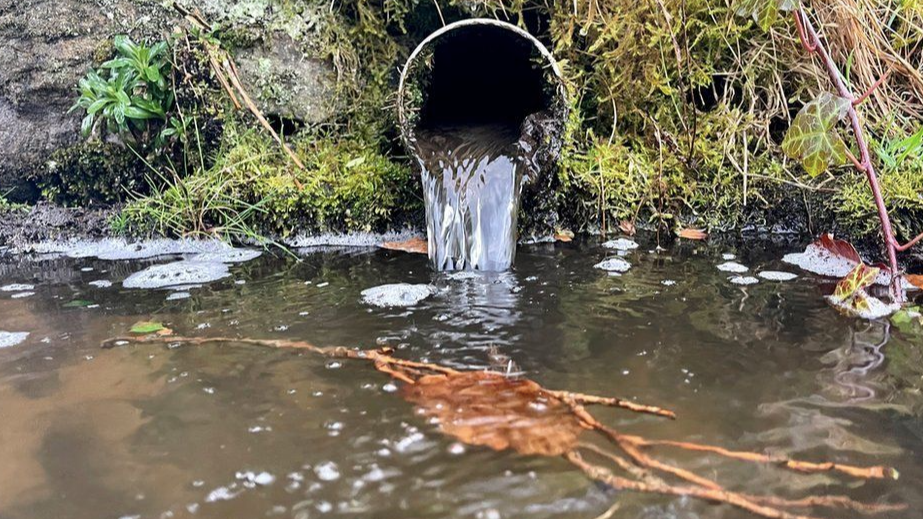
Let It Flow! Let It Flow! Let It Flow!

From a correspondent:

(To be sung to the tune of Let it Snow! Let It Snow! Let it Snow!)

Oh, the weather outside is frightful
The flood damage is truly spiteful
The sewage has nowhere to go
Let It Flow! Let It Flow! Let It Flow!

It doesn’t show signs of stopping
And all the manhole covers are popping
South West Water’s spent all of our dough
Let It Flow! Let It Flow! Let It Flow!

Portaloos are required day and night
How I hate going out in the storm
A ‘poonami’ is a regular sight
Infrastructure clearly needs to transform

Warnings forecast continuous raining
So we must fix our outdated draining
Full-length Waders are a definite ‘NO’
Let it Flow! Let It Flow! Let It Flow!

Have we honestly come to this?
Where we drown in our own noxious faeces
Regulators have been so remiss
It’s a wake-up for our human species!

The crux is, of course, who’ll be paying
For pumping stations and extra pipe laying?
The answer . . . . . we already know!
Let It Flow! Let it Flow! Let it Flow!

South West is a higher education ‘cold spot’

“London’s exceptionalism” versus a “South West lag”, will “levelling up” ever start? – Owl 

New analysis showing how the South West is a higher education “cold spot” means a unique approach to offering support to teenagers may be needed in the region, experts have warned. Numbers going on to university-level courses and levels of social mobility are among the lowest in England.

Lewis Clarke www.devonlive.com

Higher levels of deprivation in seaside towns and cities combined with a lack of local provision for many mean children growing up there are less likely to go to university than those living in other urban areas.

Researchers have identified “London’s exceptionalism” in higher education ambitions and a “South West lag”. Young people in the South West were the least likely to expect to go to university, to progress to university, or to have attended university. At age 17, 36 per cent of young people in the South West of England stated that they were very likely to go to university, compared to 63 per cent in London.

The study says these gaps cannot fully be explained by deprivation levels or the challenges of living in coastal and rural areas.

The research, by Chris Playford, Anna Mountford-Zimdars and Simon Benham-Clarke from the University of Exeter, is published in the journal Social Sciences . They used data from the Longitudinal Study of Young People in England, which has information about personal background, attainment, and aspirations, to model their chances of going to university.

Dr Playford said: “Our research shows policymakers should consider the role that regional dynamics may have in influencing the choices and constraints faced by young people. The South West is a special case for those wishing to increase educational opportunities and progression. It might be that outreach work trialled in other areas, for example ethnically diverse cities with a wide range of local higher education opportunities, simply cannot be translated into the context of the region.

“The peripheral location of the South West and the particular labour market opportunities, as well as the pattern of higher education availability, requires a bespoke approach to supporting teenagers to continue their education. For some young people, it is possible that not leaving their communities in pursuit of education and social mobility might be the best life choice.”

There are different barriers to accessing higher education for young people growing up in rural or coastal areas compared to similar young people in towns and cities inland. These include lack of public transport and reliable internet connection. But the study says this does not explain why children in the South West have lower aspirations and progression than their peers elsewhere in the country.

At age 18 a third of young people in the South West had applied for a university course. This was lower than for any other region of England and compares to 55 per cent in London.

By age 25, 42 per cent of young people in the South West had attended university, compared to 61 per cent in London. Those who had grown up in urban coastal areas were notably less likely to have ever attended university (40 per cent), compared to those who lived in inland urban areas (50 per cent) and rural coastal areas (53 per cent).

A lower proportion of parents in urban coastal areas had attained a university degree (15 per cent) than in urban inland areas (19 per cent), rural inland areas (24 per cent), and rural coastal areas (24 per cent). In urban coastal areas, a slightly higher proportion of parents (17 per cent) did not want their children to continue in education at the end of compulsory schooling, compared to 12 per cent in urban inland areas, 16 per cent in rural inland areas, and 13 per cent in rural coastal areas.

England’s nature chief calls for building on green belt to solve housing crisis

Relax planning restrictions by an inch and developers, with their immense lobbying power, will take a mile. – Owl 

Building on the green belt should be part of the UK’s answer to the housing crisis, provided more effort is also put into improving the quality of urban green space, England’s nature chief says.

Fiona Harvey www.theguardian.com 

New housing and better protection for green spaces, wildlife and nature should not be seen as opposites, according to Tony Juniper, the chair of Natural England. The “oppositional mindset” that sees the two as “binary choices” does not reflect reality, and is hindering local communities from finding ways to provide enough homes for people, while restoring the UK’s dwindling species.

“What we need to be doing is thinking more about how we can accommodate high quality nature within and around residential developments, not only in order to meet nature targets, but also in order to promote social wellbeing,” he says in an interview with the Guardian. “Because we now know, from a vast body of evidence, that access to green spaces and areas with water is very, very good for people’s wellbeing.”

The green belt should not be sacrosanct, he says. England could end up with less green belt than it has currently, but “better quality greenbelt – that might have more houses in it. If you look at many green belts around England, quite a lot of them are pretty bereft of wildlife. They’re not very accessible. Some of them are not producing much food either.”

Instead of a blanket defence of green belt land, government and local communities should take “a more joined-up view” that could see some new building but better conservation, and more green space where people need it.

“If you look at the economic benefits we get from access to good quality, wildlife-rich green space, the economic value of that goes up in proportion to the amount of people who can reach it,” he says. “Putting woodlands in remote areas is going to have much less social benefit than putting woodlands in areas next to where people live.”

Juniper’s stance is in contrast to that of many campaigners for whom the green belt is a totemic issue, and who resist encroachment on it. But his pragmatic attitude has been honed from years spent arguing the scientific case for nature to often sceptical ministers and civil servants, finding ways to push for bold action within straitening officialdom.

A zoologist and conservationist by training, whose first area of study was parrots, he has long experience of straddling what others may regard as starkly different roles. Before taking the Natural England chair in 2019, Juniper had combined heading the campaigning charity Friends of the Earth – usually regarded as one of the deepest green of activist groups, more radical in outlook than Greenpeace – with advising King Charles when he was Prince of Wales.

Natural England is charged with ensuring green targets, such as protecting 30% of the UK’s land by 2030, are met. But though these targets are still in place, government policy has changed in ways that many think will make the targets more difficult to meet – or even impossible. Rishi Sunak has taken a publicly anti-green stance, with U-turns on several aspects of climate policy.

Nature policy has also been a battlefield – the government announced in August it would roll back policies on nutrients that required housebuilders to make provision for sewage. The nutrient regulations were designed to prevent further pollution of rivers, which are already under severe threat from water companies’ cavalier attitude to sewage overflows from new housing.

After a bitter row blew up over the proposals, the government backed down, but it is not clear what attitude the new environment secretary, Steve Barclay, who replaced Thérèse Coffey in this week’s reshuffle, will take.

Juniper, speaking before Barclay’s appointment but while Coffey was widely rumoured to be replaced, said the nutrient neutrality scheme that Natural England had been piloting for about 18 months was working well.

“Frustrations are expressed in different places and we get criticised for holding up development. But I fully reject that on the grounds that we’re putting a great deal of effort to enable development, at the same time as enabling government and the country to meet their very stretching targets for nature recovery,” he says.

Juniper is not afraid to take on environmental shibboleths. As well as the nutrient scheme, he supports the biodiversity net gain regulations, and local nature recovery strategies, that will allow for new developments of housing, industrialisation and urbanisation, as long as there are compensatory projects elsewhere. Take newts, he offers. Great crested newts are protected species, and have had “iconic status” among builders because for many years, if populations were found then development had to cease.

Today, builders can use the modified rules to carry on building if they also agree to protect populations of the species in other areas. Rather than being a cop-out, this is an improvement, according to Juniper.

“Trying to protect a remnant population of these amphibians in an isolated pond is one thing, it may not have very much long-term ecological benefit. However, if you can say we are going to sacrifice that pond, but we’re going to build 10 others, and we’re going to put those 10 others in places where we know we’ll get maximum benefit for the connectivity of the new population, then this is leading to better outcomes for nature,” he says.

Though Juniper is carefully neutral, seeing it as his current job to provide scientific advice on the UK’s nature to the government of the day, it is not hard to imagine how difficult that must be with a government whose rhetoric, and many recent actions, have been about attacking green experts and taking on the “Guardian reading, tofu-eating wokerati”, as the recently departed home secretary Suella Braverman put it.

More policy action is certainly needed, Juniper says. “There is a lot of really big chunky targets that government is seeking to reach. And you won’t reach them by doing nothing.” Is the government serious about those targets? “I hope so.” Is the policy situation, for instance with the restoration of the nutrient rules, stable? “I don’t know.”

His outlook at times may seem overoptimistic. The River Wye is dying under the load of chicken manure dumped in it from surrounding poultry farms. Juniper says: “Places like the River Wye remind us that we still have work to do in terms of being able to find ways of accommodating these parallel objectives for nature and food production.” Most environmentalists would regard that as quite an understatement.

He owns it was disappointing that species reintroduction was downgraded to “not a priority” under Coffey. The UK could benefit from more beavers, he says. But of the government’s actions overall, he will not be drawn. “Am I disappointed? I don’t think I’m in a position to be disappointed, I’m a public servant and I have to get on with it.” And if he were not a public servant? “I might be disappointed in my spare time.”

Eyes on the Bill: lessons from a year and a half of legislative campaigning – CPRE

The Levelling Up and Regeneration Act has shown us that Bill work is hard work. In this reflective piece, CPRE’s Campaigns Officer Mark Robinson explains how it’s all been worth it. 

By Mark Robinson www.cpre.org.uk

Over the last year and a half, we’ve been working both on our own and in collaboration to influence the Government’s Levelling Up and Regeneration Bill (LURB), which has now become an Act of Parliament.

It’s been a long slog, a steep learning curve, and a big headache at times. Getting your head around hundreds of pages of legislation and amendments-within-amendments-within-amendments hasn’t been easy.

But this piece aims to tell you one thing above anything – it’s been worth it.

Whether you’re interested in planning legislation or not, the areas under its remit are pretty limitless – from the climate emergency to the housing crisis. Our experience has shown the importance of holding the government’s feet to the fire whenever key legislation is being developed. You can’t look the other way for a moment – influencing legislation is critical to building a planning system fit for people, nature and the climate. 

One Bill, a suite of issues

To understand just how wide the scope of this legislation was, let’s rewind to July 2020 when the government had just published its Planning White Paper. Within it were a host of radical proposals that essentially deregulated the planning system. It was an attack on local democracy and the environment, and along with others, we spent the best part of the subsequent year mobilising against it.

Several joint letters, petitions, stinging media attacks, and one award later, the government finally caved in, and the Levelling Up and Regeneration Bill – published in May 2022 – was its answer. A Bill ostensibly about the government’s aims to level up the country but, above anything, it was about – you guessed it – planning.

The LURB contained a range of damaging provisions, including replacing a huge portion of existing environmental law with a new regime that may be far less rigorous than current standards. Net zero was virtually absent, alongside an evident lack of changes to address the escalating affordable housing crisis.

Of biggest concern to CPRE was the introduction of National Development Management Policies (NDMPs). These are a new type of planning policies that could be set, modified and enforced at the behest of the Secretary of State and – it seemed at the time – no one else.

NDMPs: the Long and Winding Road

Having a national streamlined policy for a range of key planning issues, from Green Belt to social housing provision, seemed like a potentially good idea. But it was completely wrong and undemocratic that according to the draft legislation, the Secretary of State could create and modify these policies without any public or parliamentary input. And it was a major risk that whoever happened to be the Secretary of State at any given time could set or change the planning direction of a whole area without any checks or balances.

Together with our partners, we formed the Better Planning Coalition in May 2022, representing 34 organisations across the environment, housing, planning, heritage and transport sectors with one common goal: a planning system fit for climate, nature and people. Splitting into working groups to influence the range of areas in the Bill – from climate to housing – we worked in the local democracy group to challenge the government on NDMPs.

Through a tremendous effort of back and forth – Commons and Committee, Commons and Lords – we were able to carry an amendment calling for public and parliamentary scrutiny of NDMPs almost to the last minute. But it wasn’t to be.

Despite major efforts of CPRE supporters and local campaigners across the country, less than a week before the Bill became an Act, the government managed to dissuade the Lords from voting for parliamentary scrutiny of NDMPs.

It was a huge disappointment, but we had some significant wins:

  • NDMPs, unlike before, will require full public consultation unless in ‘exceptional circumstances’
  • Verbal assurances (known as ‘legitimate expectations’) that these exceptional circumstances really would be exceptional, like in the case of a pandemic. These reassurances can be used to hold ministers to account should they abuse these powers in future.
  • Ministers will need to take climate change into account when preparing NDMPs

It may seem small, but legislation lasts for a long time. Any changes made can be seismic, and thanks to collaborative efforts across the sector and on the ground, alongside the tireless work of pro-democracy parliamentarians, we now have a mechanism to feed into the creation of a new suite of national planning policies and hold ministers to account if they try and bypass this democratic process. It wasn’t everything we wanted by a long shot, but it’s something to build on when previously we had nothing.

Other losses, other wins

As mentioned before, NDMPs weren’t the only concern we had in the Bill. Splitting the work between us, the Better Planning Coalition drafted a range of amendments for Peers to table in the House of Lords that would improve the Bill or remove its most damaging provisions, continually refining them throughout the process. Some of these amendments met their fate far too early, others lasted their way into the final text.

Climate change

A comprehensive amendment was drafted that would impose a duty on planning decision-takers to have special regard to climate change when considering their verdicts. Given the severity of the climate emergency, you’d have hoped this wouldn’t have been controversial. And yet, the government defeated this amendment when it came to a final vote in the House of Lords, claiming that the duty would leave decision-makers open to ‘legal challenges’.

This was an absolute cop-out – last year’s approval of the UK’s first deep coal mine in 30 years (set to create more emissions than all of the currently open UK coal mines combined) shows that the planning system is clearly not delivering for the climate and is in dire need of an update.

Health and wellbeing

An impressive coalition of organisations united in collaboration with Lord Crisp to table an amendment that ensured all new developments follow a set of ‘healthy homes principles’, but the government simply wouldn’t have it, making up yet another poor excuse that such principles were already covered in existing or upcoming legislation and guidance. One need only look to the state of many housing developments to see that current legislation absolutely isn’t working!

A final, compromise amendment simply calling on planning decision-takers to ‘have regard’ to health and wellbeing also fell through because of a lack of support in the Lords. This particularly sad ending is a damning indictment of a government that refuses to walk the walk when it comes to building beautiful, for the sake of everyone in the community.

It’s fair to say though that this isn’t the end of the road for either the climate or health and wellbeing work. Both campaigns now have their sights on upcoming opportunities to build these desperately needed principles into the planning system, ensuring the work done up to now won’t have been in vain.

Nature’s recovery

Onto the good news. Through the work of Wildlife and Countryside Link and the Better Planning Coalition, campaigners were able to secure several wins through the Bill, including:

  • A strengthening of the duty on public bodies to protect our most precious landscapes
  • A bolstering of the role of ‘Local Nature Recovery Strategies’ in the planning system
  • Fighting back against the government’s attempts to scrap rules on ‘nutrient neutrality’
  • A lot of this work will now need cementing and implementing, but some solid foundations have been laid in law thanks to some top-class collaboration.

Social housing

Perhaps the most progress of all was made on social housing, where work spearheaded by Shelter, both inside and outside the Better Planning coalition and supported along the way by CPRE, managed to secure a reform of ‘hope value’. This will allow local authorities to purchase land for social housing and other critical infrastructure at much cheaper prices.

In addition, CPRE’s long-running campaign for better regulation of second homes – which are strangling rural communities in holiday hotspots – made a huge step forward. In the final Act, a registration scheme was introduced for second homes and a new provision for councils to charge a council tax premium of up to 100% on second homes.

Learnings and lessons

All of this shows that, above all, sustained campaigning on legislation can have tangible outcomes that last for decades to come, even if you don’t achieve everything you set out for. A few other key learnings come to mind:

  • Work in coalition, wherever you can. Legislation is intimidating enough, let alone if you’re approaching it on your own or from the view of just one organisation. By forming the Better Planning Coalition, and working in partnership with other fighting forces like Wildlife and Countryside Link and the RTPI, we were able to spread out our expertise and efforts, share vital information in real-time, build collective relationships with key parliamentarians, and have a real impact on the final Bill.
  • Keep your eyes on the Bill. Excuse the pun, but the pace of change was erratic throughout the entire 18-month passage of the Levelling Up and Regeneration Act, and we needed to be constantly vigilant. This was especially the case when votes or hearings of the Bill were announced within a week’s notice, and we had to prepare briefings, reach out to our allies in the House of Commons and the House of Lords, and mobilise our supporters to get the turnout and vote in our favour.It was a lot of work, but the pressure evidently felt from government ministers during considerations of the Bill – particularly in its latter stages – and the concessions given, made it definitely worth it.
  • The work never stops. With consultations galore to come, a revised version of the National Planning Policy Framework (NPPF), and an election on the horizon, it’s become evident that there’ll be no point at which we can draw a line in the sand on this campaign. It’s just simply been transposed into different battlegrounds, and that’s where we’ll be turning our attention to next.

Besides, the fight to ensure our planning system is fit for the 21st century, tackling the nature and climate emergencies and building a thriving countryside for all, never really ends.

But now is at least a good chance to pause and reflect. Who knows, the next time a big piece of legislation comes out, we might even be more ready to take it on. I can say with certainty that it’ll be worth it.

Dentistry to be abandoned in North Devon – Here’s why!

Is North Devon an exception to the rule in Devon? – Owl thinks not.

North Devon councillors have claimed that dentistry is being abandoned after experts failed to attend an important meeting this week.

Alison Stephenson, local democracy reporter www.radioexe.co.uk

Representatives from NHS Devon, Plymouth University and dentists themselves were invited to talk to North Devon Council’s policy development committee about the lack of NHS provision in the ara, but they refused.

Cllr John Patrinos (Ind, Lynton and Lynmouth) said he was saddened but not surprised at “the refusal of anyone with professional knowledge of the delivery of dentistry and orthodontics to talk to us.”

He told the committee that one person said they were not willing to discuss the matter again having already done so at a health care scrutiny meeting in Devon, and sent a link so councillors could view that meeting instead.

“We have been fobbed off with internet links when people are in pain.”

Cllr Peter Jones (Ind, Witheridge) said it was “horrendous that no-one had turned up to the meeting.”

“What is our society coming to when an entire area of healthcare is being absolutely abandoned,” he said.

NHS Devon figures show 6,287 people are on NHS dental waiting lists in North Devon and Torridge, of which 1,183 are children. Across Devon, almost 100,000 people are waiting to see a dentist.

Cllr Patrinos said the “strange payment system” imposed by the government meant dentists receive the same payment from the NHS for a patient who requires 10 fillings as for a patient who needs just one.

“Treating a patient earns three Units of Dental Activity (UDA) points, regardless of the length and expense of the procedure. Every practice has to meet an annual UDA target. So there is no incentive to practise preventive dentistry, and every incentive to exclude the patients with the greatest needs.

“To make it even worse, the NHS allocates dental funding to areas, like Devon, on the assumption that about one in six people won’t need any care and about one in three are treated privately. So funding is given for half the population, and the money per person isn’t enough to pay for their treatment. “

He quoted an example from a dentist who said there is a £1,350 difference between what the NHS pays and private fees in the case of a patient needing four hours of surgery to extract two teeth and receive several fillings.

Cllr Patrinos said there is no orthodontist in North Devon to adjust children’s braces as their mouths grow.  He claimed that Ukrainian refugees in the district were flying back to their home country for dental treatment because they couldn’t find it here.

He said he had tried to get a NHS dentist to open in Lynton after 1,000 residents sign a petition, but it didn’t come to fruition because of funding issues. Residents in this part of North Devon have to travel 20 miles to see a dentist, he said.

Cllr David Clayton (Lib Dem, Barnstaple with Westacott) said dentistry had been flagged up by North Devon’s Conservative MP Selaine Saxby since she was elected and he hoped she would to more to raise the issue in parliament.

Members agreed to write to her to ask her to make dentistry the thrust of a private members’ bill, which allow her to try to get an issue made law.

Ms Saxby said last year the government reformed dental contracts so dental practices can maximise the number of NHS patients they can see.

In April, dental contracts becamethe responsibility of Integrated Care Boards, and the government is considering how to speed up the recruitment of overseas’ dentists.

But she said the changes are not happening soon enough. “Whilst I welcome the long term plans the government is bringing in for more dentists in areas like North Devon, concrete steps need to be taken now so that people’s health is not negatively affected,” she said.

“I urge everyone in North Devon to sign this petition which I will take back to Westminster as a demonstration of just how much immediate action is needed.”

The petition is at https://change.org/DentistsinNorthDevon

Calls for round-the-table talks to aid the success of Exmouth seafront and town revamp

The planned revamp of Exmouth town and seafront will rely on round-the-table talks between town, district, and county councils for success, it is believed.

Local Democracy Reporter eastdevonnews.co.uk

Exmouth’s regeneration vision can succeed more easily if it is not developed in isolation, proponents have claimed, writes local democracy reporter Bradley Gerrard.

East Devon Councillors want to create a steering group including all levels of local government to streamline the proposals.

Last week, members of East Devon District Council’s (EDDC) ‘placemaking in Exmouth town and seafront’ group suggested that the plans, which are at an early stage, may hit fewer challenges if town, district and county councillors work together.

East Devon’s leader Paul Arnott (Lib Dem, Coly Valley) gave the example of Exmouth’s Dinan Way extension, which has nearly £16 million of Levelling Up funding from the Government, as a project that could clash with the town’s regeneration plan if the different authorities don’t communicate with each other.

“In practical terms, we do need to have some form of political meeting with the county and town authorities,” he said.

“There’s an opportunity here with our plan, but there are also risks that we could diverge.

“And so, I think we should reach out in the next few days to the town and county councils to officially share our plan with them in its current form, start discussions and even form a steering group.”

Cllr Arnott’s suggestion was supported by the meeting’s chair, Councillor Nick Hookway (Lib Dem, Exmouth Littleham). The motion was approved.

The regeneration plans were presented by East Devon’s project manager Gerry Mills, and Gayatri Suryawanshi from WSP, a consultancy firm assisting with the plan.

Mr Mills stressed that any ideas in the plan at present were just that, and that nothing was confirmed.

Councillors debated competing issues, such as suggestions about further development on the seafront against the need for greater levels of sea defences, and encouraging more water sports activities in the town against the need to protect wildlife, the environment and ensure the beach remains accessible for all.

A key plank of the plan centres on making the seafront better connected with the town centre.

Councillors were generally in favour of this, however, some noted that if the area between the town and seafront was too open, then the effects of bad weather from the beach could make its way into the town.

Other suggestions included allowing development on some car parks and expanding others to help ensure the number of spaces remained the same.

However, Councillor Eileen Wragg (Lib Dem, Exmouth Town) said that one proposal to develop a car park into business units had existed for some time, but never got off the ground.

Cllr Wragg also balked at the suggestion of moving the leisure centre.

“I just can’t get my head around that,” she said.

“The cost of moving an organisation that has already had to have financial support from us and the government means that, at the moment, I think that’s a non-starter.

Suggestions of improving the entrance to the railway station, creating hubs of activity in different parts of the town, and considering reducing traffic in the town were broadly welcomed.

Councillor Olly Davey (Green Party, Exmouth Littleham), who chairs East Devon’s strategic planning committee, welcomed a focus on reducing cars in the town.

However, he questioned some proposals, including whether Exmouth Pavilion would make a better arts hub than the sports hub suggested in the current proposals.

“Also, if we are considering removing some parking along the seafront, this implies a loss of parking income for Devon County Council, so we would have to ensure we factor that in,” he said.

Mr Mills added that he had a strong relationship with the county council and that he and his team had been working to generate more regular dialogue with the authority in relation to various topics.

“Our plan will have to involved the county as we [East Devon District Council] don’t existing in isolation, and I’m quite sure that when they see our plan, they will see it as an opportunity,” he said.

Confusion reigns in Mid Devon 

Tension at a Devon local authority is escalating after claims that a vote on how it makes decisions could be illegal.

Bradley Gerrard, local democracy reporter www.radioexe.co.uk

Mid Devon District Council has agreed to enhance the decision-making system that it currently uses, but one councillor believes this at odds with a motion passed in February for a wholesale change.

Councillor Nikki Woollatt (Ind, Cullompton St Andrews) expressed her shock that an agreement earlier in the year to switch to a committee style of decision-making was ditched this month.

Cllr Woollatt tabled February’s motion to change from the current executive structure, which includes a leader and a cabinet, to a modernised committee system, and this was approved.

However, some who voted for it suggested they did not think it was a cast-iron agreement.

A committee system, which can be set up in multiple ways, is viewed by the Centre for Governance and Scrutiny (CfGS) as enabling “more consensus decision-making,” with the leader-cabinet system less so, and a mayoral system less so again.

“The current leader, Luke Taylor, seconded my motion in February, and it was a momentous decision,” Cllr Woollatt said.

“It’s a very personal issue for me, as I have campaigned on it for 12 years, including with [the late] Councillor Jenny Roach, who died in 2018.

“This U-turn is very disappointing to say the least.”

Cllr Woollatt said her motion had been “clear and unambiguous”, and therefore was surprised that a report at this month’s meeting provided an option to essentially remain with the status quo.

“What we’ve been asked here I don’t think is legal, and I think it is highly irregular to vote on a decision that has already been made,” she said.

Confusion seemed to centre on what had actually been voted for in February.

Some felt that the motion was merely an indication that the council would investigate a possible move to a committee system, rather than a binding vote.

Councillor Polly Colthorpe (Cons, Way) said she felt officers had been asked to look at what would be required to change to a new system.

“Some of the wording in this report suggests a decision was taken by that council, but I do not consider that it was,” she said.

Councillor James Buczkowski (Lib Dem, Cullompton St Andrews) voted in favour of Cllr Woollatt’s motion in February, but said he did so in order for “further work with detailed options and a further final decision required by council.”

Monitoring officer Maria De Leiburne said she had made a “big caveat” at the February meeting as to the vote being an indication of what members might want, with the different options set to be brought back to full council another time for a proper decision.

Councillor Frank Letch (Lib Dem, Crediton Lawrence) raised the issue that most councillors this month were not present in February because a significant number were only elected in May.

Liberal Democrat leader Luke Taylor (Bradninch) supported Cllr Woollatt’s motion in February but said this was due to what he claimed had been “dictatorial practices” witnessed in previous administrations.

He said he preferred the hybrid-style the council uses now, which has policy development groups to support decision-making alongside the leader and cabinet. He also worries about potential “dither and delay” with the committee system.

He proposed to implement a more robust hybrid system, which was passed, although Cllr Woollatt, who voted against it, stated: “I believe that decision is illegal.”

A 2020 report by the Centre for Governance and Scrutiny (CfGS) says if a change in governance structure happens by way of resolution, the council is “effectively locked in to the new arrangement five years.

Cllr Woollatt believes that means Mid Devon District Council has to adopt a committee-style system, and this has to be done at its next annual general meeting by law.

A Mid Devon District Council spokesperson said the question of how the council was set up had been a hot topic for years, with a decision in 2021 being made to retain the cabinet system.

They added that when the issue re-emerged last February, the monitoring officer was “crystal clear” that if members voted for the motion, it would need to be brought back to full council.

“In debate, councillors heard and discussed that there were lots of options about what a ‘modernised committee system’ could look like,” the spokesperson said.

“This was precisely why the monitoring officer advised, before members voted on the motion, that this would not be the final decision – since she would need to work up these options for members to consider what exactly they were minded to move to.

“Members heard this advice, every indication is that they understood this advice, and voted in the context of having received it.”

The spokesperson added it was “unfortunate” that recollections of this differed, but that the tape recording of the February meeting “captures the clear advice at the time” that a final decision would be needed in the future.

The current council has a Liberal Democrat majority after the party gained 21 seats in May’s local election, giving it 33 of the 42 seats.

UK Environment secretary took donation from funder of climate sceptic thinktank

“This government will have integrity, professionalism and accountability at every level.”

The new environment secretary, Steve Barclay, received a donation from a major funder of a climate sceptic thinktank just weeks before taking up his role, the Guardian can reveal.

Helena Horton www.theguardian.com 

Barclay accepted £3,000 from Michael Hintze on 20 October, and is being asked by campaigners to reveal whether he has been lobbied on climate issues by those who seek to deny the extent of climate breakdown.

Lord Hintze has been one of the key funders of the Global Warming Policy Foundation, a UK-based thinktank that has denied the legitimacy of climate science, and he was one of its earliest backers.

The thinktank focuses on questioning policy on the climate crisis, and was set up by the former Conservative chancellor Nigel Lawson, who has said that climate change is not a threat, but “happening very gently at a fraction of a degree per decade, which is something we can perfectly well live with”. The thinktank has produced reviews – at odds with mainstream science – that claim the climate emergency is not happening, or downplay the extent of it.

Tory MPs have at various times been trustees of the thinktank, including until recently the Northern Ireland minister, Steve Baker. He quit his trusteeship when he took up the ministerial post.

It has recently led the backlash against government net zero policies, and celebrated when Rishi Sunak recently announced announced his intention to roll back on climate measures. The Guardian revealed last year that the thinktank had received funding from groups with oil and gas interests.

The environment secretary already faces conflict of interest concerns over his wife’s job at a water company. Karen Barclay holds a senior position at Anglian Water as head of major infrastructure, planning and stakeholder engagement. As secretary of state, Barclay is responsible for overseeing the regulation of water companies. He is responsible for ensuring water firms make improvements regarding sewage pollution via the government’s storm overflow reduction plan.

Regarding the donation, campaigners have said it is inappropriate for someone charged with protecting the natural world to take funds from someone who is such a major backer of a climate sceptic group.

Jolyon Maugham, the director of the Good Law Project, said: “Steve Barclay is taking money from a man who has been a key funder of a climate change denial group and who has ties to Tufton Street. And he’s the environment secretary? Is this some kind of hilarious Conservative party in-joke? Because the younger generation aren’t laughing – and neither is the global south.”

MPs are expected to ask if Barclay agrees with or endorses the views of the GWPF.

Caroline Lucas, the Green MP for Brighton Pavilion, said: “Steve Barclay has some serious questions to answer. When our natural world faces ever-increasing threats as a result of the climate emergency, we can’t have an environment secretary taking donations from a major backer of the climate-denying GWPF. I’d like to know why Barclay accepted this donation; what conversations with Lord Hintze he had before and since receiving it; and whether he agrees with GWPF’s climate-denying views.”

Hintze has been contacted for comment.

A source close to Steve Barclay said: “All donations to Steve’s office are declared in line with the MPs’ code of conduct.

“Lord Hintze is a Conservative peer and regular party donor who supports a number of Conservative MPs. Steve has never discussed environmental policy with him.

“Steve is fully committed to the government’s net zero aims. Protecting our environment for future generations is one of his key priorities and that includes urgently tackling climate change.”

Cornwall’s Brexit replacement cash runs out

“When the Conservatives broke their promise to match EU funding at £100m a year and gave us just £43m a year we warned this would be nowhere near enough. Now we have the stark proof. Cornwall was lied to. There will be a general election next year and council election early the year after. In the meantime no-one will be able to apply for any Shared Prosperity Funding because there isn’t any.” Cllr Tim Dwelly, Labour, the council’s shadow cabinet member for economy,

Lee Trewhela, local democracy reporter www.radioexe.co.uk

Cornwall Council has confirmed that the money it receives from the government to replace EU grants following Brexit will run out in a month’s time, leaving over £230m of fund applications by Cornish communities and businesses unmet.

The council’s shadow cabinet member for economy has said this is “devastating” and has accused the government of lying to Cornwall.

The government confirmed in 2021 that “total funding through the UK Shared Prosperity Fund (SPF) will at a minimum match the size of EU funds in each nation and in Cornwall each year” and it was estimated that “no worse off” equated to an average of £100 million a year for the Duchy until 2025, with an additional three years to complete the spend of the investment. In reality, Cornwall has received around £43m a year.

The government has currently not made clear to Cornwall if the Shared Prosperity Fund will continue after 2025, when the current tranche of money is due to end.

Cornwall Council’s £138m Good Growth programme consists of the £132m Shared Prosperity Fund and a £5.6m Rural Prosperity Fund. As of October 2023, the programme received 1,395 expressions of interest which have resulted in 461 applications, requesting a total of £375m in SPF grant.

A total of 127 projects have been approved to date at a SPF value of £128m and a total project value of £189.4m. The council anticipates that the total £138m programme will be fully committed, with funding approved for specific projects, by the end of this year.

That means that over £230m of SPF requests will not be met, although they may have been rejected for a variety of reasons.

Cllr Tim Dwelly, the council’s shadow cabinet member for economy, said: “These figures are devastating. They show that Cornwall’s disappointing Shared Prosperity Fund allocation will have been all spent by next month. It’s depressing to see that over £230m of funds applied for will now be refused. The applications from Cornish community groups and businesses were for almost three times the amount Cornwall got.

“When the Conservatives broke their promise to match EU funding at £100m a year and gave us just £43m a year we warned this would be nowhere near enough. Now we have the stark proof. Cornwall was lied to. There will be a general election next year and council election early the year after. In the meantime no-one will be able to apply for any Shared Prosperity Funding because there isn’t any.”

Independent councillor and former leader of Cornwall Council Julian German added: “Cornwall needs Government to sort out its urban funding bias for local government services – urban areas get 38 per cent more in government funding spending power than rural areas. On top of this, it costs more to deliver services in rural areas.

“If government is serious about levelling up, then councils need certainty of regeneration funding over a number of years. For Cornwall, the starting point is the government promise of £100m a year for seven years. It’s very sad that this isn’t happening as it will harm people’s prospects and the vitality of our communities.”

When responding to questions about SPF post-2025, Government ministers have consistently pointed out the limits of any government in making commitments beyond the current spending review and indeed beyond the current parliament. Cornwall Council has not had clarity from Westminster on the fund beyond March 2025, largely due to the prospect of the general election which is due to take place no later than January of that year.

Conservative Cllr Linda Taylor, leader of Cornwall Council, has written to highlight the importance of an extension to the SPF programme beyond the 2025 cut-off date and Cornwall Council continues to make representations to the Government to seek clarity on how the SPF programme will be funded post-2025 and advocate for continued investment for Cornwall and the Isles of Scilly including longer investment periods.

A Cornwall Council spokesperson said: “The current tranche of SPF funding is designed to cover the three financial years up to 2025 and we are on course to meet the timetable for allocating the funding, having considered each application in line with our Good Growth UK Shared Prosperity Investment Plan.

“We await confirmation from the government of how and when the next tranche of funding after 2025 will be delivered, and we will continue to push for a fair deal for Cornwall and the Isles of Scilly.”

The council’s leader Cllr Linda Taylor, deputy leader and portfolio holder for resources Cllr David Harris and Cllr Louis Gardner, portfolio holder for economy, have all been approached for comment but have not responded.

Tory Junk Mail and their record on “Five Point Plans” 

Martin Shaw seatonmatters.org

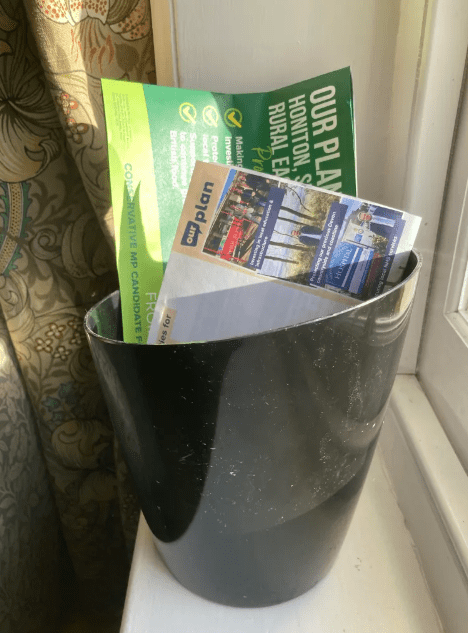
More expensive junk mail from the party that sabotaged Seaton Hospital

I’m feeling rather cross about this. Royal Mail have delivered yet another lavish piece of propaganda from the party that sabotaged Seaton Hospital. It’s filed in my special place for them (pictured) but before I add it to my recycling, a reminder of the Conservatives’ 5-point plan for Seaton Hospital:

  1. Hand over the hospital – which Seaton people paid for – to a property company, NHS Property Services, which charges market rates to use it (2016).
  2. Switch Seaton’s beds to Sidmouth to save the skin of Tory MP Hugo Swire, then use the Tory majority on the Scrutiny Committee to defeat our attempt to block the decision (2017)
  3. Let NHS Property Services turn down Seaton’s proposals to use the empty space because we can’t afford to pay market rates to use our own hospital (2020).
  4. Accuse anyone who expresses fears for the hospital of scaremongering – yes, that’s what they did to me when I stood for re-election (2021).
  5. Allow the NHS to hand back the underused wing to NHS Property Services for disposal (2023).

Our Liberal Democrat MP, Richard Foord, who we elected in last year’s by-election, hasn’t got the big money backing that the Tories are using to pay for this propaganda.

Richard is doing a brilliant job supporting Seaton Hospital. I’m not a Lib Dem, but I think we need to raise some funds for him to compete with this corporate propaganda.

Seven Churches  to ring their bells on Saturday to begin new Seaton protest

The local community’s campaign to save the threatened wing of Seaton Hospital takes another step forward this Saturday:

1. Seven local churches will be ringing their bells to mark the beginning of a day of action  

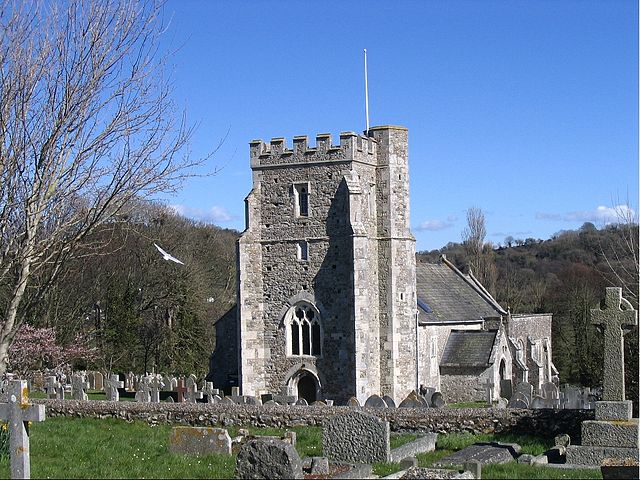
  • Seaton St Gregory (pictured below): a bell will be slowly tolled from 9 am; Beer St. Michael, Axmouth St. Michael, Musbury St Michael, Colyford St Michael, Colyton St. Andrew (from 10.00), St. Winifred’s Branscombe – nonconformist churches are also supporting but they don’t have bells! The organiser of this is Rev Barry Brewer barrybrewer29@gmail.com

2. Hospital supporters will meet in the main centres to leaflet shoppers and collect signatures (in Seaton we’ll have a loudhailer and there will be speeches at the start)

  • in Seaton (outside Tramway), Beer (Mariners Hall) and Colyton (Market Square)

3. Supporters have distributed 9,000 leaflets in all the towns and villages of the local area in the last 3 days (see attached artwork).

4. Petition forms are being widely circulated & everyone is signing, and two online petitions have already gathered over 1500 signatures between them.

5. The campaign is greatly heartened by the support of the Devon Health Scrutiny last Thursday and in the parliamentary debate obtained by our MP, Richard Foord, on Monday. 

6. We believe the Integrated Care Board and NHS Property Services must now listen to our case. Seaton paid 100 per cent of the threatened wing and we need it to be used for local health provision without paying exorbitant rents.

MARTIN SHAW / 07972 760254

Acting secretary, Seaton Hospital Steering Committee

Batshit 

Noun: vulgar description of bat excrement

Adjective: slang meaning  very foolish or strange in a way that is hard to understand; insane or crazy.

So not an expression you would expect a Foreign Secretary to use to describe government policy.

But wait…….

James Cleverly refuses to deny he called Rishi Sunak’s Rwanda scheme ‘batshit’

www.independent.co.uk (Extract)

James Cleverly has repeatedly refused to deny that he called Rishi Sunak’s Rwanda deportation plan “batshit”.

The new home secretary said he “doesn’t remember” describing the scheme that way after Yvette Cooper claimed he did during a grilling in the House of Commons…..

Not to be confused with:

Bullshit: slang something that is untrue, complete nonsense, exaggerated or boastful.

I pray you, remember the porter!

Tory MP calls out Keir Starmer’s ‘lack of manners’ after he ‘fails to say thank you’

Express headlines!

Is this really him? – Owl

Richard Ashmore www.express.co.uk (Extract)

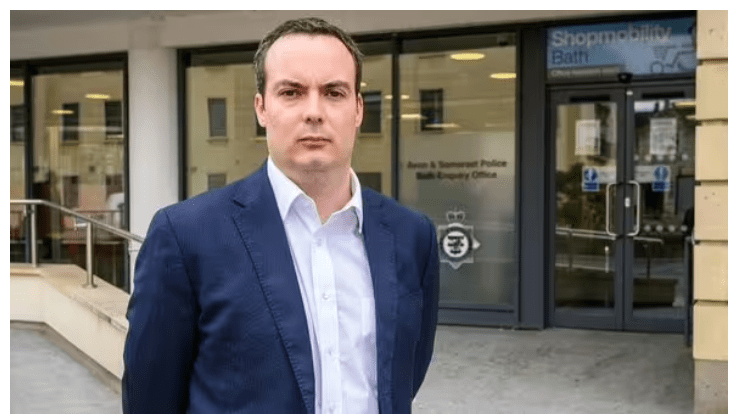
A Conservative MP has claimed Sir Keir Starmer just gives him a “glare, stare, or blank expression” whenever he holds a door open for the Labour leader in Westminster.

Simon Jupp, who represents East Devon, made the bad manners accusation on X, formerly known as Twitter, and said “most people signal their thanks” but “never Sir Keir”.

An indignant Mr Jupp tagged Sir Keir in his post and wrote: “On several occasions, I have held the door open on the Parliamentary estate for Sir Keir Starmer and did so moments ago, as I try to do for everyone.

“Most people signal their thanks, but never Sir Keir. I just get a glare, stare, or blank expression. Good manners cost nothing.”…..

Quite a lot of “interesting” comment on social media including:

“You’re a fine one to talk about ignorance! How many of us [constituents] have you ignored in the past few months? You block us on social media for just asking relevant questions about our local community! We won’t be voting for you next election! From Sam

Letting rules ‘could destroy’ self-catering sector in Wales

An attempt to force empty second homes on to the market by demanding that businesses let their properties for 182 days a year risks destroying the self-catering holiday industry in Wales, business leaders have warned.

Will Humphries www.thetimes.co.uk

The high threshold set by the Labour government in Wales is said to be impossible for many holiday let owners to reach and is penalising farmers and homeowners trying to supplement their incomes by converting barns and outbuildings on their land.

If owners do not hit the threshold of 182 days let and 252 days available to let, they revert to paying council tax as an “empty second home”. The threshold in England is 70 days let and 140 available to let.

Once reverted to council tax, each Welsh council has been given the option to charge an additional premium of up to 300 per cent council tax on empty second home properties.

The Welsh government brought in the rule last year to combat the number of second homes in holiday destinations by forcing empty second homes to be put on the market as residential properties.

However, in a survey by the Professional Association of Self Caterers UK — which received responses from 1,500 Welsh business operators — only 51 per cent said they had hit the 182 days’ let target in the year to March 2023 and only 25 per cent thought they would reach the target in the year to next March. Seventy per cent said they were discounting to try to hit the 182-day threshold, so were losing money because they were unable to pass on rising energy and electricity costs.

Alistair Handyside, executive chairman of the association, said: “Getting these enormous [council tax] bills at the end of a poor year’s trading is horrendous. We are seeing real mental health issues as a result of the pressures. What other kind of business has to hit a deliberately high threshold set by government in order to not pay tax?”

Handyside said there were only so many holiday days for which most operators could find customers. “It’s illegal to take kids out of school in term-time and empty nesters are not a big enough market to fill weeks in the out season,” he said. “Even if you filled all the holidays, bank holiday weekends and every weekend in the year you would not achieve close to 182. It would be nearer 100, which is why all the industry has been asking for a 105-day threshold for years. To achieve 105 you would still need to be open all year — and add to this the variables of the economy, weather and market demand.

“This summer was pretty much a washout. This creates a double whammy for self-caterers. Less income, more tax. With [a] beach luxury pad you can probably hit 182 [easily], but with a small cottage nestling in the Welsh hills in a less known area? Not a chance, even if [the] economy, weather and marketing all aligned.”

Mandy McDermott, 58, who bought a farmhouse with three holiday lets in converted barns, said the mental stress of chasing the 182-day target was “horrendous” and that if she did not make it she could face paying about £5,000 in taxes.

McDermott, who runs her Golly Farm Cottages business near Wrexham, north Wales, said: “My holiday lets are clearly a business because they can’t become second homes under planning restrictions. There are a lot of us with converted barns and outbuildings who shouldn’t be caught up in this.”

She said that the cost of living crisis was affecting bookings while at the same time pushing up her own costs. “The council doesn’t tell a baker they have to sell 150 granary loaves,” she said. “It just leaves you thinking who is running my business here? Someone in the government sitting somewhere with a bonkers idea.”

A Welsh government spokesman said: “The changes to the local tax rules for self-catering accommodation and second homes are designed to help develop a fairer housing market and ensure property owners make a fair contribution to the communities where they own homes or run businesses.

“Tourism makes an important contribution to the Welsh economy and to Welsh life. We do, though, need to ensure appropriate balance. We believe that everybody has a right to a decent, affordable home to buy or to rent in their own communities so they can live and work locally.”

High inflation has cost UK workers equivalent of a 3p income tax rise

“Rishi Sunak congratulating himself over today’s [15 November] figures will be cold comfort for all the hard-working people still bearing the brunt of this Conservative chaos. 

“For months on end, people across the country have been watching as their pay cheque gets squeezed from all sides, draining every spare penny. From the ever-increasing cost of the weekly shop to skyrocketing mortgage payments. 

“Enough is enough. With next week’s Autumn Statement the Government must properly help families and pensioners struggling with the cost-of-living crisis and give our NHS the funding it desperately needs.” Liberal Democrat Treasury spokesperson Sarah Olney MP 

Lib Dem analysis as reported in the Times:

Oliver Wright www.thetimes.co.uk 

Higher prices have cost workers the equivalent of a 3p rise in income tax over the past two years, new research suggests, as Rishi Sunak looks set to finally hit his 5 per cent inflation target.

An analysis by the House of Commons library found that for 22 months of the last two years, average salaries increased by less than the rising cost of living.

Researchers calculated that a worker earning £28,400 in October 2021 was now £697 worse off than they would have been if pay had kept pace with inflation. For someone earning £55,000 a year the loss was even greater with average salaries now £1,348 less than might have been expected without steeply rising prices.

They added that the losses were greater than if the government had increased income tax by 3p in the pound and average earnings had kept pace with inflation.

The analysis comes ahead of new data from the Office of National Statistics due to be published on Wednesday which is likely to show that the prime minister has met his pledge to bring down inflation to below five per cent two months earlier than he promised.

Inflation stood at 6.7 per cent in September but economists expect it to fall sharply when October’s figures are released because last year’s Ofgem energy price cap increase will have dropped out of the data.

The consensus forecast is that inflation will have fallen to 4.8 per cent — 0.2 percentage points below Sunak’s target, which he pledged to meet by the end of the year.

In other good news for the government, separate figures showed that despite the hit on living standards over the last two years wage growth is now finally outstripping inflation.

The ONS said average regular earnings, excluding bonuses, increased by 7.7 per cent in the three months to September, down from an upwardly revised and record high of 7.9 cer cent in the previous three months.

At the same time, the unemployment rate was unchanged at 4.2 per cent, although job vacancies fell to the lowest level for more than two years, down 58,000 quarter-on-quarter at 957,000.

Jeremy Hunt said it was “heartening” to see inflation falling and real wages growing which meant “keeping more money in people’s pockets”. Speaking in the House of Commons, the chancellor said the government was starting to “win the battle” against inflation which would allow the government to “focus on the next stage” at his autumn statement next week.

“As we start to win the battle against inflation, we can focus on the next stage which is growth,” he said.

But the Liberal Democrats, which commissioned the Commons research on lost earnings, said the words would “ring hollow for families who have seen their wages decimated by years of Conservative chaos”.

“The squeezed middle has been hardest hit by this toxic mix of stagnant wages and high inflation,” Sarah Olney, the party’s Treasury spokeswoman, said.

‘The Conservative Party has completely run out of steam and is holding our economy back.”

Economists said the latest wage growth figures, together with last week’s official data showing a stalling economy with zero growth in the third quarter, were likely to persuade the Bank of England to hold off from further interest rate rises.

Policymakers at the Bank are watching wage growth closely, with the recent record highs having been a cause for concern in its battle to bring inflation back down to the 2 per cent target.

Rates are now widely seen as having peaked at 5.25 per cent and with the threat of recession looming large, some economists believe the Bank will move to begin cutting borrowing costs in 2024.

Samuel Tombs at Pantheon Macroeconomics said: “Wage growth is slowing sufficiently quickly for the Monetary Policy Committee to conclude that bank rate already is high enough at 5.25 per cent”.

Hunt suggested that the autumn statement was likely to extend — or even make permanent — tax breaks for companies who invest in new technology or equipment.

In his budget in March announced a three-year policy of “full expensing” under which companies could set off investments from higher levels of corporation tax.

There have been calls to make the tax break permanent at a cost to the Treasury of around £10 billion a year. Hunt said: “I will focus on increasing business investment because, despite the fact that our growth has been faster than many of our European neighbours, our productivity is still lower.”