Ex-MP Neil Parish says murderers are better pals than Tory colleagues 

Now he has found himself in Channel 4’s latest social experiment, where a string of celebrities were “jailed” in a decommissioned nick alongside former offenders to give them a taste of life behind bars.

[Banged Up]

Felicity Cross www.thesun.co.uk (Extract)

…And, perhaps surprisingly, Neil revealed the experience has finally helped him fight his demons over the porn scandal.

He said in an exclusive chat: “I haven’t maintained any friendships within Parliament. Once you become smelly or tainted, you are avoided.

“Politics is very superficial. It is a very ambitious place and, once you are out of the way, it is just another office door open.

“I probably admire a lot of the reformed criminals more than my former colleagues — I think they are more loyal…..

Almost all UK councils have not spent total share of levelling-up fund

Consequences of over centralised control of levelling-up funds. – Owl

A multibillion pound fund designed to boost levelling up and replace crucial EU funding is being left unspent by the vast majority of councils, the Observer can disclose.

The main reasons for a significant underspend in the shared prosperity fund were money being handed over too late to spend, a lengthy and bureaucratic process and a hollowing-out of council expertise.

Michael Savage 

The fund, a central pillar of the government’s efforts to boost the most deprived areas of the UK, is designed to provide £2.6bn by 2025. Ministers said it would “reduce the levels of bureaucracy and funding spent on administration when compared with EU funds” and “enable truly local decision making”.

However, new data uncovered using the Freedom of Information Act reveals that 95% of the local authorities that received funding in 2022-23 were unable to spend all of their share. Across the UK, 43% of £429m in funding was not spent. Not a single council in the north of England, Scotland or Wales spent its full investment.

The findings will raise questions over whether the new post-Brexit system is streamlining funding and handing power to communities in the way ministers promised when the fund was launched last year.

The unspent money has been rolled over into this year. However Jack Shaw, affiliate researcher at the Bennett Institute for Public Policy at Cambridge University, who uncovered the data, said there was a “big risk” of the mistakes that were leaving councils unable to spend the cash would simply be repeated with an even bigger potavailable this financial year.

He said the main reason authorities were unable to spend their allocations in 2022-23 was because the government gave them less than two months, instead of 12 months. Shaw warned that with significant underspends likely at the end of the programme, money could be recouped and allocated elsewhere across Whitehall. “The issue is not the size of the funding pot per se, but the rules attached to it and the failure to get it out on time,” he said. “Authorities will now have to spend nearly three times more than they were able to allocate in 2022-23 – which raises questions about their capacity and capability to do so, given the reductions in staffing in recent years.

“It’s clear that whoever wins the next election will need to prioritise public services and, in particular, rebuild local capacity.”

His research found that of the 235 groups responsible for taking forward the shared prosperity fund, 223 of them had to request additional time to spend their investment. Only 12 authorities spent their investment in full, including Slough and Woking councils, which have both issued bankruptcy notices.

Shaw and others are calling for the system to be simplified and speeded up, to give councils a fighting chance of actually spending money allocated to improve poorer neighbourhoods.

Professor Graeme Atherton, head of the Centre for Inequality and Levelling Up at West London University, said: “Part of the problem is that funding was reduced and distributed rather differently. As has happened with all the levelling-up fund, there are more strings attached than initially appear.

“You have to submit a plan – and the plan doesn’t necessarily fit with local need. Also, the areas that had a lot of the funding had it cut. Once you cut money, it’s then hard to rebalance it. It’s not as straightforward as saying, we’ll just reduce the cost of everything. You’ve really got to start again.

“And then there are capacity issues. Those who have been tasked with spending this money at local authority level are very strapped for capacity. What they need is core funding. They’re being asked to spend other ring-fenced funding and it’s difficult to do so.”

The government has earmarked more than £10bn to programmes related to levelling up – the towns fund, levelling-up fund and the UK shared prosperity fund. Experts said all were behind schedule when compared to their original plans.

A Department for Levelling Up, Housing and Communities spokesperson said the shared prosperity fund offers each local authority the freedom to spend money on their own priorities. “The majority of local authorities were notified of 2023/24 payment by 6 July 2023 and were paid shortly thereafter.”

Angela Rayner, Labour’s deputy leader, said: “The Tories’ version of levelling up is a sham and scam. They have hollowed out local government and tied the hands of local leaders so much-needed funding cannot be spent. Labour will oversee the biggest transfer of power from Westminster in British political history and build local capacity outside of Whitehall, so where powers and funding are transferred, they are made the most of.”

SEATON / TEIGNMOUTH: SAVE DEVON’S COMMUNITY HOSPITALS – latest

Following last Friday’s huge public meeting, Seaton Hospital campaigners are taking their demand to save the threatened wing to the Devon Health & Adult Care Scrutiny Committee at 10.30 this Thursday, where they will hold a joint protest with campaigners for Teignmouth Hospital. Recommendations from a Task Group on the Teignmouth closure, including a proposal to refer it to the Secretary of State, will be before the Committee, and the Seaton closure has been added to the agenda

Campaigners from both towns will address the Committee. They include Martin Shaw and Jack Rowland (both of the newly formed Seaton Hospital Steering Committee), and Cllr Chris Clarance (Chair of Teignbridge District Council) and Viv Wilson for Teignbridge.

  • There will be a SEATON / TEIGNMOUTH: SAVE DEVON’S COMMUNITY HOSPITALS protest outside County Hall from 9.30 to 10.15, when campaigners will go into the public gallery.

Contact: Martin Shaw (Seaton) 07972 760254, Geralyn Arthurs (Teignmouth) 07592 357535.

Three Rivers Development – Inquiry into disastrous Devon firm sparks controversy

An inquiry into Mid Devon District Council’s failed property development company has sparked a controversy among former council leaders.

Lewis Clarke www.devonlive.com

Three Rivers Development Ltd (3RDL), which was set up in 2017 to build “high quality” homes and generate profit for the council, will stop trading after accumulating a debt of more than £21 million.

The council’s cabinet, led by the Liberal Democrats, voted unanimously to recommend that the full council agree to stop trading with 3RDL. The council has also decided to investigate the reasons behind the company’s demise and learn from the past.

However, some former leaders of the council have slammed the inquiry as a “no blame” exercise they say ignores the facts and tries to censor their views. They have accused the chief executive Stephen Walford and the district solicitor of interfering with the scrutiny process and undermining the chair of the scrutiny committee.

In a letter to those involved in the company since 2017, Mr Walford asked them to answer a series of questions that he said would inform a reflective piece on learning lessons for the future. He also said that the district solicitor would review all information provided to ensure it meets the standards of accuracy and integrity.

In his letter on October 10, Mr Walford said: “While there are numerous internal and external reports, both advisory and audit, that record the events of the time, the council is hoping to reflect on the events of the past in order to learn and ensure decision-making in future that is informed by the learning from previous experiences.

“To that end, the chairman would be pleased to receive any written responses you might have to the questions as set out below, in order that it might inform a reflective piece on learning lessons for the future.

“To provide you with some reassurance, it is well understood that the administrative realities were perhaps not the most conducive to providing consistency or indeed the stability needed for a business to flourish. Similarly, the impacts of the pandemic are well documented in the council’s financial monitoring reports of the time, and the current administration has no doubt that the council’s attention was at times concentrated on the national emergency response among many other things.

“This is not about seeking to pinpoint a single or specific decision that could or should have been made differently, or to find fault with any of the thinking at the time. However, the scrutiny committee remains keen to consider any learning points and to that end would be interested to hear from former councillors who lived the journey of that time in order to understand from them their views.”

A series of bullet point questions are then listed with responses open until October 27.

Mr Walford concludes: “Unfortunately, there have been a number of inaccurate or mistaken statements made about this subject in the media of late. Therefore can I highlight that the District Solicitor will be reviewing all information provided in order to ensure it meets the standards of accuracy and integrity that befits the worthiness of the scrutiny committee’s consideration.”

Barry Warren, a former leader of the council and a member of the scrutiny committee, said that he was concerned about the timing and the content of the letter, which he received two days after it was dated.

He said that the letter was not based on any terms of reference and that it diverted attention away from crucial facts such as officer advice and creative accounting figures.

Another former leader, Bob Deed, also criticised Mr Walford’s letter as an attempt to undermine Cllr Gilmour’s attempt to gain a greater understanding of the issues. He said that Mr Walford had taken over the garnering of responses, no doubt with removal of any comment of embarrassment to any officer.

He said: “This is not an inquiry.”

He also posed some questions that he said would assist in understanding the 3RDL predicament, such as whether 3RDL was a vanity project borne out of a desire to move on a senior manager, whether the section 151 officer had a conflict of interest as a director of 3RDL, and whether the current administration had abandoned their good intentions to deal quickly, efficiently and effectively with 3RDL.

He said: “The saying goes that ‘you can fool some of the people some of the time but you cannot fool all of the people all of the time’. It is simpler than that – two people think that they can fool every other living soul all the time. They can’t and don’t. You have received plenty of good advice from many councillors on 3RDL over the last 6/7 years. If you have any problems now, you have only yourself to blame.”

Mid Devon District Council did not wish to comment further.

Saving Seaton HOSPITAL – Update on 3 Nov meeting

Martin Shaw

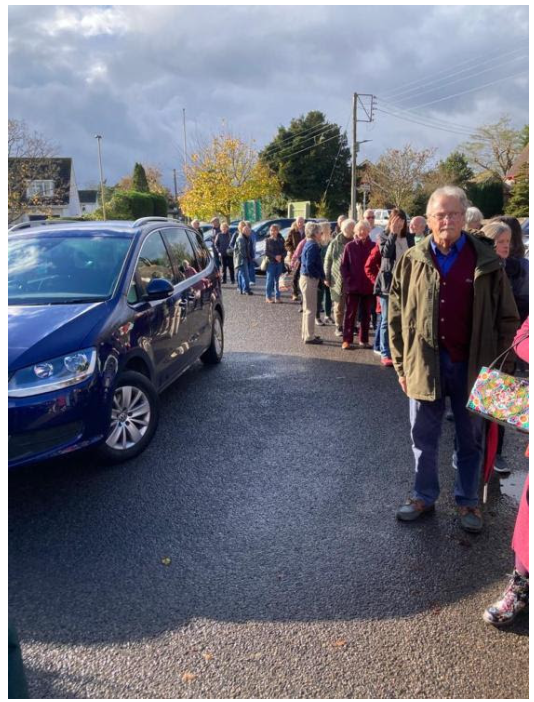
There were queues across the car park, people standing everywhere, some looking in through the windows, others unfortunately having to turn away. It was twice the size of the meeting in the same hall in March 2017 after they stole the hospital’s beds, and probably even bigger than one in Seaton Town Hall in late 2016 when bed cuts were first proposed.

We had fantastic contributions from all our speakers, especially Dr Mark Welland of the League of Friends (above) and Richard Foord MP, and also from around 20 people from the floor. There was complete unity on the need to save the hospital wing for use by the League, Re:store and other local groups promoting health and wellbeing (for example, for a palliative care service), and for this to be done by renting or even buying the wing – as long as this is at minimal cost, since the local community paid in full for building the wing in the first place.

We unanimously established a Seaton Hospital Steering Committee to fully represent the local community in all matters relating to the future of the hospital. As organiser of the meeting and de facto acting secretary for the committee, I will write to the ICB and NHS Property Services, who declined to attend, to inform them of its outcome.

Decisions

1. It was agreed to ask all supporters to write to Dr Sarah Wollaston, the chair of the ICB, to support our case (she is the former MP for Totnes and former Chair of the Health Select Committee).

Email her at d-icb.corporateservices@nhs.net or write to Dr Sarah Wollaston, Chair, NHS Devon Integrated Care Board, County Hall, EXETER EX2 4QD. Mark your letter ‘for the personal attention of Dr Wollaston’ & also ‘please circulate to all members of the Board’. [Board members can be found here – Makes interesting reading – Owl]

2. There will be a protest outside Health Scrutiny at County Hall on Thursday 9 November, 9.30-10.30. We will be joining with Teignmouth whose hospital is also being discussed at Scrutiny. The meeting starts at 10.30 and we will then all go inside, where Jack Rowland and I will be presenting the Seaton case at the beginning of the meeting (you don’t necessarily have to stay for their discussion which may be quite a bit later). WE NEED TO ORGANISE CARS & PLACARDS (HOME-MADE WILL BE FINE).

3. We are planning a day of action on Saturday 18 November. The current proposal is to leaflet and collect signatures for a petition in the centre of Seaton (outside Tesco and/or Aldi?), Colyton, Beer etc., but WE NEED YOUR IDEAS.

There will be an ORGANISING MEETING for these actions from 4.15-5.45 on Monday 6 November in the Old Picture House, Harbour Rd, Seaton. 

Please come along if you would like to help – LET ME KNOW by email (saveseatonhospital@gmail.com) so that we have an idea of numbers. Also let me know if you’d like to help on either 9th or 18th but can’t make it on Monday.

Also follow the campaign on: Seaton & Colyton Matters blog

Torridge concerned that SWW is complacent about housing

South West Water is being asked to justify its “bland” responses on planning applications, given the rise in sewage spills in Devon’s river and coastal waters.

Alison Stephenson, local democracy reporter www.radioexe.co.uk 

Torridge District Council wants the company to be removed from the list of consultees and an independent organisation to oversee new developments.

And it plans to ask other councils in Devon to support its request to government.

In his motion to council, Cllr Peter Christie (Green, Bideford North) said he is fed up with SWW’s response of “has no objection” when it is asked to give a view on new plans.

“Over the last decade, this is the answer we get, with very few exceptions.

“Clearly, given the current state of our rivers and coastal waters there is a major problem – and it appears to be overlooked that SWW have a vested interest in more development as it means more customers locked into paying them, as water and sewage services are a monopoly service.”

He told the council that according to SWW’s website, in Bideford last year there were 24 sewage spills, 31 in Buckleigh, 144 in Abbotsham, 117 at Weare Giffard and 25 in Torrington.

“South West Water will take the money for every new house but are not doing what they should be doing in tackling the infrastructure.”

He said in the late 1970s and 80s a ‘sewage embargo’  was placed on Bideford and house building stopped for several years because the town’s infrastructure couldn’t cope.

“Nothing has really changed, they cannot cope with the sewage capacity and water availability is also an issue when we have a drought.”

Cllr Annie Brenton (Lab, Bideford West) said there is a large new development under construction in Bideford beyond Atlantic Village and the council needs to be “really careful and scrupulous” about planning details for drains and sewerage.

“At the moment, South West Water’s behaviour is scandalous. They don’t carry out their legal responsibilities. They are continually breaking the law. They prevaricate and fob you off. We really need to make sure we have an independent, honest assessment of our sewage needs in this area. We need somebody with integrity where profit is not the sole consideration.

“The welfare of our people and our rivers and our sea is just as important as making money.”

Cllr Simon Newcombe (Con, Winkleigh) said independent was “all very good” but if it was not legally enforceable it was not worth the money spent on it.

Cllr David Brenton (Lab, Bideford South) said: “We should be getting Ofwat here. They are supposed to be the ones that are regulating and monitoring this, but they don’t.

“They have the teeth, but they don’t use them. It’s a quango of course, we know how loaded they are, but we need to get them here and ask them ‘what are you doing about the spills in our rivers and seas’.”

Tory big beast Ken Clarke praises Rachel Reeves’ ‘responsible’ economics in Labour coup

Tory big beast Ken Clarke has thrown his weight behind Rachel Reeves, praising her “responsible” approach to public finances.

Archie Mitchell www.independent.co.uk

In the latest significant boost for the Labour shadow chancellor, Lord Clarke, who served as chancellor under John Major and was health secretary in Margaret Thatcher’s government, said he had been impressed by Ms Reeves.

But, stopping short of full backing for Labour, he said: “It’s her party that worries me”. Lord Clarke added: “If it was Jeremy Hunt and Rachel Reeves, then I don’t think either of the parties would worry me very much.”

It comes just weeks after the former governor of the Bank of England endorsed the Labour Party in a major coup for Sir Keir Starmer and his shadow chancellor. Mark Carney said it was “beyond time” for Ms Reeves to run the economy in a Labour government.

Mr Carney, the 58-year-old who was handpicked by former Tory chancellor George Osborne to be governor, stunned the Labour conference last month with a video address saying: “Rachel Reeves is a serious economist. She began her career at the Bank of England, so she understands the big picture. But, crucially, she understands the economics of work, of place and family. It is beyond time we put her energy and ideas into action.”

Both endorsements come as major donors and business leaders have returned to the Labour fold under Sir Keir and Ms Reeves, having shunned the party under former leader Jeremy Corbyn.

Speaking to the i newspaper’s Labour’s Plan For Power podcast about Ms Reeves and Mr Hunt, Lord Clarke said: “I don’t think they disagree on very much. They do, of course, politically, I do myself disagree with some of Rachel’s political views, I’m sure.

“But her actual approach, a responsible approach to macroeconomic policy, matches the responsible approach to macroeconomic policy that Jeremy Hunt has which, in the present shambles of British and international politics and the dangers of it, I find rather reassuring – about the only thing I do find reassuring about this election that’s coming up.”

Lord Clarke also warned she would face “a lot of tough, unpopular decisions” if Labour wins power, because “we’re not going to get out of our present financial crisis for at least two or three years”.

Labour grandee Lord Mandelson also threw his weight behind Ms Reeves, saying: “She’s even tougher than I thought she was. I mean, I knew she would be a bit of an old boot, but I didn’t realise that she’d be quite as uncompromising in the way in which she develops policy, sees off her detractors and deals with her colleagues on some occasions too.”

And elsewhere in the podcast, Lord Clarke said Tory demands for tax cuts and a cabinet reshuffle are “daft” and “neither of them will do any good in the sense of winning votes”.

The former chancellor said it was “absurd” to suggest a reshuffle of his top team could turn Rishi Sunak’s fortunes around.

Rishi Sunak hints next general election will be held in 2024

The UK is likely to have a general election next year, prime minister Rishi Sunak has hinted.

Jane Dalton www.independent.co.uk

It’s the first time the PM has hinted at a possible date as speculation has been mounting on whether he would call one before being forced to as Labour surges ahead in the polls.

The last time the country voted in a general election was on 12 December 2019 and the new Parliament then met on 17 December.

The next general election must be held within five years of that date, so it would need to be before 17 December 2024, although a prime minister is free to call one at any time.

If an election has not been called before then, Parliament would be automatically dissolved and the election would take place 25 working days later, according to the Institute for Government.

This means the latest possible date for the next general election would be 28 January 2025.

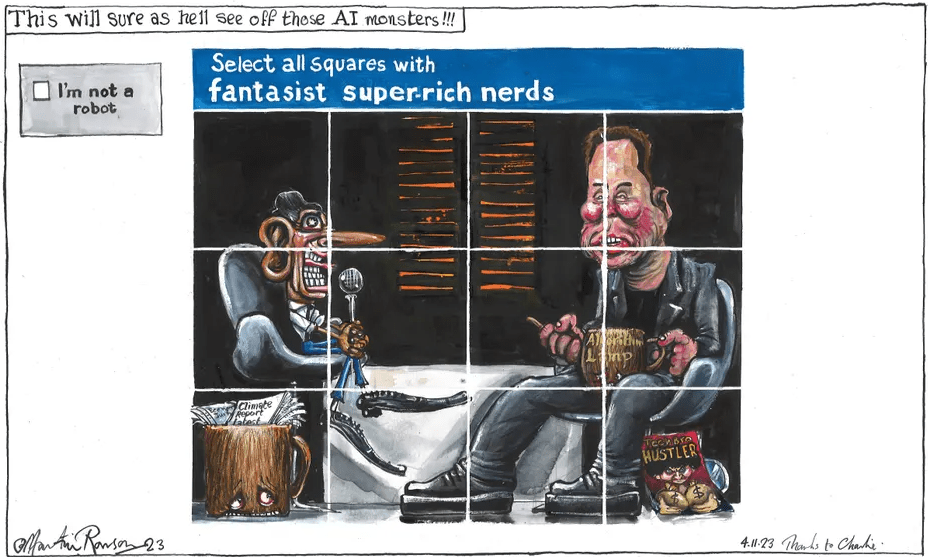
Mr Sunak’s hint about the date came as he interviewed tech billionaire Elon Musk at the UK summit on the safety of artificial intelligence at Bletchley Park.

The pair discussed AI’s future impact on jobs, the economy and even friendships. The prime minister then went on to sat it was vital to tackle fake news, given that there were several national elections around the world next year.

He added: “Probably here.”

In February, Conservative Party chairman Greg Hands said: “The next 18 months will see us win or lose the next general election,” – which was seen as a hint that Mr Sunak could go to the country in September next year.

Mr Hands said the “strong expectation would be 2024” and a vote in January 2025 would “not be very festive” because parties would have to campaign over Christmas.

After Labour overturned large Tory majorities in Mid Bedfordshire and Tamworth in October, winning both by-elections, the Conservatives are thought to be planning to leave the nationwide poll late in the hope of an upturn in fortunes.

Seaton sea defences overtopped

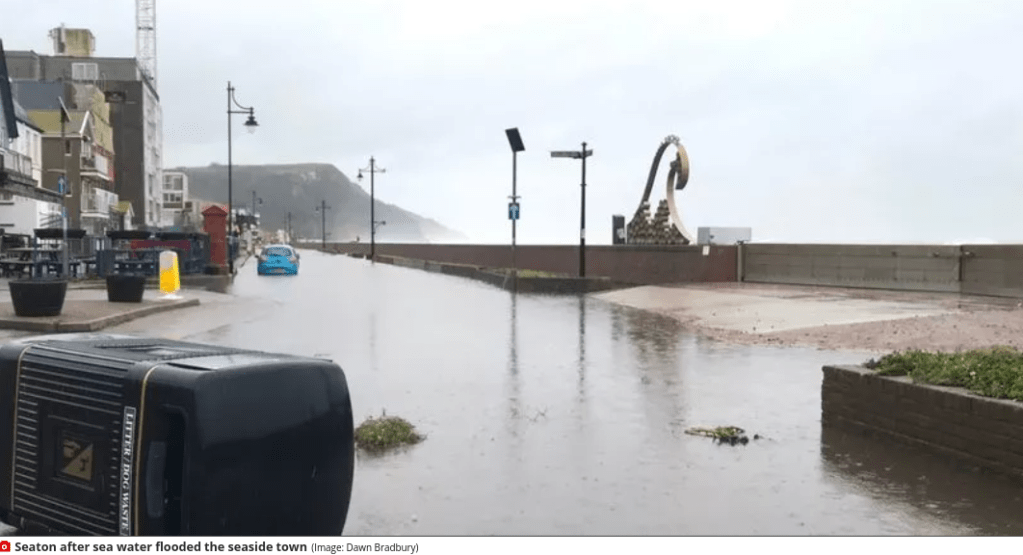
Residents living in Seaton in East Devon have endured a day to forget after they awoke to find sea water had breached the town’s defences. Water flooded the streets and video captured earlier today shows how the seaside town was transformed into a mini-river.

Elliot Ball www.devonlive.com

It was a similar picture across Devon and other parts of the UK as Storm Ciaran brought down torrential rain and strong winds. However, it appeared as though Seaton suffered more than most.

The worst of the weather began when Trevelyan Road, a residential street running off the seafront Esplanade began to flood. Homeowners described water coming over the sea wall at about 8.30am.

Damage was also caused to a cafe on the seafront. The owners of the Hideaway have posted details on Facebook They said: “The Hideaway has sustained damage from Storm Ciaran. The storm door and front doors have been pushed in and water has come all through the restaurant.

“We will be closed until we can repair and make our cafe safe again. Please DO NOT come down to look in as it’s still very dangerous. We will keep everyone posted with news as much as possible.”

Covid inquiry: Hancock ‘wanted to decide who should live or die’ if NHS overwhelmed

Speechless – Owl

Former health secretary Matt Hancock told officials that he – rather than the medical profession – “should ultimately decide who should live or die” if the NHS was overwhelmed during the pandemic, the Covid inquiry heard.

Aletha Adu www.theguardian.com 

“Fortunately this horrible dilemma never crystalised,” the former head of the NHS, Lord Simon Stevens, said in his evidence to the inquiry on Thursday.

Stevens, who led NHS England until 2021, said he stressed at the time that no individual secretary of state should be able to decide how care was provided, “other than in the most exceptional circumstances”.

Hancock’s position, which materialised during a planning exercise at the Cabinet Office in February 2020, was a different one from his predecessor, Jeremy Hunt, who had wanted such decisions to be reserved for clinical staff.

Stevens told the inquiry that this ethical question was never resolved and cropped up again during the pandemic when “rationing” of NHS services was discussed.

The former NHS chief was largely uncritical of Hancock, unlike other figures who appeared before Heather Hallett’s inquiry this week, including former No 10 senior adviser Dominic Cummings and ex-civil servant Helen MacNamara.

Stevens’ witness statement referred to the “Operation Nimbus” planning exercise, which he said was helpful in terms of outlining the pressures government departments might have faced.

“It did however result in – to my mind at least – an unresolved but fundamental ethical debate about a scenario in which a rising number of Covid-19 patients overwhelmed the ability of hospitals to look after them and other non-Covid-19 patients,” he said.

“The secretary of state for health and social care took the position that in this situation he – rather than, say, the medical profession or the public – should ultimately decide who should live and who should die.”

On the final day of evidence this week, the inquiry saw new details of Johnson’s witness statement, in which he expressed his frustrations with the NHS, blaming the health service for the first lockdown.

The former prime minister blamed “bedblocking” in the NHS for locking down the country as Covid took hold.

He said: “It was very frustrating to think that we were being forced to extreme measures to lock down the country and protect the NHS – because the NHS and social services had failed to grip the decades-old problem of delayed discharges, commonly known as bedblocking.

“Before the pandemic began I was doing regular tours of hospitals and finding that about 30% of patients did not strictly need to be in acute sector beds.”

Stevens rejected Johnson’s claims, noting the sheer number of coronavirus patients needing a hospital bed was far higher than the number of beds that could have been freed up.

“We, and indeed he, were being told that if action was not taken on reducing the spread of coronavirus, there wouldn’t be 30,000 hospital inpatients, there would be maybe 200,000 or 800,000 hospital inpatients,” Stevens told the inquiry.

“Even if all of those 30,000 beds were freed up – for every one coronavirus patient who was then admitted to that bed, there would be another five patients who needed that care but weren’t able to get it,” he added.

While Stevens declined to criticise Hancock when giving evidence, the inquiry heard that Cummings had repeatedly pushed Johnson to sack his health secretary because he had “lied his way through this and killed people and dozens and dozens of people have seen it”.

In one message, Cummings complained about Stevens and Hancock “bullshitting again”.

Stevens was shown messages, but said: “There were occasional moments of tension and flashpoints, which are probably inevitable during the course of a 15-month pandemic, but I was brought up always to look to the best in people.”

Appearing later, the top civil servant in the Department of Health, Sir Christopher Wormald, said that Hancock would probably be surprised by how “widespread” the perception was regarding his frequency of alleged “untruths”.

Wormald was also questioned at the inquiry over why he and the UK’s most powerful official, Mark Sedwill, were discussing how the virus was like chickenpox as late as mid-March 2020.

Wormald, who remains the permanent secretary in the department, believed Johnson “did not understand difference between minimising mortality and minimising overall spread”.

Lord Sedwill messaged Wormald weeks before the first lockdown, saying: “Indeed presumably like chickenpox we want people to get it and develop herd immunity before the next wave. We just want them not to get it all at once and preferably when it’s warn (sic) and dry etc.”

This message exchange came on the same day that Cummings had complained in a WhatsApp message that Sedwill had been “babbling about chickenpox”, adding “god fucking help us”.

Giving evidence to the inquiry this week, Cummings claimed that Sedwill had told Johnson: “PM, you should go on TV and should explain that this is like the old days with chickenpox and people are going to have chickenpox parties. And the sooner a lot of people get this and get it over with the better sort of thing.”

Stevens also told the inquiry that senior ministers “sometimes avoided” Cobra meetings chaired by Hancock in the early days of the pandemic.

In his witness statement, he said the meetings “usefully brought together a cross-section of departments, agencies and the devolved administrations”.

“However, these meetings were arguably not optimally effective. They were very large, and when Cobra meetings were chaired by the health and social care secretary other secretaries of state sometimes avoided attending and delegated to their junior ministers instead,” he added.

This phase of the Covid inquiry assessed government decision making, with more witnesses scheduled to appear next week.

These include Sedwill, former No 10 special adviser Dr Ben Warner and former home secretary Priti Patel.

Environment Agency has nearly halved water-use inspections in last five years

The Environment Agency has slashed its water-use inspections by almost a half over the past five years, it can be revealed.

[Including Devon & Cornwall]

Rachel Salvidge www.theguardian.com 

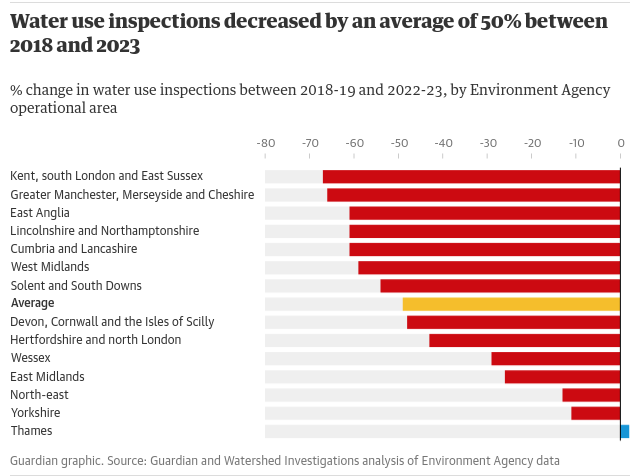
Environment Agency (EA) officers visited people and businesses with licences to abstract, or take, water from rivers and aquifers 4,539 times in 2018-19, but this dropped to 2,303 inspections in 2022-23, according to data obtained by the Guardian and Watershed Investigations.

The fall in inspections comes despite England facing a possible water deficit of 4bn litres a day by 2050 unless action is taken, and predictions that the summer flows of some rivers could dwindle by 80% in that time.

“Obviously, this is highly beneficial to water companies and agriculture, and incredibly detrimental to water resources and therefore the environment,” an EA insider told the Guardian and Watershed on condition of anonymity. Last year, the Guardian reported that the EA did not have a strong grasp on the total volumes taken from rivers and groundwater.

The agency has also introduced desk-based inspections, which the insider described as meaningless. “They are a substitute for field inspections, and given an officer needs to check meters or records, or on-site behaviours, they are useless except for ticking a key performance indicator box.” The EA says it only uses desk inspections to assess compliance of low-risk abstraction and impounding licences.

“By reducing inspections you reduce the ability to detect illegal activity and gather evidence against,” the insider said. “Desk-based inspections are solely reliant on the word of the operator, so, for example, if an operator tells an Environment Agency officer he hasn’t abstracted any water, then the officer records that as fact. If it is an illegal operator, they are unlikely to hand themselves in. These methods provide a smokescreen of numbers that suggest correct regulation is being carried out should anyone try to audit it, when in reality the regulation is meaningless.”

Figures obtained by the Guardian and Watershed Investigations show that the biggest drop in inspections was in the Kent, south London and East Sussex area, where inspections fell 67% – from 450 to 148 between 2018-19 and 2022-23. This was followed by Greater Manchester, Merseyside and Cheshire, where the number of inspections dropped from 139 to 47. In East Anglia, 824 abstraction inspections fell to 318, and in the Lincolnshire and Northamptonshire area they dropped from 173 to just 67.

However, an EA spokesperson said the insider’s interpretation of the drop in numbers was misleading because “inspection figures alone are not the only way of assessing whether those who take water from the environment are complying with their licences – satellite data, irrigation patrols, river gauges, groundwater level and ecological monitoring systems are increasingly used. This allows us to target activity to where and when the risks are highest and the environment is most vulnerable.”

Despite the total funding for the agency’s water, land and biodiversity area business group having risen by £73m, from £221m in 2015-16 to £294m in 2021-22, staff costs for roles in land and water management, groundwater, contaminated land and environmental monitoring fell by £2.6m (9%) over the past three years.

“The Environment Agency leadership have received vast increases in money to tackle the issue, but this has been deliberately moved away from the frontline,” said the insider. “This means they must not view protecting water supplies as a priority and that the money could be better spent elsewhere.”

The EA spokesperson said the regulator was “recruiting and training more staff to carry out water resources compliance work and … also strengthening the way we regulate to drive better performance from the water industry, with additional specialist officers and new data tools to provide better intelligence”.

Public water supply and rivers are at risk from intensifying droughts driven by the climate crisis. The chair of the EA, Alan Lovell, said about 4bn extra litres of water would be needed every day by 2050 if significant action were not prioritised, and the Centre for Ecology and Hydrology has predicted that some rivers could lose up to 80% of their flows in summer by 2050.

Meanwhile, water sector leaks remain high, with the Environment Agency putting the volumes of water lost at 2.3bn litres a day last year.

A spokesperson for Water UK said water companies were “acutely aware of the environmental impact of abstraction and are proposing to stop half a billion litres’ worth of abstractions from rivers by 2030. Companies also have ambitious plans to cut leakage, which has come down every year since 2020, by a quarter by the end of the decade. To ensure the security of our water supply in the future, water companies are planning to build up to 10 new reservoirs as well as looking at alternative supplies of water including water recycling and desalination.”

Richard Benwell, the CEO of Wildlife and Countryside Link, said: “A long-term funding drought for the Environment Agency has left it under-resourced for the water challenges ahead. Recent funding rises don’t offset the years of underinvestment in the agency.

“This drop-off in post-Covid inspections is highly worrying and runs the risk of failures going under the radar. Desk-based and industry self-assessments simply aren’t up to the task, as we’ve seen with the sewage pollution crisis.”

NHS refuses to attend Seaton Hospital public meeting, as they give £2.8m to RD&E and NDDH for more beds – please make sure you’re there!

NHS Devon Integrated Care Board refuses to come to meeting as news breaks that they have given £2.8m to the Royal Devon and Exeter Hospital (RD&E) and the North Devon District Hospitals (NDDH) to provide more beds! (See below) – Owl

seatonmatters.org /

A large community public meeting will take place tomorrow to oppose the Devon NHS Integrated Care Board (ICB) decision to hand back a 2-storey wing of Seaton Hospital to NHS Property Services, potentially leading to its demolition.

The ICB and NHS Property Services have both refused to send a speaker to explain the decision. Indeed the ICB has decided to have NO community consultation at all, although the wing was built 100% with local donations in 1991 (see attached fact sheet).

Tomorrow’s meeting will hear from Richard Foord MP and Dr Mark Welland of Seaton Hospital League of Friends on discussions with the ICB and Property Services, which so far have not produced a way forward.

Speakers at the meeting represent the three main centres in the area, Seaton, the Coly Valley and Beer and both the Liberal Democrat and Conservative parties (see attached notice).

There is strong public feeling and this will be the biggest meeting in the area since the bed closures in 2017 – please make sure your programme or paper sends a correspondent/camera crew.

VENUE: COLYFORD MEMORIAL HALL. TIME: 1.30-3.

Meanwhile

Devon hospitals given £2.8m for bed shortage support

BBC News www.bbc.co.uk

The Royal Devon University Healthcare NHS Foundation Trust said it still expected to have bed shortages

Extra funding has been given to hospitals in Devon in a bid to cut bed shortages this winter.

The NHS Devon Integrated Care Board has given £2.8m to the Royal Devon and Exeter Hospital (RD&E) and the North Devon District Hospitals (NDDH).

The trust that runs both had expected RD&E would be 80 beds short on average during the winter and NDDH about 40.

It said even with the funding it would expect to be a total of about 100 bed short on its “most challenged days”.

The trust said “additional measures could be implemented at pace” to mitigate the gaps, but it would require further funding.

Boris Johnson’s No 10 was toxic, sexist and devoid of humanity, says Helen MacNamara

Boris Johnson oversaw a “toxic” culture of sexism and complacency at No 10 during the Covid crisis, according to scathing evidence given by a former top civil servant to the public inquiry.

Anyone going to vote for this lot again? – Owl

Adam Forrest www.independent.co.uk

Helen MacNamara, the former deputy cabinet secretary, said she could not recall “one day” on which Covid rules were followed in No 10 or the Cabinet Office – claiming that “hundreds” of officials and ministers broke the guidelines.

She also criticised an “absence of humanity” in No 10 and revealed that officials there were “laughing at the Italians” who were overwhelmed in the early stages of the crisis – with Mr Johnson expressing a breezy confidence that the UK would sail through the pandemic.

The former top civil servant also said Mr Johnson did nothing to stop ex-No 10 adviser Dominic Cummings’s misogynistic behaviour after it emerged that Mr Cummings had labelled her “that c***” and said he would “handcuff her and escort her” from Downing Street.

It came as:

  • Mr Johnson asked if Covid could be killed by blowing a hairdryer up the nose, according to new evidence from Mr Cummings
  • The former PM is said to have told Mr Cummings to “dead cat” Covid because he was “sick” of the subject
  • It emerged that it took seven months to install hand sanitiser at the door between No 10 and the Cabinet Office
  • The health secretary at the time, Matt Hancock, was accused of having “nuclear” overconfidence, pretending to be a cricketer batting off challenges
  • Mr Cummings’s Barnard Castle trip “blew a hole in public confidence”, the government’s behavioural expert said

Ms MacNamara said that on 13 March, a little over a week before the first lockdown, she warned Mr Cummings and others in Mr Johnson’s office that the country was “absolutely f***ed” and “heading for a disaster” in which thousands of people would die.

She said her earlier warnings in January and February did not register with the PM, and that in early Covid meetings, Mr Johnson was “very confident that the UK would sail through”.

The former top official said there had been a “jovial tone” and that “sitting there and saying it was great and sort of laughing at the Italians was just … it felt how it sounds”.

Referring to the culture of rule-breaking within the government, Ms MacNamara said: “Actually, I would find it hard to pick one day when the regulations were followed properly inside that building,” referring to both No 10 and the Cabinet Office.

The former top civil servant also told the inquiry: “I’m certain that there are hundreds of civil servants, and potentially ministers, who in retrospect think they were the wrong side of that line.”

In written evidence, Ms MacNamara said that there was “very obvious sexist treatment” that saw women overlooked and undermined in both No 10 and the Cabinet Office. “The dominant culture was macho and heroic,” she wrote.

She said there was a “toxic culture” when asked about Mr Cummings’s August 2020 messages referring to her, which read: “We cannot keep dealing with this horrific meltdown … while dodging stilettos from that c***.”

“It’s horrible to read,” she responded. “But it’s both surprising and not surprising to me.” She said she was disappointed that Mr Johnson did not do more to stop such “violent and misogynistic language”.

Ms MacNamara also suggested that a lack of diversity among top officials in Mr Johnson’s government had led to the deaths of women from domestic violence. She cited confusion about whether women could access abortion during the lockdown, closing fertility treatment services, and failing to make provisions for victims of domestic abuse.

Asked if he had cleared out the “misogyny” at No 10, Mr Sunak said on Wednesday: “My Downing Street is a place where I think people are not just happy to work … that’s very much the culture that I want to create here. And I believe we have done.”

In the bombshell new written evidence from Mr Cummings that emerged on Wednesday, the former No 10 strategist claimed that Mr Johnson had circulated a YouTube video – since taken down – of a man blowing a special hairdryer up his nose.

Describing it as a “low point”, Mr Cummings said the then PM asked the government’s chief scientific adviser and chief medical officer what they thought of the idea – which was dismissed as having no foundation.

Mr Johnson also told Mr Cummings in the autumn of 2020 that he wanted him to “dead cat” Covid – find another big story to distract the public – because he was “sick” of the issue. The adviser told the PM that this would not work.

Mr Cummings said Mr Johnson had to be stopped from going to see the Queen on 18 March – five days before the first lockdown. “I was desperate, and said something like, ‘If you’ve got Covid and you kill the Queen, you’re finished.’”

Mr Cummings claimed that Carrie Johnson had exacerbated Mr Johnson’s indecisiveness. But he also said that Mr Johnson himself had sometimes blamed her unfairly for U-turns that were “NOT her fault”.

He also repeated a suggestion that Mr Johnson was working on a book about William Shakespeare during a two-week holiday in February 2020 rather than focusing on the pandemic.

In a further sign of the farcical situation in Downing Street, Ms MacNamara revealed that it took seven months to get a hand sanitiser station installed by the door between No 10 and the Cabinet Office. She condemned Mr Johnson’s “following the science” mantra, since many at No 10 didn’t understand what the science was.

The ex-official also said that the UK was already on the back foot when Covid hit, because of Brexit. She criticised the “monomaniacal” way Mr Johnson’s team focused on Brexit, and then the 2019 election, at the expense of planning.

She was also scathing about the then health secretary Matt Hancock’s performance, after Mr Cummings referred to him as a liar. Backing up the claims, the former deputy cabinet secretary said she had lost confidence that “what he [Mr Hancock] said was happening was actually happening” in the NHS.

Ms MacNamara suggested that Mr Hancock had displayed “nuclear levels” of overconfidence. She recalled a “jarring” episode in which the health secretary adopted a cricket batsman’s pose – an attempt to suggest that he would simply “knock away” questions about big Covid issues.

The former civil servant, who now works for the Premier League, made headlines when it emerged that she had provided a karaoke machine for a lockdown event in No 10 in June 2020 and was later fined for her part in the leaving do, which she called an “error of judgement”.

She told the inquiry she “definitely wasn’t partying in No 10” – but conceded that there should have been an admission that rules were broken, something Mr Johnson denied.

“My profound regret is for the damage that’s been caused to so many people because of it, as well as just the mortifying experience of seeing what that looks like and how rightly offended everybody is in retrospect,” said Ms MacNamara.

Meanwhile, Dr David Halpern – the chief executive of the Behavioural Insights Team, also known as the “nudge unit” – told the inquiry that Mr Cummings’s infamous Barnard Castle trip was “atrocious”. He said: “It blows a hole in public confidence if you break the rules and then try to wriggle out of it.”

Dr Halpern said it was a “mistake” to have used the term “herd immunity” in the early stages of the pandemic. He revealed that the No10 communications director at the time, Jack Doyle, had given him the “hairdryer treatment” for using the term “cocooning” in reference to shielding older people.

Storm Ciaran chaos in Sidmouth as vehicle swept into sea

A vehicle has been swept away by crashing waves along Sidmouth Esplanade this evening (November 1) as Storm Ciaran batters Devon. Multiple eyewitnesses reported that they have seen a vehicle – believed to be a pick-up truck – has gone into the sea.

Molly Seaman www.devonlive.com

The Met Office issued yellow weather warnings for rain and wind today, which will remain in place until tomorrow (November 2). An amber warning for wind will then come into effect from tomorrow (November 2). The Met Office has warned of strong winds that could reach up to 85mph in some coastal areas.

DevonLive understands that there is currently an ongoing emergency incident along Sidmouth Esplanade and that the road has been closed. Devon and Cornwall Police says an unattended vehicle has gone into the sea along the seafront.

Major building firm collapses as huge works abandoned

A construction company involved in some of Devon and Cornwall’s most high-profile building projects has ceased trading with immediate effect. Brady Construction Services Limited says it has “made the difficult decision” due to the company’s financial position.

Paul Greaves www.devonlive.com

The firm, which has offices in Plymouth and Bodmin in Cornwall, has been working on a number of big projects. They include the building of new homes at the former Palace Hotel site in Torquay.

The firm’s website stopped functioning on Wednesday afternoon and photos at the Palace Hotel site show it is currently locked.

Accountancy firm Bishop Fleming has confirmed the latest developments. It says in a statement: “Brady Construction Services Limited has ceased all trading activities with effect from 30 October 2023 and is scheduled to enter liquidation next week.”

Luke Venner and Malcolm Rhodes of Bishop Fleming LLP have been instructed by the directors of Brady Construction Services Limited to assist with the convening of a meeting of the company’s creditors to be held on 9th November.

Malcolm Rhodes, senior restructuring manager of Bishop Fleming said: “Brady Construction Services Limited has ceased trading on Monday, 30 October and will enter liquidation shortly. Notices will be going out to all creditors later this week, ahead of the meeting on Thursday 9 November.

“Creditors will further receive information about the process, which will provide them with an opportunity to register their claim.”

An automatic reply from Brady Construction to an enquiry by DevonLive provides some more details. It says: “Having taken independent advice on the company’s financial position and options, Brady Construction Services Limited have made the difficult decision to cease trading with immediate effect and instruct Bishop Fleming LLP as regards a creditors’ voluntary winding up process.”

It is not known at this stage whether creditors will be left out of pocket or how may jobs will be lost.

Brady Construction was working on the Palace Hotel site on behalf of the Singapore-based Fragrance Group, which is investing an estimated £150m in Torbay.

In 2022, it was reported that Brady took had taken over the building of the hotels after Midas Group Ltd announced it was about to go into administration.

In Plymouth, the family-run firm worked on the £13m Teesra House apartment block. It has also worked on projects in Cornwall.

Cheer as government U-turns over ticket office closure

No mention of “selfie man” in this article – Owl

Tories like it just as much as other parties

Devon politicians across party lines have cheered the government’s U-turn on proposals to close hundreds of train ticket offices.

Bradley Gerrard, local democracy reporter  www.radioexe.co.uk 

Conservative leader of Devon County Council, John Hart, said his authority voted against the closures, while Tiverton and Honiton MP Richard Foord (Lib Dem) said he had raised the issue multiple times in parliament.

A public consultation on the proposals to shut 974 ticket offices attracted 750,000 responses, with almost all comments being objections, according to the organisations managing the survey.

Transport secretary Mark Harper said the government had asked train operators to withdraw their proposals, given the strength of feeling.

Although only around 12 per cent of train tickets are purchased at ticket offices, Devon’s more elderly and rural population tends to use ticket offices more frequently than the national average, according to the county council.

“Devon County Council voted unanimously to oppose the closures and lobby strongly for them to be retained,” Mr Hart said.

“Devon is a very rural county with a higher than average number of older people who often rely on this service.

“Our cabinet member [for transport], Andrea Davis, who chairs the Peninsula Transport board, has also been very vocal in making our views known to the rail operators and ministers. This is a sensible, commonsense decision.”

Meanwhile Mr Foord, who wrote to South Western Railway and Great Western Railway about the potential impact for his constituency, said the U-turn was a “big win” for community campaigners.

“The scrapping of plans to close our local ticket offices is welcome news as we know how helpful they are to elderly and vulnerable passengers, and the huge benefit that ticket office staff offer rail users,” he said.

“The question is, why did it take the government so long to act? The damage that these changes would have caused was visible from space.

“The public backlash showed a strength of feeling that makes it plain this decision should have been made ages ago.”The proposals had been made by the rail industry as a way to reduce costs, given that government financial support (£13.3 billion) now outweighs passenger revenue (£6.5 billion) as the main income source following the pandemic. 

 Luke Pollard. who represents Plymouth Sutton and Devonport, said: “Only a government as out of touch as this one would think closing every railway ticket office was a good idea. Today’s U-turn is a victory for the travelling public, who have put up with poorer services and cancellations in exchange for steeply rising fares.

I fought hard to stop the Government closing the ticket office at Plymouth station. We now need to watch for stealth closures, staff cuts and reduced hours in ticket offices across the south west.”

Planning applications validated in EDDC for week beginning 16 October.

Step forward the real MP for Tiverton, Feniton and Honton, Richard Foord

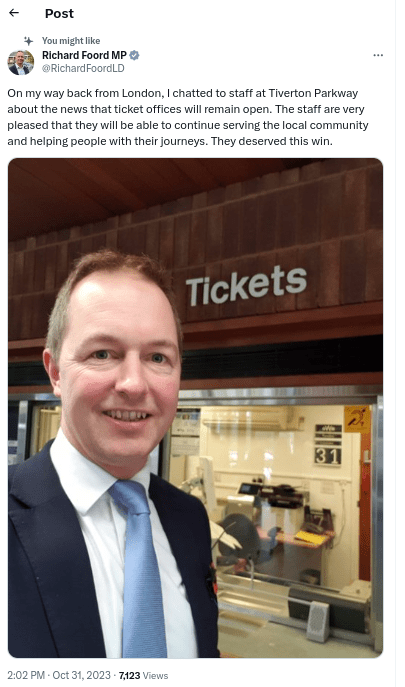
On my way back from London, I chatted to staff at Tiverton Parkway about the news that ticket offices will remain open. The staff are very pleased that they will be able to continue serving the local community and helping people with their journeys. They deserved this win.

Exmothians why does you MP, Simon Jupp, spend so much time out of your constituency?

Why does Simon seek credit for saving ticket offices outside his constituency? What about Exmouth?