Comment on “the Only One”

From an East Devon Correspondent:-

The Only One’!

This is a recommendation for East Devon Watch readers who have not yet viewed the ITV drama, ‘Mr. Bates –vs- The Post Office’, to add this 4-part series and the accompanying 1-hour factual documentary (…The Real Story) to their ‘must watch’ list for 2024.

This series aims to, again, draw public attention to one of the greatest miscarriages of justice in British history, by focusing on the lives of a handful of sub-postmasters who were key players in bringing the ongoing Post Office Horizon IT scandal to light.

Alan Bates, a north Wales sub-postmaster, established the Justice for Sub-postmasters Alliance after being repeatedly told by Post Office officials/regulators that he was ‘The Only One’ having problems with a newly installed Post Office Fujitsu IT system. Despite this, a handful of sub-postmasters throughout the country contacted each other and quickly found that they were NOT ‘the only ones’! Witness statements presented to the public enquiry (not due to be the finalised until 2025!) repeat the same phrases over and over again – i.e. ‘I was told that I was the only one that had this problem with the Post Office IT system!’

This persisted for almost two decades, from 1999 to 2015, engulfing the lives of over 700 sub-postmasters, who were prosecuted for theft, false accounting and fraud, resulting in unjust losses of their livelihoods, termination of their contracts and businesses, bankruptcy, wrongful imprisonment, suicide and serious mental health issues at the hands of an organisation who, seemingly, paid no attention to their voices, professional opinions or pleas for assistance, preferring to continuously endorse and favour a faulty Fujitsu IT system.

Many sub-postmasters were so traumatised that they remained anonymous and some, (around 50) having now seen this week’s mass media reaction, are coming forward to add to the numbers whose lives were ruined by this shocking injustice. Such miscarriages of justice seem to take a lifetime to be fully rectified and many sub-postmasters have died never having ‘cleared their names’ or been proved not guilty.

By insisting that these Post Office employees were ‘the only ones’ to have IT problems created feelings of isolation, shame, loneliness and hopelessness for these victims, making them reluctant to publicly speak out, which contributed to the prolonged torment of this scandal for so many years. Some were stigmatised within their local communities, labelled as criminals being afraid to venture out and be confronted by finger-pointing and abuse. Those who attempted to defend themselves and fight the false accusations found it impossible to access information and evidence that could prove their innocence, leaving them with no choice but to plead guilty to ‘soften the blow’!

The public believed that The Post Office was a national trusted brand, being a prestigious company with a high reputation – but within its senior management teams there was a flawed culture that the Post Office systems were infallible, making any criticism unwelcome. In 2021 when the Court of Appeal cleared some former sub-postmasters, the Lord Justice stated that the Post Office “effectively steamrolled over any sub-postmaster who sought to challenge its accuracy”.

It seems disrespectful (even offensive) to liken or compare such a massive miscarriage of justice to any other failures experienced by the general public – but sadly too many ordinary people regularly encounter similar arrogance and lack of empathy when communicating with management teams within large powerful corporations or national and local government regulatory authorities, who, like the Post Office, are organisations that are (rightly or wrongly) nationally trusted and revered by the public.

The lessons that must be learned from this dreadful Post Office scandal are that those who hold the power to make decisions do not always get everything correct and professionals and politicians alike would do well to listen to the people in their communities who can offer sound judgments. There are volumes of community associations throughout our country who have formed to offer well-founded counsel and advice for the benefit of local communities – but too often they are rebuffed by those purporting to represent their views.

Many hundreds of local residents have lost count of the times that they have heard the phrase “You are the only one objecting to this matter”, when they have contacted organisations like their local authority environmental and planning professionals, local politicians of varying colours, the Environment Agency and South West Water regarding serious planning and environmental issues that if not addressed could have serious detrimental effects on their communities.

However, despite warnings from local communities of the consequences of building on permeable green fields in the light of future climate change, local businesses and homes are suffering devastating flooding, wading through raw sewage in their streets and homes. The privatised water authorities have failed to invest adequately in vital infrastructure to protect our homes, our communities, our beaches and our waterways, preferring to pay excessive salaries to senior managements and shareholders! Electricity power outages halt the effectiveness of the critical pumps that can barely control the flooding from excessive over-development that was granted planning permission for economic benefits, whilst disregarding the voices of the people who pointed out the fallacy of ignoring the environmental warnings.

Over a 10 year period many local environmentalists have been repeatedly ignored by regulatory authorities looking to flatter their own green credentials. When locals have recommended caution in controlling the excessive development of massive, industrial bio-digester facilities near to residential homes, they are met with the phrase ‘You are the only one who has complained’ whilst the stinking odours and intolerable noises that have blighted hundreds of residents’ lives continue unabated – but apparently decision-makers concur that the economic gains and benefits for a few local landed- gentry outweigh the detrimental social and environmental effects on the communities.

This ITV drama has certainly created a vehicle to channel public outrage, which might, hopefully, bring this dreadful sub-postmaster scandal to a hasty resolution for so many victims.

The final words are dedicated to Alan Bates and the hundreds of sub-postmasters affected by this despicable scandal and there is no doubt that local communities up and down this entire country will want to send their support, in the hope that all the victims will find comfort in knowing that they are NOT ‘The Only One’!

Charity criticises ‘crazy’ rules for flood defence funding in England and Wales

“The planning system encourages and incentivises folly,” 

“We must not incentivise any more building of houses in high-risk flood plain areas.” Local authorities responsible for those areas “must be given a pass”, rather than house-building targets which encouraged them to do “very foolish things”.

James Tapper www.theguardian.com 

People affected by this month’s floods will face the same problems in future because their communities cannot access government support, campaigners have warned.

Small towns and villages affected by floods in England and Wales can ask for flood defences and mitigation through their council or the Environment Agency (EA), but are being turned down because they cannot make a business case, according to the National Flood Forum.

Heather Shepherd, director of operations at the NFF, a charity which supports flood victims, said: “There’s a lady who’s been flooded three times in the past year in Shrewsbury. The EA and the council can’t access help for her because they have to apply for funding – and they don’t qualify.

“I just spoke to Worcestershire council and Shropshire council yesterday. They have people that flood over and over and over again, but they have no hope, because they don’t add up to make a good business case to be able to mitigate the flooding. So it goes on and on. It’s utterly crazy.”

The woman in Shrewsbury already has extensive flood mitigation measures in her home but these were not enough to cope with last week’s downpours, Shepherd said. Storm Henk soaked countryside that had already absorbed heavy rainfall from storms Babet and Ciarán in the past three months. More than 200 flood warnings across the country remained active on Saturday afternoon.

Nottinghamshire county council urged people in 10 towns and villages in the northern part of the county to consider evacuating as the River Trent was at risk of flooding.

“The River Trent has now reached a record peak at the Torksey Lock gauge in Nottinghamshire, with rising waters surpassing the historic levels set in 2000,” it warned. “This means that your communities are at an increased risk of flooding.”

David Walters, who has run Cresslands Touring Park in south Lincolnshire for the past 11 years, said it would cost £20,000 to repair flood damage caused last week. “Debris off the fields that the water has washed through is completely strewn all over everything and everything stinks to high heaven. Because there’s no running water, I can’t clean or mop anything.”

The EA warned there is also a risk of significant river flooding from the Severn around Gloucester and the Thames in Oxfordshire because of the prolonged wet weather and intense rainfall. About 1,800 properties have been flooded so far during Storm Henk.

Jeremy Hunt, the chancellor, defended government action on flooding after a National Audit Office reported that 500 of 2,000 new flood defence projects had been dropped, and the number of properties that will receive better protection from flooding by 2027 had been cut by 40%.

He said that flood protection was “a priority” and that since 2015 the government had protected nearly 400,000 homes.

“The reason the National Audit Office say that is because of the impact of inflation, and that is why our number one priority is to bring down inflation,” he said, since inflation had made projects more expensive.

Katharine Smith, flood duty manager at the EA, said that teams had been out operating flood defences and clearing watercourses. “So far, more than 45,000 properties have been protected in the last few days,” she said. “We also urge people not to drive through flood water and follow advice of local emergency services on the roads – flood water is often deeper than it looks and just 30cm of flowing water is enough to float your car.”

The government’s policy for people affected by floods focuses on resilience, which means transforming homes so that they can recover from flooding more quickly. That means installing flood-resistant doors, replacing plasterwork, having solid floors without carpets, and raising boilers and electrical devices above the high water line.

People wanting to build resilience measures can apply for a one-off grant of £5,000, or for up to £10,000 through the Flood Re government-backed insurance scheme. Shepherd said that homeowners often needed to spend as much as £70,000.

“We’re going to see this more and more, bigger and harsher floods,” said Shepherd. “Climate change is throwing up ever increasing challenges. The government is eager to tell us that investment is larger than in the past, but flooding is clearly underfunded.”

Shepherd said the NFF helpline was getting increasing numbers of calls from people who had been flooded for the first time and blamed the disaster on new housing estates built nearby.

In 2020, the thinktank Bright Blue estimated that 70,000 homes had been built in high-risk areas since 2008 and others have estimated that 5,000 to 9,000 homes a year are approved on flood zone three areas at the highest risk.

Jonathan Werran, the chief executive of Localis, a thinktank focused on local affairs, said that no single agency was responsible for addressing flooding.

“The planning system encourages and incentivises folly,” he said. “We must not incentivise any more building of houses in high-risk flood plain areas.” Local authorities responsible for those areas “must be given a pass”, he said, rather than house-building targets which encouraged them to do “very foolish things”.

Warmer winters and more flooding will be the norm in the UK, scientists warn

On Monday all “good and faithful” Conservative MPs will troop into the lobby to vote for “Maxing Out”  N Sea Oil & Gas.

Just what do they think they will be conserving? – Owl

Hydrologist Hannah Cloke has a straightforward description of the inundation that has just struck Britain. “Our decorations may have come down but the flood warning map is currently lit up like a Christmas tree.”

Robin McKie www.theguardian.com 

And the immediate cause of this mayhem is clear. A sequence of storms this autumn and winter – Babet, Ciarán, Debi, Elin, Fergus and Gerrit – have turned Britain into “a sopping wet sponge”, as the Reading University researcher put it.

Then came Storm Henk last week. Its intense rainfall had nowhere to go except to pour into our rivers, which burst their banks spectacularly across the country. More than 1,000 homes in England were flooded and some villages totally cut off, with Nottinghamshire, Shropshire, Gloucestershire and Wiltshire worst affected.

This interpretation is supported by figures from the UK Centre for Ecology and Hydrology, which last week revealed that the period between July and December in 2023 was the wettest on record for the UK. As to the reason, there is a simple explanation.

“Climate change is warming the atmosphere,” said Linda Speight of Oxford University. “A warmer atmosphere can hold more moisture so that when it rains, the rainfall is heavier and more likely to lead to flooding. In particular, we know that climate change is leading to warmer and wetter winters in the UK. We will unfortunately experience more winters like this one in the future.”

Apart from triggering increases in our atmosphere’s moisture content, other human-induced effects are contributing to increases in flooding, said Christian Dunn of Bangor University. “Nature provided us with an answer to flooding – wetlands. Marshes, bogs and fens act like giant sponges, soaking up vast amounts of rainwater during wetter months and releasing it during drier periods.”

However, Britain has dug up its peatland, drained its marshes and built on its flood plains. As a result, the nation has lost much of its natural protection from the effects of flooding. “We need to manage and conserve our country’s existing wetlands and we need to create more of them,” added Dunn.

As to the future, meteorologists say there is more – much more – to come. “Continued human-induced climate warming in future is likely to result in further increases in peak river flows, which will cause more severe flooding and impacts on people, property and public services,” said Steve Turner of the UK Centre for Ecology and Hydrology.

This point was backed by Kevin Collins of the Open University. “When it comes to planning our infrastructure, we need to do less of what we’ve always done,” he said. “We now need to be thinking about the systemic risks to our communities and economy and act to build resilience to these kinds of floods by accepting and adapting with the new normal of climate change.”

Trevor Hoey, professor of river science at Brunel University London, added: “There are parallels here with the national response to Covid-19. It is to be hoped the government is listening carefully to what the inquiry is revealing about risk preparedness.”

Feargal Sharkey briefed on Exmouth sewage pumped into sea…

…who then posted on “X”:

“Water firm drives 240 truckloads of sewage a day through town ‘to pump into sea’.”

Yep, you read that correctly.

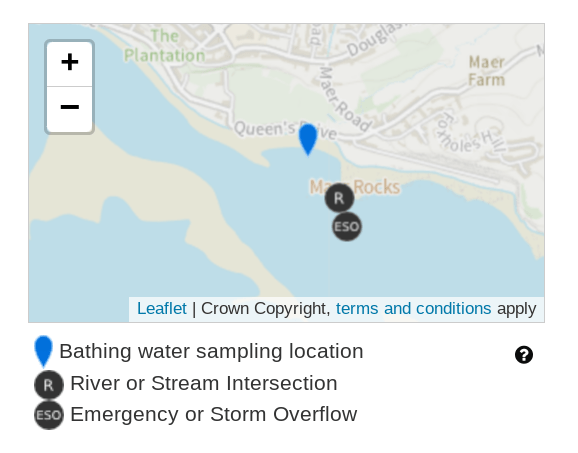
Geoff Crawford  of End Sewage Convoys And Poollution Exmouth (ESCAPE) added a little bit more background for Feargal on the “cause and effect” of the burst sewer and the need for trucks dumping sewage into the nearest storm overflow at Maer 24/7 in case SWW might be a little “economical with the facts”:

“He’s not admitting to the fact that adding a new higher volume pump at Phear Park increased the pressure and burst the sewer. He’s also not saying that the reason they do that was to increase the sewage flow to Sandy Bay treatment works and to allow more overflows to sea. Hence the new £14m pipe line they are installing between Maer Lane and Sandy Bay. There’s a lot he’s not telling you.”

The Environment Agency shows where it’s all being dumped [In case readers really can’t believe that sewage is dumped so close to the beach – and not just at ebbing tides either!]

South West Water – it’s time for “Full Disclosure” !

Swimmers and surfers report illness after sewage spill

Swimmers and surfers have reported falling ill after going into the sea on the Sussex coast, where there has been an ongoing sewage spill for eight days.

“Naturally the intense rainfall of recent storms hitting the south coast has led to the storm overflow system operating — it’s designed to protect homes, schools and businesses from flooding.” Southern Water’s bathing water “lead”.

How well is that working? – Owl

Adam Vaughan www.thetimes.co.uk

The spill at Shoreham harbour from a storm overflow run by Southern Water began on December 28 and is still ongoing, as days of heavy rainfall overwhelm sewer capacity.

However, the water company blamed local houseboat toilets for any pollution in the harbour. It said that the firms’ modelling suggested that the overflow was not affecting water quality.

Rob Woodward, a member of a local kitesurfing club, said he had surfed at Shoreham on New Year’s Eve and suffered diarrhoea and vomiting for three days. Emma Kate, a local swimmer, said she swam in the water on the same day and experienced the same symptoms.

“I’m a school teacher which forced me to struggle through my first days back, and my wife and I had a baby due on January 4, so the sickness added to the worry of the C-section,” said Woodward, who lives in Lancing.

He added: “Our south coast could be an absolute hub for water sports, and it’s hindered by poor water quality.”

Campaigners rejected the company’s explanation. Ed Acteson, a campaigner at SOS Whitstable, which has highlighted spills around the Southern Water region in recent years, said he “simply did not believe” that a week of consecutive sewage wouldn’t have any impact. “It’s tantamount to gaslighting for them to claim that,” he said.

He added: “The idea that a few people on houseboats flushing their toilets would have a fraction of the impact of 180-plus hours of sewage from the same location is ridiculous.”

There are many sewage spills around the country due to widespread heavy rainfall from Storm Henk. Run-off into sewers has been exacerbated and the Environment Agency reported the ground across much of England as “completely saturated”.

There are reports of dozens of sewage spills in Kent, Sussex and Hampshire, plus similar numbers in Devon and Cornwall, which is served by South West Water. In Oxfordshire and around London, Thames Water is reporting scores of discharges in its region.

One town’s fight against sewage pollution

Since December 28, the charity Surfers Against Sewage said it had received 38 reports nationally of people getting sick after entering seas and waterways. Most were for gastroenteritis, which causes diarrhoea and vomiting.

At Shoreham beach, one of the two nearest official bathing waters from the Southern Water storm overflow, the charity said it had 40 sickness reports since May 2020. The figures are likely to be a considerable underestimate, as most incidents are not reported.

Alex Lipp, who maintains the website sewagemap.co.uk, said that Thames Water had almost 300 locations spilling sewage on Friday, the most since the company launched its real-time discharges map a year ago.

The Brighton branch of Surfers Against Sewage said it would be holding a protest on a beach in the harbour on Saturday to end sewage dumping there. The group noted that the storm overflow was only 100m from where people swam all year round because it was sheltered from winter waves.

Southern Water is one of only three water firms to offer a real-time sewage spills map; the other six broke a promise made to The Times’s Clean it Up campaign last year to release maps by the end of 2023.

The company, which announced last year it was spending £1.5 billion to tackle sewage spills, said it provided transparent information about transparent discharges but not health advice.

Tom Gallagher, bathing water lead at Southern Water, said: “We provide transparent data on storm overflows for users of designated bathing waters. Naturally the intense rainfall of recent storms hitting the south coast has led to the storm overflow system operating — it’s designed to protect homes, schools and businesses from flooding.

“There are many sources of pollution in coastal areas including road and agricultural run-off, animal waste, discharges from boats and other sources.”