
- Single storey rear extension
 9 Yallop Way Honiton Devon EX14 2GNRef. No: 24/0286/FUL | Validated: Fri 09 Feb 2024 | Status: Awaiting decision
 - Discharge of conditions for 21/1228/LBC : Condition 3 (building condition), Condition 4 (materials/rain water goods/windows/doors/vents) Hillside Farm Harcombe Devon DT7 3RNRef. No: 24/0287/DOC | Validated: Fri 09 Feb 2024 | Status: Awaiting decision
- Timber Orangery Wessington Farm Awliscombe EX14 3NURef. No: 24/0290/FUL | Validated: Fri 09 Feb 2024 | Status: Awaiting decision
- Discharge of Condition for application 22/0744/LBC: Condition 4 (Details) Springfield Kilmington Devon EX13 7SBRef. No: 24/0291/DOC | Validated: Fri 09 Feb 2024 | Status: Awaiting decision
- Polytunnel Stockers Farm Wick Devon EX14 4TYRef. No: 24/0283/AGR | Validated: Fri 09 Feb 2024 | Status: Awaiting decision
- Certificate of lawfulness for construction of single storey extension to western elevation (previously submitted under 15/0113/CPL)Mountfield Coreway Sidford Sidmouth Devon EX10 9SDRef. No: 24/0292/CPL | Validated: Fri 09 Feb 2024 | Status: Awaiting decision
- Discharge of condition for 23/2432/FUL: Condition 3 (Materials) Laneside Drakes Avenue Sidford Devon EX10 9QYRef. No: 24/0275/DOC | Validated: Thu 08 Feb 2024 | Status: Unknown
- T1, Lime: re-pollard to previous reduction points. Sherwood Salcombe Hill Road Sidmouth Devon EX10 8JSRef. No: 24/0277/TRE | Validated: Thu 08 Feb 2024 | Status: Awaiting decision
- Discharge of condition for 23/1207/LBC: Condition 4 (Details) The Lodge Gittisham Devon EX14 3ADRef. No: 24/0278/DOC | Validated: Thu 08 Feb 2024 | Status: Awaiting decision
- Agricultural building for hay, straw and storage of machinery Chineway Farm Putts Corner Sidbury Sidmouth EX10 0QQRef. No: 24/0281/AGR | Validated: Thu 08 Feb 2024 | Status: Awaiting decision
- To include Rentplus affordable housing provisions within Section 106 dated 29 April 2014 (Phase 3A) and Section 106 dated 27 February 2023 (Phase 3B) Land At Pinn Court Farm Pinncourt Lane Exeter EX1 3TGRef. No: 24/0274/V106 | Validated: Thu 08 Feb 2024 | Status: Awaiting decision
- T1, hawthorn – fell. Reason – dead buds and suspected root death due to honey fungus. 20 Fore Street Budleigh Salterton Devon EX9 6NGRef. No: 24/0270/TCA | Validated: Wed 07 Feb 2024 | Status: Awaiting decision
- Devon County Council consultation: Demolition of the Devon Lady, single storey classroom at Kilmington Primary School and construction of a modern equivalent of the same dimensions.Kilmington Primary School Whitford Road Kilmington Axminster EX13 7RGRef. No: 24/0273/CM | Validated: Wed 07 Feb 2024 | Status: Awaiting decision
- T1, coastal redwood – shorten back low branches, to a suitable pruning position, away from wire by approximately 1m and balance as necessary. T2, weeping beech – shorten back from roof by 2m to a suitable side branch. Row of approximately 22 Lawson cypress on boundary – fell to as near ground level as possible. Heronsbridge Little Knowle Budleigh Salterton Devon EX9 6QSRef. No: 24/0269/TRE | Validated: Wed 07 Feb 2024 | Status: Awaiting decision
- G1, Western Red Cedar: crown raise lower foliage over graveyard in order to give approx. 1.5-2.0 metres clearance over headstones. St Andrews Church ChardstockRef. No: 24/0267/TCA | Validated: Wed 07 Feb 2024 | Status: Awaiting decision
- Installation of a main entrance sign to the access of a new Cats Adoption Centre (previously approved under application 19/2365/MFUL) Axhayes Cattery Clyst Honiton Exeter EX5 2HSRef. No: 24/0265/ADV | Validated: Wed 07 Feb 2024 | Status: Awaiting decision
- Redevelopment of site to provide: (a) Care home building (Class C2) with associated parking, landscaping, staff and resident facilities and associated works (b) Extra care apartment building (53 units) with associated communal lounge, wellbeing suite, restaurant and care provision (class C2) (c) Retirement living apartment building (33 units) with associated communal lounge (Sheltered housing) and (d) Erection of 4 houses and 3 townhouses (Class C3) along with accesses, internal car parking, roads, paths, retaining walls, refuse and landscaping associated with development; retention/refurbishment of building B, erection of habitat building and sub-stations. (Demolition of buildings other than building B) (Variation to previous application (23/0571/MFUL) showing removal of balconies and elevational changes to west elevation of Retirement Living block) Former Council Offices Knowle Sidmouth Devon EX10 8HLRef. No: 24/0263/MFUL | Validated: Wed 07 Feb 2024 | Status: Awaiting decision
- Conversion of garage to ancillary annexe for friends, family and for holiday accommodation Cranbrook The Glen Uplyme DT7 3TRRef. No: 24/0272/FUL | Validated: Wed 07 Feb 2024 | Status: Awaiting decision
- Proposal for side extension (resubmission based on 23/1107/FUL) The Oaks Shute Road Kilmington EX13 7STRef. No: 24/0261/FUL | Validated: Tue 06 Feb 2024 | Status: Awaiting decision
- Proposed ground floor rear extension and introduction of weatherboard cladding to rear elevation 10A Portland Avenue Exmouth Devon EX8 2BSRef. No: 24/0253/FUL | Validated: Thu 08 Feb 2024 | Status: Awaiting decision
- Certificate of lawful development for rear dormer loft conversion to the main roof.147 Egremont Road Exmouth Devon EX8 1SDRef. No: 24/0252/CPL | Validated: Mon 05 Feb 2024 | Status: Awaiting decision
- T1, Willow: Crown reduction to 15m high (from 18m) and to 9m wide (from 18m). 14 Sowton Village Sowton Exeter EX5 2ADRef. No: 24/0247/TCA | Validated: Mon 05 Feb 2024 | Status: Awaiting decision
- T001, Weeping Willow : Crown Reduction by 0.5m-2m in spread and 1m-2.5m in height dependent on available pruning points. Tuckers Lodge Dalwood Devon EX13 7EGRef. No: 24/0239/TRE | Validated: Wed 07 Feb 2024 | Status: Awaiting decision
- T7 – Cherry: reduce crown height by up to 4m and lateral spread by up to 3m, ensuring a minimum clearance of 2m from property. Maximum Diameter of Cuts 50mm. Crown lift to 2.5m above ground level, MDC 25mm. Rationale: This Cherry tree is now quite large and is dominating the garden, the works are suggested as part of the reasonable and responsible management of this tree and is appropriate arboricultural management. The works are to be planned for summer 2024. 5A Northview Road Budleigh Salterton Devon EX9 6BYRef. No: 24/0237/TRE | Validated: Mon 05 Feb 2024 | Status: Awaiting decision
- Demolition of lean-to structure, proposed part conversion to 1no. residential dwelling with garden and associated works, and the rebuild, repair and conservation of the existing barns. Town Tenement Farm Clyst Hydon Cullompton EX15 2NBRef. No: 24/0226/FUL | Validated: Fri 09 Feb 2024 | Status: Awaiting decision
- Demolition of lean-to structure, proposed part conversion to 1no. residential dwelling with garden and associated works, and the rebuild, repair and conservation of the existing barns. Town Tenement Farm Clyst Hydon Cullompton EX15 2NBRef. No: 24/0227/LBC | Validated: Fri 09 Feb 2024 | Status: Awaiting decision
- Retrospective application for a mud ventures building Greendale Farm Shop Farringdon Devon EX5 2JURef. No: 24/0225/FUL | Validated: Tue 06 Feb 2024 | Status: Awaiting decision
- Single storey rear extension and fencing. 27 Haydons Park Honiton EX14 2TARef. No: 24/0229/FUL | Validated: Thu 08 Feb 2024 | Status: Awaiting decision
- Erection of a bungalow Bramley Ridgeway Sidbury EX10 0SFRef. No: 24/0222/FUL | Validated: Thu 08 Feb 2024 | Status: Awaiting decision
- Construction of earth lined slurry lagoon with security perimeter fence New Park Farm Awliscombe EX14 3QARef. No: 24/0220/FUL | Validated: Tue 06 Feb 2024 | Status: Awaiting decision
- Discharge of conditions for 16/0175/FUL : Condition 3 (materials and finishes) – in part Long Range Whimple Exeter EX5 2QTRef. No: 24/0212/DOC | Validated: Fri 09 Feb 2024 | Status: Awaiting decision
- Discharge of conditions for 21/3308/RES: Condition 3 (cycle storage), Condition 4 (air source heat pumps) Waterleat High Street Newton Poppleford Sidmouth EX10 0DURef. No: 24/0206/DOC | Validated: Mon 05 Feb 2024 | Status: Awaiting decision
- Loft dormer with rear facing window (retrospective). 99 Byron Way Exmouth EX8 5SERef. No: 24/0201/FUL | Validated: Tue 06 Feb 2024 | Status: Awaiting decision
- Single-storey rear extension. 2 Canada Cottages Broadway Woodbury Devon EX5 1NXRef. No: 24/0196/FUL | Validated: Tue 06 Feb 2024 | Status: Awaiting decision
- Demolition of existing garage and storage shed; construction of new garage; alterations to existing driveway and retrospective approval for existing garden office Bundels Ridgeway Sidbury Devon EX10 0SFRef. No: 24/0185/LBC | Validated: Fri 09 Feb 2024 | Status: Awaiting decision
- Demolition of existing garage and storage shed; construction of new garage; alterations to existing driveway and retrospective approval for existing garden office Bundels Ridgeway Sidbury Devon EX10 0SFRef. No: 24/0184/FUL | Validated: Fri 09 Feb 2024 | Status: Awaiting decision
- Discharge of Condition for 21/3067/AGR: Condition 3 (external roof finish materials). Land To South East Of Gore Lane KilmingtonRef. No: 24/0172/DOC | Validated: Tue 06 Feb 2024 | Status: Unknown
- Request for continuation of permission 20/0965/FUL to use Royston Farm as a not-for-profit therapeutic school and to use first floor areas as well as the ground floor, and increase placements from 5 to 10. Royston Farm Talewater Talaton EX5 2RRRef. No: 24/0158/FUL | Validated: Mon 05 Feb 2024 | Status: Awaiting decision
- Alterations and minor extension to the existing commercial building and formation of customer parking area. Oliver Joseph Fitness & Land To The West And South Lyme Street Axminster EX13 5AURef. No: 24/0157/FUL | Validated: Wed 07 Feb 2024 | Status: Awaiting decision
- The proposal relates to the demolition and replacement of the existing dwelling. Kenwood Woodhouse Hill Uplyme DT7 3SLRef. No: 24/0139/FUL | Validated: Mon 05 Feb 2024 | Status: Awaiting decision
- Proposed 30 no. EV charging points and battery farm (enclosed within a building – part retrospective) with associated parking spaces, internal road network/hardstanding and access and egress onto the Greendale Business Park Private Road Network. Land Adjacent Greendale Business Park Greendale Business Park Woodbury Salterton EX5 1EWRef. No: 24/0099/FUL | Validated: Fri 09 Feb 2024 | Status: Awaiting decision
- Proposal for driveway and access enlargement with alterations to boundary wall and embankment Forge Cottage Cowley Devon EX5 5ELRef. No: 23/2761/FUL | Validated: Mon 05 Feb 2024 | Status: Awaiting decision
- Proposed 12 no. EV charging points and associated layby, site access and egress with new public footpath and cycle path Four Oaks Clyst St Mary Exeter EX5 1ATRef. No: 23/2640/FUL | Validated: Mon 05 Feb 2024 | Status: Awaiting decision
- Replace lintel on south east ground floor window plus additional lintels if identified during course of work; replace all ceilings at first floor; remove and re-render east and west elevations; south elevation left exposed masonry; remove southern bolt on chimney; replaster internal walls at ground floor and repairs to purlins on projecting from southern gable wall plus addition roof work identified during course of work. 1 Rose Cottages Church Road Whimple Devon EX5 2SYRef. No: 23/2248/LBC | Validated: Thu 08 Feb 2024 | Status: Awaiting decision
Daily Archives: 20 Feb 2024
Exmouth residents plan protest at South West Water roadshow
South West Water will be hosting a ‘roadshow’ at Exmouth Town Hall (Tuesday) and members of the public are planning a protest outside.
Adam Manning www.exmouthjournal.co.uk
They are holding a demonstration outside the Town Hall at 1.30pm, which the group behind it say is ‘to make it very clear to SWW that we simply don’t accept the damage they are doing to us, to our environment, and to our tourism. Enough is enough’.
A Facebook group called ESCAPE (End Sewage Convoys And Poollution Exmouth) is open for members of the public to join and find out the latest on sewage pollution in Exmouth and Budleigh.
A spokesman for the protest said: “Please come and demonstrate with us. SWW needs to be held to account, and they need to see just how unhappy we are with their actions (or, more accurately, their INactions).”
In response to this, South West Water said: “The opinions of our customers matter to us greatly. We are listening and know we have more to do. The purpose of events like our Community Roadshow in Exmouth tomorrow is to hear directly from customers and have the opportunity to discuss any concerns they may have.
“We are investing to help deliver improvements in our environmental performance, and will continue to do all we can to protect our region’s seas and rivers.”
SWW are hosting a series of coastal community roadshows across the region to share latest business plan with customers and to demonstrate how we’re investing record amounts in making improvements right across the South West.
In Exmouth, they will be explaining to residents how the water and wastewater systems work and explaining more about the plans we have for Exmouth and the surrounding areas.
The event is fully booked, representatives of the water company will be at Exmouth Town Hall, St Andrews Road, EX8 1AW from 2pm-6pm.
Everything you wish you never needed to know about sewage fungus
The smelly, nasty bacteria that spells bad news for rivers is flourishing in the UK. Here is how to spot it and what it means.
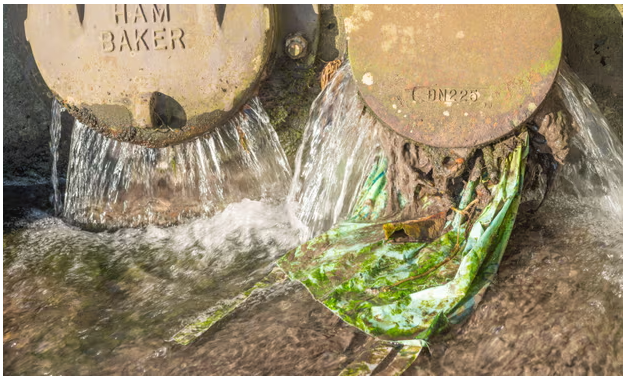
Leana Hosea www.theguardian.com
What is sewage fungus?
It is slimy, murky brown, smells bad, and fills river enthusiasts and anglers with gloom.
But it is probably useful to know that sewage fungus, so called because of its fungal-shaped mass of filaments, is not fungus at all, but is primarily made up of several species of bacteria, most commonly Sphaerotilus natans, Beggiatoa alba, Carchesium polypinum, and Flexibacter species. By the time you see its characteristic slimy, floating fronds, it will contain some fungi and algae, too, and it always spells bad news for the river in which it is spotted and for any unfortunate wildlife living there.
Where do you find it and where does it come from?
Sewage fungus flourishes in waterways polluted with high levels of nutrients and organic matter.
Sewage discharges are a common source of this kind of pollution, but these microorganisms can also be carried into waterways from animal slurry and even from effluent from paper mills. Last month, a Devon farmer was fined £6,000 for polluting a stream with slurry, with thick sewage fungus visible for more than a mile downstream, the Environment Agency reported. A study by Oxford University found that sewage pollution, whether treated or untreated, was the primary reason for increased sewage fungus in rivers.
Is it dangerous?
Sewage fungus can reduce oxygen levels in water, suffocating aquatic life. So it can, for example, smother fish eggs and prevent them from hatching. In severe cases, a river may not be able to support invertebrates as a result. Mass fish deaths have taken place in watercourses plagued by the fungus, which can then affect the whole food web. Even when sewage fungus is removed it can have a long-term effect on river health and it can take time for life in the river to recover.

Underwater view of sewage fungus growing in a stream polluted from slurry and dung from a dairy farm.
Does it pose a significant danger to human health? Dr Anne Jungblut, a microbiome expert from the Natural History Museum, says it is a mould, and so could contain human pathogens. “It’s the level of danger of the junk in the kitchen plughole, which wouldn’t be good to eat. If there’s a lot of it in the river you wouldn’t want to swim there, as it’s an indicator there’s likely to be sewage, which could have E coli in it and that is dangerous,” he said.
Some of the UK’s most prized landscapes are blighted with sewage fungus. It has taken hold in Lake Windermere and has been spotted on the picturesque River Wye, as well as on a public footpath in Surrey after sewage overflowed from a Thames Water treatment works.
Is it getting worse?
The more sewage releases there are, the greater the probability of an increasing growth of sewage fungus. In 2022, 389,165 sewage spills were reported in the UK, discharging for a staggering 2.4m hours.
“It is very hard to tell if the situation is getting worse, as there is so little research in this area,” says Dr Michelle Jackson, whose study for the University of Oxford found that sewage pollution was worse than agricultural runoff for rivers. “Although water companies have to report outbreaks downstream of treatment works, they only use a simple visual inspection.”
A citizen science survey project by the Rivers Trust reported 322 instances of sewage fungus in rivers across the UK and Ireland, which represents 9% of the surveys taken. The Environment Agency says river health has been improving since the Industrial Revolution, but that is a low bar and new and emerging pollutants are replacing those from older industries. Add to that increased pressure on the wastewater system from a growing population, underinvestment in outdated infrastructure, and stresses from climate breakdown, and it is clear that changes need to be made if rivers and the wildlife they support are to be restored to health.
How can sewage fungus be tackled?
Outbreaks will increase unless water quality improves. To better monitor sewage fungus, Oxford University has developed an AI model to detect where the bacteria are growing, even before they become visible. The method uses imaging techniques and machine learning to identify sewage particles and sewage fungus in water samples. The researchers say this could act as an early detection system for spotting harmful outbreaks, acting as “a canary in the coalmine” to limit pollution buildup and halt species decline.
Dr Dania Albini, a co-author of the research, wants to see improvements to wastewater plants, along with more regulations. “These efforts are crucial in safeguarding the integrity and safety of our rivers – fundamental elements of both ecosystems and human wellbeing,” she said when the report was published late last year.
But until there is action to target the sewage discharge problem, people may have to get used to the sight of the insidious fungus and its slimy fronds in the UK’s waterways.
Sewage spills are a stinker for Tories in marginal seats
Battleground seats held by the Conservatives have the highest number of sewage spills of any marginal constituencies, The Times has found.
George Willoughby, Adam Vaughan www.thetimes.co.uk
The figures show how exposed Tory MPs are to attacks over the party’s record on water pollution. Seats won in the 2019 general election by a margin of less than 10 per cent will be crucial when people next vote.
The Times can reveal that of the 79,467 sewage spills in marginal constituencies in 2022, over 39,000 were in Conservative seats, more than those held by any other party. Labour marginal seats were second at little more than 26,000.
The Liberal Democrats have made sewage one of their top campaign issues, with Sir Ed Davey, the party leader, saying Tory voters were “very, very angry” over spills.
Since being appointed last September, Steve Reed, the shadow environment secretary, has also concentrated on water quality, saying the “sewage scandal” was a result of “Conservative failure”.
Polling of 6,000 adults by Survation found that 56 per cent of people would consider raw sewage discharges when they voted in the next general election. The number for those who voted Tory in 2019 is 51 per cent, whereas for Labour voters it is 66 per cent.
The high number of spills in Tory-held marginal seats appears to be a result of the party’s gains in “red wall” areas in 2019. About 25,000 spills in 2022 were in marginal constituencies the party gained from Labour. About 14,000 sewage discharges were in marginal seats the Tories held in 2019.
The Welsh constituency of Carmarthen East & Dinefwr, held by Jonathan Edwards, the former Plaid Cymru MP who is now an independent, had the most sewage spills of all marginal seats, with 7,103 dumps. Edwards holds a 4 per cent majority.
The Arfon constituency, held by Plaid Cymru, had the second most spills for a marginal seat, followed by three Tory consituencies: Ynys Môn, North West Durham and Aberconwy.
The drier weather last year is believed to have led to a slight fall in the number of sewage spills.
Discharges happen mostly during heavy rain when sewer capacity is overwhelmed. Sewage releases are often a result of geography and water company infrastructure. Having a high number of spills in their constituency can leave MPs vulnerable to criticism, however.
The Lib Dems attribute their victory in the 2021 Chesham & Amersham by-election to their concentration on polluted local chalk streams. One of the marginal seats in the party’s sights is Cheltenham, held by Alex Chalk, the justice secretary, with a majority of 981.
Tim Farron, the Lib Dem environment spokesman, said the Tories’ failure to tackle the sewage crisis would cost them seats at the next election. “Lifelong Conservative voters are planning to vote Liberal Democrat for the first time because of this,” he added.
Labour is yet fully to set out its stall on how it would tackle water pollution. The Tories recently pinched one of the party’s headline ideas: ending self-monitoring of water companies.
Rebecca Pow, an environment minister and MP for Taunton Deane, said: “We have a plan and it’s already in place. The water companies have to be taken into account.”
Reed said: “This Conservative government has meekly sat back … while toxic sewage pollutes our waterways.”
 East Devon Watch