Housebuilders accused of artificially keeping house prices high

The UK competition watchdog has opened an investigation into eight housebuilders [Barratt, Bellway, Berkeley, Bloor Homes, Persimmon, Redrow, Taylor Wimpey, and Vistry] following evidence they may be sharing commercially sensitive information which may have kept prices high.

Henry Saker-Clark www.independent.co.uk 

The Competition and Markets Authority (CMA) launched the probe amid concerns it could be affecting the development of sites and prices of new homes.

It came as the regulator warned that the housebuilding sector “needs significant intervention” amid concerns over the quality of new homes, “high and unclear” estate management charges and planning hurdles.

The CMA formally started a probe into state of the housebuilding sector and the private rental market in February last year.

On Monday, it said in its final report that the current planning system and limitations of speculative private development “have seen too few homes built”.

It highlighted “persistent shortfalls” in the number of homes built across England, Scotland, and Wales, with fewer than 250,000 built last year across Great Britain, compared with a target of 300,000.

Complex and unpredictable planning rules across the three nations are partly to blame for this, it said.

The report highlights that many planning departments are under-resourced, some do not have up-to-date local plans, and do not have clear targets or strong incentives to deliver the numbers of homes needed in their area.

It also said shortfalls were linked to requirements to speak with a wide range of stakeholders.

In addition, there were concerns over limitations to private speculative development, highlighting that developers often produce houses based on pricing rather than diversifying the types and numbers of homes they build to meet the needs of communities.

The report also found a rise in developers using estate management charges for facilities, such as roads, drainage and green spaces.

It said these charges are “often high and unclear to homeowners” and flagged that some unplanned charges can cost thousands of pounds.

Concerns were also raised that builders “don’t have strong incentives” for high quality and consumers have unclear routes of how to receive any redress when issues arise, with the CMA also highlighting an increase in snagging issues.

The watchdog said it is recommending the Government sets up a New Homes ombudsman to support homeowners over quality issues and requirements for councils to take over amenities on all new housing estates.

It came as the CMA also found signs that some housebuilders may be sharing commercially sensitive information with their competitors, which could affect property prices and weaken competition.

The investigation will look into Barratt, Bellway, Berkeley, Bloor Homes, Persimmon, Redrow, Taylor Wimpey, and Vistry. It has not reached any conclusions about whether the law has been infringed.

CMA chief executive Sarah Cardell said: “Housebuilding in Great Britain needs significant intervention so that enough good-quality homes are delivered in the places that people need them.

“Our report, which follows a year-long study, is recommending a streamlining of the planning system and increased consumer protections.

“If implemented, we would expect to see many more homes built each year, helping make homes more affordable.

“The CMA has also today opened a new investigation into the suspected sharing of commercially sensitive information by housebuilders which could be influencing the build-out of sites and the prices of new homes.

“While this issue is not one of the main drivers of the problems we’ve highlighted in our report, it is important we tackle anti-competitive behaviour if we find it.”

Housebuilders’ shares fell in early trading on Monday after the competition watchdog’s announcement.

As a result, shares in Barratt were down 1.4%, Taylor Wimpey fell 1.9%, Persimmon dropped 1.8% and Bellway was down 2%.

Budleigh’s sea-front tankers – and why it’s (hopefully) ‘Good News’

Owl admires the way local people in Exmouth and Budleigh are peeling away the secrecy surrounding South West Water’s operations.

[PS One of Owl’s “little birdies” whispered that these tankers cost around £1K a day.]

Petercrwilliams fightingpoolution.com

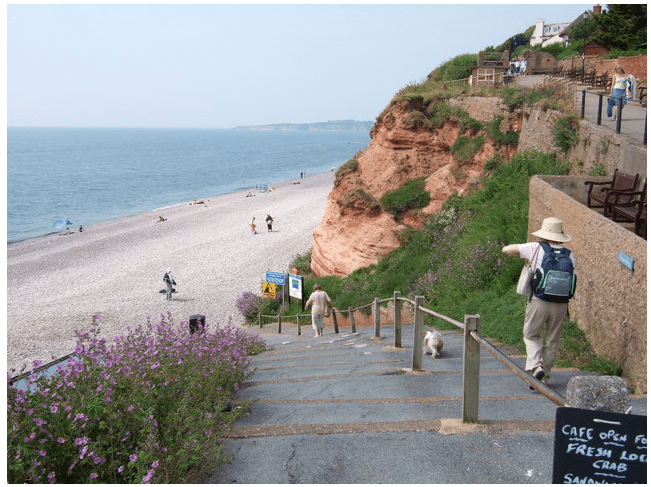
It’s nearly three weeks since Budleigh’s Marine Parade has become a lorry park, with up to 8 tankers parked up along the front at any one time.

There have been lots of varying reasons provided, including at least three from South West Water themselves. Most recently I’ve heard that the tankers were “dumping raw sewage into the sewage system here” (spoiler alert: they’re not!).

To understand what they are doing – and why it should be a really good thing for us – a quick recap on ‘Combined Sewage Overflows’ (or CSOs), and why they are the major cause of sewage spills in this country.

Sewer pipes have a finite capacity to transfer sewage to pumping stations or treatment plants. Because these sewer pipes carry rain-water run-off as well as raw sewage, the total volume entering the pipes when it’s raining, can be greater than the pipe’s capacity. For this reason, there are regular storm tanks incorporated into the sewer system, which act as temporary holding tanks to even out the flow. However, if these storm tanks fill up, they have an outlet that they open, called a Combined Sewage Overflow (CSO), which spills the excess water and raw sewage into a nearby stream or the sea. To avoid us seeing too much gory detail, the only treatment made is to filter this through a 6mm sieve before dumping it into our environment. These CSO’s are the #1 cause of sewage dumps in the UK.

In Budleigh, we have 2 CSO’s that dump into Kersbrook – on the edge of our Nature Reserve, another goes out to Otter Ledge (more on that next time!), and 5 CSO’s can dump sewage into the Knowle Brook which runs through Budleigh High Street. All except the Otter Ledge outfall end up on our beach.

In 2022 (the last year that SWW have released data for), Budleigh’s CSO’s dumped raw sewage 56 times, for a total duration of nearly 300 hours. Full details HERE. As that was an exceptionally dry year, it’s quite possible that 2023 was even worse (data to be released at end March).

So why are the tankers on Marine Parade ‘Good News’?

The key task they seem to be working on is to clean out the Marine Parade storm tank and associated sewer pipes. This CSO system appears to be over 100m long, running most of the way along the sea front. Over years, it’s become blocked with a mix of fat-bergs, ‘disposable’ wipes, sand and pebbles – reducing it’s holding capacity and flow. These are all now being sucked up into the tankers, and taken off for disposal. Because of the length of the tank and pipes, it’s taken 3 weeks and counting. Big thanks to the team who are doing this – it must be pretty unpleasant working conditions down there!

Marine Parade CSO was one of our worst offenders in 2022, with over 11 hours of sewage dumping onto the western end of Budleigh beach – so hopefully having the full capacity of the storm tank will reduce or eliminate that threat. The main beneficiaries of this work should be all those who swim around the Steamer Steps end of our beach.

We do have evidence that cleaning storm tanks can work here, as the CSO in Meadow Road was cleaned in 2021 – and zero spills were recorded there in 2022. Results are not guaranteed though, as the CSO at the bottom end of Granary Lane was cleaned out in January this year, but it is still recording sewage spills into the Kersbrook in the last month.

Let’s hope that this vital maintenance work marks a step in the right direction, and increases the number of days when we can all swim in clean, sewage-free water.

Simon Jupp get the crazy consultation rules changed for “Exmouth’s Gateway”

[Simon Jupp is Parliamentary Private Secretary to the Secretary of State for Transport, Mark Harper.]

From a correspondent: 

Devon County Council announced in January 2023 that they had secured funding through the Government Levelling up Fund for the extension to Dinan Way in Exmouth and investment in the Exmouth Gateway.  According to the Memorandum of Understanding (MOU) which accompanies the bid, Devon County Council has to complete the works for the projects by March 2025. The bidding process started in 2021 when councils were dealing with the fallout of the pandemic to local services, so the work necessary to meet the strict deadlines for the bid process has imposed heavy demands on DCC staff and elected officials

Furthermore, the MOU also sets out very precise requirements for full consultation with residents, stakeholders and the district and town councils, without which the funding will be withheld. Full and meaningful consultation has not happened to the satisfaction of these parties.   The level of consultation has been woefully inadequate.   However, it is difficult to see how DCC can fulfil all these obligations within such a short timescale.  Council staff numbers have been cut back to the bone and DCC will struggle to ensure that the consultation requirements set out in the Government MOU can be met and the bid signed off in time to complete the project.

Compare these rigid delivery timescales with national government infrastructure projects.  In 2009 the original cost of HS2 was set at £37.5 billion.  By July 2023 the total project cost was estimated to reach £106.6 bn. The deadline for completion of 2033 has now been pushed to as late 2041 with large parts of the project being abandoned altogether.  Likewise the Prince of Wales aircraft carrier finally set off a year late in August 2023 at an increased cost of £3.2 bn. from £3 bn.

Why are the project deadlines so rigid for local councils when government projects deadlines and costs are so flexible? Once the work is completed on the Exmouth Gateway, the MOU prohibits any change for at least ten years.  It is not acceptable to impose an ‘enhancement project’ which could create traffic chaos and ultimately fail to deliver real improvements to the Gateway which cannot be changed for many years on the residents, businesses and visitors to Exmouth.

If Devon County Council could be given the time to undertake meaningful public consultations and adapt their plans to ensure best value for the project spend, this would  ensure far better use of government and local taxpayers’ money.  Perhaps our local MP who has been so involved in the LUF bid can intervene on Exmouth residents’ behalf and get these unrealistic and ultimately damaging deadlines removed.