
(Or, if you prefer another set of headlines: “It’s for the Birds”: pollster mocks Rishi Sunak HuffPost)
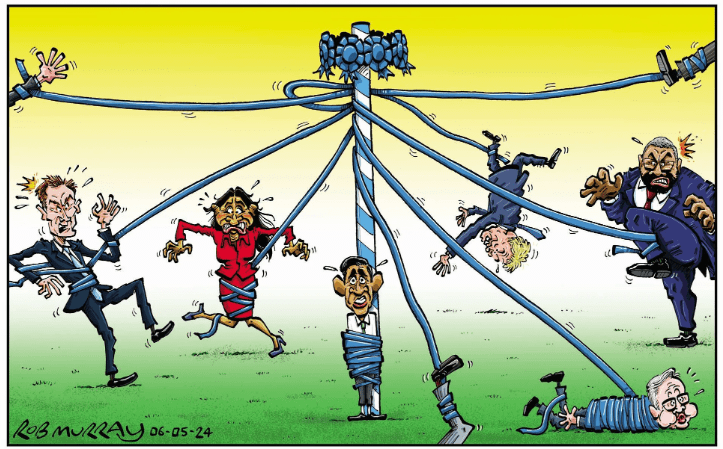
“These results suggest we are heading for a hung parliament with Labour as the largest party. Keir Starmer propped up in Downing Street by the SNP, Liberal Democrats and the Greens would be a disaster for Britain.” – Rishi Sunak
The disaster for Britain is the likelihood of the Conservatives lurching to the right if they are re-elected, indeed the possibility of lurching to the right as they cling on until the election.
Remember Liz Truss! – Owl
Conservative ministers are adamant that the upcoming general election is not yet a lost cause – claiming last week’s local elections show Labour is not on course for a Commons majority.
Hugo Gye inews.co.uk
But polling experts have hit back at the argument made by Rishi Sunak and his allies, pointing out it is based on only a partial reading of the results.
The Prime Minister told The Times: “These results suggest we are heading for a hung parliament with Labour as the largest party. Keir Starmer propped up in Downing Street by the SNP, Liberal Democrats and the Greens would be a disaster for Britain.”
The claim is a repeat of the campaign run successfully in 2015 against a co-called “coalition of chaos”, which Tories said would see Ed Miliband propped up in power by the Scottish National Party.
It is based on an assessment by academics Colin Rallings and Michael Thrasher, who used the local election results to forecast the outcome of a general election in which all voters acted in the same way as they did at the locals – concluding that Labour would fall 32 seats short of a majority in Parliament.
But elections expert Sir John Curtice cautioned: “The way that people vote in local elections doesn’t necessarily exactly mirror the way that they would vote in a general election, at least in terms of levels of support. Particularly, the Liberal Democrats have long since done better. And it tends to be Labour that suffer more as a result.”
Both the Lib Dems and the Greens outperformed their showing in opinion polls – suggesting there may be a large pool of people who will back the smaller parties at a local level but vote Labour when it comes to the general election, in order to get the Tories out of power.
Health minister Maria Caulfield claimed the Conservatives could take heart from the difference between local elections and national ones, telling Sky News: “It’s always difficult when you’ve been in Government and voters can send a message to a party in Government that they’re unhappy about certain things with the safe knowledge that they still have a Conservative Government in control. It’s very different come a general election where they really do have to make a choice.”
That has long been at the heart of the Tory election message: that in a straight fight between Mr Sunak and Sir Keir Starmer, voters will end up rejecting the Labour leader.
But Ben Page of polling firm Ipsos told Times Radio: “Keir Starmer isn’t particularly popular, but it’s always compared to what? If you look at how people rate Keir Starmer as best possible candidate for being Prime Minister with Rishi Sunak, he’s got double the score of Rishi Sunak.”
He said that Sir Keir’s mediocre ratings were a “silver lining” for the Tories because “people aren’t particularly enamoured with Labour”, but added: “Next to that is a cup of cold sick, which is basically that people are utterly fed up with the Conservatives.”
Other problems with the Ralling and Thrasher analysis include that the fact that it takes no account of potential changes in Scotland, where opinion polls currently suggest Labour could take well over 20 seats off the SNP.
And any projection based on the local elections faces the problem that Reform UK stood in only a minority of council seats, making it hard to know how much they would damage the Tories in a general election.
Sir John told the BBC: “We know from the opinion polls that Reform are now taking more votes off the Conservatives than Labour is. Reform only appeared in one in six of the wards – so therefore their impact was probably diminished.”
Mr Sunak will continue to argue that the general election hangs in the balance. But unless the polls start to narrow soon, maintaining that message will get harder and harder.
 East Devon Watch