“Build, build, build” Skinner back on the campaign trail

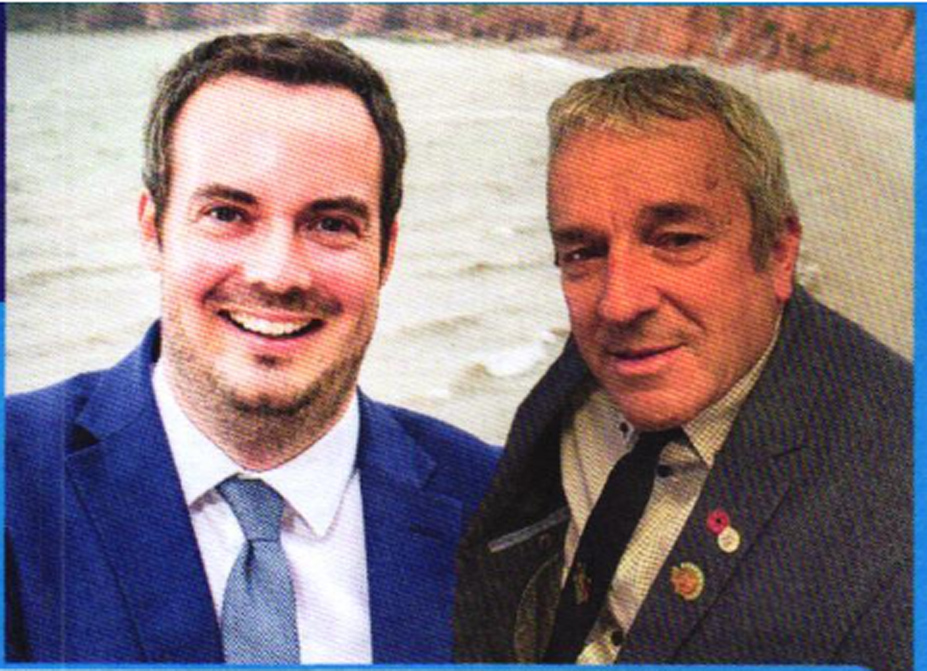
This selfie taken by Conservative David Reed MP shows him campaigning with “Build, build, build” Phil Skinner in support of the latest failure to get veteran candidate of many wards, Patsy Hayman, elected in the Exe Valley by-election.

Why is Owl surprised?

Only last week David Reed was falsely claiming that the level of housing in East Devon was down to the Lib Dem-led East Devon District Council. Here is what he wrote on 13 March, on his facebook page:

We all know that our current sewage network in #ExmouthandExeterEast cannot cope with our current level of housing, let alone the tens of thousands of extra houses that the Lib Dem-led East Devon District Council are proposing for our area.

This attribution to the Lib-Dem District Council couldn’t be wider from the mark. The real culprit is the man on his left – Phil Skinner!

Philip Skinner’s record as a primary architect and driving force behind the long standing Tory policy of building in East Devon is copiously recorded on “The Watch”. His, and his EDDC Tory colleagues’ policies, resulted in the current Local Plan having a development target of 950 houses/year. This was driven by the adoption of an aggressive “jobs led policy on” scenario.  Comprehensive studies showed only around 580 houses/year would be required to satisfy purely demographic and normal migration growth trends. 

This policy, therefore, resulted in an uplift of 370 or 64% on what is strictly necessary and is the target that the current EDDC coalition has inherited and the basis on which the government thinks reasonable to set its own growth strategy. Owl has already pointed this out to David Reed in a post last September.

Phil Skinner was also one of the drivers of the now defunct “Greater Exeter Strategic Plan (GESP)” which tried to get green field sites in East Devon to take the lion’s share of Exeter’s housing needs. It seems that there were always farmers in East Devon willing to “sacrifice” their land to this end. At the time planners confirmed that the GESP targets would over-ride East Devon’s local plan.

When the Tories lost control of EDDC, one of the first things the coalition did in August 2020 was to vote, by a massive majority, to pull out of GESP. Exeter is now having finding sites elsewhere to satisfy their needs.

To be fair, David Reed hasn’t been in East Devon all that long. Like his predecessor, Simon Jupp, he’s a “Blow in”. He still needs to read himself in before sounding off like this.

Here is puppet master Phil with David Reed’s predecessor as featured on Tory mailshots in the old Devon East constituency.

Phil Skinner was the leader of the Tories in East Devon until he was kicked out by the electorate in the May 2023 local election.

Despite this he is still pulling the strings.

District By-election: Libdem hold, Tories and Reform neck by neck, Labour last

Is this an omen for the Tories in Devon and the reason they tried to cancel this May’s County elections? – Owl

East Devon District Council – By-election 13 March 2025

Declaration of results for East Devon District Council Exe Valley Ward 13 March 2025

Name of CandidateDescription (if any)Number of votesElected?
BENNETT JulieLabour Party Candidate54 
HAYMAN PatsyThe Conservative Party Candidate137 
KING FabianLiberal Democrat256ELECTED
VANSTONE NatReform UK135 

Electorate: 2,042
Ballot Papers Issued: 582
Rejected Ballot Papers: 0
Turnout: 28.7%

Planning Bill recycles old ideas. They failed last time. What’s new this time?

The definition of insanity is doing the same thing over and over and expecting different results”

The proposed planning bill, yet to be drafted but intended to produce the “biggest building boom’ in a generation, obviously needs a lot more time and thought. Here is an example that caught Owl’s eye from the list of eight key measures announced by Angela Rayner on Monday.

Strategic Planning

“The Bill will introduce a system of ‘strategic planning’ across England known as spatial development strategies, which will help to boost growth by looking across multiple local planning authorities for the most sustainable areas to build and ensuring there is a clear join-up between development needs and infrastructure requirements. These plans will be produced by mayors, or by local authorities in some cases, and will ensure the level of building across the country meets the country’s needs.”

We have been here before with so little impact that Owl suspects that few will remember. 

Strategic planning for each of the nine English regions became formalised from the 1990s.

Regional Assemblies

1.  1999 The South West Regional Assembly (SWRA) was established in 1999. It was not a directly elected body, but was a partnership of councillors from all local authorities in the region and representatives of various sectors with a role in the region’s economic, social and environmental well-being. It was made up of 119 members.

Worth noting that there was much opposition to the formation of the South West Regional Assembly with critics saying it was an unelected, unrepresentative and unaccountable quango, and the area covered was an artificially imposed region and not natural. This opinion was based upon geography, arguing that having the Isles of Scilly and Cornwall in the same region as Gloucestershire would be comparable to linking London with Yorkshire.

Spatial strategies

2. 2004 Regional spatial strategies (RSS) to provide regional level planning frameworks for the regions were introduced in 2004. 

3. 2010 The functions of regional assemblies were planned to pass to regional development agencies in 2010 but the new Conservative/Liberal Democrat government abandoned spatial strategies and revoked regional development agencies in favour of the equally “unelected, unrepresentative and unaccountable” Local Enterprise Partnerships.

4. 2024 In April, the government abolished Local Enterprise Partnerships transferring the functions to local authorities.

What does a coherent planning system need to recognise?

In 2010 under the heading “Abolition of Regional Spatial Strategies: a planning vacuum” the House of Commons committee on Communities and Local Government put their finger on the nub of the problem:

A coherent, efficient planning system has to recognise and relate to issues from the point of view of a range of players operating at different levels: individuals, developers, community and resident groups, businesses, local authorities, and the Government. Regional Spatial Strategies (RSSs) bridged the gap between planning issues determined by local policies and concerns, and those subject to nationally-determined policy aspirations, such as housing or renewable energy. Views are mixed on the merits of Regional Spatial Strategies: opposition to them has highlighted the length and complexity of their preparation; the undemocratic nature of the bodies preparing them; the difficulty of influencing their outcomes; and the ‘top-down’ housing development targets they contained. Support for them has highlighted their comprehensive, strategic view of planning across each region and their ability to deal with controversial and sometimes emotive developments, such as waste disposal, mineral working and accommodation for Gypsies and Travellers. 

Who drives the strategic plan?

Not only do these problems remain but the government is only just starting to consider how to create the Mayoral Strategic Authorities intended to carry this forward. Bigger than counties, these will sit as a new top tier of local authority presiding over a single tier of unitary authorities created from an amalgamation of counties and districts. This process inherently presents dangers of recreating the artificially imposed regions of the abandoned regional assemblies.

Given the lack of impact these regional bodies have had since 1999 and the transfer back and forth of the strategic planning function, we have to start afresh. Where are the teams with the appropriate skills? Who now holds the local economic and social data? How long will it take and how much will it cost to produce the first spatial development strategy? We must be talking years rather than months.

In the interim where are we going? – Owl

Government press release in full (with hearty endorsement from developers)

Biggest building boom’ in a generation through planning reforms 

Ministry of Housing, Communities and Local Government www.gov.uk

  • HOMES AND KEY INFRASTRUCTURE WILL BE BUILT FASTER UNDER PLANNING AND INFRASTRUCTURE BILL
  • ENERGY SECURITY WILL BE BOLSTERED WITH CHEAPER, CLEAN HOMEGROWN POWER
  • BILL IS KEY TO DELIVERING ON OUR PLAN FOR CHANGE TO BUILD 1.5 MILLION HOMES, MAKE BRITAIN A CLEAN ENERGY SUPERPOWER AND DRIVE UP LIVING STANDARDS

Homes and key infrastructure that hundreds of thousands of hard-working people and families need will be built quicker thanks to transformative reforms to get Britain building, tackle blockers and unleash billions in economic growth.

The Planning and Infrastructure Bill, which will be introduced to Parliament today (11 March), will see significant measures introduced to speed up planning decisions to boost housebuilding and remove unnecessary blockers and challenges to the delivery of vital developments like roads, railway lines and windfarms. This will boost economic growth, connectivity and energy security whilst also delivering for the environment.

By ensuring shovels can be put in the ground more quickly and projects are freed from unnecessary bureaucracy, these measures will help deliver a building boom that will deliver a major boost to the economy worth billions of pounds, and create tens of thousands more jobs as houses and infrastructure are built. It will make Britain a more attractive prospect for investment and development with a planning process that works for the builders, not blockers.

This Bill comes alongside wider planning reforms including the new National Planning Policy Framework and is at the heart of our Plan for Change missions to deliver the 1.5 million homes this country needs alongside 150 major projects, ensure Britain can become a clean energy superpower through building the necessary infrastructure, and help to raise living standards by ensuring working people have more money in their pocket.

People living near new electricity transmission infrastructure will also receive up to £2,500 over ten years off their energy bills, ensuring those hosting vital infrastructure benefit from supporting this nationally critical mission.

Deputy Prime Minister and Secretary of State for Housing, Angela Rayner said:

We’re creating the biggest building boom in a generation – as a major step forward in getting Britain building again and unleashing economic growth in every corner of the country, by lifting the bureaucratic burden which has been holding back developments for too long.

The Planning and Infrastructure Bill will unleash seismic reforms to help builders get shovels in the ground quicker to build more homes, and the vital infrastructure we need to improve transport links and make Britain a clean energy superpower to protect billpayers.

It will help us to deliver the 1.5 million homes we have committed to so we can tackle the housing crisis we have inherited head on – not only for people desperate to buy a home, but for the families and young children stuck in temporary accommodation and in need of a safe, secure roof over their heads.

These reforms are at the heart of our Plan for Change, ensuring we are backing the builders, taking on the blockers, and delivering the homes and infrastructure this country so badly needs.

KEY MEASURES

Planning Committees

Housebuilding will be backed by streamlining planning decisions through the introduction of a national scheme of delegation that will set out which types of applications should be determined by officers and which should go to committee, have controls over the size of planning committees to ensure good debate is encouraged with large and unwieldy committees banned, and mandatory training for planning committee members. Councils will also be empowered to set their own planning fees to allow them to cover their costs – with the stretched system currently running at a deficit of £362 million in the recent year. This money will be reinvested back into the system to speed it up.

Nature Restoration Fund

A Nature Restoration Fund will be established to ensure there is a win-win for both the economy and nature by ensuring builders can meet their environmental obligations faster and at a greater scale by pooling contributions to fund larger environmental interventions. These changes will remove time intensive and costly processes, with payments into the fund allowing building to proceed while wider action is taken to secure the environmental improvements we need.

Compulsory Purchase Reform

Land needed to drive forward housing or major developments could also be bought more efficiently thanks to reforms to boost economic growth and drive forward local regeneration efforts. The compulsory purchase process – which allows land to be acquired for projects that are in the public interest – will be improved to ensure important developments delivering public benefits can progress. The reforms will ensure compensation paid to landowners is not excessive and the process of using directions to remove ‘hope value’ – the value attributed to the prospect of planning permission being granted for alternative development – where justified in the public interest is sped-up. Inspectors, councils or mayors where there are no objections, will take decisions instead of the Secretary of State. 

Development Corporations

Development Corporations will be strengthened to make it easier to deliver large-scale development – like the government’s new towns – and build 1.5 million homes alongside the required infrastructure. They were used in the past to deliver the post-war new towns and play a vital role when the risk or scale of a development is too great for the private sector. Their enhanced powers will help deliver the vision for the next generation of new towns – a new programme of well-designed, beautiful communities with affordable housing, GP surgeries, schools and public transport where people will want to live.

Strategic Planning

The Bill will introduce a system of ‘strategic planning’ across England known as spatial development strategies, which will help to boost growth by looking across multiple local planning authorities for the most sustainable areas to build and ensuring there is a clear join-up between development needs and infrastructure requirements. These plans will be produced by mayors, or by local authorities in some cases, and will ensure the level of building across the country meets the country’s needs.

National Significant Infrastructure Projects (NSIP)

The Bill will ensure a faster NSIP regime that delivers infrastructure projects faster. It will make sure the consultation requirements for projects – such as windfarms, roads or railway lines – are streamlined, and ensure the national policies against which infrastructure applications are assessed are updated at least every five years so the government’s priorities are clear. Other changes will be made to the Highways Act and the Transport and Works Act to reduce bureaucracy so transport projects can progress quicker.

The government will further overhaul the process by which government decisions on major infrastructure projects can be challenged. Meritless cases will only have one – rather than three – attempts at legal challenge. Data shows that over half – 58% – of all decisions on major infrastructure were taken to court, including windfarms in East Anglia which was delayed by over two years as a result of unsuccessful challenges.

Clean Energy

Further changes will make sure approved clean energy projects that help achieve clean power by 2030, including wind and solar power, are prioritised for grid connections. Some projects currently face waits of over 10 years. A ‘first ready, first connected’ system will replace the flawed ‘first come, first served’ approach to prioritise projects needed to deliver clean power, unlocking growth with £200 billion of investment and protecting households from the rollercoaster of fossil fuel markets, while reforming the grid queue will accelerate connections for industrial sites and data centres.

Around twice as much new transmission network infrastructure will be needed by 2030 as has been built in the past decade and Britain’s electricity grid needs a 21st century overhaul to connect the right power in the right places.   

Bill Discounts

People living within 500m of new pylons across Great Britain will get money off their electricity bills up to £2,500 over 10 years, under these plans. Alongside money off bills, separate new guidance will set out how developers should ensure communities hosting transmission infrastructure can benefit, by funding projects like sports clubs, educational programmes, or leisure facilities.   The new community funds guidance means communities could get £200,000 worth of funding per km of overhead electricity cable in their area, and £530,000 per substation.

This would mean an upcoming project like SSEN Transmission’s power line between Tealing and Aberdeenshire could see local communities benefitting from funding worth over £23 million. Developers will closely consult with eligible communities on the funds and how best to spend them, to ensure a fair and consistent approach across Great Britain.

Mark Reynolds, Executive Chair of Mace Group and Co-Chair of the Construction Leadership Council, said:  

For too long the UK’s planning systems have inhibited growth, with layer upon layer of checks and balances stifling productivity, confidence, investment and jobs. 

These proposed changes show this government is listening to industry and taking reform seriously; recognising that new homes and infrastructure are necessary to inject life into the economy. 

Our construction industry is ready to meet the challenge, and the measures highlight how mindful growth can support communities and our net-zero ambitions.

Neil Jefferson, Chief Executive of the Home Builders Federation, said: 

The swift moves to address the failings in the planning system are a very welcome and positive step towards increasing housing supply. Removing blockages, speeding up the decision-making process and ensuring local planning departments have the capacity to process applications effectively will be essential to getting more sites up and running. If the other constraints currently preventing house builders delivering more homes can be tackled, the changes made to planning will really allow output to accelerate.

Brian Berry, Chief Executive of the Federation of Master Builders, said: 

The new Planning and Infrastructure Bill is a crucial first step in getting Britain building again. In the 1980’s around 40% of new homes were built by SMEs, yet today that figure is around 10%. Small builders across the UK stand ready to play their part in delivering the homes we need, but time and time again we’ve seen barriers keeping them out of the market.

We know from research carried out by the FMB that around three quarters of small builders view the planning system as the number one issue holding back the delivery of new homes, while lack of viable and available land are also major challenges. Supporting small builders through the planning system and reducing unnecessary bureaucracy will be key to opening up small sites, and today’s announcement will be welcomed by many across the industry.

Kate Henderson, Chief Executive of the National Housing Federation, said:  

At a time when the housing crisis continues to blight lives across the country, it’s welcome to see the introduction of this bill. With more than 160,000 children in temporary accommodation, it’s never been more urgent to build the social homes we need. 

Planning reform is an essential part of solving the housing crisis, and a return to strategic planning is welcome. A focus on certainty and enabling local areas to work together to plan for the homes, jobs and infrastructure needed in communities will ensure every area benefits from growth. Measures to reform compulsory purchase orders in the bill are also welcome, and will support the delivery of affordable housing and other local infrastructure such as GPs and schools.

David Thomas, Chief Executive of Barratt Redrow, said:  

It has been clear from day one that government is serious about tackling the housing crisis, and it continues to take strong action to unlock stalled projects and reshape the planning system to deliver the high-quality homes and sustainable places the country needs.  

We share government’s ambition to build more homes, to create good quality jobs and to drive economic growth. We look forward to supporting them on this mission and will respond positively to the bold reforms set out in the Planning and Infrastructure Bill.  

Other measures included in the Bill:

  • Streamlining the process to install EV charging infrastructure to help meet our net-zero ambitions
  • A new scheme to unlock billions of pounds of investment in long duration electricity storage (LDES) to store renewable power and deliver the first major projects in four decades.
  • Changes to the outdated planning rules for electricity infrastructure in Scotland that will streamline the consent process to enable decisions to be made faster.  
  • An extension to the generator commissioning period from 18 to 27 months to reduce the number of offshore wind farms requiring exemptions when applying for licences to connect to onshore cables and substations.  
  • Allowing forestry authorities in England and Wales, including the Forestry Commission, to bring forward development proposals, on the land they manage, relating to the generation of electricity from renewable sources– and to sell resulting electricity.

The Bill builds on work the government has already carried out to get Britain building including overhauling the National Planning Policy Framework, including new and higher mandatory housebuilding targets for councils, a comprehensive modernisation of the Green Belt, and far greater support for growth-supporting development such as labs and datacentres.  

Restoring pride in Britain’s neighbourhoods bypasses the South West

South West “abandoned by the government” – Richard Foord MP

Last week the government announced £1.5bn in funding to tackle deprivation in 75 areas across the UK, to “restore pride in Britain’s neighbourhoods and boost local growth” at £20m a throw. But only one of these was in the South West: the unitary authority of Torquay. Bear in mind the South West covers: Cornwall and the Isles of Scilly, Dorset, Devon, Bristol, Gloucestershire, Somerset and Wiltshire.

Readers may recall that Torquay was one of the leaders in using “iconic” developments on the seafront to drive “regeneration”, closely followed by Exmouth’s Ocean Bowling Alley.

Living Coasts, built on the site of the former Torquay Marine Spa, opened to the public on 14 July 2003. It officially closed in June 2020,

How East Devon had to take over the Ocean Bowling Alley to avoid the same fate can be found in the post “The sad planning history of Exmouth’s Albatross”

Sidmouth and Honiton MP praises East Devon towns in debate

Adam Manning www.midweekherald.co.uk

Richard Foord is calling on the government to think again after East Devon towns miss out on rejuvenation funding.

The statement from the MP for Honiton and Sidmouth comes after a parliamentary debate in the House of Commons last Tuesday (March 4).

Mr Foord said Axminster, Honiton, Ottery St Mary, Seaton and Sidmouth all have special and important features and would significantly benefit from the £20m per area designed to ‘tackle deprivation and turbocharge growth.’

He is is calling on the government to think again on its decision last week to plough funding into 75 areas, that he said saw the South West almost entirely excluded from the £1.5bn announcement.

The UK government announced £20 million was being given to 75 areas selected across the UK.

The only community in the South West region earmarked for funding was in south Devon.

Mr Foord said: “Many businesses and organisations in market towns across Mid- and East Devon feel abandoned by successive governments and the distribution of additional funding has meant the South West and Devon has been almost entirely forgotten. Funding for vital local projects would revitalise our towns and ensure they are fit for the future.”

Mr Foord has long called for better funding for towns in the South West, and has described the region as “abandoned by the government.”

In Parliament, Mr Foord has demanded better funding by the government to ‘rejuvenate market towns.’

Mr Foord spoke warmly of the six market towns located in the area that he represents: Axminster, Cullompton, Honiton, Ottery St Mary, Sidmouth and Seaton.

In 2022, he visited a Honiton maker of a lace jabot and cuffs with the Speaker of the House of Commons, Sir Lindsey Hoyle. The speaker then wore them at King Charles’ coronation in 2023.

During the debate last Tuesday, Mr Foord talked about how market towns “tell a story of resilient, creative and proud communities”.

He cited Ottery St Mary – one of Devon’s oldest market towns – and its tar barrels festival; also Axminster, for its fine carpets. 

Following the debate, Mr Foord highlighted how market towns need investment in order to flourish in future.

He said: “Market towns are the hubs for our communities, and provide us with much of our history and culture.

“We have a rich heritage here in Devon, but we can’t rely solely on that for future prosperity.”

Complete list of neighbourhoods receiving £20m

Scotland

  • Arbroath
  • Elgin
  • Kirkwall (Orkney Islands)
  • Peterhead
  • Dumfries
  • Irvine
  • Kilmarnock
  • Clydebank
  • Coatbridge
  • Greenock

Wales

  • Barry
  • Wrexham
  • Rhyl
  • Cwmbrân
  • Merthyr Tydfil 

Northern Ireland

  • Derry/Londonderry
  • Coleraine 

North East England 

  • Blyth
  • Darlington
  • Eston
  • Hartlepool
  • Jarrow
  • Spennymoor
  • Washington 

North West England

  • Accrington
  • Ashton-Under-Lyne
  • Burnley
  • Chadderton
  • Darwen
  • Farnworth
  • Heywood
  • Kirkby
  • Leigh
  • Nelson
  • Newton-le-Willows
  • Rawtenstall
  • Runcorn 

Yorkshire and the Humber

  • Barnsley
  • Castleford
  • Dewsbury
  • Doncaster
  • Keighley
  • Rotherham
  • Scarborough
  • Scunthorpe
  • Grimsby 

East Midlands

  • Boston
  • Carlton
  • Chesterfield
  • Clifton (Notts)
  • Kirkby-in-Ashfield
  • Mansfield
  • Newark-on-Trent
  • Spalding
  • Worksop
  • Skegness 

West Midlands

  • Bedworth
  • Bilston
  • Darlaston
  • Dudley
  • Royal Sutton Coldfield
  • Smethwick 

East of England

  • Canvey Island
  • Clacton-on-Sea
  • Great Yarmouth
  • King’s Lynn
  • Thetford
  • Wisbech
  • Harlow 

South East England

  • Bexhill-on-Sea
  • Eastbourne
  • Hastings
  • Ramsgate
  • Ryde 

South West England

  • Torquay

Labour’s council merger:  “ill-thought-out”, “insane” and a “bizarre diversion”

Town hall leaders condemn ‘ill-thought-out’ plan to merge English councils

Patrick Butler www.theguardian.com 

Ministers’ plans to shake up the structure of English local government by merging councils are “ill-thought-out”, “insane” and a “bizarre diversion” that will fail to deliver savings, according to a survey of town hall leaders.

The depth of unhappiness with the plans is revealed in an annual poll of senior councillors and executives, most of whom said the changes would be costly, time-consuming and do little to address the dire financial crisis facing councils.

Most local authorities are preparing to cut local services from April while increasing council tax, fees and charges, as they battle with cost pressures that could put up to 19 town halls into effective bankruptcy over the next year, the survey found.

The Local Government Information Unit (LGIU), which carried out the survey, said the scale and speed of the proposed reorganisation had added a “new layer of uncertainty” to a sector already in a “state of crisis management”.

The government defended its plans on Wednesday night, saying it was prepared to take “tough choices” to rebuild the local government sector. It insisted it had thoroughly consulted local leaders and its ambitious timetable was intended to provide certainty for councils and increase their resilience.

A spokesperson for the Ministry of Housing, Communities and Local Government said: “Reorganisation is a tough choice but it is the right one to end the two-tier premium and create streamlined, more accountable local government.

“We know the challenges councils are facing, which is why despite the inheritance we have been left we are making available £69bn of funding to councils across England and working with them to drive forward the government’s plan for change.”

The government’s devolution plans, published in December, include abolishing the current two-tier system and creating a smaller number of unitary authorities covering large geographical areas. Critics have called these “mega councils”.

Ministers have previously argued that effectively abolishing scores of smaller district councils would help drive economic growth, deliver significant financial efficiencies and improve accountability, despite cutting the number of elected local politicians.

The LGIU said its survey showed the vast majority of local government leaders were not onboard with the government’s plans. Many were unhappy with the costs of the changes – put at £16m per area, according to one estimate – and the amount of time and resources it was taking up.

One unnamed senior district council leader told the survey: “Reorganising local government to save money is insane. Local government has already had a 40% real-terms cut since 2010. Reorganise to deliver more local outcomes, sure, but not to save money.”

An unnamed county council treasurer said: “Local government reorganisation will be a distraction from needing to balance the books for all councils … It is making everything much more uncertain and challenging.”

A deputy mayor of a unitary council described the changes as “rushed, ill-thought-out and potentially undeliverable”, while other respondents called them a “bizarre distraction” and “the last thing we need at the worst possible time”.

Labour made no manifesto promise to reorganise councils, and many in local government are baffled about why it has embarked on such extensive and disruptive changes when most town halls are fully focused on the rising demand for social care, temporary accommodation and special educational needs spending.

There are also concerns among Labour councillors and backbench MPs that the creation of councils with target populations of 500,000 will result in areas such as Norwich, Ipswich, Brighton and Hove and Oxford that often vote centre-left being subsumed into neighbouring Conservative-voting areas.

Jonathan Carr-West, the LGIU chief executive, said: “To put it bluntly, respondents are not happy with the way that reorganisation is being carried out. The vast majority feel that the government is not providing enough clarity, enough genuine involvement for councils in the process, or realistic timeframes.”

Council tax will rise in 94% of town halls from April, the survey found, while nearly nine out of 10 councils reported they would increase fees and charges in areas such as car parking, household green waste collection, school dinners, and burials and cremations.

Nearly two-thirds (63%) of councils said they planned to reduce spending on services from April. The areas most commonly sought out for cuts were parks and leisure centres, local business support, arts and culture, adult social care, and libraries.

One unitary council leader told the survey that local authorities would find it increasingly hard to justify council tax rises as an ever-greater proportion of resources was spent on social care at the expense of more visible “public realm” services such as parks and street cleaning.

They said: “The burden of paying for services continues to shift to our residents … In short, residents are paying more for worse public services – they can’t understand why.”

The LGIU survey, which informs its annual state of local government finance report, received 186 responses from senior elected and executive leaders at 150 unique councils in England.

“Build Baby Build” Angela Rayner wants to strip councillors of planning powers 

Not only is Labour planning to make access to local councillors more distant by abolishing districts, they now want to strip councillors of planning powers at the same time.

In 2020 Boris Johnson proposed making planning more technocratic by introducing a land zoning system where land would be divided into three categories – “growth”, “renewal” or “protected”.

For land designated for “renewal” councils would have to look favourably on new developments. In “growth” areas, new homes, hospitals and schools will be allowed automatically.

This is what Sir Keir Starmer said at the time: “This is a developers’ charter, frankly, taking councils and communities out of it.

“And on affordable housing, which is the critical issue, it says nothing. In fact it removes the initiatives that were there for affordable housing.”

The Local Government Association has written to ministers to express reservations, pointing out that it is already “larger or more controversial schemes” that are taken over by councillors.

“This democratic role of councillors in decision-making is the backbone of the English planning system and our reservations about a national scheme of delegation centre on this role potentially being eroded,” it warned.

Cranbrook is a good example of what happens with developer led planning. – Owl

Councillors to be stripped of powers to block planning schemes

Chris Smyth www.thetimes.com 

Councillors will be stripped of powers to block all but the biggest and most contentious building schemes under plans to turbocharge development.

Ministers will next week set out plans to ban councillors from interfering in the vast majority of planning applications in an effort to push through more houses, offices, factories and other large development projects.

Experts said the changes could lead to tens of thousands more homes a year and offer a “holy grail” to developers exasperated with political delays in building projects. But councils warned they risked eroding local democracy because residents would be denied the chance to use the ballot box to oppose unpopular schemes.

Angela Rayner, the deputy prime minister, will next week publish a planning and infrastructure bill designed to liberalise rules as the government promises to build 1.5 million homes this parliament and speed up infrastructure and other development projects to boost growth.

Sir Keir Starmer has made overhauling planning the foundation of his push for growth, attacking the current rules as “ruinous” and promising to take on “nimbys” who have held Britain “to ransom” and “choked” the economy.

Last year, ministers signalled that they wanted to overhaul local authority planning committees, where councillors can take decisions on local applications for development. At present councils can make their own decisions on which projects are decided by such committees, and which by professional planning officers.

Next week, Rayner will promise to go significantly further than originally thought, setting a national rule that would stop committees of councillors playing a role in all but the biggest projects and those that most clearly go against local development plans.

Exact details are still being finalised, but the threshold below which councillors cannot step in is expected to be set somewhere between ten and 100 houses. Once a project has outline permission, councillors will also not be given a say on details of housing style and layout.

Ministers are keen to use the rules to encourage small and medium developers to put forward more mid-sized schemes, and will also set a minimum size threshold for councillors to intervene in commercial development.

“We will modernise how planning committees work, making sure they are focused on key applications for larger developments rather than small scale projects or niche technical details,” a government source said. “This is about making sure the right decisions are taken at the right level.”

Matthew Spry, of the planning consultancy Lichfields, said that delegating more applications to officials “helps move us towards more consistent, policy-driven decisions: for many, the holy grail of England’s planning system. Some councils already delegate a lot to their officers, but in others, committee members expect even small schemes, and those that have been approved previously, to come before them. This means uncertainty — which is an enemy of investment — delays, some poor decisions, and wasted public money.”

While in some councils barely any applications go to planning committees, at others 20-30 per cent of decisions are made by councillors, often including almost all schemes beyond simple kitchen or loft extensions.

Spry said the change “could make a real difference” and mean more and quicker approvals, but said the definition of “major” development to be sent to councillors was crucial. “Ten houses might be a big deal in a small rural council, but is almost de minimis in large urban areas.”

Developers complain of having to repeatedly ask local councillors for permission, with their decisions far less predictable than those taken by planning officers. “Every time you have to engage with a committee of politicians is an enormous risk that could end up setting your project back years and costing you millions of pounds,” said Zack Simons KC, a leading planning barrister.

“The fundamental problem is that the way the system is set up at the moment is that if you’re bringing forward a new scheme of development of any sort you have to run it through a democratic process with input from local politicians multiple times.

“In the meantime you can have a change in administration and it’s the members who were running in opposition to the [previously approved] plan who are now judging the outline application.”

He said the proposed change would be “enormous because it would give us more certainty”, potentially leading to tens of thousands more homes. But he said “it will be incredibly important where they set the threshold”.

However, the Local Government Association has written to ministers to express reservations, pointing out that it is already “larger or more controversial schemes” that are taken over by councillors.

“This democratic role of councillors in decision-making is the backbone of the English planning system and our reservations about a national scheme of delegation centre on this role potentially being eroded,” it warned.

“Many councillors stand for election on the basis of the role they could play in positively supporting the growth or protection of the environment and community in which they stand. Potentially removing the ability for councillors to discuss, debate or vote on key developments in their localities could erode public trust in the planning system and local government itself.”

Councillors will be stripped of powers to block all but the biggest and most contentious building schemes under plans to turbocharge development.

Ministers will next week set out plans to ban councillors from interfering in the vast majority of planning applications in an effort to push through more houses, offices, factories and other large development projects.

Experts said the changes could lead to tens of thousands more homes a year and offer a “holy grail” to developers exasperated with political delays in building projects. But councils warned they risked eroding local democracy because residents would be denied the chance to use the ballot box to oppose unpopular schemes.

Angela Rayner, the deputy prime minister, will next week publish a planning and infrastructure bill designed to liberalise rules as the government promises to build 1.5 million homes this parliament and speed up infrastructure and other development projects to boost growth.

Sir Keir Starmer has made overhauling planning the foundation of his push for growth, attacking the current rules as “ruinous” and promising to take on “nimbys” who have held Britain “to ransom” and “choked” the economy.

Last year, ministers signalled that they wanted to overhaul local authority planning committees, where councillors can take decisions on local applications for development. At present councils can make their own decisions on which projects are decided by such committees, and which by professional planning officers.

Next week, Rayner will promise to go significantly further than originally thought, setting a national rule that would stop committees of councillors playing a role in all but the biggest projects and those that most clearly go against local development plans.

Exact details are still being finalised, but the threshold below which councillors cannot step in is expected to be set somewhere between ten and 100 houses. Once a project has outline permission, councillors will also not be given a say on details of housing style and layout.

Ministers are keen to use the rules to encourage small and medium developers to put forward more mid-sized schemes, and will also set a minimum size threshold for councillors to intervene in commercial development.

“We will modernise how planning committees work, making sure they are focused on key applications for larger developments rather than small scale projects or niche technical details,” a government source said. “This is about making sure the right decisions are taken at the right level.”

Matthew Spry, of the planning consultancy Lichfields, said that delegating more applications to officials “helps move us towards more consistent, policy-driven decisions: for many, the holy grail of England’s planning system. Some councils already delegate a lot to their officers, but in others, committee members expect even small schemes, and those that have been approved previously, to come before them. This means uncertainty — which is an enemy of investment — delays, some poor decisions, and wasted public money.”

While in some councils barely any applications go to planning committees, at others 20-30 per cent of decisions are made by councillors, often including almost all schemes beyond simple kitchen or loft extensions.

Spry said the change “could make a real difference” and mean more and quicker approvals, but said the definition of “major” development to be sent to councillors was crucial. “Ten houses might be a big deal in a small rural council, but is almost de minimis in large urban areas.”

Developers complain of having to repeatedly ask local councillors for permission, with their decisions far less predictable than those taken by planning officers. “Every time you have to engage with a committee of politicians is an enormous risk that could end up setting your project back years and costing you millions of pounds,” said Zack Simons KC, a leading planning barrister.

“The fundamental problem is that the way the system is set up at the moment is that if you’re bringing forward a new scheme of development of any sort you have to run it through a democratic process with input from local politicians multiple times.

“In the meantime you can have a change in administration and it’s the members who were running in opposition to the [previously approved] plan who are now judging the outline application.”

He said the proposed change would be “enormous because it would give us more certainty”, potentially leading to tens of thousands more homes. But he said “it will be incredibly important where they set the threshold”.

However, the Local Government Association has written to ministers to express reservations, pointing out that it is already “larger or more controversial schemes” that are taken over by councillors.

“This democratic role of councillors in decision-making is the backbone of the English planning system and our reservations about a national scheme of delegation centre on this role potentially being eroded,” it warned.

“Many councillors stand for election on the basis of the role they could play in positively supporting the growth or protection of the environment and community in which they stand. Potentially removing the ability for councillors to discuss, debate or vote on key developments in their localities could erode public trust in the planning system and local government itself.”

East Devon tells County to “Get its act together”

East Devon leader Paul Arnott writes about upcoming elections

Paul Arnott 

March has arrived, a hint of Spring is in the air, and it’s County Council election season.

The last ones were in 2021, and although the Conservatives at Devon County tried to cancel those due on May 1st 2025, on some feeble pretexts about proposals to reorganise councils, the government didn’t allow them.

Ironically, many of those Conservatives shooting their hands up at the Devon County meeting in January to cancel the May 1st elections – giving themselves a bonus year, possibly two – will be pleading for your votes in May. In Exmouth, Sidmouth, Honiton, Whimple and the Blackdown Hills, they’ll be putting leaflets through your doors for the very election they wanted to scratch from the fixture list.

It’s not great, is it? It could be ventured that even Trump would hesitate at that, but let’s face it, he’d leap at the chance.

Cynical self-interested ploys like these do so much to harm local and national faith in politicians. This creates a void which Putin apologist Nigel Farage fills with his dodgy anti-migrant offer.

Reform has had a terrible week. Farage needed to condemn Trump for bullying Ukraine’s President Zelensky. Instead, he puffed that Zelensky should have worn a suit and is repeating the canard that Zelensky is dodging his electorate.

Well, while Devon’s Conservative excuses to try and swerve the county election were wafer-thin, most might say that, as we did in World War Two, Zelensky can be forgiven for holding on. Russian missiles are raining down on his country much of which Putin illegally occupies.

Farage is now walking a tightrope between two “strong leaders/men”. Trump is holding one end and Putin the other. What could possibly go wrong?

Meanwhile, at East Devon District Council last week we passed a motion to demand that Devon County Council get its act together about highways, and holes in the road in particular. During the debate, one councillor asked how many of us had punctures this year caused by a crater in the road and a fifth of our hands, including mine, shot up.

But with roads, you can tell its election time here too. Suddenly, chasms in the tarmac are being filled, the most visible ones anyway, some even by Conservative candidates in hi-vis jackets.

This comedy spectacle happens every four years as county elections loom, often absurdly. There has been a bit of welcome patching here in Colyton, but electrical contractors are going to dig Dolphin Street back up a fortnight after the elections!

The other comedy tradition honoured by Conservative candidates recently is them posing with outsized cheques (paid for by your money through their localities funding) for local organisations. Their purses and wallets have been clutched tight for three years, but all of a sudden with votes up for grabs they can’t wait to splash our cash.

If the last few weeks have taught us anything, it is about how precious it is to honour democracy. Don’t try to cancel elections, or play with tarmac when you’ve failed. Democracy for all its flaws is a precious freedom; it needs protection not cynicism.

Investing in what matters to you! A Budleigh Correspondent comments

Dear Susan Davy, 

I have just received my water bill with an enclosed leaflet stating 

INVESTING IN WHAT MATTERS TO YOU: how water bills are changing. 

The investment will : 

Provide reliable safe water supplies 

Support healthier rivers and seas. 

And of course I will be paying extra on my water bill until 2030 for this to occur. (A rise of 22.7 % excluding inflation, and in addition the government contribution of £ 50.00 will cease next year) 

But will we have  healthier sea and rivers In Budleigh Salterton and Exmouth? 

NO. I am deeply unhappy, because your answer to the almost 10,000 hours of untreated sewage into the River Otter in 2024 is not to upgrade the Maer Lane Treatment Works.  

No, your answer is just to dump any untreated sewage unable to be treated at Maer Lane when it rains 200 METRES OUT FROM STRAIGHT POINT. 

Lyme Bay will still suffer from Victorian technology in 2030. We must also keep our fingers crossed that wind and tides do not send untreated sewage back into our beautiful bays. 

Cost of three Chief Constables for Devon & Cornwall hits National News

Allison Hernandez is reported to be “incredibly frustrated”. – Owl

Double police chief suspension costs taxpayers £60,000 a month

Ben Ellery www.thetimes.com

Taxpayers are funding a police force to employ three chief constables at a cost of more than £60,000 a month after the original and his replacement were both suspended.

The huge costs are being paid by Devon and Cornwall police after it suspended its chief constable, Will Kerr, from his £197,000-a-year role in July 2023 when an investigation was begun into “serious allegations of sexual offences”.

He denies the allegations, which are understood to relate to before he joined the force.

His deputy, Jim Colwell, stepped up to become acting chief constable but in November last year he was suspended and placed under investigation for alleged gross misconduct following claims that he misused his work phone.

Colwell’s £197,000 a year salary has also been supplemented with employer pension contributions of about £50,000 a year. His salary will fall to £162,573 next month when his role is reduced back to deputy, though he will still be suspended.

James Vaughan has been leading the force as interim chief constable since December. He is entitled to £197,000 a year plus around £50,000 in pension contributions.

According to as yet unpublished figures, the monthly cost of employing the chief constable, acting chief constable and the interim chief constable is £63,913. This includes pension contributions and all remunerated allowances.

Devon and Cornwall’s police and crime commissioner, Alison Hernandez, expressed her “incredible frustration” at the huge amounts of money being paid and she plans to write to the Home Office to ask for support in covering these costs.

The period when the force was paying salaries for three chief constables will come to three months in total. It will continue to pay two chief constable salaries while Kerr is suspended, plus Colwell’s deputy salary.

Kerr, who was a police officer in Northern Ireland for 27 years before leaving in 2018, is being investigated by the region’s police ombudsman. During Kerr’s time with the Police Service of Northern Ireland he led on both serious crime and counterterrorism.

He was appointed OBE in 2015 and was awarded the King’s Police Medal in the 2023 new year’s honours. An investigation into allegations against him has also been opened by the Independent Office for Police Conduct, but that has been halted while the ombudsman carries out its inquiries.

Northern Ireland’s Public Prosecution Service (PPS) said the investigation was at an “advanced stage”.

The PPS said: “A file received from the police ombudsman for Northern Ireland on May 30, 2024, reporting an individual in relation to allegations of serious sexual offences is at an advanced stage of consideration. The PPS recently received further information and material from the investigation team which was required before a decision as to prosecution can be taken. A decision will issue once consideration of that material is complete.

“The case has been dealt with expeditiously upon receipt and there has been no avoidable delay on the part of PPS.”

Hernandez said: “I remain incredibly frustrated by the length of time the police ombudsman for Northern Ireland has taken to investigate the allegations against chief constable Will Kerr.”

She said that she had made representations to the ombudsman, the PPS, the chief inspector of His Majesty’s Inspectorate of Constabulary, the Home Office and the policing minister “in an effort to encourage a swift and efficient conclusion to this case”.

She added: “The fact that the taxpayer is now footing the bill for two chief constable salaries is far from ideal and resolving this issue, and providing robust leadership for the force, remains a top priority for me, and is why I took the decision to appoint an interim chief constable.

“I believe this experience demonstrates that police and crime commissioners should be granted investigatory powers relating to chief constable misconduct allegations, so the resources and timeframes of such investigations remain within their control.

“I will be writing to the home secretary to ask that the government consider granting commissioners these powers.”

The Independent Office for Police Conduct said: “We are progressing our investigation into misconduct allegations against the acting chief constable as swiftly as possible. Our investigation into misconduct allegations against chief constable Will Kerr has had to remain suspended pending a decision in Northern Ireland on potential criminal proceedings.”

The Home Office said: “Devon and Cornwall police funding will be £457.2m in 2025-26, an increase of up to £27.8m when compared to the 2024-25 police funding settlement.

“Police and crime commissioners facing unexpected costs may request additional funding through the police special grant, in line with the published guidance.”

Taxpayers are funding a police force to employ three chief constables at a cost of more than £60,000 a month after the original and his replacement were both suspended.

The huge costs are being paid by Devon and Cornwall police after it suspended its chief constable, Will Kerr, from his £197,000-a-year role in July 2023 when an investigation was begun into “serious allegations of sexual offences”.

He denies the allegations, which are understood to relate to before he joined the force.

His deputy, Jim Colwell, stepped up to become acting chief constable but in November last year he was suspended and placed under investigation for alleged gross misconduct following claims that he misused his work phone.

Colwell’s £197,000 a year salary has also been supplemented with employer pension contributions of about £50,000 a year. His salary will fall to £162,573 next month when his role is reduced back to deputy, though he will still be suspended.

James Vaughan has been leading the force as interim chief constable since December. He is entitled to £197,000 a year plus around £50,000 in pension contributions.

According to as yet unpublished figures, the monthly cost of employing the chief constable, acting chief constable and the interim chief constable is £63,913. This includes pension contributions and all remunerated allowances.

Devon and Cornwall’s police and crime commissioner, Alison Hernandez, expressed her “incredible frustration” at the huge amounts of money being paid and she plans to write to the Home Office to ask for support in covering these costs.

The period when the force was paying salaries for three chief constables will come to three months in total. It will continue to pay two chief constable salaries while Kerr is suspended, plus Colwell’s deputy salary.

Kerr, who was a police officer in Northern Ireland for 27 years before leaving in 2018, is being investigated by the region’s police ombudsman. During Kerr’s time with the Police Service of Northern Ireland he led on both serious crime and counterterrorism.

He was appointed OBE in 2015 and was awarded the King’s Police Medal in the 2023 new year’s honours. An investigation into allegations against him has also been opened by the Independent Office for Police Conduct, but that has been halted while the ombudsman carries out its inquiries.

Northern Ireland’s Public Prosecution Service (PPS) said the investigation was at an “advanced stage”.

The PPS said: “A file received from the police ombudsman for Northern Ireland on May 30, 2024, reporting an individual in relation to allegations of serious sexual offences is at an advanced stage of consideration. The PPS recently received further information and material from the investigation team which was required before a decision as to prosecution can be taken. A decision will issue once consideration of that material is complete.

“The case has been dealt with expeditiously upon receipt and there has been no avoidable delay on the part of PPS.”

Hernandez said: “I remain incredibly frustrated by the length of time the police ombudsman for Northern Ireland has taken to investigate the allegations against chief constable Will Kerr.”

She said that she had made representations to the ombudsman, the PPS, the chief inspector of His Majesty’s Inspectorate of Constabulary, the Home Office and the policing minister “in an effort to encourage a swift and efficient conclusion to this case”.

She added: “The fact that the taxpayer is now footing the bill for two chief constable salaries is far from ideal and resolving this issue, and providing robust leadership for the force, remains a top priority for me, and is why I took the decision to appoint an interim chief constable.

“I believe this experience demonstrates that police and crime commissioners should be granted investigatory powers relating to chief constable misconduct allegations, so the resources and timeframes of such investigations remain within their control.

“I will be writing to the home secretary to ask that the government consider granting commissioners these powers.”

The Independent Office for Police Conduct said: “We are progressing our investigation into misconduct allegations against the acting chief constable as swiftly as possible. Our investigation into misconduct allegations against chief constable Will Kerr has had to remain suspended pending a decision in Northern Ireland on potential criminal proceedings.”

The Home Office said: “Devon and Cornwall police funding will be £457.2m in 2025-26, an increase of up to £27.8m when compared to the 2024-25 police funding settlement.

“Police and crime commissioners facing unexpected costs may request additional funding through the police special grant, in line with the published guidance.”