Wrong sort of drought – not long since we had rain causing landslips and disruption in the same area! – Owl
Rail services in parts of southern England are being reduced because embankments have shrunk and disturbed the track after the sunniest spring in more than a century.
Trains are unable to travel at full speed over embankments in Dorset and Devon that have contracted because of a lack of moisture in the soil.
In the latest example of extreme weather affecting the UK’s railways, South Western Railway (SWR) said that for a safe and reliable service it had no alternative but to reduce the number of trains running.
Journeys from London Waterloo to Exeter will take an hour longer, with trains running at 40mph instead of 85mph for sections of the route.
This year’s was the second driest spring on record for England, with the least amount of rainfall since 1976. The lack of moisture has caused embankments to shrink on a 12-mile stretch of track between Gillingham in Dorset and Axminster in Devon.
The speed restrictions on the single-track route means trains cannot pass at the usual times and places, and SWR said it had been forced to cut services from the schedule.
The operator said dry conditions were likely to continue and that further speed restrictions could be needed.
SWR’s chief operating officer, Stuart Meek, said: “We are very sorry for the disruption that customers will experience due to this change, as we know just how important the west of England line is to the communities it serves.
“We have not taken this decision lightly … However, to continue operating a safe and reliable service, we have no alternative but to introduce a reduced timetable.”
Network Rail’s operations director, Tom Desmond, said: “The safety of our customers is our number one priority, which is why we must impose these speed restrictions. We will regularly review conditions in order to restore the normal timetable as soon as possible.”
The changing climate has caused problems for the railway in recent years, including the need to impose speed restrictions in extreme summer heat for fear of buckling rails.
Train services were meanwhile cut back in Kent last year after the wettest winters on record also affected tracks and embankments.
Network Rail is spending almost £3bn over the period 2024-29 to tackle the effects of climate change, having already increased its budget to maintain earthworks in the wake of the Stonehaven disaster, when heavy rain and poor drainage led to a landslip.
Investment firm ICG confirmed it had agreed a deal with Rigby Group to purchase the Devon airport, along with airports in Bournemouth and Norwich.
ICG said the airport’s passenger and cargo operations would be expanded and Steven Wiltshire, the airport’s managing director, called the deal “great news for Exeter and great news for Devon”.
Exeter Airport opened in 1937 and has flights to a number of UK and international destinations, including Edinburgh, Amsterdam and Lanzarote.
‘Time for growth’
Mr Wiltshire said Exeter could handle up to 1.2m passengers annually, about 400,000 more than current levels, before requiring major infrastructure upgrades.
“Flights are pretty full, there’s some capacity on the routes we’re operating currently, but additional aircraft and new routes would help us reach that next level,” Mr Wiltshire said.
The airport currently serves 27 destinations including recently launched daily flights to Amsterdam with KLM which began in March.
Addressing staffing concerns at the airport, which directly employs 230 people, he said: “We’re not anticipating any change from the leadership team or on the ground at all, so it’s business as usual as far as the staff and our customers are concerned.”
The deal, set to close later this month, will see ICG support airport operator’s Regional & City Airports (RCA) “expansion across its airport, cargo, and executive aviation operations”, said ICG.
“Now is the right time for the next phase in RCA’s growth,” said Steve Rigby, co-CEO of Rigby Group.
Airlines which operate from Exeter Airport include Ryanair, KLM, Aer Lingus and TUI.
The site was used by fighter planes during World War Two, including the Polish Air Force’s 307 Squadron in 1942.
The airport has grown in size, with a new arrivals building being opened by the Princess Royal in June 1999 before a £950,000 departure lounge opened four years later.
In January 2007, Devon County Council sold the airport to Regional and City Airports – a specialist airport investment and development group run by Balfour Beatty – in a deal worth £60m.
A spokesperson from the OVA says: Unfortunately, SWW have informed us that they do not plan further changes to their 5 sewage treatment plants that affect the River Otter until 2035 at the earliest.
On the left is a section of the Otter River near its source with clean sparkling gravel. On the right is a picture of the lower Otter (see below) with a thick layer of slimy algae covering, what should be, clean sparkling gravel. Gravel that should be teeming with insect life – not smothered./
The spokesperson continues: Peter Williams, OVA lead analyst, summarises the quality issues: “ The data shows the Otter has the highest phosphate levels of any major river in Devon and Cornwall, and goes some way to explaining why it’s the only river system in the area classified as ‘poor’ by the Environment Agency. High levels of phosphate cause slimy algal blooms on the riverbed and decreased oxygen levels, leading to severe consequences for plant life, wildlife and fish populations ”.
As a result of this, we have decided to run a publicity campaign that highlights the ailing river and to ask local communities to support this – as a way to bring pressure to bear on South West Water (first) and then the agricultural community (second).
Community action gathers momentum to #ReviveTheRiverOtter
Press Release Otter Valley Association with endorsements from:
Richard Foord, MP for Honiton
Councillor Jess Bailey, Devon County Council (Otter Valley)
Sam Bridgewater, Director of Environment Strategy and Evidence, Clinton Devon Estates
Howard Furnival, of Tracey Farm
Martin Davies, Secretary of the Ottery Fly Fishing Club
Bruce McGlasham, Secretary of the River Otter Fisheries Association
Councillor Ian Simpson, Otterton Parish Council
Councillor Dean Stewart, Chair of the Community Infrastructure Committee of Ottery St Mary Town Council
Councillor Susan P Tribble, Chairman Newton Poppleford & Harpford Parish Council
Budleigh Salterton Town Council
Iorwerth (Yog) Watkins, Westcountry Rivers Trust
Geoff Jung, East Devon District Council
Notable by their absence from this list are South West Water! – Owl
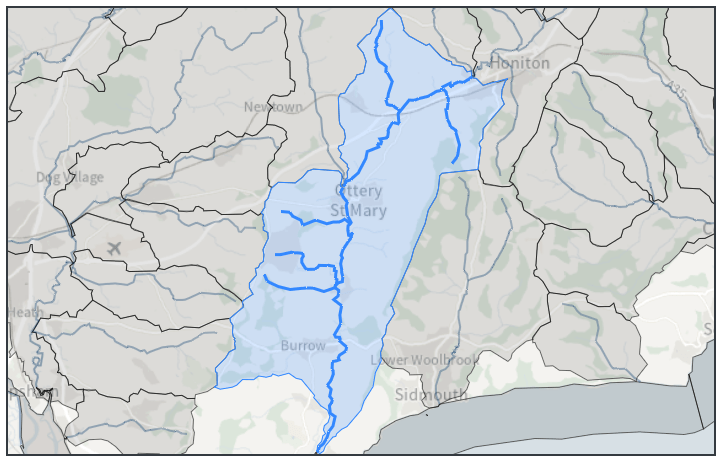
The OVA Action group ORCA (Otter River Catchment Action) is mobilizing local volunteers, anglers, civic organizations, and environmental advocates from Budleigh Salterton, Otterton, Newton Poppleford, Harpford and Ottery St. Mary to combat two major sources of pollution: Sewage-related pollution, including discharges of untreated sewage and high levels of phosphate in treated effluent from sewage works, by South West Water (SWW), and unsustainable land management.
Haylor Lass, Chairman of the Otter Valley Association, is calling on the local community to sign-up and help: “We’re a passionate civic charity and are now calling on local communities, farmers, anglers, businesses, and like-minded organisations to join forces with us to encourage SWW to take the action it needs to prevent their incessant pollution on the middle to lower reaches of the River Otter – namely to stop untreated sewage discharges and also to reduce phosphate levels in their continuous treated discharges”.
A team of 48 dedicated volunteers signed up and have been monitoring the river’s health every two weeks at 12 strategic locations stretching from Honiton to the sea. Sadly, in July 2025, the Phosphate levels are averaging 4x the upper safe level for a thriving ecosystem, and peak at 6x this limit just below the main sewage treatment works. These values have been steadily increasing as the water level drops, predominantly caused by high concentrations of phosphate in treated effluent discharged by sewage treatment works. High levels of phosphate cause algal blooms, eutrophication, and decreased oxygen levels in the water, leading to severe consequences for plant life, wildlife and fish populations.
Further plans are in place for River-fly (or invertebrate) testing to determine the state of life within the river and its tributaries, as well as working to reduce invasive species that are prevalent along long stretches of the river.
Local councillors, anglers, farmers, associations and businesses are behind this campaign, including:
• Richard Foord, MP for Honiton says “Momentum is already building to #ReviveTheRiverOtter; people-power can convince water companies to do the right thing by way of investing in our sewage treatment works here. I look forward to seeing those photos of the River Otter”.
• Councillor Jess Bailey, Devon County Council (Otter Valley) says “have long campaigned against South West Water treating our beautiful River Otter as an open sewer. As part of this I have been pleased to help fund water testing with my DCC locality budget. The River Otter is special not only locally but nationally. It is the first river in the country to have seen the re-introduction of beavers into the wild, beavers having previously been hunted to extinction. Improving water quality is crucially important for the survival and wellbeing of the beavers and other cherished wildlife. I am excited to be part of the Revive the River Otter campaign. This is exactly what is needed, galvanising pressure on SWW and helping restore the River Otter to its former glory.
• Sam Bridgewater, Director of Environment Strategy and Evidence, Clinton Devon Estates says: “This is a brilliant initiative. Community-led and bringing together a broad alliance of the willing, it addresses an issue of great concern for wildlife and for society. Clinton Devon Estates is delighted to be involved.”
• Howard Furnival, of Tracey Farm, says “We would be keen to be involved with this project with the OVA and their campaign ORCA. As a family who have lived for 7 generations, we are saddened to see how the river has been abused and mistreated. We hope this project will be the catalyst for change”.
• Martin Davies, Secretary of the Ottery Fly Fishing Club says “Anglers spend a lot of time on rivers and develop a close affinity with them and all the wildlife there. To witness, first-hand, the river Otter being degraded so badly is both shocking and depressing”
• Bruce McGlasham, Secretary of the River Otter Fisheries Association says “We are delighted to be working with OVA and the ORCA campaign to improve the quality of the river Otter. This will benefit not only local habitats and the natural environment for all, but also fish and all the other life that lives within or by the river””
• Councillor Ian Simpson, Otterton Parish Council, says “ Having grown up in the local area and lived in Otterton for 25 years, local residents and I find it extremely saddening to see the present state of the river Otter. As a child I fished and swam in this river and as an adult some 20 years ago me and my family along with many locals swam and used the river for recreation. The decline has been dramatic and devastating. Dogs that paddle in the river, including my own have become ill with vomiting and stomach issues. People swimming have become ill to the point that we warn people how polluted it is. Fish stocks have dwindled, and some species almost disappeared. I welcome the efforts of the OVA, and its ORCA campaign, to hopefully change the downward path of this once beautiful river and I feel that those polluting it should hang their heads in shame.”
• Councillor Dean Stewart, Chair of the Community Infrastructure Committee of Ottery St Mary Town Council, says “Ottery St Mary Town Council have been concerned for many years about the condition of the River Otter and other local waterways and beaches. We have questioned SWW in detail and both financially and politically supported local community groups such as the Tale Valley Trust and Tipton Eager Beavers. We very much welcome the formation of the ORCA campaign by the Otter Valley Association, and we hope we will be able to meet with them, support them and amplify their campaign for lasting and significant change.”
• Councillor Susan P Tribble, Chairman Newton Poppleford & Harpford Parish Council, says Newton Poppleford and Harpford Parish Council are concerned that poor water quality in the River Otter is impacting parishioners in multiple ways. These include reduced access to the river, diminished recreational and amenity value, and broader concerns over public health and environmental quality.
• Budleigh Salterton Town Council says that “it remains deeply concerned about the continued decline in the quality of water in the locality. The Council has been working closely with the Environment Agency, East Devon District Council, South West Water, and the Otter Valley Association (OVA) in an effort to address this issue. As a result of these collaborative efforts, the Environment Agency has confirmed that it will double its water testing along Budleigh Salterton’s Blue Flag-awarded beach throughout 2025. Budleigh Salterton is the only town situated within the East Devon National Landscape, and it forms part of the Jurassic Coast, a UNESCO World Heritage Site. The town’s natural environment – including its coastline, the River Otter and its resident beaver population, and the award-winning Lower Otter Estuary – is a significant attraction for visitors and a vital part of the local economy. Maintaining the ecological health of these areas is therefore of paramount importance. Regular water testing, carried out both by the ORCA arm of the OVA and by the Environment Agency, plays a crucial role in providing transparent and independent data. This evidence is essential in maintaining pressure on South West Water to review and revise its current practices, and to prioritise the restoration of the River Otter’s water quality. Budleigh Salterton Town Council will continue to advocate for the protection and enhancement of the town’s unique natural assets on behalf of its residents and future generations”.
• Iorwerth (Yog) Watkins, Westcountry Rivers Trust, says “I’ve been working on the Otter for many years and have seen significant improvements in farm management on many farms, but there is still more that needs to be done. SWW have contributed to my work though the Upstream Thinking project (UST), helping farmers use their nutrients more efficiently and avoid losses to both the River Otter and the aquifer. Unnoticed by many, there is also the contribution from private septic tanks that haven’t been maintained properly.”
• Geoff Jung, East Devon District Council, says “The river water quality of the River Otter is in a shameful decline. We all need to work together from residents, farmers, landowners, fertiliser and chemical companies, highways and sewage infrastructure providers, councils, government bodies and volunteers to all combine our knowledge, and best practices to return this river to its rightful place as an amazing river teeming with wildlife. This is a wonderful positive step in the right direction!
How to Get Involved
The OVA invites everyone to join in. Whether through volunteering, sharing resources, or amplifying the message, there’s a role for all who care about clean water, thriving wildlife, and resilient communities. To join the campaign or simply understand what if going on, please join the ORCA Facebook group at: https://www.facebook.com/groups/otterrivercatchmentaction/ and share your experiences. Please also use the hashtag #ReviveTheRiverOtter when sharing on social media.
For press inquiries, interview requests, or to learn how to participate, please contact the Otter Valley Association, or the ORCA campaign team via:


 East Devon Watch