An anxious Budleigh Salterton resident, following the Exmouth ban on seawater bathing, asks if any tests have been carried out by the Environment Agency on the stagnant Kersbrook at the side of the skateboard park.
This now has minimal current or flow. The sewer emergency outfall from the sewage works can be clearly seen. As a consequence there is often an unpleasant smell. It is tragic to see the dying trees on the bank and the scum on the surface of the water.
The kingfisher has not been seen for a long while.
This water is connected to the sea 100m away through a conduit under the road. Its end is visible at low tide.
Yards east of the beach outfall into the bay the Lifeguards have a recommended area for safe water bathing.
How many would do so if they just walked a few metres and looked over the bridge?
Would an EA test produce a similar result to Exmouth?
The Environment Agency is investigating after it detected “elevated readings of ammonia” in a brook that connects to the bathing water at Exmouth beach.
South West Water (SWW) said it had not had any storm overflow spills in the area.
Beachgoer Jamie Steadman said: “We spent money on all day parking, went to the beach for an hour and [were] then told we can’t swim in the water.”
Mr Steadman visited the beach at about 11:00 BST before lifeguards and the council started to display warning signs.
He said lifeguards would not reveal further details about the pollution after instructing swimmers to exit the water.
“The response was ‘we can’t tell you but there is pollution in the water’,” he added.
“They’re telling everyone to get out of the water… but there’s no explanation as to why, what or when.
“The whole of Exmouth beach is now cordoned off.”
‘Red flags’
East Devon District Council (EDDC) said a “pollution incident reporting tool” was issued as a precaution by the Environment Agency due to “elevated ammonia levels”.
The Environment Agency said: “South West Water are supporting this action by checking their assets, including for any potential misconnections to their sewerage network in the area.”
EDDC said council officers lowered the blue flag and lifeguards would fly the red flag to advise against swimming.
“No swimming signs will also be displayed,” it said.
“We hope we can remove these signs and the red flags as soon as possible.”
SWW said: “The Environment Agency have assured us that they are thoroughly investigating and we will continue to support in any way we can.”
Exmouth resident Louise Hughes said it was “disappointing”.
“We came today to the beach because it was so hot, we really wanted to go swimming,” she said.
Alex Harding said water pollution had never been a problem for him when travelling abroad.
“Why is this just a British problem?” he asked.
He added: “Why can’t we get our act together and just make it so that, consistently, you can come to a beach? It’s not much to ask, is it?
“Coming to a beach and to go in the sea, it’s not rocket science.
“But all too often it’s just ‘no, you can’t go in because of this, because of that’, excuses, excuses.”
The crime commissioner has asked for James Vaughan to stay on longer
Commissioner Hernandez said the force and the residents of Devon, Cornwall and the Isles of Scilly would now benefit from a much-needed period of stability. [Haven’t we had the benefit of “stability” from Alison Hernandez as commissioner since 2016? – Owl]
Devon and Cornwall Police’s interim Chief Constable is to keep the force’s top cop seat warm for 16 more months after his contract was extended by Police and Crime Commissioner Alison Hernandez.
Chief Constable Vaughan QPM has agreed to stay on in the post which was recently vacated following the sudden retirement of Chief Constable Will Kerr, who had been on suspension, on full pay, for the last two years. During a crime panel meeting in 2024, Ms Hernandez admitted Mr Kerr was on a salary of “about £170,000 a year”.
Commissioner Hernandez said the force and the residents of Devon, Cornwall and the Isles of Scilly would now benefit from a much-needed period of stability, and she was looking forward to seeing further improvements under Mr Vaughan’s leadership.
She said: “I have been really pleased to see how Chief Constable Vaughan has tackled head-on several legacy issues from the period of unstable leadership that preceded his appointment.
“In particular, I have welcomed his decision to reduce the number of senior ranks to enable more officers to be out in the community where council taxpayers can really feel the benefit and get better value for their money.
“It’s so important that Mr Vaughan and I take a unified approach in delivering my police and crime plan priorities. I have been delighted to work closely with him and stand side by side at events including my recent VAWG [Violence Against Women and Girls] Disruptive Ideas workshop that aims to tackle violence against women and girls, and councillor advocate seminar on the serious violence work taking place across the peninsula.
“I look forward to the coming 16 months which I am confident will see more good work and continued improvement under Mr Vaughan’s experienced leadership.”
Chief Constable James Vaughan said: “It is a personal privilege to be asked by the Commissioner to stay on in my role. I have really enjoyed leading this fantastic organisation for the last eight months and seeing the great work officers, staff and volunteers do every day to keep our communities safe.
“Despite some challenging times we have made considerable progress over the last few years and that is testament to the hard work of everyone in the Force. Working closely with the PCC and our partners I am confident that we will continue to improve the service we offer across Devon, Cornwall and the Isles of Scilly.”
The breach was eventually revealed to have been “a failure to report exchanging personal messages with a journalist on social media”, which went against the force’s misconduct and notifiable associations policy.
The process to recruit a substantive Chief Constable is due to begin in the summer of 2026.
Exeter unveils: The Greater Exeter Strategic Plan (GESP) on steroids!
Owl has been watching as all the Districts, Devon County, and the two unitaries, Torbay and Plymouth, row in behind what is, at the moment, an hypothetical “South West Peninsular Mayoral Strategic Authority” (MSA) in letters to the Secretary of State. [Possibly behind clenched teeth]
Torbay appears ready to join in as districts are forced to amalgamate into unitaries of sufficient size.
Plymouth has ambition to expand in order to meet the minimum size criteria set by Angela Rayner or face amalgamation.
Exeter has now dropped a bombshell.
The city looks to be seeking, unilaterally, a massive takeover of its neighbours, mostly from East Devon and Teignbridge, GESP on steroids!
Exeter could absorb 39 towns and villages in mammoth expansion
Exeter City council leader Phil Bialyk at Exeter bus station (Image: Exeter City Council)
[Looks ready to swoop! – Owl]
City councillors in Exeter will vote next week on a move to spread the city’s wings and swallow up nearly 40 smaller communities across Devon.
The city council believes it will help boost its population to more than 250,000, fitting the government’s criteria for one of its new unitary authorities.
Local councils across the country will face major changes as part of the government’s move to ‘streamline’ the way local authorities work. In Devon it will mean the abolition of district councils and the creation of larger unitaries covering the county.
The existing districts all favour a ‘1-5-4’ model in which Plymouth stands alone and the rest of the districts split to create two larger councils.
But Torbay has said it wants to go it alone, and now Exeter City Council has published its own proposal.
It says it reflects the city’s position as a major urban hub with strengths in housing growth, knowledge economy, innovation, education, climate science and transport connectivity.
It says it recognises the importance of Devon’s two major urban centres – Exeter and Plymouth – as engines for economic and housing growth for the benefit of the whole county.
It says the right way to go is an urban unitary council for Exeter and the surrounding areas; an urban unitary council for an expanded Plymouth and a rural and coastal unitary council for the rest of Devon.
Council Leader Phil Bialyk (Lab, Exwick) said: “Reorganisation presents a once in a generation opportunity to reshape public services to improve outcomes for residents, address inequalities and deliver value for money.
“Exeter is the regional capital and acts as the engine for growth of our dynamic and diverse urban and rural area and our important market towns.
“By joining forces with key locations close to the city – places with a strong connection and affiliation with Exeter – we can create a new unitary council which accelerates growth and allows communities to thrive.”
The proposed new urban unitary council for Exeter and the surrounding area would serve a population of around 256,273, rising to 294,079 by 2040.
It would include 15 locations currently in the Teignbridge District Council area: Dawlish Town, Ashcombe, Mamhead, Starcross, Kenton, Chudleigh Town, Powderham, Exminster, Kenn, Dunchideock, Shillingford St George, Ide, Holcombe Burnell, Whitestone, Tedburn St Mary.
There would be 18 locations currently in the East Devon District Council area: Exmouth, Woodbury, Lympstone, Otterton, East Budleigh, Budleigh Salterton, Colaton Raleigh, Bicton, Upton Pyne, Brampford Speke, Stoke Cannon, Nether Exe, Rewe, Huxham, Poltimore, Broadclyst, Clyst Hydon, Clyst St Lawrence, Whimple, Cranbrook, Rockbeare, West Hill, Aylesbeare, Farringdon, Clyst Honiton, Sowton, Clyst St Mary, Clyst St George.
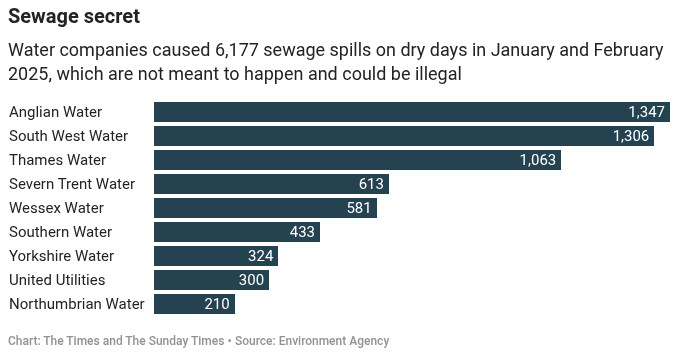
England’s water companies are causing more than 100 potentially illegal raw sewage spills a day into rivers and seas, far more than previously thought, The Times can reveal.
New data, which suggests a previously unknown level of widespread breaches of the law, shows Anglian Water was the worst offender, followed by South West Water and the crisis-hit Thames Water.
The potentially illegal nature of many of the spills raises the prospect of a wave of prosecutions and potential multimillion-pound fines for water firms. Regulators said the figures were “unacceptable” and they would not hesitate to take enforcement action against breaches of permits.
Raw sewage is legally permitted to pour into waterways from relief outfalls, known as storm overflows, on days of heavy rainfall. Those legal spills, which lasted a record 3.61 million hours last year, have sparked public outrage and targets from ministers to halve them.
However, they are not meant to happen on dry days, when the risk to swimmers and wildlife is greater because the pollution is not diluted by rainwater.
Companies have previously cast doubt on independent attempts to gauge the extent of such “dry day spills”, which experts said were likely to mostly be in breach of permits and illegal, with a few exceptions.
“The massively high numbers of untreated sewage spills on days when we haven’t had exceptional rainfall is the canary in the mine — clear evidence that our sewage infrastructure and capacity has not kept pace with population growth, development and climate change over the last decades,” said Michelle Walker, the technical director of the Rivers Trust, a charity.
The Times, which obtained the data using transparency laws, can disclose there were 6,177 dry day spills by nine water companies across January and February. Anglian Water reported 1,347 dry day spills, followed by South West Water on 1,306 and Thames Water on 1,063. Northumbrian had the lowest figure, with 210.
The figures have come to light because since January the Environment Agency (EA) has required water firms to report dry day spills. It now classifies them as pollution incidents.
Much of Britain’s sewer system is based on the model chosen in the 19th century, of combining rainwater and sewage in the same pipes. During heavy rainfall, storm overflows can by design be used to stop sewage backing up into homes and businesses.
However, dry spills should not happen. Observers said the high frequency of day spills uncovered by The Times suggested companies had failed to keep sewers clear and had not invested enough in infrastructure to keep pace with population growth.
A dry day is defined by the EA as having no rainfall above 0.25mm on the day and the 24 hours beforehand. “Storm overflows should not spill on dry days,” the regulator has said.
The new figures are important because they are sourced directly from the water firms. Some companies have contested past efforts by the BBC to infer how many dry spills there were by cross-referencing stop-start times of sewage spills with weather data, claiming the methodology was flawed.
The agency is in the process of establishing how many of the 6,000-plus discharges were illegal. The regulator has said dry day spills could lead to prosecutions, written warnings and financial penalties for companies.
Alex Ford, a professor of biology at the University of Portsmouth, said the EA was likely to find a high level of illegality. “Most, if they occurred during dry spells, are illegal. They would still be potentially illegal if they were caused by delayed rising water tables and seepage into cracked pipes,” he said.
Experts said dry day spills were typically more devastating for people and the environment than those during exceptional rainfall.
“Definitely, dry weather spills are worse because of the lack of dilution in the river — so any pollutants or infectious pathogens will be more concentrated if someone were to swallow some of the water,” said Barbara Evans, a professor of public health engineering at the University of Leeds.
“In dry weather people may be using the rivers and beaches more, so there are more people who may then be exposed to the pollutants,” she added.
Most of the dry day spills are understood to be classed by the EA as category three pollution incidents, where one is the most severe and four the least. The reasons why dry day spills can occur include under-investment in pipes and treatment plants, blockages in sewers and groundwater infiltrating into pipes via cracks and other routes.
Some of the spills this year could have happened without permits being breached. For example, in a large catchment water may fall in one place and take more than a day to drain down to another area where the spill occurs.
However, campaigners said the scale was unacceptable. Giles Bristow, the chief executive of the charity Surfers Against Sewage, which uncovered early evidence of dry spills in 2022, said of the 6,177 spills: “It’s outrageous, unlawful, and a damning indictment of a water industry broken beyond repair.”
The group’s provisional data shows a total of 206,529 raw sewage spills during January and February, most of which will have been legally permitted. “It’s bad enough having to think twice on taking a dip after rain — to do so in dry weather is just downright ludicrous,” said Bristow.
An EA spokeswoman said: “The number of pollution spills happening in dry weather is unacceptable. We investigate every dry spill and our message to the industry is clear: we will not hesitate to take robust enforcement action where we identify serious breaches.”
A spokeswoman for the Department for Environment, Food and Rural Affairs said: “Our root and branch reform will revolutionise the water industry through a record £104 billion investment.”
All of the companies were contacted, and none disputed the figures. Anglian Water said it is spending around £1 billion on storm overflows up to 2030. “We recognise that customers want us to take swift action to end storm overflow discharges. We intend to meet these expectations,” a spokesman said.
A South West Water spokeswoman said: “We are clear that storm overflows must only be used when absolutely necessary.” The firm note said it was trying to eliminate dry day spills caused by groundwater infiltration.
A spokesman for Water UK, the industry body, said: “No spill is ever acceptable. Water companies are working to end them as fast as possible by tripling investment. Over the next five years, companies will invest £12 billion to halve spills from storm overflows by 2030 including relining and sealing sewers to prevent groundwater infiltration — one of the main causes of dry day spills.”
Richard Foord, MP for Honiton and Sidmouth, has called on the chief executive of NHS Devon to allocate one of the five community hospitals in his constituency for this purpose.
An MP is urging for a hospital to be turned into a neighbourhood health centre in East Devon.
In a letter to Steve Moore, Mr Foord highlighted the potential for investment in local health services, given the “rapidly expanding older population.”
He expressed concern about the comfort of residents, particularly in Sidmouth and Seaton, with NHS England’s increasing reliance on technology and artificial intelligence.
Citing the 2021 census, Mr Foord noted that around one quarter of Seaton and Sidmouth residents have some form of disability.
In both areas, around 10 per cent of the population provide unpaid care for a friend or relative.
He also pointed out that the average age in these towns has increased more than the England and South West averages.
Mr Foord said: “This means that there are five hospitals in my constituency that have the potential for essential investment in local health services amid what is a rapidly expanding older population, that will continue in the years to come.
“The Sidmouth and Seaton areas in particular, are now well known to be home to demographic mainly over the age of 65, who are not necessarily comfortable with NHS England’s direction of travel with AI and technology.”
The community hospitals in question are Honiton, Sidmouth, Axminster, and Seaton, all of which have some available space, while Ottery St Mary Hospital is currently at full capacity.
Mr Foord praised the state of repair of Ottery St Mary, Seaton, and Honiton hospitals, noting they are only about 30 years old.
Axminster Hospital, though older, is reportedly in good condition.
Mr Foord has previously raised this issue with the Secretary of State for Health and Social Care and followed up with another letter and question in parliament.
Wrong sort of drought – not long since we had rain causing landslips and disruption in the same area! – Owl
Rail services in parts of southern England are being reduced because embankments have shrunk and disturbed the track after the sunniest spring in more than a century.
Trains are unable to travel at full speed over embankments in Dorset and Devon that have contracted because of a lack of moisture in the soil.
In the latest example of extreme weather affecting the UK’s railways, South Western Railway (SWR) said that for a safe and reliable service it had no alternative but to reduce the number of trains running.
Journeys from London Waterloo to Exeter will take an hour longer, with trains running at 40mph instead of 85mph for sections of the route.
This year’s was the second driest spring on record for England, with the least amount of rainfall since 1976. The lack of moisture has caused embankments to shrink on a 12-mile stretch of track between Gillingham in Dorset and Axminster in Devon.
The speed restrictions on the single-track route means trains cannot pass at the usual times and places, and SWR said it had been forced to cut services from the schedule.
The operator said dry conditions were likely to continue and that further speed restrictions could be needed.
SWR’s chief operating officer, Stuart Meek, said: “We are very sorry for the disruption that customers will experience due to this change, as we know just how important the west of England line is to the communities it serves.
“We have not taken this decision lightly … However, to continue operating a safe and reliable service, we have no alternative but to introduce a reduced timetable.”
Network Rail’s operations director, Tom Desmond, said: “The safety of our customers is our number one priority, which is why we must impose these speed restrictions. We will regularly review conditions in order to restore the normal timetable as soon as possible.”
The changing climate has caused problems for the railway in recent years, including the need to impose speed restrictions in extreme summer heat for fear of buckling rails.
Train services were meanwhile cut back in Kent last year after the wettest winters on record also affected tracks and embankments.
Network Rail is spending almost £3bn over the period 2024-29 to tackle the effects of climate change, having already increased its budget to maintain earthworks in the wake of the Stonehaven disaster, when heavy rain and poor drainage led to a landslip.
Investment firm ICG confirmed it had agreed a deal with Rigby Group to purchase the Devon airport, along with airports in Bournemouth and Norwich.
ICG said the airport’s passenger and cargo operations would be expanded and Steven Wiltshire, the airport’s managing director, called the deal “great news for Exeter and great news for Devon”.
Exeter Airport opened in 1937 and has flights to a number of UK and international destinations, including Edinburgh, Amsterdam and Lanzarote.
‘Time for growth’
Mr Wiltshire said Exeter could handle up to 1.2m passengers annually, about 400,000 more than current levels, before requiring major infrastructure upgrades.
“Flights are pretty full, there’s some capacity on the routes we’re operating currently, but additional aircraft and new routes would help us reach that next level,” Mr Wiltshire said.
The airport currently serves 27 destinations including recently launched daily flights to Amsterdam with KLM which began in March.
Addressing staffing concerns at the airport, which directly employs 230 people, he said: “We’re not anticipating any change from the leadership team or on the ground at all, so it’s business as usual as far as the staff and our customers are concerned.”
The deal, set to close later this month, will see ICG support airport operator’s Regional & City Airports (RCA) “expansion across its airport, cargo, and executive aviation operations”, said ICG.
“Now is the right time for the next phase in RCA’s growth,” said Steve Rigby, co-CEO of Rigby Group.
Airlines which operate from Exeter Airport include Ryanair, KLM, Aer Lingus and TUI.
The site was used by fighter planes during World War Two, including the Polish Air Force’s 307 Squadron in 1942.
The airport has grown in size, with a new arrivals building being opened by the Princess Royal in June 1999 before a £950,000 departure lounge opened four years later.
In January 2007, Devon County Council sold the airport to Regional and City Airports – a specialist airport investment and development group run by Balfour Beatty – in a deal worth £60m.
A spokesperson from the OVA says: Unfortunately, SWW have informed us that they do not plan further changes to their 5 sewage treatment plants that affect the River Otter until 2035 at the earliest.
On the left is a section of the Otter River near its source with clean sparkling gravel. On the right is a picture of the lower Otter (see below) with a thick layer of slimy algae covering, what should be, clean sparkling gravel. Gravel that should be teeming with insect life – not smothered./
The spokesperson continues: Peter Williams, OVA lead analyst, summarises the quality issues: “ The data shows the Otter has the highest phosphate levels of any major river in Devon and Cornwall, and goes some way to explaining why it’s the only river system in the area classified as ‘poor’ by the Environment Agency. High levels of phosphate cause slimy algal blooms on the riverbed and decreased oxygen levels, leading to severe consequences for plant life, wildlife and fish populations ”.
As a result of this, we have decided to run a publicity campaign that highlights the ailing river and to ask local communities to support this – as a way to bring pressure to bear on South West Water (first) and then the agricultural community (second).
Community action gathers momentum to #ReviveTheRiverOtter
Press Release Otter Valley Association with endorsements from:
Richard Foord, MP for Honiton
Councillor Jess Bailey, Devon County Council (Otter Valley)
Sam Bridgewater, Director of Environment Strategy and Evidence, Clinton Devon Estates
Howard Furnival, of Tracey Farm
Martin Davies, Secretary of the Ottery Fly Fishing Club
Bruce McGlasham, Secretary of the River Otter Fisheries Association
Councillor Ian Simpson, Otterton Parish Council
Councillor Dean Stewart, Chair of the Community Infrastructure Committee of Ottery St Mary Town Council
Councillor Susan P Tribble, Chairman Newton Poppleford & Harpford Parish Council
Budleigh Salterton Town Council
Iorwerth (Yog) Watkins, Westcountry Rivers Trust
Geoff Jung, East Devon District Council
Notable by their absence from this list are South West Water! – Owl
The OVA Action group ORCA (Otter River Catchment Action) is mobilizing local volunteers, anglers, civic organizations, and environmental advocates from Budleigh Salterton, Otterton, Newton Poppleford, Harpford and Ottery St. Mary to combat two major sources of pollution: Sewage-related pollution, including discharges of untreated sewage and high levels of phosphate in treated effluent from sewage works, by South West Water (SWW), and unsustainable land management.
Haylor Lass, Chairman of the Otter Valley Association, is calling on the local community to sign-up and help: “We’re a passionate civic charity and are now calling on local communities, farmers, anglers, businesses, and like-minded organisations to join forces with us to encourage SWW to take the action it needs to prevent their incessant pollution on the middle to lower reaches of the River Otter – namely to stop untreated sewage discharges and also to reduce phosphate levels in their continuous treated discharges”.
A team of 48 dedicated volunteers signed up and have been monitoring the river’s health every two weeks at 12 strategic locations stretching from Honiton to the sea. Sadly, in July 2025, the Phosphate levels are averaging 4x the upper safe level for a thriving ecosystem, and peak at 6x this limit just below the main sewage treatment works. These values have been steadily increasing as the water level drops, predominantly caused by high concentrations of phosphate in treated effluent discharged by sewage treatment works. High levels of phosphate cause algal blooms, eutrophication, and decreased oxygen levels in the water, leading to severe consequences for plant life, wildlife and fish populations.
Further plans are in place for River-fly (or invertebrate) testing to determine the state of life within the river and its tributaries, as well as working to reduce invasive species that are prevalent along long stretches of the river.
Local councillors, anglers, farmers, associations and businesses are behind this campaign, including:
• Richard Foord, MP for Honiton says “Momentum is already building to #ReviveTheRiverOtter; people-power can convince water companies to do the right thing by way of investing in our sewage treatment works here. I look forward to seeing those photos of the River Otter”.
• Councillor Jess Bailey, Devon County Council (Otter Valley) says “have long campaigned against South West Water treating our beautiful River Otter as an open sewer. As part of this I have been pleased to help fund water testing with my DCC locality budget. The River Otter is special not only locally but nationally. It is the first river in the country to have seen the re-introduction of beavers into the wild, beavers having previously been hunted to extinction. Improving water quality is crucially important for the survival and wellbeing of the beavers and other cherished wildlife. I am excited to be part of the Revive the River Otter campaign. This is exactly what is needed, galvanising pressure on SWW and helping restore the River Otter to its former glory.
• Sam Bridgewater, Director of Environment Strategy and Evidence, Clinton Devon Estates says: “This is a brilliant initiative. Community-led and bringing together a broad alliance of the willing, it addresses an issue of great concern for wildlife and for society. Clinton Devon Estates is delighted to be involved.”
• Howard Furnival, of Tracey Farm, says “We would be keen to be involved with this project with the OVA and their campaign ORCA. As a family who have lived for 7 generations, we are saddened to see how the river has been abused and mistreated. We hope this project will be the catalyst for change”.
• Martin Davies, Secretary of the Ottery Fly Fishing Club says “Anglers spend a lot of time on rivers and develop a close affinity with them and all the wildlife there. To witness, first-hand, the river Otter being degraded so badly is both shocking and depressing”
• Bruce McGlasham, Secretary of the River Otter Fisheries Association says “We are delighted to be working with OVA and the ORCA campaign to improve the quality of the river Otter. This will benefit not only local habitats and the natural environment for all, but also fish and all the other life that lives within or by the river””
• Councillor Ian Simpson, Otterton Parish Council, says “ Having grown up in the local area and lived in Otterton for 25 years, local residents and I find it extremely saddening to see the present state of the river Otter. As a child I fished and swam in this river and as an adult some 20 years ago me and my family along with many locals swam and used the river for recreation. The decline has been dramatic and devastating. Dogs that paddle in the river, including my own have become ill with vomiting and stomach issues. People swimming have become ill to the point that we warn people how polluted it is. Fish stocks have dwindled, and some species almost disappeared. I welcome the efforts of the OVA, and its ORCA campaign, to hopefully change the downward path of this once beautiful river and I feel that those polluting it should hang their heads in shame.”
• Councillor Dean Stewart, Chair of the Community Infrastructure Committee of Ottery St Mary Town Council, says “Ottery St Mary Town Council have been concerned for many years about the condition of the River Otter and other local waterways and beaches. We have questioned SWW in detail and both financially and politically supported local community groups such as the Tale Valley Trust and Tipton Eager Beavers. We very much welcome the formation of the ORCA campaign by the Otter Valley Association, and we hope we will be able to meet with them, support them and amplify their campaign for lasting and significant change.”
• Councillor Susan P Tribble, Chairman Newton Poppleford & Harpford Parish Council, says Newton Poppleford and Harpford Parish Council are concerned that poor water quality in the River Otter is impacting parishioners in multiple ways. These include reduced access to the river, diminished recreational and amenity value, and broader concerns over public health and environmental quality.
• Budleigh Salterton Town Council says that “it remains deeply concerned about the continued decline in the quality of water in the locality. The Council has been working closely with the Environment Agency, East Devon District Council, South West Water, and the Otter Valley Association (OVA) in an effort to address this issue. As a result of these collaborative efforts, the Environment Agency has confirmed that it will double its water testing along Budleigh Salterton’s Blue Flag-awarded beach throughout 2025. Budleigh Salterton is the only town situated within the East Devon National Landscape, and it forms part of the Jurassic Coast, a UNESCO World Heritage Site. The town’s natural environment – including its coastline, the River Otter and its resident beaver population, and the award-winning Lower Otter Estuary – is a significant attraction for visitors and a vital part of the local economy. Maintaining the ecological health of these areas is therefore of paramount importance. Regular water testing, carried out both by the ORCA arm of the OVA and by the Environment Agency, plays a crucial role in providing transparent and independent data. This evidence is essential in maintaining pressure on South West Water to review and revise its current practices, and to prioritise the restoration of the River Otter’s water quality. Budleigh Salterton Town Council will continue to advocate for the protection and enhancement of the town’s unique natural assets on behalf of its residents and future generations”.
• Iorwerth (Yog) Watkins, Westcountry Rivers Trust, says “I’ve been working on the Otter for many years and have seen significant improvements in farm management on many farms, but there is still more that needs to be done. SWW have contributed to my work though the Upstream Thinking project (UST), helping farmers use their nutrients more efficiently and avoid losses to both the River Otter and the aquifer. Unnoticed by many, there is also the contribution from private septic tanks that haven’t been maintained properly.”
• Geoff Jung, East Devon District Council, says “The river water quality of the River Otter is in a shameful decline. We all need to work together from residents, farmers, landowners, fertiliser and chemical companies, highways and sewage infrastructure providers, councils, government bodies and volunteers to all combine our knowledge, and best practices to return this river to its rightful place as an amazing river teeming with wildlife. This is a wonderful positive step in the right direction!
How to Get Involved
The OVA invites everyone to join in. Whether through volunteering, sharing resources, or amplifying the message, there’s a role for all who care about clean water, thriving wildlife, and resilient communities. To join the campaign or simply understand what if going on, please join the ORCA Facebook group at: https://www.facebook.com/groups/otterrivercatchmentaction/ and share your experiences. Please also use the hashtag #ReviveTheRiverOtter when sharing on social media.
For press inquiries, interview requests, or to learn how to participate, please contact the Otter Valley Association, or the ORCA campaign team via:
The bold plan – that could cost around £100 million – has been unveiled by East Devon District Council as part of its bid to create more affordable housing in the district.
Members of the council’s housing review board (Thursday 31 July) were told about the plan, and how it might be funded if it were to be pursued.
No decision on whether to progress was made at the meeting, but it was endorsed by the housing review board to be progressed to cabinet and full council.
“The report does contain some big numbers, but we are not seeking budget approval today,” said Liam Reading, assistant director for investment and development.
“Rather today is about setting out what is possible in headline terms and explaining the viability.
“It is an aspirational target and we are setting the bar very high, but it is important to be ambitious.”
East Devon has more than 4,100 social housing properties at present, meaning that if stock levels remained the same and 500 more were built or bought, it would be above 4,600.
That compares to around 3,000 in neighbouring Mid Devon.
Mr Reading expected around £60 million of the predicted £100 million would need to be borrowed, with hopes for the remainder coming from the likes of government grants from Homes England.
In spite of the potential additional borrowing, though, Mr Reading asserted that the increase in its housing stock would not negatively impact its housing finances.
The aim would be for the rent from the new properties to cover the payments on the borrowing it had used to build or buy them.
Councillor Dan Ledger (Independent, Seaton), the cabinet member for sustainable homes and communities, said the build and buy plan was part of “looking to the future”. “If you look at every single plan for the council, it all points to building and buying social homes for our tenants that are secure, comfortable and easy to heat, and this ticks to many boxes,” he said.
“It is a long time coming, but it is great to see.” Councillor Chris Burhop (Independent, Newton Poppleford and Harpford) said he had previously “ranted and raved about where the ambition was”.
“Well, here it is,” he said.
“Congratulations to the team on such an ambitious plan, something which we have heard for so many years we can’t do, but actually now we are showing a way forward where we can achieve things, and it will be fantastic for the community of East Devon if we can see this commenced and underway.”
Cllr Burhop added that he was actually concerned the finances being proposed could be “too small” given he had built a house and costs always exceeded expectations.
But Catrin Stark, director of housing and health, said the potential for higher levels of external funding and the economies of scale the council could achieve, were factors that could alter the cost per property to the council.
“I’m conscious, too, that we have got Cranbrook and the second new town coming, but what are we doing in the communities we currently serve,” she said.
“There are some areas that, in terms of regeneration, haven’t been forgotten but are a little left behind and so this is an opportunity to look at places with the most need and to serve communities that already exist rather than always concentrating on the shiny new places.”
The board heard that the majority of any new homes built or bought would be available under social rent, and that the council was not planning on creating its own development company.
Any new properties would also sit outside of Right To Buy legislation for 10 years, meaning they cannot be purchased under that scheme’s discounts until they are a decade old.
A “major cliff fall” was also reported in Seaton on 1 March and another landslip forced the closure of a footpath at Salcombe Hill near Sidmouth in November last year.
East Devon District Council, the coastguard and Clinton Devon Estates urged people to avoid affected areas.
East Devon’s coast is made up of soft rocks including sandstone and conglomerate, which authorities said made them particularly prone to erosion, especially following periods of heavy rain or dry weather.
Projects have been set up by the council to protect parts of the coastline, including a £1.4m scheme to reduce erosion and reduce the risk of cliff falls at Seaton Hole.
The council said work on the project was due to begin on 26 August and it would help protect 41 nearby homes, including a care home.
A joint statement from the council and Clinton Devon Estates, which owns some of the coast, said cliff falls were a “natural and unpredictable occurrence”.
They urged anyone visiting the coastline not explore recent cliff falls and to call 999 if they witnessed an incident.
“Following a cliff fall at Budleigh Salterton beach on Saturday, we want to remind residents and visitors to avoid the affected area and to follow all warning signs, safety barriers and instructions,” it said.
‘Move well away’
Martin Freeland, station officer at Exmouth Coastguard Station, said a general rule to follow was to work out how tall the cliff was and then stay the same distance away from the cliff edge.
“Everyone likes a day at the beach, but it’s just being mindful about where you set yourself up for the day,” he said.
“The temptation of course is to go up and have a look and get a bit closer when a fall has happened.
“But the advice would be to move well away and seek advice from 999.”
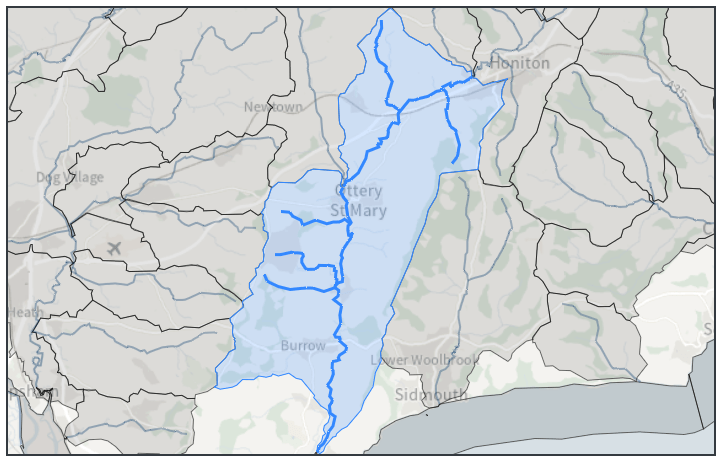
The river Otter is now so contaminated with sewage related pollutants, that it is classed in the bottom 20 per cent of rivers in England for water quality.
“The data shows the Otter has the highest phosphate levels of any major river in Devon and Cornwall.”
Richard Foord MP pays “tribute to the remarkable work of volunteers” at the Otter Valley Association, noting that their water quality testing was “very impressive”.
Owl’s view is that all development in the Otter catchment (as has been the case with the Axe) should stop until South West Water has solved the problem.
Claire Wright writes:
#ReviveTheRiverOtter: Local people urged to take action in new campaign to restore “sick” watercourse
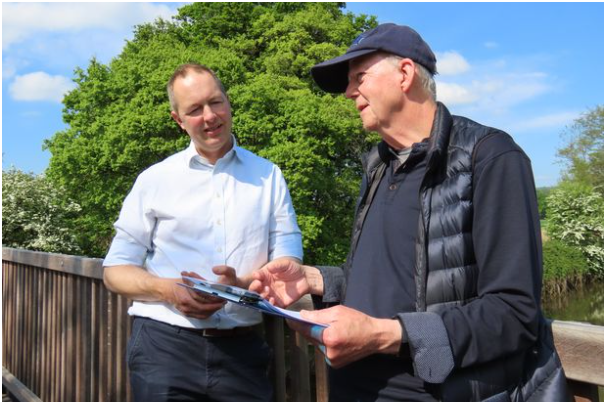
Richard Foord MP with a member of the #ReviveTheRiverOtter campaign(Image: Richard Foord)
A Devon MP has joined forces with a community activist group, in a powerful new campaign to restore the health of an ailing local river, currently rated ‘poor’ by the Environment Agency.
The middle and lower reaches of the River Otter are now so contaminated with **sewage related pollutants, that it is classed in the bottom 20 per cent of rivers in England for water quality.
Figures from local environmental groups suggest that the River Otter has the highest phosphate levels of any major watercourse in Devon and Cornwall.
70 per cent of phosphate levels in the Otter come from the sewage system
The Environment Agency considers that around 70 per cent of phosphate levels in the Otter come from the sewage system.
In 2024, South West Water discharged untreated sewage into the River Otter for over 15,000 hours, and there are high levels of phosphate in the treated discharge, pumped into the river 24 hours a day, every day, from their treatment works.
Local people are being urged to join the campaign
Local people are being urged to join the campaign, which is spearheaded by the Otter Valley Association (OVA), and aims to persuade South West Water to adequately invest in local sewage infrastructure, to allow the river to flourish once again.
The campaign is strongly backed by Richard Foord, MP for Honiton & Sidmouth, who met with OVA representatives in May to observe water quality testing on the river. Mr Foord then called a meeting with South West Water, which took place last month and was attended by the OVA, representatives from the Environment Agency, and the River Otter Fisheries Association, whose members are also concerned about the river’s pollution levels.
South West Water has no plans to invest in local sewage infrastructure to stop the pollution in the river
South West Water representatives stated at the meeting that they have no plans to invest in the sewage infrastructure that discharges into the middle and lower sections of the Otter, for at least the next five years and most likely much longer.
The lifeblood of our landscape
Haylor Lass, Chairman of the Otter Valley Association, said: “This river is the lifeblood of our landscape, and it’s been neglected for far too long. We are standing together—locals, anglers, experts, and nature lovers—to give the Otter back its sparkle.”
Richard Foord, added: “The river Otter should be crystal clear and teeming with fish and invertebrates, but instead, the middle and lower sections are murky, slimy and sick. This is largely due to untreated or inadequately treated sewage being endlessly discharged in the river, by South West Water.
“We felt we had no option to but to launch #ReviveTheRiverOtter to stop SWWs appalling use of the River Otter as a free extension of their sewage infrastructure. This is just the start. We’ll keep going until we succeed in getting the investment the River Otter desperately needs to thrive once again.
“I want to pay tribute to the remarkable work of volunteers at the Otter Valley Association. Their data, expertise, clear objectives and mobilisation of the local community for water quality testing is very impressive. I was taken aback by their efforts when I met them, and I am backing them to the hilt in their endeavours.”
Forty eight volunteers test the Otter’s quality every two weeks
For the last four months, the Otter Valley Association has mobilised forty-eight dedicated volunteers who have been monitoring the river’s health at 12 strategic locations stretching from Honiton to the sea, measuring 10 different indicators of ecological health.
Water quality testing takes place every two weeks, forming one of the most comprehensive citizen science efforts in the region. In the latest round of testing, Phosphate levels were found to be over four times the ecological ‘upper safe limit’, peaking at six times just downstream of the major sewage works.
Peter Williams, OVA lead analyst, summarises the quality issues: “The data shows the Otter has the highest phosphate levels of any major river in Devon and Cornwall, and goes some way to explaining why it’s the only river system in the area classified as ‘poor’ by the Environment Agency. High levels of phosphate cause slimy algal blooms on the riverbed and decreased oxygen levels, leading to severe consequences for plant life, wildlife and fish populations.
“According to the Environment Agency, approximately 70 percent of the phosphate entering the Otter is a result of discharges from South West Water’s sewage infrastructure.”
#RevivetheRiverOtter is urging residents to take photos of the river
The first stage of #ReviveTheRiverOtter campaign asks residents to take photographs of their most and least favourite parts of the Otter over the summer and post them on their social media channels, using the hashtag #ReviveTheRiverOtter.
For impact, local people are asked to also tag Richard Foord on Facebook and Bluesky, the Otter Valley Association on Facebook and South West Water on Instagram, Facebook and X.
Stage two of the campaign will take place in the autumn
The OVA and Richard Foord have plans for stepping up the campaign in the autumn, if they do not see commitments from South West Water to invest in the local sewage treatment works that serves to prevent raw and inadequately treated sewage being discharged into the River Otter.
Sign up for updates on the Otter
Sign up for updates on the campaign to #ReviveTheRiverOtter
East Devon District Council bagged a C2 rating, one rung down from the top C1 rating for consumer standards, in the first official scrutiny by the Regulator of Social Housing.
The regulator assesses four aspects including the quality of the council’s housing, tenant safety, and its transparency and accountability to residents.
East Devon was deemed to be performing well in terms of housing quality, health and safety compliance, tenant engagement and complaints handling and learning.
This result comes as the council has just concluded a survey of its social housing properties to fully understand the scale of repairs needed across the estate.
A total of 93 per cent of its more than 4,500 homes secured a pass rate in line with the Decent Homes Standard, compared to an average of 89 per cent for councils nationally, according to its stock condition survey.
Just over 6 per cent of the homes in East Devon failed to secure this standard, predominantly due to inadequate heating or insulation.
Councillor Dan Ledger (Independent, Seaton), the cabinet member for sustainable homes and communities, said the positive review from the regulator was “one of our biggest achievements”.
“Only 21 organisations have secured a C2 rating or higher, so we are right up there,” he said.
“I can’t thank Catrin [Stark, the director of housing and health] and the senior directors enough, they’ve done such great work”
In terms of health and safety, the council said it was “broadly compliant” and has, by working with the UK Health and Security Agency, actively addressed areas of elevated radon risk.
It said it was also improving its oversight of health and safety issues, and is improving the process used for reporting issues with properties..
The council also said it had revised its procedures for dealing with complaints and looked at how it reports data on the likes of improvements and repairs to tenants.
Cllr Ledger added that inspection confirmed the progress the council’s housing team was making, including investing in better data to engaging tenants and addressing areas of improvements.
“The Regulator of Social Housing’s judgement provides a strong platform for further progress and helps us focus on where we can do better,” he said.
“We’ll continue working closely with the regulator as we move towards meeting C1 standards, while keeping our tenants at the heart of everything we do.”
A spokesperson for the council said work was occurring in all the areas that the regulator assessed, which helped it secure the C2 rating, and that it was now working on a plan to try and reach the highest C1 level.
The RSH began its inspection programme of inspecting large social landlords – housing associations and councils with more than 1,000 homes – on 1 April 2024.
The inspections are planned to take place every four years and are one of the key changes to RSH’s approach resulting from the landmark Social Housing Regulation Act.
Devon and Cornwall Police has been removed from enhanced monitoring by the police inspectorate, nearly three years after being placed under special measures.
Two areas of concern remained open, crime recording standards and the overall quality of investigations.
His Majesty’s Inspectorate of Constabulary and Fire & Rescue Services (HMICFRS) confirmed the decision, citing improvements in several key areas including emergency call handling, crime recording, and the management of sexual and violent offenders.
At the time, HMICFRS identified significant failings in how the force responded to emergency calls, recorded crimes, and supervised registered offenders.
Inspectors found that crimes, particularly those involving vulnerable victims, were not always recorded, and that too many emergency and non-emergency calls were either delayed or abandoned.
The watchdog also raised concerns about the force’s ability to identify repeat and vulnerable callers, and its failure to provide timely advice on preserving evidence or preventing further crime.
‘Work to do’
Additionally, the management of registered sexual and violent offenders was deemed inadequate, potentially increasing the risk of further offending.
In a statement His Majesty’s Chief Inspector of Constabulary, Sir Andy Cooke, said the force had made “good progress” and would now return to routine monitoring.
“I am pleased with the good progress that Devon and Cornwall Police has made so far,” Sir Andy said.
“While there is still work to do, I have recommended removing the service from our enhanced level of monitoring, known as Engage, and return it to routine monitoring.”
Among the improvements noted were better governance of the force control room, a reduced 101 call abandonment rate, improved management of sexual offenders, and increased confidence in frontline officers’ understanding of crime recording principles.
The force has also made strides in using investigative plans and conducting supervisory reviews.
However, HMICFRS said two areas of concern remained open, crime recording standards and the overall quality of investigations.
“It needs to demonstrate further improvements before we can close these causes of concern,” said Sir Andy.
The police and crime commissioner for Devon and Cornwall Alison Hernandez should be “considering her position”, after she incorrectly told a crime panel that the remains of multiple bodies had been found in a Cornish woodland, says its chair.
Cllr Sally Haydon (Lab, St Budeaux), who heads the Devon and Cornwall police and crime panel, said the blunder was a “yet another serious mistake” by the commissioner, who came under criticism last year for going against the wishes of the panel and appointing a deputy, who later resigned due to ‘personal circumstances’.
Alison Hernandez told a panel meeting on Friday that “dead bodies” had been found in woodland at Sticker in Cornwall.
She said that police were “trying to establish how many” bodies may be at the site, which is at the centre of a murder investigation.
She later apologised after leading investigators said the woodland search only involved the human remains of a single person, not several.
Detective Superintendent Jon Bancroft said: “We currently have three separate murder investigations being conducted in the Cornwall area.
“I have oversight of all of these investigations at this time, and can confirm they are being carried out independently of each other and are not believed to be linked.
“I can categorically state that we have recovered remains believed to be those of Daniel Coleman only from an area of woodland in Sticker. No other remains have been located at this scene to date.”
Cllr Haydon, who is also Plymouth City Council’s cabinet member for community safety, said: “It’s extremely disappointing that the commissioner shared such seriously flawed information at the panel.
“It’s a serious mistake which not only created a period of real worry for people but is deeply unhelpful when we need to do all we can to help restore confidence in our police force.
“It’s extremely worrying that Ms Hernandez made such a serious public statement without the full facts on what was clearly an operational matter, particularly when she has repeatedly told the committee that she does not get operational.”
At the meeting Ms Hernandez also failed to answer questions regarding a ‘golden handshake’ deal struck with chief constable Will Kerr – who she picked for the role – before his recently-announced retirement. She told panel members they could find the information in the statement of accounts published next year.
It follows an unsettled two-year-period within the Devon and Cornwall Police which saw its substantive chief constable suspended and later its acting chief constable.
It is the role of a police and crime commissioner to hold the chief constable to account for the police’s performance and be the public’s voice in policing.
Last year Ms Hernandez appointed a deputy commissioner Mark Kingscote, who later resigned after just five months in post, despite being recommended not to by the panel because they felt he didn’t have enough experience.
Cllr Hayden continued: “All of this, coupled with the apparent chaos at senior levels of the force and the interventions required following inspection and the continued need to improve means there are very serious concerns over whether she is capable of continuing in this role and I believe she should be considering her position.”
During the panel meeting Councillor Julian German, who represents the Roseland on Cornwall Council, quizzed Ms Hernandez about how the investigation was progressing. He said: “Since your written update, the force has requested mutual aid and it’s been granted. Before mutual aid was granted the whole of the front line of the force was reorganised to cope with the pressure it is experiencing primarily due to incidents in Cornwall.
“So would you like to update the panel on that, why the mutual aid was requested and granted and what’s the ongoing situation?”
Ms Hernandez replied: “Some of the elements of that operation I can’t speak about but some of the things are very obvious. As you know there is a large crime scene that has been identified in Cornwall that is requiring a lot of effort to even scene guard the area.
“The level of expertise, some of the mutual aid we’ve brought in, is expertise in specific types of investigations that we didn’t have. The National Crime Agency is supporting the organisation at the moment.
She said: “I know there’s been some information in the media. We’ve got a huge forensic tent down there. Lots of forensics officers, obviously we’ve found dead bodies in that wood. We’re just trying to establish how many there may be at this point in time and whether we are aware of who they are or what might have happened to them.”
She later apologised saying: “The police have operational primacy over these matters. Any investigation will unfold rapidly and I was not in possession of all the facts at that time.”
The largest town in Devon still doesn’t have a public enquiry office despite Alison Hernandez pledging two years ago that public access was “non negotiable”.
Here is what Alison Hernandez said in August 2023 about the project to sell off part of the old station and redevelop the remainder with costs estimated at £5 million, now increased to £6 million.
“This project makes sense from every angle. Exmouth is Devon’s largest town and sees a huge increase in its population in the summer months. The teams based there, and the community they serve, deserve a station which is fit for the 21st Century, less harmful to the environment and cheaper to run.
“As with other police station building projects, I am insisting that a significant proportion of the public monies that we are investing in this project go to local people so that money benefits the local economy. The release of brownfield development land means additional housing can be provided in the town without greenfield sites being developed.”
She said improving public access to the force was a ‘non negotiable’ part of the project, adding: “When I carried out a public survey to determine which of the 58 possible locations the public would most like to see, a police enquiry office opened once again in Exmouth came eighth. People love the idea that they can walk into a station and talk to a real human being to report crime, receive advice on crime prevention and seek help for victims, so there is no way I am going to miss the opportunity to give this town back its front desk.”
A new police station in Exmouth is off the cards as estimated costs have risen to £6 million.
Police and crime commissioner Alison Hernandez told a police and crime panel on Friday that she would prefer to find “another place” to put the police.
She said: “I’m not happy as it only cost £2 million to build the new Liskeard station and what we would be building in Exmouth is smaller. The costs have gone up dramatically.”
Exmouth and Exeter City police stations were both set to get public enquiry offices (PEOs) this year after Ms Hernandez made it her mission to reopen many across Devon and Cornwall which were closed to cut costs more than ten years ago.
But the panel heard that neither would be happening “at this point”.
Exmouth is dependent on new premises and concern over the public bringing weapons into the city centre building the police share with Exeter City Council has put the brakes on that one.
The commissioner said the city council had refused permission and she understood the challenges of not wanting council staff to be “at risk”. But she added to open an enquiry office somewhere else would mean moving all the policing staff so it wasn’t happening.
More than 90,000 residents accessed PEOs during 2024-25, “a clear sign of the value placed on face-to-face policing”, said the commissioner in her update to panel members.
She has reopened or opened 17 PEOs, bringing the total to 26 with Ivybridge, Liskeard and Tavistock the latest stations to open their doors to the public again.
The ageing police station complex in North Street, Exmouth, includes a disused magistrates court and a mothballed civil defence shelter. Plans were in the pipeline to sell off part of the site for redevelopment and a two-storey police station building built on the rest.
Exmouth is the largest town in Devon and the police station building is occupied by around 60 officers, but the public cannot enter without an appointment.
Answering a question about whether the recently opened police enquiry offices had resulted in a drop off in 101 calls as people could now walk into a police station and report crime, the commissioner said “no” and that 101 was “unrelenting”.
“The more channels you open the more people come,” she said. “Access is increasing for more people to report crime. That is positive because it allows us to understand what is happening in our communities. It is really making a difference to people coming forward and needing a face to face contact rather than one over the phone.”
A performance report to the panel showed that 12.3 per cent of calls to 101 were abandoned in the 12 months to May 2025 due to long waits compared with 37.4 last year. Latest data shows that 88 per cent of 101 calls are answered within ten minutes – the commissioner wants to get to 90 per cent.
The report shows that the public’s opinion of the 101 service has improved, with correspondence down from 42 to 4 in the last financial year and the only person to give feedback during 2025/26 so far was focused on praising the assistance they received.
Devon and Cornwall’s police and crime commissioner has failed to disclose the details of a deal struck with chief constable Will Kerr before his retirement.
At a police and crime panel meeting on Friday, Alison Hernandez was asked on two occasions if Mr Kerr, who was suspended for two years on full pay, was given “a golden handshake”.
She said: “Mr Kerr and I have mutually agreed an arrangement for him to leave and I have done it in a pragmatic and rational way.
“The information will be published in a statement of accounts next year if people wish to go and look at that, but it is not something to be discussed today.”
An investigation by the Independent Office for Police Conduct (IOPC) in England is continuing into gross misconduct, although this is not related to criminal allegations made against the officer investigated in Northern Ireland that have since been dismissed.
Ms Hernandez said in her experience “this could go on for years”.
She said was “disgusted by the inefficiency and ineffectiveness” of the Independent Office of Police Conduct and was asking the Home Secretary to scrutinise the body.
She would not be drawn on the “arrangement” which was raised by panel members Cllr Mandy Ewings, leader of West Devon Borough Council and Cllr Julian German of Cornwall Council.
Cllr Ewings said the public deserved to know if there was “a golden handshake” and how much it had all cost the taxpayers so far in council tax rises.
Mr Kerr was suspended shortly after he joined the Devon and Cornwall Police as chief constable in 2023 over “serious allegations of sexual offences” which he has always strenuously denied .
It was not until April this year that the Public Prosecution Service (PPS) in Northern Ireland confirmed it was not going to prosecute Mr Kerr with regards to the allegations.
Meanwhile Jim Colwell, the deputy chief constable brought in to cover for Mr Kerr, was also suspended in November for alleged “professional standards breaches”.
He has returned to duties as deputy this week having been given a written warning after a hearing determined he breached the force’s “notifiable associations” policy. It is understood he failed to declare that he had exchanged messages with a journalist on social media.
Jim Vaughan, a former chief constable for Dorset, came out of retirement to take up the post of interim chief constable in December.
Earlier this year when there were effectively three chief constables in post, two of whom were suspended, the monthly cost to the taxpayer was £63,913.
Ms Hernandez said interim chief constable Vaughan was now driving performance in the force with “such pace” and personal attention, having met 4,000 of the 6,000 officers, and she was not in a rush to replace him but intended to recruit in the autumn.
“I am not pleased that we have been in this position in terms of having multiple leaders of the organisation and temporary leaders of the organisation because they cannot really act as a full chief constable and set the strategy and direction quite as they should.”
She said she had agreed with Mr Kerr that retirement was the best option for him.
“He does have the interests of the people of Devon and Cornwall and the Isles of Scilly at heart because he does recognise how difficult it has been for me to support the organisation with all these individuals we have had to have in to help.
“He is allowing me, by retiring, to get to the point of a stable and substantive chief constable and that is for the benefit of all us so I am thankful to him.”
Mr Kerr said in a statement: “Having been cleared in relation to what I believe were malicious criminal allegations in Northern Ireland, I have decided that it’s now in the best interests of my family and the force that I retire as chief constable.
“After nearly 36 years of public service, this is not the way I would have chosen to retire but the force, and communities across Devon, Cornwall and the Isles of Scilly, deserve stable leadership in policing.”
There was a large cliff fall in Budleigh Salterton Saturday (July 26).(Image: Mark Newton)
A huge dust plume fell across Budleigh Salterton Beach after a cliff fall [Saturday] (July 26) around 3:50pm.
People were trapped after being stranded on the wrong side of yesterday’s cliff fall. Sidmouth Lifeboat, along with other lifeboat crew members, helped safely return people to Budleigh Beach after the fall.
Shortly after the incident, police were on the scene and taped off the area, with the South West Coastal Path closed at points, resulting in no access.
A police helicopter was also spotted in the skies after the cliff fall.
East Devon cliff fall leaves huge dust plume by the beach yesterday (Saturday July 26). (Image: Beer Coastguard)
A spokesperson from Sidmouth Lifeboat said: “Sidmouth Independent Lifeboat was tasked by Solent Coastguard after a significant cliff collapse at Budleigh Beach.
“The crew’s primary objective was to search for anyone caught in the fall zone and to support Beer and Exmouth Coastguard teams already on scene.
“Upon arrival, lifeboat crew members discovered several people stranded on the wrong side of the cliff fall. Two individuals were safely transferred back to Budleigh Beach.
“Thank you to all volunteers and agencies involved for their swift response and teamwork.
“Please remember: cliffs along this stretch of coastline are unstable. Keep a safe distance from the base and the edge, and follow all local safety warnings.”
Yesterday’s cliff fall comes just five months after the East Devon County Council inspected the cliffs at Budleigh Salterton Beach.
The council is actively working on coastal protection schemes to mitigate cliff falls, particularly in areas like Seaton Hole.
These schemes involve strengthening defences at the base of cliffs, such as adding rock armour and repairing seawalls and gabions – like the £1.4 million project at Seaton Hole, which is due to start in August 2025.
“In trying to be helpful I responded to an operational question at the police and crime panel, however, I was not fully up to date with the facts of the investigation.
“I apologise for any alarm this may have caused. The police have operational primacy over these matters.”
Our “selfie girl” is shooting from the hip. She needs to stay focused as she faces choosing the next Chief Constable – Owl
A police and crime commissioner has apologised for claiming that multiple human remains had been discovered in woodland in Cornwall at the centre of a murder investigation.
Alison Hernandez told a meeting of the Devon and Cornwall police and crime panel that “dead bodies” had been found at Sticker, near St Austell, and investigations were continuing to establish exactly how many.
Devon and Cornwall police said in response that the body of one man had been recovered from woods and no other remains had been found.
Police and forensic experts have been carrying out extensive inquiries in the woodland since the discovery of the body of 43-year-old Daniel Coleman.
James Desborough, 39, is accused of murdering Coleman, from St Austell, between 2 June and 7 July. He is due back before Truro crown court next month.
Hernandez said on Friday evening: “In trying to be helpful I responded to an operational question at the police and crime panel, however, I was not fully up to date with the facts of the investigation.
“I apologise for any alarm this may have caused. The police have operational primacy over these matters.”
Det Supt Jon Bancroft, with Devon and Cornwall police, said: “We currently have three separate murder investigations being conducted in the Cornwall area.
“I have oversight of all of these investigations at this time, and can confirm they are being carried out independently of each other and are not believed to be linked.
“I can categorically state that we have recovered remains believed to be those of Daniel Coleman only from an area of woodland in Sticker.”
Police are also investigating the discovery of the body of Lee Hockey, 50, who was found in separate woodland between Truro and Probus on 1 July.
A third murder inquiry is under way after a fatal fire at a residential property in Newquay on 22 July.
The body of a man in his 30s was found in the property, with a 33-year-old man arrested on suspicion of murder.
Chaos? An unfortunate series of events? Or business as usual?
Reporting on the leadership of Devon and Cornwall Police over the past few years has been like watching a high-budget Netflix drama.
A long list of colourful characters; a barely believable plot; and at the end of every episode, you’re left with absolutely no idea what’s going to happen next.
Back in 2022, a group of journalists were invited to police headquarters in Exeter to meet with Will Kerr, the South West’s new chief constable.
He came with an impressive CV, having served in Northern Ireland for 27 years, eventually moving up the ranks and leading on serious crime and counter terrorism.
We joked that if he could find a way to navigate the bitter ‘jam or cream’ debate, which has divided our two countries for centuries, it would put all his previous accomplishments in the shade.
None of us could have imagined that just six months later, Mr Kerr would be gone, and we would never see him again.
Will Kerr joined Devon and Cornwall Police in 2022.
The Police Service of Northern Ireland (PSNI) began an investigation into serious allegations of sexual offences. The Independent Office for Police Conduct launched its own inquiry.
Mr Kerr was suspended and his deputy, Jim Colwell, moved up the ladder to fill in as temporary Chief Constable.
As the months dragged on, and it became clear the PSNI inquiry was moving at a glacial pace, that word “temporary” began to feel slightly more “permanent.”
But then came the next twist. Jim Colwell himself was facing gross misconduct allegations, for misuse of his work mobile phone.
Another suspension, and another vacancy at the top of the tree which needed to be filled as soon as possible.
Enter James Vaughan, former Chief Constable of Dorset Police. Like a grizzled old copper lured out of retirement for one last job, Mr Vaughan agreed to step in as caretaker until everything was resolved.
‘We haven’t had chaos’
This week, just as the audience was beginning to wonder if this slow-moving drama would ever reignite, things began to race to a sudden conclusion.
On Tuesday, Jim Colwell was found guilty of misconduct – apparently for failing to declare that he had messaged a journalist on social media – but was allowed to return to his role as Deputy Chief Constable with a written warning.
Wednesday brought news of Will Kerr announcing his retirement, having seen the PSNI criminal investigation dropped, but with a police watchdog inquiry still ongoing.
Alison Hernandez denied she has presided over a ‘chaotic’ period.
On Thursday, I sat down with Police and Crime Commissioner Alison Hernandez, who is responsible for hiring and firing Chief Constables and holding the force to account.
I asked her whether she takes responsibility for the “chaos” of the past few years.
“We haven’t had chaos,” she replied.
“We’ve just had some individuals who have had misconduct allegations against them, and I’ve dealt with them appropriately.
“This force right now has got really strong leadership in James Vaughan and I am very happy.”
Ms Hernandez said she believes the IOPC is not fit for purpose and that she wants commissioners to have “more power” to take control of disciplinary matters and speed things up.
This is unlikely to happen, as a key principle of policing is that forces do not mark their own homework.
Ms Hernandez is about to begin the recruitment process for her fourth chief constable in the space of two years.
She, and everybody concerned with Devon and Cornwall Police, will be hoping the scriptwriters opt for a period of calm after an action-packed series.







 East Devon Watch