Top lawyers argue tax avoidance laws cause privacy problem for their rich client!

“The law firm Mishcon de Reya has filed a legal complaint against new anti-tax evasion measures, arguing that they infringe privacy and data protection rights.

The Information Commissioner’s Office confirmed it had received a complaint against HMRC and the Common Reporting Standard, a system whereby different countries’ tax authorities automatically exchange information.

The complaint was filed on behalf of an unnamed EU citizen who did not wish to be identified, according to the Financial Times. The woman is domiciled in Italy, meaning she argues it is her home for tax purposes.

It is not known where she is currently resident, though she was reported to have been previously resident in the UK and to have had a UK bank account containing £4,000.

The complaint claims that sharing her information with overseas tax authorities would subject her to a risk of her data being hacked, and would infringe European data protection and human rights laws. …”

https://www.theguardian.com/money/2018/aug/02/mishcon-de-reya-complains-about-anti-tax-evasion-measures

BoJo refuses to leave (free and almost tax free) Foreign Office luxury pad that should go to Jeremy Hunt

“Boris Johnson has refused to budge from his £20million taxpayer-funded mansion, as Downing Street admitted he could still be there for “weeks”.

There is growing anger as he remains at the luxury official residence, despite resigning as Foreign Secretary 12 days ago.

The Tory MP was today spotted sheepishly leaving the mansion, with two large suitcases packed in an awaiting car for him.

But wife Marina Wheeler was understood to still be in the home today.

A No10 spokeswoman said: “He’s leaving within the next few weeks.”

Mr Johnson refused to answer questions on his living situation when confronted by the Mirror at the property.

Two taxpayer-funded, unmarked police cars with four staff waited for two hours at One Carlton Gardens in Central London as the MP readied himself.

Mr Johnson was whisked away in a Jaguar, with the suitcases in a 4×4 BMW.

He has raked in thousands from renting out a home just four miles away in Islington, North London, while he lived rent-free in the mansion.

Grenfell Tower survivor Aalya Moses, 57, who spent months cooped up in a hotel room as she awaited a new home after the blaze, hit out at the former Cabinet minister.

She said: “If he’s still living in there I think it’s disgusting, it’s outrageous.

“A man like him will have earned plenty of money and he’s living for free in a second home he shouldn’t really be living in any more. And it’s at the taxpayers’ expense?

“What planet is he on? It’s diabolical.”

Labour MP David Lammy said it was proof of a “serious class problem” here.

Referring to the recent scandal over treatment of Windrush migrants, he added: “Those like Boris Johnson, who are drenched in privilege, feel entitled to claim far beyond what they are owed.

“Meanwhile, many of the poorest in our society often do not get even their most basic rights.

“As Boris luxuriates in Carlton Gardens at the taxpayers’ expense, despite resigning from his role, many from the Windrush generation remain homeless due to Government failures and its hostile environment.”

It also emerged Mr Johnson may have enjoyed the grace-and-favour property without paying tax.

Ministers are usually expected to declare such accommodation as a taxable benefit on the department’s annual report, according to the Treasury.

Mr Johnson, who has lived there since being made Foreign Secretary two years ago, has not.

The Treasury said: “Government ministers occupying official residences by virtue of their jobs meet the statutory conditions for an exemption from a tax charge on the property itself.

“However, tax is charged on associated services, such as heating, lighting, repairs…

“The charge of the benefit limited to 10% of the net earnings from the ministerial salary (not including their parliamentary salary).”

HMRC declined to comment on individual cases.

The Foreign Office failed to respond to the Mirror for comment, and to confirm whether Mr Johnson had vacated Carlton Gardens.

The Foreign Office leases the mansion from the Crown Estate, which looks after the Queen’s properties. Officials paid £482,341 a year in rent on it in 2015.

If this has not gone up since then the Foreign Office is paying £1,321.48 a day for the property.

That means as of yesterday, the taxpayer had paid £14,536 for it since Mr Johnson quit over Brexit on July 9.

The Georgian mansion is considered the most plush of all the ministers’ grace-and-favour pads. …”

https://www.mirror.co.uk/news/politics/boris-johnson-wont-budge-rent-12955434

NHS and taxes – it doesn’t need special taxation

Gower Institute for Money:

“Yet again we have politicians saying that taxes need to be increased to “pay for” spending; this time it’s for social care.

In the UK, as many other nations, Government spending comes before taxation. The UK Government creates new money every time it spends and deletes it by taxation. We can spend the necessary money NOW, we do not have to tax first to pay for the spending.

As for borrowing, that is not borrowing at all, it is providing investment vehicles called gilts to investors. These defend the desired interest rate, the money saved in gilts does not pay for anything either. The interest paid on these accounts is a matter of choice too.

The Government should spend the money necessary to provide the service. Taxes collected will increase anyway as the people who do the work providing the service will pay tax and NI on their wages and taxes on their spending.

Of course the tax system needs sorting out; avoidance needs to be tackled. But we can do the spending needed now; the tax issue is an important, but separate, fight.”

“Company co-founded by Jeremy Hunt broke [tax] law”

A company co-founded by Jeremy Hunt breached company law before carrying out a restructuring designed to reduce the health secretary’s tax bill by about £100,000, it has emerged.

Hotcourses, which was at the time majority-owned by Hunt, failed to file crucial documents with Companies House for over three years, when the law says they must be filed within 15 days.

It was reported in 2012 that Hunt reduced his potential tax bill by around £100,000 by moving an office building out of the company before a change to the dividend rate.

The Hotcourses’ mistake is a further embarrassment for the health secretary, who recently had to apologise after being investigated by the standards commissioner for failing to report ownership of seven flats in Southampton through a company.

Hunt has admitted breaching money-laundering rules brought in by his government, having failed to declare his 50% interest in the property firm to Companies House.

Hunt’s accountant, Grunberg & Co, said their failure to file the documents was “regrettable” and an “administrative error”, but not Hunt’s error as at the time he was a shareholder and not a director. Hunt referred inquiries to his accountant.

As has been previously reported, Hunt and his business partner, Mike Elms, transferred an office building in 2010 worth £1.8m out of Hotcourses and into their own names. They then immediately started renting the building back to the company.

The two men had to pay dividend tax on this “dividend in specie”, which at the time was 32.5%.

The March 2010 transfer took place just before the tax rate for the transaction rose to 42.5% at the beginning of April 2010. By paying themselves the building as a dividend before the change in tax rules, the two men saved themselves an income tax bill of around £200,000 on the deal.

According to documents filed at Companies House, Hunt and other shareholders signed documents to vary the rules of the company in February 2010. However, it was not until May 2013 that the “articles of association” were sent to Companies House.

Hunt’s accountants said that the dividend in specie could have been paid under the old articles of association, so the tax position would not have been affected by the changes.

Hunt stopped being a director of Hotcourses in 2009 but remained the largest shareholder in the company. Grunberg said it was the responsibility of the directors to file the documents.

Hunt co-founded the educational listings company in 1990. In 2017, the company was sold for £30.1m to IDP Education, a Melbourne-based student placement company that co-owns the popular IELTS English language proficiency test. The sale netted Hunt around £14.5m, which made him one of the richest Conservative MPs. In the MPs’ register of interests, Hunt also declares a half-ownership of a house in Italy.

Hunt’s shares have been held in a blind trust since he became a cabinet minister in 2010.

Hotcourses runs a variety of education-search websites including Whatuni, Postgraduate Search and the Complete University Guide. It also operates sites under its own name.

Hunt, who recently became the longest serving health secretary in history, has said previously that the success of Hotcourses came only after he and Elms had pursued a string of failed ventures, including a scheme to export marmalade to Japan and building children’s playgrounds.

https://www.theguardian.com/politics/2018/jun/26/firm-co-founded-by-jeremy-hunt-broke-law

Panama Papers latest leaks: in many cases company had no idea who they were working for

“… Two months after the firm became aware of the records breach, it still couldn’t identify owners of more than 70 percent of 28,500 active companies in the British Virgin Islands, the firm’s busiest offshore hub. It didn’t know who owned 75 percent of 10,500 active shell companies in Panama, the records show. …”

https://www.icij.org/investigations/panama-papers/new-panama-papers-leak-reveals-mossack-fonsecas-chaotic-scramble/

Developers rip off students and remit untaxed profits to tax havens

“Tens of thousands of undergraduates are paying for accommodation at universities where developers are cashing in on the privatisation of student housing using offshore companies, a Guardian investigation has found.

More than 20,000 students are paying for rooms owned by companies based in places such as Jersey, Guernsey, the British Virgin Islands and Luxembourg but that figure is likely to be an underestimate given the surge in building in university towns in recent years.

The holding structure means that overseas investors are able to sell on the rooms without paying tax on their gains and it allows buildings to change hands without any stamp duty bill. Complex company arrangements also give companies the opportunity to minimise the tax they pay while charging students up to £14,000 a year in fees for high-end housing.

One company collected £2.2m in rental income in 2016 but contributed just £10,000 in income tax after it paid £2.1m in charges, mostly to a Luxembourg based holding company.

The structures are perfectly legal, but MPs and students criticised their use. …”

https://www.theguardian.com/education/2018/may/27/revealed-developers-cashing-in-privatisation-uk-student-housing

“UK minister rebuffs call to make tax havens reveal company owners”

“…The shadow foreign minister Helen Goodman said the investigations had exposed the inadequacy of a system whereby beneficial ownership data was only accessible to regulators.

The foreign minister Alan Duncan, however, said the government would only pressure the territories to adopt new transparency measures when they became a global standard, and insisted that an EU commitment to introduce public registers did not meet that threshold.

Criticism was directed at Appleby, the offshore law firm at the heart of the Paradise Papers, for bringing legal action against the Guardian and the BBC over their reporting.

The shadow Treasury minister Anneliese Dodds criticised the government for failing to “defend publicly the journalists who were singled out by Appleby” and asked it to affirm that the reports were in the public interest.

Appleby has said a hacker had stolen its files and argued that none of the journalistic disclosures were in the public interest. It has demanded damages and asked the court to permanently ban both media organisations from using its leaked files to investigate its conduct or that of its clients.

Earlier this month the European parliament announced an inquiry into financial crime, tax evasion and tax avoidance, including measures to circumvent VAT on private jets facilitated by Appleby.”

https://www.theguardian.com/world/2018/feb/21/uk-minister-rebuffs-calls-to-make-tax-havens-reveal-company-owners

“New financial watchdog is a tax avoider …”

“The man appointed to police Britain’s financial system yesterday admitted using a notorious scheme that helped cut tax bills.

Charles Randell was given the job despite admitting in his Treasury interview that he had been made to pay back £114,000 to the taxman, plus interest.

The scheme he used, Ingenious Film Partners 2, collapsed after an investigation by HMRC.

Grilled by MPs yesterday, the 59-year-old corporate lawyer accepted making a mistake.

Campaigners said Mr Randell’s appointment as the next chairman of the Financial Conduct Authority amounted to ‘self-policing by the financial elite’ – and should be blocked.

Nikki Turner, of the SME Alliance for bank fraud victims, said: ‘If you or I were to try to dodge our taxes for thousands of pounds, sorry wouldn’t be good enough.

‘We need somebody in the post who’s open to seriously trying to resolve the problems with the financial sector.’ Robert Palmer, of Tax Justice UK, added: ‘Charles Randell appears to be someone who is willing to play the system to make himself richer.

‘It can be really tough for someone like that to crack down on abusive banks. This is self-policing by the financial elite.’

The chairman of the FCA is one of the most senior figures in the City.
The role involves overseeing the staff of the regulator, which investigates bad behaviour by thousands of financial institutions, and ensures customers of big firms are treated fairly.

Mr Randell made his name at ‘magic circle’ law firm Slaughter and May as the Government’s top legal adviser on bank rescues during the financial crisis, reportedly earning fees of £500 an hour. It is thought his firm earned as much as £33million. ….”

http://www.dailymail.co.uk/news/article-5414951/New-financial-watchdog-tax-avoider.html

“Firms on Caribbean island chain own 23,000 UK properties”

[The article says £1.5 billion of property is owned by these companies in the south-west of England]

“A quarter of property in England and Wales owned by overseas firms is held by entities registered in the British Virgin Islands, BBC analysis has found.

The Caribbean archipelago is the official home of companies that own 23,000 properties – more than any other country.

They are owned by 11,700 firms registered in the overseas territory.
The finding emerged from BBC analysis conducted of Land Registry data on overseas property ownership.

The research found there are around 97,000 properties in England and Wales held by overseas firms, as of January 2018. It adds to concerns that companies registered in British-controlled tax havens have been used to avoid tax.

Close behind the British Virgin Islands (BVI), which has a population of just 30,600, are Jersey, Guernsey and the Isle of Man.

Of the properties owned by overseas companies in England and Wales, two thirds are registered to firms in the British Virgin Islands, Jersey, Guernsey and the Isle of Man.

Many foreign UK property owners are also officially headquartered in Hong Kong, Panama and Ireland.

The analysis provides a new picture of ownership of property by overseas companies in England and Wales following a decision last November to make the database public and free to access.

It found:
Close to half (44%) of all properties owned by overseas companies in England and Wales are located in London

More than one in ten (11,500) properties owned by overseas companies in England and Wales are located in the City of Westminster

More than 6,000 properties owned by foreign companies are in the London borough of Kensington and Chelsea.

The government of the British Virgin Islands said it was incorrect to label the country as a tax haven.

It said that there were many practical reasons why UK properties might be owned by companies incorporated in the BVI. It argued that BVI companies can bring together multiple investors and owners, which is useful for big commercial property deals that have investors in more than one country.
The BVI also said that it shared “necessary information” including ownership details with relevant authorities. …”

http://www.bbc.co.uk/news/business-42666274

Government tax avoidance measures fail to bring in avoided tax

“A crackdown on offshore tax cheats has only recovered about a third of the £1bn that the government had predicted, according to estimates.

Figures from HM Revenue & Customs suggest that a series of measures to tackle offshore tax evasion will only bring in £349m a year – £650m a year less than had been hoped for.

Other measures aimed at closing tax avoidance loopholes have also failed to generate the revenues that had been expected, undermining assurances from ministers that were made following the Paradise Papers exposé.

Paradise Papers: Davos panel calls for global corporate tax reform
The figure appears in a list of updated estimates provided by HMRC to the independent Office for Budget Responsibility over the last two years and released under a freedom of information request by the Labour party.

The shadow chancellor, John McDonnell, said these figures exposed “the utter failure” of the government to ensure the super-rich and big corporations were paying their fair share in tax.

“This could be just the tip of the iceberg,” he said. McDonnell said that after the Paradise Papers revelations last year, the government had been quick to promise action but slow to deliver on it. “Now they have been shown to not even deliver on what they originally promise,” he said.

Measures have been launched to tackle the use of offshore accounts to hide money from HMRC, including agreements with Switzerland, Liechtenstein and other low-tax regimes to recover unpaid tax.

In total, these measures were forecast to bring in an extra £997m a year to the Treasury. However, a new forecast in September 2017, after most of the measures had closed, downgraded that figure to £349m a year.

Labour says a total of 28 anti-avoidance measures introduced under the coalition and Conservative government were bringing in less than expected, and that the gap between the tax take originally expected from them and the revised forecasts totalled £2.1bn, or 25%.

Measures that are now expected to raise less than originally forecast include a package of moves to tackle base-erosion and profit-shifting, where companies artificially move profits to locations with low tax rates.

These, which included new taxes on diverted profits and royalties, were expected to bring in a total of £515m a year but are now expected to raise £175m less each year.

Accelerated payments, whereby investors in avoidance schemes are asked to pay any disputed tax upfront, were forecast to bring in £1.1bn annually, £154m more than the latest forecasts suggest has been raised.

Some measures have yielded more than the original forecasts predicted, and offset some of the £2.1bn difference. For instance, the sums raised through cracking down on the way company takeovers are structured have been revised up to 554% of the original forecast. Preventing companies from avoiding stamp duty by cancelling and reissuing shares during a takeover is forecast to make the Treasury £425m a year against an original figure of £65m.

McDonnell said the downwards revision of other forecasts showed the Conservatives were dragging their feet on tax avoidance. …”

https://www.theguardian.com/politics/2018/feb/04/tax-abuse-crackdown-only-third-expected-1bn-freedom-information

Toys ‘R Us alleged tax avoidance could fully fund Devon’s NHS cuts!

Devon has to find £560 million if it wants to avoid savage cuts to its NHS.

Owl has found the money! Now all it has to do is find a way of getting it back from the BRITISH Virgin Islands (note: does that mean they belong to Branson!) to Devon!

“Toys R Us was last night accused of funnelling £584million into an offshore tax haven as it teetered on the brink of collapse – putting 3,200 jobs at risk.

The ailing retailer, which could go into administration today, has been criticised for the write-off of a mystery £584.5million loan to a company in the British Virgin Islands, a territory commonly used by firms for tax avoidance purposes.

Tax experts have called for an investigation into the accounts, accusing Toys R Us of secrecy and tax dodging. …”

http://www.thisismoney.co.uk/money/markets/article-5199707/Toys-R-584m-gift-tax-haven-UK-arm-bust.html

“World Inequality Report: Fight wealth inequality with taxes”

Further to the article already posted today:

“Income inequality can lead to “catastrophes,” but there are ways to fight it, according to the World Inequality Report. “Everything depends on the choices that will be made,” says renowned economist Thomas Piketty. …

… Government still have tools to fight inequality, such as boosting access to education, improving health policies, environmental protection, setting up “healthy” minimum wage rates, and adopting better representation of workers in corporate governance bodies.

Perhaps most notably, the authorities should establish so-called “progressive” tax systems, that demand people to pay proportionately more tax with accumulation of wealth. The experts also urged called for a new global register of ownership of financial assets to combat tax evasion and money laundering. …”

http://www.dw.com/en/world-inequality-report-fight-wealth-inequality-with-taxes/a-41793747

The budget: well, at least Hammond will be ok

“… Hammond is one of Parliament’s richest MPs with a net worth estimated at £8.2million in 2014.

He made much of his money after setting up housing and nursing home developer Castlemead in 1984.

He still benefits from a trust that controls the firm, alongside his £143,000 salary for being a minister and MP.

But he refused point-blank to publish his tax return – leaving it difficult to estimate what he’s worth now. …”

http://www.mirror.co.uk/news/politics/who-philip-hammond-what-net-11560679

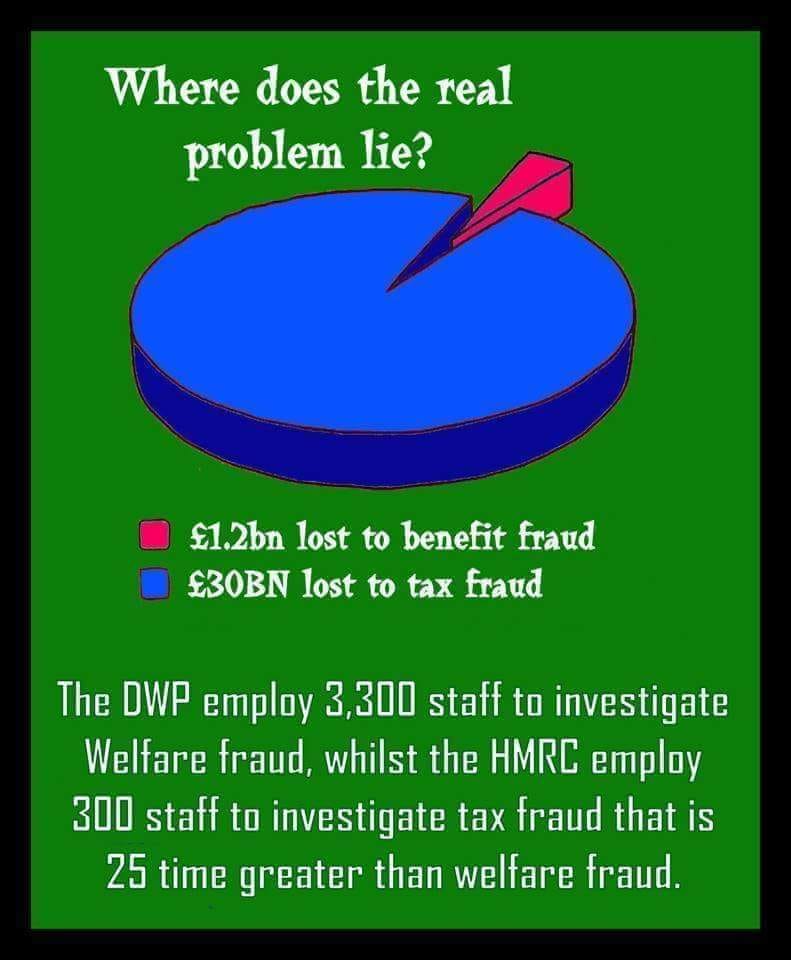
“Why do people care more about benefit ‘scroungers’ than billions lost to the rich?”

Last year’s British Social Attitudes survey asked Britons about their feelings on this issue. Our analysis of this data (with Ben Baumberg Geiger of the University of Kent) revealed that the British public believes tax avoidance to be commonplace (around one third of taxpayers are assumed to have exploited a tax loophole). In moral terms, people seem rather ambivalent; less than half (48%) thought that legal tax avoidance was “usually or always wrong”.

By contrast, more than 60% of Britons believe it is “usually or always wrong” for poorer people to use legal loopholes to claim more benefits. In other words, people are significantly more likely to condemn poor people for using legal means to obtain more benefits than they are to condemn rich people for avoiding tax. This is a consistent finding across many different studies. For example, detailed interviews conducted by the Joseph Rowntree Foundation in the wake of the 2008 financial crisis found that people “tended to be far more exercised by the prospect of low-income groups exploiting the system than they were about high-income groups doing the same”.

This discrepancy is reflected in government priorities. Deep public antipathy towards benefit “scroungers” has been the rock upon which successive Conservative-led parliaments have built the case for austerity. Throughout his premiership, David Cameron, along with his chancellor, George Osborne, kept the opposition between “hardworking people” and lazy benefit claimants right at the centre of their messaging on spending cuts. Though gestures have been made towards addressing widespread tax avoidance by the wealthy, very little has actually been achieved. This stands in stark contrast to the scale and speed with which changes have been made to welfare legislation.

Will the Paradise Papers shift the public’s focus? The leaks alone are seemingly not enough. The 2016 British Social Attitudes survey was conducted just four months after the release of the Panama Papers. Even then, the British public remained more concerned about benefit claimants than tax avoiders.

…”

https://www.theguardian.com/commentisfree/2017/nov/15/benefit-scroungers-billions-rich-paradise-papers-tax-avoidance

Money laundering pays!

The average estate agent’s commission on a £1m sale is £20,000. The average fine for money-laundering breaches is £1,134.

Source:Sunday Times (paywall)

UK politics and corruption – it’s not (only) “Johnny Foreigner” to blame

This article, written in December 2016, foresaw developments this week. We have had the warnings, but where is the path to change when all the paths are obstructec by the corrupt?

“… Our media likes to write about crime and corruption as though they are the funny fetishes of Johnny Foreigner: Italian mafia, Russian oligarchs or Mexican drug lords. But this year alone, the former banker and anti-corruption campaigner Roman Borisovich made the claim that three-quarters of the money looted in Russia comes to Britain, the Italian mafia expert Roberto Saviano described the UK as “the most corrupt place on earth”, and our biggest bank was sued for its involvement in laundering Mexican drug money: appropriate, given than HSBC was founded by criminal drug dealers on the back of the Opium Wars.

This racket is big enough to have vast control over our politics. An enterprise dogged by criminal charges can pay to hush up the nation’s biggest broadsheet. It’s hard to look at party funding in the last two UK general elections without concluding that it was the donations of the financial sector and prominent tax dodgers which put David Cameron into Downing Street twice to ensure that they weren’t regulated after the 2008 crash.

And it’s not just the Tories. After trade unions, the biggest ‘donors’ to the Labour party before the 2015 elections were the accountancy firm PricewaterhoueCooper, who ‘gave’ in the form of £600,000 of research ‘help’. Then shadow-chancellor-now-TV-dancing-supermo Ed Balls effectively outsourced £200,000 worth of policy work to these much criticized wizards of tax accountancy for the mega-rich, while shadow business secretary Chukka Ummuna got £60,000 worth of ‘support’.

Not wanting to miss out on the action, the Liberal Democrats accepted 1371 hours of policy ‘technical support’ from PwC in 2015 alone, the year after the Luxemburg Leaks revealed the firm’s significant involvement in helping the hyper-rich slash their tax bills through complex accounting arrangements. It’s worth pondering on who wrote the maze of loopholes into the laws in the first place…

Once they leave office, the deal only gets better for our prominent politicians. Former British foreign secretaries like Malcolm Rifkind, Jack Straw and David Miliband have auctioned access to themselves for huge sums of money. Former British health secretaries like Alan Milburn, Virginia Bottomley and John Hutton have all quietly slipped from government into the private healthcare sector, and now make millions of pounds between them cashing in on NHS privatisations they (and their cousins) pushed through. Former British Chancellor George Osborne has seen his best man’s firm rake in £36 million from his bargain-basement privatisation of the Royal Mail. Former British prime minister Tony Blair used the links made in office to secure vast sums of money running round the globe as a lackey for the violent royal dictators of the United Arab Emirates, and working as an advisor, lobbyist and spin doctor to a cast of characters including Nursultan Äbishuly Nazarbayev, the dictator of Kazakhstan and Aleksandar Vučić: once Slobodan Milošević’s Information Minister, now Serbia’s prime minister.

Our country is represented in the world by a trade minister who was previously sacked as defence secretary for allowing a businessman funded by companies which “potentially stood to benefit from government decisions” to sit in on at least 40 meetings and a foreign secretary whose time as London Mayor included overseeing property deals described by the former chairman of the government’s Committee on Standards in Public Life as “having the smell of semi-corruption” involving large donations to the Conservative party. Do either of them have an eye to the second career profits of their predecessors? We’ll have to see.

And those who wish to buy influence get their way. David Cameron promised “no ifs, not buts, no new runways” at Heathrow. Theresa May came out publicly against the scheme. Boris Johnson and Zac Goldsmith both tied their reputations to their opposition to it. But it is going ahead, costing the Tories an MP and a bucket of political capital across marginal seats in West London.

It seems to me that there is a simple explanation for what would normally be seen as an astonishing act of political self-harm: as the organisation 10:10 puts it: “15% of the population took 70% of all flights in 2014. People in that 15% group earn more than £115,000 a year. They tend to have a second home abroad. And their most popular destinations? Tax havens.[1]” The third runway only makes sense if seen from the top of the towers of Canary Wharf. But in Britain, that’s the view that matters.

The scar of living in a country run by and for the rich is marked by more than a runway, though. Even if you ignore the vast quantity of wealth hidden in tax havens, Britain is the sixth most unequal country in the OECD, after Chile, Mexico, Turkey, the USA and Israel. This is a level of inequality of the scale that tears whole societies apart; or is only possible in places that have already been rent asunder: three of those countries have governments at war with their own citizens; and the USA just elected Donald Trump.

By some measures, the UK has nine of the ten poorest regions of Northern Europe, while London is the richest. We produce 18% less per hour worked than the G8 average, and real wages have fallen 10.4% since 2007: a figure only matched across the OECD by Greece. Children in England are among the least happy in the world, and in 2013, the UK was criticised by the UN for a mortality rate among under 5s that’s higher than in countries including the Czech Republic and Slovenia. Meanwhile, the bonfire of the London housing market sucks in ever more of our cash, ensuring the nation’s wealth is squandered on making homes in the most expensive city on earth ever-more expensive, rather than investing that capital in anything productive.

For those of us who seek answers to serious questions about how to build a just, sustainable economy in this archipelago, one of the first questions must surely be what vehicle we have to do this through. And whilst government is certainly necessary, the ancient British state; built to run an empire, seems utterly unfit for the purpose. Without the modifying influence of the EU, though, it’s all that England is left with.

In this context, any conversation about tax in Britain must include a thought about the constitutional position of our tax havens. Any discussion of regional inequality has to look at the vast centralisation of power in our supposedly sovereign parliament. Any talk of financial regulation has to ask why the City can have such vast influence within our politics. Any look at income inequality must also survey inequalities of political reach. Because once you accept that the state has a decisive role in our economy – and it does – you need next to ask who runs that state, in whose interests, and how that can change.

In 2016, millions of British people voted to leave the EU because they wanted to ‘take back control’. The remaining question, then, is a simple one: to whom will that control be returning? Will it be the same ruling class, using the same holes in the same wood-wormed constitution to squirrel away wealth and power and plunder the country like they plunder the planet? Or will the process force us to realise that Britain’s problem aren’t the fault of foreigners from whom we can escape; but come instead from our own failure to free ourselves from Medieval subjecthood, and fight for real democracy?

[1] This research was done by the Tyndall Centre, using the PwC list of tax havens.”

https://www.opendemocracy.net/neweconomics/britain-is-not-what-it-thinks-it-is/

“Private equity firm made struggling care home operator take costly loan”

“Britain’s second biggest care home operator was made to borrow money through a very expensive loan from its private equity owner in a deal designed to extract £890m in cash from the struggling business.

The disclosures are likely to raise fresh concerns over the future of Four Seasons Health Care, which operates more than 300 care homes across the UK, and has been drowning in debt.

Described in reports as teetering on the brink of ruin, Four Seasons has been hammered by cuts to council care budgets brought on by years of austerity. This month, its private equity owner, Terra Firma, will plead with lenders to approve a financial rescue package.

However, filings in the tax haven of Luxembourg and data from the Paradise Papers reveal how Terra Firma hoped to make a vast profit from the business after acquiring it in 2012.

Four Seasons was made to borrow £220m from Terra Firma subsidiaries. The repayment terms were huge – 15% interest a year, on a compound basis, over 10 years. By 2022, when it was due to be repaid, Four Seasons would have owed its controlling shareholder four times the original sum.

The debt was later written off because of the financial struggles at Four Seasons. However, the bond stated a nominal repayment value of £890m. The intention seems to have been to extract profits from any future sale of the business largely tax-free – a manoeuvre that will raise concerns about whether buyout groups are suitable owners for businesses that form a key part of Britain’s care infrastructure. …”

https://www.theguardian.com/news/2017/nov/08/private-equity-terra-firma-care-home-four-seasons-loan

Direct v. indirect investments in offshore trusts – 50 shades of grey?

Downing Street confirmed yesterday that the prime minister did not have any direct offshore investments and that her assets were held in a blind trust, which is regarded as customary practice for ministers.

Er, sorry, no “direct” offshore investments?

So, she has “indirect” offshore investments then?

Do companies her blind trust invests in have direct or indirect offshore holdings?

More questions than answers!