“The UK’s big flooding problem is only going to get worse”

“… In February, the Environment Agency warned that if global temperatures continue to rise in line with current trends, the UK will need to spend £1 billion a year to adequately protect homes from flooding. Currently the UK government spends just under two-thirds of that amount – £600 million. Meanwhile, the risk of flooding appears to be heading in only one direction: upwards.

… While the risk of heavy flooding is becoming more frequent – the Met office logged 17 record-breaking rainfall months since 1910, with nine of them since 2000 – the UK remains reliant on flood defense systems to limit its impact. A June 2019 analysis by Flood Re, a scheme set up by insurers and the government to cut the cost of property cover for people in flood-prone areas, showed that inland flooding would cost the entire country almost three times more on an annual basis without defences – £1.8bn rather than £700m.

This is based on the UK’s past experience with flooding. For instance, the Environment Agency said the floods caused by Storm Desmond in 2015 cost the economy about £1.6bn in England alone, a figure which could have exceeded £2.8bn if Cumbria had not upgraded its flood defences, following previous flooding in 2009 and 2005. The agency’s latest economic assessment estimates that for every £1 spent on defences, around £9 in property damages and wider impacts would be avoided.

On launching the Environment Agency’s new strategy, chair Emma Howard Boyd said: “The coastline has never stayed in the same place and there have always been floods.” Building high walls and barriers may not be enough to deal with flooding as climate change is increasing and accelerating the threat, she says, adding that “We need to develop consistent standards for flood and coastal resilience in England that help communities better understand their risk and give them more control about how to adapt and respond.” These standards could include sustainable drainage systems and the design of existing and new properties, in addition to traditional barriers and natural flood control techniques such as tree planting and no-till farming.”

https://www.wired.co.uk/article/flooding-in-uk-weather-defence

“A million pensioners in poverty because of unclaimed benefits”

These are not benefits – they are entitlements.

“More than a million pensioner households across the UK are living in poverty because of the government’s failure to act on unpaid pension credit, according to the older people’s charity Independent Age.

Almost 2 million people aged 65 and over are living in poverty in the UK. Pension credit is the income-related benefit specifically designed to lift them out of poverty. But it is estimated that four in 10 pensioner households who are entitled to the help do not receive it.

Since the 2017 general election, the government has “benefited” from £7bn in unclaimed pension credit, the charity said. This figure will increase to more than £17bn by 2022.

“The recent decision to limit the TV licence to only those who receive pension credit adds insult to injury to over a million pensioners who between them, due to government inaction, are missing out on a staggering £10m every day that should be in their pockets,” said George McNamara, the charity’s director of policy and influencing. …

Pensioners entitled to the benefit are missing out on an average of £49 a week, just under the average amount that the poorest fifth of pensioner couples spend on food and non-alcoholic drinks in a week. It can, said McNamara, make the difference between being isolated at home or being able to take part in social activities. …”

https://www.theguardian.com/society/2019/jun/26/a-million-pensioners-in-poverty-because-of-unclaimed-benefits?

Caption competition…

Boris Johnson in Italy with his mistress (he’s not yet divorced) in Italy earlier this month (correction: earlier this year – March 2019]:

https://www.thesun.co.uk/news/9370973/boris-johnson-italian-holiday-girlfriend-carrie-symonds-row/

East Devon to have vast Amazon warehouse staffed by ….. well, that depends …..

Many readers will be too young to remember Rast Devon’s plans to develop an ‘inter-modal transport hub’ on the outskirts of Exeter, about which many promised were made and broken. There was even a cursory planning application in 2010:

https://planning.eastdevon.gov.uk/online-applications/applicationDetails.do?activeTab=neighbourComments&keyVal=LB8Z9LGH03P00

Eventually all or part of the site (Owl is none too sure) was bought up by Sainsbury’s who said they would build, well, something. Another promise broken.

Eventually, part of the site was bought by Lidl, who built a massive warehouse.

Now, it seems Amazon is going to build a second massive warehouse, next to the Lidl one:

https://www.midweekherald.co.uk/news/amazon-set-to-take-on-industrial-unit-on-outskirts-of-cranbrook-1-6125408

Many jobs (200 in the article) are promised to the lucky (or unlucky) residents of Cranbrook – which way you look at it depends on what you research about both Amazon’s working conditions and future plans:

https://www.theguardian.com/business/2018/may/31/amazon-accused-of-treating-uk-warehouse-staff-like-robots?CMP=Share_iOSApp_Other

https://www.theguardian.com/technology/2019/may/20/unions-lobby-investors-to-press-amazon-over-uk-working-conditions?CMP=Share_iOSApp_Other

The desire of most of these warehousing companies – including Amazon – is NOT to treat their workers like robots (though it is alleged that some of them do) but to REPLACE them by robots.

Progress it’s called.

“Government axes ‘pro-fracking’ paragraph from NPPF following court defeat”

“The government has removed a paragraph from the National Planning Policy Framework (NPPF) intended to support the extraction of “unconventional hydrocarbons” following a High Court ruling earlier this year which found that a public consultation on the policy was flawed.

Paragraph 209 (a) of the NPPF had stressed the benefits of onshore oil and gas development, including “unconventional hydrocarbons”.

It stated that such developments benefit the security of national energy supplies and support the transition to a low-carbon economy. It went on to give a commitment that policies will be put in place to facilitate on-shore exploration and extraction of hydrocarbons, including fracking for shale gas.

The paragraph was added to the NPPF as part of revisions to the document published last year.

But in March, environmental campaign group Talk Fracking successfully challenged the new paragraph at the High Court.

Judge Mr Justice Dove ruled that the public consultation on the new policy was unfair and unlawful and the government had failed to take into account up-to-date scientific evidence on the climate change impacts of such development.

He ruled that the secretary of state “did not consciously consider the fruits of the consultation exercise in circumstances where he had no interest in examining observations or evidence pertaining to the merits of the policy”.

“This had the effect of excluding from the material presented to the minister any detail of the observations or evidence which bore upon the merits of the policy,” he added.

Yesterday, the housing ministry announced that it had removed the paragraph from the NPPF.

This followed a written ministerial statement in May which stressed that, despite paragraph 209 (a) being removed, the remainder of the NPPF policies “and, in particular, Chapter 17 on ‘Facilitating the Sustainable Use of Minerals’ remain unchanged and extant”.

“For the purposes of the National Planning Policy Framework, hydrocarbon development (including unconventional oil and gas) are considered to be a mineral resource,” it added.

In addition, the statement added that the written ministerial statements of 16 September 2015 on ‘Shale Gas and Oil Policy’ and 17 May 2018 on ‘Planning and Energy Policy’ “also remain unchanged and extant”.

It added: “The written ministerial statements sit alongside the National Planning Policy Framework.

“Planning Practice Guidance is also unaffected by the ruling. This suite of policies and guidance remain material considerations in plan making and decision taking for hydrocarbon development and they should be afforded appropriate weighting as determined by the decision maker.”

Government axes ‘pro-fracking’ paragraph from NPPF following court defeat

Rural broadband still a dream for many – and will remain one

Shelve that dream of running an internet-based company in many parts of rural East Devon.

“The company awarded the publicly-subsidised contract to deliver superfast broadband to thousands of rural homes in Devon and Somerset has been given a deadline to come up with a rescue plan for the programme.

Last September, Gigaclear admitted the project was facing significant delays and was two years behind schedule.

Connecting Devon and Somerset, the organisation in charge of the whole project, stopped paying Gigaclear nine months ago.

It has told the firm it must come up with acceptable plans by the end of July to fulfill the contract.”

https://www.bbc.co.uk/news/live/uk-england-devon-48664146

“Unlawful decision by town council to open café led to £234k debt: watchdog”

A warning here for all councils.

“A town council did not give due consideration as to what powers it had to open a café, the decision was based on a poorly prepared business plan and, as a result, the decision to open the establishment was unlawful, the Auditor General for Wales has found.

Since opening the café in 2011, Connah’s Quay Town Council went on to incur a cumulative deficit of more than £234,000.

Finding failures in its decision making, the Auditor General’s report made three clear recommendations for the council to:

undertake a full option appraisal for the operation of Quay Café, incorporating a full financial appraisal of each option;

ensure appropriate advice is received prior to making decisions on the provision of new or novel services;

review the services it provides and ensure that it understands the statutory basis on which it provides those services.

The town council now has one month to consider the issues raised within the report and to make a decision on whether to accept these recommendations.

The Auditor General’s report is issued alongside public interest reports for Glynneath Town Council, Maenclochog Community Council and Cynwyd Community Council.

These reports set out significant failures in governance arrangements and inadequacies in financial management and internal control at all four councils.

The Auditor General for Wales, Adrian Crompton, said: “Given the scale of the deficit incurred at Connah’s Quay Town Council, I believe it is important that the public has a full and proper awareness of the events concerning the council. When it opened the café, the council did not have the statutory authority to do so and its decision was not supported by a clear and coherent business plan. As a result the decision was, in my view, unlawful.

“There are lessons to be learnt not just by this council, but by all town and community councils in Wales. The public interest reports issued today serve to highlight the shortcomings at four different town and community councils. Councils need to be innovative in dealing with community issues, but they must at all times display appropriate risk management and operate within their legal framework.”

Crompton added: “All four councils now have an opportunity to demonstrate that the risk of such governance failures recurring is reduced to a minimum. The public need to be assured that town and community councils have proper governance arrangements in place to manage the activities of the council both financially and administratively.”

https://www.localgovernmentlawyer.co.uk/governance/396-governance-news/40854-unlawful-decision-by-town-council-to-open-cafe-led-to-234k-debt-watchdog

“Research highlights worrying need for hospital emergency beds”

Owl says: you could not make this up.

“Hospitals in England are relying on backup beds to carry out routine care, research has found.

Hospitals in England are relying on backup beds to carry out routine care, research has found.

Reliance on emergency beds suggests NHS trusts are at a “critical stage” and struggling to cope with demand, the British Medical Association has said.

The BMA submitted two waves of Freedom of Information requests to all 134 acute trusts in England in March and May 2019, which revealed the extent to which ‘escalation beds’ were being used routinely.

The first round of data received responses from 105 trusts showing that there were 3,428 escalation beds in operation.

In May, according to responses from 54 trusts, there were 1,637 instances of the these beds being used, though the BMA noted that due to a lower response rate, the real figure is likely to be higher.

The beds are only supposed to be used in emergencies and when there is a spike in demand.

Rob Harwood, BMA consultants committee chair, said: “The use of escalation beds is a sign that trusts are at a critical stage and are unable to cope with demand with their current bed stock.

“Some hospitals are forced to designate their theatre recovery beds as ‘escalation’, resulting in elective surgical operation being cancelled as there is no space for those patients who need immediate care after their surgery.”

Harwood noted that the pressure on capacity can see patients placed on beds in corridors and overcrowding treatment areas.

The BMA said that while escalation beds were traditionally used mainly in the winter, this was no longer the case as the number used in the first week of April was comparable to those in early January. There was an average of 20 escalation beds used per trust in early April and the start of January.

A total of 3,000 extra beds are needed to stop routine use of escalation beds outside of winter, while up to 10,000 are needed to bring occupancy to safe levels, the BMA estimated.

Jonathan Ashworth, Labour’s shadow Health Secretary, said: “The use of escalation beds is yet another sign that hospitals are struggling to cope under continued pressure. We know this is compromising patient care.”

https://www.publicfinance.co.uk/news/2019/06/research-highlights-worrying-need-hospital-emergency-beds

Developers holding Help to Buy purchasers to ransom

Just when you think all the juice had been extracted from buyers, another scandal pops up.

“Contracts for new-build homes and the industry-led code of practice that informs them are heavily weighted in favour of the developer. The Consumer Rights Act does not include new builds, giving buyers less protection than high-street shoppers, and each year hundreds of purchasers are left in limbo when a home is not finished in time. They can’t pull out and reclaim their deposit until building works look likely to exceed what’s known as the “long-stop” date – the final date by which a property can be finished, which is often buried in the small print.

This can be up to six months later than the legal completion date cited in the contracts, and the legal completion date is often months later than the estimates given when contracts are exchanged. Most mortgage offers are only valid for three months.

While purchasers are legally bound to the developer’s timetable for the exchange and completion of contracts and face substantial penalties if they delay, developers allow themselves generous leeway.

A completion date only becomes legally binding when the home is ready and a “completion notice” is served, after which purchasers have seven to 10 days to pay up or else face interest charges on the balance.

Nor are developers obliged to pay compensation for delays, unless the developer exceeds the “long-stop” date. Purchasers who have to proceed with the sale of their old home after exchanging contracts, or to rearrange a mortgage when their offer expires, can be left heavily out of pocket. …”

https://www.theguardian.com/money/2019/jun/23/new-build-homes-buy-delay-bill-developers?

EDDC’s external auditor tightens its procedures after Patisserie Valerie scandal

“Grant Thornton announced an independent review and a 7 million pound revamp of its UK accounting operations on Saturday to improve standards after regulators opened an investigation into its audit of café chain Patisserie Valerie that came close to collapse last year.

The accounting firm said the measures were part of its response to recent “scrutiny of its audits of large listed companies”, and wider efforts to prepare the business to compete for audit work from Britain’s top 350 listed companies “should changes in the market present a more level playing field for competition”.

Britain’s accounting watchdog, the Financial Reporting Council, said in November it was investigating Grant Thornton’s audit of Patisserie Valerie for 2015-2017.

Dave Dunckley, chief executive of Grant Thornton in Britain, said the firm would work with clients and the regulator to go further.

“The independent review of our audit practice this autumn will be an important part of our continued efforts to improve,” Dunckley said in a statement.

Britain’s Competition and Markets Authority has proposed sweeping reforms of the UK audit market after questions were raised about accounting standards following the collapse of retailer BHS and construction company Carillion, which took place before Patisserie Valerie’s problems were came to light. …

https://uk.reuters.com/article/uk-britain-accounts-grantthornton/grant-thornton-revamps-uk-audit-after-patisserie-valerie-scandal-idUKKCN1TN0DV?

Schools need protection from air pollution

… Reviews of air pollution in schools, similar to Ofsted inspections, will be launched for the first time amid mounting concerns over the effect of toxic fumes on pupils’ health and education.

Air quality audits will be carried out in classrooms and playgrounds, with a range of measures being introduced to clean up the worst affected schools.

This includes the possibility of cars being banned from streets bordering some schools and moving bus stops further away from schools. …”

Source:Times, paywall

Both our MPs backed “also rans” for PM – what now?

Swire was Raab’s campaign manager – Raab was knocked out of the race.
Parish backed old coke-snorter Gove, who is also out of the race.

So who will they back now?

Both started off as Remainers and switched to Brexit (they can change their minds, we can’t).

Johnson and Swire are both Old Etonians, so that looks a pretty likely match.

Parish left school at 16 to work on the family farm so Bojo AND Hunt, who have no interest in agriculture, will patronise him, if they notice him at all.

Neither of them says anything (much at all) on their websites.

Probably still trying to extricate themselves from the tangled voting webs.

It’s all OUR fault ….

The frighteningly prescient monologue by actress Anne Reid, who brilliantly plays the matriarch in the final episode of the BBC series ‘Years and Years’ – a must-see for anyone who fears for the future:

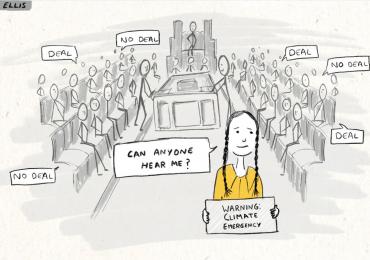
With students all over Devon, including Exeter, protesting about the need to take action on the climate crisis:

https://www.devonlive.com/news/devon-news/another-student-climate-change-protest-3002524

when will our council declare a climate emergency? Let’s see what its GEP partners are doing:

West Devon did so on 22 May after its change of leadership:
https://www.devonlive.com/news/devon-news/west-devon-borough-council-new-2896283

Mid Devon will make a decision next week:
https://www.devonlive.com/news/local-news/residents-urged-touch-help-combat-3002268

Exeter City Council us thinking about it but has yet to make a declaration:
https://www.devonlive.com/news/exeter-wants-declare-climate-emergency-2951665

Is it just a coincidence that the two councils which will build most houses under the Greater Exeter Strategy Plan are dragging their heels?

EDDC new HQ – did anyone do ANY research?

The so-called Council Chamber is a disaster:

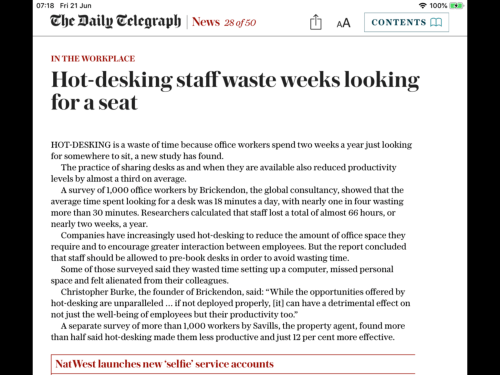
Now “hot desking” – also a feature of the HQ – is rubbished:

Or mYbe both were hard-headed decisions to make councillors, public and staff more uncomfortable!