The government’s secret science group (SAGE) has a shocking lack of expertise 

“So at a moment when the UK had fewer than 10 deaths from Covid-19 and less than 500 confirmed cases of coronavirus, the government, informed by Sage, decided to stop all community testing and tracing. The public health community were perplexed. It is difficult to think of other severe viral epidemics managed in this way, apart from influenza, which differs from coronvirus in important ways.

Six weeks later, the approach favoured by the WHO – testing, tracing and isolating the virus – is ostensibly back on the agenda. Matt Hancock has pledged that the UK will deliver 100,000 tests a day by the end of this week, with the army, Deloitte, Serco and Boots setting up test centres across the country…… Yet the government is bypassing the local authority public health teams and GPs who are at the forefront of routine screening and testing in the NHS and local communities. Its strategy still appears to be about flattening the curve, rather than finding every case of coronavirus.”

Anthony Costello is professor of global health and sustainable development at University College London and a former director of maternal and child health at the WHO www.theguardian.com

The success of any advisory group of scientists surely depends on a culture of openness, independence and diversity of opinion. Unfortunately this culture of openness has been conspicuous by its absence when it comes to the government’s Scientific Advisory Group on Emergencies. It’s only through the persistence of Guardian journalists that we can now identify 23 participants in Sage. Of these, 13 are paid government employees, working as ministerial, health or civil service advisers. As such, the presence of their bosses, Patrick Vallance and Chris Whitty, to say nothing of the prime ministers’s most senior adviser, Dominic Cummings, might well influence their ability to speak freely.

Beyond that, what does the membership of this committee actually tell us? We’ve learned from the list of attendees at a crucial Sage meeting on 23 March, leaked to the Guardian, that the group includes seven clinical academics, three microbiologists, seven modellers, two behavioural scientists with backgrounds in disasters and terrorism, one geneticist, one civil servant and two political advisers, one of which is the most powerful prime ministerial lieutenant in recent memory.

The makeup of Sage reflects an oddly skewed and overwhelmingly medical view of science. Indeed, there are many other perspectives that could bring value to a pandemic crisis team. Did Sage consult public health epidemiologists at the frontline of the response to coronavirus in China or Hong Kong, such as Prof Gabriel Leung? Did the group get input from infectious experts at the World Health Organization, such as the epidemiologist Mike Ryan, who leads the team responsible for containing of Covid-19 across the world?

The group includes no molecular virologists who could explain detailed pathogenic differences between Covid-19 and influenza, not one intensive care expert or nursing leader, and no immunologist to examine whether this virus produces lasting and protective immunity. There are no social scientists who could work on community engagement, nor a logistician, who would have expertise in planning for the delivery of supplies and resources during a pandemic. A balanced scientific advisory group would at the minimum include experts working at the frontline of the pandemic, such as those in public health, primary care and intensive care.

As to other measures of diversity, the gender balance of Sage is predictably skewed, with 16 men to seven women and only one ethnic minority person. Given that coronavirus has been shown to disproportionately affect people from black and ethnic minority communities, the comparative lack of black and ethnic minority experts seems a troubling omission.

In the absence of meeting minutes, we may never know whether, despite these deficiencies, a culture of openness exists within Sage. The lack of a paper trail also makes two of the group’s most important decisions particularly difficult to understand. At its first meeting on 28 January, Sage didn’t ask its mathematical modellers to model a community testing programme. Community testing and contact tracing reportedly wasn’t included as a possible strategy in the original modelling because not enough tests were available. The UK had been among the first countries to develop a Covid-19 test in mid-January, approved by the WHO, and has an exceptional national research infrastructure. Yet our national capacity to respond to a pandemic challenge appears to have been ignored. The basic principles of public health, and the daily mantra of the WHO – to find the virus, test, trace and isolate, to promote social distancing, and to do it all at speed – appear to have been effectively disregarded.

Whatever was discussed by Sage during February led to an alternative strategy, laid out by Boris Johnson, Vallance and Whitty at the beginning of March: to move from containing the virus to delaying its spread, allowing it to move through the population so that we eventually acquire “herd immunity” at a delayed speed.

So at a moment when the UK had fewer than 10 deaths from Covid-19 and less than 500 confirmed cases of coronavirus, the government, informed by Sage, decided to stop all community testing and tracing. The public health community were perplexed. It is difficult to think of other severe viral epidemics managed in this way, apart from influenza, which differs from coronvirus in important ways.

Six weeks later, the approach favoured by the WHO – testing, tracing and isolating the virus – is ostensibly back on the agenda. Matt Hancock has pledged that the UK will deliver 100,000 tests a day by the end of this week, with the army, Deloitte, Serco and Boots setting up test centres across the country. Health workers and their families can sign up for tests immediately. All hospital patients will be tested. Yet the government is bypassing the local authority public health teams and GPs who are at the forefront of routine screening and testing in the NHS and local communities. Its strategy still appears to be about flattening the curve, rather than finding every case of coronavirus.

Without testing, tracing those who have come into contact with infected people and isolating these clusters, the virus will flare up again. Future lockdowns will be necessary, and economic recovery extremely difficult. In a month’s time, we could be heading towards 60,000 deaths or more. It’s impossible to tell whether things would have played out differently had Sage included people from public health and primary care backgrounds. But had its membership and details of its decisions been revealed earlier, there would have been a chance for the wider scientific community to offer constructive criticism, maybe in time to save thousands of lives.

 

A damaging ideology has weakened our ability to defeat the virus

Damaging ideas within the Conservative party have weakened our ability to defeat the virus

Editorial  www.theguardian.com 

The coronavirus pandemic struck the United Kingdom when its National Health Service was on its knees suffering from staff shortages and the longest waiting times ever recorded. A decade of austerity had taken a terrible toll. Yet public satisfaction in the NHS went up. This surprising gap between the NHS failures and the public’s belief in the health system seems to have been driven by the support from across the political spectrum for more funding. This probably, say researchers, started to impact on public perceptions, most notably on their optimism for the future.

It would be a mistake to think the spread of Covid-19 can be checked by hope alone. The last 10 years have undermined the ability of the government to respond effectively and efficiently. As the UN rapporteur on extreme poverty told the Guardian, the “most damaging aspects of ‘austerity’ cannot and will not be undone” and represent “the fatal weakening of the community’s capacity to cope”.

Even today ideology plays a bigger part in the government’s response than many insiders care to admit. A more proactive mindset might have seen the state mobilise an effort to track down those in need of a coronavirus test and offer it to them. Instead voluntarism remains the creed of the current government which opted for an online booking system for tests that was predictably overwhelmed within hours.

In the coming weeks there will be an argument about whether the shutdown is more deadly than the virus. The case for lifting the current restrictions can be rooted within Conservative thought which privileges individual autonomy and the promotion of individual responsibility. Calls for these to be dogmatically pursued run in the face of evidence that the old and the poor are more vulnerable to the disease. A virus as communicable as Sars-Cov-2 means that the health of the richest is dependent on the health of the poorest. It does not make sense for at-risk working-age adults to return to jobs in which there are numerous social contacts. Having emptied Covid hospital wards, would this not just risk filling them up again?

Whitehall also has to find a way of ensuring press releases are realised on the ground in the country. Before the Conservative state-shrinking began in 2010, there had been government offices of the regions which could operate between ministerial departments and the various bodies, often very local, that are charged with implementing policy. These overlapped with regional health bodies and could deliver policy around the country. It is an open question as to what coordinating body will do that today.

Another aspect of Conservatism is, as Samuel Johnson opined, that “order cannot be had but by subordination”. The government has had to be pushed into saying it will be transparent about its scientific advice. It has a track record in adopting tactics to choke off critical voices. Tory ministers neutered the Health Protection Agency and brought the often loud scientists and doctors who led it to heel 10 years ago. Its successor is Public Health England, which is accountable to the health secretary, and led by a career NHS manager. Lost is an opportunity for an independent voice to speak influentially about important health matters.

Ministers are about to make a series of political choices that they will undoubtedly present as a natural response to be instituted so life can rebound. These choices may be informed by science. But they will be guided by a particular political morality, which will not be as evidence based or as rational as science.


Delays to UK’s full-fibre broadband rollout ‘could cost £30bn’ 

Delays to the government’s plan to roll out superfast broadband across the country could see the UK lose almost £30bn in economic benefits, according to research published today. [Monday 27 April 2020]

James Warrington www.cityam.com 

Telecoms analysts warned a 12-month delay to the 2025 target would mean the UK misses out on a £9.7bn boost to the economy, while a two-year setback would cost £28.7bn.

Read more: Ofcom plans to ‘supercharge’ rollout of full-fibre broadband

The government has outlined a £5bn plan to deliver gigabit-capable broadband — which is up to 40 times faster than standard superfast connections — to all parts of the country by the middle of the decade.

However, industry experts have warned that the rollout could be hampered by regulatory barriers and a lack of commercial incentives to build the network in remote rural areas.

These issues have been compounded by the coronavirus lockdown, though Openreach — which is leading the UK rollout — has said it is on track to hit its target of reaching 4m homes by the end of March 2021.

The report, compiled by Assembly Research, called on the government to provide funding for the rollout in non-commercial locations to ensure rural areas were not left behind.

It also urged policymakers to support the entry and expansion of alternative network operators such as Cityfibre, Fibrenation and Gigaclear.

The analysts called for deployment costs to be kept as low as possible by addressing remaining barriers that both increase costs and cause delays.

“Access to reliable, future-proof digital infrastructure for all isn’t a luxury, but now accepted as a necessity whether it’s used for work, education or play,” said Matthew Howett, principal analyst and founder of Assembly Research.

“Increasing investment in key digital infrastructure will provide the bounce-back and economic recovery the UK will desperately need in the months and years ahead.”

The report, commissioned by Chinese tech giant Huawei, said that while the UK had made significant progress in both mobile and fixed-connection coverage, it continued to lag behind other countries for full-fibre broadband.

However, if the barriers are overcome, the rollout could deliver an economic boost of up to £50bn in the next five years, it added.

Read more: Vodafone expands full-fibre network with Openreach deal

“Achieving the government’s ambitions for broadband will need a massive effort, significant investment from the private sector, and a faster build rate than virtually any other country has achieved,” said Catherine Colloms, director of corporate affairs and brand for Openreach.

“There has already been some progress on removing barriers, but action is needed to improve access rights for apartment blocks, make street works simpler and remove business rates on full fibre. Network builders need the right conditions to invest and the right policies to encourage a fast, efficient build.”


IT firm Cosmic “funded” by EDDC

“Funded by East Devon District Council, Cosmic are providing a range of training and consultancy services to support businesses in our region.” This is a quote from an article posted on the “Grow Exeter” website in January last year. 

Think Greater Exeter Strategic Plan – Owl

Grow Newsdesk grow-media.co.uk 

Free Training Support for East Devon Businesses 

Funded by East Devon District Council, Cosmic are providing a range of training and consultancy services to support businesses in our region.

Whilst Business Information Point (BIP) will be supporting new start-ups in the District, Cosmic will be providing workshops and 1-to-1 consultancy to established businesses in East Devon.

We are providing 4 innovative and thought provoking workshops designed to boost business productivity through the development of new business practices, the adoption of technology and new ways of working. There will be two chances to attend each workshop in the series – but places are limited – so book early! 

For the attendees of the workshop, there will also be the highly valuable offer of additional 1-to-1 business consultancy. Up to 6 hours of mentoring, advice and guidance on how to introduce these new business tools and practices into your organisation. All of this is provided to you for free if your business is based in  East Devon district. – Owl emphasis

The Workshops: 

  1. Moving to the Cloud: an introduction to some of the tools and processes that can help your business operations. We will look at cloud software services, mobile and flexible working practices. All designed to enhance your efficiency and daily productivity.
  2. Digital Marketing Made Easy: Useful guides, tips and tricks to enhance and improve your digital marketing. We will take a look at tools and techniques help you to promote your business, share your good news stories and reach new customers
  3. Digital Tricks to improve your working day: Explore the top tips to help you manage your day-to-day business activities. This Includes introductions to digital resources that can help you to keep track of your To Do list, communicate better with customers and suppliers, and plan ahead for future challenges
  4. Managing your business in a digital world: Learn how you can improve your project management and task delivery skills, in order to help your small business to grow and succeed. We will explore some of the new tools and techniques that you can adopt to help you run and manage your business


Cosmic is a Digital Consultancy and social enterprise based in Devon. The team of 36 people work across the South West, tackling the issue of Digital Exclusion in communities and business across the region.

They provide training, consultancy, website design and IT technical support to businesses, charities, communities, local authorities and individuals. For over 23 years Cosmic have been inspiring people to achieve success in the digital world.


Firm advised by ex-foreign secretary funding Russian fraudster’s legal case

A firm advised by a former Conservative foreign secretary and a former chief prosecutor is funding a large-scale legal action in the English courts by a convicted Russian fraudster once banned from Britain.

David Pegg www.theguardian.com 

The firm, 17 Arm, which is advised by Malcolm Rifkind, Ken Macdonald and other establishment figures, is financing the legal claim by Alexander Tugushev against a Russian billionaire in an expensive and lengthy court battle.

Tugushev was jailed for six years for fraud in Russia in 2007 after he was convicted of receiving an illicit payment while holding a government post. He disputes the conviction.

In the legal action in London, he alleges that his former business partner has cheated him out of his share of a substantial fishing empire. He is suing to recover the share, which he values at $350m. 17 Arm would be paid a slice of that sum – running to millions of pounds – if he wins.

The case throws a spotlight on a relatively novel and risky area of legal practice known as litigation funding. In such actions, a commercial firm backed by private investors pays the upfront cost of barristers and solicitors to fight a case for an individual who has a legal claim. If the individual wins, the commercial firm is rewarded with a cut of money won in court. If the individual loses, the firm gets nothing.

This winner-takes-all approach is funding a significant number of lawsuits in Britain. But critics such as the former justice minister Lord Faulks say it can mean that, for example, litigation is started to make a profit rather than to redress grievances.

In a statement, 17 Arm said: “Litigation funding is a common mechanism which empowers aggrieved people, who couldn’t otherwise afford to bring litigation, to fight their cases and win justice.”

Lord Clanwilliam, 17 Arm’s chairman, declined to respond when asked how much it would win if Tugushev were victorious in his legal claim. “We pride ourselves on discretion and do not discuss the specifics of our work,” he said.

The Eton-educated businessman described 17 Arm, which was set up three years ago, as being involved in litigation finance management as well as recovering and returning assets to their owners through investigative and legal means. It is based in Dubai and Jersey.

Its advisory board consists of Rifkind, a former foreign and defence secretary, Lord Macdonald, who was the director of public prosecutions between 2003 and 2008, Pauline Neville-Jones, a former security minister and chair of the joint intelligence committee, and another peer, Lord St John of Bletso.

The board gives advice on potential legal claims to see if, for example, they have a reasonable claim of winning.

Asked if the advisory board was giving credibility to a legal claim advanced by a convicted fraudster, the firm and its advisers said: “We believe in the right of every individual to have their case heard in a court of law.”

The firm added: “A disputed conviction in a jurisdiction notorious for corrupt and unfair trials is no bar to bringing an arguable and admissible case in London, where a just outcome can be expected. The English high court agreed that this case was properly brought here – and its ruling was so patently correct that the court of appeal has refused the defendants’ permission to appeal against it.”

The dispute, initiated by Tugushev in London’s civil courts two years ago, has yet to reach a full trial, although there have been preliminary hearings and other skirmishes.

A judge at one hearing described it as a “bitter battle” between two Russians that had generated a “depressingly vast amount” of legal paperwork. More than £5m has already been spent on teams of barristers and solicitors for both sides.

The legal fight is centred on Norebo Group, an international fishing business worth an estimated $1.5bn (£1.2bn). Based in Russia, it catches 400,000 tons of fish a year and sells to customers including Birds Eye, McDonald’s and Tesco.

Tugushev claims two former partners have dishonestly conspired to deny that he owns a third of the firm he helped set up in 1998.

Tugushev has told the English court that he was jailed after he and others were accused of receiving $3m for awarding a fishing quota while he was deputy chairman of an official Russian committee. He said the allegation was politically motivated and untrue.

He said that in 2013 he applied to travel to England to attend meetings at Norebo’s office in Maidenhead, Berkshire, but was refused “on the ground of my conviction”. 17 Arm said he held a UK visa and currently lived in London.

Vitaly Orlov, the Russian billionaire, and two other businessmen deny his claims, alleging that Tugushev is resorting to extortion.


UK coronavirus response utterly hypocritical, says UN poverty expert

The United Nations’ poverty expert Philip Alston has attacked the UK government’s coronavirus response as “utterly hypocritical” after successive administrations implemented policies of austerity and public-sector cuts.

Robert Booth www.theguardian.com

The UN rapporteur on extreme poverty, who in 2018 issued a blistering attack on Conservative welfare policy, also said that globally “the most vulnerable have been short-changed or excluded” by official responses to the disease, which had claimed over 203,670 lives by Sunday evening, according to Johns Hopkins University.

“The policies of many states reflect a social Darwinism philosophy that prioritises the economic interests of the wealthiest while doing little for those who are hard at work providing essential services or unable to support themselves,” Alston said, warning that the pandemic could push more than half a billion additional people into poverty globally.

“Governments have shut down entire countries without making even minimal efforts to ensure people can get by,” he said. “Many in poverty live day to day, with no savings or surplus food. And of course, homeless people cannot simply stay home.”

He highlighted how the most vulnerable populations had been neglected, which “forces them to continue working in unsafe conditions, putting everyone’s health at risk.” And he warned that, while some nations were seeing curves flattening, the virus was “poised to wreak havoc in poorer countries”.

“As for the UK,” Alston told the Guardian, “my thoughts of course hark back to the sense of how utterly hypocritical it is now to abandon ‘austerity’ with such alacrity, after all the harm and misery caused to individuals and the fatal weakening of the community’s capacity to cope and respond over the past 10 years.

“And of course, many of the worst and most damaging aspects of ‘austerity’ cannot and will not be undone. The damage caused to community cohesion and to the social infrastructure are likely to prove permanent.”

His comments are likely to anger ministers in the UK, who have said their strategy is to put their “arms around every single worker” while adopting an “everyone in” policy to tackle the risk to rough sleepers. They have sanctioned huge cash injections into wages and businesses to prevent economic collapse, and the chancellor, Rishi Sunak announced £14bn for the NHS and local authorities fighting the virus.

But other parts of the social fabric have been stretched. Food banks, which give out at least 1.6m parcels a year, have lacked supplies while care homes, where thousands are dying from Covid-19, have struggled for essentials including PPE and to maintain staffing levels. There have been real-terms cuts in public funding of social care in the UK, according to the King’s Fund thinktank, with a £700m reduction between 2011 and 2018.

“This pandemic has exposed the bankruptcy of social support systems in many countries.” Alston said. “While some governments have embraced far-ranging measures previously dismissed as unrealistic, most programmes have been short-term, stop-gap measures that merely buy time rather than address the immense challenges that will continue well into the future. Now is the time for deep structural reforms that will protect populations as a whole and will build resilience in the face of an uncertain future.”

A government spokesperson said: “We have a strong record on supporting hardworking people across the country as well as our most vulnerable, reaching record employment over the last ten years and with both income inequality and absolute poverty lower than in 2010.

“These are unprecedented times and it’s right that we do everything we can to support people through this difficult period, including increasing Universal Credit by up to £1,040 over a year.”


Free training for East Devon’s businesses to help them through the Covid-19 crisis

East Devon District Council is working with a company called Cosmic, specialising in digital skills for businesses, to provide the training. (Well not just “a” company – Owl)

Philippa Davies  www.sidmouthherald.co.uk

Businesses in East Devon are being offered free webinars and online workshops to help them survive the coronavirus lockdown.

East Devon District Council is working with a company called Cosmic, specialising in digital skills for businesses, to provide the training.

Cosmic are based next to the council’s premises, Blackdown House, in the East Devon Business Centre.

[Owl is struggling to recall the extent of EDDC’s involvement with the start-up of this Social Enterprise Partnership, but believes the purpose was to encourage the use of IT in East Devon. Mark Williams, EDDC Chief Executive, was a Cosmic director until 2011. Another example of EDDC’s close relationship with business is, of course, the ill -starred Business Forum ].

The sessions will be hosted online via video conferencing, with the first taking place on the morning of Tuesday, May 5.

It is aimed at small businesses and self-employed traders, and will focus on quick and simple ways to sell online, new ways to generate income overnight, and how to keep in touch with existing customers and retain their business during lockdown.

A follow-up workshop on Wednesday, May 13, will explore ways to maximise business opportunities in a remote environment, along with guidance on managing staff remotely and remaining productive and focused.

Future workshops will look at using social media, digital marketing, and useful software and other tools.

Visit the booking page at eventbrite for more information, and to register to take part.


The shocking number of Devon children living in poverty

More than a third of all children are living in poverty in some parts of Devon – with those living in Torridge, Torbay and North Devon being the hardest hit.

In one part of East Devon, a shocking 34% of children are estimated to be living in poverty.

Charlotte Vowles www.devonlive.com

New Government figures have revealed that a massive 37,485 children in Devon were living below the breadline in March 2019. This was even before the cost of housing was taken into account.

Some 27,337 of those children were living in poverty despite one or more of their parents working – 73% of the total.

The overall number means that around one in every seven children in Devon is living in poverty (15%) – although that figure is higher in some areas than others.

For Devon, the proportion stands at:

  • 20% in Torridge
  • 17% in Torbay and North Devon
  • 16% in West Devon,
  • 15% in South Hams and Plymouth
  • 14% in Mid Devon and Teignbridge
  • 13% in East Devon
  • 11% in Exeter

Analysis of hyperlocal data – areas with a population of around 1,500 people each – also shows that the situation is even more stark in particular neighbourhoods.

In one part of East Devon, a shocking 34% of children are estimated to be living in poverty.

See the [ONS] map here.

Use our interactive widget to see the proportion of children living in low income families in your neighbourhood: [You need to access this through the devonlive web site]

Charities have also warned that child poverty is only going to get worse because of the coronavirus pandemic.

Judith Cavanagh, coordinator of the End Child Poverty coalition, said: “These figures from Government show the extent to which we have been failing children in poverty even before the outbreak of coronavirus. 

“We have not all entered this crisis equally. Children in poverty will be among the worst affected by the crisis as households see their income hit further, through loss of employment and the increased costs of staying home – such as food, fuel bills and supporting home schooling. 

“Policies such as the two-child limit on children’s benefits and the benefit cap have made a significant contribution to the rise in child poverty over the past five years. 

“As more families now have to turn to the benefits system as a result of coronavirus we are urging the Government to scrap those policies, which they argued acted as incentives to get people into work.

“We would also like the Government to introduce an immediate increase to child benefit of £10 per child as a fast and effective means of getting support to low income families. 

“Children in low income families have been failed over the past 5 years. Our response to Covid-19 must not fail them again.”

The figures include teenagers up to the age of 19 who are still living at home with their parents or carers and are in full time education or training. 

The proportions are estimates based on DWP figures on the number of children living in families with a household income of less than 60% of the UK average as of March 2019, and population estimates from the Office for National Statistics as of mid-2018. 

They can only offer an approximation of the proportion of children living in poverty – but the DWP have confirmed that they do give a broad indication of local areas with a very high or very low proportion.

A DWP spokesperson said: “We are doing whatever it takes to support the lowest paid families through these unprecedented times, implementing an extensive package of measures to do so.”

Torridge District Council has been approached for comment.


Ministers seem to be guided only by the science they want to hear 

[Note the reference at the end of this editorial that highlights the power of patronage. Toe the line or else! – ring any bells closer to home?]

Editorial  www.theguardian.com 

With the prime minister’s chief adviser attending the scientific advisory panel during this crisis, it is right to ask whether ministers are guided only by the science they want to hear

The Scientific Advisory Group for Emergencies is a body of experts convened to counsel ministers on how to handle specific crises. When dealing with the coronavirus pandemic, the government likes to say it is “guided by the science”, but what is that advice and who gives it? Sage’s meetings are closed affairs, its recommendations private and its minutes, if they are ever published, turn up weeks late. Until last Friday, the group’s members were unknown. When the Guardian revealed who was attending Sage, a possible reason for the secrecy emerged.

It was the presence of Dominic Cummings, the prime minister’s chief adviser, at the meetings rather than the scientists that made the headlines. This might explain how Britain stumbled into the crisis. Sage was meant to offer a clearer separation between scientific truths and political values. It has allowed ministers to claim that they are being guided by objective reasons rather than ideology. But having a political adviser of Mr Cummings’ importance, and a data analyst who worked with him on the leave campaign, at Sage pierces that argument.

It also makes it harder to claim there was not a political cost to ministerial judgment calls based on evidence tainted by ideological influence. Sage recommended less stringent social distancing measures when other European capitals implemented tough policies. Its experts underestimated the percentage of people who would have to be hospitalised. The conventional response of lockdown, mass testing and tracing was snubbed initially in favour of “herd immunity”. This was a costly mistake – making it harder to source chemicals, and personal protective equipment. What was Mr Cummings’ role in discussions about these decisions? The public ought to know.

Mr Cummings, with his admiration of computer modelling to “war game epidemics”, is unlikely to be interested in the tried-and-tested preventative measures advocated by the World Health Organization as early as January. In its bulletins the WHO advocated the “test, trace and isolate” regime that Britain only woke up to after allowing the virus to spread unimpeded through the population. Sage’s lack of any public health experts would seem a mistake in the light of the government’s current strategy.

Mr Cummings’ presence will distort a discussion about differences, which are meant to be narrowed through debate. The ability to speak up without the perceived fear of sanction is necessary for a healthy exchange of views. He is known for being disagreeable about disagreement. Scientists on Sage would not dissent perhaps in the way that you might expect them to. It is plausible that Mr Cummings may single out a troublesome academic who questioned whether it was right, for example, for Boris Johnson to announce he had shaken the hands of people infected with coronavirus. (It wasn’t.)

Falling out of favour might cost scientists not just a gong but also lucrative government funding streams. Mr Cummings increases the chances that dissident views on Sage remain just that. What is to stop him usurping the role of the chief scientific adviser who is meant to be the source of advice to Mr Johnson but doesn’t share a personal chemistry with him?

There is no reason why the membership of Sage should be kept secret. Declarations of interest ought to be published. Minutes of meetings should be made available promptly. Who can be relied upon for giving advice in a time of crisis is a matter of national importance. It is obvious that it is best to involve those who are expert in the area. Mr Cummings is not one of them.


UK tourism hotspots could face worst of post-lockdown job losses, especially in Conservative heartlands.

Robert Booth www.theguardian.com

People working in some of Britain’s most beautiful areas will be worst hit by the expected wave of unemployment following the coronavirus pandemic, according to forecasts suggesting the economic burden of Covid-19 is set to be spread unevenly.

Workers in the tourism-driven economies of the Lake District, Cornwall and the beauty spots of Yorkshire are at the highest risk of being left jobless, according to research by the Royal Society of Arts and Manufacturing.

People living in London, south-east England and the knowledge economies of Oxford and Cambridge are the least likely to lose their livelihoods, the study says.

With 80% of workers in the hotel and food industries on furlough schemes, alongside 68% of those in arts, entertainment and recreation, about a third of jobs are permanently at risk in the longer term in the tourism-reliant areas of Richmondshire, which covers much of the Yorkshire Dales, Eden, which covers part of the Lake District, and Cornwall and the west Devon coast.

Nearly 27,000 jobs are at risk in Pembrokeshire and the Cotswolds alone. Many of the areas facing the biggest job losses are in Conservative heartlands. Last week Visit Britain estimated that Covid-19 would cost the tourism industry around £15bn in 2020, with 22 million fewer visitors to the UK.

“Our analysis finds a stark geographical divide in terms of how Covid-19 could impact local labour markets with rural areas and coastal towns most at risk of high job losses,” said the report’s authors, Fabian Wallace-Stephens and Alan Lockey. “Many of the most vulnerable areas are located in the north and south-west of England. Cities and other urban areas tend to be at less risk, particularly in London or in its surrounding commuter belt.”

The RSA found that younger workers aged 16 to 24 were more than twice as likely to be furloughed as middle-aged workers.

A separate study, also published on Monday, says black and minority ethnic citizens will find the coming economic conditions hardest to weather because they have much less money saved to fall back on.

The Runnymede trust found that for every £1 of wealth and savings held by white British citizens, Pakistani households have about 50p, black Caribbean households about 20p and black African and Bangladeshi households approximately 10p.

There is increasing evidence that black and minority ethnic people are disproportionately represented among the victims of the coronavirus, with many Asian doctors, nurses and taxi drivers among those known to have died.

“As well as the cost in life of Covid-19, economic gaps in society are being exposed and even widened, and the effects may last for a generation, affecting ethnic minorities particularly,” said Omar Khan, the director of the Runnymede Trust.

“During this lockdown, children are being educated at home and some adults are working from home. Many are having to dip into savings, but little consideration is given to those who have no savings to fall back on are not able to work from home and have no IT equipment or not enough space to effectively school their children.”


We need to toughen up for the pain ahead

Max Hastings  www.thetimes.co.uk 

Sentimentality, blame-gaming and poor risk assessment are among Britain’s favourite self-indulgences, and all have lately been on display. In the face of a worldwide figure of 200,000 deaths, and a British one of more than 20,000, what minister could fail to embrace the mantra of safety first?

Who dares to say that the toll is, in truth, small as a proportion of the population? This is a horrible and frightening disease, as some of its surviving victims testify in harrowing detail. But it is killing far fewer people than many countries lose annually to famine and natural disasters. Last year Americans used firearms to kill 15,292 of their own countrymen, together with an even larger number of shooting suicides.

We are slowly recognising realities about Covid-19. There will be no tidy, early ending: it will ebb and flow, with resurgences and possible heavier death counts, for months and perhaps years. Yet the chances that it will kill a healthy, youngish person are less than those of their being eaten by a great white shark.

The overwhelming majority of fatalities had pre-conditions, notably including obesity. Scientists are still baffled about many aspects of the disease. The national lockdown is essential, but the economic and social consequences of sustaining it until we can all be labelled “safe” would be generationally catastrophic.

Nonetheless we see fear in the eyes of many ministers, because they anticipate the storm that will descend upon them, promoted by newspapers that the crisis has done nothing to render more responsible, if they fail to keep in step with public sentimentality.

It is boring to bang on about the war, but hard not to do so, because it was the last period at which our leaders faced similar huge life-and-death decisions. Every course involved risk. Duty required ministers and commanders to choose the least bad from a range of unwelcome options, accepting the need to pay a price in lost lives in the greater interest of the nation.

Until now in our privileged 21st century, we have felt able to elevate compassion to the highest good. But how is compassion most wisely interpreted? Travel offers a good example of the lack of rigour in our usual demands upon those in charge. Every gruesome image of a plane, train or bus crash prompts a call for improved health and safety, which often entails the expenditure of tens or even hundreds of millions.

On December 3, 2005, for instance, two teenage girls at Elsenham in Essex defied klaxons and flashing warning lights to dash over a level crossing. After a speeding train killed them, stupendous sums were spent to strengthen the defences of the entire nation’s level crossings against other reckless teenagers.

Yet we are almost 20 times more likely to be killed by a car than a train, and 100 times more vulnerable on the road than in a plane. The wonderful convenience of driving causes us to display an insouciance about its perils, which we decline to extend to public transport.

Risk aversion now stretches to the armed forces. In a moment of madness, British civilian coroners were mandated to conduct inquests into the deaths of soldiers in Iraq and Afghanistan. A series of show trials followed, which delivered some brutal verdicts on alleged blunders and failures by commanders and comrades. Underpinning those hearings was a desire to respond to relatives’ grief, and apportion blame to someone more vulnerable to litigation than the enemy. No modern general would dare to quote in court the great wartime airman Lord Tedder’s assertion that “war is organised confusion”.

No 21st-century defence secretary can tell a bereaved family that their husband, son or daughter signed up to fight on a foreign field because they wanted adventure, inseparable from danger. Since we stopped fighting, army recruitment has languished: prospective soldiers see less opportunity for excitement.

We are pathetically eager to believe that, if human affairs are managed right, nothing unpleasant need befall anyone. When it does, a lawyers’ carnival follows. It is no longer acceptable to brand any misfortune an “act of God”, not even Covid-19. It is depressing to consider that the only assured beneficiaries of this horror story will be liability lawyers, who are even now licking their lips behind their masks.

Sensible people, however, understand that we have been struck by a thunderbolt for which it is absurd to blame Matt Hancock or for that matter President Xi of China, although his government’s opacity undoubtedly made things worse. Both our government and people now face months of cruel, imperfect choices. In contradiction of the national mood of the moment, neither the disease nor the lockdown represents our worst ordeal. That will commence only when we are stricken, as we shall all be, by their appalling financial and social fallout.

Perhaps we feel able to ingest at one sitting only modest quantities of reality, like President Trump’s disinfectant. In 1941 Alan Brooke recorded a Churchillian observation that seems to fit our condition. The receptive capacity of mankind, said the prime minister, is like a three-inch pipe running under a culvert. “When a flood comes the water flows over the culvert, while the pipe goes on handling its three inches. Similarly the human brain will register emotions up to its ‘three-inch limit’ and subsequent additional emotions flow past unregistered.”

Today, a lot of nasty stuff is flooding over the culvert, bypassing our brains. Awakening on each of these stunning spring mornings, I doubt that I am the only person in Britain who indulges a spasm of blissful self-delusion that the bad dream is over; that, like Bill Murray at the end of the film Groundhog Day, this is the morning on which we step out into the sunshine to find mankind back in its place, and ourselves with Andie MacDowell.

Then we turn on the news. Michael Heseltine speaks of the British people’s “hunger for hope”. The challenge for the prime minister in the months ahead is to assuage this craving as far as he responsibly can, while also coming clean that there will be no Bill Murray moment, no “return to normal”, any time soon.

Every option carries risk. When Britain restarts, there will be renewed surges of Covid-19. More people will perish, almost all in my own elderly age group. More lockdowns will be needed, surely best imposed regionally. Whatever new rules the government decides upon, it should recall the warning of that wise old bird Bill Deedes, Denis Thatcher’s chum, that a minister should never introduce a law or regulation that is unlikely to be obeyed.

An easing of the lockdown should start within a fortnight, the reopening of primary schools being the essential first step, followed by a release of the young, who will otherwise soon break jail anyway. This much is certain: the longer we delay entry into the minefield that is our future, the greater must be the pain, debt and famine of opportunity that afflict our children.


What Cranbrook looked like before the town was built

Daniel Clark www.devonlive.com

Construction of the new town of Cranbrook to the east of Exeter has seen the area undergo dramatic changes.

What once was green spaces and farmland is being turned into a town that will eventually consist of 7,750 homes with a population of around 18,000.

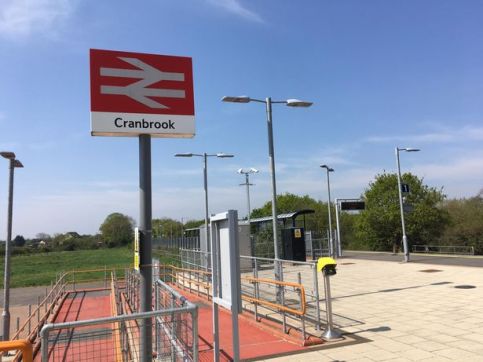
Around 2,000 homes have currently been built in Cranbrook, with the town having a primary school, an all-through school, a multi-purpose building with GP surgery space and a rail station.

Cranbrook railway station

The only building that has been provided in the town centre is the pub – the Cranberry Farm – but talks are under way for a Morrisons supermarket to the anchor tenant of the town centre site.

IN THE ONLINE ARTICLE IS A GALLERY OF PICTURES THROUGH THE YEARS

And a short distance to the west of the town is the new SkyPark and the Lidl and Amazon distribution hubs which employ thousands of people.

But can you remember what the landscape looked like before construction began?

The Local Democracy Reporting Service takes a look back using Google Maps and up-to-date pictures to show the changes that have taken place over the last 12 years.

AERIAL

THE APPROACH TO CRANBROOK

YOUNGHAYES ROAD ROUNDABOUT

PARSONS LANE ROUNDABOUT

CRANBERRY FARM ROUNDABOUT

JACK AND THE GREEN PUB

STONE BARTON

CRANNAFORD LANE

CEDAR CLOSE

SKY PARK

APPROACH TO LIDL


Doctors to UK Ministers: Reveal Results of 2016 Flu Drill or Face Court

Unusual source but Owl picked up reference to this on BBC and there are other sources. 

english.farsnews.ir 

TEHRAN (FNA)- The government faces being taken to court if it refuses to disclose the findings of an exercise confirming the UK could not cope with a flu pandemic.

Dr. Moosa Qureshi, an NHS doctor, is demanding the government publish its report into Exercise Cygnus, a three-day simulation involving government and public health bodies conducted in 2016, The Observer reported.

Qureshi, who is a campaigner with the group 54000doctors.org, represented by Leigh Day solicitors, has sent a pre-action protocol letter to the secretary of state for health requesting a response.

If the government fails to disclose the findings of Exercise Cygnus without adequate reason, Qureshi’s lawyers will seek an urgent judicial review challenging the decision and seeking publication.

The row threatens to become a major embarrassment for the government. The Telegraph has reported that Cygnus’s findings were deemed “too terrifying” to be made public.

Last week, The Observer revealed that minutes of the government’s New and Emerging Respiratory Virus Threats Advisory Group suggested the report had included four key recommendations, including one that the department of health strengthen the surge capability, and capacity of hospitals to cope with a pandemic.

A freedom of information request to see the report has been refused.

Qureshi argues that there is exceptionally strong public interest in publication of the report, given that its lessons and recommendations are “directly relevant” to the procedures developed to combat COVID-19.

“There is no persuasive argument for secrecy when managing a healthcare crisis,” Qureshi stated, adding, “Successful science and healthcare depend on transparency, peer review, collaboration and engagement with the public.

“I believe that if the government had followed the Cygnus exercise by engaging transparently with health and social care partners, with industry and the public, then many of the deaths of my heroic healthcare colleagues and the wider public during the Covid-19 pandemic could have been avoided,” Qureshi noted.

Tessa Gregory, a solicitor at Leigh Day, said, “Our client believes that the NHS workforce and wider public have a right to know what Exercise Cygnus revealed about what needed to be done to keep NHS staff and the public safe in a pandemic.

“It beggars belief that the information the exercise revealed is being kept hidden when a public debate about its contents may well inform important decisions about how to best protect lives going forward,” Gregory continued.

A spokeswoman for the Department of Health announced that she could not comment “because of the legal procedures in place”.


House prices in Cornwall appear to be rising faster than in Devon (or Somerset)

Does this reflect a move to purchase a safe haven from Covid,-19 or is it too soon to tell? 

House prices in Devon stand at £309,662 on average

www.zoopla.co.uk 


What’s the average house price in Devon?

The average price for property in Devon stood at £309,662 in April 2020. This is a rise of 0.54% in the last three months (since January 2020) and rise of 3.75% since 12 months ago. In terms of property types, flats in Devon sold for an average of £199,692 and terraced houses for £231,998. This is according to the current Zoopla estimates.


House prices in Cornwall stand at £294,076 on average

www.zoopla.co.uk


What’s the average house price in Cornwall?

The average price for property in Cornwall stood at £294,076 in April 2020. This is a rise of 1.01% in the last three months (since January 2020) and rise of 7.72% since 12 months ago. In terms of property types, flats in Cornwall sold for an average of £208,833 and terraced houses for £222,337. This is according to the current Zoopla estimates.


Tracker app suggests coronavirus arrived at new year

Comprehensive testing for coronavirus — including the identification of contacts — was part of Britain’s initial effort to contain the outbreak, but it was abandoned on March 12 when NHS chiefs decided to stop testing people with mild symptoms of the virus. 

Since then, testing has been restricted to those sick enough to enter hospital and only now is it being extended to NHS staff and key workers. As a result the Government has essentially been “blind” to the progress of the disease, relying on the daily reports of “confirmed” cases and the sad death toll that follows. Owl has previously reported on the difficulty of using these because of the inconsistency in the way they were  reported early on.

The Covid-19 symptom tracker app, the subject of this post, rapidly deployed by Professor Tim Spector, is an interesting example of quick thinking. A pragmatic use of science that has been producing valuable evidence of how Covid-19 is spreading, and now declining, where the hot spots are etc. Note there is a lag between symptoms being detected and serious Covid cases needing hospital treatment.

But it didn’t come out of SAGE and Owl gets the impression that “follow the science” may be trying to be too “scientific”, making the best the enemy of the good [follow also the debate on masks] .

[Current Covid-19 symptom tracker results for East Devon indicates symptom rates are down to of 0.5% of population. Owl recalls it being 3.6% and that would not have been the peak]

Jonathan Leake, Science Editor www.thetimes.co.uk

The coronavirus was spreading in the UK weeks before the first case was detected, according to a leading epidemiologist.

Professor Tim Spector has collated reports of people falling ill with “classic symptoms” of the disease from the start of January.

It suggests the disease was well established before two people from China became the UK’s first confirmed cases on January 31.

Spector, professor of genetic epidemiology at King’s College London, gathered the reports through the 2.6m people signed up to his team’s Covid Symptom Tracker app, where they report their past and present health status.

So many of those using the app have reported having symptoms in January, Spector said, that it is highly likely the disease was circulating soon after new year. Some have even reported symptoms in late December. “What’s impressive is the sheer volume of the reports,” he said. “We’re getting hundreds of the people using our app telling us that they developed something soon after the new year.”

Spector and his team have found that Covid-19 victims can suffer any or all of 12 key symptoms, with the commonest including a fever, persistent cough, loss of taste or smell and mental confusion.

Each of the symptoms can occur in other diseases too, but a combination, or their occurrence in people who have been close to victims, strongly suggests Covid-19. “The reports I am getting are from people who were ill from early January onwards and strongly suggest they had Covid-19 but were not recognised as such,” Spector said.

He cautions that retrospective and subjective reports of symptoms of illness are hard to substantiate, but the sheer volume is powerful evidence — and could be confirmed by antibody tests when they become available.

The app, developed by Zoe Global, a London biotech firm, includes questions about previous exposure to Covid-19, including any symptoms experienced and their dates.

Spector’s team, which is backed by the Royal College of Physicians, Royal College of Surgeons and other medical bodies, uses the data to estimate the size and geographical spread of the epidemic. It suggests that 376,000 people around Britain have Covid-19 symptoms this weekend, with hotspots around Walsall, Lichfield and Nuneaton in the Midlands, Boston in Lincolnshire, Blaenau Gwent in south Wales, Pendle in Lancashire and Inverclyde in Scotland. The app reports also have some good news, suggesting that the number of symptomatic cases peaked at 2.1 million on April 1 and has declined steadily since then.

Spector and his team are publishing a paper in Nature Medicine this week suggesting that a wider range of symptoms should be included in diagnosing Covid-19. At the moment the government-recommended key diagnostic signs are fever and a persistent cough. This means people with any of the other symptoms who call 111 may not be recommended to self-isolate and so will spread the disease.

“The number of real cases clearly vastly exceeds those recorded by the government, because testing has been reserved for those sick enough to be in hospital,” Spector said. “In most cases people recover at home and so are never tested.”

The UK’s earliest cases could include people such as Daren Bland, 50, who was skiing at Ischgl, Austria, from January 15 to 19. On his return he became ill and passed the infection to his wife and children in Maresfield, East Sussex. Bland’s illness fitted the Covid-19 profile of symptoms but was never confirmed by tests.

Ischgl has since become infamous as the location of one of Europe’s biggest clusters of Covid-19, with 600 Austrians infected and 1,200 visitors from other countries including Germany, Norway, Iceland and the UK thought to have taken the virus home.

Such European travellers are in addition to the tens of thousands of people who flew to the UK from China in January. There were about 17 direct flights from Wuhan alone between new year and January 24.

Scientists in other countries have also seen evidence that Covid-19 was circulating for weeks before it was first detected.

In late March a study in Lombardy in northern Italy found that the virus might have been circulating in the region for more than a month before it was detected in the town of Codogno on February 21.

In America the first officially reported death occurred in Washington state on February 29. Last week, however, three people who died in Santa Clara County, California, between February 6 and March 6 were confirmed as Covid-19 deaths after post-mortem examinations. Since the time taken from infection to death is usually 2-4 weeks, this suggests the virus was also spreading in the US in mid-January.


Two weeks’ quarantine if travelling to UK under plans for ‘second phase’ of coronavirus response

Passengers arriving at British airports and ports will be placed in quarantine for up to a fortnight, under plans for the “second phase” (see below) of the Government’s response to the coronavirus pandemic.

By Edward Malnick, Sunday Political Editor 25 April 2020  www.telegraph.co.uk 

Officials are drawing up a scheme that mirrors the 14-day “stay home” notices currently issued to Singaporean citizens returning to their country from abroad. It could be rolled out as early as next month, and include large fines for those who fail to remain at the address given to authorities as their place of isolation.

The radical plan, being overseen by Priti Patel, the Home Secretary, and Grant Shapps, the Transport Secretary, is intended to stop the transmission of Covid-19 from abroad, when the Government launches its “track and trace” strategy to identify and isolate cases of the virus in the UK. It would apply to both British citizens and those from abroad.

The disclosure comes as the Covid-19 death toll exceeded 20,000 for the first time on Saturday, as 813 more deaths were reported in the previous 24 hours.

In other developments:

  • The Sunday Telegraph understands that Downing Street is preparing to ditch its current “stay at home” slogan for the “second phase” of its response, with Isaac Levido, the Australian strategist who masterminded the Conservatives’ election win, working on a new appeal to the public…….

As part of plans for a “new normal” for businesses, the Government is drawing up separate plans to introducing strict social distancing in workplaces that re-open, with employers told to provide hand-washing facilities or sanitiser. A cabinet minister said Mr Johnson was expected to focus on decisions about the “very gradual opening up of shops, workplaces and public spaces”, before deciding when to begin re-opening schools.

The plan to quarantine passengers arriving in the UK would involve authorities requiring travellers to fill out a specific landing card which would ask for information about the individual’s health, as well as details of the address at which they will self-isolate.

Officials are planning a worldwide communications campaign to warn passengers of the measures that they can expect if they come to the country. It would be likely to dissuade many of those already in the country from travelling abroad, on the basis that they are unable or unwilling to self-isolate for two weeks, as well as deterring travellers from abroad.

The Government is considering possible exemptions for essential workers such as lorry drivers bringing vital supplies to the UK.

A Government source said: “A stringent, Singapore-style approach at our ports will help the UK manage the risk of travellers entering the country and reduce the possibility of a second peak.

“We are looking at deploying these measures at the right time, in line with the scientific advice and when community transmission has been significantly reduced.”

Singapore introduced 14-day “stay home” notices on March 18, for everyone landing in the country.

The Government has faced criticism for allowing travellers to continue coming into the UK without imposing health checks or quarantines. But officials insist that the high rate at which the virus was spreading within the UK meant that banning flights or imposing quarantines would have been relatively ineffective before bringing transmission under control.  

On Friday, Chris Whitty, the chief medical officer, said that the infection rate had fallen low enough to start thinking about lifting some of the lockdown restrictions, amid growing concern about the collateral damage.

However the second phase of the Government’s response is likely to involve some tougher measures in other areas, such as those currently being considered for the country’s borders..

Ministers believe the measures can be carried out under powers in Mr Johnson’s Coronavirus Act allowing authorities to assess and isolate “potentially infectious” travellers. When the legislation was introduced last month, the Government said the provisions “look to fill existing gaps in powers to ensure the screening and isolation of people who may be infected or contaminated with the virus and to ensure that constables can enforce health protection measures where necessary.”

Authorities would be able to check whether those asked to quarantine have remained at their stated address.

Ministers have asked officials to draw up proposals for enforcing the planned measures, with the potential for large fines and even legal proceedings for those who are found to have broken the rules. The plans were discussed at a meeting of ministers and officials on Wednesday.

On Saturday, the latest official figures showed that 20,319 people had died with Covid-19 in UK hospitals – an increase from 813 on Friday. Last month, Sir Patrick Vallance, the government’s chief scientific adviser, had said that keeping the number of deaths below 20,000 would be a “good outcome”.

Ms Patel said: “As the deaths caused by this terrible virus pass another tragic and terrible milestone, the entire nation is grieving.”

During the Government’s daily press briefing, Ms Patel praised the “spirit of national unity” during the coronavirus outbreak, urging  the public to “not lose sight” of the fact their efforts are saving lives.

A No10 spokesman declined to comment on the plans to quarantine travellers.


£3.2bn cash for councils may not stop ‘uncontrollable’ second wave

Britain’s public health sector has told the Government that the emergency £3.2 billion support package for local authorities may not be enough to avoid an “uncontrollable” second wave of coronavirus.

By Tom Morgan 25 April 2020 www.telegraph.co.uk

A letter sent to Professor Chris Whitty, England’s chief medical officer, and Professor John Newton, the official in charge of testing, also suggests a national “one-size-fits-all” strategy cannot beat lockdown.

Maggie Rae, the president of the Faculty of Public Health, and David McCoy, professor of Global Public Health at Queen Mary University, are among 20 experts calling for more powers regionally to put local teams “at the heart” of the response.

“The last decade has seen the capacity of local public health teams eroded by a combination of budget cuts and disorganisation to the health and social care systems,” says the letter, seen by The Telegraph.

“And while the injection of £3.2 billion of new cash to support local governments through this current crisis was welcome, further efforts are needed to give local structures the resources and mandate to enable the country to release the current lockdown measures and restore the economy without risking an uncontrolled second wave epidemic.”

The epidemic and the effects of lockdown “cannot be effectively mitigated through a centralised and one-size-fits-all approach”, the letter says.

More detailed local plans would enable authorities to tailor to “the specific local and contextual factors of different parts of the UK”. Contact tracing would also be achieved easier, and co-operation would be improved between public health, social care, primary care and hospital services.

In a separate interview, Ms Rae told The Telegraph that the UK will eventually need an “awful lot more” testing than the current 100,000 a day target by the end of the month. The Government accepts that it may eventually need capacity for 250,000 a day when lockdown measures are reduced.

“As we’ve seen from other countries and the successes they’ve had, we will probably need an awful lot more especially if we want to get to a plan where we can lift lockdown…as the testing capability and capacity grows, we need to stand for testing, tracing and isolating.”

Amid attempts to assess the possibility of relaxing lockdown in areas less affected by the virus, Public Health England set up a team at Porton Down in February to establish a “national surveillance programme”.

The team of scientists are currently analysing 5,000 samples from potential sufferers and Rae says establishing a clearer idea of how it is spreading across the country will be a huge help.

“My understanding is that we’ll be able to see the hotspots,” she added. “You do have people in the highlands of Scotland asking, ‘Why are we on lockdown when we could probably move about without putting anyone at risk?’, as long as they stay on the island. That’s a logical way the public will behave. At the moment we need everyone to follow the guidance.”

A spokeswoman for Public Health England pointed out that a letter had been sent out to local authorities and regional public health officials on Friday. There were also meetings held in the past week in which the Government pledged to involve local agencies, the spokeswoman added.

Regional directors of public health “are absolutely critical to the response”, the PHE spokeswoman said, adding that the “public health community will be at the heart” this going forward.


To tackle this virus, local public health teams need to take back control

At the moment the Government seem to be putting their faith in Deloitte. The press is full of stories such as the person who drove many miles to Worcester for a booked test; arrived at 3 pm, was told there was a two and a half hour wait and advise to re-book as the site would close at 5 pm. regardless.

Allyson M Pollock, professor of public health, Newcastle University, and barrister Peter Roderick, principal research associate, Newcastle University www.theguardian.com

Perhaps, the most surprising aspect of the British Covid-19 crisis is the extent to which the Scottish, Welsh and Northern Irish governments, and the English regions, have allowed strategy to be decided by Westminster.

Health and social care are devolved, and this national epidemic is not homogenous. It is made up of hundreds, if not thousands, of outbreaks around the country, each at a different stage . England had its first confirmed case on 30 January, Wales on 28 February and Scotland on 1 March. Some areas – such as Rutland, Hartlepool, Blackpool, Isle of Wight, Tyneside, Durham, Orkney, Western Isles – had no reported cases until late March, and some even now have relatively few cases.

Contact tracing and testing, case finding, isolation and quarantine are classic public health measures for controlling communicable diseases. They require local teams on the ground, meticulously tracking cases and contacts to eliminate the reservoirs of infection. This approach is recommended by the WHO at all stages of the epidemic. It was painstakingly adopted in China, Singapore and Taiwan, with a high percentage of close contacts identified and many housed in hotels. Germany has traced contacts throughout. The leaked UK national risk register proposes it.

Yet Public Health England, the agency responsible for communicable disease control in England, stopped contact tracing on 12 March, having reportedly only contacted 3,500 people, of whom about 105 were found to be positive. It’s now about to resume. But why was it stopped, and how will it be resumed?

We’ve not seen an official explanation for its stopping. But lack of both resources and effectiveness are usually mentioned. Resources are essential, just as they have been for increasing acute care capacity, and the potential pool of contact tracers is vast. There are thousands of environmental health officers in local authorities and other sectors who have the necessary skills and experience. Singapore used its army. Teachers and barristers have volunteered in Ireland. Centralising control and management of the pandemic through NHS 111 has also left 7,500 GP practices underused, and the potential for real-time knowledge of new cases, results of swab tests and insight into the geography of spread has been lost. Yes, it’s true that contact tracing is insufficient, but that’s not the same as ineffective. It should have been supplemented, not replaced. Look at Germany.

We think there are more fundamental reasons. The system of local communicable disease control was established in the 19th century. After the NHS was set up in 1948, it was supported in England and Wales by national, regional and more than 40 local public health laboratories. But since local medical officers of health were abolished in 1974 – replaced by community physicians at different levels of the NHS – the system has been gradually but relentlessly eroded, fragmented and centralised.

Communicable disease control was centralised in the Health Protection Agency in 2003, and local public health laboratories transferred to NHS hospitals. Public health was then carved out of the NHS in England in the 2012 Health and Social Care Act, which abolished local area health bodies, created Public Health England to fulfil the government’s duty to protect the public from disease and charged local authorities with improving public health – but with limited proactive scope for infectious disease control and woefully inadequate resources.

Then came austerity. Local authorities suffered a 49.1% real terms reduction in central government funding from 2010 to 2018. Numbers of community control teams and consultants in communicable disease control have decreased. PHE made “savings” of £500m over five years in the name of “efficiency” and now has nine regional “hubs” serving 343 English local authority areas.

With further waves of the epidemic likely, resumption of contact tracing is critical. Each of the four nations needs to institute scores of locally led, nationally coordinated and funded teams to trace, find and test contacts. Caernarfon isn’t Cardiff, Gairloch isn’t Glasgow, London isn’t Lulworth. Teams in England and Northern Ireland would be based in local authorities; in Wales and Scotland they would be in local health boards. Their composition should be locally determined, drawing on a range of expertise, especially among directors of public health, field epidemiologists, environmental health officers, GPs, local NHS laboratories, NHS 111 and test centres, plus volunteers if required.

Widely used apps with robust data protection could play a supportive, but not framing, role. In addition, the apparently strategy-free plans for 50 mass drive-in test centres need to be decisively directed to support local contact tracing, as well as strategically targeting the most at-risk groups.

We would expect rigorous implementation of these measures now to make an overdue but significant contribution to controlling the epidemic. Restoring and updating local communicable disease control is an integral part of properly funded, publicly provided health and social care.

Send us boiler suits, plead NHS bosses at hospitals with no gowns, including Devon

Revision 30 April 2020. The Devon Clinical Commissioning group have pointed out that the use of the phrase “no gowns” in the title (taken from an early edition of the Sunday Times, later revised) is inaccurate. The call for substitutes for gowns was a precautionary advertisement. Stocks have now improved and none of the advertised items has been issued to NHS staff.

In Devon, the request for alternatives to gowns included boiler suits, lab suits and painting suits in a tender notice titled, “Urgent help needed re provision of PPE for NHS staff.”

Rosamund Urwin, Andrew Gregory and Caroline Wheeler –The Sunday Times April 26 2020

The call came as the severity of the shortage of gowns, masks and gloves was laid bare to the cabinet in a 90-day forecast for the government by the consultancy firm McKinsey.

In Devon, the request for alternatives to gowns included boiler suits, lab suits and painting suits in a tender notice titled, “Urgent help needed re provision of PPE for NHS staff.”

Fears have been raised not only over the quantity of PPE but the quality. “Every day we run out of something, the advice is downgraded and we are now running at standards lower than [recommended by] the International Red Cross and the World Health Organisation,” said a senior Whitehall insider.

“We have always been so smug about ourselves as a developed country, but now we have nations we send aid to watching us in horror.”

An NHS employee, who works on procurement, said: “The government has said that the CE mark [indicating conformity with safety standards within the European Economic Area] can be waived so we can get stuff from other countries or that’s made locally.

“The doctors on the front line don’t have time to check the medical journals to ensure that what they are being provided with is safe.”

Of particular concern were visors, because many 3D-printed designs had gaps that would allow aerosols and splashback to enter and put the medic at risk. More than 100 NHS and care workers are estimated to have died after contracting the disease, according to data collected by the online platform NursingNotes. NHS staff have repeatedly raised concerns about supplies.

Two NHS doctors are mounting a formal legal challenge to the government’s PPE guidelines. Meenal Viz, who is pregnant, and her husband Nishant Joshi, have treated patients with Covid-19, and argue that the government’s guidance is not protecting frontline staff.

Joshi said: “Matt Hancock said [on Friday] that the guidelines are based on the use of our ‘precious resources’. That admits the government is basing its guidelines on supply, not safety. It raises the question: has the government knowingly exposed healthcare workers to potential risk?”

Doctors and nurses have been asked to reuse gear that is usually single-use, and to wear flimsy plastic aprons instead of full-length gowns that had run out.

The NHS uses an estimated 150,000 gowns every day. Public Health England had previously said that the gowns should be worn for all high-risk procedures.

According to data collected by the Doctors’ Association UK, hundreds of doctors have gone without masks, eye protection and gowns, including medics carrying out aerosol-generating procedures that present a greater risk of catching the virus.

The survey of 1,197 doctors by the NHSPPE.com app, launched to report shortages, found that 38% who responded over a fortnight were without eye protection, including 23% of doctors carrying out aerosol-generating procedures.

The Doctors’ Association UK is calling for a public inquiry into the government’s failure to provide PPE.

Vanessa Crossey, interim deputy director of nursing at NHS Devon CCG, said: “We are leaving no stone unturned in our work to bolster national PPE supplies for our NHS and care staff”
The department of health and social care said: “Ware working night and day to ensure our frontline health and social care staff have the equipment they need to tackle this virus.”

NHS staff on London’s coronavirus field hospital and why it can’t take more patients

It was a magnificent achievement to create the first Nightingale in short order, but there is a little snag. Where do the specialist nursing and medical staff come from? No doubt super-brain Dominic Cummings or Health Secretary Matt Hancock has the solution in hand.

@ShaunLintern www.independent.co.uk 

A 4,000-patient hospital constructed in just 10 days, NHS Nightingale in east London was set up as a key part of the preparations for a coronavirus surge – and has been highlighted as a crowning achievement by ministers and officials at every turn, from the House of Commons to countless press releases and PR videos.

But at the 100-acre ExCel centre in London Docklands, the number of patients fighting for their lives in the field hospital is approximately 30. Questions are being asked about why the Nightingale isn’t taking more patients from London’s hospitals, which have carried the burden of the surge in patients needing intensive care, cancelling operations, creating makeshift intensive care units in overspill areas and stretching staffing to unsafe levels.

Up to 3,800 staff were needed for the initial creation of the hospital, although The Independent has been told only around a third of that number had been recruited and trained. NHS England refused to provide any staffing details, but denies there are shortages.

Insiders who work at varying levels in the hospital, who have spoken to The Independent on condition of anonymity, also criticise the “political spin” and portrayal of the Nightingale which they say has given a “false perception” of what it is like, with social media posts doing “more harm than good”.

“The PR has not helped. When people see TikToks and things like that I can understand why they ask questions. The impression people seem to have gained is that we are fully staffed and have plenty of equipment. But we are not immune to the challenges of every other hospital,” one insider says.

The staff praise the culture of the new hospital and all of them support its creation: “When they set this up we were talking about 7,500 patients in London needing critical care. We haven’t had to go anywhere near that. Not using it all is not a reason to criticise it.”

Another one explains: “It’s difficult to hear our mates struggling and not being able to expand at the pace we would want to. We know what they are going through. Our goal is to relieve the pressure on London and if we had the staff, we would be more than happy to take more patients. The only rate-limiting step is staffing.”

While one insider says there are thankful it hasn’t been needed in full, all the staff say they share the view that it would not be possible to expand the hospital without pulling more staff from already stretched hospitals.

Staffing levels

The Nightingale Hospital, spread across the equivalent of a dozen football pitches, houses 500 beds for patients and has space for another 3,500.

It admitted its first patient on 7 April and in the weeks since then has had approximately 30-35 patients at any one time. Although it discharged its first patient on 19 April, before that point several patients had been transferred back to London hospitals because they became sicker than could be safely managed.

Concerns have been raised that while some hospitals in London have struggled to cope in recent weeks, the Nightingale has not been as much help as many NHS managers in the capital had hoped it would be. Some trusts have been told they would need to send staff to the Nightingale when requesting to transfer patients there. One worker says: “They have had lots of issues with staffing. For a variety of reasons, staffing has been quite poor. They had to rejig it in the early days as they realised staff rostered onto shifts had not been released by their hospitals, so there were underfilled shifts which were only found out quite late on.

“It’s pretty well acknowledged that staffing is the issue. Not many people have been able to get released from their trusts. There is no shortage of people who want to send patients to the Nightingale. Everyone here knows some hospitals around London are on their knees, but unless you have staff you can’t expand the capacity. That is the limiting factor.”

Another says: “The Nightingale just doesn’t have the staff. Many of those who volunteered are stuck with their main employers.”

They say that to expand the number of patients, staff would need to be pulled from across the country, adding: “We are all fishing from the same pond and we started this crisis with significant ICU nurse shortages.”

The 42-bed ward used for patients – split into bays of six – has a mix of staff, including some with no intensive care experience such as GPs, obstetricians and research doctors who never normally treat patients.

The staffing is split into clinical support workers who cover between one to three patients, provide patient-level care and record the patient’s condition regularly, as well as registered nurses who oversee up to four patients with support from critical care nurses and matrons.

The ward also has six ward doctors, three intermediate doctors and intensive care or anaesthetic consultants as the senior decision makers. There are also separate teams looking after the specific needs of the patients and providing specialist support. Families are given daily updates on their relatives.

If the Nightingale was to take more patients, one clinician says this would inevitably mean poorer staffing levels: “If it did expand, the idea would be to stretch staff ratios from one nurse to six patients, one junior doctor to six patients and one consultant for 42 beds. Thank goodness we haven’t had to do that.”

One worker says they enjoy the working environment and the care being given to patients is good. They add that senior clinical managers have done shifts alongside other staff.

Another says: “It is a really flat hierarchy. There is no blame. People are positive about the work they are doing. Every day the care we are giving is getting better. There is a real team effort to improve.”

The future of the Nightingale

The number of patients in hospital with coronavirus has begun to fall steadily in the last few days and data on intensive care capacity shows these figures have started to stabilise.

“One of the big water cooler conversations is what Nightingale will look like in the future. A lot of people think it will be a resource for London to start doing all the other things London needs to be doing. But none of us know yet.”

Another adds: “The question is what do we do with the Nightingale now? Will we have a second surge? There is talk of it being used as a stepdown facility and rehabilitation service but it would need to be redesigned. It’s a big massive space and in order for people to rehab properly you need quiet, day and night cycles and specific spaces. We would have to make some pretty significant changes.”

A copy of the Nightingale’s standard operating procedures, shared by one member of staff with The Independent, reveals the field hospital was never designed to take the sickest patients.

The exclusion criteria says any patient with significant complications or serious intensive care needs such as renal replacement therapy, or filtering blood in place of the kidneys, are automatically not eligible to be taken there, leaving many of the sickest patients with London hospitals.

Some staff feel that the hospital is the right place for those patients to be while others suggest it was a move to protect the reputation of the new hospital and has left many London units struggling to cope.

One intensive care doctor from the north of England who examined the criteria document tells The Independent it “means they are only taking those who are well into the recovery phase”.

One Nightingale staff member says: “People are aware that we should have more patients and we are keen to have them.

“All the patients are sick. The problem with Covid patients is they get better and then they get sick again. Some patients have been transferred back to London hospitals.”

Facilities and equipment

All those interviewed by The Independent say the Nightingale has enough protective equipment. However, staff have been asked to use it carefully and to reuse visors. There have also been some drug shortages in line with supplies running low across the country.

The Nightingale, in line with many makeshift ICUs across the country, is also using anaesthetic ventilators with only a small number of normal intensive care ventilators. Anaesthetic machines are not designed for long-term use and need regular checks. One insider says this is far from ideal, adding: “I don’t feel we are delivering the standard of ITU care you would expect in a non-pandemic situation.”

Another says: “I don’t think we are awash with any equipment, but we seem to have what we need. We are being asked to reuse visors.”

One member of the team says: “It is hard work, but the patients are getting good care. We have five or six models of anaesthetic machines. Some of them are good and some of them are less good. The sicker patients go on the better ventilators

“Patients are transferred out when they are no longer safe to be on an anaesthetic machine. It was a little disingenuous to say that the patient on Sunday was our first to leave the Nightingale. There were a number of patients who left before the weekend as transfers to other units because the patients were too sick to remain here.”

One employee also noted that the hospital “does have all the facilities you need” but adds that when it comes to services for the patients: “It is not a normal hospital, it is a field hospital.”

There is a CT scanner which has been installed some distance from the ward area to help identify whether patients have internal problems such as blood clots on their lungs which can be a life-threatening complication.

It also has two dialysis stations to support several patients a day. Up to a third of Covid-19 patients need to have their blood filtered because they can suffer organ failure including their kidneys.

Another worker praises the facilities and efforts to maintain staff wellbeing. They describe fridges that are regularly placed along the main conference centre boulevard “filled with soft drinks that you can just help yourself to which is important for staff to stay hydrated”.

“There is lots of food and chocolate available. We don’t have to queue. We don’t have to pay – it’s all been donated.”

They say staff tend to congregate in a coffee shop opposite the main ward during their breaks, adding: “There is a real focus on taking your breaks. It’s the little things that make a difference and make you feel valued. A lot of us hope when this is all over the NHS takes away a lot of what has been done at the Nightingale.”

There is an emphasis on education and training and support for people not to go beyond what is safe for them to do with patients.

For those staff who can’t or don’t want to travel after completing their 12-hour shifts, they have been given free hotel accommodation.

Another colleague says the “place has been well designed” and “its quite impressive what they have been able to achieve. Morale is high”.

Many of the staff feel the Nightingale had been misrepresented in publicity produced by the NHS to promote the hospital. One worker says a lot of what had been produced amounted to “virtue signalling and humble bragging” rather than explaining the real work that was happening.

Another says the publicity about the hospital had been superficial and “given people the wrong impression”.

“We are not communicating the good stuff, it is so vague as to be unhelpful,” says another.

“We need to be much more open about what we are doing and there would be a better understanding of why we only have a small number of patients. The comms, tweets and videos are doing more harm than good.”

Nicki Credland, chair of the British Association of Critical Care Nurses, tells The Independent the testimony of staff is not a surprise to her: “It’s not the staff at the Nightingale’s fault. They will want to do everything they can to help their colleagues.

“Building more beds does not equal more staff. You cannot make intensive care staff overnight.”

She says the exclusion criteria shows the sickest patients are not being treated at the Nightingale, adding that staff around London have told her they are not coping because of the extra patients and stretched staffing levels. She says: “They are in a whole world of pain.

“You can’t say something is spare when you have had to stop something to provide it. That’s not extra capacity. It’s only been created by dropping your standards and reducing safety.”

NHS England refuse to confirm how many patients are being treated or how many staff are employed at the field hospital. In a statement, it said: “The clinical models for each of the Nightingale hospitals have been designed by highly experienced and distinguished clinicians from across the regions they serve, and work as part of regional critical care networks to ensure that patients get the right treatment for them in the right place.

“As we have always said, it will be very good news for the health of our country if the Nightingale hospitals are not used to their capacity, as it will show that the NHS has prepared successfully, and that the public following government advice has been effective in slowing spread of the virus.”