New Nightingale Hospital serving East Devon welcomed by council leader

EDDC Leader Ben Ingham also says: “We must do everything we can to control the Covid-19 virus and save lives.”

Before posting the full text of his welcome to the Nightingale, Owl thought it might be helpful to illustrate how the speed with which Covid-19 rips through our population sorts Leaders from Followers.

Just for the purposes of illustration, Owl will nominate the day when Cornwall Council and its Local Enterprise Partnership (LEP) asked visitors to stay away from the County as K-day (K for Kernow). At the time the estimated transmission rate for Covid-19 was given as doubling every three to four days. Owl will take the slower, four days, for illustration. In the events catalogued below the dates given may not correspond with decision dates because of delays in publication.

K-day (20 March)  Cornwall calls for visitors to stay away

K+2 Group of Devon and Cornwall MP’s back the #pleasestayaway campaign, Devon and Cornwall Police declare a ‘major incident‘.( infections now 1.4 times those on K-day i.e. an increase of 40% )

K+3 Government imposes lock down, Devon County Council says enforcement will be removed from many parking places including coastal and tourist destinations. (Infections now 70% up on K-day)

K+6 EDDC Winter car parking rates extended until May across East Devon reported “in order to better support town centre businesses” (Infections are now 2.8 times those of K-day)

K+12  Devon County Council “This afternoon (Wednesday, April 1) issued an all-party message for visitors to ‘stay away from the South West’ ahead of the Easter weekend.” (Infections are 8 times those of K-day)

K+16 EDDC Leader Ben Ingham goes on spotlight to back the please stay at home campaign (Infections are now 16 times those of K-day)

New Nightingale Hospital serving East Devon welcomed by council leader

Joseph Bulmer  sidmouth.nub.news

The creation of a new Nightingale hospital serving East Devon and Exeter has been welcomed by the district’s council leader.

A new NHS Nightingale Hospital will be opened in Westpoint Exeter to provide 200 extra beds for patients with coronavirus symptoms if needed.

The NHS Nightingale Hospital Exeter, announced by NHS Chief Executive, Sir Simon Stevens, brings the total to seven confirmed NHS Nightingale Hospitals in a matter of weeks.

East Devon District Council Leader Ben Ingram has welcomed the hospital’s creation, he said: “It is essential we do everything we can to protect people at this time.

“The new Exeter Nightingale Hospital at Westpoint will play a vital role in creating space and improving safety in our Devon hospitals.

“We must do everything we can to control the Covid-19 virus and save lives.”

The five hospitals in Devon and Cornwall will provide the majority of care for critically ill patients with coronavirus, and have plans in place to increase their critical care capacity up to 500 beds across both counties.

The new NHS Nightingale Hospital, which is expected to be ready for the first patients, if needed, by early May, will provide a regional resource of 200 beds for Devon, Cornwall and neighbouring counties to meet the care needs for patients who are seriously unwell due to their coronavirus symptoms.

Elizabeth O’Mahony, Regional Director, NHS England and NHS Improvement – South West, said coronavirus was “the single biggest challenge facing our country for generations.”

She added: “We can learn from the work we are doing in Bristol and the other Nightingale Hospitals across the country. We want the NHS in the South West to be as well prepared as possible.

“The Nightingale Exeter will support our existing hospital network to care for critically ill patients from the south of the region. We are taking steps now to ensure that the hospital is available if required but we hope that it is not needed.

“We ask everyone in the South West to continue to follow the national recommendations to reduce transmission of the virus, please stay at home, observe social distancing, protect your local NHS and each of you will help save lives.”

The set-up of this new facility will be overseen by Philippa Slinger, an experienced NHS Chief Executive, and currently lead Chief Executive for the Devon Sustainability and Transformation Partnership, she said: “I would like to thank local people for their extraordinary support to the NHS by staying at home.

“Where people have needed to go out for essential reasons, they have by and large practised good social distancing. These actions need to continue as they are helping us to manage the pandemic.

“However, our new NHS Nightingale Hospital will ensure we have the right critical care capacity in place to help us manage the expected upsurge in cases.

“Getting our new facility open is a huge task and will be a real collaborative partnership between all NHS providers, commissioners, partner agencies, the armed forces and contractors.”

The new Nightingale Hospital will be hosted by the Royal Devon and Exeter NHS Foundation Trust.

Devon & Cornwall Police reveals how many Covid-19 fines it issued over Easter

Police dished out 169 fines and gave 960 verbal warnings to people flouting coronavirus lockdown rules in Devon and Cornwall over the Easter weekend.

East Devon Reporter eastdevonnews.co.uk 

A quarter of the penalties were issued to offenders who did not live in either county, the force revealed today (Wednesday, April 15).

Officers spoke with more than 5,500 people while carrying out targeted, ‘high-visibility’ patrols which included visits to 4,000 beauty spots and businesses across the region.

Devon and Cornwall Police says its preferred approach is one of ‘engagement, explaining and encouragement’ – with enforcement ‘a last resort’.

Assistant Chief Constable Glen Mayhew said: “We shared the concern of our communities that a small number of people continued to breach the restrictions and were putting lives at risk.

“Our approach was to speak with people and I am really pleased that these figures show a proportionate response.

“With around three per cent of these checks resulting in enforcement, we believe that this shows that our officers used enforcement proportionately and as a last resort.

“We all wanted to enjoy the weather this weekend, but thankfully our beauty spots continue to remain noticeably quieter, which shows that the vast majority of the public are taking government guidance seriously, and are playing their part in helping to reduce the spread of Covid-19, protect the NHS safe and save lives. 

“We have seen a slight increase in traffic on the roads, but our roadside checks are establishing that the majority of these who are on our roads are undertaking essential travel. 

“I understand the appeal for people to go out, but we need to keep to the restrictions.

“The signs are that they are having an impact, so we all need to do our part to reduce the strain on our NHS as this will ultimately save lives.

“Policing with the support of our communities is our priority and we will continue to use discretion and only use enforcement as appropriate.

“I also want to praise the hard work of partners and volunteers who over the bank holiday weekend supported our activities.

“This included patrols on the beaches and moors to explain to people the importance of the restrictions.

“I would also like to recognise the vast number of other key workers who have also worked incredibly hard, ensuring our core services have continued to deliver.

“Naturally, the coronavirus is at the forefront of our mind, but I want to reassure our communities that we continue to undertake everyday policing; we are still answering over 650 999 calls a day, still responding to incidents and still tackling crime and protecting the vulnerable across Devon, Cornwall and the Isles of Scilly.

“My message to the public is that we are here for you.

“Finally, I would like to thank the public for your continued support and understanding during this challenging time. The messages we have received across social media and comments from the public during our interactions show how difficult we all finding it but how well we are all adapting.

Police and Crime Commissioner Alison Hernandez added: “Police, staff and volunteers in our force have very sensibly taken the approach that they will educate and inform the public of their obligations, but we always knew there would be a cohort for whom enforcement was the only option. 

“We also knew that, despite the warnings, and a #ComeBackLater campaign supported by us and our many partners, our part of the country would prove irresistible to many who put their own wants before the needs of some of society’s most vulnerable members and we’d see some attempting to travel to the South West over the Easter weekend.

“The vast majority of the public are making extraordinary sacrifices at the moment in order to prevent the spread of Covid-19 and I think they want those who put others at risk dealt with using these new powers.

“Our Chief Constable, frontline officers and staff have my full support, and I believe, the support of the vast majority of our elected leaders, parliamentarians and the public.”

Sidmouth’s Emma creates scrub stitching dream team to help health workers

A Sidmouth woman is asking for help to supply the area’s doctors and nurses with fresh scrubs to help keep them and their patients safe during the coronavirus outbreak.

Joseph Bulmer  sidmouth.nub.news

Emma Wickham, a concrete tester from Sidmouth, has stitched together a crack of seamstresses and is raising money to create medical scrubs for the area’s healthcare workers, who are struggling to get hold of these essential garments.

In three days Emma has raised more than £1,100, with a target of £1,500, to buy good quality fabrics, waistband tapes, threads and patterns.

Speaking to Nub News Emma said: “I have sewing skills and it seemed a shame not to use them while nurses and doctors are struggling to get hold of medical scrubs.

“We hear that nurses are having real problems with sourcing scrubs, with some hospitals resorting to using paper sets which are impractical and prone to breaking.”

Emma is a regional coordinator of For The Love Of Scrubs, a project set up by London nurse and seamstress Ashleigh Lindsell.

“Ashleigh started making scrubs for herself and put a shout out to her community asking for help,” explains Emma.

“The response was so overwhelming that she and her husband George decided to find people all over the country to act as regional coordinators.”

Emma grabbed the opportunity to help with both hands and already has orders from Honiton Surgery and Exeter and East Devon’s Children’s Palliative Care Team.

The team, so far, consists of 12 seamstresses but the number of volunteers is expanding daily. Three new seamstresses have joined the team in the last 24 hours.

Emma and her volunteers are keen to stress that all the materials are washed thoroughly before work begins and they are working with a specification from RD&E Hospital, ‘to stay true to the regulations’.

A nurse who ordered scrubs from the project sent Emma this message: “You really are a life saver to us!

“We are a community children’s nursing team which covers four special needs schools, community children’s nursing service which is for children with complex health needs providing care within the children’s home and children’s palliative care which is for children with life threatening or life limiting illnesses.

“Day to day we see lots of babies on oxygen, children with feeding tubes and carry out children’s bloods at home as well as just generally providing emotional support to our amazing families and currently our big focus is nursing poorly kids at home to keep them out of hospital.

“Scrubs not only allow us to change between visits protecting the kids we care for but they protect our own families by allowing us to just chuck them in the machine when we get home.”

The donations will be used to buy rolls of poly-cotton scrub material (approximately £160 per roll), rolls of cotton herringbone tape for waistbands, rolls of sewing machine thread and pattern printing.

“It’s really important that we get help with donations and more seamstresses come forward,” said Emma.

“Doctors and nurses are desperate for more scrubs, they really need more than one set to be safe and keep their patients safe.

“We’re buying good quality fabric and have some excellent seamstresses, one of our team is a former textiles teacher from Sidmouth College. We’ve also got a former London tailor on board.”


Boris Johnson, Conservative politics to blame for coronavirus deaths, says former UK top scientist

Walter Einenkel Daily Kos Staff www.dailykos.com

Sir David King, the U.K.’s chief scientific adviser from 2000-2007, told LBC Radio on Wednesday that a quicker response to the growing 2019 novel coronavirus pandemic would have saved lives. While telling the station that he was saddened by situation England found itself in, he was also very clear when he explained that if leadership had acted sooner, untold numbers of people would still be alive.

Stating that “it seems that we were unprepared and we didn’t take action,” King went on to detail how the recent efforts by politicians like Prime Minister Johnson to cut back on management programs has led them into this very predictable predicament. “For me, this is very upsetting because we had set this preparation process in place, as I say, back in 2006.”

Since the beginning of this crisis, King has been critical of the prime minister’s response and policies. At the beginning of April, King publicly slammed Johnson and the Conservative Party, saying cuts to the country’s National Health System (NHS) would only exacerbate the terrible situation that bad leadership has already gotten the Brits into. He also told Sky News at the time: “We know that what we should have done, early on, is take all sorts of precautionary measures to see that the virus did not get to the level it is now in this country, once we had seen what was happening in China.”

King’s criticisms mirror the very same ones leveled against Republican leadership. In Trump and his Republican Party’s case, huge tax giveaways to the rich have helped to justify attempts (and successes) at dismantling our already overstressed social programs and safety infrastructures. Like Trump’s administration, Johnson has lied and dragged his feet when it comes to the important containment tool of testing, having promised “100,000 tests a day by the end of April” and not even coming close.

As King explained, an early response—a proactive response—was available to any country of almost any means. “You go to Greece and the management of the epidemic, starting very, very early on, has been really astoundingly good. Go to Africa, go to Rwanda, you’ll find the same thing.”

The impact of self-isolation 

Latest analysis of the Covid-19 tracker app shows rate of new symptoms being reported has slowed significantly in the past few days.

covid.joinzoe.com /post/covid-isolation

The latest analysis of data (14 April) from the COVID Symptom Tracker app, used by over 2 million people, shows the rate of new symptoms being reported nationally has slowed down significantly in the past few days.  The latest figures estimate that 1.4 million people in the UK aged 20-69 have symptomatic COVID, a fall from 1.9 million on the 1st April. You can read more about our machine learning model to predict symptomatic COVID-19 here.

These figures suggest that the nation staying home is having a big impact on the spread of the virus in the UK. The drop in new symptoms indicates that although the number of hospital admissions and deaths from COVID are currently rising, they should start to fall in about two weeks provided social distancing continues. This two week lag is caused by the delay between symptoms starting and becoming very severe.  

This data from millions of people lines up with what has been reported by NHS digital based on much smaller numbers. They show a decline in the number of calls to NHS 111 with COVID since the 22nd March1. 

While symptoms have been decreasing nationally, in all areas there are still many people with active symptoms of COVID. Therefore this data supports both the success of lockdown, and the importance of maintaining it. It also shows that individual areas vary. Most of the country’s larger cities like London, Birmingham, Glasgow, and Liverpool continue to have very high levels of symptoms in the community, even this far into lockdown. Other hotspots include South Wales. There are significantly higher levels of symptoms across the Midlands, the North of England and Southern Scotland than in the South West of England. 

Developed by researchers at King’s College London and healthcare science company, ZOE, the COVID Symptom Tracker has been used to log symptoms by over 2 million people across the UK, with over 10 million individual reports so far. Members of the public are using the app to track their daily health whether they are healthy or showing potential COVID symptoms. It is also being used by healthcare and hospital workers nationwide so their increased risk can be recorded.

“It is really encouraging to see that the rate of new symptoms being reported is beginning to fall. Even though hospital admissions and deaths are still on the rise, we hope that these figures offer a much needed light at the end of the tunnel. 

We have been totally blown away by the public’s response to the app. On the first day we saw one million members of the public download the app making it one of the most successful first days for an app ever, and already probably the UK’s largest citizen science project. The altruism of the UK public combined with modern technology is allowing us to rapidly collect huge amounts of invaluable data to help us better understand this deadly virus. We would like to take this opportunity to thank every single person who is already participating, and would urge everyone else to download the app and check in every day, whether you are experiencing any symptoms or feeling fine.” Professor Tim Spector, King’s College London 

The research team at King’s College London and ZOE are working round the clock to  analyse the data to generate new insights about the disease and its progression. For example, they have discovered that loss of smell or taste is more predictive of COVID in the population than the classical symptoms of fever and cough. An interactive map allowing anyone to see the distribution of COVID in their area is available at covid.joinzoe.com as well as frequent science updates.

The researchers have developed a statistical model which analyses millions of COVID Symptom Tracker data points, including thousands of people who have had tests for COVID, in order to predict which combination of symptoms indicate someone is likely to test positive for  COVID. This model is then applied to the UK population aged 20-69 and then mapped to the regions of the country accounting for age and gender differences to provide maps over time. The most predictive individual symptoms, in order of importance were: lack of taste & smell, fatigue, shortness of breath, fever and persistent cough. The model estimates that 3.5% of these app users would be positive if tested. As contributors continue to share symptoms, and we link it to other health records, the model will become more accurate and sophisticated.

The app is available to download from the Apple App Store and Google Play here.


The best of times: A tale of two press conferences

“For our homework today we will compare two coronavirus press conferences on different sides of the Atlantic.”

Quentin Letts, Political Sketch writer  www.thetimes.co.uk 

Exhibit one came from London, England, where the chancellor, Rishi Sunak, took questions via the usual televised link.

The dapper Mr Sunak was his usual shimmering self, wanting to make sure everyone was safe and well.

Exhibit two? The free-for-all at the White House in Washington. Did you see it? Amazing. Messier than a Tyson Fury fight. Donald Trump stood at his lectern and pretty much pelted the journalists with cowpats.

He began by showing a campaign-style video which bigged up a certain D Trump, various folk saying what a hero he was and that the press should do more to report that. Mr Trump stood to one side of the stage and nodded in agreement at these stirring tributes to his own brilliance.

When the reporters suggested that a coronavirus press conference, at a time of mass deaths, was perhaps not the place for such a film, the president dropped open his mouth in astonishment at their wetness.

He reloaded his muck-spreader and gave them another prolonged splattering, saying he had played a blinder and saved hundreds of thousands of lives. He told the media they were liars and generally hated by the public. A woman from CBS started to chew his ankle. He tried to flick her off. She clung on. He closed his eyes in disbelief and told her she was a disgrace and a fake.

He also had his science guy, Anthony Fauci, tiptoe up to the lectern to recant apparent criticisms he had made about Mr President’s handling of the crisis. These had been misinterpreted, adjudged Fauci. The CBS ankle-biter wanted to know if Fauci had been forced to say this. Fauci tried pulling a “puh-lease, do us a favour, lady” face but looked more as if he was about to start blubbing. And so it continued. Mayhem. Washington sketchwriters have all the fun.

It remains my duty to return to Mr Sunak’s presentation: a chirrup of country birdsong, the creak of a stationmaster’s barrow, Adlestrop in the afternoon. All right, not quite that peaceful. Mr Sunak was speaking soon after the Office for Budgetary Responsibility suggested we could be looking at a 35 per cent economic hit. That’s shrinkage even worse than what I did to my jumper when I put it on the wrong washing-machine programme. BBC presenters expressed astonishment. The only thing surprising was their surprise. Mr Sunak hoped the hit would be short-term. A rapid bounce was possible. But he was not sure.


Coronavirus: Pickers flown in to plug farmwork gap

“British farmers are being forced to fly in fruit and vegetable pickers from Romania using specialist charter jets to keep up with demand during the coronavirus lockdown.” – First article.

“However, over 9,000 people have answered a call from an alliance of labour providers to the fresh produce sector urging Brits to apply for paid work on farms, while individual suppliers of salad, berries and organic vegetables have begun their own campaigns…. it is difficult to find those who are suitable, in the right location, and not likely to leave as soon as their jobs return.” – Second article.

Graeme Paton, Transport Correspondent www.thetimes.co.uk 

The first charter flight operating between Bucharest and London Stansted will land tomorrow, bringing about 180 farm workers to the UK from eastern Europe. The plane is the first of up to six to operate in the coming months to keep farms staffed with labourers.

It follows warnings from the Country Land & Business Association that travel restrictions imposed to prevent a spread of coronavirus were leaving agricultural companies short of staff. Many British workers who have been made unemployed during the lockdown have applied for farming jobs but it is not believed to be enough to fill all vacancies.

The chartered Boeing 737 will arrive at Stansted tomorrow before the workers are transported by bus to sites across the southeast and Lincolnshire. The flight has been chartered by an unnamed food produce company. Passengers on board the aircraft will be expected to maintain social distancing and will not be allowed to leave Romania if they display any symptoms of coronavirus.

Brits urged to help pick veg

Nina Pullman  wickedleeks.riverford.co.uk 

British people out of work or facing income losses due to the coronavirus outbreak are being urged to apply for jobs on farms ahead of a huge anticipated shortage of European pickers.

Over 9,000 people have answered a call from an alliance of labour providers to the fresh produce sector urging Brits to apply for paid work on farms, while individual suppliers of salad, berries and organic vegetables have begun their own campaigns.

The UK’s biggest salad grower, G’s Fresh, has launched a national recruitment drive called ‘Feed our Nation’ for 2,500 jobs on its farms in Cambridgeshire, East Anglia and West Sussex, after seasonal workers from Central Europe, many of whom return every year, were unable to travel.

The company is appealing to those who may have lost jobs or income due to coronavirus, hospitality workers where restaurants, pubs and bars have closed, as well as school leavers or university students. Jobs include tractor drivers, field workers and engineers, and pay is around £400 a week plus piece work for some roles.

“Every day we’re expecting the borders to close. We’re already facing challenges bringing people over from Romania and Bulgaria,” said HR director, Beverly Dixon. “Like many businesses, we were looking at putting on planes, but people don’t necessarily want to get on them. And they’re looking at the news and seeing the UK is getting worse.

“Our season doesn’t start until 22 April, when we will start picking radish and lettuce, followed by celery and beetroot. The government are rightly focusing on today and tomorrow – this is an issue that is going to hit us at the end of next month.”

The UK is approaching its summer growing season. 

The UK’s fresh produce industry requires around 70,000 seasonal workers a year to help pick seasonal fruit and veg, many of which begin to come into season at the end of next month.

Currently many growers are busy planting for the new season, as well as picking the last of the winter crops, which have had an season extended due to recent warm temperature.

“We’re not slowing down on planting. If anything, we’re looking at where we can plant more. If people aren’t going to be going on holiday in July and August there could be a stronger demand,” said Dixon.

Since launching its campaign on BBC lunchtime news, Dixon said the company’s inbox had been filled and “the phones have started ringing”.

In Devon, organic veg box company Riverford is preparing for the start of the English growing season when it would usually take on around 50 extra seasonal workers. The company also buys from a network of organic growers across the UK and Europe.

Ed Scott, Riverford’s harvest and polytunnel manager, said: “We were due 14 experienced, returning seasonal workers over the next two to three weeks: we’re getting one, we think.

“But there are thousands of UK-based workers who have just had their lives turned upside-down.”

Since putting out a seasonal harvest worker job advert, Scott said he has had no shortage of applicants, including many British nationals, but said it is difficult to find those who are suitable, in the right location, and not likely to leave as soon as their jobs return.

“We put out a generic ‘seasonal harvest worker’ job advert which went live on the website on Friday and so far we’ve had 54 applicants,” he said.

“Some are patently unsuitable, some are desperate, some are from Brighton/London/Manchester. Our ‘experienced’ workers are going to be thin on the ground.”

Dixon said G’s, which supplies major supermarkets as well as Riverford, is still relying on some experienced seasonal workers returning who will be able to help train new recruits.

“A lot of people are potentially out of work. We hope that those who may not have considered horticulture as a job may now think again. It’s physical work, it gets you outside, and we are classed as ‘key workers’,” she said.

It has been notoriously difficult to persuade British workers to apply for seasonal work on farms, as a physically-demanding job that is outdoors in often unpredictable weather.

But Dixon said the outbreak of Covid-19 means “all bets are off”. “With the level of unemployment that is currently out there, there are real opportunities for people to get outside, keep fit, and stay in work,” she said.

Huge cloud of dust seen over Sidmouth yesterday

A video of yet another cliff fall in Sidmouth has emerged after a pedestrian spotted “a huge cloud of dust.”

No doubt Stuart Hughes will get excited about this again. Cliff falls are a natural event Stuart, that’s why cliffs look the way they do with near vertical faces. Soft sandstone erodes relatively fast and even Owl has witnessed a number over the years. Video can be seen on devonlive link as well as facebook.

Chloe Parkman www.devonlive.com

The footage was shot by Emily Hayter, when she was out walking along Sidmouth town beach yesterday (Monday April 13).

Emily said: “I suddenly saw a huge dust cloud so I could tell it must have been a fairly big fall!”

The red cloud of dust looms over Sidmouth

This particular landslide follows several others in Sidmouth over the last couple of months.

This incident captured by Emily was uploaded and shared onto Sidmouth’s community Facebook page, where other members of the group were quick to share their images.

Fellow group member, Julie Barber, was at the top of peak hill when she noticed the vast red shadow looming over Sidmouth.

Julie said: “I was looking at the view and noticed it.”

One viewer said: “We could see this from Budleigh.”

Back in March, DevonLive reported on Cllr Stuart Hughes, who called for emergency action to be taken due to the ‘risk to life’ that the latest cliff fall imposed.

Authorities urged people to stay away from the cliffs and enjoy them “from a distance.”

Proposed action to be taken involved that of The Beach Management Scheme.

Construction cost of the Beach Management Scheme, being the preferred scheme in order to protect the town and the cliffs, is estimated to cost around £8.9 million, with around £1million still needed to be found by the end of 2020 at the very latest.

Testing efforts led by ex-lobbyist who backed Hancock leadership bid

The UK government’s urgent efforts to ramp up coronavirus testing are being led by a hereditary peer and former corporate lobbyist who gave money to health secretary Matt Hancock’s failed Conservative party leadership campaign.

“Lord Bethell brings considerable skills, qualifications and experience to the role.”

Soon find out how good he is. 100,000 tests a day by the end of the month is the target.

Harry Davies  www.theguardian.com 

Lord Bethell, a Tory party donor with limited ministerial experience, was hastily appointed last month as an unpaid minister at the Department of Health and Social Care (DHSC) where he is understood to have been made “lead minister” for testing.

Bethell, who until June 2018 ran an influential lobbying firm in Westminster, chaired Hancock’s unsuccessful leadership bid last year and donated £5,000 to the campaign, according to Electoral Commission data. He made a separate donation to the Conservatives later in 2019.

The peer, who now works directly for Hancock, has one of the most important ministerial portfolios in the government’s response to Covid-19 as it races to meet its target of conducting 100,000 tests a day by the end of April. Testing is seen as critical to stopping the spread of the deadly virus and easing lockdown conditions.

In recent weeks, Bethell has steered emergency legislation through the House of Lords, headed the DHSC’s emergency procurement efforts, and held discussions with senior US and Chinese government officials.

The new minister, otherwise known as the fifth Baron Bethell, entered the Lords in 2018 after winning a hereditary peers’ byelection, decided by an electorate of 47 Conservative hereditary peers. Bethell’s peerage was originally bestowed on his great-grandfather in 1922.

Before taking up his seat in Westminster, the peer ran lobbying and public relations firm Westbourne Communications, which advised companies such as the fracking firm Cuadrilla and taxi-sharing giant Uber. According to his LinkedIn profile, he helped Uber by “coordinating [its] fight against the black taxi driver”.

Westbourne, which Bethell sold in 2018, represented businesses with major NHS contracts, such as Ingeus UK and Healthlogistics. In 2017, Healthlogistics boasted how it had made “major inroads into NHS trusts” providing data management services to hospitals.

The lobbying firm was also reportedly behind the launch of Doctors for Reform, a campaign backed by the rightwing thinktank Reform, which advocated opening up the NHS to private healthcare providers and introducing insurance-based funding to the health system.

In a statement to the Guardian, a DHSC spokesman said: “Lord Bethell brings considerable skills, qualifications and experience to the role.”

He added: “The government’s response to coronavirus is based on the latest scientific evidence and we are working with a world renowned team of clinicians, public health experts and scientists around the clock to keep this country safe.”

Bethell frequently posts updates on Twitter on DHSC’s response to Covid-19 and last week shared a picture of himself with the prime minister’s partner, Carrie Symonds, and their dogs. In another tweet, he acknowledged the challenges facing the government: “Hitting 100k tests a day is a massive target. We’ve huge obstacles to overcome.”


Coronavirus: Ottery community volunteer network doing ‘incredible’ jobs

Dozens of people who ‘have never done anything like this before’ are helping the Ottery St Mary community cope with the coronavirus crisis.

Philippa Davies www.sidmouthherald.co.uk

A network of volunteers was set up when the lockdown began, to make sure that people forced into self-isolation could have food and medical supplies delivered to their homes.

They are also helping local traders to survive.

Dean Stewart, an Ottery town councillor and chair of the Ottery Business Forum, is a spokesman for the network.

He said: “Part of our volunteer effort is supporting businesses by promoting those that are closed to customers but still doing deliveries, and the traders that are providing a takeaway service, for example.

“It’s also helpful for us to keep track of how our food is arriving in the town and looking at supply networks.

“As the crisis goes on, I think some shops may start to combine supply chains and look at working more closely together.

“We hope that one of the most positive changes after lockdown might be a bigger voice and bigger contribution from the ‘Ottery Women’ – we have dozens of people who have never done anything like this before who have come forward, taken roles with responsibility and really done incredible jobs. I hope we find a role for them.

“Post lockdown, we need think about how we support businesses to secure their joint future – and the town council and others need to get involved in making sure we work on tourism, history, culture, offers and attractions to encourage tourists into town and spending their cash.”

Around 400 people signed up to join the volunteer network in mid-March.

It was set up by Ottery Town Council, the Coleridge Medical Centre and Ottery Help, and has been working in groups, each focusing on a section of the town comprising around 100 homes.

They have been contacting the most vulnerable residents, and those in most need of help, by emailing and distributing leaflets.

All volunteers carry photo ID and have been registered with the police.

Anyone needing assistance is asked to contact help@online.ottery or call 01404 600013.

UK government’s coronavirus response beset by mixed messages and U-turns

From supplies of personal protective equipment (PPE) for frontline staff, to the government’s testing policy and efforts to acquire ventilators for those in critical care, ministers stand accused of a series of mixed messages and U-turns in their response to the pandemic.

Frances Perraudin  www.theguardian.com 

PPE

Amid growing criticism by NHS staff that they were not getting the equipment they needed to protect themselves, the Department of Health and Social Care issued a statement in early April refusing to acknowledge a shortage of kit and instead saying there had been an initial problem with distribution.

“In the past two weeks the NHS supply chain have delivered 397m pieces of PPE equipment,” it said. “While we are confident that enough supply is now reaching the frontline, we appreciate there were limited distribution problems to begin with while we dealt with a new demand caused by this emerging epidemic.”

A week after that, on 10 April the health secretary enraged medical unions when he adjusted the government’s position to saying there was enough PPE to go around, but only if workers did not overuse it. “We need everyone to treat PPE like the precious resource it is,” Matt Hancock said.

It was three days later, on Monday evening, that the foreign secretary, Dominic Raab, finally admitted there had been supply problems, saying there was “a competitive market out there”.

Testing

Announcing that the government would move from the contain phase to the delay phase of its strategy to tackle the coronavirus outbreak, Boris Johnson told a press conference on 12 March that those with any symptoms should stay home for seven days. Appearing alongside him, the chief medical officer for England said they would stop testing people with mild suspected cases. “We will pivot all of the testing capacity to identifying people in hospitals who have symptoms,” Chris Witty said.

Four days later, the World Health Organization told countries battling Covid-19 that testing should form the backbone of their response to the pandemic. “Test, test, test,” said the body’s head, Tedros Adhanom Ghebreyesus.

But one of England’s deputy chief medical officers, Jenny Harries, dismissed this as a message aimed at less developed countries. “There comes a point in a pandemic where that is not an appropriate intervention,” she said.

In an apparent U-turn on the initial strategy, Hancock announced on 2 April a new aim of increasing testing to 100,000 a day by the end of the month.

In Monday’s press conference, nearly five weeks after first turning away from a policy of testing outside a hospital setting, Whitty said: “One of the things we want to do is to extend the amount of testing of people in care homes as the ability to test ramps up over the next few weeks.”

Ventilators

 Medical ventilators being built at the OES medical supply company in Witney, Oxfordshire, on 23 March. Photograph: Neil Hall/EPA

After first implying that they had not taken part in an EU scheme to source life-saving ventilators because the UK was “making its own efforts” after Brexit, Downing Street admitted on 26 March that it had failed to take part in the programme because it had accidentally missed the deadline. In another twist, it was then revealed that British officials had taken part in four meetings where EU projects to bulk-buy medical kit were discussed – the earliest of them in January.

Speaking to the BBC on 5 April, Hancock said the UK was on track to have ventilators for 18,000 patients, but admitted they may not be in place in time for the peak in hospital admissions – expected by the end of the month. He said that 1,500 ventilators should come into use in the NHS in the following week.

However, the prime minister’s spokesman said on Monday that there had been an increase of just 200 in the previous seven days.

Masks

Asked about the decision by countries including the US to advise people to wear face masks, England’s other deputy chief medical officer, Jonathan Van-Tam, said on 3 April: “In terms of the hard evidence, and what the UK government recommends, we do not recommend face masks for general wearing.”

Two weeks later, amid growing calls for the UK to change its advice, the government’s chief scientific adviser, Sir Patrick Vallance, told Monday’s Downing Street press conference: “The evidence on masks is much more persuasive for masks stopping you giving it to somebody than it is for you preventing you catching it.

“We have a review ongoing at the moment on the evidence around masks. If that review concludes that the position should change, we will of course make that recommendation and if it stays the same we will make that clear as well.”


Which is the best option, lockdown or herd immunity? We’re about to find out 

“The cliche is true. Only time will tell, but that time starts now. The task is to scrutinise the evidence and let it tell the truth, not just the truth we want it to tell.”

Simon Jenkins is a Guardian columnist www.theguardian.com

The trickle is starting. Spain, Austria, Italy, China, possibly Germany and the US will this week begin, however hesitantly, the great return to work. As others hold back and some may even toughen lockdowns, the result will be the most extraordinary mass experiment in history.

The outcome should go some way to settle the central argument of coronavirus policy, of lockdown and suppression v mitigation and herd immunity. It will also condition a later political blame game, who was right and who was wrong.

In this experiment, only one thing should matter: the evidence. It is the lack of it that has clearly determined the wide diversity in policy responses in different countries. We see a potentially fatal disease, Covid-19, of unusual infectiousness. Yet we have no idea how infectious, because lack of testing means we cannot tell if vast numbers of people have it to some degree, or just a few. The science disagrees. We have no idea if fatality is the outcome for 5% of victims, or 1%, or 0.3% – and therefore how drastic should be the response.

Statistics are in chaos. Death “rates” lag behind deaths. Deaths are confused with “hospital deaths”. Headlines highlight “most cases per nation” or “most deaths per nation”, not deaths per million. Yet we are at the mercy of these statistics. They are the raw material of the modellers, and their models are the sacred entrails into which policymakers peer each day, to see what level of lockdown to impose on their people.

Not surprisingly, science is giving way to value judgments. Authoritarian regimes are diverging from libertarian ones. Countries in total lockdown (Spain and France) are compared with countries practising social distancing (Sweden and Korea) and those such as Brazil, which does none of those things. As David McCoy said in the Guardian last week, we simply don’t have models that balance “the direct, visible and dramatic harms of Covid-19 with the more indirect, chronic and hidden social and economic harms of lockdown”.

I assume that hard evidence will now start to emerge. There will be a wide comparative spectrum, of outliers and controls. We should learn to what degree were face masks and two-metre separation efficacious, as against mass isolation and economic collapse. So far, such evidence is in desperately short supply. Soon it will be on the ground, in the world’s factories and on its pavements.

Economics has taken a terrible battering this last month, because it is thought to put “money before lives”. But all options cost lives, which is why political judgment has moved to centre stage. Businesses are ruined, dreams shattered, people die. As in the conundrum of the swerving driver, do you avoid one death now, but is it at the cost of five down the road?

The cliche is true. Only time will tell, but that time starts now. The task is to scrutinise the evidence and let it tell the truth, not just the truth we want it to tell.

Britain’s government is failing to protect its citizens, with lethal results

“The job of government is to protect its citizens. It is an indictment of ministers’ actions that the UK state has proved not resilient and strong enough to do so.”

Editorial  www.theguardian.com 

Coronavirus is a disaster that we should have been prepared for, because it was expected. In 2015, the government’s national risk register of potential calamities calculated that there was between a one in 20 and a one in two chance of pandemic influenza hitting the United Kingdom within five years, with catastrophic results. You would not bet against those odds. But we did.

Rather than using the risk assessment to justify major investments, the country stockpiled an inadequate supply of masks, ventilators and gowns in hospitals, and body bags in mortuaries. A dearth of such essentials puts the lives of doctors, nurses and care workers at risk, and causes unbearable sadness. Instead of saying sorry for the shortages, ministers use the shameful evasion of acknowledging their regret if the public feels let down. A sincere ministerial apology is long overdue.

The Sars-CoV-2 virus is deadlier and spreads faster than earlier viral pathogens. The timing of the outbreak could not have been exactly foretold. But it was likely and getting likelier because of climate change, rising population growth and the globalisation of travel. Ministers cannot avoid responsibility for the unfolding catastrophe. They underestimated the resilience of the population to a repressive lockdown, citing modellers’ warnings that this “would result in a large second epidemic once measures were lifted”. Yet within days the government shifted its view. While the advice – and even the advisers – can change, it is the task of those in office to take decisions. Ministers can be guided by counsel, but they cannot hide behind it. To contain the virus, nations must quickly develop a test and use it to identify infected people, isolate them and trace those they’ve had contact with. Two countries with comparable populations to the UK – Germany and South Korea – have done so. We did not. Germany is testing more than five times as many of its citizens as the UK, and its death toll is less than a third. South Korea, a country of 52 million people, has recorded just 217 deaths – 43 times fewer deaths per head of population than the UK, where more than 11,000 have died.

Ministers say they took “the right decisions at the right time”. Yet the evidence is that shutting down Britain earlier would have saved lives. By the time ministers acted, the Covid-19 virus had spread faster and wider than might have been the case, by which point the materials and equipment needed were harder to procure. Matt Hancock, the health secretary, compares his job stocking the NHS with personal protective equipment every week to a task of Hercules. A more apt figure from Greek mythology might be Sisyphus, who was condemned by the gods to push a rock to the top of a mountain, only for it to roll back down again so he had to repeat the punishment.

Both Germany and South Korea have well-resourced health systems and a political culture of being responsive to their citizens. The UK has spent the last decade rewarding the NHS with the lowest funding settlement for decades and its frontline staff with tiny pay rises. Covid-19 has shown that a well-run and properly funded state is the difference between living and dying. A decade of Conservative administrations, with an antipathy to the public sector, has meant it is safer to be in Seoul than London. The job of government is to protect its citizens. It is an indictment of ministers’ actions that the UK state has proved not resilient and strong enough to do so.


How councils in Devon are helping support community groups through coronavirus

Daniel Clark www.devonlive.com

Councils all across Devon have set up emergency funds to help community groups and local residents through the coronavirus outbreak.

A total of 78 people have died in Devon’s hospitals with COVID-19, although the South West is the least affected area of the country.

The Local Democracy Reporting Service takes a look at what each council across Devon is doing to help affected community groups.

DEVON COUNTY COUNCIL

Devon County Council has contributed £100,000 to the Devon Coronavirus Response and Recovery Fund after an emergency appeal was launched by the Devon Community Foundation.

The Devon Community Foundation is an organisation that helps distribute funds to charitable and voluntary groups in the county to provide them with sustainable support and enable them to create change in their communities.

They set up the fund to help local charities and community organisations that are supporting the most vulnerable people affected by the outbreak of coronavirus.

The money donated by the council will help the foundation to provide support to these groups in two phases: response, then recovery.

The first will give vital, additional funding to organisations helping the most vulnerable members of their communities with the immediate challenges of the coronavirus outbreak; initially focussing on supporting charities specifically helping the vulnerable, who have been most affected by isolation.

This could include the delivery of essential goods, maintaining the wellbeing of those self-isolating or additional mental health and bereavement support, as well as safe assistance with practical concerns like cooking.

The second stage will help a wider range of charitable groups whose operations have been affected by the virus outbreak, supporting them to recover and continue their work once the spread of the virus eases.

Grants will be considered by the foundation on an individual basis and the amount will vary depending on the needs of the organisation.

There is no maximum grant available but in order to help as many organisations as possible, groups are requested to apply only for the funds that will keep them active for the next six to eight weeks.

This donation is in addition to the Council’s own COVID-19 Prompt Action Fund which offers small grants of up to £500 and larger grants of up to £5,000 to support local organisations helping to tackle the effects of coronavirus in their communities.

Cllr John Hart, Leader of Devon County Council, said: “We are working incredibly hard to support our communities in Devon and care for those that are most vulnerable.

“We are delighted to be supporting the Devon Community Foundation’s Devon Coronavirus Response and Recovery Fund. It will undoubtedly raise vital funds to help support charities and community groups to continue the excellent work they are doing to tackle the impacts of the coronavirus.

“By contributing to funds such as this, as well as opening our own funding streams, we hope to reach a greater number of charitable organisations across the county to help support them over this critical time.

“Now more than ever, we have to work closely with partner organisations to ensure that communities can continue to support their most vulnerable residents and remain well-connected and resilient.”

DARTMOOR NATIONAL PARK

The Dartmoor National Park Authority has launched a Coronavirus Community Support Grant to provide valuable funding to organisations working in communities that have been affected by the pandemic.

The scheme rapidly provides grants of up to £500 to voluntary and community groups to help them tackle the social and economic impacts of the outbreak and help those who are most vulnerable.

So far, the Authority has dealt with 12 applications and provided more than £5,000 to support community initiatives such as veg boxes for vulnerable people, phone support, local delivery of prescriptions and an online arts platform.

Example of eligible projects/activities or items include:

  • Support for vulnerable persons e.g. delivery of food and medicines and ‘social’ support for people living alone (e.g. costs of phone call)
  • Project development costs e.g. printing of leaflets or developing online information
  • Transport related initiatives focused on safe community responses to the pandemic
  • Equipment necessary to support community based responses to the pandemic (e.g. necessary PPE)

Applications are accepted from constituted and not-for-private-profit voluntary, community and social enterprise (VCSE) sector groups and organisations, town/parish councils, charities or businesses, or a combination of such groups working together.

Dartmoor National Park Authority’s Chief Executive Kevin Bishop said: “Coronavirus (COVID-19) is having a significant effect on Dartmoor and elsewhere and we know how important it is to help our communities remain resilient and support each other through these incredibly difficult times.

“The Community Support Grant is aimed at providing financial support to local groups as quickly as possible so they can tackle some of the issues they face safely and in the ways that work best for their communities.”

Groups, small local businesses and individuals without their own separate bank account may also apply, but they will need to have the support of a recognised organisation acting on their behalf as guarantor or as the holder of the funding.

If you think your group might qualify for grant funding from this initiative, or if you want to find out more, contact Dartmoor National Park Authority’s Community Engagement Officer Emma Stockley by email: estockley@dartmoor.gov.uk

EXETER CITY COUNCIL

Exeter City Council and Wellbeing Exeter are committed to working together to provide practical help and support for local people to get through this outbreak.

They have set up Exeter Community Wellbeing to assist individuals and community groups to help and support each other during this challenging time.

The Exeter COVID-19 Community Action Fund aims to help community groups and organisations as they step up to help those people most affected by the pandemic. It will support groups and organisations with a one-off grant of up to £1,000 to support projects for community led activities that will:

  • meet urgent needs within your community
  • provide supplies for food banks
  • cover transport costs for getting vital supplies to people isolated at home
  • help people to stay connected and informed
  • help people maintain and support mental health and wellbeing

The Exeter COVID-19 Community Action Fund can also be used for a one off grant of up to £3,000 to existing community organisations that are facing a shortfall in income due to cancellations, and require immediate, short term funding to keep essential services running.

The £1 million Fund is being run by Exeter City Council as part of the Exeter Community Wellbeing initiative and is supported by Exeter Chiefs Foundation, and enables organisations to get rapid access to small grants to allow them to work on local projects to support those people and communities most affected by the pandemic.

EAST DEVON DISTRICT COUNCIL

East Devon District Council and Devon County Council are providing funding through the COVID-19 Prompt Action Fund for small grants. It is providing flexible resources to organisations working with communities who are disproportionately impacted by coronavirus and the social and economic consequences of this outbreak.

These can include:

  • Safe deliveries of essential goods and services to those who are vulnerable, such as foods and medicines.
  • Support for accessing online information and services
  • Virtual support groups to help people to stay connected and informed and to maintain and support mental health and wellbeing
  • Transport related initiatives that support safe community responses to the outbreak.

You can apply for a maximum of £499, but East Devon District Council has made an extra £25,000 available in small grants to projects that support the community Coronavirus efforts in East Devon.

TORRIDGE DISTRICT COUNCIL

As a recognition of the important work being undertaken Members and Officers have devised and launched a funding scheme to help organisations and Parish Councils in their efforts to help the vulnerable.

A total of £95,000 is being made available immediately across all projects with £50,000 for Parish Councils in an allocation based on population and geographical area. The remaining money will be used in TDC direct intervention projects, larger community projects, and through the Devon County Community support model.

Organisations can apply directly to Parish Councils for funding or to DCC through their prompt action fund, the latter offering £500 on a project by project basis.

Cllr Ken James – Leader of Torridge District Council said: “We have taken the decision that the support of the vulnerable in this crisis is our top priority as a Council. In many cases Parish Councils have been quick to step up to the challenge, ably assisted by the many volunteers and groups that have sprung up across the district. Distributing the funding for local groups through the Parish Councils will mean that the money is fairly distributed and groups can apply at a local level for financial support.”

NORTH DEVON COUNCIL

North Devon Council has launched a new community support hub to ensure the most vulnerable residents are not forgotten during the Coronavirus pandemic.

A new dedicated phoneline (01271 388280) and online form are now available to those who need support who haven’t already got help from family, friends, neighbours and support within the local community.

And they are working with Devon County Council to help fund the vital work of North Devon community and voluntary groups during the COVID-19 outbreak.

Applications to the fund for grants of up to £500 are welcome from North Devon district community and voluntary groups with the opportunity to apply for grants of up to £500 towards their work.

The grants have been introduced to help tackle the social and economic impacts of the outbreak and help those who are most vulnerable in our communities, they can be used towards activities including:

  • safe delivery of essential goods and services to people who are isolating, including food and medicine
  • supporting people to access online information and services
  • starting virtual support groups to help people who are isolated to stay connected and to improve mental health and wellbeing
  • transport related projects, including the use of voluntary car schemes to deliver essentials, medicine and meals

SOUTH HAMS AND WEST DEVON COUNCILS

To support the community work happening across the District and the Borough, the newly created Local Action Support Fund will rapidly provide grants of up to £250 for funding essential community-led schemes.

Applications should look to identify or address those, often small but vitally important, problems and difficulties which are arising within our communities as a result of the Coronavirus outbreak.

The types of things that can be applied for will include:

  • Enabling deliveries of essential goods and services to those who are vulnerable, such as foods and medicines
  • Support for accessing online information and services (including co-ordinating virtual community response meetings etc.)
  • Setting up virtual support groups to help people to stay connected and informed and to maintain and support mental health and wellbeing
  • Transport-related initiatives that support safe community responses to the outbreak
  • Leaflet drop in communities to ensure all residents are reached and supported

Cllr Judy Pearce, Leader of South Hams District Council, said: “It’s become very apparent that there is a need for those small sums of money needed by the organised local groups to support their activities. This means that funding grants of up to £250 can be quickly issued to help these local schemes carry out their important work.”

Cllr Neil Jory, Leader of West Devon Borough Council, said: “It’s really important that we give our whole support to the community groups on the ground who are doing such a wonderful job. We want to help them with small amounts of money so they can keep doing what they are doing so well. Please do get in touch with us on our website if you need to access this support for your community.”

More information on the schemes can be found at:

South Hams: www.southhams.gov.uk/LASfund

West Devon: www.westdevon.gov.uk/localactionfund

MID DEVON DISTRICT COUNCIL

Residents and organisations across the district can now call a new hotline designed to help communities access vital information and support during the Coronavirus outbreak.

People can also use the number to volunteer their services and help out in their local area.

The number to call is 01884 234387 and the line will be open during office hours, Monday to Thursday from 8:30am to 5:00pm and Fridays from 8:30am until 4:30pm. It will be closed on Bank Holidays.

You can also email covid19.support@middevon.gov.uk or visit middevon.gov.uk/COVID19CommunitySupport.

The latest list of community support groups across Mid Devon can be found below at https://www.middevon.gov.uk/residents/coronavirus-support-for-communities-and-businesses/community-support-across-mid-devon/

TEIGNBRIDGE DISTRICT COUNCIL

Teignbridge District Council are giving £7,000 to a special Prompt Action Fund set up by Devon County Council as part of the response to COVID-19.

The money is part of £60,000 from Teignbridge’s 2019-20 unspent budget which has been switched to supporting a number of local COVID-19 response efforts.

The funds from Teignbridge (TDC) and other neighbouring districts will be used by the County Council to rapidly provide small amounts of grant funding to community-led schemes.

Examples are projects which identify or achieve the small but important things that can safely address some of the issues that are arising because of this Coronavirus outbreak. -These can include:

  • Safe deliveries of essential goods and services to those who are vulnerable, such as foods and medicines.
  • Support for accessing online information and services
  • Virtual support groups to help people to stay connected and informed and to maintain and support mental health and wellbeing
  • Transport related initiatives that support safe community responses to the outbreak

Applications are accepted from constituted and not-for-private-profit Voluntary, Community and Social Enterprise (VCSE) sector groups and organisations, Town and Parish Councils, charities or businesses, or a combination of such groups working together.

If you think your group might qualify for grant funding from this initiative, you can find out more and fill in an online application form at: https://www.devon.gov.uk/document/covid-19-prompt-action-fund/

The remainder of the £60,000 that TDC has clawed back from the financial year just ended will go towards supporting foodbanks (£20k); funding for CVS, Westbank and CAB (£20k shared); and providing assistance to the Meadow Centre, Buckland Community Centre and Chudleigh Youth Club (£13k).

Teignbridge councillors are currently looking at how it can provide more support in the coming financial year.

TORBAY COUNCIL

Torbay Council has launched a COVID-19 Community Action Fund to provide flexible resources to organisations working with communities who are disproportionately impacted by coronavirus and the social and economic consequences of this outbreak. All applications under £500 will be considered.

Through the COVID-19 Community Action Fund, they will rapidly provide small amounts of grant funding to community-led schemes, which achieve the small but important things that can safely address some of the issues that are arising because of this Coronavirus outbreak.

These can include:

  • Safe deliveries of essential goods and services to those who are vulnerable, such as foods and medicines.
  • Support for accessing online information and services
  • Virtual support groups to help people to stay connected and informed and to maintain and support mental health and wellbeing
  • Transport related initiatives that support safe community responses to the outbreak


Times letters: Sir, I am confused about the new NHS scoring system

Yesterday Owl posted the news that the NHS are issuing triage guidance on treating Covid-19 victims. Below is an amusing response found in the Times letters.

There are, however, some elephants in the room regarding the emergence of statistical evidence in mortality showing males, and members of the BAME community as being at much higher risk.

www.thetimes.co.uk

Sir, I’m confused. According to the new NHS score system, the fact that I’m over 70 gives me an automatic four out of eight points, eight being the point at which intensive care might be denied. So I am halfway to the exit already. On the other hand, I can’t get a delivery slot for Sainsbury’s because I am apparently insufficiently decrepit. Do I hope to be considered healthy enough to stay on the list of those worth resuscitating, or argue I’m too frail to do my own shopping?

June Brough

Halesowen, West Midlands


Coronavirus reawakens the class conflict lurking in Britain’s bloodstream

Alongside coronavirus another contagion is spreading, more familiar but no less infectious: that of class tension. For rich and poor are experiencing this disease in very different ways, creating and intensifying social divisions that are likely to persist long after the scourge itself has gone.

Ben Macintyre www.thetimes.co.uk 

Across the world there is a growing perception that the virus was initially spread by wealthy holidaymakers but is having a disproportionate impact on those with low incomes; that people on the lowest rungs of the socio-economic ladder are suffering more while the wealthy ride it out in better health and greater comfort; that those fighting the disease on the front line are among the most badly paid in society.

In short, the economically disadvantaged and ethnic minorities are doing the most dangerous work, getting ill and dying faster than the rich, white and privileged.

Covid-19 is prompting an upsurge of old-fashioned class conflict but with good reason: this is an inequitable disease, socially, economically and racially discriminatory, and getting more unequal with every day it continues.

Daren Bland, the IT consultant from East Sussex identified as Britain’s “patient zero”, is believed to have picked up the virus in the Austrian town of Ischgl, known as “the Ibiza of the Alps”, a place frequented by celebrities including Paris Hilton and Robbie Williams. Hundreds of skiing holidaymakers were infected in Ischgl and then took the virus back to their home countries; the town’s authorities face legal action for failing to shut down sooner.

In a similar way the disease was carried by members of the Mexican elite from the mountains of Colorado. Every year some 500 well-heeled Mexicans like to gather for two weeks in the expensive ski resort of Vail. What made this year’s trip different was that Vail was a Covid incubator and at least 50 of them were found to have contracted coronavirus when they returned home, including the head of the Mexican stock exchange and the CEO of the company that makes Jose Cuervo tequila.

In Australia, newspapers have blamed wealthy holidaymakers for bringing back the disease. “Some of Australia’s wealthiest suburbs are coronavirus hotspots,” Mail Online reported, “after residents brought the virus back on first-class flights, luxury cruises and [from] a skiing trip to Aspen.” This is the language of class war, but medicalised.

The skiers had no idea they had — or might be spreading — the disease, let alone any premonition of the pandemic about to engulf the world. But there is a belief in many parts of the world that the super-rich are also super-spreaders, and that those with the time, leisure and resources to travel by plane or cruise ship are primarily responsible for its transmission.

The media has naturally focused on the rich and famous who have caught the disease: Prince Charles, Boris Johnson, Tom Hanks, Idris Elba and Sophie Trudeau, wife of the Canadian prime minister, to name a few. From there, it is a short step to blaming coronavirus on the rich.

As The Wall Street Journal reported: “The high-profile cases have stoked class tensions and fed the perception that Covid-19 is a rich people’s problem, especially in countries with high levels of economic inequality.”

In Uruguay and Argentina the virus is known as la peste de los chetos, the plague of the snobs. In Africa some government officials have tested positive after enjoying the sort of holiday in Europe that are far beyond the reach of most Africans.

“Well-off travellers to the rest of the world returned from holidays and business trips carrying the virus, as did infected tourists,” wrote the Guardian columnist Nesrine Malik.

One Twitter post, said to have been written by an Indian doctor, concludes: “A disease spread by the rich as they flew around the globe will now kill millions of the poor.”

Where the disease came from is one source of social tension; where it is going is another, and even more virulent. Across the globe, those with the resources to do so are protecting themselves against infection by retreating to their second homes, isolating in comfort and investing in private medical defences. We may all be in this together but in markedly different ways. In rural Britain the signs instructing second-home owners to stay away are proliferating. This is an entirely reasonable scientific stance as the disease is still largely urban, but also an expression of the age-old division between town and country, a modern take on the ancient myth (with its roots in the Black Death) of diseased city-dwellers polluting pristine rural idylls.

The crassness with which the wealthy have advertised the comparative pleasantness of their lockdowns would be astonishing were it not so predicable. Tweeting from his $590 million superyacht, the billionaire business magnate David Geffen offered this solace to the world: “Sunset, last night . . . isolated in the Grenadines avoiding the virus . . . I’m hoping everybody is staying safe.”

The Beckhams have been criticised for celebrating their “selfie-isolation” in the Cotswolds on social media. “Showing off your beautiful country mansion and telling us all what a wonderful time you’re having is just rubbing our noses in it,” one local councillor said.

In France, fraternité is being severely strained by lack of égalité during the national lockdown. The French novelist Leïla Slimani, author of The Perfect Nanny, compared herself to Sleeping Beauty in a newspaper diary describing her bucolic country retreat. As a result, she was likened to Marie Antoinette, entirely “out of touch with the fear and anguish of the people”.

Historians of the future may well cite Gal Gadot’s toe-curling video compilation of celebrities singing Imagine in their luxury homes as the ultimate evidence of social disconnect during the era of social distancing.

One fifth of Paris headed for the country as the lockdown came into force. The population of exclusive Southampton on Long Island has doubled since the virus struck. Cornish residents have reported hundreds of holiday lets and second-home owners as people sneaked there for the Easter weekend. Wealthy Americans are snapping up so-called concierge doctors, private physicians offering swift testing, immediate check-ups and call-out services. Some rich Russians have built their own private clinics, while snapping up scarce medical equipment.

For scapegoats, the media have turned on footballers and rich businessmen taking government loans and bailouts while sitting on their own fortunes. Some of the super-rich, such as the Twitter chief executive, Jack Dorsey, and Microsoft’s Bill Gates, have thrown their money at the disease, but most have not. As Emily Maitlis pointed out on Newsnight last week: “The disease is not a great leveller, the consequences of which everyone — rich or poor — suffers the same.” Workers on the front line and exposed daily to the virus, she pointed out, were “disproportionately the lowest paid members of our workforce”.

The world’s social and economic disparities have become magnified in the crisis.

People living in cramped and overcrowded conditions are more likely to contract the virus and, because those at the lower end of the economic scale also tend to be the most unhealthy, to die of it. Diabetes, heart disease, asthma, obesity — all the conditions underlying Covid deaths — are more prevalent in disadvantaged communities.

A study by the Institute for Fiscal Studies found that people in the most deprived areas of Britain were 1.7 times more likely to be treated in hospital than those in wealthier areas.

The growing class divisions are even affecting international politics. Russia’s cyberwarriors have seen an opportunity to exploit the health crisis, with fresh waves of disinformation. A report by the European External Action Service, which tracks Russian operations, claims that Kremlin-controlled bots on social media are pushing a “mix of conspiracy theories, false news and [the] exploitation of racial, ethnic and even class tensions to sow discord”.

In some countries, the class conflicts exposed by the disease are reinforced by race. A recent survey found that 35 per cent of people critically ill with the virus in England, Wales and Northern Ireland were black, Asian or another ethnic minority, despite making up only 14 per cent of the wider society.

In America the coronavirus is disproportionately infecting and killing African-Americans across the South, where black Americans are more likely to live in poverty and suffer from chronic disease. In Louisiana, for example, black people make up 33 per cent of the population, but 70 per cent of the coronavirus deaths.

Pandemic illness and class have always intertwined, exacerbating divisions and feeding friction. Cholera in the 19th century was seen as a disease of the poor, infecting the working classes living in cramped and insanitary conditions, but often sparing the middle classes. Conspiracy theories about cholera’s origins provoked working-class riots.

In this pandemic, as in earlier plagues, there is well-founded suspicion that some wealthier citizens are making their own “variable interpretations” of the rules, and escaping the worst, because they can afford to.

Like a virus, class conflict lurks in the bloodstream of every society, erupting unpredictably, and sometimes violently. It cannot be cured but it can be treated: with tolerance, generosity, and an appreciation that some parts of society will be experiencing this crisis with far more pain, fear and tragedy than others.

“What’s wonderful” about Covid-19, said Madonna, lying in a milky bath strewn with rose petals in the cringe-inducing Gal Gadot video, “is that it’s made us all equal in many ways”.

No it hasn’t.

The virus may not discriminate, but people do, and coronavirus is revealing just how unequal, as a society, we really are.


A chilling catalogue of failure – Government response to Covid-19

This is a very long read, a comprehensive catalogue of “cognitive bias” and a failure in leadership broken in the end by public pressure – Owl.

But by now, the country was rebelling. Major institutions decided to close. After players began to get infected, the professional football leagues suspended their games. As Johnson still refused to close schools and ban mass gatherings, the Daily Mirror’s banner headline, summing up a widespread feeling, asked on March 13: “Is It Enough?”

Special Report: Johnson listened to his scientists about coronavirus – but they were slow to sound the alarm

Stephen Grey  www.reuters.com 

LONDON (Reuters) – It was early spring when British scientists laid out the bald truth to their government. It was “highly likely,” they said, that there was now “sustained transmission” of COVID-19 in the United Kingdom.

If unconstrained and if the virus behaved as in China, up to four-fifths of Britons could be infected and one in a hundred might die, wrote the scientists, members of an official committee set up to model the spread of pandemic flu, on March 2. Their assessment didn’t spell it out, but that was a prediction of over 500,000 deaths in this nation of nearly 70 million.

Yet the next day, March 3, Prime Minister Boris Johnson was his cheery self. He joked that he was still shaking hands with everyone, including at a hospital treating coronavirus patients.

“Our country remains extremely well prepared,” Johnson said as Italy reached 79 deaths. “We already have a fantastic NHS,” the national public health service, “fantastic testing systems and fantastic surveillance of the spread of disease.”

Alongside him at the Downing Street press conference was Chris Whitty, the government’s chief medical adviser and himself an epidemiologist. Whitty passed on the modelling committee’s broad conclusions, including the prediction of a possible 80% infection rate and the consequent deaths. But he played them down, saying the number of people who would be infected was probably “a lot lower” and coming up with a total was “largely speculative.”

The upbeat tone of that briefing stood in sharp contrast with the growing unease of many of the government’s scientific advisers behind the scenes. They were already convinced that Britain was on the brink of a disastrous outbreak, a Reuters investigation has found.

Interviews with more than 20 British scientists, key officials and senior sources in Johnson’s Conservative Party, and a study of minutes of advisory committee meetings and public testimony and documents, show how these scientific advisers concluded early the virus could be devastating.

But the interviews and documents also reveal that for more than two months, the scientists whose advice guided Downing Street did not clearly signal their worsening fears to the public or the government. Until March 12, the risk level, set by the government’s top medical advisers on the recommendation of the scientists, remained at “moderate,” suggesting only the possibility of a wider outbreak.

“You know, there’s a small little cadre of people in the middle, who absolutely did realise what was going on, and likely to happen,” said John Edmunds, a professor of infectious disease modelling and a key adviser to the government, known for his work on tracking Ebola. Edmunds was among those who did call on the government to elevate the warning level earlier.

From the outset, said Edmunds, work by scientists had shown that, with only limited interventions, the virus would trigger an “overwhelming epidemic” in which Britain’s health service was not going “to get anywhere near being able to cope with it. That was clear from the beginning.”

But he said: “I do think there’s a bit of a worry in terms you don’t want to unnecessarily panic people.”

Johnson, who himself has sickened with the virus, moved more slowly than the leaders of many other prosperous countries to adopt a lockdown. He has been criticised for not moving more swiftly to organise mass tests and mobilise supplies of life-saving equipment and beds. Johnson was hospitalized on April 5 and moved to intensive care the next day.

It is too soon to judge the ultimate soundness of the UK’s early response. If history concludes that it was lacking, then the criticism levelled at the prime minister may be that, rather than ignoring the advice of his scientific advisers, he failed to question their assumptions.

Interviews and records published so far suggest that the scientific committees that advised Johnson didn’t study, until mid-March, the option of the kind of stringent lockdown adopted early on in China, where the disease arose in December, and then followed by much of Europe and finally by Britain itself. The scientists’ reasoning: Britons, many of them assumed, simply wouldn’t accept such restrictions.

The UK scientists were also mostly convinced – and many still are – that, once the new virus escaped China, quarantine measures would likely not succeed. Minutes of technical committees reviewed by Reuters indicate that almost no attention was paid to preparing a programme of mass testing. Other minutes and interviews show Britain was following closely a well-laid plan to fight a flu pandemic – not this deadlier disease. The scientists involved, however, deny that the flu focus ultimately made much difference.

Now, as countries debate how to combat the virus, some experts here say, the lesson from the British experience may be that governments and scientists worldwide must increase the transparency of their planning so that their thinking and assumptions are open to challenge.

John Ashton, a clinician and former regional director of Public Health England, the government agency overseeing healthcare, said the government’s advisers took too narrow a view and hewed to limited assumptions. They were too “narrowly drawn as scientists from a few institutions,” he said. Their handling of COVID-19, Ashton said, shows the need for a broader approach. “In the future we need a much wider group of independent advisers.”

Michael Cates, who succeeded Stephen Hawking as Lucasian Professor of Mathematics at Cambridge University, is leading an initiative by the Royal Society, the UK’s leading scientific body, to bring modellers in from other scientific disciplines to help understand the epidemic.

“Without faulting anyone so far, it’s vital, where there is such a lot at stake, to throw the maximum possible light on the methods, assumptions and data built into our understanding of how this epidemic will develop,” he told Reuters.

In a statement to Reuters, a spokesperson for the Department of Health and Social Care said the government was delivering “a science-led action plan” to contain the outbreak. “As the public would expect, we regularly test our pandemic plans and what we learned from previous exercises has helped us to rapidly respond to COVID-19.”

A LOW RISK TO THE PUBLIC

When news came from China in January of a new infectious disease, Johnson had reason to believe his country was well prepared. It had some of the world’s best scientists and a well-drilled plan to deal with potentially lethal pandemics. Perhaps, some scientists say in hindsight, the plan made them slow to adapt.

For many years, the Cabinet Office – a collection of officials who act as the prime minister’s direct arm to run the government – took the threat of pandemics seriously. Presciently, it rated pandemics as the Number 1 threat to the country, ahead of terrorism and financial crashes.

At the centre of planning was a small group of scientists, among them Edmunds. His research group at the London School of Hygiene and Tropical Medicine runs one of the two computer modelling centres for epidemics that have mostly driven government policy. The other is at nearby Imperial College. Edmunds remembers that early in the outbreak, the data from China were sketchy, in the period “where the Chinese were trying to pretend that this wasn’t transmissible between humans.”

Edmunds and his colleague at Imperial, Neil Ferguson, were part of an alphabet soup of committees that fed advice into the Cabinet Office machinery around the prime minister. Both were founders of the flu pandemic modelling committee, known as SPI-M, that produced the March 2 report warning of more than 500,000 deaths. This committee had met together for nearly 15 years.

Ferguson did not respond to a request to be interviewed for this article.

Edmunds and Ferguson were also part of NERVTAG, the New and Emerging Respiratory Virus Threats Advisory Group. Both too were members of the Scientific Advisory Group for Emergencies, known as SAGE, that advises the government in times of crisis. SAGE reports directly to Johnson and the government’s main emergency committee, COBRA.

At first, when NERVTAG met on January 13, it studied information from China that there was “no evidence of significant human to human transmission” of the new virus, according to minutes of the meeting. The scientists agreed the risk to the UK population was “very low.”

The evidence soon changed, but this wasn’t reflected in the official threat level. By the end of January, scientists in China began releasing clinical data. Case studies published in the British medical journal, The Lancet, showed 17% of the first 99 coronavirus cases needed critical care. Eleven patients died. Another Chinese study, in the same magazine, warned starkly of a global spread and urged: “Preparedness plans and mitigation interventions should be readied for quick deployment globally.”

Edmunds recalled that “from about mid January onwards, it was absolutely obvious that this was serious, very serious.” Graham Medley, a professor of infectious diseases modelling at the London School and chairman of SPI-M, agreed. He said that the committee was “clear that this was going to be big from the first meeting.” At the end of January, his committee moved into “wartime” mode, he said, reporting directly into SAGE.

Dr Jon Read, a senior lecturer in biostatistics at the University of Lancaster, also a member of SPI-M, said by the end of January it was apparent the virus had “pandemic potential” and that death rates for the elderly were brutal. “From my perspective within the sort of modelling community, everybody’s aware of this, and we’re saying that this is probably going to be pretty bad,” he said.

But the scientists did not articulate their fears forcefully to the government, minutes of committee meetings reveal.

On January 21, scientists on NERVTAG endorsed the elevation of the UK risk warning from COVID-19 from “very low” to “low.” SAGE met formally for the first time the following day about the coronavirus threat. So did COBRA, which was chaired by Matt Hancock, the health secretary, who would contract the virus himself in late March. He told reporters after the meeting: “The clinical advice is that the risk to the public remains low.”

In response to questions from Reuters, the government’s Department of Health declined to clarify how the risk levels are defined or what action, if any, they trigger. In a statement, a spokesperson said: “Increasing the risk level in the UK is a belt and braces measure which allows the government to plan for all future eventualities.”

Two days later, China put the city of Wuhan, where the outbreak began, into a complete lockdown. Hubei, the surrounding province, would follow. But already, 17 passenger flights had flown directly from Wuhan to Britain since the start of 2020, and 614 flights from the whole of China, according to FlightRadar24, a flight-tracking service. That meant thousands of Chinese, some of them potential carriers, had come to Britain. On April 5, scientific adviser Ferguson said he estimated only one-third of infected people reaching Britain had been detected.

As they watched China impose its lockdown, the British scientists assumed that such drastic actions would never be acceptable in a democracy like the UK. Among those modelling the outbreak, such stringent counter-measures were not, at first, examined.

“We had milder interventions in place,” said Edmunds, because no one thought it would be acceptable politically “to shut the country down.” He added: “We didn’t model it because it didn’t seem to be on the agenda. And Imperial (College) didn’t look at it either.” The NERVTAG committee agreed, noting in its minutes that tough measures in the short term would be pointless, as they “would only delay the UK outbreak, not prevent it.”

That limited approach mirrored the UK’s longstanding pandemic flu strategy. The Department of Health declined a request from Reuters for a copy of its updated pandemic plan, without providing a reason. But a copy of the 2011 “UK Influenza Pandemic Preparedness Strategy 2011,” which a spokesman said was still relevant, stated the “working presumption will be that Government will not impose any such restrictions. The emphasis will instead be on encouraging all those who have symptoms to follow the advice to stay at home and avoid spreading their illness.”

According to one senior Conservative Party politician, who was officially briefed as the crisis unfolded, the close involvement in the response to the coronavirus of the same scientific advisers and civil servants who drew up the flu plan may have created a “cognitive bias.”

“We had in our minds that COVID-19 was a nasty flu and needed to be treated as such,” he said. “The implication was it was a disease that could not be stopped and that it was ultimately not that deadly.”

While the UK was prepared to fight the flu, Asian states like China, Hong Kong, Singapore and South Korea had built their pandemic plans with lessons learned from fighting the more lethal SARS outbreak that began in 2002, he said. SARS had a fatality rate of up to 14%. As a result, these countries, he said, were more ready to resort to widespread testing, lockdowns and other draconian measures to keep their citizens from spreading the virus.

Scientists involved in the UK response disagree that following the government’s flu plan clouded their thinking or influenced the outbreak’s course. The plan had a “reasonable worst case” scenario as devastating as the worst predictions for COVID-19, they note.

Mark Woolhouse, a professor of infectious diseases epidemiology at the University of Edinburgh, and a member of the SPI-M committee, said COVID-19 did behave differently than an expected pandemic flu – for example school closures proved to be far less effective in slowing the spread of the coronavirus. But, broadly, “the government has been consistently responsive to changing facts.”

By the end of January, the government’s chief medical adviser, Whitty, was explaining to politicians in private, according to at least two people who spoke to him, that if the virus escaped China, it would in time infect the great majority of people in Britain. It could only be slowed down, not stopped. On Jan 30, the government raised the threat level to “moderate” from “low.”

The country’s medical officers “consider it prudent for our governments to escalate planning and preparation in case of a more widespread outbreak,” a statement said at the time. Whitty did not respond to questions from Reuters for this article.

A TIME TO PREPARE

On the evening of January 31, Boris Johnson sat before a fireplace in 10 Downing Street and told the nation, in a televised address: “This is the moment when the dawn breaks and the curtain goes up on a new act in our great national drama.”

He was talking of finally delivering Brexit, or what he called “this recaptured sovereignty.” Until that moment, Johnson’s premiership had been utterly absorbed by delivering on that challenge.

With Brexit done, Johnson had the chance to focus on other matters the following month, among them the emerging virus threat. But leaving the European Union had a consequence.

Between February 13 and March 30, Britain missed a total of eight conference calls or meetings about the coronavirus between EU heads of state or health ministers – meetings that Britain was still entitled to join. Although Britain did later make an arrangement to attend lower-level meetings of officials, it had missed a deadline to participate in a common purchase scheme for ventilators, to which it was invited. Ventilators, vitally important to treating the direst cases of COVID-19, have fallen into short supply globally. Johnson’s spokesman blamed an administrative error.

A Downing Street aide told Reuters that from around the end of January, Johnson concentrated his attention increasingly on the coronavirus threat, receiving “very frequent” updates at least once per day from mid February, either in person or via a daily dashboard of cases.

In the medical and scientific world, there was growing concern about the threat of the virus to the UK. A report from Exeter University, published on February 12, warned a UK outbreak could peak within four months and, without mitigation, infect 45 million people.

That worried Rahuldeb Sarkar, a consultant physician in respiratory medicine and critical care in the county of Kent, who foresaw that intensive care beds could be swamped. Even if disease transmission was reduced by half, he wrote in a report aimed at clinicians and actuaries in mid-February, a coronavirus outbreak in the UK would “have a chance of overwhelming the system.”

With Whitty stating in a BBC interview on February 13 that a UK outbreak was still an “if, not a when,” Richard Horton, a medical doctor and editor of the Lancet, said the government and public health service wasted an opportunity that month to prepare quarantine restriction measures and a programme of mass tests, and procure resources like ventilators and personal protective equipment for expanded intensive care.

Calling the lost chance a “national scandal” in a later editorial, he would testify to parliament about a mismatch between “the urgent warning that was coming from the frontline in China” and the “somewhat pedestrian evaluation” of the threat from the scientific advice to the government.

After developing a test for the new virus by January 10, health officials adopted a centralised approach to its deployment, initially assigning a single public laboratory in north London to perform the tests. But, according to later government statements, there was no wider plan envisaged to make use of hundreds of laboratories across the country, both public and private, that could have been recruited.

According to emails and more than a dozen scientists interviewed by Reuters, the government issued no requests to labs for assistance with staff or testing equipment until the middle of March, when many abruptly received requests to hand over nucleic acid extraction instruments, used in testing. An executive at the Weatherall Institute of Molecular Medicine at the University of Oxford said he could have carried out up to 1,000 tests per day from February. But the call never came.

“You would have thought that they would be bashing down the door,” said the executive, who spoke on condition of anonymity. By April 5, Britain had carried out 195,524 tests, in contrast to at least 918,000 completed a week earlier in Germany.

Nor was there an effective effort to expand the supply of ventilators. The Department of Health told Reuters in a statement that the government started talking to manufacturers of ventilators about procuring extra supplies in February. But it was not until March 16, after it was clear supplies could run out, that Johnson launched an appeal to industry to help ramp up production.

Charles Bellm, managing director of Intersurgical, a global supplier of medical ventilation products based outside London, said he has been contacted by more than a dozen governments around the world, including France, New Zealand and Indonesia. But there had been no contact from the British government. “I find it somewhat surprising, I have spoken to a lot of other governments,” he said.

Countering such criticism, Hancock, the health minister, said the government is on track to deliver about 10,000 more ventilators in the coming weeks. One reason Britain was behind some countries on testing, he said, was the absence of a large diagnostics industry at the outbreak of the epidemic. “We didn’t have the scale.”

GAME OVER

It was during the school half-term holidays in February that frontline doctor Nicky Longley began to realise that early efforts to contain the disease were likely doomed.

For weeks now, doctors and public health workers had been watching out for people with flu-like symptoms coming in from China. Longley, an infectious diseases consultant at London’s Hospital for Tropical Diseases, was part of a team that staffed a public health service helpline for those with symptoms. The plan, she said, had been to make all effort to catch every case and their contacts. And “to start with, it looked like it was working.”

But then, bad news. First, on Wednesday the 19th of February, came the shock news from Iran of two deaths. Then, on Friday the 21st, came a death in Italy and a bloom of cases in Lombardy and Veneto regions. Britain has close links to both countries. Thousands of Britons were holidaying in Italy that week.

“I don’t think anybody really foresaw what was happening in Italy,” Longley said. “And I think, the minute everybody saw that, we thought: ‘This is game over now.’”

Until then, Longley said, everyone felt “there was a chance to stamp it out” even though most were sceptical it could be done long-term. But after Iran and Italy, it was obvious containment would not work. The contact tracing continued for a while. But as the cases in London built up, and the volume of calls to the helpline mushroomed, the priority began to shift to clinical care of the serious cases. “At a certain point you have to make a decision about where you put your efforts as a workforce.”

Edmunds noted that Iran and Italy had hardly reported a case until that point. “And then, all of sudden you had deaths recorded.” There was a rule of thumb that, in an outbreak’s early stages, for each death there were probably 1,000 cases in a community. “And so it was quite clear that there were at least thousands of cases in Italy, possibly tens of thousands of cases in Italy right then.”

Amid the dreadful news from Italy, the scientists at NERVTAG convened by phone that Friday, 21st February. But they decided to recommend keeping the threat level at “moderate,” where it had sat since January 30th. The minutes don’t give a detailed explanation of the decision. Edmunds, who had technical difficulties and couldn’t be heard on the call, emailed afterwards to ask the warning to be elevated to “high,” the minutes revealed. But the warning level remained lower. It’s unclear why.

“I just thought, are we still, we still thinking that it’s mild or something? It definitely isn’t, you know,” said Edmunds.

A spokesman for the government’s chief scientific adviser, Sir Patrick Vallance, didn’t directly respond to Reuters questions about the threat level. Asked whether, with hindsight, the scientists’ approach was the right one, the spokesperson said in a statement that “SAGE and advisers provide advice, while Ministers and the Government make decisions.”

HERD IMMUNITY

On Sunday, March 1st, Ferguson, Edmunds and other advisers spent the day with NHS public health service experts trying to work out how many hospital beds and other key resources would be needed as the outbreak exploded. By now, Italian data was showing that a tenth of all infected patients needed intensive care.

The following day, pandemic modelling committee SPI-M produced its “consensus report” that warned the coronavirus was now transmitting freely in the UK. That Thursday, March 5, the first death in the UK was announced. Italy, which reached 827 deaths by March 11, ordered a national lockdown. Spain and France prepared to follow suit.

Johnson held out against stringent measures, saying he was following the advice of the government’s scientists. He asserted on March 9: “We are doing everything we can to combat this outbreak, based on the very latest scientific and medical advice.”

Indeed, the government’s Scientific Advisory Group for Emergencies, SAGE, had recommended that day, with no dissension recorded in its summary, that the UK reject a China-style lockdown. SAGE decided that “implementing a subset of measures would be ideal,” according to a record of its conclusions. Tougher measures could create a “large second epidemic wave once the measures were lifted,” SAGE said.

On March 12 came a bombshell for the British public. Chris Whitty, the chief medical officer, announced Britain had moved the threat to UK citizens from “moderate” to “high.” And he said the country had moved from trying to contain the disease to trying to slow its spread. New cases were not going to be tracked at all. “It is no longer necessary for us to identify every case,” he said. Only hospital cases would, in future, be tested for the virus. What had been an undisclosed policy was in the open: beyond a certain point, attempts to completely extinguish the virus would stop.

The same day, putting aside his jokey self, Johnson made a speech in Downing Street, flanked by two Union Jacks and evoking the spirit of Winston Churchill’s “darkest hour” address. He warned: “I must level with you, level with the British public – more families, many more families are going to lose loved ones before their time.”

For most Britons, it came as a shock. Several of the next day’s newspapers splashed Johnson’s words on their front pages.

Vallance, the government’s chief scientific adviser, who chaired SAGE, said in a BBC interview on March 13 that the plan was to simply control the pace of infection. The government had, for now, rejected what he called “eye-catching measures” like stopping mass gatherings such as football games or closing schools. The “aim is to try and reduce the peak, broaden the peak, not to suppress it completely.” Most people would get the virus mildly, and this would build up “herd immunity” which, in time, would stop the disease’s progress.

But by now, the country was rebelling. Major institutions decided to close. After players began to get infected, the professional football leagues suspended their games. As Johnson still refused to close schools and ban mass gatherings, the Daily Mirror’s banner headline, summing up a widespread feeling, asked on March 13: “Is It Enough?”

The catalyst for a policy reversal came on March 16 with the publication of a report by Neil Ferguson’s Imperial College team. It predicted that, unconstrained, the virus could kill 510,000 people. Even the government’s “mitigation” approach could lead to 250,000 deaths and intensive care units being overwhelmed at least eight times over.

Imperial’s prediction of over half a million deaths was no different from the report by the government’s own pandemic modelling committee two weeks earlier. Yet it helped trigger a policy turn-around, both in London and in Washington, culminating seven days later in Johnson announcing a full lockdown of Britain. The report also jarred the U.S. administration into tougher measures to slow the virus’ spread.

Ferguson was now in isolation himself after catching the virus. Testifying by video link to a committee in Parliament, he explained why he and other scientific advisers had shifted from advocating partial social-distancing measures to warning that without a rigorous shutdown, the NHS would be overwhelmed. The reason, he said, lay in data coming out of Italy that showed large numbers of patients required critical care.

“The revision was that, basically, estimates of the proportion of patients requiring invasive ventilation, mechanical ventilation, which is only done in a critical care unit, roughly doubled,” he said.

Edmunds had a different explanation for the policy shift.

What allowed Britain to alter course, said Edmunds, was a lockdown in Italy that “opened up the policy space” coupled with new data. First came a paper by Edmunds’ own London School team that examined intermittent lockdowns, sent to the modelling committee on March 11 and validated by Edinburgh University. Ferguson’s revised Imperial research followed.

Woolhouse, the Edinburgh professor, confirmed the sequence.

Edmunds said these new studies together had demonstrated that if the British government imposed a lengthy period of tougher measures, perhaps relaxed periodically, then the size of the epidemic could be substantially reduced.

Still, without a vaccine or effective treatments, it’s going to be hard to avoid a substantial part of the British population getting infected, said Edmunds. “Until you get to a vaccine, there is no way of getting out of this without certainly tens of thousands of deaths,” he said. “And probably more than that.”

Now subject to intense public scrutiny, the modelling teams at universities across Britain continue to work on different scenarios for how the world can escape the virus’s clutches. According to Medley, the chairman of the SPI-M pandemic modelling committee, no one now doubts, for all the initial reservations, that a lockdown was essential in Britain.

Medley added: “At the moment we don’t know what’s going to happen in six months. All we know is that unless we stop transmission now, the health service will collapse. Yep, that’s the only thing we know for sure.”

Reporting by Stephen Grey and Andrew MacAskill; Additional reporting by Elizabeth Piper in London, Gabriela Baczynska in Brussels; editing by Janet McBride

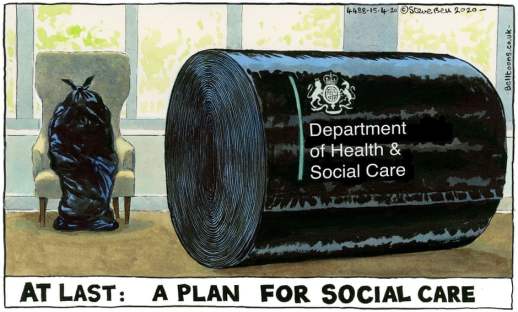
 

Our terrible housing stock is making lockdown life even worse

Celebrities posting from gardens and hot tubs are taking to Instagram to implore us to stay in our homes. Politicians and medical officers can’t give us definitive answers on when the lockdown might ease. The over 70s and medically vulnerable are only a quarter of the way into their strict 12 week staycation. And one thing has become painfully obvious: we’re not all isolating equally.

Sophie Charara www.wired.co.uk

“For the current crisis, what’s becoming clear is that there’s a kind of assumption that the home, both physically and socially, is a privately-owned, bourgeois suburban house, with a garden, space to have a home office in, separate rooms for kids,” says Des Fitzgerald, an associate professor of sociology with a focus on science and medicine, at the University of Exeter. “But one of the things the pandemic is making visible is a kind of collective architectural problem in which it becomes clear that, for a lot of people, their houses are not designed and built for spending a great deal of time in.”

The lockdown is making it increasingly impossible to ignore the failings of both local authority housing and privately rented flats to provide basic shelter, comfort, health and safety. Polly Neate, chief executive of housing charity Shelter, estimates that “hundreds of thousands” of families in the UK are living in overcrowded or bad housing during this pandemic, making the current social distancing advice almost impossible for them to follow. Last September, research by the Heriot-Watt University, Edinburgh, found that 3.6 million people currently live in overcrowded homes with 1.4 million in poor or substandard conditions. And in 2018, the English Housing Survey found that over a quarter of privately rented homes, mostly Victorian houses, in the West Midlands – a coronavirus hotspot – were unfit for human habitation, due to hazards including mould and insufficient heating.

“Adequate natural light, a view or views, access to nature, adequate ventilation, decent acoustics, comfortable internal climate and the ability to move around are all necessary attributes of a healthy environment,” says Geraldine Dening, lead architect and co-founder of Architects for Social Housing. “The same issues we would normally talk about in relation to housing are all exaggerated and exacerbated.”

Poor indoor ventilation could be a particular concern. It has been linked to asthma, one of the conditions which seems, at this early stage, to be linked to some cases of coronavirus, with those in single aspect developments, rather than dual aspect (with windows at the front and back for cross-ventilation) most at risk. Asthma UK’s guidance also notes that asthma sufferers will most feel the effects of poor indoor air quality if they spend a lot of time indoors: currently a civic duty. Then there’s the most visible housing issue during the lockdown so far: access to private outdoor space, such as gardens and balconies, particularly tough for – but not limited to – families with children.

With London parks including Brockwell Park and Victoria Park shutting or reducing their hours, neighbourhoods are losing vital access to green space – something that was accounted for in post war urban planning. “The city’s parks are fundamental to the ability to live healthily, and the home is not an isolated unit, but one that is in direct relationship with its surroundings,” says Dening. “Post war planners understood this when they located tower blocks adjacent to large, open green spaces like the Alton Estate by Richmond Park.” She even suggests we should have a statutory right to outdoor space to avoid dangerous knock-on effects on physical and mental health.

These could range from mobility issues for elderly people with no private gardens, who are used to daily walks, to just-released ONS data that suggests that younger people are struggling more with loneliness during this period: 24 per cent of adults are lonely ‘some or all of the time’ versus 12.7 per cent of over 70s. Paris has just temporarily taken away its residents’ right to outdoor exercise but the British government continues to encourage exercise – if not sunbathing – in public parks and on the streets. Fitzgerald suggests designing out private gardens altogether: “A really radical solution might actually be less about adding gardens to flats. What if all of us only had the public parks as outdoor space? I bet this pandemic would look a lot different.”

Housing that meets the minimum standards needed for planning permission, say 40 square metres for a studio, offers the basic amenities to live – kitchen, bathroom, bedroom. (There are, in fact, no minimum housing standards for private housing; hence landlords partitioning houses into tiny ‘studios’). “Beyond that it ceases to function for any other activity you may now need the unit to facilitate in this current scenario. After washing, sleeping and cooking, the base standard doesn’t give you qualitative living,” says Siraaj Mitha, an architect at Stanton Williams.

In this current stay-at-home phase, this has repercussions on our ability to turn our homes into places of education, work and Zoom-based leisure. A YouGov survey published this month by the Social Mobility Foundation found that 17 per cent of children in households with income over £70,000 a year do not have a quiet room to study enduring the lockdown; that rises to 40 per cent of children living in households who earn less than £20,000.

As anyone with daily video conference calls can attest to, broadband access and speeds – now crucial to working from home and homeschooling – also vary wildly across geography and socioeconomic backgrounds. The research also found that one million children in the UK do not have an internet connection at home or a device they can use for online lessons. The case for public ownership of broadband, a policy in the 2019 Labour Party manifesto, arguably looks stronger than it did pre-crisis.

It’s not just school-age students, either. As Dening points out, students who have been turfed out of university accommodation may have moved back home without a room of their own to focus on their studies and escape to. Overcrowding, whether it’s private rented accommodation in cities with no dedicated living space or multiple generations living in one house, is also exacerbated by stay-at-home orders. Open plan design has been the preferred mode since the 1950s, but this approach limits the ability to acoustically shut off spaces; even a lack of storage space in open plan homes will be more of a problem.

An Ipsos Mori/King’s College London survey of 2,250 people carried out in the first week of April didn’t ask questions specifically about housing but found that 15% of people are already finding it “extremely difficult” to cope under current lockdown measures. Another 14% on top of that expect it to become so in the next four weeks.

“The number of rooms one might have in one’s home is an economic and political issue,” says Dening. “The bedroom tax, for example, means that residents on housing benefit are fined if they have an extra room, so their ability to work from home or ‘self isolate’ if one or more family members gets sick will be considerably diminished or non existent.” It also means there is little or no ability to adjust, alter, transform or subdivide rooms that aren’t “functionally predetermined” for the weeks and months of lockdown. Workers on low incomes, or who are not in work, are already living in the maximum space they are allowed.

The need to be able to safely isolate potentially infected family members as much as possible is much more likely to be an issue for key workers such as NHS staff and supermarket workers. Access to spaces such as vestibules and garages, which are now being used as DIY decontamination zones, have become a point of difference across housing, says Emily Sargent, senior curator of the Wellcome Collection’s Living with Buildings exhibition.

“These liminal spaces like porches and internal stairways are being employed to create distance between the interior and the exterior,” she says. “Looking at the 20th century infestations, your coat and your hat, which had a relationship with the outside world, would be contained in a cupboard or on a hook in an entrance hall. They wouldn’t go into your bedroom or living room.” This kind of behaviour is at this current moment no longer a nice-to-have in modern homes, it’s a necessity. Together with issues around lack of spare rooms, poor ventilation and outdoor space, this might go some way to explaining the recent PA Media reports of frontline NHS workers living in hotels or sending their children to relatives, rather than attempting to safely share one household during this peak of coronavirus infections.

Sargent also wants to see more conversation about another use of the home that will be new to some: the fact that many people are, as instructed, managing and recovering from coronavirus entirely at home. Books like the 1943 The Care of Tuberculosis in the Home published recommendations on how best to replicate sanatorium conditions at home – “offering the patient the best room in the house, ideally on the first floor, removing all the curtains and carpets… ideally with a south facing exposure” – with the instructions in some cases leading to the construction of ‘TB sheds’ in gardens.

Here, the modern trend for open plan design strikes again: “We don’t have the same delineation between living spaces now. We operate in more of an open plan interior and that makes some elements of infectious diseases quite difficult to manage.”

The question remains, then, whether the magnifying glass of this crisis could lead to an opportunity to rethink how our standards and principles of housing actually translate to the homes we live in. Post-pandemic, will we be designing or upgrading for quarantine in a meaningful way?

According to Sargent, we’ve lost track of ventilation as a core “principle of health” in housing that’s in need of revisiting with renewed urgency. Fitzgerald says the critical issue is less about design than maintaining access to public infrastructure safely “if and when this happens again”. For Dening, it’s a question not of architecture alone but political will and above all, the crisis should not be used to provide cover for the type of demolition and gentrification projects that lock out existing residents.

“The idea of the slum and the healthy living environment is rarely solely a material or design issue, but an economic one,” she says. “Refurbishment should always be the default mechanism for making improvements to people’s environments which enable the existing community to remain. There are very few situations where the design is so poor that simple interventions to the existing fabric – rather than wholesale demolition – cannot address.”


MP hears business concerns at online meeting of Sidmouth Chamber of Commerce

Restrictions on coronavirus furlough payments and a delay in releasing tourism investment money were among the issues discussed at an online meeting of the Sidmouth Chamber of Commerce with SimonJupp.

Philippa Davies  www.sidmouthherald.co.uk

The chamber normally meets for breakfast on the first Wednesday of every month at the Kingswood and Devoran Hotel.

Because of the coronavirus lockdown, this month’s meeting was conducted via Zoom, with members participating on video chats from their homes.

They were joined online by the East Devon MP Simon Jupp, who was invited to hear local concerns and respond to questions submitted in advance by the chamber.

These included the furlough cut-off date, and the refusal of insurance companies to pay out for business interruption claims resulting from the coronavirus lockdown.

Mr Jupp said he personally thought the restrictions on furlough payments are unfair.

Anyone who started their job after February 28 is unable to claim the 80 per cent of their salary being paid by the Government if they cannot carry out their jobs because of the lockdown.

Mr Jupp said: “I believe everyone who has started a new job should have the same access to the same Government support as everyone else.”

He said he and many other MPs had made representations to treasury officials and junior ministers on the issue, but added ‘I’m not getting anything to suggest that the policy will change’.

On the issue of insurance, he said he had received a ‘rather disappointing’ response from the Association of British Insurers, which said in most cases the standard business interruption cover does not include forced closure by the authorities.

“For me as the MP it does raise some serious questions about the insurance industry as a whole, which I’m discussing with other MPs,” he said.

“There’s a product here that we’re all paying for and I have significant concerns about that, which I’ve raised with the treasury and other officials.”

The chamber also raised the issue of East Devon District Council’s delay in releasing £330,000 earmarked for investment to promote tourism in Sidmouth.

The money was part of the Section 106 payment made to the council by the developer of the former Fortfield Hotel, and was promised to Sidmouth more than five years ago.

Mr Jupp said he would contact the chief executive of East Devon District Council, Mark Williams, on that issue.