Another Game Changer bites the dust – another shambles

The government has been forced to abandon a centralised coronavirus contact-tracing app after spending three months and millions of pounds on technology that experts had repeatedly warned would not work.

UK abandons contact-tracing app for Apple and Google model

Alex Her www.theguardian.

In an embarrassing U-turn, Matt Hancock said the NHS would switch to an alternative designed by the US tech companies Apple and Google, which is months away from being ready.

At the Downing Street briefing, the health secretary said the government would not “put a date” on when the new app may be launched, although officials conceded it was likely to be in the autumn or winter.

The idea behind the NHS app was that it could trace anybody that a person with coronavirus symptoms came into close contact with by using the Bluetooth connectivity on a standard smartphone, and notify them to self-isolate.

Ministers had insisted on using a centralised version of the untested technology in which anonymised data from people who reported feeling ill was held in an NHS database to enable better tracing and data analysis. This version was not supported by Apple and Google.

Work started in March as the pandemic unfolded, but despite weeks of work, officials admitted on Thursday that the NHS app only recognised 4% of Apple phones and 75% of Google Android devices during testing on the Isle of Wight.

That was because the design of Apple’s iPhone operating system is such that apps quickly go to sleep when they are not being used and cannot be activated by Bluetooth – a point raised by experts and reported by the Guardian in early May.

The Department of Health and Social Care refused to say how much had been spent on the effort, although official records show three contracts worth £4.8m were awarded to the developer VMWare Pivotal Labs for work on the app.

Silkie Carlo, the director of the privacy charity Big Brother Watch, said: “This just shows what a mess the centralised data-hungry approach was. Government was wrong to waste precious time and millions of pounds of public money on a design that everyone warned was going to fail, and now we’re back at square one.”

Hancock had been particularly enthusiastic about the NHS app and had at one point said it would be “rolling out in mid-May” across England. Officials had denied the Apple-Google alternative was being evaluated, although on Thursday it was revealed that in fact work was going on to assess it from 6 May.

On Thursday, Hancock said the alternative was not ready either because it could not measure distance accurately. In some cases it cannot distinguish between phones 1 metre and 3 metres away – even though one is inside and one outside the current 2-metre physical distancing limit.

Experts say an app would be useful to track the potential spread from an infected person on public transport or in any other situation where they come into contact with people they do not know. But the distance measurement problem means it cannot be relied on to make decisions about who should self-isolate.

In the press briefing, Hancock tried to shift the blame on to Apple, saying: “So as it stands, our app won’t work because Apple won’t change their system, but it [the NHS app] can measure distance and their app can’t measure distance well enough to a standard that we are satisfied with.”

When asked whether he had unwisely stuck to the wrong approach, Hancock said: “I’m from Newmarket, we back both horses.” He went on to argue that testing the Apple–Google alternative for several weeks meant the government could make the leap from one system to another with confidence.

Apple did not immediately comment but in a statement on Thursday night, Google said: “We welcome the announcement from the UK government today. We have developed an Exposure Notification API with Apple based on consultation with public health experts around the world, including in the UK, to ensure that our efforts are useful to authorities as they build their own apps to limit the spread of Covid-19, while ensuring privacy and security are central to the design.”

Earlier this week Italy and Germany launched their own apps nationwide based on the Google-Apple model. The Italian app has been downloaded 2.7m times, while the German app was taken up 6.5m times on Tuesday, its first day.

Speculation about the fate of the NHS app had been circulating for weeks after Hancock’s mid-May deadline was missed. On Wednesday, James Bethell, a junior health minister responsible for the app, told MPs it would not be ready until the end of the year. “We’re seeking to get something going for the winter, but it isn’t a priority for us,” he told a parliamentary committee.

At one point it had been hoped that Scotland, Wales and Northern Ireland would also use the app, which is intended for England in its revised form. But the repeated delays had prompted the other nations to reconsider.

Jonathan Ashworth, the shadow health secretary, said: “This is unsurprising and yet another example of where the government’s response has been slow and badly managed. It’s meant precious time and money wasted.

“For months, tech experts warned ministers about the flaws in their app, which is why we wrote to Matt Hancock encouraging the government to consider digital alternatives back in May.”

Sal Brinton, the Liberal Democrat health spokesperson in the Lords, said: “Lord Bethell and Dido Harding [who is in charge of the test-and-trace programme] have already said it will be some months before England has that full service, probably winter. We need it now, and changing to an app that still has technical issues with Bluetooth distracts from the importance of fast, effective tracing by experts.”
 

No.10 Must Stop Treating Tory MPs Like ‘Hobbits’ To Be Ignored, Ex-Minister Says

Downing Street needs to establish regular contact with Tory MPs instead of treating them like “annoying hobbits in the shire” who do what they are told, a senior party figure has said.

www.huffingtonpost.co.uk

Robert Halfon blamed mistakes like the failure to extend free school meals into summer – until footballer Marcus Rashford forced a U-turn – on No.10 failing to use its “political nous” and being unaware of pressure from MPs’ constituents.

He urged Downing Street to “dramatically transform” its political operation by holding regular forums with MPs who are “in touch” with constituents’ concerns and “really get” the issues they face, arguing it could help avoid errors in future.

It comes amid rising Tory discontent at No.10’s handling of coronavirus, the Dominic Cummings lockdown scandal, and repeated U-turns in recent weeks, and after officers of the powerful 1922 backbench MPs’ committee reportedly urged Boris Johnson to tear down the “iron curtain” surrounding the PM.

Halfon told HuffPost UK’s Commons People podcast: “I love Tolkien so I’ve been re-reading Lord of the Rings and Dominic Cummings seems to have taken on the mythical status of Wormtongue to King Theoden of Rohan, and of the villain that everybody loves to hate.

“And MPs of course are considered by the No.10 policy unit as annoying hobbits in the shire […] and we’ll just do what we’re told to do.

“So it has been difficult. I think sometimes they don’t understand the pressures from constituents.”

Halfon, who chairs the Commons education committee, called on No.10 to establish “serious regular contact programmes” so they can understand what is going on in places like his Harlow constituency or “blue wall” ex-Labour seats in places like Stoke.

He said: “I don’t understand why there isn’t any radar system whereby No.10 – there are people in No.10 with enough political nous to know that issues like free school meals, for example, are going to be a mega hot potato and to prepare a battle plan and to talk to MPs.

“I think there are a lot of Vote Leave people at the heart of No.10 and they fell out with some of the MPs at the time, I think their view about MPs is coloured from that time – MPs are just annoying hobbits from the shire who have to be tolerated, in essence.”

He added: “It needs to be dramatically transformed, it needs to be a much better political operation in No.10 where they bring MPs in to discuss these issues – have regular contact with MPs in marginal seats.”

The former minister also urged the prime minister to appoint a senior “bruiser” in the mould of John Hayes, who acted as the minister responsible for the Tory party under David Cameron, to act as a mediator between parliament and No.10.

“You need those people who are bruisers, who understand the party – it’s in their blood for 20 years, 30 years – who can speak to any MP, who can relate to any MP, who is a people person,” Halfon said.

“You need someone like that who can understand what is going on and not give the impression that we are just annoying legal necessities who just do what we’re told.”

Halfon added that it would be someone “who really knows the parliamentary party and can go to the prime minister and say ‘sort this out’.”

“That’s what the prime minister needs. He needs someone acting as a lighthouse to stop the ship hitting the rocks, and he hasn’t got a lighthouse at the moment,” Halfon said.

East Devon District Council – the pendulum swings

What follows is Owl’s early interpretation of the most significant changes to have been announced to date and the changes in the pipeline to the power structures of East Devon District Council. Owl has applied “best endeavours” to ensure the details correct at the time of publication and hopes there are no significant errors.

We await the conclusion of the final Act V to ratify nominations of individuals to posts.

New Initiatives

There are three new cabinet portfolios: Democracy and Transparency; a new focus on Covid and on climate change.

The role of Assistant Portfolio Holder has also been created to help the following four portfolio holders: The Economy and Assets portfolio; Coast, Country and Environment portfolio; Climate Action portfolio and The Finance portfolio.

Quite how these work is, as yet, unclear but Owl sees in the Agenda pack for next week’s Extraordinary General Meeting (EGM – (Act V)) that a new section defining their roles is to be included in Article 6 of the constitution. 

The Agenda pack says that instead of the Cabinet setting up “Think Tanks” to assist portfolio holders  this will now be done by “Portfolio Teams”. Portfolio Teams will be cross-party, have up to 15 members, on the basis of the political balance as far as possible, and that delegated authority given to the Monitoring Officer to work with Group Leaders to constitute the membership of the Teams rather than it being a matter for Council to approve. 

The Agenda pack also says that the new administration is of the view that the role of Lead Member needs review and is likely to be superseded by an effective Portfolio Team approach as well as the work of the Governance Review Working Party. 

Owl has already mentioned that The Development Management Committee will revert to its original title of Planning Committee. A few words, but highly significant ones.

The shift in the Power Balance

Prior to the election of May 2019, the Conservatives (who had been in power since 1974) had a majority of 9 seats. The May poll left them with only 19 against 20 seats for Independents, 11 for East Devon Alliance, 8 for Liberal Democrats and 2 for the Green party. Cllr. Ben Ingham (who resigned from the Conservative Party around 15 years ago but campaigned and was elected as an Independent) took control of the council by forming an informal  partnership/coalition with the Conservative councillors. There were no Conservatives in Ben Ingham’s Cabinet but Conservative Cllr. Stuart Hughes became the Chairman of the council and, crucially, Conservatives were given key roles in influential committees.

Gradually members of Ben Ingham’s Independent Group have defected.

In March 2020, members of the Green, Independent East Devon Alliance (EDA) and Liberal Democrat (LibDem) parties and an Independent Councillor combined to form a new group with the title the Democratic Alliance numbering 23 – now 24. The Democratic Alliance Group (DAG).

In the second week of May 2020 eight members of Ben Ingham’s Independent Group resigned from the group. One joined the Democratic Alliance (see above) and seven created the Independent Progressive Group (IPG).

Soon after, the two groups (Democratic Alliance and Independent Progressive Group) signed a Memorandum of Understanding to work together. Given that they had 31 out of a total of 60 EDDC councillors, they held a majority. Owl uses the abbreviation MG (Majority Group) to describe them in the tables that follow.

Cllr Paul Arnott and Cllr Eileen Wragg were subsequently elected Leader and Deputy Leader; Cllr Dr Cathy Gardner and Cllr Val Ranger were elected Council Chairman and Vice Chairman.

How the new Power Balance is reflected in the allocation of seats on Committees

(Political power balance rules do not apply to the Cabinet nor does it apply to the appointment to outside bodies which yet have to be announced.)

The new cabinet May 2020

(Leader appointments, political balance does not apply)

Councillor Megan Armstrong MG (IPG)  Sustainable Homes & Communities portfolio holder 

Councillor Paul Arnott MG ( EDA) (Chairman of Cabinet – Leader of Council) 

Councillor Jess Bailey  MG (IPG) Corporate Services and Covid-19 Response & Recovery 

Councillor Paul Hayward MG (EDA)  The Economy and Assets portfolio, assistant portfolio holder Cllr Geoff Pratt MG (IPG)

Councillor Geoff Jung MG (Ind)  Coast, Country and Environment portfolio, assistant portfolio holder is Cllr Eleanor Rylance. MG (LibDem)

Councillor Dan Ledger MG (EDA)  Strategic Development portfolio

Councillor Paul Millar MG (Ind)  Democracy and Transparency portfolio

Councillor Marianne Rixson MG (EDA)  Climate Action portfolio holder, assistant portfolio holder Cllr Denise Bickley MG (EDA)

Councillor Jack Rowland MG (EDA) The Finance portfolio holder, assistant portfolio holder is Cllr John Loudoun MG (EDA)

Councillor Eileen Wragg MG (LibDem)  (Vice-Chairman of Cabinet, Deputy Leader of Council) 

Note: three of these were genuine independents in the Ingham Cabinet  (Megan Armstrong, Jess Bailey and Geoff Jung) – four if you include Paul Millar who resigned last September and who was not replaced (too radical?)

Committees

(nominations to be ratified on 24 June)

Next to the cabinet, the real power in the council lies in the business conducted by a handful of politically balanced committees. So who chairs these and the balance of parties within them is critically important. Remember that the Chairman has the casting vote! 

There are a total of 113 seats across the 11 formal committees in EDDC. EDDC treats the DAG and IPG as separate entities, but since they have signed a Memorandum of Understanding Owl has introduced an additional row in the table to give the combined total for ease of comparing numbers with those of the Opposition and the remaining “unaligned” groups. The smaller groups such as the Independents and Cranbrook Voice appear to have done proportionately better than the larger groups through generous rounding.

This first table shows how these 113 seats are allocated across the political groupings

Democratic Alliance Group (DAG) 24 members 40% 46 seats 
Independent Progressive Group (IPG) 7 members 11.67% 13 seats 
Total Majority Group (MG) 31 members 51.67% 59 seats
Conservative Group The Opposition 20 members  33.33% 38 seats
The Independents (Rump of Ingham’s Group) 5 members  8.33% 10 seats 
Cranbrook Voice (CV) 3 members 5%  6 seats 
Independent 1 member 1.67%  0 seats
TOTALS 60 100 113

The second table lists nominations for the EGM as Committee Chairs and Vice Chairs. The table also shows individual affiliations.

Committee Chairman Vice Chairman
Overview Committee Nick Hookway MG(IPG) Vicky Johns MG(IPG)
Scrutiny Committee Colin Brown Con Val Ranger MG(EDA)
Housing Review Board  Tony McCollum MG(IPG) To be appointed by Housing Review Board 
Strategic Planning Committee  Dan Ledger MG(EDA) Olly Davey MG(Green)
Planning Committee Eileen Wragg MG(LibDem) Sarah Chamberlain MG(LibDem)
Audit & Governance Committee Sam Hawkins CV Paul Millar MG(Ind)
Standards Committee Chairman of the Council  No appointment required 
Interviewing (Chief Officers) Leader Deputy Leader
Investigating and Disciplinary Committee  Deputy Leader  No appointment required 
Employment Appeals  Fabian King MG(LibDem) No appointment required
Licensing and Enforcement Joe Whibley MG (Ind) Kim Bloxham CV

This last table shows membership of five selected key Committees – the number of allocated seats and Proportional Balance 

Number in Group % of Council membership 15 seats: Scrutiny

Chair Con

13 seats Overview

Chair IPG

15 seats Strategic Planning

Chair DAG

16 seats Planning

Chair DAG

10 seats Audit and Governance

Chair CV

24 Democratic Alliance Group (40%) 6 5 6 7 4
7 Independent Progressive Group (11.67%) 2 2 2 2 1
31 Total Majority Group  (51.67%) 8 7 8 9 5
20 Conservative Group (33.33%) 5 4 5 5 3
5 The Independents (8.33%) 1 1 1 1 1
3 Cranbrook Voice (5%) 1 1 1 1 1
1 Independent (1.67%) 0 0 0 0 0


Cabinet today, Thursday, 18th June, 2020, 5.00 pm – Opening more Toilets

Virtual Meeting – Cabinet Thursday, 18th June, 2020, 5.00 pm

Matters for Decision

Reinstating StreetScene seasonal resource and additional budget to allow improved public toilet opening

Recommendation – That Cabinet:

1. Note the use of the StreetScene agency budget of £62k to enable StreetScene Operations to meet statutory responsibilities in relation to street cleansing and maintain an Outstanding Environment.

2. Review Options A-Ci for opening public toilets further (which would require additional budget ranging from £53,282 – £124,325 for 9 months until March 2021) and decide whether to pursue one of the options and to make a recommendation to Council for the additional funding, or virement from other budgets.

3. Approve an extensive communications effort to explain why this restricted opening and over budget resource is required and approach the Town & Parish Council’s benefitting, seeking a contribution to the costs.

4. Approve a long term review of public toilet stock taking account of the ‘new normal’, requiring consideration of financial sustainability and Covid-19 secure building adaptations and investment within the stock with a report to be brought back to Cabinet for consideration.

Why five acts to “change the guard” at EDDC? – Owl reveals the Doomsday Scenario

The Agenda pack for next Wednesday’s Extraordinary General Meeting (EGM) contains recommendations for changes to the constitution “To ensure that the Council’s governance framework reflects the changes to the political balance within the Council and to enable certain of the appointments that would have happened at Annual Council to be agreed for the remainder of the civic year.”

It appears from the constitution that: “the business at EGMs should be ‘limited to a single item in the form of a motion…’. So when the previous Conservative Council Chairman, Cllr. Stuart Hughes decided [pace Paul F] to cancel the Annual Meeting he created the perfect Doomsday Scenario in which a change of regime could only take place one vote and one EGM a time, potentially hobbling the Council to eternity- the Doomsday Scenario.

His intention was to retain the status quo to provide the “Conservative” experience and stability to guide East Devon through the pandemic- it has just caused a massive distraction and an unnecessary waste of time and effort.

Did he intend to create quite such chaos? Who knows, but Owl doesn’t believe that he was acting alone. It was not done in the best interests of the people of East Devon.

Now that separate meetings have established that the Council does indeed want to change its Chairman and Leader by significant majorities, wiser heads have prevailed. The way is clear to hold an EGM to change the constitution and then go on to make the remaining changes in one go. 

UK housebuilders will need government support, says Berkeley

The Development Lobby in action – Owl keeps drawing attention to how developers occupy, and have occupied for years, key positions in the local Local Enterprise Partnerships and the newly emerging promotional organisations such as “The Great South West” (and one or two that have fallen by the way).

Mark Sweney www.theguardian.com 

Berkeley has said the housebuilding and construction industry will need government support, including a simplification of the planning process, if it is to play a leading role in helping the British economy recover from the coronavirus.

Rob Perrins, the chief executive of the FTSE 100 housebuilder, said the government would need to intervene to kickstart growth.

“Housebuilding and construction can play a vital role in the broader economic recovery following Covid-19,” Perrins said as Berkeley announced its full-year results on Wednesday.

“This will require government support, similar to that seen following the 2008-09 financial crisis, including: the reversal of the property tax increases seen since 2014, a reduction in the bureaucracy and cost of planning, and direct investment into affordable housing.”

UK housebuilders have benefited from government support in recent years because of the help-to-buy scheme, which subsidised the acquisition of new-build homes and boosted profits at companies such as Persimmon and Taylor Wimpey.

While many firms in the sector have tapped the government’s wage support and loan schemes in recent months, Berkeley said it had not had to turn to the government’s furlough programme or its Covid corporate financing facility.

Berkeley said on Wednesday it would stick to its plan of providing £280m a year to shareholders until 2025, with the next £140m payment still on track for September. However, a planned return of £455m of surplus capital has been deferred for up to two years because of the pandemic.

The company, which operates mainly in London, Birmingham and the south-east of England, said in the year to the end of April it built almost 3,000 homes, including about 10% of London’s new private and affordable homes. Berkeley said it supported about 32,000 jobs, directly and indirectly.

It reported a 35% fall in pre-tax profits in the year to the end of April, from £775m to £503m. The company said it had been on track to meet its profit guidance of £550m before the lockdown but revised that down to £475m at the end of March. 

“Berkeley therefore surpassed its initial expectation in this regard,” the company said. It maintained its target of an average annual profit of £500m through to 2025.

“We now anticipate profit delivery in the coming year to be weighted towards the second half in an approximate one-third to two-thirds ratio,” the company said. “This does assume no further significant disruption from a second wave of Covid-19 or a disorderly end to the Brexit transition period.”

Production capacity dropped about 40% as the UK went into lockdown and is now back up to about 80%. Sales in April and May were 50% below normal market conditions.


Act V – Agenda pack for Wed 24 June reveals fundamental change

The Development Management Committee will revert to its original title of Planning Committee. A few words but highly significant (though Owl has been reporting that “three homes” Jenrick is plotting to reduce further local authority planning controls).

Eileen Wragg (deputy Leader) and Sarah Chamberlain have been nominated as Planning Chair/Vice Chair. Both are LibDem members of the Democratic Alliance and Eileen is a very experienced councillor.

Next to the cabinet, the real power in the council lies in the business conducted by a handful of committees. So who chairs these and the balance of parties within them is critically important. It was Ben Ingham’s generosity to the Conservatives in appointments to the (then) Development Management Committee and Strategic Planning Committee that allowed him to govern with Conservative support, indeed with their “admiration”, but without having to have them in the Cabinet.

Dan Ledger and Olly Davey have been nominated as Chair/Vice Chair of the Strategic Planning Committee. Dan come from the EDA wing of the Democratic Alliance (and must one of the younger members of the council), Olly is a Green.

Independent Progressives not only have a number of Cabinet posts but also feature in committee posts.

Cranbrook Voice also have a “voice”.

Colin Brown, Conservative, has been nominated as Chair of the Scrutiny Committee, theirs by right as the official Opposition party (and Owl expects to see a renewed enthusiasm for scrutiny from the previously dismissive Tories). Val Ranger, Council Vice Chairman, has been nominated as Vice Chair.

Owl is preparing a more detailed briefing on how power has shifted within EDDC’s committees and highlight other changes. Unfortunately, the tables in the agenda pack don’t easily copy and paste onto a web page, there is also a need to annotate and simplify these to show post holder affiliations within the now quite complex power structure in the Council. So more to come.


Owl’s Verdict: the new administration has hit the ground running and signalling real change. 

Don’t wait for virus cases to appear in Hospital – go out looking for it!

“Given that we still face months of potential chaos and damage, we have to understand why the government keeps ignoring well-established principles of good practice, and why it is willing to hand over contracts to companies such as Serco rather than involving local public health systems from the outset. This is not a case of mistakes being made. Instead, the government’s contact tracing shambles suggests something more troubling: a disdain for evidence, an obsession with centralised control, and the privileging of private over public interests.”

Why we got test and trace so very wrong

David McCoy is a professor of global public health and director of the Centre for Public Health at Queen Mary University of London www.theguardian.com 

Most people agree that England’s handling of the Covid-19 crisis has been slow and disorganised; a fact made worse by the government’s willingness to squander public trust by massaging data and spinning the facts to save face. Yet its shambolic approach to testing and contact tracing isn’t the result of mistakes, but a choice to ignore evidence and experience.

For months, public health specialists in England have asked the government to decentralise responsibility for testing and tracing to local authority public health teams, which can develop nimble and responsive plans that are specific to different contexts, and organise systems with clear lines of accountability. They have also asked the government to recognise the obvious fact that case detection and contact tracing are social and behavioural interventions, which rely on skilled personnel and trust.

Take the detection of coronavirus cases – a fundamental part of preventing the spread of the disease. Because speed is critical, we can’t passively wait for people to present themselves at a drive-in centre for testing. We need to actively look for people across the population who may be infectious and encourage them to be tested. The sooner cases are identified, the quicker they can be quarantined, and the fewer contacts there will be to trace. This is why countries such as Singapore and Taiwan implemented rigorous screening programmes in airports. They didn’t wait for the virus to appear in a clinic or hospital – they went looking for it.

Testing is particularly important with coronavirus, because many people have mild or no symptoms. Actively detecting new cases through testing also allows public health authorities to visibly demonstrate the importance of vigilance, and provides an opportunity for frontline health workers to engage with communities. Ideally you want to target communities or population groups who are at risk of either getting a severe infection, or transmitting the virus to others.

In Vietnam, screening programmes initially targeted incoming passengers at airports who had to agree to a temperature check, and fill in a form giving their contact details and travel and health history. These measures were then extended to anyone entering a major city, government building or hospital. Anyone with suspicious signs or symptoms, such as a temperature over 38C, was taken to a medical facility for thorough testing. Accessible testing stations were also set up across cities, while banks and apartment complexes established their own screening procedures. Likewise, Germany developed an aggressive case-detection strategy, testing anyone with symptoms and using a public information call centre to direct people to nearby local testing centres.

You also need a well-trained workforce, able to engage with people on a human-to-human basis, with some epidemiological and clinical knowledge. Because testing results aren’t always correct and can be delayed, sometimes a presumptive clinical diagnosis – of the sort a trained health worker can provide – is necessary. And when a case has been identified, information needs to be carefully gathered and assessed to determine the likely period of infectiousness, identify high-risk contacts (those who have had close and prolonged interaction, especially in a confined indoor space) and then formulate a tracing plan. Conversations need to be empathic and culturally sensitive, and conducted in the right language.

In Vietnam, teams of professional health workers, supported by civil servants and other recruits, delivered a programme of case detection, contact tracing and quarantine enforcement that was pivotal to bringing the virus under control. Kerala state in India is another success story: it acted quickly to minimise the spread of the virus by screening people in airports, seaports and railway stations. Kerala’s extensive community-based primary healthcare workforce helped to identify suspected cases and followed this up with nuanced conversations about the risk of spreading the infection to others. Because capacity was limited, testing was directed primarily at those with symptoms.

The workforce needs to be trusted, as well as skilled. Contact tracing involves sharing and divulging sensitive personal information about other people, some of whom will be subsequently inconvenienced by having to go into quarantine. People are more likely to cooperate and adhere to required behaviours if instructed by someone they trust who is clearly working in their interest. In Kerala, citizens trusted the state’s visible public health leadership and its decentralised health system (every town and village has a primary health centre, which has strong links to local communities).

For some reason, these basic principles eluded policymakers and public health professionals in England. Where Germany worked through a set of 400 decentralised teams, we decided to centralise our operations, a mistake that was compounded by decoupling testing from contact tracing, and then made worse by outsourcing both testing and contact tracing to private sector companies. The government also fixated on a mobile phone contact tracing app before properly establishing a human-driven and people-centred testing and contact tracing system.

Given that we still face months of potential chaos and damage, we have to understand why the government keeps ignoring well-established principles of good practice, and why it is willing to hand over contracts to companies such as Serco rather than involving local public health systems from the outset. This is not a case of mistakes being made. Instead, the government’s contact tracing shambles suggests something more troubling: a disdain for evidence, an obsession with centralised control, and the privileging of private over public interests.


Tory councils warn coronavirus second wave could bankrupt local authorities

A group of Conservative-run councils has told ministers that a second wave of coronavirus would leave them with a multibillion-pound budget shortfall, triggering a wave of insolvencies and forcing a fresh round of emergency cuts to local services.

Patrick Butler www.theguardian.com 

The County Councils Network (CCN), which acts for 39 of the biggest English authorities, said that even without a resurgence of Covid-19, they face “large scale reductions in services this year” unless ministers agree to a long-term bailout plan.

It called for a government-backed “income guarantee” to underpin council finances over the next five years, as well as short-term emergency funding to keep authorities afloat as they struggle with declining council tax income and rising social care costs.

The financial impact of Covid-19 pressures “may lead to a significant number of councils being forced to consider whether a S114 notice [a statement of effective bankruptcy] is required,” a CCN-commissioned report said.

The findings will increase pressure on ministers to agree to a further funding measures to stabilise English councils, which collectively estimate shortfalls of around £9bn this year as a result of pandemic costs and income losses from local taxes and charges.

Although the government injected £3.2bn of pandemic emergency funds into local authorities in two tranches in March and April, councils said that money has run out and that many are currently running on “fresh air”.

The CCN is said to carry weight in Whitehall because its members provide local council services in around two-thirds of all Tory-held constituencies, including in home counties heartlands such as Kent, Surrey, Buckinghamshire, and Hampshire.

Housing and local government minister Simon Clarke told MPs earlier this week he was “working closely with cabinet colleagues on a comprehensive plan to ensure councils’ financial sustainability over the financial year ahead”.

Asked by Labour MP Kate Osamor whether councils should prepare for a second wave of austerity cuts to enable them to balance their budgets, Clarke replied: “The answer to that question is unequivocally no, they should not.”

However, several councils have started to plan emergency cuts to stave off bankruptcy. Wiltshire county council last week said that a £50m shortfall caused by extra pandemic costs had put it at “significant risk and threat” of collapse, while Luton borough council has warned of £22m cuts.

Manchester city council is to hold an emergency budget next month after saying that a £133m shortfall leaves it with “difficult choices”. Stevenage borough council last week agreed an emergency budget to freeze short-term spending after estimating it faced a £6m shortfall.

The report by consultants Grant Thornton modelled three scenarios that leave the 39 CCN member councils with a collective shortfall of between £2.5bn and £4.5bn by April 2022, depending on whether a Covid-19 second wave leads to a second lockdown.

It found member authorities will have fully exhausted their financial reserves within 18 months under current projections, leaving many unable to fulfil their legal duty to balance their annual budget and vulnerable to insolvency.

Many councils would have little scope to find further cuts because a decade of real-terms funding reductions “has left most councils with significantly fewer options to drive out further efficiency or to make cuts to front line services”, the report said.

Cllr Carl Les, CCN finance spokesperson and leader of North Yorkshire county council, said: “This research shows the challenges facing county authorities and the severity of the potential impact on councils’ sustainability.”

Devon is waiting: our health and social care system at the mercy of national incompetence – a report from Health Scrutiny

A report by County Councillor Martin Shaw (from his blog)

Devon is waiting: our health and social care system at the mercy of national incompetence – a report from Health Scrutiny

Posted on  Updated on 

image-4

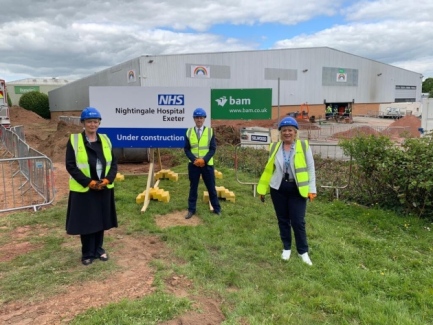
Exeter’s Nightingale Hospital – still on track for completion.

I attended (virtually) Devon’s Health and Adult Care Scrutiny Committee yesterday, the first meeting since the pandemic began.

The overall picture: things moving too slowly (which has cost lives), mainly because at every stage the local situation has been dependent on the deeply flawed national response.

Here are my key takeaways (and some of my inputs):

  • Devon’s overall death toll is lower than the national average – but we still have had more deaths in Devon than they’ve had in Australia and New Zealand combined.
  • The care home death toll (half of all deaths) is less would be expected given the community infections. This suggests that the County Council’s big operation to support care homes may have helped. But in March, Devon NHS still followed the infamous national directive to discharge hospital patients into care homes without testing. It is likely that this helped cause some outbreaks.
  • Only when I pressed was there any acknowledgement of possible failings in the early part of the pandemic. Due to technical problems, the committee failed to hear Dr Cathy Gardner’s contribution about care homes in the public consultation session, although it was read out late in the meeting. I have published it here.
  • Devon leaders have been arguing with other local government leaders for more local management of the crisis (as I and others were arguing in April) and this has influenced Government policy for the next phase of the pandemic.
  • Although Devon is a ‘beacon council’ for the new tracing system which was supposed to be running by June 1st, we are still waiting for it to kick in. It sounds more likely to be August than July before it is fully functional.
  • So although we now have very few cases of Covid-19 in Devon, and are at the stage where (in theory) we could effectively track, trace and isolate any new cases, we can’t actually do that – we are in limbo … .
  • The big takeaway of the pandemic for the CCG is the advantages of e-consultations with both GPs and hospital consultants. While recognising that they can indeed help all concerned, I questioned (in the light of complaints made by constituents) whether they might not also exclude some people, and said research was needed on how they affected access to services. I worry that the shift to e-consultation might have contributed to the drop in demand for urgent non-Covid services, which may cause people to miss out on crucial treatments.
  • I pressed on the need to separate care homes from clinical provision, and for regular testing of people coming into care homes, as well as staff and residents, to enable family visits to resume. I was assured that work on these issues is in progress … but yet again it depends considerably on national guidelines.
  • It is recognised that the provision of services (and the Devon NHS Local Plan) will need to be revised in the light of the pandemic experience and post-pandemic challenges. There was a lot of emphasis in the papers on doing things locally … we didn’t get to discuss this, but this will be a big issue over the coming months.


Latest news on Public prosecutor faces legal action over Cummings’ Durham trip

A judicial review is being sought over the failure of the director of public prosecutions, Max Hill, to investigate Dominic Cummings for alleged breaches of the coronavirus lockdown rules.

The complaint has been lodged on behalf of a member of the public, Martin Redston, who is concerned the DPP has shown insufficient independence from the government over the movements of Boris Johnson’s key adviser.

Matthew Weaver www.theguardian.com 

Redston’s legal team, headed by the barrister Michael Mansfield, gave Hill a deadline of last Thursday to state that the Crown Prosecution Service (CPS) was actively considering the case against Cummings.

On Tuesday, after the deadline had passed and Hill’s office said it was a police matter, Redston’s lawyers began proceedings in the high court to seek an urgent judicial review.

The grounds for the filing noted that the attorney general, Suella Braverman, had tweeted her support for the prime minister’s chief aide, without allowing due legal process to take place, on the day after the Guardian and Mirror revealed Cummings’ trip to Durham during lockdown, and before they reported his trip to Barnard Castle.

It said: “There is a lack of an appearance of independence to the decision-making of the DPP which arises from the scheme of subordination of the DPP to the attorney general.”

The grounds for the action also noted that Hill refused to disclose any communication he may have received from Johnson, his ministers or officials over the Cummings affair. It said: “The manoeuvres of the government and use of its powers behind the scenes is of obvious concern given the history of the this high-profile case.”

It said the DPP had a duty to take “active steps to ensure the maintenance of public confidence in accountability to, and enforcement of, the law that is designed to protect the public from the ongoing threat of Covid-19”.

A statement from Redston’s lawyers, Hackett & Dabbs, said: “The DPP has failed to exercise his discretion to refer the matter to the police on Mr Redston’s request. Consequently there has been a failure to engage with the need for public confidence to be restored: the law applies to everyone.”

Redston told the Guardian: “I feel this is a matter of public concern especially now that people are using the ‘Cummings defence’ to do whatever they like during the pandemic, after previously complying with the regulations. This is not a political action. It is about ensuring that the law is upheld.”

Redston, who runs a London-based civil and structural engineering business, added: “People will say: ‘You’re a Guardian reader you would do this’, but 71% of the population believe Cummings breached the regulations. And quite a number of Conservative MPs are also unhappy.”

Asked if he could afford the cost of a legal action, Redston said: “It is expensive but we can afford it.” He is also seeking crowdfunding for the challenge.

A CPS spokesman said: “Investigations into alleged criminal conduct are a matter for the relevant police force. This application for judicial review will be contested and in those circumstances we cannot comment further.”

Earlier this week, Nazir Afzal, a former regional chief prosecutor, announced he had joined a separate legal campaign for a new investigation into Cummings’ trips.

Afzal said that if the CPS and the police did not investigate he would consider launching a private prosecution on “behalf of every citizen whose goodwill and generosity led them to make painful sacrifices in order to comply with the law and protect their fellow citizens”.

Afzal’s older brother Umar died of coronavirus on 8 April while self-isolating at his home in Birmingham. At that time Cummings was in Durham, 264 miles from his London home.

A three-day investigation by Durham police into Cummings’ movements found he probably breached health protection regulations when he took a 52-mile round trip to the town of Barnard Castle, County Durham, with his wife and son on her birthday.

But the force decided to take no further action and made no finding in relation to “stay at home” government guidance over Cummings’ decision to leave London for Durham.

[Owl notes that Redstone’s funding campaign has not yet reached the levels of Dr Cathy Gardner’s, the level needed to go to go all the way]

“Changing of the Guard” at East Devon District Council – Act V – the final Act

(Or how the Conservatives with only one third of the Council seats tried to retain power for ever and ever. A comic tragedy in five parts.)

Extraordinary Virtual meeting of Council, Council – Wednesday, 24th June, 2020 6.00 pm

Readers may recall that Conservative Cllr and Council Chairman “We plan anywhere” Stuart Hughes took the opportunity provided by a change in legislation by the government to prematurely cancel the annual council meeting. This decision has created the need for five extraordinary general meetings at a time of crisis to do the same business (the five acts in this comic tragedy). 

Act I – where a meeting had to be held to decide to have a meeting to vote a new Leader.

Act II – where the meeting to elect a new Leader crashed when Conservative Cllr. “expletive deleted” Tom Wright swore on open mic causing You Tube to pull the plug with only a few votes left to be cast. (Someone has to play the role of wicked uncle).

Act III – where Cllr Paul Arnott and Cllr Eileen Wragg were elected Leader and Deputy Leader.

Act IV – where Cllr Cathy Gardner and Cllr Val Ranger were elected Council Chairman and Vice Chairman.

Act V – where the council will consider Governance Arrangements and committee appointments for the remainder of the Civic Year (2020/21) [The key appointments directing the way ahead]

‘Bleak future’ for council as funding fears mount

WARRINGTON Borough Council risks not being able to set a balanced budget next year – if the Government fails to reimburse it fully for coronavirus costs.

Owl doubts that any council has been allocated enough funds to cover local cost. A pandemic needs to be managed locally, not remotely from Whitehall. Is “Three homes” Jenrick tone deaf?

By Aran Dhillon, Local Democracy Reporter www.warringtonguardian.co.uk 2-3 minutes

It was allocated around £11.1 million out of the Government’s emergency £3.2 billion for local authorities.

However, the Labour-run authority expects costs and loss of income due to Covid-19 to total around £51.5 million.

The council’s cabinet noted the financial risks facing the town at its virtual meeting on Monday.

Deputy leader Cllr Cathy Mitchell said: “There are obviously risks to the setting of the budget for the next financial year.

“The full impact of Covid is not yet known and will be assessed in more detail in July’s cabinet report.

“Much of it will depend on if, when and how the Government responds to the funding gap which is being faced by local councils all across the country.”

Leader Cllr Russ Bowden also expressed fresh fears over the situation.

He said: “It is not just about increasing costs, it is also the impact that It is having on traditional sources of income, not least which is obviously business rates.

“The council faces a very bleak future, I think, as do councils across the country, if the Government doesn’t meet and match its word and commitment it gave to councils back in March.”

Last month, the Government unveiled plans to provide thousands of long-term, safe homes for vulnerable rough sleepers taken off the streets during the pandemic.

Robert Jenrick, secretary of state for housing, communities and local government, said that by accelerating plans for the £381 million announced for rough sleeping services in the budget – now extended to £433 million – that the funding will ensure that 6,000 new housing units will be put into the system, with 3,300 of these becoming available in the next 12 months.

On Monday, Mr Jenrick confirmed the Government was publishing new guidance for its £3.6 billion towns fund.

In a tweet, the Tory politician added: “My department is leading efforts to revitalise our local economies, with a collective determination to realise Britain’s enormous potential.”

East Devon ‘public health issue’ fears as council is urged to free clean-up cash & reopen more toilets

New Council facing baptism by fire (or even something worse) –  No doubt the Tories will forget the “Boris Blunders” and criticise any emergency expenditure from now on – Owl

“District council chiefs have been urged to unlock £62,000 of East Devon clean-up cash and reopen more public toilets – or face a ‘public health issue’.”

Virtual Cabinet Meets tomorrow, Thursday 18 June at 5.00 pm

East Devon Reporter eastdevonnews.co.uk 
The authority’s cabinet has been told that people are relieving themselves outside locked loos and in bushes following a ‘significant’ increase in visitor numbers.And a depleted workforce is struggling to empty overflowing bins and pick up litter, it has been warned.East Devon District Council’s (EDDC) cabinet is being asked to reinstate the StreetScene team’s agency budget for the summer when it meets on Thursday (June 18).

The seasonal sum for street cleaning was set to be saved as the authority faces a £5.3million deficit due to the coronavirus crisis.

Images of overflowing bins and rubbish strewn on Exmouth seafront are featured in the report to East Devon District Council's cabinet. Pictures: EDDC

Images of overflowing bins and rubbish strewn on Exmouth seafront are featured in the report to East Devon District Council’s cabinet. Pictures: EDDC

Images of overflowing bins and rubbish strewn on Exmouth seafront are featured in the report to East Devon District Council's cabinet. Pictures: EDDC

But in a report to cabinet members, service lead Andrew Hancock says: “It is now clear that we cannot maintain the required standards or keep bins emptied without using this budget.

“Using the agency resource will allow us to keep beaches, parks and streets clean in the face of increased demand, restoring staffing to our normal levels.”

Five options for reopening more East Devon public toilets – and their cost implications – have also been outlined.

Mr Hancock adds: “Not keeping up with levels of demand has been directly evident in recent weeks and we have witnessed a significant increase in visitors to our seafronts.

“The teams who are operating at 20 per cent less capacity due, to shielding and vulnerable workers being absent, are really struggling with the basics of emptying seafront bins, litter-picking the beaches and clearing up side waste – where people have kindly litter-picked.

“Without capacity and resource to clear side waste, we are experiencing the waste being attacked by seagulls, resulting in even more work for our depleted operatives.

“On a normal summer day during the school holidays, our operatives would empty the bins three times per day, with occasional evening bin runs when very busy.

“Visitor numbers over the past few weeks have meant that our operatives are emptying bins at least five times per day, and even this is not enough.”

Images of overflowing bins and rubbish strewn on Exmouth seafront are featured in the report to East Devon District Council's cabinet. Pictures: EDDC

Images of overflowing bins and rubbish strewn on Exmouth seafront are featured in the report to East Devon District Council’s cabinet. Pictures: EDDC

Images of overflowing bins and rubbish strewn on Exmouth seafront are featured in the report to East Devon District Council's cabinet. Pictures: EDDC

Ten East Devon public toilets – in Axminster, Budleigh Salterton, Beer, Exmouth, Honiton, Seaton, and Sidmouth – were reopened daily, from 8am to 4pm, in late May. The district’s 16 other loos reman shut.

Mr Hancock’s report adds: “The problem of public toilet availability is compounded by cafes and pubs not providing facilities.

“Even when hospitality reopens, it’s likely it will not be as simple as it was for people to access private sector toilet facilities.

“The risk of not opening the existing ten toilets longer, or opening more toilets, is one of public dissatisfaction as well as public health.

“People are relieving themselves outside of closed facilities and in bushes around our parks and beaches. If this persists or gets worse, it could create a public health issue.

“Not having enough public toilet facilities when high streets reopen will also create a reputational risk and a risk that people don’t have adequate toilet facilities when out.

“Both could have a detrimental impact on high streets re-opening safely and on our areas economic recovery.”

OPTIONS FOR EAST DEVON PUBLIC TOILETS
(With costs for the nine months until March 2021)

Option A

Increase the opening times for the existing ten public toilet sites from 8am to 8pm at a cost of £71,043.

Mr Hancock says that this is the ‘most affordable’ option and gives more access to loos than some neighbouring districts.

Option B

Reopen toilets at Cliff Path in Budleigh Salterton; the Magnolia Centre in Exmouth; Phear Park in Exmouth; and Market Place in Sidmouth.

This would see 14 public conveniences available from 8am to 4pm at a cost of £53,282.25.

Option C

Extend the opening hours of the existing ten toilet sites from 8am to 8pm and add the additional four conveniences mentioned in Option B at a cost of £124,325.

Mr Hancock says this is the ‘most sensible’ option, however, it would incur a ‘significant cost’.

An alternative whereby toilets are closed at 5pm in the winter would cost £76,962.

Option D

Open all of the public toilets that are currently closed from 8am to 4pm daily at a cost of £213,135.

Mr Hancock says in his report: “It is felt that Option D is financially unviable, given that the total public toilet budget is currently £732,320 excluding depreciation and the council’s in-year deficit is around £5.3million due to Covid-related impacts.”

Option E

Reopen all toilets but revert back to normal cleaning standards of one per day and top-up visits.

Mr Hancock says: “We have not gone into detail on this option as we believe it does not follow government guidance and does not take reasonable steps to protect the public and reduce the risk of viral transmission in our facilitates.”


EDDC [previous administration] had earmarked its StreetScene seasonal budgets – totalling £133,000 – as ‘not to be used’ this financial year to help plug a budget deficit caused by Covid-19. This includes £62,000 for ‘cleansing’ and £71,000 for ‘grounds’.

It has been recommended that cabinet members allow the £62,000 to now be used for StreetScene to ‘meet statutory responsibilities’ over street cleaning.

Members will also decide whether to pursue one of the options over the reopening of more toilets.

An ‘extensive communications effort’ is also proposed – where town and parish councils could be asked to contribute to the costs.

Councillors are also being asked to approve a long-term review of public toilets, ‘taking account of the new normal’.


One more heave to enable Dr Cathy Gardner to hold the Government to account

The Guardian editorial today asks, amongst other questions: “Which cabinet minister is responsible for the official guidance that instructed hospitals to discharge the elderly to care homes when testing and personal protective equipment was non-existent?”

Dr Cathy Gardner is seeking a judicial Review to hold the Government to account on this very point. In effect she is doing so on our behalves. Her crowdfunding appeal has now reached 92% of its extended target of £50K. Owl thinks it needs one more heave to push it over the line.

As a community we must not let this action fail simply through lack of funds. We must back her courage.

Now to the editorial in full:

The Guardian view of Boris Johnson’s crisis: blunder after blunder 

When the story of the coronavirus pandemic is written, the verdict on Boris Johnson’s government is likely to be damning. Mr Johnson has made mistake after mistake, for which the country has paid a very high price. The prime minister is right in a sense that he presides over a “world-beating” performance: with 64,000 excess deaths, that is one excess death for every 1,000 people, the UK has recorded the largest global spike in deaths compared with the average yearly death toll; and the country will suffer the deepest depression of any developed economy.

Such a claim can be made because there’s no need to wait until all the facts are known. The gaffes are hiding in plain sight. Britain does not require the crisis to subside to analyse the country’s performance. The distinctive British response to this global challenge is one of missed opportunities and dismal misjudgments.

The UK went into lockdown too late, a decision that the former government modeller Neil Ferguson thinks has cost tens of thousands of lives – because the higher the coronavirus infection rate when restrictions were imposed, the higher the death rate. Then the country shut down its testing regime too soon, leaving it unable to track the speed and spread of the virus. During February and March, opportunities to suppress the spread of infection by introducing travel restrictions and quarantine requirements were missed, allowing the infection to be brought into the UK on at least 1,300 occasions.

Entering the lockdown late cost lives, and leaving it early risks more needless deaths. Britain is opening up before dropping its alert level, because the will to hold out evaporated when Mr Johnson did not sack his chief adviser, Dominic Cummings, for breaching lockdown rules. Sacrifice could be borne as long as it was felt to be fair.

What Britain is dealing with is a government that has blundered, and continues to blunder. Which cabinet minister is responsible for the official guidance that instructed hospitals to discharge the elderly to care homes when testing and personal protective equipment was non-existent? Who has signed off on the policy to hand over contracts to private companies without competitive tendering or even a cursory check on whether they are up to the job? Which minister decided that local authorities who regularly manage outbreaks of meningitis and sexually transmitted diseases were not needed for the delayed test-and-trace system? [Owl emphasis]

These are the reflexes of unthinking Conservative politicians, who view trade unions, local government leaders and professional bodies as powerful interest groups and influential lobbies to be thwarted, not listened to. In reality, most were attempting to help the government out of a hole by asking it to stop digging. What Covid-19 has revealed is who really makes society work and the value of public servants prepared to put their lives on the line. What the government does with that knowledge will tell the public about the true nature of those that govern it. It is an insult that foreign NHS staff and carers are still being charged for using the health service, despite the prime minister’s pledge to scrap these fees.

The buck stops at Downing Street, which was responsible for the discredited policy of herd immunity and the late introduction of the lockdown. The quickest way back to normality is by controlling the spread of the virus. The prime minister must recognise that mistakes were made and learn from them. The questions of what happened, why did it happen and what can be done to prevent this from happening again need to be answered. It is bizarre that Mr Johnson has precipitately announced a race review, one condescendingly aimed at ending a sense of victimisation, before confirming a public inquiry into the government’s handling of the pandemic. There will be real trouble if the prime minister refuses a reckoning with the truth.

Alerts for local coronavirus outbreaks are months away – when will this farce end?

Test, track, trace and isolate is a standard approach to dealing with epidemics.

An example of how it works is currently being dramatised in the BBC 1’s “the Salisbury poisonings”. Wiltshire’s Public Health Officer responded immediately and effectively.

Setting aside the matter of whether or not an emergency plan should have been in place, the Government has had since, shall we be generous and say the beginning of March, to set up a national system that apparently won’t be fully operational until August/September. How long does it take Boris Johnson and Dominic Cummings to “Re-invent the Wheel”?

What was wrong with starting with the local system based on local Public Health Officers – not invented here – not fully under Whitehall control? When will this farce end? – Owl

“The government unit designed to stamp out local outbreaks of coronavirus will not be fully operational until the end of summer, its head has said.”

Chris Smyth, Whitehall Editor www.thetimes.co.uk 
The Joint Biosecurity Centre, launched by Boris Johnson a month ago, says it will not be able to track outbreaks street-by-street for months, potentially slowing plans to ease lockdown by replacing national restrictions with “whack-a-mole” tactics.

Clare Gardiner, its director-general, told MPs that the centre’s aim was to “paint as clear a picture as possible of what happens locally and nationally” but was only providing data on national and local authority level at present.

The centre was announced as part of No 10’s first phase of lockdown easing but amid confusion over its role has become a sub-division of the NHS test and trace service.

The centre was also billed as the guardian of the national coronavirus alert level, which is still at level four — signifying a high level of transmission — weeks after the government said it was “transitioning” down to three.

Dr Gardiner told the housing, communities and local government committee that the alert level was based on data such as confirmed cases, contact tracing figures and virus modelling.

Chris Whitty, England’s chief medical officer, is said to have ruled against a reduction in the alert level but ministers have eased lockdown anyway.

As cases fall, government science advisers say the key to preventing a second wave will be spotting clusters of cases and eliminating them through aggressive testing and control measures, such as shutting schools and offices at the centre of local outbreaks.

“We’d like to be in the position where we can provide really timely local level data to decision-makers to help them make the right decisions to contain outbreaks. We’d like to be in a position to provide really early warning indicators on identification of clusters at a local level and we’d like to be able to provide feedback to the local level to give an assessment on how effective individual interventions have or have not been,” Dr Gardiner said.

The centre aims to break down real-time data on outbreaks to areas with populations of 1,500. However, Dr Gardiner said: “The expectation is that we will reach full operating capability towards the end of the summer. The capability that we’re trying to build is quite complex, and it will take time.”

Stay away, says Cornwall as lockdown eases

“Cornwall council wants tourists to stay away this summer because residents fear being swamped by the “Magaluf gang” who would normally holiday abroad.”

Unfortunately Owl has received reports from local seaside residents becoming fearful as a result of the recent influx of “day” visitors not paying any heed to social distancing and congregating in large groups. If these visitors paid more respect to the local communities, who feel very vulnerable especially when told that R might be above 1, then Cornwall (and Devon) would have a more welcoming attitude.

Owl thinks the different attitude in the lakes could be that their tourists can be expected to disperse, not concentrate in small seaside towns and villages.

Will Humphries, Southwest Correspondent | Charlotte Wace, Northern Correspondent www.thetimes.co.uk
3-3 minutes
Tim Dwelly, the council’s cabinet member for the economy, said: “We think it would be better to support the tourist business with grants and support rather than have a summer season.”

Some officials in Cornwall said that it was “pretty irresponsible” of the government to encourage holidays in the UK and that local feeling was “very fearful” of a spike in coronavirus cases.

Mr Dwelly said that the council wanted a slower and more gradual opening up in autumn to avoid a “health scare”. The county has had one of the lowest levels of coronavirus cases of any local authority but has only one hospital with critical care facilities.

Mr Dwelly said that visitors who did come should not expect things to be normal. “You are going to find lots of places aren’t open, lots of places you will need to queue and please don’t be surprised if there are some tensions [with locals],” he said.

Malcolm Bell, chief executive of Visit Cornwall, said that if the government did not allow campsites, self-catering accommodation and pubs and restaurants to open from July 4 then the summer season could be lost.

He said that a third of private jobs in Cornwall were based in tourism and 70,000 were at risk.

Mr Bell said that it would be possible to have a good holiday this year under social distancing but “it will require a lot more planning”.

“There will be a lot more booking ahead involved this year, certainly for accommodation, attractions and eating in pubs or restaurants if that is allowed,” he said.

The Lake District and the Yorkshire Dales are hoping to welcome a new cohort of younger tourists this summer.

A survey of visitors to the Lake District over a recent weekend showed that more than half of people were there for the first time or were returning after a long time.

Richard Leafe, of the Lake District National Park, said: “We obviously want the tourism industry to pick up as early as it can and as early as it is safe to do so, because of the economic impact.”

Kathryn Beardmore, of the Yorkshire Dales National Park, said that the changing age range of visitors had already been “noticeable”. “That has got to be good. The fact that families are coming is really positive,” she said.

Garden community projects could create 200,000 car-dependent families, study suggests

A study into 20 proposed developments suggests transport links and local amenities are poor with communities requiring expanded road systems.

Garden community projects look to be a complete policy failure, an example of “green-washing” –  Owl

By Tom Bawden inews.co.uk 

A flagship project to build more than 50 green housing developments looks set to create more than 200,000 car-dependent families, a study warns.

The Government presented its plan to build dozens of sustainable “garden communities” across England as an environmentally friendly way to tackle the housing crisis.

It pledged to create more than 400,000 new homes in idyllic locations with strong public transport links, cycle lanes and good local amenities.

The i newsletter cut through the noise

But an in-depth analysis of 20 of the proposed developments, housing 200,000 families, finds almost all of them have poor public transport provision, making a car a necessity and requiring new road developments for them to be viable.

Sustainable transport

The analysis was carried out by Transport for New Homes, a project funded by the sustainable transport charity the Foundation for Integrated Transport.

The proposals it examined are at various stages of development – most are still in planning while in a few cases building has begun but none are complete.

Some 90 per cent of the garden community plans examined were dependent or contingent on road capacity increases, such as enlarging numerous road junctions, new bypasses and fast link roads, the report found.

Meanwhile, about half were associated with new or bigger motorway junctions.

‘Commuter estates’

“It looks like garden communities are to become car-based commuter estates just like any other – exactly what the Government wanted to avoid,” said Jenny Raggett, Project Coordinator at Transport for New Homes

“Rather than seeing the emphasis on public transport that the Garden Communities Prospectus promised, with new stations funded at the heart of the development, or firm investment in modern bus rapid transit, light rail or trams, nearly every Garden Community comes with a long list of road improvements such as bypasses, link roads and new motorway junctions,” she said.

Poor amenities and transport links

Of the 20 garden towns and garden villages examined, only one had both amenities and a railway station within a mile of every home – while one other had a town centre within a mile of every home, but not a railway station.

Steve Chambers, Sustainable Transport Campaigner at Transport for New Homes, said: “Our visits to sites of Garden Towns and Garden Villages highlighted the chasm between the proposed visions and the built reality.”

“We found that because of remote locations, public transport was rarely already provided and funding had not been secured to make it available when residents move in. Walking and cycling were clearly afterthoughts,” he said.

‘Government green-washing’

Green Party MP for Brighton Pavilion, Caroline Lucas, said: “This is yet another example of government green-washing. Sticking the sustainable label on a project doesn’t make it so, and building new communities in areas dependent on car-ownership and new roads is the very opposite of sustainable.

“These garden communities need to be completely re-thought so they are not dormitories for car-bound commuters, but genuinely sustainable communities built around walking, cycling and decent public transport links, with housing built to the highest low-emission standards,” she said.

A spokesman for the Ministry of Housing, Communities and Local Government said:
“Many of these Garden Communities are in their early stages of development and we are continuing to work with local partners to get the right infrastructure is in place to ensure these are great places to live and work.”

“Well planned, well-designed, locally-led Garden Communities will play a vital role in helping meet this country’s housing need,” he said.

Long Marston

Long Marston is a proposed 3,500 home garden village within the Stratford-upon-Avon District of Warwickshire. It is far from major population and employment centres.

Located on a former airfield, this garden village will be particularly remote and without a sustainable scale will not support amenities, jobs or public transport.

It is seven miles from the nearest railway station. Residents will have no option other than the car to see friends, get to work or buy a pint of milk. Visions of ‘express bus connections’ are without funding.

There are also unfunded aspirations for new safe walking and cycling routes from the development, but even if they were provided there is little other than open space nearby.

This is a good example of a new development in the wrong place.

Labour demands Robert Jenrick disclose all contacts on Westferry

Labour has demanded that the communities secretary, Robert Jenrick, disclose all contacts he had with other ministers and officials before he overruled a planning decision, saving a property developer millions of pounds.

(Perhaps he will hide away in Hereford again – Owl)

Peter Walker www.theguardian.com
4-4 minutes

Answering departmental questions in the Commons, Jenrick insisted he had behaved properly when he approved the construction of a residential development in east London by Richard Desmond, former owner of Express newspapers.

Jenrick’s decision in January, which overruled the local council and the government’s planning inspectorate, came a day before the introduction of a community infrastructure levy (CIL), which would have cost Desmond’s company at least £40m, to be used for local education and health projects.

It later emerged that Jenrick had sat next to Desmond at a Conservative fundraising dinner in November, and that Desmond donated £12,000 to the party two weeks after the planning decision in his favour.

Jenrick told MPs he was limited in what information he could disclose publicly, as the application for Westferry Printworks, a 1,500-apartment, 44-storey complex on a former printing plant, is live once again.

After the local council, Tower Hamlets, sought a judicial review of Jenrick’s decision, he conceded the case, admitting that he had acted unlawfully.

Quizzing Jenrick in the Commons, the shadow communities secretary, Steve Reed, castigated Jenrick for sending his deputy to answer an urgent question on the matter last week.

He asked: “Given the gravity of the allegations surrounding his unlawful decision on the Westferry development, will he agree to make a full statement to the house, publish all correspondence, and disclose all conversations with other government ministers and officials relating to this case, to reassure the public that the integrity of the planning process cannot be auctioned off at Conservative party fundraising dinners?”

Jenrick replied: “The application to which he refers was a highly contentious one – all the applications that come before the secretary of state are highly contentious. This one had been contested for many years.

“I took that decision in good faith, with an open mind, and I’m confident that all the rules were followed in doing so.”

On handing over information and details of contacts with other ministers, Jenrick said “all of the relevant information” on the matter had been handed to Mark Sedwill, the cabinet secretary, and that he would ask his department’s most senior civil servant what else could be published.

He added: “We want to ensure that the correct processes of the planning system are followed, so that means publishing documents while bearing in mind the legitimate interests of the parties to this case, which remains a live planning application.”

Pressed further on the matter by Labour MP Liz Twist, Jenrick defended the fact that he took the decision on Desmond’s development even after sitting next to him at the fundraising dinner.

“My department knew about my attendance at the event before I went to it,” he said. “They knew about the fact I had inadvertently sat next to the applicant – I didn’t know who I was going to be seated by until I sat at the table – and I discussed and took advice from my officials within the department at all times.”

Desmond has not responded to previous requests for comment.

Should scientists be on the podium?

Owl noticed that the “alter boys and girls” were absent from last night’s daily briefing ritual. Should scientists be on the podium?


www.chathamhouse.org


COVID-19 has given rise to an interesting piece of political performance in our democracies: the daily briefing.

Like most traditions, the briefings emerged half-formed. At the beginning, as the wave of infection spread and grew, they took the form of emergency broadcasts. Over time, they adapted to the situation and incorporated the appropriate experts. But across the world the variable geometry of the briefing set-up was revealing of the place granted to science, and most of all of the place leaders were granting themselves.

In Greece, incredibly successful in its management of the virus, politicians knew better than to take centre-stage – the health minister is a retired professional basketball player. In his place was the soft-spoken expert on infectious diseases, Sotiris Tsiodras, who became the nation’s favourite doctor.

In France, science was referred to and consulted but remained largely invisible. The message was political decisions guided by science.

Britain went for a different approach. After a series of blunders, the only solution was to shore up any pronouncement by flanking politicians with an expert on either side. The fact that science had to make such a bombastic entrance to be heard is testimony to what the government’s first reflexes were.

As the prime minister fell ill with the virus and then left hospital to recuperate, it marked the resurrection of politics in the midst of a barely controlled maelstrom of scientific expertise and political tragedy.

These contexts offer different lenses through which to view the relationship between experts and politicians. Some of it has to do with the variable geometry of institutions – in Germany and Canada, for instance, health is devolved respectively to Länder and provinces. As is the management of health emergencies.

Those circumstances both curtail the role of national politicians but also amplify the role of scientific experts, who become central in this form of decentralized management and decision-making. The main point however is that regardless of how the optics have been engineered, the return of science and of experts has been widely noted. The phrases ‘guided by the science’, or ‘follow- ing the science’ have defined this pandemic moment. For politicians it has been seen as a guarantee of competence – whatever cynical distancing from decisions it might also have provided.

The sharing of the podium among politicians and experts has brought a number of uncomfortable truths into sharp relief. Above all, and somewhat paradoxically, as politics sought to cosy up to science – and as science duly obliged – the size of the gap between the imperatives that drive each of these activities shattered some long-held truths about what evidence is, and how policymakers can use it.

As the crisis evolved, and despite the claims of many a technocratic government over the past 30 years, it became increasingly clear that evidence is not necessarily about certainty. And, perhaps even more usefully, that neither is science, which is based on the very opposite of certainty – doubt. Good science is always about testing your hypothesis, testing your results, it is about remaining humble in the face of evidence that can evolve and be debunked by new theories and the testing of those theories. Evidence, in other words, can change – hence the difficulty of basing final decisions on something that is by definition, potentially provisional.

These dynamics were laid bare as scientists sought to understand a new virus and its behaviour. As was the centrality of disagreement and divergence in the culture of science – disagreement is the lifeblood of progress. This has hopefully become far clearer to the lay public.

Politics, on the other hand, is about decisions – so even though politics must look to science, it cannot look to science for certainty.

As politicians and policymakers struggled to enact policy and define new parameters for the management of a health emergency that threatened to engulf our people and our economies, it became increasingly clear that science can only advise on the basis of what it knows – and some- times it doesn’t know for sure.

There are a number of lessons here. The first is that by turning evidence into the holy grail of policymaking without bothering to define evidence, the policymaking of the past 30 years was good at passing the buck – think of Margaret Thatcher’s mantra ‘there is no alternative’ – but it set itself up for hard times when a crisis such as this one revealed the dynamics of good science and the limits of evidence.

The second lesson should be that good democratic politics needs to be about uncertainty and doubt … and give priority to judgment, what Aristotle called ‘prudence’ – the capacity to interpret, the courage to decide, in difficult moments.

And politics is, well, an art.