“English local councils are set to shed thousands of jobs and cut services as they count the cost of lost income from multibillion-pound holdings in office blocks, retail parks, airports and cinemas, all badly hit by the coronavirus pandemic…
…Conservative-led councils in south-east England are among the most exposed, accounting for more than half of the commercial property acquired between 2016 and 2019.”
The commercial investments, many acquired in a £7.6bn property spending spree in England over the past four years, were part of councils’ effort to find alternative incomes and protect local services that faced cuts or closure during a decade of deep austerity cuts.
But with Covid-19 lockdown measures closing shops, workplaces and cinemas and leaving some airports deserted, councils’ rents and other revenues have been affected, with two authorities – Manchester city council and Luton council – losing £100m in airport dividends alone.
On Monday a group of MPs will warn that some authorities have taken on “extreme” levels of debt to finance their commercial property spree, risking cuts to services and a big bill for local taxpayers. Members of the public accounts committee (PAC) are criticisal of the government for failing to rein in a handful of councils that have each borrowed more than £1bn to build up their property portfolio.
English councils estimate they will lose £624m in commercial investment income this year as a direct result of the Covid-19 crisis. The government is refusing to offer financial support to cover the shortfall, putting pressure on highly exposed councils to balance their budgets through reserves or service and job cuts.
MPs said the government had been “blind to the level of exposure of the local government sector” to commercial investments, risking a repeat of the Icelandic banks scandal in 2008 when 108 councils from England, Scotland and Wales lost hundreds of millions of pounds in deposits when Iceland’s banking system collapsed.
Meg Hillier, the chair of the PAC, said ministers should bear some of the blame for councils’ reliance on rents from offices and shops. “The [Ministry of Housing, Communities and Local Government (MHCLG)] did not even bother to keep track of the underlying numbers or likely risk but at the end of the day, central government will have to step in if a council fails,” she said.
The most notorious of the property speculators is tiny Spelthorne district council in Surrey, which has built up a £1bn portfolio in four years, snapping up assets such as BP’s head offices at Sunbury-on-Thames for £380m.
Conservative-led councils in south-east England are among the most exposed, accounting for more than half of the commercial property acquired between 2016 and 2019.
Other council investments include petrol stations, supermarkets and, from Ashford borough council in Kent, a cinema complex. Thurrock council in Essex has invested more than £700m, borrowed from other councils, in renewable energy projects.
Aside from borrowing to fund commercial property speculation, councils have put energy and resources into developing assets such as airports to offset the cuts to budgets. In many cases they proved lucrative for both the council and local area, creating thousands of jobs, until the pandemic hit.
Luton borough council, which is reliant on itsincome from London Luton airport to fund just under a quarter of the town’s essential services, is to hold an emergency meeting on Tuesday to approve a £17m cuts plan, including the loss of 365 jobs – more than one in 10 of the council’s roster.
“We were hoping we were coming out of years of austerity when Covid-19 struck,” said Hazel Simmons, the leader of Luton council. The pandemic has wiped out the airport’s passenger and freight traffic, eliminating £30m in dividends due to the council, as the airport’s owner, over the next two years.
The council describes the airport as a “financial lifeline” after its grant funding shrank from £130m to £10m. Over the same period, its annual income from the airport rose from £7.6m to £33m. Under current proposals, any loss of this income will not be covered by central government. Without it, said Simmons, “we would have had to make the cuts we are forced to do now a few years ago, and probably more.”
The council’s proposed £17m cuts to local services over the next few months will affect day centres for older and disabled people, parenting support, neighbourhood enforcement teams and school improvement. “It’s the worst time of my whole tenure,” said Simmons, a councillor since 1991. “We don’t want to do any of those things.”
Luton, which has the second highest reliance on commercial income of any English council, has approached the government for help, pointing out the strategic importance of the airport, but has so far had no response.
Manchester city council, together with nine neighbouring councils in the region, owns 65% of the holding company which operates Manchester, Stansted and East Midlands airports. This year the city council – paid a year in arrears – received an airports dividend of £70m; next April this will be zero.
Spelthorne council told MPs it had launched its property investments to reverse the effects of a decade of cuts. Without its commercial income stream, it said, the government would have to “take over the running of councils directly as they cannot survive without adequate funding”.
Spelthorne rejected concerns it was over-exposed, saying it had received 90% of tenants’ rents for the March quarter and built up substantial reserves. “We believe the council’s ability to withstand the current Covid-19 storm will prove to be the strongest possible demonstration of the council’s robust approach to risk mitigation,” a spokesperson said.
Richard Watts, the chair of the Local Government Association’s resources board, said the government should compensate councils for lost income from commercial investments. “Councils have faced a choice of either accepting funding reductions and cutting services or making investments to try and protect them. As the committee rightly highlights, this was an approach that was encouraged by government,” he said.
The government said it shared concerns about highly exposed councils. “Councils are responsible for managing their finances and must properly consider the risks and opportunities when they make commercial decisions,” an MHCLG spokesperson said.
However, the PAC is scathing of the ministry’s failure to monitor the surge in cheap borrowing by councils from the Public Works Loan Board, a government-backed funding source, or the risks this entails for local services, a problem it first signalled in a 2016 report.
The MHCLG’s promise to tighten up the guidance to prevent councils taking huge, borderline legal risks on commercial investments was not reassuring, the PAC report says. “Ultimately these proposals are four years late and many billions of pounds in borrowing and potentially risky investments too late.”
The only UK inquiry to date into the handling of the coronavirus crisis will take its first evidence from bereaved relatives on Monday, amid growing calls for a full independent investigation.
Families of those who have died will give their submissions in writing, via video call, or will arrange to do so in person to the new all-party parliamentary group (APPG) for coronavirus, led by a cross-party group of MPs.
It is so far the only independent inquiry into the pandemic taking place in the UK. The politicians involved hope their findings will be used to inform the government’s response before a potential second peak of the illness this winter.
The Liberal Democrat MP and APPG chair, Layla Moran, said: “From the neglect of care homes to the lack of an effective testing regime, each day brings more evidence of mistakes in the handling of this pandemic, and there is every indication that we will see a potential second spike this winter.
“The country and the NHS cannot afford for these errors to be repeated. There is no time to waste when it comes to learning the lessons from the UK response to the pandemic.”
Calls for a full judge-led public inquiry into the UK’s handling of coronavirus have been building over the last few months, from health professionals, bereaved families, policy experts, frontline NHS staff and MPs.
The APPG’s inquiry, which will be completed by the end of the summer, is an initial focal point where the MPs say they can build up evidence.
The Conservative MP and group vice-chair, Dan Poulter, said: “It is important that we learn lessons about what things we can do better ahead of the difficult winter months that lie ahead.
“This winter, we are likely to face a second wave of coronavirus coupled with seasonal flu virus and it is vital that our health and care system is fully prepared for what is likely to come.”
Labour’s Clive Lewis, Plaid Cymru’s Liz Saville-Roberts and the SNP’s Philippa Whitford are also on the committee, along with the Green party life peer Jenny Jones.
To give evidence, people can go to the March for Change website where the coronavirus inquiry will be opened for frontline workers and relatives to make submissions via a dedicated portal, anonymously if they wish. Professionals and trade bodies can submit evidence via email and it will be published.
Polling this month by YouGov commissioned by March for Change found that 57% of British people feel there should an independent public inquiry into how the UK government has handled the pandemic.
Yesterday Owl noticed a short article in the Sunday Times (paywall) saying that Ms Fay Harris was applying to join Cathy Gardner’s legal action against health secretary Matt Hancock.
Ms Fay Harris’ father, Don, who died on May 1, was one of up to 24 residents of Marlfield care home who died, from various causes, after a Covid-19 outbreak in the 73-bed home in Alton, Hampshire.
Owl thought the article lacked detail on the progress of Cathy Gardener’s case and has been doing some checking.
Owl understands that the the bare facts about Fay Harris joining the action are correct but the Times were given an exclusive detailed briefing which they chose not to draw on – too critical of the Government? (The Telegraph broke the original story but only online – it was subsequently published by Sky News and the Guardian).
The key point in the brief is the open publication of the whole legal grounds – all the arguments Cathy Gardner’s legal team are making and all the evidence. There are some real gems in the 90+ pages!
The legal action is being crowdfunded and has an even higher “stretched” target.
The briefing from Dr Cathy Gardner ran as follows:
Full claim filed; Boris Johnson’s misleading statements
Last Friday, 3 July, my lawyers filed my full legal claim in this case. Since then the Prime Minister, Boris Johnson, has continued to make misleading statements about the Government’s actions in respect of care homes during the pandemic. In response to the Government’s continued refusal to face up to and acknowledge its gross mishandling of this crisis, I have decided to publish my claim in full. It can be viewed using the link here. [Click on the word ‘here’ and it will take you to the document in a new tab]
The claim itself is legally complex. But one thing it does do is set out the facts on how the Government failed care home residents and workers. In doing so, it throws into sharp relief how Boris Johnson’s recent statements on the Government’s handling of the pandemic have been misleading. I would like to take some of Boris Johnson’s recent statements and see how they stack up against the account given in my claim.
One thing that’s become apparent recently is that the Government has been trying to shift the blame for the pandemic in care homes onto care homes themselves, and by implication those living and working in them. That strategy is clear from Boris Johnson’s statement, the other day, that care homes “didn’t really follow the procedures”. Yet as my lawyers explain in my claim:
(1) Care homes were being told specifically, until mid-March, that there was “no need to do anything differently”: see paragraphs 53 and 54 of my claim. So until mid-March, at least, there weren’t any procedures for care homes to follow, because Boris Johnson’s government was telling them to carry on with business as usual.
(2) Care homes were forced, throughout March and for much of April, to take in patients who had just been discharged from hospital and who had not been tested for Covid-19: see paragraphs 70 – 78 of my claim. There are even stories of hospitals, in following the Government’s instruction to discharge as many patients as possible, trying to trick care homes into taking them: see paragraphs 92 and 94 of my claim.
(3) On 2 April the Government published guidance saying among other things that “care home staff who come into contact with a COVID-19 patient while not wearing PPE can remain at work”: see paragraphs 84 – 87 of my claim. This guidance was immediately questioned by industry bodies as being unsafe, which it clearly was: see paragraph 87 of my claim. So it appears that it was the Government, not care homes, who did not know what it was doing.
Another tack the Government has adopted, to shift the blame, is to argue that it simply didn’t know, when formulating its policies on care homes, that Covid-19 could be transmitted asymptomatically.
But this, too, is wrong. As my claim makes clear, the Government’s own advisory group warned as early as January 2020 that the virus could be transmitted by asymptomatic patients: see paragraph 40 of my claim. This fact was made clear to the Government on numerous other occasions early in the pandemic: see paragraphs 44, 45, 69 and 73 of my claim for what the Government knew about asymptomatic transmission as early as February and March. Not only that, asymptomatic transmission of viruses is well known and should have been accounted for.
The Government’s consistent failure to tell the truth
Boris Johnson’s recent statements follow this Government’s consistent efforts to mislead the public over how it has handled the pandemic. In earlier false claims, the Government alleged that “right from the start” of the pandemic it had “thrown a protective ring” around care homes, and that it had brought in the lockdown in care homes ahead of the general lockdown. Both of these statements, too, appear to be untrue: see paragraphs 118, 145-146, 150 and 220-221 of my claim.
In the face of a Government determined to lie and obfuscate rather than face up to its failings, I will continue to fight for justice for my father and the thousands like him who have died, unnecessarily, in care homes in the course of this pandemic. I will continue to update this page as the case develops. Thank you to all who have donated or been following the case so far, and please do continue to spread the word.
Rural firms ‘need help to ease debt mountain’ and stave off further job losses
Would this be: “Nationalising the Hospitality Industry”? Was this idea on the Heinz 57+1 list? Is this an appeal over the heads of Team Devon and HotSW? – Owl
Rural firms need Government help to deal with their coronavirus ‘debt mountain’ to prevent further job losses, Devon restaurateur and campaigner Mitch Tonks has warned.
Tonks, who owns the Rockfish chain of seafood restaurants on the South Coast, said the VAT cut and dining discount announced last week would help hospitality firms but many will still struggle to repay loans taken on to survive the crisis.
He said the Government must allow pubs and restaurants to make repayments linked to profits, with lower payments in the winter when tourist trade slumps.
Tonks also suggested the Government could become a shareholder in regional hospitality firms by buying some of their debt.
He said: ‘Our business will take five years to pay off its coronavirus loan but if our loan was converted to equity, this would help us grow.’ Tonks and other regional business owners recently had a call with Boris Johnson, whose response he described as ‘supportive’.
He added: ‘It would be wise for the Government to consider the next challenge which is the debt mountain we’ve taken on to survive.’
Leader Cllr Paul Arnott in his acceptance speech mentioned the need for EDDC to consider the relationship with the potential National Park with Dorset. He did this whilst announcing the new Climate Action portfolio with its portfolio holder Cllr Marianne Rixon and her assistant portfolio holder Cllr Denise Bickley. But National Parks are about more than this as the latest Newsletter from the Dorset National Park team explains.
Oh – Owl should add that this becomes more compelling if you start to contemplate what the GESP might do to our quality of lives.
“There is compelling evidence of a growing disconnect between people and the natural environment, and yet now, more than ever before, our natural landscapes provide a vital resource in supporting the health and wellbeing of all young people” says Trevor Beattie, Chief Executive, South Downs National Park.
A discussion paper from the Dorset National Park team shows how National Parks help young people connect with nature and so support their mental and physical health, and how they help improve fitness, educational experience and life chances. It offers ideas and examples of what can be achieved.
The discussion paper notes how a new Dorset National Park partnership at the heart of Southern England could be part of a positive and restorative vision for the future of this area with its outstanding environment and range of recreational opportunities. This would chime with the Government’s manifesto commitment to create new National Parks. A Dorset National Park, as a key partner for councils, communities, the health sector and others, would build on the experiences and successes achieved by other National Parks and support a thriving, healthy, greener future for everyone including Dorset’s communities, economy and environment.
Dame Fiona Reynolds says: “This report is packed full of evidence about what can be done, is being done and could be done so much more widely and systematically if we really cared about young people’s lives. Let’s seize the moment to put nature, and access to it, at the heart of our plans for the future.”
Julian Glover says: “Walking long-distance routes with friends and family was one of the highlights of my childhood. I can still remember how steep the path along the Jurassic coast seemed when I was about 10. I want everyone to get the chance to gain from experiences like that which is why we made it a central part of the recent Landscapes Review which I led. This excellent report underlines just how much it matters.”
We look forward to the Government signalling its intention to create a Dorset National Park. First proposed by John Dower in 1945 as part of a post-war vision for the nation, this could now be part of a national drive to secure a healthy, successful and sustainable future.
We hope you enjoy this paper with its inspiring and positive examples of National Parks’ work with young people.
Cash use in some parts of Britain has fallen 90 per cent as ATMs were switched off or ran out of money and consumers rejected notes and coins over fears that they could carry Covid-19. Data compiled by The Sunday Times shows that 7,200 cash machines were shut down in April and May, with 5,040 still out of action, raising fears that many may never reopen.
Dozens of communities were left without a cash machine within three miles. Many ATMs were turned off as they ran out of money and others were closed because the premises they were in was forced to shut under the rules of lockdown. About one in eight of the terminals in Britain’s network of 60,000 machines was shut at the peak of lockdown, according to the network operator Link.
An estimated 2,280 bank and building society branches — about one in eight — also closed, although many are now open again. Senior banking executives are discussing the widespread closure of branches, according to our sources.
Sunday Times Money understands that the situation has become so critical that the Treasury is preparing legislation that would force banks to provide all customers with free-to-use ATMs within a reasonable distance from their homes.
Cash withdrawals in May fell by half compared with the same month last year, Link data shows, after reaching a record low of £945 million in the last week of March, the first time withdrawals fell below £1 billion since 2005.
Some of the most deprived regions in the country had the smallest declines in cash withdrawals, including constituencies such as Birmingham Hodge Hill and Liverpool Walton. The drop was most pronounced in city centres — central Glasgow fell 80 per cent, and the figure hit 89 per cent in Westminster and the City of London.
Some ATMs were closed because operators were unable to get access to the safe behind machines located on the wall of shops or petrol stations that had to shut.
Those in locations such as cinemas, theme parks, bingo halls and holiday parks are still unavailable and cannot be accessed by security vans for refills. In many cases the switch to contactless card payments means that usage is expected to fall to the point where the machines will become unsustainable.
In pubs, garden centres and convenience stores that have reopened, hundreds of ATMs lie empty because they rely on the premises’ owners to fill them. Normally retailers would use money from their tills to keep the machine stocked up, but thanks to a surge in digital and card payments rather than cash, they do not have enough.
Even as the hospitality sector reopened in England last week, consumers took out a third less cash than usual, with £1.6 billion withdrawn compared with £2.4 billion this time last year.
Natalie Ceeney, who led a government-commissioned review into access to cash in 2018, said that she is regularly contacted by communities where the loss of a free ATM has caused serious hardship. She said: “Before lockdown our cash infrastructure was already on a knife edge. We know that the places most dependent on cash are the most rural and poorest communities across the UK.
“The loss of thousands of cash machines during the past three months shows just how urgently we need action from the government and banks.
“Quite simply, digital payments don’t yet work for everyone, and maintaining the UK’s cash infrastructure is essential to stop millions being left behind.”
Between July and December last year 1,670 cash machines closed permanently. The town of Bungay in Norfolk lost its last bank branch when Lloyds closed two years ago and the council hashad to install a cash machine at the town hall.
The town’s recently elected mayor, Bob Prior, 71, said that he rarely uses cash, but the high proportion of elderly residents in the village rely on it. Market stalls that visit the town every Thursday find that the mobile and internet signal is too poor to make their portable contactless machines work and still do much of their transactions in cash.
Towns such as Durness in Scotland, Tywyn in Wales, and Deal and Margate in Kent have also had to fight to keep a cash machine.
John Howells, the chief executive of Link, said: “Link is expecting some ATMs not to reopen, mainly where the locations that they are in do not reopen, or where machines next to others are removed to maintain social distancing.
“In all cases the public can be reassured that Link will take action to maintain overall coverage and that all high streets large and small will continue to have free access to cash.”
The Treasury said: “We know that many individuals and businesses still rely on cash, which is why we’re co-ordinating work across government, regulators and industry, so we can protect access for everyone who needs it, and have committed to bring forward legislation. Part of this work includes investing over £2 billion in the Post Office since 2010, giving people across the country local access to everyday banking services.”
The government has drawn up a list of 20 councils facing the worst coronavirus outbreaks in England, with Bradford, Sheffield and Kirklees identified as areas needing “enhanced support”, according to a classified document leaked to the Observer and the Guardian.
As evidence mounts that the relaxation of lockdown rules is leading to a resurgence of Covid-19 in some of England’s most deprived and ethnically mixed areas, officials have ordered the army to deploy extra mobile testing units, which will be sent into a series of hotspots around the country from this weekend.
Public Health England (PHE), the country’s lead infection control agency, briefed local government health chiefs last week that ministers were considering publishing a ranking of the 10 councils most affected by new outbreaks, which could be released within days. Councils fear the data will be used to enforce more local lockdowns of the kind imposed in Leicester, where all but essential shops must stay shut, schoolchildren have been sent home, and pubs and restaurants remain closed.
The top 10 ranking is likely to be based on a document circulated to local health chiefs on Thursday, headed “official sensitive”. The chart, compiled by PHE and reproduced here, ranks the 20 councils with the highest proportion of positive cases. Leicester remains at its head, with 5.7% of individuals who underwent a test found to have the virus. Kirklees, in West Yorkshire, was not far behind, with a 5% rate. Bradford, and Blackburn with Darwen in Lancashire, were the next highest.
Titled “local authority areas of interest”, the table is based on testing between 21 June and 4 July. It identifies six areas of “concern”. More serious cases are labelled as needing “enhanced support”, with three councils in this category. One – Leicester – is listed as requiring “intervention”.
The document states “these areas are currently under investigation by the local public health protection teams”. “Testing access is being increased in areas including Bradford”, it says, and the areas listed are “associated with workplace outbreaks which have contributed to the increase in infection rates”.
Last month, 164 workers at a meat factory in Kirklees tested positive, and at the beginning of July, a bed factory in Batley, which is administered by Kirklees Council, was closed after eight workers were found to have the virus.The communities most affected have several factors in common: poverty, poor health and a high proportion of non-white residents.
The top 10 is likely to change daily, although some areas will remain severely affected for weeks, health directors believe.
“Those on the list are going to be characterised by higher deprivation, higher black, Asian and minority ethnic (BAME) communities and denser housing,” said a public health director briefed on the plans.
“Some are going to be in the list for the whole period of the pandemic. The drivers are structural and demographic, so the pattern of spread will reflect the inequalities that already existed. Some of the most strapped-for-cash councils are going to be dealing with some of the worst outbreaks.”
Areas with large south Asian populations, particularly where several generations may share a home and live in crowded conditions, are among those emerging as particularly at risk.
Bradford has the highest proportion of people of Pakistani origin in England.
The council has today deployed testing units, staffed by the armed forces, to its Bowling and Keighley districts. Residents will be able to be tested without an appointment. Similar units will be deployed in Blackburn and Sheffield.
“Bradford has a higher infection rate than most but it’s coming down due to action we’ve taken,” said council leader Susan Hinchcliffe. “We welcome the dialogue with government. We’re already doing more testing than any other authority in the region, but want to do more.”
Bradford has asked for its own mobile testing units, more environmental health officers, support to pay full wages to low-paid workers having to self-isolate, and funding to develop its own local test-and-trace system.
Officials have not yet outlined what metrics will be used to impose further lockdowns, but it is understood a system based on the German model is under discussion. This would involve a threshold of 50 weekly positive tests per 100,000 of the population in any given council. Once that is breached, special measures could be triggered.
Data made public on Thursday shows Leicester is currently on 116 new cases per 100,000 of population per week, down from 140 two weeks ago.
Rochdale is in second place, with nearly 33 cases, down from over 50 three weeks ago. Kirklees is also suffering high rates, as are Bradford, Blackburn with Darwen, Rotherham and Bedford.
The health secretary, Matt Hancock, announced the UK’s first local lockdown on 29 June as Leicester reported 944 new cases in a fortnight. Non-essential shops and schools were shut, and pubs and restaurants were unable to reopen. Legislation to enforce the restrictions was pushed through parliament.
Desperate to avoid Leicester’s fate, councils are lobbying for a “graded response”, the local public health director said, with a rolling back of some elements of lockdown, such as larger gatherings, rather than closure of whole sectors. “What we want to avoid is the secretary of state making clumsy, unhelpful interventions, so we are getting ahead of the curve, understanding what our problem is and acting to address it. But we are hampered by slow reporting of data and absence of data,” they added.
Councils have only just begun to receive a breakdown of new cases by postcode, and this is arriving weekly. Health chiefs say they need the information daily if they are to spot outbreaks in time to stop them spreading.
The plans to publish a top 10 were discussed on a regional call with Public Health England, two public health directors confirmed. “They seem to be intent on putting it into the public domain,” said one of those on the call. “We have expressed some concerns over how they do it, as the data does need to be interpreted. Nonetheless, I welcome transparency.”
The classified list of 20 at-risk councils uses six metrics including number of cases per 100,000 of population per week and per day, percentage of individuals testing positive as a proportion of all tests, and “exceedances”. This is where councils are issued with a red light because they consistently have more positive cases than forecast by a government algorithm. A slightly lower number of exceedances leads to an amber light.
The chart also shows the number of community outbreaks per council over the last week. Outbreaks are classed as two or more positive tests in a single setting, such as a workplace, school or prison.
The Department of Health and Social Care said it did not have a set trigger, but would use a range of data to decide where and how to act, stating: “We have been transparent about our response to coronavirus and are always looking to improve the data we publish, including the way we update testing statistics.
“The list of the 10 local authorities with the highest weekly incidence of coronavirus is already publicly available in PHE’s weekly surveillance report.
“All councils in England now have the ability to access testing data, right down to an individual and postcode level. If councils feel they require more assistance with data, of course, PHE is able to help them.”
Kirklees and Sheffield councils were approached for comment.
The government’s promise to ‘build build build’ shows a frightening misunderstanding of planning and infrastructure.
Finn Williams is co-founder of the Public Practice, a non-profit social enterprise building the public sector’s capacity for proactive planning. David Chipperfield is founder and design principal of David Chipperfield Architects www.theguardian.com
Much of this week has been spent discussing Rishi Sunak’s summer statement and attempts to revive the economy amid the pandemic. But in a month of big government plans, the pronouncement that may well leave a more permanent mark on the post-Covid-19-landscape was Boris Johnson’s promise to “build build build”.
The prime minister’s supposed “new deal” to build our way out of a dire economic situation has been widely dismissed as an empty statement that depends mostly on the repackaging of existing funding with few tangible changes. But for those of us concerned with the built environment – whether in the public or private sector – the speech has huge implications precisely because of what the government is opting not to do. The ideological ambitions to deregulate, reduce control and to willingly weaken environmental standards are frightening and deepen the misunderstanding of the real issues of planning and infrastructure in our country.
We have a housing crisis. This crisis is not because we have an over-regulated planning system but because we have a disenfranchised and dismantled one (funding for running this system has been cut by 42% over 10 years). The rhetoric of “Project Speed”, of “scything through red tape” and poking fun at “newt counting” takes us back to an unfounded and outmoded attitude that planning is the problem. After decades of experience building in cities around the world, it is evident that the opposite is true: planning is the central part of the solution and we need more of it. We’ve also seen evidence through Public Practice that if you celebrate planning, and give authorities the remit and resources to be creative and ambitious, you will have a genuine route to rebuilding the UK’s infrastructure.
Infrastructure does not simply mean technical engineering projects – it also encompasses the basic human right to good housing, which, when planned with skill and to encourage a sense of community, forms the foundations of a civil society.
Focusing on quantity, the prime minister asks why the UK is so slow at building homes? As the government’s own Letwin review of build-out rates identified in 2018, we are too dependent on too few house-builders, all delivering the same kind of homes. We need to diversify this process by funding small builders, community-led housing, housing associations and most critically of all, council housing. Over the past 10 years the planning system approved more than 2.5m homes, but only 1.5m of these have been built. Developers complain of delays in the planning system, but there are more than a million homes with permission that we’re waiting on those same developers to complete.
As far as investment in the built environment and infrastructure is concerned, speed and quantity have to be aligned with quality. Diluting standards will result in lower quality and lower costs for developers but not lower prices, in a housing market where supply continues to trail far behind demand. Deregulation does not guarantee more homes. After three years of unpicking the trail of deregulation that led to the Grenfell Tower fire, and three months of seeing the impacts of existing housing inequalities deepened by the lockdown, it’s shocking that the government is not only loosening planning rules, but continuing to allow homes to be built outside the planning system.
Permitted development rights were first expanded to allow the conversion of offices to homes without planning permission in 2013. Since then, only 30% of the homes built this way have met national space requirements. The government’s 2019 Building Better, Building Beautiful commission came to the conclusion that “beauty should be an essential condition for the grant of planning permission”. None of these homes meet that standard – but then, none of them needed to be granted planning permission either.
Last year the government promised to carry out a review of the quality of homes created through permitted development. Yet before the review has seen the light of day, permitted development rights have been extended further. Most ironically, this building process makes no contributions to local infrastructure, affordable housing or planning fees – all serving to create an infrastructure deficit. Thus the only tangible proposal in Johnson’s great infrastructure speech this week actively reduces our infrastructure capacity.
The government has also opted not to be ambitious about raising environmental standards broadly enough to really confront the challenges of a climate crisis in part caused by the construction industry – such as the problem of embodied carbon in building materials. Nor has the government made any clear attempts to encourage biodiversity, just as many people have gained a renewed appreciation for nature in their living surroundings – even for newts.
The final, most significant aspect of Johnson’s speech was another absence. He promised “the most radical changes to our planning system since the second world war” without explaining what they would be. A planning policy statement is expected this month, and is anticipated to include proposals for zoning, development corporations and a “fast track for beauty”. There is an opportunity to put public planning back on the front foot, but only if it is not undermined by deregulation.
We need changes that could help communities to engage with planning earlier; where they can influence the big decisions instead of being presented with fait-accomplis. We need reforms that empower planners to be proactive and creative, to demand quality and shape development before the market forms its own expectations and fixes its own price. We need to give the public sector the structures and strength to get back into building good homes at scale.
But none of this will happen if planning continues to be vilified as a tick-box process, if local authorities aren’t given the resources to plan proactively, and if the government sees its role as simply getting out of the way.
‘With road building at its heart, the PM’s “new deal” makes a mockery of the government’s so-called green recovery. At this historic moment, the government must show real ambition and build back better, not worse, and in doing so balance our health and wellbeing, nature and countryside and the economic recovery.’
Responding to the ‘new deal’, we call for greater green ambition and share our vision – CPRE, the countryside charity
CPRE today sets out our vision to regenerate the countryside and ourselves – and says the government’s plans make a mockery of its ‘so-called green recovery’.
The PM’s ‘new deal’ speech came just a day before CPRE, the countryside charity, launches our own detailed ‘manifesto’ for a green recovery that can support the regeneration of the economy, our wellbeing and the environment. This vision urges the government to use this post-coronavirus moment as an opportunity for real change, laying out recommendations for ways to stimulate the economy while making life greener and more resilient for the countryside and its communities.
Amongst other key proposals, Regenerate our countryside, regenerate ourselves: A manifesto for a resilient countryside after coronavirus emphasises that our Green Belts, the countryside next door for 30 million people, and other countryside around large towns and cities, should see funding significantly increased to make sure they’re used better for people and to help mitigate climate breakdown. It also presses for the support of greener farming techniques that could make our food supply more resilient.
The recommendations in the CPRE manifesto, with their emphasis on sustainable, community-led development and progress, are starkly at odds with Boris Johnson’s proposed approach. Tom Fyans, our campaigns and policy director, said:
‘With road building at its heart, the PM’s “new deal” makes a mockery of the government’s so-called green recovery. At this historic moment, the government must show real ambition and build back better, not worse, and in doing so balance our health and wellbeing, nature and countryside and the economic recovery.’
A greener future – for everyone
The CPRE’s manifesto for a regenerated countryside, future and population is being launched with a virtual debate. Leading countryside and political voices including Philip Dunne MP, chair of the Environmental Audit Committee, Mike Amesbury MP, shadow minister for housing and planning and Caroline Lucas MP, former leader of the Green Party, are speaking at the event.
The manifesto calls for steps towards a resilient countryside with thriving rural communities. But, given the regenerative power of green spaces that became so clear during lockdown, we’re stressing the need for the countryside to be open to everyone, whether visiting, living or working there. This is especially pertinent in the light of the deep inequalities around access to the countryside that coronavirus highlighted.
‘… given the regenerative power of green spaces that became so clear during lockdown, we’re especially calling for the countryside to be open to everyone, whether visiting, living or working there.’
Natural England’s figures show that children from Black, Asian and minority ethnic (BAME) backgrounds are 20% less likely than white children to visit the countryside. That’s why our manifesto includes a call for every child to be guaranteed a night in nature in a National Park or Area of Outstanding Natural Beauty, as recommended in last year’s Landscapes Review by Julian Glover OBE.
Rhiane Fatinikun, founder of Black Girls Hike and a panellist at the launch, spoke to this element of our work. She said:
‘Representing people of all backgrounds in the countryside really matters … For too long I didn’t even think about connecting with nature, as if the countryside wasn’t for me.
‘Black Girls Hike was set up to change this. Creating a safe space with people who share your experiences, is refreshing but also essential for our wellbeing. We’ll continue breaking down the barriers to nature and the countryside in the hope that more black girls and people of all backgrounds follow us into the great outdoors.’
A ‘once in a generation opportunity’
At the event, CPRE president Emma Bridgewater summarised what we feel this historic moment can offer, and what we want to see for a green and inclusive future:
‘We’re calling on the government to seize this once in a generation opportunity to put the countryside and access to green spaces at the heart of the recovery. That means putting the Green Belt ahead of developers’ profit margins, guaranteeing children’s education includes quality time in nature and breaking down the barriers to the countryside for groups previously excluded.
‘But we also need to make sure rural communities don’t bear the brunt of the economic fallout by supporting the rural economy and investing in rural social housing. Only then can the government claim to be learning the lessons of lockdown and building back better.’
Several countries around the world are already seeing a resurgence of cases, some more severe than the first.
But are they second waves, spikes or simply a continuation of the first wave? And what do they tell us about the likelihood of a second wave hitting the UK this winter?
By Anne Gulland and Paul Nuki, Global Health Security Editor, London www.telegraph.co.uk
When the Spanish flu pandemic hit the world after the First World War it came in three waves, with the second being the most deadly.
And this is not an oddity. Of the last 10 big respiratory disease outbreaks, five have had significant subsequent waves, and four came after a summer trough.
“Influenza pandemics tend to come in three waves; a spring wave, followed by a severe winter wave and another spring wave,” says Prof Francois Balloux, an epidemiologist and director of the UCL Genetics Institute in London.
Sars-Cov-2 is not an influenza virus but a coronavirus. Nevertheless, it is droplet spread and Prof Balloux is not optimistic for the coming winter.
“To me, the most likely scenario for the Covid-19 epidemic is that there will be a winter wave in the northern hemisphere, which I expect could be worse than the spring/summer waves we’ve [already] experienced”.
Several countries around the world are already seeing a resurgence of cases, some more severe than the first.
But are they second waves, spikes or simply a continuation of the first wave? And what do they tell us about the likelihood of a second wave hitting the UK this winter?
United States – a failure of political leadership
The curve of the US outbreak has been described as a ski slope, with the number of new cases first climbing before plateauing and then steeply rising again.
On Wednesday the number of cases passed the three million mark, confirming the assessment by the leader of the country’s coronavirus taskforce, Dr Anthony Fauci, that the US remains “knee deep in the first wave”.
It is hard to see the US epidemic as caused by anything other than poor leadership. The US is one of the world’s richest nations with a highly developed public health infrastructure but it was slow to react initially and then too quick to open up.
Confused messaging from the White House has left some of the 328 million population terrified and others wondering if the virus really exists at all. Violence and protest caused by the killing of George Floyd will not have helped.
As the chart shows, the latest surge in cases is being led by fast-growing outbreaks across the sun-belt states, stretching from Florida to California.
The outbreaks are thought to have been led by younger cohorts, via parties, bars and restaurants. Poor and black and minority ethnic populations have been hardest hit and are grossly over-represented in hospital admissions, which have been rising sharply for over a week.
Experts say the delay between new cases and deaths will be greater than at the start of the pandemic because mass testing now means younger age groups are being detected earlier.
Nevertheless, Covid deaths – while still falling for the country as a whole – are now rising again in Florida, Arizona, Tennessee, Texas, South Carolina and Nevada.
Having failed to control the first wave of the virus, the US is likely to be in a poor position going into winter.
“Respiratory pathogens tend to be highly seasonal with a peak in winter,” says Prof Balloux, echoing the warnings of the chief medical officer for England, Prof Chris Whitty.
“Transmission is facilitated by low temperature/humidity, and maybe less UV light. Crowding indoors likely plays a role. Worse general health of the population might also play a role,” he says.
Australia had been hailed as a global success story in suppressing the spread of Covid-19 and even at the height of the initial outbreak it only reported a little over 600 cases a day.
The virus did not take hold at first because of quick shutdown measures, including border closures and the mandatory quarantining of travellers. By the end of May the country was reporting just a handful of new infections every day.
However, since the end of June the number of cases has started to rise in Melbourne, in the southern state of Victoria where it is now winter. As the chart shows, the area is now suffering a peak that is worse than its first.
Professor Raina MacIntyre, an expert in influenza and emerging infectious diseases at the University of South New Wales, said the situation was more serious than in late March.
“It is possible there has been seeding of infection to other states, and silent epidemic growth which has not yet been detected. I would not be surprised to see epidemics detected in New South Wales and other states within the next few weeks,” she said.
Prof Balloux said rising case numbers in Victoria provided “putative evidence” for a seasonal influence on the virus. The “apparent ‘winter wave’” would be in line with the “dynamic for seasonal influenza and other respiratory pathogens in the southern hemisphere”, he added.
Israel – the danger of opening up too early
On Sunday Israel’s head of public health, Dr Siegal Sadetzki, said the country was experiencing a second wave of Covid-19 after more than 977 cases were registered.
On Tuesday she resigned and was scathing of the government’s response, saying it had opened up too early, against her advice.
“The achievements in dealing with the first wave [of infections] were cancelled out by the broad and swift opening of the economy,” said Dr Sadetzki shortly after announcing her resignation.
Israel responded rapidly and successfully to control the virus in March, quickly flattening the initial peak with a country-wide lockdown. But its lifting of restrictions in May was equally rapid, some would say crude. At the beginning of June, the Israeli government put the “emergency brake” on the re-opening measures after schools appeared to spark a rise in cases. But it was too late and now the country has been forced back to square one.
Prime minister Benjamin Netanyahu is known as a man of action but not patience – and perhaps that is part of the problem.
“The pandemic is spreading; it is as clear as the sun,” Mr Netanyahu said on Monday. The country, he added, was “at the height of a new corona offensive”.
The virus peaked at the end of March when there were just over 3,000 cases a day but then began to fall to under 1,000 by the end of April.
In late April the country began a phased easing of lockdown and by the end of May the country was back to normal, with Iranians packing into shops, restaurants and onto public transport.
This reopening coincided with an increase in the number of cases, which peaked in early June, fell but then started to rise again.
On Tuesday a health ministry spokeswoman, Sima Sadat Lari, blamed the resurgence on people not sticking to social distancing and gathering in large numbers at weddings and other ceremonies.
On Sunday the country belatedly introduced mandatory mask-wearing but there are fears it may be too little too late.
Saudi Arabia – migrant workers, poor living conditions
The oil-rich Middle Eastern country is experiencing a second peak, with the number of cases climbing steadily up until mid May when they appeared to top-out at just over 2,800 a day.
They then fell before starting to rise again and peaking at 4,700 in mid June, although they have hovered around the 3,000 to 4,000 mark since then.
It’s unclear what is behind the country’s unusual epidemic curve. The authorities instituted a strict lockdown but the virus spread throughout the dormitories housing the country’s many migrant workers, who, according to Amnesty International live in crowded and unsanitary conditions.
The authorities insist it will continue with this month’s Haj – the annual pilgrimage to Mecca undertaken by millions every year – although in a much reduced version.
Japan – cluster busting
Japan – a country of around 125 million people – appeared to have escaped the worst of the pandemic and as of July 6 it had registered just under 20,000 cases and 977 deaths.
However, a spike in infections in Tokyo over the weekend – not enough to be described as a second wave – has sparked concern. Authorities reported more than 100 new cases on three consecutive days.
The national government insists that it is not planning to reintroduce a state of emergency for the capital, with the previous restrictions on bars, restaurants, sporting venues and other places where large groups of people gather lifted after a month on May 25.
For the moment, it looks like Japan is simply fighting new clusters – in much the same way as we are in the UK. And it will be interesting to see if the packed bars and pubs seen in the UK last weekend will lead to a similar spike in cases.
How successful Japan’s cluster busting is will almost certainly determine our success in battling a second wave should it come.
Romania – health or the economy?
Like much of Europe Romania was hit hard by the pandemic in March and April when a strict lockdown was imposed on the country.
Cases fell and in May the government introduced a softer state of alert which is set to run until the middle of this month.
However, at the beginning of June the number of daily infections began to rise again and on Wednesday it recorded the highest number of new cases during the pandemic – 555.
President Klaus Iohannis said if the numbers continue to rise he may be forced to put the country back under lockdown but is wary of hurting the economy – a dilemma that many countries, including the UK, may face in the coming months.
The rise in house prices, estimated by the high-street estate agent Hunter French to have increased by a third in five years, has also angered local people who cannot afford housing.
“It’s all fancy restaurants we can’t afford and every other house is on Airbnb for silly money.”
‘This isn’t really Somerset’: how the rich took over Bruton
“This isn’t really Somerset,” Jock Mendoza-Wilson says as he looks through an estate agents window on the High Street of the small town of Bruton, a few miles away from the site of Glastonbury festival in Somerset. “This is a microcosm of the poshest parts of London transported to one of the most beautiful parts of the country.”
The town, which dates to at least the Domesday Book of 1086, is back in focus this week as George Osborne, the former chancellor and editor-in-chief of the Evening Standard, has become the latest celebrity to move in, buying a five-bedroom Grade II-listed Georgian pile for £1.6m.
“Even before ‘gorgeous George’ decided to pop down, rich people from London have built a microclimate down here, and caused a real spike in prices,” says Mendoza-Wilson as he reels off the names of the other well-known figures who have also made the move west.
Sir Cameron Mackintosh, the musical theatre producer behind Cats, Les Misérables and The Phantom of the Opera, lives in a Grade I-listed former Augustinian prioryfrom the 13th century on the outskirts. The fashion designers Stella McCartney, Alice Temperley and Phoebe Philo live in the town or nearby, as does the war photographer Don McCullin, and the filmmaker Sam Taylor-Johnson with her actor husband, Aaron.
The actor Rhys Ifans lives in the centre of the town near Caroline Corr, of the Corrs, and Dominic Greensmith of the rock band Reef.
The influx has led the town, which boasts two private secondary schools and a state boarding secondary school, to be labelled the “next Chipping Norton” and British Vogue called it “the new Notting Hill”.
Iwan Wirth and Manuela Hauser, the founders of global art gallery network Hauser & Wirth who are regularly described as “the most powerful couple in the art world”, moved to Bruton in 2007, selling their former home in Holland Park, west London, to the Beckhams for £30m.
The couple now own a farm, vineyard and hotel in Bruton, and in 2014 they opened a branch of the Hauser & Wirth gallery in converted barns overlooking the town. The gallery’s restaurant was so busy for lunch this week that those turned away from its patio tables were asked to wait 45 minutes for £18 steak salads and £15 miso roast carrots to eat takeaway in the car park. Many obliged.
Mendoza-Wilson, the director of investor relations for System Capital Management, a huge conglomerate owned by Ukraine’s richest man, Rinat Akhmetov, says famous and creative people have attracted each other to the town and created a “real buzz and energy about the place” that has pulled in the wealthy and driven up his house price “massively”.
Mendoza-Wilson’s boss has not bought into Bruton yet, but he could afford to buy the whole town. Akhmetov, whose fortune is estimated at £5.2bn, recently bought a €200m (£180m) villa in Saint-Jean-Cap-Ferrat on the Côte d’Azur to add to his portfolio, which includes a £137m flat in London’s One Hyde Park and the Ukrainian football club FC Shakhtar Donetsk.
Another billionaire, however, has bought into Bruton. In 2013 the South African internet mogul Koos Bekker and his wife, Karen Roos, a former editor of Elle Decoration South Africa, bought the Grade II*-listed Hadspen House, the seat of the Hobhouse family since the late 18th century.
The £12m house, which was said to have also been eyed by Johnny Depp, has been transformed into a £475-a-night country hotel and spa. Those with a smaller budget can pay £20 for a ticket to tour the gardens, which are being returned to their Edwardian glory by a team of 18 full-time gardeners. (If you like apples, it might be worth it as there are 267 varieties of apple tree.) There are also three restaurants, taking the number catering for a town with a population of less than 3,000 to six.
The latest restaurant to open on the High Street is Osip, run by Merlin Labron-Johnson, who at 24 became the youngest chef to win a Michelin star at his former London restaurant Portland in 2015.
Labron-Johnson, who has just arrived back in Bruton from his girlfriend’s house in London as he prepares to reopen Osip, says he was on the lookout for a new project outside London but had not considered Bruton until his financial adviser suggested it.
He moved last year and Osip, which he describes as “a tiny farm-to-table restaurant” with no menu, opened in November. Food is grown on the restaurant’s allotment, bought from local farmers or foraged from neighbours’ gardens in return for free meals. (The strawberries are from Mendoza-Wilson’s vegetable patch). Dinner costs £65 per person.
“I came to visit, and I fell in love,” Labron-Johnson says. “This is home now. I was slightly nervous that the locals would say: ‘Oh God, not another person from London doing a fancy restaurant’, but people have been really welcoming.”
While those who have also relocated from London have been welcoming, families who have lived in Bruton for generations complain that the “influx of those people from London” has pushed out cheaper restaurants and shops to make space to cater for the wealthy.
The rise in house prices, estimated by the high-street estate agent Hunter French to have increased by a third in five years, has also angered local people who cannot afford housing.
“Bruton is not for locals any more,” says Deborah Eaton, who is taking her grandson Jack and dog Chaos for a walk along the River Brue. “It’s all fancy restaurants we can’t afford and every other house is on Airbnb for silly money.
“It has completely changed – you used to walk from one end of the town to the other and it was nothing but shops. Now the Londoners are buying up all the shops and turning them into houses. My son can’t get anywhere to live. He’s in a tiny rental. The prices have got ridiculous.”
In a report published today, Thursday 9 July 2020, the Public Accounts Committee says all the bodies responsible for the UK’s water supply – Defra, Ofwat and the Environment Agency – have “taken their eye off the ball” and must take urgent action now to ensure a reliable water supply in the years ahead. It concludes that the Department for Food, Environment and Rural Affairs (Defra) has shown a lack of leadership in getting to grips with all of the issues threatening our water supply.
There is a serious risk that some parts of England will run out of water within the next 20 years. Over 3 billion litres, a fifth of the volume used, is lost to leakage every day: a situation the Committee describes as “wholly unacceptable”.
The report says Government has failed to be clear with water companies, privatised in 1989, on how they should balance investment in infrastructure with reducing customer bills, and says “ponderous” water companies have made “no progress” in reducing leakage over the last 20 years.
The committee calls for Defra to produce annual performance league tables for water companies; step up on promoting water efficiency and deliver an effective campaign for water saving.
Industry action has failed, says the committee and government needs to step in and substantially step up efforts to coordinate increased awareness of the need to save water.
Chair’s comments
Meg Hillier MP, Chair of the Committee, said:
“It is very hard to imagine, in this country, turning the tap and not having enough clean, drinkable water come out – but that is exactly what we now face. Continued inaction by the water industry means we continue to lose one fifth of our daily supply to leaks.
“Empty words on climate commitments and unfunded public information campaigns will get us where we’ve got the last 20 years: nowhere. Defra has failed to lead and water companies have failed to act: we look now to the Department to step up, make up for lost time and see we get action before it’s too late.”
A planned restructuring of NHS England could have a significant impact on its architecture, its relationship with government, which NHS bodies are responsible for which issues, and the role – and future – of its chief executive, Sir Simon Stevens.
In 2002, Tony Blair instigated the creation of foundation trust hospitals in England, sparking a row with his party. The plan was to liberate the best hospitals from central government control and encourage them to compete with each other to provide better care. There are 217 NHS trusts in England, of which 150 are foundation trusts.
They were handed unprecedented freedom to set their own financial plans and decide clinical priorities. For example, while they can incur a deficit, non-foundation NHS trusts have to break even. They also have different governance arrangements.
Abolishing foundation trust status could hand the Department of Health and Social Care (DHSC) the sort of controlit has over non-foundation trusts, allowing the health secretary to be more directive and interventionist over how hospitals spend their money and the action they take to tackle waiting lists, for example.
Integrated Care Systems
Since Stevens became chief executive of NHS England in 2014, he has sought to unwind the fragmentation of the service’s set-up that was a legacy of the coalition’s Health and Social Care Act 2012. He set up 44 sustainability and transformation partnerships (STPs), one for each area of England. They are voluntary, informal groupings of different NHS trusts – those providing acute, community, mental health, specialist and ambulance services – and sometimes local councils too.
Eighteen of these STPs have metamorphosed into integrated care systems (ICSs), and the plan is for the remainder to follow suit. ICS members collaborate closely but the bodies currently have no legal standing. However, under plans being studied by Boris Johnson’s new health and social care taskforce, all ICSs could become legal entities. They may be given the responsibility and budgets – possibly running into billions of pounds – for tackling workforce, financial and waiting time problems across their region, rather than individual trusts each doing their own thing.
However, this would disrupt the existing NHS financial and accountability regimes because, as one senior NHS official said, “they would be powerful new beasts in the NHS jungle that everyone else would have to work out their relationship with”. There would be new power flows between the ICSs and national NHS leaders and they would drive forward the integration of health services, and potentially health and social care, that ministers, Labour, NHS bosses and patient groups all want to see.
Payment by Results
Currently, NHS-funded healthcare providers in England receive much of their income under a system called Payment by Results. Providers receive a standard payment under the NHS “tariff system”, which is a set of fixed prices that it will pay for treatment, such as a visit to A&E or a surgical procedure.
There is concern that Payment by Results encourages hospitals to treat patients who may benefit from another form of care, such as physiotherapy rather than a knee replacement, and runs counter to working together in the patient’s interest.
The new taskforce is considering replacing it with a system under which care providers, or groups of care providers, would be paid for entire courses of care rather than individual episodes. While this would not affect district general hospitals’ income significantly, it may be harder to apply to specialist hospitals such as London’s Royal Marsden cancer hospital, which take patients from far outside their areas, and ambulance trusts, which operate across STP/ICS boundaries.
National NHS organisations
There is frustration in Downing Street, the DHSC and the Treasury that some NHS bodies have not performed well during the Covid-19 crisis and need reform. It is an open secret in Whitehall that Public Health England, an executive agency of the DHSC and thus already under its direct control, will not survive in its present form as ministers blame it for the poor implementation of coronavirus testing and tracing. There is also frustration that Health Education England, an arm’s-length body, has not done enough to tackle NHS staffing problems that have left it short of about 100,000 personnel. However, it is not clear what new arrangements would replace the current setup.
Simon Stevens
In his six years as NHS England’s chief executive, Stevens has exploited the operational independence of the role thanks to the last Conservative shakeup of the NHS in 2012. Previously, he won plaudits for telling MPs publicly that Theresa May was “stretching” the truth when talking about how much money her government was giving the NHS. He has used his position to push ministers to take action on obesity, the gambling industry and – last Sunday on the BBC – social care. However, some ministers and aides in Downing Street resent Stevens’ past tendency to speak out, what they see as his “invisibility” during the coronavirus crisis, the independence he enjoys and what they portray as his lack of accountability for rising waiting times and hospitals ending up in the red. If the proposals that emerge from the taskforce limit his power, Stevens may choose to consider his future.
The prime minister has set up a taskforce to devise plans for how ministers can regain much of the direct control over the NHS they lost in 2012 under a controversial shake-up masterminded by Andrew Lansley, the then coalition government health secretary.
Any radical overhaul of the NHS is also fraught with dangers….
Boris Johnson is planning a radical and politically risky reorganisation of the NHS amid government frustration at the health service’s chief executive, Simon Stevens, the Guardian has learned.
The prime minister has set up a taskforce to devise plans for how ministers can regain much of the direct control over the NHS they lost in 2012 under a controversial shake-up masterminded by Andrew Lansley, the then coalition government health secretary.
The prime minister’s health and social care taskforce – made up of senior civil servants and advisers from Downing Street, the Treasury and the Department of Health and Social Care (DHSC) – is drawing up proposals that would restrict NHS England’s operational independence and the freedom Stevens has to run the service.
In the summer, the taskforce will present Johnson with a set of detailed options to achieve those goals, and that will be followed by a parliamentary bill to enact the proposals, it is understood.
“The options put forward to the prime minister will be about how the government can curb the powers of NHS England and increase the health secretary’s ‘powers of direction’ over it, so that he doesn’t have to try to persuade Simon Stevens to do something,” said a source with knowledge of the plans. “[The health secretary] Matt Hancock is frustrated [by] how limited his powers are and wants to get some of that back.”
The proposed NHS overhaul comes amid plans for other significant reforms, including to the universities system and the military.
The coronavirus crisis and an 80-seat majority have made Johnson determined to act. There is ministerial frustration at the role some health agencies have played during the pandemic, notably Public Health England (PHE), and a desire to make permanent some recent changes in NHS working, such as different NHS bodies working closely together, and the huge increase in patients seeing their GP or hospital specialist by video or telephone.
Ministers are also keen to “clip Simon Stevens’ wings”, sources said. There is a widely held view in the government that he enjoys too much independence, and frustration that his arms-length relationship with the DHSC means that Hancock has to ask rather than order him to act. The Treasury in particular is irritated that NHS treatment waiting times continue to worsen, and many hospitals remain unable to balance their budgets, despite the service receiving record funding.
Dominic Cummings, Johnson’s chief adviser, is not a member of the taskforce but William Warr, his health adviser, is. It is chaired by a senior mandarin from the DHSC. Its remit also includes delivery of the array of NHS promises the prime minister made during last year’s election campaign.
The taskforce’s creation last month follows tension between NHS England and the health department over issues that have caused Johnson’s administration persistent problems, including testing of patients and NHS staff, and shortages of personal protective equipment. Sources close to the health secretary say he believes that Stevens has been “invisible” and unhelpful during the pandemic and is not accountable enough for problems such as patients’ long waits for care.
Under one option being discussed, ministers would use new NHS legislation to abolish the foundation trust status introduced by Tony Blair in the early 2000s, under which many hospitals in England enjoy considerable autonomy from Whitehall, as part of a drive to give the DHSC more control over the day-to-day running of the health service.
The taskforce is also examining whether to turn integrated care systems, which are currently voluntary groupings of NHS organisations within an area of England, into legal entities with annual budgets of billions of pounds and responsibility for tackling staff shortages and ensuring that the finances of its care providers do not go into the red. That would add dozens of powerful new bodies into the NHS’s already-crowded organisational architecture and raise difficult questions about the powers and responsibilities of individual hospitals and NHS England leaders.
The prospect of a radical restructuring of the health service has prompted warnings from experts that renewed upheaval could damage the government and destabilise the NHS. Richard Murray, the chief executive of the King’s Fund thinktank, said problems created by the Health and Social Care Act 2012 should caution ministers against a major overhaul.
“Any large-scale reorganisation of the NHS comes at a high price as they distract and disrupt the service and risk paralysing the system. The last major reorganisation came in the 2012 Lansley reforms. These proved hugely controversial for the coalition government but perhaps worse, they have not stood the test of time,” said Murray.
“The changes we see in the NHS now – towards better integration and working across the health and care system – have come despite the 2012 act, not because of it. They stand as a warning against large-scale change that tips the entire NHS into reorganising the deckchairs.”
A shake-up could create problems for Johnson, who has made support for the NHS a key part of his programme for government, Murray added. “To date, many of the promises the government has made – more nurses, GPs and other staff, a new building campaign – do confront the real challenges facing the NHS. On the contrary, while there is a case for targeted changes to legislation, no one asked for large-scale reform.”
The Conservative MP Dr Dan Poulter, a health minister in the coalition, said the 2012 act caused more problems than it solved. “It has resulted in health ministers now wielding little real control over the functioning of the NHS, and the Covid pandemic has crystallised the failure of many of the health system’s arms-length bodies to properly coordinate a rapid national response at a time of great crisis.
“The current structures are not fit for purpose as they focus on competition and not enough on the integrated approach to health and social care that is so badly needed by patients. We need to return to a more streamlined command and control structure for the health system that is more in keeping with [Nye] Bevan’s original vision for the NHS.”
But, he added, “whilst it may be needed, a radical overhaul of the NHS is also fraught with dangers. A focus on structural reorganisation could well result in a worsening of operational performance in the short term and would be all the more challenging during the current pandemic.”
At the request of the then prime minister, Theresa May, NHS England last year brought forward proposals to modernise the way it works, which were due to form the basis of an NHS bill. However, Johnson wants to take a bolder approach to reform than that contemplated by his predecessor.
Downing Street declined to discuss the taskforce or its plans for NHS reform. A spokesperson said: “This is pure speculation. As has been the case throughout the pandemic, our focus is on protecting the public, controlling the spread of the virus, and saving lives.”
One of the most important ways to measure the burden of COVID-19 is mortality. Countries throughout the world have reported very different case fatality ratios – the number of deaths divided by the number of confirmed cases. Differences in mortality numbers can be caused by:
Differences in the number of people tested: With more testing, more people with milder cases are identified. This lowers the case-fatality ratio.
Demographics: For example, mortality tends to be higher in older populations.
Characteristics of the healthcare system: For example, mortality may rise as hospitals become overwhelmed and have fewer resources.
Other factors, many of which remain unknown.
This page was last updated on Friday, July 10, 2020 at 08:42 PM EDT.
Mortality in the most affected countries
For the twenty countries currently most affected by COVID-19 worldwide, the bars in the chart below show the number of deaths either per 100 confirmed cases (observed case-fatality ratio) or per 100,000 population (this represents a country’s general population, with both confirmed cases and healthy people). Countries at the top of this figure have the most deaths proportionally to their COVID-19 cases or population, not necessarily the most deaths overall.
Much of the world is puzzled as to why we have had so many people die in care homes in Britain. So it’s a relief to know the prime minister has worked it out: it’s because the care homes “didn’t follow the correct procedures”.
They did it themselves, the idiots. They probably served up bowls of coronavirus instead of custard, and told residents if they had a tickly cough, they should relax in the bath while cuddling an electric fire.
And yet Boris Johnson offered clear guidelines, such as, “you can’t catch the virus by shaking hands with infected people in care homes”.
If only they’d followed that advice, and asked the most infected people to rub themselves up against the other residents, and maybe organised naked Greco-Roman wrestling tournaments for maximum bodily contact, they’d all have been fine.
Another clear guideline was to announce that elderly patients in hospital who tested positive could be admitted to care homes.
Then how did the care homes interpret that? They thought it meant elderly patients in hospital who tested positive should be admitted to care homes. That’s the trouble with some people, they don’t know how to follow simple instructions.
Some people have criticised the government for pouring infected people into care homes, but Boris Johnson replies this isn’t fair, because this happened before we realised how the virus works.
This makes sense because back in April who could possibly have guessed that the people who might spread the virus were people who had the virus? It’s all very well being clever with hindsight, but until then, lots of us thought the people most likely to spread the virus were people who didn’t have it, or perhaps it was people who didn’t exist like characters out of books, or maybe it was cartoons or people in dreams who have the face of a guinea pig.
Luckily this deadly advice was aimed at a sturdy section of the population, the elderly who are too frail to live at home and are all squashed next to each other, so it couldn’t do much harm.
As well as the obviously infected, other hospital patients who didn’t have coronavirus symptoms were sent back to care homes without being tested. The government instruction was: “Negative tests are not required prior to transfer of patients back to care homes.”
So the care home staff interpreted that as meaning negative tests were not required prior to the transfer of patients back to care homes. They should have realised this was a crossword clue. The next instruction was probably “Russian Queen mixes violin with panda juice perhaps (7,4,2,6)”.
In fact the care homes would have been better off if they’d been given guidelines by the people who issue instructions for putting together an Ikea bookcase, such as “Attach 89-year-old B to walking frame pinion ratchet F folding in up towards back nodule virus-preventative symptom bracket Q”.
Boris Johnson now excuses the policy of sending patients back into the care homes without being tested, saying: “We didn’t know you could carry the virus without having symptoms.” But one month earlier the government’s own scientists insisted people could have the virus without showing symptoms.
Maybe the government didn’t have time to listen to all those boring announcements from scientists. On and on they went, every day, about flattening curves and keeping two metres away – you can’t expect a prime minister to take notice of all that twaddle while he’s got a pandemic to sort out.
Instead of following boring science, Johnson has been clear all the way along. Four weeks before we had to shut everything down, he stated we shouldn’t shut anything down, as we could become the “Superman” of Europe. That’s the way to explain things, with fun language anyone can follow.
If only the rest of Europe had followed his lead. Instead of waffle about washing hands and staying indoors, Angela Merkel could have said: “This is an extremely serious situation. But we will be like the Incredible Hulk – we can punch the virus and lift a car up and drop it on its head, let’s see the weedy French match that.”
There is a consistency to the government’s attitude. A few weeks ago, Matt Hancock told us the reason there wasn’t enough protective equipment in hospitals was the staff were changing it too quickly.
If the government ran a restaurant, and one night every single customer died of food poisoning, it’d say: “It’s the idiots’ own fault. That fish was meant to be danced on, not eaten.”
Even now, the guidelines are beautifully pointless. Only a handful of people are wearing face masks because the guidance on wearing them is you can wear one if you fancy it, in the same way you can wear a waistcoat if you like, it’s up to you.
It all depends on this week’s fashion. Their instructions might as well involve Matt Hancock saying: “Hi, this is your weekly briefing so let’s see what’s in and what’s for the bin. First up, masks, UGH, they are SO June. They belong with shoulder pads my darlings, rip them off, feel free to cough.”
Rishi Sunak doesn’t even pretend: he’s pictured serving up food without wearing one. There will probably be a government guideline to waiters: “We advise against masks, and suggest if you are going to spit in someone’s food, try and do it on the potatoes as the gob will blend in with the butter to make a smooth paste.”
Then, when 7,000 diners drop dead, Boris Johnson will say: “Is it any wonder when these idiots didn’t do as we said? Honestly, this country doesn’t deserve me.”
The Cabinet Office has awarded an £840,000 contract to research public opinion about government policies to a company owned by two long-term associates of Michael Gove and Dominic Cummings, without putting the work out for tender.
Public First, a small policy and research company in London, is run by James Frayne, whose work alongside Cummings – the prime minister’s senior adviser – dates back to a Eurosceptic campaign 20 years ago, and Rachel Wolf, a former adviser to Gove who co-wrote the Conservative party’s 2019 election manifesto.
The government justified the absence of a competitive tendering process, which would have enabled other companies to bid, under emergency regulations that allow services to be urgently commissioned in response to the Covid-19 crisis.
However, the Cabinet Office’s public record states that portions of the work, which involved focus group research, related to Brexit rather than Covid-19, a joint investigation by the Guardian and openDemocracy has established.
A Cabinet Office spokesman said this was because of bookkeeping methods, and insisted that, contrary to government records, all the focus group research done by Public First was related to the pandemic.
The Cabinet Office, where Gove is the minister responsible, initially commissioned Public First to carry out focus groups from 3 March, although no contract was put in place until 5 June.
Government work is legally required to be put out for competitive tender to ensure the best qualified company is appointed, unless there are exceptional circumstances, such as an unforeseen emergency.
When a contract was finally produced on 5 June, it was made retrospective to cover the work done since 3 March. The Cabinet Office paid Public First £253,000 for the two projects listed as being Brexit-related and two more pieces of work done before the contract was put in place.
Public First was required to conduct focus groups “covering the general public and key sub-groups”, according to a Cabinet Office letter.
The firm was required to provide the government with “topline reporting” of their findings on the same day, with fuller findings reported the following day. The deal also included “on-site resource to support No 10 communications” in the form of a Public First partner, Gabriel Milland, being seconded to Downing Street until 26 June.
Milland was the head of communications at the Department for Education when Gove was the minister and Cummings was his political adviser.
The Cabinet Office said in the letter that it had commissioned the work from Public First for a total of £840,000 without any tender “due to unforeseeable consequences of the current Covid-19 pandemic”.
According to further details published by the government under its transparency requirements, Public First was paid £58,000 on 18 March for its first focus group work, classed by the Cabinet Office as being for “Gov Comms EU Exit Prog”, then a further £75,000 on 20 March for work classed as “Insight and Evaluation”.
On 2 April, 10 days into lockdown and with increasing numbers of people dying from Covid-19, the Cabinet Office paid Public First £42,000 for work listed again as “EU Exit Comms”. The first payment for work listed as being coronavirus-related was on 27 May: £78,187.07. A total of £253,187.07 was paid to Public First before the contract was entered into on 5 June.
The Cabinet Office spokesman told the Guardian that all the focus group work was related to the government’s Covid-19 messaging, and that the references to Brexit in the government’s official disclosures were misleading.
He said the Cabinet Office accounts department did not immediately open a “cost code” classification for expenditure relating to the crisis, so the payments were initiallyallocated to an existing cost code, which included communications about Brexit.
The political partnerships of Frayne and Cummings date back to at least 2000, when they worked together on Business for Sterling, the campaign against Britain joining the euro. In 2003, they co-founded a rightwing thinktank, the New Frontiers Foundation, and the following year set up the campaign to fight the proposed formation of a regional assembly in north-east England.
Cummings has described that successful campaign, which was based on portraying politicians as a drain on ordinary people, as “a training exercise for an EU referendum”.
Gove became the education secretary after the 2010 election, with Cummings as his chief political adviser, and Frayne was appointed as the department’s director of communications the following year.
In 2010, Wolf, a former special adviser to Gove, was running the New Schools Network to promote free schools, which was awarded a £500,000 contract by the department that year without a tender. It was justified on the basis that it was the only organisation able to provide expert support quickly enough.
The Cabinet Office contract with Public First is being challenged by the Good Law Project, which wrote to Gove on Thursday arguing that the absence of a tendering process was unlawful and not justified by the Covid-19 emergency provisions.
In a letter telling Gove that they plan to seek a judicial review of the contract award, the project’s lawyers, Rook Irwin Sweeney, argue there is “apparent bias” in the contract going to Public First, due to their “close personal and professional connections” with Gove and Cummings.
Asked if Public First’s links to Gove and Cummings were a factor in the firm being awarded the contract, the Cabinet Office spokesman replied: “This is nonsense. Public First were contracted to undertake this work because of their wealth of experience in the area.
“Public First was awarded a contract to carry out daily focus groups across the country in response to the Covid-19 crisis,” the spokesman said. “They carried out this work to make sure the vitally important public health messages the government was issuing were the right ones. This work will continue to inform future Covid-19 campaign activity.”
Rachel Reeves, the shadow Cabinet Office minister, said: “It beggars belief that the government’s desperate defence of handing a contract for daily focus groups on Covid-19 to longstanding friends of ministers is coincidence, and to blame clerical incompetence for the reference to the work on Brexit. They should come clean about the purpose of this project, why this company was chosen without it going to tender and publish the research findings and recommendations for people to see for themselves.”
The developers behind the Hayne Lane housing project have submitted requests to defer payments for affordable housing citing finical problems caused by the coronavirus.
What an unusual story: Developer pleading poverty to defer paying £0.5M S106 this year for affordable housing despite the payment being triggered by 100th occupation on the site (i.e. money in bank)! The need for affordable housing is surely more urgent than ever.
[Owl can’t really remember the last occasion when a developer built the full originally agreed quota of affordables either]
Initial planning approval for the 300-house residential development was granted in February 2015 with a section 106 agreement in place.
This agreement would have seen the developers pay £500,000 towards affordable housing this year as well as a £381,980 contribution to education and £105,000 contribution to a sports pitch next year.
The affordable housing contribution would have been triggered by the 100th occupation, which would likely have been this summer, but the developers have now asked to pay the contribution in two parts over the next two years.
The first would be a £200,000 contribution in September 2021 followed by the remaining £300,000 in September 2022.
A request has been made to delay the contribution towards education and the sports pitch until spring 2022.
East Devon District Council will take the final decision on the application.
As Britain sought to assemble its coronavirus testing programme, all the usual rules were broken.
In their effort to release rapid data to show the increase in testing capacity, officials from Public Health England (PHE) and the Department of Health and Social Care (DHSC) “hand-cranked” the numbers to ensure a constant stream of rising test numbers were available for each day’s press conference, Sky News has been told.
An internal audit later confirmed that some of those figures simply didn’t add up.
According to multiple sources, the data collection was carried out in such a chaotic manner that we may never know for sure how many people have been tested for coronavirus.
“We completely buffed the system,” says a senior Whitehall figure.
“We said: forget the conventions, we’re putting [this data] out.”
Sky News has learned that in the early days of mass COVID-19 testing, the statistical problems were so deep that one minister sat at their desk with Excel spreadsheets in front of them, calling round to try to collect data to use in each daily press conference.
Even as Health Secretary Matt Hancock struggled to get the number of tests carried out up to 100,000 a day by the end of April, the collection of those testing statistics was still so primitive that they were being compiled with pen and paper.
Sky News has uncovered hand-written tables of testing data, allegedly from mid-May, which show national testing figures for different parts of the operation.
Image: A handwritten tally of testing figures
The government is still struggling to get a handle on the testing data.
Late last week, it admitted that there was significant double-counting in those early testing statistics, saying the total number of cases in the UK was 30,000 fewer than its original data claimed.
Over the weekend, it said that it would no longer publish a daily estimate of how many people had been tested for the disease.
And while it has insisted that many of these problems are historic and have now been addressed, question marks over the data on testing continue to bedevil the government.
On Tuesday and Wednesday, it was forced to revise its estimate of the number of tests carried out yet again, eliminating another 10,000 tests which had been double-counted in the original data, then adding back another 20,000 tests yesterday.
It is the latest chapter of a fraught saga which goes back to the early days of the pandemic.
It is a saga which can now be told in the fullest detail yet.
This account is a product of dozens of conversations with individuals involved in the testing programme, including practitioners, managers, technologists and government officials – most of whom spoke on condition of anonymity.
The picture that emerges is of government departments, agencies and their consultants struggling to navigate a maze of different computer systems, and a Byzantine pathology sector, of flawed decision-making based on targets rather than sustainable systems.
The upshot was that in its early months, both the testing system and the data produced by it were simply “not fit for purpose”, according to one senior official.
That matters because testing, and the data produced by a testing programme, are a crucial part of the response to the pandemic. Without a quick, reliable testing programme Britain will struggle to combat any future upsurge in COVID-19 cases.
Without the data that comes from it, authorities will struggle to assemble their response, be that local lockdowns or the administration of forensic quarantine programmes.
If that data is not trusted, there is no guarantee that those lockdowns will be obeyed. In short, the programme and its data are the most potent defence against a second wave of coronavirus cases.
Such local lockdowns are likely to become more commonplace in the coming months as public health officials battle flare-ups. However, the Leicester episode also underlined another ongoing problem: a lack of clear, quick data.
Local officials said they had only been provided with postcode-level data on cases on 25 June, just days before the lockdown was announced.
And while DHSC insists that some postcode-level data on cases was provided to local authorities on an ad hoc basis from mid-June, and stresses that it has worked closely with Leicester City Council, the episode underlines the continuing struggles over data as the government works to unpick the errors baked into the system at the start.
Government sources insist the system is improving, pointing to small but significant changes in the way information is recorded and reported.
Late last week, NHS Test and Trace was able to announce some statistics on turnaround times for tests. For the first time since May it is now publishing the number of people being tested, albeit on a weekly rather than a daily basis, and without providing a cumulative number since the outbreak of the disease.
Some of the early double counting is being gradually removed, but DHSC has acknowledged that there is more to come. In its update to the statistics yesterday it said: “Due to data not being made available, it’s likely that pillar 2 numbers for the 7 July are over-reported. The figures will be revised, once the necessary data has been made available this week.”
It is the latest evidence of the difficulties officials continue to have in putting numbers on the test and trace system, which was assigned a further £10 billion of funding by the Chancellor this week.
There have been concerns with Britain’s testing data for some time.
Last month, Sir David Norgrove, the chair of the UK Statistics Authority, wrote to Mr Hancock and warned that “the figures (on testing) are still far from complete and comprehensible”.
He told him: “The way the data are analysed and presented currently gives them limited value… The aim seems to be to show the largest possible number of tests, even at the expense of understanding.”
But it turns out the problems with data over-testing went far deeper than is evident from the Statistics Authority letter.
They were a consequence of a system which, according to Sky News sources, was born out of chaos, where little thought was given to the kinds of data collection practices which are expected of most government enterprises.
Those problems began early on in the pandemic, with two fateful decisions about the way Britain’s testing infrastructure would be arranged.
When news first broke of the virus in China at the turn of the year, the working plan at DHSC was to rely on PHE and its existing network of testing facilities.
Britain’s pathology sector is not lavishly funded, but it has tried and tested practices that ensure results are delivered quickly and are usually fed back into medical records.
However, in the first three months of the year, PHE struggled to increase testing capacity at its labs – to the enormous frustration of central government.
“It was a risk,” says one senior source.
“We bet on red. And it came up black. The Germans were lucky. They had lots of machines lying around and a system in place. We had next to nothing.
“This country’s pharmaceutical industry has a real advantage when it comes to ‘high science’ – blockbuster drug development, biotech and so on – the sexy stuff. But we’re far less focused on the unsexy end: diagnostics, where we tend to buy the kit in from abroad.
“That was a massive problem. Many of the NHS pathology labs are effectively cottage industries, cooking up tests by the day. They weren’t equipped for what was coming their way.”
Many working in NHS pathology labs reject that characterisation.
They argue that if the government had turned to them, then testing would be in a far better position – and point to their successes as proof.
Others working in academic labs say they offered their services to the government and PHE to push up testing capacity.
But in March, the government decided to reject those advances and set up an entirely separate network of testing sites and facilities, run in large part by commercial partners.
It was a bold, disruptive move in the face of what was seen as foot-dragging by PHE and NHS labs, but multiple sources from inside government, from labs and from the technology sector told Sky News it was this move more than any other that set in motion the problems with testing results and data that have plagued the system ever since.
Leaving PHE in charge of the “core” tests for hospitals and key health workers, which it now labelled “Pillar 1”, it conceived of a mammoth new testing programme for the general public, with a network of “Lighthouse Laboratories” around the country.
This centralised testing scheme was named “Pillar 2” and would encompass home-testing kits and drive-in and walk-in centres around the country.
Having made testing an internal priority, on 2 April the health secretary doubled down with a public pledge to raise the number of daily tests to 100,000.
At that stage there were barely more than 10,000 tests a day being carried out, but Mr Hancock gambled that with the new Pillar 2 system being hastily set up, it was just possible to meet the target by the end of the month.
That target was the second fateful decision: from that point most of the focus in Whitehall was on hitting 100,000 as quickly as possible.
In the face of the unprecedented outbreak, less thought and time than usual was given to putting in place the systems and safeguards that would ensure test results could be robustly reported and tabulated into the data that would help inform Britain’s response to COVID-19.
Quantity trumped quality.
A host of departments and consortia were engaged.
Deloitte was contracted to set up the booking system – everything from the digital infrastructure (websites, portals and booking systems) to the coding that would associate an individual with their testing vial.
Amazon was brought in to manage logistics and the army was asked to help out in operating some of those test centres.
It was a gargantuan operation which did indeed push up testing numbers rapidly, but as it expanded, those involved found it even more difficult to keep track of the crucial statistics.
Even in the absence of human error, managing a testing programme is a demanding logistical challenge, involving a chain with many points of fragility.
Consider a home testing kit. Nearly three million of these tests have been mailed out to households around the UK.
Each contains a swab, a vial, some packaging, and a lengthy 16-page booklet of instructions about how to self-administer the test.
Having taken a sample from their throat and nose, the individual must then attach a barcode to the vial the correct way round, put it in the packaging and send it back to one of the Lighthouse Labs.
Since the tests are time-sensitive, if it doesn’t arrive within 48 hours the results could be invalid.
When the vial reaches the test centres another crucial chain of events begins: the vial needs to be assigned to a specific place in the polymerase chain reaction (PCR) machine, where the test itself takes place.
Sometimes mistakes happen at this stage: the vials are dropped or contaminants are introduced.
Sometimes tests have to be reprocessed.
But even if the test is done perfectly and the result is delivered quickly, without the associated data it quickly loses meaning.
According to one senior source, “we had problems not just with capacity but creating an end-to-end process”.
They said: “Deloitte were amazing and threw together something extraordinary in weeks.
“But in the early days there’s no doubt it was chaotic. A bag of tests would arrive on a given night and we wouldn’t know where it came from”.
Deloitte, whose consulting arm has worked on similar schemes in other countries, created a database which would collect as many of these datapoints as possible – down to whether a vial was dropped or spoiled.
According to insiders, it now connects directly to labs – via a data transfer system called the National Pathology Exchange (NPEx) – so that data is in the hands of the NHS.
But that arrangement took time to get up and running, and even in recent weeks doctors say they have struggled to get the data they need.
Tom Lewis, a doctor who oversees testing at North Devon Healthcare NHS Trust, says that when tests are carried out by his own labs the results come back within 12 hours.
Most importantly, those results are tied to crucial data points: they are filed alongside each person’s unique NHS number, forming a permanent, traceable record of their coronavirus status.
By contrast, when tests are done by the national system, the results take far longer to arrive, in large part because the tests need to be transported to the Lighthouse Labs before processing.
Worryingly, those crucial data points, including links with an NHS number, are not routinely collected – making it extremely difficult to reconcile the test results with a given individual and their accompanying medical records.
This helps explain why DHSC was unable for many weeks to publish data for the number of people tested in England.
Dr Lewis said the data problems are particularly acute when he attempts to get confirmation of test results for his staff from Pillar 2 centres.
In order to verify that a staff member has been tested, he has been forced to ask for screenshots, which he then enters manually into an Excel spreadsheet.
Handling an outbreak at a care home, he was unable to find out who had been tested and what the results were.
“You know things have happened and you don’t know when and to whom,” he says. “It’s a mess, a total mess.”
The number of tests conducted by North Devon Hospital are tiny compared with the national scheme, but Dr Lewis says it could have been the basis for something much bigger, if only the increased capacity was linked to existing infrastructure.
As evidence, he points to the fact that he sends some swabs to a larger teaching hospital in Exeter – but because each test is linked to an NHS number, it is recorded, traced, and made easily accessible as soon as it is done.
“The government system could have worked exactly the same way, if you had done it right,” he says. “But instead they got management consultants and the military to sort it out.”
Many of those Sky News has talked to referred back to that fateful decision to reject the offers of help from the existing lab community – both in hospitals and the academic sector – as one of the moments things started to go wrong.
Those in government say there was simply no other way to raise testing capacity comfortably into six figures, though they acknowledge that Pillar 1 testing has increased its capacity well beyond what anyone expected in March.
Even there, there were still problems as people scrambled to meet the health secretary’s target.
“There were multiple test formats, multiple outputs, multiple different barcodes,” said a senior manager in the Pillar 1 testing sector.
“We had one testing lab operating on one type of barcode system, hospitals on another, then another barcode system altogether in a different lab. These systems are extraordinarily complicated – and doing that at scale – well, it’s no surprise there were so many problems.
“But the real problem was: there were too few people at the very top who understood the nature of the tests they were dealing with.”
Image: Multiple test formats and barcodes are said to have caused problems
Still, while those working in the established testing sector had reliable ways of turning their results into overall data, Deloitte struggled to do so from the early days of the Lighthouse Labs of Pillar 2, according to one senior technologist who witnessed the testing scheme in operation.
“It was literally done on pen and paper; we were startled by how primitive the data collection process was,” they said.
“It was barbaric. There were hundreds of people working on this new system, yet the national test results were being literally hand-written.”
Sky News has seen one of those hand-written tables of test results, compiling results from regional testing sites and mobile testing units around the country.
Those involved argue that staff may have written out testing data with pen and paper – but say that such notes were likely to have been backups for electronic records, which were collected manually before a digital platform was put in place in mid-April.
However, that hand-written table allegedly dates from mid-May, when the system was already up in place.
And in the rush to get figures out, there were few checks being made at the very top to ensure nothing was falling through the cracks.
Image: The note is said to date from mid-May
“We were committed to publishing data on a daily basis,” said a senior source at DHSC.
“None of it was properly audited. You can’t throw up a new system in a few weeks and expect it to be perfect.”
The Statistics Authority and Office for Statistics Regulation ask government statistics providers to try to follow the statistical code of conduct.
It stipulates: “Statistics must be the best available estimate of what they aim to measure, and should not mislead. To achieve this the data must be relevant, the methods must be sound and the assurance around the outputs must be clear.”
Departmental insiders privately admit that it fell foul of this requirement.
“Normally when the government publishes data it takes three months to get the system approved,” said the Whitehall figure.
“We didn’t have that kind of time. So we completely buffed the system. We said: ‘Forget the conventions, we’re putting things out’. We didn’t want to be accused of a lack of transparency.
“In doing so we probably broke some of the rules. But I don’t think there was some wild cover-up.”
Sky News has been told that while ministers were well aware of these problems with the data, they were nonetheless actively pushing to get that data released.
In the early days of the programme, one minister themselves phoned around to get numbers to add to Excel spreadsheets to produce each day’s testing figure.
Come the end of April, Mr Hancock was able to claim that his target of 100,000 tests per day had been carried out – but only because the DHSC included thousands of tests that had been mailed out to households around the country.
The target was met but at some cost, with the majority of the test kits sent out to households not returned for processing.
According to DHSC data, some 4 million kits have been sent out since late April, but 2.6 million tests have not yet been processed – around two in three of every home kit.
Even after the target had been hit, officials pushed on, producing statistics each day on the number of tests and the number of people tested.
Then, on 23 May, DHSC abruptly stopped publishing any numbers on how many people had been tested.
It removed the data series from its website, saying: “Due to technical difficulties with data collection we cannot provide people tested figures today.”
This week it confirmed that it would no longer produce those statistics each day, pointing people towards a weekly measure of people tested from the new Test and Trace programme instead.
However, it still has yet to produce a cumulative number for people tested.
In May, DHSC recruited Baroness Dido Harding, former chief executive of telecom company TalkTalk, to manage the NHS Test and Trace programme.
Following the series of letters with the Statistics Authority, she undertook to improve the collection of statistics – and, in recent weeks, new information has started to trickle out.
Gaps remain. Test and Trace is not able to say how fast many tests in care homes are done, for instance, as these are conducted by pharmaceutical company Randox, which uses a different system to manage its records.
Yet insiders report a slow but steady improvement in the flow of data through the system.
However, there are still serious gaps. Asked whether it knew how many people had been tested in total since the disease reached the UK, DHSC said more than 11 million tests had been delivered, with a capacity to carry out more then 300,000 a day.
Asked repeatedly to respond to the main claims in this piece, about problems with data, about poor standards of collection and double counting, it added: “Throughout the pandemic, we have been transparent about our response to coronavirus and are always looking to improve the data we publish, including the way we update testing statistics.
“We have engaged with the Office of National Statistics and the Office for Statistics Regulation on our new approach to these publications and will continue to work closely with them as we develop these figures.”
Deloitte, meanwhile, declined to comment.
But inside the department, there is an acknowledgement that for all the recent improvements in data gathering, the early mistakes may never be erased.
As one senior insider put it: “There’s a growing recognition that we may never know for sure what happened with many of those early tests.
“We will probably never know how many people have been tested for the virus.”
In the wake of this article’s publication, DHSC published a new data series of the number of people tested for Coronavirus going back to January.
These new data shows that the cumulative number of people tested between the end of January and late May was just under 2 million, split evenly between pillars one and two.

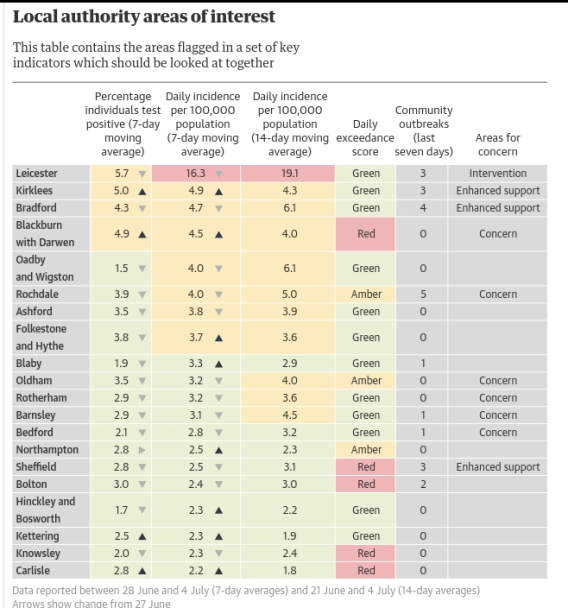
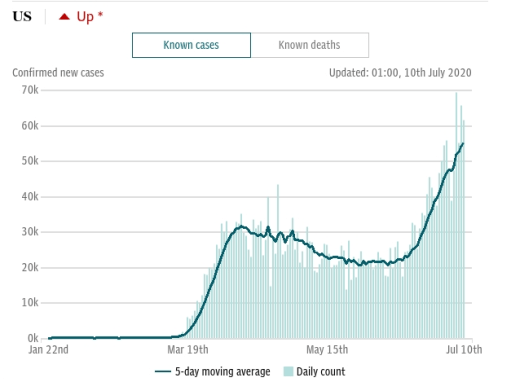
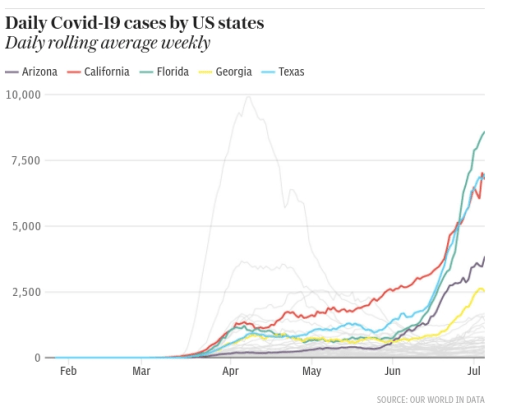
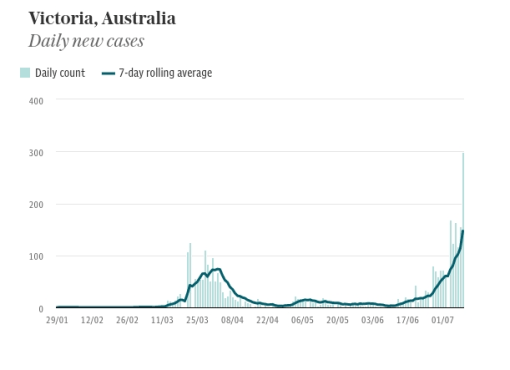
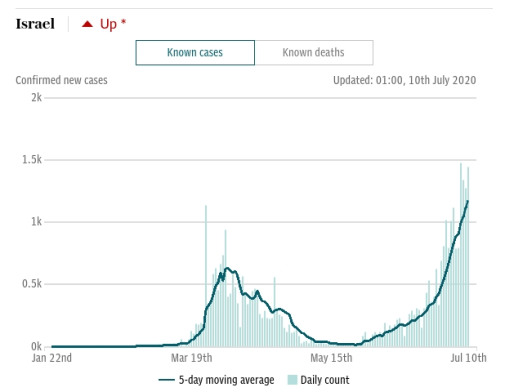
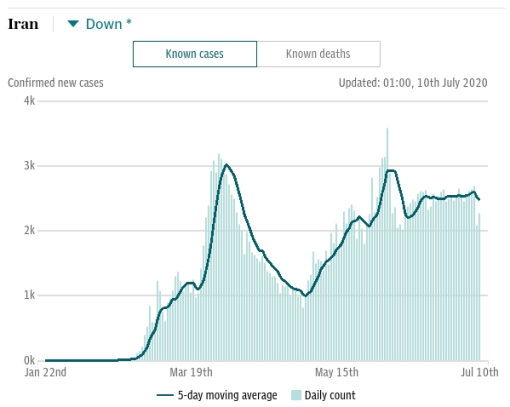
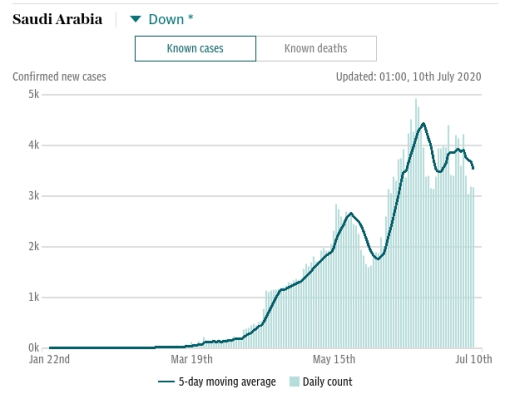
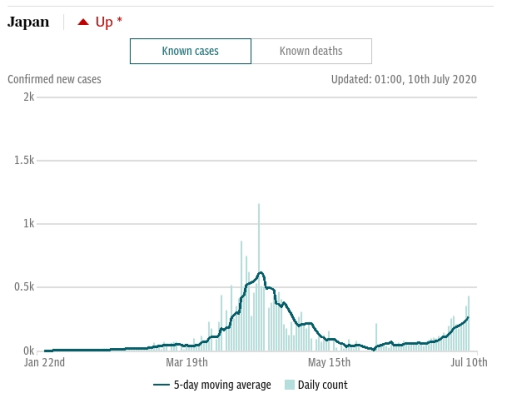
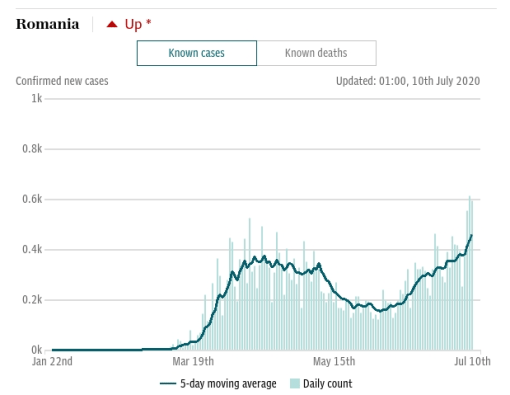

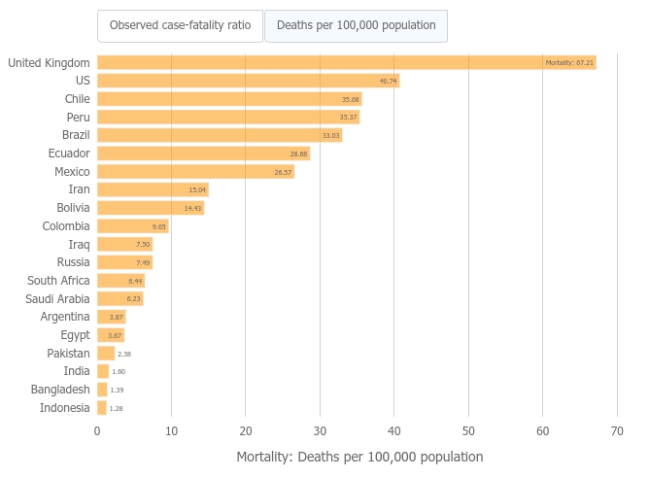
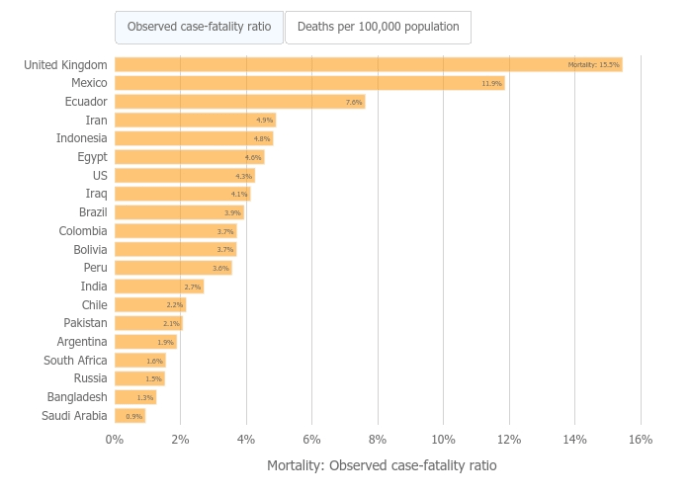

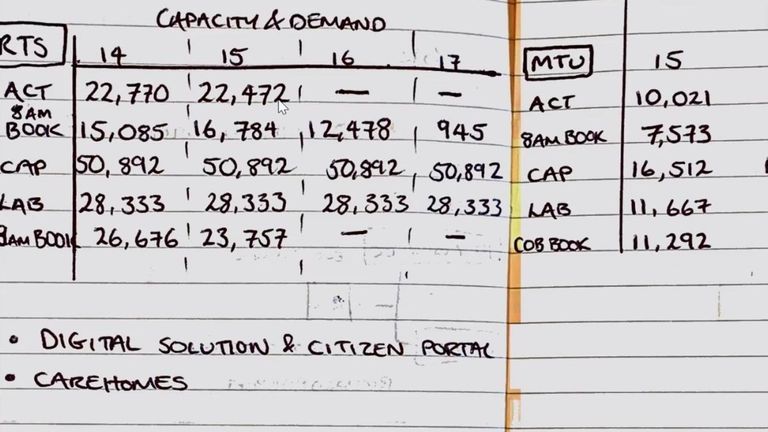

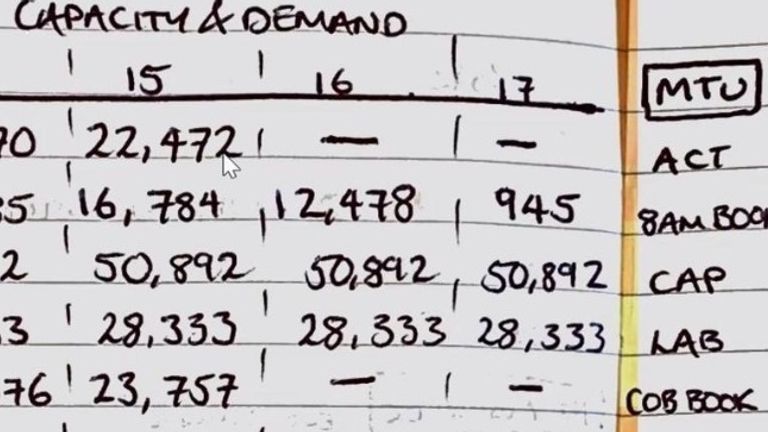
 East Devon Watch