More Conservative councillors resign


Two more councillors have left the Conservative group on Plymouth City Council, taking the total number of recent departures to six.

[Owl’s recent advert of two day courses on how to retrain as a Tory appears to have been well timed.]

Ed Oldfield Local Democracy Reporting Service BBC Devon


The latest to resign are Andrea Johnson and Richard Ball, both councillors in the Compton ward alongside group leader Nick Kelly.


In a joint statement on Wednesday, they blamed “irreconcilable differences” with the current leadership.


Councillor Ball, who was Lord Mayor until May, said the group had “fallen apart” and suffered “massive damage”.


The spate of resignations began when former leader Ian Bowyer and Peverell councillor Tony Carson quit on Friday after being suspended for comments in a press release calling for a cut in the speed limit on the A38.


They urged the Labour-run council to seek a review following concerns about safety, pollution and congestion.


Councillor Kelly said they were temporarily suspended pending an investigation as they had broken group rules and their statements did not represent the group’s views.


He denied allegations from Councillor Bowyer, who he replaced as leader in March, that there was a culture of “aggression and intimidation” and said the disciplinary action had followed group procedure.


The departures were followed on Monday by Councillor Bowyer’s colleagues in the Eggbuckland ward, his wife Lynda Bowyer and Heath Cook, in protest at the leadership’s behaviour.

Questions over Exmouth’s bowling alley purchase

Cllr Paul Arnott, leader of the council, said: “It is extraordinary that the council made this purchase and the only knowledge we had of it was with a press release. The point is not about the process but that we didn’t know about it, and it hadn’t been reported, and I still don’t understand why we weren’t told.”

Daniel Clark, local democracy reporter and Radio Exe News www.radioexe.co.uk

Council deal done quickly to avoid competition

Questions have been raised by East Devon councillors about why the council spent nearly £3 million buying Exmouth’s seafront development ‘Ocean’ this year, despite many councillors not knowing about it.

The centre, which was dogged by delays when it was constructed in the late 2000s, was originally known as the ‘bowling alley’ and now houses a soft play area, two restaurants as well as bowling. It is also marketed as a wedding venue. It is operated by a company called Leisure East Devon, which also runs leisure centres across the district. The building was acquired in March for £2.7 million, but the reasoning and the process was only presented to councillors last week. 

Cllr Kevin Blakey, who at the time of the purchase was the portfolio holder for economy, said that the decision was taken quickly under agreed commercial investment frameworks to avoid competitors coming in to “gazump our position.”

He added: “We had a chance to make a sensible investment that brings in money for the council and had this been out in the wider world, we may have lost that. It was not an attempt to play secret squirrels and keep the council in the dark, but for good sounds reasons, and I would not do anything different now.”

Tim Child, senior property and estates manager for the council said that the council also own adjacent land and has opportunities to unlock potential of the wider area encompassing Queens Drive, Harbour View Café and Ocean into one ‘offering’. He added: “The business case to invest was based on the income stream from LED but for the reasons mentioned, other opportunities are open to EDDC that would not have been open to other purchasers and hence the investment is worth more to EDDC than other purchasers.

“There is a forecast net income in year 1 of £79,000 which represents a return of 2.79 per cent increasing to £99,000 (est) and 3.47 per cent in year 2 and if a more cautious approach is taken to EDDC maintenance liabilities then a net income of £49,000 representing 1.73 per cent increasing to £68,000 (est) and 2.40 per cent in year 2. These rates of return are after borrowing costs and do not reflect possible enhancement in capital values.”

Cllr Geoff Pook, the then portfolio holder for asset management, added: “It was a commercial property investment, the due diligence was done and it had a value of the income it was generating. We did go through the process and it was the one that was agreed. This is a key development on Exmouth seafront and to own it and controlling it seemed to be a good thing for EDDC to control the development that goes ahead.”

But Cllr John Loudoun said that it was disappointing that seven months after the acquisition, this was the first time they had the chance to find out what they have done and for what reason.

Cllr Paul Arnott, leader of the council, said: “It is extraordinary that the council made this purchase and the only knowledge we had of it was with a press release. The point is not about the process but that we didn’t know about it, and it hadn’t been reported, and I still don’t understand why we weren’t told.”

He added: “People were surprised that the council bought this – it was on sale for quite a long time before the council bought it, and I am certain there was no other buyer. The building hasn’t generated the profit and footfall and turnover that it was expected to do, and even with the present tenants, there is a possibly we can talk to them and discuss how we may adapt the building so it fits in and compliments all the other developments on the Queen’s Drive area.

The cabinet agreed to note the report around the process of the acquisition, and that a further report over the future of Ocean would come back to the cabinet at a later date.

Owl repeats the history:

The long, sorry, back-story

The Bowling Alley (now the Ocean) was considered, at the beginning of the century, to be the single “Iconic” building that would regenerate Exmouth, rather in the way that the Tate regenerated St Ives. It gained initial planning approval in 2002. But Its construction was dogged by the need subsequently to submit 16 revised plans. During construction the site went on hold for a couple of years so that a court case concerning faulty design aspects could be resolved.

So – 25 June 2013  “Spectacular top-floor bowling alley venue on the way”

Exmouth’s seafront bowling alley is set to create up to 40 new jobs when its new wedding and events venue opens this summer.

Sean Keywood   www.exmouthjournal.co.uk 

Workers are currently putting the finishing touches to the Ocean Blue suite, located on the top floor of the Coast complex on the Esplanade.

As well as a large main function room with a permanent stage and bar area, there are also large roof terraces, with weatherproof speakers, enabling guests to gaze out across the seafront.

The venue will also be obtaining a marriage licence, allowing it to host the whole wedding day, and there will be a bride suite and groom suite provided for the wedding couple to get ready.

Coast is setting up its own wedding service to operate from the venue, and proprietor Isaac Robb says the opening of the new facilities – which will also host other events – is good news for the town.

He said: “It’s a really exciting thing, not just for us but for the whole of Exmouth. We want everybody that has functions or events to come and look at the room.

“We think it’ll sell itself by the views it has. Everybody who sees it just gasps.”

Just by word of mouth, the Ocean Blue suite already has five events booked ahead of its August opening, including a charity casino night in December, and Isaac says he is lining up a “very big musical act” to perform next summer.

As part of the new operation, Coast needs to recruit 30 to 40 staff, ranging from a master of ceremonies, events managers and wedding planners, to chefs, bar and waiting staff.

These jobs will add to the 30 already created at Coast since the ground-floor bowling operation opened at the start of the year.

Anyone interested in applying for the new roles should send their CV to Coast by post.

However, within a couple of years EDDC were having to engineer a take-over.

10 June 2015 LED take over lease of Exmouth sea front facility

The lease of the Ocean bowling and restaurant complex in Esplanade has been taken over by LED Leisure Management.

Daniel Wilkins www.exmouthjournal.co.uk  10 June 2015

LED has announced they will be running the sea front entertainment facility with immediate effect.

The complex will continue to offer 12 lanes of bowling, plus a Bar and Grill and Sega Entertainment Centre, on the ground floor.

Later this month a new soft play area is due to open once the fit-out and staff training is completed.

Ocean will also continue to offer a venue for weddings, conferences and other events.

Councillor Andrew Moulding, chairman of Exmouth Regeneration Programme, said: “This is fantastic news for everyone who lives in Exmouth or who comes to the resort for holidays or leisure.

“This is already a wonderful facility in a prime position on the seafront. With LED management, their ideas and marketing expertise, it promises to be a very popular all-weather attraction for families as well as a place for parties, celebrations and meetings of all kinds.

“I look forward to seeing it go from strength to strength in the coming months and years.”

Now in 2020 you the rate payers appear to have bought it outright

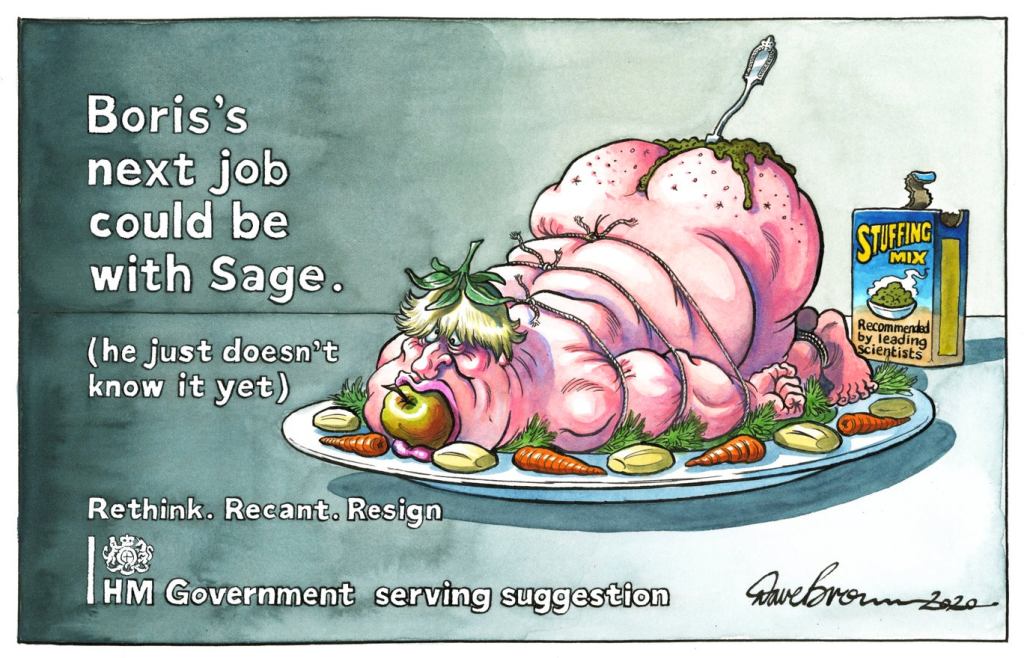
Ending Covid-19 via herd immunity is ‘a dangerous fallacy’

The concept of ending the Covid pandemic through herd immunity is “a dangerous fallacy unsupported by scientific evidence”, say 80 researchers in a warning letter published by a leading medical journal.

Sarah Boseley www.theguardian.com

The international signatories of the open letter in the Lancet say the interest in herd immunity comes from “widespread demoralisation and diminishing trust” as a result of restrictions being reimposed in many countries because of surging infections in a second wave.

The suggestion that the way out is by protecting the vulnerable and allowing the virus to transmit among those less at risk is flawed, they say. “Uncontrolled transmission in younger people risks significant morbidity and mortality across the whole population. In addition to the human cost, this would impact the workforce as a whole and overwhelm the ability of healthcare systems to provide acute and routine care.”

The signatories have expertise spanning public health, epidemiology, medicine, paediatrics, sociology, virology, infectious disease, health systems, psychology, psychiatry, health policy, and mathematical modelling. They include a number of scientists who sit on the breakaway Independent Sage group in the UK, such as former chief scientist Sir David King, former WHO director Anthony Costello, virologist Prof Deenan Pillay, behavioural scientist Prof Susan Michie and professor of European public health Martin McKee.

There is no evidence that immunity after recovering from Covid-19 lasts, they say, adding that people who are vulnerable would be at risk for the indefinite future and cannot be kept safe.

“Prolonged isolation of large swathes of the population is practically impossible and highly unethical,” they say, calling for action to suppress the levels of virus in the population.

“It is critical to act decisively and urgently,” they say. “Effective measures that suppress and control transmission need to be implemented widely, and they must be supported by financial and social programmes that encourage community responses and address the inequities that have been amplified by the pandemic.”

Those restrictions will be needed “to reduce transmission and fix ineffective pandemic response systems, in order to prevent future lockdowns”. If the numbers of infections can be pushed down to a low level, it will be possible to keep the virus suppressed through “an efficient and comprehensive” test, trace, isolate and support system, “so life can return to near-normal without the need for generalised restrictions. Protecting our economies is inextricably tied to controlling Covid-19. We must protect our workforce and avoid long-term uncertainty.”

There are success stories – among them Japan, Vietnam and New Zealand, they say.

“The evidence is very clear: controlling community spread of Covid-19 is the best way to protect our societies and economies until safe and effective vaccines and therapeutics arrive within the coming months. We cannot afford distractions that undermine an effective response; it is essential that we act urgently based on the evidence.”

Other signatories to the letter from the UK include epidemiologist Prof David Hunter, cancer researcher Prof Charles Swanton of the Crick Institute and global health professor Devi Sridhar. Those from the US include global health professor Gavin Yamey of Duke University, Prof Rochelle P Walensky from Harvard medical school and Dr Ali Nouri of the Federation of American Scientists. Researchers from Italy, Israel, Malaysia, Spain, Ireland, Germany, France, Australia, the Netherlands, Switzerland and Canada have also signed.

Ministers pressured to explain high payments to Test and Trace consultants

Ministers are under pressure to come clean over payments to consultants after reports some are earning more than £7,000 a day to work on the government’s ailing Test and Trace programme.  

www.independent.co.uk

Anthony Costello, a member of independent Sage group of scientists, described the figures as “shocking”.  

Sky News said that the day rate for senior consultants on the project was around £7,000, even with a 10 per cent discount applied.  

The figures equate to an annual salary of around £1.5 million.  

The government’s flagship Test and Trace scheme has come under increasing pressure in recent weeks.  

Ministers have spent billions on the system, but it is still failing to alert many people who have been in contact with suffers of Covid-19.  

Sky News said the payments were being made to senior executives at Boston Consulting Group (BCG), a leading firm of management consultants.  

Shadow health secretary Jonathan Ashworth said: “The figures being spent on this broken system are truly shocking.

“Testing and contact tracing is failing to keep the virus under control, which makes it even more disgraceful that such huge sums of money are being spent on something that isn’t fit for purpose.”

Labour MP Toby Perkins called for “dedicated public servants” to be used instead.  

“You won’t find dedicated public servants being paid £7,500 per day, you won’t find them on £1.5m, but what you will find is a basic competence, a knowledge of their area, a desire to make sure that the systems work before they are implemented,” he said.

He added that in his former career in the sales industry: “I never came across a customer nearly as naive as what we have with the government.”

A department of Health and Social Care spokesman said: “NHS Test and Trace is the biggest testing system per head of population of all the major countries in Europe.

“It’s processing 270,000 tests a day and nearly 700,000 people who may otherwise have unknowingly at risk of spreading coronavirus have been contacted.

“To build the largest diagnostic network in British history, it requires us to work with both public and private sector partners with the specialist skills and experience we need. Every pound spent is contributing towards our efforts to keep people safe as we ramp up testing capacity to 500,000 tests a day by the end of October.”

Tories are squandering our greener future

“Many farms will disappear, and the fields and hedgerows will be untended, as our basic foodstuffs will be shipped or flown in more cheaply from abroad, from countries that care less about food standards.”

Alice Thomson www.thetimes.co.uk 

During the pandemic the British have rekindled their love of the countryside. Farmers’ approval ratings soared as they kept food on the supermarket shelves and milk on the breakfast table, and “cottagecore” — celebrating such pursuits as foraging, baking and pottering — became the hashtag for the new good life. Boris Johnson, in his conference speech last week, set out his vision of Britain in 2030, where people would wander among millions of newly planted trees and picnic in new “wild belts” across the countryside.

Many now feel that those rural dreams have been crushed. This week the government overturned amendments to the new Agriculture Bill that would have ensured imported food meets domestic legal standards after Brexit. By rejecting these calls it has alienated an astonishing cross-section of farmers, chefs, environmentalists and consumers, and united the Cumbrian shepherd James Rebanks with Sir James Dyson, Britain’s richest man.

The former environment secretary Theresa Villiers voted against the government, as did Neil Parish, Conservative chairman of the environment select committee, and a dozen other Tory MPs in rural constituencies, along with Labour and the Lib Dems. Jamie Oliver and Delia Smith are incandescent, Prue Leith from The Great British Bake Off has spoken out, as has Joe Wicks, the fitness guru. Chris Sherwood, chief executive of the RSPCA animal welfare charity, says the government has reneged on its manifesto promise to safeguard standards.

In just a few weeks a million people have added their names to a National Farmers’ Union petition begging the government to reconsider but the prime minister still hasn’t met Minette Batters, the NFU president. All they are asking for is proper scrutiny of potential trade deals that can run into tens of thousands of pages, and for countries that want to export to the UK to adhere to similar animal welfare standards so there is a level playing field.

But the government has refused. Liz Truss, the trade secretary, may say she loves British cheddar but she appears to be encouraging ultra-processed imports. “I don’t want to stop developing countries exporting their goods to us,” she insists. The government’s concern is that countries such as the US and Australia will not sign up to a trade deal if they are expected to conform to higher standards.

The Americans have made it clear that they believe their chlorinated chicken and hormone beef is safe to eat but the conditions in which many of their animals are raised would concern both meat eaters and vegans in this country, as would the Australians’ use of antibiotics in livestock farming, and insecticides currently banned under EU rules.

Detractors insist that only the rich can afford to be concerned about higher food standards but polling for the consumer rights group Which? shows it’s the least affluent 10 per cent who are most concerned about being fed substandard burgers, pork sausages and BLT sandwiches. They also care most about animal cruelty and count on the government to maintain quality in supermarkets, fast food outlets, school cafeterias, care homes and hospitals. Henry Dimbleby, who leads the National Food Strategy, explains that the well-off can afford to be less concerned because they can buy their way out by favouring expensive luxury brands and organic food, creating a two-tier food system.

In the past few months farmers have come to be seen as some of the most trusted and valued workers in the country, while politicians’ reputations have sunk further. But farmers won’t be able to compete if they are rearing their products to higher ethical standards than their foreign counterparts. Many of the country’s 140,000 farms will go out of business and more food will have to be imported, just when the British have embraced the idea of supporting local producers and shopping at farmers’ markets. This is what Dyson, who is trying to make Britain self-sufficient by pioneering new farming methods, most fears. “Why import when we have some of the best soil in the world and can grow most food here?” he told me. “The demise of manufacturing in the UK has been a tragedy. I don’t want farming to go the same way.”

There was a moment when Britain, the third biggest food market globally, could have decided in the wake of Brexit to lead the world in food standards and environmentally friendly farming. “We will be throwing away the opportunity of encouraging a great industry to lead the world,” says Villiers, now free to speak her mind on the backbenches. “We should be projecting our values through our new trade policies.”

Instead it is now clear that the government has a very different vision of the countryside after Covid-19 and Brexit. It dreams of a land that is 30 per cent rewilded, with beavers and otters, bison and boar roaming the lakes and the dales, while the rest is open to being tarmacked over and covered with new housing estates.

Many farms will disappear, and the fields and hedgerows will be untended, as our basic foodstuffs will be shipped or flown in more cheaply from abroad, from countries that care less about food standards.

Mr Johnson, brought up in wellies on one of the most beautiful hill farms on Exmoor, must know what he is doing, and he should at least be honest about the reality of his plans for a new Jerusalem.

Your chance to help shape the economic heart of the South West

HotSW is recruiting four new board members. Belief in Unicorns essential (Owl).

Our Local Enterprise Board still seems focussed on delivering its Industrial Strategy to double the 2018 economy in 20 years. This unrealistic and unachievable strategy, four years in the making, has, within two years, been well and truly overtaken by events (dead and buried by Covid-19).

HotSW needs to take a clean sheet of paper and start again, formulating a recovery plan. This time, can we please have something that doesn’t prioritise “build, bulb, build”, that reflects “the new normal” and is economically realistic? 

Running an economy is very different from running a business. Few individuals with have any relevant experience.

From Midweek Herald:

The Heart of the South West Local Enterprise Partnership is looking for four new board directors.

One of 38 LEPs in England, covering Devon, Plymouth, Somerset and Torbay, the LEP is a business-led partnership between the private sector, local authorities, universities and colleges.

Following retirements it is now seeking directors from the private or social enterprise sector.

The new board members will work to strengthen the LEP’s role as the main thought-leader influencing economic development in the HotSW area and deliver the area’s Local Industrial Strategy.

Non-executive directors will be expected to attend Board meetings once every three months and periodic meetings or events related to their areas of expertise to support LEP activity.

Appointments are for three years and would normally be extended for up to a further three-year term. The closing date for applications is 5pm on 14 October.

Dominic Cummings and family ‘avoid huge council tax bill on Durham properties’

One law for them, another law for us. Owl has lost count of how many examples of divisiveness we had had, and that is just for this week!

www.independent.co.uk 

Dominic Cummings and his family are liable for council tax on two properties built at his family’s farm in the northeast of England, but backdated charges that reportedly could have amounted to tens of thousands of pounds will not apply. 

Officials have concluded that charges for the buildings, on the outskirts of Durham,  should start from this month rather than from when both properties were built, without planning permission.

The senior adviser to Boris Johnson is listed as a property owner, alongside his parents and sister, according to Land Registry title deeds.

The Northern Echo, which first reported the story, said council tax would be paid on Mr Cummings’ band A cottage, and his sister’s band C family home from 4 October. The paper claimed the amount written off could total up to £50,000.

The Valuation Office Agency refused to comment on individual cases when approached by The Independent.

However, John Hewitt, corporate director of resources at Durham County Council, said: “I can confirm that the Valuation Office Agency have concluded their inspection and provided us with details of the required changes to the valuation list in respect of North Lodge, where the current single assessment will be replaced with three entries in the rating list going forward.

“These changes will be implemented with effect from October 4, 2020, which is the date we have been instructed to apply the changes from.

“The date from which the rating list is to be amended is a matter for the Valuation Office Agency.

“We are instructed that it has made its assessment in line with the relevant legislation and custom and practice in terms of such changes in accordance with Article 3 of the Council Tax (Chargeable Dwellings) Order 1993.”

Dominic Cummings makes rare statement as resignation calls grow over lockdown trip

John Shuttleworth, a Durham County councillor, told The Northern Echo: “If it was anybody else, they would be getting charged and it would be backdated, or they would be getting taken to court.

“It just proves there is two sets of rules, one for them and another for everyone else. It is not right.”

In June it was reported that there were “historic” breaches of planning regulations on Mr Cummings’ family estate on the outskirts of Durham city, where the No 10 adviser stayed with his wife and son after experiencing coronavirus symptoms.

Mr Cummings described the property at the time as “sort of concrete blocks” roughly 50 metres from his parents’ home.

In the aftermath of his lockdown trip to the farm, Durham County Council launched an investigation into planning permission relating to the properties after receiving a number of complaints.

The Independent has contacted No 10 for comment.