From a correspondent in Portugal:
Portuguese say it how it is…“The choice is yours … Be patient or be [a] patient”



From a correspondent in Portugal:
Portuguese say it how it is…“The choice is yours … Be patient or be [a] patient”
Two different views on the May elections.
What’s the betting that we end up with the worst case scenario: the government pushes ahead only to have to make a U-turn late in the day, when councils will already have spent a fortune in money and time preparing? – Owl
Elections are fundamental to democracy and must be properly managed
Author: Josiah Mortimer www.electoral-reform.org.uk
This past week we’ve seen a dizzying array of conflicting reports for the government’s plans for May’s polls, with Conservative party figures suggesting delays are likely, despite official advice that plans are unchanged but ‘under review’.
Last year’s English local elections were already delayed by a year due to the pandemic – so Ministers need to give clarity as soon as possible as to whether the public will be able to exercise their right to vote safely in May.
Electoral experts have warned that despite delaying elections for a longer time than many other countries, the UK government ‘still isn’t ready’ to hold polls under pandemic conditions.
Wales and Scotland are passing legislation on the issue, and having an open debate around any election delay. In Wales, a cross-party working group is regularly reporting on the state of plans and preparations for how to hold May’s Senedd elections safely. In England, it feels like the public are only getting hearsay through selective briefings to journalists. That’s no good for public trust, with fears that partisan interests could come into play when ministers are considered another delay.
We all deserve openness and transparency over how any decision over a delay will be made. The current stream of confusing reports damages planning and public confidence in the process.
Ministers should set out plans for ensuring democracy can take place safely and securely and make clear when and how any decision over another delay will be made. Wales and Scotland’s contingency plans have allowed proper debate and scrutiny about how the elections can happen safely, and how a delay might work – giving everyone time and space to plan. We should expect the same respect for voters in England.
Elections are not a ‘nice to have’. They are fundamental to democracy and must be properly managed. And electoral administrators need to be properly resources.
May’s elections, which include delayed elections from 2020, will see a bumper set of votes with elections due to be held for English councils, police and crime commissioners, the London mayor, the London Assembly, regional mayors and local mayors as well as elections in Scotland and Wales. Local administrators need resources to prepare properly.
Over 100 elections have taken place worldwide since the pandemic began, including by-elections in Scotland. With the vaccine now being rolled-out, we should be doing everything we can to make sure elections take place fairly and safely.
English council chiefs back postponement of May local elections
A further postponement to this year’s local elections, in the wake of the continuing difficulties caused by the Covid pandemic, is backed by the vast majority of senior council figures across England, the Observer can reveal.
Michael Savage www.theguardian.com
Only 11% of the senior officials dealing with the forthcoming elections believe they should go ahead in May as planned, despite the government’s determination to press ahead. More than two-thirds (69%) believe the huge set of elections should now take place in the autumn, according to the most comprehensive survey of council chief executives, leaders and officers in charge of organising elections to be conducted on the issue.
A further 14% called for a shorter delay to the summer and 6% backed a postponement beyond this autumn, according to the analysis by the Local Government Information Unit (LGIU). Of the more than 350 officials who responded, two-thirds said they were “very concerned” about holding elections in May.
Difficulty recruiting and training electoral workers, complications in ensuring safety of polling stations and concerns that voters worried about Covid-19 may be disenfranchised are among the concerns expressed by those drawing up local election plans. One Conservative council leader said: “It will be a grave error not to act early and announce a delay now.” Another Tory council leader said: “Go for the end of July or October: don’t tempt fate with May, only to have to call them off. I am really concerned about vulnerable candidates.”
The postponement of 2020’s local elections in England has meant this year’s were to be the biggest in years. They include county councils, district councils, unitary authorities, mayoral races, police and crime commissioners, and the London assembly. Elections also take place for the assemblies in Scotland and Wales. Decisions over those elections are controlled by their respective devolved governments.
The Scottish government has said it is still planning for elections to go ahead, but has emergency powers to delay or to hold polling over more than a day. The Welsh government has said that it intends to proceed in May, but that “significant uncertainty” around the pandemic means a delay may be needed.
Boris Johnson has backed holding elections in May but has suggested he is keeping the decision under review. However, it is understood that the serious concerns among councils about the practicalities of proceeding with the poll have been made clear to Robert Jenrick, the housing, communities and local government secretary.
Four-fifths of those surveyed by the LGIU (80%) were concerned about their ability to recruit and train electoral workers, with fewer volunteers likely to come forward. Difficulties in obtaining polling and count venues have also emerged, while the usual use of schools as polling stations is also proving contentious. Some traditional polling venues are also being used as vaccination centres. “We will not get all the staff we need and we will be lucky to get the venues for polling and/or counting,” said one electoral administrator. “You can throw as much PPE at the polls as you like, if people do not want to volunteer to work, we can’t run the elections.”
Some insiders expressed concern about the democratic problems created by a further delay. After elections were delayed last May, some councillors and mayors will have exceeded their original mandate by 18 months if voting is delayed until autumn. Some local councillors have already stood down in their area because they could not serve beyond the scheduled end of their tenures last year.
Jonathan Carr-West, the chief executive of the LGIU, said: “Local government is committed to democracy, but the overwhelming view from councils is that it is no longer possible to hold safe and open elections in May. The logistical challenges are formidable and there’s a real risk that we effectively disenfranchise millions of people who do not feel safe going to the polls.
“The worst scenario of all would be for government to push ahead only to have to make a U-turn late in the day, when councils will already have spent a fortune in money and time preparing. Better to take a bold decision now to delay the elections and use the additional time to ensure they can be run safely. Such measures should include the vaccination of poll workers and an expansion of postal voting. Public confidence in elections is an essential foundation of our democracy – once lost, it takes years to rebuild. That risk is not worth taking.”
NHS England has announced that more than 30 new NHS Vaccine Centres will start delivering life-saving Covid jabs this week as the health service continues to accelerate the biggest immunisation programme in its history.
Richeldis Cain www.devonlive.com
Three of the new large scale sites are located across Devon and Cornwall – these centres will be able to jab thousands of people a week.
In Plymouth, the Mayflower Grandstand has confirmed it will host a mass vaccination centre at Home Park.
Whilst Stithians Showground, near Truro, in Cornwall and Westpoint, near Exeter, in Devon will also be opening in the coming days.
People aged 75 and over are being invited to book a vaccination at the centres or one of more than 70 pharmacy services now operating across the country.
If they cannot or do not want to travel to a Vaccination Centre people can wait to be jabbed by a local GP service or hospital hub.
The new Vaccination Centres will kick off by jabbing mainly health and social care staff tomorrow (Monday, January 25) before opening their doors to more patients on Tuesday.
The NHS vaccinated over 140 people every minute last week and hopes to do more people this week as more becomes available.
Vaccine Minister Nadhim Zahawi said, “I am delighted we are opening even more places for people to get a jab – as of this week there will be almost 50 vaccination centres, more than 250 hospitals hubs and over 1,000 local vaccination service sites, run by GPs and pharmacies right across the country.
“This will enable us to vaccinate as many people as possible in the weeks and months to come and I encourage anyone who has been invited for a free vaccine to come forward and get a jab.
“Remember, with high levels of infection everyone must continue to follow the rules, stay at home and maintain social distancing – even if you have had the vaccine.”
Health and Social Care Secretary Matt Hancock has thanked NHS staff for the vaccination roll out so far but has reminded the public that now is not the time to “drop our guard”.
“Through the vaccines delivery plan, we have made outstanding progress in vaccinating our NHS and care staff and the most vulnerable people in society.
“My utmost thanks go out to everyone in the NHS and all our volunteers who have worked round the clock to make this happen.
“We must not drop our guard. While the vaccine can prevent severe disease, we do not know if it stops you from passing on the virus to others, and it takes time to develop immunity after a jab, so for now, everyone must continue to stay at home to help bring down infections and protect the NHS.”
Who is (still) trying to hack into my website?
Claire claire-wright.org
While I was experiencing email problems yesterday morning he [web-site host?] had a call from the data centre who look after his server.
They informed him that one website (mine) was being “bombarded” and that they would have to suspend it or it would bring down all 733 websites.
Apparently the attacker was simulating thousands of hits to my website in order to take it offline. It worked. For a while.
My email and website were down until yesterday evening when both were restored.
The hacker used what is called a ‘virtual private network’ which means that the IP address is untraceable.
I never get spam on my website, but I had a spam comment (IP address California) on latest controversial blog demanding answers from Mr Jupp. [See below – Owl]
This came through last night when my website was restored.
But the hacker(s) have not given up. They have been at work this morning repeatedly attempting to gain access via my username and password.
My website host tells me that he has had a server for 15 years. It has been hacked just four times and two of those have been attempts on my website – the last one in the run up to the 2019 election.
Heavy duty security has now been installed.
Is this the worst week ever of the Conservative government’s rule? Our MP should explain himself
In the blizzard of appalling decisions voted through this week by Conservative MPs, it’s hard to know which was worse.
The Tories’ approach appears to be parcel it up for one or two days, presumably in order to bamboozle the media and make the rest of us feel as though it is hopeless to oppose, keep up to date with, or get chance to ask our Conservative MPs to oppose the next atrocity they’re about to commit.
Our MPs are there to act on our behalf and represent our views. I cannot imagine for a second that the residents of East Devon would support these decisions/actions.
I have written to Mr Jupp asking for an explanation.
– Voting down an amendment which could prevent the UK doing post Brexit trade deals with countries that commit genocide and other human rights abuses
– Voting down protective post Brexit trade deal amendments to ensure our NHS remains free at the point of delivery, protections on selling patient data and the ability to control drug prices (see Independent article below).
– Voting down a motion to extend the £20 a week Universal Credit increase, which is supposed to help prevent destitution and hunger
– Voting down clauses that ensure parliament gets to scrutinise the detail of post Brexit trade deals
– Voting down an amendment which would prevent the government from lowering our animal welfare/food standards in a post Brexit deal
– Voting through new boundary rules that favour the conservatives, alongside per party election expenditure of £33m
– In the news there is the threat of a bonfire of workers rights, post Brexit
– And this is all during the week that the covid death toll has reached the worst in the world.
– And in Brexit news the fishing industry looks as though it is about to go off a cliff, musicians
PS. Also revealed, the new BBC Chairman, Richard Sharp, a former of boss of the Chancellor, has donated over £400,000 to the Conservative Party.
PPS. And the new Chair of the College of Policing, Nick Herbert, a Tory Peer, turns out to be a former Countryside Alliance Chair.
Have I missed anything? Please do add anything I have overlooked…
Whatever happened to: devolution for England; localism; and “levelling up”? – Owl
By Jennifer Scott www.bbc.co.uk
Throughout the coronavirus pandemic, warnings have been clear about the threat to local councils and their ability to provide services.
BBC analysis in 2020 showed nine out of 10 major local authorities in England did not have enough cash to cover their spending plans this year, and coronavirus could lead to them going £1.7bn over budget.
Now, a committee of MPs has criticised the Treasury for its “worryingly laissez faire attitude” to the state of local government finances, warning of a “significant risk” that Town Hall debts could drag down the “whole of government”.
The department says it provided “a significant funding uplift for councils” at last year’s Spending Review, on top of additional funding “to ensure they can continue to deliver essential local services as we tackle the impacts of the pandemic”.
And the government has confirmed local authorities will be able to raise council tax by 5% to help – something Labour leader Sir Keir Starmer has called “absurd”.
But the reality is stark – coronavirus pressures have hit councils hard and, as the Public Accounts Committee says in its report, they have been taking on “extremely risky levels of debt in recent years” investing in commercial ventures “in an effort to shore up dwindling finances”.
Here is a snapshot of the financial state of local councils from some of the BBC’s local political editors.
It should give you an idea of the kind of dilemmas facing local leaders across the UK, as they battle to balance the books.
Tony Roe – political editor for BBC East Midlands
Every council has spent the past decade working with less money from government grants.
And in the past year, they’ve had to deal with Covid costs too, with Labour-run Nottingham far from alone in saying they haven’t had the full cost reimbursed yet from Whitehall.
Local authorities have been told they can put 5% on council tax bills this year – including 3% for adult social care – but mindful of elections this May, cost cutting comes into play.
For Nottingham, there is also the impact of local investment threatening the books – namely the collapse of its Robin Hood Energy company, projected to have lost the council £38m.
It led to a government review into the council’s finances, which was critical of its involvement in too many of its own commercial companies, and it has left Nottingham with a “very significant” gap in its budget and depleted reserves.
A panel of experts were appointed to help the council improve its finances and they were working towards having a recovery plan in place by the end of this month.
So now the Council will be putting up bills by 5%, as well as cutting costs, which means axing 272 jobs, reducing services and charging more for other things they provide.
The cost of providing social care takes a big chunk of any budget – in Nottingham’s case it’s 40% – so they are looking at ways to “review and redesign” how they provide that too.
Kevin Fitzpatrick – politics reporter for BBC Radio Manchester
Some councils look further afield than property investments.
Manchester Airport was built by the city council and it has owned a large chunk of it ever since.
In the past 20 years the Manchester Airport Group has significantly expanded, buying Stansted and East Midlands airports, and in 2011, creating Airport City, one of the governments low tax Enterprise Zones.
It’s been an incredibly fruitful investment, paying out large dividends to its shareholders – that was until Covid grounded planes and saw passenger numbers dramatically cut.
Manchester City Council holds the largest stake with 35.5%, while the region’s nine other councils share a further 29% between them.
The yearly dividend has increasingly been factored into their financial plans – for example, in 2018 they received more than £110m between them, with nearly £60m going to the City Council – but there won’t be a pay out this time.
Their airport investment has reaped rewards for decades, but the impact of the virus has had on air travel will be felt in council budgets here for years to come.
Pete Simson – political reporter for BBC Bristol
Under normal circumstances – a portfolio of over 1,000 properties worth around half a billion pounds – is a nice little earner for Bath and North East Somerset Council (BANES).
However, this pandemic has been a punch in the gut for those councils like BANES – run by the Liberal Democrats – which rely heavily on income from rent and other activities to balance the books.
A wholesale review of its estate was announced in December, after losing millions in rent payments from its commercial properties.
Meanwhile, its other normal banker – income from tourism – has also been decimated over the past 12 months.
Residents can expect a 5% council tax increase from April, which alone isn’t enough to cover an £11.6m shortfall next year.
For that, they’ll need to dip into their reserves, and hope for better days to come.
Andy Holmes – political reporter for BBC Three Counties Radio
Manchester is not the only one with their hopes for funds focused on the skies.
Labour-run Luton Borough Council in Bedfordshire has an Emergency Budget it agreed in July to thank for the fact that its 2021/22 finances aren’t as bad as was perhaps feared.
Luton was one of the first councils to agree to the emergency measure during the pandemic as it faced a financial shortfall of £49m and, at the time, claimed the moved prevented the threat of bankruptcy.
As the major share holder in Luton airport, the council lost millions when the pandemic grounded flights last year.
And the emergency plan meant 365 jobs were put at risk, along with cuts to key services, with an agreement later in the year to charge residents for green waste collection.
However, when it comes to the 2021/22 budget, they now need to find a comparatively small sum of £1.2m of savings.
They are planning on raising Council Tax by the maximum of 4.99% – any more and the council would need to hold a referendum to approve it.
But Luton Council is still lobbying the government to try and get extra funds to cope with the pandemic, arguing the situation with the airport makes it a special case.”
Claire Hamilton – political reporter for BBC Radio Merseyside
The Labour-run Wirral Council is faced with a £40m funding gap.
The cost of the response to the pandemic is being blamed for the shortfall, plus loss of income from business rates and parking charges.
And, even after borrowing around £25m, it’ll still need to save £16m to balance the books.
So, how is the council planning to find the money to help its budget for the next financial year?
Despite welcoming visitors for just under 100 years, Birkenhead’s neo-classical Williamson Art Gallery and Museum could close, as the end of the museums service could save the authority £327,500 per year.
But it is not the only service at risk.
The council’s asking the public for feedback on a long list of options, from axing school crossing patrols, to closing swimming pools and golf courses.
These are emotive issues, which might be seen as a bit of political sabre rattling from a Labour-run council.
But this year, Wirral Council moved to a committee system of governance – so all parties are involved in decision making, and all will need to take responsibility for the cuts to come.
Kathryn Stanczyszyn – political reporter for BBC Radio West Midlands
Things are a little brighter in the heart of the West Midlands.
At the moment it looks like there won’t be any significant cuts by the Labour-run Birmingham City Council this year – at least none that impact directly on public services.
The local authority has also been able to increase its reserves with the latest pot of coronavirus money of over £30m.
But it warns that spend – especially on adult social care – is still very high and likely to eat into that as pressure on services continues to increase.
And it says that’s not just a pandemic consequence, it’s a trend.
The largest council in the UK has been scrutinised in recent years over its finances, but appears to have kept to its revenue and capital budget last year.
Now the biggest change on the cards is a restructure of the senior levels of officers – planned to cost £500,000 extra year in wages – as it seeks to attract expertise.
The timing may raise questions from some, but the interim chief executive described it as a moment to future-proof – saying the council must seize opportunities to “leverage growth” in the coming years.
Scientists say signs a new coronavirus variant is more deadly than the earlier version should not be a “game changer” in the UK’s response to the pandemic.
BBC News www.bbc.co.uk
Boris Johnson has said there is “some evidence” the variant may be associated with “a higher degree of mortality”.
But the co-author of the study the PM was referring to said the variant’s deadliness remained an “open question”.
Another adviser said he was surprised Mr Johnson had shared the findings when the data was “not particularly strong”.
A third top medic said it was “too early” to be “absolutely clear”.
At a Downing Street coronavirus news conference on Friday, the prime minister said: “In addition to spreading more quickly, it also now appears that there is some evidence that the new variant – the variant that was first identified in London and the South East – may be associated with a higher degree of mortality.”
Speaking alongside the PM, the government’s chief scientific adviser Sir Patrick Vallance said there was “a lot of uncertainty around these numbers” but that early evidence suggested the variant could be about 30% more deadly.
For example, Sir Patrick said if 1,000 men in their 60s were infected with the old variant, roughly 10 of them would be expected to die – but this rises to about 13 with the new variant.
The announcement followed a briefing by scientists on the government’s New and Emerging Respiratory Virus Threats Advisory Group (Nervtag) which concluded there was a “realistic possibility” that the variant was associated with an increased risk of death.
But one of the briefing’s co-authors, Prof Graham Medley, told BBC Radio 4’s Today programme: “The question about whether it is more dangerous in terms of mortality I think is still open.”
“In terms of making the situation worse it is not a game changer. It is a very bad thing that is slightly worse,” added Prof Medley, who is a professor of infectious disease modelling at the London School of Hygiene and Tropical Medicine.
Another 1,348 deaths within 28 days of a positive coronavirus test were reported in the UK on Saturday, in addition to 33,552 new infections, according to the government’s coronavirus dashboard.


There is huge uncertainty in the evidence on how lethal the variant is.
The scientific experts that reviewed the data used a precise phrase saying it was a “realistic possibility” the new variant is more deadly.
That means there’s a roughly 50-50 chance it will turn out to be true.
With time, and sadly more deaths, the picture will become clearer.
While people debate the uncertainties though, we already know this variant has the ability to kill more people than the old ones.
A virus that spreads faster (this one is 30-70% faster) will infect more people, more quickly, putting a greater strain on hospitals and leading to a sharper spike in deaths.
It is why viruses becoming more transmissible can be a bigger problem than ones becoming more deadly.
Nervtag’s chairman Prof Peter Horby defended the government’s “transparency” in making the announcement.
“Scientists are looking at the possibility that there is increased severity… and after a week of looking at the data we came to the conclusion that it was a realistic possibility,” he said.
“We need to be transparent about that. If we were not telling people about this we would be accused of covering it up.”
media captionSir Patrick Vallance: “There is evidence that there’s an increased risk for those who have the new variant”
But Dr Mike Tildesley, a member of Sage subgroup the Scientific Pandemic Influenza Group on Modelling (Spi-M), agreed it was too early to draw “strong conclusions” as the suggested increased mortality rates were based on “a relatively small amount of data”.
He told BBC Breakfast he was “actually quite surprised” Mr Johnson had made the early findings public rather than monitoring the data “for a week or two more”.
“I just worry that where we report things pre-emptively where the data are not really particularly strong,” Dr Tildesley added.
Public Health England medical director Dr Yvonne Doyle also said it was not “absolutely clear” the new variant was more deadly than the original.
“There is some evidence, but it is very early evidence. It is small numbers of cases and it is far too early to say,” she told the Today programme.
This is one of the issues raised in EDDC’s new local plan consultation document and is discussed in this timely press article.
First, here is the relevant consultation question – see here to download the full consultation document.

Buyers of brand-new homes face £20,000 bill to make them greener
Fiona Harvey www.theguardian.com
Householders buying brand new homes in the next four years are likely to find an unpleasant surprise awaiting them in the future: homes built today will have to be retrofitted with energy efficiency measures and low-carbon technology, at an average cost of more than £20,000.
The extra costs will amount to more than £20bn for the whole of the UK, if the government’s targets of building 300,000 new homes a year are met. Critics say the costs could have been avoided if ministers had agreed to bring in low-carbon standards sooner.
The government this week set out proposals to change building regulations to reduce greenhouse gas emissions, but declined to bring forward its proposed future homes standard from the scheduled 2025 commencement date, disappointing advocates of greener homes.
Building a new house with high energy efficiency standards and a heat pump instead of a gas boiler costs about £4,800 more than building to current standards. However, building to current standards and then retrofitting the house with the same would cost an average of £26,300, or about £21,500 more than installing the technology in the first place, according to an analysis by the Labour party of data from the Committee on Climate Change (CCC).
John Gummer (Lord Deben), chair of the CCC, has warned repeatedly that at least 1m homes built in recent years will need to be refurbished at large expense, as they were built to inferior standards of efficiency.
All UK homes will need to be brought up to high standards of efficiency and equipped with low-carbon heating in place of gas boilers if the government is to meet its target of net zero greenhouse gas emissions by 2050.
The 2025 commencement date for the government’s future homes standard is a decade after the zero carbon homes standard, which the last Labour government had scheduled to come in from 2015. The government scrapped that, after some of the construction industry lobbied against the standard, arguing it adds to the cost of a new home.
Proponents of green building say the cost of equipping a new home to a low-carbon standard is small compared with the overall cost of a house or flat, and homes equipped to the higher standard cost less to run.
Labour called on the government to take swifter action, and said the 10-year delay to a requirement to build homes to a low-carbon standard would cost £45bn in total upgrade costs in the future.
Thangam Debbonaire, shadow housing secretary, said: “The Tories’ short-term approach to the climate is hitting families and the economy. Their irresponsible decision to scrap the zero carbon homes policy will have wasted £45bn by the time the Tories have scrambled to catch up with Labour’s policy.”
Labour has also estimated that scrapping the warm front home insulation scheme in 2013 cost households £3.7bn in additional energy bills, and produced an extra 14.6m tonnes of carbon dioxide by 2017.
Debonnaire added: “Families will spend years in homes [that] are colder and more expensive to heat. Every year of delay is costing billions of pounds and pumping millions of tonnes of carbon into the atmosphere. The government needs to wake up to the importance of warmer, more efficient and sustainable homes.”
A spokesperson for Friends of the Earth said: “Saving money and combating the climate crisis should merrily go hand in hand but the government seems to think otherwise. We would have already been building low-carbon homes if it weren’t for the Conservative government scrapping the standards and capitulating to the lobbying of the profit-hungry high-volume house-builders. Delaying the future homes standards will lead to money being wasted while homes continue to run on planet-wrecking gas heating.”
Julie Hirigoyen, chief executive at the UK Green Building Council, said: “After a long wait, the government’s response to the future homes standard consultation brings much-needed clarity to our industry. We are pleased to see confirmation that the future homes standard will mean new homes will have carbon dioxide emissions 75%-80% lower than those built to current building regulations – though it’s regrettable that the standard won’t be implemented till 2025, despite it being widely trailed that it would be brought forward to 2023.”
Housebuilders have said they are in favour of higher standards, but warned of a potential shortage of workers. Brian Berry, chief executive of the Federation of Master Builders, said: “Small- to medium-sized house builders must be at the heart of plans to improve the sustainability, quality and design of our homes, but they need greater support to build homes and tackle climate change. Bringing forward the future homes standard must be balanced with addressing the construction skills shortage, so that local builders can employ quality local tradespeople on site. One in three small to medium house builders said a lack of skilled workers would be a significant constraint on their activity over the next three years.”
The government has said bringing in the future homes standard from 2025 will mean new homes built from that date will produce between 75% and 80% less carbon dioxide than homes built to current specifications, and that these homes would be “zero carbon ready”, to become fully zero carbon at a future date without further retrofitting work. Before 2025, building regulations will be strengthened so that homes built or renovated in the interim will need to meet higher standards than those now in place.
A government spokesperson said: “We are improving the quality of housing across the country by ensuring new homes adhere to strict energy efficiency standards, which will help us meet our target of net zero emissions by 2050. Retrofitting homes can have a positive impact on both jobs and the climate, which is why we are investing £2bn in the green homes grant scheme. This will help with the costs of energy efficiency upgrades in 600,000 English homes, so households can cut their bills and emissions.”
Is it a landmark or eyesore? – Owl
Devon’s new landmark takes shape
Chloe Parkman www.devonlive.com
New pictures show the transformation of Exmouth’s new Sideshore development – which is almost complete.
The water sports complex at Exmouth sea front was due to open last summer, however it was delayed by the pandemic.
In November, Devon Live reported that local developer Grenadier indicated it will be a phased opening beginning with local operator Edge Watersports opening first back in October.

Sideshore development in Exmouth
It is being run by four-times world champion kite-surfer Steph Bridge – It is anticipated Steph and two of her three sons will qualify for the next Olympics, meaning Sideshore will become a world-renowned watersports destination in the UK.
As well as offering a watersports centre, the development includes a restaurant run by Exeter celebrity chef Michael Caines.
It will feature a terrace with a retractable glass canopy to ensure the dining area can be used all-year-round – an opening date for the restaurant is yet to be confirmed.

It was due to open in the summer of 2020 but delayed due to coronavirus
Last year, a look inside the Mickeys Beach Bar and Restaurant alongside Sylvain Peltier and Michael’s Café Patisserie Glacerie was revealed.
The project will incorporate a casual bar complete with resident weekend DJs, first floor destination restaurant with a glasshouse and outdoor terraces alongside neighbouring Café Patisserie Glacerie which will serve serve artisan pastries and ice-creams.

The development looks over the seafront
Aiden Johnson-Hugill, director of Grenadier, said last year: “Together we have built an exciting community hub where visitors can learn how to safely stand-up paddleboard, kitesurf, power kite, and sea swim.
“Sideshore will also help distinguish Exmouth as a leading Watersports destination on the national and international stage.”
A correspondent writes:
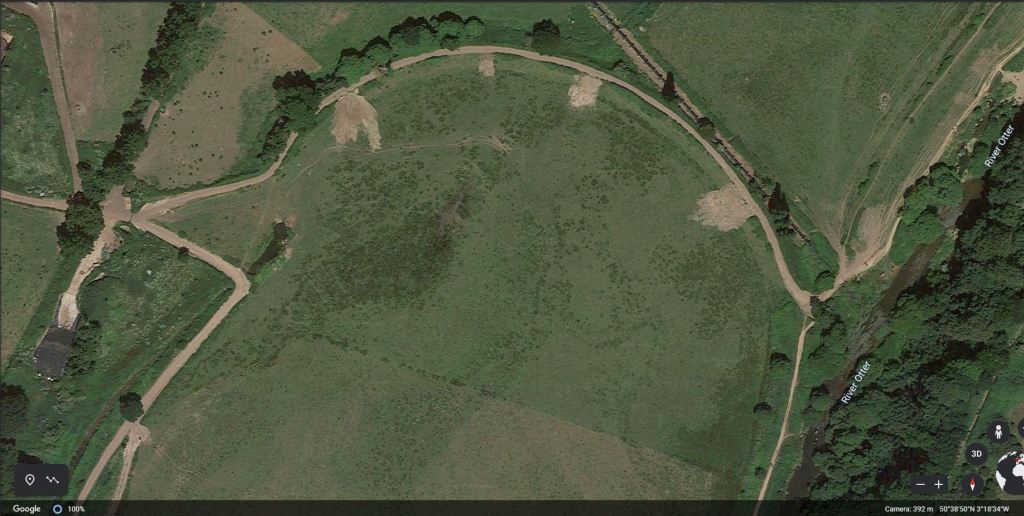
Just three weeks [correction two weeks] after the unanimous EDDC Planning Committee decision to grant planning permission for the Lower Otter Restoration Project, South Farm road flooded, as did the Budleigh Salterton cricket pitch and pavilion. The result of overnight rainfall from storm Christophe.
As a passer-by remarked to this correspondent: “Yet again”.
To understand why this happens you only have to look at the current Google Earth image of the northern end of “Big Banks” to see how “permeable” these 200 year old earth embankments have become.
Once the water gets inside the embankments, the historic flood plain, it takes time to drain as the the cricket field is now one metre below the level of the estuary.

‘Casanova’ fined for travelling to Plymouth to see girlfriend
Lee Trewhela www.devonlive.com
A man has been issued with a Covid fine after travelling from London to Plymouth … to see his girlfriend.
Posting an emoji of a man facepalming, PC Tom Ottley took to Twitter to say “this is exactly why we are in this situation”.
Posting last night, PC Ottley wrote: “Tonight I’ve issued a Covid fine to a Casanova that decided to ignore all restrictions and travel from London to Plymouth to visit his girlfriend.”
Earlier this week, a father with his kids in the back of his car was around 350 miles into a trip from Exeter to Coventry and back when he crashed his white BMW on the motorway near Portishead, according to Avon and Somerset police.
The family told officers they had made the trip to pick up a kebab, and were on their way home when the smash occurred.
Officers fined the motorist for various offences, including driving with no licence or insurance, and coronavirus breaches.
But he was not the only one. Over the weekend, a group who had travelled from Torquay to Teignmouth to enjoy some fish and chips were caught by police.
Officers said they were having to deal with a surge of rule-breakers in the Teignmouth and Dawlish area carrying out non-essential journeys during this lockdown.
Last week, Devon and Cornwall Police stopped a car with two men inside in Brixham after they noticed it was registered in Wolverhampton.
After learning it had travelled almost 200 miles without a good reason and writing out Covid fines for both, they realised they could smell alcohol on the breath of the driver.
He failed a breath test too and is now facing a potential ban from driving.
Those who may have been comforted in recent weeks by the evolutionary theory of virus mutation – that the more transmissible they become, the less lethal they are – may now be pondering the news that the variant that originated in Kent not only spreads more easily but may kill more people too.
Sarah Boseley www.theguardian.com
Britain’s chief scientific adviser, Sir Patrick Vallance, at the Downing Street press briefing, said it could be that in people over 60 with Covid, 13 or 14 might die in every 1000, instead of 10 as has been the case. The reasons still seem to be uncertain.
The theory of the tradeoff between infectivity and lethality goes that a virus is programmed for survival. If it is too deadly, it will kill off its hosts. So if it starts to spread more, the lethality reduces, because if it didn’t, there would be nobody left to infect.
Sars-CoV-2 has a way around that conundrum. It infects people before they know they are ill. So anyone carrying the virus could be walking around feeling fine and spreading it. By the time someone has been admitted to hospital and is fighting for their life on a ventilator, transmission to other people has already happened.
“The fact the people die is almost like a side-effect,” said Prof Deenan Pillay, a virologist at University College London.
One possible reason is that the increased transmissibility that we have been seeing in the virus is a result of people having a higher viral load – more of the virus in their respiratory system.
“It would then follow if that is the mechanism, then, with more viral replication going on, you can imagine that could correlate with worse disease,” said Pillay.
Until now, that has not been documented, he says. Vallance said they did not think a higher viral load was responsible. He said it may be that the new variant binds more solidly to the receptor and gets into cells more easily or grows more readily in certain cell types.
There is clearly a lot more work to do before they get real answers and the data may not be sufficient yet for that. Pillay points out that the results come from people tested in the community. These are not people with severe illness in hospital so the sample size of those who die is smaller.
Undoubtedly, this discovery is going to make other countries pull up the drawbridge on people wanting to visit from the UK. And that’s the right thing to happen, says Pillay. Border control has worked well in many places, such as Australia and New Zealand.
In fact, what this really tells us is just that we have got to use all the measures to control the virus that we know about already. There is no new way to deal with it. Increased lethality just means we have to try even harder not to catch it. Pillay points out that the first lockdown was more restrictive and better observed than the current one. There is more mobility, for one thing.
The news will strengthen hopes that we can be delivered from our sorry plight through mass vaccination, yet even that now looks less certain. There are suggestions that the variants originally found in South Africa and Brazil may be less susceptible to the vaccines we are now using.
The Mail reported remarks apparently made by the health secretary, Matt Hancock, at a webinar for travel agents. He said there was “evidence in the public domain” that the South African variant reduces vaccine efficacy by “about 50%”. Although he followed up by saying: “We are not sure of this data so I wouldn’t say this in public.”
The good news is that the vaccine manufacturers have consistently said they can tweak the vaccines to deal with variants – and there are indications that they are working out whether and how to do exactly that right now.
Local authorities who are taking on risky levels of debt to shore up dwindling resources during the pandemic present a “significant risk” to the government’s finances, MPs have warned.
Rajeev Syal www.theguardian.com
The Commons’ public accounts committee urged the Treasury on Friday to detail how it will manage the risk to the nation’s finances as the extra pressures of dealing with coronavirus adds to the pressure on councils.
Meg Hillier, the committee’s chair, criticised the department as having a “worryingly laissez-faire attitude” to the issue as the MPs predicted more authorities will soon be unable to balance their books.
In its government accounts report, the committee urged the Treasury to ensure it has sufficient oversight of local finances as the “funder of last resort” if they go bust.
Hillier said that “some local authorities have taken on extremely risky levels of debt in recent years in an effort to shore up dwindling finances”, particularly in commercial property investments such as office blocks, industrial sites or retail premises.
“The pandemic has doubly exposed that risk – in the huge extra demands and duties it is placing on local authorities, and in the hit to returns on commercial investments.
“The Treasury has a worryingly laissez-faire attitude to what now presents a significant risk to the whole of government.
“It must step firmly back into the driving seat, demonstrating that it has a clear handle on significant risks in our public finances and is managing them – and that it’s ready to take on the unprecedented additional impact of Covid-19 and EU exit,” she said.
Over the past decade, Westminster has cut a fifth – £15bn – of central funding to councils without designing effective means for them to raise equivalent sums locally.
A Guardian analysis of finances in July indicated that councils were set to shed thousands of jobs and cut services following a collapse in income.
The committee also highlighted an “apparent lack of ownership” by the Treasury of analysis and scenario planning to manage the impact of coronavirus on Government finances.
The MPs said the Treasury has not explained how the disease will impact investments and projects nor has it set out which programmes would be priorities if some need delaying or cancelling.
Croydon council in south London imposed emergency spending restrictions in November – the first council to declare a Section 114 order, effectively saying it was bankrupt, since Northamptonshire council in 2018.
A Treasury spokesperson said: “We provided a significant funding uplift for councils at the spending review last year to support local services, on top of funding to ensure they can continue to deliver essential local services as we tackle the impacts of the pandemic.”
East Devon has one of the oldest populations in the Country (if not the oldest) so must pose one of the country’s biggest vaccination challenges.
9% of the population is over 80, 6% of the population is aged 75 – 79 and 8% are in the 70 – 74 bracket. In total 23% are over 70. (Comparable figures for Inner London are 2.5%, 1.7% and 2.4% – total 6.6%).
So Owl is pleased to see that Exeter is now getting a mass vaccination centre which will be a lot easier for East Devon residents to get to than Taunton racecourse.
The NHS has confirmed that two mass vaccine centres will be opening in Devon next week.
Anita Merritt www.devonlive.com
Event venue Westpoint in Exeter, and The Mayflower Grandstand at Plymouth Argyle Football Club’s Home Park Stadium will be welcoming their first booked appointments to people aged 80 and above from next Tuesday, January 26.
The two new large-scale vaccination centres will enable thousands more vaccinations to be given every week in Devon, and will provide local people have a wider choice of options when they receive their invitation for an appointment.
Anyone who cannot or does not want to travel to one of the sites can be vaccinated by their local GP service.
Westpoint will be managed by the Royal Devon and Exeter NHS Foundation Trust (RD&E). The site was established by the NHS with support from a team of volunteers from Network Rail, whose volunteers also pitched in to help set up the NHS Nightingale Hospital in Exeter last year.
Suzanne Tracey, chief executive of the RD&E and Northern Devon Healthcare Trust said: “If you are invited to attend an appointment here, I can reassure you that measures are in place to keep everyone safe, and our brilliant staff and volunteers will look after you while you’re with us.”
Steve Brown, director of Public Health at Devon County Council, added: “We’re very proud to be part of this key project. Vaccination is the way of out lockdown and the pandemic and the new centre in Exeter will give us more capacity to vaccinate local people in the weeks and months to come.”
The Home Park site will be managed by University Hospitals Plymouth NHS Trust,which runs the city’s Derriford Hospital. Plymouth Argyle FC has been supporting the NHS since the beginning of the pandemic, with the Mayflower Grandstand temporarily hosting health services such as phlebotomy and antenatal services to relieve pressure on Derriford Hospital.
A reminder has been issued that there is no need to contact the NHS for a vaccination as people will be invited when it is their turn and people cannot get vaccinated by just turning up.
Appointments, which are offered by letter via a nationally-run booking system, are staggered to allow for social distancing and people are urged not to turn up early to avoid queues.
In northern Devon, vaccinations are taking place at GP-led centres in Barnstaple and Holsworthy, as well as North Devon District Hospital.
The site at Barnstaple Leisure Centre, which is capable of vaccinating a similar number of people to the large-scale vaccination centres, can be scaled up as further supplies come in, with around 8,000 vaccinations expected over the next week.
Two pharmacy sites will also begin delivering vaccinations to northern Devon residents in the coming days.
The Oxford AstraZeneca vaccine, which is easier to transport and store, is also enabling GPs to run day clinics at selected individual practice sites in northern Devon and across the county, to bring vaccination facilities closer to people in places where the location of the local vaccination centre makes it difficult for people to access it.
North Devon District Hospital is scaling up clinics to vaccinate frontline health and social care workers from across the northern Devon area, with around 7,000 vaccinations expected over the next few weeks.
From crowing roosters to the whiff of barnyard animals, the “sensory heritage” of France’s countryside will now be protected by law from attempts to stifle the everyday aspects of rural life from newcomers looking for peace and quiet.
French senators on Thursday gave final approval to a law proposed in the wake of several high-profile conflicts by village residents and vacationers, or recent arrivals derided as “neo-rurals”.
A rowdy rooster named Maurice, in particular, made headlines in 2019 after a court in western France rejected a bid to have him silenced by neighbours who had purchased a holiday home nearby.
“Living in the countryside implies accepting some nuisances,” Joël Giraud, the government’s minister in charge of rural life, told lawmakers.
Cow bells (and cow droppings), grasshopper chirps and noisy early-morning tractors are also now considered part of France’s natural heritage that will be codified in its environmental legislation.
“It sends a strong message,” said Pierre-Antoine Lévi, the senator who acted as rapporteur for the bill. “It can act as a useful tool for local officials as they carry out their educational and mediation duties.”
The law is emblematic of growing tensions in the countryside between longtime residents and outsiders whose bucolic expectations often clash with everyday realities.
Corinne Fesseau and her rooster Maurice became the image of the fight when she was brought to court by pensioners next door over the bird’s shrill wake-up calls.
Critics saw the lawsuit as part of a broader threat to France’s hallowed rural heritage by outsiders and city dwellers unable or unwilling to understand the realities of country life.
Thousands of people signed a “Save Maurice” petition, and a judge eventually upheld the cock-a-doodle-doos.
In another case from 2019, a woman in the duck-breeding heartland of the Landes region was brought to court by a newcomer neighbour fed up with the babbling of the ducks and geese in her back garden.
A court in south-west France also threw out that case.
A fully-stretched NHS trust is starting to transfer patients with Covid-19 to one of the government’s emergency Nightingale Hospitals.
BBC News www.bbc.co.uk
University Hospitals Dorset (UHD) NHS Trust said its hospitals in Bournemouth and Poole were “absolutely full” and “on a knife-edge”.
The number of patients has risen from “more than 350” to “about 380” in the past week, it said.
Up to 10 patients are due to be moved to the Nightingale Hospital in Exeter.
The move will allow the Dorset hospitals to continue accepting emergency admissions.
UHD medical director Tristan Richardson said: “If we can make that happen two or three times in the next fortnight, I think that will just about see us through but it’s still very much on a knife-edge.
“We are absolutely full of Covid patients on both sites.”
Senior nursing sister Ann Brown said: “We knew it was going to be much worse than previous winters, however I still wasn’t expecting it to be quite this bad.”
BBC South health correspondent Alastair Fee, who interviewed staff at the hospital on Wednesday evening, said he saw the pressure building as ambulances delivered more patients with Covid-19.

image captionNightingale Hospital Exeter can cater for up to 116 Covid patients
The NHS trust remains on a level four Operational Pressures (OPEL) alert, denoting potential for patient care to be compromised.
Dr Richardson said: “Speaking to families on the phone when you’ve said, ‘That family gathering you had at Christmas has ended up with your grandparent catching Covid and they are sadly going to die in the next 24 hours’, and that penny drops, is sad, so sad.”
Nightingale Hospital Exeter is a specialist facility for up to 116 patients with Covid-19 from the south west of England.
It received its first patients in November from the Royal Devon and Exeter NHS Foundation Trust.
In a statement, UHD said: “This joined up regional support will help us to carry on accepting new emergency admissions and providing the best possible care for our remaining patients.”
Thousands of families struggling with home learning are being offered free high-speed broadband following a partnership between internet provider Hyperoptic and dozens of local authorities across the UK.
Mark Sweney www.theguardian.com
Families in 37 local authority areas, from Tower Hamlets in London to Newcastle and Leeds that are struggling with remote learning due to poor or no internet will be offered the chance to have a high speed connection installed with no usage charges until the end of the summer term. At that point there is no obligation to stick with the service. Telecoms regulator Ofcom has estimated that more than 880,000 children live in a household with internet access only via mobile phone.
Broadband and mobile companies have answered calls to do more to support students struggling with connectivity during lockdown. The UK’s biggest telecoms companies including BT, which also owns mobile company EE, Vodafone, Sky, Virgin Media, Sky, O2 and Three have all launched initiatives offering free data and internet packages to help children access online learning tools.
Liam McAvoy, senior director of business development at Hyperoptic, said: “Every child deserves to be able to virtually learn and harness the opportunities that are enabled by connectivity. We hope others in the industry join us in providing free connectivity to families that need most.”
The company said that users of the package could expect a consistent service that does not fluctuate depending on what time of day it is or how many people or devices in the house are connected, and that it comes with unlimited data.
Hyperoptic said it hoped to connect at least 2,500 families with the offer in the next month alone.
Ministers are considering paying £500 to everyone in England who tests positive for Covid-19, in a dramatic overhaul of the self-isolation support scheme, the Guardian can reveal.
Josh Halliday www.theguardian.com
The proposed change is thought necessary because government polling found only 17% of people with symptoms are coming forward to get a test, owing to fears that a positive result could stop people from working.
The universal payment is the “preferred position” of Matt Hancock’s Department of Health and Social Care (DHSC) and would cost up to £453m a week, 12 times the cost of the current system, according to an official policy paper seen by the Guardian.
The 16-page document, dated 19 January and marked “Official Sensitive”, also proposes that police should be given access to health data for the first time to crack down on quarantine breaches.
Another recommendation is ending the £500 one-off payments to close contacts of infected people and instead rolling out nationwide self-testing, so that those who test negative can return to work.
The revamped self-isolation support scheme was drawn up by Hancock’s team to be considered by the government’s coronavirus operations committee, chaired by Michael Gove, which is expected to meet on Friday.
The UK recorded another 1,290 deaths on Thursday and 37,892 new positive cases, and there is uncertainty about whether the current restrictions will do enough to bring the pandemic under control. Boris Johnson pointedly refused to be drawn on when lockdown measures could be lifted, raising fears that the regime may not ease for months.
Financial support for people who need to self-isolate is critical to the government’s coronavirus strategy because the disease will continue to spread unless infectious people and their close contacts go into quarantine for 10 days.
However, there have been concerns that the scheme unveiled by the prime minister four months ago is excluding many people who cannot afford to self-isolate, meaning they are torn between losing earnings or spreading the disease.
The overhaul has been prompted by Cabinet Office polling indicating that only 17% of people with symptoms are coming forward for testing, according to the policy paper. It said: “Wanting to avoid self-isolation is now the single biggest reported barrier to requesting a test.”
A separate survey carried out for the DHSC, discussed in the report, found that only one in four people reported compliance with self-isolation, with 15% going to work as normal.
At present only those on a low income who cannot work from home and receive one of seven means-tested benefits are eligible for the £500 test-and-trace support payment (TTSP), excluding many small business owners, sole traders, self-employed workers and parents whose children have been told to self-isolate. Councils are given an additional pot of “discretionary” funding, but figures released by Labour this week showed that three-quarters of applicants were being rejected.
An official review of the scheme has concluded that it excludes too many people, has created a “postcode lottery” around England, and that only one in four of those eligible have received financial support – about 50,000 people in total – because the application process is too complex.
It proposes four options to expand the programme. The most generous is paying £500 to anyone who tests positive. The report says: “Anyone who tested positive for Covid-19, irrespective of their age, employment status or ability to work from home, would be eligible for TTSP. This would be straightforward for local authorities to administer, though it would lead to significantly greater volumes of applications than under the current scheme.”
Describing the universal payment as “the preferred DHSC position,” officials estimate it would cost up to £453m a week if there were 60,000 cases a day – 12 times the current cost of £36.5m a week. It would cost £340m a week if there were 45,000 infections a day, as at present.
A second option is paying the lump sum to those who test positive and cannot work from home, costing up to £244m a week. The third option is paying those earning less than £26,495 a year or on means-tested benefits, at a cost of £122m a week. The fourth proposal is keeping the current system but “significantly” expanding the discretionary funding to councils.
The policy paper says “a more radical approach” would be paying people their usual earnings instead of a £500 lump sump, but it would be difficult to assess the earnings of those on zero-hours contracts, agency workers and the self-employed and therefore that option is not recommended.
The proposal to end £500 payments to the close contacts of infected people and instead introduce regular nationwide at-home lateral flow testing would save the government £79m a week if cases were at 60,000 a day, according to the report. However, the Medicines and Healthcare products Regulatory Agency has cautioned against using self-tests as a “green light” to avoid self-isolation. Any nationwide scheme would need to be clinically approved.
Another proposed change likely to be controversial is to give individuals’ health data to the police to prove that someone has tested positive for Covid-19, making it easier for them to be prosecuted.
In October it emerged that police could request information about whether someone was supposed to be self-isolating, but “no testing data or health data”. The official paper says the current enforcement approach is “difficult to implement” and that police should be given health data to distinguish between people who have tested positive and those required to self-isolate because they are a contact.
It adds: “Contrary to previous assurances given to the public, this will mean sharing health data (ie an indication of who has tested positive for Covid-19) with the police if someone is reported to have breached their legal duty, but this is considered a necessary and proportionate measure – and data-sharing agreements will provide that the information is not used for any other purposes.”
A DHSC spokesperson said they would not comment on leaks, but said: “We are in one of the toughest moments of this pandemic and it is incumbent on all of us to help protect the NHS by staying at home and following the rules.
“All local authorities costs for administering the test-and-trace support payment scheme are covered by the government, and each authority is empowered to make discretionary payments outside of the scheme. Fifty million pounds was invested when the scheme launched, and we are providing a further £20m to help support people on low incomes who need to self-isolate.
“We also recognise the impact of the pandemic on people’s mental health and wellbeing which is why mental health services have remained open throughout the pandemic.”
A significant password data breach within East Devon District Council has been slammed as a ‘wake-up call’ and an example of ‘poor practice’.
Daniel Clark www.devonlive.com
Passwords used by some of the 60 strong East Devon District Council were made available to other councillors as a result of the data breach that was uncovered at the start of November 2020.
Swift action was taken to rectify the breach, with councillors having their passwords reset, and passwords were not visible to the public at any stage.
The password information pertained to Office 365 users and also the Airwatch software the council uses, and it is understood that Strata, East Devon District Council’s IT provider, at some stage had taken the decision to add the both Airwatch and Outlook 365 passwords to the individual councillor profiles, and as such, the data breach meant passwords were available to other members.
Details confirming East Devon’s use of both the Airwatch and Office 365 platforms were publicly available in documents in the council’s website prior to the data breach occurring.
East Devon District Council’s cabinet, when they met on Wednesday night to consider the breach, heard that because some Members were able to see passwords, it represented a technical data protection breach and that it was clearly poor practice not to protect sensitive information from those not entitled to see it.
Strata had also confirmed categorically that there was no public visibility to the password information and that the likelihood of councillor passwords and emails being compromised by other councillors appears very low.
But councillors said the issue was a ‘wake-up call’ and that the inability for councillors to set their own passwords had been raised back in May 2019 but had not been actioned, with them uncomfortable that all passwords had been stored on a spreadsheet, albeit one that had only very limited access and that the council’s monitoring officer, Henry Gordon Lennox, when compiling the report found he was unable to access.
Cllr Paul Millar, who discovered the breach, said that it was a very sad situation and that he was not being a ‘captain hindsight’ about his concerns.
He said: “As soon as I became a councillor and I received the councillor iPad I made representations to Strata that I was uncomfortable that I wasn’t able to set or amend or change the password at the time, and I was uncomfortable that others had my password, and my fears were justified.
“There was a spreadsheet in Blackdown House with the passwords of all members on it. I discovered the breach, I am disappointed that despite members raising the concerns and being able to set your own password is standard practice, I was disappointed that my and others concerns were not acted on before the breach occurred.”
Asked to explain how he discovered the data breach, Cllr Millar said that he was on his android phone on Office 365 in his emails and he discovered another councillor’s password was visible on their profile.
He said that he checked his own profile and his password was visible, and thought that it could be the same for others, and immediately reported the issue to Strata.
Cllr Millar added: “My worry remains that as councillors we have extremely sensitive data in the email accounts and as much as it was only other councillors who could see the information, we are going through nasty political times in the council, and had another councillor seen the password, they may have hacked into their emails.
“Lessons have been learnt and we need to implement the changes needed to ensure this never happens again and have that multi-faceted verification.”
Cllr Fabian King said that the line in the report that ‘the risk appeared very low’ was ‘a fairly gentle remark’ but was ‘a wake-up call’.
He added: “The report concentrates on fixing the breach which is commendable and Strata provides a very good service all round, but this is a wake-up call. Any invitation to have a ‘look over the wall’ could be very tempting and given the opportunity, people may be tempted to see what is going on.
“We need to acknowledge that over a length of time, internal measures of this sort are rather incestuous, and I do believe that we need to give room for an independent audit.”
Laurence Whitlock, Strata IT Director, in his report to the meeting, said: “Such incidents are treated seriously by Strata. It is clear that once notified of the disclosure, Strata reacted very quickly and professionally in mitigating the risk and identifying the root cause.
“The key critical point is that it can be confirmed that external visibility of the password information by individuals residing outside of the Strata provisioned Office365 environment would not have been possible, primarily because of the secure way in which the Strata Office365 environment has been designed, built and deployed.
“Hence, Strata can confirm categorically that there was no public visibility to the password information. In addition, the likelihood of Councillor passwords and emails being compromised by other Councillors appears very low and any misuse of the password information would have been in contravention of the Computer Misuse Act 1990.”
He added: “There is no evidence to suggest that there has been any unauthorised or malicious use of passwords during the log period of August 11, 2020 until November 13, 2020. In all likelihood, had there been any unauthorised activity prior to the log period, this would have continued during the log period itself.
“Based on Strata’s investigation coupled with Strata’s determination of the likely timeframe when the passwords actually became visible, it is Strata’s professional judgement that in reality the likelihood of the passwords having been compromised by other Councillors at any time is very low.
“Strata reported the incident to the Information Commissioners Office (ICO), who have reviewed the case and due to the speed of the Strata response and the controls in place, the ICO have concluded no further action is necessary and the case has been closed.
“The root cause of the incident was rapidly identified by Strata and corrective measures put in to place immediately and there was no wider risk of threat to the Council’s IT systems.”
Key lessons learned and recommendations that have been identified as result of this incident, the cabinet heard, was that councillors need to be provided with the ability to manage their own passwords, irrespective of how complex the delivery of such functionality is.
The report said: “Whilst this may make the support of councillor devices and applications more difficult, a solution to this issue needs to be identified, procured and implemented.”
Other lessons included that Strata security practices need to be reviewed regularly to ensure that there are no weaknesses in access controls, the security of data and in particular passwords is all staff’s responsibility and any evidence of poor practice should be reported immediately, but that the issue of others being able to see passwords in a list and the use of similar passwords is clearly poor practice and steps, such as appropriate training and reminders to staff, will be undertaken to seek to avoid a repeat event.
The meeting that it would not be until around April before the processes were changed so that councillors would have the ability to set and reset their own passwords.
Cllr John Loudoun, in recommending that the cabinet note the report, also called for the Devon Audit Partnership to carry out an audit of Strata’s process, and for the South West Audit Partnership to take a look at East Devon’s data processes.
He said: “That would go some way to reassure and to answer the question of whether or not we want further independent reassurance.”
The Information Commissioners Office, having been asked to consider the breach, decided that no further action was necessary on this occasion.
They said: “It appears that the information was exposed to a limited number of people, and technical logs have shown that there has been no incorrect access to the data. This could reduce the risk to the data subjects.
“The personal data breach is not likely to result in a high risk to the data subjects and it appears you have the appropriate technical security measures in place to protect the personal data you process.
“After discovering the incident, steps have been taken to remove the information and to synchronise the system to contain the breach, and additional steps have been taken to change passwords to prevent any unauthorised access.
“The root cause of the incident was process based and you have changed your process for recording information to prevent another incident of this nature and it is noted that all sensitive data has been removed, which could reduce the risk of this information being disclosed.”
Cases of coronavirus may no longer be falling across England, according to a major survey that raises concerns over whether lockdown measures can contain the new variant, as the UK reported a record daily number of deaths.
[Owl has been keeping records of the Zoe/King’s College symptom tracker app. These data indicate reported symptom rates in East Devon falling from the November lockdown until the Christmas break. They have then been rising and only appear to have levelled off in the past few days. Reported symptom rates are still running at levels last seen at the end of November. Owl thinks we still need to be very cautious]
Ian Sample www.theguardian.com
Boris Johnson described the 1,820 deaths reported on Wednesday as “appalling”, as he warned: “There will be more to come.”
Scientists at Imperial College London analysed swab tests from more than 142,000 people across England between 6 and 15 January which suggested that new infections may have fallen recently but were now stable, and perhaps even growing slightly, with only south-west England showing clear evidence of a decline.
Imperial’s React-1 infection survey found 1.58% of people tested had the virus, a rise of 74% compared with the previous survey conducted between 25 November and 3 December.
Infections were highest among 18 to 24-year-olds, at 2.51%, with rates more than doubling among the most vulnerable over-65s to 0.94% in the latest survey.
The scientists estimate the R value – the average number of people an infected person infects – to be 1.04 for England. The epidemic grows when R is above 1 and shrinks when it falls below 1.
But the survey reveals regional variations, with cases potentially having plateaued in London and the east of England, falling in the south-west, where the R is estimated to be 0.37, and rising in Yorkshire and the east Midlands.
Levels of the virus were highest in London, with 2.8% of those in the survey testing positive, and lowest in the south-west, with prevalence of 0.53%.
Reacting to the new record death toll, the prime minister said the more transmissible variant discovered late last year was now in virtually all parts of the UK.
“It looks as though the rates of infection in the country overall may now be peaking or flattening but they’re not flattening very fast and it’s clear that we must keep a grip on this. We must maintain discipline, formation, keep observing the lockdown,” he said.
The Imperial scientists warned that pressure on the NHS showed no sign of letting up.
“The NHS is very resilient and all sorts of contingency measures are being brought in, but we do need to get the prevalence rates down because if we don’t then we will see the same pressure from prevalence to hospital admissions to [intensive care] admissions and sadly to deaths,” said Paul Elliott, professor of epidemiology and public health medicine at Imperial.
The data appears to contradict the falling trend in new daily reported cases at the start of this week, but Elliott believes the Imperial survey may be ahead of official figures, not least because the survey tests people routinely rather than picking up infections after people have developed symptoms and gone through the process of getting a test.
“We do think we are ahead of the [community testing] pillar 2 data and it may be that in coming days there will be a flattening off, but clearly we need to keep a watching brief,” Elliott said.
At a press briefing on the report, Steven Riley, professor of infectious disease dynamics at Imperial, highlighted Facebook data showing a fall in mobility immediately after Christmas and a rise at the start of the new year, which might help to explain a fall in cases followed by a levelling off.
But the new variant, named B117, which emerged in the south-east and is more transmissible, is also thought to be driving more infections.
“The fact that we’re in lockdown and it’s a stronger lockdown than lockdown two [in November], but R is above 1, we’d attribute some of that to transmission of the variant strain,” Riley said.
The survey came as the UK recorded a sharp rise in coronavirus infections, reaching 38,905 on Wednesday, after continued falls in cases earlier in the week. The latest figures bring the total number of cases in the UK to 3,505,754.
Government data up to 19 January shows that of the 5,070,365 vaccinations that have been given in the UK so far, 4,609,740 were first doses – a rise of 343,163 on the previous day’s figures. Second doses accounted for 460,625, an increase of 3,759 on figures released the previous day.
The seven-day rolling average of first doses given in the UK is now 281,490. Based on the latest figures, an average of 399,625 first doses of vaccine would be needed each day in order to meet the government’s target of 15m first doses by 15 February.
Riley said that while the vaccine rollout was “quite rightly” focused on those most at risk, they were not the most likely to spread the virus.
He said it would take “a large number of weeks or possibly months” for the vaccine to have an impact on the spread of the virus and bring new cases down.
 East Devon Watch