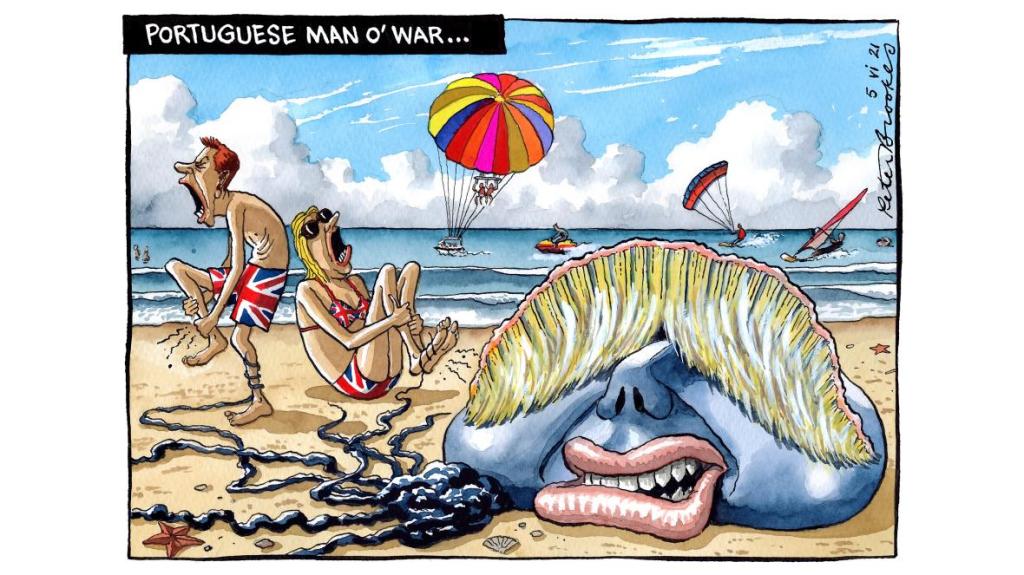
Labour warns on next NHS England chief as Dido Harding expected to apply

The next chief executive of NHS England must be someone with “a proven track record”, Labour has said, after it emerged that the former test and trace chief Dido Harding was expected to stand.

Peter Walker www.theguardian.com 

It is understood that Harding, a Conservative peer, is considering formally applying to replace Sir Simon Stevens, who is leaving the job in July after seven years.

While Stevens’ whole career has been in healthcare and health management, Harding spent the bulk of her working life in areas such as supermarkets and telecoms, notably as head of the Talk Talk group.

Since 2017, she has chaired the board of NHS Improvement, an oversight arm of NHS England. Her first day-to-day management job in health came a year ago when she was appointed to lead the Covid test and trace service in England, with a budget that rose to £37bn.

Harding, who is married to the Conservative MP John Penrose, faced regular criticism over the service’s performance and has acknowledged failings in how it has operated, though allies argue she has been unfairly maligned.

Test and trace has been blamed by some for failing to better curb the spread of Covid variants, such as the highly transmissible Delta variant first identified in India, which has become dominant in the UK and is threatening plans to drop most lockdown restrictions this month.

In August, Harding was also made the interim chair of the new UK Health Security Agency, which integrates the work of test and trace and takes over from Public Health England. Jenny Harries, formerly England’s deputy chief medical officer, has now taken over the role.

The next head of NHS England will face the toll of disruption to non-Covid services, with one analysis saying more than 4.5 million people missed out on hospital treatment last year alone.

Labour did not comment directly on Harding, but made plain the party was sceptical at the idea of her taking on ultimate responsibility for about 1.3 million NHS staff and an annual budget of more than £115bn.

Jonathan Ashworth, the shadow health secretary, said NHS patients and workers “will be looking for a new chief executive able to out-manoeuvre [the chancellor] Rishi Sunak” and secure enough funding for the service.

He added: “Given the scale of the waiting list backlog including for cancer and mental health care, the NHS needs someone with a proven track record of improving services for patients.”

Speaking separately, Justin Madders, the junior shadow health minister, said: “We hope the recruitment process takes candidates’ recent achievements into account, but test and trace’s performance speaks for itself.”

Another key Covid-related appointee, Kate Bingham, who led the vaccines taskforce until the end of last year, is set to become a dame in this week’s Queen’s birthday honours, according to a report.

The award for Bingham will be among a series of honours given to people who have played a role in combating coronavirus, the Sunday Telegraph said. Bingham has been praised for the success of the UK’s vaccine programme after rapidly securing contracts for large numbers of jabs of different types.

Devon carers number 130,000+

More than 130,000 people in Devon are now carers, a figure that’s grown because of the coronavirus pandemic.

Daniel Clark, local democracy reporter www.radioexe.co.uk

But only 21,000 of them – roughly only one in every six – are said to be accessing vital information and support.

Next week is Carers Week, and Devon County Council, NHS Devon Clinical Commissioning Group (CCG) and Devon Carers are shining a light on it to encourage people who are carers for friends and family to recognise themselves as unpaid carers, and to come forward for help.

Devon Carers, which is commissioned by Devon County Council and NHS Devon, provides information, advice and support for people who care for others, whether they need help because they are ill, frail, disabled or have a mental health or a substance misuse problem and can’t manage independently without support.

Cllr James McInnes, Devon County Council’s cabinet member for adult care and health services, said: “Many people won’t even think of themselves as carers because the person they are looking after is a relative, but caring can bring a whole host of responsibilities and worries and which can often have a real impact on a carer’s health and wellbeing.”

Vera Tooke didn’t think she was a carer because Graham, who she cares for, is her husband.  He has Parkinson’s disease and Lewy-Body dementia. “There are people who need a little bit of help and those who need more,” she said.  “Looking after someone else is difficult, but I didn’t see myself as a ‘carer’.  The label didn’t feel right. I was coping with the physical aspects of looking after my husband, but dementia is something else. I felt I couldn’t leave Graham to do the things I needed to do. I felt guilty and worried when I did. He was very much against anyone else helping him, even family.

“I then admitted to myself that I was a carer and I contacted Devon Carers for a carer’s assessment. They were brilliant. A carers assessment has nothing to do with judging how you are functioning as a carer, it looks at your own needs as the carer.”

Vera is one of thousands of people across Devon working around the clock to help and care for relatives and friends who couldn’t manage on their own.

But while the coronavirus pandemic has meant even more people in Devon taking on caring responsibilities, Devon Carers saw a 50 per cent reduction in the number of people approaching them for support between April and June last year.

Support is available for adult carers at devoncarers.org.uk/support or support for young carers is available at https://www.westbank.org.uk/Pages/Category/young-carers or call 03456 434 435.

Street markets: Can councils get redevelopment right?

It’s lunch time at Preston Market. At one end of the large Victorian market hall, a generous pile of fried egg and chips will leave you with change from a fiver. Two friends have claimed the window seats and grin. “These are ours – we sit here every day.”

By Rebecca Wearn www.bbc.co.uk 

At the other end of the covered market it’s a different crowd and roasted halloumi in a fresh ciabatta will cost you a fraction or so more. A solicitor pops in for a latte: “It’s nice to have something here that’s modern, it’s trendy,” he says.

Both locations serve important purposes for local people. Street markets like this one in Lancashire are being revitalised across the country as part of urban regeneration plans.

The decline of British High Streets has put councils under pressure to draw new customers into town centres. However, The National Market Traders Federation says they must not forget their old customers, too.

The trade body wants these upgraded markets to maintain traditional, affordable stalls and produce.

Joe Harrison is chief executive of the NMTF and works alongside county councils and businesses to get the best of both worlds into any redevelopment plans.

“We’ll have swanky artisan markets – and that’s all that will exist. We need to make sure that we don’t take away from people that need access to that affordable food,” he says.

Preston’s newly glazed market hall is part of a £50m regeneration project. Alongside fruit and vegetable stalls are new coffee shops, mobile phone, and fashion stalls. Outside, traders of all kinds from the old market have new tables to sell their wares, ranging from toys, homemade soaps, and bric-a-brac.

Joe thinks the balance in Preston is right but is appealing to other councils to think carefully about existing customers and traders before they make changes.

Mother and daughter business team, Tracy and Becky Taylor, run Fresh and Fruity greengrocers inside the new trading hall. Their produce is high quality, fresh and popular.

They agree that selling affordable vegetables is still their staple trade but they’ve started offering more luxury or exotic items since the refurbishment now that new customers are picking up their shopping in the hall.

They believe they can walk that line because of their connections to local suppliers: “I think a big thing for us is local produce – because we can go straight to the growers and the farmers,” says Becky.

But for some it’s not so easy. “We’ve found that a lot of things the markets used to sell, they don’t sell anymore, like clothes,” adds Tracy.

Their views are supported by a research project, led by associate professor Sara Gonzalez from the University of Leeds, measuring the importance of markets to local communities.

“Markets tend to attract elderly people; people who are from low-income neighbourhoods; those with long-term illnesses, a disability, or people with young children, and migrants or [people from] ethnic minorities,” explains Prof Gonzalez.

“We worry that these more disadvantaged customers will be left aside.”

For three years she and her team have analysed indoor and outdoor markets in London, Newcastle and Leeds, to learn about the contribution they make to these local community groups.

Their value is not just about good produce at good prices to feed stomachs – it’s about regular human contact and interactions that feed the soul.

Prof Gonzalez says that people who shop regularly at local markets get something a supermarket could never give them – company – and that’s why many customers make a whole day out of a trip.

“They might have a haircut, they’ll have a cup of tea, they’ll meet with a friend, they’ll do some shopping. And it’s weather-proof, it’s warm,” she says.

Entrance market hall

Regeneration of older marketplaces is happening across the country

“But more than that, they get to speak to people they don’t know. That might be the only people they meet for the whole day, the whole week. So, they actually do develop friendships,” says Prof Gonzalez.

At the height of the pandemic, she spoke to traders in Newcastle’s Grainger Market, who had attended a regular customer’s funeral. While in Preston, bookstall holder Pete Burns delivered books to regulars he knew relied on the social connection.

“A lot of the die-hard regulars look at you as more of a friend than a trader,” he says.

Prof Gonzalez and her team fear these groups are being excluded from council redevelopment plans, because there’s no way to measure or make a profit from the valuable sociable interactions markets provide for local communities. Instead, regeneration plans have focused on higher-end, higher-priced offerings.

Citing examples like Borough Market in London or Altrincham Market, that offer late-night fine dining and artisan produce, she explains these can “alienate” many of the vulnerable groups she has worked with.

“We want local authorities to think about the market not as a property asset but as a community asset.”

Councils demand powers to take over empty houses to solve homelessness

Councils want powers to take over empty homes to tackle the housing crisis.

Chris McLaughlin www.mirror.co.uk 

They expect hundreds of thousands will need help after the ban on bailiff evictions imposed during the pandemic was lifted last week.

Official stats say 268,385 homes are empty for over six months.

And there were 280,000 people in temporary digs such as hostels and B&Bs even before the pandemic, according to Shelter.

The Local Government Association wants to move families into homes that have been empty for six months or more.

Its spokesman David Renard said: “Lifting the ban on evictions will leave some households on a cliff edge of becoming homeless.”

Ben Beadle, of the National Residential Landlords Association, added: “A quarter of those in arrears face court orders and damage to their credit score, which makes it harder for them to access new housing.

“We need an interest-free, government hardship loan for tenants.”

The Ministry of Housing said: “We have given councils tools to tackle empty homes, including the power to increase council tax by up to 300% on these properties, and take over the management of homes that have been empty for a long period.”

Nerves in the Commons as MPs await Boundary Commission report

Some time before midday on Monday, quite a lot of English MPs will start getting distinctly twitchy. It is then that they will first see the results of a major redrawing of parliamentary boundaries, with a number of seats set to change, even disappear.

Peter Walker www.theguardian.com 

The report by the Boundary Commission for England is the latest development in a decade-long process which has previously failed to change the parliamentary map. This time the expectation is it will go ahead, with new constituencies finalised in 2023.

The key difference is that rather than reducing the Commons to 600 seats, as planned in since-abandoned reviews from 2013 and 2018, this version keeps the current 650. It will instead reflect population changes by giving 10 more seats to England, with Wales losing eight and Scotland two.

Within this framework, the respective boundary commissions for the four UK nations will work out details, followed by long months of consultation, argument and wrangling. England is announced first, with proposed maps for Scotland, Wales and Northern Ireland – which keeps 18 seats – due by July.

The plan is based on trying to make every constituency within 5% either way of the average number of electors, just under 73,400, apart from a handful of “protected” seats.

These include the Scottish Western Isles constituency of Na h-Eileanan an Iar, the smallest by population, with just under 21,000 voters, and the Isle of Wight, which has 113,000 but will be split into two.

The overall picture is deeply complex and, especially for Conservative MPs, brings mixed news.

According to an analysis by Robert Hayward, the elections expert who is also a Tory peer, the new boundaries would have given his party between five and 10 extra seats at the 2019 general election, since most of the new constituencies are in Conservative-friendly areas such as England’s south-east, south-west and east – although Labour-dominated London will get two more.

But gaining a swathe of new seats in 2019 has created a bigger problem for the Conservatives than was the case, Hayward argued: “Having won seats in the north and the Midlands, and particularly in Wales, they now represent seats which are substantially smaller than seats they previously held.”

Labour had significant worries about the last boundary review, both the reduction in total seats and the plan to base it on a relatively old electoral register. This time the template will be the register from March 2020.

Cat Smith, Labour’s shadow Cabinet Office minister, whose brief covers electoral issues, said one worry was that the flexibility over populations had been set to 5% of the average, rather than 10%.

“That means less flexibility to keep communities together,” she said. “What we don’t want to see is new boundaries that cut across what people see as their community identities. It’s why the consultation process is so important.”

Such issues are likely to dominate the consultation process. In a media briefing this week, Tim Bowden, secretary to the English commission, said one possibility was a new constituency straddling the River Tamar – meaning it would include parts of both Devon and Cornwall.

While the proposed new boundaries will not be publicly announced before Monday night, MPs can collect information about their own area from Commons officials at midday. With many MPs still not in Westminster due to Covid, the information will also be emailed at 3pm.

The process was likely to be less tumultuous now the plan to trim 50 seats had been dropped, Hayward said: “Yes, up to a point – but redistribution always is contentious. Even an MP who has a majority of 20,000 gets neurotic if they might lose 4,000 of that, as they immediately assume it will be 10,000.”

The key questions Matt Hancock must answer on Covid this week

Michael Savage www.theguardian.com 

Did he mislead the prime minister over care homes?

In perhaps the most explosive allegation made during his seven hours of select committee evidence, Dominic Cummings said Hancock had assured Boris Johnson that all hospital patients heading back to care homes would be tested. He then said that, at a disputed meeting in May, the prime minister had demanded to know why this had not happened. Hancock has already denied these allegations and suggested that he only pledged to test all discharged hospital patients as soon as testing capacity allowed.

Did he interfere with the testing programme to meet his own targets?

Another key accusation from Cummings was that Hancock was telling officials to “down tools” on the test and trace system so that they could focus on meeting his target of carrying out 100,000 tests a day by the end of April 2020. “It was criminal, disgraceful behaviour that caused serious harm,” said Cummings. Hancock has said that building capacity was critical to achieving the ability to test, among others, returning care-home residents.

Was he too slow to react on PPE?

Cummings said he was astounded to find that Hancock’s department had accepted that crucial personal protective equipment would take time to arrive because they were still shipping it from China, rather than making use of aircraft grounded as a result of the collapse in international travel. He also said Hancock had falsely claimed PPE funding was blocked by the Treasury.

Did everyone who needed treatment get treatment?

Hancock said publicly that everyone who needed treatment for Covid would receive the care that they needed. That this happened has been disputed, with Cummings stating that people were left to die “in horrific circumstances”. The Cummings claim is that Hancock knew that not everyone had received the care they required, because he had been briefed to this effect internally.

Was Hancock complacent about having the right plan?

It has become clear that when Covid first emerged, the government thought its plans to deal with a flu pandemic would form the basis of its response, but the disease proved to behave very differently. Cummings said Hancock gave reassurances that plans were in place, stating: “We’ve got full plans up to and including pandemic levels regularly prepared and refreshed, CMOs [chief medical officers] and epidemiologists, we’re stress testing now, it’s our top-tier risk register.” Hancock has called all Cummings’s claims of dishonesty unsubstantiated and untrue.

Government plans to harvest patient data from GPs

Opt out deadline 23 June

This is the most urgent step; the deadline to get your form to your GP practice is 23 June 2021, according to NHS Digital.

Legal threat sharpens 

Caroline Molloy www.opendemocracy.net 

Today lawyers acting for openDemocracy and five other claimants have challenged the British government’s controversial plans to extract the medical records of everyone in England from their GP without proper consultation or informed consent – just as the doctors are reeling from coping with COVID-19.

openDemocracy has joined forces with Foxglove, a tech justice start-up, and other campaigners to issue an urgent legal challenge to the Department of Health and Social Care over its scheme to harvest the personal medical data into one massive database, which private corporations will be able to access.

The coalition’s legal letter to the government warns that unless the health department pauses the GP data grab – due to go ahead on 1 July – and seeks transparent patient consent, we will seek a court injunction to halt the scheme.

It’s the third time that openDemocracy has teamed up with Foxglove to protect patients’ rights to know – and have a say – about their data being shared with private corporations. This time we have joined forces with other campaigning organisations – Just Treatment, Doctors’ Association UK, The Citizens, and the National Pensioners Convention – and with David Davis MP.

The Conservative MP warned: “My constituents don’t expect when they sit down with their family GP that their sensitive health data is going to be able to be accessed by all and sundry. I support a future-fit NHS, but it’s got to be done in a way everyone can trust. The government must involve and inform patients so they have a meaningful chance to opt out before they progress any such policy.”

Unconvincing reassurances

Health data is both hugely sensitive and immensely valuable – to our health, and to big business. The UK’s NHS data has been valued at £10bn. And our GP data – with details of everything from diagnoses and medications to depression, abortions, sexually transmitted infections and addictions – is the most detailed, valuable and sensitive of all.

Back in 2013-14, openDemocracy was the first non-specialist news site to cover a similar, though less ambitious, project to upload and share GPs’ patient records – the care.data project – which was abandoned after two million people opted out amidst concerns about confidentiality and business use.

But on 12 May this year, health secretary Matt Hancock quietly issued a legal direction to every GP in England, instructing them to upload their patient records to a central database, with patients given just a few weeks to find out about the plans.

NHS Digital insists it’s not selling patient data – but then tells us that the data will be made available to third parties for a fee

During COVID, much health data was shared under extraordinary powers – including with private companies. But the government looks set to make this the ‘new normal’.

An NHS Digital spokesperson sought this week to justify its plans by arguing that “NHS data was vital in managing the response to COVID” – but relevant health data can already be shared in a public health emergency. Phil Booth of campaign group medConfidential told openDemocracy it was “very cynical for the government to be pointing to COVID purposes and using that to justify a data grab”.

The government says the data will be used only “for health and care planning and research purposes” as well as for “the development of health and care policy” – and that it will be used only “by organisations which can show they have an appropriate legal basis and a legitimate need to use it”.

The problem is, they’ve told us next to nothing about what would count as “research purposes” or a “legitimate need”.

Instead they’ve put out a succession of vague and inconsistent reassurances from NHS Digital, which give little confidence.

NHS Digital insists it’s not selling patient data – but then tells us that the data will be made available to third parties for a fee.

It tells us that it’s assessed the impact of its plans on our human rights and privacy – but that we aren’t yet allowed to see that assessment, less than three weeks before the data transfer is due to happen.

It tells us no data will be shared for “solely commercial reasons” – but few companies, particularly those operating in healthcare, claim to be motivated “solely” by their bottom line. The government itself has been generally sympathetic to companies’ claims of loftier goals. So that reassurance is a long way from watertight.

The government tells us that the data will be “de-identified” but acknowledges this process can be reversed and individuals re-identified “in certain circumstances, and where there is a valid legal reason” to do so. And it hasn’t made clear what those circumstances or reasons would be.

It tells us that companies accessing the data will be contractually banned from using other data sources to re-identify people, but we know companies don’t always play by the rules. Which is why new guidance just published by the Information Commissioner’s Office makes clear that de-identified data is still personal data, and can’t be shared with anyone else without meaningful, informed consent. Which is exactly what the government – so far – seems determined to evade.

It tells us it’s “engaged with the British Medical Association (BMA) [and the] Royal College of GPs (RCGP)” – but those organisations have pointedly not endorsed the current plans. The RCGP chair Martin Marshall said whilst the organisation supports improved data sharing in principle for “important healthcare planning and research”, it was “critical that this is transparent and that patients have confidence and trust in how the NHS and other bodies might use their information”. He added that they were “continuing to lobby NHS Digital to ensure appropriate safeguards are in place for how the data collected is used”.

The ‘mad rush’ for health data

GPs have pointed out that there’s a ‘safe setting’ for the medical data they hold that means researchers can access it without copies of our records being sent out to third parties – but the government is choosing not to use it. Why?

We know that access to NHS data is a key prize for the pharmaceutical and life sciences industries, as well as for the artificial intelligence firms. The latter, the Financial Times reported this week, are now a “mad rush” for health data, having seen their stock boom during the pandemic.

It’s also of interest to US health insurers and providers, who, as openDemocracy exposed, are already boasting of how they are “planting seeds” in England’s NHS. These firms are already advising the NHS on how to deal with more “expensive” patients, and what services could be cut. And openDemocracy has also covered how unfettered access to British data, including health data, is also a key demand for US trade negotiators.

Diarmaid McDonnell of medical campaign group Just Treatment said: “For many patients this is not just about their data – it’s about the future of the NHS. We’re sleepwalking into a health system where profits are prioritised over patients, with big tech and pharma corporations at the helm, shaping every decision about the care NHS patients receive.”

The largest public sector union, Unison, has called for the data upload to be delayed until there is greater transparency and consultation. The union called on the government to “harness the value” of our health data so that it can be “reinvested in health and social care”, rather than allowing access for next to nothing.

The government does not appear to have built in effective safeguards to protect the intellectual property arising from this precious data, meaning that the products and services corporations build from it could be sold back to the NHS for eye-watering sums.

Health data is extremely useful in the hands of medical researchers. But any involvement of private companies should be open to public scrutiny and debate. Without it, trust is damaged to the extent that legitimate researchers will be denied the kind of comprehensive data that could be most of use.

Indeed, mounting concerns about the government’s approach led to NHS Digital’s call centre “melting down” under the numbers of people calling them this week to request opt-out forms, with over half a million already having opted out, according to Phil Booth of medConfidential.

Meanwhile GPs – who are the legal guardians of patients’ confidential information – are deeply unhappy.

Rosie Sharpe, a GP at Doctors’ Association UK, said: “GPs were barely informed of this major change – how are patients expected to know about it?” and warned that the government’s approach made doctors’ lives “impossible”.

A growing number of GPs are refusing to hand over the data on 1 July, even if that means breaching a legally binding order from Matt Hancock.

Jan Shortt of the National Pensioners Convention said that the government’s approach had “excluded older people” and added the organisation was “very concerned about the lack of consultation and publicity about this except a lone government website. Most of our members have never heard of this.”

The race to get the scheme rolled out while the public and medical profession is still reeling from COVID means that there is little time for journalists and members of the public to use Freedom of Information laws to find out more about what’s going on – including how the government thinks its actions can possibly be compliant with the laws on data protection.

The government is hiding behind secrecy and ambiguity as it runs down the clock to 1 July.

So we’ve had no choice but to issue an urgent legal warning. Because we think the public urgently needs to know what the plans are for their personal information, and have the opportunity to consent – or not – before it’s too late.


The coalition is today launching a crowdfunder to cover the cost risk of the legal claim.

First-time buyers in England offered new homes at up to 50% off

But there are some catches – what happens if you have to sell to relocate? 

And it could lead to fewer homes being sold through cheaper alternative schemes such as Shared Ownership, and less social housing.

Here are two accounts of the scheme which expose different parts of the “small print” : 

First-time buyers in England offered new homes at up to 50% off

Rupert Jones www.theguardian.com

First-time buyers in England will be able to apply for a discount of up to 50% on a new-build home under a government scheme.

The First Homes initiative could save buyers £100,000 or more. But some experts say that with demand for these cut-price homes likely to exceed supply, it could spark a scramble for properties and add more fuel to the house price boom.

The government says the scheme is aimed at first-time buyers in the area where the homes are built, many of whom will be keyworkers such as NHS staff and those on the pandemic frontline such as delivery drivers and supermarket staff. It is aimed at helping them on to the property ladder by offering homes at a discount of at least 30% compared with the market price.

However, local authorities will be able to offer a bigger discount – either 40% or 50% – “if they can demonstrate a need for this”.

Crucially, the discount will be passed on with the sale of the property to future first-time buyers, meaning homes will always be sold below market value, thereby “benefiting local communities, keyworkers, and families for generations to come”, the government said.

“The scheme will support local people who struggle to afford market prices in their area, but want to stay in the communities where they live and work,” the housing ministry said.

First Homes is the latest initiative aimed at tackling the challenges of getting on the property ladder and follows a government guarantee scheme for 95% mortgages.

Years of rising prices have put home ownership out of reach for many and the current housing boom – fuelled by stamp duty tax breaks – has led to double-digit annual price growth, meaning that many would-be buyers have been left behind once again.

The scheme is for first-time buyers only; households with a combined annual income of more than £80,000 – or £90,000 in Greater London – cannot apply. Local councils will be able to bring in their own requirements such as prioritising keyworkers or local people.

There are also price caps: after the discount has been applied, the purchaser cannot be required to pay more than £250,000, or £420,000 in Greater London. However, councils will be able to make the case for imposing lower price caps.

The initial First Homes properties went on the market on Friday as part of the opening phase of an early delivery project in Bolsover, Derbyshire.

More new homes will be offered to first-time buyers under the scheme across the country in the coming weeks. The government said it would be funding a further 1,500 homes which will come on to the market from the autumn, and plans to have “at least 10,000 homes a year being delivered in the years ahead, and more if there is demand”.

Those who can afford to buy a First Home without a mortgage will not be eligible, and there are measures aimed at preventing people buying the homes purely as an investment.

With the property website Rightmove putting the current average asking price for first-time buyers in Great Britain at £205,925, some buyers using the scheme could save £100,000 or more.

However, Tim Bannister, Rightmove’s director of property data, said: “There’s likely to be a scramble for properties under this scheme as they become available, especially as we’ve already seen an influx of first-time buyers enter the market recently, helped by more lower deposit mortgages being available.”

Robert Jenrick, the housing secretary, said: “First Homes will offer a realistic and affordable route into home ownership for even more people who want to own their own home.”

First-time buyers may get 50% off new-build homes

www.thetimes.co.uk 

First-time buyers will be offered discounts of up to 50 per cent on new-build home under a government scheme.

Ministers hope to offer thousands of homes to key workers at reduced prices as part of the initiative, a feature of the government’s “levelling up” agenda. A trial has begun in Shirebrook, near Bolsover, Derbyshire, where the first 12 homes are being sold at 30 per cent under market rate.

The two to four-bedroom houses, built by the developer Keepmoat, will be sold at a discount to first-time buyers, with the saving passed on to any future buyers.

Prices start from £189,995, so buyers will save at least £59,998.50 on the purchase price.

A further 1,500 homes in England will go on sale at least 30 per cent below market value this autumn and there could be discounts up to 50 per cent off the sale price if local councils “can demonstrate a need for this”.

The Ministry of Housing, Communities and Local Government aims to sell at least 10,000 homes at a discount through the First Homes scheme in years to come if there is enough demand.

Robert Jenrick, the housing secretary, said he hoped that the scheme would make it easier for first-time buyers to stay in their local area rather than being forced out by rising house prices.

The UK average asking price is a record £333,564, the property website Rightmove said. According to its data, the average asking price for a home in Bolsover is £168,782, which is 28 per cent higher than five years ago.

Jenrick added: “First Homes will also support our fantastic key workers who are looking to get their first foot on the housing ladder – from front-line doctors and nurses to delivery drivers and supermarket staff – by giving many of them the chance to buy a home at a 30 per cent discount.”

Councils will be able to prioritise key workers and people with a local connection when deciding who is eligible for the scheme.

A number of regional and national lenders, including Nationwide and Lloyds, are working with the government to provide high loan-to-value mortgages for First Homes.

Tim Bannister, Rightmove’s director of property data, said: “There’s likely to be a scramble for properties under this scheme as they become available, especially as we’ve already seen an influx of first-time buyers enter the market recently, helped by more lower-deposit mortgages being available.”

He added: “Based on current available stock levels it’s unlikely there will be enough of these properties to satisfy the high levels of demand, so eligible buyers will need to get in quick to have the best chance of securing one.”

First Homes was praised as a “creative initiative” by Nathan Emerson at Propertymark, which represents estate agents in England, because it is only available on new homes. He says: “That is key because we have a very busy market right now, full of hungry buyers, and there is a danger that introducing more buyers without increasing supply could further push the supply and demand out of balance, meaning house prices would continue to rise.”

Emerson said the government now needed to incentivise older generations to downsize to address the shortage of family housing.

Under current proposals, 25 per cent of all affordable housing — homes sold or let at a discount — would be sold through First Homes, which critics argue could lead to fewer homes being sold through cheaper alternative schemes such as Shared Ownership, and less social housing.

A first-time buyer would have to earn £34,125 a year to buy the average 700 sq ft, two-bedroom flat using the First Homes scheme, according to analysis carried out last October by the estate agent Savills.

An NHS nurse would be priced out with an average annual income of £33,384. The starting salary for a nurse can be as low as £18,000.

Lawrence Bowles, a Savills research analyst, said: “Our modelling shows that Shared Ownership homes can offer people a route to home ownership with lower deposits and lower income requirements than First Homes.

“By restricting the supply of Shared Ownership, government risks raising the barriers to home ownership, not lowering them.”

‘One rule for you’: Michael Gove to avoid self-isolation, despite Covid app alert

Michael Gove is set to avoid self-isolation rules despite having come into contact with someone who tested positive for Covid-19.

By VMware www.thelondoneconomic.com 

As part of a new pilot scheme for workplaces, the chancellor of the Duchy of Lancaster will be able to skip the normal 10-day quarantine period, and instead take a Covid test every day for a week.

Gove received an alert from the NHS app less than a week after a trip to Portugal to attend the Champions League final, an event attended by more than 12,000 people.

It is believed that the former education secretary’s exposure to someone with the virus could have occurred during the match between Chelsea and Manchester City last weekend.

Due to meet the first ministers of Wales, Scotland and Northern Ireland, the Daily Mail reported Mr Gove had received the alert during a meeting at Downing Street with Boris Johnson, which he immediately left.

‘One rule for you’

During an interview with housing secretary Robert Jenrick, temporary Good Morning Britain host, Richard Madely, condemned Mr Gove’s inclusion in the new scheme, suggesting it amounted to “one rule for you, and another for us”.

Link to tweet and video

He said: “Forgive me for my cynicism, but you talk about caution – how is it your cabinet colleague Mr Gove has been pinged on track and trace and yet like the rest he doesn’t have to isolate, he’s just doing tests?

Mr Jenrick replied: “Well, I haven’t spoken to Michael so I don’t know all of the details exactly what’s happened to him.

“It sounds like the system worked. He went to a country on the green list, he then pinged, he’s self isolating and will be doing testing – so that’s encouraging.

But Mr Jenrick appeared unaware that Mr Gove was partaking in the workplace pilot scheme, telling BBC Breakfast that the chancellor of the Duchy of Lancaster was in fact “self-isolating and testing regularly.”

Only later did he tell Good Morning Britain that Mr Gove was in-fact involved in the pilot scheme.

“He’s taking part, as I understand it, in a pilot where people can have other circumstances to otherwise, but I’m sure he’s taking all the necessary cautions.”

The news has attracted a barrage of criticism on social media, with many branding it “one rule for them”.

Football

One user tweeted: “So, Michael Gove gets to take his son to the football in Portugal and Portugal is then added to the amber list once they’re home. Interesting.”

Another tweeted: “It’s one rule for us, and a completely different rule for any Tory MP. What a surprise!”

A football fan who returned to the UK on the same flight as Mr Gove told Sky News that he had also been contacted by the NHS app and was told to isolate until Sunday 6 June – 10 days after the final.

Holiday plans in flux

It comes on the same day as the government announced that Portugal will move from the green list to the amber list, a move that will see travellers returning from holiday destinations forced to quarantine upon entering the UK.

Speaking to BBC Breakfast, the transport secretary, Grant Shapps referenced rising cases and a new Covid strain identified in Portugal, adding that ministers did not want to take risks before the final easing of lockdown restrictions on 21 June.

The Department for Transport (DfT) said the measures are being implemented “to safeguard public health against variants of concern and protect our vaccine rollout.”

No new destinations were added to the green list in the first review of England’s traffic light list for international travel, which is due to be examined again on 28 June.

Meanwhile, seven countries – Afghanistan, Bahrain, Costa Rica, Egypt, Sri Lanka, Sudan and Trinidad and Tobaga – have been added to the red list from the amber list.

Two by-elections needed in East Devon following resignations

A pair of by-elections are set to be held in East Devon in July after the resignation of two councillors.

Daniel Clark www.devonlive.com

Vacancies on the council have arisen in the Feniton and the Honiton St Michaels ward, with polls pencilled in to take place on Thursday, July 8.

One of the Honiton St Michaels seats became available after Cllr Luke Jeffery [Lib Dem] stepped down to focus on his University course, while the Feniton seat is vacant following Cllr Susie Bond [Independent] having moved to Berkshire to be closer to family and the end of virtual meetings, plus the allowing of by-elections again, meaning it is no longer practical for her to carry on in the role.

The notice of elections for both seats have now been published by East Devon District Council, and assuming more than one nomination is received, voters in the two wards will go to the polls on July 8.

Anyone wishing to stand in the election must hand in their nomination papers to the Returning Officer at Blackdown House in Honiton by 4pm on Friday, June 11.

Following the two resignations, the composition of East Devon District Council consists of Conservatives (21), East Devon Alliance (13), Independents (12), Liberal Democrats (7), Cranbrook Voice (3), and Green Party (2), with two seats vacant.

The council is currently run by a coalition of the East Devon Alliance, Liberal Democrats, Greens, and some of the Independents.

[Owl understands that, a couple of weeks ago, Susie Bond voted for a Tory leader (did she come all the way from Berkshire to do so?); and last year she voted to stay in the Greater Exeter Strategic Plan- not a “New Guard” Indy, more a Ben Ingham one.

In fact she was chairman of the Strategic Planning Committee and Portfolio Holder of Strategic Development in Ben’s “independent” regime where much of the strategic development was run by “Build, build, build” Phillip Skinner.]

Conservatives fined £10,000 for sending unwanted emails

The Conservatives have been fined £10,000 by the data watchdog for sending marketing emails to 51 people who did not want to receive them.

BBC News www.bbc.co.uk

The messages were sent in the name of Boris Johnson in the eight days after he became prime minister in July 2019.

The party was also criticised by the Information Commissioner for a mailshot in December 2019 after concerns had been raised.

The Conservatives said they accepted the fine and had improved processes.

It is against the law to send direct marketing emails, unless the recipient has given their consent.

The Information Commissioner’s Office (ICO) said it would continue to take action against “nuisance marketing emails”.

Between 24 July and 31 July 2019, the Conservatives sent out more than a million marketing emails.

The ICO said some of the emails were “validly sent” but the party did not have the necessary consent from 51 of the recipients.

The watchdog said the problem resulted from the Conservatives’ failure to transfer records of who had unsubscribed from its marketing emails when the party switched its email provider.

Later that year, during the 2019 December general election, the Conservatives also sent out nearly 23 million emails – something the ICO says resulted in a further 95 complaints.

The watchdog expressed concern that the party had conducted the “industrial-scale marketing email exercise” while the ICO’s investigation was still ongoing.

Stephen Eckersley – director of investigations at the ICO – said: “It’s really concerning that such large scale processing occurred during the ICO’s ongoing investigation and before the Conservative Party had taken all the steps necessary to ensure that its processing, and database of people who would receive emails, was fully compliant with the data protection and electronic marketing regulations.

“Getting messages to potential voters is important in a healthy democracy but political parties must follow the law when doing so.

“The Conservative Party ought to have known this, but failed to comply with the law.”

The Information Commissioner’s Office also said its investigation had taken a long time because “the party repeatedly failed to provide responses within time periods set, even when those periods were extended”.

“The commissioner does not consider that this was satisfactory compliance with reasonable requests from the statutory regulator,” it said.

A Conservative Party spokesman said it accepted the fine and had since “reviewed and improved our processes and are fully compliant with all prevailing data protection and electronic marketing legislation”.

A disgraced Lord gave the Conservatives £500,000 days after his peerage was forced through by Boris Johnson

  • Disgraced Conservative Lord Peter Cruddas has donated more than £500,000 to Boris Johnson’s party after becoming a peer.
  • Cruddas resigned as party co-treasurer in 2012 after offering undercover reporters access to then Prime Minister David Cameron in exchange for £250,000 in donations.
  • He was subsequently nominated for a peerage by Boris Johnson despite the advice of the House of Lords Appointments Commission.

Henry Dyer www.businessinsider.com 

A Conservative member of the House of Lords, whose peerage was forced through last year by Boris Johnson despite his role in a cash-for-access scandal, has handed the prime minister’s party half a million pounds.

Lord Peter Cruddas donated £500,000 to the Conservative Party’s central office on 5 February 2021, only three days after he was introduced into the House of Lords where he now sits as a Conservative peer, the latest Electoral Commission records show.

Cruddas was nominated to become a member of the House of Lords by Boris Johnson in December 2020, despite objections from the House of Lords Appointments Commission, an independent group that vets nominations.

The Appointments Commission was unable to support the nomination owing to concerns over allegations made following an investigation by undercover reporters from the Sunday Times after he offered them access to the then Prime Minister David Cameron in exchange for £250,000 in donations.

Following the Sunday Times’s story, Cruddas stepped down as co-treasurer of the Conservative Party. He would go on to sue the Sunday Times for libel, initially winning £180,000 in damages. The Sunday Times then appealed the judgment, with judges in the court of appeal reducing the damages to £50,000, after they ruled that the paper’s central allegation of selling access to Cameron and other senior politicians were accurate.

The judges described Cruddas’s actions as “unacceptable, inappropriate and wrong”.

A letter from Boris Johnson to Lord Bew, the chair of the Appointments Commission, published by Downing Street in December along with the announcement of Cruddas’s peerage dismissed the Commission’s refusal to support the nomination.

He described the concerns as “historic” and assured Bew “that I see this case a clear and rare exception.” Johnson’s decision to overrule the Appointments Commission was the first time their advice had been overruled.

Johnson wrote: “The most serious accusations levelled at the time were found to be untrue and libellous. In order to avoid any ongoing concern, Mr Cruddas resigned from his post, and offered an apology for any impression of impropriety, and reflecting his particular concern for integrity in public life.

“An internal Conservative Party investigation subsequently found that there had been no intentional wrongdoing on Mr Cruddas’ part.”

Cruddas, a British businessman and philanthropist, donated a further £10,000 to the local Conservative association of Nickie Aitken, MP for the Cities of London and Westminster, a constituency which has voted for the Conservatives since its creation in 1950. He has given more than £3 million to the Conservatives since 2009.

Cruddas also gave £10,000 to Conservative Voice, which describes itself as “an exciting and dynamic group set up to unite all generations of the centre-Right of the party […] a place for the grassroots to make themselves heard”.

The opposition Labour party said the donation raised serious questions.

“The Conservative Party that brought us allegations of cash for access when Peter Cruddas was Treasurer seems to have turned its attention to peerages,” Anneliese Dodds MP, Labour Party Chair, said in a statement.

“Whether it’s handing out taxpayers’ money to their mates or giving peerages to disgraced donors, there is always one rule for the Conservatives and their chums and another for the rest of us.”

Professor Liz David-Barrett at the University of Sussex’s Centre for the Study of Corruption said: “This is yet another example of the Prime Minister disregarding advice from the public bodies that are there to uphold standards in public life, in this case ignoring the fact that Peter Cruddas is understood to have failed the vetting process. That completely undermines these public bodies and puts the UK on a very slippery slope of declining standards.

“We will never know whether there is a link between political donations and elevations to the Lords, because those conversations happen in secret. But in this case, the timing will lead people to draw the conclusion that there is a link.”

Cummings’ care homes claim could lead to corporate manslaughter charges

Criminal lawyers watched Dominic Cummings’ electric testimony at the health and science select committees last week with considerable interest. Not just because every select committee cries out for forensic cross-examination, but because if some of Cummings’ key claims are true then legal alarm bells should sound.

Alex Bailin www.theguardian.com

Cummings’ central claim was “We were told categorically in March that people would be tested before they went back to care homes. We only subsequently found out that that hadn’t happened … The government rhetoric was we put a shield around care homes … it was complete nonsense.”

Following Cummings’ testimony, the health secretary, Matt Hancock, was specifically asked in parliament whether he had indeed told the prime minister that patients being discharged from hospital would be Covid-tested before re-entering care homes. His response was that the government had followed clinical advice, which was not a direct answer. He later added that testing could only be carried out for people being discharged to care homes once the necessary capacity had been built – implying they had not been tested but still not clarifying what Downing Street had been told by him and his department.

Of course, politically motivated testimony needs to be treated with caution, but if Cummings’ claims are true – that there was a policy for patients to be discharged to care homes without being tested – then the Department of Health and Social Care (DHSC) has difficult questions to answer. The fundamental issue to be addressed is whether the DHSC implemented a policy that forced care homes to readmit infected patients knowing that they had not been tested.

Hancock’s truthfulness on the topic is legally a side issue. The real question is whether such a reckless policy was a gross breach of duty that created an avoidable risk of death. If so, then there are serious questions to be asked about whether the DHSC could be liable for corporate manslaughter. Part of the rationale for the enaction of the Corporate Manslaughter and Corporate Homicide Act in 2007 was to enable the aggregation of fault within an organisation to establish liability and to limit so-called crown immunity, which had previously provided a legal shield to government departments from homicide prosecutions.

Although the act still immunises public authorities from certain policy decisions, such as the allocation of public resources or emergency services’ rescue responses, it is doubtful that a policy that effectively forced care homes to import Covid-infected patients into a highly vulnerable environment would be shielded from prosecution. It would not matter if the policy had been formulated by a number of senior individuals who were collectively, rather than individually, at fault. The DHSC certainly owes discharged hospital patients a duty of care and that duty must extend to those with whom they reside.

If the DHSC were to argue that it had no choice whether to implement such a policy, because the testing capacity at that time made it impossible to test discharged patients, that claim would have to be scrutinised under the legal microscope at a corporate manslaughter prosecution. A jury in such a prosecution might well be interested that in February the government advice was little short of extraordinary: “[There is] currently no transmission of Covid-19 in the community … it is therefore very unlikely that anyone receiving care in a care home or the community will become infected.”

That guidance was hastily withdrawn two weeks later. Yet on 2 April, government guidance was merely that discharged patients should isolate before re-entering care homes – no mandatory testing requirement was advised. Although some care homes decided to implement their own routine testing, it was not until 15 April that the DHSC finally published guidance that required compulsory testing of all those discharged to care homes. That week, it was announced that almost 100 care homes had reported Covid outbreaks within the previous 24 hours. Some 40% of all Covid-deaths in the first wave occurred in care homes: a total of almost 20,000 deaths. The testing capacity during that period would have to be assessed very carefully against that backdrop.

That disturbing chronology appears to support Cummings’ testimony that DHSC policy was initially to direct that discharged patients should be returned to care homes without mandatory testing – and that policy was only changed after the virus had firmly taken hold in care homes and many lives had avoidably been lost as a result. If correct, that would potentially place the DHSC in a very serious position as regards liability for corporate manslaughter. Further details should emerge during the public inquiry into the government’s handling of the pandemic. Although evidence at a public inquiry is usually protected from subsequent use in criminal proceedings, criminal lawyers will be watching very carefully.

  • Alex Bailin QC is a barrister who specialises in criminal and human rights law

Homes refused as they would ruin unspoiled Devon coastline – Bloody Corner

Independents have had a strong presence on the Torridge District Council for much of its history, with no political party having won a majority until 2015. In 2015 the Conservative party won a small majority of 2 with 19 of the seats on the council, however the council returned to no overall control in 2019 after a large number of independents were elected. 

Obviously not happy with “Build, build, build”  – Owl

Daniel Clark www.devonlive.com

Plans for 39 homes for the edge of Northam in the ‘undeveloped coast’ have been refused by councillors.

The scheme, for land at Bloody Corner, was rejected by six votes to three by Torridge District Council’s plans committee on Thursday morning.

Planning officers had recommended that the scheme be granted outline planning permission, but councillors went against their views and turned down the controversial plans.

There had been 77 objections to the application, with no letters of support from the public, and despite Torridge not having a five year land supply, tilting the balance in favour of approval, the committee felt that the detrimental impact it would have was so large that the scheme should be refused.

In red, where the homes for Northam would have gone

In red, where the homes for Northam would have gon

Proposing refusal, Cllr Dermot McGeough said that the development would alter the character of the site within the Undeveloped Coast, and this was the grounds for refusal, adding: “It would have demonstrable harm to the residential amenity, so I propose we refuse regardless of the fact that we don’t have a five year land supply. I don’t think we should approve this.”

Committee chairman Cllr Chris Leather added: “The key to this is the protection of the coast and estuary side zone and the detrimental impact to people in the area will be huge if it is developed and I am absolutely opposed to this development.

“We are not short of development sites in Northam. This is in the undeveloped coast and contrary to that, and I just cannot see how this can be recommended. For me, looking at the balance, I am strongly in favour it should be refused.”

In their report which recommended approval, officers had said that the 39 dwellings proposed would make a valuable contribution to the housing stock within Northam at a time when the Local Planning Authority cannot demonstrate a five year supply of housing land, and significant weight must be given to this issue, and 30 per cent of these dwellings would be affordable homes, which would provide a social benefit.

It added: “The proposals would deliver economic benefits associated with the creation of employment opportunities during construction and to the local economy from 39 new households. Biodiversity net gain at the site would also be delivered by the proposal, which would also provide on-site green space provision to meet the needs of the future occupiers of the site and the surrounding area.

“The development would alter the character of the site within the Undeveloped Coast and would adversely affect the setting of the memorial stone at Bloody Corner, but it is considered that the harm to the memorial stone would be outweighed by the provision of affordable housing, which is a clear public benefit associated with the proposal, and the adverse impacts of granting planning permission do not significantly and demonstrably outweigh the benefits.”

But councillors decide that the fact the site was in the Undeveloped Coast and therefore against the coast and estuary strategy, the impact it would have on residential amenity, it was outside the development area, and that have a detrimental effect on the area, outweighed the benefits and voted for refusal by six votes to three.

Boris Johnson’s outdone Henry VIII in having his third marriage blessed by the Catholic church

More double standards? – Owl 

“The prime minister’s marriage to Carrie Symonds in Westminster Cathedral has left many Catholics with a question. If the mother church of the Catholic church in England and Wales can kill the fatted calf and welcome the twice-divorced prime minister as a prodigal son, why are so many other divorcees being turned away?

Christopher Lamb www.theguardian.com  (Extract)

People are upset by what feels like double standards. Too often it seems church leaders are willing to bend over backwards to accommodate the powerful in ways the poorest, or those without influence, are simply not offered.

While the prime minister’s colourful record on marriage presents no impediment to a cathedral wedding, there are countless of other divorcees who have been refused a church marriage unless they get an annulment. Same-sex couples, meanwhile, were told by the Vatican recently that church blessings are impossible for them because God “cannot bless sin”.

According to church rules, the prime minister and his wife, who is a Catholic, were within their rights to be married in the cathedral. They got the green light because Johnson’s earlier marriages took place outside the Catholic church and without the necessary permissions. As he is a baptised Catholic, those marriages are invalid in the church’s eyes and he was free to marry. All of this is fine if you are comfortable with the intricacies of canon law, but to outsiders it looks like Mr and Mrs Johnson found a legal loophole……………”

(See also “In the court of King Henry”)

Plans to restrict judicial review weaken the rule of law, MPs warn

Plans “restore the balance of power between the executive, legislature and the courts”. – What rot – Owl

Proposals to restrict judicial review are an affront to the principles of fairness and government accountability and should be dropped, a cross-party group of MPs and peers has said.

Haroon Siddique www.theguardian.com 

In a letter to the justice secretary, Robert Buckland, the signatories, including Liberal Democrat, Labour, Green party and Scottish National party MPs, say changes to the way legal challenges against the government can be brought are unjustified.

After a four-week consultation, the government confirmed in the Queen’s speech that it would press ahead with a judicial review bill, legislating to “restore the balance of power between the executive, legislature and the courts”.

In their letter to Buckland, the Lib Dem leader, Ed Davey, Labour’s Clive Lewis, the SNP’s Joanna Cherry QC, the Green MP Caroline Lucas and 28 others say the proposals “would weaken both individuals and the courts, and effectively put government actions beyond the reach of the law.

“Together, these changes would make it much harder for people to put things right when mistakes are made or governments overstep their bounds. They would undermine the rule of law and the crucial principles of fairness and accountability.”

A judicial review is a court proceeding where a judge examines the lawfulness of an action or a decision of a public body. The review looks at the way a decision has been reached, rather than the rights and wrongs of that decision.

The letter, also signed by Plaid Cymru, Democratic Unionist party and Alliance party MPs, says the changes are based on a “false claim” by the government that a panel led by Lord Faulks QC had found that courts in judicial review cases had become more prone “to edge away from a strictly supervisory jurisdiction”.

Faulks has since said the panel did not identify such a “trend” and “was not ultimately convinced that judicial review needed radical reform”. The Bar Council, Law Society, Constitutional and Administrative Law Association, Liberty, Justice and the Public Law Project have all pointed out this disconnect with Faulks’s review, the letter says.

Wera Hobhouse, the Lib Dem justice spokesperson, who initiated the letter, said: “The government’s proposals to restrict judicial review are another Conservative assault on the rule of law. On top of their crackdown on the right to peaceful protest, they are now trying to limit people’s ability to hold governments to account through the courts.”

A Ministry of Justice spokesperson said: “We made a manifesto commitment to ensure the judicial review process is not open to abuse or delay, or used to conduct politics by another means.

“Our bill – set out in the Queen’s speech – delivers on that pledge and will protect the judiciary from being drawn into political controversies. Its measures will be informed by the responses to our consultation.”

Tory-run Darlington’s £20,000 rebranding has Labour in a blue funk

More bricks in a former Labour “red wall” seat are to turn blue, as Tory-run Darlington Borough Council prepares to introduce a £20,000 rebranding exercise that would see the the town hall signage, crest and even the local bins change to match Conservative colours.

Maya Wolfe-Robinson www.theguardian.com

Labelled as “sheer political opportunism” by a local Labour councillor, the funding for the redesign comes from £23m awarded to Darlington, in the Tees Valley, from the government’s “towns fund”, according to the council’s deputy leader who is behind the plans.

But councillor Jonathan Dulston insists that the new logo is “not blue – it’s actually teal … It’s a colour that has been widely used by the council for a number of years now”, he told the Guardian. He maintains that the choice for the redesign, which sees the red, green and yellow elements of the crest change to a single colour for all council related business, has nothing to do with Conservative branding.

“Absolutely nothing. That would be inappropriate, and we know that. Ultimately the council – although we are in control – has to be independent from any party politics, so we wouldn’t want to go down that road in any way, shape or form,” he said.

But Dulston did admit that the aim was to distance the current council from previous administrations. Labour lost control of Darlington Borough council after decades in power in May 2019, months before the town voted in a Tory MP for the first time since 1992.

The Darlington council old logo as it currently looks.

The Darlington council old logo as it currently looks. Photograph: Darlington council

The council is undergoing “a transformation project” in an effort to “reconnect” with residents “because we know that the relationship under previous administrations has been damaged”, he said.

The £1bn scheme intended to boost struggling towns, announced by chancellor Rishi Sunak in this year’s budget, has been criticised for appearing to show bias towards areas with Conservative MPs. When the pot was announced, Labour accused the government of attempting to “shore up” Tory votes with “cosmetic” projects in hand-picked constituencies after a Guardian analysis showed that 39 of the 45 recipients of towns fund handouts have Conservative MPs.

The rebranding exercise voted through will “provide a visible and symbolic signal to residents” that the council is undergoing change and is part of its “progressive transformative agenda”, according to council documents.

Dulston said the reinvention had been supported by local MP Peter Gibson who – following last month’s local elections – wrote an article in the Northern Echo headlined “The world is turning blue, and we’re only just getting started”.

Darlington council’s proposed facelift.

Study in blue: Darlington council’s proposed facelift. Photograph: Darlington council

Labour councillor Nick Wallis said many Darlington residents had expressed unhappiness with the proposals, particularly, he said “as we’re a local authority under the cosh, in terms of austerity and council tax has just been put up by 5%”.

He said the way the decision had being taken, without consultation or planning and “the sheer political opportunism” was becoming a hallmark of the local Tory administration, emboldened by newfound popularity for Conservatives across the Tees Valley, symbolised by the landslide re-election of mayor Ben Houchen.

“What’s different is the way in which they’re getting about cementing their power, and that is all about image,” Wallis said.

“They’re going about their business in a very clever and very cynical way. I’ve never seen anything like this before. I don’t think in the long term, the people of this town will be fooled by it.”

“This doesn’t paint, dare I say it, Darlington Council in a good light,” added Wallis. “We don’t want to be in the headlines for these reasons. It’s a misuse of the town’s fund money and I’m sure it won’t be the last occasion.”

Why The Catch-Up Czar’s Resignation Is Boris Johnson’s Problem

This was meant to be a quiet week. Commons in recess, a ‘holding pattern’ on Covid, Whitehall treading water while it waits for the latest data on the pandemic. Aside from an update on foreign travel from Grant Shapps on Thursday, the big ‘event’ marked on the No.10 grid was today’s catch-up cash for schools. 

Paul Waugh www.huffingtonpost.co.uk

An emergency £1.4bn, on top of an extra £1.7bn already announced for pupils, could have been spun as a statement of intent, an interim measure pending a bigger funding settlement in the chancellor’s spending review later this year. But thanks to some great work by the Times, which exclusively revealed earlier this week just how much cash had been requested, the PR plan was smashed to bits.

Sir Kevan Collins, the catch-up czar, had wanted £15bn but instead got less than a tenth of that, at least in the short term. And his resignation words tonight blasted both barrels not just at the hapless Gavin Williamson (whose departure from Education in a reshuffle seems all but guaranteed), but also at Boris Johnson himself.

By referring explicitly to the failure to provide help to pupils in deprived areas in the north, Collins appeared to expose the PM’s “levelling up” agenda as a hollow trick played on all those who voted Tory in May. “In parts of the country where schools were closed for longer, such as the north, the impact of low skills on productivity is likely to be particularly severe,” he said.

It’s worth remembering that Collins was never going to be a government pushover. He is widely respected for his work in education, and as recently as March he told the education select committee that the £1.7bn first pledged was “not sufficient”. He wanted a comprehensive recovery plan, not a sticking plaster, so it’s perhaps no surprise he’s ripped it off to lay bare the wounds underneath.

This isn’t just about the education gap. For Johnson, this underlines once more the yawning gap between his rhetoric and actual delivery. Back in June 2020, he promised “a massive summer catch-up operation”, but nothing of the kind materialised. Yes, the fresh lockdowns knocked things even more off course, yet parents, pupils and teachers won’t easily forget the promises made.

This March, I remember vividly Johnson telling a No.10 news conference how much catch-up mattered. “The legacy issue I think for me is education,” he said. “It’s the loss of learning for so many children and young people that’s the thing we’ve got to focus on now as a society. And I think it is an opportunity to make amends.” If the PM can’t deliver on his own professed personal priority coming out of the pandemic, what chance do all the other policy areas have?

Critics will point out too that unlike other areas of government (social care, anyone?), there is at least a plan worked up by Collins to “make amends”. His bigger package was about extra teaching time, not just tutoring. Still, there are some in government who tonight are pointing out the idea of an extra half hour on the school day did not go down well with teachers.

The longer day was “not thought through” and not “evidence based”, both of which are red flags to the Treasury. Moreover, doling out £15bn – half the annual primary and pre-primary school budget – between spending reviews was seen as imprudence fiscal management. Allies of the chancellor insist this isn’t about being stingy. “If we just start signing off massive cheques outside of a formal process, there lies mismanagement of taxpayers’ money!” one says.

Yet ultimately the PM is, as he joked in recent months, the First Lord of the Treasury. If he’d really wanted a big, bold plan for education catch-up with big, bold spending to match, he could have got it. The political problem is that an independent expert in schooling has now delivered a damning verdict on Johnson’s central “levelling up” policy, or rather the lack of one

Collins has also made early years education his priority, stressing its social as well as academic benefit, and its underfunding in recent years. The Tories’ closure of SureStarts is perhaps one of their biggest policy errors in the past decade of austerity. Amazingly, Labour has failed to ram home that very point, and has shown a woeful lack of focus on childcare and early years (evidenced by Jeremy Corbyn’s priority of student tuition fees, but under Starmer there’s been no real grabbing of the agenda either).

A cynic might say that the expected grade inflation in this year’s GCSE and A-level exam results will smooth over the problem. But if metrics emerge that younger children of all backgrounds are falling behind expected benchmarks, the lack of a proper “catch-up” or “recovery” plan will be received bitterly by parents who struggled with the home-schooling imposed on them this past year.

It’s possible Johnson will again wriggle out of this latest tight spot. But remember that two of the biggest U-turns forced on him over the past year both involved education: the A-levels fiasco and free school meals. And both were issues of competence.

Collins’ resignation may have gifted Starmer his most powerful weapon yet, offering at the next election a simple way to sum up broken Tory promises and incompetence. Whether Labour can capitalise is another matter.

Council thanked for moving travellers off Sidford Rugby Pitches

A group of travellers who occupied Sidford rugby field during the Bank Holiday weekend were moved on by East Devon District Council, which owns the land.

Philippa Davies sidmouth.nub.news 

A number of caravans and other vehicles were seen on the site, which is used by Sidmouth Rugby Club, on Sunday, May 30.

Their arrival was reported to the district council (EDDC), which took swift action.

A spokesperson said: “Council representatives visited the site over the weekend and followed usual procedures to serve the travellers with notices to leave.

“They left on Monday morning. The site has now been secured.

“Some litter was left on the site, but our Streetscene Team quickly reacted and the site was tidied within an hour.”

On Monday, Sidmouth RFC posted a message of ‘heartfelt thanks’ to the council for dealing with the issue.

It said: “We would like to sincerely thank EDDC estates & property team for their reactiveness & robust response in ensuring sports fields in Sidford are once again available for boys & girls to enjoy rugby & recreational activities.

“EDDC have been superb & communicated with the club throughout.”