New ‘urban village’ could be built in Exeter

(Site was the former home of The Range and Matalan, down by the quay, which both relocated from the site a long time ago.)

Good to see Exeter finding sites within the city boundaries – Owl

Anita Merritt www.devonlive.com

A first glimpse of what the regeneration of Exeter’s Haven Banks Retail Park could look like has now been revealed following the announcement of plans to build 440 new homes alongside retail and leisure facilities on the site. Developer Coplan Estates and joint venture partner Welbeck CP have confirmed the homes would be split between split across build-to-rent apartments and co-living studios of various sizes, and the new retail space which comprise of cafés, restaurants and local shops.

The scheme is being called Haven Banks Regeneration and is aiming to drastically change the predominantly redundant land in Water Lane and Haven Road. The city’s only bowling alley Tenpin Exeter is still based there, whereas Matalan and The Range have relocated to other premises in the city.

The public consultation is taking place from May 12 to 26 ahead of a planning application being submitted to Exeter City Council. Today, May 6, a website disclosing the plans has been launched.

It states that is proposing to build a new urban village with high-quality homes and ground-floor ‘public realm, local shops/café space, play space and new areas of green space’. The website adds that it is in discussions with Tenpin to identify an alternative site in Exeter.

The aim is to submit the planning application this summer, following the public consultation. It is hoped planning permission will be approved by the end of 2022. Construction work would then begin in the summer of 2023.

The website states: “We will begin by removing the buildings currently on the site before constructing the new blocks and associated landscaping and infrastructure. We are targeting completion of construction during 2025.”

Regarding its visions, it states: “Our ambition is for these regeneration plans to improve not just the site but connect with the riverside environment more widely and the surrounding residential areas.” It adds it is interested in hearing from the community on any ideas for incorporating public art into the development, such as murals or art installations.

Colin McQueston, head of development at Coplan Estates, said: “Our proposals aim to define a new future for the Haven Banks retail park site so that it can contribute positively to the local area. As things stand the site is no longer viable as a retail park so we’re extremely excited about re-energising it and delivering a vibrant new neighbourhood with much-needed housing and a range of new facilities and spaces for the public to enjoy. We’re putting our proposals on display to share our vision and to invite views from the community – we’d encourage anyone interested in the proposals to come along to our drop-in events and submit feedback to the consultation.”

Haven Banks Retail Park, Exeter

Haven Banks Retail Park, Exeter (Image: Google Street View)

People can find out more about the proposals and leave feedback online via a dedicated website or two drop-in public consultation events. The first will take place on Friday, May 13, from noon to 5pm. The second will be the following day on Saturday, May 14, from 10am to 3pm, at Haven Banks Outdoor Education Centre in Haven Road.

Regarding the new homes being proposed, some of them will be build-to-rent refers to purpose-built housing designed for rent rather than sale – it provides residents an affordable place to live with a distinct and desirable sense of community and modern facilities geared around community living. Build-to-rent homes are more secure (from a lease perspective) and reliable than privately rented homes, with longer tenancy options, professionally managed by reliable landlords and with lower fees.

Regeneration plans for Exeter’s Haven Banks Retail Park (Image: Coplan Estates and Welbeck CP)

Co-living is a modern form of housing where residents share living space. It offers an opportunity for younger generations in particular to embrace communal living and shared experiences. Each resident will have their own private bedroom, bathroom and kitchen, with communal areas focused around an integrated hub with shared space including flexible work and lounge space. For more details visit the Haven Banks Regeneration website by clicking here.

If Boris Johnson really cared about ‘levelling up’ he’d give more power to local councils

All politics is local. That was the mantra that guided the long career of Tip O’Neill, the late Speaker of the US House of Representatives. It was meant to encapsulate the need for politicians to stay in touch with their voters and never forget that direct link to the electorate.

By Paul Waugh Chief Political Commentator inews.co.uk

In the UK, local government and local issues have long been tangled up with national government and national issues. Like parliamentary by-elections, mid-term council elections are often seen as a referendum on whoever is in power, mixing protest votes about Westminster with verdicts on a particular backyard.

The public at least appear to claim that they’re more focused on their particular area. A new poll today by Survation for the Serco Institute found that just 11 per cent of people said Westminster politics was their primary motivation for deciding who to support in local elections. Some 14 per cent said the main driver was local public services and the top answer (21 per cent) was “local issues”.

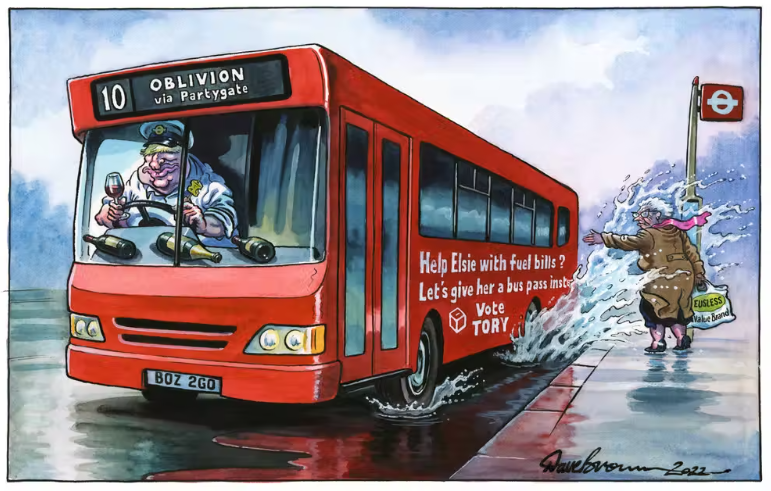
In a clear bid to distance themselves from Boris Johnson, Partygate and the cost of living crisis, several Tory council candidates today are formally standing as “local Conservatives”. Registering that party name was a wheeze dreamed up by the party HQ in early 2019 at the height of Theresa May’s unpopularity. It didn’t particularly halt her demise.

But an emphasis on the local does matter to Boris Johnson’s chances of success nationally. Three of his key messages at the last election – “taking back control” after Brexit, “levelling up” and reforming social care – all rely on delivering both cash and power to local areas. The problem is that on both money and local decision-making, there is a long, long way to go.

As ever, Johnson’s emphasis has been on presenting his government as a new government, not a continuation of Tory rule since 2010. Rishi Sunak’s spending review last year did indeed deliver the largest increase in council spending power for more than a decade.

Yet as the Institute for Fiscal Studies pointed out, the UK’s population growth means that an apparent 2.4 per cent increase in real terms spending power since 2015/6 is actually a 1.8 per cent fall when calculated per person. Since 2010, council spending per person has plunged by a massive 25 per cent.

Most of the cuts of George Osborne’s austerity years were conducted by stealth, precisely because they were done locally by piecemeal. A slow puncture gets much less attention than a sudden blowout, especially with fewer local newspapers to report the damage. Planning, economic development, leisure services, libraries, all saw sweeping cuts.

When Boris Johnson did his whirlwind tour of local radio stations this week, those cuts were raised repeatedly. On BBC Radio Solent, he was told “we can’t look for money down the back of the sofa anymore because we sold the sofa”. On BBC Radio Wiltshire, he was told the local Swindon council had seen real cuts in cash from his government. “That’s all the more reason to have councillors who spend money wisely,” was the PM’s reply.

Just before Johnson went on air, the radio station played the Queen song “I Want To Break Free”. That felt like a subliminal message for those who argue that the best way the PM could really deliver change in a post-Brexit Britain is to free councils from Whitehall’s control.

When he was London Mayor, Johnson was an arch devolutionist, arguing for more cash and powers from George Osborne. He floated the idea of new council tax bands and for the capital to set its own tourist tax, income tax and stamp duty land tax. It was a metropolitan declaration of independence: taxation and representation go hand in hand.

Although councils are judged on the council taxes they set, their funding is really at the mercy of the Chancellor. The less cash they get from central government, the more town halls have to rely on council taxes. In 2010, council tax made up 45 per cent of core spending, but by 2020 it made up 60 per cent. And unlike the Treasury, local councils have a legal duty to set a balanced budget.

There has at least been some progress under Johnson and Sunak for those areas that get less from council tax because they are more deprived. The most deprived tenth of councils are projected to see their core spending power rise by 8.4 per cent, compared to 6.9 per cent for the least deprived tenth of councils.

And council tax has also been used as a backdoor vehicle for the Government to raise money for social care. However, councils are here under the squeeze too. In one of Sunak’s least noticed stealth cuts in last year’s Budget, he cut from three per cent to one per cent the amount a council could increase council tax by in order to fund social care. The prospect of people already hit by Sunak’s National Insurance rise then getting even more taxes locally may have been a factor.

Many poorer towns in England voted for Johnson and for Brexit alike, often because they had seen years of neglect and out of a sense that local pride needed to be restored. Yet some of those same areas are complaining that on things like structural funds, they’re getting less money than they did under the EU (the Cornish Times’ headline last month was ‘”Give Us Our Money, Boris”).

Those “Red Wall” areas are also losing out because of the continued drive towards creating pots of money for which all councils then have to compete against each other. The “Levelling Up Fund”, “Towns Fund”, “Community Ownership Fund”, even the “Bus Back Better” scheme, are all forms of beauty parade with winners and losers.

Instead of giving councils the money they need on a sustainable basis, and allowing them autonomy over how to spend it, we have a system that turns town halls into the equivalent of cities or countries bidding to host the Olympics or the World Cup. And the losers notice. In PMQs recently Neil Hudson, the MP for Penrith and the Borders, told Johnson of “my disappointment… when Cumbria was allocated no funding from the latest tranche of bus funding”. That MP is a Conservative.

Local successes have fired a Tory revival in the north and midlands too. Many “Red Wall” MPs tell me part of the reason for their success in 2019 wasn’t just the PM’s campaigning magic, it was often local resentment at a dire Labour council that had been in power for a decades.

Don’t forget that last year, many voters in the Hartlepool by-election blamed that council for closing their local hospital, whereas Tory Teesside Mayor Ben Houchen was credited with bringing jobs to the area. Similarly, Labour’s failure to tackle potholes and crime in Batley came close to costing Kim Leadbeater the seat. This year, Sunderland, Hull and Croydon are all causing jitters among Keir Starmer supporters.

Raw party politics aside, there is also a sound philosophical reason for Conservatives to back more localism. Their central belief is that politicians need to trust the people more (with how they spend their own money, with how they run their businesses). The flipside of distrust in a remote, centralised state may logically be trust in local people to determine their own fate.

On levelling up, on letting local people “take back control”, and on social care, Johnson really could get his government back on track if he gave more money and powers to local authorities. Without either, the title “local Conservatives” may look like a contradiction in terms.

Today’s local elections may well repeat the pattern of previous polling days for years, delivering a bloody nose to a national government, only for that government to win the following general election. It happened under Thatcher, Blair and Cameron, after all.

Still, some Conservatives think Johnson is missing a trick in not devolving more power locally. If he doesn’t, maybe local Tories will agree with today’s verdict from Nick Boles, an ex-Tory minister and the PM’s former chief of staff in his early days at City Hall: “He does not care about anything, other than power and glory for himself.”

‘Neil Parish let us down’

Neil Parish let himself and us all down badly and it is right that he has gone.

Martin Shaw, Chair of the East Devon Alliance, Martin Shaw, writes for the Herald. www.midweekherald.co.uk

I have no desire to dance on his political grave but it is timely to assess his contribution, in order to weigh up whether we need to replace him with yet another Conservative or whether we need someone radically different as the MP for the Tiverton and Honiton constituency, which includes the Seaton and Axminster areas of East Devon.

Neil was by no means the worst Tory MP. After all, he eventually did the decent thing and left, while Boris Johnson, who broke the law and lied to Parliament on multiple occasions, and Matt Hancock, who with Johnson consigned tens of thousands of care home residents to avoidable deaths, are still brazening it out.

Neil sees himself as having been a good constituency MP. His last (Zoom) meeting before he was found out was, apparently, with EDDC leaders to discuss a ‘levelling up’ fund bid including Seaton’s seafront.

He didn’t always follow through, however.

When the New Devon Clinical Commissioning Group proposed to close the beds in Seaton and Honiton hospitals in 2017, he promised to ‘hold their feet to the fire’. But when his Tory colleagues on the county council voted down the referral which could have kept the beds open, Neil was nowhere to be seen.

I found it was the same on other issues that came my way as Seaton & Colyton’s County Councillor.

I sat with Neil in meetings with residents in Wilmington and Colyford to discuss crossings which would alleviate their road problems. Neil made constructive noises, as you expect your MP to do, but when the going got tough, he was no longer around.

Neil was pretty much the ultimate Tory loyalist, with all that implies.

As a farmer, he knew that Brexit was a bad idea for the country and for Devon, and he supported Remain in 2016.

But aware that most local Tories backed Brexit, he made himself pretty much invisible during the campaign.

Afterwards, he jumped on the Brexit bandwagon, slavishly following the twists and turns of first Theresa May’s and then Boris Johnson’s policies.

Only recently, as it became evident that Brexit is indeed a disaster for farming, fishing and small businesses, did Neil start to criticise it again.

Neil’s rare rebellions against the party line were often reactionary, like his opposition to same-sex marriage and rewilding.

He would vote for the government every time when it proposed to take away people’s rights, recently backing its restrictions on the right to protest and voting rights and its cruel scheme to send asylum seekers to Rwanda.

Whatever his good points, Neil was a parliamentary yes-man. In next month’s by-election, Tiverton and Honiton needs to get itself a no-woman, someone who will stand up against the travesty of a government which now rules over us, and stand up for all the people in this area who are suffering from the mess it is making of living standards and the NHS.

It’s a shame that the excellent Claire Wright has ruled herself out, but Tiverton and Honiton’s new MP needs to be independent-minded, even if they’re not an Independent.

The by-election is the area’s opportunity to get its first non-Conservative after literally a century of Tory yes-men.

By-elections are great levellers, and that 24,000 Tory majority could vanish if people who want change unite around a single candidate.

We will need to vote tactically to give the best-placed opposition candidate a real chance. Labour, Liberal Democrat, Green and East Devon Alliance supporters should be prepared to abandon tribalism and back the best candidate to win. In the coming days we will find out who the likely candidates are.

Meanwhile, make sure you’ll be able to vote – google Register to Vote no

More questions about John Humphreys whilst under police investigation

Questions have been raised about photographs that show convicted sex offender and former councillor John Humphreys around children while he was under a police investigation.

See also MP stayed at property owned by disgraced councillor

Questions but do we have satisfactory answers? – Owl.

Questions around sex offender’s access to schools

Joe Ives, local democracy reporter www.radioexe.co.uk 

John Humphreys attended meetings in schools whilst under investigation

Mr Humphreys, 60, who was also mayor of Exmouth at one stage, is serving a 21-year sentence after being convicted in August last year of sexually assaulting two teenage boys between the early 1990s and early 2000s.

The photograph, taken at the selection meeting for the Conservative candidate for East Devon for the 2019 election, almost a year before Mr Humphreys first appeared in court, is on the East Devon Conservative website. The meeting was held at Exmouth Community College on a day the school was closed.

At an East Devon District Council (EDDC) cabinet meeting on Wednesday [4 May] leader Cllr Paul Arnott (Independent East Devon Alliance and Democratic Alliance Group, Coly Valley) asked the chair of the Conservative group in East Devon, Cllr Bruce De Saram (Exmouth Littleham) to explain the image.

A number of senior East Devon Conservatives are in the photograph, including police and crime commissioner Allison Hernadez, the candidates standing for selection, including the eventual winner Simon Jupp, and former councillor Mr Humphreys, who is in the audience.

Cllr De Saram said he had no comments on the matter.

Cllr Arnott said: “In essence, it looks as if for the purposes of a selection meeting a man who had been arrested at least 18 months before….was taken to an educational facility for a meeting chaired by the police and crime commissioner at which the new MP candidate was selected.”

Simon Jupp, who became MP the month after the selection meeting, and Conservative councillors in East Devon categorically deny any knowledge of Mr Humphreys’ crimes whilst he was in office or when he was subsequently given his honorary title of alderman by the council in December that year. The title was removed by the council in 2021.

Separately,  in March 2019, whilst under investigation, John Humphreys was pictured with children from Littletown Academy at the opening of East Devon council’s new offices, Blackdown House.

Asked why Humphreys was allowed to attend these events at the time he being investigated on suspicion of sexually assaulting teenage boys, a spokesperson for Devon and Cornwall Police said: “A long and thorough police investigation resulted in John Humphreys being convicted and jailed for a total of 21 years at Exeter Crown Court in August 2021. 

“The circumstances of this case and Humphreys’ offences were heard in public by the court during the trial which was widely reported at the time.  

“No further suspects were identified within the police investigation. 

“The conviction was only possible thanks to the tenacity, patience and strength of the victims who put their trust in our officers investigating these matters.

“In 2019, the case was progressing with the police and CPS to bring the case to court. It would not be appropriate to comment on further speculation.”

Mr Humphreys was first questioned in 2005 but police did not find sufficient evidence for a prosecution. 

Following a complaint by a second victim, Cllr Humphreys was arrested in 2016 before being released whislt police continued their investigation.

At the time, neither incident was made public and Mr Humphreys continued to be a councillor until May 2019. He first appeared in court in August 2020. In the intervening period, East Devon District Council (EDDC) awarded him the honorary title of alderman, which was removed in 2021.

East Devon Conservatives have denied having any knowledge of the police investigation until it came to court.

In a statement following the cabinet meeting last week, Simon Jupp revealed that he had stayed at a property owned by John Humphreys.

Mr Jupp said: “First and foremost, my thoughts are with the victims of John Humphreys’ horrendous crimes.

“For less than two months in 2019, I lived at a flat owned by Mr Humphreys but was completely unaware of his abhorrent crimes for which he was jailed in August 2021.

“I deplore his actions. Had I known anything about his crimes, I would not have lived at the property and would have immediately reported my concerns to the police.”

“Learn from Neil Parish” Tories told

Senior members of the Conservative party could learn a lesson from MP Neil Parish’s resignation, the independent leader of East Devon District Council (EDDC) says.

Joe Ives, local democracy reporter www.radioexe.co.uk

Mr Parish, the former member for Tiverton and Honiton, officially resigned this week after it came to light that he watched pornography on his phone in the House of Commons.

Speaking at a cabinet meeting this week, council leader Paul Arnott (Independent East Devon Alliance and Democratic Alliance Group, Coly Valley) praised an interview with Mr Parish broadcast on BBC Politics South West last weekend. 

Cllr Arnott said: “Long after all the tractor jokes have gone, this will remain as the tragic record of a broken man.

“It is not possible to condone what he did in the chamber of the House of Commons, but in his overnight decision to resign on Saturday morning [30 May] and that astonishingly frank interview he gave, Mr Parish leaves a long political career having at least abided by the best codes regarding resignation so blithely ignored by his superiors.”

Cllr Arnott said he had a “very busy weekend, receiving calls from all and sundry” after the news about Mr Parish broke last Friday afternoon [30 April].

At the EDDC meeting, Tory councillor Bruce De Sarem (Exmouth Littleham), read out a prepared statement from the leader of the local Conservative group, Cllr Colin Brown (Dunkeswell and Otterhead).

He said: “Neil Parish became MP for Tiverton and Honiton in 2010 with a majority of 9,000.

“In the following 12 years he was our MP, he increased that to over 24,000 proving what a good constituency MP he was, working tirelessly for the people of Tiverton and Honiton. 

“We support Neil’s decision to apologise in the circumstances and resign as the member of parliament.”

In the BBC South West interview at the weekend, an emotional Mr Parish admitted watching pornography twice, first whilst looking for tractors and the second time deliberately. He called the latter a “moment of madness.”

While reiterating he was trying to be discreet, Mr Parish said what he did “was absolutely totally wrong.”

“I will have to live with this for the rest of my life. I made a huge terrible mistake and I’m here to tell the world,” he added.

His friend, a Conservative councillor on Mid Devon District Council later claimed that Mr Parish may have been searching online for a ‘Dominator,’ a model of combine harvester, for his farm.

Bristol City mayoral system ditched in Referendum

(The City Mayor is distinct from the regional Metro Mayor covering Bristol, Bath and North East Somerset and South Gloucestershire)

Bristol has voted to scrap the mayoral system. Polling stations closed across Bristol yesterday (May 5) in a referendum to decide the system of local government which will run the city for the next ten years at least.

Max Channon, Tristan Cork, Ellie Kendall, Beth Cruse www.bristolpost.co.uk

While much of the rest of the country hold local council elections – where people get to vote for councillors and representatives to elect them to positions of power in their council chambers – there was a different kind of vote happening in Bristol.

The city elected its city councillors and mayors last May – so this time it wa a referendum on the system of local government itself.

People who did make it to the polling stations were faced with one simple question: should the City of Bristol retain its current system – where a Mayor of Bristol runs the city council – or change to a different way, called the ‘committee system’, where the 70 councillors are organised into committees at City Hall and they run the council instead.

The referendum vote was called last year after a combination of Green Party, Lib Dem and Conservative councillors voted to have it. In May 2021’s elections, even though Labour Mayor Marvin Rees was re-elected for a second term in office, Labour lost their majority of councillors in the council chamber, with the Green Party now having just as many councillors as Labour, for the first time ever.

Mary Page of the Scrap the Mayor campaign reacts after Bristol votes to ditch the ditch the Mayoral system

It’s not the first time such a referendum has been held. Back in 2012, Bristol was the only city in the country to vote in favour of having a directly-elected mayor run its local authority, and later that year George Ferguson was elected as mayor – followed by Marvin Rees in 2016.

The legislation that created that role included a break clause – that if councillors voted for it, after ten years, the question of which system people want could be put back to the voters in a second referendum.

If the vote is for a change to a committee system, it won’t take effect immediately, and won’t instantly remove Marvin Rees from office. The change wouldn’t happen until May 2024 – in two years’ time – when Mr Rees said he intends to stand down anyway.

And the vote will not impact on Bristol’s other directly-elected mayor, either. Since the 2012 creation of the City Mayor for Bristol, the Government created another mayor position – the regional Metro Mayor, who covers Bristol, Bath and North East Somerset and South Gloucestershire. Since last May that has been Labour’s Dan Norris, whose position won’t change whatever is decided today.

‘The mayoral model has proven a disaster for Bristol’

Councillor Mark Weston, leader of the Conservative group, said: “The mayoral model has proven a disaster for Bristol – too much power at the whim of one individual. The public have rejected this unaccountable model of government. We now need all parties to work together to bring in a more conciliatory form of politics to Bristol.”

05:59Max Channon

Lib Dems hail spirit of cross-party working

Councillor Jos Clark, leader of the Liberal Democrat group, said: “The Bristol Liberal Democrat group brought the motion for this referendum to full council in December last year and in the spirit of cross-party working were happy to let the Green Party second the motion.

“This is a good example of working together for the good of our city and we look forward to more collaboration in future and under a fairer system.”

‘Tonight’s vote marks a new chapter in the way our city is run’

After Bristol voted to scrap its elected mayor and run the council with a committee system, Green group leader Heather Mack said: “The outcome of tonight’s vote marks a new chapter in the way our city is run. For many years now, important decisions affecting the whole of our city have been made behind closed doors by just one person whom the public and elected councillors cannot easily challenge.”

A Correspondent: local Tory leader’s comments “perplexing” 

The latest leaflet popped through your door from the “flush with cash” Conservatives is entitled, ironically, “In Touch”. It also features a mug shot of Neil Parish. – Owl

From a correspondent:

EDDC has voted to retain online meetings (see comments below).

I find the comments of Councillor Brown perplexing.  He says because meetings are not held in the awful health-hazard council chamber in Honiton people feel ” we are somehow superior to them and they increasingly feel distant from their district council”.

On the contrary, as a voter without a car and with no direct public transport to Honiton, being able to access meetings on line makes me feel MUCH closer to the council, rather than the much, much more distant elitist and entitled thinking of Councillor Brown – who lives in, er, Honiton!

” Councillor Val Ranger claimed that moving to the alternative format of meetings would be “50 years out of date”, arguing it would mark a return to the rules set up in 1972.

She added: “It skews the whole voting system and it favours an older demographic of people who are free to attend meetings night and day.”

Whereas, leader of the Conservative group, councillor Colin Brown said: “Local people are starting to think we are somehow superior to them and they increasingly feel distant from their district council.”

https://www.bbc.co.uk/news/uk-england-devon-61332476

Tractorgate aftermath proves voters want candidate alliances, says Claire Wright

Claire Wright westcountryvoices.co.uk 

Claire Wright

East Devon independent parliamentary candidate Claire Wright stood for election in 2015, 2017 and 2019, coming second each time. Now the resignation of Tory MP Neil Parish has brought her into the spotlight as a possible candidate for the Tiverton and Honiton by-election. Claire wrote to WestCountry Voices about her reaction to the resignation, and her decision.

 Neil Parish’s announcement that he would resign after admitting he looked at porn in parliament has sparked a significant debate on candidate alliances.

Within minutes of the media reporting Neil Parish’s intention to resign, I received several messages and phone calls from people asking me if I was going to contest his Tiverton and Honiton parliamentary seat.

I ran for the adjacent East Devon parliamentary seat three times as an Independent, coming second each time: in 2019 I gained almost 26,000 votes, slashing a massive Tory majority to just 6,700.

During each campaign I was deluged with emails and phone calls from people urging me to work with the other parties in the hope that they would stand down to allow me a straight run against the Tory candidate.

However, this was not possible. The Labour Party has a policy of running a candidate in every seat, albeit focusing their efforts in target constituencies. The LibDems appear to be more open to persuasion nationally; locally, however, their candidate was determined to run.The Greens had opted to stand aside for me in 2015 and 2017, but decided to run a candidate in 2019.

Interestingly, if the votes from Labour and the LibDems had come to me in the 2017 general election I would have beaten the then Conservative MP, Hugo Swire.

Back to Tractorgate. For several hours I discussed this with political allies and pondered whether I should launch a campaign for the Tiverton and Honiton seat.

I knew I had to make a decision fast. I quickly absorbed early comment by political analysts and studied previous election results in the constituency. It is a significant Tory stronghold: Neil Parish has a majority of over 24,000.

It was nevertheless tempting. In a by-election, key barriers I normally experience would vanish. Conservative voters’ fears of a Labour government, if they cast their vote for me, would not be an issue. And this government is deeply unpopular following a raft of scandals, appalling and cruel policy decisions and a Prime Minister who cannot tell the truth from a lie. All have combined to mean that life-long Conservative voters are deserting the party in droves.

I knew that the national media attention could make up for my lack of ability to deliver leaflets to each house in an unfamiliar and mostly rural constituency, and mitigate the challenges of gathering a team and launching a campaign.

However, within a few short hours I realised that if I put my hat in the ring, I would be splitting the LibDem vote, and potentially hampering the chances of ousting a Conservative representative of the worst government in memory in one of the safest seats in the country.

Although the Labour Party has been the runner-up in previous elections, it has come a distant second, and the LibDems have a history of appealing to one-nation Conservative voters in the South West.

There is a general view among political parties that supporters want them to fly the flag so they have someone they can vote for. In my three general election campaigns, however, the very opposite has been starkly true.

Given the messages I received on Saturday, I decided I should make a public statement on Twitter about standing aside in the Tiverton and Honiton by-election to avoid splitting the LibDem vote – and stating my support for alliances until we have Proportional Representation (PR). This is already used for Police and Crime Commissioner elections in the UK, and is the electoral system used in almost every country across Europe. Unfortunately,  once the Elections Bill becomes law in this country, this too will regress to First Past The Post (FPTP) which favours the Tories.. 

I expected my tweet to be of interest as it was so topical. What I didn’t expect was the monumental level of support it received.

In just a few hours the tweet had sparked thousands of likes, with hundreds of retweets and comments. The total number of likes now stands at almost 13K, with over 1,500 retweets and almost 600 comments, mostly thanking me, with others debating the merits of PR.

My tweet was screenshotted and appeared on PR-campaigning Facebook pages, with hundreds of likes and comments of approval. A few political commentators with large followings also retweeted it with appreciative remarks.

The bind we are in is this. For all the Conservative Party’s outrage about the possibility of a quiet pact between Starmer and Davey, the Tories kill off competition from right-wing parties as soon as a general election is on the horizon, because officials are all too aware that any realistic competition from the right of the political spectrum could fatally wound it.

Nigel Farage twice attempted to challenge the Tories and achieved success, in that he pushed our national politics significantly to the right, with all the associated toxicity that we observe every day.

Farage stood down his Brexit Party candidates from Tory constituencies in 2019. The deal was that the Tory Party effectively morph into the Brexit Party. It has been obvious over the last three years that we are indeed being governed by the Brexit Party, in all but name.

In the meantime, we have three established left-of-centre political parties in England, which almost always run candidates in every seat to “fly the flag” and test their vote. In short, the far-right vote, undivided, can still win with a minority of the votes while the opposition votes are split across the three main opposition parties. Johnson garnered a minority (43.6 per cent) of the total votes cast in 2019 but still ended up with a massive 80-seat majority.

It really looks as though the opposition parties’ approach of standing candidates regardless may now be out of step with voters, many of whom are so disillusioned by our government that they simply want their local Conservative representative ousted.

There are rumours circulating that the next general election will be in the autumn of this year, as the prime minister believes it will be better for him to schedule it earlier than next May, when inflation and the cost of living will be even more crippling – and a recession may be in full swing. He also hopes the electorate will give him a bigger vote of confidence than his own MPs, many of whom are now plotting to move against him.

If political parties are serious about seeing the big picture and addressing the damage done by this government, they will make progressive alliances work. I know it is tough and complicated, but it is possible with determination and fair play.

The worst government in history endlessly cheats by ensuring it change the rules in its favour – see the removal of the Electoral Commission’s teeth, the weakening of the rules on overseas donations, voter ID and the proposed boundary changes. It then plays dirty tricks and smears its opponents.

The only way decent people can defeat these charlatans is by working together. Until we have PR we don’t have a lot of choice, and to get to PR we need this government out: and that means working with the FPTP system to defeat the Conservatives and deliver urgently-needed electoral reform.

Stop press: for an example of the importance of cooperation, take a look at this result:

60.3 per cent of the votes to opposition parties. Conservative elected on a minority vote.

MP stayed at property owned by disgraced councillor

Tories need to be fully transparent and candid about their relationship with John Humphreys, especially from the date of his arrest in 2016. – Owl

It has been revealed that East Devon MP Simon Jupp stayed at a property owned by former councillor John Humphreys the year before he was charged with sexually assaulting two teenage boys and subsequently sentenced to 21 years in prison.

Joe Ives, local democracy reporter www.radioexe.co.uk 

East Devon MP was unaware of investigation

It is believed Mr Jupp stayed at Mr Humphreys’ vacant flat on Salterton Road in Exmouth in the run-up to the 2019 election.

Mr Jupp, who is from Plymouth, had won the local Conservative’s party selection process after East Devon’s previous conservative MP Sir Hugo Swire decided not to stand for re-election.

Humphreys, 60, who was also previously an Exmouth town councillor and at one point served as mayor of Exmouth, was convicted in August last year of sexually assaulting two boys 10 years apart.

Simon Jupp states unequivocally that he knew nothing of Humphreys’ crimes at the time.

In a cabinet meeting [on Wednesday 4 May], leader of East Devon District Council (EDDC) Cllr Paul Arnott (Independent East Devon Alliance and Democratic Alliance Group, Coly Valley) sought clarification from the East Devon Conservatives about whether Simon Jupp stayed at a flat owned by Humphreys in 2019.

This was before Humphreys was charged and appeared at Exeter Magistrates Court, where he was bailed to appear at crown court in 2021.

Cllr Arnott said: “If I had been the person who, as it turns out, was the tenant of John Humphreys, who had just been elected to parliament, on hearing that he had been convicted and sent to jail for 21 years I think what I would have done is issued a press statement about that.”

In a statement following the council meeting, Mr Jupp said: “First and foremost, my thoughts are with the victims of John Humphreys’ horrendous crimes.

“For less than two months in 2019, I lived at a flat owned by Mr Humphreys but was completely unaware of his abhorrent crimes for which he was jailed in August 2021.

“I deplore his actions. Had I known anything about his crimes, I would not have lived at the property and would have immediately reported my concerns to the police.”

In the EDDC cabinet meeting, Conservative councillor Maddy Chapman (Exmouth Brixington) said: “John Humphreys did own a flat in town which was let out for a number of years to different people.

“It was empty at the time and Simon went into it for two or three weeks while he was waiting for his house. So he did not stay with John Humphreys…at no point did Simon Jupp stay with John Humphreys. 

“He rented a flat which I understand John Humphreys’ partner let to him for a couple of weeks while he was waiting for his house in Sidmouth to go through because he wanted to live in the constituency so I wouldn’t like any assertions to fall on Simon. 

“I think he’s a very good MP. He works for East Devon really really well and tries really really hard and supports the local residents. So I was not aware of anything on John Humphreys.

“None of my colleagues were aware and anyone that says that they heard rumours they should have told us.”

At his trial, it was revealed that John Humphreys had been initially questioned on suspicion of sexual offences against children in 2005 but police did not find sufficient evidence for a prosecution. 

Following a complaint by a second victim, Cllr Humphreys was arrested in 2016 before being released under investigation.

Neither incident was made public and Mr Humphreys continued to be a councillor until May 2019, eventually being awarded the honorary title of alderman by the council  in December that year. The title was removed by the council in 2021.

Conservative members of EDDC, of which Mr Humphreys was a member, have also denied having any knowledge of his crimes whilst he was in office or when he was subsequently given his honorary title.

Final election results – Somerset County Council 

The results of yesterday’s Somerset County Council elections are as follows:

 Liberal Democrat: 61                 

Conservative: 36

Green Party: 5                         

 Labour: 5

Independent: 3                         

www.mendip.gov.uk

Full details of the results for individual divisions and candidates can be found on the elections results page on the authority’s website  The results mean that Liberal Democrats take overall control of the council.

Election results 6 May 2022 image

More than 430,000 people were eligible to vote for the 337 candidates standing for the 110 seats. The turnout at the election by district was Mendip – 39.3%; Sedgemoor – 30%; Somerset West and Taunton – 38.73%; South Somerset – 38.15.

This year’s election was different as 110 councillors were elected – two in each of the 55 divisions – as Somerset prepares for the biggest change in local government in decades. 

For their first year, the councillors will take responsibility for all current County Council services and oversee the local government reorganisation to establish the single unitary Somerset Council on 1 April 2023. District councils will remain until 31 March 2023 and the councillors serving on them will continue in their roles until that date. 

From 1 April 2023, the 110 members of the unitary council will be responsible for services that are currently delivered by the county and four district councils, ranging from adults’ and children’s social care to highways and housing, and from libraries to planning and licensing.

The current councillors will officially stand down from their roles and hand over to the newly-elected councillors at midnight on 9 May.

The Full Council Annual General meeting on 25 May will appoint the Chair and Vice-Chair of the Council, the Leader of the Council, and the members of the various Council committees.

Immediately after the Full Council Meeting it is expected that the new Leader of the Council will confirm appointments to Cabinet roles.

Breaking News: Somerset election results 2022: Lib Dems win control

after 13 years of Tory dominance.

The only rural area of the South West having council elections this year. Not good news for Tory chances in the upcoming by-election! – Owl

www.bbc.co.uk 

Bill Revans Liberal Democrats Somerset leader

Liberal Democrats Somerset leader Bill Revans was able to celebrate his party taking control

The Liberal Democrats have won the Somerset County Council election.

The party has won 57 seats so far, one more than the minimum needed to have overall control of the council.

As things stand, he Conservatives have 28 seats, Labour have four in Bridgwater, and the Green party have four in Frome.

The Conservative Party had been in charge of Somerset County Council since 2009 with the Liberal Democrats in second place.

The Lib Dems will now run the county council for the next year and then run the new unitary authority replacing the county and district councils for a further four years after that.

Bill Revans the new Liberal Democrat leader of Somerset Council said: “We’ve got some brilliant local councillors who’ve held their seats.

“After 13 years of the Conservatives being in charge of Somerset County Council I think there was [a feeling of] ‘it’s time for a change’ and people wanted to put the heart back into Somerset.”

Earlier, the party gained the Blackmore Vale ward, where long-term Conservative incumbent William Wallace received the fewest votes of all four candidates.

Lib Dem councillors Peter Seib and Jeny Snell were voted into the Brympton ward and Nicola Clark and Sarah Dyke were elected in Blackmoor Vale.

Coker ward elected Liberal Democrats Mike Hewitson and Oliver Patrick to the two seats available.

Labour took both seats in the Bridgwater North and Central ward.

After losing his seat Mr Wallace said “long-term Conservative voters” did not turn out to vote.

“The issues of central Government came up, the partygate problem.”

He said while the election was about local issues, so-called partygate had not helped the “local cause”.

A total of 337 candidates fought for 110 seats in the council’s soon-to-be abolished district and county electoral system.

The elected councillors will oversee the change from a two-tier system to a unitary authority in 2023.

Somerset election results, half-time score: Lib Dems take Tory seats

The Liberal Democrats have won the most seats of those declared so far in the Somerset County Council elections.

With nearly half the results in the Lib Dems have won 38 and the Conservatives 12.

BBC News www.bbc.co.uk 

Earlier the party gained the Blackmore Vale Ward, where long-term Conservative incumbent William Wallace received the fewest votes of all four candidates.

Labour have held two wards in Bridgwater, with four councillors elected there

The Tories had been in charge of Somerset County Council since 2009 with the Liberal Democrats in second place.

Lib Dem councillors Peter Seib and Jeny Snell were voted into the Brympton Ward and Nicola Clark and Sarah Dyke were elected in Blackmoor Vale.

Coker Ward elected Liberal Democrats Mike Hewitson and Oliver Patrick to the two seats available.

Labour’s local leader Leigh Redman was elected in the Bridgwater North and Central ward. Labour also picked up the second seat in that ward.

A total of 337 candidates are fighting for 110 seats in the council’s soon-to-be abolished district and county electoral system.

The elected councillors will oversee the change from a two-tier system to a unitary authority in 2023.

Somerset County Council has been controlled by the Conservatives since 2009 with the Liberal Democrats in second place.

All the wards declared so far are in South Somerset.

Labour remains in control of Exeter City Council.

Significant Green gains – Owl

A third of the seats on the 39-seat council were up for election on Thursday.

Previously Labour had a majority of 28, Conservatives held 18 and the Liberal Democrats and Greens had two each, with one Independent and four vacant.

Now Labour holds 26 seats, Conservatives have five, Liberal Democrats have two, Green have five and Independents have one.

Figures reveal the overall turn out of voters was 37%, Exeter City Council confirmed.

Labour won 12 of the 17 seats, but lost two seats overall.

Labour Leader Phil Bialyk said: “I think what people in Exeter have voted for is continuity. They’ve actually seen us deliver.

“We are investing in our city. We’ve had the most people voting Labour in Exeter.”

From BBC

Plymouth election results as no party has control of council

Plymouth City Council remains under no overall control after elections were held across the city. The balance of power is held between Conservatives and Labour, who have 24 councillors each, while there are eight independents.

James Johnson www.plymouthherald.co.uk

Of the 19 seats which were up for elections Labour won 11, the Tories won seven, and independents won none. The remaining winner was Cllr Ian Posyer, who became the first Green Party councillor in the city.

Cllr Posyer said “one green in the room can make a huge difference” and hoped his election would focus debate on climate change and help engage with communities.

Meanwhile Labour’s Dylan Tippetts became the city’s first openly trans councillor , who said being elected is an “amazing feeling”.

75 of London’s top councillors have ties to property firms

At least 75 of London’s most powerful local councillors are also working for the property and development industry, openDemocracy can reveal.

Lucas Amin www.opendemocracy.net 

Our analysis of hundreds of council documents shows how scores of lobbyists and other workers for the sector simultaneously hold senior roles in local government, working in council cabinets or on the influential committees that are supposed to hold developers to account. All but 11 of the 75 have stood for re-election in 2022.

We looked at the councillors with the most say over housing supply, demolitions and new builds, and found 13% of Conservatives had financial ties to the property industry. The figure is 6% for the most powerful Labour councillors.

We also found a number of cases that illustrate just how close local politicians are allowed to get to the development sector while acting within the rules.

In one example, a Tory cabinet member in Havering, north-east London, boasted about a “win” for his lobbying firm after its client was awarded planning approval – by his own council.

In another case, a Westminster councillor who sat on a planning committee was hired to advise a property firm as it tried to secure the council’s approval for a major development. Both are standing for re-election today.

Financial interests were declared in each of these examples, and there is no suggestion that lobbying rules were broken.

But campaigners warned that having so many local councillors with ties to property development “does nothing to help the perception that the planning system favours industry over communities”.

In most English councils – including Havering and Westminster – the code of conduct says members should not “place themselves under a financial or other obligation to outside individuals or organisations that might seek to influence them in the performance of their official duties”.

Steve Goodrich, head of research and investigations at Transparency International UK, said: “Given the controversy often surrounding major planning decisions, it’s crucial to confidence in the process that they are made impartially and free from bias.

“To provide greater trust in local development, councils should not allow members to hold briefs where there is a clear tension between their public roles and private jobs.”

He added: “This is a ticking time-bomb for the lobbying industry, which should get on the front foot and stop this practice before it gets out of hand.”

Analysis by openDemocracy looked at financial interests declared by 941 of London’s most influential councillors, who sit on planning committees or make decisions as part of council cabinets.

In total, 75 of these had ties to the property industry, including developers, consultants and lobbyists.

‘Cause for celebration’

Osman Dervish has been a Conservative member of Havering Council since 2010. He has previously held the planning portfolio and served on the council’s planning committee, and is now the cabinet member for environment, earning almost £40,000 a year in allowances.

But Dervish also works as an associate director for Cratus Communications, which offers “strategic political advice” to clients making planning applications.

In 2020, one of Cratus’s clients secured permission from Havering Council to build 88 new flats on a car park, 35% of which were to be “affordable”. Cratus said it had provided “stakeholder engagement” for the developer, Caerus, throughout the process, including “engagement with senior politicians in Havering”.

When the planning application was approved, Dervish took to social media to describe the decision as a “win” for his firm.

Dervish’s lobbying job was declared in his register of financial interests at the time, and Havering Council told openDemocracy it was satisfied he had not personally taken part in the planning approval. Cratus said he had not been part of the project on the company’s side, either, despite his post on LinkedIn.

However, through his work with Cratus, Caerus admitted Dervish had met with its managing director to discuss other projects outside the borough.

In a second case examined by openDemocracy, a senior councillor in central London declared that he had advised a property company on a “landmark” local development. The council said he had had nothing to do with its subsequent decision to enter into a partnership with the developer, which secured it up to £151m of public funding.

Westminster councillor Tony Devenish is one of the most influential figures in London property development, serving as deputy chair of the London Assembly’s housing committee.

The international property firm LinkCity spent years trying to get the first phase of a massive 20-year regeneration scheme off the ground, via planning chiefs at both Westminster City Council and the Greater London Authority (GLA), of which the London Assembly is part.

At the same time, LinkCity was paying for advice from Devenish through his personal consultancy business.

In accordance with the rules, Devenish updated his register of interest in 2018 to declare that he was advising the developer. He had been copied into an official letter from the GLA handing the final say on the first phase of the scheme back to Westminster just weeks earlier.

The following year, LinkCity set up a joint venture with the council to develop the site, securing up to £151m of council cash in the process.

During this period, Devenish was also a member of the council’s influential Planning & City Development Committee, although there is no record of him or the committee becoming involved in the project.

The Church Street regeneration project was not without its own controversy: the wider 1,750-home scheme has been criticised by other Westminster councillors over the amount of affordable housing it would provide. Local groups have condemned the project as “gentrification”, “designed to price the community out”.

One councillor criticised the way the plans were dealt with, saying: “Time and again, we saw the council waiving the affordable housing and taking a diminished amount of money in its place.”

Devenish did not respond to questions from openDemocracy, but the council said it has “absolute confidence in the integrity of the planning process”. A spokesperson said Devenish had not been part of any discussions or decisions about the LinkCity project.

Records show he earns more than £58,000 from the GLA, on top of a £9,622 allowance from the council.

Croydon hotel development

A third case involves the deputy leader of Croydon Council, Stuart King.

As well as his political role, King holds a senior position at a public affairs firm called Terrapin Group.

The company specialises in property and development in London, offering clients “targeted political engagement”.

In January this year, one of Terrapin’s clients bought the council-owned Croydon Park Hotel for £24.9m – £5m less than King’s council had originally paid for it three-and-a-half years earlier.

Before the deal was complete, a government-appointed panel said the council should consider delaying the sale due to the economic impact of the pandemic. But Croydon Council went ahead.

Records show that King, who earns £42,000 from his job as deputy council leader, had to withdraw from at least one meeting about the plans, citing a “conflict of interest”.

King’s employment at Terrapin was fully declared in his register of interests, and lobbying rules were adhered to. He told openDemocracy: “I do not work on any Terrapin client work in Croydon as this would be a conflict with my role as a councillor in that borough.

“The disposal of Croydon Park Hotel was a matter that fell within my cabinet portfolio of responsibilities. Once I became aware that Amro were one of those bidding for the site, I declared that interest and recused myself from all further involvement.”

Neither Amro or Terrapin Group responded to questions about the development, while the council refused to comment.

Election advice for developers

The findings come ahead of Thursday’s local elections, which property developers are already assessing to maximise their political influence on planning.

London lobbying firms have offered advice sessions for developers, to help them navigate the political landscape.

Terrapin’s Peter Bingle took to social media to encourage developers to get in touch for political advice, saying: “Worried about the local elections next Thursday? Will your scheme be impacted by a change of political control? Have you been speaking to opposition councillors who might be in control on 6th May?”

Cratus Communications also offered political advice sessions “for developers and planning consultants” ahead of the local elections. An advert for the events boasted that Cratus would help property bosses “shape the way we approach development proposals”.

The Cratus advice sessions were led by two serving London councillors, including Dervish at Havering Council.

The other session leader was Vanisha Solanki, the cabinet member for housing and homelessness at Redbridge Council, who also works as an account director for Cratus. On the lobbying firm’s website, her biography says that Solanki has previously sat on the council’s Planning Committee, “which has allowed her to gain a deeper knowledge of the planning process”.

Government will not challenge court ruling on care home discharge policies

The Government has said it will not be appealing against a High Court ruling which stated its care home discharge policies were unlawful.

Isobel Frodsham www.independent.co.uk 

Last week, the High Court ruled policies in March and early April 2020 were unlawful because they failed to take into account the risk to elderly and vulnerable residents from non-symptomatic transmission of coronavirus.

It came after a claim was brought against the Government by two women – Cathy Gardner and Fay Harris – after their fathers died from Covid-19.

Former health secretary Matt Hancock apologised for people’s “pain and anguish” following the ruling.

On Wednesday, the Government said it would not be pursuing an appeal.

A spokesperson said: “The Government notes the court’s judgment and that the court dismissed most aspects of the claimants’ judicial review.

“While we are disappointed that the court did not accept all of the points we put before it, we do not see a public interest in an appeal on those points, as the right place for these matters to be considered is the public inquiry.

“Our thoughts are with all those who lost loved ones during the pandemic. Our aim throughout has been to protect the public from the threat to life and health posed by Covid and we specifically sought to safeguard care home residents.”

In the early part of the pandemic in 2020, patients were rapidly discharged into care homes without testing, despite the risk of asymptomatic transmission, with Government documents showing there was no requirement for this until mid-April.

The judges said there was no evidence that Mr Hancock – or anyone advising him – addressed the issue of the risk of asymptomatic transmission to care home residents in England, or that he considered or was asked to consider the question of isolating asymptomatic admissions.

However, they added that the “growing appreciation that asymptomatic transmission was a real possibility ought to have prompted a change in Government policy concerning care homes earlier than it did”.

They pointed out that these risks were highlighted as early as March 13 by figures including the Government’s chief scientific adviser, Sir Patrick Vallance, who said it was “quite likely”.

In a previous statement, Mr Hancock’s spokesman said Public Health England had failed to tell ministers about asymptomatic transmission and he wished it had been brought to his attention sooner.

Latest by-election news

The Telegraph reports that Lord Frost, said to be seeking a speedy return to Westminster politics, has been ruled out as a prospective candidate for the Tories in the Tiverton and Honiton by-election.

The local Tory association is said to want a local candidate, given the Liberal Democrats – the biggest threat to victory there – are sure to criticise anyone “parachuted” into the seat.

Ideally, they are said to be looking for a woman candidate despite Oliver Dowden, the Conservative Party chairman, ruling out all-women shortlists as “blunt instruments”.

So should we be scanning the list of Tory District and County councillors?

An open letter to my MP, Simon Jupp, from a Budleigh Correspondent

An open letter to my MP, Simon Jupp, from a Budleigh Correspondent:

As a Times reader I was horrified to discover the long list, compiled by Alice Thomson, of Southwest neglect compared to the rest of the country. (Tory voters in the seat vacated by Neil Parish feel abandoned: education, transport, housing and health are all below par) I would like to know what you are doing to rectify this.

Here is a list compiled from the article of neglect, supplemented by my some of my own.

House prices have soared in the area generally. Recent figures for February 2022 show the Southwest and the East have the highest increase in the country, pricing many locals out of the market.

Long term rentals have now come to a frightening low number.  Alice Thompson quotes only four homes for rent, compared with 326 airbnbs, in Ilfracombe. In Budleigh Salterton there were two properties for rent compared with 60 airbnbs when checked a couple of weeks ago; and BS is not the most popular coastal hotspot.

We have the highest number of universal benefit claimants in work.

The area has the worst educational outcomes for disadvantaged young people.

17% of disadvantaged pupils go to university. 45% do in London according to a report by Professor Lee Elliot Major and Dr Anne-Marie Sim of Exeter University.

School attainment levels between poorer pupils and others are the largest for all English regions.

The problems of high speed broadband are well known. Alice Thompson: “As Parish regularly explained in the Commons, there is no fast broadband in many areas — except in the prime minister’s holiday cottage where they have spent a fortune laying cable along his family’s remote valley. 

We have only one major train line into London which gets flooded at Dawlish, cutting off the peninsula. (The Waterloo line cannot call itself a “major” line when it is only SINGLE track in places). As I write this I hear that Crossrail is about to open at an estimated final cost of £19bn.

The motorway stops at Exeter.

Investments in transport is £308/head compared to the national average of £474. In a rural area where cars are often the only way to get to work. 

The number of hospital bed /head of population is the third worst in the country – 9,916. The North West has the best with 15,212. But the Southwest has the oldest population and lowest number of critical care beds per head of population

Life expectancy is low in coastal towns.

No NHS dental appointments available in the region.

South West Water discharges sewage into the sea at popular bathing beaches. Alice Thompson mentions South West Water’s 43,901 hours of discharges into bathing beauty spots. In Budleigh Salterton in 2020, 83 episodes lasting 850 hours Perhaps one of your many tasks could be to regain a functioning prediction board on the parade.

The southwest was mainly a Brexit voting area and yet Cornwall will only have half of its EU funding replaced by the government.

Finally, with this by no means exhaustive list, the area has been subjected to a colossal amount of house building with no new infrastructure. How long has Cranbrook had to wait for a thriving town centre? Has this resulted in affordable homes for those locals who need them? No, great swathes of valuable farming land has been built on. Developers, use their economic viability “get-out” clauses, to reduce the proportion of affordable homes in a development as the outline permission is “refined”. Despite all the building around Exmouth we still have a shortfall of 591 affordable homes for Exmouth. For example, Goodmores Farm affordable homes requirement has been successively reduced from 88 to 33.

AND YET, Simon, our local growth fund is £134.40 and the Northern Powerhouse is getting £210.80.

Finally, can I express my disappointment that more urgent matters called you away from your long standing appointment to discuss how to help with local problems with the Leader and CEO of EDDC?

I feel I am being taken for granted.