We need a good news story, here is a local one widely reported

Drone photos show ‘incredible’ impact of beavers during drought

A series of remarkable drone shots have revealed how the reintroduction of beavers in Devon has had a hugely beneficial impact on the landscape during the current drought.

Harry Cockburn www.independent.co.uk 

Over 400 years after beavers were hunted to extinction in the UK, the animals were returned to the river Otter in Devon in 2008, and after initial plans for them to be removed, the government consented to a five-year study which highlighted the astonishing improvements to the ecosystem that beavers bring.

Amid the drought and one of the hottest summers on record, some of those benefits are now highly visible, with the land where the beavers are living remaining a lush green, while adjacent land has turned a parched yellow.

The tinder-dry conditions have led to record numbers of wildfires in the UK, but on the Clinton Devon Estates, where a number of beaver families have built dams to create new wetlands, roughly an entire hectare of land remains underwater. Clinton Devon Estates is a land management and property development company which manages the Devonshire estates belonging to Baron Clinton, the largest private landowner in Devon.

“It’s quite incredible to see this area when the conditions have been so challenging in recent weeks,” said Ed Lagdon, a ranger for conservation organisation East Devon Pebblebed Heaths.

“Beavers are very territorial and as the Lower Otter is near full capacity, beaver families will explore nearby tributaries and culverts to find small areas of wetland to settle. They feel safe in water so will seek a water source and that’s likely to be why this family chose this particular area.

“It’s when they come away from the river in this way that they can have more of an impact on their surroundings – they will change the environment around them and manipulate the conditions to suit them. In this location, the beavers have used sticks and mud to create several dams which are now holding back large volumes of water.

Beavers, a keystone species, help birds insects and plants thrive through their wetland creation (Clinton Devon Estates)

He added: “The water is up to two feet in some areas and is fantastic for wildlife such as birds and invertebrates. It also brings flood prevention benefits and carbon capture within the wetland.”

But alongside the many ecological benefits they bring, the land managers said the images also highlight the new challenges beavers can create for people unused to co-existing with the indigenous mammal.
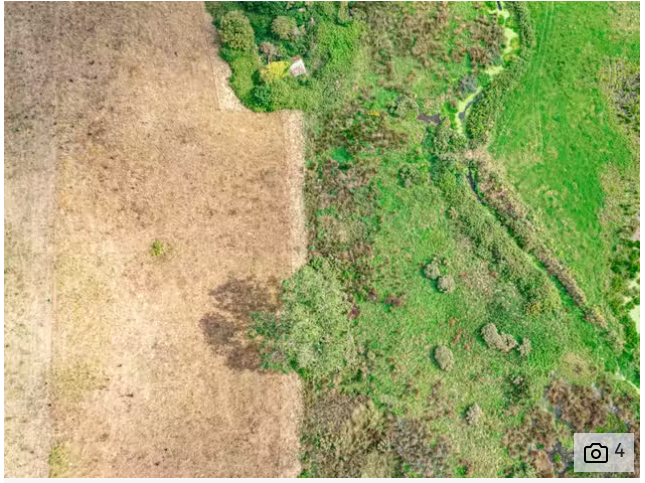
The return of beavers to Devon is having an enormous impact on water retention during the drought (Clinton Devon Estates)

Clinton Devon Estates’ head of agriculture, Sam Briant-Evans, explained: “It’s been quite surprising to see how quickly they’ve worked, it’s taken less than six months. We’ve lost about two hectares of the field as a grazing platform for our dairy herd – one hectare of this is now permanently underwater. It was May this year before we were able to get the cattle onto it.

“The concern we have is if we move them on, they may move upstream again which could cause issues if they are closer to the main farm. It’s a bit of a conundrum for us as an estate as we can see both sides of the equation. We need to accept that the beavers are there but they need to be closely monitored and managed going forward, so their activities and any potential flood issues can be monitored and we can tackle it quickly.

“There’s no clear solution. However, what this does highlight is that with the right management and by working with them, they can help in the adaptation to climate change.”
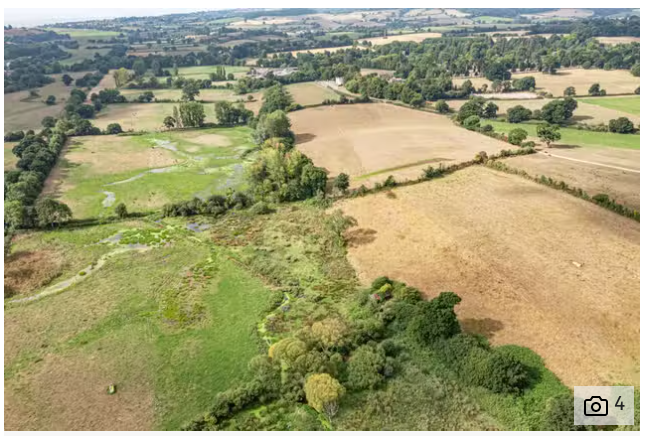
The positive impact of beavers on the landscape has highlighted the success of numerous reintroductions around the country (Clinton Devon Estates)

New government legislation comes into force on 1 October which will afford beavers legal protection as a recognised native species in England, meaning it will be illegal to disturb, harm or kill them.

John Varley, Clinton Devon Estates director, said: “In the right place, beavers can bring about major benefits for wildlife, the environment and society, including increased biodiversity, which is a key aim of the government’s Nature Recovery Network.

“Clinton Devon Estates supported the River Otter Beaver Trial from the beginning because we wanted to understand the full impact of beavers in a real-world setting. During the project, we learnt a great deal about these benefits, such as cleaner water, natural flood management and habitat creation.

“However, we have also witnessed negative impacts when beavers are in the wrong place: farmers’ fields, private property and roads flooded, as well as trees damaged.

“As the beaver population on the River Otter grew and expanded, so did the need for proactive management, and all the costs associated with that. We believe that if properly funded by government, the cost of managing beavers is far outweighed by the social and economic benefits to nature and the public.”

Owl finds it  harder to spot fake news these days!

Tory MP says sewage covered beaches “deters illegal asylum seekers” 

THE SMELL OF SOVEREIGNTY : The Tory MP for Phistit-Phistitgut Reginald Scat has broken ranks with colleagues to laud the redecoration of England’s once pristine beaches.

Titan Searchlight lcdviews.com

While many Cons are expressing disgust at private water companies for doing exactly what they allowed them to do, Scat MP is having none of it.

“It shows how we can boost profits for Blighty’s wealth creators now we’re freed from the shackles of the nanny state EU,” Scat said. ”If we still had ready access to the chemicals we need to clean our waste waters we would not now be blasting our visible sovereignty out of giant pipes along the Sussex coastline. There is no more direct symbol of the throwing off of Brussels than British poo on British beaches.”

Scat, one of the 2019 intake chosen personally by Boris Johnson and Dominic Cummings goes on to suggest ”effluent is biodegradable anyway. All these woke eco warriors are perfectly happy to charge you five pounds for a plastic carrier bag but are up in arms over nature’s best, natural fertiliser washing up inshore? There’s a stink of hypocrisy in the movement.”

But sovereignty doesn’t stop with a liberal regulatory approach to waste water.

“Just take a moment to imagine the look on the faces of French fishermen seeking to rob our territorial waters of British fish! They’ll be thinking twice now. And the illegal people who try to reach our shores will be turning back at the first retch of sovereign water.”

Scat is certain to have sympathisers within his party for his views as most are holidaying this year in the Adriatic.

The only British turd in view there is Boris Johnson. Which is nice. No one need feel homesick with him bobbing about near to shore.”

Devon area is branded ‘Top of the Poops’

The Torridge and West Devon constituency of MP Geoffrey Cox has been named Top of the Poops by campaigners fighting to stop raw sewage being discharged into Britain’s waterways.

Guy Henderson www.devonlive.com 

With sewage discharges hot news at the moment thanks to the closure of some of Devon’s top holiday beaches after discharges, the Top of the Poops website has seen a surge in traffic.

The site uses data provided by the Environment Agency and breaks them down by Parliamentary constituency.

Paignton Sands, Preston Sands and Goodrington in Torbay had pollution warnings on Sunday, while last week there were bathing bans at Teignmouth Holcombe and Teignmouth Town beaches. Heavy rain can trigger legally-allowed storm overflows to prevent pipes which carry a mixture of rainwater and sewage from backing up.

The website uses 2021 pollution figures to map at least 470,000 sewage “spills” in England and Wales, incidents in which sewage has been intentionally released into the water.

The figures show that Torridge and West Devon had the most hours of sewage being released into the water in the whole of England, with South West Water carrying out 5,233 sewage “dumps” across nearly 59,000 hours. The Central Devon constituency came next, with 4,320 dumps over 43,506 hours.

Totnes had 4,001 dumps over 27,465 hours and North Devon 2,091 over 21,010 hours. The majority of sewage overflows took place into freshwater rivers. Just one in 27 dumps took place into the sea.

Of those that did happen on beaches, 111 sewage incidents were recorded at Ilfracombe’s Wildersmouth Beach, with 157 at Exmouth, 108 at Combe Martin and 93 at Torquay’s Meadfoot Beach.

The shellfishery on the River Teign in South Devon was the worst affected, with 1,926 sewage incidents, representing 13,640 hours of sewage. The Exe Estuary shellfishery had 1,748 sewage incidents in 2021.

England’s water industry now represents the unacceptable face of capitalism

“As with another crisis, that of the private care home sector, lax oversight has been aggravated by the slither of these industries into private equity or the murky world of offshore finance.”

Simon Jenkins http://www.theguardian.com

Where there’s muck there’s brass. But rarely was muck filthier or money more brass-necked than in the case of the brown effluent pouring into the Channel off Seaford, or the green algae spreading over Windermere. The English water industry can make all the excuses it likes, but those who find themselves swimming in sewage tend to notice – and wonder why those responsible deserve million-pound salaries. Last year nine water chiefs pocketed over £15m between them, an annual rise of 27%.

The dumping of sewage into watercourses is caused simply by storage tanks overflowing. This is currently attributed by the industry to hot weather causing unexpectedly fast run-off. This is supposed to happen only exceptionally rarely. Southern Water has reportedly made four such dumps into the Channel in a week. In total 373,000 cases of sewage discharge were reported in 2021, even before this year’s heatwave. Something has gone wrong.

The spread of rationing via hosepipe bans, and the explosion of sewage into rivers and the sea indicates an industry that has lurked too long in the private sector cupboard. Under the Victorians, water was the noble face of municipal socialism. Now it is the unacceptable face of capitalism. The success of privatised industry depends on the effectiveness with which the state regulates its natural monopolies. Under Whitehall’s Ofwat, water regulation has failed. Its most radical suggestion to meet the current crisis appears to be for people to turn off their taps while cleaning their teeth.

Since privatisation in 1989, an estimated £72bn has been allowed to leak from the industry into dividends, money that should clearly have gone into investment, stemming leaks and building overflow tanks. As it is, roughly a quarter of England’s fresh water never reaches the consumer but escapes from unrepaired pipes. Meanwhile contamination means the UK’s swimming sites are so filthy they ranked last in Europe for water quality in 2020. Even the government’s own Environment Agency has called for water company directors to be imprisoned for the appalling decline in performance, after a rise to 62 of what it classed as “serious incidents” of pollution last year. Campaigners are also taking Ofwat to court for regulatory failure. The industry, in every sense, stinks.

The talk now is of renationalisation, though the sight of the water companies walking away with yet more money in compensation would be hard to stomach. The real trouble lies less with privatisation as such than with its regulators. As with another crisis, that of the private care home sector, lax oversight has been aggravated by the slither of these industries into private equity or the murky world of offshore finance.

Here public utility falls by the wayside. Short-term profit is what matters, dividends are all and scandalous salaries generate a revolving door between companies, regulators and Whitehall. The result is that blatant polluters such as the poultry industry are allowed by planners to drain effluent into the River Wye and make it an open sewer. Our water utilities vent our own waste into the sea. And meanwhile a proposal for a national network for transferring water from the plentiful west to the parched east lies dormant. Its cost of £10bn is about a tenth that of Boris Johnson’s vanity project, HS2. A train was considered a greater priority.

Liz Truss ‘has sewage on her hands’ over Environment Agency cuts

The Tory leadership frontrunner, Liz Truss, was responsible for cutting millions of pounds of funding earmarked for tackling water pollution during her time as environment secretary, the Guardian can reveal.

Pippa Crerar www.theguardian.com 

Truss, who was in charge at the Department for Environment, Food and Rural Affairs (Defra) between 2014 and 2016, oversaw “efficiency” plans set out in the 2015 spending review to reduce Environment Agency funding by £235m.

This included a £24m cut from a government grant for environmental protection, including surveillance of water companies to prevent the dumping of raw sewage, between 2014-15 and 2016-17, according to the National Audit Office.

It represents almost a quarter of the funding cut from this area between 2010, when the grant stood at £120m, and 2020, by which time it had fallen to £40m.

Labour analysis of official figures shows that since 2016 raw sewage discharge in England and Wales has more than doubled, from 14.7 spill events an overflow to 29.3 in 2021. Greenpeace said the figures showed Truss had “sewage on her hands”.

The Environment Agency has called for the government to reverse the cuts but campaigners want the next prime minister to go further and also give the body the power to properly monitor water companies over sewage, rather than allowing them to self-report discharges.

It follows the finding that 24% of sewage overflow pipes at popular seaside resorts in England and Wales have monitors that are faulty or do not have monitors at all, meaning people could be swimming in human waste this summer without realising.

Last year the head of the Environment Agency, James Bevan, called on the government to reinstate the funds, saying that given the length of the country’s river systems, having “only a few hundred people to oversee them is a pretty tall ask”.

He told MPs: “It has had an effect on our capacity to monitor, to enforce the rules and to help improve the environment where we think it needs doing. Honestly, I would like to see that grant restored. I would like to get back to where we were 10 years ago, and I think it would make a massive difference.”

In response to the findings, the shadow environment secretary, Jim McMahon, said: “The country is facing a crisis in our water supply. Our water infrastructure is at bursting point with billions of litres of water being wasted every day and raw sewage being dumped into our waters.

“The fact that Liz Truss was the one to cut the EA so severely not only demonstrates her lack of foresight but also her lack of care for the detail, in recognising the need to adapt to the serious flooding that had just happened on her watch.”

Environment Agency insiders said that after Truss’s cuts, staff were moved away from environmental monitoring towards flood protection, and the number of samples taken from rivers went down dramatically.

Vaughan Lewis, a senior consultant for the agency, told the Guardian: “They plummeted to the point it was impossible for the Environment Agency to know what’s going on. They had no control or monitoring capability that was meaningful. They ceded the control of monitoring to water companies, which ended up being able to mark their own homework. They take their own samples and assess whether they are being compliant.

“We saw that doesn’t work – look what happened with Southern Water, which didn’t declare its pollution incidents and ended up being fined by the EA when they were found out. There are suspicions this could be happening across the board. It has been left to citizen scientists who monitor and fill in the gaps.”

Lewis added: “Lots of this would have happened under Liz Truss; she was there when some of those cuts were made. She was a poor minister and the Environment Agency has been cut to the bone and it can’t monitor or regulate effectively.”

As environment secretary, Truss defended the cuts by saying “there are ways we can make savings as a department”, citing better use of technology and inter-agency working.

She is already facing questions about why she was registered absent from a vote on a Labour amendment in the House of Commons that aimed to place legal obligations on water companies to stop polluting England’s waterways during heavy rainfall.

A spokesperson for Truss said: “These spending reductions were part of a wider drive from central government to find efficiencies across department budgets and government agencies.

“It’s vital we get a grip on pollution in our water and ensure it is clean and safe for all to enjoy. As prime minister, Liz will make sure the necessary action is taken to deliver this.”

Greenpeace UK’s chief scientist, Dr Doug Parr, said: “A decade of budget cuts and government deregulation has left the Environment Agency, almost literally, up shit creek without a paddle. The growing tsunami of sewage unleashed on to Britain’s waterways is a shocking demonstration of how undermining our regulators leads to a disregard for nature and those meant to protect it.

“That our likely future prime minister was an instigator of cuts to the money used to protect our rivers, and so helped cause this environmental catastrophe, doesn’t bode well for the UK’s protection of the natural world. Liz Truss has sewage on her hands.”

Hugo Tagholm, the chief executive of Surfers Against Sewage, said: “Self-monitoring has clearly failed for the water industry, the culture of self-reporting has clearly failed, millions of hours of sewage pollution going into our waterways every year, it’s a failed model.”

Martin Salter, from the Angling Trust, said: “The consequences of these ill-advised cuts to the Environment Agency’s pollution monitoring capabilities are now present for all to see and smell, with raw sewage flowing down our rivers and dead fish and other wildlife washed up on the banks with depressing regularity.

“The move away from tougher regulation in favour of allowing water companies to report on their own failures has created a polluter’s charter, as evidenced by the recent prosecution of Southern Water for deliberately falsifying their discharge data.”

The Environment Agency has long bemoaned its lack of funding and power, underpinned by a lack of ambition from ministers on tackling waste. In 2020 it said it recognised that a “huge gap is opening up between the outcomes we want to achieve and our ability to achieve them”, and estimated that “at the current rate of progress” it would take more than 200 years to reach the government’s target of at least 75% of waters being close to their natural state.

Water Pollution: Simon Jupp “missing in action”

Last night BBC Spotlight featured the latest pollution alert on Budleigh Beach, a full 3 minutes.

Richard Foord MP was interviewed, but Budleigh’s MP, Simon Jupp was absent. (Simon Jupp voted against the Lords amendment that would have placed legal duties on the companies to reduce discharges last October.)

Richard Foord MP, reiterated the Lib Dem research findings that the extent of pollution is not known because the systems supposed to be alerting us are not working effectively. In Devon and Cornwall, one in eight are either faulty or not installed.

Two regular swimmers who stopped swimming last week for four days were not aware of Monday’s surprise alert until the BBC interviewer told them. 

The Government says a plan to tackle sewage overflows will be published “next month”.