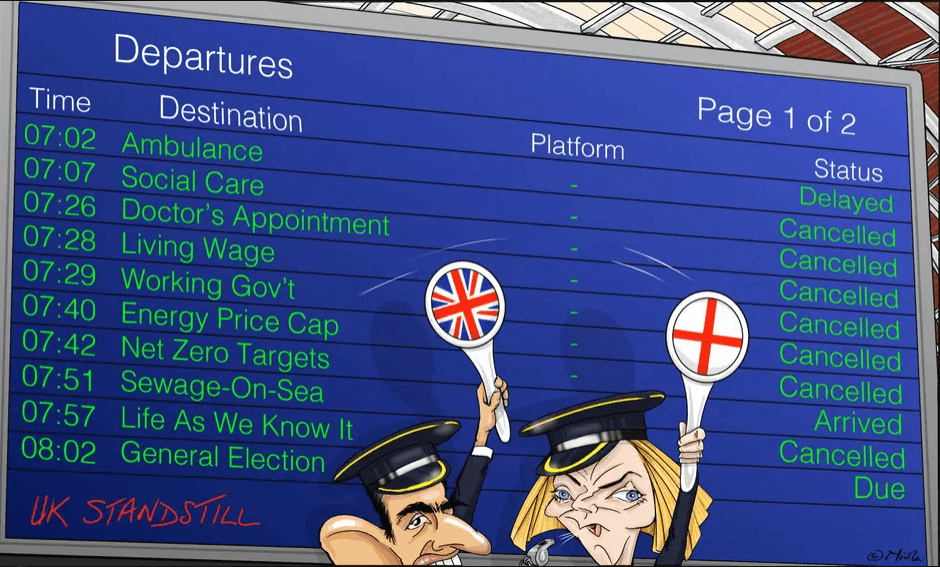
New PM’s spending plans must face scrutiny, says Treasury committee chair

The chair of the Commons Treasury committee has urged the government’s economic watchdog to produce fiscal forecasts alongside any emergency budget this autumn, after Liz Truss signalled she would try to avoid early scrutiny of her fiscal plans.

Rowena Mason www.theguardian.com 

Mel Stride, the chair of the committee, said the chancellor must ensure that the Office for Budget Responsibility (OBR) provides its assessment at the same time as the new prime minister makes any big fiscal decisions.

The Tory MP – who is a supporter of Truss’s opponent, Rishi Sunak – said the absence of fiscal forecasts would mean the new prime minister would be “flying blind” without the public being able to see an independent assessment of the government’s balance sheet.

“OBR forecasts provide transparency and reassurance to the markets on the health of the nation’s finances,” he said. “As a committee, we expect the Treasury to be supporting and enabling the OBR to publish an independent forecast at the time of any significant fiscal event, especially where, unlike other recent fiscal interventions, this might include significant permanent tax cuts.

“Whether such an event is actually called a budget or not is immaterial. The reassurance of independent forecasting is vital in these economically turbulent times. To bring in significant tax cuts without a forecast would be ill-advised.”

It was reported over the weekend that Truss had downgraded her emergency budget planned for mid-September to a more minor fiscal event to bring in tax cuts and set out her wider economic outlook. It would therefore not necessitate full OBR forecasts about the state of the economy.

However, with inflation expected by Citi to reach 18%, and energy bills forecast to top £6,000 annually next year, according to Auxilione, there are worries among some experts that the next prime minister will be basing decisions on out-of-date advice if there is no new information from the OBR.

Stride asked the chancellor, Nadhim Zahawi, to ensure the OBR was preparing forecasts of the UK’s fiscal position already, as the government usually gave it 10 weeks’ notice of a fiscal event, such as a budget.

The committee did not mention Truss’s campaign specifically. However, Stride told LBC: “At the moment the Liz camp are saying, I believe, that there will not be any OBR forecast produced at that time and that is kind of like flying blind.”

Sunak’s campaign has repeatedly called on Truss to “come clean” about how her proposed tax cuts, including reversing the rise in national insurance, will be funded and claimed her plans to borrow in order to fund tax cuts are “dangerous”.

He told the BBC: “Liz’s plans are promising the earth to everybody. I don’t think you can have your cake and eat it. I don’t think life is that simple, and I think her plan risks making everything worse.”

Truss has argued that tax cuts will help to grow the UK’s economy and boost prosperity.

A Truss campaign spokesperson said: “The cost of living crisis means immediate action is required. A Truss government would seek to act as soon as possible to help people across the UK, by cutting taxes and introducing a temporary moratorium on energy levies.”

Beware of  Developers’ Trickery and Sleight  of Hand!

Winslade Park proposals

From an East Devon Correspondent: 

Illusionists, tricksters and pickpockets are adept at using diversionary tactics to steal your prize possessions from right under your noses, by focusing your attention on the influencing hand, that purports to offer a gift of a flowering bloom, whilst the other surreptitious hand threatens and steals your valuable watch from your wrist and lifts your hard-earned money from your wallet or purse – whilst you watch on intently! 

Similar tactics are employed by property developers and a case in point is this week’s submission by Burrington’s for further amendments to their incongruous Zone D proposals at Winslade Park, Clyst St Mary to erect three, monstrous blocks containing 40 x 4.5-storey sky-high flats (Application 21/2217/MRES) in a low-density, rural, historic village with no local housing need. 

C:\Users\Linda\Pictures\Proposals for 40 Four Storey Apartments in Three Blocks - Zone D.jpg

The new amendments focus on providing improved environmental green spaces between Blocks B and C with the loss of a podium feature and additional tree, hedge planting softworks – but crucially the amendments continue to  ignore ‘the elephant in the room’, that has received numerous objections, which is the inappropriate high-density, overall massing and height of 40 towering apartments.  These flats will encroach above and through the existing deciduous, TPO protected woodland, will harm an environmentally-diverse habitat, exacerbate flooding with increased ground levels, damage the amenities enjoyed by existing residents, (whose lives and homes will be negatively impacted visually and by noise and light pollution from these towering multiple-occupancy homes), resulting in significant losses of privacy from overlooking into existing indoor and outdoor private spaces from the numerous proposed living area apartment windows, the elevated gardens, the access road adjoining garden boundaries and (ultimately to add a final blow) – the sky-high 4.5-storey luxury penthouses with 360 degree balconies! 

Outline permission was granted in December 2020, under a hybrid application, which also incorporated re-use of the redundant insurance offices complex and a further 39 homes on a green field site (which was contrary to the Bishops Clyst Neighbourhood and EDDC’s current Local Development Plans to 2031, with Burrington’s pleading failure of the entire overall masterplan through financial viability issues without guarantees for residential approval on this valued, local green field). 

At this outline approval meeting, EDDC Planners recommended a lowering of the indicative height of the Zone D flats’ from three storeys to two storeys, with meaningful consultation with the community to achieve suitable, compatible designs – but both recommendations have been ignored and the Reserved Matters application continues to propose very conspicuous, towering 4.5 storeys with increased ground levels to avoid flooding to the proposed lower flats in this vulnerable area. 

It has also become glaringly obvious that DCC Highways have failed to ensure a solution to a dangerous pedestrian route,  via Winslade Park Avenue, which will be walked by thousands of pedestrian users of these commercial and residential areas to access the local amenities of the primary school, childcare nursery, shop, post office, village hall, play-park, garage and pub, with vulnerable pedestrians having to negotiate a blind bend when walking along this busy, narrow road, without pavements or lighting! These issues have been highlighted to DCC Highways and EDDC Planners – but to date are unresolved, leaving a serious accident or worse inevitable with this increased use. 

We have all been weakened by a life-threatening global pandemic, by adverse repercussions from Brexit, by a war in Europe, causing energy and food crises and by rising inflation – so it is more difficult, at this time, for us all to focus on developmental issues, leaving us more gullible. However, decision makers have been appointed to represent their local communities and must focus on the key, central detrimental issues of this Zone D development and not be side-tracked by offers relating to the minutiae within the application.  We must all look to enhance our communities – not damage them for the future.  Smoke and mirrors trickery will try to disguise the predominant problems of such developmental intensity and the urbanisation of a rural East Devon village. 

Beware of the hidden hand that you fail to watch when concentrating on the gift-bearing one – the former hand will strike and deliver the destructive blow through sleight of hand and property developers have plenty of tricks up their sleeves in their arsenal to achieve maximum profits from development of land – we must all be up to speed and watchful if we value and wish to protect our East Devon communities for future generations. 

Midas directors’ conduct investigated

Administrators dealing with the fall of South West construction leviathan Midas have sent a report to the Government which could lead to its directors being disqualified. Global business consultancy Teneo Financial Advisory Ltd is also encouraging people owed money to report any concerns they have about events leading to Exeter-headquartered Midas going bust.

William Telford www.devonlive.com

London-based Teneo has confirmed it has sent a confidential report to the Insolvency Service which will look at whether action should be taken against Midas board members. Midas Group Ltd and its subsidiaries collapsed into administration in February 2022 with estimated debts of at least £70m. Midas was involved in huge construction projects across the South West and companies owed cash include several in Plymouth.

The Insolvency Service, a Government agency, has civil powers to consider complaints about the conduct of directors of companies that have entered into formal insolvency proceedings, including administration. It can order that people be disqualified from acting as company directors.

Administrators must report on the conduct of directors under the Company Directors Disqualification Act 1986. Teneo has said it has prepared a confidential report on the conduct of Midas directors in the three years leading up to its appointment as administrators. At the time of entering administration, Midas directors included Stephen Hindley, Alan Hope and Peter Skoulding.

A Teneo spokesperson said: “This report has been provided to the Insolvency Service and will be used in their assessment of whether any action should be taken against the directors, for example, disqualification.”

However, Teneo clarified that the administrators’ report to the Insolvency Service is confidential and neither its contents nor the administrators’ conclusions will be reproduced in any progress reports to creditors.

But Teneo said that In addition, it is also required to consider whether there is any action that could be taken against directors and other organisations, including auditors, that would result in recoveries of cash for the administration estate. The spokesperson said: “This assessment is ongoing and the administrators will report in their progress reports if any actions are commenced/proposed.”

Teneo also said it is also encouraging any of Midas’s creditors to contact the administrators should they have “any concerns regarding the conduct of the company in the period prior to the administrators’ appointment.”

It is also working to recover cash owed to Midas before it went under, including for work in progress. Teneo said: “The administrators will report on recoveries achieved during the course of the administration. However, we note that collection of contractual debts in an insolvency process often leads to substantially lower recoveries than book value, particularly where there is no ongoing business to complete the related contracts.”

Teneo is already dealing with claims from nearly 2,000 creditors, including dozens in Plymouth. Midas Group Ltd and its subsidiaries Midas Construction Ltd, Midas Retail Ltd, Mi-Space (UK) Ltd, Mi-Space Property Services Ltd, Midas Commercial Developments Ltd and Falmouth Developments Ltd all fell into administration in early 2022 blaming a toxic cocktail of Covid, inflation, money owed to them but not paid, and cash flow problems for causing a financial doomsday.

Among many Plymouth firms listed as creditors are Collaton Safety Management, D&L McBride Building Consultancy, EDF Energy, LTC Powered Access, Plymouth Removers, DCA Public Relations, Western Power Distribution, ADS Window Films, All Seasons Group Services, B&C Carpentry, and BPUK Environment.

The two main companies in the Midas family – Midas Group Ltd and Midas Construction Ltd – have realisable assets of just £8,354,644. But when preferential and secured creditors are paid it means there will be a predicted shortfall of £60,290,904 for the hundreds of small firms and individuals in the supply chain.

In addition, Midas’ housing arm Mi-Space (UK) Ltd owes more than £12m with more than £10m of claims unlikely to be paid. This means the overall Midas deficit is now north of £70m.

Twice as many people died with Covid in UK this summer compared with 2021

“And it’s going to spread further and I must level with you, level with the British public, many more families are going to lose loved ones before their time.” Boris Johnson 12 March 2020.

[Deaths involving Covid 180% higher for those aged 85+ and 77% amongst those aged between 75 and 84.]

Carmen Aguilar García www.theguardian.com 

Twice as many deaths involving Covid occurred this summer compared with last summer, according to analysis of new data – though rates have fallen in recent weeks as the latest wave decreases in severity in the UK.

Although the overall number of deaths of people with Covid in 2022 remains far below last year, the summer months have bucked that trend. More than 5,700 Covid deaths have been registered since 8 June when two Omicron subvariants became dominant. This is 95% higher than in the same period last year when there were 2,936 deaths involving Covid across the UK.

However, the latest figures from the Office for National Statistics (ONS) also indicate that deaths caused by the latest Covid wave – fuelled by the two more transmissible Omicron subvariants, BA.4 and BA.5, which became dominant in early June – are on the wane.

A total of 674 Covid deaths were registered in the UK in the week to 12 August, down from 802 a week earlier and 924 the previous week.

More than twice as many Covid deaths were registered between 1 January and 12 August 2021 as in the same period this year: 65,000 deaths by 12 August 2021 – driven by surging figures caused by the Alpha variant – compared with 28,303 in the same period this year.

Prof Paul Hunter, a professor in medicine at the University of East Anglia, said the “surge in infections associated with the BA.5 wave” is behind the increase in the number of deaths this summer compared with last.

“But we will see fewer deaths in August this year than last,” he added. “I suspect that over the next three months we shall see [that Covid] deaths [are] a lot lower than last year and probably that will remain the case for the entire winter.”

The fact that more people are dying this summer than last is most pronounced in the older age groups, a trend that has been consistent throughout the Covid pandemic. Almost half of the deaths recorded this summer in England and Wales were among people aged 85 and over compared with 27% of the deaths in 2021.

Deaths involving Covid have been the highest among old people throughout the pandemic, but over-85s have recorded the highest increase in the death rate, which is 180% higher this summer than it was in summer 2021.

The number of deaths among those between 75 and 84 has also grown: there were 77% more deaths in this age group this summer compared with last. However, there have been fewer Covid deaths among the under-65s, with the death rate decreasing by about 58% in summer 2022.

Wales and the east and south-west of England recorded the biggest increase in deaths involving Covid with more than three times as many deaths in each of these regions in the summer to date this year compared with the same period in 2021.

In just one region – the north-west – the number of Covid deaths decreased when com pared with the same period last year.

Covid was sixth among leading causes of death in July in England and Wales, the latest ONS monthly analysis of age-standardised mortality rates shows. In July last year, Covid was the ninth-leading cause of death in England and it ranked 22nd in Wales.

We need a good news story, here is a local one widely reported

Drone photos show ‘incredible’ impact of beavers during drought

A series of remarkable drone shots have revealed how the reintroduction of beavers in Devon has had a hugely beneficial impact on the landscape during the current drought.

Harry Cockburn www.independent.co.uk 

Over 400 years after beavers were hunted to extinction in the UK, the animals were returned to the river Otter in Devon in 2008, and after initial plans for them to be removed, the government consented to a five-year study which highlighted the astonishing improvements to the ecosystem that beavers bring.

Amid the drought and one of the hottest summers on record, some of those benefits are now highly visible, with the land where the beavers are living remaining a lush green, while adjacent land has turned a parched yellow.

The tinder-dry conditions have led to record numbers of wildfires in the UK, but on the Clinton Devon Estates, where a number of beaver families have built dams to create new wetlands, roughly an entire hectare of land remains underwater. Clinton Devon Estates is a land management and property development company which manages the Devonshire estates belonging to Baron Clinton, the largest private landowner in Devon.

“It’s quite incredible to see this area when the conditions have been so challenging in recent weeks,” said Ed Lagdon, a ranger for conservation organisation East Devon Pebblebed Heaths.

“Beavers are very territorial and as the Lower Otter is near full capacity, beaver families will explore nearby tributaries and culverts to find small areas of wetland to settle. They feel safe in water so will seek a water source and that’s likely to be why this family chose this particular area.

“It’s when they come away from the river in this way that they can have more of an impact on their surroundings – they will change the environment around them and manipulate the conditions to suit them. In this location, the beavers have used sticks and mud to create several dams which are now holding back large volumes of water.

Beavers, a keystone species, help birds insects and plants thrive through their wetland creation (Clinton Devon Estates)

He added: “The water is up to two feet in some areas and is fantastic for wildlife such as birds and invertebrates. It also brings flood prevention benefits and carbon capture within the wetland.”

But alongside the many ecological benefits they bring, the land managers said the images also highlight the new challenges beavers can create for people unused to co-existing with the indigenous mammal.

The return of beavers to Devon is having an enormous impact on water retention during the drought (Clinton Devon Estates)

Clinton Devon Estates’ head of agriculture, Sam Briant-Evans, explained: “It’s been quite surprising to see how quickly they’ve worked, it’s taken less than six months. We’ve lost about two hectares of the field as a grazing platform for our dairy herd – one hectare of this is now permanently underwater. It was May this year before we were able to get the cattle onto it.

“The concern we have is if we move them on, they may move upstream again which could cause issues if they are closer to the main farm. It’s a bit of a conundrum for us as an estate as we can see both sides of the equation. We need to accept that the beavers are there but they need to be closely monitored and managed going forward, so their activities and any potential flood issues can be monitored and we can tackle it quickly.

“There’s no clear solution. However, what this does highlight is that with the right management and by working with them, they can help in the adaptation to climate change.”

The positive impact of beavers on the landscape has highlighted the success of numerous reintroductions around the country (Clinton Devon Estates)

New government legislation comes into force on 1 October which will afford beavers legal protection as a recognised native species in England, meaning it will be illegal to disturb, harm or kill them.

John Varley, Clinton Devon Estates director, said: “In the right place, beavers can bring about major benefits for wildlife, the environment and society, including increased biodiversity, which is a key aim of the government’s Nature Recovery Network.

“Clinton Devon Estates supported the River Otter Beaver Trial from the beginning because we wanted to understand the full impact of beavers in a real-world setting. During the project, we learnt a great deal about these benefits, such as cleaner water, natural flood management and habitat creation.

“However, we have also witnessed negative impacts when beavers are in the wrong place: farmers’ fields, private property and roads flooded, as well as trees damaged.

“As the beaver population on the River Otter grew and expanded, so did the need for proactive management, and all the costs associated with that. We believe that if properly funded by government, the cost of managing beavers is far outweighed by the social and economic benefits to nature and the public.”

Owl finds it  harder to spot fake news these days!

Tory MP says sewage covered beaches “deters illegal asylum seekers” 

THE SMELL OF SOVEREIGNTY : The Tory MP for Phistit-Phistitgut Reginald Scat has broken ranks with colleagues to laud the redecoration of England’s once pristine beaches.

Titan Searchlight lcdviews.com

While many Cons are expressing disgust at private water companies for doing exactly what they allowed them to do, Scat MP is having none of it.

“It shows how we can boost profits for Blighty’s wealth creators now we’re freed from the shackles of the nanny state EU,” Scat said. ”If we still had ready access to the chemicals we need to clean our waste waters we would not now be blasting our visible sovereignty out of giant pipes along the Sussex coastline. There is no more direct symbol of the throwing off of Brussels than British poo on British beaches.”

Scat, one of the 2019 intake chosen personally by Boris Johnson and Dominic Cummings goes on to suggest ”effluent is biodegradable anyway. All these woke eco warriors are perfectly happy to charge you five pounds for a plastic carrier bag but are up in arms over nature’s best, natural fertiliser washing up inshore? There’s a stink of hypocrisy in the movement.”

But sovereignty doesn’t stop with a liberal regulatory approach to waste water.

“Just take a moment to imagine the look on the faces of French fishermen seeking to rob our territorial waters of British fish! They’ll be thinking twice now. And the illegal people who try to reach our shores will be turning back at the first retch of sovereign water.”

Scat is certain to have sympathisers within his party for his views as most are holidaying this year in the Adriatic.

The only British turd in view there is Boris Johnson. Which is nice. No one need feel homesick with him bobbing about near to shore.”

Devon area is branded ‘Top of the Poops’

The Torridge and West Devon constituency of MP Geoffrey Cox has been named Top of the Poops by campaigners fighting to stop raw sewage being discharged into Britain’s waterways.

Guy Henderson www.devonlive.com 

With sewage discharges hot news at the moment thanks to the closure of some of Devon’s top holiday beaches after discharges, the Top of the Poops website has seen a surge in traffic.

The site uses data provided by the Environment Agency and breaks them down by Parliamentary constituency.

Paignton Sands, Preston Sands and Goodrington in Torbay had pollution warnings on Sunday, while last week there were bathing bans at Teignmouth Holcombe and Teignmouth Town beaches. Heavy rain can trigger legally-allowed storm overflows to prevent pipes which carry a mixture of rainwater and sewage from backing up.

The website uses 2021 pollution figures to map at least 470,000 sewage “spills” in England and Wales, incidents in which sewage has been intentionally released into the water.

The figures show that Torridge and West Devon had the most hours of sewage being released into the water in the whole of England, with South West Water carrying out 5,233 sewage “dumps” across nearly 59,000 hours. The Central Devon constituency came next, with 4,320 dumps over 43,506 hours.

Totnes had 4,001 dumps over 27,465 hours and North Devon 2,091 over 21,010 hours. The majority of sewage overflows took place into freshwater rivers. Just one in 27 dumps took place into the sea.

Of those that did happen on beaches, 111 sewage incidents were recorded at Ilfracombe’s Wildersmouth Beach, with 157 at Exmouth, 108 at Combe Martin and 93 at Torquay’s Meadfoot Beach.

The shellfishery on the River Teign in South Devon was the worst affected, with 1,926 sewage incidents, representing 13,640 hours of sewage. The Exe Estuary shellfishery had 1,748 sewage incidents in 2021.

England’s water industry now represents the unacceptable face of capitalism

“As with another crisis, that of the private care home sector, lax oversight has been aggravated by the slither of these industries into private equity or the murky world of offshore finance.”

Simon Jenkins http://www.theguardian.com

Where there’s muck there’s brass. But rarely was muck filthier or money more brass-necked than in the case of the brown effluent pouring into the Channel off Seaford, or the green algae spreading over Windermere. The English water industry can make all the excuses it likes, but those who find themselves swimming in sewage tend to notice – and wonder why those responsible deserve million-pound salaries. Last year nine water chiefs pocketed over £15m between them, an annual rise of 27%.

The dumping of sewage into watercourses is caused simply by storage tanks overflowing. This is currently attributed by the industry to hot weather causing unexpectedly fast run-off. This is supposed to happen only exceptionally rarely. Southern Water has reportedly made four such dumps into the Channel in a week. In total 373,000 cases of sewage discharge were reported in 2021, even before this year’s heatwave. Something has gone wrong.

The spread of rationing via hosepipe bans, and the explosion of sewage into rivers and the sea indicates an industry that has lurked too long in the private sector cupboard. Under the Victorians, water was the noble face of municipal socialism. Now it is the unacceptable face of capitalism. The success of privatised industry depends on the effectiveness with which the state regulates its natural monopolies. Under Whitehall’s Ofwat, water regulation has failed. Its most radical suggestion to meet the current crisis appears to be for people to turn off their taps while cleaning their teeth.

Since privatisation in 1989, an estimated £72bn has been allowed to leak from the industry into dividends, money that should clearly have gone into investment, stemming leaks and building overflow tanks. As it is, roughly a quarter of England’s fresh water never reaches the consumer but escapes from unrepaired pipes. Meanwhile contamination means the UK’s swimming sites are so filthy they ranked last in Europe for water quality in 2020. Even the government’s own Environment Agency has called for water company directors to be imprisoned for the appalling decline in performance, after a rise to 62 of what it classed as “serious incidents” of pollution last year. Campaigners are also taking Ofwat to court for regulatory failure. The industry, in every sense, stinks.

The talk now is of renationalisation, though the sight of the water companies walking away with yet more money in compensation would be hard to stomach. The real trouble lies less with privatisation as such than with its regulators. As with another crisis, that of the private care home sector, lax oversight has been aggravated by the slither of these industries into private equity or the murky world of offshore finance.

Here public utility falls by the wayside. Short-term profit is what matters, dividends are all and scandalous salaries generate a revolving door between companies, regulators and Whitehall. The result is that blatant polluters such as the poultry industry are allowed by planners to drain effluent into the River Wye and make it an open sewer. Our water utilities vent our own waste into the sea. And meanwhile a proposal for a national network for transferring water from the plentiful west to the parched east lies dormant. Its cost of £10bn is about a tenth that of Boris Johnson’s vanity project, HS2. A train was considered a greater priority.

Liz Truss ‘has sewage on her hands’ over Environment Agency cuts

The Tory leadership frontrunner, Liz Truss, was responsible for cutting millions of pounds of funding earmarked for tackling water pollution during her time as environment secretary, the Guardian can reveal.

Pippa Crerar www.theguardian.com 

Truss, who was in charge at the Department for Environment, Food and Rural Affairs (Defra) between 2014 and 2016, oversaw “efficiency” plans set out in the 2015 spending review to reduce Environment Agency funding by £235m.

This included a £24m cut from a government grant for environmental protection, including surveillance of water companies to prevent the dumping of raw sewage, between 2014-15 and 2016-17, according to the National Audit Office.

It represents almost a quarter of the funding cut from this area between 2010, when the grant stood at £120m, and 2020, by which time it had fallen to £40m.

Labour analysis of official figures shows that since 2016 raw sewage discharge in England and Wales has more than doubled, from 14.7 spill events an overflow to 29.3 in 2021. Greenpeace said the figures showed Truss had “sewage on her hands”.

The Environment Agency has called for the government to reverse the cuts but campaigners want the next prime minister to go further and also give the body the power to properly monitor water companies over sewage, rather than allowing them to self-report discharges.

It follows the finding that 24% of sewage overflow pipes at popular seaside resorts in England and Wales have monitors that are faulty or do not have monitors at all, meaning people could be swimming in human waste this summer without realising.

Last year the head of the Environment Agency, James Bevan, called on the government to reinstate the funds, saying that given the length of the country’s river systems, having “only a few hundred people to oversee them is a pretty tall ask”.

He told MPs: “It has had an effect on our capacity to monitor, to enforce the rules and to help improve the environment where we think it needs doing. Honestly, I would like to see that grant restored. I would like to get back to where we were 10 years ago, and I think it would make a massive difference.”

In response to the findings, the shadow environment secretary, Jim McMahon, said: “The country is facing a crisis in our water supply. Our water infrastructure is at bursting point with billions of litres of water being wasted every day and raw sewage being dumped into our waters.

“The fact that Liz Truss was the one to cut the EA so severely not only demonstrates her lack of foresight but also her lack of care for the detail, in recognising the need to adapt to the serious flooding that had just happened on her watch.”

Environment Agency insiders said that after Truss’s cuts, staff were moved away from environmental monitoring towards flood protection, and the number of samples taken from rivers went down dramatically.

Vaughan Lewis, a senior consultant for the agency, told the Guardian: “They plummeted to the point it was impossible for the Environment Agency to know what’s going on. They had no control or monitoring capability that was meaningful. They ceded the control of monitoring to water companies, which ended up being able to mark their own homework. They take their own samples and assess whether they are being compliant.

“We saw that doesn’t work – look what happened with Southern Water, which didn’t declare its pollution incidents and ended up being fined by the EA when they were found out. There are suspicions this could be happening across the board. It has been left to citizen scientists who monitor and fill in the gaps.”

Lewis added: “Lots of this would have happened under Liz Truss; she was there when some of those cuts were made. She was a poor minister and the Environment Agency has been cut to the bone and it can’t monitor or regulate effectively.”

As environment secretary, Truss defended the cuts by saying “there are ways we can make savings as a department”, citing better use of technology and inter-agency working.

She is already facing questions about why she was registered absent from a vote on a Labour amendment in the House of Commons that aimed to place legal obligations on water companies to stop polluting England’s waterways during heavy rainfall.

A spokesperson for Truss said: “These spending reductions were part of a wider drive from central government to find efficiencies across department budgets and government agencies.

“It’s vital we get a grip on pollution in our water and ensure it is clean and safe for all to enjoy. As prime minister, Liz will make sure the necessary action is taken to deliver this.”

Greenpeace UK’s chief scientist, Dr Doug Parr, said: “A decade of budget cuts and government deregulation has left the Environment Agency, almost literally, up shit creek without a paddle. The growing tsunami of sewage unleashed on to Britain’s waterways is a shocking demonstration of how undermining our regulators leads to a disregard for nature and those meant to protect it.

“That our likely future prime minister was an instigator of cuts to the money used to protect our rivers, and so helped cause this environmental catastrophe, doesn’t bode well for the UK’s protection of the natural world. Liz Truss has sewage on her hands.”

Hugo Tagholm, the chief executive of Surfers Against Sewage, said: “Self-monitoring has clearly failed for the water industry, the culture of self-reporting has clearly failed, millions of hours of sewage pollution going into our waterways every year, it’s a failed model.”

Martin Salter, from the Angling Trust, said: “The consequences of these ill-advised cuts to the Environment Agency’s pollution monitoring capabilities are now present for all to see and smell, with raw sewage flowing down our rivers and dead fish and other wildlife washed up on the banks with depressing regularity.

“The move away from tougher regulation in favour of allowing water companies to report on their own failures has created a polluter’s charter, as evidenced by the recent prosecution of Southern Water for deliberately falsifying their discharge data.”

The Environment Agency has long bemoaned its lack of funding and power, underpinned by a lack of ambition from ministers on tackling waste. In 2020 it said it recognised that a “huge gap is opening up between the outcomes we want to achieve and our ability to achieve them”, and estimated that “at the current rate of progress” it would take more than 200 years to reach the government’s target of at least 75% of waters being close to their natural state.

Water Pollution: Simon Jupp “missing in action”

Last night BBC Spotlight featured the latest pollution alert on Budleigh Beach, a full 3 minutes.

Richard Foord MP was interviewed, but Budleigh’s MP, Simon Jupp was absent. (Simon Jupp voted against the Lords amendment that would have placed legal duties on the companies to reduce discharges last October.)

Richard Foord MP, reiterated the Lib Dem research findings that the extent of pollution is not known because the systems supposed to be alerting us are not working effectively. In Devon and Cornwall, one in eight are either faulty or not installed.

Two regular swimmers who stopped swimming last week for four days were not aware of Monday’s surprise alert until the BBC interviewer told them. 

The Government says a plan to tackle sewage overflows will be published “next month”.

Planning applications validated by EDDC for week beginning 8 August

Sewage monitors at UK seaside resorts either faulty or not installed, data reveals

According to the Environment Agency data analysed by the Liberal Democrats, sewage monitors installed by UK water firms did not work “90% of the time” or had not been installed at all.

news.sky.com 

Water companies have been accused of failing to monitor how much sewage is being pumped into the sea.

According to the Environment Agency data analysed by the Liberal Democrats, sewage monitors installed by UK water firms did not work “90% of the time” or had not been installed at all.

Dozens of pollution warnings were put in place across beaches and swimming spots in England and Wales this week after heavy rain overwhelmed sewer systems, leading water companies to release sewage into the natural environment.

Ministers are under pressure to clamp down on the water firms which are being criticised for not investing money back into the UK’s outdated water infrastructure.

The data shows Anglian Water has the highest rate of failure, with 49% of all its sewage discharges not measured due to faulty or no monitors installed, according to the Lib Dems.

This is followed by South West Water with 30% and Severn Trent Water with 29%.

One in eight of South West Water’s sewage monitors installed at designated bathing locations across Cornwall and Devon are either faulty or not installed, the party said.

In Sussex, Southern Water was found to have altogether failed to install one at the popular seaside spot of Littlehampton Pier while one in Seaford was working only a third of the time.

The Lib Dems’ environment spokesperson, Tim Farron MP, said: “These water companies could be guilty of gross negligence by failing to install sewage monitors.

“This is a national scandal and these new figures stink of a cover-up. Britain’s seaside resorts are being swamped by foul sewage yet the government is nowhere to be found.”

In response to the issue, the Department for Environment, Food and Rural Affairs released a response earlier this week outlining the action it is taking.

Water minister Steve Double said: “We are the first government to take action to tackle sewage overflows.

“We have been clear that water companies’ reliance on overflows is unacceptable and they must significantly reduce how much sewage they discharge as a priority.

“This is on top of ambitious action we have already taken including consulting on targets to improve water quality which will act as a powerful tool to deliver cleaner water, pushing all water companies to go further and faster to fix overflows.

“Work on tackling sewage overflows continues at pace and we will publish our plan in line with the 1 September statutory deadline.”

Watch video on Sky News

An Anglian Water spokesperson said: “Following over £300m of investment in the last decade, all but three of the places designated for bathing in our region are rated as good or excellent for bathing water quality, and all have EDM monitors installed on them.

“Work to install EDM monitors on all the CSOs (combined sewer overflows) across our region is ahead of target as part of our Water Industry National Environment Programme as agreed with the Environment Agency.

“We will have full coverage across all CSOs by the end of 2023.”

Southern Water, South West Water and Severn Trent Water have been asked to comment.

England’s highly paid water bosses rake it in from lucrative second jobs

Susan Davy, boss of Pennon Group, owner of South West Water, which was spilling sewage and stormwater into seas around Devon and Cornwall last week, is on the board of data management firm Restore plc. She was paid £53,000 by the firm last year, sitting on a remuneration committee.

Jon Ungoed-Thomas www.theguardian.com 

Some of the highly paid bosses of England’s water companies are earning tens of thousands of pounds in second boardroom jobs, advising on the pay deals of other top executives.

Five of the chief executives of England’s nine water and sewerage companies are also working as non-executive directors in other firms, sitting on remuneration committees.

Campaigners say it is inappropriate for water bosses to be helping to fix the pay and bonuses of senior executives in other companies.

Nicola Shaw, who was appointed head of Yorkshire Water in May, is also on the board of International Airlines Group (IAG), which owns British Airways. She sits on its remuneration and safety committees, earning €123,000 (£115,000) last year.

Yorkshire Water said this weekend that Shaw’s second boardroom role did not affect her commitment to improving water services.

Susan Davy, boss of Pennon Group, owner of South West Water, which was spilling sewage and stormwater into seas around Devon and Cornwall last week, is on the board of data management firm Restore plc. She was paid £53,000 by the firm last year, sitting on a remuneration committee.

An analysis by the Liberal Democrats revealed last week that the average water company boss’s total pay rose by 20% in 2021, despite most firms failing to meet sewage pollution targets. The party said the pay packages were a “national scandal”.

Andy Prendergast, national secretary of the GMB union, which has criticised the level of pay and bonuses given to water bosses, said: “This country is facing a water crisis and the fact that those paid fortunes to deal with it have enough time to moonlight in second jobs beggars belief.

“At a time of hosepipe bans and sewage discharges, we deserve that those paid high salaries devote their time to putting it right. The fact their second roles largely involve green-lighting massive salary increases for other bosses is scandalous.”

The performance of water companies is under mounting scrutiny as drought has been declared across large swaths of the country. The Environment Agency reported in July that “the environmental performance of England’s nine water and sewerage companies was the worst we have seen for years”.

Swimmers were warned of sewage and stormwater flowing on to beaches last week, mainly on the south coast. A Labour party analysis has found that water companies have spent more than 9 million hours discharging raw sewage and stormwater into the country’s rivers and seas since 2016.

Other water bosses with non-executive roles include Sarah Bentley, boss of Thames Water, who was paid more than £2m last year. She is a non-executive director of Lloyds Bank, sitting on the remuneration committee. Thames Water and Lloyds Bank declined a request from the Observer last week to disclose any fees paid to her.

Heidi Mottram, who earns £648,000 a year as boss of Northumbrian Water, is a non-executive director of the energy firm Centrica, where she was paid £93,000 last year. She sits on three committees, including the remuneration committee.

Steve Mogford, who was paid £3.2m last year as boss of north-west water firm United Utilities, started as non-executive director of the defence firm Qinetiq this month. Mogford, a former senior executive at the defence giant BAE Systems, sits on four committees, including the remuneration committee.

Luke Hildyard, executive director of the High Pay Centre, a thinktank that researches on issues around the pay of senior executives and corporate governance, said: “Most people would be astounded if they realised that pay levels for chief executives are set by committees made up of other chief executives and people in similar roles.

“The justification for paying such large salary packages to company chief executives is that they are doing such important and demanding work. This is undermined if they have time to sit on the boards of other major companies.”

On Monday the High Pay Centre will launch its annual review of executive pay in the country’s top companies. It is calling for more representation from a company’s workforce on remuneration committees.

It is not unusual for company heads to accept non-executive roles and employers say it can provide fresh insights for senior bosses. There can, however, be concerns about the level of commitment required.

In February 2015 Liv Garfield, the chief executive of Severn Trent, announced she was standing down as non-executive director of Tesco. She said she wanted to “concentrate fully” on her chief executive role at the water company.

Water companies said last week that the other jobs performed by their CEOs are properly disclosed.

A Thames Water spokesperson said: “Sarah Bentley’s role as a non-executive director is in the public domain. The insight and perspective that she gets from her role at Lloyds, given their turnaround, is valuable to her role at Thames Water and was approved by our board when she joined in 2020.”

Yorkshire Water said Nicola Shaw’s work at IAG did not “impact on her role” at the water firm. A spokesperson said: “In fact, as for many other executive directors who hold similar positions, the role brings back knowledge and experience from other industries that we can take learnings from.”

None of the water companies responded to a request to provide the hours their chief executives worked each month on their other boardroom roles.

Government ‘has lost the plot’ over plan for GPs to prescribe heating bill discounts

Labour has accused the government of having “lost the plot” over plans for GPs to prescribe people cash to pay their energy and heating bills.

Jon Stone www.independent.co.uk

Officials in the Treasury reportedly want family doctors to assess whether sick or elderly people need a discount heating their homes.

The idea, reported in the Sun on Sunday newspaper, is said to be one of a number being discussed in government to help with the cost of living.

But shadow health secretary Wes Streeting warned the plan would simply put more pressure on the NHS over the winter.

“The Conservatives have lost the plot on the cost of living crisis and haven’t got a clue about the level of pressure on the NHS,” he said.

Mr Streeting said Labour “already has the right prescription for dealing with rising energy bills”. The opposition says it would pay energy companies to freeze the energy price cap where it is.

This would head off expected increases to over £3,000 over the winter.

The Liberal Democrats have come forward with a similar proposal, while the Green Party says prices are already too high and should be cut to last year’s levels.

Treasury officials apparently believe using GPs to target energy bill discounts will save money money because it will help target cash at people who need it most.

On Sunday afternoon the British Medical Association (BMA) said they “completely reject” the policy and branded the government’s approach to policymaking “deeply unprofessional”.

Dr David Wrigley, BMA England’s GP committee deputy chair, said: “At a time when GPs are already overwhelmed with the greatest workforce crisis and longest waiting lists in memory, this addition to their workload is totally unacceptable.

“It beggars belief that Government ministers think it is appropriate to suggest GPs undertake this work.”

He added that GPs “do not have the time or the skills to do the work of the welfare system”.

“In these next few months GPs already have to worry about delivering the Covid and flu vaccination programmes that will be necessary to see the NHS through the winter, on top of their daily crushing workload and the enormous Covid backlog we now see,” he added.

“The Government has not discussed this with us in any form – floating these sorts of proposals via the media is deeply unprofessional. We completely reject any suggestion that GPs do this work.”

The government has offered little in the way of concrete policies on cost-of-living since the Spring, with the Conservatives focusing on a party leadership contest.

New proposals are expected from whoever wins the contest next month, with an emergency budget expected in the autumn.

The Times newspaper meanwhile reports that the National Grid is taking action and planning to reward customers for shifting power-hungry activities to low-demand times.

It will ask regulator Ofgem to let it pay customers to shift tumble-drying and dish-washing to overnight. The grid operator hopes the scheme will be in place by October if approved.

The latest forecast for the energy bill price cap warns that bills could soar as high as £6,000 by April.

Consultancy Auxilione says that the cap is expected to reach £3,576 in October, rising to £4,799 in January, and eventually hitting £6,089 in April.

Until April this year the cap was just £1,277, but prices have been pushed up by the war in Ukraine and a surge in demand caused by the reopening of economies after Covid-19 lockdowns.

Today Torbay: Warning to swimmers as sewer pollution alert issued 

Swimmers are being urged not to enter the water in three different areas of Torbay today due to the likelihood of reduced water quality. An interactive map shared by Safer Seas & Rivers Service, which looks at water quality at over 400 locations around UK rivers and coastlines, highlights the locations across the UK which have pollution warnings in place today (Sunday, August 21).

[These releases are ‘typically 95 per cent rainwater’ is what Southern Water says. Don’t think about the residual 5% – Owl]

Chloe Parkman www.devonlive.com

According to the map, Paignton Sands, Preston Sands and Goodrington all have a pollution risk alert in place. A statement on the interactive map reads: “Paignton Preston Sands. Pollution risk warning: bathing not advised today due to the likelihood of reduced water quality.

“Preston Sands is a large, popular sandy beach backed by a large town green and the town of Preston. There is a sewer overflow that discharges at the northern end of the beach from the Preston Green Attenuation Tank.”

Another statement outlining the pollution risk at Paignton Sands reads: “Bathing not advised today due to the likelihood of reduced water quality. Paignton Sands is a long and sandy resort beach with a harbour at the southern end and a pier to the north. There are two sewer overflows located on Paignton Sands – one at the southern end of the beach and another offshore of the harbour.”

A third statement outlining the pollution risk at Goodrington reads: “Bathing not advised today due to the likelihood of reduced water quality. Goodrington is a popular sandy beach resort making up part of the Devon Riviera backed by Goodrington Park Gardens with rock pools at low tide.

“There is one sewer overflow discharging directly onto the beach in the middle of Goodrington while another discharges 500m upstream in the Goodrington Stream that then meets the sea towards the southern end of the beach.”

For more information visit Surfers Against Sewage here.

BMA requests further £150k GP income declaration delay from next April

The BMA has said it has requested a ‘further suspension’ of the requirement for GPs to declare income above £150,000, which is currently due to launch in April.

Costanza Potter www.pulsetoday.co.uk 

The requirement was originally delayed due to the pandemic and then again in November and April this year, when GPs faced the first and second deadlines to submit declarations.

As it stands, the pay transparency regulations will come into force in April 2023 – but the BMA has said it is pushing for a further delay.

Its latest GP Committee bulletin said: ‘Currently, the individuals in scope of the regulations introduced in October 2021 will need to make a declaration of their 2021/2022 earnings in April 2023 as the provision remains in the GP contract.

‘Individuals within scope of the pay transparency provisions are not required to take any action in relation to their 2020/21 NHS earnings at this stage.’

It added: ‘We continue to request further suspension of the requirement to declare earnings as we believe this is harmful to morale in the profession and could lead colleagues to reduce their working commitments or retire.

‘We also believe that it is inequitable to single out general practice for this requirement.’

A Department of Health and Social Care (DHSC) spokesperson told Pulse that ‘further information on the implementation of pay transparency in general practice will be made in due course’.

What are the GP pay declaration requirements?

Under regulations published in September, GPs and their staff with NHS earnings above £150,000 are required to declare them annually.

The 2020 updated GP contract revealed that GPs who earn more than £150,000 per year in pensionable income – including partners, salaried GPs and locums – will be ‘listed by name and earnings bands’ publicly. 

But the BMA confirmed in November that salaried GPs were not covered by the requirement to declare earnings above the threshold.

It also said that it was ‘unclear’ how NHS England would ‘police’ declarations and that any evidence sourced for monitoring via ‘illegitimate means’ will be ‘open to legal challenge’.

GPs were told they would have to submit self-declarations annually, starting with income for 2019/20 by 12 November 2021 and then make declarations by 30th April for every subsequent financial year.

The threshold will rise to £153,000 for the financial year 2020/21, £156,000 for 2021/22, £159,000 for 2022/23 and £163,000 for 2023/24.

The BMA previously said that GPs have been ‘singled out’ and that the launch of the requirement ‘breached’ its contract agreement with commissioners.

And GP leaders had previously argued that this is an attempt to name and shame GPs. They pointed out that it does not reflect the hours they work, and warned it could fuel anti-GP sentiment among the public who believe family doctors are paid too much.

The legislation, which came into force on 1 October 2021, was first announced in 2019 as part of the five-year GP contract.

But GPs have been required to publish average individual net earnings on their practice website since 2016/17, following a previous move to increase transparency on earnings.

Labour surges as Tory fears grow over Truss’s tax cut agenda

Truss – the runaway leader in the contest to be the next Tory party leader and prime minister – is insisting she will resist more “handouts” to those struggling most with the cost of living, an approach she describes as “Gordon Brown economics”.

Instead, she says, she will use tax cuts as a way to boost the economy – despite warnings from economists and senior Tory colleagues that this will merely stoke and embed inflation.

Toby Helm www.theguardian.com

Senior Tories have warned that their party will suffer dire electoral consequences under a Liz Truss premiership that fails to address the cost of living crisis, as Labour enjoys a poll bounce suggesting Keir Starmer could be on course for No 10.

Amid signs of mounting panic among high-ranking Conservatives about Truss’s economic policies, several former cabinet ministers told the Observer on Saturday the party would suffer devastating losses in blue and red wall seats unless Truss changes tack, if and when she enters No 10.

After Michael Gove described Truss’s plan to focus on cutting taxes as a “holiday from reality” and announced he was supporting Rishi Sunak, the latest Opinium poll for the Observer gives Labour and its leader a double poll boost, days after he backed a complete freeze on energy bills this autumn. Labour now enjoys its biggest Opinium poll lead in months – eight points – while Starmer has surged well ahead of Truss in the past two weeks when voters are asked who would be the best prime minister.

Two weeks ago 29% of all voters said Truss would be the best PM, against 28% who chose Starmer. This weekend, Truss has dropped to 23% while Starmer, who announced his price cap policy only last Monday, has increased his score to 31%. When the choice was Starmer versus Sunak, 29% backed Starmer and 23% Sunak.

A poll on Saturday for the Times by YouGov, whose current methodology tends to give Labour a higher figure than Opinium’s, showed Starmer’s party enjoying its biggest lead in 10 years, on 43% – 15 points ahead of the Conservatives on 28%.

Truss – the runaway leader in the contest to be the next Tory party leader and prime minister – is insisting she will resist more “handouts” to those struggling most with the cost of living, an approach she describes as “Gordon Brown economics”.

Instead, she says, she will use tax cuts as a way to boost the economy – despite warnings from economists and senior Tory colleagues that this will merely stoke and embed inflation.

In an interview in this weekend’s Observer New Review, the former Tory chancellor Kenneth Clarke describes the Truss approach as “nonsense” and “simplistic”.

Clarke says: “Everybody would do it if that worked. There’s a slight touch of the Argentinian or Venezuelan government about it. This is not a time for tax cuts because we have enormous public debts. Tax cuts will stimulate growth in demand, but the problems are with the difficulties in supply, so they will push inflation further up.”

Already, the deputy prime minister, Dominic Raab, and the former Tory leader Michael Howard have gone public to criticise Truss’s approach.

Gove said going down the tax-cutting route would benefit those least in need, and fail the poorest: “The answer to the cost of living crisis cannot be simply to reject further ‘handouts’ and cut tax. Proposed cuts to national insurance would favour the wealthy, and changes to corporation tax apply to big businesses, not small entrepreneurs.

“I cannot see how safeguarding the stock options of FTSE 100 executives should ever take precedence over supporting the poorest in our society, but at a time of want it cannot be the right priority.”

Another former Cabinet colleague of Gove and Truss, who is backing Sunak, said: “If Liz does not change tack and back a real economic package that does more to help those in need, I think we will be in big trouble. But to do so she will need to go back on what she has said in the leadership campaign, which will not be without consequences either.”

A former minister added: “We can write off those ‘blue wall’ seats under Liz. Cutting taxes won’t help us win support in the ‘red wall’ either. You can’t cut taxes and level up.”

Reacting to Gove’s announcement, a spokesperson for the Sunak campaign said the former chancellor was “delighted to have the support of a party and cabinet veteran who has incredible intellectual heft and has shown the radical reforming zeal in every job he has had, that we now so desperately need”.

He added: “Michael also understands the severity of the challenges we face in the winter and we need honesty about that and a plan to tackle it and support people, which Rishi has.”

Meanwhile the Liberal Democrats have set up a new “attack Truss unit”, to highlight what they say is her failure to help people with energy costs, in the hope of winning over more voters in the blue wall seats in which they came second to the Conservatives at the 2019 general election.

In his interview, Clarke predicts a serious recession that will be made worse by the wrong tax policies, and suggests that under Truss the country could be in a desperate economic situation at the next election.

“I’ve felt for some time that we’re bound to have a very severe recession. And if we’re not careful, it’s going to be combined with very bad inflation, which does social, as well as economic, damage. Living standards generally are going to fall for the first time for a long time, and the main short-term measures should be to stop us seeing any increase in the number of people becoming destitute in this country. The government shouldn’t be asking themselves, what is the Daily Mail going to be saying tomorrow, but what is the economy going to look like in a couple of years’ time when we have an election?”

The Sunak campaign believes the polls suggesting Truss is home and dry in the leadership race are wrong, and is convinced the ex-chancellor is still in with a chance and is making up ground.

Opinium found that 62% of people support Labour’s policy of freezing energy bills. About 40% of respondents said they would not be able to afford the rise in the cap due to be announced by the energy regulator Ofgem this week without falling behind on other essential bills.