‘Sheep or jobs – your choice!’

Councillors debate what a freeport will mean

Councillors in South Hams were asked to choose between sheep and jobs  – including an exchange about the relative merits of eating grass or money – during a debate about the planned Plymouth and South Devon Freeport.

Philip Churm, local democracy reporter www.radioexe.co.uk

Langage Energy Park (image courtesy: Google Maps)

They were discussing the need to acquire land for the proposed Langage Energy Park through compulsory purchase orders (CPO).

In April, South Hams District Council (SHDC) agreed to take part in the freeport project, which involves Plymouth, South Hams and West Devon. 

Freeports are areas where normal tax and customs rules do not apply. Imports can enter with simplified customs documentation and without paying tariffs.

During Thursday’s full council meeting [22 September] members debated a recommendation to approve an area of land next to the A38 at Langage which may need to be obtained by compulsory purchase. 

The legal costs for this could reach £350,000.  

Green Party councillor for Dartington and Staverton, Jacqi Hodgson, criticised the plan, suggesting the land could be better used.  

She said: “We need the land that we have for food, if we’re going to reduce our carbon footprint as massively as we need to, and we’re going to need all the land we can to grow our food. 

“And I know this is all about money, but as they always say, ‘you can’t actually eat money.’ 

“I would just ask, if we’re meant to be requiring net biodiversity gain, how are they going to do that by converting green-field land that’s currently supporting sheep farming and food production?”

Langage Energy Park including the area that may need to be compulsorily purchased (image courtesy: SHDC)

Council leader and Conservative member for Salcombe and Thurlestone Judy Pearce responded by highlighting how the economic benefits outweighed the disruption. 

“It’s all very well to say that we ought to have sheep on the land or we ought to be building houses instead or something like that,” said Cllr Pearce. “But actually this freeport is going to provide some really well-paid jobs.”

Cllr Pearce suggested successful businesses and well-paid employees pay tax which benefit all members of society.  

“If we don’t have things like freeports and employment areas, we’re going to get none of those taxes in – none of those business rates. And there’s not going to be any money to run any of our public services.

“So you take your choice. You can either have sheep or we can be better off.  And a lot of people these days are vegetarians anyway. So what are you going to do, go out and eat the grass?”

Langage Energy Park is one of three freeport tax sites proposed for Devon. The others are at South Yard in Devonport and part of Sherford Employment Zone; providing a combined footprint of around 130 hectares for development.

The vote to approve the compulsory purchase orders was passed by 21 in favour, four against and four abstentions.  

Total capital investment in the freeport is expected to reach £311 million; made up of £25 million in a government seed capital grant and matched locally with £29 million.  The total private sector investment is expected to be almost £247 million.

EDDC to decide on investigation into Humphreys at Extraordinary Consultative Meeting Wednesday 28 September

John Humphteys was convicted in 2021 of the historic rape of two boys and sentenced to 21 years.

He was first questioned in 2005 but police did not find sufficient evidence for a prosecution.

Following a complaint by a second victim, Humphreys was arrested eleven years later, in 2016, before being released on bail on suspicion of sex crimes against children. 

John Humphreys was Mayor of Exmouth from 2012 to 2014 and served for 12 years as a Conservative councillor on East Devon District Council (EDDC). He was also a governor of a primary school in Exmouth and was appointed an alderman by EDDC in 2019. He accepted the honour despite knowing that he was under investigation by the police.

EDDC in an Extraordinary Consultative Meeting to be held online on Wednesday 28 September at 6.00pm is to decide whether or not to investigate how all this could have happened and what lessons can be learned.

The issues couldn’t be more serious: the protection and safeguarding of children.

Owl believes this online meeting must be witnessed by as many East Devon residents as possible, preferably in real time, alternatively later on the EDDC Youtube channel. 

More than enough evidence for investigation

In May the inews.co.uk carried an investigative report on Humphreys uncovering evidence that:

“The council knew Humphreys was being investigated for sex offences from 2016 but did nothing to prevent him continuing with his duties, which involved him coming into contact with children”

Also:

“A senior council official knew about the police investigation into Humphreys in 2016 because Devon and Cornwall Police asked him, in a formal meeting, if Humphreys’ continuing role as a councillor would bring him into contact with children, i has learned.”

And:

“A leaked memo from East Devon District Council (EDDC) chief executive Mark Williams, which was sent to all 60 councillors earlier this month, states: “An officer knew something dating back to 2016 but was under a duty of confidentiality.”

“A second councillor is also alleged to have told a fellow member that he knew Humphreys had a court hearing coming up but it is not clear if he knew details of the charges.” ( Covered in this post)

These are more than enough grounds to prompt an investigation. Obviously in a spirit of candour to learn lessons, rather than recrimination.

What has happened since decisions to proceed were taken in May?

At the time this inews article was published in May, EDDC seemed intent on conducting an external investigation looking into the circumstances around Humphreys from 2016, when he was first arrested to the point when he was convicted and jailed in August 2021. The Chief Executive, Mark Williams, was tasked with investigating how this might be done.

In June Mark Williams is quoted as saying “Rushing something as important as this is, in my opinion, inappropriate.”

Then, in the September cabinet meeting, at short notice, Mark Williams outlined reasons why he now advised against a separate independent investigation and requested an extraordinary consultative meeting (EGM) to consider this.

He indicated that, in his opinion, the council should be focusing its attention on the future, rather than rake over old ground. “That’s why I don’t think it would be a proportionate use of public money merely to sort of focus in on Humphreys.”  

Council is now to consider two options

This crucial meeting is now scheduled to be held online on Wednesday 28 September at 6.00pm.

The council will be asked to decide between two options

Option (A) This Council hereby commissions Verita [an independent investigations company] to carry out an independent investigation in accordance with Verita’s proposal attached (“the Investigation”) and instructs Simon Davey the Strategic Lead for Finance immediately to complete (or authorise completion of) the contract and any necessary paperwork with Verita; Approves a budget of up to £45,000 (exc VAT) for the Investigation. ……[Veritas to work through Lead for Strategic Finance and Cllrs Ian Thomas (Chair), Sarah Jackson (portfolio holder for Democracy and Transparency) and Jess Bailey].

In brief, this is a proposal to conduct an investigation with the aim of establishing a timeline of what was known, to understand what decision-making processes were involved and the extent that Humphreys was considered a safeguarding risk, to determine whether any improvements could be made and to flag up any other significant issues that arise. [View full Verita proposal here]

Option (B) That Council approves a budget of £45,000 and that a Legal 500 recommended firm of Solicitors is appointed in accordance with contract standing orders to undertake an investigation and report which will provide the Council with a full understanding of the legal issues and implications arising from the investigation, prosecution and conviction of John Humphreys as far as it relates to the role of EDDC and its officers and members and that delegated authority be given to one of the statutory officers, in consultation with the Portfolio Holders for Council & Corporate Coordination and Democracy, Transparency & Communications, to progress the investigation.

In brief, this looks like an officer led, administrative review of procedures and legal issues concerning the council, focusing on the future.

Comment: Owl doesn’t see how you can look to the future (Option B) without having fully understood what lessons needed to be learned from the past (Option A).

Candour and transparency

It is now six years since Humphreys was arrested and a year since he was convicted. Despite his very long sentence, reflecting the gravity of his crime, there has been very little press coverage. Information has emerged piecemeal but only when someone has had the courage not just to ask questions, but to press them. For example, it was only after a question from Cllr Paul Arnott on 4 May asking for clarification that Simon Jupp MP issued the following statement saying

 “For less than two months in 2019, I lived at a flat owned by Mr Humphreys but was completely unaware of his abhorrent crimes for which he was jailed in August 2021.

“I deplore his actions. Had I known anything about his crimes, I would not have lived at the property and would have immediately reported my concerns to the police.”

At that time the local Tory party was very much in “No Comment” mode.  Over a year since Humphreys’ conviction we can, at last, see a formal “nothing to see here” response from them dated 7 September.

Would it be unfair for Owl to describe all this as foot dragging?

Administrative inertia?

Reading between the lines it looks as if a few feathers have been ruffled in trying to set up an inquiry.

Given the persistent reluctance, to date, to grasp this problem with urgency, frankly this is a good sign.

Note these quotes from the agenda papers “Report”, para 12, page 7.

“Cllr Bailey did not discuss her proposal with any of the statutory officers. We have highlighted our concerns to Cllr Bailey in correspondence but in summary form, having reviewed the Verita website, the Verita proposal and also read the report that Verita did for the Green Party, it does not suggest that Verita have relevant legal expertise and knowledge or experience of local government to warrant an exemption being made to contract standing orders. For example, the aim of investigation section displays a fundamental misunderstanding in that it assumes the Council was in the position (assuming it had knowledge) to take decisions in relation to John Humphreys continuing as a councillor.”

[Despite Mark Williams comments above, see here for Verita’s credentials and track record for conducting sensitive investigations of this sort, particularly for the Green Party, see here, and form your own view. It is worth mentioning that Cllr Jess Bailey is a member of the Law Society].

Followed by this general “put down” :

My reflection on what has been said so far in Cabinet and Council is that members are not sufficiently sighted on the legal framework, issues and implications of this issue. 

However, the briefing pack contains Counsel’s advice “In the Matter of John Humphrey” commissioned by Mark Williams. 

The Council the power but has it the will?

The “bottom line” from this legal advice is that the Council does have power to undertake an investigation, provided it is reasonable to do so and follows the advice given in para 21 with its scope observing the principles outlined in paras 16 and 23 to 28.

Footnote:

In June, Cllr Jess Bailey, formally asked when concerns were first raised with Devon County Council about John Humphreys and what action had been taken to keep children safe.

In a written response, Cllr Leadbetter (Cabinet member for Children’s Services and Schools) said: “I can confirm that the Local Authority Designated Officer (LADO) received a referral via the NSPCC in 2014. As part of the LADO process, our officers discussed the case with the police. The police were already aware of the individual and the allegations that had been made, and advised us that there was not enough evidence to investigate further, and it was agreed that no further action would be taken.

Owl understands that Devon County Council is now conducting its own investigation but the Devon and Cornwall Police Force is not.

Liz Truss chief of staff Mark Fullbrook is paid through his lobbying company

The prime minister’s chief of staff is being paid through his lobbying company in a highly unusual arrangement that could allow him to pay less tax.

Gabriel Pogrund www.thetimes.co.uk

Mark Fullbrook insists he is not being paid through his company for tax reasons and has obtained no tax benefit from the arrangement. However, he is refusing to explain the agreement that lets him direct government strategy without being directly employed by the government.

Previous holders of the role have been treated like any other special adviser (Spad), appointed on a temporary civil service contract and paid a salary that is made public. Fullbrook is instead a contractor and will receive any payment through Fullbrook Strategies, a private lobbying company he created in April but which he says has suspended commercial activities.

One Whitehall source said it was “unheard of” for a No 10 official of his seniority to be employed in this way although Fullbrook disputed this. It is unclear what the implications of the arrangement are from a financial and transparency perspective.

Between April and June, according to the Office of the Registrar of Consultant Lobbyists, Fullbrook’s company contacted the government on behalf of clients including the Libyan House of Representatives, which is opposed by the West and the UN, an energy provider and a PPE firm linked to a fundamentalist Christian sect.

It announced it had “suspended” its commercial activities earlier this month after Fullbrook was appointed by Liz Truss to be her top aide.

However he is continuing to use it as a vehicle to receive his publicly funded salary. The equivalent post under Boris Johnson carried a salary of £140,000.

The arrangement will lead to questions days after No 10 scrapped the so-called IR35 reforms of previous Conservative governments that were designed to stop people paying themselves via a company to avoid tax.

In 2019, HM Revenue & Customs (HMRC) won a case against BBC presenters who were told to pay back hundreds of thousands of pounds in tax after working via personal service companies when they were employees in all but name.

In 2017 and 2021, the Treasury introduced measures that made employers responsible for determining the tax status of workers who provided their services through a company.

They were required to decide if a person was a freelance contractor, meaning they could pay corporation or dividend tax on any earnings, or whether they were effectively an employee and liable for income tax. Employers who got it wrong were required to pay tax, penalties and interest.

On Friday, Kwasi Kwarteng, the chancellor, said the burden would once again fall on employees to determine their own status, with critics saying the system would become vulnerable to abuse.

Dan Neidle, a tax expert and the founder of Tax Policy Associates, said he could not fathom any reason for Fullbrook’s arrangement. “I don’t understand why someone would do it,” he said. “Before yesterday, responsibility for applying IR35 [rules] — and liability for getting it wrong — would have fallen on the civil service. I’d expect them to take a very conservative view.

“The effect of the budget change is that Fullbrook gets to decide himself. Of course [it is] subject to later HMRC challenge, but it still gives him an ability to take a more aggressive view than the civil service would have permitted.”

Fullbrook is already facing questions after The Sunday Times revealed he had been interviewed by FBI agents in connection with an alleged criminal conspiracy to bribe a US politician and influence the outcome of an election in Puerto Rico.

He has since signed an agreement with US law enforcement and is co-operating as a witness. It is understood that he is not under investigation. He denies any knowledge of the bribe and in a statement says he is “confident” he behaved within the law at all times.

According to the Institute for Government, Spads are appointed as temporary civil servants. They are given contracts and their employment and salary band is published by the Cabinet Office annually. After leaving government they are required to inform the appointments watchdog of any private sector appointments.

A former No 10 insider said some Spads had in the past “topped up” their salaries by receiving extra income from Conservative Party Headquarters as they provided party political, as well as policy, advice.

Edward Lister, previously Johnson’s principal strategic adviser and now Baron Udny-Lister, continued to be paid for consultancy by a property developer while in Downing Street. But the ex-No 10 source also said there was no precedent for Spads being paid for their government work primarily through a consultancy company.

It is unclear whether Fullbrook’s salary will be reported as standard and whether being paid through his company could alter the usual terms of a Spad’s employment in any other way.

A spokesman for Fullbrook said: “This is not an unusual arrangement. It was not put in place for tax purposes and Mr Fullbrook derives no tax benefit from it.”

A government source said: “It is not unusual for a special adviser or civil servant to join government on secondment. Any government employee hired on secondment is subject to the usual special adviser or civil service codes.”

Conservation groups brand mini-budget an ‘attack on nature’

The government has been accused of launching an “attack on nature” with its mini-budget, which conservationists warn could roll back environmental rules.

Miranda Bryant www.theguardian.com 

Groups including the Royal Society for the Protection of Birds (RSPB), the Wildlife Trusts and the National Trust have criticised plans, announced on Friday, to create 38 “investment zones” across England.

The announcement of the new areas by the chancellor, Kwasi Kwarteng, where planning rules will be loosened to release more land for commercial use and housing, will act as a “carte blanche” for development, leading conservation charities warned, and represent an “unprecedented attack on nature”.

“Make no mistake, we are angry. This government has today launched an attack on nature,” the RSPB tweeted. “As of today, from Cornwall to Cumbria, Norfolk to Nottingham, wildlife is facing one of the greatest threats it’s faced in decades.”

Making reference to a new bill introduced to parliament on Thursday, which could lead to the removal of EU environmental protections such as the Habitats Regulations, the charity added: “What the government has proposed in today’s mini-budget on top of yesterday’s announcements potentially tears up the most fundamental legal protections our remaining wildlife has.”

Beccy Speight, the charity’s chief executive, said: “Nature is already in trouble. Taken together, these announcements, combined with the rumoured watering down of the new land management schemes for farming, could be the final nail in its coffin.”

She added: “Our economy and our health depend on a thriving natural world.”

In a strongly worded tweet in support of the RSPB, the Wildlife Trusts said: “Make no mistake – we are also incredibly angry.

“We stand with RSPB England in calling out the unprecedented attack on nature launched by UK government over the last few days. We’ll be challenging this together and asking for our supporters to stand with us.”

Craig Bennett, the trust’s chief executive, said environmental organisations were previously reassured over nature protections lost through Brexit, but now nature is in “catastrophe”.

“Farming reform was supposed to be the silver lining but now the government looks set to renege on that too,” he said, adding: “We need more nature.”

Sharing the RSPB’s tweet, the National Trust pledged to work with other nature charities and supporters to “defend important protections for nature long into the future”.

Labour also joined criticism over the planned investment zones, calling it “reckless”.

Lisa Nandy, the shadow levelling up secretary, said: “Slashing standards, destroying the environment and scrapping affordable housing is reckless and offers no prospect of sustainable growth. For most people, that’s levelling down, not up.

“This country needs a serious plan to get jobs and investment into every nation and region, money back into people’s pockets and locally driven growth, not more Amazon warehouses and deregulation.”

The Department for Environment, Food and Rural Affairs (Defra) dismissed the claims, tweeting: “We have a plan for economic growth. It is not true to claim we are attacking nature nor going back on our commitments.

“We have legislated through the Environment Act and will continue to improve our regulations and wildlife laws in line with our ambitious vision.”

A Defra spokesperson added: “Farmers are brilliant at producing high-quality food for consumption at home and for export and now we need them to go further, as productivity gains have been flat for many years.

“To boost the rural economy, food production and our food security, we will continue to support farmers and land managers by reviewing farm regulation, boosting investment and innovation in the sector.

“This autumn we will set out our plans for working with industry to maximise the long-term productivity, resilience, competitiveness, and environmental stewardship of the British countryside.”

A Treasury spokesperson claimed that investment zones will “enable locally elected leaders to set out bold new visions for their areas, and we want to ensure that they have every tool available to them in driving forwards local growth.”

They added: “The government remains committed to setting a new legally binding target to halt the decline of biodiversity in England by 2030.

“We are working closely with areas to develop tailored proposals that support their ambitions and deliver benefits for local residents.”

Mini-budget benefits London and south-east England, study shows

It also shows Kwasi Kwarteng’s new tax and benefit policies will result in those on middle incomes losing most, with the poorest fifth of households gaining an average of £90, the middle fifth losing £780 and the top 5% of earners gaining £2,520.

Welcome to Trussonomics – Owl

Miranda Bryant www.theguardian.com 

The chancellor’s mini-budget will disproportionately benefit London and the south-east, a new analysis has found, marking a sharp U-turn from the levelling up strategy of the previous government.

According to the Resolution Foundation, an independent thinktank, households in London and the south-east could gain an average of £1,600 next year from Friday’s fiscal statement. This is three times as much as those in Wales, the north-east and Yorkshire, which it predicts will gain an average of £500.

Its calculations also found that overall, Kwasi Kwarteng’s new tax and benefit policies will result in those on middle incomes losing most, with the poorest fifth of households gaining an average of £90, the middle fifth losing £780 and the top 5% of earners gaining £2,520.

The measures announced by the new chancellor on Friday included a string of tax giveaways that are expected to benefit the rich at the expense of those at the lower end of the income spectrum.

The new measures include scrapping the 45p additional tax rate on earnings above £150,000, removing the cap on bankers’ bonuses, cancelling the planned rise in corporation tax to 25% and doubling the stamp duty holiday on property purchases to £250,000.

The incomes of the richest 5% will grow by 2% in the next financial year as a result of the tax cuts, the thinktank said, while the remaining 95% of the population will get poorer as the cost of living crisis mounts.

An additional 2.3 million people will fall below the poverty line, it estimates, including 700,000 children.

Meanwhile, the Resolution Foundation said borrowing is on course to settle at 3.4% of GDP in the medium term – 0.7% higher than the average level under the Labour governments between 1997 and 2010.

The £45bn of tax cuts announced by the chancellor would need to increase GDP in the long term by 4% to be self-funding. This, the thinktank said, is implausible.

It said in order for debt to fall in the middle of the current decade without raising taxes, the government would have to make spending cuts of £35bn in 2026-27, a sum that would be on the scale of former chancellor George Osborne’s spending cuts in 2010.

Torsten Bell, the thinktank’s chief executive, accused Kwarteng of “blowing the budget” on a £45bn package of tax cuts.

“In doing so he rejected not just Treasury orthodoxy but also the legacy of Boris Johnson as a wholly new approach to economic policy was unveiled,” he said.

“Today’s Conservative party is no longer fiscally conservative or courting the red wall, with debt on course to rise in each and every year, and its focus is shifting south, where the main beneficiaries of these tax cuts live.”

In spite of the chancellor’s announcement, the cost of living crisis will result in “virtually all households getting poorer” next year, he said, amid high inflation and rising interest rates.

“But while the measures announced won’t prevent more than 2 million people falling below the poverty line, they will mean only the very richest households in Britain seeing their incomes grow,” he added.

While he said the package was likely to boost growth in the short term, it would take a “large dose of economic good fortune” – such as a dramatic fall in gas prices – to make the move fully pay off.

“Should strong growth fail to materialise, and tax rises be ruled out, then Osborne-esque spending cuts would be needed to achieve the chancellor’s fiscal rules.”

The Resolution Foundation’s findings come after the Institute for Fiscal Studies thinktank said the chancellor was “betting the house” by putting government debt on an “unsustainable rising path”.

The Treasury did not comment on the findings, instead pointing to the chancellor’s speech on Friday.

Covid hospitalisations rise by nearly 20% in a week in England

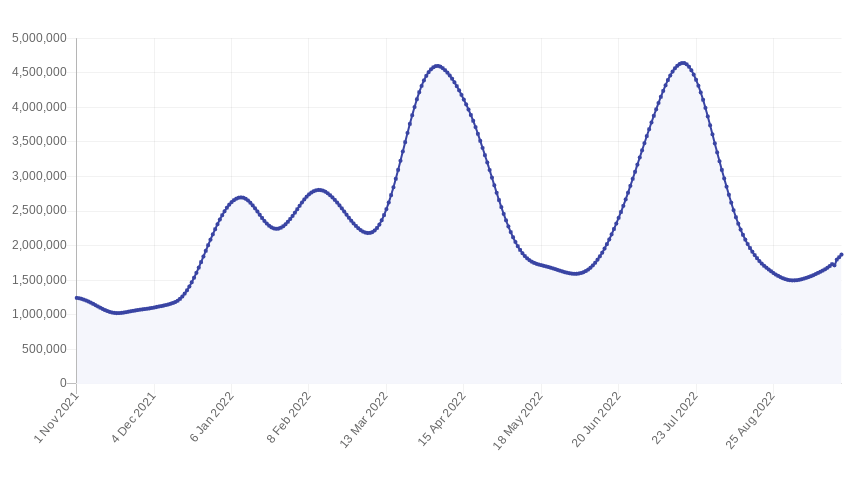
Coronavirus cases and hospitalisations are rising once again in England after declining since early July, data suggests, with experts warning people should stay at home if ill and get a Covid booster if eligible.

Nicola Davis www.theguardian.com 

According to the latest figures on the government coronavirus dashboard, both the number of cases detected through mass community testing, and patients admitted to hospital with Covid have risen in the past seven days, suggesting the country could be facing a resurgence of the virus.

On Monday, 781 Covid patients were admitted to hospital in England, up from 519 the week before, with the seven day total rising 17%, from 3,434 in the week ending 12 September to 4,015 in the week ending 19 September.

As noted by the Health Service Journal, admissions in the south-west rose 39%, to 509, in the last seven days, and by 30% in the north-east and Yorkshire region.

While data on Covid infection levels across the UK is expected from the Office for National Statistics (ONS) tomorrow, data from the Zoe health study suggests cases are rising, with hints also seen in the latest figures for the number of cases picked up in mass community testing in England.

Dr Susan Hopkins, chief medical adviser at the UK Health Security Agency, said there were actions people could take.

“While Covid-19 rates are still low, the latest data for the last seven days indicate a rise in hospitalisations and a rise in positive tests reported from the community,” she said.

“For those eligible, the time to get your autumn booster is now. Getting a booster will give your immune system time to build up your protection against being severely ill from Covid-19 as we move into winter.

“All of the available boosters provide good protection against severe illness from Covid-19 and getting your booster sooner rather than later is crucial.

“As it gets colder and we head towards winter, we will start to see respiratory infections pick up – please try to stay at home if you are unwell and avoid contact with vulnerable people.”

Devon renters priced out by Housing Benefit freeze

People renting homes in Devon are seeing their income increasingly squeezed as housing benefit has failed to keep up with rising costs. Almost all of the 556 privately rented properties available in Devon this week on the Zoopla website are advertised at more than the local housing allowance – the amount paid by housing benefit.

Edward Oldfield www.devonlive.com

The sum varies according to the local rental market but has been frozen since 2020. It is meant to be set to cover the cost of the cheapest 30 per cent of homes on the private rental market. But rents soared in Devon during the pandemic as landlords sold up or forced out tenants so they could switch to more profitable holiday lets. As a result, almost all the properties listed this week in Devon, from one-bedroom flats to four-bedroom homes, were unaffordable from housing benefit payments alone.

That means renters claiming the support will have to find extra cash to cover the shortfall from their other income. It could also force families to move around the county in a kind of postcode lottery, to where the allowance most closely matches rents, usually in more rural areas. Others could end up homeless if they cannot find the extra cash to cover the gap when they are forced to move.

MPs on the select committee for Work and Pensions released a report in the summer recommending an increase in the local housing allowance. The housing campaign group Shelter says: “For renters, the cost of the living crisis is being driven by a failing housing policy. Having to make up ever-increasing shortfalls in housing benefits means that a growing number of families are now having to make the difficult choice between rent and food: eviction or eating. As the cost of living rises, growing housing benefit shortfalls risk pushing people into homelessness as they struggle to avoid rent arrears and eviction.”

Searching on Zoopla this week for two-bedroom homes suitable for a single parent with two young children, the cheapest rental in Exeter was a flat in Cowick Street, advertised at £183 a week. That is more than £25 a week above the allowance of £156.49.

Outside the city, but still in the area covered by the allowance, which has the highest rates in Devon, there was a flat in Starcross at £156, a flat in The Parade, Exmouth, at £167, and a two-bedroom semi-detached house at Christow at £179.

In South Devon, where the allowance is lower at £138.08, there were no affordable properties on offer. The cheapest two-bedroom home was a flat in Pembroke Road, Torquay, at £150 a week. In Torbay outside Torquay, the lowest price was £196 for a two-bedroom terraced house in Brixham. The cheapest similar property in Paignton was a cottage at £207, or a terraced house at £208.

Torbay has a particularly acute problem with housing affordability, as one in four households renting privately and there is a low level of social housing. That means families are even more vulnerable to the housing crisis, as rents rise due to a shortage of available homes, and rises in inflation and energy bills erode spending power. Commenting on a post on Facebook about the effect of the housing crisis in Paignton, one user said they had been looking for a property to rent for seven months, and had viewed around 50 without success.

In North Devon, the local housing allowance for a two-bedroom property is £126.58. Of the six homes available for rent in the Barnstaple area, the cheapest was a maisonette at Sticklepath at £164 a week, followed by a flat at Fremington for £167. In the Bideford area, a two-bedroom house was on offer at £138 a week in Great Torrington, the cheapest in the whole of Devon, but still more than £10 a week above the local allowance.

The cheapest three-bedroom home in Devon was a bungalow at Highampton, near Beaworthy, close to the western edge of the Exeter valuation area. The cost at £160 a week put it below the £189.86 Exeter allowance. Renters a few miles west or north are entitled to a much lower amount for the same size of property, at £149.59 a week. That is the rate payable in Braunton, where the next cheapest three-bedroom home was on offer at £173.

Three bedroom homes at £185 a week were advertised at Hatherleigh and Okehampton, both in the Exeter allowance area and therefore just below the allowance limit. At Paignton, where the amount payable is the South Devon figure of £168, the same rent for a three-bedroom home made it unaffordable for claimants.

Figures from the Office for National Statistics shows that the cost of private home rental in the South West region grew by the fastest rate ever in the twelve months to June. Prices were 4.1 percent higher in June 2022 than in June 2021 – the largest year-on-year increase since comparative records began in 2006. The record-breaking hike in home rental came at the same time that workers across Britain saw their regular pay fall by 3 percent, according to separate figures from the ONS.

New 25 acre green space secured for East Devon residents

A new area of open green space for local people to enjoy next year has been acquired by East Devon District Council.

eastdevondistrc-newsroom.prgloo.com

This first new public space marks an important landmark in creating the Clyst Valley Regional Park, which stretches from National Trust Killerton to Clyst St Mary near the Exe Estuary. The new space is expected to open to the public in 2023, providing a wider choice for residents and visitors as an alternative to protected sites such as the East Devon Pebblebed Heaths and the Exe Estuary.

Roughly equivalent to the size of 9 rugby pitches, the land for the area has been paid for by money from developers, known as Section 106 payments and the Community Infrastructure Levy (CIL), as part of their obligations when building much-needed homes for local people.  Commercial sensitivity around the sale means that the purchase price of the land is not disclosed.

Work to establish the new green space will now start. The first step is to seek planning permission for change of use of the land from agricultural to public open space.

Councillor Geoff Jung, East Devon District Council’s Portfolio Holder for Coast, Country and the Environment, said:

I am really pleased to see this open green space coming forward, which will form a part of East Devon’s Clyst Valley Regional Park. The new area will provide access into our beautiful countryside with proposals to create ponds, woodland and flower-rich meadows in a nature-rich, public green space.

The new space will be located near Broadclyst Station and is presently a series of meadows and hedgerows with a stream running through. There are some characterful old oak trees, and lovely views towards Pinhoe ridge.

Councillor Paul Arnott, East Devon District Council’s Leader and Portfolio Holder for Strategic Development, said:

This is one of the best schemes currently being run by East Devon District Council and when it is complete residents will gain quiet, sustainable travel routes from Cranbrook to Exeter without needing to get in a car at all.

We hope that local residents will appreciate a walk along the meandering stream through the middle of the site or just taking in the expansive new green space.

On behalf of East Devon District Council’s Ward Councillors for Broadclyst, Councillor Sarah Chamberlain, said:

We are really pleased to see this fantastic area of open green space come forward for the residents of Broadclyst Station and surrounding areas.

It is a great opportunity to use this area as the wonderful open countryside that it is. It enjoys many features including a very old tree that has gone almost silver in age, many fantastic views and even a stream.

We hope residents enjoy the space as a link to Exeter or just to relax and take a walk.

At a future meeting of East Devon District Council’s Cabinet there will be a discussion on the long term management of the site.

Wolf Hall author Dame Hilary Mantel dies aged 70

Budleigh loses a celebrated resident

Wolf Hall writer Dame Hilary Mantel has died “suddenly yet peacefully” surrounded by close family and friends aged 70, HarperCollins has announced. She was also famed for the follow-up novels Bring Up The Bodies and The Mirror and The Light.

Phil Norris www.devonlive.com 

In a statement, 4th Estate Books wrote: “We are heartbroken at the death of our beloved author, Dame Hilary Mantel, and our thoughts are with her friends and family, especially her husband, Gerald.

“This is a devastating loss and we can only be grateful she left us with such a magnificent body of work.”

Dame Hilary is best known for her epic The Wolf Hall Trilogy of which Diarmaid MacCulloch, Oxford theology professor and biographer of Thomas Cromwell said: “Hilary has reset the historical patterns through the way in which she’s reimagined the man.”

She won the Man Booker Prize twice, for Wolf Hall and its sequel, Bring Up the Bodies, which also won the 2012 Costa Book of the Year. The conclusion to her ground-breaking The Wolf Hall Trilogy,

The Mirror and the Light, was published in 2020 to huge critical acclaim, an instant number one fiction best-seller and longlisted for The Booker Prize 2020 and winner of the Walter Scott Prize for Historical Fiction, which she first won for Wolf Hall.

Bill Hamilton, Dame Hilary’s agent at literary agency A.M. Heath, said it had been the “greatest privilege” to work with her throughout her career. He said: “Her wit, stylistic daring, creative ambition and phenomenal historical insight mark her out as one of the greatest novelists of our time.

“She will be remembered for her enormous generosity to other budding writers, her capacity to electrify a live audience, and the huge array of her journalism and criticism, producing some of the finest commentary on issues and books.

“Emails from Hilary were sprinkled with bon mots and jokes as she observed the world with relish and pounced on the lazy or absurd and nailed cruelty and prejudice.

“There was always a slight aura of otherworldliness about her, as she saw and felt things us ordinary mortals missed, but when she perceived the need for confrontation she would fearlessly go into battle.

“And all of that against the backdrop of chronic health problems, which she dealt with so stoically. We will miss her immeasurably, but as a shining light for writers and readers she leaves an extraordinary legacy. Our thoughts go out to her beloved husband Gerald, family and friends.”

Truss and Kwarteng have made no effort to ensure the public finance numbers add up

As  the markets give the thumbs down with the pound plunging and the costs of government borrowing increasing……the Tories really look to be on course to crash the economy – Owl

Mini-Budget response –  Institute for Fiscal Studies

Paul Johnson, IFS Director, said

“Today, the Chancellor announced the biggest package of tax cuts in 50 years without even a semblance of an effort to make the public finance numbers add up. Instead, the plan seems to be to borrow large sums at increasingly expensive rates, put government debt on an unsustainable rising path, and hope that we get better growth. This marks such a dramatic change in the direction of economic policy-making that some of the longer-serving cabinet ministers might be worried about getting whiplash.

Mr Kwarteng has shown himself willing to gamble with fiscal sustainability in order to push through these huge tax cuts. He is willing to shrug off the risks of inflation, and to invite significantly higher interest rates. And he has avoided scrutiny by presenting a Budget in all but name without accompanying forecasts from the Office for Budget Responsibility.

Injecting demand into this high-inflation economy leaves the government pulling in the exact opposite direction to the Bank of England, who are likely to raise rates in response. Early signs are that the markets – who will have to lend the money required to plug the gap in the government’s fiscal plans – aren’t impressed. This is worrying. Government borrowing is set on an upward path. It will reach its third-highest peak since the war, and remain at well over £100 billion, even once the energy support package is withdrawn.

And we heard nothing on public spending. It seems almost inconceivable that plans made last year, when inflation was expected to peak around 3%, will not need topping up at some point, unless the government is willing to allow a (further) deterioration in the range and quality of public services. Presumably this government would borrow for that also. 

Mr Kwarteng is not just gambling on a new strategy, he is betting the house.”

Go to ifs.org.uk to read the full article which includes penetrating analyses of each policy announced. Here are a couple of examples:

Income tax and National Insurance contributions

…. Only those with incomes over at least £155,000 will be net beneficiaries. They gain from the abolition of the additional rate, and are unaffected by freezing the personal allowance because their incomes are too high to be eligible for one anyway. This is quite a different picture from that before the mini-Budget, which implied larger tax rises across the board, but especially so for higher earners.

Taken together, today’s measures undo much of the tax rises introduced by Johnson and Sunak, and undo all of them for the highest-income households. The losses for middle- and higher-income households from previously introduced policies will be roughly halved by today’s measures. The richest tenth of households, who were set to lose around £3,500 a year (3%) on average in 2025-26 under Johnson and Sunak’s plans, will now gain around £700 a year (1%) on average.

Investment Zones

The government intends to create new Investment Zones getting special treatment for tax, regulation and local governance. The full details, and therefore the cost, have not yet been confirmed.

Tax sites within the new Investment Zones will offer a raft of temporary business tax reliefs similar to those available in Freeports, but even more generous and for ten years rather than five. These tax breaks are likely to increase economic activity in these areas, but some of that would otherwise have happened elsewhere in the UK.

This raises the question of why it is better to have lower taxes in some parts of the country than others – encouraging people and businesses to move to the favoured areas – rather than spending the same money on (smaller) tax cuts spread evenly across the country: for example, whether it is intended to help ‘level up’ deprived areas and, if so, whether the areas and policies chosen are appropriate for that objective.

Since the tax breaks are temporary, another question is how much businesses will find it worth making long-term investments that will tie them into the area for longer than that – and, correspondingly, how much the economic benefits to favoured areas will persist after the tax breaks expire.

Is repeatedly going balls-deep such a good idea in a leader?

The most optimistic person in the room is Liz Truss, who is sure that Trussonomics is the path forward. “Lower taxes lead to economic growth, there’s no doubt in my mind about that,” she told reporters this week.

But there was no doubt in her mind when she joined the Lib Dems either, or when she called for the monarchy to be abolished, or when she campaigned for Remain.

Is having politicians who go balls-deep on their ideologies, then U-turn and go balls-deep on something else such a great idea? 

(From London Playbook Politico)

New chief constable formally appointed

Get beyond the inevitable photo of Ms Hernandez with the new Chief Constable to read the questions raised by councillors, other than Conservatives, including from Paul Arnott. – Owl

Devon and Cornwall Police’s new chief constable was quizzed on how he plans to tackle hate crime, community policing and violence against women and girls before being formally approved for the role. 

Philip Churm, local democracy reporter www.radioexe.co.uk

Chief Constable Will Kerr with Alison Hernandez (courtesy: Office of Police and Crime Commissioner)

At a confirmation hearing of the Devon and Cornwall police and crime panel in Plymouth on Wednesday (21 September) Will Kerr OBE, a deputy chief constable in Scotland was endorsed as the region’s new chief constable.  

His appointment follows the retirement of Shaun Sawyer last month who had been in the role for more than a decade. 

Police and crime commissioner Alison Hernandez announced at the beginning of the month that DCC Kerr was her preferred candidate for the job, describing him as “an exceptional strategic leader” – but the police and crime panel is required to approve her decision. 

Panel member and Conservative councillor for Woolwell, Nicky Hopwood, urged the new chief constable not to ignore smaller communities 

“Although you’ve invited people from the cities, we are covered in towns and parishes through Devon and Cornwall,” she said.

“So, can I have assurance that the towns and parishes will be equally as well looked after as the cities?”

DCC Kerr pointed to his experience of working with rural communities in Scotland. 

He said: “I am responsible for local policing across the whole of Scotland at the moment and as I’m sure most of you are aware, outside the central belt between Glasgow and Edinburgh, most of Scotland is rural and isolated. 

“It’s a third of the landmass of the United Kingdom and 60 per cent of the coastline. It’s got 90 inhabited islands and quite a few of those have very specific needs, which means that they need a very specific and a very sensitive policing response, which is locally-based, locally respected and recognised and locally present.”

Panel member and Labour councillor for St. Peter & the Waterfront in Plymouth, Chris Penberthy, asked about the rise in hate crime in Devon and Cornwall, in the forms of racism, homophobia and misogyny.  

“Hate crime continues to rise, especially hate crime that is sex or gender-related and that is worrying,” said Cllr Penberthy.

“I just wondered whether you had any thoughts specifically about policing within those protected characteristic communities and your approaches there.”

DCC Kerr insisted he would address the concerns of all communities and explained: “The job of policing is to continue to build trust and confidence in those communities and lifestyle communities who perhaps haven’t had as much trust in the police service in the past to make sure that we continue to get a more realistic reflection of where [hate crime] is happening, both physically within communities and on the streets and increasingly online, which is where the biggest growth of hate crime tends to be.”

Labour councillor for St Thomas in Exeter, Laura Wright, spoke about initiatives with the University of Exeter to help young women feel secure and suggested many women do not feel confident approaching police.

She hinted at the Met’s handling of the case of Sarah Everard’s – who was killed by serving officer Wayne Couzens – and later the conviction of two of his colleagues over racist, misogynist, sexist, homophobic and Islamophobic messages shared in a WhatsApp group with Couzens. 

“What’s your take on making sure that the public have every confidence in our police force here?” asked Cllr Wright. 

DCC Kerr said it was crucially important to restore trust. 

He said: “If women and girls didn’t feel confident in the presence of, or in engaging with, police officers on the street, then our responsibility was to do something about that, not to tell people to wave a bus down, not to tell people to do something that was impractical or give a sense that the victim or somebody who’s scared and on the street might be in some way responsible for what has happened.”

A question was also asked about political impartiality.  East Devon council leader Paul Arnott (Democratic Alliance Group, Coly Valley) highlighted the chief constable’s appointment by Tory commissioner Alison Hernandez and said: “What will you do if you find you have to conduct an investigation in which actions of that political party in Devon and Cornwall come into question?”

DCC Kerr offered reassurance and said he would remain completely independent of political groups: “Please don’t labour under any worry or misapprehension that after 33 years in policing and having worked for 26, 27 years in Belfast, I absolutely understand what the boundary lines are. 

“I will not hesitate to take whatever action the policing needs to take to protect the integrity of the rule of law.”

After his appointment to the role DCC Kerr said: “I am delighted to have been appointed by the police and crime commissioner as chief constable of Devon and Cornwall Police.  

“This is a force with an impressive and proud heritage, and a policing style rightly grounded in neighbourhood policing and on local community needs.  

“I have already been impressed by the excellent work that goes on every day and I look forward to meeting the diverse communities living in this fantastic part of the country. It will be a privilege to serve as your chief constable, and I’m very much looking forward to starting in this role.”

DCC Kerr spent over 27 years in the Police Service of Northern Ireland and joined the National Crime Agency (NCA) on secondment in 2017. He was awarded an OBE in 2015 and joined Police Scotland in 2018.

He is a member of the Justice Board for Scotland, a member of the Sentencing Council for Scotland (a Ministerial appointment) and was elected as the UK’s delegate to Interpol’s executive committee.

Rising sea levels are set to change Devon coast forever

A new map shows how key landmarks on the Devon coast face being swamped by tidal surges due to rising sea levels caused by global warming. Scientists say the rate of rise is increasing, with levels forecast to be around 35cm higher by 2050 and 1m by the end of the century.

Edward Oldfield www.devonlive.com

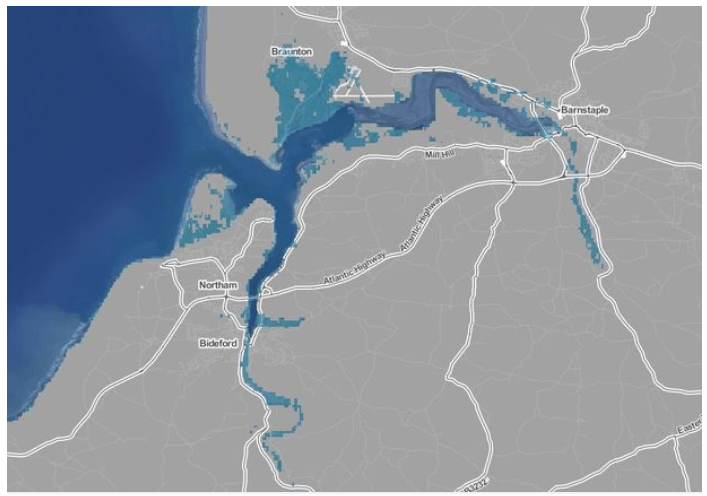
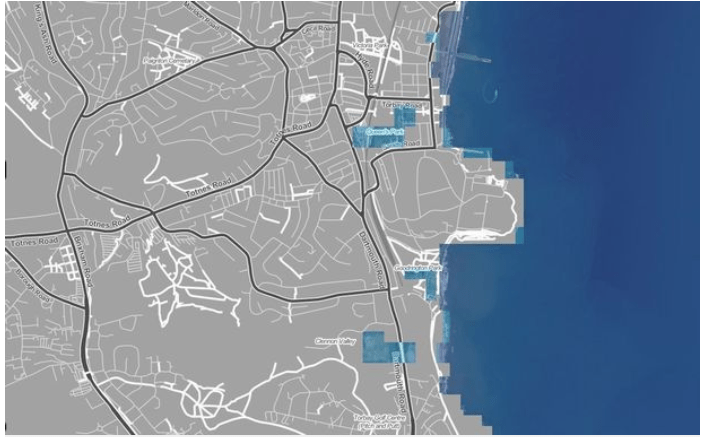
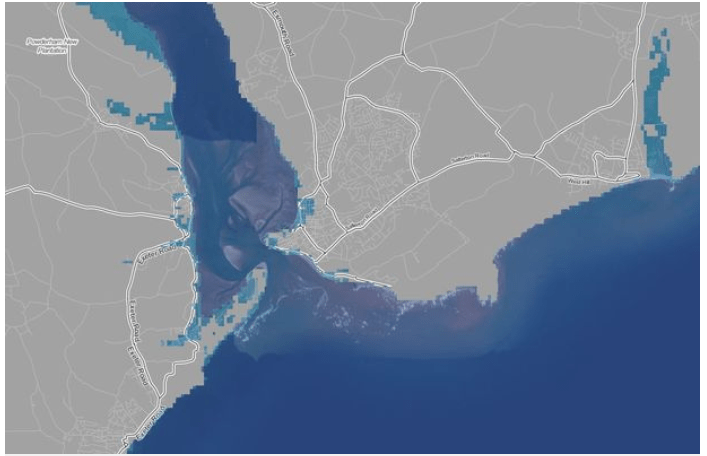
An interactive online map produced by Climate Central shows the land at risk from storm surges without sea defences. In south Devon, the modelling for a 1m rise shows parts of Paignton seafront under water, along with land alongside the River Exe Estuary including most of the sand bar at Dawlish Warren. In North Devon, the waters would cover low-lying land on the estuaries of the Taw and Torridge rivers, including parts of Braunton Burrows and Westward Ho! Beach.

Sea levels have risen by around 16.5cm (6.5ins) since 1900, but the Met Office says the rate of rise is increasing and now stands at between 3mm and 5.2mm a year – more than double the rate in the early part of last century. This is exposing more parts of the coast to powerful storm surges and winds, damaging the environment and homes.

Scientists say average global temperatures are rising due to the effect of man-made greenhouse gases including carbon dioxide emitted by burning fossil fuels. That is causing the water in the seas to expand and polar ice to melt, increasing the volume of the seas. The temperature rise is said to be contributing to more extreme weather, with heavier rain and fiercer storms, causing an increased risk of river flooding and land being inundated.

In March 2018, low-lying land on the seafront at Paignton was flooded by a storm surge and the main A379 was partly washed away at Slapton in the South Hams. In 2014, there was a major breach of the railway line at Dawlish in 2014 when part of the Victorian sea wall was washed away.

Map showing the effect of a 1m rise in the sea level in North Devon (Image: Climate Central)

Around 500,000 homes around the UK will be at risk from flooding, scientists say. An estimate of nearly 200,000 homes and businesses at risk of abandonment around the coast has been made by researchers at the Tyndall Centre, in the University of East Anglia, in data published in June.

The government is funding a series of schemes across Devon as part of a new £5.2billion six-year programme of investment in flood and coastal defences announced in July to protect the most at-risk properties, doubling the amount spent in the previous six years.

Map showing the effect of a 1m rise in the sea level at Paignton (Image: Climate Central)

Plans are being prepared for a new 1m high flood wall to run the length of the seafront at Paignton. Without the scheme, more than 350 homes would be at risk from flooding, with sea water forecast to sweep in through the town centre and across the railway line as far as Hyde Road.

At Exmouth, a £12m scheme has improved defences on the Exe estuary and seafront against tidal flooding, to protect more than 1,400 homes and 400 businesses. In Exeter, a £32m scheme to improve defences alongside the Exe protects more than 3,000 homes and businesses.

In East Devon, a £15m scheme is being carried out to restore the flood plain of the River Otter, allowing reclaimed land to be flooded rather than try to hold back rising sea levels.

Map showing the effect of a 1m rise in the sea level at Dawlish Warren (Image: Climate Central)

The government has set out a strategy to reach Net Zero by 2050 – the point when the output of greenhouse gases responsible for global warming like carbon dioxide is reduced and equals the measures to take them out of the atmosphere.

Low-lying areas of the Devon coast are particularly at risk from tidal flooding, and an increase in storms from climate change could also speed up erosion. Changing weather patterns are seeing more rainfall, which increases the flood risk from rivers.

This summer the UK has recorded its highest ever temperature after the Met Office issued a red warning for heat and thermometers topped 40C in Lincolnshire.

Devon MP backs calls to support coastal communities

No this Conservative MP is not Simon Jupp (he’s focussed on the hospitality sector). – Owl

Lewis Clarke www.devonlive.com 

Calls have been made for the reintroduction of the Coastal Communities Fund. During a debate on Coastal Communities on September 8, Selaine Saxby MP called for the reinstatement of the dedicated Coastal Communities Fund and in the Minister’s response, referring to the ‘alphabet soup’ of funding streams and the fact the Coastal Communities Fund has now closed she stated:

Minister, Lia Nici, said: “With regard to other funding streams and the success of the Coastal Communities Fund, it is right that we now focus our regeneration efforts around coastal communities through our larger and more expansive programmes as part of a more joined-up approach to levelling up. As we have heard from many Members today, the Department for Levelling Up, Housing and Communities is not the only Department touched by coastal communities.

“There are also the Department for Business, Energy and Industrial Strategy, the Department for Environment, Food and Rural Affairs, the Department for Digital, Culture, Media and Sport—the list goes on—but I will go back into the Department and make sure that we are talking across all Departments to ensure that we get those benefits that Members are looking for.”

The Coastal Community Fund has helped support both the Ilfracombe Water Sports Centre and the North Devon Leisure Centre.

The debate gave MPs opportunities to emphsise the importance of coastal communities and how they need bespoke support.

Sally Ann Hart MP for Hastings and Rye and chair of the All Party Parliamentary Group for Coastal Communities said: “Coastal communities are integral to the UK’s environmental, social and economic wellbeing. The covid-19 pandemic profoundly impacted on our coastal communities, exposing and exacerbating long-standing social and economic structural challenges, which need an urgent and co-ordinated response for there to be a sustainable recovery.

“Coastal communities are also the most vulnerable to the impacts of climate change, with erosion and flooding posing an ever greater threat to both the built and natural environments.”

Selaine Saxby MP said: “Full-time workers in North Devon currently earn £13.29 per hour, while the south-west average is £14.67 and the Great Britain average is £15.65. Our property prices have shot up by over 22%. We are the second fastest growing property price area in the country, but our house building rate has not grown that much and the vast majority of what is being sold is going in the form of second homes or holiday lets.

“If this continues, we will no longer have coastal communities; we will have winter ghost towns. We need urgent intervention through the Levelling-Up White Paper to tackle the issue.

“Our beautiful area has seen a surge in short-term holiday lets and the second homes market. I very much hope that recommendations of the Department for Digital, Culture, Media and Sport consultation on holiday lets registration goes ahead. I also hope that there are opportunities in the Minister’s Department to impose planning restrictions to reduce the number of holiday lets that come to market. When new properties are built, a change of use should be required if they are to become a short-term holiday let. Communities such as mine need homes for people to live and work in. We love our tourists and we would never want to stop them coming, but our housing market has got completely out of balance.”

Tiverton & Honiton MP calls on Liz Truss to take action on cost of living crisis

The Liberal Democrats are calling on Conservative MPs in Devon to back their legislation to offer immediate help to local families and businesses with the cost of living crisis.

Lewis Clarke www.devonlive.com

Liberal Democrat MP for Tiverton & Honiton, Richard Foord, has called on the newly elected Conservative Leader Liz Truss to immediately freeze energy bills, to protect local families and businesses from soaring prices.

It comes as the Liberal Democrats have tabled legislation in Parliament this month, signed by Foord, to cancel October’s energy bill rise – saving the average household around £1,500 this year.

The draft Bill would also offer grants to small businesses of up to £50,000 to cover 80 per cent of their energy bills, saving pubs, restaurants and high street shops from closing their doors this winter.

The Liberal Democrats are calling on Conservative MPs in Devon to back their legislation to offer immediate help to local families and businesses with the cost of living crisis.

Liberal Democrat MP for Tiverton & Honiton Richard Foord said: “Liz Truss and the Conservatives have spent months failing to act on soaring energy bills, leaving local residents in despair and small businesses going to the wall.

“They have shown they are completely out of touch with people in the West Country who are struggling to get by.

“It is time that Conservative MPs across Devon finally listened to Liberal Democrat calls to freeze energy bills to save families and pensioners from an economic catastrophe this winter. We have tabled legislation to freeze energy bills, which could be brought in on day one to offer the help that local families and businesses need.

“Liz Truss’ premiership represents more of the same failed Conservative party policies as Boris Johnson, which have led to a cost of living crisis, leaving families and pensioners at breaking point. It’s clear that the country is in dire need of a change.”


Volunteers can’t save our rivers from this tide of filth 

Letters www.theguardian.com

First it was the food banks that stepped in to fill a gap left by the retreating state, as successive Tory governments denied responsibility for the increase in their use.

Now it seems pollution monitoring of English rivers is also to be taken over by volunteers, because after years of severe cuts in the funding and staffing of the Environment Agency, it is no longer able to fulfil its statutory obligations by regularly monitoring all our rivers (Citizen scientists to monitor English rivers in £7m scheme, 14 September).

The Rivers Trust hopes that its £7m “citizen scientist” programme to standardise regular testing in 10 river catchment areas will lead to thousands of volunteers undertaking monitoring that the EA is unable to carry out itself.

Although all this new, regular monitoring sounds good, the volunteers will not be able to take action in response to incidents of pollution. They will need to report them to the EA, and I can find nothing to suggest that it is capable of properly processing and acting on all the pollution reports that will be coming its way. As the Guardian reported in January, the EA has already told staff to ignore reports of “low-impact” pollution events because it does not have enough money to investigate them.

The cynical among us might conclude that cutting back EA funding and letting volunteers step in is just another underhand way of our government implementing David Cameron’s “big society” through the back door.

Gary Bennett

Exeter

Citizen science is no substitute for a properly funded Environment Agency with teeth, and stronger laws. The classic case in point must be the formerly glorious River Wye, which I visited as a boy. Then it was still the sight that had inspired poets and artists; now, thanks to lax or unenforced planning laws, it is virtually dead, poisoned by the droppings of millions of intensively reared chickens.

No number of citizen scientists will improve this situation; we must either stop eating chicken or ban such factories in environmentally sensitive locations – or at the very least make the polluters pay for cleaning up their mess and ensuring waste no longer gets into the water table.

Anthony Davies

Bude, Cornwall

Affordable housing provision in wider building projects could be ditched

The provision of affordable housing as part of wider construction projects could be ditched under plans being considered by ministers to deregulate the planning system in about a dozen “investment zones”.

Developers will be delighted. – Owl

Aubrey Allegretti www.theguardian.com 

Sources said the controversial move was being contemplated ahead of a mini-budget by the chancellor, Kwasi Kwarteng, on Friday outlining the government’s growth strategy and promised tax cuts.

Swathes of environmental and planning regulations are expected to be ditched to “drive growth and speed up development” in the first batch of roughly 12 investment zones.

The zones are modelled on freeports, and are meant to encourage more business investment by granting firms tax relief and cutting red tape.

The prime minister, Liz Truss, mooted the idea during her leadership campaign, saying it would help with her plans to “unleash investment and boost economic growth right across the country”.

Councils began expressing interest in applying to become investment zones this week and Kwarteng hopes to be able to point to the uptake as proof of the policy’s popularity in his speech to the House of Commons later this week, insiders said.

A letter from the levelling up department sent to local authorities and seen by the Guardian said that one of the main benefits of becoming an investment zone would be “designated planning sites to build for growth and housing”.

It added: “Where planning applications remain necessary, they will be radically streamlined. Planning sites may be co-located with, or separate to, tax sites, depending on what makes most sense for the local economy.”

While each deal will be bespoke, local authorities granted investment zone status may be able to let developers circumvent requirements for affordable housing to be built alongside any proposed new property, according to government sources.

And planning obligations like section 106 agreements, which require developers to mitigate pressure on the local area by building or paying for additional infrastructure projects in exchange for planning permission, could also be scaled back in the first batch of investment zones.

It is also believed that plans were drawn up for a ban on development in the green belt to include an exemption for investment zones. However, the idea was not taken forward.

Simon Clarke, the levelling up secretary, is said to be wary of the last Tory rebellion over planning reforms, which Boris Johnson’s government was eventually forced to abandon.

The levelling up department declined to comment on speculation about the upcoming fiscal event.

Jacob Rees-Mogg fails to use imperial measures in business energy cap announcement

The government said those on default, deemed or variable tariffs will receive a per-unit discount on energy costs, up to a maximum of the difference between the supported price and the average expected wholesale price over the period of the scheme. The amount of this discount is likely to be about £405 a MWh for electricity and £115 a MWh for gas. Repeated by Rees-Mogg in interviews.

What’s all this nonsense about Megawatt hours?

Surely, with his convictions, he should have insisted on British thermal units!

To refresh his memory, a British thermal unit is the quantity of heat required to raise the temperature of one pound of liquid water by 1 degree Fahrenheit at the temperature that water has its greatest density (approximately 39 degrees Fahrenheit). 

[1 megawatt hour = 3,412,956.34070 British thermal units so had the discounts been announced as £ per Btu they would have looked rather small, vanishingly small.]

He must really try harder to be consistent. – Owl

Truss tax cuts will hand big banks and insurers £6.3bn, study says

Liz Truss’s government has been criticised for lining up tax cuts that will help big banks and insurers save more than £6bn over the next two years.

Kalyeena Makortoff www.theguardian.com 

The figures, compiled by the House of Commons Library, come as the chancellor, Kwasi Kwarteng, prepares to freeze corporation tax as part of the government’s mini-budget on Friday.

That move alone, which will hold corporation tax at 19% rather than hiking it to 25% next year as originally planned, is expected to save City firms up to £4.5bn between 2023 and 2025.

It will deliver further savings for big banks, which are already expected to benefit from a cut in the banking surcharge from 8% to 3%, as announced last year by the then chancellor Rishi Sunak.

Together, the policies are expected to deliver tax cuts of £6.3bn over the next two years, the House of Commons analysis suggested.

It comes as Kwarteng plans to ditch EU rules that cap bankers’ bonuses at two times their salaries, in another attempt to woo City firms.

The figures will fuel further criticism of the government’s alleged promotion of trickle-down economics, in which tax cuts for the rich and businesses are believed to spur jobs creation and investment that benefits the wider population.

The Liberal Democrats, who commissioned the research, are now calling on the government to cancel the cuts and corporation tax freeze, and instead hand the money raised to households struggling to pay their energy bills.

“It is shameful that the Conservatives are choosing to cut taxes for the big banks, while leaving families and pensioners still struggling to pay their bills this winter,” said Ed Davey, the Lib Dem leader.

While Truss’s government has also revealed plans to freeze energy prices for consumers, capping the cost for a typical household at £2,500, Davey noted that the figure is still more than double the level last year.

“Meanwhile, big banks will be celebrating a bumper payday under the Conservatives as families have to choose between going cold or hungry,” he said.

“It is time Liz Truss put the British people first by scrapping this bankers’ tax cut and helping hard-pressed families instead.”

A spokesperson for City lobby group UK Finance said: “The banking and finance sector is a major source of revenue for the government, delivering investment across the country and employing hundreds of thousands of people, the majority of which are outside of London.”

The Treasury was contacted for comment.