Government set to make it easier to stand in English council elections

For the May 2021 local elections in England, the government temporarily changed the law so that council candidates only had to get two, rather than ten, nomination signatures to stand. This was in line with what’s already the norm in Scotland, but was only a temporary measure to reduce the need for signature gathering during a COVID-19 crunch.

Could the Tories be finding it difficult to muster 10 signatures for a candidate? With current poll ratings that seems quite possible for the pariah party. – Owl

Mark Pack www.markpack.org.uk

The rules then reverted to normal, but now the government has consulted the Electoral Commission on draft legislation that would permanently reduce the number of subscribers required on a nomination paper for principal area elections in England from ten to two.

Under this plan, the change would come into effect for elections and by-elections on or after 4 May 2023, i.e. including the normal May 2023 local elections.

As well as being good for democracy in general, this would also be beneficial for the Liberal Democrats, given the importance of upping our candidate numbers.

As I’ve written on that topic before:

There are … huge benefits [to the party] in standing even in wards that we are not likely to win for a very long time yet (if ever).

One set of benefits comes from the opportunity to practice, train and learn. Winning elections isn’t easy and some of the skills required are very hard to pick up outside politics.

So we should be using every opportunity to add to our experience, try out things and get better.

Even if we don’t do very much, or any, campaigning, there is still the chance for a new election agent to practice getting the paperwork right. Or to take a new person out on their very first canvassing session. Steps such as those are if anything easier in a ‘no hope’ by-election as the pressure is much less and so you can concentrate on the learning.

Those benefits are specific to by-elections on their own. There are other benefits too, which apply even if you’ve got other elections on the same day – and to non-target wards in the usual run of elections…

One of the biggest challenges the Liberal Democrats face is to build up a large group of loyal supporters who persistently support us. Our core support is much smaller than that of our main rivals – and we suffer for it. It makes us more vulnerable to bad times. It means we have further to go and harder to work to get to the winning post than rival parties with larger core votes.

Yet the one sure way to ensure people don’t become persistent supporters is to insist that they should not be allowed to vote for us thanks to not putting up a candidate. No Liberal Democrat on the ballot paper means us saying to voters: ‘we refuse to let you be loyal supporters of us’.

Standing also helps the party identify better where its support currently is, and isn’t. Having a full slate of candidates across the board helps spot areas that can be promising to target and try to win in the future.

Although the legal change isn’t yet 100% confirmed, it’s very likely. So if you have local elections next May, now is a great time to be planning how to either stand a full slate or, if we’ve not managed that before, our best-ever tally of candidates.

Remember too that if we don’t make good use of this opportunity, others may do so – and so may use it to sideline the Lib Dems in the eyes of local voters unless we match or beat their candidate numbers.

Ex-Devon MP caught up in expenses row is made a Lord

Lest we forget!

A good resume of the life a well connected Tory leads.

But what did Hugo Swire ever do for East Devon?  – Owl

Edward Oldfield www.devonlive.com 

A former East Devon Conservative MP Hugo Swire who was caught up in the parliamentary expenses row has been given a place in the House of Lords in the list of political peerages recommended by Boris Johnson. Sir Hugo, 62, represented the East Devon constituency from 2001 to 2019, when he stepped down at the General Election and was replaced by Tory Simon Jupp.

The Eton-educated former Grenadier Guard, who worked as a financial consultant and director of the auction house Sotheby’s, was a close ally of Tory leader David Cameron. In his bachelor days he dated the model Jerry Hall, who later married Rolling Stone Mick Jagger.

His wife Sasha is the daughter of Sir John Nott, the Conservative Defence Secretary during the Falklands War. She was Sir Hugo’s parliamentary assistant for 18 years, and caused a stir in 2020 with the publication of her memoir Diary of an MP’s Wife. It gave an insight into life at the top of Tory party, with less than flattering descriptions of senior politicians including Mr Cameron as ‘drunken Dave’, Boris Johnson as ‘calculating’ and Theresa May as a ‘glumbucket’.

Sir Hugo featured in leaked footage from a Conservative Party fundraising auction in 2015 when he joked about people on benefits and buying luxury cars on MPs’ expense. In 2009, after controversy over MPs’ expenses hit the headlines, Sir Hugo revealed he had voluntarily paid back £395 he claimed for a leather Mulberry laptop bag, which he said he used every day. He said after reviewing his expenses, he decided it could be considered ‘extravagant’.

He also came under media scrutiny in 2010 for claiming £23,000 a year to rent his family home in his East Devon constituency, while living in a London property owned by his wife, according to the Mail Online . His claim was said to have been cut to £10,000, the equivalent of a one-bedroom flat, but he appealed arguing that the decision was unfair on MPs needing to rent a home in their constituencies. Details emerged after he was told to repay £788 claimed in expenses for a gardener at his constituency home. Sir Hugo said he had been unaware that there was a guideline price.

In 2013, the Sunday Mirror reported he had claimed £3,198.61 for oil and gas in the year to March – the eighth-highest amount for any MP. In response, his office told a local newspaper in a statement that he had followed Parliamentary rules and was working to reduce his expenses claims. He earlier justified employing his wife as an assistant, telling an East Devon newspaper in 2009 she was a “highly qualified journalist” who ran his website and produced his press releases, and “has an extraordinary knowledge of the constituency”.

Sir Hugo Swire, pictured with his wife Sasha, represented East Devon from 2001 to 2019 (Image: Express & Echo/Gareth Willians)

A close ally of Conservative prime minister David Cameron, in 2010 he was appointed as Minister of State for Northern Ireland in the newly-elected Conservative and Liberal Democrat coalition government. He was then given the job as Minister of State for Europe and the Americas in 2012. He resigned in July 2016 alongside other ministers close to Mr Cameron, after the prime minister quit following the Brexit referendum. He was knighted in the prime minister’s resignation honours list.

Sir Hugo tweeted on Friday, when the list of life peerages was published: “Honoured and delighted to be going to the House of Lords”.

Mid Devon ‘losing thousands’ for communities in lost deals with developers

Mid Devon has been accused of losing thousands of pounds of money from its agreements with developers. At a Cullompton Town Council meeting on Thursday, September 29, the Cullompton Community Association (CCA) requested funds from S106 agreement funds, which developers provide when they build in the town. The CCA requested money to renew the play equipment at the CCA Fields.

Lewis Clarke www.devonlive.com

Councillor Matthew Dale said: “I think we should support this because the equipment down there is getting old and it does get well used after school by children with their parents. I think we ought to look at developer contributions from future projects towards it.”

Councillor Gordon Guest added: “There are various S106 pots. Mid Devon has always been very slow in administering these concerning Cullompton. I can think of at least two occasions where several thousand pounds had to be returned from the S106 box to the developer because Mid Devon had been too slow in spending them in the time provided. My response to this request would be to approve anything that gets hold of S106 money for any project. We should be taking it as quickly as we can. Even if we say yes, it might take Mid Devon a long time to process. Their track record is abysmal in relation to Cullompton Town Council, so I strongly suggest we support this request.”

Councillor Mike Thompson said: “We’ve got several play areas in town. Over the last ten years, this town council has put considerable money into costly play equipment. Most of the play areas we’ve leased or taken on from Mid Devon are costing us a small fortune. I’ve nothing against the CCA and what it represents, but as they’re a charity, have they done sufficient lobbying to raise money for various sources so they can replace this equipment themselves? It is not a town council play area.”

However, Councillor James Buczkowski added: “There are a number of S106 pots held by Mid Devon that are available for the community. Some of them are allocated. There is also an unallocated part, and this is for the purchase of new equipment. The request from the CCA was that the council supports the CCA charity accessing the unallocated pot of money that’s already been taken from developers and is sat at Mid Devon doing nothing and has been for some years. It’s not the town council’s money that will be paid, and it won’t affect our precept or budget.”

East Devon by-election: Candidate list confirmed for November 10 poll

The candidates for a by-election to be held next month in East Devon have been announced. Voters in the Newton Poppleford and Harpford ward will go to the polls on Thursday, November 10 – in what could be a real test of the Conservatives’ popularity.

The best memorial for Val is for the people of Newton Pop to vote for who will best represent the interests of their community – should be a “no brainer”. – Owl

Daniel ClarkContent Editor & Politics Reporter www.devonlive.com

The by-election has been called following the death of former councillor Val Ranger. The Independent councillor died in August after a battle with cancer.

Three candidates have been nominated to stand in the election as her replacement. The Conservatives, the Labour Party, and an Independent will stand.

The candidates are:

Chris Burhop (Independent)

Paul Carter (Conservatives)

Caleb Early (Labour)

Tories facing wipeout as Labour takes 36-point lead in new poll

The Conservatives are facing a near-wipeout in a general election as Liz Truss’s government continues to implode, a new poll suggests.

Based on these latest polls the Scottish National Party would form His Majesty’s Most Loyal Opposition not the Tories!

How bad can this get for the Tories? Hang in there Liz, spin out the drama! – Owl

Jon Stone www.independent.co.uk

The survey released on Monday afternoon is the worst yet for the Tories, with Labour now a vast 36 points ahead of the governing party – the highest lead ever recorded by any pollster for any party.

If replicated at a general election the results would likely see the Scottish National Party become the official opposition at Westminster with the Tories reduced to a small rump of MPs.

The release of the Redfield & Wilton survey comes after Ms Truss tried to firefight the reaction to her tax-cutting budget by firing her chancellor Kwasi Kwarteng and U-turning on a whole slate of policies.

The exact number of seats the Tories would be left with would depend on where votes were cast – but on a uniform national swing they could be left with just one MP, according to the Electoral Calculus website.

Other predictions based on the data suggest they would be left with around 20 seats, still fewer than the Scottish National Party and Liberal Democrats would be expected to win.

Labour would win 56 per cent of the vote, up three on the previous survey, and the Tories just 20 per cent, down 4 per cent on last week. The Lib Dems would win 11 per cent, the Green 5 per cent and SNP 4 per cent.

The results follow another similar survey by Deltapoll, which earlier today showed the Conservative 32 points behind Labour, also losing ground on previous polls.

There is some variations between different pollsters, but virtually are now showing vast Labour leads of at least 20 points, with many over 30 per cent.

Ms Truss skipped a parliamentary scrutiny session on Monday with Labour leader Keir Starmer and instead send out Commons leader Penny Mordaunt to answer questions about the government’s record.

Hunt, Rees-Mogg, Coffey and Johnson all set to lose seats in Labour election landslide, poll says

Jeremy Hunt, Jacob Rees-Mogg and Thérèse Coffey are among 10 cabinet ministers who face losing their seats, according to a poll which found the Conservatives are on course for a general election wipeout.

Thomas Kingsley www.independent.co.uk

The poll by Opinium, using the MRP method to estimate constituency-level results, projected a 1997-style landslide for Labour, with the party winning 411 seats.

The research, commisioned by the Trades Union Congress (TUC), indicated the Conservatives would lose 219 seats to end up on 137, with the Liberal Democrats on 39 seats and SNP on 37. It projected a vote share for Labour of 43 per cent, with the Conservatives on 28 per cent, the Lib Dems on 13 per cent, Greens on 7 per cent, and SNP on 4 per cent.

Those results would be the Tory party’s worst election performance since 1906, when it secured 156 seats.

The poll was carried out with more than 10,000 adults from 26 to 30 September – two weeks before Liz Truss scrapped large parts of her mini-Budget and sacked her chancellor, Kwasi Kwarteng. Polling since then suggests her government has sunk further in popularity.

Among those whose seats were projected to be lost by the Tories were the new chancellor, Jeremy Hunt, Simon Clarke, the levelling-up secretary, Jacob Rees-Mogg, the business secretary, Thérèse Coffey, the health secretary and deputy prime minister, Anne-Marie Trevelyan, the transport secretary, Chloe Smith, the work and pensions secretary, Alok Sharma, the Cop26 president, Jake Berry, the Tory party chair, and Robert Buckland, the Wales secretary.

Boris Johnson, the former prime minister, is also on course to lose his seat, according to the poll, and the Conservatives would lose all 45 out of 45 so-called red wall seats in the north of England.

The poll also asked voters about their support for EU-derived workers’ rights, such as paid leave and limits on working times, which are under threat from the Conservatives’ legislation scrapping laws and regulations that originated in Brussels.

Overall, 71 per cent of voters support retaining EU-derived workers’ rights such as holiday pay, safe limits on working times and rest breaks. They received overwhelming backing even in the seats of Mr Rees-Mogg, where 72 per cent supported them, and Liz Truss, where there was a backing of 63 per cent.

Head of political polling at Opinium Chris Curtis said: “Voters are convinced that the Conservatives are on the side of the wealthy rather than workers. If they want to avoid a wipeout at the next election they need to turn this around. One way they could do this is reverse their position on workers’ rights.”

Ms Truss has already watered down her leadership campaign pledge to scrap all remaining EU laws by the end of 2023 – allowing some to remain in place until 2026.

A new bill will aim to axe up to 1,500 items of so-called retained law – on workers’ rights, the environment, data privacy, road standards and much more – in just 15 months’ time.

But the government has given itself a get-out clause, after warnings that the accelerated timetable was a recipe for “chaos” and further damaging disruption for business.

A statement from Jacob Rees-Mogg, the business secretary, said: “The bill includes an extension mechanism for the sunset of specified pieces of retained EU law until 2026.”

In contrast, in July, as she campaigned for the Tory leadership, Ms Truss sought to outflank her rival Rishi Sunak by pledging “to scrap all EU regulation by the end of 2023”.

Nevertheless, huge concerns remain over the bonfire of EU laws – even on a slower timetable – because it will be carried out through regulations, behind MPs’ backs.

A former government lawyer warned “human review” of decisions made by computer algorithms will be quietly axed, risking a repeat of the 2020 “A-levels fiasco”.

Tearing up protections could also come at a price, if divergence triggers disputes under the Brexit trade deal – potentially allowing Brussels to curb access to EU markets for British firms.

Responsibility for the Retained EU Law (Revocation and Reform) Bill remains with Mr Rees-Mogg – who once suggested cutting EU safety standards to levels in India – after his switch from the Cabinet Office to the business department.

A pledge for 10,000 homes turned into 18 houses and liquidation

Liverpool Council’s house building company – which once promised to build 10,000 new homes across the city – is to be liquidated after developing just 18 properties.

A Case Study – Owl

Liam Thorp www.liverpoolecho.co.uk

In early 2018, Liverpool Council announced the launch of a flagship new housing company that it said would ‘radically reshape Liverpool’s housing market.’

In a major launch, then Mayor Joe Anderson said the new ‘ Foundations’ company would deliver 10,000 properties across the city, fuelled by an estimated £500m investment programme. There would be a focus on building homes for foster families, the elderly, people with disabilities and the homeless as part of an ‘ethical’ housing company.

Since that point, Foundations has built and taken ownership of just 18 properties – none of them at social rent – and will now be wound down.

The launch of Foundations was a big deal for the council. Mayor Anderson described it at the time as the most exciting policy of his time in office. The announcement garnered national headlines and was seen as a radical and forward thinking approach to tackling the housing crisis in the city.

An impressive team was put in place to lead the company, with former Liverpool Councillor and Housing cabinet member Frank Hont as Chairman.

Other board members included Andrea Titterington former chief executive of Regenda and chartered surveyors boss Maggi Howard.

Mark Kitts, the council’s Assistant Director for Regeneration was installed as Chief Executive while company records show that his boss, the now suspended Nick Kavanagh, was also a director of the company for a short period.

Other experienced staff were recruited for areas like business development and finance. Following its inception, the first big announcement regarding new homes came in March 2018.

The council announced that the first phase of Foundations would see £50m spent on building 500 houses within an 18 month time period. But around a year later another major council announcement would change the direction that the local authority’s housing plans would go in.

In May 2019, the city council announced that it was to start building council homes for the first time in 30 years. Mayor Anderson said this had become possible after weeks of negotiations with central government had ended with an agreement to wipe off hundreds of millions of pounds of debt that had kept the city’s Housing Revenue Account locked for many years.

So Foundations was no longer the big story for the council as it could now start looking at building its own homes directly – rather than through a separate company.

In July 2020 the council announced a new strategic housing delivery team that would bring forward a viable portfolio of sites for development in a bid to contribute to the city’s need to develop 30,000 new homes. It was around this time that four staff members from Foundations left their employment on the basis of a settlement agreement.

In a press announcement in July 2020, the council said Foundations would continue to operate as a stock holding company owned by the city council and would retain its existing responsibilities as an operational landlord for properties it had already built.

The release also stated that Frank Hont would remain as the chairman of Foundations – although company records show that he resigned just two months later on September 30. He wasn’t the only one.

Board members Andrea Titterington and Margaret Gilkes resigned on the same day, while Darrell Mercer left his position at the end of December and Angela Forshaw resigned from her role on the board on January 31. Former senior council officers Nick Kavanagh and Mark Kitts have also previously resigned from the company.

Currently, the only director of foundations remaining is Andrew Buck. But that won’t be for long.

A report to next week’s council cabinet is recommending the closure of the council’s wholly owned housing company, Liverpool Foundation Homes Limited, with councillors set to agree that it is placed into voluntary liquidation.

If agreed by the cabinet next week, Foundations will market and dispose of its assets to all registered providers of social housing on their current tenure as rent to buy products.

Over the past 18 months, Foundations’ operations have been wound down with all employees leaving or returning to the City Council in April 2021. Following a review, Foundations will now look to dispose of the properties in its portfolio to a registered provider of social housing. Current tenants will be able to remain in the properties with their existing arrangements safeguarded.

Once assets have been transferred, Foundations will enter into voluntary liquidation. The cabinet report states: “Closing the company will reduce the burden it places on the city council in terms of costs and administration, allowing officers to dedicate their time towards delivering a housing strategy which enables housing development in the city.”

“Once this has been done, the company will need to be closed. This will need to be undertaken by way of liquidation which is the formal manner in which Foundations’ affairs are wound down and the company is ultimately dissolved.”

Once a liquidator is appointed, they will take over the management of the company with the aim of winding down the business and dissolving the company.

The report states that council officers have started a “detailed lessons learnt exercise” to assess whether the Foundations venture “represented value for money alongside other options the council could have pursed in respect of the building and managing of housing.”

As far as the council’s opposition leader is concerned, it was a waste of time and money. Cllr Richard Kemp said: “The news that the Labour Cabinet in Liverpool has finally drawn the line on Joe Anderson’s house building ambitions comes as no surprise. Labour’s dream of changing the housing market in the city by building 10,000 new homes has finally been laid to rest with the final tally being 18 new homes which are owned by its Foundations Company. Each of those houses cost us £45,000 in administrative costs alone.”

Councillor Sarah Doyle, Liverpool Council’s Cabinet Member for Development and Housing, said: “Liverpool City Council has been reviewing all of the companies it has established over the years to examine their role and function and to consider whether they are delivering best value for the taxpayer. Foundations was established to deliver thousands of new homes across the city, but it has become apparent that this is no longer a viable proposition.

“A small number of properties are currently under the management of Foundations and these tenancies and properties will now be transferred following a tender exercise.

“The city council has recently endorsed the Local Plan which sets out a new vision to attract investment for new housing and provide the guidelines to ensure developers build quality, sustainable homes.

“Various workstreams are underway to unlock priority housing sites and ensure delivery of decent, affordable homes in partnership with our local housing associations. As Cabinet member I regularly chair a meeting whereby council officers meet with Registered Providers to work through key issues such, homelessness, neighbourhood investment and priority sites.

“These meetings are proving to be really productive. Registered Providers are also supporting our community-led housing programme and have collectively set aside funding to support Breaking Ground, a community led housing hub.

“Officers and members are currently engaged in drafting a new housing strategy to help underpin that ambition. And we are assembling a housing team to implement our plans.”

Former council leader suspended from Tory group

The former Conservative leader of Plymouth City Council has been suspended by his own group following “several serious and different complaints and allegations” it has been revealed tonight.

Local Tory turmoil – Owl

Carl Eve www.plymouthherald.co.uk

In reply, Cllr Nick Kelly has claimed that the local Tory party had “deemed that I am not fit to represent the party at the next local election in May 2023.”

Nick Kelly was ousted as leader of the council in March this year following a vote of no confidence which was instigated by Labour councillors, but backed by three Independents – all ex-Conservative councillors. He had initially become leader of the council after the Conservative group won the largest number of seats in the May 2021 elections.

However, following several suspensions and resignations, the Tories ended up on a knife-edge with the same number of councillors as the Labour group. Following his removal, Conservative councillors voted for Cllr Richard Bingley to take over the role as leader not just of the group, but of the entire council.

Cllr Kelly’s brief tenure had become mired in controversy over allegations he made inappropriate comments following the murder of Bobbi-Anne McLeod. As a result he was suspended from the group as an inquiry was held. However, following the resignation of one of his colleagues from the Conservative group to become an Independent – leading to the Conservative and Labour holding the same number of seats – his suspension was suddenly lifted, granting the Tories a majority again.

Cllr Kelly has since contested that his comments were “insensitive and arrogant” and has claimed his words were used out of context by parts of the media, leading him to later announce during his final speech as leader of the council that there was “legal action being taken on the Bobbi-Anne McLeod comments”.

His departure saw some Conservatives quit the group, with Plympton Erle councillor and former Lord Mayor Terri Beer, accuse the new leader’s regime of bullying. She went on to claim that Cllr Kelly was “mentally tortured” some some Tory group members.

This came as recordings Tory council leader Richard Bingley’s foul-mouthed attack on colleagues was leaked to the public. In the recordings – understood to have been made weeks before the no-confidence vote – he described his predecessor as a “weak, two-faced git” telling the caller “he won’t be leader in May [2022]”.

Tonight, a spokesperson for the Plymouth Conservative Group stated: “Following several serious and different complaints and allegations made formally to our Group Executive team, we can confirm that Councillor Nick Kelly (Compton Ward) has been suspended from Plymouth City Council Conservative Group, pending all necessary investigations.

“A further formal statement will be made by our Group Executive following the conclusion of these investigations.”

On his Facebook page tonight Cllr Nick Kelly wrote to the residents and businesses of Compton ward, stating: “I wish to inform you that following an Approvals Panel selection today, I am extremely disappointed that the local Conservative Party have deemed that I am not fit to represent the party at the next local election in May 2023.

“I shall continue to work diligently for your benefit , as I have, since being first elected as a City Councillor in 2015. Thank you for your past and continued support.

“I am devastated by this decision, as it has been a huge honour to represent my home city as a Councillor, Deputy Lord Mayor and Leader over the past seven years. I shall issue a further statement in due course.”

Tonight, Cllr Beer took to Twitter to claim: “I have never seen such bullying that Cllr Nick Kelly has endured. It’s been terrible.”

Does Clyst St Mary need four storey Carbuncles?

From a Correspondent:

In 1984, our new King Charles III was the heir apparent, the Prince of Wales, when he openly attacked British architects and  denounced modern British architecture, in his Hampton Court speech, by trashing the proposed design of the extension to the National Gallery with the famous quote:- 

“ . . . . what is proposed is like a monstrous carbuncle on the face of a much-loved and elegant friend.” 

This prompted a great national debate and made many architects think again. 

“For far too long”, said the prince, “it seems to me, some planners and architects have consistently ignored the feelings and wishes of the mass of ordinary people in this country … To be concerned about the way people live, about the environment they inhabit and the kind of community that is created by that environment, should surely be one of the prime requirements of a really good architect.”  

He continued, “For a long time I have felt strongly about the wanton destruction which has taken place in this country in the name of progress; about the sheer unadulterated ugliness and mediocrity of public and commercial buildings, and of housing estates, not to mention the dreariness and heartlessness of so much urban planning.” 

He advised that 1984 was the time and place to sacrifice some profit, if need be, for generosity of vision, for elegance, for dignity; for buildings which would raise our spirits and our faith in commercial enterprise. He spoke of the need to produce buildings of beauty that “lift our spirits”. . . and commented “We should build legacies, not blots, on our landscape.”  

Fast forward four decades and his c-word (‘carbuncle’) continues to be as relevant to outraged local residents, where they have now been confronted with an East Devon District Council Planners’ recommendation to their Planning Committee for Clyst St Mary’s own 2022 carbuncle – namely 40 four-storey apartments in Winslade Park (Application 21/2217/MRES due for a decision on 25th October 2022 at 10.00 hrs via Zoom).  

C:\Users\Linda\Pictures\Proposals for 40 Four Storey Apartments in Three Blocks - Zone D.jpg

Only last month, the Guardian again made reference to the 1984 Prince of Wales’ carbuncle speech and concluded:- 

“In the face of a wilfully retrograde Tory cabinet, bent on burning fossil fuels, lining developers’ pockets and deregulating the planning system, the presence of a climate-conscious, conservation-minded, planning-literate king may turn out to be the unlikely voice of sanity we never knew we needed.” 

In 2022 will those past, noble intentions of today’s King Charles III be a match for the UK’s profit-driven system? 

Clyst St Mary still holds on to the hope that our Sovereign’s words and ideals will reverberate in this small corner of East Devon to encourage elected decision makers to recommend that these developers and architects lance this carbuncle and replace it with a more fitting design for an East Devon historic, rural village?  

“Long Live King Charles III!” 

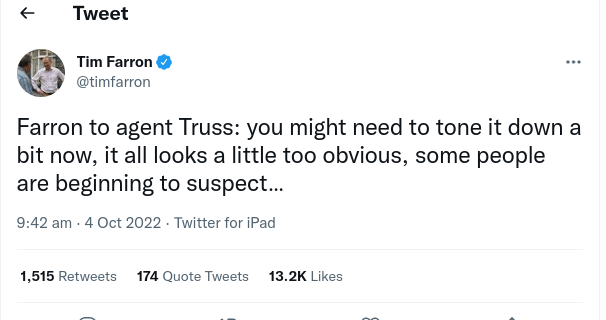
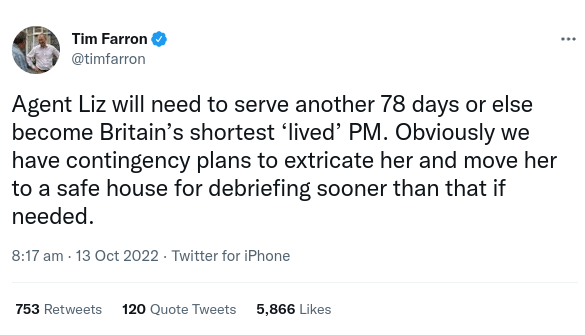
For deep cover “Agent Liz”, mission almost accomplished

[One for the conspiracy theorists].

The decoded tweets from “Control” over the past two weeks reveal Operation “Existential Disruption” and blow the cover of “Agent Liz”. [Nom de guerre: “la girouette de fer“]

Two weeks ago she is warned suspicions are rising:

Last Thursday contingency plans are brought forward to extricate her to a safe house, as and when:

Clyst Valley Park masterplan up for national award

Plans to turn Clyst Valley Regional Park into a wildlife haven, have been nominated for a national accolade.

Adam Manning www.midweekherald.co.uk 

East Devon District Council (EDDC) is thrilled to announce the park’s 25-year masterplan has been shortlisted in finals for the ‘Excellence in Plan Making’, as part of the Royal Town Planning Institute (RTPI) Awards 2022.

The award recognises the value of plan making coupled to community engagement. EDDC has carried out extensive community work through two £200,000 lottery projects – ‘Great trees in the Clyst Valley’ and ‘Routes for Roots’. One of successes of the latter has been the weekly wellbeing walks that EDDC has led to help reduce isolation and improve mental and physical health for 40 adults.

The plan has been hailed for the focus it has given to making the park more sustainable and promote wellbeing, for example, by working towards 30 per cent tree cover in the Clyst Valley by 2050.

As part of this EDDC has worked with 250 school children and adults from the Broadclyst and Cranbrook area to plant trees and shrubs to suck up carbon, including planting Britain’s rarest tree – the Black Poplar.

The park is also UK’s newest regional park – prompting interest from the National Trust and Bromsgrove District Council who want to learn from EDDC and see if they can create their own regional park. The creation of 10 regional parks in the urban fringe was one of the recommendations EDDC made to the trust’s national report about ‘future parks’. The parks would generate £600million per year in health benefits, contribute to eight per cent of the national tree planting target, and provide £2 of health and amenity benefits for every £1 invested over 30 years.

Councillor Geoff Jung, EDDC’s portfolio holder for coast, country, and environment, said: “I am really delighted for the team at EDDC that their hard work and dedication has been recognised for the Clyst Valley Regional Park masterplan being selected to be shortlisted for the final. It well deserved.

“A Nature Recovery Network forms part of the masterplan and ambitious targets have been set for nature, people, and climate. Our ‘Clyst Canopy’ project for many more trees, of the right type, in the right place dovetails into our ambitious targets for our East Devon’s climate change initiatives with an ambitious target of 30 per cent for the Clyst Valley from just 12 per cent “It is vital that this council at the same time as providing plans to provide to build 948 dwellings a year within the district, which is required by central Government it’s also imperative to improve, enhance, and protect our landscape and increase the biodiversity throughout the area.”

Open letter to PM on environmental deregulation

79 organisations have joined together to write an open letter to the Prime Minister urging her to change the Government’s trajectory on environmental deregulation, which is set to harm our people, planet and prosperity.

Truss has no mandate to pursue any of this – Owl

www.wcl.org.uk

Dear Prime Minister

Your government’s recent moves toward environmental deregulation will hasten the decline of our natural world.

Together, The Retained EU Law (Revocation and Reform) Bill and Planning and Infrastructure Bill proposals to weaken planning protection could put paid to the chances of meeting legally-binding climate and nature targets, create uncertainty for vulnerable businesses, shatter the long-term sustainability of our economy, and unleash environmental losses that could reduce quality of life for millions of people. Coupled with a potential rowing back on the Agricultural Transition, they also mark a radical departure from the manifesto commitment to “the most ambitious environmental programme on Earth” under which the Conservative government was elected.

Laws that protect the bedrock of our environment—air and water quality, soil health, heritage, and wildlife—must not be weakened. Doing so could hasten the torrent of pollution that blights our rivers and streams and increase the damaging presence of pesticides across a range of habitats. It could lead to losses of green spaces and heritage assets that are precious to communities and important for people’s mental health and wellbeing. It could further pollute the air we breathe, with consequences for public health and the costs to the NHS. Of course, the consequences for wildlife could mean that species and habitats are lost from our shores. Animal welfare regulations that ensure better quality of life for millions of farm and companion animals are also at risk, and with them the UK’s reputation as a welfare world leader.

The argument that these laws impose unnecessary burdens on business, as suggested in the growth plan announced on 23.09.22, is unfounded and short-sighted, based on an old-fashioned view of business needs. Progressive businesses in key growth industries understand that a healthy environment is a prerequisite of a healthy economy, that their customers want to see them working to advance the protection of the environment and that nature recovery and decarbonisation are market opportunities. As the Treasury’s Dasgupta Review on the Economics of Biodiversity conclusively demonstrated, economic security depends on environmental security and any growth agenda that does not include sustainable management of nature will be unsuccessful.

The removal of regulations and the review of other environmental policies, without a clear plan for what will replace them, is extremely disruptive to businesses and communities and could not come at a worse time. Laws like the Habitats Regulations are not some useless legacy of European law—they are among our most effective conservation laws. Changing the rules would create years of delay and uncertainty at a time when stability and environmental action are needed most. Any sense that costs would be saved is an illusion. The costs of environmental damage would be multiplied and simply shifted to the communities who suffer the consequences.

The Retained EU Law (Revocation and Reform) Bill sets an unreasonable and unnecessary timeline for removal of EU-retained laws. DEFRA is responsible for hundreds of retained laws that remain essential for our environment. Removal when there is no clear plan or mandate for an alternative could set back environmental delivery by years. The Government should be focused on implementing them better and investing in our environment. DEFRA’s EU-retained environmental laws should not be part of this process of mass deregulation.

Planning and Infrastructure Bill proposals to weaken environmental planning rules in “Investment Zones” around the country would be similarly misconceived. The Habitats Regulations protect precious natural habitats and our most vulnerable wildlife. Simply stripping away the rules would not solve problems like the chronic pollution of our rivers; it would be a smokescreen for continued environmental harm. Rather than weaken environmental rules, environmental recovery, environmental monitoring and investment in natural infrastructure should be key tenets of any proposed investment zones.

While reasonable and positive reform can be achieved, it has to be based on careful consideration, grounded in evidence and consultation. Change for change’s sake is not a public priority. Support for existing UK environmental standards and protections is resolutely high in constituencies up and down the country, so any changes must be based on clear proposals for change and evidence of what that will deliver. It is particularly concerning to see the un-evidenced push for environmental deregulation accompanied by suggestions that the Government could weaken Environmental Land Management scheme, despite clear evidence that this sustainable approach will deliver for farmers, the public and for nature and climate.

On behalf of the millions of people who care for and depend on our natural world, we hope you will step away from deregulation, and the attack on nature it would constitute. There is an opportunity to instead focus on achieving huge benefits for our economy, for communities and the Government’s green legacy, by delivering on great green goals.

This Government has made some bold and impressive environmental promises. We applaud the aim of passing on nature in better condition. Our hopes for the future are raised by the legal target to halt the decline of wildlife by 2030. We were delighted to hear your pledge to lead a delegation to global COP-15 nature talks in Montreal, where the UK can play a leading diplomatic role. We all support the target to achieve net zero. These goals are all jeopardised by a deregulatory agenda

It would be totally inconsistent to set world-leading targets, while sweeping away the regulations needed to achieve them.

Yours sincerely

Beccy Speight, CEO, Royal Society for the Protection of Birds (RSPB)

Hilary McGrady, Director General, National Trust

Craig Bennett, CEO, The Wildlife Trusts

Abi Bunker, Director of Conservation & External Affairs, The Woodland Trust

Tanya Steele, CEO, World Wide Fund for Nature (WWF) UK

Miriam Turner and Hugh Knowles, Co-CEOs, Friends of the Earth (England, Wales and Northern Ireland)

Sarah Fowler, CEO, Wildfowl & Wetlands Trust (WWT)

Sarah McMonagle, Acting Director of Campaigns & Policy, CPRE The Countryside Charity

Laura Clarke OBE, CEO, Client Earth

Mark Lloyd, CEO, The Rivers Trust

Sandy Luk, CEO, Marine Conservation Society

Pat Venditti, Interim Executive Director, Greenpeace UK

Hugo Tagholm, CEO, Surfers Against Sewage

Allison Ogden-Newton, CEO, Keep Britain Tidy

David Bowles, Head of Public Affairs & Campaigns, RSPCA

Neil Redfern, Executive Director, Council for British Archaeology

Tompion Platt, Director of Operations & Advocacy, The Ramblers

Darren York, CEO, The Conservation Volunteers

James Blake, CEO, Youth Hostel Association (England & Wales)

Rebecca Wrigley, CEO, Rewilding Britain

Nick Measham, CEO, Wildfish

Andy Knott MBE, CEO, League Against Cruel Sports

Paul Davies, CEO, British Mountaineering Council

Andy Atkins, CEO, A-Rocha UK

Dr Tony Gent, CEO, Amphibian and Reptile Conservation

Andy Bool, CEO, Mammal Society

Rose O’Neill, CEO, Campaign for National Parks

Gill Perkins, CEO, Bumblebee Conservation Trust

Kate Ashbrook, General Secretary, Open Spaces Society

Steve Andrews, CEO Earthwatch Europe

Kit Stoner, CEO, Bat Conservation Trust

Matt Shardlow, CEO, Buglife

Julie Williams, CEO, Butterfly Conservation

Dr Hazel Norman, CEO, British Ecological Society

Dr Richard Handley, President, Chartered Institute of Ecology and Environmental Management (CIEEM)

Stuart Singleton-White, Head of Campaigns, Angling Trust

Professor Jeremy Biggs, CEO, Freshwater Habitats Trust

Sonul Badiani-Hamment, Director, FOUR PAWS UK

Ian Dunn, CEO, Plantlife

Jill Nelson, CEO, Peoples Trust for Endangered Species

Dr Andrew Terry, Director of Conservation and Policy, The Zoological Society of London (ZSL)

Mike Daniels, Head of Policy, John Muir Trust

Chris Butler-Stroud, CEO, Whale & Dolphin Conservation

Dr Ruth Tingay, Co-Director, Wild Justice

Peter Hambly, Executive Director, Badger Trust

Dr Michael Warhurst, Executive Director, CHEM Trust

David Bunt, CEO, Institute of Fisheries Management

Dr Mark Jones, Head of Policy, Born Free

Tom Hunt, National Coordinator, Association of Local Environmental Records Centres (ALERC)

Ali Hood, Director of Conservation, Shark Trust

Martin Janes, Managing Director, River Restoration Centre,

Rosalind Forbes-Adam, Founder, Woodmeadow Trust

Dave Morris, Chair, National Federation of Parks and Green Spaces

Sue James, Convenor, Trees and Design Action Group

Rachel Thompson MBE, The Trails Trust

Terry Fuller, CEO, The Chartered Institution of Water and Environmental Management

Matthew Morgan, Director, Quality of Life Foundation

Graham Duxbury, CEO, Groundwork UK

Liz Milne, Chair, Association of Local Government Ecologists

Helen Griffiths, CEO, Fields in Trust

Sonia Kundu, Chairperson, Rail to Trail

Jayne Manley, CEO, Earth Trust

Dr Jo Judge, CEO, British and Irish Association of Zoos and Aquariums

Jamie Christon, CEO, Chester Zoo

Charles Watson, Founder and Chairman, River Action

Jamie Agombar, Executive Director, Students Organising for Sustainability (SOS-UK)

Jonathan Baillie, Chief Strategy Officer, On the Edge

Sue Morgan, CEO, Landscape Institute

Robin Nicholson, CBE, Convenor, The Edge

Mark Rowland, CEO, Mental Health Foundation

James Alexander, Chair, Finance Earth

Antoine Argouges, Founder & CEO, Tulipshare

Sean Clarke, Managing Director, Aardman

Charles Clover, Executive Director, Blue Marine Foundation

Pascale Moehrle, Executive Director, Oceana Europe

Sue Riddlestone OBE, CEO & co-founder, Bioregional

Chris Sowerbutts, Co-Founder, Lightrock Power

Jess Davies, Principal Investigator, QUENCH network coordination team (University of Lancaster)

Dr Richard Benwell, CEO, Wildlife & Countryside Link

‘Deregulation on steroids’ – CPRE response to planned investment zones

[Drafted before Kwarteng was sacked but “investment zones” still firmly on the Truss agenda.]

Kwasi Kwarteng, the new chancellor, has announced plans which strip away the protection of the planning system from swathes of the countryside. These new ‘investment zones’ will threaten many of our most loved landscapes.

www.cpre.org.uk

Rear view of male builder construction worker contractor on building site wearing hard hat and hi-vis yellow vest

Planned ‘investment zones’ are a huge threat to our countryside and landscapes

Responding to the announcement Tom Fyans, Interim CEO of CPRE, the countryside charity, said:

‘This government’s obsession with driving growth at all costs is alarming and will not end well for the countryside or our rural communities. Investment zones are deregulation on steroids. Successive governments have already severely weakened planning controls and the outcome has been a decade of disastrous design. CPRE’s own research in 2020 revealed that 75% of all new homes were mediocre or poor quality.

‘There’s a massive shortage of genuinely affordable homes in England. If the government wants to help increase development, then it must be the sorts of homes that people actually need. These new zones will be a failure if they simply allow house builders to build more large and expensive properties rather than the homes local people need.

‘This government is presenting a false choice between being green and boosting economic growth’

‘By weakening the Habitats Directive, the government is kicking away the key foundation of its own 30 by 30 pledge and it will critically undermine any meaningful attempt to tackle the nature emergency.

‘This government is presenting a false choice between being green and boosting economic growth. The Chancellor needs to invest in the energy efficiency of our homes – the best possible way to tackle the dual energy and cost of living crisis while kickstarting the economy is to retrofit our leaky homes.’

Time to act: what CPRE is doing

If these plans go ahead, developers will be given free rein to industrialise our countryside, changing the face of rural England for generations to come. We cannot allow the wildlife and landscapes that make our country so special to be robbed from us, our children or our grandchildren. We need to act fast to force the government to change direction.

CPRE and its supporters have defeated plans like this before. But this time the challenge is even greater: our environment is already suffering and we have never faced a government so reckless to the needs of nature.

‘The chancellor’s plan to use deregulation to hand power to developers is the exact opposite of what the countryside needs’

If ministers want to see booming high streets and more money in people’s pockets, we need to see investment in genuinely affordable homes and thriving communities, not trying to bypass the democratic planning system so that developers can cut down our woods and pour concrete over our fields.

Can you help?

We will throw everything we can at this campaign and ensure that as many MPs as possible hear the message loud and clear: industrialising the countryside is no answer to the challenges we face.

Truss and sacked Kwarteng “share the same vision”

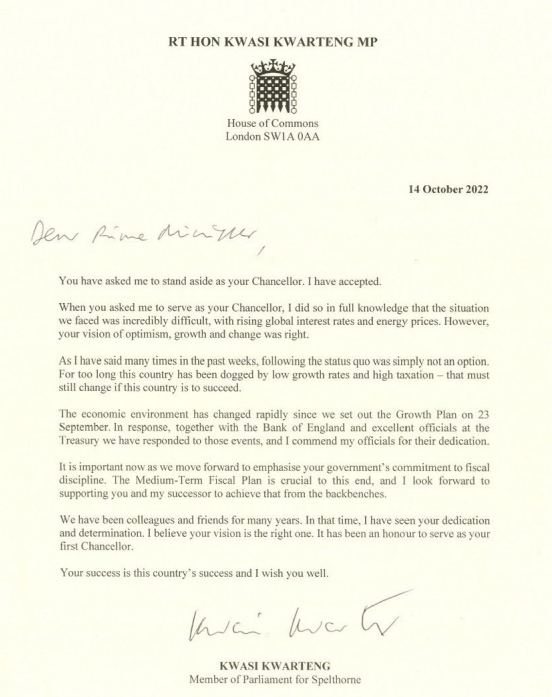
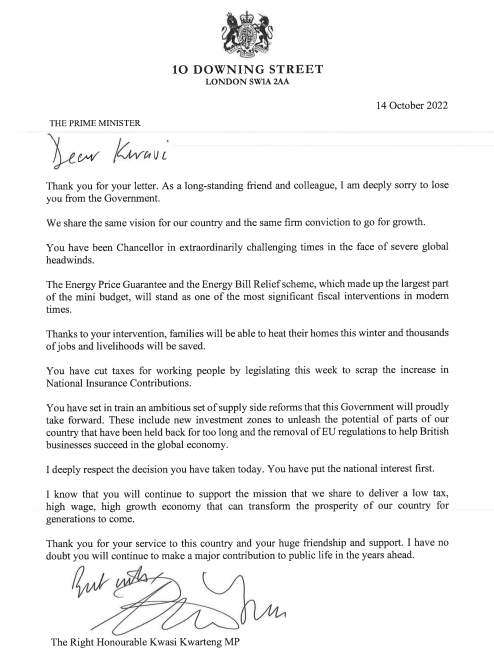
Read the exchange of letters following Kwarteng’s resignation and decide whether Kwarteng alone should be held to account for the failed mini-budget or whether it is matter of “joint enterprise” between him and Liz Truss

The new Chancellor, Jeremy Hunt is busy shredding it, so where does this now place Liz Truss? – Owl

[PS Jeremy Hunt has a lot of “form” recorded on East Devon Watch. He has been very busy during and after the pandemic “reinventing” himself.]

Kwarteng MP for Spelthorne (no longer Chancellor at this point) to PM:

“…your vision of optimism, growth and change was right..

..For too long this country has been dogged by low growth and high taxation – that must still change if this country is to succeed…”

Liz Truss, the Prime Minister, replies:

You have set in train an ambitious set of supply side reforms that this Government will proudly take forward. These include new investment zones to unleash the potential of parts of our country that have been held back for far too long and the removal of EU regulations to help British businesses succeed in the global economy..

… I know you will continue the mission that we share to deliver a low tax, high wage, high growth economy that can transform the prosperity of our country for generations to come….

‘Britain is Sleepwalking into Societal Collapse’ 

The sacking of the Chancellor is a symptom of the escalating incoherence of Liz Truss’ Government – not a sign that it is changing course to become more coherent, writes Nafeez Ahmed

bylinetimes.com

I have spent two decades studying the dynamics of social crisis and societal collapse. It’s now clear to me that Prime Minister Liz Truss is leading Britain into a convergence of crises that is likely to culminate in an unprecedented social and economic collapse that cascades across the government, economy, housing markets, energy, health, the judiciary and beyond.

Worse, these crises risk triggering a global financial crisis bigger in scale than the 2008 crash – one that, like that crash, could have potentially irreversible impacts on global civilisation.

The sacking of her Chancellor, Kwasi Kwarteng, after 38 days in office, is unlikely to significantly reverse these prospects. In fact, it signals a systemic level of incoherence the only outcome of which, at this stage, can be continued breakdown. The danger is that, as this Government collapses, it brings the rest of Britain down with it.

Systems collapse when they are unable to adapt to change. The policies of the Truss Government are not only accelerating conditions of change beyond the capability of British institutions to adapt, they are generating crises across multiple institutions simultaneously in such a way that they are overwhelming the overall system’s abilities to respond.

When a system is overwhelmed in this way, we start to rapidly run out of options within the existing framework. The more it moves in different directions to quell the crisis, the more it inadvertently stokes the crisis. As a result, the system itself becomes an accelerator of its own collapse – and this is exactly the predicament that the Truss team has managed to pull Britain into.

These ingredients are critical preconditions for the collapse of complex societies. Such collapses have taken place over decades, in some cases centuries, in others. While collapse doesn’t necessarily entail the complete evisceration of a society, it involves a breakdown of institutional complexity. This results in a loss of societal capabilities, potentially entailing reductions in living standards and population.

Liz Truss’ agenda is accelerating the risk of such a collapse in a way that is unprecedented. While, to some extent, this can be explained by a penchant for disaster capitalism designed to benefit elites at everyone’s expense, the deeper problem is that the Truss Government appears to be fundamentally incapable of grappling with complexity.

It doesn’t realise that our systems are tightly coupled in complex ways; that these interconnections mean you cannot tinker with one element of the system without upending the entire system; that pulling the rug out from under critical institutions or public services can unravel social cohesion in a way that could generate chronic instability from which there is no easy recovery – leading to a spiral of escalating costs and diminishing returns.

Britain is on the brink of spiralling out of control.

Article continues with sections on The Economy, The Housing Market, Energy, The Collapse of Critical Services and finally A Vicious Cycle.

Read on here bylinetimes.com

‘Hot air’: plans to crack down on UK water polluters dismissed as toothless

“The Environment Agency does not appear to be in a position to underpin the move. After frequent deep budget cuts, the agency’s chief executive, Sir James Bevan, has said the regulator is no longer sufficiently funded and that it would have to pause or stop some of its environmental protection activities.”

Under Truss and Hunt expect more cuts – Owl

Rachel Salvidge www.theguardian.com 

The government’s pledge to raise the cap on the amount of money the Environment Agency can fine water companies for sewage pollution to £250m has been described as “hot air”, as the Guardian can reveal the regulator has failed to levy any such penalties since it was given powers to do so 12 years ago.

Variable monetary penalties (VMPs) were introduced in 2010 to enable the Environment Agency to directly levy fines for serious environmental offences without having to go through expensive and lengthy court proceedings, but to date the agency has not levied a single VMP against water companies.

Despite this, the environment secretary, Ranil Jayawardena, last week announced a 1,000-fold rise in the cap on VMPs, from £250,000 to £250m, and said the bigger financial penalties “will act as a greater deterrent and push water companies to do more, and faster, when it comes to investing in infrastructure and improving the quality of our water” and that “the polluter must pay”.

But the Environment Agency does not appear to be in a position to underpin the move. After frequent deep budget cuts, the agency’s chief executive, Sir James Bevan, has said the regulator is no longer sufficiently funded and that it would have to pause or stop some of its environmental protection activities.

The lack of VMPs is part of a broader picture of dwindling enforcement on the part of the regulator, which has told its staff to “shut down” and ignore reports of low-impact pollution events, saying it does not have enough money to investigate them.

The Environment Agency has also slashed its water-quality monitoring regime, has downgraded 93% of prosecutions for serious pollution over four years, despite recommendations from frontline staff for the perpetrators to face the highest sanction, and agency staff say that cuts and operational decisions have made it “toothless”.

Between 2010-11 and 2020-21 the amount of grant-in-aid the Environment Agency allocated to generic enforcement activity fell from £11.6m to £7m, according to a report by the National Audit Office (NAO). This includes enforcement associated with the regulation of industrial facilities, storm overflows and fisheries, as well as response to serious pollution incidents.

Over the same period, the NAO says the number of prosecutions undertaken by the Environment Agency has plummeted, from 768 in 2009-10 to 17 in 2020-21.

“Punishments are only relevant if you have a regulator who is willing to impose them,” an Environment Agency insider said, adding that water company self-regulation was not working.

“The Environment Agency has been deregulating water quality for a number of years, and that shows no sign of slowing down. Increases in funding are still directed away from frontline regulation. It appears punishments such as VMPs will only be imposed if a water company chooses to report and punish itself.”

Richard Broadbent, director of the law firm Freeths and the former head of legal services at the nature regulator Natural England, said that “whilst reliance of regulatory tools are a matter of judgment for the regulator, they exist in order to be used, and a failure to do so for long periods may in time suggest a fettering of discretion.

“It seems odd for the government to tout the benefits of [an] increase in water pollution penalties when that is in connection with a regulatory tool the regulator does not favour, and does not directly assist it in terms of managing its operational costs,” he added.

The only way increasing the penalties would make sense would be “if the government combines it with a package of measures designed to give the Environment Agency the resources it needs to properly carry out its functions”, said Broadbent.

Ash Smith, the founder of Windrush Against Sewage Pollution, said: “Presumably, someone at Defra [Department for Environment, Food and Rural Affairs] was tasked with coming up with something that sounded powerful and cost nothing. Raising the level of monetary penalties that are not even used would have been the perfect soundbite, but for the fact that no one trusts government ministers any more and even the most cursory look under the bonnet shows that there is no engine in the car Mr Jayawardena is trying to sell to the public.”

Smith described the announcement as “more hot air from a government that could very easily stop pollution from being profitable but simply refuses to do so and passed an Environment Act that allows illegal pollution to continue.

“The reality is that deliberately weak regulation and flawed privatisation has created a polluting for-profit-fest which has attracted ownership from all over the globe to extract money for nothing and take it offshore tax-free.

“We can expect more desperate threats and promises like raising penalties that won’t really be used, as the government tries carefully not to scare the shareholders or show what a massive scam has been perpetrated on the public.”

Defra declined to comment on the lack of VMPs, but said it was reviewing the Environment Agency civil sanctions regime more broadly to consider further opportunities for improving water company compliance with environmental law.

An Environment Agency spokesperson said: “VMPs have so far had limited use against water companies. A reason for their limited use so far is the current £250,000 cap, which has prevented the Environment Agency from using a VMP if they think a higher fine is warranted. By raising the cap up to £250m we will enable the Environment Agency to issue VMPs in more cases, and with greater impact in disincentivising non-compliance.”

Wise words in troubled times

“We’re all fucked. I’m fucked. You’re fucked. The whole department is fucked. It’s the biggest cock-up ever. We’re all completely fucked.”

Remembering the wise words of Sir Richard Mottram, former permanent secretary at the  Department for the Environment, 2002

There is no mandate for the anti-green agenda of Liz Truss’s government

“It is widely understood by voters in the UK – and judging from polling, by a majority of people around the world – that the next few years offer a final opportunity to prevent climate-linked destruction on an unimaginable scale. Under Boris Johnson, Conservative environment policies were nowhere near ambitious enough. But under Ms Truss, they are already far worse…”

Editorial www.theguardian.com 

The latest schism to open up in Liz Truss’s cabinet is less surprising than it might have been, had divisions over tax and welfare policies not already emerged. But the decision by the business secretary, Jacob Rees-Mogg, to oppose her publicly over solar energy plans is still a dramatic one that leaves her looking even weaker and more exposed. Having previously stressed his support for fracking, and oil and gas drilling in the North Sea, Mr Rees-Mogg used an article in the Guardian to deny that he opposes green energy. While Ms Truss wants to restrict new solar installations on farmland, Mr Rees-Mogg’s deregulatory fervour extends beyond fossil fuels to renewables as well.

Ms Truss’s anti-solar scheme is so ill-judged that all voices raised against it are welcome. But Mr Rees-Mogg’s enthusiasm for new oil and gas means that he must never be mistaken for a friend to green causes. He is right to point out that carbon-intensive imports are just as damaging to the atmosphere as UK-based industries. But while his backing for solar and wind may make him a more consistent free-marketeer than the prime minister – who is against red tape except when it blocks something she dislikes – the risks to the environment from all those like him who champion growth at the expense of nature remain huge.

Renewed enthusiasm for fossil fuel projects is one aspect of this government’s reactionary and dangerous agenda. Two more are the promises to scrap hundreds of environmental regulations governing areas such as water quality (already shockingly poor), and to remove wildlife protections from new low-tax investment zones. The decision to review a post-Brexit farming payments scheme that took six years to set up – and which has already led to enhanced protection for wildlife in pilot areas – offers further proof of the government’s disdain for all things green.

Ms Truss made this explicit when she targeted climate campaigners as part of an “anti-growth coalition”. So far, she shows no sign of paying attention to warnings from senior figures including William Hague that she is on the wrong track. But concern about the government’s new direction is spreading. Ministers are at odds not only with environmental campaign groups such as Greenpeace, but also with mass-membership charities beloved of many Tory voters, including the National Trust and the Royal Society for the Protection of Birds. Paul Miner, from the countryside charity CPRE, described the reversals on fracking and other issues as “a litany of betrayal and broken promises”.

Precisely how the anger prompted by these anti-green policies will manifest itself remains to be seen. Already, charities have called on members to contact MPs, and they will be emboldened by a speech from the Charity Commission’s chair, Orlando Fraser, affirming their right to engage in political activity. With another crunch UN climate conference fast approaching, and a new report from scientists pointing to a further decline in animal populations, conservation groups and their supporters are right to be alarmed.

It is widely understood by voters in the UK – and judging from polling, by a majority of people around the world – that the next few years offer a final opportunity to prevent climate-linked destruction on an unimaginable scale. Under Boris Johnson, Conservative environment policies were nowhere near ambitious enough. But under Ms Truss, they are already far worse. Her hang-the-consequences short-termism would never have won a general election. The Greenpeace activists who interrupted her conference speech were right that voters do not support the policies she has embraced. They and other groups should take heart from the support they have already received. Ministers may not care about the damage that they are causing, but the public does.