More on: Plans to cut affordable homes threaten to make countryside ‘millionaires’ playground’

Government plans to slash requirements on developers to build affordable homes amount to a betrayal of more than a million families on housing waiting lists and will be “devastating” to rural communities where young people already struggle to find places to live, campaigners have warned.

Andrew Woodcock www.independent.co.uk 

The CPRE countryside charity said that the proposals being considered by housing secretary Simon Clarke would “turbocharge the conversion of the countryside into a millionaires’ playground of second homes and weekend retreats”.

Meanwhile, environmentalists voiced dismay at suggestions that an effective moratorium on developments near fragile wetlands could be lifted.

A letter leaked to The Times revealed that Mr Clarke is proposing to increase from 10 houses to 40 or 50 the maximum size of a developments which can be built without any requirement on builders to include affordable homes.

Housing charity Shelter said the move would cut the number of affordable homes delivered under the rule by 20 per cent – or more than 560 properties a year.

The cut would come at a time when 1.2m households are on waiting lists for social housing in England and just 6,051 affordable properties were constructed last year.

The charity’s director of campaigns Osama Bhutta said prime minister Liz Truss had no right to “betray over a million households stuck on social housing waiting lists by slashing the already tiny number of social homes that get built”.

“The government should be doing all it can to build the stable, genuinely affordable homes this country needs, but it’s doing the opposite,” said Mr Bhutta. “The government must change its mind, it can do it now or do it after grasping the anger of millions of people.”

And CPRE CEO Tom Fyans warned: “Housing sites in rural areas are typically small, which means the supply of affordable and social homes could be choked off altogether.

“It would consign thousands of key workers and young families to the margins of society, turbocharging the conversion of the countryside into a millionaires’ playground of second homes and weekend retreats.”

Reducing the number of new affordable homes will be “self-defeating” because it will result in fewer new builds overall and reduce the contribution of house-building to growth, said Mr Fyans.

“The government seems intent on repeating failed housing policies and laying the blame on the planning system and environmental protections,” he said. “The reality is that our rural communities are crying out for more – not less – homes for social rent and genuinely affordable prices to prevent destitution and homelessness.”

Mr Clarke’s Department for Levelling Up, Housing and Communities(DLUHC) declined to comment on his plans. A government spokesperson said only: “The government is committed to exploring policies that build the homes people need, deliver new jobs, support economic development and boost local economies.”

But Ms Truss’s official spokesperson confirmed that changes to the affordable housing threshold were under consideration.

“We want to keep it under review to make sure we’re delivering the new homes we need, while not discouraging the development of homes on small sites and by small builders,” he said.

Shadow housing secretary Lisa Nandy responded: “The Tories crashed the economy. It led to soaring mortgage rates, rents, energy bills and food prices. Their answer now is less affordable housing. It beggars belief.

“Labour has set out plans to support people onto the housing ladder, including giving first-time buyers first dibs on new developments, as well as building a new generation of affordable and council houses and giving tenants greater security with a new Renters’ Charter.”

And Alicia Kennedy, the director of pressure group Generation Rent, said that the 1.2m households on waiting lists included 100,000 children living in temporary accommodation.

“By letting developers only build homes for the market, the people most in need of a decent, stable home will keep waiting in miserable conditions,” said Ms Kennedy. “The government needs to explain how it is going to deliver enough homes to fix homelessness and bring down rents.”

The PM’s spokesperson also confirmed that ministers are considering the relaxation of rules restricting development in designated parts of Norfolk, Hampshire, Devon and the northeast to protect the health of wetlands.

Currently, new developments are barred in designated areas if they are likely to increase levels of the nutrients nitrogen and phosphorus in the water, which can cause excess algae growth and reduced food supplies for protected species.

Environmental groups are concerned over the potential damage to natural sites and wildlife if the controls are lifted.

Paul de Zylva of Friends of the Earth said: “Ending this moratorium would be a significant blow to our natural world.

“On the one hand the government claims it wants to stop sewage harming our rivers and freshwaters, yet on the other, it appears to be planning to allow new housing developments that could pollute our wetlands.

“We should be planning to build a greener, better future with high quality homes fit for the challenges of the 21st century – we won’t get there with poorly regulated housing developments.”

Ms Truss’s spokesperson said: “The prime minister has talked about some of her concerns about nutrient restrictions leading to an effective moratorium on new housing in some parts of the country, so that is something we want to look at.

“Obviously a strong environment and a strong economy go hand-in-hand and we have legally-binding targets as part of the Environment Act, which we adhere to.”

“Let fiscal responsibility slide and allow the deficit to balloon, we’ve been there before… It leads to boom and bust.”

Who said that?

Liz Truss in 2018 as chief secretary to the Treasury, speaking at the LSE.

Is there any constancy in her ideas and beliefs?

The Mirror has the embarrassing footage here

IMF tells Truss to change tax policy to calm frenzied markets

The International Monetary Fund has added to pressure on Liz Truss’ government to U-turn on unfunded tax cuts announced in last month’s mini-budget, saying changes in policy would help calm jittery financial markets.

Larry Elliott www.theguardian.com 

On a day when fresh action by the UK central bank failed to halt the upward move in government borrowing costs, the Washington-based IMF said a shift in policy from Truss and her chancellor would “change the trajectory” of interest rates.

The IMF said the Bank and the Treasury were “like two people trying to steer a car in different directions” as it highlighted the turbulence in markets caused by the chancellor’s 23 September package. “That’s not going to work very well,” said the Pierre-Olivier Gourinchas, the IMF’s economic counsellor.

The comments came after fresh action by Threadneedle Street to prevent a “fire sale” of UK government bonds – or gilts – by pension funds caught out by the sharp increase in interest rates in the past two and a half weeks.

Citing a “material risk” to financial stability, the central bank launched the second expansion for its emergency scheme in as many days with a promise to buy index-linked gilts – securities where the interest rate moves up and down with inflation.

In the final week of the scheme, which is due to expire on Friday, it stepped up its efforts to smooth febrile market conditions by buying more than £3.3bn of UK government debt in its single biggest daily market intervention.

Despite efforts in Westminster and the City to smooth over turmoil in the markets unleashed by the mini-budget, leading finance industry figures said the Bank could be forced to extend its emergency scheme beyond this week to prevent a “doom loop” from re-emerging in the bond market.

Speaking at an event in Washington on Tuesday, the Bank’s governor, Andrew Bailey, said Threadneedle Street had no plans to continue with bond buying after the end of this week, adding that his message to the pension industry was: “You’ve got three days left now and you’ve got to sort it out.”

Borrowing costs on long-term government debt rose on Tuesday despite the Bank’s interventions, remaining at levels close to the peak seen in the market turmoil after the mini-budget.

Pensions industry bosses said an extension until the chancellor Kwasi Kwarteng delivered his debt-cutting plans to the Commons on 31 October could be required. Sir John Gieve, a former Bank deputy governor for financial stability, said it was likely to extend the scheme for at least a couple of weeks, while warning that turbulence was directly linked to the chancellor’s unfunded tax cuts.

“He’s actually got to now produce a set of projections which add up,” he said.

The IMF has welcomed Kwarteng’s decision to scrap plans to abolish the 45% income tax rate paid by those earning more than £150,000 and will make a fresh assessment of the UK after Kwarteng’s fiscal statement.

But concerns over the UK and the possible knock-on effects from the turmoil to other countries were voiced at press conferences to launch two flagship IMF publications – the world economic outlook and the global financial stability review.

Gourinchas, responsible for the WEO, said fiscal policy – the tax and spending decisions made by the Treasury – should be aligned with actions taken by the Bank to bring inflation down from a near 40-year high.

The IMF had pencilled in a sharp slowdown in UK growth from 3.6% this year to 0.3% in 2023 before the mini-budget. Growth would be raised “somewhat” but at the expense of making the fight against inflation more complicated.

Tobias Adrian, the IMF’s financial counsellor, said some of the market reaction since 23 September had been “disorderly”, adding that a different fiscal policy would take pressure off the Bank.

“A change in fiscal policy would change the trajectory of interest rates going forward,” Adrian said.

“The change in fiscal policy changed the expectations of monetary policy and meant the Bank of England would have to raise interest rates that much more to bring inflation back to its mandated target.”

Asked whether the only way to solve the UK’s financial markets problems was to reverse the mini-budget, Adrian said: “A shift in fiscal policy would certainly change the trajectory in yields”.

Kwarteng announced £45bn of tax cuts plus energy price curbs for consumers and businesses in his mini-budget, and is working on new proposals designed to reassure markets that the government finances are sound.

Although the chancellor U-turned on plans to abolish the 45p rate of income tax on higher earners, he moved ahead on Tuesday with a cut in taxes on dividends worth £600m for wealthy investors.

Struggling households will however be forced to wait until the end of October to find out whether the government will give the green light to a rise in welfare payments in line with inflation, or whether they will be subject to a real-terms cut amid the cost of living crisis.

Kwarteng stressed to the Commons that “no decisions have been made”. However, the wait for clarity was criticised by Save the Children, which said it was unfair pensioners had been assured their income would rise at least with inflation while parents and carers of children in poverty faced an agonising delay.

компромат

Sacked minister in line for a knighthood is the one who walked in on Boris and Carrie in a ‘compromising situation’

Jack Peat www.thelondoneconomic.com 

The sacked ex-minister who is on track for a knighthood has also been revealed to be the person who walked in on Boris Johnson and Carrie in a “compromising situation”, it has been revealed.

Conor Burns was sacked and had the Tory whip suspended pending an investigation into “allegations of inappropriate behaviour” at the party conference in Birmingham.

According to BBC reports, an eyewitness saw Burns touching a young man’s thigh at a hotel bar, prompting complaints.

It has since emerged that he is in line for a knighthood in Mr Johnson’s resignation honours list.

And there could be a good reason why.

In July, the Independent revealed that Burns was the one who walked in on Boris Johnson and then-girlfriend Carrie Symonds in an allegedly ‘compromising situation’ when he was Northern Ireland minister.

Downing Street said that Burns “flagged up” the couple’s relationship to Foreign Office officials after finding them “having a glass of wine together” alone in Johnson’s Commons office as foreign secretary in 2018.

Burns, one of Johnson’s most loyal supporters, had a “sixth sense” that their relationship was “one to watch”, said a senior No 10 source.

On discovering Johnson’s relationship with Carrie as a result of Mr Burns walking in on them, Ben Gascoigne and other members of Johnson’s Foreign Office team threatened to resign if he went ahead with a plan to appoint her as his £100,000-a-year Foreign Office chief of staff.

The Independent was also told by other sources that Johnson’s team discussed the possible risk to him of blackmail – or kompromat – as foreign secretary if any of Britain’s enemies learned he was having an affair.

In the event, they decided not to confront him over his relationship with Ms Symonds but successfully blocked his attempt to make her his chief of staff without informing him that it was linked to their belief, based on what Mr Burns had seen, that they were in a relationship.

County Hall won’t be used for key worker housing

At a full meeting of the council on Thursday [6 October], a motion by Liberal Democrat councillor Martin Wrigley (Dawlish) called for the “antiquated” site to be “re-modelled” into rental homes with some reserved for NHS and social care staff.

….But Councillor Paul Crabb (Conservative, Ilfracombe) questioned “the assumption that we should just convert whatever bit of real estate we can find, we can wonder around, close offices [and] see if we can wang some flats in there.” (Doesn’t sound as if Cllr Crabb is “on message” with Liz Truss’ growth agenda – Owl)

Ollie Heptinstall, local democracy reporter www.radioexe.co.uk 

County hall in Exeter is unlikely to be built on for the forseeable future, despite a call to use some of the site for key worker housing.

Located off Topsham Road in Exeter, one of the key routes into the city centre, the Grade II* listed building sits on 22 acres of land and has been the county council’s headquarters since the 1960s.

It cost £2.37 million to maintain last year, a figure expected to fall £600,000 this year, and with Devon in a housing crisis and many council staff no longer working from the office full-time, some councillors believe parts of the site could be put to better use.

At a full meeting of the council on Thursday [6 October], a motion by Liberal Democrat councillor Martin Wrigley (Dawlish) called for the “antiquated” site to be “re-modelled” into rental homes with some reserved for NHS and social care staff.

“Converting the existing office blocks and building new homes on the enormous supply of parking space would provide a highly desirable and green residential location with good connection to the RD&E hospital site and the city centre,” his motion stated.

“The hundreds of rented flats delivered would not only provide homes for local families, but also a long-term rental income for the council that should exceed the cost of out-of-town office space.”

However, the Conservative-controlled council rejected it, along with a subsequent watered-down amendment from Cllr Wrigley which included asking the council to “consider other uses for excess spaces such as parts of county hall for full or partial conversion to revenue generating rented, residential accommodation for key workers and others.”

Tory councillors instead voted to confirm that “in the short to medium term (three-to-five years) the council does not have plans to dispose of county hall.”

Their successful amendment also backed a review of the use of council assets as part of its financial sustainability programme to “identify opportunities for the provision of (in particular) DCC key worker accommodation.”

Debating the issue, Cllr Wrigley clarified he was not calling for the council to build on the vast amount of green space on the site, rather to convert existing buildings and turning car parks into purpose-built flats for rental.

“We do have what really to the outside world here looks like a gentleman’s club, with oak panels, with big sofas, with lots of space, with a cricket field, with a [skittles] alley I discovered in the back of the Coaver Club [a social club and gym for council staff].

He added: “Be bold. Take the decision. Go for change. Repurpose these assets. Provide something good for the community – some rented, socially rented homes for key workers in the city, where it’s sustainable, where it’s useful.

“It will reduce some of the traffic on the main road because we won’t have so many people working here if we move them to purpose-built offices where we already have them.”

Fellow Lib Dem councillor Alan Connett (Exminster & Haldon) mentioned other listed sites that have been converted, including the city’s former Exe Vale Hospital, and added: “I don’t think anyone is proposing that we sell county hall, we close it down, that we should go somewhere else.

“I think what we’re saying is, in the changed world of covid where more people are working from home and rightly so, where fewer people need to travel in here, maybe there’s an opportunity to do the right thing.

“The right thing might be to say, can we have residential use? Can we bring in an income which supports the capital, which indeed the leader of the council says he’s been so successful at at just £13 million. Think, there could be more coming in to help with the capital work.”

Labour councillor Rob Hannaford (Exwick & St Thomas) agreed that “some of the site could possibly and should be used” for key worker housing, especially around the Matford Lane area, but added: “I wouldn’t be supportive of turning all of county hall into that.

“I think we’ve done a lot of restructuring here. I think the post-covid work trends are still not set. I think people will start coming back. A lot of space has been moved around.”

He also said the site is “absolutely alive” in the evenings: “There’s young people playing here, sport is going on and it’s a real hub of community activity.”

But Councillor Paul Crabb (Conservative, Ilfracombe) questioned “the assumption that we should just convert whatever bit of real estate we can find, we can wonder around, close offices [and] see if we can wang some flats in there.”

“The most efficient way to run the council I suspect is to stack a load of portacabins up outside, but what sort of message does that send?”

He added: “You’ve got local councils, local plans. You can develop affordable homes at the drop of a hat if you’ve got the will to do so and you’ve got the planning officers prepared to put it in.”

Council leader John Hart (Conservative, Bickleigh & Wembury) said the site is also used by the NHS and the coroner’s office and said: “This place is pretty well used.

“We don’t know what’s going to happen at the end of the day as far as covid is concerned, but certainly if the last four weeks is anything to go back, there’s been a substantial increase in the number of people using these offices.”

He also said the Exe Vale Hospital was vacant before it was converted and rejected Cllr Wrigley’s “gentleman’s club” claim: “It’s actually a working hub and I think our staff are being insulted when you say it’s an old man’s club.”

Another part of Cllr Wrigley’s motion to “withdraw the sites at Manor Farm, Markham’s Farm and other county farms from local plan allocations for housing and preserve farm viability” was also rejected.

The council instead backed the Conservative amendment to “support the inclusion of strategic DCC farm land in relevant local plan allocations (including land at Markham’s and Manor Farm) as part of the council’s work to support housing provision across the county.”

It would also ensure that “farm holdings remain viable and where possible land is replenished (subject to financial resources being available) to maintain the farms estate at [around 10,000] acres.”

Council leader pleads for more funding

Devon County Council’s leader has pleaded for more money from his own party’s government and warned it against further cuts to “badly strapped” local authorities.

(Psst John, Kwarsi’s blown it all on tax give-aways, aided and abetted by Liz. Best thing you can do for the County is to stop voting Conservative like a lemming. – Owl)

Ollie Heptinstall, local democracy reporter www.radioexe.co.uk

Conservative councillor John Hart, who has been in charge at county hall since 2009, discussed the recent mini-budget and his hopes for the upcoming autumn statement at a full council meeting on Thursday [6 October].

It comes as the council battles to balance the books, with high inflation and increasing demand for children’s and adult services pushing up costs.

Despite Devon already finding millions of pounds of savings and extra income through a ‘financial sustainability programme,’ its budget overspend could be as much as £27 million this financial year, according to an update last month.

“We in local government are being so badly strapped at the present moment that we’re struggling to survive, let alone expand our services,” Cllr Hart said last week.

“When I heard a minister saying in the last few days that ‘local government has got to take some more pain because it still has fat on it,’ my comment was, ‘I’ve got bone left and we’ve already been chipping into some of that over the last year or two.’

“We need more money in local government,” Cllr Hart declared. “And it’s not just me saying this on behalf of Devon, it’s nationally. Every local authority has already been going public on the fact that we could do with better support from government in an autumn statement – promises of cash.

“Frankly, the impression I got is there will not be any.”

Cllr Hart also thought a reported £18 billion of public sector cuts being drawn up by the government, which he said was talked about during a fringe meeting at the Tory party conference, “suggested it was going to come out of NHS and schools.”

“Well frankly, there’s no spare in my view in schools at the present moment but … I do have a personal feeling that the back offices of the NHS are rather heavily staffed, and there’s not enough money going to the front office.”

Councillors were reminded that, unlike central government, local councils have a legal obligation to balance their budgets at the end of every financial year.

Cllr Hart warned: “We’ve already picked the low branches, the medium branches. We’re now taking the top branches to try and keep local government going.

“I hope government gets that message and it’s being talked not just by me, but all local councils – Conservative, Labour and Liberal Democrat.”

A government spokesperson said in response: “We have made available an additional £3.7 billion to councils this year, including an extra £40 million for Devon County Council.

“We are also providing a discount on energy prices this winter for councils whose bills have been significantly inflated by the global energy crisis and stand ready to speak to any that have concerns about balancing their budgets.”

This term’s compulsory reading list for Tory MPs

How to Think about the Economy: A Primer 

This little book was written to accomplish something big: economic literacy. It is intentionally kept very short to be inviting rather than intimidating, as economics books typically are. If I managed to meet this bar, you, the reader, will gain life-changing understanding of how the economy works in practically no time. This is lots of value at a very low cost.

mises.org

Our latin scholar fails to convince

The chancellor’s decision to bring forward the date of his plan to balance the government’s finances failed to reassure markets on Monday.

The financial plan is in a mess and we are all going to suffer. – Owl

By Daniel Thomas www.bbc.co.uk 

Government borrowing costs rose sharply after Kwasi Kwarteng said he would fast-track his plan to 31 October.

The plan will set out how he will fund tax cuts and reduce debt after his mini-budget sparked market turmoil.

An independent forecast of the UK economy’s prospects will be published at the same time.

In the wake of the September mini-budget, the pound slumped to a record low, government borrowing costs surged and the Bank of England was forced to step in and take emergency action after the dramatic market movements put some pension funds at risk of collapse.

The volatility eased but on Monday the yields – or effective interest rates – on UK government bonds were almost at the levels seen at the height of the market turmoil.

Further efforts by the Bank of England to calm markets, along with the appointment of an experienced civil servant as Permanent Secretary to the Treasury also seemed to fall short.

Former Treasury chief Lord Macpherson warned the government that there could be an even tougher response from the financial markets in the coming weeks if the chancellor could not show his sums added up.

“Unless the government can restore economic credibility, the market response in the weeks ahead could be a whole lot worse than we’ve seen so far,” he told the House of Lords.

‘Critical to millions’

Mr Kwarteng had initially said he would wait for 23 November to give details of his economic plan but faced mounting pressure from his MPs to change course.

The new date means Mr Kwarteng’s fiscal statement will be published before the Bank of England announces its latest decision on interest rates on 3 November.

The Bank’s Monetary Policy Committee (MPC) is widely expected to raise interest rates for the eighth time since last December with many economists forecasting a sharper rise than previous increases.

But Mel Stride, chairman of the Treasury Select Committee, tweeted that he hoped Mr Kwarteng’s decision to release the report earlier would result in a smaller rate rise.

He tweeted this would be “critical to millions of mortgage holders”,

Noting that that the plan will be published on Hallowe’en, Labour deputy leader Angela Rayner tweeted: “Trick or cheat? The Tory horror show rattles on.”

The OBR, the independent budget watchdog, will now publish a report alongside Mr Kwarteng’s statement at the end of October. Its forecasts will give an indication of the health of the nation’s finances.

2px presentational grey line

Analysis

By Dharshini David, BBC economics correspondent

The chancellor bringing forward his explanation of how he intends to get down government debt and the official watchdog’s assessment of his plans to Hallowe’en is aimed at quelling the market turmoil which has driven up borrowing costs for households and government.

Providing reassurance on that score will likely mean confirming unpalatable news for others. For most economists reckon that, even if the government can boost growth, it will realistically need to find savings of perhaps £40bn or more, if it is to bring down debt in a few years.

But by anyone’s measure that’s not small change, it’s an amount greater than the defence budget, and won’t be raised through efficiency savings. Many public services are already hampered by pandemic disruption and rising inflation. The Institute for Fiscal Studies reckons the latter means departments have to find £18bn from existing budgets just to provide planned services.

On top of that balancing act, they’ll be bracing for a new wave of austerity.

Borrowers have faced paying the price for the markets’ lack of faith in the government’s plans – millions more may feel the cost of regaining it.

2px presentational grey line

There was some confusion after the chancellor denied there had been any changes to the date of the fiscal statement.

However, Treasury sources then clarified that the chancellor would, indeed, bring it forward and that it had simply been waiting to officially announce the change of date in Parliament.

Since then the government has been forced into a series of embarrassing climbdowns under growing pressure from its own MPs.

Last week, Mr Kwarteng scrapped a decision to cut the top rate of income tax.

Ms Truss fired Sir Tom Scholar, the civil servant who previously held the job and planned to bring in a high profile outsider – a move some feared would further spook the markets.

Ms Truss still faces a potential rebellion from her MPs after declining to say whether she would increase benefits in line with inflation next April.

Her approval ratings have plummeted since the mini-budget. The prime minister says her tax cuts will boost the UK economy after years of lacklustre growth.

But there are fears the government will have to borrow huge sums to fill the spending gap. The cost of government borrowing consequently jumped, as investors demanded higher rates of interest on UK government bonds.

This has fed through to the mortgage market where hundreds of products were pulled due to concerns about how to price these long-term loans.

Last week, interest rates on typical two and five-year fixed rate mortgages topped 6% for the first time in over a decade.

‘Clearly nervous’

On Monday, the Bank of England announced measures to ensure an “orderly end” to an emergency bond buying scheme it was forced to launch after Mr Kwarteng pledged additional tax cuts on top of those outlined in the mini-budget.

Susannah Streeter, senior investment and markets analyst at Hargreaves Lansdown, said that the government and the Bank had launched “a two pronged attempt to calm markets” as the pound remained weak and government borrowing costs were rising again.

“Policymakers and politicians are clearly nervous about seeing a repeat of the mini-financial crisis unleashed following the presentation of the Truss administration’s slash and spend plans,” she said.

“All eyes will be on the independent assessment of his spending plans, and the risk is that if the numbers don’t add up, the markets could take fright again.”

Fears over impact of ‘second Cranbrook’

Devon residents have been left fearful of the impact that a ‘second Cranbrook’ to be built on the edge of Exeter could have. The new town is included in the draft version of the new East Devon Local Plan.

Mary Stenson www.devonlive.com 

With an exact location yet to be agreed, it is likely that it will be situated on the western side of East Devon close to the border with Exeter. The town’s boundary will be agreed by November 1, councillors on Friday were told.

Having been dubbed a ‘second Cranbrook’, some fear of the impact a new town with further housing could have on services and the environment in East Devon. Concerns have been raised about whether there is the infrastructure to cope with the influx of homes.

The plan suggests the new town is a long-term project, with new homes unlikely to be completed until around 2030 and anticipates that the overall development of the town could run beyond 2050. Other parts of the district were also highlighted in the Local Plan as areas that could see further housing.

The draft Local Plan policy says that they will require on-site social and community facilities in line with needs specifically generated by the development. It adds: “Development will need to occur and proceed on an agreed phased basis.

“The town will be built to distinctive high quality design standards with an explicit focus on sustainable construction and building operation and renewable energy production and use. Open spaces and facilities will be readily accessible to all residents with convenient and attractive pedestrian and cycle links to local destinations and access to high quality public transport services.”

The draft plan continues: “Infrastructure provision will need to come forward with overall development proposals. It will accommodate a full range of social, leisure, health, community and education facilities (including new schools) to meet the needs of all age groups that will live in the new town.

“Employment shall be made throughout the town to provide a range of business spaces suitable for the needs of businesses as they develop and grow and to accommodate a range of employment opportunities for residents of the new town and surrounding areas.

“A town centre will provide a focal point for retail, business and leisure activities and will be designed to create a vibrant day and night-time economy and this will be complemented by a series of smaller neighbourhood centres.”

But with work on Cranbrook’s town centre only beginning now, ten years after houses started to spring up, and people moved into the new town, there is scepticism from locals that the infrastructure would come alongside the housing. And while the concept of a second ‘new town’ for East Devon is not new, reaction to the proposals has been mixed at best.

For many, their most pressing concern was the need for additional services to cope with an increase in population in the area, including one person who asked: “Have they included health centre and GP practice in their proposals? Services are already at breaking point due to demand”.

One person agreed, adding that local services should be prioritised over housing, saying: “No mention of hospital or other amenities & improved infrastructure. They should be first followed by houses.”

Others suggested the need for other local resources to be developed to allow for increased demand, proposing: “Perhaps somewhere a new reservoir should be built as well”. Another said “Yet still no more recycling centres to cope with additional waste”.

The impact on the environment and local landscape was another point of discussion in response to the new development. Some feared that building new homes was “Destroying the Devon countryside one field at a time.”

Another disgruntled commenter agreed, explaining: “Building on prime farmland in an era when global food shortages are on the horizon, so we’ve been told. Pure genius. Well done. Take a bow.”

Some questioned the need for more housing after the development of Cranbrook in recent years. One said: “Haha finish Cranbrook before starting another project. I’d like to know where are these 8000 families coming from to fill the homes once built? They must have homes already”.

However, not everyone was unhappy with the plans, including one person who celebrated the news, saying: “Good… progress at last”.

Last week, a draft version of the new Local Plan for East Devon revealed hopes for another housing development, forming the basis of a new town. The full draft version of the East Devon Local Plan is set to be debated on November 1, before public consultation begins.

Liz Truss on verge of major U-turn on real-terms benefits cut

Latest news on the “Nasty Party” – Owl

Liz Truss is teetering on the edge of performing another big U-turn as Tory MPs warned she would lose a vote on delivering a real-terms cut to benefits while new research showed the move could push an extra 450,000 people into poverty.

Aubrey Allegretti www.theguardian.com 

Despite desperate pleas for party unity from senior ministers after weeks of bitter infighting, the row over welfare threatened to overshadow the prime minister’s attempt to reassert her authority when the Commons returns from recess on Tuesday.

Fresh threats of moves to oust Truss if she digs in were also being discussed by MPs over the weekend, while senior Tories, including former chancellor George Osborne, warned the Conservatives ran the risk of a wipeout at the next election for embarking on a “political experiment”.

In their ring-around of colleagues on Sunday, government whips were warned that dozens of Tory backbenchers would rebel against benefits rising in line with earnings – about 5.5% – rather than September’s inflation figure, which stands at about 10%.

While no formal vote is required, it is believed that an amendment would be tabled to the finance bill which would force all MPs to show their hand.

Unease extends the full length of the party, with some figures in the cabinet thought to be pushing Truss to match the inflation increase. One government source put the number of backbenchers who would rebel at least 30, while another said No 10 would be “forced to cave”.

Truss’s U-turn last week to reinstate the top rate of tax after the chancellor, Kwasi Kwarteng, announced it would be abolished in the mini-budget has given some Tory MPs heart they can force another climbdown. “She gave in on 45p, she’ll have to do so again,” said one.

In a sign Truss was softening her stance, a No 10 source insisted “nothing is decided” and added: “She will listen.”

It came as new analysis by a conservative thinktank, seen exclusively by the Guardian, showed low-income households with children, or people with disabilities, would bear the brunt of any move to uprate universal credit and other working-age benefits in line with earnings rather than inflation.

Such a move would swell UK relative poverty rates already at their highest level this century, the Legatum Institute said, as the cost of living crisis leaves millions of people struggling to pay energy bills and put food on the table regularly.

Legatum estimated more than 1.5 million more people in the UK will be in relative poverty this winter compared with before the Covid pandemic, even after the government’s energy support packages. Real-terms benefit cuts next April would boost the overall figure to 16 million, nearly a quarter of the UK population.

Tory peer Lady Stroud, the chief executive of Legatum, urged ministers to uprate benefits in full. “Failing to do so … would consign many on low incomes to a winter of impossible choices between heating their homes, putting food on the table or putting fuel in their car to get to work,” she said.

Conservatives from all wings of the party are angry Truss is prepared to drop Boris Johnson’s promise, made in May, to uprate benefits in full, potentially leaving millions of low-income families hundreds of pounds worse off in the middle of a cost of living crisis.

Those who have publicly opposed a real-terms cut to benefits include the Commons leader, Penny Mordaunt, the former chief Brexit negotiator Lord Frost, and the former culture secretary Nadine Dorries, who called the cuts “cruel” and “a lurch to the right”.

Stephen Crabb, a Conservative MP and former work and pensions secretary, said the Legatum findings were “further evidence cutting benefits in real terms will inevitably lead to an increase in poverty and hardship, at the worst possible time”.

The welfare budget was targeted by ministers after it became clear the government would need to cut billions from public spending after its disastrous mini-budget last month. Uprating by earnings would save the Treasury about £5bn, an option condemned by anti-poverty campaigners as “morally indefensible”.

The Legatum Institute analysis found uprating benefits in line with earnings rather than – as is the convention – September price inflation would result in 450,000 more people in poverty in 2023-24. Of these, 350,000 would be in households where someone works, and 250,000 in families that included a disabled person.

Such a cut would also result in a quarter of a million more people pushed into “deep poverty”, defined as an income at least 50% below the official poverty line. People in deep poverty are in near destitution, facing a constant struggle to afford basic essentials such as food, energy, clothing and toiletries.

Legatum also modelled the impact of an even more severe real-terms cut – freezing benefits at their 2022 levels. This would result in an extra 1 million people in relative poverty next year, including 700,000 people in deep poverty.

The findings were echoed in a separate study by the charity Child Poverty Action Group (CPAG), which concluded 200,000 children – almost all in families where one parent is working – would be in poverty if benefits were raised in line with wages rather than inflation.

An analysis by consultants Policy in Practice estimated low-income families would be almost £400 a year worse off as a result of real-terms cuts. The cut is even larger for some groups, with in-work households losing out by £458 and couples with children £640 worse off.

Given the Conservatives’ poll ratings, which are hovering about 30 points behind Labour, some have warned Truss could lead the party to electoral annihilation.

Dorries on Sunday told the BBC that if an election were held tomorrow, the Tories would face a “complete wipeout”, while Osborne believed voters would judge the prime minister’s “political experiment” harshly. “I think a Tory wipeout is potentially on the cards, but we’ve got two years to run,” he told Channel 4.

However, Nadhim Zahawi, the chancellor of the duchy of Lancaster, appealed for colleagues to come together and warned that inter-party division would only hamper delivery of policies, leading to defeat. He said the Conservatives had 24 months to win back trust, suggesting the election would be in October 2024.

A Department for Work and Pensions spokesperson said: “The secretary of state commences her statutory annual review of benefits and state pensions from late October using the most recent prices and earnings indices available.

“We are committed to looking after the most vulnerable which is why we’ve delivered at least £1,200 of support to families this winter while also saving households an average of £1,000 a year through our energy price guarantee. This support is on top of the annual working-age benefits bill which is over £87bn.”

Watchdog was missing in action, says nature charity

A charity has accused the Environment Agency of being “missing in action” at the height of the pandemic after figures revealed inspections of companies’ monitoring at sewage treatment plants dramatically.

www.thetimes.co.uk

Each year the regulator inspects the self-monitoring that water companies undertake for discharges into rivers from the 6,327 wastewater treatment works across England and Wales to ensure the data withstands scrutiny. Between 2015 and 2019 there was an average of 475 inspections a year.

However, statistics released under freedom of information rules show inspections more than halved in 2020, to 223, before increasing last year to 334. The lack of oversight coincided with a period of water pollution incidents in English rivers that led the Environment Agency to threaten water bosses with jail sentences.

Christine Colvin, from The Rivers Trust, said: “Self-monitoring by the water companies can only work in a highly transparent and accountable environment. This was missing in action during 2020 and 2021 with the low level of visits.

“It’s now clear that complacency cannot continue and the public want urgent action to stop sewage pollution.”

Political pressure on water companies to tackle sewage spills is intensifying. Last week Ranil Jayawardena, the environment secretary, vowed to increase maximum fines from £250,000 to £250 million.

A spokesman for the Environment Agency said: “Site inspections of wastewater treatment works ran at a reduced rate during the pandemic in line with government advice to minimise the risk to staff, water company personnel and the public. This does not mean that regulation decreased.”

However, sources said that inspections could have been prioritised. One insider at the regulator said: “The Covid excuse is nonsense as both agency and water companies were key workers, unless they class these inspections as very low priority. Also, inspections can always be made up over a year, and the agency chose not to.”

Most Covid-related restrictions were relaxed in spring 2021. In another sign that suggests the drop could have been avoided if given greater priority, The Times understands there were several attempts to make checks remotely.

One source at the regulator said resourcing was the problem. “The inspections side has been pared back to the bone. The reason [for the fall] was a reduction in resources to the agency.”

Colvin said: “We need strong regulation. We need a regulator equipped to do the job, and site visits are an essential component of that work.”

Philip Dunne, Tory chairman of the environmental audit committee, which published a damning report on the state of England’s rivers in January, said: “It is clear reliance on self-monitoring has been part of the problem of sewage discharges in recent years. It is therefore more important than ever that audits and inspections carried out by the Environment Agency are robust.”

• Thousands of Environment Agency staff are to be balloted on a potential strike over pay, the Unison union said. This year workers voted to reject an offer of 2 per cent plus an additional £345.


Levelling up secretary’s ‘planning reset’ could reopen Tory splits over housebuilding

Simon Clarke, the levelling up secretary, threatens to reignite the feud over housebuilding within the Conservative party with a significant “planning reset” that could water down environmental protections and affordable home requirements across England.

[According to this article Clarke has been meeting with several MPs who were staunch rebels on the planning reforms attempted by Johnson’s government. Would these include Simon Jupp? Unlikely – Owl]

Aubrey Allegretti www.theguardian.com 

The latest in Liz Truss’s string of supply side reforms – nicknamed “Operation Rolling Thunder” in Whitehall – is slated to be launched by Clarke within weeks, and is expected to see him argue for a flurry of housing development as part of the government’s “dash for growth”.

He will probably claim that creating new houses would be better to grow the British economy than reshuffling assets between older and younger generations, and wants to launch a charm offensive on voters who do not want new developments in their area – which would see him “fighting to turn nimbys into yimbys”.

Clarke has said building more houses should not mean compromising on quality, beauty or the environment. But he has drawn up plans, seen by the Guardian, to reduce barriers for developers in England.

The proposed measures include a bonfire of red tape pertaining to aspects of housing development such as EU rules, affordable housing, nutrient pollution and biodiversity improvements.

Government sources also said the target of building 300,000 new homes a year by the mid-2020s had quietly been abandoned. They said it was unlikely to be officially abolished, as it had been a 2019 manifesto pledge, even though Truss hit out over the summer at “Soviet-style targets”.

But blue wall Tory MPs in the south-east of England are pressing for a firm commitment that the nationally imposed housing target will be dropped, and are wary of further planning reforms that would lead to a significant increase in development.

They are seeking to ensure local authorities maintain a “master veto” over developments before pledging their support to Clarke’s plan. This would keep any drastic new developments to areas that want them – but potentially limit the plans to turbocharge housing numbers.

One former minister said: “If we’re really going to fix the housing crisis, then you need something that’s profoundly radical. The problem is Liz probably doesn’t have a majority in parliament – so maybe this is the best they could do.”

Clarke is understood to have held meetings with several MPs who were staunch rebels on the planning reforms attempted by Johnson’s government, and is wary of again sparking a fierce backlash from backbenchers – particularly after a bitterly divisive Tory party conference.

Labour said the government must “think again” if their big idea was to “slash and burn regulations in a mythical search for growth”.

Lisa Nandy, the shadow levelling-up secretary, said: “To get growth we need to invest to create good, well-paid jobs, get businesses thriving, and get money back in people’s pockets. The answer is not less affordable housing, fewer environmental protections, more fracking, new warehouses and tax giveaways for the largest corporations.

“We have a Tory economic crisis, made in Downing Street, being paid for by working people. The government should be reversing its disastrous budget, not doubling down on an approach that has crashed the economy.”

In his plans, Clarke is pushing for developers in England to be given “greater flexibility on affordable housing requirements”, and wants to ease requirements for builders to leave land in a better state for the environment than beforehand, known as “biodiversity net gain”.

Housing delays caused by nutrient pollution, when development contaminates nearby earth and surrounding bodies of water, are also to be reduced.

Clarke wants to scrap what he described as the “perverse outcomes of historic EU regulations and rulings that are currently blocking 100,000 homes in this country”. The aim is for these laws to be scrapped in the spring of 2023, well before all retained EU law falls off the statute book automatically by the end of next December.

Quangos viewed as having unnecessary interference in the planning system would also be shut out of the process, with some – such as Active Travel England, which is the agency responsible for promoting walking and cycling – told they no longer have a legal right to be consulted on planning applications. And Clarke wants to allow more people to convert agricultural and commercial properties into homes.

While his proposals have been submitted to No 10, Truss’s team have not given their signoff and other departments are yet to offer their response.

Amid concerns among some Conservative MPs that Boris Johnson’s levelling up agenda is dead, Clarke is also expected to recommit to the mission in a speech earmarked for 19 October.

A source said No 10 had pushed for Clarke’s announcement to be focused on planning, but the Teesside MP wanted to widen it to include more aspects of levelling up, growth and opportunity.

Truss’s team initially wanted eight big supply-side reform announcements across October, but given the torrent of criticism she has faced from many in her own party, the number could be slimmed down as Downing Street seeks to focus on “quality, not quantity”.

Last year, there were 216,490 new homes built in England. The figure was down by 11% compared with the previous year.

A government spokesperson said: “The government is committed to exploring policies that build the homes people need, deliver new jobs, support economic development and boost local economies.”

Lack of access to schools and healthcare among the concerns raised during talks to agree sites for new homes in Exmouth, Sidmouth and Honiton

Talks have been held to identify fresh sites for new homes in East Devon when the district council this week met to agree potential locations in Exmouth, Honiton and Sidmouth.

Local Democracy Reporter eastdevonnews.co.uk

East Devon is pressing ahead with its local plan 2020-2040 with recommendations to endorse the sites suggested for development, despite protests from several strategic planning committee members, writes local democracy reporter Georgia Cornish.

On Tuesday (September 6) the committee at East Devon District Council (EDDC) discussed a report outlining a number of preferred and “second best” sites for what they call tier one and two settlements around the district that may be suitable for development.

The tier system references a hierarchy of settlements being discussed, with tier one indicating places in Exmouth, tier two being Honiton and Sidmouth, three covering Axminster, Seaton, Ottery St Mary, Budleigh Salterton and Cranbrook and finally, tier four which includes Clyst St Mary, Uplyme, Colyton, Beer, Broadclyst, Lympstone, Woodbury and Dunkeswell.

Concerns raised in the report included the current plan failing to reach the desired number of new homes – it is currently expected to be 1,899 properties short.

Allocating additional “second best” sites could alleviate the shortfall in tiers one and two, with additional housing planned for tiers three and four once assessments have begun at that level.  Housing density, currently being modelled at “reasonably typical standard density levels,” could be increased too.  Other adjustments could limit the shortfall, as could expanding Cranbrook.

While some objections were raised about the locations of the proposed developments, more concern was expressed about the lack of infrastructure to support these new settlements.

Councillor Jess Bailey [Independent, West Hill and Aylesbeare] said the target for housing was “incredibly burdensome,” and that she feared the manner in which the proposed sites have been assessed is “too anecdotal”.

She called for more refined assessments, ones that outline what would happen should infrastructure such as schools and healthcare provision be lacking.

The lack of infrastructure across Devon has been highlighted recently in a BBC survey finding that no dental practices in the county are accepting adult NHS patients. The waiting list is reported to have reached 78,000 patients last summer, with an increasing number of dentists dropping patients from their NHS lists.

The recommendations, backed by the majority of committee members, will be applied to future plans and revisited at future meeting.

The strategic planning committee will meet again on Friday (September 9) to discuss plans for tier three and four settlements.


Liz Truss approval ratings reach new lows after Tory conference

Liz Truss’s personal ratings are now even worse than those recorded for Boris Johnson at the height of the Partygate scandal, according to another Observer poll which will cause alarm among Tory MPs.

[And if it’s any consolation for her, Kwarteng’s approval is even worse.]

61% of all voters say there should be a general election this year, with a quarter against the idea.

Michael Savage www.theguardian.com 

Truss’s personal approval rating of -47 is now the worst ever recorded for a prime minister in an Opinium poll for the Observer. It is a worse rating than that recorded for Johnson during Partygate and Theresa May in the weeks before her resignation.

It suggests that the perception of the prime minister among voters has worsened despite the Tory party conference, when leaders and parties traditionally see a bump in support as they are given the chance to present their political vision.

Her net approval rating has fallen by 10 points since last week as a result of a significant rise in the number of voters who say they “disapprove” of the job she is doing. The figure was up nine points to 64%. Only 16% approve of the job she is doing. She has an overall approval rating of -47 after rounding is taken into account.

In a concerning sign for Truss, her approval figures are almost as bad among leave voters as remain voters. Among leavers, 61% disapprove of the job she is doing, while 19% approve. Among remainers, 74% disapprove, while 12% approve. Truss successfully won the mantle of the Brexiter candidate for the Tory leadership, despite having backed remain during the EU referendum campaign.

However, chancellor Kwasi Kwarteng’s ratings are even worse at -51 overall. It follows a mini-budget blamed for crashing the pound, inducing market chaos and leading to a major party conference U-turn over abolishing the top rate of tax. Keir Starmer’s figures are largely unchanged, with a net approval of +9.

With Truss facing opposition to her plans from her own MPs on several fronts, most voters (53%) think she should resign. Only 25% think she should remain Tory leader. Among voters who backed the Tories at the last election, 41% say she should remain in post, while 39% say she should resign.

Overall, Labour’s lead of 21 points is now the biggest Opinium has ever recorded, though the company started polling after the peak of New Labour’s popularity. Labour has tended to have smaller leads than recorded with other polling companies because of the way Opinium treats how likely voters are to cast a ballot.

After a Tory conference characterised by public spats among cabinet ministers over immigration, tax and welfare, voters were unsurprisingly clear on which party had enjoyed the better conference. Asked about Labour’s conference, 44% said it had gone well, with 12% believing it had gone badly. For the Conservatives, 19% thought it had gone well, with 49% saying it had gone badly.

The Conservatives are holding on to just 60% of their 2019 voting coalition. Labour is holding on to 87% of its 2019 voters. 61% of all voters say there should be a general election this year, with a quarter against the idea.

Adam Drummond, Opinium’s associate director, said: “The Conservative party conference has not, it seems safe to say, given the Truss administration the boost in the polls it might have hoped for. The fact that the prime minister seems determined to avoid up-rating universal credit in line with inflation puts her on the wrong side of public opinion on the issue.

“Even though voters generally like it when politicians U-turn to abandon unpopular policies, the fact that ‘U-turning to abandon unpopular policies’ seems to have defined her time in office so far means that she doesn’t even get the benefit of being seen as principled: her ratings for this are as poor as they are for being competent or being a strong leader.”

Opinium polled 2,023 people online from 5-7 October.

Liz Truss facing rural rebellion over anti-nature ‘growth’ push

Liz Truss is facing a rural revolt against her plans to prioritise a “dash for economic growth” over nature protection and the environment.

[The latest Opinium poll for the Observer, taken after the disastrous Tory conference in Birmingham last week, shows the biggest Labour lead ever recorded by the company.]

Helena Horton www.theguardian.com 

Senior party figures, including ministers under Boris Johnson’s premiership and former Tory leader William Hague, have joined the National Trust, the RSPB, the Angling Trust and Wildlife Trusts in criticising what they see as environmental vandalism.

It follows concerns Truss is treating the leading nature charities as part of a so-called “anti-growth coalition” that she claims to be confronting.

As MPs return to parliament, Truss is facing Tory revolts on several fronts in the wake of a chaotic party conference. Senior MPs believe she is now a “prisoner of the parliamentary party”, unable to force through controversial policies on tax, welfare and immigration. The environment has become the latest flashpoint.

Former nature minister Rebecca Pow, who resigned over Partygate, spoke out against the attack on nature organisations. Former environment secretary George Eustice is said to be dismayed at the way policies he championed are being dismantled.

Pow told the Observer: “The government must engage the full range of stakeholders when developing agricultural and environmental policies, including farmers and NGOs. They bring valuable evidence and are practitioners who deliver nature recovery and food production on the ground.

“As environment minister, I consulted them regularly when developing the Environment Act’s targets to improve and restore the environment. Similarly, their views were crucial in helping design ELMs to achieve those targets and set us on a trajectory for healthy ecosystems and sustainable food production.”

Nature groups are now working together to mobilise their millions of members against Conservative policies. With Tory support collapsing in the polls, the prospect of rural Conservatives deserting en masse will further alarm Tory MPs as they return to Westminster this week.

The latest Opinium poll for the Observer, taken after the disastrous Tory conference in Birmingham last week, shows the biggest Labour lead ever recorded by the company. Keir Starmer’s party holds a 21-point lead, while Truss’s personal approval rating is the worst the company has recorded for a prime minister.

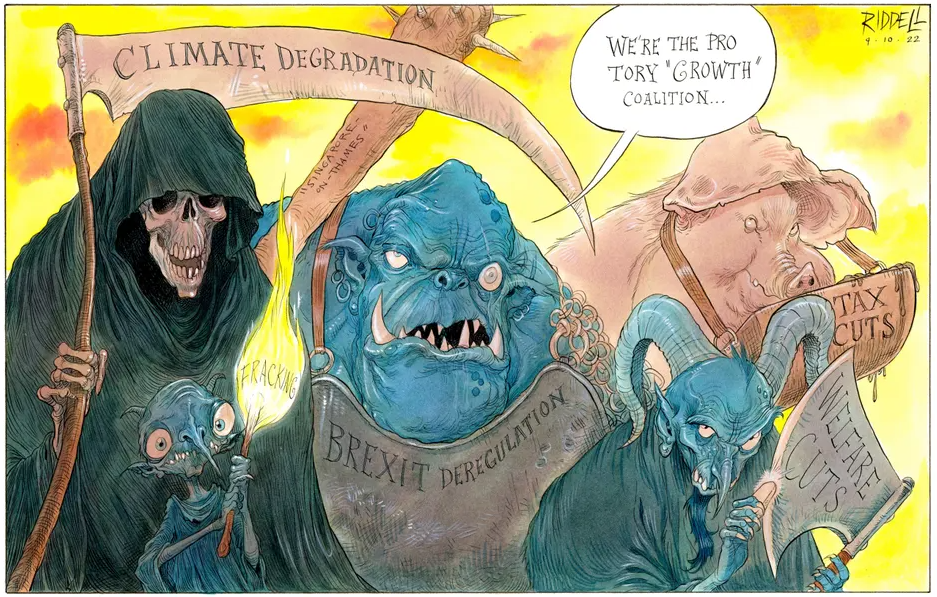
Truss used her conference speech to attack an “anti-growth coalition” that included the green lobby.

Wildlife groups are concerned rare animals and plants could lose their protections when the promised “bonfire” of EU red tape happens later this year. Species are also at risk from the government’s plans to set up new investment zones. Truss’s growth plan says environmental legislation could be slashed to make development in these areas easier.

Though No 10 has promised to protect the environment, it has given no specific assurances for areas of outstanding natural beauty, sites of special scientific interest or national nature reserves. Nor has it stated that rare animals will be protected from development in investment zones.

Martin Salter at the Angling Trust said: “Given the government’s current problems it beggars belief that they have chosen this time to pick a fight with the public and groups concerned with protecting wildlife and the natural environment. The RSPB, Rivers Trust, National Trust, Wildlife Trusts between them represent in excess of 10 million voters. Add in a couple of million anglers and countless others who are appalled at seeing rivers polluted and green spaces destroyed for ever and you have created a massive ‘coalition of concern’. Liz Truss would do well to listen again to the advice of former Environment Secretary Michael Gove who has warned of the dangers of reneging on promises made to protect our rivers and natural environment.”

Craig Bennett, chief executive of the Wildlife Trusts, said: “Restoring nature and creating a greener, healthier and more prosperous future must go hand in hand. To pit the economy and environment against each other is a retreat to the kind of outdated, failed ideological thinking that got us into this mess, not what’s needed to get us out of it. The Conservative Party was elected into Government on a promise to leave the environment in a better state for the next generation. It has no electoral mandate to do the opposite.”

Meanwhile, Hague wrote recently: “The idea that we can choose faster growth at the expense of our environment shows an inadequate understanding of those trends – that we are biological creatures that need a thriving ecosystem around us, not gods who can dispense with it if we wish.

“Crucially, it also reveals a misunderstanding of the future of growth. The great prizes for growth in the coming decades will go to cities that can breathe, with the trees that help that and the wildlife that proves it.” The Truss government has also prompted anger and confusion in rural Britain by deciding to review its post-Brexit farming payments scheme, the Environment Land Management scheme.

This was to pay farmers to farm sustainably, and also create habitats for wildlife. The scheme took six years to create, with wildlife organisations and farmers contributing. Many farmers signed up to pilot schemes having changed the way they work in order to be eligible for funds.

While some in the agricultural industry complained about elements of the scheme, such as little reward for upland farmers, that the paperwork was difficult to fill in and that the government has been low on detail for how to be eligible for future elements, the rural world was getting ready for the change.

Many were shocked and angered to find out that the government plans to review six years of work in six weeks, without warning.

The Labour party is now drawing up a list of rural and nature policies and making a point of defending the nature organisations attacked by the government.

Jim McMahon, the shadow environment secretary, said: “Instead of dismissing the opinions of experts, who represent millions of people’s views, the Conservatives should be listening to well-respected nature organisations’ concerns about the impact of their planned bonfire of environment regulations.

“Labour believes in protecting and enhancing our natural environment, not just because it’s the right thing to do for our planet, but because our nature and our coastal hotspots are a driver of jobs, economic growth and wellbeing in our great country.”

Commenting on the government’s attitude to nature, Sarah McMonagle, acting director of campaigns and policy at CPRE, the countryside charity, said: “Antagonising people who care about nature and the countryside is completely counterproductive.

“Over many years, Defra has engaged constructively with the environment sector and it’s important that continues.”

A spokesperson for the Department for Environment, Food and Rural Affairs said: “The environment, farming and economic growth go hand-in-hand and we want to support our farmers to produce high-quality food and enhance our natural environment. We are not scrapping our farming reforms, including the Environmental Land Management schemes. We are committed to halting the decline of nature by 2030 and will not undermine our obligations to the environment in pursuit of growth.”

You announce a plan of unfunded tax cuts, then the debt collectors knock on your door.

What’s an old Etonian with a “brilliant” academic mind, variously described as: arrogant; tin-eared and, with only a few of week’s experience, a bit naive, to do when the debt collectors call? Especially when he has already crashed the pound and pushed up interest rates for everyone.

It increasingly looks like Plan A was to bounce the cabinet, the treasury and us with a wing and a prayer assumption that tax cuts would instantly be self-funding by immediately creating 2.5% growth. No questions asked nor needed for such obvious genius.

Except the experienced, real world, orthodox debt collectors called his bluff.

So what is his Plan B?

Austerity on a scale that will make Osborne look generous? – Owl

(Plan A looks a bit thin to Owl)

OBR forecasts likely to show £60bn-£70bn hole after Kwarteng’s mini-budget

Richard Partington www.theguardian.com (extract)

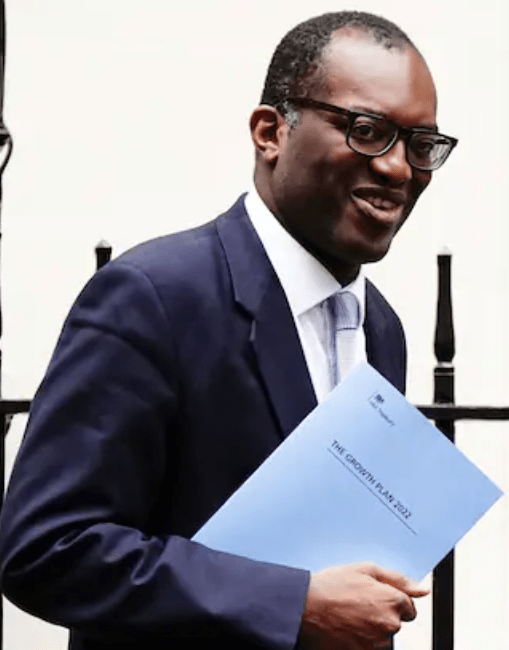
Kwasi Kwarteng has been handed independent forecasts on the state of the UK finances that are expected to show a hole of more than £60bn left by his sweeping tax cuts and a sharply slowing growth outlook.

At the end of a turbulent week for Liz Truss’s government, the chancellor was on Friday handed the initial predictions for the economy and public finances by the Office for Budget Responsibility (OBR) which are likely to paint a gloomy picture.

Sir Charlie Bean, a ex-member of the independent watchdog and a former Bank of England deputy governor, said the document would probably show a large shortfall for the exchequer.

“It will be in the order of £60bn to £70bn relative to its previous forecasts,” he said, adding that Kwarteng would face three options: further U-turns on his tax-cutting plans, deep cuts to public spending, or risking the ire of already rattled financial markets by substantially adding to the national debt.

‘Winding up the other side’: leftwing designers CGI-bomb Tory speeches

At 4.55pm on Monday the WhatsApp group of a collective of leftwing graphic designers started pinging excitedly after one member noticed something.

The chancellor, Kwasi Kwarteng, had given his speech to the Conservative party conference in front of a bright blue screen – almost a replica of screens used for computer-generated imagery (CGI).

Alexandra Topping www.theguardian.com 

By 5.23pm the group, Labour Party Graphic Designers, had tweeted a video of the chancellor, created by 22-year-old collective member Christian Walker, with news footage of the drop in the pound precipitated by his mini-budget rolling behind him.

Watch on twitter here

On Tuesday the background had not changed, and the group tweeted a video of the home secretary, Suella Braverman, against the opening of the Star Wars film The Force Awakens, with the words: “Lessons learned by the Conservative party yesterday: 0”.

Watch on twitter here

Convinced the screen would be changed for the prime minister’s speech, they held tight. But as Truss walked on stage on Wednesday – and stood in front of the same blue background – they got to work. “It was a race against time,” says Kevin Kennedy Ryan, who runs the group’s Twitter account. “We wanted to get it out as quickly as possible – I think we ended up posting just a couple of minutes after she finished.”

Watch on twitter here

The video, which shows Truss opening her speech against a backdrop of snaking food bank queues, sewage spewing into the sea, patients on trolleys in hospital corridors and graphs showing the increase in household bills and the falling pound, was accompanied by the words: “Political tip! Don’t stand in front of a bluescreen if you’re in the middle of crashing the country.”

Viewed 1.5m times since, Kennedy Ryan says the group wanted to create mischief (“there’s a lot of nuances to political communications, but winding up the other side is just great”) but – like all political design – there was a serious message. “We wanted to juxtapose this incredibly managed and polished impression that they were trying to present with the stark reality of what’s actually happening in this country,” he says.

Sana Iqbal, a member of the group, says good graphic design is a powerful tool to help amplify a political message. “It’s a great vehicle to persuade people, influence people, emotionally touch their hearts and minds – but it can’t win an election. You need substance at the core,” she says.

Labour Party Graphic Designers are a collective of mainly young creatives who support the party, but are not officially affiliated with them – as Kennedy Ryan puts it: “We’re just a bunch of nerds who do this in our spare time.”

The set-up works for Labour because they get instant, memeworthy and shareable content without having to produce it – and the ability to distance themselves if content oversteps the line, argues Iqbal. But it works for the creatives too: “We don’t have to stick to any guidelines. Nobody’s going to tell us off.”

Powerful political graphic design is, of course, not the preserve of the left. One of the most impactful political images in history came from 1978, in anticipation of the general election the following year – when Saatchi & Saatchi created the poster Labour Isn’t Working, featuring a long queue for unemployment benefit.

As the former Saatchi & Saatchi art director Martyn Walsh recalled it, “every newspaper put it on their front page, every TV station had it on the news […] By the end of the first week, both the poster and the name Saatchi & Saatchi were known in every household in Britain.”

The poster linked the Conservative party with strong design, but imagery has always been a fundamental part of the labour movement, argues Chris Burgess, the head of exhibitions and public programmes at Cambridge University library and an expert on political posters and imagery.

“Throughout its history, the Labour party has produced images creating a really strong identity,” he says, from the earliest images made for the labour movement such as Mothers Vote Labour, created by Gerald Spencer Pryse in 1919, to the upbeat image of Harold Wilson with a thumbs-up in 1964. “But while the party has often been at the forefront of political design, traditionally they just didn’t have as much money to put up as many posters.”

Kennedy Ryan argues this is still the case, but Labour-supporting creatives are capitalising on the digital revolution to produce fast, cheap and instantly shareable political graphic design.

“They’ve got the cash, but we’ve got the culture,” he says. “We’re using the human resources and the creativity of the people who want to fight for a better world, where the Conservatives, you know, have to pay people to go to their birthday parties and stag dos and do their graphic design.”