Ministers missed chances to prepare social care for a pandemic, review finds

Cathy Gardner vindicated once again – Owl

Distress and heartbreak for millions could have been avoided if the government had not missed opportunities to prepare social care for a pandemic, according to a big investigation into how the first wave of Covid hit care homes.

Robert Booth www.theguardian.com 

A review of events in spring 2020, when almost 20,000 care home residents died with Covid in England and Wales, found it was the result of “letting one of our most important public services languish in constant crisis for years”.

A two-year study by the Nuffield Trust health thinktank and the London School of Economics found successive governments failed to respond to risks already exposed by cross-government pandemic planning exercises, didn’t have enough civil servants working on social care, and failed to appreciate the sector’s fragility when sending patients into ill-prepared care homes.

The study is the latest independent assessment to undermine the claim by the former health secretary, Matt Hancock, to have thrown “a protective ring around social care”. It comes before the Covid-19 public inquiry’s investigation into the care sector, the timing of which has yet to be announced.

One social care representative told the study about a meeting hosted by the then prime minister Boris Johnson and Hancock in February 2020 at which “[we] … could not get air time for social care’s issues” unless it was about the NHS’s requirements.

Natasha Curry, deputy director of policy at the Nuffield Trust, said: “Those early months exposed … weaknesses within social care that impacted the shape, speed and effectiveness of the response. Many of these difficult challenges could have been eased had warnings been heeded. Governments of all hues have failed to make social care and those who need it a priority.”

The Covid-19 Bereaved Families for Justice group said the report showed “our loved ones might still be with us if care homes had been properly prepared for and protected during the pandemic”.

The study found:

  • The government excluded social care from pandemic-planning exercises such as Exercise Alice and after problems were identified by Exercise Cygnus, which did include the sector, action was not taken.
  • Social care leaders felt invisible at the start of the pandemic because there had been no dedicated director general for social care in government since 2016.
  • No adult social care representatives sat on the Scientific Advisory Group for Emergencies (Sage) and people leading the UK pandemic response lacked “deep understanding” of social care.

“Had the sector had the tools it needed then some of the confusion and delays that led to so much distress and heartbreak that millions of people faced could have been avoided,” said Curry. “Despite the pain endured during the pandemic, we now have the ominous sight of reforms being yet again delayed.”

The analysis was part-funded by the UK government, through the National Institute for Health and Care Research. No officials at the Department of Health and Social Care agreed to be interviewed.

“The social care sector was underresourced for years and … my mum, who had worked her whole life, needed help but was left with a system woefully unprepared to protect her,” said Deborah Doyle, a spokesperson for the Covid bereaved families group whose mother, Sylvia Griffiths, died in a care home in April 2020. “We cannot allow horrific scenes like this to happen again, and we don’t have time to wait.”

Adelina Comas-Herrera, an academic at the LSE and a report co-author, said: “The evidence suggests that some countries were able to cope better than others. We are seeing how countries such as Ireland, Finland and Spain are using lessons from the pandemic to reform their care systems. Our research shows that social care in England needs a system-wide reform.”

The care minister, Helen Whately said: “During the pandemic we supported social care with £2.9bn in specific Covid funding, sent out more than 230m Covid tests to care homes and prioritised social care for Covid vaccinations. We are committed to learning lessons from the pandemic and are investing up to £7.5bn over the next two years to put social care on a stronger financial footing, help reduce waiting lists and alleviate workforce pressures.”
Tories lose control of local politics in Devon

Here is a summary of the local election results in the rest of Devon (Plymouth and Exeter already reported)

  • Mid Devon District Council (whole council)

The Liberal Democrats have won control of Mid Devon, in a big boost to local Lib Dem MP and by-election winner Richard Foord.

From Devon to Dacorum and Stratford to Surrey, Lib Dems say they are winning big right across the country.

  • North Devon Council (whole council)

The Liberal Democrats have expanded their control of North Devon Council, now holding 23 of the 42 seats, having won one extra member.

The Greens also made a gain, moving from two to three seats, with the Conservatives losing one seat and dropping down to seven, while there are now nine Independents, down from 10.

  • South Hams District Council (whole council)

The Liberal Democrats have gained enough seats to take overall control of South Hams District Council.

  • Teignbridge (whole council)

The Liberal Democrats gained in Teignbridge and so now have overall control of the council. Before the election, no party had overall control.

  • Torbay (whole council)

The Conservative Party have won enough seats to gain a majority in Torbay.

  • Torridge (whole council)

Independent candidates won the most seats in Torridge, taking 16 of 36 available. The Liberal Democrats took eight seats, followed by the Conservatives with six, but no party has overall control.

  • West Devon (whole council)

The election results in West Devon mean no one party has overall control of the council. The Conservative Party previously had the majority.

East Devon: Lib Dems make gains as Tory support continues to drain away 

The Lib Dems have now just pipped the Conservatives to the post to become the largest party, ousting, along the way, Tory group leader Phil Skinner.

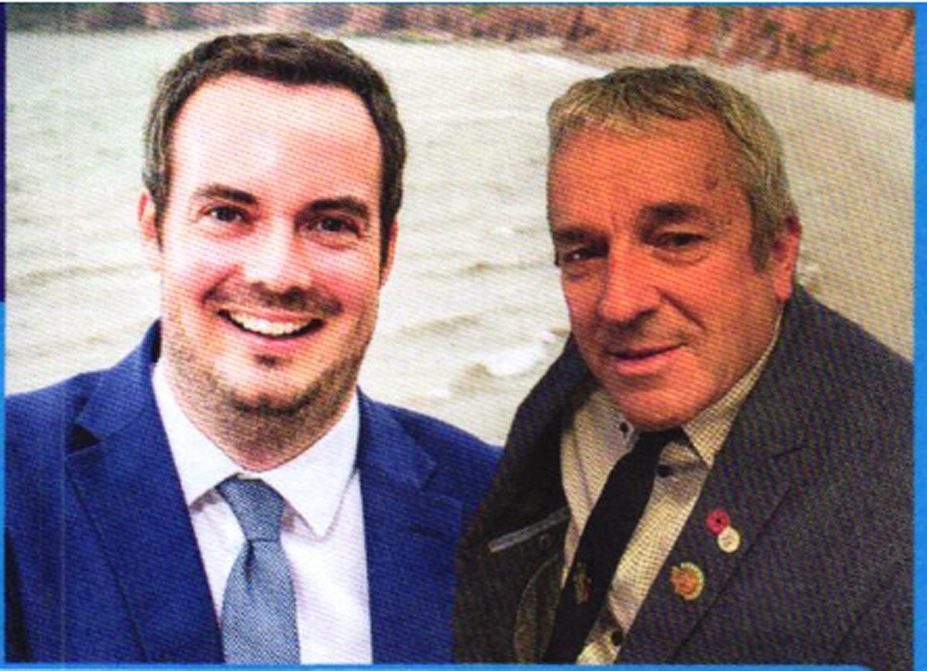
Despite the spin, see below, from Simon Jupp and yesterday’s man Phil Skinner, this is the third electoral cycle in a row in which the local Tories have lost ground. In 2011 the Tory councillors numbered 43 (in a council of 59). In 2015 this had fallen to 36. In 2019 (when the council was enlarged to 60) it had fallen further to 19, though they picked up three wards in by-elections. Now in 2023 they have fallen back to 17.

The council is now split three ways: Independents, Lib Dems and Tory.

[Independents 19, Lib Dem 18 there is now also 1 Liberal, Conservatives 17, Labour 3, Greens 2]  Full results here

Worth mentioning that the three Independents running on a combined ticket in Axminster: Paul Hayward, Deputy former Leader of the Council and Portfolio Holder Economy and Assets; and Sarah Jackson, former  Portfolio Holder Democracy, Transparency and Communications plus their like minded running mate Simon Smith; swept the board ousting two Tories. Sarah was a lone Independent in the Ward

Many of the Independents (see above) and the greens were part of the outgoing inclusive coalition. Owl hopes that this “rainbow” coalition will continue, no doubt intensive negotiations are taking place.

Questions: will the Tories now take stock of their failed vested interest policies? 

Who will now become Blue Leader given that nine of the old stagers “retired”? Those left include: Helen Parr  and Ben Ingham ? – Owl.

Local elections 2023: Lib Dems make gains as East Devon stays hung

www.bbc.co.uk

East Devon District Council remains under no overall control, with the Lib Dems making the biggest election gains.

The party gained 11 seats, with 18 overall, including former council leader Paul Arnott’s re-election to Colley Valley. [Fact check – Owl thinks the Lib Dem total is 19 – there are 60 councillors in total]

The Independents lost eight, making their total 19, while the Conservatives won 17, conceding five, Labour won three and the Greens two.

It is likely the Democratic Alliance, a cross-party group, will retain control.

Mr Arnott, leader of the last administration, has been re-elected as a Liberal Democrat, having been elected as an Independent in 2019.

He said the result was “indicative that the Lib Dems are really bedding in now in East Devon and it promises a lot more to come”.

Violet Bonetta, one of Labour’s three winning candidates, became the youngest-ever councillor in East Devon at the age of 18, said the Local Democracy Reporting Service (LDRS).

Ms Bonetta said she wanted to encourage more young people into politics.

“This is the first election I’ve been involved in, let alone run for an election, so I would encourage anyone thinking about running as a councillor to go for it,” she said.

Philip Skinner, the former Conservative group leader on the council, was ousted from his seat by Liberal Democrat Richard Jefferies by a couple of hundred votes.

Mr Skinner told the BBC he was “really surprised” by the outcome and hoped it was a “bump in the road” for the Tories.

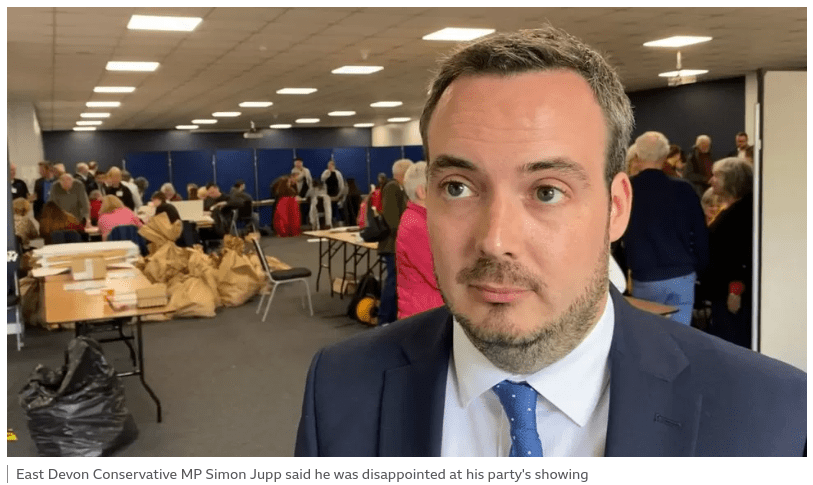
Simon Jupp, Conservative MP for East Devon, said he was “disappointed” in the net loss of five councillors but that gains in Sidmouth and Exmouth were “positive”.