
Toxic chemical pollution found in river and groundwater sites across England – Westcountry Rivers Trust
Josie wrt.org.uk
A WORRYING scale of chemical pollution in England’s rivers and freshwater sites has been revealed following analysis of official Environment Agency data [1].
The research, from The Rivers Trust and Wildlife and Countryside Link, looked at the prevalence of five chemical cocktails known to have toxic impacts for wildlife.
It also highlights the lack of official monitoring for known harmful chemical cocktails, as well as the lack of a regulatory framework to address these mixtures.
Findings reveal that:
- Chemical cocktails, that have been proven harmful to wildlife in scientific studies, have been found in 814 river and lake sites (out of 1,006 sites with data – 81% ) and 805 groundwater sites (out of 1,086 sites with data – 74%) across England
- Over half (54%) of these sites contained three or more of the five harmful chemical cocktails investigated [2]
- Up to 101 chemicals were identified in river samples, with sites along the rivers Mersey, Stour, Colne, Thames, Trent, Yare, Irwell, Medway, Humber and Avon among those containing the highest numbers of chemicals. The actual numbers of chemical pollutants will be even higher [3]
The chemical cocktails found across the 1,619 sites contained six different chemicals in five different hazardous mixtures. These included four toxic forever chemicals PFOS, PFOA, PFBS and PFHxS, the pesticide 2,4-D and the commonly used painkiller ibuprofen (see table below for more detail).
In specific combinations these chemicals are known to have increased harmful impacts on a range of species including amphibians, fish, insects, nitrogen-fixing bacteria and algae. Identified detrimental effects included reduced growth, cell function, impacts on embryos and lower survival rates. Any potential human health implications, for example through contact via bathing or recreation, remain unknown.
Some of the sites where all five chemical cocktails were found include: The Chelt (in Cheltenham); The Derwent (in Yorkshire); The Trent (in Staffordshire); The Exe (in Devon); The Ouse (in Lewes East Sussex); the Wansbeck (in Northumberland); and the Yare (in Norfolk).
Find out how you can support a call for action at the end of the article
A group of charities, including Wildlife and Countryside Link, The Rivers Trust, Surfers Against Sewage, Buglife, WildFish, Fidra, Pesticide Action Network UK, The Wildlife Trusts, The National Trust, Whale and Dolphin Conservation and the Pesticide Collaboration, launched a ‘Chemical Cocktail Campaign’ (24 May 2023), urging the Government to take a much more ambitious approach to regulating harmful chemicals. [4]
We are supporting their calls which include asking Government to include in its forthcoming UK Chemicals Strategy: regular monitoring for chemical cocktails in rivers, and new legal protections against dangerous chemical cocktails, including requiring assessments of potential hazardous chemical mixture impacts before any new chemical is allowed on the market.
Dr Laurence Couldrick, CEO at Westcountry Rivers Trust, said in an interview with ITV Westcountry: “Some of these forever chemicals are going to be in our rivers…forever. Because of the nature of them they just do not degrade but we do need to stop the flow of those pollutants. There’s so much we can do, in terms of how we live as a society, what we throw down our toilets and our sinks, but also how we buy our food and manage our lives.”
A range of five known toxic chemical cocktails has been looked for in Environment Agency data. While there are other known toxic combinations (and likely many more unknown) a narrow focus was used due to the volume of data that needed to be reviewed. All of the chemical combinations focused on cocktail impacts with the harmful and extremely prevalent forever chemicals perfluorooctane sulfonate (PFOS) and perfluorooctanoate (PFOA) . These were chosen due to how widespread they are (despite having been banned) and the need for them to be recorded under Water Framework Directive requirements, making them more visible chemical contaminants for assessment.
Rob Collins, Director of Policy and Science at the Rivers Trust, said: “We need to stop pumping poison into our rivers. Hazardous chemicals are flowing into our waters, derived from every aspect of our lives. On the small-scale from the toiletries, food packaging, clothing and other goods we use individually, to large-scale industrial, medical and food production, we are creating an ever-growing chemical cocktail in our rivers. The fact that these known toxic chemical combinations are found so widely across the country is deeply worrying. And that’s just the tip of the iceberg. Unless we act now we’ll see increasingly contaminated water, less wildlife in our rivers and ocean, and this raises implications for human health as well.”
The table below details the toxic chemical cocktails that were investigated and the number of sites they were discovered at. Alongside this, are details of the studies that have identified harm to wildlife species from these harmful chemical combinations. Please note that all of these studies were carried out in laboratory conditions, not in the field.
The levels of these contaminants in rivers were typically much lower than in the laboratory studies, but individually, each of these chemicals are known to impact wildlife at concentrations lower than those reported in these studies. In addition it is not known how these chemical cocktails (which are binary mixtures studied in the laboratory) interact with other chemicals in a wider mixture in our rivers. [5] Their widespread presence in our rivers, knowing their damaging impacts in laboratory studies, is cause for concern.
Table 1: Chemical cocktails identified in English river sites
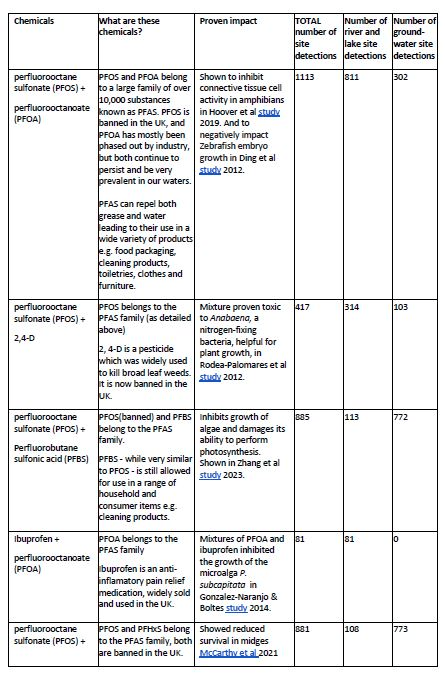
Table 2: Number of chemical cocktails present at river, lake and groundwater sites across England

Richard Benwell, CEO of Wildlife and Countryside Link, said: “A harmful chemical cocktail is being stirred up in UK rivers, putting wildlife and public health at risk. Government regulates and monitors chemicals individually, ignoring the cocktail effect. But our research shows that toxic combinations of pesticides, pharmaceuticals and forever chemicals are polluting rivers up and down the country. The new Chemicals Strategy must make sure harmful substances are regulated not just for individual risks, but for their effects in combination.”
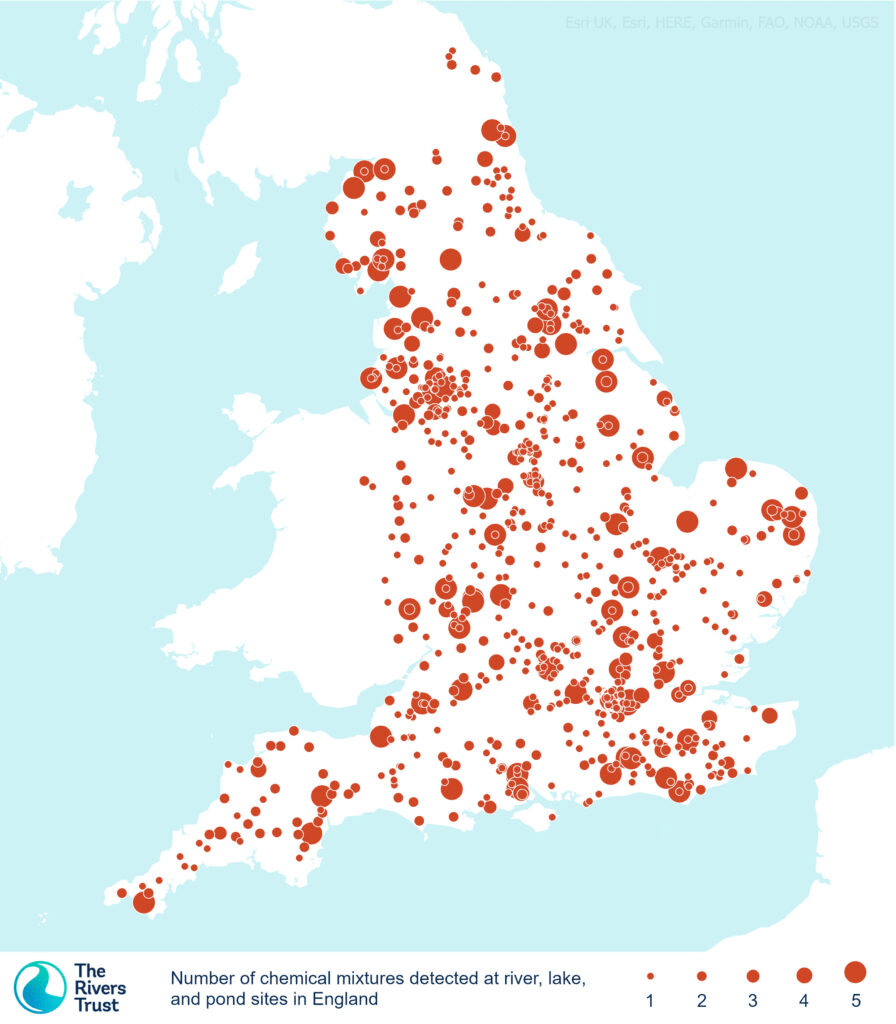
Map 1: River, lake and pond sites in England where 1 or more of the 5 chemical cocktails were found
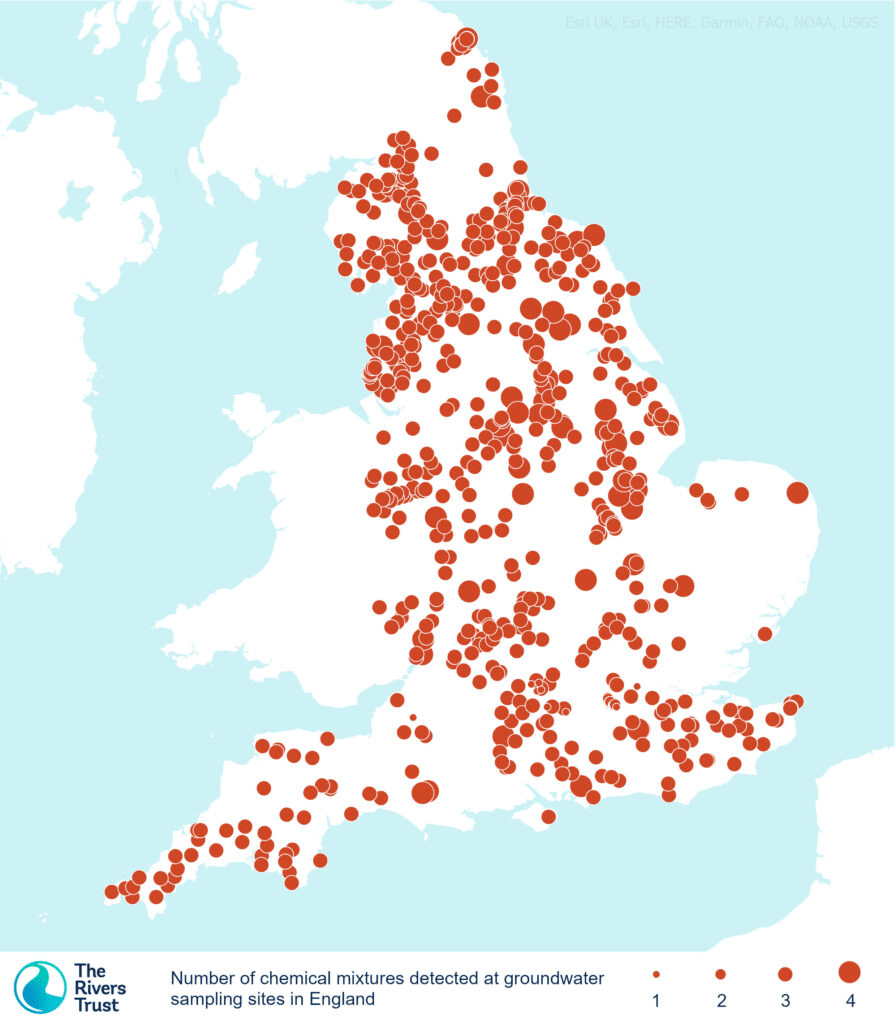
Map 2: Groundwater sites across England where one or more of the 5 chemical cocktails were found
Speaking at a Parliamentary event on chemical cocktail pollution (23 May), hosted by UK Youth For Nature and Wildlife and Countryside Link, the Rt Hon Philip Dunne MP, Chair of the UK Parliament Environmental Audit Committee, said: “The country’s precious waterways should be as free from pollutants as possible, yet the long-standing prevalence of harmful chemicals has meant that no river in England is in good chemical health. During the course of the Committee’s inquiry examining water quality of rivers, we were alarmed at the lack of monitoring taking place for harmful pollutants, including chemicals. We must know what we’re tackling, so monitoring and assessment is absolutely critical. The Committee concluded that annual chemical assessments should take place.
Ellen Bradley, Co-Director of UK Youth For Nature, said: “The chemical cocktail in our rivers is a recipe for disaster for nature and future generations. Everything from the clothes we wear to the medicines we use plays a part in the problem. Even the food we eat everyday is part of a broken system that is choking our rivers with harmful chemicals and leaving UK wildlife paying the price. Tougher chemical controls and curbs on agricultural pollution are vital if younger people are to see our not so freshwater cleaned up in their lifetimes.”
As well as some chemicals being damaging to wildlife on their own, sometimes when chemicals mix together in the environment, they can cause even more harm to nature. When several chemicals are present together, their toxicity can add up or interact to produce a mixture effect. The most common mixture effect is additional, this is when the toxicity of each chemical adds up, resulting in an adverse effect even when each chemical individually is at a low (“safe”) concentration. In rarer cases it can be antagonistic, resulting in a weaker effect or synergistic, resulting in an even greater effect. The above combinations searched for in our research are synergistic – causing multiple times the harm of the individual components.
Far too little is known about the impact of chemical cocktails on wildlife and people. It would not be economically feasible to specifically assess and regulate all of the vast number of possible chemical combinations. But we do need to deliver additional safeguards to reduce the risk of creating dangerous chemical cocktails in our rivers.
To tackle the chemical cocktail affecting our waters and wildlife, measures are needed which reduce the number and amount of chemicals used in our daily lives and which are released into the environment. We also need much greater understanding, monitoring and prevention of chemical cocktails at a Government regulatory level. Key actions nature organisations are calling for in the upcoming UK Chemicals Strategy include:
– Phasing out known toxic chemicals (including PFAS forever chemicals) from all but the most vital uses.
– Regulating chemicals in groups (where all chemicals with similar structures would be restricted if one was found to be harmful. Preventing one damaging chemical being easily replaced by another similar chemical).
– Specific measures to address the chemical cocktail effect in our rivers and ocean through: introducing a requirement to assess possible interactions with other chemicals before any new chemical is allowed on the market; greater research into chemical cocktail impacts for wildlife and human health; and routine monitoring of waters for known dangerous combinations of cocktails.
– Delivering more rigorous monitoring for chemical pollutants more widely, including through increased funding for the Environment Agency’s river monitoring programme.
Ruth Jones MP, Shadow Minister (Environment, Food and Rural Affairs), said: “The UK’s current approach on chemical pollution is failing, and these stark statistics are yet more evidence of this. We need action now to curb the chemical cocktail in our rivers. The Government must up its game and tackle the sewage pollution scandal and chemical pollution crisis together to give communities and nature the clean water they deserve.”
Members of the public are being encouraged to sign a joint letter to the Secretary of State, Thérèse Coffey, to demand action on chemical pollution: https://theriverstrust.org/chemical-cocktail-campaign
ENDS
References
- Wildlife and Countryside Link and the Rivers Trust analysed data in the Environment Agency’s LC-MS, GC-MS and Water Quality Archive databases. They identified presence or absence of up to 101 chemicals across river sites within these three databases, finding that there were over 50 chemicals present at 127 river, freshwater, estuary and coastal sites. Data was analysed from between 2016 to 2022. Searching for 5 known chemical cocktails in the LC-MS and Water Quality Archive identified a total of 1,619 sites with one or more of these combinations present. The combination of PFOS and PFOA was found at the vast majority of the sites (1113 sites).
- In sites where at least one chemical cocktail was identified, groundwaters tend to show more of these chemical cocktails, with 96% (771) of the sites containing 3 or more of the 5 chemical cocktails, whereas 86% of river and lake sites (703) with chemical cocktails detected showed 1 or 2 of the cocktails. This may indicate a trickle-down effect, that this pollution reaches groundwaters and is stored here before a delayed release into rivers and lakes that could be months, years or even decades later. It may also reflect different monitoring of these chemicals in groundwater – with the main purpose of the Water Quality Archive data being statutory EU monitoring and the LC-MS data mainly being UK government policy. Beyond this difference it is difficult to properly understand the cause of the differences between surface and groundwater as information is not provided when chemicals are monitored for but not detected.
- The number of chemicals will in fact be far higher than this number, due to only a limited number of chemicals being tested for by the Environment Agency
- Supporters of the ‘Chemical Cocktail campaign’ include: Angling Trust, British Canoeing, Buglife, Fidra, The Institute of Fisheries Management, Pan UK, The National Trust, The Pesticide Collaboration, River Action, The Rivers Trust, Surfers Against Sewage, UK Youth for Nature, Whale and Dolphin Conservation, WildFish, The Wildlife Trusts, and Wildlife and Countryside Link.
- A liquid mixture containing two components is called a binary mixture. When a binary mixture is distilled, complete separation of the two components is rarely achieved.
 East Devon Watch