Breaking BBC News: East Devon council files vote of no confidence in South West Water

A council has passed a vote of no confidence in South West Water (SWW) after a series of pipe failures and sewage overflows in the area.

By Alex Green www.bbc.co.uk

East Devon District Council (EDDC) voted unanimously to pass the motion at a full council meeting on Wednesday.

The council said its leader Paul Arnott would now write to SWW, and would be asking local MPs to lobby government.

SWW said it would continue to do everything it could to deliver improvements and address concerns.

A spokesperson for the water company said: “We are disappointed to hear about the motion passed by East Devon District Council.

“We will continue to do everything we can to deliver ongoing improvements and to address the concerns of our customers in light of the recent bursts in the area.”

It previously said it was investing £38m to reduce spills at Exmouth and took its responsibilities “very seriously”.

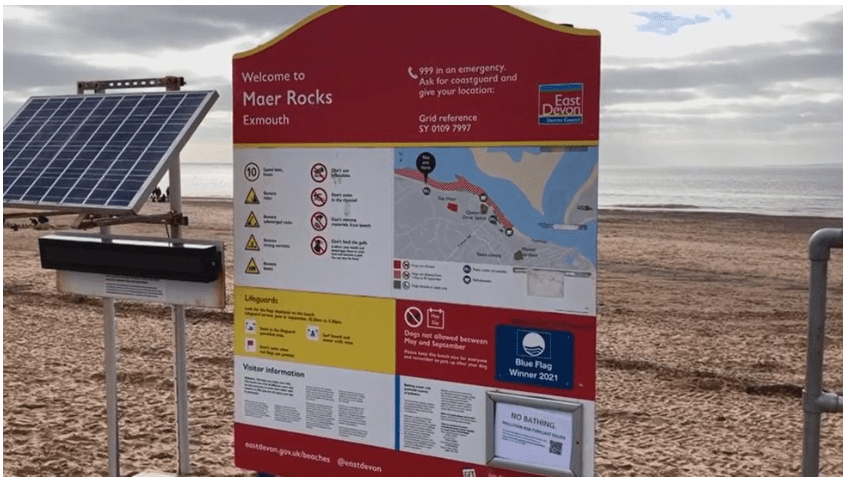
There were a number of pipe failures in Exmouth in December, including at the Phear Park Pumping Station emergency overflow outfall, where SWW said sewage had been released into the estuary because of a burst of one of its critical rising mains.

The Environment Agency has previously issued precautionary advice against bathing in Exmouth

EDDC said it was “alarmed” SWW had failed to notify the council of sewage overflows in Exmouth, leading to reports of people and pets falling ill from exposure to untreated human waste during sea swimming.

During the meeting, EDDC agreed Mr Arnott should write publicly to SWW’s chief executive to request a commitment from the water company to involve town and parish councils in discussions regarding ongoing and upcoming works.

The council also wants a joint partnership between SWW, EDDC officers, and cabinet members on ongoing developments and issues.

It also said it wanted SWW to work with EDDC planning officers to help manage pressures caused by new developments, respond to community concerns and proactively advise the public of overflows.

At the council meeting, it was also agreed the leader would write to local MPs to encourage them to support efforts to engage SWW.

The letter will also ask MPs to lobby the government to revisit “weak legislation”, and to resist a request by the water company to raise bills by more than 20% by 2030 – until demonstrable action on sewage spills had been taken.

‘Lost control’

Mr Arnott said: “We truly do not have any confidence in the operational side of South West Water, particularly to protect key communities all the way across East Devon.

“Particularly at the moment, you can see it in Exmouth, where there is sewage coming up through the streets, it’s coming up through failed pumping stations, and it’s going into the sea.”

The council leader said “despite repeated assurances”, the local authority believed SWW had “now lost control”.

“It’s evidenced in plain sight…hundreds, thousands probably of tanker journeys going around with sewage that essentially is going straight into the sea,” he added.

“The infrastructure is broken, and the reason for the no confidence is they should have known 10, 12 years ago the infrastructure would break, and they didn’t fix the roof…when the sun was shining.”

East Devon ‘green lungs’ could be lost forever: District council challenges national plans to slash green spaces near Ottery, Exmouth, Lympstone and Exeter

Acres of ‘green lungs’ and wildlife areas in East Devon are at risk of being lost forever unless the district council wins its challenge to protect land from being earmarked for development.

Local Democracy Reporter eastdevonnews.co.uk

Plans to slash East Devon’s ‘green wedges’ have been sent back to the drawing board, writes local democracy reporter Will Goddard.

Green wedges are designed to protect the character of towns and villages and stop them blending together.

But they do not prevent housing development completely and are not part of national planning policy. Other protections also exist to safeguard landscapes and the environment.

The proposed cuts and changes to how the wedges are defined were brought forward at an East Devon District Council meeting, amid concerns they could be challenged in the future without clear evidence to justify them.

green wedge

Green wedge proposed between Exmouth and Lympstone. Image: EDDC.

More than 70 per cent of the currently designated green wedges would have been lost under the plans, according to Cllr Geoff Jung (Lib Dem, Woodbury and Lympstone).

He said: “I appreciate that a green wedge is not a countryside protection tool, but a development and planners’ device to help protect the unchecked development of our conurbations, as well as helping to try and stop any correlating of settlements.

“But many of our residents see them as far more important, as the green lungs, wildlife areas and helping to reduce flooding, etc.

“Reducing them by this magnitude without any replacement policy sends the wrong signal that we as a council don’t care about environmental protection. Our countryside is our number one asset.”

EDDC

Proposed green wedge between Ottery and West Hill. Image: EDDC.

Cllr Ben Ingham added: “The NPPF [National Planning Policy Framework] does not identify green wedges as such. That is not a green light to get rid of them, rather an opportunity for us to protect our green credentials.

“Green wedges came into form for this authority during the 1990s. Over the last 30 years, residents and Councillors have taken these to represent a part of our collective values and aspirations. To attack these collectively is to reject our current cultural values that embrace the East Devon vision.

“They come into play when different planning major applications come forward within a green wedge and can be the last resort of our protection for our planning policies and values.”

East DEvon

Proposed green wedge, East of Exeter and south of the A30. Image: EDDC.

Councillors voted unanimously to send the plans back for revision and more councillor input, and also for officers to look into whether areas of East Devon could be designated as ‘green belt’ land, a more established classification nationally.

Simon Jupp one of the shy Tory candidates who seem reluctant to tell voters they’re Conservative

[Featuring image first seen on East Devon Watch]

Unwitting constituents might be forgiven for thinking that the green leaflet that just slipped through their letterbox adorned with the face of a smiling politician was put there by their local Green Party.

Eleanor Langford, Hugo Gye inews.co.uk 

In fact, if they get as far as unfolding the pamphlet, they will see a small logo in one corner that reveals it is actually a leaflet for their local Conservative MP or prospective Parliamentary candidate, paid for and designed by the party’s central office.

The colours of the UK’s political parties are fairly well established – blue for the Tories, red for Labour, orange or yellow for the Lib Dems and, as the name suggests, green for the Green Party.

However, the Conservatives seem to be ignoring this distinction with the design of some of their recent flyers, leaving potential voters in many areas of the country confused.

Has the image of the party become so damaged by the turmoil of its latest spell in government that its MPs have become systematically shy about revealing that they are actually Tories?

It’s not just leaflets where they appear to be playing down or almost obscuring their party affiliation. Data compiled by Campaign Lab shows that, as of November 2023, 51 per cent of Conservative MPs did not mention the party in their bio on X, formerly known as Twitter, compared to just 10 per cent of Labour MPs and zero Lib Dems.

Philip Cowley, professor of politics at Queen Mary University, says there’s “no great mystery” why some Tories are going down this path.

“The national party is unpopular,” he says. “The local candidate is hoping that he or she can establish themselves as a local champion, while still relying on the core Conservative vote.

“The green works to make them look like the sort of person who will defend their patch against nasty house builders. The focus is all on local stuff, rather than national policy.”

The green leaflet isn’t the only design put out by the Conservative Party that has led to some confusion. A second, used by multiple MPs, uses pink and purple colours and a magazine-style layout with the heading “You & Your Family” – though it does include the sub-heading “how Rishi Sunak’s plan is strengthening our economy”.

A leaflet distributed by Simon Jupp MP (Image taken from eastdevonwatch.org/2024/02/08/)

Multiple voters from various constituencies have taken to social media to highlight the lack of any clear Conservative branding on both leaflets, with many questioning why the party’s name is left so small.

One Tory MP contacted by i insisted that, according to rules set by the Independent Parliamentary Standards Authority (IPSA), any material paid for using parliamentary expenses can’t be political.

But that does not appear to be the case with these designs. Multiple MPs told i that both green and magazine-style layouts are templates provided and paid for by Conservative Campaign Headquarters (CCHQ), so political content and branding shouldn’t be a problem.

They also insisted that, while the front cover was green, there were frequent mentions of the Conservative Party throughout the inside of the leaflet.

One version of the leaflet, seen by i, did include a small Conservative logo on an inside page, the details of the local association that paid for it and listed Prime Minister Rishi Sunak’s five priorities on the back cover, but the copy included no mention of the words ‘Conservative Party’.

A veteran Tory strategist i spoke to had mixed feelings about the issue. They said the use of the green colour scheme was a “longstanding thing”, and insisted it wasn’t about “distancing from the party”.

“You get better engagement as it looks less tribalistic,” they said. “It’s taken a long time to convince MPs of this given they are so used to nailing their colours to the mast.

Some local Green Party associations have criticised the leaflets for being similar to their branding (Image: twitter.com/WokingGreens)

“As for not putting Conservative on it – that I have less sympathy for, it feels more like individuals doing whatever they can to win.”

According to one current Tory activist, MPs can choose which designs they want, and the contents have to be approved by CCHQ before they are printed.

“It really depends on the MP [or] candidate which one is chosen. I think the worry is that some people might throw away our leaflet based on the colours, without actually reading what we can do for them.”

“It’s pretty normal practice – I’ve been doing this 10 years and have seen lots of leaflets like this.”

And some Tories say they can’t see what the fuss is about. “I don’t think it’s particularly unusual having a green front cover,” a Tory MP, who had used the green leaflet told i.

“Before I became an MP I was chairman of the local Conservatives and we quite often did the green front cover.

“It’s for the green Commons benches. I don’t think there’s anything odd there.”

But other parties beg to differ and fear voters could get confused. In a statement on Facebook, the Luton and Bedfordshire Green Party accused the Conservatives of trying to “hide behind our branding that they clearly feel has more credibility than their own”, and even suggested that similarities were too close to be a coincidence.

“They have chosen two shades of green that very closely match shades that have been used by the Green Party in combination in exactly the way this leaflet does,” they said.

“In addition, this leaflet uses for its main headline the typeface ‘Bebas Neue’ that is exactly the same one chosen by the Green Party.

“This simply cannot be [a] coincidence. The design has been intended to replicate (to some extent) the appearance of a Green Party leaflet.”

It’s not the first time that politicians have been accused of trying to distance themselves from their own party’s national leadership.

Ahead of the 2019 general election, an investigation by the Daily Mail found that more than 100 leaflets distributed by Labour candidates did not mention the party’s then-leader Jeremy Corbyn. A separate analysis by The Telegraph also found that nine out of 10 of his shadow cabinet did not mention him.

But if the green leaflets are a deliberate Tory strategy for the next election some within the party fear it will backfire.

“The public are smart enough to see through a silly ploy like this,” a second Conservative source told i. “It’s so self-defeating to not work to repair the brand that will be next to your name in the ballot box.

“MPs tend to massively overestimate their own personal votes in their patch, so the best thing they can do is tie their efforts to the party or sink completely.”

The Conservative Party was contacted for comment.

Dotty & May Saving Seaton Hospital

Seaton filmmaker Chrissy Evans’ new 3-minute film has had 3,500 Facebook views in two days. Showing two women discussing – in no uncertain terms – the proposed disposal of the hospital wing that was paid for 100 per cent by local people, the film has captured the continuing mood of defiance in our East Devon community. You can play video here

Chrissy is the writer and director, and the film features local actors Mary Bowles and Val Christmas. Their group, Bus Pass Productions, has made several lighthearted-but-serious films aimed at older people, including, last year, one on dementia. ‘Old age is no place for the weak, but laughter is a strong weapon’, says Chrissy. To contact her: Chrispleck51@hotmail.co.uk or 07814 323988.

Meanwhile, in Parliament …

Richard Foord MP has had the reply (see text below) from the Government to the 9,000-strong petition that he presented recently. Unfortunately, it ignores the elephant in the room: that the ‘market rents’ that NHS Property Services charges are inappropriate for a community hospital paid for by local people. This makes the parliamentary debate on NHS Property Services, which Richard has obtained for tomorrow [today] (23rd), all the more pertinent.

Progress towards use of the wing for community health and wellbeing activities

The Seaton Hospital Steering Committee is preparing its plan for using the wing and has recently held a constructive meeting with Devon NHS ICB and NHS Property Services. Regular meetings will take place until the summer.

Contact: Professor Martin Shaw, Secretary, Seaton Hospital Steering Committee 

07972 760254

Text of government reply to petition

[Out of one pocket and into another – net change zero – very clever these Whitehall Mandarins – Owl]

The Government is aware that the NHS Devon Integrated Care Board (ICB) is seeking to review its future requirements for Community Hospitals. We understand that the building of Seaton Hospital in 1988 was only possible with significant public fund-raising and that the continued availability of healthcare services delivered in community hospitals are strongly valued by the communities they serve. However, they also need to be able to adapt to changing clinical needs. 

Between 2015 and 2017, NHS Devon Clinical Commissioning Group (now the ICB) undertook a review of community services which resulted in the transfer of ownership of the North Devon community hospitals estate, including Seaton Hospital, to NHS Property Services. At the same time the service delivery model was changed, resulting in a reduced requirement for community hospital beds and leading to some properties such as Seaton being significantly underutilised.

The ICB is responsible for meeting the costs of continuing to run this operational property and in seeking to address its significant financial challenges is now considering how best to rationalise its property needs. 

Ultimately, whilst the long-term healthcare commissioning requirements for Seaton Hospital is for the ICB to determine, the operational costs of running the property have to be paid for and therefore a long-term sustainable use must be established. The ICB is currently working closely in partnership with NHS Property Services to identify and evaluate suitable options to achieve this objective. Whilst the property remains an operational healthcare facility, it is not surplus to commissioning requirements and there are no current plans to sell the facility.

The Government believes that ICBs are best placed to make decisions on commissioning services for their communities, working with local authorities, stakeholders and local populations to meet people’s needs.