British and Irish rivers in desperate state from pollution, report reveals

The rivers of Britain and Ireland are in a desperate state from the impact of pollution, with not a single waterway in England or Northern Ireland listed as being in good overall health, a report said on Monday.

Sandra Laville www.theguardian.com

The Rivers Trust annual State of Our Rivers report reveals that the impact of pollution from treated and untreated sewage and agricultural and industrial runoff means rivers are in a worse condition than ever.

More than half – 54% – of rivers in England failed to pass chemical and ecological tests because of pollution from water industry releases of treated and untreated sewage, based on data from the EU-derived water framework directive (WFD) in 2022.

Agricultural pollution contributes to 62% of waterways in England failing to meet good standards for chemical and biological pollution. Urban runoff from transport contributes to 26% of rivers not achieving good overall status.

The report shows none of England’s rivers are in good chemical health, which means the concentrations of toxic chemicals are higher than the safe limit in every river. Failing to pass chemical tests means no river in England is considered to be in good overall health.

Just 15% of rivers pass biological markers for good ecological health. Ecological health looks at what is living in the river, and how modified it is. The presence, absence and abundance of species is a good indication of its general health.

Similarly, no stretch of river in Northern Ireland is in good overall health.

The trust’s chief executive, Mark Lloyd, said: “The State of Our Rivers report is a huge passion project for us, as it’s so important to ensure that science and evidence are at the heart of conversations about how to improve our rivers.

“However, it’s also much more than that, as it puts the data in the hands of the public so that they can join us in calling for the change that our environment so desperately needs.”

The Rivers Trust is calling on the public to push politicians to make changes to improve the quality of rivers. Healthy waterways help to mitigate the effects of climate breakdown, support wider ecosystem biodiversity, and improve health and wellbeing for communities, the trust says.

The key pollution markers in the WFD are a globally recognised test of the quality of rivers. But the Conservative government has made it clear it is going to diverge from these EU standards of monitoring in future as a result of Brexit.

In 2019, the last time the full water assessments took place, just 14% of rivers were in good ecological health and none met standards for good chemical health. There had been little or no improvement since, according to the Rivers Trust report, with rivers in a desperate state.

“Even the clearest-looking waters can contain microplastics, industrial chemicals, hydrocarbons, fertilisers and pesticides, and even pharmaceuticals,” the new report said. “Untreated sewage spills blight most of our rivers, and even treated wastewater still contains a cocktail of chemicals like pharmaceuticals, pesticides from veterinary flea treatments, nutrients and household cleaning products when it is returned to our waterways …

“Our rivers are not healthy – far from it and things haven’t improved since our last report in 2021.”

The trust said worryingly, data was more patchy than in 2019 when it published its last report because river sampling by the Environment Agency had decreased.

“Nearly 6% fewer river stretches receiving health classifications compared to 2019,” the report said.

Chemical pollution from ubiquitous, persistent and bioaccumulative toxins was found everywhere, the report said.

“Chemicals can persist in freshwater habitats for decades, so despite the lack of testing this time around, we can reasonably expect the chemical health of our rivers to still be very poor,” it said. “Our analysis of government data showed that, despite being banned 15 years ago, levels of the toxic ‘forever’ chemical perfluorooctanesulfonic acid (PFOS) in freshwater fish in England is still found in concentrations on average over 300 times the levels deemed safe for aquatic life.”

The trust said more data was needed to truly understand the scale of the problems and deploy solutions to help rivers. But the government, since diverging from the WFD, has said it does not intend to publish results on river quality until 2025.

In England 85% of river stretches fall below good ecological standards and only 15% achieve good or above ecological health status.

Of the 3,553 river stretches the trust was able to gather data for, 151 had improved and moved up an ecological standard, but 158 had got worse.

The latest round of WFD assessments in 2021 revealed that 44% of Wales’s river stretches achieved at least good overall status. But Afonydd Cymru (Wales’s version of the Rivers Trust) has concerns about the way in which assessments for WFD are being carried out in Wales. It believes differences in waterbody status are more a reflection of differences in monitoring and reporting carried out by Natural Resources Wales, as opposed to any tangible environmental improvement.

In Scotland the proportion of river stretches assessed as being in good or better overall condition is now 57.2%, as found in Scottish Environmental Protection Agency classifications for 2022. This equates to an improvement in overall condition for 23 river stretches (to good status or better) since 2020.

In Ireland rivers are faring better with just over 50% of river water bodies achieving good or high ecological status. Ninety-four of the rivers in Ireland were not assessed for chemicals, but of the 193 that were surveyed, 60% failed and 40% passed standards.

Great British Insulation Scheme will take ’60 years to meet target’, MPs hear

A £1 billion home insulation scheme will take 60 years to meet its three-year target to help around 300,000 households, MPs have heard.

Richard Wheeler www.independent.co.uk 

The Government launched the Great British Insulation Scheme (GBIS) at the end of March 2023 to help people save money on their energy bills by making their homes more energy efficient.

But figures released this month show there have provisionally been 4,011 measures installed in 3,284 households up to the end of December last year.

For Labour, shadow climate minister Kerry McCarthy told the Commons: “The Great British Insulation Scheme is proving to be a great Tory insulation fiasco.”

Labour MP Kate Hollern (Blackburn) also said: “The Government’s latest energy efficiency policy – the Great British Insulation Scheme – was supposed to insulate 100,000 homes a year, but so far just 3,000 families have been helped in eight months; across Lancashire only 35 homes and in Blackburn only six.

“Can the minister explain why currently it will take 60 years to meet its three-year target?”

Energy minister Amanda Solloway replied: “Energy efficiency is incredibly important to this Government and in actual fact we have many schemes that are available.

“We have the Great British Insulation Scheme, which alone has committed £592 million.”

Paul Blomfield, Labour MP for Sheffield Central, added: “I hear what the minister has to say about the Great British Insulation Scheme – it comes after the Green Deal, it comes after the Green Homes grant but frankly it looks like another failure.

“There are 1.4 million people living in South Yorkshire but just 137 of their homes have been upgraded under GBIS.

“My constituents want their bills cut, they want to reduce emissions, they want homes insulated – what’s standing in the way is Government incompetence. When will the minister get a grip?”

Ms Solloway replied: “We’re spending £6 billion in this Parliament and a further £6 billion to 2028 on making buildings, including private rented properties, cleaner and warmer.

“This is in addition to the estimated £5 billion for the Eco4 and the GB Insulation Scheme up to March 2026.”

Labour MP Liz Twist (Blaydon) said just seven homes have been upgraded in Gateshead under the scheme as she questioned why there has been “such slow progress”.

Ms Solloway claimed the Government was making progress on insulating homes and pointed to schemes that are operating.

Elsewhere at energy security and net zero questions, Ms Solloway said “no decision” has been taken on the so-called “boiler tax” amid reports it is poised to be scrapped.

From April 2024, boiler manufacturers are expected to be required to match, or substitute, 4% of their boiler sales with heat pumps or face a £3,000 fine for each missed installation, rising to 6% in April 2025.

It comes as part of a Government target to help phase out gas boilers and deliver 600,000 eco-friendly heat pump installations a year by 2028.

Conservative former minister Dame Andrea Jenkyns said: “Talking of fuel poverty, the boiler tax results in consumers paying an extra £150 when they purchase a new boiler.

“Does the minister agree it’s now time to ditch these unworkable and unaffordable net-zero policies and let the British people decide how to heat their homes, what cars to drive and keep more of their own money?”

Ms Solloway replied: “No decision has been taken on this yet but we have a commitment to ensuring we do the very best deal to all of our constituents in this country.”

Oxfordshire housing development ‘should be blocked due to failing sewage system’

See companion post here

A major housing development should be blocked because underinvestment by Thames Water in the sewage system means it is unable to cope with the pressure of an increased population, the Environment Agency has warned.

Sandra Laville www.theguardian.com

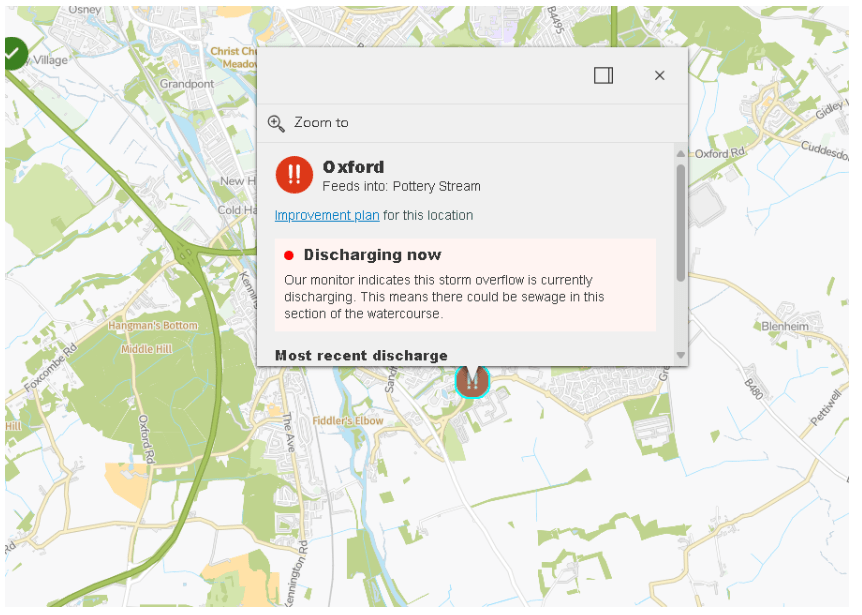
Thames Water’s treatment plant in Oxford has been illegally discharging sewage for six years, causing significant risk to the rivers and environment from pollution, the EA has said.

The increased pressure on the sewage infrastructure from 1,450 new houses planned to the north of Oxford would pose an unacceptable risk of pollution into waterways, the agency said in a letter of objection.

It warned it was “not acceptable” for a new housing development to go ahead until Thames Water had carried out the required investment to bring the works within legal limits.

The revelations raise questions about the feasibility of the government’s housebuilding targets across the country with creaking infrastructure unable to handle existing levels of sewage.

Sewage treatment works in many areas are running at over capacity, and potentially illegally dumping sewage into rivers and seas. More than 2,000 treatment works run by several water companies are at the centre of a criminal investigation by the Environment Agency into illegal sewage dumping.

In a letter to the South Oxfordshire district council this month, the agency said the Oxford sewage treatment works, which deals with the waste from more than 200,000 people, has been running illegally in breach of its permit since 2017.

It objected strongly to the new development, which includes a primary school and new road system, saying the pressure on the sewage works would “pose an unacceptable risk of pollution to surface water quality”.

“Oxford Sewage Treatment Works is a site of significant concern” the EA said.

“In November 2021, the Environment Agency inspected Oxford STW, which led to Thames Water being issued with a compliance assessment report. Within this report, some serious and significant permit breaches were identified.

“While the site is noncompliant with its permit, the risk to the environment remains high.”

It went on to say as long ago as 2017 the treatment works was in breach of permit conditions.

Investment promised by Thames Water was supposed to bring the works up to standard by 2025, but the EA said: “This has been delayed by several years. The scheme and deadline are regulatory and legislative commitments, and failure to deliver it on time will potentially lead to further noncompliance at the site.

“It also presents a significant and ongoing risk to the receiving waterbody, particularly from continued and extended periods of storm overflows. Adding additional flows to the STW before this scheme is completed is not acceptable.”

As a result, the agency said it recommended that planning permission be refused.

Ash Smith, of Windrush against Sewage Pollution, welcomed the agency’s tough stance on the housebuilding. He said: “We are shocked and impressed to see the agency’s Thames region taking a long overdue stand against Thames Water polluting illegally for profit at Oxford.

“Is this a change in policy and a step towards sanity or will this outbreak of professionalism be stamped on by government to keep the shareholders happy?”

Thames Water had told the council there were no capacity issues with the treatment works that would impede the development of the 1,450 homes.

Jo Robb, a Green councillor on South Oxfordshire district council, said 5,000 new homes were planned in the area, all of which would connect to the Oxford treatment works, and this raised serious concerns.

“Time after time when there are major planning applications coming forward, Thames Water has consistently failed to identify capacity issues at its sewage treatment works,” she said.

“Now we see, in the strongest objection from the EA, that this treatment works has been operating illegally since 2017. So Thames Water absolutely cannot be trusted to identify capacity problems at its treatment works.”

There were major national implications regarding the need for new housing, Robb said.

“We have tens, possibly hundreds, of thousands of houses planned across the country which are going to be linked to treatment works that are not fit for purpose,” she said.

A Thames Water spokesperson said:We work closely with developers and planning authorities across our region to ensure water and sewerage infrastructure can support growth, and where upgrades are needed to accommodate new developments, they will happen. We look at each development case by case and where needed will request conditions are added to planning applications, so for example, new homes are not occupied until the necessary upgrades to our infrastructure have taken place.

“We’re finalising plans for a major upgrade at Oxford sewage treatment works, costing more than £130m. This will provide a significant increase in treatment capacity, larger storm tanks and a higher quality of treated effluent going to the river.”

Environment Agency growls – but will it bite?

Ash www.windrushwasp.org

Prepare to be amazed.

The intro

For years the water industry has got away with murder. The victims have been those without a voice, the wildlife of the rivers, streams, lakes, and seas on the receiving end of water company pollution which should have been prevented by proper regulation and the enforcement of the law but wasn’t.

Overloaded sewers and water company indifference to pollution

People have also taken a hit but have not yet been killed, as far as we know, although many have been made very ill after contact with sewage pollution. It is, we know, only a matter of time.

Livelihoods have been affected, ranging from oyster fishermen to angling clubs and people’s lives have been made worse as the quintessential British places where children could paddle amongst a plethora of ducks, fish, and insects have been turned into grey, miserable and lifeless ditches . People even have to wonder about the safety of taking a paddle at the seaside, let alone swimming in it.

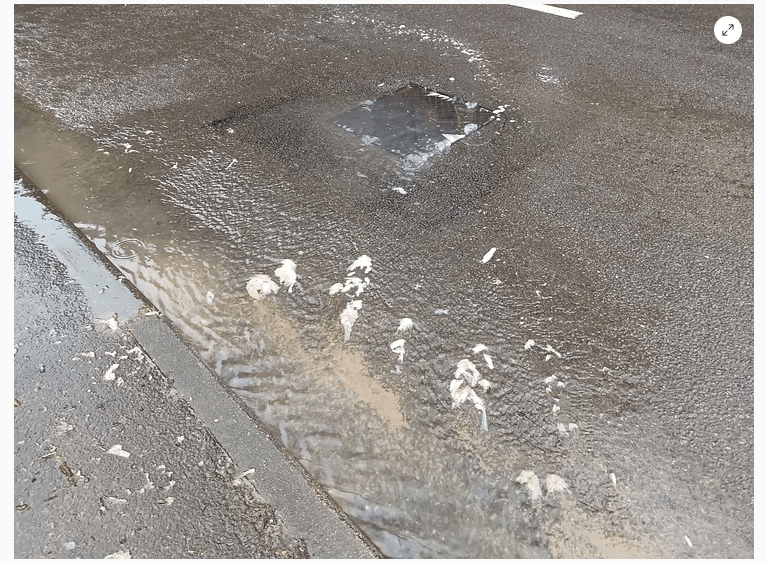
The most unlucky can’t even escape sewage at home where it is spilling from overloaded sewers into their streets and most recently I met a family who had their water company deliver a Portaloo to their garden. They could not use the toilet in their house because the passing sewer was already overflowing into the road and people driving by were splashing untreated sewage across the front of their home. The fact that it is mixed with rainwater seems to be the best water bosses can come up with to soften the blow as they keep the big bonuses and dividends flowing far more effectively than their sewerage systems.

Toilet paper and the stench of sewage as people drive, cycle and walk through untreated sewage. Try not to get sprayed by a passing car!

The story

Water companies have been allowed to set bills to upgrade sewage works and systems to cope with modern-day demands and loading from new housing but they have gamed the system and skimmed off the money in dividends and taken big bonuses for serving the shareholders, not the captive billpayers. How they did that is another tale but this one is about taking the billpayers money and not upgrading, letting the customer and environment take the hit while the Environmental Regulator – the Environment Agency in England, helps to cover up failure. Even worse, the Agency turns a blind eye to add new housing to hopelessly overwhelmed sewage works, while the companies take the connection fees and annual bills to increase profits.

Planning to fail

The charade of water companies claiming that they had the capacity to take more housing to demonstrably failing sewage works and overstretched sewer systems became the norm as the Environment Agency either nodded the application through, or more commonly, did not respond at all and even showed irritation about being asked the question. The shock horror of finding that houses should not be built until water companies got their works upgraded as they had been paid to do and were required to do, was put aside by pretending it wasn’t happening and everyone making money out of the deal was happy – the victims of the outcome, less so.

It was in response to this scam that WASP with the Envenlode Catchment Partnership paid for legal advice to underpin an initiative with West Oxfordshire District Council and has been commenting on planning applications to make sure that conditions are set for Thames Water to upgrade illegal sewage systems before accepting the occupancy of new housing. The effectiveness of the conditions is being tested with the first examples underway.

Read more in the previous blogs on housing and our use of Grampian Conditions to force improvements. (Here)

And articles in the Oxford Mail 1 & Oxford Mail 2

And The Guardian.

The Bombshell.

Something major is happening and for once it is good, and it is unfolding in Oxfordshire. In response to an application for 1450 houses and associated buildings to be bolted onto a massive development north of Oxford, the Environment Agency has pointed out in the clearest possible terms that Oxford Sewage Works is operating illegally and has failed to upgrade in the way it was required to and, so the Agency is objecting to the planning on that basis which must, of course, also apply to every other development that will load Oxford’s Sewage Works as of now.

In fact, that illegality dates back to 2021 when the Agency inspected the STW in reaction to the illegal activity reported by WASP’s data analyst, the redoubtable Prof Peter Hammond whose evidence to the Environmental Audit Committee inquiry was published in March 2021. The illegality in operation may go back to 2017.

Here is the Agency response:

We have written to the Secretary of State for the Environment, Steve Barclay – who knows a lot about the water industry, being married to a senior executive of Anglian Water – and the letter [can be downloaded as a pdf from a link in the original article] so we won’t repeat the content.

And if you can’t get the download easily – here are the 4 questions we ask the Secretary of State:

Some brave and good people in the Agency had the guts to point out that the Emperor (Thames Water) is not wearing any clothes and will have to go and buy some instead of spending the money on shareholders’ dividends, ‘other payments’ and bonuses.

The question now is whether water companies will be allowed to use their precarious financial positions to hold the government to ransom and let them keep on ripping off the billpayers or whether this or a future government will finally question the entirely predictable folly of allowing vital national infrastructure to fall into the hands of private profiteers whose only real skill is ensuring the maximum flow of money from the customer to shareholders in return for little, or in Thames Water’s case, nothing.

This is not about people, campaigners and now even the Environment Agency blocking development – This is the fault of Thames Water and previously failed regulation creating a black hole in the infrastructure. Just as you cannot build a house on sand without foundations, you cannot build housing developments without the infrastructure to support them.

We don’t think this could have happened before the new CEO Philip Duffy took over from the ducking and diving Sir James Bevan who hid the truth from Efra’s Parliamentary scrutiny committee. Now that the Agency has acted with integrity and professionalism it is vitally important that we support the people who are doing what they are supposed to do – stand up for the environment and against illegal polluters.

Oxford dumping 442 hours of untreated sewage continuously as of 530pm 26th February

Will the Environment Secretary and government support this seismic shift towards fixing the national scandal or will he fold up and give in to the powerful funds, largely overseas money, that owns our infrastructure?

Have we reached a turning point?

Paul Arnott: ‘EDDC have no confidence in South West Water’

Paul Arnott

On New Year’s Day 2024 when I might otherwise be starting a book I’d been given for Christmas (still unopened, of course) I received a call from Cllr Geoff Jung. Geoff is the cabinet member for coast, country and environment at East Devon, an enormous portfolio that ranges from waste & recycling to sea defences and a watching brief on the environment.

On January 1st, and not for the first time, Geoff found himself inundated with calls about the sewage crisis in Exmouth. Could I come and have a look? They don’t tell you this when you stand to be a councillor, but you soon learn that dog poo, public toilets and sewage issues will play a central role in your life.

I zipped down to Exmouth, where hard-working tanker drivers had been drawing raw sewage out of the failed Phear Park pumping station and driving it across the town to its Maer Road Car Park sister station, where it was pumped under the sands of the Maer and into the sea. This noisy process kept hundreds of families awake and went on for weeks more.

While there, I was introduced for the first time to the superb leaders of ESCAPE, a proud acronym standing for “End Sewage Convoys and Poollution (sic) Exmouth”, as well as a group of local women who had reluctantly but wisely decided not to have their New Year’s Day swim after all.

A few weeks later, officials from the responsible body, South West Water, appeared by Zoom before the Scrutiny committee at East Devon. I loathe flat-track bullying and could see that, on the operational side of SWW, people are doing their level best, as are the tanker drivers. But much less persuasive is SWW’s executive narrative around how this – and many other crises from Budleigh Salterton to Seaton via Sidmouth – came to be in the first place. The executives seem reluctant to visit the recent past.

So, I’ll have a go for them. Simply, in the present day both foul water and rain water go down the same pipes. They should be separate. When there is heavy rainfall these days, the combined pipes are at risk of bursting. At which point SWW have to open the sluices and it all goes in the sea. Not before, however, it bursts up horribly through manhole covers in places like Clyst St Mary, or seeps through the ground in the Cranbrook country park, and into brooks and streams. And many other places too numerous to mention.

Just like the Post Office or Windrush compensation schemes, this is a here and now crisis seeded in past neglect which needs national government intervention. Put simply, the water regulator OFWAT is toothless, the Environment Agency has been defunded, and the private water companies pay money in dividends rather than sufficiently invest in infrastructure.

At East Devon District Council last week, we said enough is enough and passed a unique resolution of no confidence in SWW. To my mind we cannot make progress until we know how thousands of extra homes were permitted by the then Conservative East Devon District Council when as far back as 2010 it was clear that the infrastructure was already teetering on the edge.

Which raises the inevitable question as to whether more homes should be built today before that appalling lapse is corrected. I was disappointed but unsurprised that the Conservative leader and his chair of Scrutiny refused to vote for the resolution. These battles are not won in a day.

East Devon Council’s £1m coast protection for Exmouth

East Devon District Council (EDDC) will undertake £1 million worth of coast protection work along the Exmouth seafront.

Sandhya Suresh www.exmouthjournal.co.uk

The council has issued a public notice stating the significant intervention is to shield residential properties and commercial properties from the threat of coastal erosion.

The operation, focused around Exmouth coastal frontage from the Stewart Lines/Exe Fishing Building in the West to Sideshore at the East, involves an emergency replacement of a failed masonry seawall with a permanent sheet pile wall.

The council said the works will also include removing parts of the collapsed stone wall and driving sheet piles into the existing footprint of the vertical wall, all executed with a landward-side piling rig.

Although the newly installed wall will initially be left unclad, the council plans to add cladding at a later stage.

Council officials have made arrangements for the public to scrutinise details of the proposed work.

Copies of the plans will be available for inspection at East Devon District Council, Blackdown House, Honiton and at Exmouth Town Hall between 9am to 1pm, Monday to Thursday.

The council said any objections to the proposal must be submitted no later than March 20.

These objections must be served on the Secretary of State for the Environment, Food and Rural Affairs and on East Devon District Council.

Any objections should include a clear statement of reasons and be delivered either by post or by email to the Chief Executive of East Devon District Council.

Notices to be posted may be addressed to the Secretary of State at the Department for Environment, Food and Rural Affairs, Flood Management, Nobel House, 17 Smith Square, London SW1P 3JR and to the Chief Executive at East Devon District Council, Blackdown House, Border Road, Heathpark Industrial Estate, Honiton, EX14 1EJ (email: Legal@eastdevon.gov.uk).