Edited photos could mean local Tories can no  longer be viewed as a trusted source

Adopting AFP standards they could be ”compared to North Korea”.

Kensington Palace has been compared to North Korea by a news agency executive, who said the Prince of Wales’s household was no longer viewed as a trusted source.Phil Chetwynd, the global news director of Agence France-Presse (AFP), said the photograph of the Princess of Wales and her three children – released to mark Mother’s Day and later revealed to have been edited – had “clearly” violated the agency’s rules. (Source www.telegraph.co.uk)

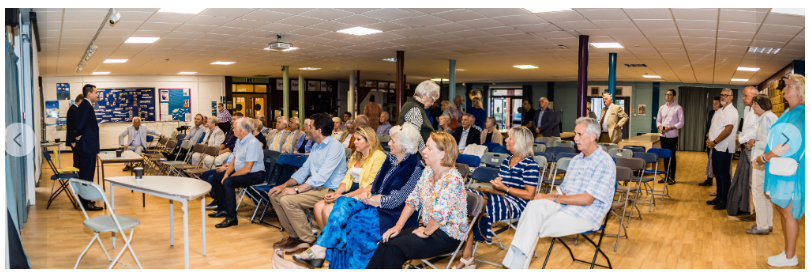
Last July we had the “Stitch – up” where numbers attending David Reed’s selection were “inflated”. A little bit of double counting going on?

Then in February a sharp eyed correspondent Spotted, Simon Jupp, MP for everywhere and nowhere, engaging with either his Mum or “Ann from the Office”. In “The Camera never lies”.

UK government overturns plans to phase out badger cull

The government has U-turned on its plans to phase out the badger cull, with proposals to exterminate the vast majority of some local populations across much of south-west and central England.

Will they go for our Beavers next?

“For what it’s worth, I think there are more important things than beavers,” They are not essential. Thérèse Coffey.

“There is no sense in reintroducing beavers into small chalk streams, or any other form of stream in Dorset…..As I understand it, they had to be culled in Scotland, because they broke out of the area given to them.Richard Drax MP Conservative, South Dorset – Owl

Helena Horton www.theguardian.com 

Ministers plan to introduce controversial targeted culling, also known as “epidemiological culling” or “epi-culling”, whereby populations of badgers can be reduced to almost zero in some areas where cattle are deemed to be at high risk of contracting bovine TB (bTB).

Tom Langton, an ecological consultant and badger expert, said: “Sunak now wants all the badgers dead.” He said the consultation launched by the government on Thursday included “chilling plans to kill 100% of badgers in bovine TB affected areas, an increase on the limit previously imposed since culling started in 2013”.

The cull, which has failed to get support of eminent scientists over more than a decade and has caused some badger populations to go locally extinct, was initially going to be phased out under plans announced by the then environment secretary, George Eustice, in 2021. After campaigning from farming unions, the government has announced it will continue to issue licences to shoot badgers.

Langton criticised the proposed introduction of epi-culling, saying it “is based on a single ‘model’ trial in Cumbria where over 1,100 badgers were shot dead between 2018 and 2022, but where a published report states no demonstrable benefit was achieved in terms of reduced TB breakdowns in cattle herds. It is also based on incompetent misunderstandings by government scientists of their own findings and the misbriefing of their minister.”

It is believed ministers wish to create a point of difference with the Labour party, which has said it would stop the cull, in an attempt to retain seats in rural areas. Recent polling by the Country Land and Business Association shows the majority of Conservative MPs in the most rural areas are at risk of losing their seats to Labour and the Liberal Democrats in the upcoming general election.

Langton said: “This looks like a last-chance grab at getting widespread culling back in place so it is difficult for Labour to scrap it.”

Ministers say that they do plan to end culling eventually, but have not given an end date. They said problem areas included “much of south-west and central England, where there are high levels of infection in cattle and where evidence suggests badgers are part of the problem in the spread of disease to these herds” and that culling will continue in these targeted areas until the disease situation has been deemed to have improved, after an annual review by the UK’s chief veterinary officer. When this happens, culling will stop and badgers will be vaccinated to end the disease.

The government cites peer-reviewed evidence from the first 52 areas where badger culling was conducted, which shows a reduction in rates of bTB breakdowns in cattle by 56% on average after four years of culling. But independent scientists have challenged this analysis, highlighting the presence of so many different variables and the absence of any scientific control.

Peter Hambly, executive director of the Badger Trust, said: “The UK government needs to protect our native wildlife while focusing on dealing with the scourge of bTB where it matters: within the cattle herd. This approach is best for cattle, farmers, taxpayers, wildlife and the wider community.

“We urge individuals, communities, and stakeholders to work together to tackle this disease, which importantly can only be done by demanding its accurate management. The UK government appears only to listen to stakeholders with vested interests and is fixated on a badger-focused policy that affects all of us and our right to nature. We must speak up to protect it.”

Steve Barclay, the environment secretary, said: “Bovine TB has taken a terrible toll on farmers, leading to the loss of highly prized animals and, in the worst cases, valued herds.

“There are no easy answers in the battle against TB, but badger culling has proved highly effective and needs to remain a key part of our approach. Our strategy has led to a significant reduction in this insidious disease, which we will continue to cull in areas where the evidence confirms it is required, as well as making use of vaccinations.”

On comments about Sunak’s attitude to badgers, a government spokesperson said the aim of the new policy was not to remove all badgers, but to lower the badger population to reduce infection, and that full extinction would not happen.

No compelling examples of what levelling up has delivered, watchdog finds

  • Just over 10% of promised funds actually spent and making a difference on the ground
  • PAC warns of lack of transparency and waste of public resources in funding approach

From the detail:

The Public Accounts Committee (PAC) found that 71 projects granted funding in the first round of bids had been due to spend the money by the end of this month, but that at least 60 had been delayed into the next financial year.

MPs also criticised Gove’s department for changing the rules for applying for levelling up funds part-way through the bidding process, meaning councils wasted scarce public funds.

They found that 55 councils had spent an average of £30,000 bidding for funds that they could not win because of government rule changes – squandering roughly £1.6m.

PAC Press Release:

committees.parliament.uk 

The Government is unable to provide any compelling examples of what Levelling Up funding has delivered so far. In a report published today, the Public Accounts Committee (PAC) warns that councils have been able to spend just a fraction of the Government’s promised Levelling Up funding, with only just over 10% of the funds provided to reduce inequality under the Levelling Up agenda actually spent and making a difference on the ground.

The PAC’s report finds that, of £10.47bn in total funding from central government, which must be spent between 2020-21 and 2025-26, local authorities have been able to spend only £1.24bn from the Government’s three funds as of Sept 2023. Furthermore, only £3.7bn had been given to local authorities out of the total allocation by the Department for Levelling Up, Housing and Communities (DLUHC) by December 2023.

In evidence to the PAC, DLUHC cited project-specific issues and the impact of the pandemic and inflation for a lower-than-anticipated level of spending to date. The PAC is calling for six-monthly updates from DLUHC, both on the amount of money released to and spent by councils, and on the progress of projects themselves.

The report finds that more impactful bids to funding lost out due to optimism bias in favour of so-called ‘shovel-ready’ projects. Yet, the report raises concerns that not enough was done by DLUHC to understand the readiness of schemes and the challenges facing local authorities before funds were awarded. This also means that DLUHC has had to extend the deadline for successful bidders for earlier funds to spend their money. Round 1 of Levelling Up Funding was awarded to ‘shovel-ready’ projects that were supposed to be completed and delivering for local people by March 2024 – but 60 out of 71 of these projects have had to extend to 2024-25, with further delays in other schemes likely.

The PAC’s inquiry also found a worrying lack of transparency in DLUHC’s approach to awarding funds, with rules for accessing funding changing while bids were still being assessed, which was also not communicated in advance to councils. 55 local authorities therefore bid under changed rules with no chance of being successful in Round 2, with an average bid for grants like Levelling Up costing around £30k. This approach wasted scarce public resources, and the report calls on DLUHC to set out the principles it will apply and the decision-making process for awarding future Levelling Up funds.

Chair’s comment

Dame Meg Hillier MP, Chair of the Committee, said:

“The levels of delay that our report finds in one of Government’s flagship policy platforms is absolutely astonishing. The vast majority of Levelling Up projects that were successful in early rounds of funding are now being delivered late, with further delays likely baked in. DLUHC appears to have been blinded by optimism in funding projects that were clearly anything but ‘shovel-ready’, at the expense of projects that could have made a real difference. We are further concerned, and surprised given the generational ambition of this agenda, that there appears to be no plan to evaluate success in the long-term.

Our Committee is here to scrutinise value for money in the delivery of Government policy. But in the case of Levelling Up, our report finds that the Government is struggling to even get the money out of the door to begin with. Government has not helped the situation by changing the rules for funding mid-process, wasting time and money and hindering transparency. We will now be seeking to keep a close eye on DLUHC’s progress in unclogging the funding system. Citizens deserve to begin to see the results of delivery on the ground.”