Asylum chaos as RAF sites and Bibby Stockholm barge to cost £48m more than hotels

The spiralling costs of Rishi Sunak’s controversial plans to house asylum seekers on RAF sites and in a “prison-like” barge have been laid bare in a damning report that found that the scheme will be significantly more expensive than paying for hotels – despite the sites housing far fewer migrants than planned.

Archie Mitchell www.independent.co.uk

The Home Office initially said that developing the four sites – including the Bibby Stockholm barge, two RAF sites, and former student accommodation in Huddersfield – would save taxpayers £94m.

But Whitehall’s official watchdog says the prime minister’s plan is expected to cost £46m more than the current system – which sees migrants put up in hotels while their claims are being processed – and £1.2bn overall over the next decade.

The National Audit Office (NAO) said the Home Office will have spent at least £230m developing the four major projects by the end of March – despite just two of the sites being open and providing accommodation for only 900 people.

The damning report, published on Wednesday, follows a warning last week from former home secretary Dame Priti Patel that the government’s asylum accommodation system is in need of reform and that there are “serious questions” to be asked of her former department.

The review said the government had spent more money unnecessarily and increased risk by pushing the projects forward too quickly, adding that the Home Office had pursued the policy despite “repeated” assessments that it “could not be delivered as planned”.

Labour said the NAO’s findings were “staggering”, accusing the prime minister of “taking the Tories’ chaos and failure in the asylum system to a new level”.

Shadow home secretary Yvette Cooper added: “On top of the £8m a day on hotel rooms, the government is now paying tens of millions of pounds in set-up costs for new sites in Wethersfield and Scampton, which are still not in use, and millions more for sites that will never be used.”

Charities said the report exposed “bad policies being implemented badly at huge financial cost”, and claimed that the accommodation sites were creating additional “fear and trauma” for asylum seekers.

NAO boss Gareth Davies said: “The pace at which the government pursued its plans led to increased risks, and it now expects large sites to cost more than using hotel accommodation.”

According to the findings, the Home Office originally estimated that the set-up costs at the former RAF bases would be £5m each, but they increased to £49m for Wethersfield and £27m for Scampton.

So far only Wethersfield – which has a capacity of 1,700 – and the Bibby Stockholm, which has space for around 500 men, are housing asylum seekers.

But the two sites were housing just under half the number of migrants the Home Office expected them to accommodate at the end of January, with 576 living at Wethersfield and 321 on the Bibby Stockholm at that point.

The government is currently facing legal action over the conditions at Wethersfield, which has been condemned as a de facto detention centre and not suitable for long-term accommodation.

The Independent has previously revealed that nearly 100 asylum seekers, including suspected victims of torture and human trafficking, were moved out of the RAF base after the Home Office admitted the accommodation was unsuitable for them.

According to the NAO report, the Home Office is “now considering reducing the maximum number of people it accommodates” at Wethersfield, but has not confirmed the new number.

The department expects Scampton to start housing asylum seekers from April, with Huddersfield following in May, it added.

The NAO also found that:

  • The Home Office rated its own performance as “red” as it recognised the challenges of the work, repeatedly revising accommodation targets “downwards”
  • The department “prioritised awarding contracts quickly, and modifying existing contracts over fully competitive tenders”, with “overly ambitious accommodation timetables” leading to “increased procurement risks”
  • Emergency planning rules were used so that sites could be found, and so that work could begin quickly before speaking to affected communities about the plans, in order to “reduce the risk of local opposition affecting negotiations”. In January, the Home Office was “still working with providers to develop specific measures assessing residents’ safety at large sites”
  • The Home Office is “resetting” its programme and developing a “longer-term accommodation strategy”, which will see it reduce the number of spaces it intends to provide at such sites amid proposals to “identify smaller sites accommodating between 200-700 people”
  • There are “uncertainties” about how the Illegal Migration Act is being implemented, making it harder for the Home Office to assess what asylum accommodation it needs. The report said the law changes will make it “more difficult to assess how much and what type of accommodation the Home Office will need” as it does not know how effective the deterrent will be or how it will affect the amount and type of accommodation required

The costs for Wethersfield, the Bibby Stockholm and Scampton are £777.2m for 2023-2027. Costs for a new site at Huddersfield are £358.4m for the period until 2033 – taking the total costs in the next decade up to £1.2bn.

On Monday, it emerged that Home Office minister Tom Pursglove had confirmed in a letter to Gainsborough Conservative MP Sir Edward Leigh that the “regular occupancy” at RAF Scampton would be a maximum of 800 asylum seekers instead of the original 2,000 men destined for the site, which has been beset by legal challenges.

Ms Cooper said: “This report is staggering. The British taxpayer is already paying out eye-watering sums on asylum hotels, and now it turns out the sites they promised would save money are costing the taxpayer even more. Rishi Sunak has taken the Tories’ chaos and failure in the asylum system to a new level.”

Refugee Council chief executive Enver Solomon said: “There would be no need to spend exorbitant sums of money on housing people in barges, military bases or hotels if cases were dealt with in a timely manner.”

A Home Office spokesperson said that the use of asylum hotels is “unacceptable”, adding that the department had acted to “reduce the impact on local communities by moving asylum seekers onto barges and former military sites”.

They added: “The cost of hotels will fall – and we are now closing dozens of asylum hotels every month to return them to communities … While the NAO’s figures include set-up costs, it is currently better value for money for the taxpayer to continue with these sites than to use hotels.”
Brexit is ‘the elephant in the room of British politics’, Ed Davey says

Brexit is “the elephant in the room of British politics”, Sir Ed Davey has claimed as he seeks to boost support for the Liberal Democrats.

Hugo Gye inews.co.uk

The leader of the UK’s third party claimed in his speech to its spring conference that both the Conservatives and Labour were seeking to disguise the impact that leaving the EU has had on the economy.

But he again fell short of calling for the country to rejoin the EU, calling instead for closer relations which will “rip up red tape” for businesses.

Speaking in York at the Lib Dems’ first in-person conference since 2019, Sir Ed also warned the Tories that they could lose dozens of seats if they do not pledge to tackle water pollution, and pledged to prioritise political reform including a change to the voting system.

Addressing Brexit in his speech, the leader said: “I call it the elephant in the room of British politics. An elephant we always point to, even though other parties daren’t even whisper its name. So let me shout it, yet again: if you want to boost our economy, you have to repair our broken relationship with Europe.

He added: “You don’t need me to tell you what a disaster the Conservatives’ botched deal with Europe has been for our country. You see it every day in your communities: the businesses strangled by red tape; the farmers, fishers and factories, unable to sell to their customers on the continent; the empty shelves in local supermarkets.”

Lib Dem policy on the EU is to revisit Britain’s relations with the bloc in the coming years, but without a firm commitment to rejoin either the EU itself or its single market or customs union.

Ahead of May’s local elections, Sir Ed warned Conservative MPs that voters angry about discharges of sewage into Britain’s rivers would turn on them. He said: “People want a clean, healthy natural environment. They want an end to the Conservatives letting water companies get away with pumping filthy sewage straight into our rivers – the biggest environmental crime in our country today, and a crime that will cost the Conservatives dozens of seats if they don’t act.”

And he pledged to redouble the party’s commitment to changing the voting system – saying: “While the other parties still cling to the discredited ‘first past the post’ electoral system, our zeal for proportional representation remains undimmed.”

Sir Ed called the Conservatives “a bunch of mutinous pirates, only interested in who got to wear the captain’s hat”, joking: “We needed Hornblower. They gave us Pugwash.” But he also hit out at Labour, claiming that “their only goal seems to be ‘not as bad as the Conservatives’ – talk about a low bar!”

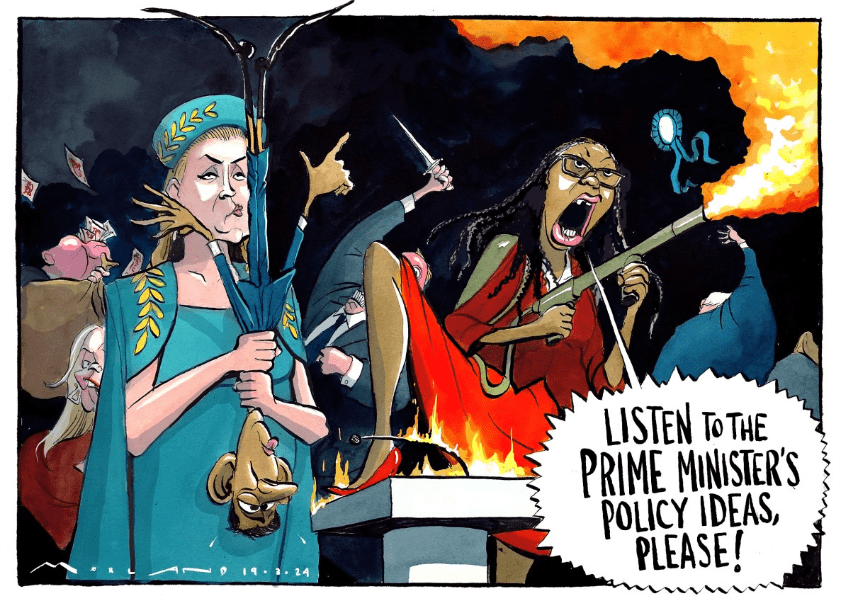
Listen to the Prime Minister’s policy ideas, please!

 “Too late” .. “march towards the sound of the guns” …“get on with it”. – Ben Wallace.

Yet still the pretenders manoeuvre. – Owl

Government has brought adult social care in England ‘to its knees’, MPs say

The government has brought adult social care in England “to its knees” with years of uneven funding and a “woefully insufficient plan” to fill thousands of staff vacancies, MPs have said in a damning report on a system that provides long-term care for 835,000 people.

Robert Booth www.theguardian.com 

The public accounts committee said “chronic underfunding, rising waiting lists and patchwork funding” has placed sustained pressure on local authorities, and the government is falling short on Boris Johnson’s promise in 2019 to “fix the crisis in social care once and for all”.

The Department of Health and Social Care “is not providing the leadership needed to deliver a social care sector that is sufficient to meet the country’s needs”, the cross-party committee concluded.

Meg Hillier, its Labour chair, said: “Years of fragmented funding and the absence of a clear roadmap has brought the adult social care sector to its knees. Waiting lists are rising, the sector is short tens of thousands of essential staff, and local authority finances are being placed under an unsustainable amount of pressure.”

The report comes with almost half a million people on waiting lists for care in residential settings or at home and an ageing population causing rising demand. There is also growing concern that some private providers are enjoying increasing profit margins because the government may not have a grip on value for money in a system that costs councils nearly £24bn a year.

The PAC wants assurances that £2.7bn in additional funding allocated in 2022 to speed up discharges from hospitals into social care and to increase the rates councils can pay for care, “is not simply going into provider profits”.

The committee also said that the government has given little assurance that changes to introduce a £86,000 per person cap on care costs, already delayed to October 2025, can be delivered on schedule. Meanwhile, more than 150,000 care posts are vacant and “the DHSC has still not produced a convincing plan to address the chronic shortages”, the committee said.

Nadra Ahmed, chair of the National Care Association, which represents independent care providers, said: “The intent has been there but the implementation has been quite woeful. The sector continues to become ever more fragile despite the government having published a plan.”

Helen Wildbore, director of Care Rights UK, which represents users of social care and their relatives, said: “It is older and disabled people paying the price – their safety, dignity and rights at risk as services get stretched to breaking point. We hear from people facing uphill battles to get access to care, to get their basic needs met or to have serious concerns with care resolved.”

A spokesperson for DHSC said: “We are committed to reforming adult social care and have invested up to an additional £8.6bn over two years to meet the pressures facing the sector, grow the workforce and improve hospital discharge. The report rightly acknowledges progress to boost care workers’ career progression and training to improve retention, including through a new accredited qualification. To drive forward our vision for reform, we are also investing up to £700m on a major transformation of the adult social care system, which includes investing in technology and adapting people’s homes to allow them to live independently.”

The findings coincided with the first preliminary session on the care sector at the Covid-19 public inquiry, after there were 50,000 deaths related to the virus in UK care homes.

Sam Jacobs, representing the Trades Union Congress, told the inquiry the pandemic hit “a chronically underfunded and fragmented social care sector delivered by many thousands of local authority and private care providers with little central strategic direction … served by an understaffed, underpaid and undervalued workforce.”

Jane Townson, chief executive of the Homecare Association, said a “glaring absence of social care expertise” in the government’s scientific advisory group meant it failed to “adequately consider the unique challenges and needs of the sector in the scientific advice informing policy decisions”.

“Decision makers frequently disregarded and undervalued the dedicated professionals working in social care, who put their own health and wellbeing on the line to continue providing care and support in the most challenging of circumstances,” she said.