Breaking: Jo Bateman backed by “Good Law Project”

Holding South West Water to account – Good Law Project

Jo Bateman couldn’t go swimming after a water company sent tankers to release a flood of sewage. We’re supporting her legal action.

Jo Bateman tries to swim in the sea off Exmouth every day, because of the huge benefits to her physical and mental health. But in December 2023 this retired physiotherapist couldn’t get into the water for 10 days straight, after a pipe burst and South West Water started driving a fleet of lorries full of untreated sewage to a pumping station that was already overflowing.

Ten tankers transported up to three million litres of untreated sewage a day for the next three days. But they didn’t take it to a nearby sewage treatment works, where it could have been processed. They didn’t take it to sewage treatment works outside Exmouth. They didn’t even take it to a pumping station 2km up the road – a pumping station which wasn’t already overflowing. All of these options could have prevented the spillage, but they likely would have been more expensive. Instead, South West Water drove this untreated sewage straight to a pumping station that was already spilling sewage into the sea, making it unsafe to swim off the beach at Exmouth for 10 days.

We’re supporting Jo in her legal action against South West Water.

Good Law Project is powered by people across the UKDonate now

“I’m bringing this case because I’ve simply had enough,” Jo said, “and I feel there is no other option available to me for holding South West Water properly to account.”

But “it’s not just about me,” she continued, “the sea belongs to all of us, and there are many, many other people who are also prevented from using the sea as they would like”.

The water companies’ behaviour is “simply unacceptable” Jo added. “In the 21st century we can land a spacecraft on Mars. Why can’t we have a sewage system that disposes of our waste without polluting the rivers and oceans?”

Environment Agency data paints a picture of a country swimming in sewage. Latest figures show that South West Water discharged sewage into local rivers and waterways for a staggering 530,737 hours in 2023, an 83% increase on 2022.

Storm overflows should only be used in an emergency, such as during exceptionally heavy rainfall, but when water companies put profit above people our seas and rivers are closed off.

For Good Law Project’s executive director, Jo Maugham, this scandal can’t go on.

“It’s shocking how little water companies have to care about the destruction they wreak on our stunning natural heritage and the lives of people who wish to enjoy it,” Maugham said. “We want this case to change that.”

According to water experts, the flood of sewage sweeping the country is the result of a decade of failures by Tory ministers to tackle the problem. Government inaction and underfunded regulation have allowed water companies to get away with environmental vandalism.

We can’t allow our rivers, waterways and seas to continue being poisoned by pollution. We can’t stand by as swimmers get sick and lose their right to swim. And we can’t sit back as the dirty money made by water companies destroys the natural environment for us and for future generations.

It’s time for the government to take action, so that water companies are forced to clean up their act and we can all enjoy our right to swim. 
Sign the petition

Richard Foord shines light on cancer patients forced into self-dentistry

Cancer patients are resorting to self-dentistry due to the lack of access to NHS dentistry. The situation has been brought to light by Richard Foord MP, the Liberal Democrat representative for Tiverton and Honiton at a House of Commons debate on Wednesday, April 17.

Lewis Clarke www.devonlive.com 

Foord, who has been in office for nearly two years, says he has frequently received complaints about the difficulty of accessing NHS dentistry.

He said, “It is common across the country for someone to have difficulty accessing new NHS dentists if they are not already registered, but that is particularly difficult in some parts of the country, including in Devon, which is often regarded by many as a so-called ‘dental desert’.”

The government has proposed one-off incentives to attract qualified dentists to these dental deserts. However, Foord argues that this is insufficient as there is no long-term incentive for dentists to move into these areas. This issue is particularly concerning for cancer patients, for whom regular dental check-ups are crucial due to the weakening of their bones and teeth from treatment and medication.

Foord shared the story of his constituent, Robin Whatling, a 55-year-old advanced cancer patient from Tiverton. Robin’s wife, Sharon, contacted Foord last December, recounting their distressing experience.

“After booking a check-up, he received an abrupt phone call just a few days before it was due to happen. He was informed that the practice was no longer treating NHS patients and that if he wanted to go ahead with his appointment, he would need to go private. That is clearly a massive issue for a couple like Robin and Sharon.

“Due to Robin’s vulnerable state, Sharon has had to go part-time to become his carer. That means that she is not able to work the hours that she used to, which would have possibly afforded her more money to pay for private healthcare treatment.

“Instead, the couple pursued the idea of finding an NHS dentist. They were held on the phone for three hours before being cut off. In the end it all became too much, and Rob ended up removing one of the teeth that was causing him pain by himself at home. I do not need to tell the House that that is a shocking, appalling situation to have to contend with while suffering advanced cancer.

“Despite years of working hard and paying into the system, this couple are now left adrift with no support or access to dental care. In some of the correspondence that Members receive, we have constituents who rage at us with anger, but this couple approached me with great modesty and humility. They absolutely were not seeking to score any sort of political point. They just wanted to let me know, in a very factual way, the experience of a rural couple contending with cancer and trying to find NHS dentistry on the state.

He explained that The British Dental Association has revealed that oral cancer is one of the fastest-growing types of cancer, killing more people than car accidents every day. Dentists play a key role in diagnosis and referral, and early diagnosis can significantly increase survival rates.

Foord stated, “Let us say it as it is: NHS dentistry is in crisis. It is another example of the Government continuing to let people down and stand by as our vital services crumble. The NHS dental budget has been cut in real terms by £1 billion while the Conservatives have been in power. That is a shocking legacy of neglect.”

In response, Dame Andrea Leadsom, the Parliamentary Under-Secretary of State for Health and Social Care, acknowledged the challenges in Devon and announced the forthcoming introduction of a mobile dental van for the area. She also highlighted that only around 57% of commissioned units of dental activity are actually undertaken by dentists in the area.

Leadsom outlined the steps taken to improve access to dentistry across the country since the publication of their recovery plan on 7 February. The plan aims to create around 2.5 million additional NHS appointments and increase the minimum value of a unit of dental activity to £28. It also includes initiatives to bring dental care to isolated communities and increase the dental workforce.

Despite these measures, the struggle of cancer patients like Robin and Sharon underscores the urgent need for a comprehensive reform of NHS dental care. Mr Foord said: “I urge the Minister, for the sake of Rob, Sharon and everyone who is trapped in a situation like this, to take on board the urgency of the issue of NHS dental care for cancer patients and those who might become cancer patients.”

Major expansion of Cranbrook given green light

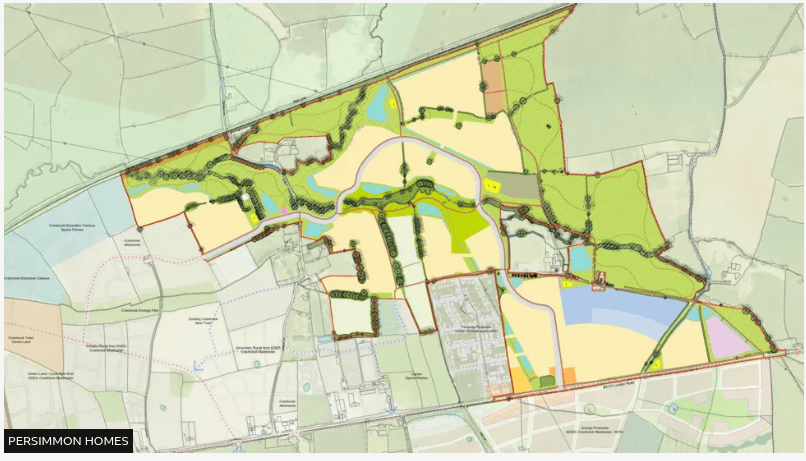
Plans to expand a town with the creation of more than 1,400 homes and two schools have been given the green light.

Angela Ferguson BBC News

The development of Cranbrook near Exeter, which has been approved by East Devon District Council (EDDC), will also include the creation of a neighbourhood centre, green space and a place of worship and cemetery.

Plans for 10 permanent pitches for gypsies and travellers have also been approved.

Ed Freeman, assistant planning director, said the development would provide “much-needed homes for people in East Devon”, along with key facilities such as schools, shops and play areas.

The development will be the first expansion of the town since it was created more than 13 years ago, EDDC has said.

The town is set to get a new three-form entry primary school along with a special educational needs school.

Mr Freeman said the planning permission meant “important facilities such as new schools, shops and play areas” would be provided.

‘Population of 20,000’

“We look forward to seeing the town continue to grow, bolstering the strong sense of community that Cranbrook has fostered over the past 11 years,” he added.

The Cranbrook Plan was adopted in October 2022 and sets out how it will accommodate a population of about 20,000 people.

The plan sets out that low carbon development must be used, with financial contributions made to key Cranbrook facilities.

A council spokesperson said the development would see over £4m contributed towards projects including a new health and wellbeing centre, leisure centre, fire station and improvements to London Road to make it more suitable for people walking and cycling.

They added that Devon County Council had been successful in a bid to the Department for Education for funding to build and open the new special educational needs school on the site.

Three other planning applications for Cranbrook’s expansion look set to see a further 2,085 homes built in the town, along with another primary school, sports pitches, open space, play areas, allotments and neighbourhood centres.

These planning applications are to be issued once legal agreements are finalised, the council added.

Persimmon Homes has been given outline planning permission to build new homes at Cranbrook Cobdens.

The company’s managing director for the South West, Daniel Heathcote said: “Throughout the planning process for Cranbrook Cobdens, we have worked closely with officers and stakeholders at East Devon District Council to ensure that our homes complement and enhance the local area.”

Richard Foord on “Tories blew £1.1m on levelling up adverts rather than actually levelling up”

See www.mirror.co.uk

Richard Foord MP writes on “X”

The Govt have got their priorities all wrong. Towns like Cullompton & Seaton have seen their levelling-up bids rejected repeatedly, while Ministers spent huge sums bragging about the scheme. This is galling for communities across rural Devon.

Ed Davey calls for return of ‘family doctor’ by giving over-70s named GP

Liberal Democrat leader Sir Ed Davey has set out plans to give everyone over 70 and those with long-term health conditions access to a named GP.

Sophie Wingate www.independent.co.uk

The policy would affect around 18.7 million people in this cohort, who have been found to benefit the most from having continuity of care.

The party pointed to British Medical Journal research showing that people who had kept the same GP for more than 15 years had a 25% lower chance of dying than those with a GP relationship lasting a year or less.

The Lib Dems are also campaigning for 8,000 more GPs to be recruited in response to a “crisis” in general practice waiting times.

Sir Ed said: “Years of neglect and broken promises under this Conservative government have left people struggling to see their local GP when they need to. It is piling pressure on to overcrowded hospitals and meaning patients with easily preventable and treatable conditions aren’t getting the rapid care they need.

“We want to see the return of the family doctor, so patients with long-term care needs see the same GP and don’t have to waste time repeating their details from scratch at every appointment.

“This would provide vital personalised care for those who need it most, helping people lead healthier lives, independently in their own homes wherever possible.”

Are you ready for the next Tory policy driven economic crash?

Thames Water collapse could trigger Truss-style borrowing crisis, Whitehall officials fear

Senior Whitehall officials fear Thames Water’s financial collapse could trigger a rise in government borrowing costs not seen since the chaos of the Liz Truss mini-budget, the Guardian can reveal.

Anna Isaac www.theguardian.com (Extract)

Such is their concern about the impact on wider borrowing costs for the UK, even beyond utilities and infrastructure, that they believe Thames should be renationalised before the general election.

Officials in the Treasury and the UK’s Debt Management Office fear that, unless the UK’s biggest water company is renationalised as soon as possible, “prolonged uncertainty” about its fate could “damage confidence in UK plc at a sensitive time”, with elections in the UK and the US later this year.

Earlier this month, the Guardian revealed details of government contingency plans, known as Project Timber, to renationalise Thames via a special administration. This could lead to the bulk of its £15bn of debt being moved on to the government’s balance sheet. Thames’ investors have refused to pump more money into the struggling company amid a standoff with the water regulator Ofwat.

Some lenders to its core operating company could lose up to 40% of their money under the plans, a move that officials believe marks a careful balance between managing public outrage at the water company’s many failures and the need to sustain investor confidence in the UK.

Those contingency plans also describe a risk of “contagion” from Thames’s plight that could trigger a loss of confidence that feeds through to wider state borrowing costs.

In the aftermath of the Truss mini-budget in September 2022, UK borrowing costs shot up as government debt markets went into freefall. Her chancellor Kwasi Kwarteng’s promise of £45bn of unfunded tax cuts, the sacking of the most senior civil servant at the Treasury and Truss’s refusal to have her sums checked by the independent Office for Budget Responsibility spooked investors and sent the value of UK debt instruments, known as gilts, plummeting.

The pound hit a low against the dollar not seen since 1985, and the whiplash effect on the bond market damaged some pension funds’ investment strategies so severely that the Bank of England had to stage an emergency market intervention to maintain market stability. That crisis added billions of pounds to the UK’s cost of borrowing, as investors demanded a higher price to lend to it. British households experienced big spikes in mortgage costs, as banks and building societies passed on higher borrowing costs. Many mortgage offers were pulled overnight…..