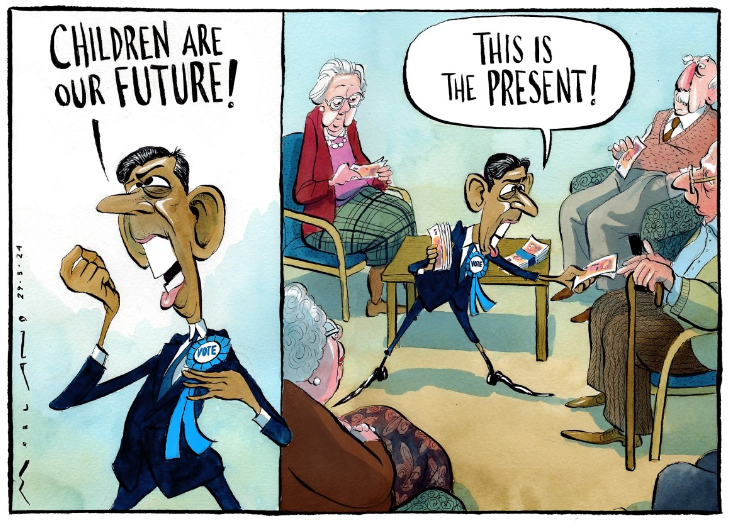
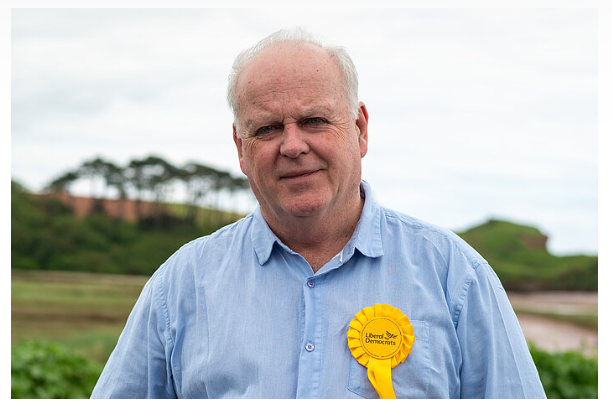
Election blow for Sunak as IFS says Tories oversaw ‘worst income growth for generations’

Rishi Sunak has suffered another general election blow after a top economic think tank said income growth under the Conservatives has been the worst in generations.

Archie Mitchell www.independent.co.uk 

The prime minister had enjoyed a period of respite this week following an uptick in the polls for his party after infighting engulfed the Labour Party over the future of Diane Abbott MP and the academic Faiza Shaheen, who has not been selected to stand as an election candidate over social media activity in 2014.

But a damning new report has laid bare 15 years of languishing living standards under successive Conservative governments.

The study, by the influential Institute for Fiscal Studies (IFS), found average incomes grew by just 6 per cent from 2009-10 to 2022-23. Before the financial collapse in 2008, the UK would have expected income growth of 30 per cent in the same period.

The study also found that absolute poverty has fallen by just 3.4 per cent in the last 15 years, a fifth of the speed it fell under the last Labour government.

It pointed to a global slowdown in the wake of the credit crunch in 2008-09, but said Britain has fallen from one of the fastest growers to one of the weakest performers since.

And while disposable incomes have returned to pre-pandemic levels, the report also found that pay growth since 2008-09 has been “very poor”. Average pay is currently just 3.5 per cent higher than at the same time in 2009-10, it said.

Despite the largely damning findings, the report gave a boost to the Tories tax-focused campaigning. The IFS said average earners are now paying £2,000 less in taxes than someone on the equivalent pay in 2010, which will pour fuel on Mr Sunak’s warnings that if Sir Keir Starmer enters Downing Street families will be hit with tax hikes.

The Abrdn Financial Fairness Trust, which funded the report, said living standards “have languished for more than a decade”.

Chief executive Mubin Haq said: “On a range of measures UK performance has been weak, especially in comparison to other wealthy countries. The danger is that stagnation becomes the new normal. This is in no one’s interests and stunts too many futures and too many lives.”

Mr Haq urged whoever wins the general election to oversee a “renewed drive to tackling hardship and improving living standards”.

IFS associate director Tom Waters, who authored the report, said poor income growth has been an unfortunate feature of life in Britain for the past 15 years.

He added: “It has been slow growth for essentially everyone; rich and poor, old and young. This means that even while income inequality has been stable, progress on reducing absolute poverty has been painfully slow.

“Although there has been a widespread slowdown in growth internationally since the financial crisis, the UK has fallen from being one of the fastest growers prior to the Great Recession, to one of the weakest performers.”

The report followed an almighty row between Labour and the Conservatives over tax and the economy.

Both parties accused each other of having made billions of pounds worth of unfunded spending commitments, while both also ruled out raising income tax, national insurance and VAT.

Jeremy Hunt said Labour would “hammer families” with a 1p increase to VAT, which shadow chancellor Rachel Reeves branded as “nonsense”.

Ms Reeves hit back, saying Mr Hunt’s “£71bn unfunded spending plans risk putting up interest rates and people’s mortgages”.

Mirror, mirror on the wall, who’s the least green of them all? 

Experts rank environment policies from Tories, Labour, Lib Dems and Greens

Labour and the Conservatives must announce more ambitious green pledges to demonstrate “bold leadership” on the environment, a leading campaign group has warned.

Lucie Heath inews.co.uk

An analysis by Friends of the Earth, shared exclusively with i, has ranked the Conservatives, Labour, Liberal Democrats and Greens’ plans on 10 key environmental issues, including cutting carbon emissions and protecting Britain’s nature.

Each party was then given an overall score out of 100, with the Greens coming on top (82), followed by the Liberal Democrats (68), Labour (51) and the Conservatives (27).

The scoring is based on any policy announcements made by the parties to date, as well as the Conservative Party’s record in Government, and will be updated when the manifestos are published during the election campaign.

While the Liberal Democrats and Greens are often able to be more ambitious with their pledges – as neither party expects to be in government – Friends of the Earth said the results showed it was time for all parties to “speak up, not keep silent” on green issues.

The party manifestos are expected to be published in full in the coming weeks in the run-up to the election on 4 July.

Mike Childs, head of policy at Friends of the Earth, told i the rankings could change once parties released their manifestos and said he believed Labour was currently keeping “their cards very close to their chest”.

He added: “We’re not at the finish line yet – and our analysis shows all the parties have more to do. Now the campaign is properly under way, voters want to hear concrete plans on how they will build the greener, fairer, more prosperous future we so urgently need.”

The Conservative Party scored the lowest in all 10 categories, including cutting carbon emissions and protecting the environment.

The Tories scored the only zero in the exercise, for defending democracy. Friends of the Earth said this was because the Government has overseen a “plethora of restrictions on liberties”. They cited the recent Police, Crime, Sentencing and Courts Act and the Public Order Act, which have placed tougher restrictions on protest in response to climate action by groups such as Extinction Rebellion.

Mr Childs admitted the Tories’ green policies had been “easier to scrutinise” due to their record in Government.

The last year has seen ministers U-turn on a number of green pledges, including upcoming bans on new petrol cars and gas boilers. Rishi Sunak also sparked the ire of environmentalists following his decision to allow new oil and gas drilling in the North Sea.

“Unsurprisingly, with such an abysmal track record, they have scored particularly badly,” Mr Childs said.

Labour’s scoring was more mixed. The party achieved a nine out of 10 on green energy, thanks to its pledge to decarbonise UK power by 2030, which Friends of the Earth described as “seriously aspirational”.

However, the party scored lower on issues including meeting the UK’s international climate targets and protecting nature.

On international commitments, it said Labour had so far refused to agree to return the UK to its commitment to spend 0.7 per cent of gross national income (GNI) on international aid, and had not made clear whether the party would uphold the UK’s £11.6bn climate funding pledge for the world’s poorest nations.

Friends of the Earth said Labour was “short on solid policy” so far on preserving Britain’s nature. The leaders of four major charities have sounded the alarm, in an op-ed for i, over the declining state of biodiversity in the UK, with one in six species facing extinction.

Mr Childs said Labour would have scored better if it hadn’t scrapped its pledge to invest £28bn annually on green investments. In February, Sir Keir Starmer confirmed his party would slash its green budget to under £15bn per year, with only a third of that being new money that is not already committed.

Labour said the U-turn was due to the current state of the UK economy. The party has set out strict fiscal rules on spending if it wins the election.

While Labour’s fiscal approach has won the party the support of businesses, environmentalists fear its stance on green issues has weakened.

But Mr Childs said it’s “all still to play for” and that Labour could “still pull it out the bag” with its manifesto if it includes strong policies “to put our national and international climate targets back on track, end the sewage scandal, and restore nature”.

A Labour spokesperson said the party “looks forward to being judged on our manifesto”.

They said the choice at the election was “clear” between a Tory party “that pollutes our rivers” and is “funded by climate deniers”, or a Labour Party that will “restore nature” and “deliver the largest investment in clean energy in our history”.

The Liberal Democrats performed better than Labour and scored a 10 out of 10 on the category of “Ensuring a healthy environment for all”. Friends of the Earth said the party had a “strong package of policy on the environment”, including on issues such as air quality and sewage discharge.

The party has made the environment a central tenet of its campaign this year in a bid to win over Tory voters outraged by the sewage scandal. On Tuesday, Lib Dem leader Sir Ed Davey went paddle-boarding on Windermere, which has become a symbol of the filthy state of Britain’s water.

Overall, the Green Party, as you might expect, achieved the highest score, with full marks on categories including retrofitting the UK’s housing and protecting nature.

Green Party co-leader Adrian Ramsay said the analysis “underlines why it is so important to get more Green MPs elected to Parliament”.

“With Labour so far ahead in every single poll, it’s clear that Labour is set to form the next government. What is in doubt is Labour’s commitment to make the real changes needed,” he said, adding that Green MPs “want to be in Parliament to hold the new Government to account”.

Election 2024

Rishi Sunak and Sir Keir Starmer are out on the campaign trail after the Prime Minister announced a surprise snap election on 22 May. i‘s general election live blog follows all the twists and turns of the election period from all the major parties.

So far, the Tories have announced a controversial mandatory national service policy which has garnered mixed opinion from across the political spectrum, and a “triple lock plus” for pensioners. Meanwhile, Starmer has set out a five-year plan to clear the NHS backlog, but eyes are on Diane Abbott after she was reportedly blocked from standing in her seat for Labour.

Odds on who will become the next Prime Minister currently favour Starmer, and the polls tell the story of a massive Labour majority.

Keep up to date with the 2024 general election in our extensive coverage, on everything from the main parties’ pledges on policies like immigration and pensions to the seats still without a candidate.

Government flagship Rwanda partnership policy severely criticised by cross-party Parliamentary Accounts Committee 

The PAC report finds that, despite the Home Office committing significant sums of money to the Rwanda partnership and its large accommodation sites, there is little to show for the money spent so far. Questions also remain as to what will happen to the more than 50,000 people left in limbo by the system – people who are living in the UK, with no ability to claim asylum, who are officially “pending relocation”.

The outgoing government’s flagship Rwanda partnership scheme: had no credible implementation plan; failed to protect values for money; lacked the necessary transparency etc etc – what a shambles, Owl

Conclusions

We are concerned that the Home Office does not have a credible plan for implementing the Rwanda partnership.

In its haste to establish large accommodation sites, the Home Office made unacceptable and avoidable mistakes, and failed to protect value for money

We are not convinced the Home Office has put in place sufficient measures to safeguard those pending relocation while they wait to hear what will happen to them.

We are concerned that the Home Office has not engaged effectively with local authorities about the impact its work is having on local areas.

The Home Office does not yet know how it will evaluate the impact and value for money of the Rwanda partnership.

We are disappointed that, despite the Committee previously raising concerns, the Permanent Secretary is still not providing the necessary transparency to enable Parliament to hold the Home Office to account on its asylum and immigration plans.

Conclusions and recommendations in full

1. We are concerned that the Home Office does not have a credible plan for implementing the Rwanda partnership. The government intends to start flights to Rwanda as soon as possible now that the Safety of Rwanda Bill has received Royal Assent and UK-Rwanda Treaty has been ratified. There are currently more than 50,000 people who are deemed to be in the UK illegally, and that the Home Secretary will have a duty to remove. On 22 April, the Prime Minister set out some high-level proposals to begin relocations. But during our session, the Home Office was unwilling to say how many people it is planning to relocate to Rwanda, and how it would do this. The Home Office asserts that it has robust operational plans, which are dependent on the flow of relocations. However, we are concerned by the Home Office’s inability to explain the practical details including, for example, where those people who may be subject to relocations currently are and the arrangements for escorting them to Rwanda. Further, it could not provide clarity on escort or flight costs, including whether training costs were included in its contract with Mitie. We are left with little confidence in the Home Office’s ability to implement the Rwanda partnership, and its understanding of the costs, particularly given its track record in delivering other major programmes.

Recommendation 1: In its Treasury Minute response, the Home Office should set out its implementation plan for the Rwanda partnership, including a breakdown of current cost estimates. This should include an update on the arrangements for —and cost of—transporting people to Rwanda. It should also explain how it has assessed the feasibility of relocating people, based on the revised plan.

2. In its haste to establish large accommodation sites, the Home Office made unacceptable and avoidable mistakes, and failed to protect value for money. The Home Office asserts that its need to deal with a “national emergency” meant it had to take quick decisions, and so it pressed ahead with setting up expensive large asylum accommodation sites without an adequate understanding of what would be required. The Home Office’s estimates of the set-up costs for the large former military sites fell far short of reality. It estimated that it would cost £5 million to ready each of the sites at Wethersfield and Scampton. But costs spiralled to £49 million at Wethersfield, and has cost £27 million so far at Scampton. It also failed to maximise competition in awarding its contracts by simply amending current contracts or using frameworks. Furthermore, these two previous RAF bases will now accommodate significantly fewer people than the Home Office envisioned. Fewer people on sites means a higher per person cost. These errors may ultimately cost the taxpayer £46 million more than if the Home Office had simply retained the use of hotels instead. It is essential that departments ensure that taxpayers’ money is protected, even when required to work quickly.

Recommendation 2: As part of its Treasury Minute response, the Home Office should set out what it will do differently in the future so it ensures it undertakes sufficient due diligence at the outset of projects and protects taxpayers’ money when working at pace.

3. We are not convinced the Home Office has put in place sufficient measures to safeguard those pending relocation while they wait to hear what will happen to them. The Home Office is not processing asylum claims for more than 50,000 people who have arrived in the UK via small boats and other irregular means and are deemed ‘inadmissible’ to the asylum system. Currently, the only viable option for many of them is to remove them to Rwanda, as other potential third-country partnerships would need significant lead times to be up and running. Meanwhile, these people remain in limbo – some people have now been waiting for over a year to be told what will happen to them. Many of them are living in temporary Home Office accommodation, where there have been numerous reports of self-harm and suicide. While the Home Office told us it incorporated safety measures into its contracts with providers, it could not provide information about any penalties for falling below standards, despite reports of significant safety failures on sites.

Recommendation 3a: The Home Office should, before the end of July, write to the Committee to explain how it is ensuring the wellbeing of people pending relocation and what plans it has to provide clarity for their future.

Recommendation 3b: The Home Office should also update the Committee quarterly on the number of people awaiting relocation and how many are being supported by the Home Office, including specifying how many have waited for more than one year.

Recommendation 3c: The Home Office should also update the Committee quarterly on any penalties issued relating to safety matters (including health and welfare). The update should state for each penalty the size of the penalty, the reason for it, the location concerned, and the contractor to whom the penalty has been issued.

4. We are concerned that the Home Office has not engaged effectively with local authorities about the impact its work is having on local areas. The Home Office is making progress in its plans to reduce its use of hotels. By the end of March, it had exited 100 hotels, with around 300 still in use. But it still could not say when it intends to stop using hotels altogether. The Home Office’s actions to reduce its reliance on hotels risk having unintended consequences such as driving up rental costs, increasing homelessness and putting unacceptable pressure on local councils. There are also substantial additional costs for local areas where the Home Office develops alternative accommodation such as large sites. West Lindsey District Council, in which the site at Scampton resides, estimates that it and its neighbouring councils have faced additional costs of nearly £0.5 million as a result of needing to employ additional staff and updating infrastructure. We are pleased to hear the Home Office is now sharing more data with local authorities about the asylum seekers in their communities and that it has put in place dedicated liaison officers.

Recommendation 4: The Home Office should, within three months, write to us setting out what it will do to better understand the impact its asylum policies are having in local areas and how its liaison officers will help resolve the litany of problems raised with us by councils.

5. The Home Office does not yet know how it will evaluate the impact and value for money of the Rwanda partnership. The success of the Rwanda partnership is dependent on whether it deters people from making dangerous and illegal journeys to the UK, including small boat crossings. The Home Office estimates that illegal entries need to fall by one third from 2022 levels for the Rwanda partnership to be considered value for money. However, measuring the deterrent effect of the partnership will be complex as it will require an understanding of: the motivations of asylum seekers (including why they are not coming to the UK); the impact of other government policies to deter illegal entry to the UK; and the full costs of the Rwanda partnership and asylum accommodation in the UK. Despite the deterrent effect being critical to the partnership’s success, the Home Office has not yet worked out how it will measure success or what data it will need.

Recommendation 5: As a matter of urgency, the Home Office should develop a robust evaluation strategy to assess the deterrent impact of the third country asylum processing policy, carefully considering whether it is possible to assess the success of this policy in isolation. It should also explain how it intends to assess value for money.

6. We are disappointed that, despite the Committee previously raising concerns, the Permanent Secretary is still not providing the necessary transparency to enable Parliament to hold the Home Office to account on its asylum and immigration plans. We have previously raised concerns about the Accounting Officer’s transparency to Parliament. Despite this, the Home Office published the summary Accounting Officer Assessment for the Sovereign Borders Programme nine months late, and 15 months after it approved the programme. The assessment did not cover the implementation of the Illegal Migration Act, despite this representing a major change to asylum policy. The Accounting Officer asserts that it is up to ministers when to make these assessments public, but other departments have repeatedly shared assessments in a much more timely manner, without Ministerial approval being a barrier. The Accounting Officer was also unwilling to share any details on negotiations with other countries over other potential third country asylum processing partnerships. While respecting the need for a level of confidentiality, we are concerned at the Home Office’s unwillingness to engage with the Committee on its only “plan B”.

Recommendation 6: As a matter of urgency, and no later than one month after the publication of this report, the Home Office should:

  • Publish all outstanding Accounting Officer Assessments, including those where there has been a significant change to an ongoing programme, and in the future should publish all Accounting Officer Assessments in a timely manner; and
  • Write to the Committee to explain how it intends to share information about negotiations with other countries it is considering for third country processing, while respecting confidentiality.

Ofwat plan to cut sewage fines ‘sends dangerous message to water firms’

Water regulator Ofwat has been ridiculed after reports suggested fines may be reduced for polluting water companies to help them avoid financial collapse.

Lucie Heath inews.co.uk

Ofwat is currently drawing up plans for a special regulatory status for Thames Water and other struggling water companies under which firms could avoid fines for spilling sewage in exchange for boosting infrastructure, according to the Financial Times.

Campaigners have slammed the proposals arguing that lighter penalties “send a dangerous message that companies can get away with pollution”.

Several of England’s water companies are struggling with huge debt burdens, most notably Thames Water, whose parent company, Kemble, is saddled with £16bn in debts and recently defaulted on a £400m loan.

At the same time, firms are under pressure to increase investment in their infrastructure due to public outrage over the huge volumes of raw sewage that are being discharged into England’s rivers, seas and lakes.

A number of firms have requested that Ofwat should allow them to hike bills by significant amounts to meet these costs. Thames Water has asked to increase bills by 59 per cent to £749 per year, while Southern Water has requested to increase bills by 91 per cent to £915.

Ofwat was due to make an initial decision on these proposals on Wednesday 12 June but this has now been delayed until after the election.

While it is thought that Ofwat is on the verge of drawing back from any large increases to consumer bills, it appears the regulator may now be considering lowering fines for struggling firms as an alternative.

According to the Financial Times, struggling water firms could be put in a “recovery regime” by the regulator, which could see them avoid fines and be given easier targets for sewage spills, water leaks and outages.

The proposal could initially apply to Thames Water, as part of a move to avoid nationalisation as the firm struggles financially. However, other firms grappling with their finances, such as Southern Water, South East Water and Yorkshire Water, could be eligible.

Such a move could placate shareholders, who have argued that a tightening regulatory regime is making water companies uninvestable.

Questions remain over whether the regime will become reality.

Shadow Environment Secretary Steve Reed said the plans would not happen “with a Labour government”. He said: “Labour will put the water companies under tough special measures. We will block law breaking bosses’ bonuses until they clean up their filth.”

Environmentalists have criticised the proposals, arguing that it would absolve water companies of decades of under investment and pollution.

“The idea that Ofwat would slash the water company fines whilst they continue to systematically break the law by illegally polluting our rivers, lakes and seas is just beyond outrageous,” said Charles Watson, founder and chair of the campaign group River Action.

He said the fines are already “so pathetically small”, adding that fines levied against water companies last year equate to roughly one per cent of the amount paid to shareholders in dividends.

Nick Measham, chief executive of WildFish, said water companies have “persisted in breaking the law” and that Ofwat’s proposals would “let them off the hook again”.

“How out of touch do you need to be to slash fines for water companies that have devastated our rivers and seas, after such an immense public backlash?” added Kierra Box, campaigner at Friends of the Earth.

Ali Morse, water policy manager for The Wildlife Trust, also criticised the proposals and said water companies “must invest upfront to rapidly reduce sewage spills so penalties aren’t needed down the line”.

She said “a greater use of nature-based solutions”, such as creating wetlands to trap rainwater and avoid overwhelming sewers, can help firms “meet environmental requirements in a more cost-effective way”.

The timing of the election means it could be up to Labour to work with Ofwat to decide what to do over Thames Water and the wider water industry.

If the party wins the election, the future of Thames Water could be one of the party’s first major challenges in Government.

There is wide public support for nationalisation of the water firm, but Labour leader Sir Keir Starmer has backtracked on plans to take struggling water companies into public ownership.

Ofwat declined to comment.

Staffer Blocks Woman Laughing During Sunak’s Speech at Dunkeswell, Simon Jupp joins Ministry of funny claps

Cabinet special advisor Frederick Ellery was scrambled from the sidelines to hide a woman laughing behind Prime Minister Rishi Sunak to prevent her from being seen by television cameras as he delivered his speech.

David Gilmour www.mediaite.com 

The incident occurred during a broadcast on the campaign trail at Supacat, an armoured vehicle manufacturer in Devon, where Sunak was addressing workers.

Sunak nodding back to the pandemic and cost of living crisis, told those in attendance: “Look, it’s been difficult the last few years. You know that, I know that. I hope that you saw throughout all of that that I had your back.”

Behind him, a woman in the audience is seen laughing and contorted her face in disbelief.

Moments later Ellery appeared, looking at his phone, approached from the woman’s left and moved to obstruct her from the camera’s view.

Ellery, formerly an intern at the Policy Exchange think-tank, now works as a special advisor for the office of the deputy prime minister.

To watch video click here

Simon Jupp, now PPS in ministry for “funny claps”


Nicholas Pegg

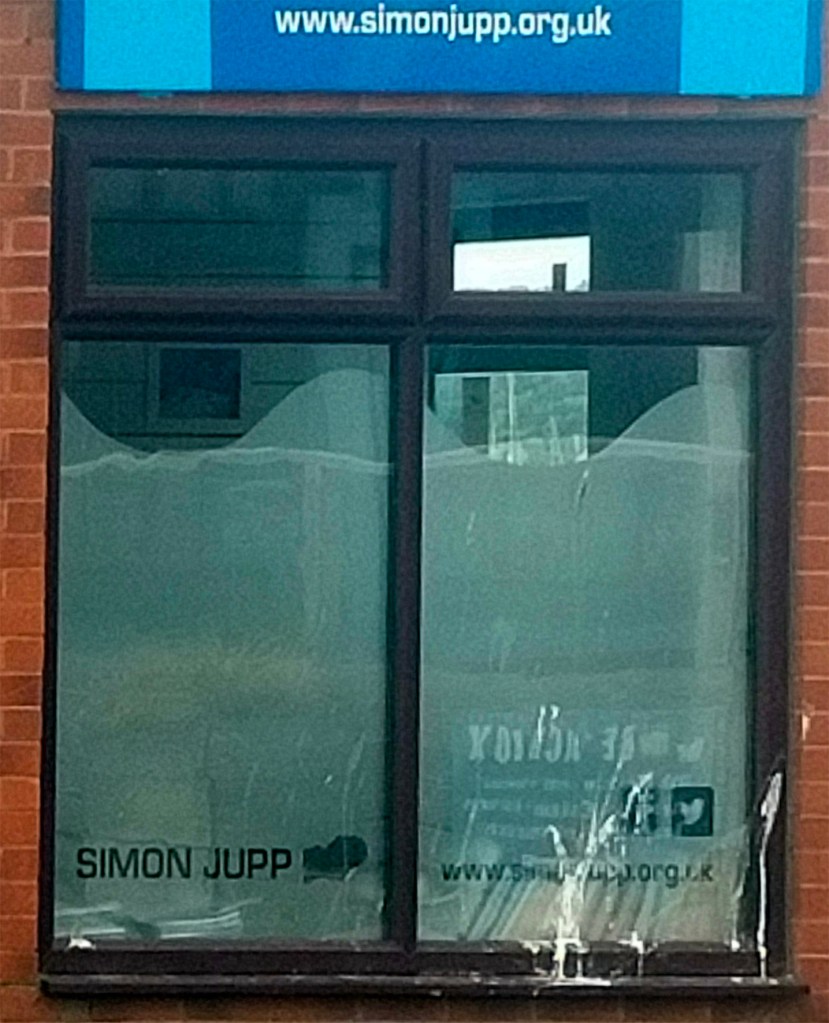
Splendid work. And to the far right of the shot, just after Ross Kemp pockets his phone, a brief comedy cameo by serial constituent ignorer and dodgy website MP Simon Jupp, doing the most peculiar impersonation of how human beings do clapping.

To watch video click here

Tory tripe

Tory candidate claiming to be “getting on” with the job of ending sewage pollution!

His opponent Paul Arnott, as leader of East Devon District Council, really has started to hold South West Water ro account. David Reed’s claim, below, is all “piss and wind” – Owl

Text reads:

MP candidate is fighting to end our sewage situation.

Ending sewage pollution into our water will-remain a top priority until we get the results that we deserve. For too long our waters have been wilfully neglected and the scale of the abuse is now clear for all to see.

Although a lot of progress has been made over the past year to bring water companies to heel. more needs to be done to empower the regulator, Ofwat. This means giving Ofwat sharper teeth to bite down on water companies that don’t play by the rules.

Our approach is to create kcal change and, if elected, vote for effective national legislation.

David Reed is calling on South West Water (SWW) to be fully visible and accountable to us, their customers. He also wards SWW to expedite their planned network infrastructure upgrades in Exmouth and Exeter East so that we can see a faster reduction in sewage releases and a cut to the use of storm overflows.

If David is elected as our next MP, he wants local people to hold him accountable for this, and he will continue to advocate for clean water policies. We cannot and should not settle for anything less than a complete end to this problem, and David is committed to delivering this for local people.

If David Reed is elected he will continue to pursue Conservative policies of light touch regulation, starving regulators of funds (austerity to fund tax cuts) and a general disregard for our ecology (cutting the green crap). – Owl

LibDems launch a new website featuring Paul Arnott for Exmouth & Exeter East

Paul Arnott for Exmouth & Exeter East www.eeelibdems.org.uk 

Paul has lived in East Devon and Exeter for more than a quarter of a century, raising a family of four children through local state schools. He has been a prominent campaigner for change at East Devon District Council, previously Conservative for 45 years, and for the last five years has led an alliance of LibDems, Independents and Greens as Leader of the Council. He has led  causes across the constituency, from at last delivering Cranbrook a town centre and supermarket, to opening up democratic involvement around Placemaking in Exmouth, and distributing hundreds of thousands of pounds in business and poverty support through the pandemic. He believes that, with respect to others, the real data shows beyond doubt that only he can beat the incumbent Conservatives here, and so does former candidate Claire Wright who has endorsed his campaign.

Below, you can read more about Paul’s priorities for the new constituency of Exmouth and Exeter East – which following boundary changes includes the East Devon wards of Broadclyst, Budleigh & Raleigh, Clyst Valley, Cranbrook, Exe Valley, Exmouth Brixington, Exmouth Halsdon, Exmouth Littleham, Exmouth Town, Exmouth Withycombe Raleigh, Whimple & Rockbeare, and Woodbury & Lympstone, as well as the Exeter City wards of Pinhoe, St Loye’s, and Topsham – as well as some of his experiences as Leader at East Devon and his personal biography.

You can get in touch with Paul via email at paularnott@eeelibdems.org.uk or on social media @PaulArnottLD.

“I’m backing Paul to win. He is decent, hard working and tough, but incredibly compassionate with a laser-like focus, leaving no stone unturned when justice is at stake. Paul will make  a strong and wonderful MP.” Claire Wright, former Independent candidate for East Devon. 

Topics covered on the website include:

My Priorities for Exmouth & Exeter East

  • Real Action on Sewage Spills
  • Standing Up for Our NHS
  • Quality Homes, in the Right Place
  • Backing Local Business

My Record at East Devon

About Paul (Paul, like Richard Foord standing in next-door Honiton & Sidmouth, has had a real world career)

This is an unusually readable and informative political website – Owl

Waitrose only major supermarket with majority Tory customers, polls show

The election may not yet be in the bag for Labour, but research suggests it is in the shopping basket.

Where does that leave East Devon towns “regenerated” by Tesco superstores when the Tories ruled EDDC? – Owl

Sarah Butler www.theguardian.com

The party’s voters now make up the majority of customers at all leading supermarkets apart from Waitrose, according to the latest polling from retail research firm GlobalData.

Shoppers at Tesco, Sainsbury’s, Morrisons, Lidl and Aldi have all swung to Labour from Conservative since 2019, the research found, with the upmarket online grocer Ocado narrowly taking the lead with the biggest proportion of Labour supporters, followed by the discounters Lidl and Iceland.

Five years ago, Labour held a majority only in the aisles of Asda, Co-op and Iceland.

Even at Conservative holdout Waitrose, the Tory lead has been heavily discounted to just 1.2 percentage points, down from 36.4 in 2019. That’s bad news for Rishi Sunak given that “Waitrose woman” – middle class, southern and not a fan of Brexit or culture wars – was one of the voter demographics identified by the Conservatives in 2022 as one they needed to win over to stay in No 10.

Shoppers at Iceland, which has the biggest proportion of customers on the lowest income, have swung further to the left. Even the supermarket’s boss, Richard Walker, has switched allegiance to Keir Starmer’s party after ditching plans to become a Conservative MP.

Zoë Mills, lead retail analyst at GlobalData, said: “If supermarkets were seats, Labour would be on course for a landslide victory, according to our supermarket election poll.

“When we asked the same questions during the 2019 general election campaign, the Conservatives held sway in all supermarkets except Asda, Iceland and the Co-op, having enticed Morrisons’ shoppers to vote blue and holding on to both Aldi and Lidl, which had previously been Labour in our pre-2017 election polls.”

Mills said that, aside from their lead at Waitrose, the only chains where the Conservatives were not trailing Labour by double-digit percentage points were Marks & Spencer and the Co-op.

Perhaps surprisingly, the supermarket with the highest proportion of Reform UK voters is the Co-op, despite its long socialist heritage and funding of the Co-operative party, which backs 26 Labour MPs.

Mills suggested the Co-op’s large number of stores in south and south-east England, where Reform supporters tend to live, could explain why so many of its shoppers favour the party backed by Nigel Farage and led by Richard Tice, who is understood to be a Tesco shopper.

Aldi was found to have the biggest share of Green party supporters, followed by M&S.

Mills said: “Reform, formerly known as the Brexit party, has overtaken the Liberal Democrats and is third favourite in all supermarkets except Sainsbury’s. The Green party is still in fifth place across most locations, but has made some progress, especially in the larger supermarkets.”

GlobalData compiled the research by asking a group of 3,177 nationally representative consumers between 1 April and 12 May how they intended to vote in the next general election and which retailer they mainly used for food and groceries.

Sandra Semple 1948 – 2024

It is with deep sadness that East Devon Watch announces the death from cancer at 75 of Sandra Semple. Sandra can now be revealed as the Original Owl, our founder in 2014.

Early life and career

Sandra’s passion for fighting injustice was formed early.

She was born in a small Yorkshire mining village near Rotherham.  Her father was a labourer who died young, and she and her younger sister were brought up by their mother on social security. She was one of three pupils to pass the 11 plus, but her mother could not afford the uniform and other expenses for the local grammar school. Sandra therefore wrote personally to the Director of Education complaining of this injustice. He replied agreeing, and provided a special scholarship to meet all expenses on condition she sent him an annual progress report. 

Her whirlwind career started in banking, specialising in comptometry. This was followed by a job in a bookseller alongside Simon Callow, then an impecunious student actor. From there she was recommended by her BTEC Principal to edit a magazine on aerial crop-spraying in Holland. From there she moved to the International Court of Justice in the Hague to manage document production where her mastery of French proved essential. 

The World Bank then sent her to Zambia. Becoming aware of the trap of hefty tax-free salaries in blunting the ambition of colleagues to develop new interests, she returned to England. She took up her long standing wish to become a nurse, at a fraction of her international salary, and specialised in psychiatric nursing (at the Maudsley).

Retirement to Seaton and political awakening

She took early retirement from the Maudlsey and retired to Seaton with her husband James and became deeply involved with local politics. In particular the Tory led EDDC’s plan to “regenerate” Seaton by selling off 20 hectares of prime seafrontage land to Tesco.

Sandra became Mayor after she led seven other Independents to take control of the Town Council in 2007. She resigned after the battle was lost in 2009 and Tesco was given a seat on Seaton’s Regeneration Programme Board under the Chairmanship of Cllr Ray Franklin, EDDC planning and regeneration supremo.

At the same time equally unpopular “regeneration” projects were being imposed by EDDC on all the other seaside towns: Elizabeth Hall/Premier Inn and the “Bowling” Alley (Ocean) in Exmouth; the Longboat in Budleigh; and the sale of the Knowle in Sidmouth. In addition EDDC were imposing significant housing in inappropriate areas from Cranbrook to Feniton and devising a local plan based on high population growth assumptions.

Sandra starts to blog

Sandra helped to set up the Sidmouth Independent News (SIN) blog to publicise the “goings on” in EDDC planning circles in 2012 but branched out to create an East Devon wide blog: East Devon Watch which went live in January 2014.

She was one of the founders, in 2013 of the East Devon Alliance (EDA), the local political party formed to provide mutual support to independent candidates seeking to break the Tory grip on EDDC. Candidates signed up to a set of core beliefs and the Nolan principles. Throughout East Devon Watch remained her private venture, independent of any form of EDA control.

This venture paid off.

In 2011 the Tory councillors numbered 43, in 2015 it fell to 36 and in 2019 their majority was wiped out as their numbers fell to 19 (out of 60).

Imagine Sandra’s dismay when, “independent” (now Tory) Cllr Ben Ingham persuaded a number of non EDA independents to join him in coalition with the minority Tories.

Final straw in 2019

The final straw for her was  the December 2019 general election which saw the return of the Boris Johnson government and the failure of Claire Wright to defeat a wet-behind-the-ears and dim Swire clone for East Devon: Jupp”.Claire had run Hugo Swire a close second in the previous election and was widely tipped to win as an Independent. Her chance was scuppered by the split of the opposition vote and the peculiar circumstances of Brexit. (Split opposition voting could also let the Tories retain Exmouth and Exeter East on 4 July.)

As a result she laid down her quill pen and left EDW in standby mode.

However, Sandra had so inspired a band of faithful “correspondents”, “moles”, “ferrets” and other creatures that we could not bear to see her pioneering work fall into abeyance. There was, and is, unfinished business to attend to and expose to the oxygen of publicity. 

Sandra could never be replaced but one of us, with considerable trepidation, picked up the feathered costume of anonymity and with her blessing and guidance continued the “The Watch”. For four years she has provided much needed advice and support.

Why did Sandra start East Devon Watch?

Here is how Sandra explained her motivation in her comments on the first million hits:

Many years ago, during the 1990’s, Owl had its first inklings that all was not well in East Devon, and particularly at East Devon District Council.  It became obvious to anyone with half a political brain that the district was being run by a cabal (“A cabal is a group of people who are united in some close design, usually to promote their private views or interests in an ideology, a state, or another community, often by intrigue and usually unbeknownst to those who are outside their group) of highly influential councillors (Conservative) and officers (under the savvy leadership of one Mark Williams).  It was further obvious that this group expected (and had hitherto been correct) that this state of affairs would long continue.

There were so many things to point to.  The rather opaque way Cranbrook was foisted on an unknowing population, rewards of official posts to those who toed the strict line that the ruling group maintained (paid offices, promotions, new jobs).  It was too easy to identify these people, but they made it impossibly difficult to follow their trails.

Towards the end of the 1990’s there began to be murmurings amongst the voting populations that these issues existed but very little idea about how to go about changing things.  With alarming regularity the “same old” group went about its business almost unseen.

In the early 2000s and the decade that followed, it became impossible to ignore that this group was not only highly influential but also had many conflicts of interest.  Planning applications directly and indirectly connected to these individuals seemed to sail through the planning process, developers of large housing schemes being particularly welcomed, especially if they had good connections already in the area. While those of people not connected to them floundered endlessly. There were flagrant breaches of trust and manipulation of events.  One such event springs to mind: Councillor Malcolm Florey, who moved permanently to France but who was considered to be perfectly capable of taking decisions about East Devon from there:

Evidence slowly began to mount that things were in a desperate situation – action was needed.  The council was basically run at this time by the leadership of East Devon Conservatives (the notorious Sarah Randall-Johnson followed by Paul Diviani and a small group of trusted Tory councillors) and a smooth partnership of Mark Williams (CEO), Karim Hassan (director of Regeneration and now Chief Executive of Exeter City Council) and the no-less redoubtable head honcho of Planning – Kate Little.  Ably assisted by highly development supporting councillors such as disgraced ex-Councillor Graham Brown.  This group was effectively a developer-friendly team, working for the most part in the shadows.  Karim Hassan was eventually replaced by the now also departed Richard Cohen who easily stepped into Hassan’s shoes.

At about this time, a young woman from Ottery St Mary [Claire Wright] decided enough was enough and mounted a campaign to flush out the information that people so desperately needed.  A number of highly-publicised demonstrations were led by her at The Knowle (EDDC HQ) and the ruling group began to get VERY nervous.  When she easily succeeded in obtaining a district council seat at Ottery St Mary, the nervousness VASTLY increased.  She had defeated the then Leader of the Council (Randall-Johnson) and the writing was well and truly on the wall that change was about to come.

Here Owl must once again stress that Claire Wright NEVER has any involvement in East Devon Watch (no matter what those who would like it to be so think), which has ALWAYS been run by independent authors).  It just so happened that EDW proved to be just about the only outlet at that time that gave her campaign wide publicity – local newspapers simply parroting the propaganda of the leading group.

It is fair to say that Ms Wright had a baptism by fire.  Never had an independent councillor been subject to so much vitriolic and misogynistic behaviour from Conservatives on the council.  She was treated with total disdain and attempts were constantly made to destroy her and her reputation.  She responded valiantly and fearlessly – and in time, as she found her feet, scored notable successes in bringing transparency to the long-concealed machinations of the Conservative majority.

Tributes (updated 10:20)

Claire Wright, former District and County Councillor and parliamentary Independent candidate

Sandra was a truly remarkable woman, from her career at the UN to being a mental health nurse.

The impact she made in East Devon, mostly behind the scenes without glory will always be remembered by those of us who had trouble keeping up with her proliferation of blog posts, most of which were absolutely hilarious. She was certainly at the forefront of creating the tidal wave of awareness that ousted the Tories from their 40 year rule in East Devon.

She was clever, great fun and hugely supportive to me, both professionally and personally. I often confided in her safe the knowledge that she was completely discreet and she always had a unique perspective to offer.

It was Sandra who came up with Free to Speak. Free to Act which was so perfect and is now used by other indies as it encapsulated everything that was important about being indie!

For the past year I haven’t been able to visit as she’s been too unwell but I did write to her in February thanking her from the bottom of my heart for everything she did to support me over the years.

That she didn’t want a funeral is typical of Sandra’s no nonsense approach.  Truly unconventional.  

May she rest in peace and happiness.

Dr Cathy Gardner, former chair of East Devon District Council

“She was a force of nature. Everything we achieved with EDA at EDDC was driven by Sandra’s energy – EDA (the East Devon Alliance) would not have been able to kick the Tories out without her”.

Paul Arnott was the Chair of the East Devon Alliance for many years, and is now in his fifth year as East Devon District Council leading a Democratic Alliance of Lib Dems, Independents and Greens. He comments:

“As a campaigner, Sandra became an exemplar of what was then called citizen journalism when she became  involved with Sidmouth Independent News, and then ran East Devon Watch, about fifteen years ago. The internet was of course already with us, but social media was in its infancy. The local newspaper groups, with the honourable exception of the “View From” titles, were not even attempting decent journalism about local democracy. Sandra fulfilled that role for the best part of a decade. 

Her journalistic legacy is extraordinary. The search engine on East Devon Watch today is a masterful index to East Devon affairs for the last decade and a half, and though far too modest to do so, Sandra had every right to have boasted that it was one of the great campaigning blogs in the UK.

Although people like Hugo Swire and senior officers at EDDC put it about that East Devon Watch, the East Devon Alliance and Claire Wright were all in league, this was as untrue as it was idiotic. Sandra was fiercely independent. She did not come to any of us for stories but published what she could glean and research herself. The Tory MP, councillors and officer allies judged her by their own standards. In fact, Sandra was Sandra and that is all there was to it.

Personally, when I became involved with the East Devon Alliance I was a wet behind ears parish councillor who had experienced something of the same bullying Sandra faced for trying to get my own town council – happily holding planning meetings with no agenda, with dysfunctional record keeping, no standing orders, no code of conduct – to reform. Sandra was such an excellent mentor, having fought worse battles around the world, that we jokingly referred to each other as Master and Grasshopper.

In this world of Trumps and Johnsons, and shabby little deals in local politics, people like Sandra fight to keep us all straight. She was fearless but undoubtedly paid a price in stress and upset for being intimidated by those who should have been on her side. I quite understand how in her modesty she would not want a public funeral. However, the people of East Devon owe her more than they will ever know.

Valedictory from “Owl”

Dear Sandra,

You helped us to clean up politics in East Devon by keeping a close eye on our District. 

Thank you for your inspiration, wisdom, support and guidance over the years.

Your legacy lives on.

Owl

PS In one of your mischievous moments you posed the question: “What the Bloody Hell is an Owl?” – A pigeon filled with anger and knowledge or basically a violent balloon covered in feathers?

Acknowledgements to: James Semple, Chrissy Evans, Claire Wright, Marin Shaw and others for providing biographical details.

Planning applications validated by EDDC for week beginning 13 May

University of Exeter pilots “Law on the Beach” initiative at Exmouth

People can get legal advice at the beach this summer thanks to the University of Exeter.

In a new move the University’s Law School Community Law Clinic is setting up pro bono sessions at Exmouth and Teignmouth to provide free legal support to beachgoers in Devon.

Alex Whilding www.exmouthjournal.co.uk

The proposed “Law on the Beach” programme is the brainchild of Professor Sue Prince from the University of Exeter Law School.

The concept echoes a similar initiative by the University of Newcastle Law School in Australia and has garnered support from acclaimed law firms and the Teignbridge Citizens Advice Bureau.

The initiative aims to aid those affected by the ongoing cost-of-living crisis by offering legal assistance, and simultaneously offers practical experience to the students involved.

Kim McDonald, senior lecturer and director of the Community Law Clinic at the University of Exeter, emphasised on the importance of the access to justice and said: “Amidst the cost-of-living crisis, ensuring everyone has access to essential legal assistance is paramount.

“Too many do not have access to justice or legal aid.

“We hope Law on the Beach will empower individuals facing legal challenges intensified by the current economic climate and provide a lifeline to those navigating complex legal issues without adequate support.”

While participating students will benefit from professional supervision during the sessions, the initiative also offers them an opportunity to improve their expertise.

Dr Craig Newbery-Jones, associate professor in Law at the University of Exeter Law School, said: “This initiative not only addresses a critical societal need but also provides our students with invaluable practical experience.

“By working alongside experienced professionals and tackling real-world legal challenges, our students will develop the skills and empathy needed to be effective advocates for justice.”

In addition to providing advice, this initiative will also focus on researching the impact of pro bono legal help on communities and identifying their specific unfulfilled legal needs.

The “Law on the Beach” sessions are to be held from 10am to 3.30pm, starting on June 4 at Exmouth’s Ocean Club and on June 5 at Teignmouth Yacht Club.

For more details or to book an appointment, interested parties can visit https://law.exeter.ac.uk/community/communitylawclinic/ or email a2jclinic@exeter.ac.uk.

Rishi Sunak faces struggle to get bitter MPs up for the fight

The only political party caught off guard by Rishi Sunak’s snap election decision is the Conservative Party itself. 

Sunak keeps claiming he has a plan. If he has, then he has yet to share it with his party which lacks a fully thought through manifesto. They are just flying “on a wing and a prayer”. – Owl

Steven Swinford, Matt Dathan www.thetimes.co.uk

Rishi Sunak has a problem. His decision to call a snap election may have earned him a political advantage, but many of his MPs — and members of his cabinet — are furious. They believe that it is a mistake and that they are more likely to lose their seats because of it.

The prime minister presented the July 4 election to his cabinet as a fait accompli, having already informed the King before he told them. The rationale behind it was simple — the fewer people knew, the less likely it was to leak. But there is bitterness in the Tory ranks.

“I can see the value in going early and surprising Labour, Farage and co,” one cabinet minister said. “But it was disrespectful and shows he clearly doesn’t trust us. Above all, it shows he didn’t value our opinion at all on the timing of the election. There’s not a chance we’ll win.”

The rancour on the backbenches runs just as deep. Many Tory MPs say they have not had time to raise enough funds for the battle ahead. They say they now find themselves in an existential battle for marginal seats without the resources to fight.

The concern is reflected on both sides. A leaked memo from Tory headquarters, seen by The Times, accused cabinet ministers and MPs of failing to “get behind” the campaign and refusing to knock on doors. Dwindling levels of funding were repeatedly flagged as an issue, while some ministers were refusing to co-operate with CCHQ.

The Conservative Party’s faltering start to the campaign — Sunak calling the election in the rain outside No 10, a visit to the Titanic quarter in Belfast — has also led to concerns. The challenge for the prime minister now will be how to retain discipline as Tory MPs fight for their futures.

Events of the weekend suggest that it could be challenging. Steve Baker, a Northern Ireland minister, has gone public in criticising Sunak’s flagship national service scheme. The scheme, he says, was drawn up by political advisers and “sprung” on MPs without any consultation.

Baker has a majority of just 4,214 in his constituency so feels he has little to lose by making his views public. He has effectively challenged CCHQ to sack him if they wish to censure him. Something they are highly unlikely to do given the proximity to the general election.

Sunak knows he needs to go hard if he is to have any hope of closing Labour’s poll lead. But doing so comes with its own inherent risks, as much within the Conservative Party as without.

Unexploded WW2 bomb found in Devon garden

Devon and Cornwall Police and the Ministry of Defence were called to a Devon village this evening after an unexploded World War Two bomb was discovered. The bomb was found in a resident’s garden in Colaton Raleigh on Monday, May 27.

Maxine Denton www.devonlive.com

Police reportedly stopped people when entering the village as the incident unfolded. The bomb was detonated at around 5:35pm.

The force incident manager (FIM) for Devon and Cornwall Police confirmed officers attended the scene and said the bomb was successfully removed and detonated.

The FIM said: “Police were called to an address in Colaton Raleigh where (a) homeowner had found suspected ordnance. Police attended with Ministry of Defence (MOD) and removed the ordnance which was then detonated.”

The Ministry of Defence has been contacted for a comment. Details of the incident and size of the bomb have not yet been made clear.

General Election announcement creates Devon devolution limbo

Devon’s planned devolution deal with Torbay has been thrown into limbo because of the surprise  announcement of the general election.

Bradley Gerrard, local democracy reporter www.radioexe.co.uk 

Devon and Torbay’s councils had both agreed to create a combined county authority (CCA), a so-called devolution deal that proponents believe would provide a better chance of securing government cash for projects linked to adult education, housing, transport, and green initiatives.

But prime minister Rishi Sunak’s plans for a poll on Thursday 4 July mean parliament will be dissolved next week, putting many planned pieces of legislation on ice.

Before the election was announced, it was hoped the parliamentary process would take place in or around October, but with uncertainty about who will be running the country then, it’s now unclear what will happen.

“We are seeking clarity from government officials on how the legislative process for setting up the Devon and Torbay Combined County Authority will be affected following the announcement of the general election,” Cllr James McInnes (Conservative, Hatherleigh & Chagford), the new leader of Devon County Council said.

“We met….with Torbay Council and both organisations remain committed to bringing forward our agreed devolution arrangement as soon as possible, and we collectively await clarity from government officials.”

Cllr McInnes added that he had already contacted the Department for Levelling Up, Communities and Housing, which oversees the devolution process, to secure the previously announced £16 million agreed as part of the deal.

He and Torbay’s leader, Cllr David Thomas (Conservative, Preston), have selected 16 “excellent projects” to receive the money, a decision that now needs to be confirmed by a formal vote.

“These schemes span housing, skills, business support and green infrastructure and can have an immediate impact on our local economy,” Cllr McInnes added.

“There would be schemes in each district area with the potential to bring forward affordable homes, decarbonise existing properties, support more than 1,000 learners in green and net zero skills, and the creation of jobs and apprenticeships.”

Cllr McInnes added that as soon as he had any more information about the devolution process, he would update the council.
 

Planning applications validated by EDDC for week beginning 6 May

Owl is catching up. This list would normally have been published last week.

Local farmer to chair South Hams Council

Local farmer Bernard Taylor will chair South Hams Council for the next year.

The Conservative councillor, who represents the Charterlands ward which includes Bigbury and Modbury, was unanimously elected at a special meeting of the authority which he joined in 2019.

Guy Henderson, local democracy reporter www.radioexe.co.uk

“I hope I can do the role justice,” he said. “We have some work to do as a team.”

He said priorities for the council include providing affordable homes for local people.

Outgoing chairman Guy Pannell (Lib Dem, South Brent) was praised for his empathy, civility and fairness, and was voted in unanimously to serve as vice-chairman for the coming year.

Council leader Julian Brazil (Lib Dem, Stokenham) made his annual statement as the elections to the top roles were made.

He pointed out that the full council would not meet again until after the general election on Thursday 4 July, in which he plans to stand for election to parliament in the South West Devon seat for the Lib Dems.

“Things will be said in the heat of battle,” he said. “But let’s remember that we are all here to fight for what is best for our communities and the South Hams.”

At the same meeting, community awards were made to the Kingsbridge food bank and the River Yealm’s dementia-friendly parishes. Robin Cox, Peter Davis and Kieron Grylls were named as community champions.

Members also paid tributes to two former councillors who have recently died – Ian Blackler and Judy Westacott, who was five times mayor of Totnes and an honorary freeman of the town.

Mr Blackler served on the council for 12 years and was described by Cllr Pannell as “a true gentleman.”

Ms Westacott had been “a stalwart of Totnes,” he said. She was a member of South Hams Council from 1991 to 2015 and chaired the authority in 1998.

“She was well known in many circles,” said Cllr Pannell. “Not least the Totnes Elizabethan Market, where she would appear splendidly dressed in her Elizabethan costume.

“She always had a ready wit and a twinkle in her eye.”
 

Ed Davey launches Lib Dem election campaign with ‘no ceiling on ambitions’

Ed Davey has said the Liberal Democrats are “not putting a ceiling on our ambitions” as he launched the party’s general election campaign.

Charlie Moloney www.theguardian.com 

The party leader said the Lib Dems had been getting their best response from voters “for a generation” while out campaigning.

He also accused the chancellor, Jeremy Hunt, and other Conservative MPs of taking their constituents for granted as he spoke confidently about winning more seats on 4 July.

Davey unveiled the Lib Dems’ new battlebus, named Yellow Hammer One, and met a large crowd of supporters at the launch in Whittlesford, Cambridgeshire on Sunday.

He focused largely on health and the environment in a speech to supporters, including hospitals “with dangerous crumbling roofs” and “sewage pouring into” wards, and promised to introduce a 10-year rolling repair programme for the NHS estate.

Asked what the Lib Dems’ targets were in the election, Davey told the PA Media news agency: “I’m not putting a ceiling on our ambitions.

“All I’m doing is talking to voters with my teams across the country, and the Liberal Democrats are getting a great response – a better response than we’ve had for a generation.

“I was elected back in 1997 and this feels to me quite a bit like that. I don’t worry about the other parties; I’m just excited about our job and excited about change.”

The Lib Dems are targeting traditionally Conservative heartlands in the “blue wall” in southern England.

Buoyed up by a series of byelection and local election victories in the area, the party is eyeing up the constituencies of several cabinet ministers, including Hunt’s.

Asked about Hunt’s Godalming and Ash constituency, Davey said he was “looking forward to that campaign” because the party had heard from many lifelong Tory voters.

He added: “I feel people like Jeremy Hunt have let them down, taken them for granted, assumed they’ll always vote Conservative.”

The Tories and Labour both made eye-catching pledges over the weekend, with the former promising mandatory national service if re-elected and the latter keen to allow 16- and 17-year-olds to vote.

Asked about both policies, Davey said: “The Liberal Democrats have long supported votes from 16 and I’m glad other parties are now catching up with us.

“All I’d say is as political reforms go, it’s an important one but it’s quite small. We need to transform our politics.

“As for this distraction of a policy by the Conservatives on national service, the hypocrisy is just breathtaking.

“What we need is full-time, professional, highly trained troops. We’ve got the best army in the world and we should be backing it.”

The party have previously pointed to local election results in May that suggested it was making gains in a series of traditionally Conservative constituencies.

Lib Dem officials believe the results – in which the party performed well – proved their strategy of ruthlessly targeting Tory wards in the seats they want to win is working.

Professional horse rider dies in fall during international tournament in Bicton, Devon

A professional horse rider has died while competing at an equestrian event in Devon.

Harry Stedman www.standard.co.uk

Georgie Campbell, 36, was immediately attended to by medical staff after falling at a fence but could not be saved.

Governing body British Eventing said in a statement on Sunday: “It is with deepest regret that we announce that Georgie Campbell (GBR) suffered a fatal accident whilst competing at the Bicton International Horse Trials in Devon, England, on Sunday 26 May 2024.

“Medical professionals attended immediately following her fall at fence 5b, however, unfortunately, she could not be saved.

“The horse, Global Quest, was assessed by the on-site vets and walked back to the stable and is uninjured.

“To respect the family’s privacy at this extremely difficult and sad time, no further details will be shared.”

A spokesperson for South Western Ambulance Service NHS Foundation Trust (SWASFT) said it was called to an incident near Budleigh Salterton at 3.05pm on Sunday.

An air ambulance, double-crewed land ambulance, operations officer and hazardous area response team were sent to the scene.

Campbell was initially a top-level showing rider before turning to eventing.

She represented Great Britain numerous times on Nations Cup teams and appeared at several five-star events, the highest recognised level of eventing.

In an Equine America interview last year, she cited winning the 4* Long in 2022 at Ligniers on Global Quest as a career highlight.

Campbell wed fellow equestrian Jesse Campbell, a member of the New Zealand team for the Tokyo Olympics in 2021, in December 2020.

Together the pair joined personal and professional forces to create Team Campbell Eventing.

The Bicton International Horse Trials is a four-day event taking place from Thursday to Sunday.