Man arrested in connection with Westminster ‘honeytrap’ scandal

A Labour party member has been arrested in connection with the “honeytrap” scandal which rocked Westminster.

Archie Mitchell www.independent.co.uk

The man, in his mid-twenties, was taken into custody from an address in Islington on Wednesday morning, the Metropolitan Police said.

Multiple victims have been told by the force that he was arrested on suspicion of offences under the Online Safety Act and harassment. Labour is understood to have suspended him after it was notified of his arrest.

Earlier this year a high-profile MP William Wragg was suspended by the Conservatives over his role in the scandal.

He admitted giving the phone numbers of colleagues to the scammer after he shared explicit images of himself when they began talking on a dating app.

Mr Wragg told the Times he was “scared” because the man had compromising information on him.

In April the Met had launched an investigation after “unsolicited messages” were sent to a number of MPs, staffers and political journalists working in Westminster.

It came after Politico reported that political figures had received the unsolicited messages from someone using two unfamiliar numbers calling themselves “Abi” or “Charlie”.

The messages would include details of the MPs and staffers’ careers and campaigns they had worked on to build rapport with victims. They would then descend into sexually explicit messaging, with “Abi” or “Charlie” sending graphic images to victims and asking for nude photographs in return.

It is understood that two of the individuals targeted responded by sending an explicit image of themselves, with the attack described as an attempt at spear phishing. Spear phishing involves scammers pretending to be trusted senders in order to steal personal or sensitive information.

Other senior figures targeted by the honeytrapper included Conservative MP Dr Luke Evans, who said he had received unsolicited explicit images and messages over WhatsApp. It is believed that at least 12 men in political circles received the unsolicited messages.

In a statement, the Met said: “Police executed a warrant at an address in Islington.

“A man was arrested on suspicion of harassment and committing offences under the Online Safety Act. He was taken into custody where he remains.

“The arrest relates to an investigation being carried out by the Met’s Parliamentary Liaison and Investigation Team following reports of unsolicited messages sent to MPs and others.

“The investigation remains ongoing.” The investigation has seen officers interview all those who received messages from the scammer, which included Labour and Conservative MPs.

Is Labour overconfident in Exmouth & Exeter East?

Historically, in Devon, there have always been tensions between the walled city of  Exeter and the County beyond, though you may have to be a 300 year old Owl to know it.

Are we seeing an action replay in this election where Exeter labour activists seem to be under the illusion that they can “take over” the new constituency of Exmouth and Exeter East? Despite only a small fraction of Exeter’s suburbs being added to the Exmouth side of the old constituency.  

Labour’s candidate in 2019 was Dan Wilson, an EDDC councillor for Exmouth Halsdon. This time he stands as an Independent.

Dan quit the party in March, citing amongst his reasons: Labour’s reneging on the Green New Deal and turning a blind eye to whistleblowing on candidate behaviour. Dan says “When I was in the Labour Party, that’s the kind of thing I expected of the Conservatives, and I felt [the Labour party] should hold itself up to higher standards.”

As has been reported and commented on by Owl, Labour have drawn false conclusions on their strength from polls attempting seat by seat predictions on small samples. Their illusion is beginning to dawn, though Owl can find no evidence of their campaigning cutting through in the constituency heartland in Exmouth.

Nationally, both Labour and the Conservatives are losing votes with Reform and the Lid Dems gaining.

The tectonic plates continue to move.


Martin Shaw
@martinshawx

Disappointing (but predictable?) that EEE Labour has switched off replies to this. Not only has Electoral Calculus projected the Lib Dems to beat the Tories, but now the FT – whose outdated figures Labour uses on its leaflets – has the LDs moving ahead to become the challenger.

PPE worth £1.4bn from single Covid deal destroyed or written off

Huge sums of taxpayers’ money literally has gone up in flames. – Owl

An estimated £1.4bn-worth of personal protective equipment (PPE) bought by the government in single a deal has been destroyed or written off, according to new figures described as the worst example of waste in the Covid pandemic.

Matthew Weaver www.theguardian.com 

The figures obtained by the BBC under freedom of information laws showed that 1.57bn items from the NHS supplier Full Support Healthcare will never been used.

They were part of a £1.78bn deal the firm struck with the government to supply masks, aprons, eye protectors and respirators in April 2020 at the height of the pandemic. It was the government’s largest PPE order during the pandemic accounting for 13% of the government’s spend.

Out of total of 2.02bn items provided by Full Support Healthcare in the deal, only 232m were sent to the NHS or other care settings, the figures show. About 749m items have already been destroyed and a further 825m of excess stock is being considered for disposal or recycling, the disclosure revealed.

The shadow health secretary, Wes Streeting, described the deal as a “staggering waste”.

He said: “We know that billions of pounds were wasted during the pandemic on corruption and incompetence by the Conservatives, but this is the worst example I have ever seen.

“£1.4bn on one contract, paying for PPE that was never used, and Rishi Sunak’s fingerprints are all over it. That is money that could have been used to pay the salaries of 37,000 NHS nurses.”

Daisy Cooper, the deputy leader of the Liberal Democrats, said it was “colossal misuse of public funds”.

She added: “This is just the latest in a series of damning revelations on the Conservatives’ record of mishandling Covid contracts.

“Instead of this troubling pattern of waste, shortcuts and lack of oversight, the public deserve transparency on the true cost of these failures.”

The health secretary, Victoria Atkins, said the £1.4bn figure was “not accepted” but her department has not provided an alternative estimate.

She defended the government’s procurement of PPE during the pandemic as “the right thing to do”. Challenged on the disclosure during a press conference on Tuesday, she said: “The whole country wanted us to get the PPE that our frontline staff needed both in healthcare and in social care, and we managed to procure billions of pieces of PPE equipment.”

In January, the Department of Health and Social revealed that of the £13.6bn spent on PPE during the pandemic, items worth £9.9bn had been written off as defective or unusable.

There is no suggestion that Full Support Healthcare, or its co-directors, Sarah and Richard Stoute, have done anything wrong.

The couple’s lawyers told the BBC: “Full Support Healthcare stock arrived quickly by summer 2020, much earlier than most and in larger quantities. It had either a two- or three-year shelf life. This means the PPE products are more likely to have passed their use-by date.”

The couple’s business is based offshore in Jersey, “solely to maintain privacy”, the lawyers told the BBC.

The couple and their company remain registered in the UK for tax.

Cabinet minister claimed he won £2,000 on election bets

A Conservative cabinet minister claimed that he won more than £2,000 betting on a July general election.

Joe Pike www.bbc.co.uk

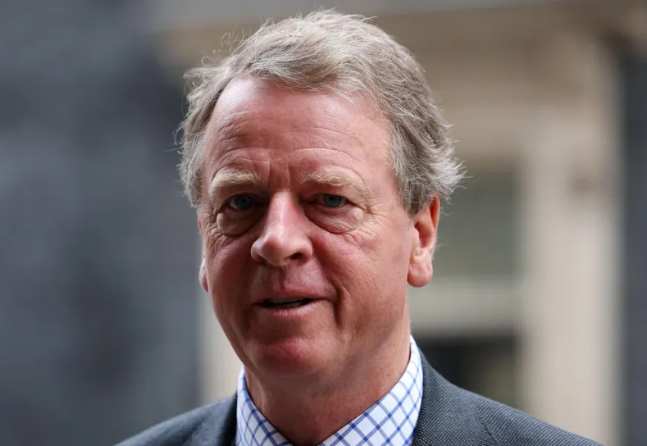
Shortly after Prime Minister Rishi Sunak announced the election date, Scottish Secretary Alister Jack told the BBC he had made £2,100 after betting on June and July election dates. He claimed one of the bets was placed at odds of 25/1.

Last week, Mr Jack told the BBC the comments were “a joke… I was pulling your leg”.

Today, the Scottish Secretary said in a statement he “did not place any bets on the date of the general election during May”.

Rishi Sunak made his surprise election announcement on 22 May.

“I am very clear that I have never, on any occasion, broken any Gambling Commission rules”, said Mr Jack.

“I did not place any bets on the date of the general election during May – the period under investigation by the Gambling Commission.

“Furthermore, I am not aware of any family or friends placing bets. I have nothing more to say on this matter.”

A spokesperson for the Gambling Commission said: “We are not confirming or denying the identity of any individuals involved in this investigation.”

Alister Jack had been telling colleagues and journalists for at least a year that he thought a June or July election made the most strategic sense for his party.

He has represented Scotland in the UK cabinet since 2019, under the premierships of Boris Johnson, Liz Truss and Rishi Sunak.

His controversial decision in 2021 to block the Scottish government’s gender self-ID reforms was seen as a significant moment in the demise of Nicola Sturgeon’s period as Scotland’s First Minister.

In February 2024, he expressed “regret” after deleting all of his WhatsApp messages from during the pandemic.

He said he erased his files to free up storage capacity on his phone in November 2021.

Green candidate says vote for Richard Foord

Owl’s view is that tactical voters need to to stop following illusions and swing behind the other candidate with Claire Wright’s endorsement, Paul Arnott in Exeter & Exeter East as well

seatonmatters.org 

At tonight’s Axminster hustings (pictured above), Green Party candidate Henry Gent said, ‘Vote for the candidate best placed to defeat the Conservative’ – that is, for Richard Foord. Jake Bonetta. the Labour candidate, has previously said, ‘We cannot let the Tories win here’, but he did not make a clear statement like Henry Gent’s tonight. Yet that is what is needed – Richard is not sure of beating the Tory, who some projections still back to win. Every vote counts – as Henry indicated, there will be another day when it makes sense to vote Green or Labour, but not now.

From a deaf old buffer: I have suffered three weeks of unnecessary silence as Royal Mail fails to meet its universal service obligations

A “Deaf old Buffer” writes:

Dear Owl,

My hearing aids stopped working four weeks ago, just before the Spring Bank Holiday. Chime at RD&E audiology repaired them that week and returned them by post on 30 May.

In Budleigh Salterton our household received no post, other than tracked post from the Bank Holiday until a huge bundle was delivered on 20 June, three weeks later. (Social media reported delivery desserts in Sidmouth over the same period).

Unfortunately, this did not include the hearing aids but, excitingly, did contain a letter from RD&E informing my wife of her RD&E appointment for the Monday June 3 – eighteen days previously.

Yesterday afternoon, the hearing aids suddenly turned up but after a lunch time delivery.

I have suffered over three weeks of unnecessary silence and am left utterly speechless at this failure of an essential service on which so many of us depend, especially as we get older.

Deaf Old Buffer

PS. What impact could this have on the postal vote?

[Owl adds that since 2011, Royal Mail’s universal service obligations have included offering to deliver letters Monday-Saturday and parcels Monday-Friday as well as offering two delivery speeds for its main universal service products: First Class (next day) and Second Class (within three days).]

What is the outlook for English councils’ funding? –  Institute for Fiscal Studies

Executive summary ifs.org.uk 

English councils saw big cuts to their funding during the 2010s, with spending on some services down between 40% and 70% over the decade. And although like virtually all public services, funding for local government was increased during the 2019–24 parliament, councils’ finances are still under significant pressure. This reflects increases in demands and costs for key services that have often far outpaced economy-wide inflation, and has led to a growing number of councils requiring exceptional financial support.

Despite this, the main parties’ manifestos were virtually silent on their plans for council funding post-election. This means there is significant uncertainty about exactly what to expect over the next five years. This report therefore looks at a number of scenarios for councils’ funding – and what these might mean for service delivery and financial sustainability given the spending pressures councils face. It finds that, given the current fiscal environment and overall spending plans implicit in the main parties’ manifestos, cuts to some council services are highly likely unless spending pressures abate – even with big increases in council tax, and particularly in poorer parts of the country. There is also a real risk of significantly more councils being pushed to financial breaking point, joining the likes of Birmingham, Thurrock and Woking. 

How might central government funding change?

The next government will have to decide how much grant funding will be provided to local government. None of the main parties has made commitments on this, unlike in 2019. 

Existing indicative spending envelopes for 2025–26 onwards imply that ‘unprotected’ spending – which in the 2010s included grant funding for councils – could see cuts averaging 2% to 3½% in real terms per year, if the next government wanted to fully fund the NHS workforce plan and meet existing childcare, defence and overseas aid commitments. However, this may not provide a good guide for how grant funding for councils will change in the next parliament. 

First, overall UK government spending totals are likely to be revised more significantly than suggested in party manifestos, when detailed plans are set at a post-election Spending Review; the trend since 2015 has been for budgets to be revised upwards. Second, the extent to which councils will share in any pain imposed is uncertain; in principle, they could fare better or worse than the average unprotected area. The public finance situation and major parties’ overall tax and spending plans mean that grant funding is likely to be more constrained in the coming parliament than over the last few years though.

Will reliance on council tax increase?

There is also uncertainty about the outlook for council tax, the biggest single source of funding for English councils. 

Councils have increased their council tax by an average of 4.4% per year since 2019. But this has barely been enough to keep up with inflation, leaving council tax at the same real-terms level as in 2019–20 and just 2% higher in real terms than in 2010–11. In future, 5% increases (the overall maximum allowed without a referendum over the last two years) would mean a 3% per year real-terms increase in bills over the next parliament, the fastest rate since the 2001–05 parliament (when they averaged 6% a year). 

Whether 5% increases in council tax are a good guide for the future is unclear though. On the one hand, both central and local government may feel uncomfortable with such above-inflation increases. On the other hand, an incoming government could decide to remove council tax referendum limits as part of devolution plans. Experience from Wales suggests that this could see bigger increases in council tax, especially by those councils that have traditionally set low tax rates.

Scenarios for funding changes

Uncertainty about both grant funding and council tax increases means that it is not possible to predict the funding councils will receive in the next parliament with confidence. However, it is possible to look at a range of more optimistic and more pessimistic scenarios using different assumptions about how both grant funding and council tax revenues may change over the next five years. This is done in Table A, which includes three scenarios for grant funding (flat in real terms; 2.7% real-terms cuts per year; 7.0% real-terms cuts per year), reflecting uncertainty about the priority placed on council funding by the next government, as well as two scenarios for council tax increases (5% and 3% per year). 

The table shows that, in any of these scenarios, overall funding will increase by less than the average over the 2019–24 parliament (2.9% per year in real terms). These scenarios also show that across the local government sector as a whole, the increases that are made to council tax will likely matter more for trends in overall funding than changes in grant funding. This reflects the much larger contribution that council tax makes to overall funding (57% in 2024–25) than grant funding (15%) (with retained business rates making up the remainder). 

Table A. Scenarios for English council funding

Real-terms change in grant funding each yearIncrease in council tax bills each yearAverage annual change in overall funding, 2024–25 to 2028–29
Cash termsReal terms
Freeze5% (3%+2%)4.2%2.5%
Freeze3% (2%+1%)3.1%1.3%
2.7% cut5% (3%+2%)3.9%2.1%
2.7% cut3% (2%+1%)2.7%1.0%
7% cut5% (3%+2%)3.3%1.6%
7% cut3% (2%+1%)2.1%0.4%

Source: Table 2 in the main text. The first figure in parentheses relates to the increase in council tax for general services, and the second the additional increase for social care services. 

Potential impacts of these scenarios

Councils in more deprived areas can raise relatively less in council tax than those in more affluent areas and in turn rely more on grant funding. This means that unless grant funding were redistributed towards deprived areas, councils in such areas may fare financially worse. For example, with cuts to grants of 7% a year and 5% council tax increases, councils in the most deprived tenth of areas in England would see overall funding increases averaging 0.6% a year, compared with 2.6% a year for councils covering the least deprived tenth of areas.

In order to offset this pattern, the government would need to redistribute grant funding from less deprived to more deprived areas. For example, under the scenario just described, councils in the most deprived tenth of areas would need to see their grant funding increase slightly in cash terms over the next four years, while those in the least deprived areas would need to see cuts averaging two-thirds, to equalise the cut in overall funding in 2028–29. 

The impact of any future funding scenario on councils’ service provision and financial sustainability will depend crucially on the cost and demand pressures councils face. Recent Local Government Association analysis suggests that if recent demand and cost pressures continued, real-terms increases of 4.5% a year would be needed to maintain services – far outpacing the funding increases in even our optimistic scenario. Even with a significant slowdown in cost and demand growth, councils in more deprived areas could struggle under even our most optimistic funding scenario, given that they can raise less from council tax than those in richer areas. If grants are cut significantly and/or council tax increases are closer to 3%, councils across the country would need to cut back service provision and could potentially face severe financial stress, even if cost and demand pressures ease. 

Party manifestos suggest ‘sharp cuts’ likely under next government, says IFS

Several public services are at risk of suffering “sharp cuts” under either a future Labour or Conservative government, according to the Institute for Fiscal Studies (IFS).

Richard Wheeler www.independent.co.uk

The IFS said the manifestos of the major parties provided little information about the funding outlook for individual services, which makes it easier for them to stay silent on the cuts to unprotected budgets.

The IFS said it did not expect the parties to conduct comprehensive spending reviews for a potential five-year Parliament in their manifestos.

But it added parties could have provided more details on their priorities and rough minimums or totals for different areas of spending in a bid to “give a sense of what we can realistically expect from them” in the next Parliament.

Existing government departmental spending plans run until the end of March 2025.

The IFS noted the two main parties have provided costings for specific policies, such as Labour’s commitment to free breakfast clubs and the Conservatives’ bid to modernise GP services.

But it said the broad priorities of each party “do not tell us anything about overall spending on each public service”.

In a new briefing note, the IFS said: “At the time of the March 2024 Budget, the baseline day-to-day resource spending envelope for all government departments was growing at 1% in real terms per yearafter this year.

“Neither main party has changed overall resource spending plans in significant ways with their manifestos: Labour’s £5 billion top-up in 2028–29 means real-terms resource spending will now grow at 1.2%, rather than 1%, on average per year.

“The Conservatives left total spending plans virtually unchanged, topping up total departmental spending in 2029–30 by around £500 million.

“We have already discussed the fact that the lack of department-by-department plans after this year means that we are uncertain about the path of spending on particular public services, andthat we are unable to evaluate the ‘cost’ of committing to a given path of spending.

“But the lack of department-by-department plans also means that parties can commit in their manifestos to overall spending plans that imply sharp real-terms cuts to a range of areas, without spelling out where those cuts will fall or how they are to be achieved.”

IFS research economist Bee Boileau, an author of the report, said: “Both the Conservative Party and the Labour Party have made a lot of their fully funded pledges in the manifestos this election campaign.

“But, in practice, these pledges mean almost nothing for the funding that individual public services might expect in the next Parliament.

“We do not know how total spending will be allocated between public services after next March, and, with a few exceptions, neither manifesto offered much light.

“The manifestos did tell us that neither party is planning to top up total public service spending by enough to avoid very difficult choices for many public services in the next parliament.

“But the manifestos provided no information on which areas would actually bear the brunt of these choices, continuing the main parties’ conspiracy of silence when it comes to public service spending plans.”

Mark Franks, director of welfare at the Nuffield Foundation, said: “The public should be informed about whether the parties aiming to form the next government have credible plans for funding the essential public services that people rely on.

“In this election, voters are being asked to make their decision without adequate and clear information on this critical issue.

“This lack of clarity should be addressed, both in the remaining two weeks before the election and in future electoral processes.”

Barcelona is banning Airbnbs – Britain should take back control, too

I hear the Mediterranean is revolting this time of year. It certainly will be for some this summer. A growing anger, from Barcelona to the Balearics, is threatening to turn the most popular holiday hotspots into hostile ground for the tourists they once welcomed.

Paul Clements www.independent.co.uk 

The islands of Mallorca, Menorca, Ibiza and Formentera have already been hit by protests, with 10,000 locals marching through Palma. Earlier this month, sunbathing tourists on an isolated beach popular with Instagram influencers were jeered and forced off it so that residents could have it to themselves for a change. The Balearic president has declared that Mallorca’s 20 million tourists a year “is not sustainable”, and that measures to limit visitors can no longer be ruled out.

Then, last weekend, the mayor of Barcelona restated his opposition to the short-term letting site Airbnb – a lightning rod for protests about the “crime” of over-tourism – by pledging that there will be no rental apartments for visitors in his city by the end of the decade.

His refusal to issue new licences and not renew existing ones comes amid public outcries against the mass tourism that has seen a city of 1.6 million residents receive more than 30 million visitors a year.

In 2016, Barcelona became the first major European city to fine Airbnb for users letting out unregistered properties and, later, to ban short-term private room rentals altogether, as part of its campaign to crack down to dissuade tourists from using short-let booking apps and to push visitors back into hotels. Some 3,500 apartments are already said to have been returned to the city’s local housing market.

In clamping down, you might say Barcelona is taking back control of its private rental sector from the disruptor platform – and there are plenty of places in Britain that would like to follow their lead, too.

Since it launched across Europe in 2010, Airbnb has dramatically reshaped short-term lettings markets, depleting housing stock with a negative knock-on for residents’ rents. It has warped neighbourhoods, too. Family-run supermarkets that for generations have catered for locals have been inched out by tourist cafes, bike rentals and souvenir shops.

Yes, the app helped create new demand and enabled billions to flow into local economies. It has stretched the average tourist’s length of stay, which has only added to local incomes and enabled more than $10bn in tourism taxes to be generated around the world. But with hordes of visitors comes great irresponsibility.

The revolving door of tourists can shatter the peace, from the notorious “party pads” with hot tubs in quiet villages, to the unwelcome sound of wheelie suitcases being trundled down the corridor of a residential apartment block in the middle of the night.

Initially, Airbnb was sold as the place to find a room going spare or a sofa to surf. But the trouble with “democratising” travel is that everybody can do it. The freedom to live like a local and explore a neighbourhood like it’s your own means you can also misbehave like you own the place, too – to drive it like you stole it.

Just ask the residents of Britain’s prettiest seaside villages – if you can find them. Out of season, the likes of Robin Hood’s Bay in North Yorkshire, Whitstable in Kent and Mousehole in Cornwall are often pitch dark; nobody’s home, because few can afford to live there these days, thanks to all the holiday lets that no one much fancies in deepest February. These towns are becoming like a ghost town.

Meanwhile, in London, cash-strapped councils have accused holiday platforms of not doing enough to prevent local authority housing from being illegally sublet to tourists for vast profits – and at a time when thousands of people are on waiting lists for full-time accommodation. (One housing association tenant was reportedly found to have made £4,000 a week from subletting their property to tourists.)

There was a time when we used to love a market disruptor. In a similar way that the arrival of “no-frills” airlines in the 1990s rapidly brought down the price of return flights, and Uber ended black cabbies’ nice little earner, holiday rental app revolution – made possible by smartphones and sleek online booking interfaces – seemed to pull a rug from beneath hotels that could once overcharge for a bed for the night.

But there’s always a catch – and it’s not just the vast council tax shortfall involved. In my experience, Airbnb and its rival platforms are rarely fuss free.

Tim Dillon, a US stand-up and podcaster, has a nice line about the downside of staying in the spare rooms advertised on Airbnb, which has misanthropic echoes of Jean-Paul Sartre: “The problem is that people are terrorists – their homes are filthy and disgusting. There are 150 rules including ’Don’t wake the neighbour. She’s works nights!” Or dumb recommendations: ‘Try Claudia’s Pancake Hut – local fav!’ Just buy a van and sleep in that.”

I might do just that. These days, I am allergic to Airbnb, ever since I was kicked out of an apartment in Alghero in high season, for complaining about the gabba DJ broadcasting into the night at the open-air funfair next door, a facility unmentioned in the listing description.

You’d think I’d have learned my lesson, but this summer I’ve booked to go to Mallorca. I’ll be sure to pack an “Ocupem les Nostres Platges” T-shirt, just to throw the anti-tourist protesters off the scent.

Planning applications validated by EDDC for week beginning 10 June

Tory MPs paid £100,000 of public funds to party’s in-house web designers

More than 120 Conservative MPs, including Jeremy Hunt, Liz Truss, Sajid Javid and Gillian Keegan, paid £100,000 of taxpayers’ money to the Conservatives’ in-house web design services, it can be revealed.

Jessica Elgot www.theguardian.com 

The MPs used the Bluetree website service to design their websites. When billed by Bluetree, they would pay for the sites then claim back the costs from the public purse via expenses, prompting a complaint to parliament’s expenses watchdog about the practice.

Conservative Campaign Headquarters (CCHQ) has denied Bluetree is wholly owned by the party and says it is a separate organisation, but repeatedly refused to deny the party receives income from the company, saying it has “commercial arrangements with CCHQ”.

Records show more than 330 invoices from Bluetree to Conservative MPs, including Hunt, Truss, Javid and Keegan, for web design services. Other high-profile Conservatives who have expensed services from Bluetree include Ben Wallace, Tobias Ellwood, Mark Francois and Helen Whately.

The company – which describes itself as the “Conservative party UK official website platform” and says it is run “inside the party” – has an address that is the same office as CCHQ and has been paid £100,695 in taxpayers’ money since 2019.

The Independent Parliamentary Standards Authority (Ipsa) has said it would not allow websites to be funded if it was clear they were being used for party political purposes – regardless of the services offered by the company. It said if any evidence was found that rules had been broken then it would work with the MP to make amendments or repay expenses.

Senior transparency campaigners said they were alarmed if MPs were using taxpayer funds that could end up with the Conservative party. Tom Brake, the director of Unlock Democracy, said the money should be repaid if any surveys from the website were used to give MPs information for campaigning.

“The rules are clear. Taxpayers’ money cannot be used by MPs for party political campaign purposes. Yet Bluetree’s promotional material about their websites makes it clear that that is their intended purpose,” Brake said.

“Running surveys on a website, paid for with public money, which elicit information about likely voting intention constitutes a breach of the expenses rules. Unless these activities have been separately funded by the MP, any MP using taxpayer’s funds in this way should be required to reimburse them immediately.”

Rose Whiffen, a senior research officer at Transparency International UK, said: “There are rightly strict rules governing what MPs can and cannot claim on expenses, including using public money for political purposes.

“Any allegations that MPs have used their taxpayer-backed expenses to fill the coffers of their respective political parties should be investigated. MPs should carefully avoid any expenditure that could be seen to be misusing public money to the benefit of their respective parties.”

The Labour councillor James Walsh made the complaint to Ipsa. He is running against Hunt in the Godalming and Ash constituency, though the Lib Dems are favourites to take the seat.

Walsh said the authority should investigate the expenses. “There would be nothing intrinsically wrong with any of the above if these website services were something the individual MPs or the Conservative party were paying for out of their own funds, but for those costs to be charged to the taxpayer in the form of Ipsa expense claims strikes me as an outrageous misuse of taxpayers’ money,” he wrote.

A Conservative party spokesperson said: “Bluetree is an independent organisation but is a preferred supplier of the Conservative party. MPs using Ipsa money for a website to promote constituency activity is compliant with Ipsa rules. Bluetree works closely with Ipsa to ensure guidelines are followed.

“Bluetree and the Conservative party have made it clear to candidates who were MPs that they should not be using any Ipsa-funded website during the election.”

The party said Bluetree was part of a registered company separate from the Conservative party but would not say what that company was. All contact details for Bluetree on its website are directed to CCHQ and Bluetree does not have a separate Companies House registration.

MPs have frozen their websites during the election campaign to avoid breaking rules on using the taxpayer-funded sites.

The website of Bluetree promotes features to be used by campaigners. It says it has “the only software designed to provide Conservative MPs with the features to campaign effectively online throughout the election cycle” and that “candidates who use Bluetree consistently receive a higher vote share than those who don’t”.

It says: “We have spent more than a decade working inside the party to provide tools that you simply cannot get elsewhere.” It also promises a site that is “compliant with Ipsa, the UK, Scottish and Welsh parliaments, the Electoral Commission and the information commissioner”.

The site directs any queries about sites designed by Bluetree to CCHQ and contains the Conservative imprint: “Promoted by Alan Mabbutt on behalf of the Conservative party.”

Paul Arnott will make a very good MP – Martin Shaw

He is a worthy inheritor of Claire’s mantle

Paul Arnott, the Liberal Democrat candidate for Exmouth & Exeter East, is not only the tactical choice to beat the Tories, backed by the remarkable Claire Wright who came second last time, in an area where Labour have never been even second and the Lib Dems have far more votes in recent council elections. He’s also a formidable campaigner, skilled politician and generous human being, as I know from working with him in East Devon politics over the last decade.

Paul, who has lived in East Devon and Exeter most of his adult life, first got involved about 15 years ago, angered by the obvious corruption of the East Devon council after decades of Tory rule. Along with a few others, he set up the East Devon Alliance to challenge the abuse of planning powers, and turned this into one of the most successful Independent electoral challengers in English local government, which by 2020 had removed the Tories. Paul then took on the challenge of constructing an alternative coalition to reform and open up the council. At the same time, he actively backed Claire’s amazing campaigns.

Paul’s politics are driven by the need for justice and to challenge the dire effects of national Tory rule, especially on the NHS, to which he owes his own life – Paul was always there when we were fighting to save the community hospitals in 2017, and he was alongside me when they threatened to demolish part of Seaton Hospital late last year. 

Paul’s national politics always inclined towards the Lib Dems and mine towards Labour, but we agreed on what needed to be done and Paul, more than anyone, made things happen. His style is consensual and inclusive – on the council, he brought together Independents, the Lib Dems, the Greens, and at times Labour. As a passionate supporter of Proportional Representation – which would make Labour and Green votes count in our area, but which national Labour has blocked – he is backed by the cross-party East Devon Compass group which campaigns for this.

Paul will want to represent everyone in the constituency and especially all those who are looking for change after 14 years of Tory rule. He’s not a tribal Lib Dem – he only joined the party after Richard Foord’s by-election victory proved that they were once again the national challengers in East Devon. He will stand up for local people and for what is right, in the end – I am sure – despite the party line.

However unlike Labour MPs who will be whipped to support Keir Starmer right or wrong, Paul will be able to challenge his government – for example, over increasing cooperation with Europe and the odious two-child rule – as well as supporting them on many issues. The phrase ‘local champion’ has been discredited by Tory chancers, but Paul would be the real thing. He is a worthy inheritor of Claire’s mantle, and the best person to stop  Exmouth & Exeter East being saddled with an irrelevant Tory MP for five more years.

Martin Shaw is a former Independent county councillor and leading campaigner for community hospitals.

South West Water sorry for boil water notice delay

South West Water (SWW) has apologised for failing to lift boil water notices for additional groups of customers this week following a parasite outbreak in May.

Dan Wareing www.bbc.co.uk

The company said they “are seeing clear results” in Kingswear, but they had to lift the notice in line with advice from public health partners.

SWW has previously said it was still advising about 2,073 households in the wider Hillhead, upper Brixham and Kingswear areas to continue to boil their drinking water.

About 2,500 homes in the area were under notice after cryptosporidium, which can cause diarrhoea and sickness, was found in the water supply on 15 May.

Earlier this month 21 households had their notices lifted.

South West Water added it would continue to “carry out intensive work in the Hillhead network”, ice-pigging water pipes, where an ice solution is pushed along pipes using water pressure to help clean them.

The company thanked customers for their patience.

On Monday, the company will be holding a drop-in session in Kingswear Hall for residents of Hillhead who want to learn more abut the process of ice-pigging.

On Tuesday there will be a session for residents in the Brixham area who “are still concerned about the quality of their drinking water”, in Brixham Town Hall.

Both sessions will be held between 15:00 and 18:00 BST.

Simon Jupp claims he’s been blocked from joining campaign to save Seaton hospital by Lib Dems – true or false?

Simon Jupp has made these strong claims in his recent election flyer (see images below). Are they true or false? 

Owl sends in the ferrets.

What the ferrets say is that Simon Jupp couldn’t be bothered to turn up when the campaign was launched at a large public meeting on 3 November 2023. Nor did he turn up for any subsequent meetings. 

So it is not surprising that he wasn’t chosen to be on the 10 member local committee. Since there are only 2 Lib Dems on the committee they can’t be described as “controlling” it either, indeed it is genuinely cross-party and includes conservatives. He eventually contacted one of the committee members, and in the end three of them had a zoom meeting with him.

But why should he be part of the campaign? Until the election was called, Simon Jupp was MP for East Devon. Seaton’s MP was Richard Foord, MP for Tiverton and Honiton. So this local issue lay outside his “Parish” – so to speak. He should have been devoting all his energies on sorting out his constituents’ problems in Exmouth, Cranbrook and Sidmouth. 

The ferrets also question whether Simon (gofer in the Department of Transport) has any relevant experience in saving hospitals. It is Tory policies that are closing them and Simon is as loyal as they come.

Another Top Tory under investigation for alleged election betting

“This government will have integrity, professionalism and accountability at every level.” – Rishi Sunak on being appointed PM

It looks like Partygate all over again – Owl

Harry Yorke, Caroline Wheeler, Gabriel Pogrund www.thetimes.com (Extract)

A senior Conservative official is being investigated by the Gambling Commission over allegations he placed dozens of bets on the timing of the election before it was announced publicly.

Nick Mason, the Tories’ chief data officer, has been informed by the watchdog that he is part of the inquiry. After being approached for comment, the Conservative Party confirmed he has taken a leave of absence.

He is the fourth Tory to be named since the controversy first erupted, with a police officer who was part of Rishi Sunak’s close protection team also under investigation.

[There is a moral in this image – never mess with an Owl]

Mason allegedly placed small bets each worth less than £100, but would have stood to win thousands of pounds based on the odds

In an interview with the Sunday Times, Michael Gove, the outgoing levelling up secretary, likens the controversy to the partygate scandal that dogged Boris Johnson’s premiership.

“It looks like one rule for them and one rule for us,” the Tory cabinet minister, who is not standing again at the election, told the Sunday Times.

Water bosses pocketed £100m in pay and bonuses in past 10 years

Water company bosses have taken home more than £100m in salaries and bonuses over the last 10 years despite overseeing a major sewage crisis in the country’s waterways, new figures reveal.

Vote Tory to “Hold water companies to account”? – Owl doesn’t think so!

Richard Vaughan inews.co.uk 

Research into the annual accounts of each of the water utility firms since 2013 shows that nine of the chief executives have paid themselves £114m, including £61m in bonuses and benefits.

It comes as the issue of the dumping of raw sewage in the UK’s rivers, lakes and seas has become a national scandal and a key battleground in the election campaign.

According to figures shared with i, among the highest earners is Liv Garfield, chief executive of Severn Trent Water, who took home £3.9m in the 2021/22 financial year and £3.2m in the 2022/23 financial year.

The research by Labour analysed the annual accounts of each of the nine major water companies, showing the total remuneration of each of the chief executives, as well as breaking it down by salary, bonuses, benefits and incentives.

It comes as the party released separate NHS data that showed more than 10,000 people have been hospitalised since 2019 as a result of waterborne diseases as both Sir Keir Starmer’s party and the Liberal Democrats ramped up attacks on the “Conservative sewage scandal”.

Labour highlighted new analysis of NHS hospital admissions data showing the number of people diagnosed with diseases transmitted via waterborne infection nearly doubled during the past two years, rising to a record high of 3,261 cases last year.

The steepest increase was in the number of typhoid fever cases, which doubled to more than 603.

Typhoid fever is typically “uncommon” in the UK and more prevalent in parts of the world that have poor sanitation and limited access to clean water, according to the NHS.

Data from the Environment Agency for 2023 shows a 54 per cent increase in the number of sewage spills compared with 2022, and a 13 per cent increase compared with 2020.

There is growing anger over the polluted state of England’s rivers and coasts, with no single stretch of river classed as being in a good overall condition, and hundreds of pollution risk alerts issued for popular beaches around the country last year.

Labour shadow environment secretary Steve Reed said the NHS figures were “sickening”, adding the Tories just looked the other way while water companies pumped a tidal wave of raw sewage into our rivers, lakes and seas, putting the nation’s health at risk.

Meanwhile, the Lib Dems set out a plan to save chalk streams, which the party’s analysis suggested suffered nearly 49,000 hours worth of sewage dumping in 2023 – more than double the previous year.

The streams, which spring from underground chalk reservoirs, are one of the world’s rarest freshwater habitats and are found primarily in the south of England and Yorkshire.

Sir Ed Davey’s party repeated its proposal to launch a public consultation within the first 100 days of the next government, which could see rivers and lakes awarded a new Blue Flag status to protect them from sewage dumping.

Labour has pledged to ban water bosses bonuses if they fail to stop sewage spills in sufficient time, and will even bring in criminal charges for executives who persistently fail to meet environmental targets.

The Conservatives said in February that they too will block payouts for water chiefs if they commit criminal acts of water pollution, starting with bonuses from April 2024.

The party has also insisted it has quadrupled the number of water company inspections, meaning 4,000 inspections will take place a year by April 2025, rising to 10,000 a year from April 2026.

The Conservatives have been approached for comment.

Severn Trent water has also been approached for comment.

Tactical Voting and the Tyranny of the MRP – more from Martin Shaw

Four days ago the Telegraph reported a one-off Survation poll projecting a Reform win in the new Exmouth & Exeter East constituency with Labour and the Conservatives tying for second place.

By way of contrast, three weeks ago, Electoral Calculus predicted that this new seat would be a straight fight placing Paul Arnott, Lib Dem, just 3 points behind the Tories, with all other candidates trailing far behind. Since then successive polls have narrowed the gap, on 14 June to 1 point, and then, the latest a day ago, actually places Paul Arnott narrowly in the lead.

Are all these polls equally reliable?

Martin Shaw looks under the bonnet of MRP constituency by constituency polls.

Martin Shaw 

Polling company YouGov has set alarm bells ringing with its projection that Nigel Farage will win Clacton with over 40% of the vote, prompting Alastair Campbell to call for Labour and the Conservatives to combine to block him – while others called on the Lib Dems and Greens to back Labour in the seat.

A panic had already been triggered by a Survation projection that Reform UK could win seven seats. And then Farage’s collaborator Matthew Goodwin popped up with a ‘poll’ that showed Reform nationally nine points ahead of the Conservatives.

It’s right to take the projections from independent polling companies seriously, if not Goodwin’s. Clearly Farage could win his seat, he should be blocked and tactical voting for a real alternative (not the Conservatives who are largely indistinguishable from Reform) is urgently needed. Yet we need to be clear that these are not conventional polls: they are projections, which although they use polling data, are based on complex “MRP” (multi-level regression and post-stratification) statistical models, and it is very difficult to evaluate them sensibly.

As polling expert Matt Singh points out, there is an almost complete “lack of transparency”; none of the pollsters has “yet even listed their variables either for turnout or vote choice”, let alone explained fully how they combine the granular demographic data which is MRPs’ unique selling point with assumptions about political behaviour.

One of the more transparent pollsters, Ipsos Mori, specifically warns: “we would encourage readers to not place too much certainty into specific point estimates.” Yet this is what even widely publicised and reputable tactical voting sites are doing.


The Exmouth case

My own alarm bells were triggered by Survation’s call, since their ‘Reform’ seats included – of all places – the new constituency of Exmouth & Exeter East, which is mostly the old East Devon seat, next door to where I live. While Reform will undoubtedly garner some support, locals reported that it had hardly been seen in the constituency, and no one credited its projected first place.

Reform’s candidate Garry Sutherland appears even by its standards to be distinctly lacking in charm – he has a conviction for kicking a dog and has shared David Icke videos – and his behaviour at a recent hustings confirmed the impression this information gives.

Sceptics like British Future director, Sunder Katwala, were quick to suggest on X, formerly Twitter, that the source of Survation’s apparently rogue prediction for Exmouth was that its MRP model was finding it difficult to cope with the very unusual result in East Devon in 2019, when a left-leaning Independent, Claire Wright, was the main opposition to the Conservatives, winning 40% of the vote.

This difficulty had already caused one important tactical site, StoptheTories.vote, to pull a Labour recommendation for Exmouth based partly on MRP projections.

This might not have mattered too much – none of the other projections agree that Reform is ahead in Exmouth and some like Electoral Calculus suggest that the Lib Dems, not Labour, are the challenger.

However, Best for Britain’s Get Voting, the most heavily promoted tactical voting site, is using Survation’s projection and using it to urge Labour voting in Exmouth – which may have the effect of helping the Conservatives cling on. This case therefore brings to the fore some major concerns about how MRPs, which are widely publicised both by their producers and the TV sites, could perversely skew tactical voting.


MRPs and tactical voting advice

The problem with using MRPs for tactical voting is not only that they are routinely described as ‘polling’ on Get Voting and other tactical sites, when they are not polls but statistical projections. It is also that their primary purpose is not to guide tactical voting, but to provide more accurate overall projections of the overall arithmetic in the next parliament. 

MRPs have gained prominence because of the increasing fragmentation of the British political scene, with greater regional and local variation in how swings in public opinion affect constituency results and hence the parties’ national tallies.

The various MRPs use different models, and although their claims for greater precision than traditional polling might seem suspect – they currently offer a huge range of possible Labour majorities – they can claim modest successes in their first major outings, the 2017 and 2019 elections, and they are at least an attempt to deal with the reality that British elections are decided by 650 separate constituency contests.

The problem with MRPs is that while in the aggregate, they could improve predictions of the electoral outcome – although by how much is debatable – they may not be especially reliable in predicting individual constituencies, especially where something that doesn’t figure in their models has happened. They use impressively large national samples: Survation’s most recent had 42,000 respondents, but that works out at only 65 people per seat, and the raw local data is not published, but processed via the model.

A senior pollster at one of the major firms pointed out to me that their MRPs aren’t designed to provide constituency-level advice and are published with health warnings. Another quickly admitted that his MRP could produce “surprising” results in what he called “idiosyncratic” seats.

Yet while tactical sites are ultimately responsible for how they use the data and voters for how they interpret it, pollsters can’t shrug off their responsibilities here – they produce projections in the knowledge of how tactical voting sites and voters, who will mostly understand little about them, could use them. Indeed some polls, like Survation’s for Best for Britain, are even commissioned with this in mind. 


When local knowledge is an ‘anomaly’

The irony is that while MRPs work by producing local projections, many don’t appear to use much local political knowledge apart from the result of the last general election. Indeed many MRPs are even allergic to local knowledge, since it complicates their models.

In the current campaign, many have failed to adequately incorporate – or at all – obviously relevant political data which is far more recent than the 2019 election, like the results of the by-elections which have upended politics in dozens of local areas, and of council elections. Rather, they seem bent on forcing tactical sites and voters alike to somehow compute the significance of such new information for themselves. 

I know this because the constituency I live in, Honiton & Sidmouth, is mostly the old Tiverton & Honiton seat where the Lib Dems famously overturned a huge Conservative majority in 2022’s ‘porngate’ by-election.

Labour had been a poor second in the 2019 election, but were squeezed to a tiny 3.7% in the by-election, while the winning Lib Dem came from third to get 53%. Yet many MRPs and TV sites, basing their projections on the 2019 result despite the startling more recent data from 2022, were still calling Honiton and Sidmouth for Labour at the start of the general election campaign. 

Indeed even on 15 June, Survation projected Labour to get more votes than the Lib Dems in Honiton & Sidmouth, which flies in the face of what everyone on the ground knows – even Labour themselves, who are not campaigning in the seat and have sent their activists off to Plymouth.

When I talked to a pollster about MRPs not taking account of by-election results, the response was that it would introduce an “anomaly” into the model because not all seats had by-elections. Yet this “anomaly” is a crucial political reality in so many seats – how can the data it has created not even be acknowledged?

Survation’s Honiton & Sidmouth projection obviously posed a problem for Best for Britain’s Get Voting, its tactical voting partner site, which they solved by manually overriding the projection and recommending a Lib Dem vote on the ground of the new MP’s ‘incumbency’.

Yet Get Voting still publishes the Survation projection with its frankly absurd figures, alongside this recommendation, potentially confusing any voter who looks at it.

The reductio ad absurdum of this approach is how many MRPs and tactical sites are treating Exmouth and Exeter East. In this case, they are not merely disregarding the fact that a party got a deposit-losing vote, as Labour did in the Tiverton and Honiton by-election.

Rather, since they have difficulty in factoring the Independent’s 40% vote in 2019 into their predictions, many have actually used the tiny Labour vote of 4.5% in 2019 to help project Labour as ahead of the Lib Dems (who had an even tinier 2.8%) in 2024.

Both parties had been almost completely squeezed, but these miserable results are still steering flawed MRP projections and tactical advice almost five years later.

Get Voting actually has a ‘local factors’ option for override Survation’s projection, but they haven’t used it for Exmouth & Exeter East despite its obvious idiosyncrasy.


What should be done?

Tactical voting is an essential way for voters to ensure, under Britain’s flawed electoral system, that they get the result they want – in this election, so many people in every seat want to take their once-in-a-lifetime opportunity to ensure that they no longer have a Conservative MP.

Tactical voting sites rightly put a lot of money and effort into producing advice, but they need to get it right, since if they don’t, they could help split the anti-Conservative vote and help some undeserving Conservatives cling on. 

In the end, it is difficult to know how far the problem of skewed advice extends, although it probably affects a large swathe of the South where, even without by-elections, the Lib Dems have re-emerged in the last three years, making weak Labour second places in 2019 doubtful guides to 2024 voting.

It will also be a particular concern in the seats in which significant Independents are standing, such as Jeremy Corbyn in Islington North, Faiza Shaheen in Chingford and Woodford Green – who is given a notional 0.06% by one polling site – and pro-Palestinian candidates.

At this late stage of the game, when postal votes are already being cast on the basis of inadequate information and advice, tactical voting sites should go into damage limitation mode – and the pollsters should help them to do this.

WRITTEN BY

Martin Shaw

Labour drafts options for wealth taxes to ‘unlock’ funds for public services

The Labour party has been drawing up options for how it could raise money through extra wealth taxes to help rebuild Britain’s public services if it wins the general election, according to sources who have spoken to the Guardian.

Anna Isaac www.theguardian.com

The proposals under consideration include increases in capital gains tax (CGT), first revealed by the Guardian two weeks ago, that could raise £8bn.

Another option under discussion could lead to significant changes to inheritance tax. The measure would make it more difficult to “gift” money and assets, such as farmland, tax free. Together with CGT increases it could raise up to £10bn in revenue, according to one document seen by the Guardian.

A senior Labour source said: “We are starting from ground zero with our public services and infrastructure. We have to show we are serious about borrowing and raising revenue from taxes if investors are going to walk in step with us. These measures are part of unlocking wealth and putting it to work.”

A second senior party source said: “We have to show we are credible when it comes to transforming the country. Fiscal credibility means reforming tax as well as prudent borrowing.”

Before making any decisions, Labour intends to present a range of options to the Office for Budget Responsibility (OBR) for analysis, after gathering costings on individual measures from HM Revenue and Customs (HMRC).

Labour has been under pressure to explain how it will fund its plans for government, and sources admit there is frustration among some senior members of the party about the cautious approach it has taken during the election campaign.

So far, Labour has said it will not raise income tax, national insurance or VAT – and it has ruled out applying CGT to primary residences. It denied that it has arrived at any final decisions over any other measures.

A Labour spokesperson said: “Keir and Rachel have made clear that our priority is growing the economy, not increasing taxes. We have set out fully costed, fully funded plans, with very specific tax loopholes we would close. Nothing in our plans requires any additional tax to be increased.”

In an interview with the Guardian this week, the shadow chancellor denied there were any plans for new revenue-raising in a budget due this autumn. Rachel Reeves said she was focusing on efforts to drive growth rather than “tinkering around with taxes”.

However, sources have made clear that work is already under way to scope new ways of raising money if Keir Starmer becomes the prime minister.

They said a series of draft documents and expert analyses had been worked on throughout the election campaign and circulated among senior officials and shadow ministers.

One Labour memo, seen by the Guardian, was a briefing note that estimated increases to rates of CGT alone could generate £8bn for the Treasury in the long term.

There are also proposals to overhaul inheritance tax, with plans for a consultation that could launch in autumn. These could include radical changes, such as scrapping or updating the rules on agricultural land and business relief.

HMRC could be instructed to prepare figures on a range of options next month, sources said. They would then go to the OBR, which would need 10 weeks to crunch the numbers and share its findings with the Treasury.

The preparatory work suggests a budget could come in early October, as soon as party conferences are complete.

Under the current CGT regime, profits from the sales of second homes or shares in businesses are taxed at a much lower rate than wages.

Some senior figures believe that being more open about plans to raise wealth taxes to transform public services would improve turnout among traditional Labour voters.

The tax options under consideration come amid growing criticism from experts about a “conspiracy of silence” over how the two main parties will afford to fund public services.

The Institute for Fiscal Studies (IFS) said Labour and the Conservatives had not been clear about how they planned to address the “very tight fiscal situation” facing the next government.

The inheritance tax option being looked at involves changes in the rules for the tax on agricultural land and other family businesses, which industry experts regard as “very significant”.

At present, a person can claim up to 100% relief on the inheritance of agricultural land if it is being actively farmed. That has led to concerns that farmland is being snapped up by wealthy people keen to avoid inheritance taxes, and this is driving up prices and shutting out small businesses and farmers.

Some in Labour want to scrap this as well as business relief, which allows a person to pass on a company or shares if it is unlisted with 100% tax relief.

Plans being considered contain a sliding scale of options to weigh up the likely gain for the exchequer, including capping the benefit from agricultural and business relief at £500,000 for each person, rather than scrapping it. In some instances, both forms of relief could be claimed, allowing for a cap of £1m for each person in effect.

This would still raise about £2.3bn by 2029-30, which would be at the end of the OBR’s forecast period if it was introduced in March next year, according to a paper published by the IFS in 2023. The same figure appears in one of the internal Labour documents seen by the Guardian.

Sources said wider changes were also being considered on gifts and inheritance tax. Currently, no inheritance tax is due on gifts if they are made by a person who lives for more than seven years after the gifts are made.

Cuts to council services likely unless cost pressures abate – even with the biggest council tax increases for 20 years (£600 over 5 years) 

Despite the evident pressures facing councils, the main parties’ manifestos were almost silent on English local government funding (local government funding is a devolved matter in the rest of the UK). This means there is significant uncertainty about exactly how funding for councils will change over the next parliament.

Institute for Fiscal Studies

But new analysis by IFS researchers shows that if demand and above-inflation cost pressures continue to grow in line with recent history, councils could be forced to cut back some areas of service provision. This would be true even if funding from central government was frozen in real terms (rather than being cut alongside other ‘unprotected’ areas) and council tax was increased at 5% per year – equivalent to over 3% a year above inflation, its fastest real-terms rate since the 2001–05 parliament. More deprived areas, which rely more on central government funding relative to council tax, will face the biggest squeeze unless there is a significant redistribution of central government grants towards them. A combination of statutory duties to vulnerable residents and big cuts to more discretionary services during the 2010s means some councils, at least, would struggle to cut back services further – putting them at risk of severe financial distress.

The new report, funded by the abrdn Financial Fairness Trust and the Nuffield Foundation, sets out scenarios for English councils’ funding and spending. Findings include:

  • Existing overall spending plans imply that ‘unprotected’ services could be cut by 1.9–3.5% a year in real terms between now and 2028–29. Manifestos give no indication of whether the next government would prioritise council funding (as has been the case since 2019) or cut it by more than average (as was the case in the 2010s).
  • The scale of increases in council tax will matter more for councils’ funding given that it makes up a much larger share of their funding (57%) than grants from central government (15%). If council tax increases by around 5% a year in the next parliament – in line with the maximum allowed over the last two years without a referendum – the average Band D rate would be around £600 higher per year in April 2029 than now. After accounting for household inflation, the real-terms increase in council tax bills (averaging just over 3% a year) would be the highest since the 2001–05 parliament (when they averaged 6% a year).
  • If grant funding were cut by 2.7% a year in real terms (the mid-point of the range for unprotected services) and council tax increased by 5% per year, English councils’ overall funding would increase by an average of 2.1% a year in real terms, after adjusting for whole-economy inflation. Even under a relatively optimistic scenario where grant funding was frozen in real terms, English councils’ overall funding would increase by an average of 2.5% a year in real terms. The average real-terms increase in overall funding from 2019 to 2024 has been 2.9% a year.
  • If demand and cost pressures continue to increase at the same rate as in recent years, analysis by the Local Government Association suggests that real-terms funding increases of around 4.5% a year would be needed to maintain service provision. This means growth in demand and cost pressures would need to almost halve for the change in overall funding to keep pace with these pressures across England as a whole, even with no real-terms cuts to central government grants and with council tax increasing by 5% a year. It is likely that recent high growth in demand and cost pressures will eventually slow down, but when and by how much is far from certain.
  • Councils in the most deprived areas are likely to face the most difficult funding situation. For example, if all councils’ grant funding were cut by 2.7% a year in real terms and council tax increased by 5% a year, councils covering the most deprived tenth of areas would see their overall funding increase by just 1.3% a year in real terms, compared with 3.0% a year in the least deprived tenth of areas. To avoid this, there would need to be significant redistribution of grant funding from less deprived to more deprived areas, which may be difficult to implement, especially if overall grant funding is constrained.

Kate Ogden, a Senior Research Economist at IFS and an author of the report, said:

‘Many councils are under clear financial strain. They are struggling to meet the surging demand and cost for services such as children’s and adults’ social care residential placements, special educational needs support and temporary accommodation for the homeless. Unless these pressures slow down significantly and quickly, or the next government gives a big injection of funding to local government, councils will likely need to make cutbacks to some areas of provision. Given that more discretionary services have often seen cuts of 40% or more since 2010, councils may struggle to do this. More could be pushed to the financial brink, like Birmingham, Thurrock and Woking. It is remarkable that the main parties have been silent on how they would address these challenges.’

David Phillips, an Associate Director at IFS and another author of the report, said:

‘With many councils struggling to fund their existing responsibilities, the next government should be particularly careful in ensuring plans are in place for funding any additional responsibilities they are given. This is particularly true for adult social care services, where the Conservative, Labour and Liberal Democrat manifestos made commitments to expand service provision. However, none has identified sufficient funding to fully cover the costs of their proposals. Without additional funding, these reforms would intensify the pressures on councils’ budgets – potentially seeing some existing social care recipients losing support to help pay for expansions of provision to other, typically wealthier individuals, as financial means-tests are relaxed or abolished.’

Anvar Sarygulov, a Research Grants and Programmes Manager at the Nuffield Foundation, said:

‘With increasing demand for social care and other services, the next government needs to think carefully about how it enables councils to meet this demand. Any future funding plans need to consider that councils in more deprived areas are more dependent on central government funding, and that there are already significant inequalities in provision of local services across the country.’

US-style chicken and pig megafarms in UK could continue to expand under Labour

The UK faces the prospect of more polluting US-style “megafarms” under a Labour government, after the party failed to make any manifesto pledges to restrict their growth.

Lucie Heath, Andrew Wasley inews.co.uk

Environmental campaigners have voiced concerns that the main political parties have stayed largely silent on the topic of intensive farming ahead of the election on 4 July. Only the Green Party has a clear pledge to ban factory farming in its manifesto.

The lack of strong policies means the UK is likely to see the continued development of megafarms, which have increased 20 per cent in number since 2016 under successive Conservative governments. They have been associated with river pollution, poor animal welfare and public health problems.

Many are concentrated in a number of small areas, leading to calls for a moratorium on new intensive farms, including from former Tory environment minister Lord Goldsmith.

In April, i and The Bureau of Investigative Journalism (TBIJ) revealed how emissions of ammonia – a potentially deadly pollutant – were surging across the UK’s megafarming hotspots, emanating from industrial-scale poultry production.

The silence from Labour – which is on course for a large majority according to the polls – is in contrast to 2018, when it made a pre-election pledge to consult on the expansion of megafarms.

Its manifesto also makes no mention of the farming budget: support for farmers that the industry says is vital if they are to increase sustainable production.

The Conservative Party manifesto vows to increase the farming budget by £1bn over the next parliament, a boost described as “modest” by wildlife charities. However, it makes no mention of restricting megafarms or farm animal welfare.

The Liberal Democrat manifesto does include a number of pledges to maintain animal welfare standards and reduce pollution in farming, but stops short of calling for an end to the expansion of factory farms.

Only the Green Party said it would introduce a ban on new factory farms. It also pledged to enforce regulations on how densely animals can be housed and to forbid the routine use of antibiotics on farm animals – which have both fuelled the spread of drug-resistant diseases.

Clare Oxborrow, food campaigner at Friends of the Earth, said: “If we are to stop the worst climate change impacts and restore nature, we will need to shift to less meat-intensive, healthier diets and stop the expansion of these damaging mega-farms.

“Elections should be when we grapple with these big issues, not avoid them.”

Claire Palmer, director of Animal Justice Project, told i and TBIJ that the lack of political commitment to reducing the expansion of megafarms was “deeply disappointing”.

She added: “Politicians must use their authority to halt the spread of megafarms immediately and demonstrate their support for public concerns – many of which vehemently oppose factory farming.”

However, Richard Griffiths, chief executive of the British Poultry Council, said large-scale farming is needed to meet the UK’s demand for food: “The UK has 65 million people needing three meals every day, so all production has to be, by definition, large-scale.”

He said small-scale farming is not necessarily more sustainable than large-scale farming, which is permitted, controlled and regulated to feed a lot of people to good standards in a short space of time. “To unfairly label it as a bad thing overlooks the essential role it plays in our food security and economic stability,” he said.

In the UK, there is no legal classification of what constitutes a megafarm. In the US, a megafarm is defined as an operation that houses 125,000 broiler chickens, 82,000 laying hens, 2,500 pigs or 700 dairy or 1,000 beef cattle.

The Environment Agency and its devolved counterparts classify livestock farms as “intensive” if they hold at least 40,000 poultry, 2,000 pigs or 750 breeding sows.

Gareth Morgan, head of farming policy at the Soil Association, said: “The next UK government must act to curb the boom of livestock megafarms or we’ll see more dead zones in our rivers and more of them facing the same desperate fate as the River Wye.

“The millions of chickens being housed in factory farms in the UK produce a quantity of muck that is proving impossible to manage sustainably.”

He also highlighted the need for a level playing field for nature-friendly farmers, and a system that does not grant permits to huge intensive livestock farms.

“Farmers operating these units are often doing so out of financial necessity and need a viable alternative. Urgent government action is needed to solve this crisis and create a pathway for farmers to move to a more resilient and sustainable future,” Mr Morgan said.

A recent investigation by i and TBIJ found that intensive livestock farms in England had breached environmental regulations thousands of times in recent years.

Among more than 3,000 incidents were the “routine” discharge of slurry and dirty water, maggot-infested carcass bins, and the illegal incineration of pigs.

As part of its campaign to Save Britain’s Rivers, i has called on the next Government to boost agricultural funding to help farmers manage their land in a more sustainable manner.