Tories and Labour on course for lowest share of the vote since 1945

Labour and the Tories are on course for their lowest combined vote share since the second world war, as the latest Opinium poll for the Observer shows a shift away from the main parties.

Michael Savage www.theguardian.com 

With all the parties having now unveiled their election manifestos, Labour has maintained a dominant 17-point lead over the Tories with less than three weeks to go until polling day. However, Reform and the Lib Dems are up two points each.

It is a reversal of the trend seen at the last election, when the main parties were able to squeeze the support of their smaller competitors. According to Opinium research, support for the smaller parties dropped 10 points between the first and last poll in the 2019 campaign. So far, the total vote share for smaller parties is up five points this time round.

“Voters are turning away from the two major parties in a huge break with the trend seen in the 2019 general election campaign, when the smaller parties’ votes were squeezed,” said James Crouch, head of policy and public affairs at Opinium. “The biggest surprise is that both major parties are being hit, with Labour and the Conservatives down to their lowest share of the vote since Liz Truss was in office.”

It comes alongside analysis that the election points to historically low support for the two major parties. Elections researcher Dylan Difford found that according to current polling, the main parties were on course for their lowest share of the vote since 1945. He said that the elections that took place in the wake of Brexit could actually be the exception, masking a longer-term fall in backing for the big two.

“After the Brexit polarisation seen in the last two elections allowed the smaller parties to get ‘squeezed’, this represents a return to the pre-2016 trend of growing multi-partyism among British voters,” he said. “Regardless of a belief that first past the post will always push voters back to the big two, the increasing anger, frustration and distrust voters feel towards mainstream politics is fuelling this fragmentation across western democracies – and Britain is simply not immune.”

The latest Opinium poll also revealed a big hit to Rishi Sunak’s approval ratings. He now has a net rating of -40, with 20% approving of his performance and 60% disapproving. Keir Starmer’s ratings have also slipped, though less severely, to -3 overall.

Voters regard the last week as the worst of the campaign for the Tories. Two-thirds (65%) thought it had gone badly for them, perhaps reflecting the fallout from Sunak’s decision to leave D-day commemorations early and a difficult Sky interview with Beth Rigby.

BBC uncovers 6,000 possible illegal sewage spills in one year

Every major English water company has reported data suggesting they’ve discharged raw sewage when the weather is dry – a practice which is potentially illegal.

Esme Stallard, Jonah Fisher and Sophie Woodcock, Becky Dale and Libby Rogers www.bbc.co.uk

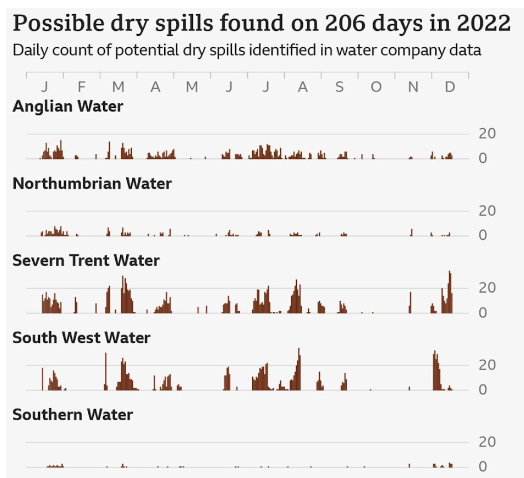
BBC News has analysed spills data from nine firms, which suggests sewage may have been discharged nearly 6,000 times when it had not been raining in 2022 – including during the country’s record heatwave.

Water companies can release untreated sewage into rivers and seas when it rains to prevent it flooding homes, but such spills are illegal when it’s dry.

The firms say they understand public concerns around dry spilling, but they disagree with the BBC’s findings.

They have said the spill data shared with the Environment Agency was “preliminary” and “unverified”, and also disagree with how the BBC defined a dry spill, which they say differs from the Environment Agency’s approach.

The latest findings follow a BBC investigation conducted last year which found 388 instances of possible dry spilling in 2022 by three water companies – Thames, Wessex and Southern – after they shared their data with the BBC.

The other six – Anglian Water, Northumbrian Water, Severn Trent, South West Water, United Utilities and Yorkshire Water – had refused to share data about when they might be spilling with the BBC. They said it could prejudice an ongoing criminal investigation by the Environment Agency, external (EA) and Ofwat into their activities, external.

The regulator – the Environment Agency – which had the data, disagreed, and in January handed it to the BBC.

Speaking to the BBC before the election, Helen Wakeham, head of water at the EA, said the whole point of monitoring was to increase transparency, and they wanted to make the data more publicly available.

Overflow points where sewage is discharged have monitors which record when spills start and stop.

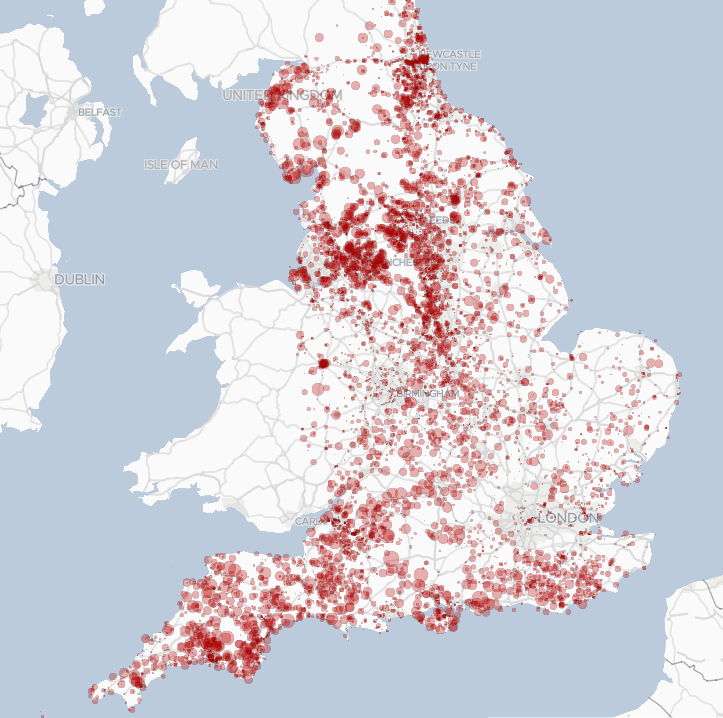
The BBC cross-referenced the companies’ spill data from these overflow points with local Met Office rainfall data. Over 18 months we analysed data from nearly 10,000 monitors which had recorded more than 1.5 million hours of discharges.

BBC analysis suggests dry spills may have started on more than 200 days in 2022, lasting more than 29,000 hours – including during the record summer heatwave when people were cooling off in England’s rivers and seas.

“We are most concerned about those [spill] events happening in places where people are likely to go in the river,” said Professor Barbara Evans, chair in public health engineering at the University of Leeds.

Consumption of water contaminated with human or animal faeces exposes people to parasites and bacteria such as cryptosporidium and E.coli, which cause diarrhoea and vomiting, or viruses like hepatitis A which can lead to liver infection.

The six water companies who were subject of the latest investigation took issue with the BBC’s analysis, citing the data we used and the methodology.

Every year England’s water companies are required to submit an annual report to the EA summarising their discharges. This enables the EA to investigate potential cases of dry spills and to decide whether it will take any action.

The BBC has been analysing data behind the 2022 report, but in responding to our findings, the water companies argue that the datasets are unverified and contain errors.

Examples of potential dry spills in the data were presented to each water company. Anglian Water disagreed with all the examples presented and the remaining five companies disagreed with some.

The main reason the companies gave for disputing the examples was that their monitors malfunctioned and incorrectly recorded spills.

From 2025, all water companies have committed to publishing near real-time sewage maps for the public to increase transparency. They will use the data from these monitors to create the maps.

David Henderson, CEO of the industry body, Water UK, told the BBC: “We are the most transparent industry in the world when it comes to water. No other country in the world publishes this sort of data.”

In May, Anglian Water was found guilty of failing to provide data to the Environment Agency for their investigation – and it will be sentenced in July.

Regarding the BBC’s methodology, some of the water companies argue it did not take into account that some outlets have large catchment areas and it can take a few days for any rainfall to drain through their systems, i.e. sewage detected on a dry day may be the remnants from an earlier rainy day.

However, the BBC accounted for drain-down time by only considering a discharge a potential dry spill when there had been four consecutive days in the surrounding area without rain.

Helen Wakeham from the EA says the BBC’s methodology is, in fact, “more generous” to the companies than the EA’s.

Commenting on the results of the BBC’s investigation in general she said: “I’m not surprised, these networks haven’t been invested in for decades. That investment needs to take place.”

In May the UK’s top engineers and medical professionals warned in a public report the risk from human faecal matter in our rivers will increase without changes to the network and how we build our cities.

Dr David Butler, professor of water engineering at the University of Exeter, and co-author of the report, said investment from water companies has “not really been up to scratch”.

But he added that we must also rethink how we design our towns and cities.

“What we would like to see is reversing urban creep – that is well beyond the powers of a water company. You see it all the time, people concreting over their front garden,” Prof Butler explained.

“If you could unpick that it would help because that would reduce stormwater runoff and that would give us more capacity in our pipes.”

Reducing dry spilling would also help prevent excessive nutrients entering rivers from sewage discharging. The issue, which is also associated with agriculture, can cause excessive amounts of algae to grow, resulting in waterways becoming depleted of oxygen, killing off other animals like fish.

“[It] also can have knock-on health effects, because this algae can produce other toxic products which might be harmful to human health,” said Prof Evans of University of Leeds.

South West Water said: “We are clear that storm overflows must only be used when absolutely necessary to protect people’s homes and regard all unpermitted dry spills as unacceptable.”

Yorkshire Water and Northumbrian Water said they: “Do not believe the [BBC’s findings] are true reflection of dry discharge numbers.”

United Utilities said: “The information you have received from the Environment Agency reflects unvalidated, raw signals and not validated start/stop times.”

Anglian declined to provide a formal comment on the BBC analysis, but in correspondence to the BBC said that the monitor data was not enough to determine dry spills due to monitor malfunctions, and said the methodology was flawed.

The three companies investigated by the BBC last year also responded to our new findings.

A Thames Water spokesperson said: “There are a number of methodologies for defining and calculating why and how dry day spills occur.

“We regard all discharges of untreated sewage as unacceptable, and we have planned investment in our sewage treatment works to reduce the need for untreated discharges.”

A Wessex Water spokesperson said: “Naturally occurring groundwater can enter sewers, often from private pipes and in dry weather, which can cause overflows to operate for days or even months.

“We agree overflows are outdated so we’re investing £3 million a month to help reduce how often they automatically operate.”

A spokesperson for Southern Water said: “In areas with high levels of residual groundwater, spills can happen outside of periods of rainfall. Without these releases – made up almost entirely of groundwater – homes and communities would be flooded.

“Combatting these groundwater spills is a key part of our £1.5 billion Clean Rivers and Seas Plan, which is designed to drastically reduce all storm overflows across our region by 2030.”

Counting possible dry spills – methodology

Water and sewerage companies are responsible for outlets known as combined sewer overflows (CSOs), which release sewage from treatment works or the sewage network into the UK’s waterways.

The majority of CSOs record when they discharge.

For this analysis, the BBC took the start-stop times of individual discharges from the CSOs and converted them into the standard 12/24-hour counting blocks used by the EA to determine “spills”.

In the specific case of United Utilities, the BBC found that some of the discharge data provided to the EA did not correspond to their 2022 annual report summarising this data. For that reason, the BBC discounted data from more than one-third of United’s overflows.

The start times of the companies’ spills were matched to daily rainfall data from the Met Office, which is produced from a network of automatic rainfall gauges and observation stations.

This rainfall data is presented in gridded squares that cover the land area of the UK. Each grid cell is 1km sq.

Each overflow point is part of a larger network, or catchment area, and rain further away can take time to reach the overflow point.

The BBC considered the nine grid squares nearest to each spill site in the analysis. Individual catchment areas may be larger or smaller.

The EA defines a dry day as one during which there was less than 0.25mm of rain and less than 0.25mm of rain the previous day.

But the BBC took a conservative approach of four consecutive days without rain in all nine grid squares to allow for drain-down time.

The methodology was independently reviewed by three academic experts working in this field.

Methodology support from Dr Gemma Coxon, University of Bristol; Dr Nick Voulvoulis, Imperial College London; Dr Barnaby Dobson, Imperial College London

Massive progress as South West Water lifts “boil water” notices on 1% remaining households

Brixham boil water notices lifted for 21 households

Twenty-one households have been told they can stop boiling their drinking water after a parasite outbreak in Devon.

Jonathan Morris www.bbc.co.uk

South West Water (SWW) said it was still advising about 2,073 households in the wider Hillhead, upper Brixham and Kingswear areas to continue to boil their drinking water.

The lifting of the boil water notice for 21 households supplied off the Hillhead to Boohay main follows an announcement by SWW that it had progressed in cleaning and protecting its water network.

About 2,500 homes in Brixham and Kingswear were under notice after cryptosporidium, which can cause diarrhoea and sickness, was found in the water supply on 15 May.

Customers and businesses who no longer needed to boil their water before consuming it would be contacted directly, said SWW.

It said: “Our water quality scientists have been working closely with our analytical facilities and public health professionals, and the results of our water quality monitoring confirm that it is safe to lift the boil water notice in this part of the network.

“This means that customers supplied off that main can now return to using their tap water as normal.”

Remaining households were served by a separate system that “continues to be flushed and cleaned to ensure the water is safe to drink”, said SWW.

Laura Flowerdew, SWW chief customer and digital officer, thanked customers “for their continued patience while our teams work hard to clean the network and put interventions in place to prevent this from happening again”.

SWW said it was “working around the clock to lift the boil water notice for the remaining customers in the Hillhead, Upper Brixham and Kingswear area”.

“Cryptosporidium levels are reducing as a result of our work but we will only lift the notice further when we are completely sure it is safe to do so,” it said.

If any customers or businesses were unsure whether they remained under the boil water notice, they could check using South West Water’s postcode checker, external, it added.

John Curtice on Reform and Lib Dem gains

After showing little movement in the first two weeks of the campaign, the opinion polls are now showing some clear shifts.

“But Reform is not the only party advancing in the polls. Now, the Liberal Democrats, with a 12% rating, are also up a couple of points.”

Sir John Curtice www.bbc.co.uk

In seven polls conducted so far this week, support for the Conservatives stands on average at just 20% – that’s four points down on where they were at the beginning of the election campaign.

However, support for Labour has also fallen. They are averaging 41% in this week’s polls, three points down over the course of the campaign.

But, because both parties are down by similar amounts, Labour still enjoy a lead of 20 points or so.

So who has been gaining support?

One party that undoubtedly has done so is Reform UK. On average they are at 16% in this week’s polls – five points up on where they were when the election was called.

True, so far there have been rather more polls this week from companies that have tended to record relatively high figures for Reform, but they are probably at least on 15%.

One poll in particular has caught people’s attention.

A YouGov survey of more than 2,200 adults, external, conducted between 12 and 13 June, puts Reform at one point ahead of the Tories for the first time on 19%.

However, this is just one poll. We have had four others published in the last 24 hours, none of which have had Reform ahead and not even all of which had the party gaining ground.

On average, Reform is still four or five points behind the Conservatives.

But this is still bad news for the Tories.

The only way that Rishi Sunak could hope to even get to base camp in narrowing Labour’s large poll lead was to squeeze the Reform vote, virtually all of which is coming from those who voted Conservative in 2019.

In 2019, Reform’s predecessor, the Brexit Party, did not stand in Conservative-held constituencies, This time, Reform are standing virtually everywhere in England, Scotland and Wales.

This means Reform is likely to take most votes away from the Conservatives in seats that Rishi Sunak’s party is trying to defend.

Rather than the Tories making progress, things are actually going backwards, not least, of course, because of Nigel Farage’s decision to fight this campaign.

The former UKIP and Brexit Party leader previously said he would not stand in the election but on 3 June announced he would be Reform’s candidate in Clacton, as well as take over as the party’s leader.

Almost instantly this resulted in a three-point increase in the party’s poll support, an advance that now seem to be even a little higher.

But Reform is not the only party advancing in the polls.

Now, the Liberal Democrats, with a 12% rating, are also up a couple of points.

This may partly explain why Labour’s support is down.

So the campaign has now made a difference.

And perhaps in focusing their attacks on each other both the Conservatives and Labour have paid too little attention to the potential challenge from the smaller parties.

We will have to wait and see if that now changes.

You can find a full list of candidates for the Clacton constituency here.

John Curtice is Professor of Politics, University of Strathclyde, and Senior Fellow, National Centre for Social Research and ‘The UK in a Changing Europe’. He is also co-host of the Trendy podcast.

Exmouth and Exeter East – Win As One backs Paul Arnott

This is a unique seat. winasone.org.uk

The challenger in the last three elections was the unique progressive Independent Claire Wright, who is not standing again. She squeezed all the opposition parties. She is now actively supporting the LD candidate, Paul Arnott, the leader of East Devon District Council with a strong local press profile and a former fellow Independent who supported her in 2019.

Under a fair electoral system, we would be able to vote with our hearts. Lending parties votes to keep the Conservatives out wouldn’t be necessary, and the Green Party would win the representation in Parliament that their level of popular support should entitle them to.

Paul is committed to changing the voting system and has pledged to champion this issue and Proportional Representation in Parliament. That’s why our East Devon local group is supporting him.

(Click here for link)

“Is it safe to swim off Budleigh?” – A risk based approach to enjoying our fantastic bay

Peter Williams fightingpoolution.com 

Like many local residents, I was attracted to Budleigh by the dream of enjoying many golden days in and around our beautiful blue sea and iconic pebble beach. For many though, that dream has become a nightmare of almost daily sewage alerts, and fears over the safety of swimming off our beach. To some extent, web sites like this – along with the Escape FB page, have undoubtedly raised awareness of the threat caused by South West Water’s faulty sewage infrastructure and management. I don’t apologise for that, but I would say that our objective is to raise awareness and drive much-needed improvement, through posting carefully researched and accurate information.

However, I’ve lost count of the number of Facebook comments saying people are too scared to venture into the water. That’s a huge shame, and many times I believe, these fears may be unfounded – IF we consider the available data. In fact, throughout the last four Summer seasons, the sampled water quality has been excellent (approx 4% of the ‘Safe’ limit) around 80% of the time.

Although not ‘advice’, this post sets out my personal step-by-step guide to making informed decisions on when – and where – to swim.

STEP 1: Where NOT to swim, ever!

Every week between May and September, the Environment Agency sample the water quality at various points in all of our local brooks and the sea. The analysis of these samples is posted publicly here.

The 2023 sampling data shows that the large volume of water flowing out of Otter Mouth is typically 6 times the government’s ‘safe’ limit for bathing. That’s why I would never swim in the vicinity of the estuary mouth.

Even worse is the water flowing out of the Kersbrook, which emerges a few meters into the sea, straight out from the mini roundabout at Lime Kiln car park (line up the two yellow posts and that’s were the brook emerges). In 2023, the average water quality emerging from the stream was 14 times greater than the ‘safe’ limit. The volume of water coming out of the brook is usually quite low, so any pollution dissipates quickly. But again, I would never swim within 30 metres either side of the stream outfall.

To a lesser extent, the water flowing out of the Knowle Brook (Budleigh’s high street stream), was on average 11 times greater than the safe limit. Again, this dissipates quickly when it runs into the sea, but I would always avoid the immediate area.

You can see all of the sewage outfalls on this Google Map we have created. This includes data on all outfall locations and recent dumping performance.

STEP 2: Check the EA daily POLLUTION RISK FORECAST for Budleigh

Every morning the Environment Agency run a pollution risk forecast, which is published on this Gov UK web site, plus our own LoveBudleigh web site, with alerts published sometimes, but not always, on the SSRS app.

I recently compared the pollution risk forecasts over the last 4 years with the subsequently-published sample data analysis, and on every occasion that there was a pollution forecast, the water quality was actually poor or unsafe over the next 48 hours.

As a result, although the EA say that the alert only runs for 24 hours, I personally would never swim within 48 hours of a forecast alert being made.

STEP 3: Check the SSRS app to see if there is a pollution Alert from one of the Sewage Overflows. If so: check WaterFit to see WHICH overflow this comes from.

SSRS alerts happen when one of South West Water’s sewage overflow sensors are triggered, normally after at least 20 minutes of a sewage spill. These alerts can happen at any time of the day, but the SSRS alert does not show WHICH sewage overflow has been triggered.

Up to June 2024, SSRS has reported over 60 sewage alerts for Budleigh, more than any other year by a long way. The reason for 2024’s huge number of sewage dumps is because Lime Kiln sewage pumping station (which handles 100% of Budleigh’s sewage), is effectively ‘broken’. ‘Budleigh Sewage Action’ have organised a dedicated meeting with senior staff from South West Water, and invited several local EDDC councillors to attend and help present your views. Our objective is to fully understand the issues, and push SWW for a swift solution to this totally unacceptable situation.

This is where the risk-based approach to swimming comes in. Although many people are understandably put off by these almost daily alerts, it’s also true that when we have had alerts from Lime Kiln, but when NO EA Risk Forecast had been issued, AND there have been water samples analysed from the middle section of the beach, then the vast majority of times the sample subsequently comes back as ‘safe’. In fact, most times the water quality at the Telephone Box sampling location is Excellent (ie: around 4% of the ‘Safe’ E-coli level), even after an SSRS sewage discharge warning.

The reason for this may be linked to how the Lime Kiln pumping station is currently broken, and the fact that any sewage discharges are dumped on the East side of the Otter mouth (just past our iconic Otter Head cliffs).

So personally, I check the WaterFit web site and check WHICH of Budleigh’s overflows has been triggered. IF it is Lime Kiln (and 90% of the time it is), then I can make an informed, risk-based decision.

It’s also worth considering the layout of our beach, and think about the lowest-risk area is to swim.

So using our Budleigh Sewage Map, we can measure the distance from the Lime Kiln overflow outfall to the main beach area below Lime Kiln car park, which is about 600 meters. The distance from the outfall to the red telephone box by the Longboat Cafe – where the EA sampling is carried out – is 1km. But the distance from the outfall to Steamer Steps, where many of our residents actually swim, is 1.6km, or 1 mile distant.

So my personal view is that, IF there is NO EA POLLUTION FORECAST, and we get an SSRS alert – which I check with WaterFit is coming from Lime Kiln overflow, then I personally am normally happy to swim off Steamer Steps. The exception to this is if there has been recent heavy and prolonged rain, or if the alert comes from one of the other sewage overflows.

As I said, this is not advice as such, but simply the risk-based process which I use to determine if I’m happy to get out and enjoy our wonderful bay.

Breaking News: Electoral Calculus narrows Tory lead over Paul Arnott for LD to 1 per cent in Exmouth & Exeter East

www.electoralcalculus.co.uk

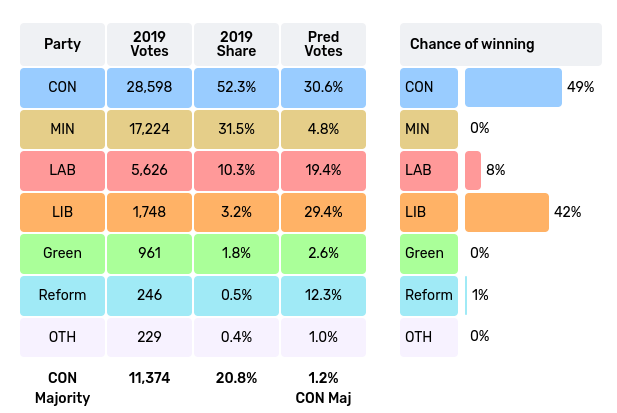
This is now clearly a two horse race: with Tories on 49% chance of winning; Lib Dems on 42%

None of the other candidates has a realistic chance.

Party2019
Votes
2019
Share
Pred
Votes
CON28,59852.3%30.6%
MIN17,22431.5%4.8%
LAB5,62610.3%19.4%
LIB1,7483.2%29.4%
Green9611.8%2.6%
Reform2460.5%12.3%
OTH2290.4%1.0%
CON Majority11,37420.8%1.2%
CON Maj

Planning applications validated by EDDC for week beginning 27 May

Dirty waters: how the Environment Agency lost its way

Having created a watchdog for the environment, the government took its teeth out and muzzled it. Can public outrage rouse the Environment Agency to action?

One of the Guardian’s “Long Reads”.

Owl recommends that you go online to read the history of this disgraceful process of sidelining a once proud watchdog.

The sad story starts in 1991.

By Hettie O’Brien www.theguardian.com 

Extract from concluding paragraphs:

“Cleaning up rivers has become an electoral issue that commands near-universal support. Conservatives are now being forced to reckon with the consequences of cutting the agency’s funding and encouraging it to take a softer approach. This has resulted in the absurd spectacle of public arguments about who is to blame for the state of rivers conducted by the very people who are responsible for the state of rivers. The only thing on which ministers seem to agree is that it is all someone else’s fault. Yet despite all the talk of pollution, neither Labour nor the Conservatives have pledged to restore the money cut from the agency’s budget since 2010.”

Labour reminds ‘non-battleground’ candidates not to spend time campaigning in those seats

The Labour Party has reminded candidates in ‘non-battleground seats’ – which include Exmouth & East Exeter as well as Honiton & Sidmouth – not to spend too much time campaigning in those seats. In our seats, candidates and members had already been advised to campaign in Plymouth instead. This is further confirmation that ONLY the Liberal Democrats are seriously fighting to defeat the Conservatives in our area.

seatonmatters.org 

The Labour candidate for Honiton & Sidmouth, Jake Bonetta (pictured), had already signalled his support for this strategy, writing to members about Plymouth and saying ‘We cannot let the Tories win here’, as this site has already reported. Unfortunately, Jake has had to spend recent days in hospital – we wish him well. Labour’s Exmouth candidate has yet to comment. The Green Party has a similar strategy, with members travelling Bristol to help elect its co-leader Carla Denyer.

Jake Bonetta: “We can’t let the Tories win here”

Is Tory morale collapsing?

General election poll: Quarter of 2019 Tory voters think party deserves to win no seats

A quarter of people who voted Conservative at the last election believe the party deserves to lose all its seats at the general election, a new poll has found.

Jacob Phillips www.standard.co.uk (Extract)

Nearly half of all voters think the Tories deserve to be totally wiped out, a survey by Public First has found.

The pollster quizzed 2,011 Brits between June 7 and 9 about what they expect and hope will happen when voters go to the polls on July 4.

Forty-six per cent of those polled believed the Tories “deserve to lose every seat they have” with 35 per cent disagreeing.

When asked what the ideal number of seats they would like to see the Tories win 24 per cent of people polled wrote zero.

Despite continual movement of sewage tankers, Budleigh has bathing risk warning

Budleigh Salterton 13/06/2024 08:30: Advice against bathing: pollution risk warning

From a Budleigh correspondent:

Dear Owl,

How can Budleigh Salterton beach be classified as “excellent” when time after time sewage is discharged into the sea?

I find it difficult to accept that if the Environment Agency (EA) issues an alert and declares this a “Short Term Pollution” event, samples from this event can be discounted. This is why, in total last year, Budleigh  had only 12 pollution risk warnings and the most recent classification is Excellent, based on samples taken from 2019 through to 2023

What sort of mind dreamt up this fix? It is all very well for the EA to say that

“The EA applies the law and issues real time alerts via Swimfo,and excludes samples in Short Term Pollution incidents from our data, just as our peer regulators across Europe do.” and

“It is also in line with World Health Organisation advice on best practice.”

Really, this “best practice” happens throughout the world? If this is the case surely the UK  needs to lead to stop this fiddle.

I would vote for any political party who could seriously try to sort this out.

A Budleigh Correspondent.

PS Another thing I do not understand is the regular number of tankers which are dyno-rodding their way through Budleigh High St. carrying sewage waste. And yet, today 13/06/24 Swimfo advises                                                                       

Budleigh Salterton

 Bathing is not advised today

Latest annual classification:

 excellent

Do we need to get more tankers on the job?

How much raw sewage is released into rivers and the sea, and what are the rules?

According to the Environment Agency, there were 3.6 million hours of spills, compared to 1.75 million hours in 2022.

Every major English water company has reported data suggesting they’ve discharged raw sewage when the weather is dry – a practice which is potentially illegal.

BBC News www.bbc.co.uk 

Water companies can release untreated sewage into rivers and seas when it rains to prevent it flooding homes, but such spills are illegal when it’s dry.

On dry days there is less dilution and sewage can cause more damage to the local environment and pose a health risk to swimmers.

How much sewage is released into the sea and rivers in England?

Sewage spills into England’s rivers and seas by water companies more than doubled in 2023.

According to the Environment Agency, there were 3.6 million hours of spills, compared to 1.75 million hours in 2022.

Water UK, the industry body for sewerage companies, said this was “unacceptable”, but argued that the record levels were due to heavy rain and increased data collection.

However, the Environment Agency said that increased rainfall does not override water companies’ responsibility “to manage storm overflows in line with legal requirements”.

Some environmental charities blame water companies for a failure to fix leaky pipes and other damaged infrastructure – and criticise the regulator for not forcing them to act.

Why is sewage released into the sea and rivers?

Most of the UK has a combined sewerage system, meaning that both rainwater and wastewater – from toilets, bathrooms and kitchens – are carried in the same pipes.

Wastewater is usually sent to a sewage treatment works.

But capacity can sometimes be exceeded during heavy rainfall, especially if dry ground cannot quickly absorb large quantities of water.

This could lead to inundation of sewage works and potential flooding of homes, roads and open spaces.

The system is therefore designed to overflow occasionally, and discharge excess wastewater into the sea and rivers.

This is called combined sewer overflows , external(CSOs).

However, according to the BBC there is evidence that some water companies are potentially spilling sewage when it is not raining.

Without rainwater to dilute the waste, this can lead to higher concentrations of sewage entering waterways – and is therefore illegal.

The BBC has examined spill data sent by the nine sewage companies from 2022 to the Environment Agency and cross-referenced it with rainwater. The results of the BBC’s analysis suggest there may have been dry spills starting on more than 200 days in 2022 lasting over 29,000 hours – including during the record summer heatwave when people were cooling off in England’s rivers and seas.

To confirm this has happened the Environment Agency says they carry out further checks and visit the sites where the spills may have taken place.

The BBC also found that untreated sewage was illegally released into Lake Windermere in the Lake District in February 2024 after a fault.

Water companies which are found to have breached the rules by spilling on dry days or failing to meet other conditions can be fined or prosecuted.

What is being done to tackle sewage discharges?

In April 2023 the Conservative government announced a plan, external to improve water quality.

As part of this, it said polluters could face unlimited fines in the future, external which would be re-invested into a new Water Restoration Fund which aims to improve water quality.

Six months later Water UK, the industry body, announced plans on behalf of its members to almost double spending to pay for upgrades and cut sewage discharges.

It said this would be the “most ambitious modernisation of sewers since the Victorian era”, but that customer bills would have to rise by £156 a year to cover the cost.

This week the UK’s political parties released their manifestos including their proposals for the sewage industry.

Steve Reed, Shadow Secretary of State for Environment, Food and Rural Affairs told the BBC that a Labour government would “put the water companies under special measures to force them to clean up their act”.

“We will give the regulator tough new powers to make law-breaking water bosses face criminal charges and ban the payment of their multi-million pound bonuses until they clean up their toxic filth,” he added.

The Liberal Democrats have said they will introduce a sewage tax on water company targets and set legally binding targets to prevent sewage dumping bathing waters and “highly sensitive nature sites by 2030”.

Sian Berry, parliamentary candidate for the Green Party told the BBC: “Private water companies have failed to invest, resulting in sewage leaks and run-off at record levels. It’s made our coastlines and inland waterways filthy and unhealthy when they should be clean and safe.”

The BBC has approached Reform for comment on this issue.

What are the health risks of swimming in polluted water?

In May 2024, a team of the UK’s top engineers and scientists warned of the growing public health risk from human faeces in the country’s rivers, and called for more regular testing.

The presence of faeces can expose people to bacteria such as salmonella and E.coli, which cause diarrhoea and vomiting, or viruses like hepatitis A which can lead to liver infection.

Also in May, thousands of residents in Devon were told to drink bottled water after their supply was contaminated with the cryptosporidium parasite – possibly as a result of a faulty valve on private land. Consumption of the parasite can cause prolonged diarrhoea.

How can I check if the sea near me is clean?

Every week between May and September, the Environment Agency measures the water quality at “bathing sites” across England, and in some places it issues daily pollution risk forecasts.

You can search its website, external by location. There are similar websites, external where you can find out about beaches and bathing water in Scotland, Wales or Northern Ireland.

But outside of these times and locations regularly testing for organisms carrying faecal-oral disease is not carried.

By the end of this year all water companies are expected to have maps showing near real-time discharges at their storm overflows to keep the public better informed.

How clean are UK waters overall?

Sewage spills have only been routinely monitored for a few years, external, so it is difficult to tell exactly how they have changed over time.

However, overall water quality has been monitored for decades. This also accounts for other sources of pollution, such as agriculture.

In May 2023, the Environment Agency said that 16% of assessed surface waters in England achieved “good” ecological status, external, including:

  • 14% of rivers and lakes
  • 19% of estuaries
  • 45% of coastal waters
  • 93% of designated bathing waters

Water quality is generally higher in other parts of the UK, external.

In Scotland, around two-thirds of surface waters are classed as having “good” ecological status.

In Wales the figure is 40%, and in Northern Ireland 31%.

Cranbrook expansion go-ahead: New ‘garden village’ includes building 1,000 homes, primary school, sports and traveller pitches

East Devon Reporter eastdevonnews.co.uk 

Cranbrook is to get a new ‘garden village’ of more than 1,000 homes, primary school, sports pitches, traveller pitches, play areas, employment land and allotments, it has been announced.

East Devon District Council (EDDC) has rubber stamped plans to expand Cranbrook – the second of four proposals to increase the town.

Image shows the Treasbeare planning permission map, agreed for Cranbrook. EDDC.

The granted planning permission includes:

  • Up to 1, 035 homes,
  • Five permanent pitches for gypsies and travellers,
  • 25 acres of employment land
  • 85 acres of recreational space
  • Primary school
  • Six sports pitches
  • Sports pavilion

Will Heath, Carden Group CEO, said: “We are delighted to have received planning permission for Treasbeare Garden Village; an exciting new community that will provide over 1,000 high quality new homes and a long list of new facilities including the early provision of a primary school, six sports pitches and sports pavilion, 85 acres of recreational space, a neighbourhood centre and 25 acres of employment land. These facilities will also benefit the existing Cranbrook community.”

He added: “I would like to thank East Devon District Council planning department for their support and proactive approach when determining such a complex planning application.

“We are now looking forward to working with like-minded delivery partners to bring forward high quality new homes, community facilities and employment uses.”

EDDC said  the granted planning permission was for the second of four expansion areas at Cranbrook.

It said the expansion at Treasbeare closely follows the permission issued in April for the Cobdens area, which together ‘will bring forward more than half of the town’s planned growth’.

The planning permission means the development of up to 1,035 homes, five permanent pitches for gypsies and travellers, up to 10 hectares (25 acres) of employment land, a primary school and a sports hub with full-sized artificial grass and turf pitches.

Other community facilities will include a neighbourhood centre, play areas, allotments and large areas of green space, EDDC said.

An EDDC spokesman said: “This second sports hub, together with the existing facility at Ingrams, will serve the whole town of Cranbrook, in this case providing important facilities for a range of sports including rugby, football and tennis.

“To complete Cranbrook’s expansion, additional planning permissions will be required and these are expected to see further homes, sports provision and a community centre together with more play areas, allotments, areas of open space and neighbourhood centres.”

Andy Wood, EDDC interim director of place, said: “Issuing this planning permission is the result of months of work by council officers negotiating with the developers to secure the best form of development for our thriving new community at Cranbrook.

“It will provide much-needed homes and employment opportunities, as well as community facilities for Cranbrook residents.”

He added: “We continue to work with the developers and the community to deliver high quality and sustainable development at Cranbrook.”

Martin Shaw: Sarah Wollaston’s resignation is a stark comment on the state of Devon’s NHS after 14 years of Tory rule

Martin Shaw

I am sad to see that Dr Sarah Wollaston, the Chair of Devon NHS who I met several times during our campaign for Seaton Hospital, has felt compelled to resign, saying she felt unable “to sign off on a further cut” with the “elastic already stretched too far”.

Sarah seemed genuinely concerned at the threat to Seaton Hospital, although she had signed off on the proposal and many other cuts. She seemed to be the person pushing the NHS to help us come up with a plan to mitigate the effects – which we are still doing, although progress is on hold because of the election.

That Sarah felt compelled to go is a stark comment on the state of Devon’s NHS after 14 years of Conservative rule. Tory underfunding has produced the threats to Seaton and the other community hospitals over the last ten years, the Tory decision to hand them to a property company made them vulnerable in the first place, and Tory MPs and councillors have sabotaged them.

No one who cares about the NHS or our community hospitals should vote Conservative – in Honiton & Sidmouth and in Exmouth & East Exeter, vote Liberal Democrat; in Exeter and in Plymouth vote Labour. Let’s make July 4th Devon’s day of independence from Tory domination.

Revealed: Six water firms sued for £1.5bn by bill payers over sewage pollution

Bill payers are suing six of the UK’s biggest water companies for £1.5bn over sewage discharges in one of the biggest legal battles of its kind, i can reveal.

Kyriakos Petrakos inews.co.uk

The companies have been accused of underreporting the number of raw sewage discharges they have made into canals and rivers, allowing them to charge customers more than they would had they reported an accurate number.

Bosses at the firms have refuted the claims and vowed to defend themselves in the legal challenge “robustly”.

Environmental consultant Carolyn Roberts is leading the case as the proposed representative for 35 million water customers that may be paid damages if she succeeds.

She told i that she wants to see bill payers compensated and hopes that the vast damages water companies may have to pay will “persuade them to change their behaviour”.

Leigh Day Solicitors, the legal firm overseeing the six claims, said that between them the companies may have to pay anywhere between £878m and £1.5bn in damages.

Environment Agency data released this year showed that more sewage was dumped into England’s waterways in 2023 than in any other year on record.

This has prompted an angry reaction from the public as water customers throughout the country shared stories of their gardens flooding with sewage, falling ill after swimming in rivers and having their streets flooded with E.coli infested water and used sanitary products.

The six water companies that have had claims issued against them as part of the legal case are Thames Water, Severn Trent Water, Northumbrian Water, United Utilities, Anglian Water and Yorkshire Water.

Environment agency data shows that these six firms dumped sewage over 330,000 times for 2.4 million hours last year, with the largest number of spills recorded along the River Severn.

Anglers at one of the Severn’s top fishing spots in Shrewsbury told i in 2023 that they “don’t want to come to Shrewsbury any more” because they are fed up of catching “more tampons than fish“.

The case against the six companies stems from data collected by Professor Peter Hammond, a mathematician who records illegal spills using sewage discharge monitoring data and Environment Information Requests covering hundreds of sewage treatment works across the country.

According to Mr Hammond, his findings revealed that water companies across the country “were underreporting their spills of untreated sewage”.

Mr Hammond added that the companies hadn’t “performed up to standard” but concealed this to avoid paying customers compensation.

Severn Trent refuted the claim brought against it, while Thames Water said it is aware of the claim against it but will “defend the claim robustly”. The other water companies are yet to respond.

Ms Roberts said that the central aim of the legal action was to see the amount of additional charges unfairly imposed on customers returned to them as compensation.

Water companies must report sewage discharges to Ofwat, the regulator. Ofwat takes these spills into account when deciding the prices companies are able to charge – with prices lowered if targets are not met.

In September last year, Ofwat ordered several water companies to pay back £114m to customers through lower bills after “falling short” on performance measures around leakages, supply and reducing pollution.

The legal challenge brought by Ms Roberts claims that water companies are underreporting discharged to avoid being found to have missed Ofwat’s target level.

“We are going after the six that we think will generate the largest returns, given their permit exceedances and the populations they serve,” she said. “The intention is that the amount that the companies have to pay back to their customers will persuade them to change their behaviour.”’

Ms Roberts has assisted in dozens of police investigations in which human corpses have been discovered in rivers, canals and other waterways, providing her with experience of the courts system.

She said: “I have experience of giving evidence in court and generating a case. I have done over 30 cases.”

Thames Water is the latest company to have a claim issued against it, which will be heard jointly with the claims made against the five other water companies at the Competition Appeal Tribunal.

The claim form issued against Thames Water says that it may need to pay £159.1m in compensation to nearly 11.5m customers if the case against it succeeds.

A Thames Water spokesperson said: “Thames Water is aware of the claims brought against it and other water and sewerage companies by Professor Roberts.

“Thames Water will defend the claim robustly.”

A Severn Trent spokesperson said: “This is a highly speculative claim with no merit which we strongly refute. Should pollutions ever occur, they are always reported to the Environment Agency. Any claim to the contrary is wholly and completely wrong.

“Our regulators, the Environment Agency and Ofwat, set strict targets and performance measures that deliver for our customers and the environment. Severn Trent is recognised as a sector leader by both regulators across operational and environmental measures. We consistently deliver for our customers, and are the only water company to have received the highest 4* status for environmental performance from the Environment Agency for four years running and are on track for a fifth year.”

While water companies are allowed to discharge untreated or partly treated sewage into waterways, they are only allowed to do so during exceptional periods of heavy rain.

Mr Hammond said: “There are regulations and permits governing what water companies are allowed to do,” but claimed, “there were many instances where they were breaching permits, which the Environment Agency considers illegal.

“They were underreporting their spills of untreated sewage. That influences their financial negotiations with Ofwat when they determine price increases or refunds for customers depending on whether they have or haven’t performed up to standard.”

According to Leigh Day Solicitors, this is what each company may have to pay in compensation to its customers if the case against it succeeds:

  • Thames Water: up to £159.1m may be paid to 11.46m customers
  • Anglian Water: up to £69.5m may be paid to 4.8m customers
  • Northumbrian Water: up to £225.1m may be paid to 2.06m customers
  • Yorkshire Water: up to £390.9m may be paid to 3.85m customers
  • United Utilities: up to £378m may be paid to 5.6m customers
  • Severn Trent: up to £322.5m may be paid to 8.1m customers

Katy Colley, 48, of Hastings, East Sussex, teamed up with Julie Wassmer, of Whitstable, Essex, to launch the website boycottwaterbills.com, which she claims has united thousands of people boycotting payments from all 11 water companies in England and Wales in protest of their inadequate wastewater services.

Speaking to i about the amount of compensation the six water companies may have to pay, Ms Colley said: “It’s a staggering amount and I am in no doubt that the water companies owe it to the public.

“At the same time, this collective action could take years. It is a slow process and it only involves around half of the water companies providing wastewater services.

“This is an urgent matter,” Ms Colley added. “We want to empower everyone to feel like they can do something about this now.”

Ms Colley told i that her own boycott campaign is “gaining momentum literally by the hour” and she encouraged water customers to “take a stand to cancel their direct debits as this is completely legal and risk-free”.

This legal challenge comes as i is urging political parties to get behind its manifesto to Save Britain’s Rivers amid growing public anger over the amount sewage dumped into waterways across the nation.

The manifesto sets out five key pledges that include improving the health of rivers and reducing sewage spills.

Its aim is to force political action and stop UK rivers being used as open sewers, returning them to people and nature.

The Liberal Democrats and Green Party have both pledged to support i‘s blueprint to rescue rivers.

Lib Dem leader Sir Ed Davey said “enough is enough,” vowing that the party “will have the most ambitious manifesto of any political party on cleaning up our rivers and coastlines”.

Ofwat, the Environment Agency and Yorkshire Water declined to comment on the proceedings.

Northumbrian Water, United Utilities and Anglian Water were also contacted by i for a comment.

Here’s another one: Severn Trent awards chief exec £3.2m despite sewage spills rising

Severn Trent has awarded its chief executive £3.2m, despite the company’s sewage spills rising by a third in 2023.

Euan O’Byrne Mulligan inews.co.uk (Extract)

Liv Garfield saw her pay package increase by 2 per cent, according to the FTSE 100-listed company’s annual report released on Tuesday.

She received a salary of £794,000, with her bonus increasing from £359,000 in 2022 to £584,000. The remainder of her package included pension payments and long-term share awards.

It comes despite Severn Trent, which supplies 4.6 million households and businesses in England, being responsible for more than 60,000 sewage spills last year – a rise of a third on 2022.

In February, the utility was also fined £2m by the Environment Agency for allowing more than 260 million litres of sewage – the equivalent of 10 Olympic-sized swimming pools – to be discharged into the River Trent between November 2019 and February 2020.

Ms Garfield’s latest pay rise confirms her position as the highest-paid boss in the water industry, having received more than £16m in the past five years.

Severn Trent said the increase was justified by the company’s strong financial performance, as revenues rose 8pc last year to £2.34bn, with profits jumping 20pc to £201m.

The company has proposed increasing bills by 36 per cent to £546 a year per household excluding inflation by 2030.

A spokesman for the company said: “Delivering for our customers, our communities and the environment underpins our approach to remuneration. Just under three quarters of executive pay is directly linked to performance, with stretching targets in place.”

Accounts published on Monday revealed that the boss of South West Water also received a pay increase of £300,000, just weeks after a parasite outbreak in Devon left residents unable to drink their water supply.

Last week, i launched its manifesto to save Britain’s waterways, which includes a call for regulators to be granted additional powers to restrict dividends and bonuses for underperforming companies.

All political parties have been invited to support the campaign. The Liberal Democrats became the first to do so on Thursday, followed by the Green Party of England and Wales on Monday.

The Conservatives and Labour have previously discussed restricting water company bonuses in cases of severe sewage pollution but the parties are yet to back i’s manifesto.

Martin Shaw: Voting Liberal Democrat is not just a tactical decision

Martin Shaw

I was a Labour member for a long time – and even a general election candidate back in 1987 – but I have never voted blindly for the party. In 2010, when I lived in Brighton, I helped elect Britain’s first Green MP, the great Caroline Lucas. I have been part of East Devon’s Independent movement, being Seaton and Colyton’s only non-Conservative county councillor in recent years, and supported Claire Wright in her bids for Parliament. But now I am backing the Liberal Democrats.

This is partly a tactical decision – it is essential to defeat the Tories, and the Lib Dems are best placed to win in both the Honiton & Sidmouth and Exmouth & Exeter East constituencies. It helps hugely that Richard Foord and Paul Arnott are both excellent candidates – doughty, dedicated and experienced campaigners and genuinely decent human beings to boot (now you can’t say that about all of the candidates on the anti-Tory side).

But there are also political reasons. Labour is tacking to the right, not prepared even to end the terrible two-child child benefit rule, and showing its authoritarian face in brutally removing some excellent candidates. The Lib Dems actually have some better policies, for example on social care, Europe and Palestine.

Perhaps most important, electing a large number of Lib Dems in this election could make them the official opposition in place of the Conservatives. We would then have a constructive opposition, helping push the Labour government to better places on some issues, and consigning the far-right Tory party to history. And East Devon could be part of this, not part of a discredited and irrelevant Conservative rump. What’s not to like?

Quote of the day Tonight on ITV: “Sorry to have kept you. It all just ran over.”

ITV’s Tonight programme was offered an interview slot for Thursday [D-Day] afternoon, with no alternative time slot provided.

As he arrived, Mr Sunak said: “Sorry to have kept you. It all just ran over. It was incredible, but it all just ran over, everything.”

Breaking: UK economy stagnated in April, a blow to Rishi Sunak’s claim that it has turned a corner

Office for National Statistics ONS

GDP was flat (0.0% growth) in April 2024 and grew 0.7% in the three months to April.

• Services grew 0.2%

• Production fell 0.9%

• Construction fell 1.4%