Devon County Council – Cllr Julian Brazil LibDem elected Leader and names Cabinet

Paul Arnott becomes Deputy Leader, and Denise Bickley and Richard Jefferies get key cabinet jobs tackling safeguarding and education of Devon’s children

New leader makes vulnerable children and fixing roads two of his ‘top priorities’
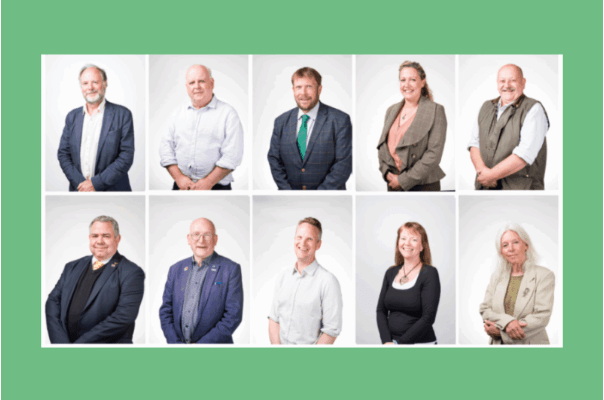
DCC News  22 May 2025

Top row from left: Cllr Brazil, Cllr Arnott, Cllr Thomas, Cllr Cottle-Hunkin, Councillor Clist. Bottom row from left: Cllr Buczkowski, Cllr Keeling, Cllr Jefferies, Cllr Bickley, Cllr Hodgson

Our new leader, Councillor Julian Brazil, says that he is ‘determined to deliver the very best’ for the county’s most vulnerable children.

Councillor Brazil (Kingsbridge) made the pledge following his confirmation as the new Leader of DCC at a full council meeting today (Thursday, May 22), a meeting where he also outlined other top priorities such as fixing Devon’s roads.

At the meeting the new members of our cabinet were nominated and confirmed, as was the position of deputy leader.

And to underline the new leadership’s commitment to the safeguarding and education of Devon’s children, the children’s services portfolio will be the responsibility of three cabinet members, who will work closely to improve the outcomes of all children and young people in Devon. 

In addition to his role as leader Cllr Brazil will take on responsibility for education, while Cllr Denise Bickley (Sidmouth) will oversee Special educational Needs and Disabilities (SEND). Cllr Richard Jefferies (Feniton and Honiton) has responsibility for children’s social services.

Councillor Brazil said: “The only way we can deliver the services the public need and deserve is to work with our partners, by creating productive relationships with agencies from the NHS to schools, from parish and town councils to community groups. 

“We know money is incredibly tight but by working together we can achieve so much more.

“We have been failing our most vulnerable children for far too long, and we want to send a message; our children need us, and we must deliver. 

“We want to deliver the very best for them. We want to ensure that they have the same opportunities as other children, and we want to help them make good choices and support them with their aspirations. For me, this should be the judge of the success or failure of this administration.”

Cllr Paul Arnott, Seaton and Colyton, was confirmed as deputy leader and will also be responsible for local government reorganisation and water quality.

Another of the new cabinet’s high-profile roles goes to Cllr Dan Thomas (South Brent & Yealmpton) who will hold the highways brief. 

Cllr Brazil said: “Potholes are one of our top priorities. We’ve got to sort out highways maintenance,  and the plague of potholes on our roads. If we can, we should bring the contract back in-house. As we saw with rubbish collection in the South Hams, if you outsource one of your core services, when things go wrong you’ve lost control.  We have a huge task ahead of us, I recognise that, but we’re all very excited to get on with the job.”

Cllr Brazil, who was first elected to the county council in 2005, will lead a minority Lib Dem administration following the local elections earlier this month.

The elections left DCC under no single party control – of the 58 council areas (60 seats) the Lib Dems won the most with 27, but that left them just short of the 31 councillors needed to gain overall control.

Cllr Brazil added “There needs to be a change of culture; Devon must be more outward looking. For too long it has been far too insular, and that mentality has got to change. 

 “We’ve got to do it differently. So many people have told me that they just want us all to work together for the good of our communities. 

“I agree, it’s the right way forward. It doesn’t matter what political tribe you’re from, if your top priority is to do what’s best for your community then we’re on the same side. Too much time and energy can be wasted over petty political squabbles when we should be focused on delivering the services residents expect.

“Councillors should vote on each issue, putting their communities first. Party politics should not feature. Of course, we’re going to have our disagreements, but robust debate is good for democracy. If our shared goal is to make Devon a better place, we’re going to agree on most things.”

The Lib Dems have pledged to work with all party groups, particularly with the Green Party, which has six councillors and whose leader, Cllr Jacqui Hodgson (Totnes), is now a cabinet member.   

Cllr Hodgson is responsible for climate change and biodiversity, which includes transportation, such as improvements to the bus network and delivery of electric vehicle chargers.

Other appointments are Cllr Richard Keeling (Chudleigh & Teign Valley) who will be the cabinet member for adult services.

The finance brief will be the responsibility of Cllr James Buczkowski (Cullompton & Bradninch).

Cllr Simon Clist (Willand & Uffculme) will be the cabinet member for assets and resources, a brief that includes economy and skills, while Cllr Cheryl Cottle-Hunkin will be responsible for rural affairs, which will include the delivery of broadband.

Cllr Caroline Leaver (Barnstaple South) is the new chair of the council, taking over from former council leader John Hart and Cllr Rosie Dawson (Dawlish) is the new vice chair.

Councillors of all parties paid tribute to the outgoing chair, Cllr Hart for his 36 years of service – 32 as a councillor – which includes a period as the leader of the opposition, cabinet member for education and 15 years as council leader.

Cllr Brazil thanked Cllr Hart, a fellow South Hams councillor, for their close working relationship over many years particularly on the Highways and Traffic Orders Committee, while leader of the conservative group, Cllr Andrew Leadbetter and a former cabinet colleague, wished him a happy retirement and said he was a ‘fair, firm hand on the tiller.’

Cllr Hodgson thanked him for supporting her previous call to declare a Devon Climate Emergency while Cllr Fife Cook, leader of the Reform group, said how much he appreciated his recent advice following his election.
Exeter City prioritises homes over profit

Exeter City Council has taken a £400,000 financial hit after sticking to its guns over student accommodation.

Clifton Hill project gets green light

Guy A Henderson www.radioexe.co.uk

Its executive committee has agreed to sell the old Clifton Hill leisure centre site to be turned into affordable homes for older people.

But members heard that the sale price of just under £3.4 million was significantly below the market value for the site of £3.8 million.

Council leader Phil Bialyk (Lab, Exwick) told the meeting: “We could get £3.8million, or even more, if we broke our promise not to build student accommodation.”

The council closed the leisure centre in 2018 and knocked it down in 2022. It originally sold the two-acre site to its in-house housing company Exeter City Living (ECL) for just over £2 million, which was a ‘significant undervalue’ that had to be reported to the government at the time.

It then bought it back last year for around £3 million after the demise of ECL, and it went back on the market last August.

Councillors pledged not to let the land go for purpose-built student accommodation, even if that meant turning its back on the highest offers for it.

Planning permission had already been given for 41 homes in the site, but none of the bidders wanted to take that on, and Preferred Homes came in with a plan for 72 units of affordable rented housing for older people.

The development will have a cafe, meeting rooms and a weekly doctor’s surgery. Homes will be made available to older Exeter residents on the housing register.

Cllr Duncan Wood (Lab, Pinhoe) said: “It’s important that we listened to local communities, heard their reservations and acted accordingly.”

Cllr Marina Asvashin (Lab, Priory) said the location was ‘perfect’ for the proposed development and Cllr Susannah Patrick (Lab, Exwick) said it was an opportunity to see a key site developed.

And Cllr Michael Mitchell (Lib Dem, Duryard and St James) told colleagues: “I don’t think there is anybody who would not support this recommendation.”

Cornwall council elects LibDem leader: voting figures

Liberal Democrat councillor Leigh Frost has been voted leader of Cornwall Council with 53 votes for and 25 abstentions. [Total 78]

There are 87 seats in the council.

Reform UK won 28 seats in the local election and despite it being the largest number won by a party, it fell short of the 44 seats needed for a majority.

Distribution of seats

Reform – 28 seats
Liberal Democrat – 26 seats
Independent – 16 seats
Conservative – 7 seats
Labour – 4 seats
Green – 3 seats
Mebyon Kernow – 3 seats

Does Devon have a clear steer on reorganisation plans?

“Interim plan feedback Devon Plymouth and Torbay”

The Labour Government Feedback on interim devolution plans provides much needed clarity, or maybe not. Does this reflect chaos in Whitehall?

Owl has now seen a copy of the Ministry of Housing, Communities and Local Governments’ “interim plan feedback Devon Plymouth and Torbay” of 15 May and consulted “Sir Humphrey Appleby” (now retired from Yes Minister) on what it all might mean.

First of all he pointed to the significance of the omission of Exeter in the title.

Exeter, he said, had submitted its own plan to become the stand alone “Greater Exeter Unitary Authority” by absorbing parts of neighbouring districts. Exeter City Council was also one of the addressees of the feedback which claims to respond to a list of submissions including one from Exeter.

This omission speaks volumes, he said.

Sir Humphrey also saw significance in the lack of confirmation of Plymouth’s position in this Whitehall reply to a direct question from the district councils:

“You asked for Government to confirm that Plymouth City Council would be a continuing authority in relation to your preferred option. You should set out in your final proposal how implementation would work and the assumptions underpinning this. Decision on the appropriate implementation and transition arrangements will be considered following final decisions on the proposal to be Implemented.”

Although Sir Humphrey then draw attention to the “overview” section of the feedback which contained the following committed noncommittal caveat:

“We welcome the work that has been undertaken across proposals to develop local government reorganisation plans for Devon, Plymouth and Torbay. This feedback does not seek to approve or discount any option or proposal, but provide some feedback designed to assist in the development of final proposal(s).” 

Could Plymouth become the economic powerhouse in the Devon West half of a two unitary solution?

Read between the lines Councillors and “Carry on up at County Hall”.

Reform had a ‘pathway to power’ in Cornwall but blew it

Cornwall likely to be led by LidDem/Independent coalition – Owl

Lee Trewhela www.cornwalllive.com

The likely new leader of Cornwall Council has slammed Reform UK for claiming other political groups on the council have been playing “political games” to stop the party forming an administration. In fact, says Liberal Democrat group leader Cllr Leigh Frost, Reform refused a possible “pathway to power”.

Earlier today, Reform’s Cornwall group leader Cllr Rob Parsonage announced that the party would not be forming an administration despite winning the largest amount of seats on the council. Reform will have 28 councillors sitting in Lys Kernow / County Hall in Truro, but needed 44 to form a majority administration. The Lib Dems won 26 and Independents 16.

Mr Parsonage said other political groups had been playing “political football” and claimed that despite Reform’s best efforts, the Liberal Democrats, Labour and some Independents had refused to work with them. However, the leader of the Independents has responded that his group was willing to form an administration with Reform, but was rebuffed.

The Independent group has now joined forces with the Liberal Democrats to form the next administration. Cllr Frost, of the Lib Dems, told CornwallLive: “As I said after the election, we decided to give Reform the first bite of the cherry when it came to forming an administration as they were the biggest group on the council. They refused to take that bite.

“The Independent group reached out to them and gave them a deadline of last Wednesday to come back with an offer. No offer came back from Reform. Following that, on Friday, the Independent group agreed to form an alliance with the Lib Dems to lead the council.”

Cllr Frost added: “There are a lot of serious issues which the new council will have to consider, such as devolution and the Cornwall Local Plan. We’ve got to have an administration which can tackle such important matters, that’s why we talked to the Independents after Reform didn’t.

“Reform are accusing others of playing political games but an alliance with the Independent group could have given them a pathway to power.”

Cllr Adam Paynter, leader of the Independents, verified that he spoke to Reform’s Cllr Parsonage about a possible administration deal, but “from our point of view it didn’t appear as if Reform had any intention or had anything to offer us”.

He said: “As Independent group leader, I had a mandate after the election to speak to all the other groups about forming an administration. We could then collate what their thinking was and bring it back to the Independent group so we could then think about what we wanted to do as the third largest group on the council.

“We spoke to Rob Parsonage from Reform twice. We heard what he wanted to achieve and we asked what he could offer us. This was the Thursday after election. He said he would come back with an offer on Wednesday (May 14) six days later. We spoke to all all group leaders by the end of that election week.”

Cllr Paynter added: “We waited until Wednesday to see what the Reform offer was and there was nothing at all. We spoke to him on the phone and asked him what he was planning to do and he said he was speaking to other groups but hadn’t got any offer to make the Independents.

“Clearly they didn’t want to work with us, otherwise you would have thought they would have tried a bit harder to pull together some sort of offer to form an administration. The only offer we had was from the Liberal Democrats, so we did a bit more work with them, and on Friday night we agreed to move forward as an administration.”

Mr Parsonage responded to the comments by Cllrs Frost and Paynter. He said: “We spoke to the Independents on two occasions to outline our position and what we wished to achieve, as we have done with the other parties. In the second conversation Adam asked what we would be offering to the Independents but we weren’t able to commit to any offer.”

The council’s new leader, chair and vice-chair will be officially announced at the first meeting of Cornwall Council since the election tomorrow (Tuesday, May 20).

Paul Hayward: Letter of thanks following the Devon County Council election

Cllr Paul Hayward www.midweekherald.co.uk 

I am writing to express my heartfelt gratitude to the voters of our Axminster community following the election on May 1.

Your support and confidence in my candidacy meant the world to me.

But, this victory is not mine alone—it belongs to every volunteer, supporter, and resident who believed in the possibility of positive change – the power of people over politics.

I also want to thank my fellow candidates for a mostly calm, respectful, and spirited campaign.

Healthy democratic dialogue only strengthens our community.

We can still work together in the best interests of everyone in our area – regardless of the colour of rosette we wore!

Now, the real work begins.

Devon is facing a tumultuous future.

I remain committed to listening, collaborating, and making decisions that reflect the needs and hopes of all constituents.

Together, we can build a future rooted in transparency, progress, accountability, leadership, and shared values.

Thank you once again for your trust.

I am honoured to serve and excited to get started.

Yours sincerely,

Cllr Paul Hayward Devon County Council – Axminster Division.

Breaking: Three Plymouth city councillors quit Labour

Three councillors on Plymouth City Council have left the Labour Party, citing concerns over immigration policies, trans issues and cuts to the winter fuel allowance.

Miles Davis BBC Devon political reporter www.bbc.co.uk

Dylan Tippetts, the city’s first openly trans councillor, was elected as Labour councillor for Compton in 2022 but has now become Plymouth City Council’s only Liberal Democrat member.

Zoe Reilly, who represents Honicknowle, quit Labour to become an independent while Carol Ney, the member for Southway, left Labour to join the Independent group.

The Labour leader in Plymouth said all three councillors should stand down so that by-elections could be held.

Tippetts said Labour had “thrown transgender people under the bus and has taken us back decades”.

Following a Supreme Court ruling that a woman was defined by biological sex under equalities law, Prime Minister Sir Keir Starmer said he did not believe transgender women were women.

Announcing the political move, Tippetts said: “I will always make sure trans voices are listened to and valued in this period of turbulence and division our country faces.”

Welcoming Tippetts to the Lib Dems, city party chairman Stuart Bonar said: “With the government scrapping winter fuel payments to over 10 million pensioners, as well as cutting benefits to disabled people, it is no surprise that more and more people are turning to the Liberal Democrats.”

Carol Ney said she left the Labour Party because of her concerns over the government’s cuts to the winter fuel allowance and plans to change personal independence payments.

She said: “These changes are affecting the poorest members of society and I’ve heard first-hand from residents who are struggling to make ends meet.”

Ney said she had hoped to see a change of direction from Labour following the local elections in May.

There were no elections in Plymouth but Labour were wiped out on Devon County Council.

She said: “I was hoping after the recent election results Labour would have changed policies as they can see the electorate are becoming disillusioned with the party. Alas they have not listened to the general public.”

Zoe Reilly left the Labour Party the day after the prime minister made a speech about bringing down net migration.

She reportedly referred to Starmer’s speech and said, external remaining in Labour “would be a disservice to myself and to the diverse communities I continue to work with”.

Reilly has not responded to a request for comment from the BBC.

The defections mean Labour has 39 councillors on Plymouth City Council, the Conservatives and the Independent group both have seven councillors, the Green Party has two members, while the Liberal Democrats have one and one councillor is independent.

Tudor Evans, leader of the Labour group on Plymouth City Council, said it was “disappointing” when people left the party.

He said: “They should stand down in order for a by-election to be held, so the residents of those wards can choose whether they are happy with their councillors switching allegiance during their term of office.”

Evans said Labour had the highest number of councillors since it became a unitary authority and was “getting on with delivering its ambitious programme for the city”.

Devon Devolution: Damned with faint praise. Is it being kicked into the long grass?

The press article below reports on the Government’s response to the proposed District Council carve-up. A mixture of faint praise and requests for further details especially on “efficiency savings”.

There appears to be no guidance on the Government’s preferred option from the range presented by Devon’s various local authorities. Even Plymouth’s bid to remain a unitary authority with expanded boundaries hasn’t been given a formal green light.

So what future is there in Labour Exeter’s go it alone bid?

One elephant in the room is that the government “expects that areas will be able to meet transition costs over time from existing budgets” even though the same services have to be delivered involving a massive staff reorganisation and relocation exercise.

Another, bigger one, is that funding on special educational needs and disabilities (Send) dominates the budget and is beyond all counties’ ability to pay, threatening them with bankruptcy. It is a problem the Government can’t turn a blind eye to for ever.

A separate press article discusses Plymouth’s bid to expand its unitary borders and Leader Cllr Tudor Evans’ offer to start talking with others.

Owl’s view is that Labour’s insensitive “efficiency” plans to eliminate historic county identities and impose Mayoral Authorities over areas similar in size to that of Police Commissioners will be a massive vote loser. It will be a running sore at the time of the next election.

So too will be the proposed planning reforms which will enable developers to bypass direct environmental safeguards by contributing to a restoration fund rather than directly mitigating damage. 

Some Labour MP’s are waking up to the folly of all this.

Difficult to see this all being sorted any time soon. Indeed, it might suit the Government to deploy “masterly inactivity”!

Hard work on Devon’s shake-up plans ‘clear to see’, Government says

Bradley Gerrard, local democracy reporter www.radioexe.co.uk 

The work by Devon’s councils on kickstarting the biggest local government shake-up in 50 years is “clear to see”, the ministry in charge of the overhaul says.

Bosses of Devon’s 11 existing councils have received a letter from the Ministry of Housing, Communities and Local Government about their response to Westminster’s request for the county to completely revamp how it is governed.

The 15-page letter, seen by the Local Democracy Reporting Service, recognised the efforts by each of the councils, but its repeated requests for “further information” suggest significant amounts of work will be needed by November’s deadline for final plans.

The letter provided amalgamated feedback on a range of interim plans, including those submitted by individual councils such as Plymouth, Exeter and Torbay, and one by seven of Devon’s eight districts.

The government wants to scrap the two-tier system that exists in 21 areas of England, including Devon, whereby county councils perform some service and district councils look after others.

Westminster wants larger unitary councils overseeing all services.

This will likely mean the abolition of all of Devon’s councils as they exist now, resulting in mergers to create unitary councils with populations of around 500,000 people. Although Plymouth City Council, which is already a unitary, wants to keep that status, with expanded boundaries.

“We recognise that plans are at an early stage and further analysis is planned in the run up to submitting the final proposal(s),” the letter from the ministry said.

“Further detail and evidence on the costs, efficiency savings and outcomes that are expected to be achieved would be welcomed.”

Devon’s councils highlighted a combined 20 ‘barriers and challenges’, and while some of these are answered by in the letter, many either require more information from councils or rely on announcements that the government hasn’t yet made.

Crucially on funding of potential new unitary councils, the letter said further details on funding reform proposals and transition measures would be “consulted on after the spending review in June”.

“Given the financial pressures you identify, it would be helpful to understand how efficiency savings have been considered alongside a sense of place and local identity,” the letter added.

“We recognise that the options outlined in the interim plans are subject to further development. In final proposal(s) it would be helpful to include a high-level financial assessment which covers transition costs and overall forecast operating costs of the new unitary councils.”

In terms of how councils will pay for the work they are doing to develop proposals for their mergers into larger, single councils, the government “expects that areas will be able to meet transition costs over time from existing budgets”.

The government has announced £7.6 million of funding for “ongoing analysis and testing of proposals”, but that will be split across the 21 areas.

And in terms of merging services, the ministry says it would “encourage you to consider partnership options for joint working across the new unitaries for the delivery of social care services”.

Perhaps concerningly, the ministry only “noted” Devon’s councils’ concerns about the potential impact on national park authorities, how local NHS funding could be altered, and the difficulties of serving the needs of Devon’s rural and coastal communities.

In relation to what is arguably one of Devon County Council’s biggest issues – its special educational needs and disabilities (Send) overspend – the letter said the government had provided a £1 billion funding increase nationally for the current financial year.

However, given the county council alone has a £131 million Send overspend – and there is thought to be roughly £6 billion of such overspend nationally – individual Devon councils will be keen to hear how this will be dealt with before they become part of a new larger council that could become liable for this red line in the budget.

At present, Send overspends can be kept to one side of councils’ balance sheets meaning it isn’t currently impacting annual budgets. But the so-called ‘statutory override’ that allows this runs out next March.

The letter added that it “welcomed plans” for Devon’s councils to work together on final proposals.

“Effective collaboration between all councils will be crucial; areas will need to build strong relationships and agree ways of working, including around effective data sharing,” it said.

“This will enable you to develop a robust shared evidence base to underpin final proposal(s).

“In particular, as for the final proposal(s), as each council can submit a single proposal that must be a clear single option and geography for the area as a whole.”
 

“Currently Conservative”

With Reform taking so many votes (and seats) from the local conservatives in the recent Devon County Council elections, Owl wonders whether “Currently Conservative” is how the rump of Tory Councillors might now be best described.

This thought was fuelled by a claim Owl received from a reliable friendly mole that a former East Devon District Councillor (EDDC), who had stepped down at the 2023 elections, has now defected and joined Reform. 

Owl understands that members of the Tory “Old Guard” in the Exmouth and Exeter East constituency are “incandescent”.  

Owl has studied the councillors’ declared affiliations following the Annual Meeting of EDDC. Currently there are no Reform members.

Do we need to watch this space?

Letter: ‘Sidmouth can be proud to have Denise Bickley’

Denise Bickley defeated long standing Tory “big beast” (and former monster raving loony) Stuart Hughes in the County Council elections at the beginning of May. He was County Cabinet Member – Highways Management.

By his own reckoning he was a Devon County Councillor for 32 years but he couldn’t find the time to attend the customary hustings “Vision Group for Sidmouth” tried to arrange last month (nor could the Reform candidate)!

He remains a district councillor for the Sidford ward. – Owl

Jackie Green from Sidmouth writes of her new County Councillor:

‘Sidmouth can be proud to have Denise Bickley’

Jackie Green www.sidmouthherald.co.uk

As Sir David Attenborough’s new documentary, Ocean, has been released (8th May), it’s timely that Sidmouth has chosen Denise Bickley as our Devon County Councillor.

Many of your readers will know she is keen to look after our sea.

In 2017, inspired by Surfers Against Sewage, Denise founded Sidmouth Plastic Warriors.

The regular beach cleans she organises attract people of all ages, are sociable, and help keep our seaside tourist town litter-free for us all.

They also raise awareness of the marine life in Lyme Bay, described by Devon Wildlife Trust as “some of the UK’s most diverse”, from tiny seahorses to some of the ocean’s giants (see devonwildlifetrust.org).

Denise’s work fits with many other wonderful groups in our town, not least Sidmouth Sea Fest, the Science Festival, the Biodiversity Group, the library-based advisory service, ECO hub, and the Repair Café.

Her beach cleanups discovered many abandoned toys, so two toy lending libraries in blue and white striped mini beach huts have been made.

These are well-used, are fun for the children, and have reduced the problem.

For teenagers, she worked with Youth Services and Young Devon to organise skill sessions at the Youth Centre, spreading information and practical tips on recycling.

And, the organised litter picks around the town, for both young people and adults, revealed that cigarette ends are a major pollutant.

Over time, each butt breaks apart into microplastics, seeping toxic chemicals into the earth and watercourses (see keepbritaintidy.org).

The ‘no ifs, no butts’ campaign introduced here aims to stop ‘fag ends’ thrown into gutters and drains from ending up in the sea.

Equal to her strong action on the environment is Denise’s professional involvement in education, with particular regard to SEND (Special Educational Needs and Disabilities).

This, and her previous experience as a much-respected district councillor, are a sound basis for serving the county well.

She already has an excellent working relationship with the largest group elected there, and importantly, with our MP, Richard Foord.

He praised her Plastic Warriors in a parliamentary debate on environmental protection (January 2025), pushing for a deposit return scheme for supermarkets.

Local initiatives need government to implement changes.

Sidmouth can be proud to have a passionate, practical, and tirelessly proactive new county councillor who loves living here with her family… and hates potholes!

Jackie Green
Sidmouth

EDDC annual meeting re-elects leader Paul Arnott after political theatre

A little piece of political theatre opened the East Devon District Council Annual Meeting as Cllr Ian Barlow (Independent) proposed Cllr John Heath (Independent) as an alternative Leader, seconded by Cllr Alasdair Bruce (Independent).

Cllr Barlow expressed both concern over the workload and the “conflict of interest” of Paul Arnott’s double hatting. 

[Owl’s view is that not only is this common practice but with the ill conceived government proposed local authority reorganisation, provides vital continuity.]

Both Cllr Heath and Cllr Ben Ingham (currently a Conservative) unsuccessfully challenged Paul Arnott for the County Council Division of Seaton and Colyton. 

This was obviously going to fail, prompting the question: what was this really all about?

Cllr Barlow, readers may remember, argued that EDDC should draw a line under the past and make a new start with SWW as EDDC was considering a motion of “no confidence” in the water company way back in February 2024. A judgement that doesn’t seem to have passed the test of time!

Below is a press report of the meeting but it is worth recording some of the other key appointments.

Eleanor Rylance was re-elected Chair, but Eileen Wragg stood down as Vice Chair. She was replaced by Cllr Charlotte Fitzgerald (Lib Dem).

Cllr Paul Hayward stood down as Deputy Leader. He is replaced by another Independent, Cllr John Loudoun. Paul was reappointed to the vital role of Portfolio Holder Economy and Assets. 

Reshaping Devon councils and environment among priorities for re-elected leader

Bradley Gerrard, Local Democracy Reporter www.devonairradio.com 

Re-elected East Devon District Council leader Paul Arnott says his top priorities include helping overhaul how Devon’s councils are organised, the environment and housing.

Cllr Arnott (Liberal Democrat, Coly Valley) was voted in as leader for the sixth consecutive year as a fulll council meeting this week.

Mr Arnott, who now also oversees the Seaton & Colyton division on Devon County Council and is deputy leader of the Liberal Democrats there, secured more votes than Cllr John Heath (Independent, Beer and Branscombe), who was proposed as a candidate following some concerns about Cllr Arnott’s workload.

Independent member Cllr Ian Barlow (Sidmouth Town) said: “I don’t think Cllr Arnott has done a bad job, but I am more concerned with the position our council is in at the present time, and with the [Devon-wide] reorganisation going on, I wonder whether there is a huge conflict of interest now that our leader has gone on to bigger and better things.

“We at East Devon have four main things we look after – refuse, Streetscene (which cleans public spaces), leisure and housing, and I just think that seeing as three of those at the present time are challenged technically, I think we need a leader that has the time to do that.”

Cllr Arnott acknowledged it was a “perfectly fair question”, but said it was not uncommon for a serving councillor to be on the cabinet in two councils.

“There has been a long history of double-hatters in both cabinets of the district and county council,” he said.

“I work about a 60-hour week and do no other work, just this, and so I absolutely have the capacity to do the work here. However, having discussed it with officers at both councils, if there is ever a conflict of interest, I will recuse myself from that debate.”

He added that he felt it was in East Devon’s interest “to have a strong voice” at the table when it comes to discussions about how Devon’s councils will be reorganised.

The government wants to abolish the two-tier system of local government that exists in Devon as well as other areas of the country.

At present, district councils perform some services, while county councils perform different ones, but Westminster views so-called unitary councils – where all services are under one roof – as more simple and efficient.

Most of Devon’s eight district councils have supported a proposal that would see Plymouth remain a unitary council but with potentially expanded borders.

East Devon would be combined with Mid and North Devon, Exeter and Torridge to create one large unitary council under the proposal, while South Hams Teignbridge, West Devon and Torbay – which is already a unitary – would be combined.

The government is expected to provide feedback on this proposal and others submitted by the previous administration at the county council before the local elections took place. It is understood ministers want a solution agreed by November.

Besides local government reorganisation, Cllr Arnott said there would now be two portfolio holders, each with an assistant, focused on the environment.

Cllr Geoff Jung (Liberal Democrat, Woodbury and Lympstone) was named as environmental operations portfolio holder with Cllr Paula Fernley (Green Party, Broadclyst) as his assistant, and Cllr Richard Jefferies (Liberal Democrat, Taw Vale) will take on the nature and climate portfolio holder with incumbent Cllr Marianne Rixson (Liberal Democrat, Sidmouth Sidford) becoming his assistant.

“Both portfolio holders will have a duty to look to make sure we are doing climate action across the entire council,” Cllr Arnott said, noting that Cllr Jung’s role would focus on the likes of beach management and refuse, while Cllr Jefferies would be pointed towards looking after protected areas, such as Seaton wetlands.

On housing, Cllr Arnott acknowledged the district council had a “huge housing stock and need to get better at that”.

In “Your voice in Policing”: Alison Hernandez announces new Commissioner’s Accountability Board

Devon, Cornwall and Isles of Scilly Police and Crime Commissioner (PCC) Alison Hernandez has just announced that she has begun to host a monthly Commissioner’s Accountability Board to discuss a range of topics relating to key police performance indicators.

At first glance you might think that Alison Harnandez has decided to spend less time taking selfies with doomed Tories and is becoming more accountable to the public. But it seems you might be mistaken.

Owl has been unable, so far, to discover the composition of this accountability board except that it is chaired by Commissioner Hernandez to an agenda set by herself!  

In other words, after nine years as PCC and her force receiving adverse reports from the police inspectorate in 2018, being placed in special measures in 2022, and still inadequate in 2024; she has just decided to beef up the way she oversees what is going on.

In her words:

“….recently, I have convened a new Accountability Board at which as Chair, I select a number of areas of policing activity and related performance, and scrutinise them in detail, requiring the Chief Constable and his team to explain both current performance and any plans they have in place to make improvements where required.”

Following each meeting, she then makes a judgement of assurance to indicate whether improvement plans are required or not, including details of how she has reached her decision.  

She will share these judgments with the public.

This begs the question: what has she been doing since 2016? 

Here is the first report:

Last month, three specific areas of performance were scrutinised.

The first, complaint handling and service delivery, was given a performance rating of ‘not assured’, meaning improvements are required.

Commissioner Hernandez concluded that neither is yet at an appropriate or acceptable standard, but said she is confident that the police’s improvement plan will deliver effective improvements.

Reassurance was provided that the police’s complaint backlog is starting to reduce.

The second topic was how Devon and Cornwall Police is continuing to rectify concerns identified following a review last year by His Majesty’s Inspectorate of Constabulary and Fire & Rescue Services (HMICFRS).

It remains in the ‘engage’ process with the inspectorate over contact, crime data recording and investigations, with further improvement work required.

Commissioner Hernandez was satisfied that comprehensive plans to address all three areas are delivering improvements which provide ‘confidence’ that the issues can be rectified, but as further work is required, her overall judgement was ‘part assured’.

The final topic of the accountability board was the force’s response to the Commissioner’s Police and Crime Plan 2025-29, which sets out her key priorities – antisocial behaviour, serious violence, theft and drugs and alcohol.

Her judgement was ‘assured’ that the work already taken by police has been ‘comprehensive and appropriate’.

At the meeting, Chief Constable James Vaughan also gave an update on the police budget and financial performance, recent homicides and serious crimes, as well as areas of concern and success.

All sorted, back to the selfies, if only there were some Tories left! – Owl

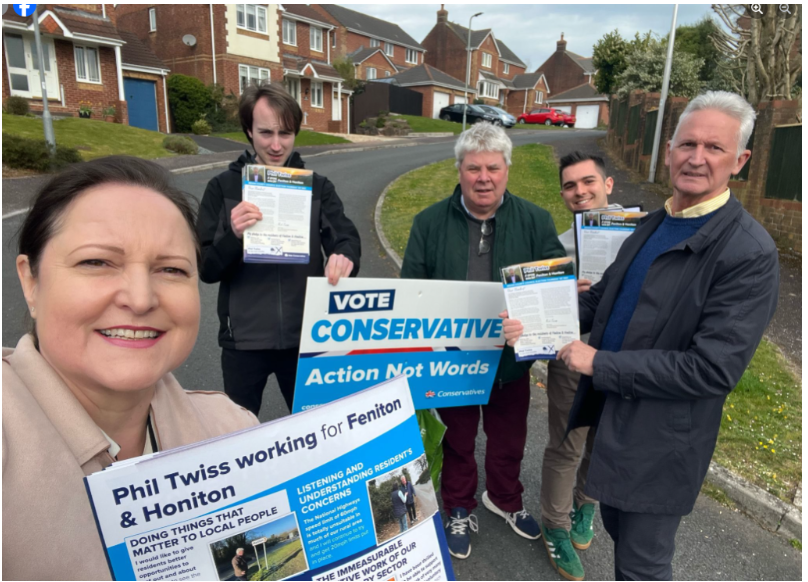
Alison Hernandez on the stump with doomed Tory Twiss in April

[Richard Jefferies, Lib Dem, took the Honiton seat from long standing Tory Phil Twiss in May]

Richard Foord MP: Lib Dems would protect nature in planning reforms

Richard Foord

Last month, a coalition of 32 nature charities wrote to ministers to warn that a new government Bill could lead to irreversible habitat loss.

The Planning and Infrastructure Bill, which is designed to jumpstart the economy through building, will threaten our limited safeguards for nature and stall wildlife protection.

The Bill could also affect local communities with issues such as more sewage in rivers, increased flood risk, and loss of valued woodlands.

The Liberal Democrats have a long history of promoting nature-based policy.

I was glad to sign last week a Lib Dem amendment which would require the Secretary of State for the Environment to protect biodiversity in new developments.

These include measures to enable the provision on new construction projects of bird and bat boxes, swift bricks, and hedgehog highways.

Local democracy eroded

The other casualty of the Bill could be local democracy.

The Institute for Government reported in March that the Bill proposes to direct some planning decisions solely to officials (planning officers) rather than elected councillors.

In that scenario, unelected officials would make decisions in accordance with the Local Plan, rather than a recommendation having to go before a planning committee.

This would be a key change, which risks removing a layer of democracy.

It’s essential that we retain our ability to influence planning decisions.

I have also signed a Liberal Democrat amendment that calls for planning committees to retain their current powers.

Nature is struggling more than ever, with insect and pollinator populations plummeting.

As many birds and small mammals make it onto the red list of endangered species, it is unconscionable that ministers propose to sweep away what flimsy environmental protections we have.

The tired narrative that nature is a barrier to growth must shift.

We need to work with nature, not in opposition to it, if we are to have any hope of handing on this planet to our children and grandchildren in a better condition than it is currently.

More on likely way forward in Devon County Council

The full picture will emerge at the full Council meeting on Thursday 22 May, when Councillors will decide who takes up the positions of Leader, Deputy Leader, Cabinet Members, appointments to committees, as well as the roles of Chairman and Vice Chairman.

But there is a hint in the press report below.

This  gives the background to the appointment of Cllr Julian Brazil to become the Leader of the Lib Dem group in the new County Council, with Cllr Paul Arnott his new group Deputy Leader.

At South Hams District Council, where Cllr Brazil is leader, the Lib Dems have an outright majority yet members of other parties hold cabinet posts.

Cllr Brazil said it would be his group that would decide who to appoint to which posts but that he would be “encouraging them to give as much responsibility to other parties as possible”.

Leader change for Devon’s Liberal Democrats after election surge

Bradley Gerrard www.exmouthjournal.co.uk

Devon’s Liberal Democrats have appointed Julian Brazil as their leader, marking a change atop the group after its election surge.

A vote at the weekend put Cllr Brazil (Kingsbridge) in charge of the party, which secured the most seats of any single group in the Devon County Council elections last week.

The Lib Dems tripled the number of seats they hold, after entering the election with nine and emerging with 27.

However, the party is short of an overall majority – which would have been 31 out of the total 60 seats – partly because of the significant performance by Reform UK, which is now the second largest party at County Hall with 18 seats.

The change means that councillor Caroline Leaver (Barnstaple South), who took the reins of the county council’s Lib Dem group off Cllr Brazil in January last year, will no longer be heading the party.

Cllr Leaver said she was “so proud” to have led the party in Devon to such a “stunning increase” in councillors.

“It’s a huge achievement,” she said.

“A few weeks ago I decided that I would stand down as leader of the Lib Dems after the election, for a host of reasons, and have every confidence in our new leader in sorting out the mess at County Hall left after 16 years of Conservative rule.

“There are many longstanding and complex problems to address, which will require the whole council to work together to solve.”

Alongside Cllr Brazil, the deputy leader is now Councillor Paul Arnott (Seaton & Colyton), who is the leader of East Devon District Council.

“The decision about the leader and deputy leader was taken via a vote of group members and it was quite close, but we emerged victorious,” Cllr Brazil said.

Asked whether the party would adopt a formal tie-up with the Green Party, Cllr Brazil said that was something that was yet to be decided, but he felt the “mood music suggested there might not be a formal coalition or agreement”.

“But that is a decision for the group,” he added.

“It is slightly daunting [to become leader] but it is incredibly exciting and it’s why you come into politics, to make a difference and now we hope to do just that.”

Cllr Brazil said he and his party had a “massive challenge” given what he deemed a “protest” vote by some of the electorate.

“We have heard it and so we have got to step up and get on with the job,” he added.

At South Hams District Council, where Cllr Brazil is leader, the Lib Dems have an outright majority yet members of other parties hold cabinet posts.

Whether this will be replicated at Devon County Council now is uncertain.

Cllr Brazil said it would be his group that would decide who to appoint to which posts but that he would be “encouraging them to give as much responsibility to other parties as possible”.

The Tory legacy: Devon County Council children’s services rated inadequate again

Children in Devon are “at risk of harm” due to continued failings in council services, a report has found.

Miles Davis BBC Devon political reporter www.bbc.co.uk

The Ofsted report into children’s services at Devon County Council rated the council as “inadequate” and said “serious weaknesses remain”.

The council was previously rated inadequate in March 2020 for its children’s services which cover children in care and children who need help and protection.

The council’s chief executive said it would now “focus all our energies on continuing to work on our improvement journey”.

The Ofsted report was carried out in September 2024 but was only published on Tuesday.

Devon County Council was under Conservative control at the time of the inspection but is now under no overall control following the local elections, with a new leader to be appointed on 22 May.

The report said there was a risk of harm particularly for “children experiencing neglect and domestic abuse, those at risk of extra-familial harm and care leavers living in unsuitable accommodation”.

Inspectors found basic checks were “not completed consistently when children are accommodated in an emergency”.

They said there was a “lack of immediate planning to ensure that children are helped and kept safe” and delays in child protection strategy discussions “leave some children at potential risk of ongoing significant harm”.

The report also said: “When children are first identified as being at risk of criminal or sexual exploitation, the response is not sufficiently effective across the partnership for all children.”

‘Decisive action’

The report said there had been “increased stability in leadership” which had “an impact on practice, from a very low base”.

It said there had been “decisive action” leading to “positive change” but “the current positive impact for children and care leavers is not widespread”.

Donna Manson, chief executive of the county council, said: “We have much to do but we must also recognise that progress is being made.

“Our ethos is that children and young people must be in our hearts, in our minds and in our sight.”

Lib Dems launch ‘Reform watch’ to monitor party in local government

As well as gaining more than 160 councillors and taking control of three new councils, the Lib Dems are the biggest party in three others, and in four areas came second to Reform – which will be the core of the monitoring project, intended to scrutinise Reform’s mayors as well as councils……

A key part of the monitoring will be to see if and how Reform-run councils try to cut services,….

Other areas would include culture war battles, such as Reform barring councils from flying the Ukraine flag as a show of solidarity, and trying to cut back on climate and net zero-related work…….

Peter Walker www.theguardian.com

The Liberal Democrats have set up an internal “Reform watch” system to monitor Nigel Farage’s party in local government, with Ed Davey saying Labour and the Conservatives are too scared of the threat from Reform to hold it to account.

The Lib Dem leader defended his party’s performance in last week’s local elections, saying council contests where they unexpectedly ended up behind Reform mainly happened because of a collapse in votes for other parties.

As well as gaining more than 160 councillors and taking control of three new councils, the Lib Dems are the biggest party in three others, and in four areas came second to Reform – which will be the core of the monitoring project, intended to scrutinise Reform’s mayors as well as councils.

It is being spearheaded by Amanda Hopgood, the leader of the opposition group in the Reform-run County Durham, along with Antony Hook, who performs the same role in Kent, and Mike Ross, the leader of Hull city council, who came second to Reform’s Luke Campbell to be mayor of Hull and East Yorkshire.

A key part of the monitoring will be to see if and how Reform-run councils try to cut services, Davey said. Many families had been “alarmed” by Farage’s comments saying too many people were being diagnosed with special needs or mental illnesses, he said.

Other areas would include culture war battles, such as Reform barring councils from flying the Ukraine flag as a show of solidarity, and trying to cut back on climate and net zero-related work.

Davey said: “When you look at what councils do on climate change, the vast bulk of the work is insulating people’s homes. So is Nigel Farage essentially going to say to less well-off people: ‘We’re not insulating your home, you can pay higher energy bills, and that we’re pleased about that because that can make climate change worse.’ Is that the Reform position?”

Davey aims to present his party as “the antidote to Reform”, an extension of its bullish stance on opposing Donald Trump, where Labour and the Conservatives are more cautious.

He said: “We’re going to take the fight to them, whether it’s exposing the fact that Farage is a huge cheerleader for Donald Trump and wants money from Elon Musk, all those sorts of things.”

While the Lib Dems performed well in the local elections, they lost out to Reform in some key areas, for example the Hull and East Yorkshire mayoralty. Similarly, while they achieved their target of removing Warwickshire council from Tory control, this involved finishing a fairly distant second to Reform.

Davey said this did not mean they had underperformed. “We were expecting to do very well in south Warwickshire, which we did. In North Yorkshire, we weren’t expecting to do that well. It was Labour and Tories’ failures that let Reform in. They didn’t make any progress in our areas. Where we were really active, Reform were put in their place.”

Another complication, he said, was the fragmentation from very close multiparty contests, which in one instance meant the Lib Dems won a council seat on less than 19% of the total vote.

While Reform did not as yet seem to be parking any tanks on Lib Dem electoral lawns, this did not mean it would not happen, Davey said. “We’re not complacent. We don’t think the fight against Reform is going to be necessarily easy,” he said.

“Are we worried about the rise of Reform. Of course we are. The question is, what’s the best way to respond to that? And I don’t think it’s to copy them. I think it’s to tackle them head on. From what I can see, we’re the only party who seem to be up for that. The others seem to be a bit afraid of them.”

Richard Foord: Our country needs serious politicians

Richard Foord MP 

Firstly, a thank you to those people who voted Liberal Democrat at the local elections last Thursday.

It served to elect some brilliant new councillors, including five new Lib Dems here in the part of Mid and East Devon that I represent.

I am really looking forward to working with them as they take their place on Devon County Council.

They will complement two strong independent Councillors who have served on the Council before, and who have been re-elected.

County Councils have serious responsibilities.

The budget at Devon County Council is almost £2 billion.

The people whom we send to make decisions on how our money is spent need to be experienced, serious, and trustworthy.

The latest crop elected here in the Honiton & Sidmouth area is all those things.

Residents whose doors I knocked on in recent weeks gave me a variety of perspectives.

Some felt that Devon County Council needed a shake-up, after years of the Conservatives being in charge.

Others said that they were voting Lib Dem because they were more inclined to trust us on issues that the Council is responsible for, such as education, transport, and social care.

Nigel Farage wasn’t on anyone’s ballot paper in Devon.

Nonetheless, a few people told me that they were planning to vote for him, and I understood them to mean that they were voting on the basis of national, rather than local issues.

Local elections are always affected by national party politics.

Yet I am concerned that beyond our area, some effective, long-serving Councillors have been displaced by some individuals whose heart was not in serving their community.

I am not a fan of some of the ideas that Farage is importing from President Trump’s America.

Mr Farage seems to spend too much time in the United States, courting Donald Trump and acting in a sycophantic way towards him.

Farage has been “putting on notice” council workers who have been permitted previously to work from home.

If home is defined as being here in the UK (rather than in the US), I think Mr Farage could do with working from home more himself.

Once elected, I sense that people want their representatives to drop the ‘Punch and Judy’ party politics.

Residents told me that they want us to cooperate to get things done.

Instead, we sometimes see a relentless use of elected office for parties to either retain power, or gain power at future elections.

Lib Dem Councillors won’t be doing that; we will be negotiating with smaller parties and independents to form an effective administration for Devon.

I can offer assurance that in Parliament, I work with people from any party who share British values of tolerance, fair play, and mutual respect, to act on the imperatives that people here in Devon – our home – send me off to London to help tackle.

Martin Shaw, memo to councillors: don’t normalise Reform UK

seatonmatters.org

As we commemorate the 80th anniversary of VE Day, we face within Britain the very same forces that we defeated from outside in 1945. Reform UK are not, yet, a full-blown fascist party, but they are unmistakably from the same family: racist, nationalist, and above all authoritarian and anti-democratic.

You can see this in Nigel Farage’s arrogant dismissal of all initiatives to promote equality and inclusion in our society, and in his attempt to make Reform wipe out, with a stroke of the pen, all the efforts of councils to combat the climate emergency. You can see it, above all, in his slavish worship and aping of Donald Trump’s authoritarian and dictatorial regime.

Remember that Farage defended Trump’s attempted violent coup in 2020. If Reform UK were to come to power in 2029 – thanks to our corrupt first-past-the-post system which might give him victory with 30 per cent of the votes – he would resort to the the antidemocratic steps that Trump took to hang on to power.

So here is my message to our Liberal Democrat, Green and Independent councillors: don’t normalise Reform. Allow then to represent their constituents (if they do), give them their fair share of committee places, but don’t do deals with them, don’t let them run things, keep them well away from power. They need to be defeated as we defeated their forerunners in the 1940s

Calls for “a new way of doing politics” made by Lib Dem group Leader Councillor Brazil

There are two governance models available to councils: the committee based system and the Leader and Cabinet system. Over the years most councils have now adopted the Leader and Cabinet system for practical reasons. Councillor Brazil is calling for a new way of doing politics but seem to want to attempt this under the Leader and Cabinet system. This will be challenging.

From the Devon County web site Councillor Julian Brazil, Lib Dem Leader, is quoted as saying:

“The mood music I’m getting from our group is that we don’t want a formal sharing agreement among parties, and I support that. If we’re making the right decisions members should vote with us. It’s a new way of doing politics, but it’s a much more mature and developed way of doing things. If we have compromise among 60 members we will make better decisions for the Council.”

This is a sentiment that probably chimes with most people, but how is he going to make these compromises work in a council whose members have markedly different political philosophies and values?

It is difficult to make collective group decisions unless the members hold a set of common beliefs about the best way to reach their objectives. For example over expanding services or cutting them.

Julian Brazil is leader of South Hams, a small 31 seat district district council with a Lib Dem majority. Devon County has twice the number of seats divided roughly 3:2 left to right leaning political groups.

From the last paragraph it appears that there is no proposal to return to a committee based governance model but stay with the Leader and Cabinet model.

In the committee based model the council establishes a number of committees, each with a specific area of responsibility. The political groups appoint elected members to those committees. More councillors are actively involved in decision-making, but it can take longer to reach decisions. For this reason most councils have adopted the Leader and Cabinet model.

Should we be expecting a “rainbow” cabinet with a deputy leader drawn from the next largest party Reform?

This is a bold and brave start to the new council. – Owl

www.devon.gov.uk 

Councillor Julian Brazil, Leader of the Liberal Democrat (Lib Dems) group at Devon County Council, wants all of the Councillors at the authority to have a voice.

Following last Thursday’s local elections, Devon County Council was left under no single party control. Of the 60 seats, the Lib Dems won the most with 27, but that left them just short of the 31 seats needed to gain overall control.

Reform UK, new to the council, won 18 seats; the Conservative Party – seven seats; Green Party – six; Independents – two; with the Labour Party now having no seats on the council.

The results represent a significant change at County Hall, where the Conservatives had been in control since 2009.

Councillor Brazil, who has been voted as group Leader by the newly elected Lib Dem councillors at Devon County Council, also wants to see change in the services provided by the authority.

He said: “The mood music I’m getting from our group is that we don’t want a formal sharing agreement among parties, and I support that. If we’re making the right decisions members should vote with us. It’s a new way of doing politics, but it’s a much more mature and developed way of doing things. If we have compromise among 60 members we will make better decisions for the Council.

“I want councillors to vote for what’s best for their community; that leads to better decisions and a better council. Everyone should feel they have a voice and have the opportunity to be influential – that’s the culture I want to engender here at the County Council. It’s good to have a mix of views and beliefs to be truly representative of the communities we serve.

“The County Council needs to be more outward looking and work more closely with partners. Children in Devon have been failed for too long, we have got to get that right, and potholes affect us all, we need to find a better way to repair roads but for less.”

Councillor Michael Fife Cook, speaking on behalf of the Reform UK group, agreed that cooperation among councillors is vital for the county. He said: “I don’t see us as opposition. We have been elected and people will expect us to work together for the good of the county. We can’t force through change, it will have to be by compromise, but good ideas can come from anywhere and that’s how we have a constructive council. Councillors aren’t just representing those who voted for them but their whole community so we are representing Devon.”

Councillor Jacqi Hodgson, Leader of the Green and Independent group, said: “We are delighted that our group of Green Councillors has grown to six and we expect to have the opportunity to drive a stronger greener agenda through cooperation with fellow Councillors from all parties and Independents. We hope for better democracy and a brighter future for all our residents.”

Councillor Andrew Leadbetter, Leader of the Conservative group, said: “I welcome the comments made by Councillor Brazil, after all we have been elected to put the interests of the residents of Devon first and to make a difference to people’s lives. If we can all work together for the good of Devon that has to be a good thing. Rural counties like Devon face unique issues that need to be recognised nationally, and we must all work together to ensure we receive adequate funding to address them.”

(Clockwise from top left) Councillor Brazil, Councillor Hodgson, Councillor Leadbetter, Councillor Fife Cook.

At the Full Council meeting on Thursday 22 May, Councillors will decide who takes up the positions of Leader, Deputy Leader, Cabinet Members, appointments to committees, as well as the roles of Chairman and Vice Chairman.

Devon County Council Green & Independent political group formed

East Devon Independents join the Greens to form a political group of 8.

No news of any other groups forming.- Owl

Bradley Gerrard www.exmouthjournal.co.uk 

Jacqi Hodgson has been reappointed as the leader of the Green and Independent group after a post-election bounce in seats.

The Greens jumped to six councillors after the Devon County Council elections last week (May 1), up from the two they had heading into the ballot.

Cllr Hodgson, who held her Totnes & Dartington seat, said the Greens and two independent members – Councillor Jess Bailey, who held her Otter Valley seat, and Councillor Paul Hayward, who won in Axminster – would be a political grouping.

“We had discussions about the things we felt would be possible and what we would be proposing as part of any potential agreement [with the Lib Dems] but there is nothing solid yet,” Cllr Hodgson said.

“We know [the Lib Dems] are interested in working with us, and us with them, but hopefully we’ll have an opportunity in the coming days to meet and talk more widely.”

Because the Lib Dems secured 27 seats in the election, they are the biggest single party at County Hall now, but don’t have an outright majority.

This means they will need the support of another party or political group to get their prospective policies and initiatives through.

Cllr Hayward said he had accepted an invitation to join the Green and Independent political group, which he hoped would “help create an administration that is collegiate and varied”.

“I will still vote on the issues as I see them, and if the Green members propose something that I think needs altering, then I hope that by discussion and debate we can agree a consensus that we are all happy with,” he said.

“If of course they don’t, then it will be up to them to explain to me why, as above all else, I am independent and I will vote for what is good for Devon and its people.”

Cllr Hayward added that he liked to “extol green issues”, and that Axminster Town Council, which he is the clerk for, had signed the climate emergency declaration in 2019 and tried to promote green initiatives in the town.

Cllr Bailey, who was part of the Green and Independent group prior to the election, confirmed she had rejoined it.

“I will remain independent though as I can’t imagine there will be any obligation to vote in a particular way,” she said.

“While I’m not part of the Green Party, green issues are a key priority for me.”

Besides Cllr Hodgson and Councillor Henry Gent, who held his Broadclyst seat, the Greens now have three county councillors in Exeter – Councillor Jack Eade in Heavitree & Whipton Barton, Councillor Andy Ketchin in St David’s & Haven Banks, and Councillor Thomas Richardson in St Sidwells & St James.

Councillor Sara Wilson also took Ilfracombe for the party.