“Number using food banks in part of Devon doubles in six months”

“The number of people using food banks in the Sid Valley has more than doubled in the last six months.

The Sid Valley Food Bank’s co-ordinator Andie Milne told East Devon councillors on Wednesday night of the alarming numbers of people and the stark rise in numbers of people they are seeing.

She said that six months ago, they were dealing with 15 families a week, but last week, more than 30 families came through their doors, with 36 children being helped.

And she added that last week they helped a family from Axminster as there was no help available in the East of the county for them, and raised concern over what would happen to the emergency food bags located at the council’s Knowle HQ, that sometimes are refilled four times a week, when the council offices move to Honiton early in 2019.

Her comments came prior to the full council unanimously supporting a motion brought forward by Cllr Cathy Gardner, of East Devon Alliance, calling for a report on the potential impacts of benefits changes and spending cuts on people in East Devon and whether there was a need for further support from the council in supporting the roll-out of Universal Credit, homelessness prevention or for local food banks.

Proposing her motion, Cllr Gardner said: “Most of us are doing okay and are comfortable, some are doing extremely well, but some are struggling, and we have a civic duty to see if we can do more. I would be horrified to learn if a child suffered as we failed to something in some way to help.

“I am not criticising the council or the hard work that our officers do to help people but simply to ask if there is anything more that we could do, as we know that people are struggling with Universal Credit.

“If the report says it is all perfect, then we can rest easy, but I want the report to come forward so we can be seen as outstanding, caring and vigilant.”

Cllr Marianne Rixson, supporting the motion, added that some people are being forced to use food banks just to make ends meet, even though they are in employment. …”

https://www.devonlive.com/news/devon-news/number-using-food-banks-part-2323249

How many pensioners might lose free TV licenses in East Devon?

The plan is to offer free licenses only to those on Pension Credit and/or only those over 80 years of age.

Actually, what is just as worrying is just how many people in East Devon are already receiving pension credit because they have incomes below the poverty line.

“In Tiverton and Honiton (Neil Parish), there are 9,730 households with someone over 75 who qualifies for a free TV licence; 3,640 households would lose free TV licence eligibility if the age threshold was raised to 80, and 7,980 households would lose eligibility if it the benefit was linked to Pension Credit.”

In East Devon (Hugo Swire), there are 10,350 households with someone over 75 who qualifies for a free TV licence; 3,590 households would lose free TV licence eligibility if the age threshold was raised to 80, and 8,830 households would lose eligibility if it the benefit was linked to Pension Credit.”

https://www.mirror.co.uk/news/politics/free-tv-licences-search-see-13871591

Students and student nurses caught in poverty trap

“Students – including trainee nurses – are losing hundreds of pounds when they move over to Universal Credit, because the new all-in-one benefit classes student loans as a from of income.

The Royal College of Nursing is now advising its students to avoid moving to the new Universal Credit system until it is compulsorily rolled out in their area, reports Nursing Notes. One student nurse told Nursing Notes her family was around £170 a month because of Universal Credit, and she was worried she may not be able to continue her studies.

The UK is already facing a nurse shortage, with the Nursing Times reporting that parts of the NHS are hiring only one nurse for every 400 jobs advertised. In September The BBC reported the NHS staffing crisis was becoming a ‘national emergency’, with then health Secretary Jeremy Hunt saying Brexit was to blame.

The Department for Work and Pensions has confirmed that, despite having to be paid back, the maintenance element of the student loan, which is intended to cover living expenses such as rent and bills, is classified as ‘unearned income’ and would impact a Universal Credit award. …”

https://www.devonlive.com/news/devon-news/universal-credit-leaves-trainee-nurses-2439029

Unused army ration packs to be donated to elderly and food banks

“Army ration packs are to be given to charities supporting the homeless and lunch groups for the elderly, the government has announced.

The Ministry of Defence (MoD) says that up to 20,000 unused ‘operational ration packs’ are to be donated over the next few years.

The military will provide the packs to FareShare, a charity that distributes food to nearly 10,000 charities across Britain, including community groups, homeless hostels and lunch groups for the elderly.

The ration packs include items for breakfast, lunch and dinner and each provide 4000 calories, enough to sustain an active person over a whole day.

Minister for Defence People and Veterans Tobias Ellwood said: “Ration packs help provide nutritionally balanced meals to our armed forces on operations around the world. But charity begins at home, and I’m pleased our partnership with FareShare will make sure no food goes to waste.

“FareShare does a fantastic job redistributing food across the country and I’m proud the military can support communities in this way.” …”

https://www.telegraph.co.uk/news/2019/01/14/pasta-peaches-powdered-balti-army-rations-menu-homeless-elderly/

“Tory MP attacks ‘politically-motivated’ headteacher after she claimed that ‘poor pupils are so hungry they are taking apple cores out of the bins’ “

Owl doesn’t care what her motivation was – it salutes her”

“A Tory MP has attacked a ‘politically-motivated’ head teacher after she claimed that some pupils from poor families were so hungry at school they ate apple cores taken out of bins.

Siobhan Collingwood said children were turning up for classes with ‘nothing in their lunchboxes’ and spent the day ‘fixated on food’.

She told Breakfast this week: ‘It’s heartbreaking.

‘We have children who are stealing fruit cores from the bins.’

Mrs Collingwood, of Morecambe Bay Primary School, Lancashire, also claimed she had seen desperate families watering down milk and loaning each other food – and linked the problems with benefit changes and universal credit.

However, David Morris, MP for Morecambe and Lunesdale, insisted the claims were unfounded and part of a campaign by Jeremy Corbyn-supporting Momentum activists in the area.

Mr Morris said: ‘Recently a governor has resigned from this school due to politicisation.’

Last night Mrs Collingwood stressed: ‘Everything I said was based on personal experience.’ …”

https://www.dailymail.co.uk/news/article-6583579/Tory-MP-attacks-politically-motivated-headteacher.html

“MPs want hunger minister role introduced”

This is a cross-party group of MPs, not just opposition MPs. Truly shameful. But it seems only Brexit can enrage the general population these terrible days.

“A group of MPs wants the government to introduce a Minister for Hunger to respond to a growth in food insecurity in the UK – especially among children.

The Environmental Audit Committee highlighted 2017 Unicef figures showing 19% of children under 15 in the UK live with adults who struggle to buy food.

It says ministers have failed to recognise and respond to the problem.
The government says the number of children living in workless households is at a record low.

But MPs say the number of people without reliable access to affordable, nutritious food – or food insecure – is “significant and growing”, with the unemployed, sick or those with children most likely to be affected.
The committee wants to see the appointment of a new minister with “responsibility and accountability for combating hunger and food insecurity within the UK”.

The job would involve exploring the scale, causes and impact of hunger, food insecurity and malnutrition and implementing strategies to improve the situation. …”

https://www.bbc.co.uk/news/education-46810707

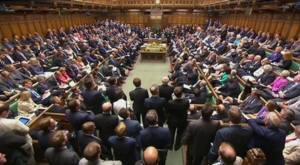
“14 MPs turn up to discuss UN report on 14 million people living in poverty”

“The UN’s report on poverty in Britain is at risk of being swept under the carpet after just 14 MPs turned up to debate the issue in parliament yesterday.”

https://www.thelondoneconomic.com/news/14-mps-turn-up-to-discuss-un-report-on-14-million-people-living-in-poverty/08/01/

Meanwhile for the debate on increasing MPs pay:

“370,000 More Families Hit By Tory Child Benefit Cuts, Institute For Fiscal Studies Reveals”

“The number of families hit by child benefit cuts has soared by 370,000 thanks to Tory ‘stealth’ tax changes, a leading think tank has revealed.

The Institute for Fiscal Studies found that George Osborne’s decision to freeze income eligibility thresholds will leave one in five families facing the loss of all or some of the payments.

Six years to the day since the former Chancellor introduced his austerity crackdown, the number of those affected has surged by a third, the IFS analysis discovered.

Labour’s John McDonnell pounced on the figures as proof of the continuing impact of Osborne’s cuts programme, telling HuffPost UK that it was further evidence for the need to back Labour’s Budget amendment on Tuesday to review child poverty and equality levels.

Child benefit was a ‘universal’ benefit until the Tories decided in 2012 to severely restrict eligibility to exclude any household with someone earning above £50,000 a year.

But the IFS study found that failing to increase the threshold in line with inflation – while increasing higher rate tax thresholds – has dragged many more middle income families into the cuts.

“For the first time, significant numbers of families without a higher-rate taxpayer will lose some Child Benefit,” it said.

Based on current earnings growth, it estimates that 60,000 families without anyone earning £50,000 will lose out in 2021–22, doubling to 120,000 such families in 2022–23.

Child benefit is currently worth £1,079 per year for the first child and £714 for each subsequent one.

The IFS said that in its first full financial year of operation (2013-14), the new policy meant that 13% of families with children, or around a million, lost at least some of the benefit as a result of the policy, with around 700,000 losing all of it.

In 2019-20, it estimates that the share of families with children who are affected will be 18%, or 1.4 million, of whom a million will have lost all of their entitlement.

“In other words, the number of families with children who are affected will have risen by about 36%, or 370,000, in just six years.

“What cannot be justified is to have an ever-increasing proportion of families exposed to the policy over time, with the increase determined by the rise in prices since 2013.

“The cumulative impact it has in raising taxes or reducing benefits by stealth can do nothing for trust in government….”

https://www.huffingtonpost.co.uk/entry/14-million-families-will-be-hit-by-tory-child-benefit-cuts-institute-for-fiscal-studies-reveals_uk_5c33d1e7e4b05d4e96bb243a

“Nearly 5,000 schools in England not given promised cash – union”

“England’s biggest teaching union has accused the government of breaking its promise to provide a modest cash boost to every school in England, claiming figures reveal that nearly 5,000 schools have received no extra funds or have even had their funding cut.

In the wake of mounting concern among teachers and parents about a school budget crisis, the education secretary, Damian Hinds, told MPs last year that a new national funding formula would guarantee each school “at least a small cash increase”, a pledge repeated by the prime minister in the Commons last May.

The National Education Union argued the offer was inadequate given the scale of the school funding squeeze, but its analysis of recent government figures subsequently revealed that 4,819 schools had either received no extra funds or had had their budget cut.

“This is yet another failure and another broken promise by government on school funding,” said Kevin Courtney, NEU joint general secretary. “The fact remains that schools were never going to manage on the money promised by government.

“However, headteachers, teachers, school staff and parents will be dismayed that even the meagre amounts of funds supposedly allocated to schools will not be received by everyone. Parents and school staff simply cannot trust what the government says on education funding.”

The NEU compared the schools block funding allocations for 2017-18 and 2018-19 and found that a quarter of primary schools (25%) and one in six secondary schools (17%) either received no cash increase or suffered an actual cut to their funding.

Responding to the NEU analysis, a Department for Education (DfE) spokesperson said that since 2017 the government had given every local authority more money for every pupil in every school in order to ensure fairer funding across the country.

“Government provides this money to local authorities and they have the freedom to work with schools to allocate their budgets in a way that best suits local needs,” the spokesperson said.

“While there is more money going into our schools than ever before, we do recognise the budgeting challenges schools face and that we are asking them to do more. That’s why we’re supporting schools and headteachers, and their local authorities, to make the most of every pound.”

According to the Institute for Fiscal Studies, total school spending per pupil in England has fallen by about 8% in real terms between 2009-10 and 2017-18. …”

https://www.theguardian.com/education/2019/jan/07/nearly-5000-schools-in-england-not-given-promised-cash-union

“Need to sign on? You’ll have to walk 24 miles to the jobcentre”

A lesson for all rural dwellers unlucky enough to lose a jobm

“Twenty-four miles there and back is one hell of a hike to your local jobcentre. But when Ray Taylor, 56, had his benefits cut for 13 weeks after illness meant he missed an appointment to sign on, he had no option but to get out his walking shoes. He doesn’t have friends with cars to give him a lift, and with no money coming in, he couldn’t pay the £7 bus fare from the small Cambridgeshire town of Ramsey to Huntingdon, where he is registered for benefits. And if he missed signing on again, he would be sanctioned again.

Taylor, a former electrician – he couldn’t afford to update his qualifications after being made redundant and going freelance – is remarkably stoical about what could be a weekly trek. “If you’ve got a 9 o’clock appointment, you have to set off in the early hours to make sure you get there,” he says. There have been “quite a few times” he has set off at two in the morning to avoid penalties for lateness. (“Sanctions” can involve benefits being reduced – or stopped entirely.)

A pre-dawn start in the pitch-black of rural Cambridgeshire with cars and farm lorries rumbling along pavement-less roads doesn’t sound all that safe. Taylor, who survived being homeless in Cambridge for seven years before being housed in Ramsey, smiles as his eyes stream from the cold. “There’ve been a few moments.” The police have picked him up a couple of times and taken him home to ensure his safety, he recalls.

Come the end of March, other Ramsey residents may have to embark on this trudge that is nearly the length of a marathon. That is because the No 30 bus that is the sole public transport link between Ramsey and Huntingdon is due to be cut. The only alternative for anyone without a car will be to beg lifts from friends or family, cycle or find the £40 round-trip taxi fare. It is an impossible sum for anyone on a low income, and even most working people couldn’t find it five days a week.

To experience the route Taylor has walked “oh, maybe 20 or 30 times”, we meet at the more civilised hour of 8am by the decorative wrought-iron bus shelter next to Ramsey’s clocktower. The night before, driving across Cambridgeshire, gusts of wind hurling rain across my windscreen, I begin to dread the walk to come. Morning, however, has dawned bright but chilly. Hoiking our rucksacks on our backs, we pull our hats down and head south out of town. We are accompanied by Steve Corney, the town council’s new mayor, and Jane Sills, the chair of the Ramsey Million Big Local residents group, which has campaigned for the past 18 months against the cutting of the No 30 bus.

“For the people here, the bus means everything,” says Corney over the noise of traffic streaming out of Ramsey. There are no big employers in the town, so there is a daily exodus. “It’s frustrating because when you see it, there’s a lot of people on it.” Corney notes too that housing development means Ramsey’s population of 8,000 is expanding.

We pick up the pace as we reach the edge of town, where Corney peels off. As we march past a long-abandoned RAF station, it is the isolation suffered by older people and teenagers in cut-off rural areas that is on Jane Sills’ mind. James Palmer, the mayor of the new Cambridgeshire and Peterborough combined authority, which is reviewing all the area’s bus routes, will visit Ramsey later this month, and Sills’ group of residents intends to lobby him hard. “He should know by now just how important it is for people on low incomes and for young people that they’re not trapped in a small town with their life chances inhibited,” she says.

Sills has a strong card up her sleeve. As well as marshalling a petition that gained more than 1,000 signatures – and secured a short-term stay of execution for the route – members of her group decided to use some of the Big Local Lottery money they had been awarded to strengthen their case. A report commissioned from the Campaign for Better Transport revealed that the local authority subsidy paid to the bus operator Stagecoach to run the No 30 bus is the lowest of any on the list of proposed route closures in Cambridgeshire.

The report also showed, Sills says, “how Ramsey already compares poorly to other parts of the county” in terms of its access to buses.

If Cambridgeshire’s long-term transport strategy is ratified later this year – it is the new Cambridgeshire and Peterborough combined authority, not Ramsey town council, that will set commissioning policy until 2031 – Ramsey will be cut off from the new “hub and spoke” public transport system. There will be no buses in or out at all.

Ramsey’s residents, of course, are not alone in their plight. The Campaign for Better Transport calculates that since 2010, councils in England and Wales have cut £182m – 45% – from the support they give to bus routes that would otherwise be unsustainable. Some areas have seen particularly harsh cuts: Somerset by 50%, Leicestershire by 72%, North Yorkshire by 81%. In the past year alone, according to the charity’s recent Buses in Crisis report, more than 300 routes have been reduced or withdrawn in England and Wales, and 3,347 since 2010.

“Whole areas are now transport deserts,” says the charity’s chief executive, Darren Shirley. “The people who are the most impacted are those who are most in need of public transport. Jobseekers who are reliant on public transport to get to work. People in poor health who need it to get to hospital.” Buses, he points out, are the only form of transport in England not to have a long-term investment strategy. …”

https://www.theguardian.com/uk-news/2019/jan/07/need-to-sign-on-youll-have-to-walk-24-miles-to-jobcentre

“UK CEOs make more in first three days of 2019 than worker’s annual salary”

“… Calculations by the High Pay Centre thinktank and the professional HR body the Chartered Institute of Personnel and Development (CIPD) show top executives are earning 133 times more than the average worker, at a rate of around £1,020 per hour or £3.9m annually. That’s up 11% compared to a year earlier.

It means CEOs working average 12-hour days would only have to clock in for 29 hours in 2019 to earn the median £29,574 of British staff.

The figures have prompted criticism from both unions and shareholder groups. …”

https://www.theguardian.com/business/2019/jan/04/uk-ceos-make-more-in-first-three-days-of-2019-than-workers-annual-salary

“24,000 homeless families ‘sent miles from local area’ “

“The number of homeless families forced to move away from their communities is at its highest for 20 years, as councils struggle to find accommodation for the growing numbers of people in need.

According to official government figures, there were 23,640 families in temporary accommodation outside their local area in the second quarter of this year, the highest level in 20 years and more than double that recorded over the same period just five years ago.

The new data has emerged amid rising anger over homelessness, with recent research showing that deaths among homeless people in England and Wales have increased by 24% in five years. Deaths have risen every year since 2013, from 475 in 2014 to 597 last year, according to the Office for National Statistics.

Several factors are being blamed for the rise in homeless families being relocated. A freeze on benefits and a cap on payments have led to a rise in demand for temporary accommodation. Meanwhile, the stock of council-owned housing has been run down and rents are rising, making affordable private rented accommodation harder to find.

Melanie Onn, the shadow housing minister who uncovered the figures, said they revealed the “human cost of the housing crisis”.

“Eight years of Tory failure on housing means that more and more families are being forced to move away from their communities, schools and jobs,” she said. Labour blamed cuts to housing benefit and an 80% fall in the number of homes for social rent being built.

Greg Beales, director of campaigns at Shelter, said his charity had witnessed the damage caused “when homeless families are forced to uproot their lives and move miles away to temporary accommodation in another area, abandoning jobs, schools and support networks. To put an end to the devastating cycle of homelessness, the government needs to commit to a bold new vision for social housing.

“Only then will families have a fighting chance of a safe and secure home in their local area.”

Jon Sparkes, chief executive of Crisis, said the number of families being asked to relocate had become unacceptable: “As local councils struggle to find housing for people, the only option for many is to rent privately, but with renting costs now sky high and housing benefit falling short of rents, this is not a viable option for most,” he said.

“As a result many have no option but to leave any semblance of community and support behind, often moving to areas where they have no connections, leaving them trapped in a cycle of desperation.

“The government’s decision to start reinvesting in social housing is welcome, but it doesn’t go far enough. ” …

https://www.theguardian.com/society/2018/dec/23/24000-homeless-families-sent-miles-from-local-area

“Yvette Cooper: It’s time to boost Brit towns and not lock cash funds in cities”

“… Research done for the Labour Towns group of MPs and councillors found that overall job growth in towns since the last recession has only been half the rate of growth in cities.

The economic divide between cities and towns is growing and the Tory Government is making it worse. …

Austerity has hit towns and smaller cities hard, so it isn’t just retailers who have been leaving.

Often the libraries, police stations, council offices, magistrates courts, swimming pools, community centres, A&E or the maternity services have been closed, forcing people to travel to nearby cities instead. Lottery and arts funding is higher in cities too.

Manufacturing jobs in towns are being squeezed while new service or creative opportunities are concentrated in cities.

Meanwhile most of the transport money goes to London or other major hubs. Buses have been cut.

… It’s time to support Britain’s towns. Instead of making everyone travel to cities for public services, we need more in towns.

Instead of rolling out new broadband or 5G infrastructure in cities first, why not start in nearby towns? Instead of always using all the transport money on overruns for big city projects like HS2 or Crossrail, why not start by improving local trains and buses?

The Government seems to think if you only support cities, everything will just trickle down and out to the towns, but it hasn’t worked. Let’s have a fair deal to boost our towns and cities together. … “

https://www.mirror.co.uk/news/politics/yvette-cooper-its-time-boost-13768773

“Grenfell warning over creation of ‘a new generation of slums’ “

“The lessons of the Grenfell Tower fire risk being ignored because developers can convert office blocks into homes without full local authority checks, a former housing minister has warned.

Nick Raynsford said that “a new generation of slums” was being created in Britain because developers did not have to submit a planning application when converting old commercial properties into flats. The policy leaves councils with limited power to ensure that the buildings adhere to national standards.

Mr Raynsford said that “permitted development” rules were designed to minimise bureaucracy when making “modest adaptations” to existing properties, but developers were using them to create thousands of new homes in old commercial buildings.

“The council doesn’t have the power [to force developers] to comply with minimum standards on space, lighting, children’s play facilities, or fire safety,” said Mr Raynsford, who was a housing minister under Tony Blair.

A studio in Newbury House, a former office block in Ilford, east London, was planned with 13 sq m of space. The minimum standard is 37 sq m. Windowless flats have been marketed in a former office block in Brixton, south London, illuminated only by light wells that channel light from flats above.

More than 100,000 homes have been built under permitted development since 2013, accounting for up to 40 per cent of new homes in some areas. The Local Government Association found that 92 per cent of councils were “moderately or very concerned” about the quality of these homes, with 59 per cent worried about safety.

Many standards, including on space, are not compulsory and only apply to plans that go via the planning system.

Julia Park, of Levitt Bernstein architects, said such developments “tend to be occupied by vulnerable people” and were often used as temporary housing.

Mr Raynsford said: “There should be early engagement by planning authorities with the fire and rescue authority when an application for a high-rise residential development is submitted. That runs counter to the whole ‘permitted development’ approach, where obligations on developers are minimal and the council does not have the resources to explore the implications, to ensure fire engines can access the site, for example.”

The government is consulting on whether to extend the rules.

Mr Raynsford referred to evidence emerging from the Grenfell inquiry, after the fire in June last year in which 72 people died. “It seems to be extraordinary that one arm of government is pushing in a direction that’s very different to the conclusions emerging from the public inquiry in which failings, in terms of preparations for coping with serious problems, have been highlighted,” he said.

Hugh Ellis of the Town and Country Planning Association said the conditions in some developments were “Dickensian”, and added: “It is some of the most appalling slum housing this country has seen in the post-war era.”

Kit Malthouse, the housing minister, said: “All developments, including offices converted into homes, remain subject to strict fire safety rules.”

It is understood the government will look at permitted development when considering recommendations made by Dame Judith Hackitt’s Grenfell report. …”

Source: Times, pay wall

“Ex-Persimmon chief fails to set up charity after anger over £75m bonus”

Owl says: a charity for the homeless would seem appropriate …!

“Jeff Fairburn, the former chief executive of the housebuilder Persimmon, has failed to set up a charity almost a year after pledging to do so in an attempt to assuage public and political anger at his “obscene” £75m bonus.

Fairburn has not registered a charity with the Charity Commission or made any inquiries about how to set one up, 10 months after he said he would donate a “substantial proportion” of his bonus to a charitable trust. Fairburn declined to comment.

He was ousted last month after the company said his mammoth pay deal had become a “distraction”. …”

https://www.theguardian.com/business/2018/dec/21/persimmons-former-ceo-jeff-fairburn-fails-to-set-up-charity-after-pledging-portion-of-75-million-bonus

“Academies failing poorer students, research shows” (and there are many more poorer students)

“Two-thirds of academy school groups performed below the national average for disadvantaged pupils, according to research released today.

A five-year study by the Sutton Trust educational charity analysed 58 ‘academy chains’ – partnerships between a group of academies – and found in 38 of these disadvantaged pupils performed below the national average for all state schools.

In 12 of the 58 chains analysed, poorer pupils performed above the national average but this good practice had not been shared with other academy chains, the report found. It defined disadvantaged pupils as those entitled to the ‘pupil premium’ – a funding package from central government.

Becky Francis, director of the UCL-Institute of Education and co-author of the report, said it was “perplexing that the government has done so little to explore the methods of these successful chains and to distil learning to support others”.

“Our five year analysis of sponsor academies’ provision for disadvantaged pupils shows that while a few chains are demonstrating transformational results for these pupils, more are struggling,” she said.

Francis said that the government should capitalise on the successes of various schooling organisations including local authorities and multi-academy trusts.

The report found that long-standing academy chains achieve better exam results, with newer chains frequently performing poorly.

Peter Lampl, founder of the Sutton Trust, said: “Two-thirds of academy chains perform below the national average for all state schools on key measures of attainment for disadvantaged young people. Improving their educational achievement was the original reason why academies were set up. In this regard they have not succeeded.

“We at the Sutton Trust are recommending the sharing of good practice of the best academy chains with the rest. More generally schools should make increased use of the body of what works evidence.”

Lampl noted struggling schools are having difficulty attracting and retaining good teachers.

The charity’s report said there is “little to suggest” that regional schools commissioners – who are responsible for approving new academies and intervening in underperforming ones – are bringing about improvements.

RSCs must act “more decisively” with chains that do not deliver improvement on time, the trust said.

Anntoinette Bramble, chair of the Local Government Association’s children and young people board, said: “This research reinforces the compelling need for the government to give councils the powers to improve struggling schools.

“Councils have a strong track record in school improvement, with 91% of council-maintained schools now good or outstanding while evidence shows councils are better at turning around failing schools than those converted to a sponsor-led academy.”

The Department for Education has been approached for comment.

An annual report released last month showed that academies in England recorded a £6.1bn deficit in August 2017.

Previously the National Audit Office called on the government to ensure that academies could be trusted to manage large amounts of public money.”

https://www.publicfinance.co.uk/news/2018/12/academies-failing-poorer-students-research-shows

NHS – inequality between regions

“The government must show more urgency in addressing regional health funding imbalances, MPs have warned.

The Public Accounts Committee has also expressed concern about the Department of Health and Social Care’s lack of planning for staffing and medical equipment after Brexit, in a report out today.

The MPs noted there was “significant regional variation” in funding of NHS providers and clinical commissioning groups. DHSC’s 2017-18 annual report and accounts suggest an improvement in finances when taken as a whole but this “masks the underlying deficits at local level”, the PAC report said.

MPs said the department was performing a “balancing act” by offsetting NHS providers’ deficits with a surplus from NHS England’s finances. In 2017-18, 101 of 234 NHS providers were in deficit, although this was mitigated by NHS England’s surplus, the report said. Although, 75 of the 207 CCGs reporting an overspend in the same year.

PAC chair, Meg Hillier, said the number of CCGs overspending was “concerning”.

She added: “The Department of Health and Social Care must show far more urgency in getting to grips with regional funding imbalances and demonstrate it understand the effects these have at the frontline.”

The report was also critical of DHSC’s planning for Brexit, especially around staffing and medical equipment.

It said there is a “lack of a clear plan” for recruiting staff post-Brexit and added: “We are not reassured by the department’s assertion that it has not seen a large exodus of staff since the referendum and that the number of people from the EU working in the NHS has increased.”

Health bodies recently warned that the NHS workforce shortfall could jump from 100,000 at present to almost 250,000 by 2030 without effective planning.

Despite the NHS procuring 56% of medical consumables (gloves, dressings, syringes) from, or via, the EU, DHSC is not putting specific contingency measures in place to stockpile this type of equipment, the PAC revealed.

Hillier said: “The department’s lack of clear Brexit planning could threaten the supply of medical equipment. Staff shortages could deepen. The potential consequences for patients are serious.

“These and other uncertainties are amplified by the continued absence of the government’s promised 10-year plan for the NHS, its promised plans for social care, and its promised plans for immigration.” A DHSC source has confirmed to PF the social care green paper and NHS 10-year plan are now likely to be published in the new year, rather than by the end of this year, as originally intended.

Regional variances in staff vacancies could also be overlooked, the PAC noted. The NHS examines vacancy rates at a national level – rather than a local level – which “hides underlying disparities in specific specialisms and local areas and does not allow them to fully understand the impact of staff shortages,” the report said.

The report also expressed concern that the NHS staff pay rise announced earlier this year would not be distributed fairly. By funding pay awards through the National Tariff the PAC is concerned that NHS Providers in more affluent areas will receive “disproportionately higher share of funding” because the tariff accounts for the cost of operating in different geographical locations.

DHSC has been contacted for comment.”

https://www.publicfinance.co.uk/news/2018/12/government-must-address-health-funding-imbalances-say-mps

After health “hubs” come rough sleeper “hubs”

Definition “hub”: a pseudo-service that is put in place when a full service is withdrawn, often with privatised funding and/or staff, usually resulting in an inferior service.

“Ministers have announced that 11 new “rough sleeping hubs” will be established next year through a £4.8m project aimed at tackling rising levels of people in England sleeping on the streets.

Unveiling plans for the centres, the government said thousands of vulnerable people will be able to receive specialist support to address mental health problems and provide immediate shelter and rapid assessment for rough sleepers.

It will form part of the already announced £100m rough sleeping strategy and will be launched in 11 areas in the spring across England, including Derby, Liverpool, Preston, Bristol, Lincoln and Nottingham City.

The measures coincide with an announcement from Labour, who have also pledged £100m to give every rough sleeper a place to stay in the winter months – funded through a levy on second homes announced at the party conference in September. …”

https://www.independent.co.uk/news/uk/politics/rough-sleeping-hubs-homeless-uk-statistics-government-shelter-labour-party-england-a8687971.html

“Dickensian’ poverty increasingly prevalent in schools”

“Increasing levels of child poverty are affecting children and young people’s education, with schools dealing with ‘Dickensian’ levels of squalor, a major teaching union has warned.

A survey of members by the National Education Union found more than half (53%) believe children in their school will go hungry over Christmas, putting the blame on welfare cuts as well as those to schools and children’s services.

The poll of 1,026 NEU teachers in England revealed that 46% believe holiday hunger – a lack of access to food in the absence of free school meals – has got worse in the last three years.

The NEU’s report, published today, highlighted the “stark” impact of poverty on children’s education. Poverty-related problems include: absence from school (83%); behavioural issues (85%); concentration (81%); health (59%); and lateness (79%).

The survey heard from teachers who were buying or washing clothes for students who could not afford them. Some teachers said their students had been sleeping in their school uniforms because they don’t have pyjamas, and other children had food delivered to their home by the school.

Mary Bousted, joint general secretary of the NEU, said: “This is a Dickensian picture of the poverty that far too many children and their families are having to endure.

“The government has failed to recognise the human cost of its cuts to schools and other children’s services and to the social security system, and its failure to address the in-work poverty faced by one in five workers.

“The government must stop hiding from the facts. Children can’t escape the poverty trap without an urgent change to national policies.”

The poll also found 46% of teachers believe that poor quality and overcrowded housing conditions are affecting the education of children and young people more than they were.

Many schools are now offering free breakfast clubs for children and also running foodbanks, giving hampers to families and providing meals during the holidays, the survey found.

But union members said that school funding cuts were restricting the help that can be given.

A government spokesperson said: “Teachers shouldn’t have to step in to tackle the issues highlighted by this survey, and we’re already taking action to make sure that they don’t have to.”

https://www.publicfinance.co.uk/news/2018/12/dickensian-poverty-increasingly-prevalent-schools

“Food bank opens AT SCHOOL after famished children start stealing from lunchboxes”

“A primary school has set up a food bank for hungry kids whose parents are struggling under austerity.

Head Debbie Whiting launched it after seeing pupils so famished they were stealing from other children’s packed lunches.

“You can’t learn if you’re hungry,” she said. “Children need to be fed, clothed and warm.”

The food bank at North Denes juniors in Great Yarmouth, Norfolk, is thought to be the first at a British school.

Staff and some parents donate extra items from their shopping and a charity has given £1,500.

Mum Sadie Carter, who has two children at the school, said she fell to “rock bottom” after running out of money and was “crying for days”.

She said: “I didn’t know what to do. Then the school came to help.” ….

https://www.mirror.co.uk/news/uk-news/food-bank-primary-school-hungry-13741828