Whopping £73m losses by SWW owner Pennon. Susan Davy expects return to profitability as 28% hike in bills “resets  the cost base”

“As the only water company to have received an outstanding rating for our business plan for the third consecutive time, we have a track record of setting and delivering on stretching business plans. Consistently around 70% of the stretching regulatory deliverables have been met which put us top quartile compared to the sector.” – Susan Davy

Read Owl’s April post entitled “South West Water rewarded £6,7m for failure”. This exposes the only outstanding thing SWW excels in, is being the industry leader in writing creative future plans which it then fails to deliver.

Owl is waiting for Simon Jupp’s spin on all this.

South West Water owner makes huge loss after Brixham bug cost it £21m

Pennon sees losses widen and puts up bills

William Telford Business Editor www.devonlive.com

South West Water owner Pennon Group Ltd has made a £72.7m loss after a water bug made hundreds of people ill in Devon last year. The utilities giant saw losses widen from the £9.1m loss it made in [the previous year].

It put the blame for the loss on having to deal with the Cryptosporidium outbreak in Brixham in 2024, which left more than 100 people saying they were ill and some even going to hospital, and said the cost of “interventions to return quality supplies” cost it about £21m. It also said a company restructure cost it about £16.6m.

But the Exeter-based company, in its annual results for the year to the end of March 2025, said it expects to return to profitability in 2025/26 through increased revenue and a “reset of our cost base”. It also highlighted investment plans of £3.2bn.

South West Water customers saw bills jump by 28% on average from April, while bills for Bristol Water and Sutton and East Surrey (SES) customers, both companies being owned by Pennon, are going up by 5% and 3% respectively.

Susan Davy, group chief executive, said: “Pennon has delivered a resilient operational performance during a demanding year, while building a robust platform for the future. We have reshaped and reset the cost base, delivered record levels of capital investment and – following a successful rights issue – maintained a strong balance sheet.

“We are listening to our customers, who are quite rightly demanding water companies to do more for customers today and to step up investment for the future. We are doing both. We have worked diligently to help customers use less water and save more money with a range of campaigns and pilots.

“At the same time, our record year for investment has improved services that matter most to our customers. Whilst this has impacted profitability this year, it has been the right thing to do.

“As the only water company to have received an outstanding rating for our business plan for the third consecutive time, we have a track record of setting and delivering on stretching business plans. Consistently around 70% of the stretching regulatory deliverables have been met which put us top quartile compared to the sector.

“Of course there is more to do, not least on those measures we didn’t achieve, and our ambitious new plan includes a record £3.2bn of investment due to be completed by 2030. We know customers are worried about rising bills to fund this level of investment. While we have made the tough decision to put bills up in 2025/26 – for the first time in over a decade – two thirds of our investments are being funded by our supportive investors and debt providers.

“Ultimately everyone will benefit from the investments we are making – from building reservoirs, to fixing storm overflows, powering our net zero ambitions and helping to create economic growth. It’s why we’re able to make a £200m support package available to those who need it most.

“It’s also why – as the dry weather persists – we’re predicting that the South West won’t need a hosepipe ban this summer. We could not do this without the 4,000 brilliant colleagues who walk in our customers’ shoes every single day, focusing on the priorities that matter most for customers.”

Independent Water Commission: review of the water sector

This interim report is published today, following a total of 50,114 responses to the calls for evidence.

The following five areas come under scrutiny:

• Long term direction from government, including through the planning process.

• The creation of a simplified legislative framework, which could include new objectives around public health.

• Regulation but “a fundamental strengthening and rebalancing of Ofwat’s regulation is needed”, it is argued.

• Transparency and accountability within private water firms.

• The management of water industry assets, including pipework.

Note the terms of reference preclude any consideration of re-nationalisation.

Here is how the Chair Sir Jon Cunliffe summarises it in the Times:

“What has become increasingly clear as we have listened to the views — and heard the anger — on all sides of the debate is that there is no simple, single change, no matter how radical, that will deliver the safe, plentiful water and clean water environment that we need now and in the future.

We have heard of deep-rooted, systemic and interlocking failures — failure in government’s strategy and planning for the future, failure in regulation to protect both the bill payer and the environment and failure by many water companies and their owners to act in the public, as well as their private, interest. At the same time the demands on our water systems have grown.

On Wednesday, the commission is publishing an interim report setting out the direction of the fundamental changes we believe are necessary and show the scale of change required in how we plan, legislate, regulate and provide water, our most vital resource.

We have one set of water systems — our rivers, aquifers and coasts — but many different and often conflicting demands upon them. We want clean and healthy waterways and we need to manage the pressures from water companies, agriculture, industry, housing and others who all use our water. Setting the high-level priorities for water over the long term and balancing different objectives, including cost, is a job only government can do. It is not done effectively at present.

Our water systems are regional and need to be better managed at regional and local “catchment” level. Whether it’s how pollution sources are tackled, where new houses are built or how water shortages are addressed, the system is not working well and the local voice gets lost. Our conclusion is that stronger regional and local “system planning” is needed so decisions on a regional water system are made closer to its communities.

At the heart of public anger is the failure of the regulators to ensure that private water companies act in the public interest and the manifest failures of some companies to do so. Rebuilding trust will require a fundamental change in approach.

Akin to the “supervisory” approach seen in financial services, we believe Ofwat needs to depend far more on closer, more expert and judgment-based engagement with individual companies. A deeper understanding of their circumstances, finances and challenges will enable early intervention before issues arise. And it will inform price-setting to help poor performers improve and avoid the spiral of failure we have seen in some instances. Alongside this, we need a stronger voice in the system for consumers.

The capacity and capability of the environmental regulators falls a long way short of the public’s expectations for protection of our waterways. And environmental regulation has become too risk-averse and hesitant to enable innovative solutions that might deliver greater all-round environmental benefit. We need a more capable, intelligence-led regulator alongside legislative change to enable greater flexibility.

Beyond that, we need smarter as well as stronger regulators. Much friction, incoherence and cost in the system comes from the way regulators with very different remits interact. Radical streamlining and alignment of regulators is now essential.

In a system of private regulated water companies, effective regulation will always be the key line of defence for the public interest. But the ownership, governance and management of water companies can also have a big impact on whether companies deliver the public goods that society demands, which is why we are looking at these issues further.

The water industry should attract and retain owners and investors that are looking for low-risk and low return over the longer term and that are prepared to make the investment needed for the future. Achieving this will require restoring the confidence that has been lost in the predictability and stability of the regulatory system. We will make detailed recommendations in all of these areas in our final report later this summer.

“Resetting” our water sector is a problem not a puzzle. There is no single, simple answer. It will require a wide range of actions and sustained commitment. It will not happen overnight, but it can be done. And it needs to be done.”

More later

Ottery St Mary quarry plans scrapped after 10 year battle

Cllr. Jess Bailey said it had been a “David and Goliath battle” with residents fighting the plans by a large company.

A controversial plan to create an industrial quarry on farmland in Devon has been shelved after 10 years of planning battles.

Miles Davis BBC Devon political reporter www.bbc.co.uk

Aggregate Industries wanted to build a quarry on the 100-acre Straitgate Farm site on the edge of Ottery St Mary to extract more than a million tonnes of sand and gravel.

Local councillor Jess Bailey said it had been a “David and Goliath battle” with residents fighting the plans by a large company.

Aggregate Industries, which rebranded to become Holcim UK earlier in 2025, said there had been “a change in business strategy and direction”.

‘Epic struggle’

The plans were refused by Devon County Council in December 2021 but an appeal to the Planning Inspector was successful in January 2023.

Bailey, independent member for Otter Valley, said it was “really quite unbelievable” that the plans advanced to the stage they reached.

She said: “It’s been an absolutely epic struggle, it’s gone on for years and years. It would have had a devastating impact on the local area.

“It’s been a huge David and Goliath battle where local community activists were campaigning against a multinational quarry company.

“It’s great news for our area and it’s just a shame it took such a long time to get to this point.”

Rupert Thistlethwayte is the owner of Cadhay House, an historic estate in Ottery St Mary.

He said the creation of the quarry could have harmed the water supply to medieval fishponds, external in the gardens of Cadhay House.

Responding to news of the plans being abandoned he said: “It’s absolutely fantastic and a great credit to all the people who were part of the action group.

“To keep their energy going for that length of time is astonishing. There were all sorts of lows and keeping going through those lows requires people with grit.”

Holcim UK said it had agreed to sell the Straitgate Farm site.

A spokesman for the firm said: “Following a change in business strategy and direction, which has included a review of the planned site, the company has decided not to proceed with quarrying at Straitgate.

“We have informed Devon County Council of this development and that we intend to allow the planning permission to lapse as a result.”

The company said it recognised the local community would “welcome the clarity and certainty this will bring”.

Devon County – New cabinet member seeks innovative ways to help rural communities

Council Leader Julian Brazil creates new role in cabinet, portfolio holder for rural affairs, and fills the post with Cllr Cheryl Cottle-Hunkin (Lib Dem, Torrington Rural), a famer herself.  

New rural affairs role at Devon County Council

Alison Stephenson, local democracy reporter www.radioexe.co.uk 

Innovation will be key to attracting government funding to help rural communities in Devon, according to the holder of a newly created role on Devon County Council’s cabinet.

First time county councillor Cheryl Cottle-Hunkin (Lib Dem, Torrington Rural) has been selected to be in charge of rural affairs and says she is looking globally to get the best for Devon.

“There are so many issues in rural areas, from access to health services and dentists and public transport, villages pubs and shops are struggling. And farmers feel they are being ignored by the government.

“But we can’t keep asking for money for the same things. We need to come up with new ideas and I am looking at what people are doing across the country and across the world in innovation.

“That is the way we will get central government funding.”

A Torridge District councillor of eight years for Shebbear and Langtree, Cllr Cottle-Hunkin spearheaded acampaign in Devon to try to save mobile libraries and was invited to Westminster to talk to MPs at a farmers’ rally in the capital against changes to inheritance tax.

A farmer herself, she said she understood the issues and is “honoured” to have been asked to join the cabinet.

“As someone who has grown up living in rural Devon, and at a time when farmers are going though hugely stressful times with new rules and moving goalposts, taking numerous blows from central government, I hope we can show that at county level we understand, and we will be your voice.

“We recognise the importance of Devon County Council’s own farms’ estate as well as the need to develop stronger partnerships locally.”

Cllr Cottle-Hunkin said she hoped people would no longer feel the county council was “Exeter-centric”.

“I think a lot of residents living outside of Exeter feel that rural issues have not been at the forefront of the council in the past. Rural isolation is a big challenge and I will be looking at how we can make lives better for the people in our rural communities as a whole.”

She said groups like Devon Communities Together had already been in touch and meetings set up.

“The role will evolve over time as it’s brand new,” she said.

“I am a big fan of the health hubs that have been created and would like to see more of that kind of thing.”

New leader of Devon County Council Julian Brazil (Lib Dem, Kingsbridge) said the authority would be “a loud voice for all things rural especially farming.

“I’m excited to be working with Cheryl. We wanted to establish a champion for rural affairs and Cheryl will be ideal. She instinctively understands the issues because she lives the life.”

The Lib Dems are now the largest party on the county council after the Conservatives lost overall control and secured just seven seats. Cllr Brazil said he wanted the authority to be inclusive where everyone has a voice.

Cllr Cottle-Hunkin has stepped down from her role as leader of the Lib Dem group on Torridge District Council to concentrate on county council work and will be succeeded by Cllr Teresa Tinsley (Bideford North).

Cllr Huw Thomas (Green, Bideford East) will take over Cllr Cottle-Hunkin’s role as chair of Torridge’s external overview and scrutiny committee.

She will continue to be lead member for culture and community engagement.
 

Tories spooked as they continue to haemorrhage council seats

“They [the Tories] have been spooked by the loss of 600 councillors in last month’s local elections, and by the haemorrhaging of a further 47 council seats in the six weeks since, several to Reform.”

Anthony Seldon The Times

Our old Tory “build, build, build” legacy compounded by Labour’s “free for all” developer’s charter

Background

Local government is set to become more remote with District councils due to be abolished, Counties divvied up into unitary packages of 500,000 souls governed by an overarching mayoral authority covering over 3,000 sq miles! 

Planning “reform” latest twist

After throwing environmental protection to the wind. You can now forget any local input to planning. 

If, as proposed, democratic control over planning is stripped away, inevitably more power will be vested in Local Planning Officers. This is a significant change in how our system works. 

How will its integrity, accountably and transparently, be  assured?

Anyone think this is going to reinvigorate democracy, get more social housing built where it’s needed, and help clean up our rivers and seas? – Owl

See here for latest consultation

Councillors face ban on interfering in smaller planning applications

Chris Smyth www.thetimes.com 

Councillors will be banned from interfering in kitchen extensions and smaller developments as ministers curtail local discretion to speed up housebuilding.

All applications from individual homeowners will be protected from being called in to planning committees, while councillors will also be stripped of the ability to veto developments of up to nine homes.

This could rise to 50 homes in London as ministers seek to make the planning system more predictable for developers.

All planning applications will now bypass elected councillors by default, with only larger schemes able to be called in to committees if planning officers agree.

Angela Rayner, the deputy prime minister, is locked in a battle with the Treasury for billions of pounds to fund council house building, as her team set out a series of reforms that it says are essential to build 1.5 million homes over the course of parliament.

On Wednesday, ministers began a consultation on restricting the ability of council planning committees to intervene in developments, in an effort to reduce delays.

Under the proposals, smaller developments must be decided by professional planning officials “in all cases”. These include applications from individual homeowners, minor commercial projects and schemes of fewer than ten houses.

Ministers want to apply similar rules to developers of between ten and 50 homes in “larger conurbations”, acknowledging that this “would mean very few residential development applications in some areas could be scrutinised by committee”.

Housing style and layout in bigger schemes will also no longer have to be decided by councillors once they have given initial permission.

All other applications would be expected to bypass councillors unless the elected chair of the planning committee agreed with the council’s chief planning officer that democratic scrutiny was needed. This is expected to include the largest and most contentious schemes.

Matthew Pennycook, the housing minister, told The Times earlier this month that he wanted to get councillors out of “swathes” of planning applications, saying this would “increase the certainty and speed at which planning decisions are made”. Councillors could focus on “the biggest, most controversial applications”, he argued.

Matthew Spry of the Lichfields consultancy said that “we are moving towards a more rules-based planning system, which will undoubtedly speed up the process — even as the political dimension is inevitably maintained within it”.

He said that “a lot now relies on the dynamics of those individuals in each council, but there would have been risks to setting a fixed national threshold: what is a big deal in one place is small fry in another”. He added: “One can never take the politics out of planning so the line has to be drawn somewhere and there is safety in allowing for local discretion.”

Councils have warned that the proposals risk undermining local democracy as elected representatives are shut out of decisions where residents have strong views.

Robbie Calvert of the Royal Town Planning Institute said that the reforms “have the potential to unlock thousands of homes on smaller sites and energise a part of the sector that plays a vital role in local economies”.

However, he added that every council would need a strong chief planning officer for them to work, saying that “these reforms propose a significant change to how our system works, and without strong, accountable leadership and oversight, risk undermining the integrity of the planning process”.

Reform turns to the “Voodoo” economics of Liz Truss to promise us all something for nothing

Meanwhile, after blowing their chance to form alliances in Cornwall as the largest party, here at Devon our new Reformers demonstrated lack of preparation for serious government by throwing their teddies out of the pram at the Annual Meeting.

For example: after the Annual Meeting, Cllr Neil Stevens (Alphington & Cowick) ranted on facebook:

Democracy? What a Joke.

Thursday, I stood up to protest the undemocratic stitch-up in Devon – and was shut down for not following ‘procedure’. Reform UK came second, yet we’ve been completely locked out of the Cabinet. Why? Because they fear us.”

His problem is that, according to the video at approx 2hrs 15mins, he chose to do this under the “declaration of interests” section of the meeting.

Having been in the Army he ought to be used to following rules.

He continued railing against Jess Bailey’s formal agenda motion to install swift boxes on County Hall and appears to have missed Cllr Julian Brazil’s announcement that his priorities were vulnerable children – the big spend on education, SEND and social services – and fixing roads.

What are his priorities?

“After rigging the committee, they spent 40 minutes talking about bird boxes with music. Meanwhile, Devon faces real problems.”

The time to show seriousness and negotiate was before the meeting.

Farage’s pledges to slash taxes don’t add up, top economists warn

Archie Mitchell www.independent.co.uk

Nigel Farage’s promise to slash taxes if he wins the next general election does not add up, Britain’s top economic think tank has warned.

The Reform UK leader on Tuesday touted plans to hike the threshold for paying income tax and restore winter fuel payments for pensioners as he declared the party as the “true party of workers”.

But, just hours after the arch-Brexiteer’s speech, the Institute for Fiscal Studies (IFS) said his plans would cost tens of billions of pounds and he had failed to say how they would be funded.

Senior economist Stuart Adam told the BBC’s World at One programme that Reform’s plans to hike the income tax threshold from £12,500 to £20,000 “dwarfed” his other announcements, which included getting rid of the two-child benefit cap and the full restoration of winter fuel payments.

He said the tax threshold plan would cost between £50bn and £80bn and warned that “if they’re going to be a party of government, they would have to make those numbers add up”.

Mr Adam said: “Those are all significant things, and they are high-profile new public announcements, but actually, they are all still dwarfed by some of the big policies that were in the manifesto last year, and today Nigel Farage recommitted to increasing the income tax allowance to £20,000, which depending on details might cost £50billion, £60 billion, £70 billion, £80 billion, relative to other policies where we might be talking £1 billion, £2 billion, £3 billion each.

“So the big story is still those very big tax cuts and how they would ultimately be paid for.”

He added that the announcements by Mr Farage this morning were much smaller than last year’s “very radical” manifesto published by Reform UK for the general election.

“As it stands, I don’t think they have really set out how they would pay for such big giveaways,” Mr Adam said. “Of course, they don’t have to do that yet, we’re not yet at a general election. But at some point, if they’re going to be a party of government, they would have to make those numbers add up.”

Asked on Tuesday how his plans would be paid for, Mr Farage promised Reform would save money by slashing the net-zero agenda and cutting the bill to house asylum seekers in hotels and elsewhere.

Together, the measures would save up to £50bn per year, he claimed. Mr Farage added that Reform could save £7bn per year by cutting the amount spent on arms-length government bodies, or quangos, if it won the next election.

Overall, Mr Farage said the plans would save £350bn over the course of a parliament.

He added: “You can argue about numbers adding up, you can probably argue that at no point in the history of any form of government has anybody ever thought the numbers added up.

“We take a fresh approach to everything. I think what I’ve done today is to give you an idea of the direction of policy, of priorities, of what we think is important, what we think it is going to cost and how we think we’re going to pay for it.

“I don’t think anybody at this stage, with a general election some years away, could frankly do more than that. And I believe what I have presented today is credible.”

Labour attacked Mr Farage’s “fantasy promises” and compared the Reform leader to Liz Truss, warning that he would devastate the finances of families across Britain.

Labour chair Ellie Reeves said: “Those families don’t need to be told what the consequences would be of this nonsense. They live through it every month through the higher mortgages, higher rents, higher prices, and higher bills inflicted upon them by the last government.”

She insisted Labour is delivering in government, warning that “all Reform offer is a return to the chaos of Liz Truss”.

The Maids Moreton dilemma: More Houses or Pump More Sewage into the Great Ouse

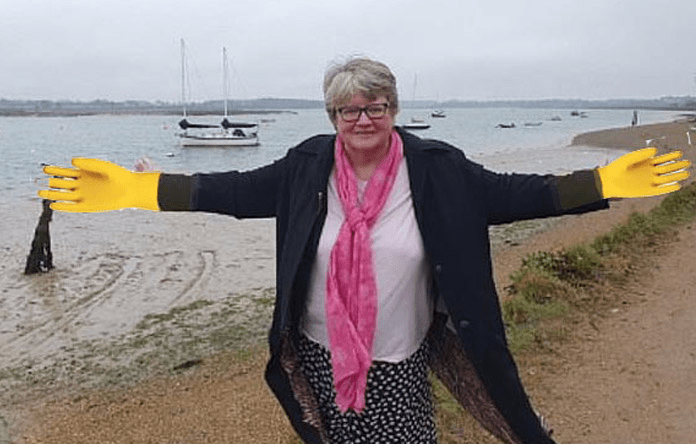
Angela, time to follow Thérèse Coffey, put your Marigolds on and start scrubbing. – Owl

Battle begins over new homes approved in historic village without sewage capacity

By Joe Crowley www.bbc.co.uk (Extract)

On the edge of Buckingham in southern England, the quiet and leafy village of Maids Moreton, dotted with thatched cottages, is at the heart of a dilemma.

There is a plan – already granted permission – to add 153 new homes to the existing community of 350 houses, a medieval church and a pub.

But the local sewage works has been over capacity for years, and there is no sign of it being upgraded soon.

A choice is looming over what to do if the planned new homes are built.

Leave them standing empty, waiting for upgrades to the wastewater treatment system before they are connected?

Or connect them anyway and let people move in – contributing towards Buckinghamshire Council’s target for new homes, but increasing the sewage pollution of the nearby river, the Great Ouse?

“You wouldn’t dream of building a house that you couldn’t connect to electricity, or that was never going to connect to a road. But for some reason we’re building houses that have nowhere to treat the sewage,” says Kate Pryke, one of the local residents campaigning to prevent the development being built.

Maids Moreton’s dilemma is an increasingly common one across England – as ageing sewage works, water industry under-investment and chronic pollution in many areas appear to threaten the government’s ambitious plans to build 1.5 million homes this parliament…..

…..”We think the problem is rife across England and Wales,” says Justin Neal, solicitor at Wildfish, an environmental charity that campaigns against river pollution.

The charity has been granted permission for a judicial review at the High Court, challenging Buckinghamshire Council’s decision to grant planning permission for the Maids Moreton development.

It says the case goes to the heart of the gap between plans for new housing and the capacity of the existing sewage infrastructure…….

Read on here

New Honorary Aldermen – complete list of 19 – “Goodbye Teens, Bingo!”

Honorary Aldermen (From Council minutes)

It was MOVED and it was duly SECONDED that under Section 249(1) of the Local Government Act 1972, the Council confer on the following past Members of the Devon County Council the title of Honorary Alderman in recognition of their eminent service to the Council during the period of their membership of the Council: 

  • John Berry 
  • Jerry Brook 
  • Christine Channon 
  • Roger Croad 
  • Alistair Dewhirst 
  • Rufus Gilbert 
  • George Gribble
  • Ian Hall 
  • Rob Hannaford 
  • John Hart 
  • Stuart Hughes 
  • Frank Letch 
  • Sara Randall Johnson 
  • James McInnes 
  • Percy Prowse 
  • Ray Radford 
  • Andrew Saywell 
  • Margaret Squires 
  • Jeremy Yabsley

Local Government Act 1972 (as referred to above)

249 Honorary aldermen and freemen.

(1)A principal council may, by a resolution passed by not less than two-thirds of the members voting thereon at a meeting of the council specially convened for the purpose with notice of the object, confer the title of honorary aldermen on persons who have, in the opinion of the council, rendered eminent services to the council as past members of that council, but who are not then councillors of the council.

Paul Hayward’s procedural query delays honour nominations at DCC

Cllr Hayward questioned the transparency of a process in which councillors were being asked to agree to a list of party nominations for the award of the honorary title “alderman”, just a list of names with no evidence supporting their nomination.

There was a short delay between the Annual Meeting and this special meeting whilst the constitution was checked after Independent Cllr Paul Hayward raised this.

The public have the perception that an Alderman has done something exceptional, not that it is a title awarded to all in sundry.

Owl thinks he has a point.

Current Practice

The new Chair, Cllr Caroline Leaver, explained that it is possible for any councillor to make a nomination for the honour of “Alderman” at the special meeting convened after the DCC Annual Meeting, but the convention is that Party Group leaders make them. The only rule appears to be that the list is approved by the full council.

In an earlier post, Owl reported that Clllr Leadbetter nominated 17 for the Tories (a “Dancing Queen” in Bingo parlance, almost doubling the existing number) and Cllr Brazil, 2 for the Lib Dems.

From listening to the recording, these seem to include one posthumous award and one award to a sitting member. The remainder having been voted out or retired.

Cllr Hayward’s query

The question Cllr Hayward raised concerned the transparency of a process in which councillors were being asked to agree to a simple list of party nominations, just names with no supporting evidence. A process which would be particularly confusing in a council which had just seen a massive turnover in councilllors.

New councillors were then advised by the Chair that they could abstain, which they appeared to do in numbers.

Apparently this is constitutional, but it does raise the question of whether the constitution is in urgent need of reform.

East Devon Case Study – Alderman John Humphreys subsequently jailed

Those of us in East Devon will be aware that despite being arrested first in 2016 John Humphreys continued to serve as a Councillor until May 2019. He was bestowed the honour of alderman by EDDC in December 2019. In November 2020 Humphreys appeared at Exeter Crown Court and pleaded ‘not guilty’ to ten charges of historical sex offences. In August 2021 he was convicted of the historic rape of two boys and sentenced to 21 years. His honorary title was stripped from him in September 2021.

[DCC has faced its own problems with regard to former Council Leader Brian Greenslade, (correction to earlier version of this post – Owl does not believe he was ever appointed an Alderman, he was attending meetings as late as February 2021) was found guilty in May 2021 of two counts of indecent assault and one of sexual assault in the 1990s and 2000s and jailed for 16 months.]

Discussion

Precedent indicates that councillors have been awarded the honorific “alderman” for the following reasons:

Long service

Distinguished service

Some particularly notable achievement.

Placing nominations in the hands of Party Leaders not only gives them an additional lever of control, it is unclear how this list is created, or even whether party members are consulted.

It is an opaque process that appears to be wholly led by members, within their own group, and there is likely to be no form of “quality control” or qualitative assessment of the merits of those nominated. It is, therefore, extremely unlikely that there will be any consistency between party groups.

Many councils have Nominations Committees to consider nominations in the round and provide scrutiny, but not Devon County Council where the process appears very vague.

Surely, at the very least, in DCC, all councillors, and indeed the members of the public, should see some sort of brief justification for the rationale behind a nomination?

New Lib Dem DCC chair elected as Reform UK members abstain

Devon County Council’s new chair has been appointed in a vote that saw most of the biggest opposition party abstain.

[Owl notes that one of Exmouth’s newly elected Reform councillors, Nat Vanstone, sent his apologies, despite posting on social media after his election on 2 May: “My work starts for you all today, no showers in champagne just hard work for all of you.“]

Bradley Gerrard www.exmouthjournal.co.uk

Cllr Caroline Leaver (Liberal Democrat, Barnstaple South) secured the position as chair, a largely ceremonial role that involves representing the council across the county.

Cllr Leaver was the only nominee put forward for the position at the first full council meeting of the new administration this week, but when votes were taken, many Reform UK councillors abstained.

They largely did the same when it came to the vote for council leader, for which Lib Dem Cllr Julian Brazil (Kingsbridge) was the only nominee.

Lack of representation

Cllr Edward Hill (Reform UK, Pinhoe & Mincinglake) said after the meeting that his party’s abstentions were related to what some feel is a lack of political representation on the cabinet.

The cabinet is the council’s main decision-making body, and while the 10-member entity does have a Green Party councillor – Totnes & Dartington member Cllr Jacqi Hodgson – no other parties are represented.

The previous administration, led by the Conservatives, only had Tory cabinet members.

“The rationale for our abstentions is that the Liberal Democrats have in their manifesto that they support proportional representation, but their cabinet is not proportionally representing all of the parties across the political spectrum,” Cllr Hill said following the meeting.

“I abstained from voting on that basis, and while the Lib Dems could say that they have a Green member on the cabinet, they need that party to support them as they don’t have an outright majority to take control.”

The 2024 Liberal Democrat national manifesto said the party was fighting for proportional representation, which it states makes “seats won match votes cast”.

New leader Cllr Brazil (Liberal Democrat, Kingsbridge) said he understood the Reform UK members’ frustration.

“Who knows, in future perhaps we can be more inclusive, but from the beginning we need to get on with the work we need to do,” he said.

“We do have Cllr Hodgson in the cabinet, and she works with us at South Hams District Council and is a crucial and valued part of the administration.

“Your voice will be listened to, but not as members of the cabinet at this stage.”

Cllr Brazil reiterated that he wanted to try and be “as inclusive as possible”.

“I genuinely feel that’s what we should do,” he added.

“All voices will be listened to and if you have a good idea, that will be accepted as we want to get rid of the Punch and Judy approach to politics. We owe it to our electorate, as they have spoken and want us to do things in a different way.”

Individual choices

Cllr Hill said his party’s members had not been asked to abstain, and so the move by members of the party to do so had been an individual choice on each councillor’s part.

He added that he would be disappointed if Reform UK appointed cabinets in councils it controlled entirely from its own party.

Alongside Cllr Leaver, Cllr Rosie Dawson (Liberal Democrat, Dawlish) was appointed vice chair, replacing her predecessor in the role, Pru Maskell, a former Conservative councillor who lost her seat in the election at the beginning of the month.

In her first session as chair, Cllr Leaver had to deal with some discontent from members, including frustration from Reform UK member Cllr Neil Stevens (Alphington & Cowick) about not being allowed to address the chamber with comments he had prepared, and from independent member Cllr Paul Hayward, who complained about the poor acoustics and confusion around a motion about installing swift boxes on council-owned property.

Cllr Hayward said it was difficult for people who were hard-of-hearing to keep up with verbal changes to the motion, and requested that in future updated motions be “put in writing on the 20-foot screen that’s right there.”

New Council gets cracking

Foster carers to get council tax rebate

Bradley Gerrard, Local Democracy Reporter www.devonairradio.com

Devon’s foster carers are set to get a council tax rebate as part of a range of measures aimed at making the service more compelling.

Foster carers looking after children for 13 to 26 weeks will be offered a 25 per cent rebate on their council tax, while those caring for children for more than 26 weeks will be able to secure a 50 per cent rebate.


This rebate applies to the portion of residents’ council tax bills that is charged by Devon County Council, which is the largest share of the bill that households receive.


The rebate, the first decision taken by the new Liberal Democrat cabinet, will mean a foster carer in a Band D property could get £429 back on the £1,716 portion of their council tax bill that goes to the county council.


That figure rises to a maximum of £858 for those foster carers looking after children for more than 26 weeks.


Foster carers will be prompted by their social workers to apply for the annual rebate and will need to provide their council tax bill as part of the process.


The cabinet heard that the council has roughly 250 foster carers, with approximately 210 of those being people who had no prior connection to the child.


Cllr Richard Jefferies (Liberal Democrat, Feniton & Honiton), cabinet member with responsibility for children’s services, said the report was aimed at “strengthening the fostering offer in Devon” and would show that the council “values their service”.


Besides the council tax rebate, the proposals include an £80,000 equipment budget from existing resources from which foster carers can request money to replace items needed to fulfil their fostering responsibilities.


There is also a commitment to increase the basic allowance the council pays foster carers for children aged 16 and above to move in line with the national minimum allowance, and for all fostering allowances to be increased in line with that national standard or inflation without the need for cabinet approval.
And £36,000 will be put towards peer support and mentoring for foster carers.


Council officers said the equipment budget included providing cash for the likes of new cot mattresses for babies and car seats for children.


Steve Liddicott, the director for wellbeing and health, said one recent example related to a foster carer needing a double buggy because she was looking after two young children.


Cllr Andrew Leadbetter (Wearside and Topsham), who now leads the Conservative group at County Hall, said the proposals were a “great idea”.


“But I would say that, as it happened when I was still the cabinet member for children’s services,” he said.
“I’m delighted you think it is a great idea as we need to do everything we can to encourage fostering and keep foster carers because as you know, the best place for children is to be in a family.


“Anything we can do to encourage our offer is superb and I look forward to seeing more of it.”


Cllr Julian Brazil (Liberal Democrat, Kingsbridge), the new leader of the council, congratulated the previous administration, and added that he would be writing to the county’s foster carers to thank them for their hard work and dedication.


The proposals were unanimously approved by the cabinet (Friday 23 May).
 

Brixham Tory resignation tips Torbay Council balance

‘Now I can lift the carpet and deal with the issues’

Guy Henderson – Local Democracy Reporter www.radioexe.co.uk

Torbay Council’s knife-edge political balance has shifted again after a Brixham councillor decided to stand down from the ruling Conservative group to become an independent.

Jason Hutchings (Furzeham with Summercombe) said in a statement that he felt he was being ‘held back’ and unable to speak his mind.

He said he would still support what the Conservatives were doing in Torbay, but his decision could make him the most powerful man on the local authority.

His resignation from the group leaves the Conservatives with 17 councillors, plus him as a Conservative-leaning independent.

The opposition group of Liberal Democrats and independents has 18 councillors.

In practice, a number of important recent debates have split down party lines, and have been decided on the casting vote of the mayor – currently, and in the recent past, a Conservative.

If Cllr Hutchings votes with his former Conservative colleagues, the Tory administration can be sure of holding sway. If on any issue he decides to vote with the opposition, the Conservatives will lose. Even if he decides to abstain, that would also be bad news for the Conservatives.

Cllr Hutchings is the third member of the Conservative group to jump ship since the last full council elections in May 2023. Katya Maddison and the late Patrick Joyce left the group to form Prosper Torbay later that year.

Cllr Hutchings said the decision to go independent had been on his mind for a while, saying it was hard to criticise decisions and ‘work ethics’ of fellow councillors while in a group.

“Certain things aren’t getting done and are being brushed under the carpet,” he said. “Now I can lift the carpet and deal with the issues.”

He said some local issues were being ignored, and he was not content to tell local voters that they were just ‘being worked on’.

“The Conservative group has made some tough decisions over the last two years – some I’m not fully on board with – but it has managed to achieve some really good projects as well,” he went on.

“I’m hoping to work with council leader David Thomas and the Conservative group along with the Lib Dem group and fellow independents to iron out the problems this council is facing.

“Local councils shouldn’t be so political and now being independent I don’t have to toe the party line and can ask questions against all sides of the chamber to get the right result for my residents.”

Earlier this year Cllr Hutchings was the subject of a complaint when he re-posted a Facebook post from Reform UK, which is against Conservative party rules.

However, he said he was not leaving the Tories to join Reform.

“I’m staying as an independent for the meantime, but who knows what’s around the corner?” he said. “But I don’t see myself being a Conservative again as the party hasn’t brought anything new forward.

“I have made this decision as I feel that my residents will have a stronger voice and from all the messages and phone calls and comments I have received, residents are over the moon I have decided to make that decision.”

It’s a “Dancing Queen” as DCC Tory Leader nominates 17 former Tories for honours!

At the special meeting following the Devon County Council when councillors consider the nomination of former councillors to be awarded the honour of becoming Aldermen Owl hears that:

Tory Group Leader, Cllr Andrew Leadbetter put forward the names of seventeen former Tory councillors for the honour of Alderman.

Julian Brazil, new Leader, two!

Names to follow when minutes are published, many are likely to be familiar to readers.

Devon County Council – Cllr Julian Brazil LibDem elected Leader and names Cabinet

Paul Arnott becomes Deputy Leader, and Denise Bickley and Richard Jefferies get key cabinet jobs tackling safeguarding and education of Devon’s children

New leader makes vulnerable children and fixing roads two of his ‘top priorities’

DCC News  22 May 2025

Top row from left: Cllr Brazil, Cllr Arnott, Cllr Thomas, Cllr Cottle-Hunkin, Councillor Clist. Bottom row from left: Cllr Buczkowski, Cllr Keeling, Cllr Jefferies, Cllr Bickley, Cllr Hodgson

Our new leader, Councillor Julian Brazil, says that he is ‘determined to deliver the very best’ for the county’s most vulnerable children.

Councillor Brazil (Kingsbridge) made the pledge following his confirmation as the new Leader of DCC at a full council meeting today (Thursday, May 22), a meeting where he also outlined other top priorities such as fixing Devon’s roads.

At the meeting the new members of our cabinet were nominated and confirmed, as was the position of deputy leader.

And to underline the new leadership’s commitment to the safeguarding and education of Devon’s children, the children’s services portfolio will be the responsibility of three cabinet members, who will work closely to improve the outcomes of all children and young people in Devon. 

In addition to his role as leader Cllr Brazil will take on responsibility for education, while Cllr Denise Bickley (Sidmouth) will oversee Special educational Needs and Disabilities (SEND). Cllr Richard Jefferies (Feniton and Honiton) has responsibility for children’s social services.

Councillor Brazil said: “The only way we can deliver the services the public need and deserve is to work with our partners, by creating productive relationships with agencies from the NHS to schools, from parish and town councils to community groups. 

“We know money is incredibly tight but by working together we can achieve so much more.

“We have been failing our most vulnerable children for far too long, and we want to send a message; our children need us, and we must deliver. 

“We want to deliver the very best for them. We want to ensure that they have the same opportunities as other children, and we want to help them make good choices and support them with their aspirations. For me, this should be the judge of the success or failure of this administration.”

Cllr Paul Arnott, Seaton and Colyton, was confirmed as deputy leader and will also be responsible for local government reorganisation and water quality.

Another of the new cabinet’s high-profile roles goes to Cllr Dan Thomas (South Brent & Yealmpton) who will hold the highways brief. 

Cllr Brazil said: “Potholes are one of our top priorities. We’ve got to sort out highways maintenance,  and the plague of potholes on our roads. If we can, we should bring the contract back in-house. As we saw with rubbish collection in the South Hams, if you outsource one of your core services, when things go wrong you’ve lost control.  We have a huge task ahead of us, I recognise that, but we’re all very excited to get on with the job.”

Cllr Brazil, who was first elected to the county council in 2005, will lead a minority Lib Dem administration following the local elections earlier this month.

The elections left DCC under no single party control – of the 58 council areas (60 seats) the Lib Dems won the most with 27, but that left them just short of the 31 councillors needed to gain overall control.

Cllr Brazil added “There needs to be a change of culture; Devon must be more outward looking. For too long it has been far too insular, and that mentality has got to change. 

 “We’ve got to do it differently. So many people have told me that they just want us all to work together for the good of our communities. 

“I agree, it’s the right way forward. It doesn’t matter what political tribe you’re from, if your top priority is to do what’s best for your community then we’re on the same side. Too much time and energy can be wasted over petty political squabbles when we should be focused on delivering the services residents expect.

“Councillors should vote on each issue, putting their communities first. Party politics should not feature. Of course, we’re going to have our disagreements, but robust debate is good for democracy. If our shared goal is to make Devon a better place, we’re going to agree on most things.”

The Lib Dems have pledged to work with all party groups, particularly with the Green Party, which has six councillors and whose leader, Cllr Jacqui Hodgson (Totnes), is now a cabinet member.   

Cllr Hodgson is responsible for climate change and biodiversity, which includes transportation, such as improvements to the bus network and delivery of electric vehicle chargers.

Other appointments are Cllr Richard Keeling (Chudleigh & Teign Valley) who will be the cabinet member for adult services.

The finance brief will be the responsibility of Cllr James Buczkowski (Cullompton & Bradninch).

Cllr Simon Clist (Willand & Uffculme) will be the cabinet member for assets and resources, a brief that includes economy and skills, while Cllr Cheryl Cottle-Hunkin will be responsible for rural affairs, which will include the delivery of broadband.

Cllr Caroline Leaver (Barnstaple South) is the new chair of the council, taking over from former council leader John Hart and Cllr Rosie Dawson (Dawlish) is the new vice chair.

Councillors of all parties paid tribute to the outgoing chair, Cllr Hart for his 36 years of service – 32 as a councillor – which includes a period as the leader of the opposition, cabinet member for education and 15 years as council leader.

Cllr Brazil thanked Cllr Hart, a fellow South Hams councillor, for their close working relationship over many years particularly on the Highways and Traffic Orders Committee, while leader of the conservative group, Cllr Andrew Leadbetter and a former cabinet colleague, wished him a happy retirement and said he was a ‘fair, firm hand on the tiller.’

Cllr Hodgson thanked him for supporting her previous call to declare a Devon Climate Emergency while Cllr Fife Cook, leader of the Reform group, said how much he appreciated his recent advice following his election.

Exeter City prioritises homes over profit

Exeter City Council has taken a £400,000 financial hit after sticking to its guns over student accommodation.

Clifton Hill project gets green light

Guy A Henderson www.radioexe.co.uk

Its executive committee has agreed to sell the old Clifton Hill leisure centre site to be turned into affordable homes for older people.

But members heard that the sale price of just under £3.4 million was significantly below the market value for the site of £3.8 million.

Council leader Phil Bialyk (Lab, Exwick) told the meeting: “We could get £3.8million, or even more, if we broke our promise not to build student accommodation.”

The council closed the leisure centre in 2018 and knocked it down in 2022. It originally sold the two-acre site to its in-house housing company Exeter City Living (ECL) for just over £2 million, which was a ‘significant undervalue’ that had to be reported to the government at the time.

It then bought it back last year for around £3 million after the demise of ECL, and it went back on the market last August.

Councillors pledged not to let the land go for purpose-built student accommodation, even if that meant turning its back on the highest offers for it.

Planning permission had already been given for 41 homes in the site, but none of the bidders wanted to take that on, and Preferred Homes came in with a plan for 72 units of affordable rented housing for older people.

The development will have a cafe, meeting rooms and a weekly doctor’s surgery. Homes will be made available to older Exeter residents on the housing register.

Cllr Duncan Wood (Lab, Pinhoe) said: “It’s important that we listened to local communities, heard their reservations and acted accordingly.”

Cllr Marina Asvashin (Lab, Priory) said the location was ‘perfect’ for the proposed development and Cllr Susannah Patrick (Lab, Exwick) said it was an opportunity to see a key site developed.

And Cllr Michael Mitchell (Lib Dem, Duryard and St James) told colleagues: “I don’t think there is anybody who would not support this recommendation.”

Cornwall council elects LibDem leader: voting figures

Liberal Democrat councillor Leigh Frost has been voted leader of Cornwall Council with 53 votes for and 25 abstentions. [Total 78]

There are 87 seats in the council.

Reform UK won 28 seats in the local election and despite it being the largest number won by a party, it fell short of the 44 seats needed for a majority.

Distribution of seats

Reform – 28 seats
Liberal Democrat – 26 seats
Independent – 16 seats
Conservative – 7 seats
Labour – 4 seats
Green – 3 seats
Mebyon Kernow – 3 seats

Does Devon have a clear steer on reorganisation plans?

“Interim plan feedback Devon Plymouth and Torbay”

The Labour Government Feedback on interim devolution plans provides much needed clarity, or maybe not. Does this reflect chaos in Whitehall?

Owl has now seen a copy of the Ministry of Housing, Communities and Local Governments’ “interim plan feedback Devon Plymouth and Torbay” of 15 May and consulted “Sir Humphrey Appleby” (now retired from Yes Minister) on what it all might mean.

First of all he pointed to the significance of the omission of Exeter in the title.

Exeter, he said, had submitted its own plan to become the stand alone “Greater Exeter Unitary Authority” by absorbing parts of neighbouring districts. Exeter City Council was also one of the addressees of the feedback which claims to respond to a list of submissions including one from Exeter.

This omission speaks volumes, he said.

Sir Humphrey also saw significance in the lack of confirmation of Plymouth’s position in this Whitehall reply to a direct question from the district councils:

“You asked for Government to confirm that Plymouth City Council would be a continuing authority in relation to your preferred option. You should set out in your final proposal how implementation would work and the assumptions underpinning this. Decision on the appropriate implementation and transition arrangements will be considered following final decisions on the proposal to be Implemented.”

Although Sir Humphrey then draw attention to the “overview” section of the feedback which contained the following committed noncommittal caveat:

“We welcome the work that has been undertaken across proposals to develop local government reorganisation plans for Devon, Plymouth and Torbay. This feedback does not seek to approve or discount any option or proposal, but provide some feedback designed to assist in the development of final proposal(s).” 

Could Plymouth become the economic powerhouse in the Devon West half of a two unitary solution?

Read between the lines Councillors and “Carry on up at County Hall”.

Reform had a ‘pathway to power’ in Cornwall but blew it

Cornwall likely to be led by LidDem/Independent coalition – Owl

Lee Trewhela www.cornwalllive.com

The likely new leader of Cornwall Council has slammed Reform UK for claiming other political groups on the council have been playing “political games” to stop the party forming an administration. In fact, says Liberal Democrat group leader Cllr Leigh Frost, Reform refused a possible “pathway to power”.

Earlier today, Reform’s Cornwall group leader Cllr Rob Parsonage announced that the party would not be forming an administration despite winning the largest amount of seats on the council. Reform will have 28 councillors sitting in Lys Kernow / County Hall in Truro, but needed 44 to form a majority administration. The Lib Dems won 26 and Independents 16.

Mr Parsonage said other political groups had been playing “political football” and claimed that despite Reform’s best efforts, the Liberal Democrats, Labour and some Independents had refused to work with them. However, the leader of the Independents has responded that his group was willing to form an administration with Reform, but was rebuffed.

The Independent group has now joined forces with the Liberal Democrats to form the next administration. Cllr Frost, of the Lib Dems, told CornwallLive: “As I said after the election, we decided to give Reform the first bite of the cherry when it came to forming an administration as they were the biggest group on the council. They refused to take that bite.

“The Independent group reached out to them and gave them a deadline of last Wednesday to come back with an offer. No offer came back from Reform. Following that, on Friday, the Independent group agreed to form an alliance with the Lib Dems to lead the council.”

Cllr Frost added: “There are a lot of serious issues which the new council will have to consider, such as devolution and the Cornwall Local Plan. We’ve got to have an administration which can tackle such important matters, that’s why we talked to the Independents after Reform didn’t.

“Reform are accusing others of playing political games but an alliance with the Independent group could have given them a pathway to power.”

Cllr Adam Paynter, leader of the Independents, verified that he spoke to Reform’s Cllr Parsonage about a possible administration deal, but “from our point of view it didn’t appear as if Reform had any intention or had anything to offer us”.

He said: “As Independent group leader, I had a mandate after the election to speak to all the other groups about forming an administration. We could then collate what their thinking was and bring it back to the Independent group so we could then think about what we wanted to do as the third largest group on the council.

“We spoke to Rob Parsonage from Reform twice. We heard what he wanted to achieve and we asked what he could offer us. This was the Thursday after election. He said he would come back with an offer on Wednesday (May 14) six days later. We spoke to all all group leaders by the end of that election week.”

Cllr Paynter added: “We waited until Wednesday to see what the Reform offer was and there was nothing at all. We spoke to him on the phone and asked him what he was planning to do and he said he was speaking to other groups but hadn’t got any offer to make the Independents.

“Clearly they didn’t want to work with us, otherwise you would have thought they would have tried a bit harder to pull together some sort of offer to form an administration. The only offer we had was from the Liberal Democrats, so we did a bit more work with them, and on Friday night we agreed to move forward as an administration.”

Mr Parsonage responded to the comments by Cllrs Frost and Paynter. He said: “We spoke to the Independents on two occasions to outline our position and what we wished to achieve, as we have done with the other parties. In the second conversation Adam asked what we would be offering to the Independents but we weren’t able to commit to any offer.”

The council’s new leader, chair and vice-chair will be officially announced at the first meeting of Cornwall Council since the election tomorrow (Tuesday, May 20).

Paul Hayward: Letter of thanks following the Devon County Council election

Cllr Paul Hayward www.midweekherald.co.uk 

I am writing to express my heartfelt gratitude to the voters of our Axminster community following the election on May 1.

Your support and confidence in my candidacy meant the world to me.

But, this victory is not mine alone—it belongs to every volunteer, supporter, and resident who believed in the possibility of positive change – the power of people over politics.

I also want to thank my fellow candidates for a mostly calm, respectful, and spirited campaign.

Healthy democratic dialogue only strengthens our community.

We can still work together in the best interests of everyone in our area – regardless of the colour of rosette we wore!

Now, the real work begins.

Devon is facing a tumultuous future.

I remain committed to listening, collaborating, and making decisions that reflect the needs and hopes of all constituents.

Together, we can build a future rooted in transparency, progress, accountability, leadership, and shared values.

Thank you once again for your trust.

I am honoured to serve and excited to get started.

Yours sincerely,

Cllr Paul Hayward Devon County Council – Axminster Division.